Download to read offline


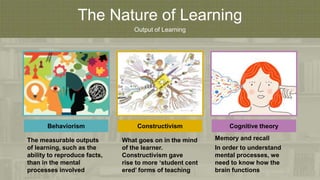
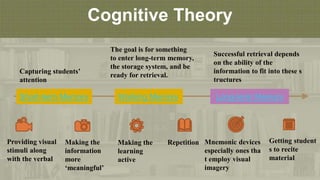
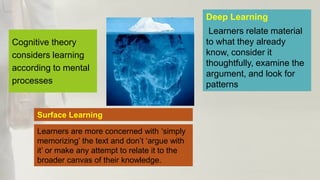
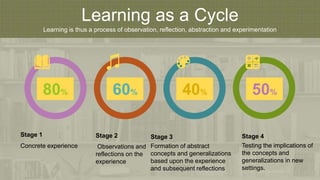
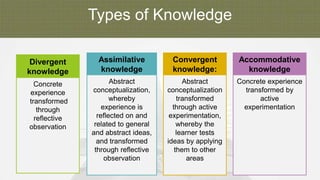
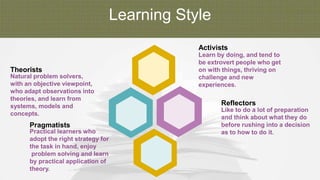
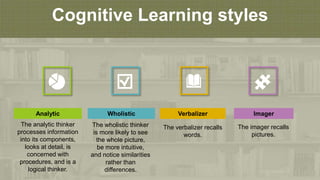
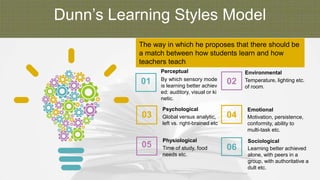

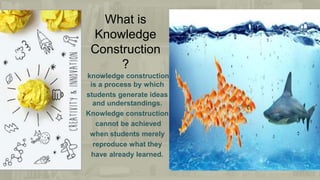
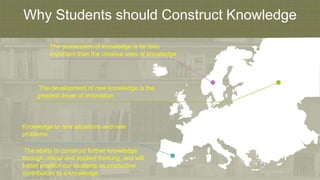
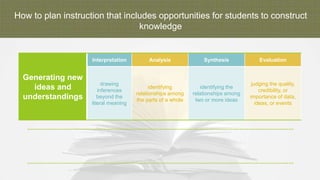
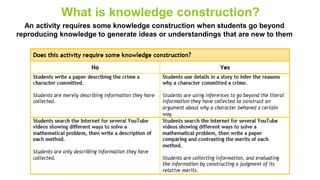
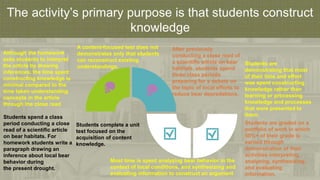
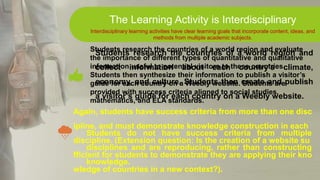
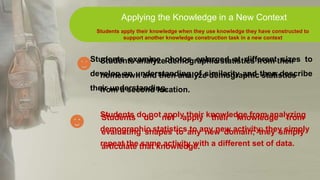
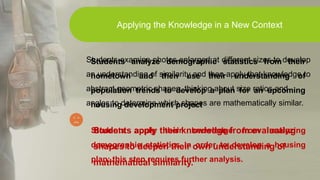
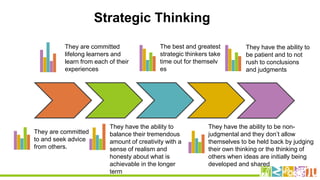
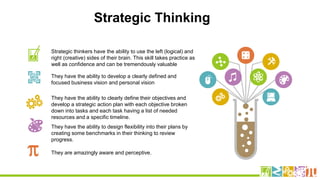
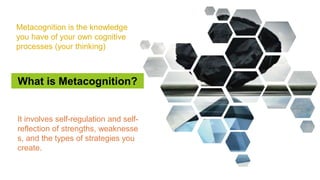
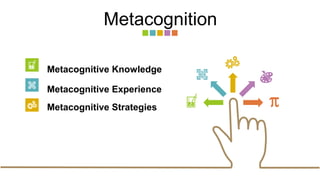
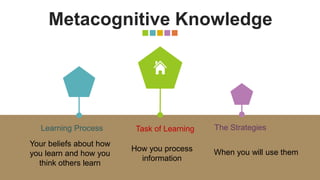
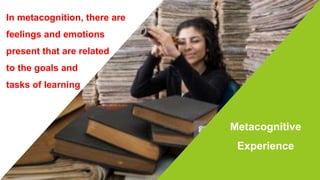

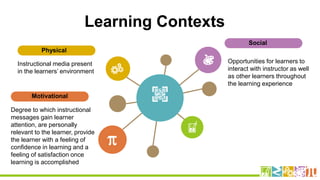
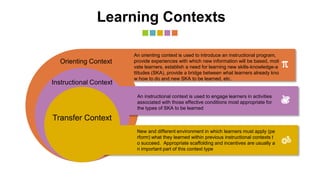
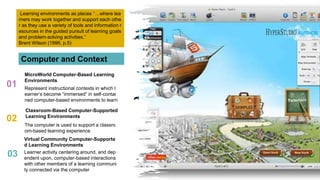


Students construct knowledge through activities that go beyond simply reproducing or learning information, and instead require generating new ideas or understandings. An effective activity for knowledge construction is interdisciplinary, with clear goals incorporating multiple subjects, and requires students to apply their new knowledge to support further construction in a new context. Strategic thinking and metacognition play important roles in knowledge construction, as strategic thinking allows for planning and assessment, while metacognition involves self-awareness of one's cognitive processes. Different learning contexts, such as orienting, instructional, and transfer contexts, provide different types of environments to support knowledge construction.


