Constructivist Approach
in Teaching
COURSE A4(A)Pedagogy of Teaching Science
Module 3 (Constructivist Approach and its Use in Teaching Science)
B Ed Special Education – Hearing Impairment/
B Ed Special Education-- Learning Disability
University of Mumbai
Dr.Amit Hemant Mishal,
Associate Professor
CCYM’S Hashu Advani College of Special Education
https://www.hashuadvanismarak.org/hacse/introduction.html
Dr.Amit Hemant Mishal,Associate Professor 1
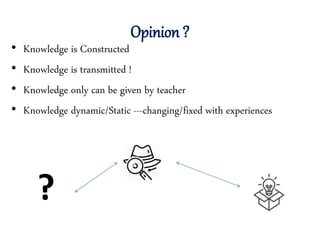
Opinion ?
• Knowledge is Constructed
• Knowledge is transmitted !
• Knowledge only can be given by teacher
• Knowledge dynamic/Static ---changing/fixed with experiences
?
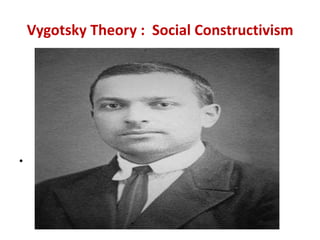
Vygotsky Theory : Social Constructivism
•
What is this – Constructivism /Constructivist Approach
• Elimination of standard curriculum –teacher centred/subject
centred
• Promotion on Hands-on problem solving
• Connecting facts and fostering new understanding
• Promote more talk/dialogue
• More Open ended Questions
• No to standard Assessment /Grade Assigning
• Learners self evaluate Self-Progress
• Student Questions/ interest- Valued
• Whole to parts –maxim/Analyse-Synthesize
• Group work
• Learners- Build/Create knowledge
• Activity Based
• Criticize
• Collaborate
• Assist Each other in Team
• Learning in Social Environment
• Learning made easier
• Attractive ,Appropriate Activity/s
• Process of Learning √ Product of Learning X
• Construct √ Reproduce X Rote Memory
X
• Attractive √
• Cognitive freedom/Independence √
• Student Centred √ Subject/Teacher centred X
• Developmental – Emotional (more
satisfaction/autonomy /more sharing-expressing
Process
• Retention /Attention /All round Development
Few Approaches/Strategies --Useful in Teaching Science
*Students estimate new ideas and conceptions using terms of their previous
notions as they consider the new situation (student-centered) approach
Few Egs; Can be employed while teaching science
 5 E- Engage, Explore, Explain, Elaborate, Evaluate.
 7E -Elicit, Engage, Explore, Explain, Elaborate, Evaluate, Extend
 Gowin’s Vee Diagram - Constructivist, Heuristic
 Concept Mapping
 Social Enquiry Approach
 Cooperative learning Strategies
• Contructivism in Science Teaching
(https://www.eduhk.hk/apfslt/v3_issue1/sowm/sowm3.htm)
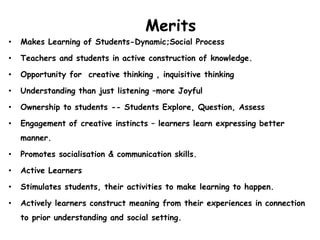
Merits
• Makes Learning of Students-Dynamic;Social Process
• Teachers and students in active construction of knowledge.
• Opportunity for creative thinking , inquisitive thinking
• Understanding than just listening –more Joyful
• Ownership to students -- Students Explore, Question, Assess
• Engagement of creative instincts – learners learn expressing better
manner.
• Promotes socialisation & communication skills.
• Active Learners
• Stimulates students, their activities to make learning to happen.
• Actively learners construct meaning from their experiences in connection
to prior understanding and social setting.
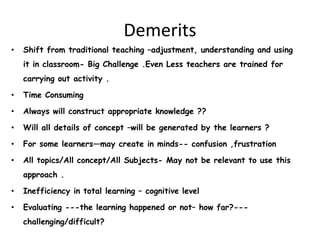
Demerits
• Shift from traditional teaching –adjustment, understanding and using
it in classroom- Big Challenge .Even Less teachers are trained for
carrying out activity .
• Time Consuming
• Always will construct appropriate knowledge ??
• Will all details of concept –will be generated by the learners ?
• For some learners—may create in minds-- confusion ,frustration
• All topics/All concept/All Subjects- May not be relevant to use this
approach .
• Inefficiency in total learning – cognitive level
• Evaluating ---the learning happened or not– how far?---
challenging/difficult?
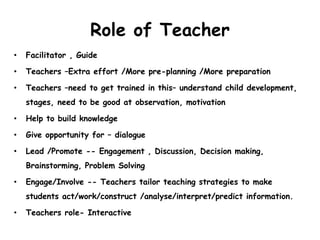
Role of Teacher
• Facilitator , Guide
• Teachers –Extra effort /More pre-planning /More preparation
• Teachers –need to get trained in this– understand child development,
stages, need to be good at observation, motivation
• Help to build knowledge
• Give opportunity for – dialogue
• Lead /Promote -- Engagement , Discussion, Decision making,
Brainstorming, Problem Solving
• Engage/Involve -- Teachers tailor teaching strategies to make
students act/work/construct /analyse/interpret/predict information.
• Teachers role- Interactive
Additional Reading / References :
• Driver, R., Asoko, H., Leach, J., Mortimer, E., & Scott, P. (1994).
Constructing scientific knowledge in the classroom. Educational Researcher,
23 (7)
• https://en.wikipedia.org/wiki/Constructivism_in_science_educatio
n
• http://www.ijsrp.org/research-paper-0315/ijsrp-p3978.pdf
• http://www.iqst.upol.cz/e-learning/m4/e-learning-m4-u2.php
• https://courses.lumenlearning.com/edpsy/chapter/social-
constructivism-vygotskys-theory/

Constructivism, Constructivist Approach

  • 1.
    Constructivist Approach in Teaching COURSEA4(A)Pedagogy of Teaching Science Module 3 (Constructivist Approach and its Use in Teaching Science) B Ed Special Education – Hearing Impairment/ B Ed Special Education-- Learning Disability University of Mumbai Dr.Amit Hemant Mishal, Associate Professor CCYM’S Hashu Advani College of Special Education https://www.hashuadvanismarak.org/hacse/introduction.html Dr.Amit Hemant Mishal,Associate Professor 1
  • 2.
    Opinion ? • Knowledgeis Constructed • Knowledge is transmitted ! • Knowledge only can be given by teacher • Knowledge dynamic/Static ---changing/fixed with experiences ?
  • 3.
    Vygotsky Theory :Social Constructivism •
  • 4.
    What is this– Constructivism /Constructivist Approach • Elimination of standard curriculum –teacher centred/subject centred • Promotion on Hands-on problem solving • Connecting facts and fostering new understanding • Promote more talk/dialogue • More Open ended Questions • No to standard Assessment /Grade Assigning • Learners self evaluate Self-Progress • Student Questions/ interest- Valued
  • 5.
    • Whole toparts –maxim/Analyse-Synthesize • Group work • Learners- Build/Create knowledge • Activity Based • Criticize • Collaborate • Assist Each other in Team • Learning in Social Environment • Learning made easier • Attractive ,Appropriate Activity/s
  • 6.
    • Process ofLearning √ Product of Learning X • Construct √ Reproduce X Rote Memory X • Attractive √ • Cognitive freedom/Independence √ • Student Centred √ Subject/Teacher centred X • Developmental – Emotional (more satisfaction/autonomy /more sharing-expressing Process • Retention /Attention /All round Development
  • 7.
    Few Approaches/Strategies --Usefulin Teaching Science *Students estimate new ideas and conceptions using terms of their previous notions as they consider the new situation (student-centered) approach Few Egs; Can be employed while teaching science  5 E- Engage, Explore, Explain, Elaborate, Evaluate.  7E -Elicit, Engage, Explore, Explain, Elaborate, Evaluate, Extend  Gowin’s Vee Diagram - Constructivist, Heuristic  Concept Mapping  Social Enquiry Approach  Cooperative learning Strategies • Contructivism in Science Teaching (https://www.eduhk.hk/apfslt/v3_issue1/sowm/sowm3.htm)
  • 8.
    Merits • Makes Learningof Students-Dynamic;Social Process • Teachers and students in active construction of knowledge. • Opportunity for creative thinking , inquisitive thinking • Understanding than just listening –more Joyful • Ownership to students -- Students Explore, Question, Assess • Engagement of creative instincts – learners learn expressing better manner. • Promotes socialisation & communication skills. • Active Learners • Stimulates students, their activities to make learning to happen. • Actively learners construct meaning from their experiences in connection to prior understanding and social setting.
  • 9.
    Demerits • Shift fromtraditional teaching –adjustment, understanding and using it in classroom- Big Challenge .Even Less teachers are trained for carrying out activity . • Time Consuming • Always will construct appropriate knowledge ?? • Will all details of concept –will be generated by the learners ? • For some learners—may create in minds-- confusion ,frustration • All topics/All concept/All Subjects- May not be relevant to use this approach . • Inefficiency in total learning – cognitive level • Evaluating ---the learning happened or not– how far?--- challenging/difficult?
  • 10.
    Role of Teacher •Facilitator , Guide • Teachers –Extra effort /More pre-planning /More preparation • Teachers –need to get trained in this– understand child development, stages, need to be good at observation, motivation • Help to build knowledge • Give opportunity for – dialogue • Lead /Promote -- Engagement , Discussion, Decision making, Brainstorming, Problem Solving • Engage/Involve -- Teachers tailor teaching strategies to make students act/work/construct /analyse/interpret/predict information. • Teachers role- Interactive
  • 11.
    Additional Reading /References : • Driver, R., Asoko, H., Leach, J., Mortimer, E., & Scott, P. (1994). Constructing scientific knowledge in the classroom. Educational Researcher, 23 (7) • https://en.wikipedia.org/wiki/Constructivism_in_science_educatio n • http://www.ijsrp.org/research-paper-0315/ijsrp-p3978.pdf • http://www.iqst.upol.cz/e-learning/m4/e-learning-m4-u2.php • https://courses.lumenlearning.com/edpsy/chapter/social- constructivism-vygotskys-theory/