CPC4.3-  MR 68y Carpenter Lives in Kuranda.  He attends the GP for a ‘check up’ and towards the end of the consultation mentions casually: “ I’ve also got a few things happening with the  old waterworks , Doc.” Urine  frequency  (4-5xday; 2xnight);  Terminal dribbling . Worsening over  months - ? couple of years ’.
CPC4.3-  Matthew Rice 68y Carpenter Urgency yes, but then doesn’t pass much urine on forcing.  Cannot empty the bladder empty. Urinary stream - poor Urinary  incontinence  - occasional but embarrassing.  Dysuria, Haematuria  No Bowel habit no change, prone to slight constipation Sexual history - heterosexual; 2nd wife Dawn, monogamous for 23 years.  Has early morning erections, but difficulty sustaining an erection .  No hx STIs
CPC4.3-  Differential Diagnosis Benign prostatic hyperplasia ( BPH ) Prostatitis, Cancer,  stones , rectal tum. Strictures, UTI, Diuretics, Spinal injury, Autonomic neuropathy ??? What other causes of urinary obstruction? urine retention  ,  lack of urine ,  urinary dribbling urinary urgency  ,  urination pain  ,  weak urination   reduced urine   (links to wrongdiagnosis.com)
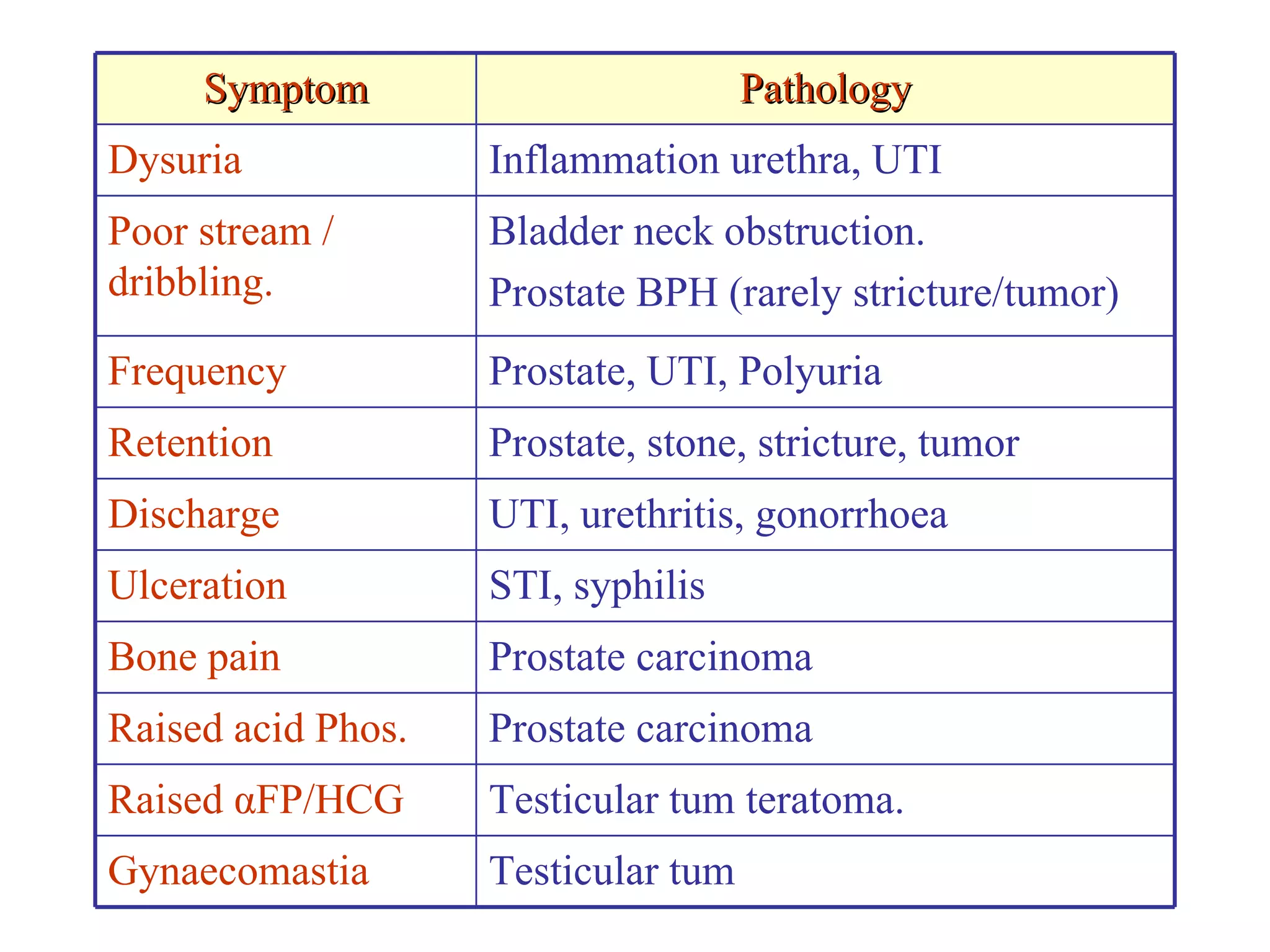
Pathology Symptom Testicular tum  Gynaecomastia Testicular tum teratoma. Raised  α FP/HCG  Prostate carcinoma Raised acid Phos. Prostate carcinoma Bone pain STI, syphilis Ulceration UTI, urethritis, gonorrhoea Discharge Prostate, stone, stricture, tumor Retention Prostate, UTI, Polyuria Frequency Bladder neck obstruction. Prostate BPH (rarely stricture/tumor) Poor stream / dribbling. Inflammation urethra, UTI Dysuria
Causes of Obstructive Uropathy INTRINSIC: Calculi - Lithiasis Strictures – congenital, inflammatory Tumors – Transitional cell Ca. Blood clots – UTI, Glomerulonephritis EXTRINSIC: Pregnancy Inflammation- PID, peritonitis, diverticulitis, salphingitis. Tumors:  Prostate , rectum, bladder, ovaries etc.
When you lose, don’t lose the lesson. Lao Tzu Everyone makes Mistakes,  only intelligent learn from it.
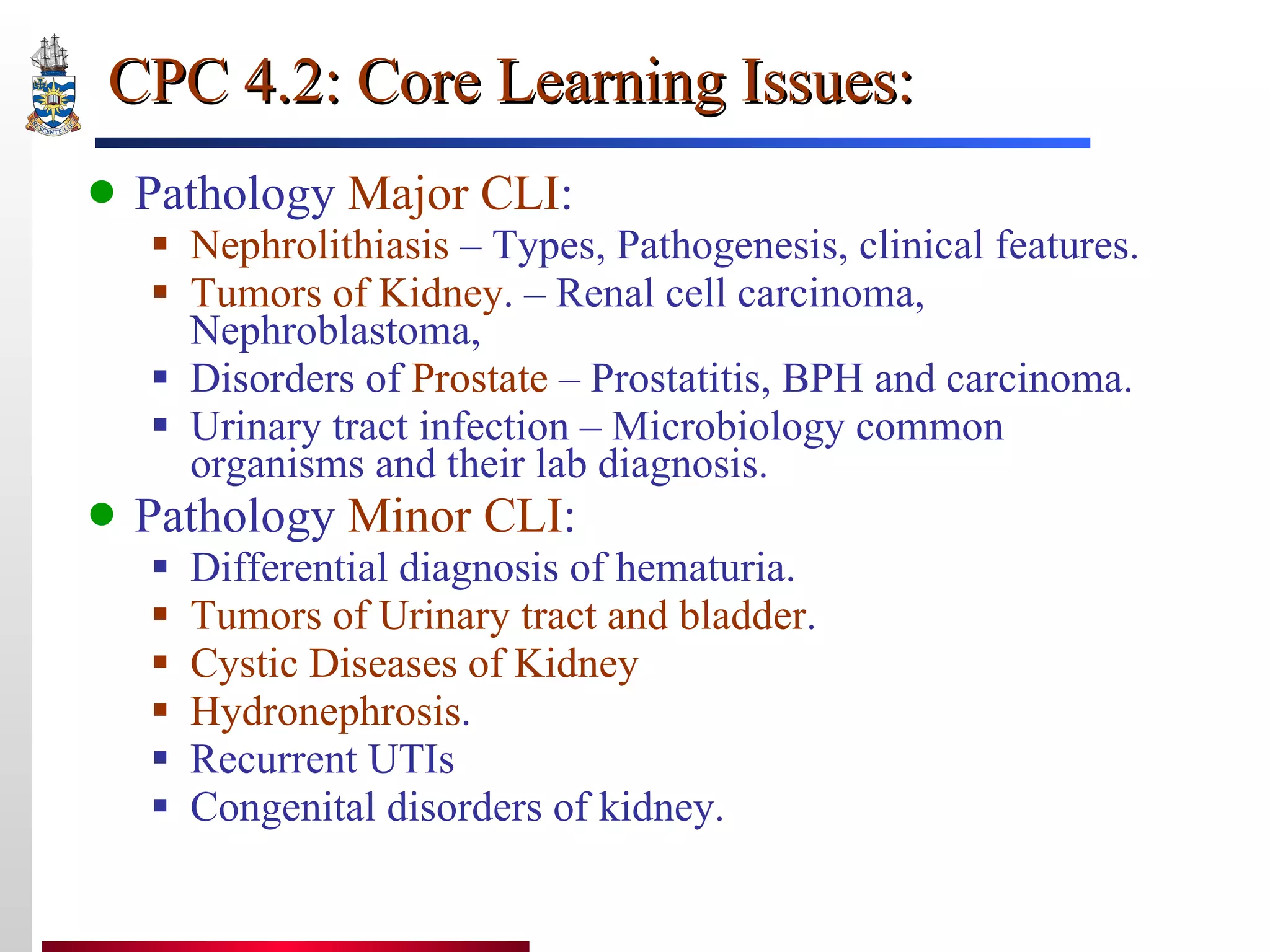
CPC 4.2: Core Learning Issues: Pathology  Major CLI : Nephrolithiasis  – Types, Pathogenesis, clinical features. Tumors of Kidney . – Renal cell carcinoma, Nephroblastoma,  Disorders of  Prostate  – Prostatitis, BPH and carcinoma. Urinary tract infection – Microbiology common organisms and their lab diagnosis. Pathology  Minor CLI : Differential diagnosis of hematuria. Tumors of Urinary tract and bladder . Cystic Diseases of Kidney Hydronephrosis . Recurrent UTIs  Congenital disorders of kidney.
Pathology of Prostate Dr. Shashidhar Venkatesh Murthy Associate Professor & Head of Pathology
Introduction Anatomy – 5 lobes. Function – Semen, acid phosphatase. Hormone response – Estrogen like Median lobe – BPH Lateral/Posterior lobes - Cancer) Enlargement – Inflammation / growth Neoplastic / Non neoplastic growth. BPH / Cancer.
Male Urogenital System - anatomy
Male Urogenital System - anatomy Ca BPH
Zonal Histology: BPH Ca.
Normal Histology: Fibro-Musclular-Gland Two Layer Ep. Fibromuscular stroma Secretions
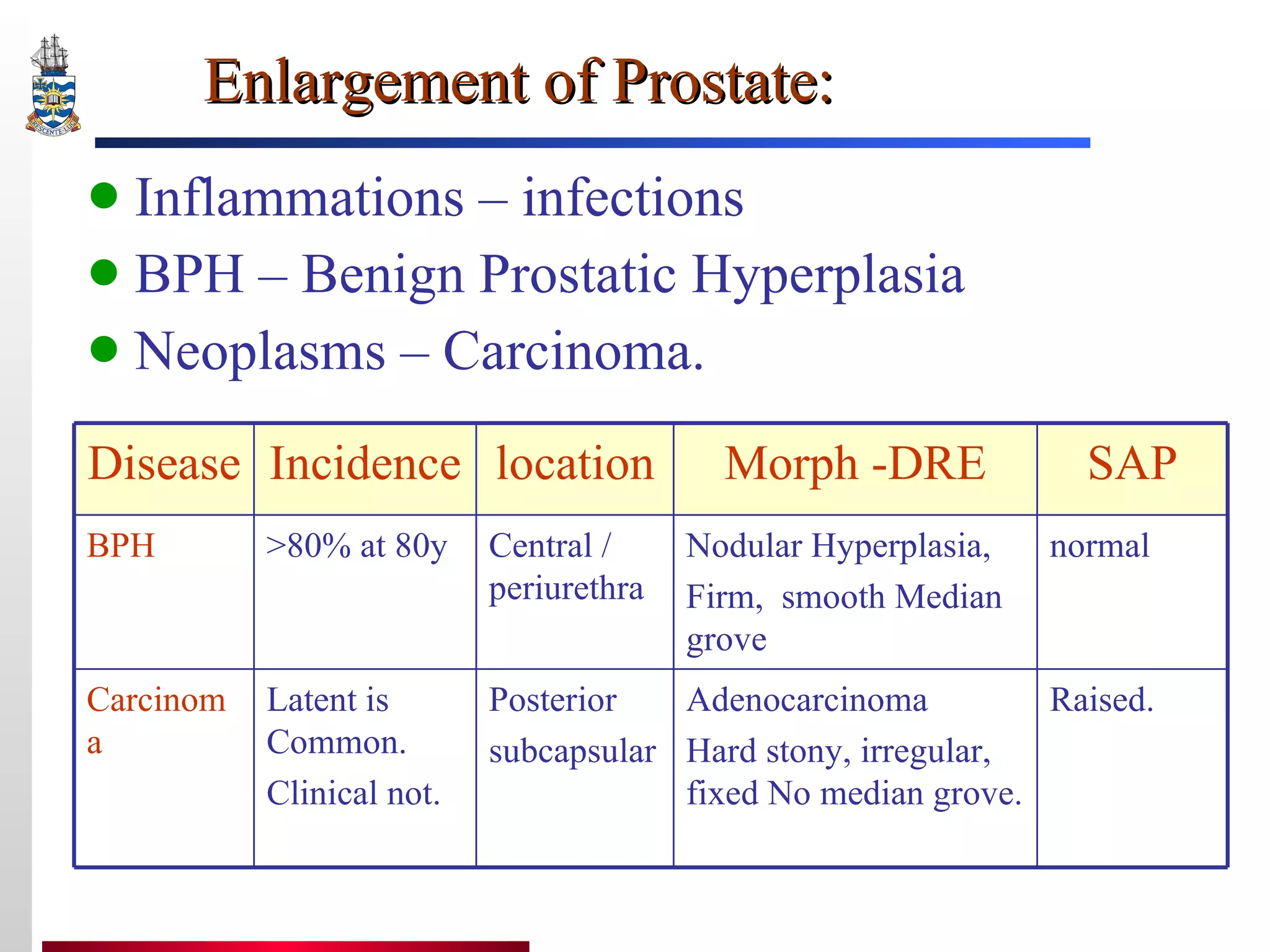
Enlargement of Prostate: Inflammations – infections BPH – Benign Prostatic Hyperplasia Neoplasms – Carcinoma. SAP Morph -DRE location Incidence Disease Raised. Adenocarcinoma Hard stony, irregular, fixed No median grove. Posterior subcapsular Latent is  Common. Clinical not. Carcinoma normal Nodular Hyperplasia,  Firm,  smooth Median grove Central / periurethra >80% at 80y BPH
Prostatitis: Inflammation, edema, rectal pain, urinary obstruction. Acute  suppurative prostatitis E.coli, rarely Staph or N. gonorrhoeae Chronic  non-specific prostatitis recurrent acute    fibrosis, lymph + plasma.  Granulomatous  prostatitis- BPH, infarction, post TURP, idiopathic, TB, or allergic(eosinophilic).
Prostatitis:
BPH-Introduction Common  non-neoplastic  hormone induced hyperplasia. 75% among men aged 70-80years  Over 90% in people aged over 90y Involves peri urethral & central zones. Rare before the age of 40y. Hormone induced – Androgens. Castration     no BPH
Patho-Physiology:  Testosterone    DHT     GF Finasteride
BPH-Morphology Microscopically,  nodular  prostatic  hyperplasia  consists of nodules of glands and intervening  stroma . (both) The glands variably sized, with larger glands have more prominent  papillary  infoldings,  double layered epithelium  (like normal) some may be  cystic  with secretions. Nodular hyperplasia is  NOT  a precursor to carcinoma.
Benign Prostatic Hyperplasia:
BPH-mechanism of obstruction: Median lobe (3 rd  lobe)  Ball valve mechanism Obstruction. Urgency/hesitation..
BPH-Bladder Gross – Identify Cues? Trabeculations Hypertrophy of wall Stone - urolithiasis Inflammation Median lobe- ball valve. Enlarged prostate.
BPH-Bladder morphology: Hypertrophy of wall. Trabeculation Median lobe protrusion (ball valve) Prostatic enlargement.
Mucosal trabeculation: Muscular hypertrophy
Mucosal trabeculation: Muscular hypertrophy Bulging BPH central Lobes
TURP-Bits (Diagnosis + Treat ) Transurethral resection of Prostate -  TURP Partial removal by resectoscope. Complications:   Hemorrhage, Infection,  Granulomatous prostatitis Retrograde ejaculation.
BPH:  Nodular, Gland+stromal hyperplasia Cystic Gl Nodule of BPH Secretions
BPH - Morphology Corpora Amylacea
BPH-Complications: Obstructive Uropathy Bladder hypertrophy Trabeculation Diverticula formation Hydroureter – bilateral Hydronephrosis Lithiasis / stone. Secondary infection. Not a risk factor for  Carcinoma prostate.
Normal  –  Prostatitis -  BPH
Adenocarcinoma Prostate: Most common cancer in elderly males. Adenocarcinoma.  It is rare before the age of 50, but seen in over 70% of men over 70y old.  Many of these carcinomas are small and clinically insignificant. (Incidental ca) Second common cause of death due to cancer in males.  (First is lung carcinoma) Aetiology unknown - Hormones, genes & environment most likely. ( Not BPH )
Cancer Statistics – 2002 USA
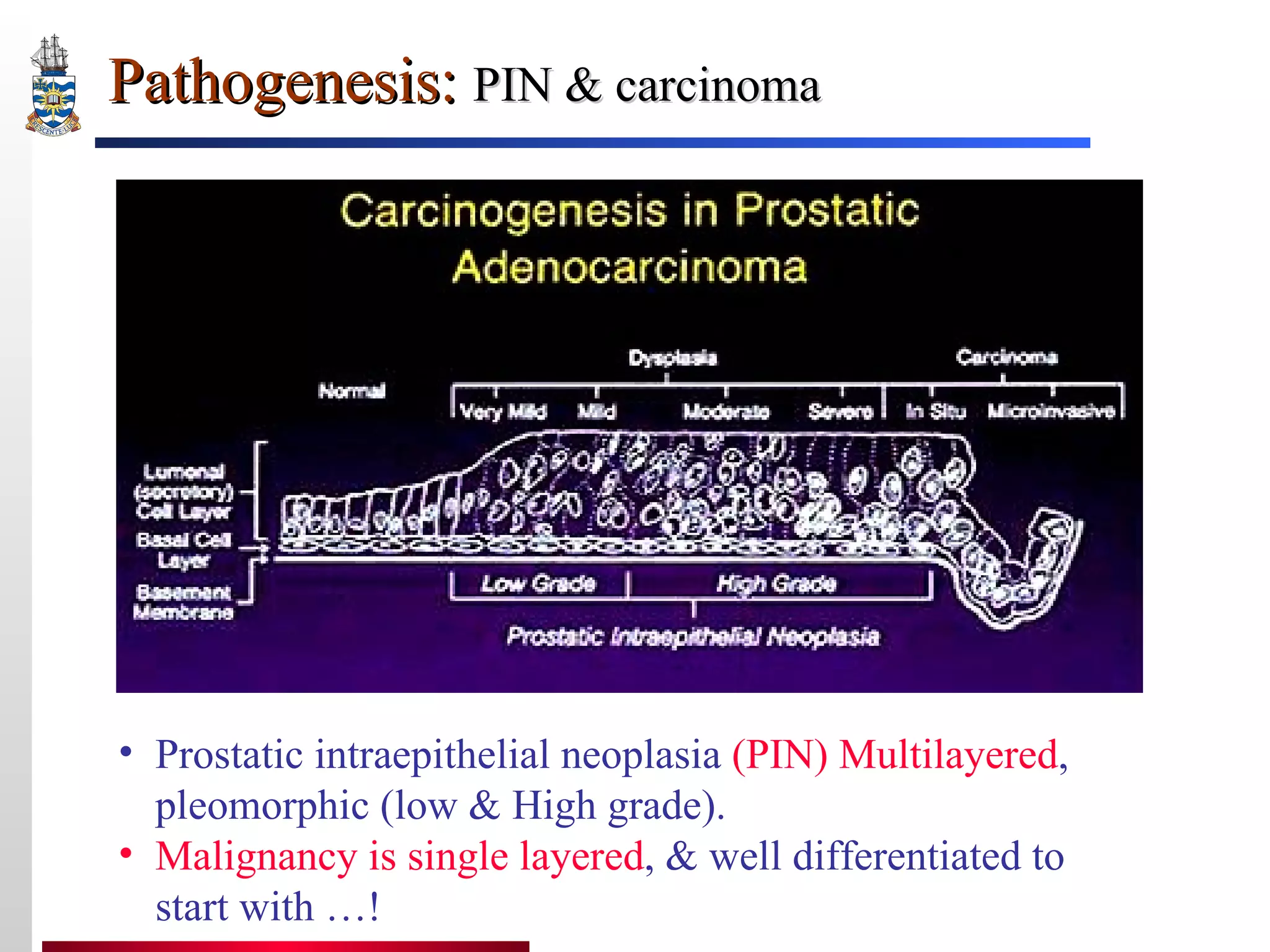
Pathogenesis:  PIN & carcinoma Prostatic intraepithelial neoplasia  (PIN) Multilayered , pleomorphic (low & High grade). Malignancy is single layered , & well differentiated to start with …!
Diagnosis: Clinical: Digital Rectal examination (DRE) hard, gritty, fixed tumor. Loss of median groove. Imaging: Ultrasonography (transrectal), CT Scan, MRI.  Laboratory: Tumor Marker – PSA  Biopsy - TURP Note: None of these methods can reliably detect small cancers & microscopic occult cancers may remain in-situ for several years. (PSA misleading*). Occult cancer is more common than clinical ca.
BPH with Adenocarcinoma:
BPH with Adenocarcinoma: Ca Ca BPH BPH
“ The only gracious way to accept an insult is to ignore it. If you can’t ignore it, top it.  If you can’t top it, laugh at it. If you can’t laugh at it, it’s probably  deserved ...! ”    –Joseph Russell Lynes
Adeno-Ca Prostate Posterior Lateral lobes: Carcinoma Rectal examination. Solid, hard, adenocarcinoma
Adeno-Ca Prostate
Adeno-Carcinoma + BPH
Adeno Carcinoma + BPH Stone Solid-Ca Cystic, soft BPH
PIN:  Crowding, stratification Pleomorphism Nuclear enlargement. Low grade PIN   High grade PIN   Grade II - III  
Prostatic Carcinoma: grade 4
Adenocarcinoma Prostate: (High grade)
Gleason Grading & Scoring of Prostatic Ca.
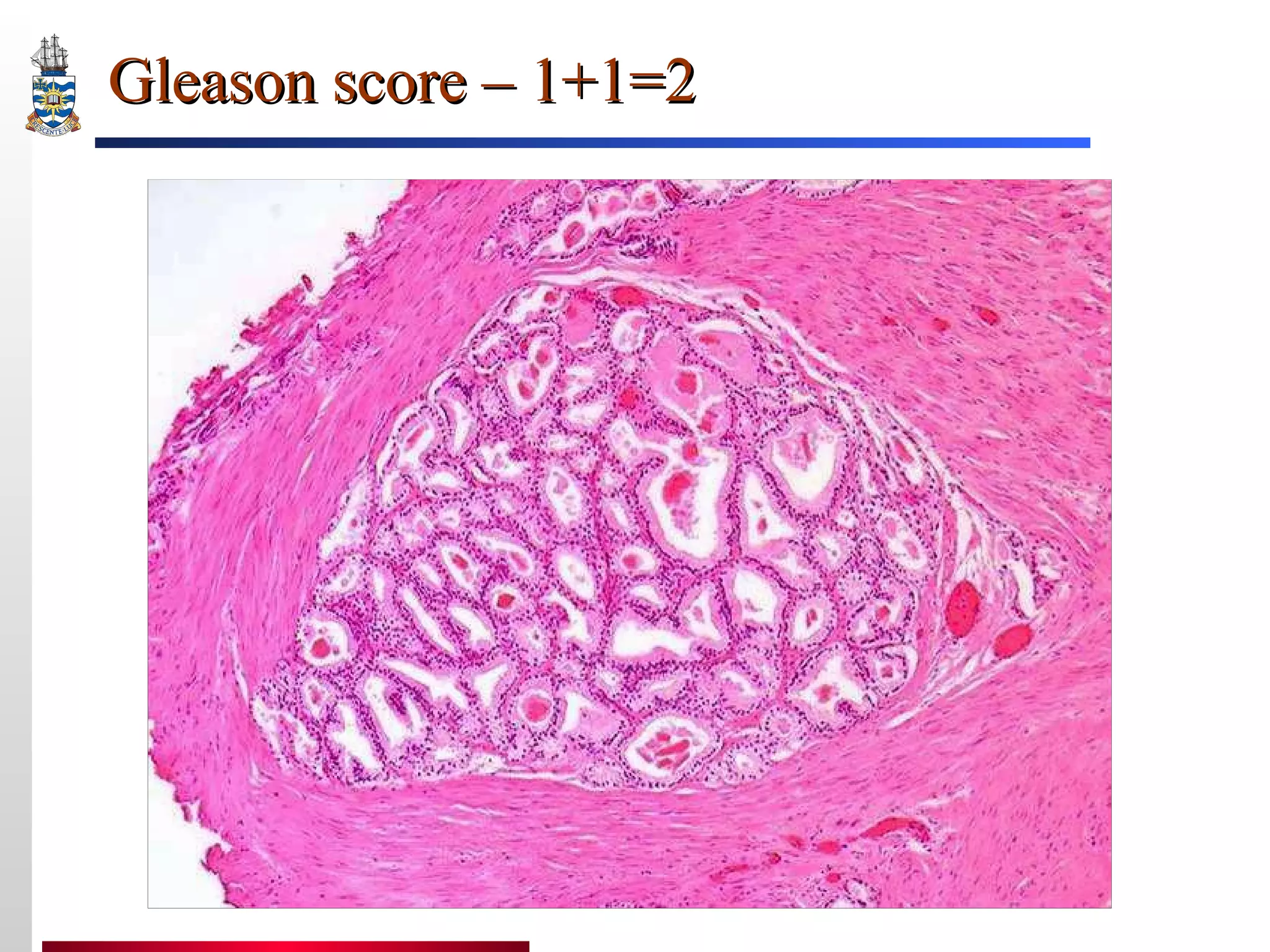
Gleason Grading & Scoring. Grade/Pattern 1  – well defined glands with limited infiltration of the surrounding tissue.  Grade/Pattern 2  – not well demarcated, pleopmorphic cells. Grade/Pattern 3  – Crowding of glands, irregular glands. Grade/Pattern 4  – Fusion of glands. Grade/Pattern 5  – cell clusters, No clear gland structure. Gleason Score:  Add to most prominent grades in the slide. E.g. 3+4=7 Prostate Cancer
Gleason score – 1+1=2
Gleason score – 2+2=4
Prostate Cancer – Gleason grade 3 Gleason grade 3: Pleomorphic glands. There is considerable variation in size, shape, and spacing of the glands. The glands are haphazardly infiltrating the stroma; however, they are still discrete (i.e. there is no fusion of glands - a hallmark of Gleason grade 4). Some of the glands have occluded or abortive lumens.
? Gleason Grade 4 – Gland Fusion, no stroma
Small irregular nests & ribbons - Gleason grade 4+4.   Prostate Cancer
Prostate Cancer-High grade. Grade 5 – sheets, no attempts at gland or clustering.
Most prostatic tumours include components of two or more patterns and therefore current practice gives the grade of the two most common components and their sum.  This is known as the combined Gleason grade or score. For example, in this image many glands in this example are fused (Gleason grade 4); others maintain individual outlines but are closely packed with their neighbours (Gleason grade 3).  Therefore, the score is 7 (4+3). Prostate Cancer High grade
Prostate Ad.Ca: Benign: Double layer, Secretion (clear cytopl) Uniform cells Papillary folds Malignant Single / crowded. Less/no secretion. Uniform/Pleomorphic No papillary folds. But crowding & clustering. Normal Ca. Normal Ca.
Prostate Cancer Poorly differentiated: Normal Gl. Malignant cells
Adenocarcinoma – PSA IPx +ve :
Prognosis of Adenocarcinoma: Grade & Stage    Prognosis.  Gleason score 2-4 – well differentiated. Gleason score 8-10 – poorly differentiated. Urinary obstruction Metastasize to lymph nodes and bones. Bladder, kidney damage - Hematuria. Spread to rectum – bleeding. Spread to Lungs or liver – rare.
Ca Prostate – Stage & Prognosis: <10%  Evident distant metastases  D2  17-20%  Metastases to regional lymph nodes, or extensive regional spread  D1  33-39%  Invades seminal vesicle  C2  40-50%  Invades capsule of prostate  C1  62%  Larger palpable nodule  B2  70-75%  Palpable nodule in one lobe but <1.5 cm in diameter  B1  50%  Incidental, >5% of volume, or high grade  A2  93-98%  Incidental, <5% of volume  A1  10y Survival  Definition  Stage
Transitional cell Neoplasms: 90% of bladder ca. Precursor – papilloma Dysplasia, in-situ ca, Papillary carcinoma.
“ The weak can never forgive. Forgiveness is the attribute of the strong.”    –Mohandas Gandhi
Urinary Calculi: Dr. Shashidhar Venkatesh Murthy Associate Professor & Head of Pathology
Nephrolithiasis Usually unilateral,  small 1-3 mm ,  Flank pain & tenderness – renal capsule. Passage marked by Paroxysmal, intense colicky pain in the back (loin) with radiation to anterior (renal or ureteral &quot;colic“) “ writhing in pain, pacing about, and unable to lie still” Hematuria macro/micro Larger stones that cannot pass produce hydronephrosis or hydroureter.
Levels - Clinical symptoms Ureteropelvic junction  - deep flank pain No radiation. Distension of the renal capsule. (Symp. T11-L2) Ureter  – Acute, severe, colicky pain in the flank and ipsilateral lower abdomen with radiation to the testes/vulva (ilioinguinal n.). nausea / vomiting. Upper ureter – cholecystitis. Middle – appendicitis Distal ureter – Pelvic Infl. Dis.  Ureterovesical junction  - Cause irritative voiding, urinary frequency and dysuria. Calcium Oxalate
Nephrolithiasis:  Organic matrix(3%) + salts (97%) ~ Calcium stones (80%):  oxalate/phosphate/urate salts.  Increased gut absorption or defective tubular reabsorphtion of calcium – Common, high pH. Hyperparathyroidism (10%) Hyperuricosuria – high pH Struvite Stones (15%)  magnesium ammonium phosphate (triple phos). Staghorn stone. Chronic UTI with gram-negative rods (split urea) pH >7 Proteus, Pseudomonas,  and  Klebsiella  (not E. coli) .  Uric acid stones (6%):   pH <5.5, high protein (meats), malignancy, 25% have gout.  Cystine stones (2%)  Genetic disorder  - Failure of reabsorption  Calcium Oxalate
  Small renal calculus that would likely respond to extracorporeal shock-wave lithotripsy
Nephrolithiasis: Hypercalciuria, Hypocitraturia  - commonest risk factor. A positive family history in  54%. UTI in 62%, recurrent UTI in 60%  (T.Phosphate). Significant association with citrate & Phosphate excretion and UTI. Stone analysis, together with serum and 24-hour urine metabolic evaluation crucial for management.
Staghorn: (Triple Phos/Struvite) 10% of nephrolithiasis. Large stone moulds to pelvis and calyceal system. Secondary to obstruction / infection proteus sp. Proteus – break urea to form ammonia (alk. ph) Triple (struvite) Phos.  magnesium ammonium phosphate. Chronic irritation, sq metaplasia & sq carcinoma  rarely occur.
Staghorn Calculus:
Staghorn Calculus
Complications: Hydronephrosis Renal failure Ureteral stricture Infection, sepsis Urine extravasation Perinephric abscess Xanthogranulomatous pyelonephritis
Hydronephrosis:
CPC-4.3– REN–BPH Pathology - Core Learning Issues:  Overview of gross & microscopic Pathology of Prostate BPH & Prostatic cancer. Laboratory diagnosis of prostatic tumors. (debate) Occult prostatic cancers (Recent media report on a Pathology report of cancer later denied). Pathology overview of chronic urinary retention.. Pathology of Nephrolithiasis, common types & their clinical presentation & Diagnosis. Basic science - Core Learning Issues:  Anatomy & histology of Prostate gland. Prostate gland function, hormonal control.
“ Pleasure &  Pain ,  Happiness &  Suffering are our teachers”.  Through their impact  on the mind  “ Character ” develops.
Prostate: M ost likely site of  ? pathology Benign Hyperplasia. Prostatitis Stone formation Adenocarcinoma Transitional carcinoma
62y male chronic urinary retention.  ? Diagnosis Prostatic carcinoma  Benign P. Hyperplasia Bladder carcinoma Trabeculations Bladder hypertrophy
BPH:  what feature is shown ? Bladder Wall Thickening trabeculation Stone formation Ball valve obstruction Enlarged lateral lobes
Kidney: What type of  stone ? Oxalate & calcium Calcium phosphate Pure Uric acid Triple phosphate Cystine
74y M, dysuria, hematuria, prostate  ? Diagnosis Prostatitis Benign Prostatic Hyperpl. Low grade carcinoma Transitional carcinoma High grade Carcinoma.
74y male, dysuria, hematuria, prostate  ? Diagnosis Prostatitis BPH Adenocarcinoma Transitional carcinoma BPH with carcinoma
70y backpain, DRE-rock-hard, enlarged prostate. X-rays show multicentric, osteoblastic lesions of the lumbar vertebral bodies. An  orchiectomy  is performed.  What is the rationale for this surgical procedure?   Leydig cells release tumor chemotactic factors. Prostate carcinomas frequently metastasize to the gonads. Sertoli cells release tumor chemotactic factors. The tumor is well known to invade the testes. Tumor cells exhibit androgen-dependent growth.
68y male, painless hematuria 4wk. Bladder image. What is the most likely risk factor? Bladder calculi Chronic HPV infection Diabetes mellitus Exposure to Azo dyes Previous catheterization.
68y male, Image shows prostate biopsy. What is the most likely  complication  of this lesion ? Destructive vertebral lesions. Bladder hypertrophy. Calcium oxalate nephrolithiasis. Gram negative septicaemia. Lead to Prostatic carcinoma
68y man elevated serum PSA (>6 ng/mL). Biopsy of the prostate reveals a poorly differentiated adenocarcinoma. Which of the following best describes the putative precursor of this neoplasm?  Basal cell hyperplasia Chronic prostatitis Obstructive uropathy Nodular BPH PIN.
55y man, urinary urgency and frequency. DRE enlarged prostate. PSA of 4.9 (normal = 0–4). Needle biopsy - two cancer-positive needle cores: Gleason grades 4 and 5. Which of the following is the appropriate diagnosis?  Adenocarcinoma Nodular BPH PIN-3 Squamous Carcinoma Transitional Carcinoma
68y male, Image shows prostate biopsy. What is the most likely complication? Destructive vertebral lesions. Bladder hypertrophy. Calcium oxalate nephrolithiasis. Gram negative septicemia. Infertility.
68y male, Image shows Bladder & prostate. What complication is  not  shown? Invasive bladder cancer. BPH. Ball valve obstruction. Bladder diverticula. Tumor necrosis & hemorrhage.
Today is the First Day,  of  Rest of Your Life...!
CPC-4.3– KFP Questions: BPH – etiology, Pathogenesis, morphology & complications. Testosterone, DHT, Fenosteride. TURP – brief notes. Prostatic carcinoma – etiology, Pathogenesis, morphology & spread, metastases. Staging, Grading & Prognosis. Urolithiasis : Renal stones  Other obstructive uropathy.
Referral - if >5 mm or has not passed after two weeks. US  X-Ray no contrast Helical CT  Management
70y male Problems passing urine.  Difficult to start even though he badly needs to go. After passing.. He feels the urge but cannot pass..  High frequency, 2-3 times in the night.  For several months getting slowly worse  Now urine dribbles, Added to this, the force with which he can urinate is very much reduced and it is difficult for him to avoid soiling his clothing.
70y male What are differential diagnosis? What complication he has? Should PSA be tested for all? When is biopsy indicated? Does BPH lead to Carcinoma? What is the best screening test for Ca? What investigations are available?
Prostatic neoplasms: Overview Rare Normal Microscopic focus of adenocarcinoma Any site Commoner than clinical carcinoma; 80% of glands over 75 years Latent (incidental) carcinoma Bone Lymph node Lung Liver Raised in approximately 60% of cases Infiltrating adenocarcinoma Posterior subcapsular zone Common tumour; peak 60-85 years Clinical (symptomatic) carcinoma None Normal Nodular hyperplasia of glands and stroma Peri-urethral zone 75% of men >70 years Benign nodular hyperplasia Metastases Serum acid phosphatase Morphology Location in gland Incidence Condition

Pathology of Prostate

  • 1.
    CPC4.3- MR68y Carpenter Lives in Kuranda. He attends the GP for a ‘check up’ and towards the end of the consultation mentions casually: “ I’ve also got a few things happening with the old waterworks , Doc.” Urine frequency (4-5xday; 2xnight); Terminal dribbling . Worsening over months - ? couple of years ’.
  • 2.
    CPC4.3- MatthewRice 68y Carpenter Urgency yes, but then doesn’t pass much urine on forcing. Cannot empty the bladder empty. Urinary stream - poor Urinary incontinence - occasional but embarrassing. Dysuria, Haematuria No Bowel habit no change, prone to slight constipation Sexual history - heterosexual; 2nd wife Dawn, monogamous for 23 years. Has early morning erections, but difficulty sustaining an erection . No hx STIs
  • 3.
    CPC4.3- DifferentialDiagnosis Benign prostatic hyperplasia ( BPH ) Prostatitis, Cancer, stones , rectal tum. Strictures, UTI, Diuretics, Spinal injury, Autonomic neuropathy ??? What other causes of urinary obstruction? urine retention , lack of urine , urinary dribbling urinary urgency , urination pain , weak urination reduced urine (links to wrongdiagnosis.com)
  • 4.
    Pathology Symptom Testiculartum Gynaecomastia Testicular tum teratoma. Raised α FP/HCG Prostate carcinoma Raised acid Phos. Prostate carcinoma Bone pain STI, syphilis Ulceration UTI, urethritis, gonorrhoea Discharge Prostate, stone, stricture, tumor Retention Prostate, UTI, Polyuria Frequency Bladder neck obstruction. Prostate BPH (rarely stricture/tumor) Poor stream / dribbling. Inflammation urethra, UTI Dysuria
  • 5.
    Causes of ObstructiveUropathy INTRINSIC: Calculi - Lithiasis Strictures – congenital, inflammatory Tumors – Transitional cell Ca. Blood clots – UTI, Glomerulonephritis EXTRINSIC: Pregnancy Inflammation- PID, peritonitis, diverticulitis, salphingitis. Tumors: Prostate , rectum, bladder, ovaries etc.
  • 6.
    When you lose,don’t lose the lesson. Lao Tzu Everyone makes Mistakes, only intelligent learn from it.
  • 7.
    CPC 4.2: CoreLearning Issues: Pathology Major CLI : Nephrolithiasis – Types, Pathogenesis, clinical features. Tumors of Kidney . – Renal cell carcinoma, Nephroblastoma, Disorders of Prostate – Prostatitis, BPH and carcinoma. Urinary tract infection – Microbiology common organisms and their lab diagnosis. Pathology Minor CLI : Differential diagnosis of hematuria. Tumors of Urinary tract and bladder . Cystic Diseases of Kidney Hydronephrosis . Recurrent UTIs Congenital disorders of kidney.
  • 8.
    Pathology of ProstateDr. Shashidhar Venkatesh Murthy Associate Professor & Head of Pathology
  • 9.
    Introduction Anatomy –5 lobes. Function – Semen, acid phosphatase. Hormone response – Estrogen like Median lobe – BPH Lateral/Posterior lobes - Cancer) Enlargement – Inflammation / growth Neoplastic / Non neoplastic growth. BPH / Cancer.
  • 10.
  • 11.
    Male Urogenital System- anatomy Ca BPH
  • 12.
  • 13.
    Normal Histology: Fibro-Musclular-GlandTwo Layer Ep. Fibromuscular stroma Secretions
  • 14.
    Enlargement of Prostate:Inflammations – infections BPH – Benign Prostatic Hyperplasia Neoplasms – Carcinoma. SAP Morph -DRE location Incidence Disease Raised. Adenocarcinoma Hard stony, irregular, fixed No median grove. Posterior subcapsular Latent is Common. Clinical not. Carcinoma normal Nodular Hyperplasia, Firm, smooth Median grove Central / periurethra >80% at 80y BPH
  • 15.
    Prostatitis: Inflammation, edema,rectal pain, urinary obstruction. Acute suppurative prostatitis E.coli, rarely Staph or N. gonorrhoeae Chronic non-specific prostatitis recurrent acute  fibrosis, lymph + plasma. Granulomatous prostatitis- BPH, infarction, post TURP, idiopathic, TB, or allergic(eosinophilic).
  • 16.
  • 17.
    BPH-Introduction Common non-neoplastic hormone induced hyperplasia. 75% among men aged 70-80years Over 90% in people aged over 90y Involves peri urethral & central zones. Rare before the age of 40y. Hormone induced – Androgens. Castration  no BPH
  • 18.
    Patho-Physiology: Testosterone  DHT  GF Finasteride
  • 19.
    BPH-Morphology Microscopically, nodular prostatic hyperplasia consists of nodules of glands and intervening stroma . (both) The glands variably sized, with larger glands have more prominent papillary infoldings, double layered epithelium (like normal) some may be cystic with secretions. Nodular hyperplasia is NOT a precursor to carcinoma.
  • 20.
  • 21.
    BPH-mechanism of obstruction:Median lobe (3 rd lobe) Ball valve mechanism Obstruction. Urgency/hesitation..
  • 22.
    BPH-Bladder Gross –Identify Cues? Trabeculations Hypertrophy of wall Stone - urolithiasis Inflammation Median lobe- ball valve. Enlarged prostate.
  • 23.
    BPH-Bladder morphology: Hypertrophyof wall. Trabeculation Median lobe protrusion (ball valve) Prostatic enlargement.
  • 24.
  • 25.
    Mucosal trabeculation: Muscularhypertrophy Bulging BPH central Lobes
  • 26.
    TURP-Bits (Diagnosis +Treat ) Transurethral resection of Prostate - TURP Partial removal by resectoscope. Complications: Hemorrhage, Infection, Granulomatous prostatitis Retrograde ejaculation.
  • 27.
    BPH: Nodular,Gland+stromal hyperplasia Cystic Gl Nodule of BPH Secretions
  • 28.
    BPH - MorphologyCorpora Amylacea
  • 29.
    BPH-Complications: Obstructive UropathyBladder hypertrophy Trabeculation Diverticula formation Hydroureter – bilateral Hydronephrosis Lithiasis / stone. Secondary infection. Not a risk factor for Carcinoma prostate.
  • 30.
    Normal – Prostatitis - BPH
  • 31.
    Adenocarcinoma Prostate: Mostcommon cancer in elderly males. Adenocarcinoma. It is rare before the age of 50, but seen in over 70% of men over 70y old. Many of these carcinomas are small and clinically insignificant. (Incidental ca) Second common cause of death due to cancer in males. (First is lung carcinoma) Aetiology unknown - Hormones, genes & environment most likely. ( Not BPH )
  • 32.
  • 33.
  • 34.
    Pathogenesis: PIN& carcinoma Prostatic intraepithelial neoplasia (PIN) Multilayered , pleomorphic (low & High grade). Malignancy is single layered , & well differentiated to start with …!
  • 35.
    Diagnosis: Clinical: DigitalRectal examination (DRE) hard, gritty, fixed tumor. Loss of median groove. Imaging: Ultrasonography (transrectal), CT Scan, MRI. Laboratory: Tumor Marker – PSA Biopsy - TURP Note: None of these methods can reliably detect small cancers & microscopic occult cancers may remain in-situ for several years. (PSA misleading*). Occult cancer is more common than clinical ca.
  • 36.
  • 37.
  • 38.
    “ The onlygracious way to accept an insult is to ignore it. If you can’t ignore it, top it. If you can’t top it, laugh at it. If you can’t laugh at it, it’s probably deserved ...! ” –Joseph Russell Lynes
  • 39.
    Adeno-Ca Prostate PosteriorLateral lobes: Carcinoma Rectal examination. Solid, hard, adenocarcinoma
  • 40.
  • 41.
  • 42.
    Adeno Carcinoma +BPH Stone Solid-Ca Cystic, soft BPH
  • 43.
    PIN: Crowding,stratification Pleomorphism Nuclear enlargement. Low grade PIN  High grade PIN  Grade II - III 
  • 44.
  • 45.
  • 46.
    Gleason Grading &Scoring of Prostatic Ca.
  • 47.
    Gleason Grading &Scoring. Grade/Pattern 1 – well defined glands with limited infiltration of the surrounding tissue. Grade/Pattern 2 – not well demarcated, pleopmorphic cells. Grade/Pattern 3 – Crowding of glands, irregular glands. Grade/Pattern 4 – Fusion of glands. Grade/Pattern 5 – cell clusters, No clear gland structure. Gleason Score: Add to most prominent grades in the slide. E.g. 3+4=7 Prostate Cancer
  • 48.
  • 49.
  • 50.
    Prostate Cancer –Gleason grade 3 Gleason grade 3: Pleomorphic glands. There is considerable variation in size, shape, and spacing of the glands. The glands are haphazardly infiltrating the stroma; however, they are still discrete (i.e. there is no fusion of glands - a hallmark of Gleason grade 4). Some of the glands have occluded or abortive lumens.
  • 51.
    ? Gleason Grade4 – Gland Fusion, no stroma
  • 52.
    Small irregular nests& ribbons - Gleason grade 4+4.  Prostate Cancer
  • 53.
    Prostate Cancer-High grade.Grade 5 – sheets, no attempts at gland or clustering.
  • 54.
    Most prostatic tumoursinclude components of two or more patterns and therefore current practice gives the grade of the two most common components and their sum. This is known as the combined Gleason grade or score. For example, in this image many glands in this example are fused (Gleason grade 4); others maintain individual outlines but are closely packed with their neighbours (Gleason grade 3). Therefore, the score is 7 (4+3). Prostate Cancer High grade
  • 55.
    Prostate Ad.Ca: Benign:Double layer, Secretion (clear cytopl) Uniform cells Papillary folds Malignant Single / crowded. Less/no secretion. Uniform/Pleomorphic No papillary folds. But crowding & clustering. Normal Ca. Normal Ca.
  • 56.
    Prostate Cancer Poorlydifferentiated: Normal Gl. Malignant cells
  • 57.
  • 58.
    Prognosis of Adenocarcinoma:Grade & Stage  Prognosis. Gleason score 2-4 – well differentiated. Gleason score 8-10 – poorly differentiated. Urinary obstruction Metastasize to lymph nodes and bones. Bladder, kidney damage - Hematuria. Spread to rectum – bleeding. Spread to Lungs or liver – rare.
  • 59.
    Ca Prostate –Stage & Prognosis: <10% Evident distant metastases D2 17-20% Metastases to regional lymph nodes, or extensive regional spread D1 33-39% Invades seminal vesicle C2 40-50% Invades capsule of prostate C1 62% Larger palpable nodule B2 70-75% Palpable nodule in one lobe but <1.5 cm in diameter B1 50% Incidental, >5% of volume, or high grade A2 93-98% Incidental, <5% of volume A1 10y Survival Definition Stage
  • 60.
    Transitional cell Neoplasms:90% of bladder ca. Precursor – papilloma Dysplasia, in-situ ca, Papillary carcinoma.
  • 61.
    “ The weakcan never forgive. Forgiveness is the attribute of the strong.” –Mohandas Gandhi
  • 62.
    Urinary Calculi: Dr.Shashidhar Venkatesh Murthy Associate Professor & Head of Pathology
  • 63.
    Nephrolithiasis Usually unilateral, small 1-3 mm , Flank pain & tenderness – renal capsule. Passage marked by Paroxysmal, intense colicky pain in the back (loin) with radiation to anterior (renal or ureteral &quot;colic“) “ writhing in pain, pacing about, and unable to lie still” Hematuria macro/micro Larger stones that cannot pass produce hydronephrosis or hydroureter.
  • 64.
    Levels - Clinicalsymptoms Ureteropelvic junction - deep flank pain No radiation. Distension of the renal capsule. (Symp. T11-L2) Ureter – Acute, severe, colicky pain in the flank and ipsilateral lower abdomen with radiation to the testes/vulva (ilioinguinal n.). nausea / vomiting. Upper ureter – cholecystitis. Middle – appendicitis Distal ureter – Pelvic Infl. Dis. Ureterovesical junction - Cause irritative voiding, urinary frequency and dysuria. Calcium Oxalate
  • 65.
    Nephrolithiasis: Organicmatrix(3%) + salts (97%) ~ Calcium stones (80%): oxalate/phosphate/urate salts. Increased gut absorption or defective tubular reabsorphtion of calcium – Common, high pH. Hyperparathyroidism (10%) Hyperuricosuria – high pH Struvite Stones (15%) magnesium ammonium phosphate (triple phos). Staghorn stone. Chronic UTI with gram-negative rods (split urea) pH >7 Proteus, Pseudomonas, and Klebsiella (not E. coli) . Uric acid stones (6%): pH <5.5, high protein (meats), malignancy, 25% have gout. Cystine stones (2%) Genetic disorder - Failure of reabsorption Calcium Oxalate
  • 66.
      Small renalcalculus that would likely respond to extracorporeal shock-wave lithotripsy
  • 67.
    Nephrolithiasis: Hypercalciuria, Hypocitraturia - commonest risk factor. A positive family history in 54%. UTI in 62%, recurrent UTI in 60% (T.Phosphate). Significant association with citrate & Phosphate excretion and UTI. Stone analysis, together with serum and 24-hour urine metabolic evaluation crucial for management.
  • 68.
    Staghorn: (Triple Phos/Struvite)10% of nephrolithiasis. Large stone moulds to pelvis and calyceal system. Secondary to obstruction / infection proteus sp. Proteus – break urea to form ammonia (alk. ph) Triple (struvite) Phos. magnesium ammonium phosphate. Chronic irritation, sq metaplasia & sq carcinoma rarely occur.
  • 69.
  • 70.
  • 71.
    Complications: Hydronephrosis Renalfailure Ureteral stricture Infection, sepsis Urine extravasation Perinephric abscess Xanthogranulomatous pyelonephritis
  • 72.
  • 73.
    CPC-4.3– REN–BPH Pathology- Core Learning Issues: Overview of gross & microscopic Pathology of Prostate BPH & Prostatic cancer. Laboratory diagnosis of prostatic tumors. (debate) Occult prostatic cancers (Recent media report on a Pathology report of cancer later denied). Pathology overview of chronic urinary retention.. Pathology of Nephrolithiasis, common types & their clinical presentation & Diagnosis. Basic science - Core Learning Issues: Anatomy & histology of Prostate gland. Prostate gland function, hormonal control.
  • 74.
    “ Pleasure & Pain , Happiness & Suffering are our teachers”. Through their impact on the mind “ Character ” develops.
  • 75.
    Prostate: M ostlikely site of ? pathology Benign Hyperplasia. Prostatitis Stone formation Adenocarcinoma Transitional carcinoma
  • 76.
    62y male chronicurinary retention. ? Diagnosis Prostatic carcinoma Benign P. Hyperplasia Bladder carcinoma Trabeculations Bladder hypertrophy
  • 77.
    BPH: whatfeature is shown ? Bladder Wall Thickening trabeculation Stone formation Ball valve obstruction Enlarged lateral lobes
  • 78.
    Kidney: What typeof stone ? Oxalate & calcium Calcium phosphate Pure Uric acid Triple phosphate Cystine
  • 79.
    74y M, dysuria,hematuria, prostate ? Diagnosis Prostatitis Benign Prostatic Hyperpl. Low grade carcinoma Transitional carcinoma High grade Carcinoma.
  • 80.
    74y male, dysuria,hematuria, prostate ? Diagnosis Prostatitis BPH Adenocarcinoma Transitional carcinoma BPH with carcinoma
  • 81.
    74y male, dysuria,hematuria, prostate ? Diagnosis Prostatitis BPH Adenocarcinoma Transitional carcinoma BPH with carcinoma
  • 82.
    70y backpain, DRE-rock-hard,enlarged prostate. X-rays show multicentric, osteoblastic lesions of the lumbar vertebral bodies. An orchiectomy is performed. What is the rationale for this surgical procedure? Leydig cells release tumor chemotactic factors. Prostate carcinomas frequently metastasize to the gonads. Sertoli cells release tumor chemotactic factors. The tumor is well known to invade the testes. Tumor cells exhibit androgen-dependent growth.
  • 83.
    68y male, painlesshematuria 4wk. Bladder image. What is the most likely risk factor? Bladder calculi Chronic HPV infection Diabetes mellitus Exposure to Azo dyes Previous catheterization.
  • 84.
    68y male, Imageshows prostate biopsy. What is the most likely complication of this lesion ? Destructive vertebral lesions. Bladder hypertrophy. Calcium oxalate nephrolithiasis. Gram negative septicaemia. Lead to Prostatic carcinoma
  • 85.
    68y man elevatedserum PSA (>6 ng/mL). Biopsy of the prostate reveals a poorly differentiated adenocarcinoma. Which of the following best describes the putative precursor of this neoplasm? Basal cell hyperplasia Chronic prostatitis Obstructive uropathy Nodular BPH PIN.
  • 86.
    55y man, urinaryurgency and frequency. DRE enlarged prostate. PSA of 4.9 (normal = 0–4). Needle biopsy - two cancer-positive needle cores: Gleason grades 4 and 5. Which of the following is the appropriate diagnosis? Adenocarcinoma Nodular BPH PIN-3 Squamous Carcinoma Transitional Carcinoma
  • 87.
    68y male, Imageshows prostate biopsy. What is the most likely complication? Destructive vertebral lesions. Bladder hypertrophy. Calcium oxalate nephrolithiasis. Gram negative septicemia. Infertility.
  • 88.
    68y male, Imageshows Bladder & prostate. What complication is not shown? Invasive bladder cancer. BPH. Ball valve obstruction. Bladder diverticula. Tumor necrosis & hemorrhage.
  • 89.
    Today is theFirst Day, of Rest of Your Life...!
  • 90.
    CPC-4.3– KFP Questions:BPH – etiology, Pathogenesis, morphology & complications. Testosterone, DHT, Fenosteride. TURP – brief notes. Prostatic carcinoma – etiology, Pathogenesis, morphology & spread, metastases. Staging, Grading & Prognosis. Urolithiasis : Renal stones Other obstructive uropathy.
  • 91.
    Referral - if>5 mm or has not passed after two weeks. US X-Ray no contrast Helical CT Management
  • 92.
    70y male Problemspassing urine. Difficult to start even though he badly needs to go. After passing.. He feels the urge but cannot pass.. High frequency, 2-3 times in the night. For several months getting slowly worse Now urine dribbles, Added to this, the force with which he can urinate is very much reduced and it is difficult for him to avoid soiling his clothing.
  • 93.
    70y male Whatare differential diagnosis? What complication he has? Should PSA be tested for all? When is biopsy indicated? Does BPH lead to Carcinoma? What is the best screening test for Ca? What investigations are available?
  • 94.
    Prostatic neoplasms: OverviewRare Normal Microscopic focus of adenocarcinoma Any site Commoner than clinical carcinoma; 80% of glands over 75 years Latent (incidental) carcinoma Bone Lymph node Lung Liver Raised in approximately 60% of cases Infiltrating adenocarcinoma Posterior subcapsular zone Common tumour; peak 60-85 years Clinical (symptomatic) carcinoma None Normal Nodular hyperplasia of glands and stroma Peri-urethral zone 75% of men >70 years Benign nodular hyperplasia Metastases Serum acid phosphatase Morphology Location in gland Incidence Condition