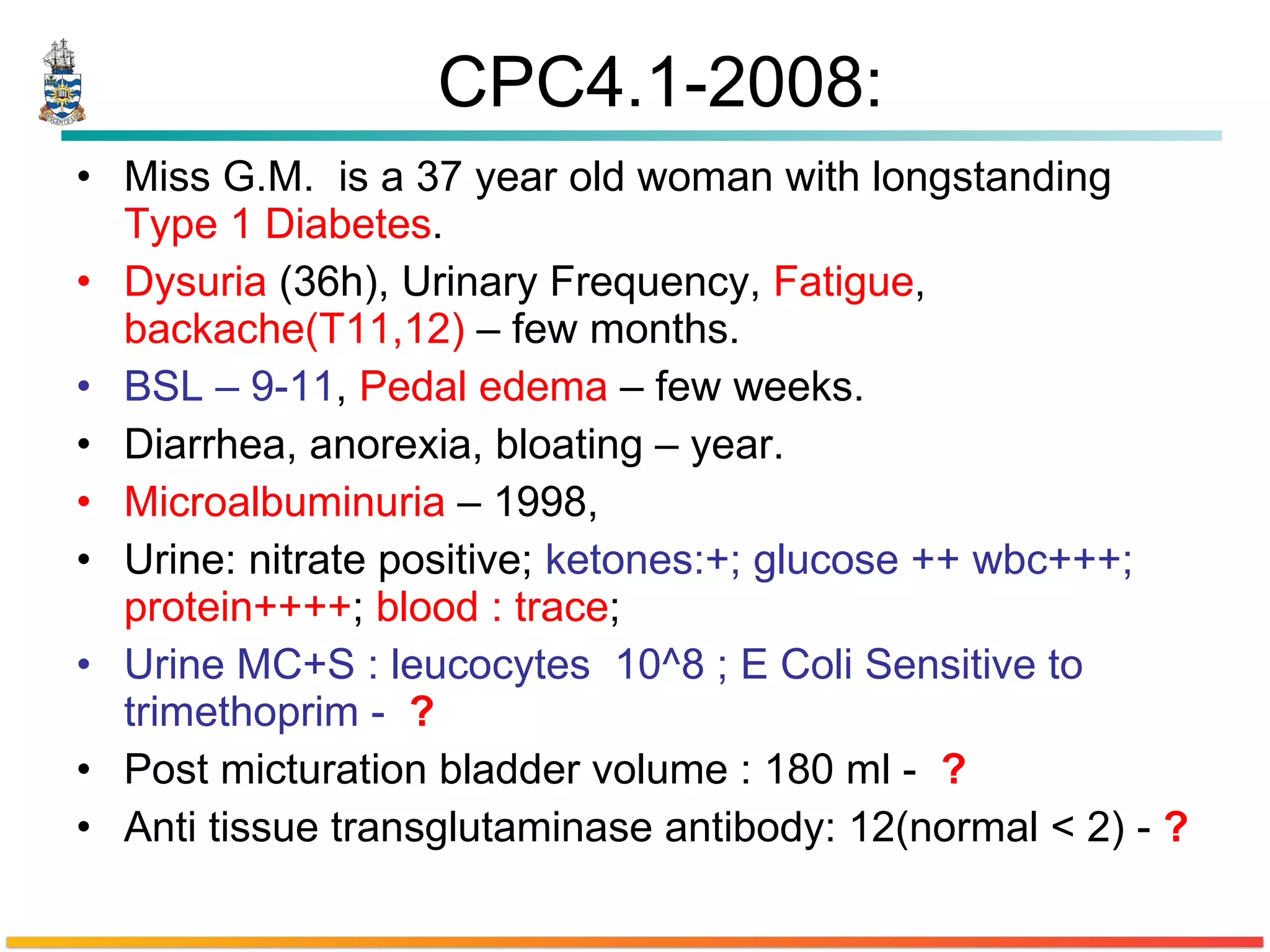
CPC4.1-2008: Miss G.M.  is a 37 year old woman with longstanding  Type 1 Diabetes .  Dysuria  (36h), Urinary Frequency,  Fatigue ,  backache(T11,12)  – few months. BSL – 9-11 ,  Pedal edema  – few weeks. Diarrhea, anorexia, bloating – year. Microalbuminuria  – 1998,  Urine: nitrate positive;  ketones:+; glucose ++ wbc+++;   protein++++ ;  blood : trace ;  Urine MC+S : leucocytes  10^8 ; E Coli Sensitive to trimethoprim -  ? Post micturation bladder volume : 180 ml -  ? Anti tissue transglutaminase antibody: 12(normal < 2) -  ?
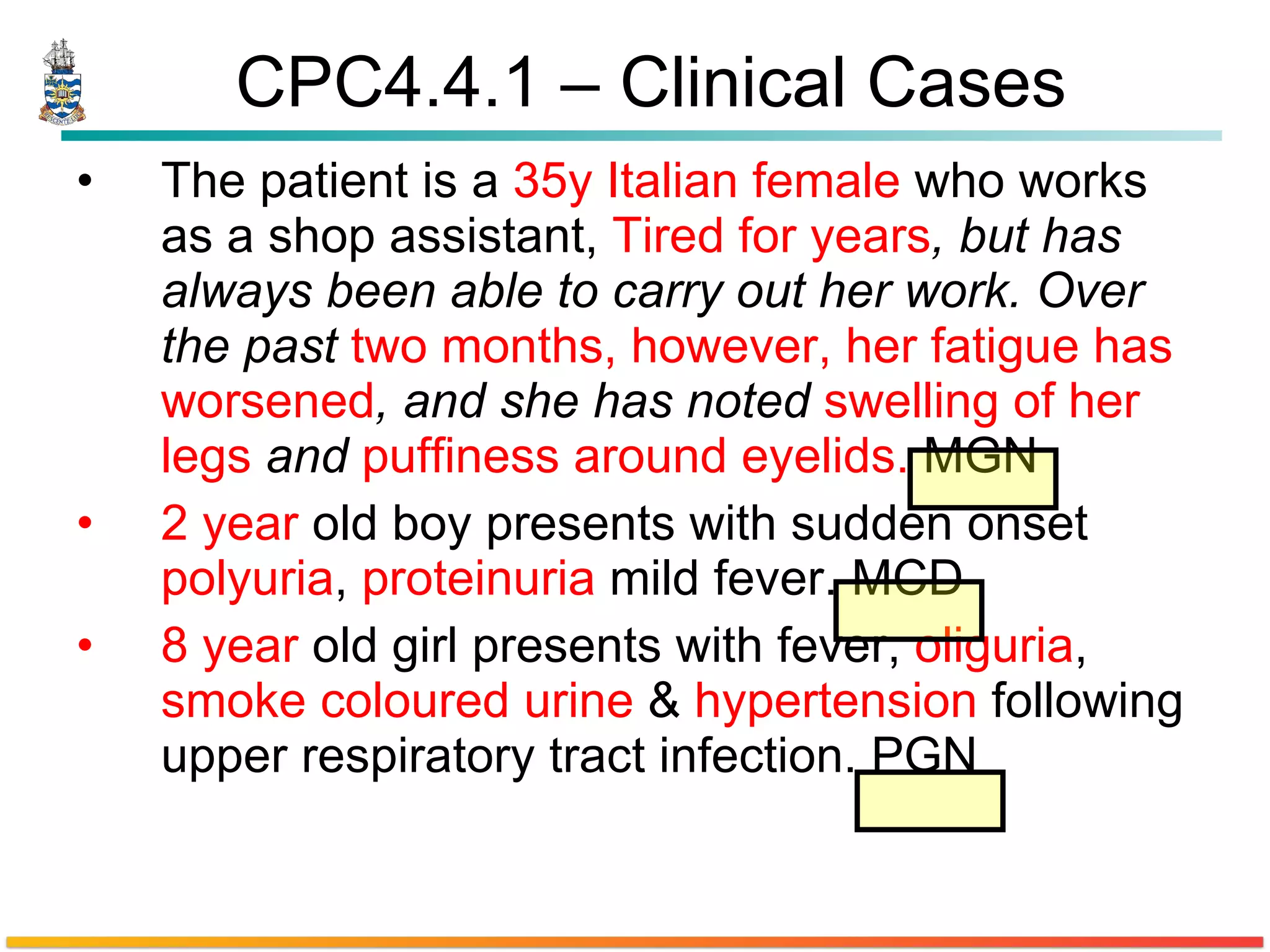
CPC4.4.1 – Clinical Cases  The patient is a  35y Italian female  who works as a shop assistant,  Tired for years , but has always been able to carry out her work. Over the past  two months, however, her fatigue has worsened , and she has noted  swelling of her legs  and  puffiness around eyelids.  MGN 2 year  old boy presents with sudden onset  polyuria ,  proteinuria  mild fever. MCD 8 year  old girl presents with fever,  oliguria ,  smoke coloured urine  &  hypertension  following upper respiratory tract infection. PGN
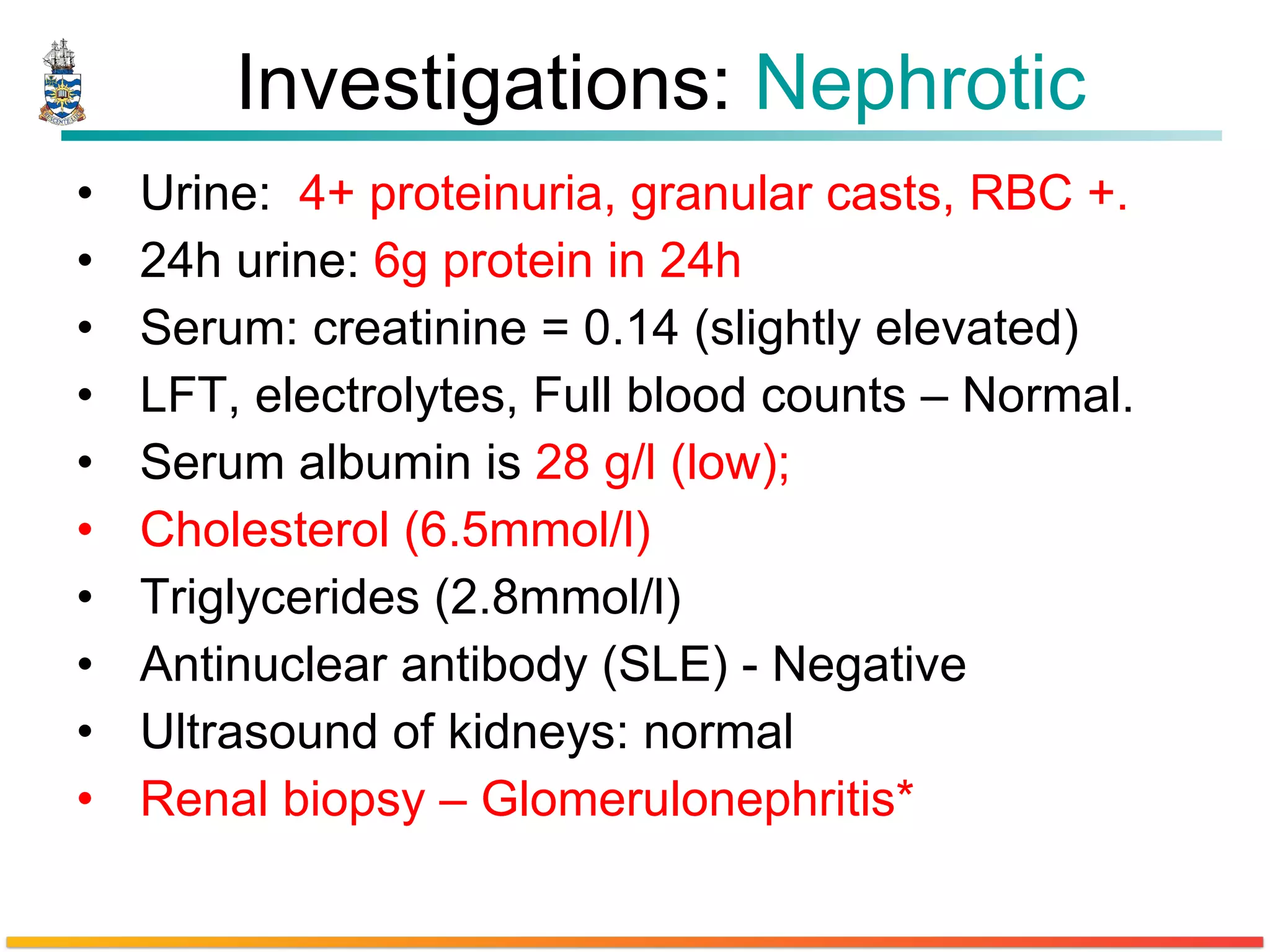
Investigations:  Nephrotic Urine:  4+ proteinuria, granular casts, RBC +. 24h urine:  6g protein in 24h  Serum: creatinine = 0.14 (slightly elevated) LFT, electrolytes, Full blood counts – Normal. Serum albumin is  28 g/l (low);   Cholesterol (6.5mmol/l)   Triglycerides (2.8mmol/l) Antinuclear antibody (SLE) - Negative Ultrasound of kidneys: normal  Renal biopsy – Glomerulonephritis*
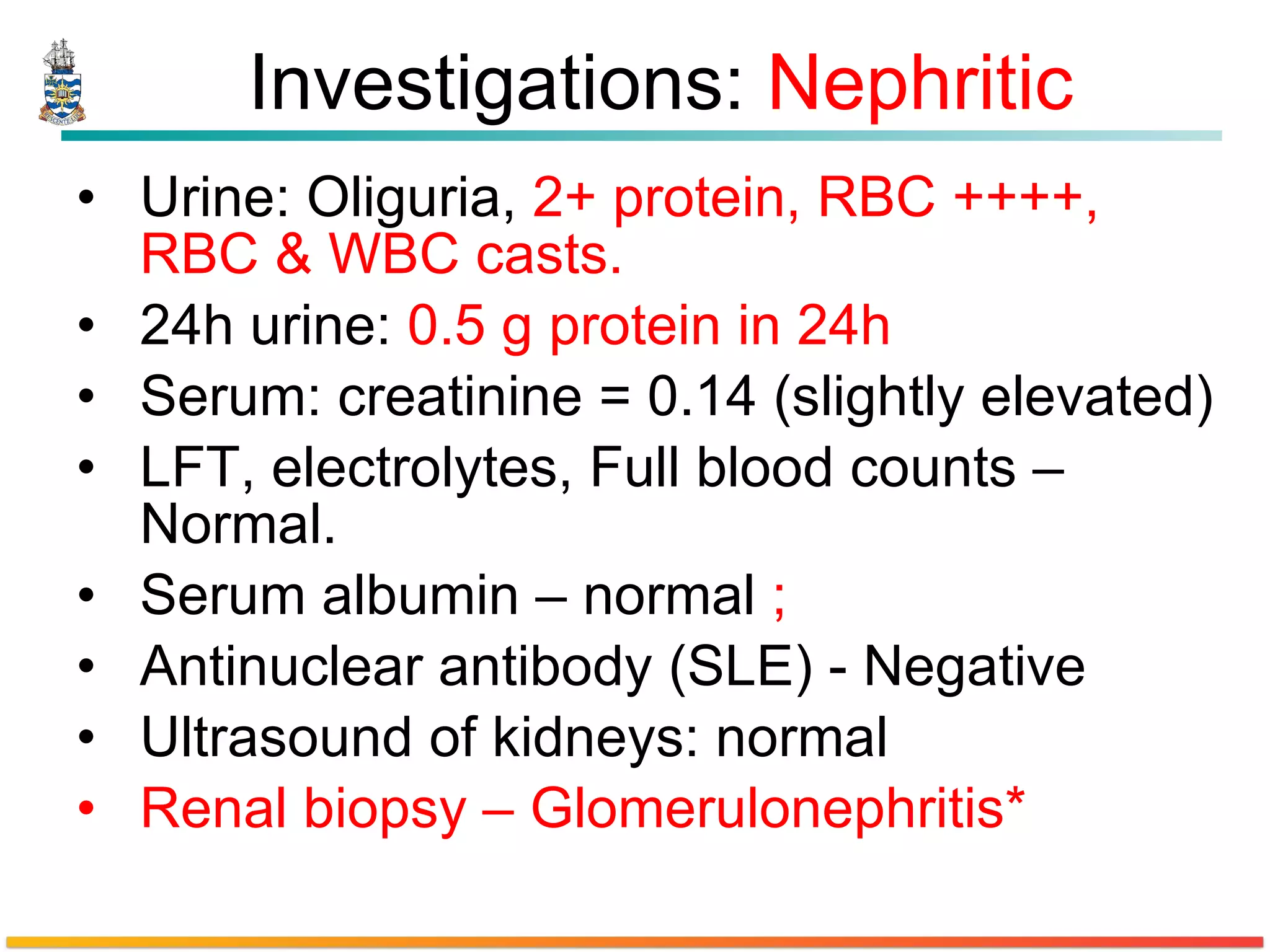
Investigations:  Nephritic Urine: Oliguria,  2+ protein, RBC ++++, RBC & WBC casts. 24h urine:  0.5 g protein in 24h  Serum: creatinine = 0.14 (slightly elevated) LFT, electrolytes, Full blood counts – Normal. Serum albumin – normal  ;   Antinuclear antibody (SLE) - Negative Ultrasound of kidneys: normal  Renal biopsy – Glomerulonephritis*
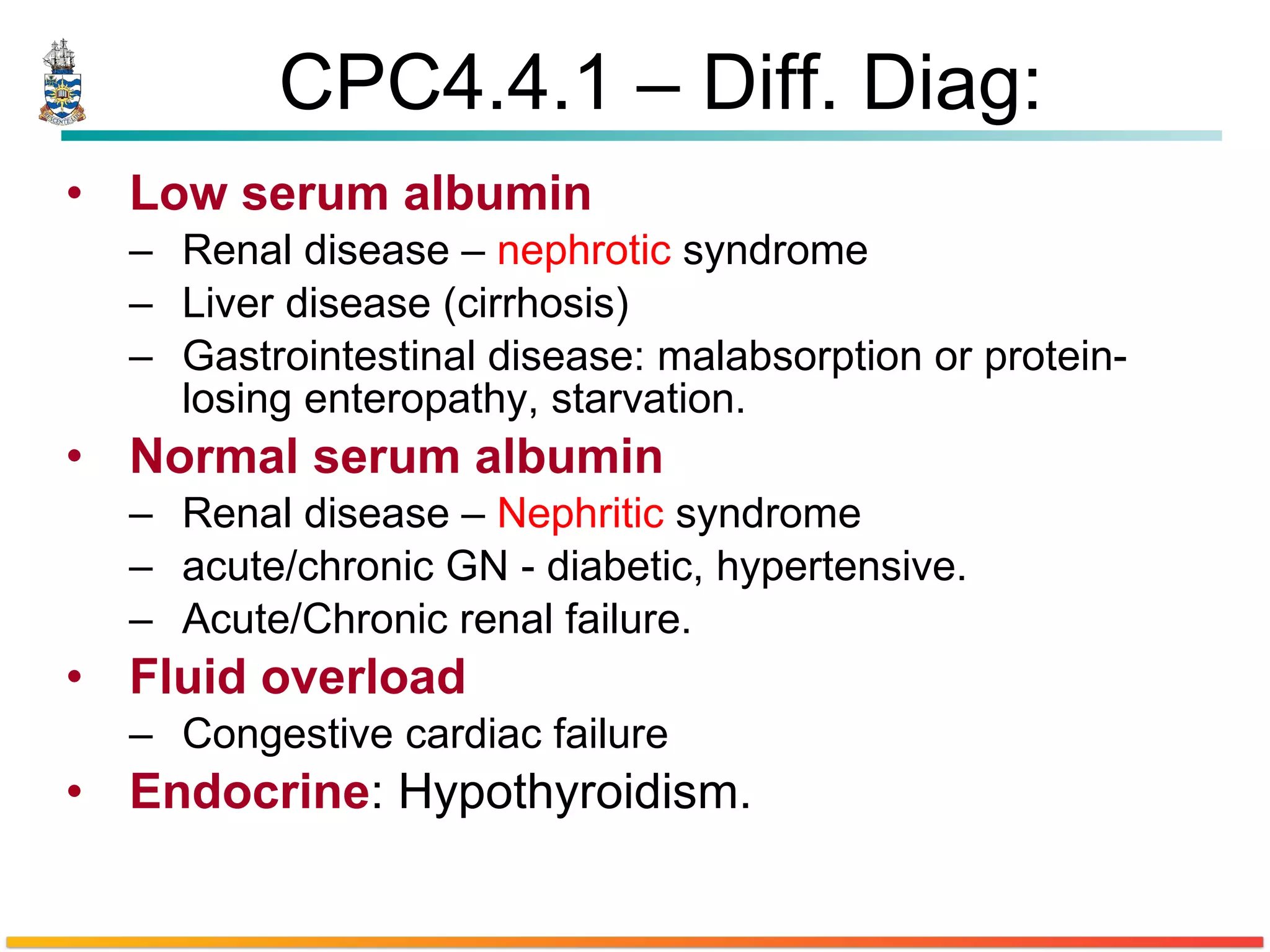
CPC4.4.1 – Diff. Diag: Low serum albumin Renal disease –  nephrotic  syndrome Liver disease (cirrhosis) Gastrointestinal disease: malabsorption or protein-losing enteropathy, starvation. Normal serum albumin Renal disease –  Nephritic  syndrome  acute/chronic GN - diabetic, hypertensive. Acute/Chronic renal failure. Fluid overload Congestive cardiac failure Endocrine : Hypothyroidism.
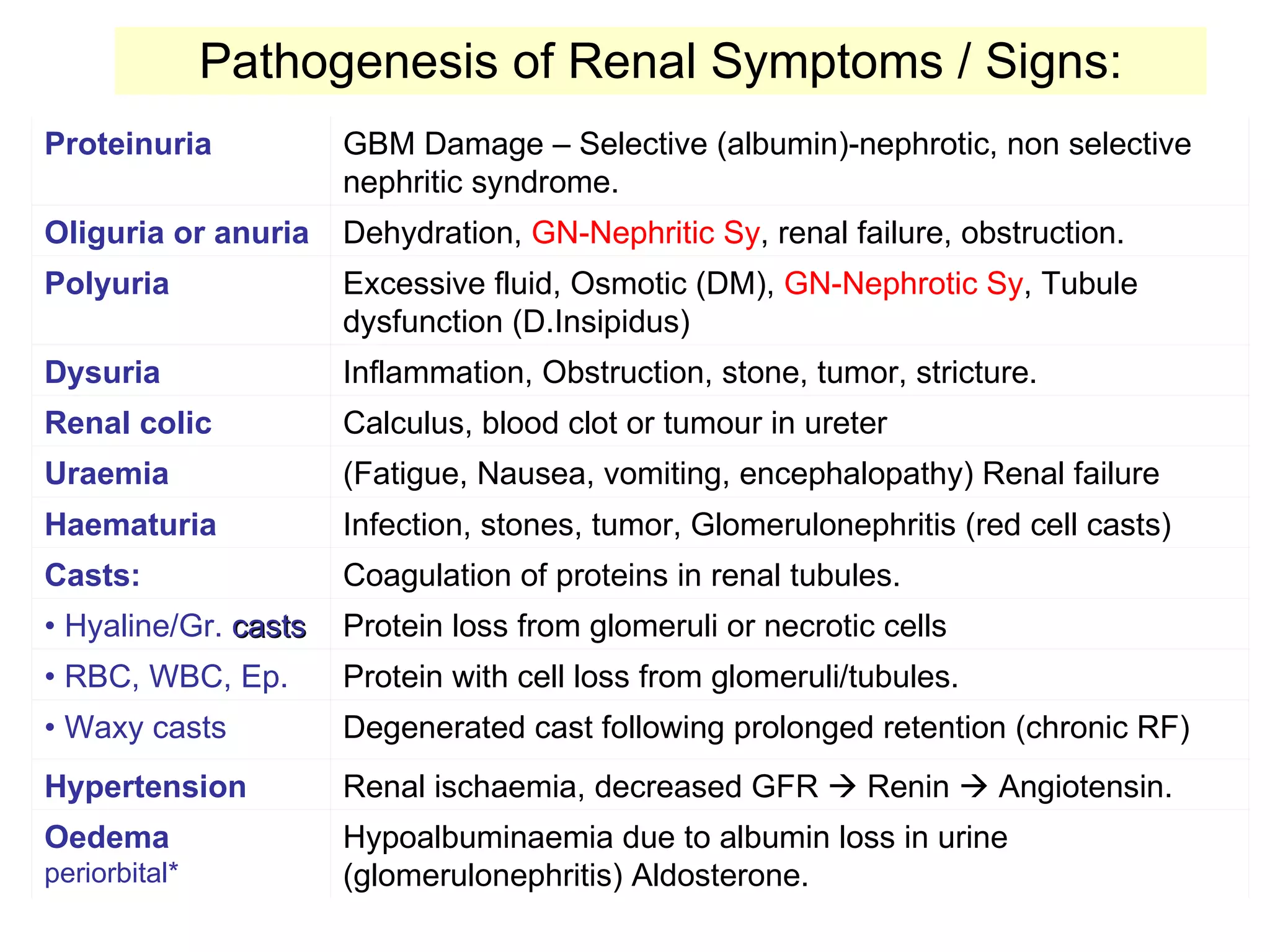
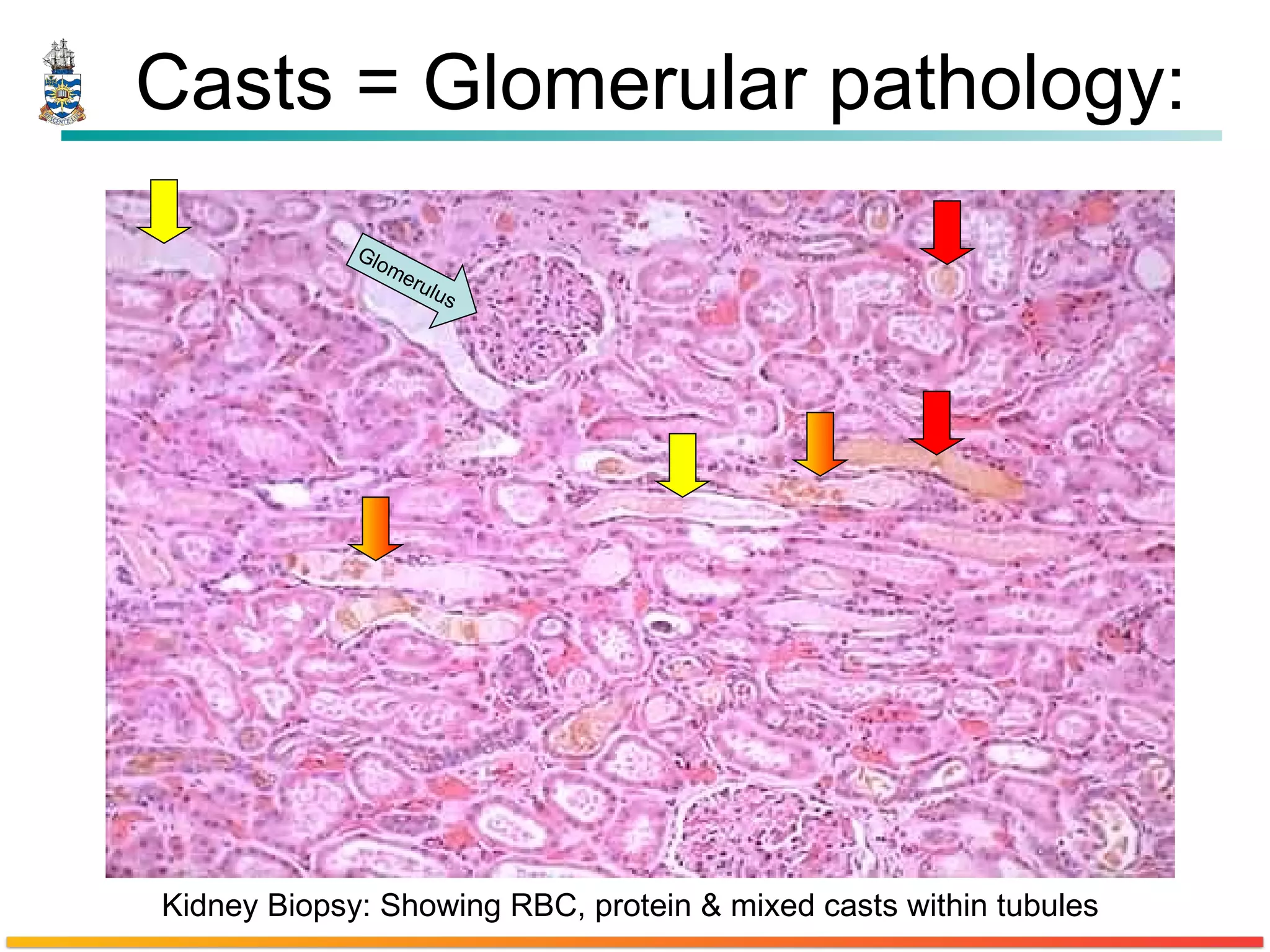
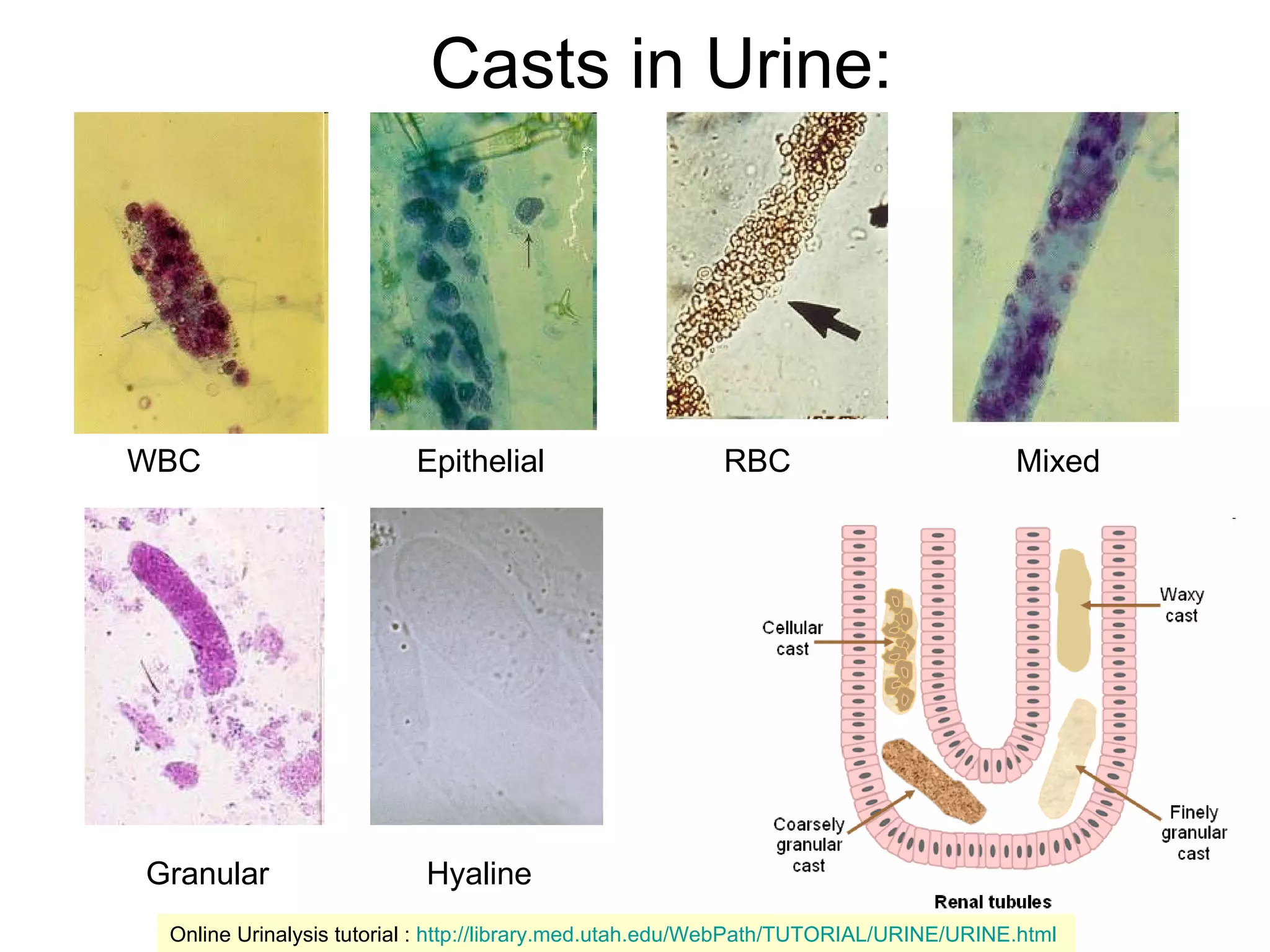
Pathogenesis of Renal Symptoms / Signs: Body_ID:  TI021001 Proteinuria GBM Damage – Selective (albumin)-nephrotic, non selective nephritic syndrome. Oliguria or anuria Dehydration,  GN-Nephritic Sy , renal failure, obstruction. Polyuria Excessive fluid, Osmotic (DM),  GN-Nephrotic Sy , Tubule dysfunction (D.Insipidus) Dysuria Inflammation, Obstruction, stone, tumor, stricture. Renal colic Calculus, blood clot or tumour in ureter Uraemia (Fatigue, Nausea, vomiting, encephalopathy) Renal failure Haematuria Infection, stones, tumor, Glomerulonephritis (red cell casts) Casts: Coagulation of proteins in renal tubules. •  Hyaline/Gr.  casts Protein loss from glomeruli or necrotic cells •  RBC, WBC, Ep. Protein with cell loss from glomeruli/tubules. •  Waxy casts Degenerated cast following prolonged retention (chronic RF) Hypertension Renal ischaemia, decreased GFR    Renin    Angiotensin. Oedema  periorbital* Hypoalbuminaemia due to albumin loss in urine (glomerulonephritis) Aldosterone.
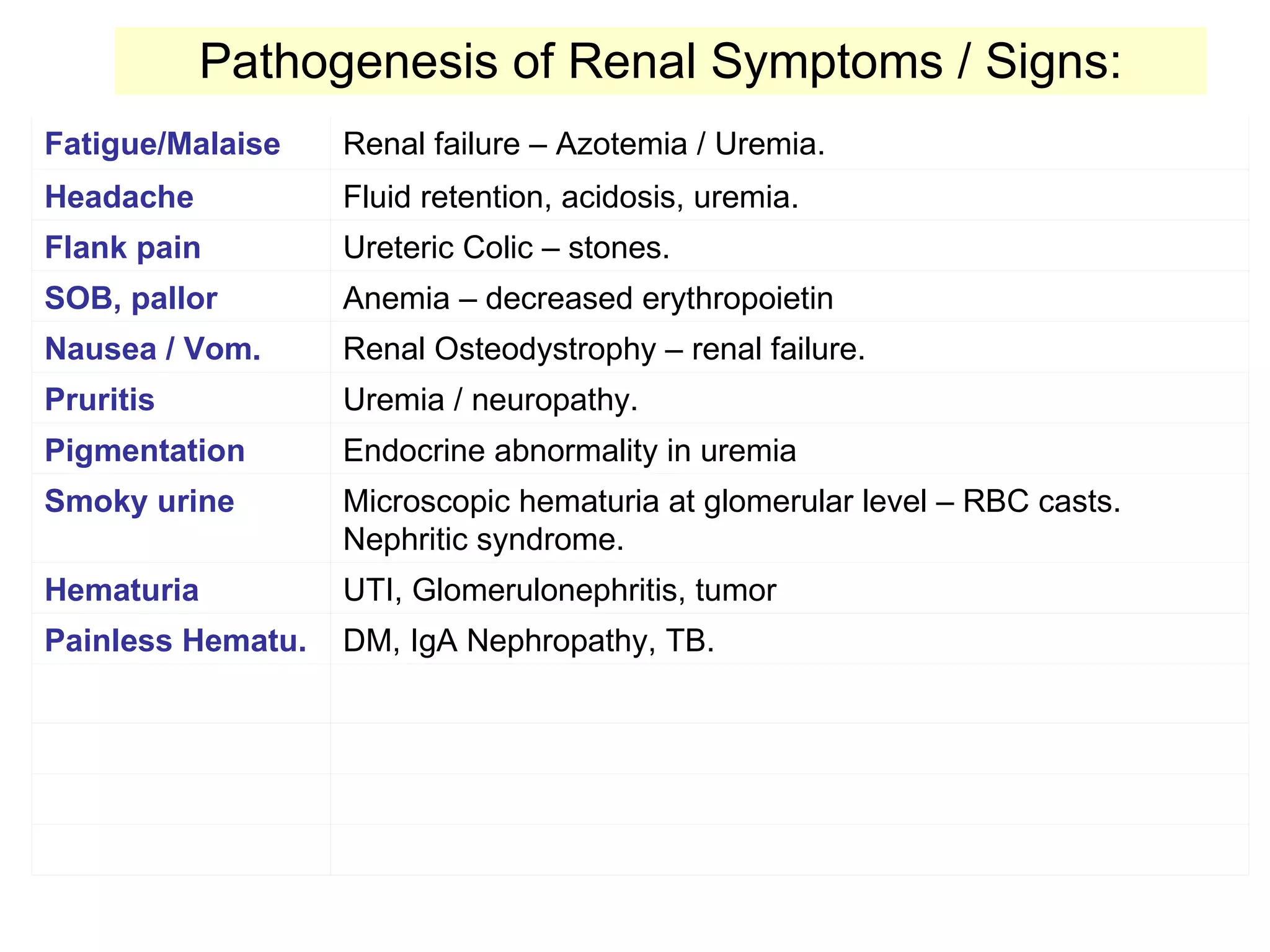
Pathogenesis of Renal Symptoms / Signs: Body_ID:  TI021001 Fatigue/Malaise Renal failure – Azotemia / Uremia.  Headache Fluid retention, acidosis, uremia. Flank pain Ureteric Colic – stones. SOB, pallor Anemia – decreased erythropoietin Nausea / Vom. Renal Osteodystrophy – renal failure. Pruritis Uremia / neuropathy. Pigmentation Endocrine abnormality in uremia Smoky urine Microscopic hematuria at glomerular level – RBC casts. Nephritic syndrome. Hematuria UTI, Glomerulonephritis, tumor Painless Hematu. DM, IgA Nephropathy, TB.
Whenever you see someone who is sick, dispirited, disconsolate, or diseased, there is a field of service. Every blood cell, every nerve must tingle with love, When love fills the heart, it transforms into Divinity.   ( Genesis 20:13 ) Medicine is the Noble Profession
Pathology of   Glomerulonephritis: Dr. Shashidhar V. Murthy A/Prof. & Head of Pathology
CPC4.4.1 – CLI Pathology Major CLI:  Overview & classification Disorders of Kidney.  Pathogenesis & Clinical features of  Nephrotic, Nephritic  Syndromes and Renal Failure.  Pathology of common types of Glomerulonephritis.  PGN, MGN, MPGN, FSGS, RPGN, CGN. Pathology of Disorders of Tubules, Interstitium & Blood vessels. Pathology of Renal failure both acute & Chronic.  Pathology Minor CLI: Interpretation of Common Renal function tests. Pathogenesis of Renal artery stenosis & other Nephrogenic Hypertension. IgA nephropathy. Renal involvement in SLE  Analgesic nephropathy. Amyloid nephropathy.  Hypertensive nephropathy.  Acute tubular necrosis.
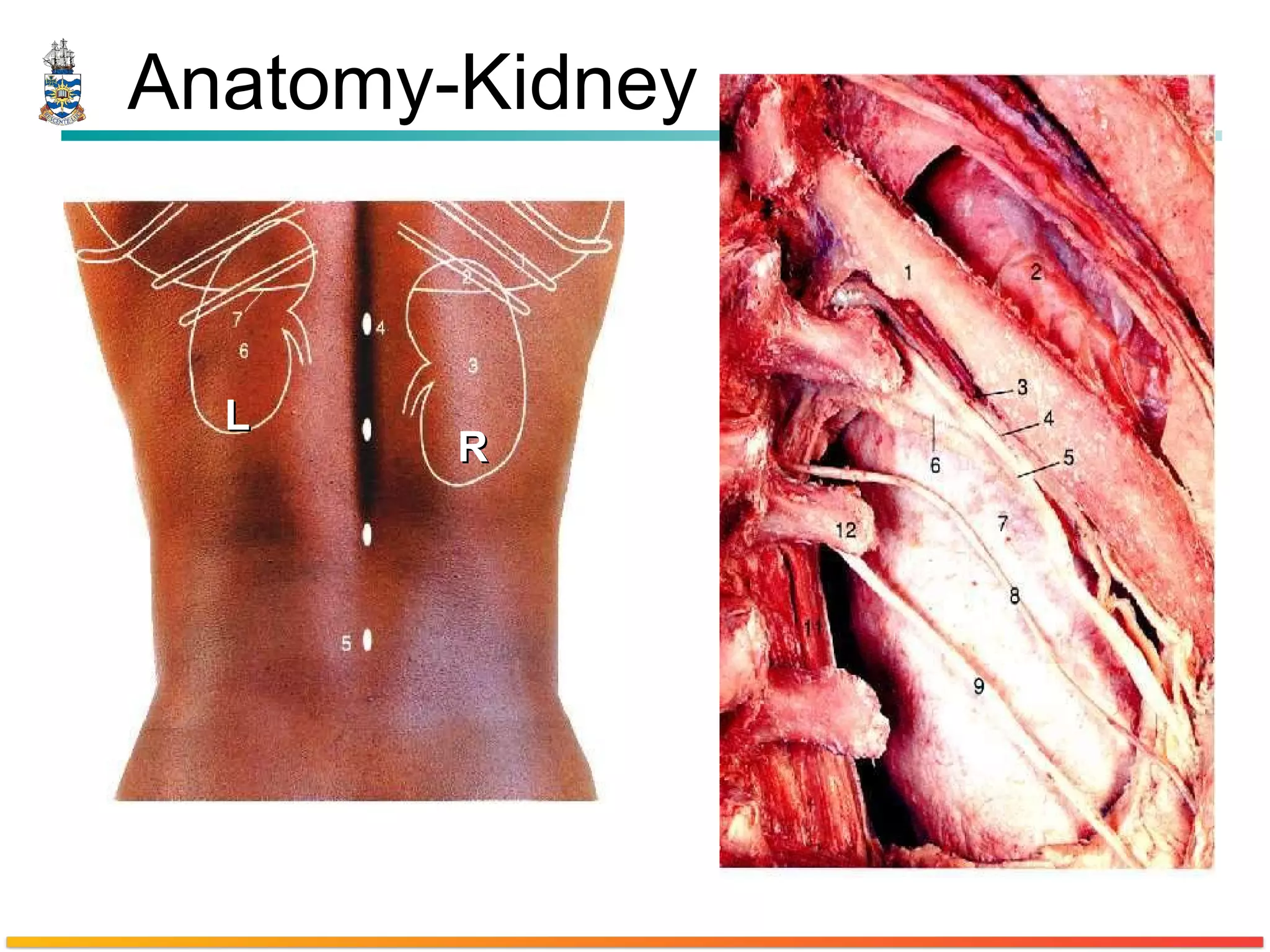
Anatomy-Kidney L R
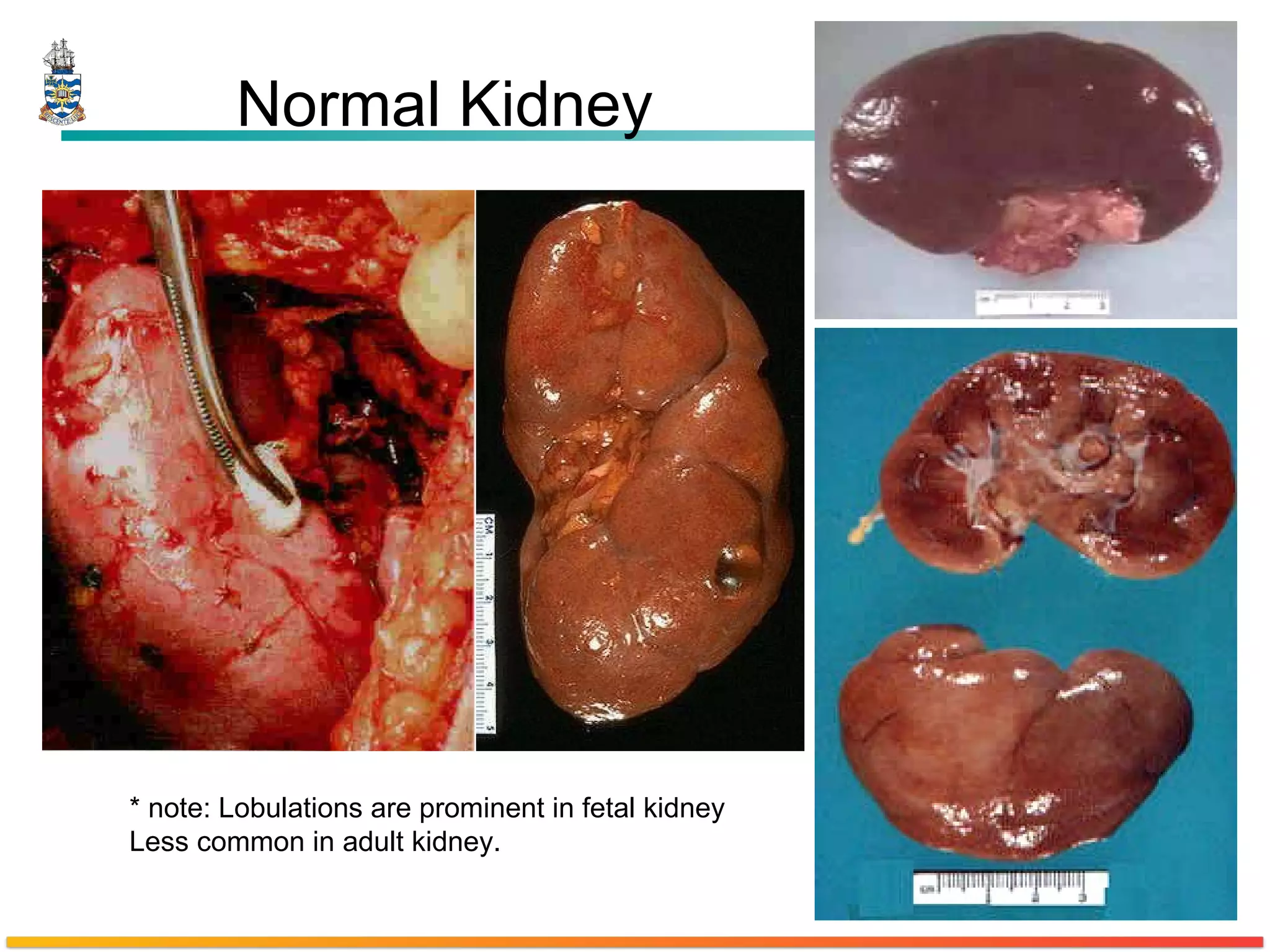
Normal Kidney * note: Lobulations are prominent in fetal kidney  Less common in adult kidney.
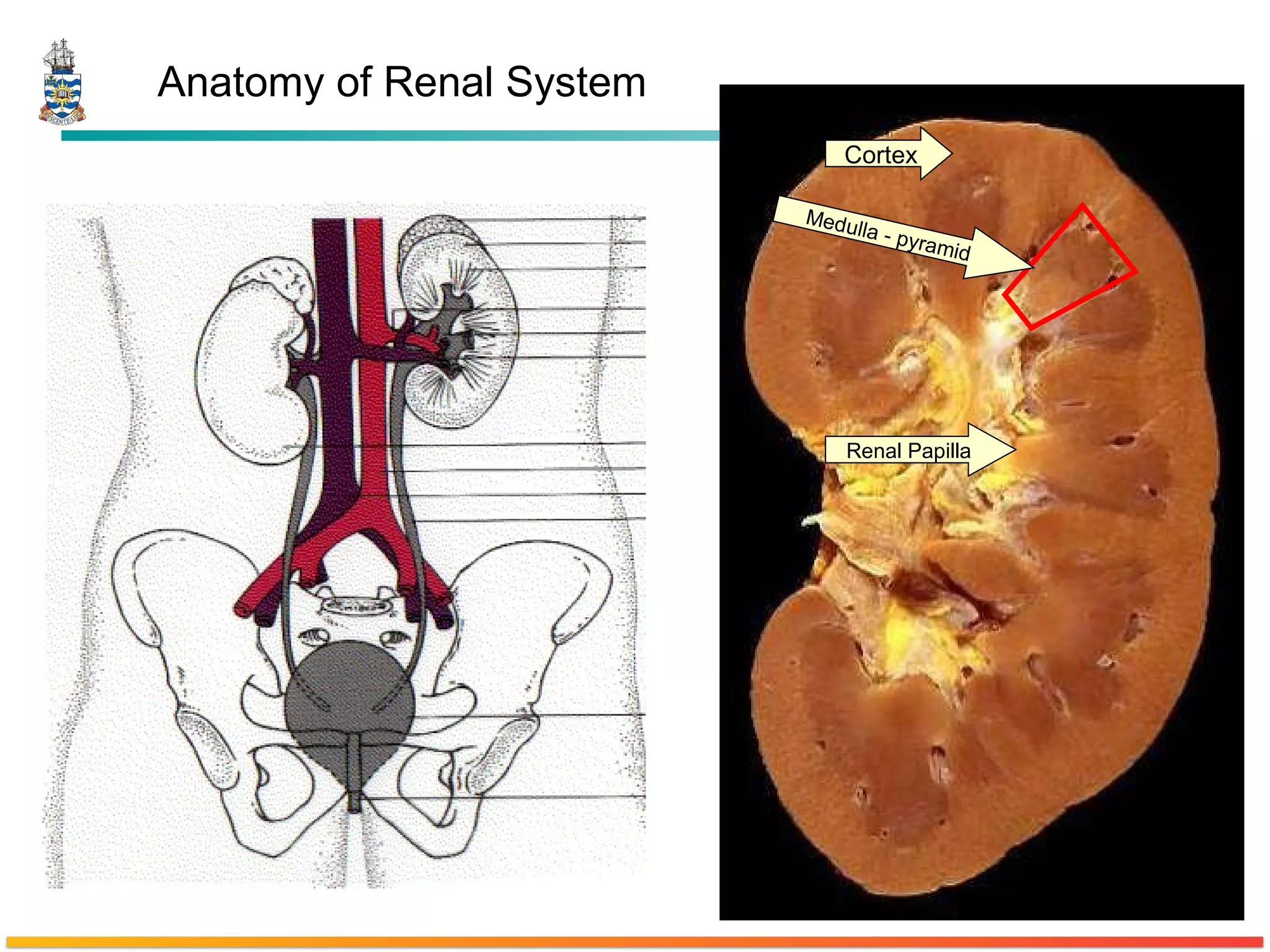
Anatomy of Renal System Cortex Medulla - pyramid Renal Papilla
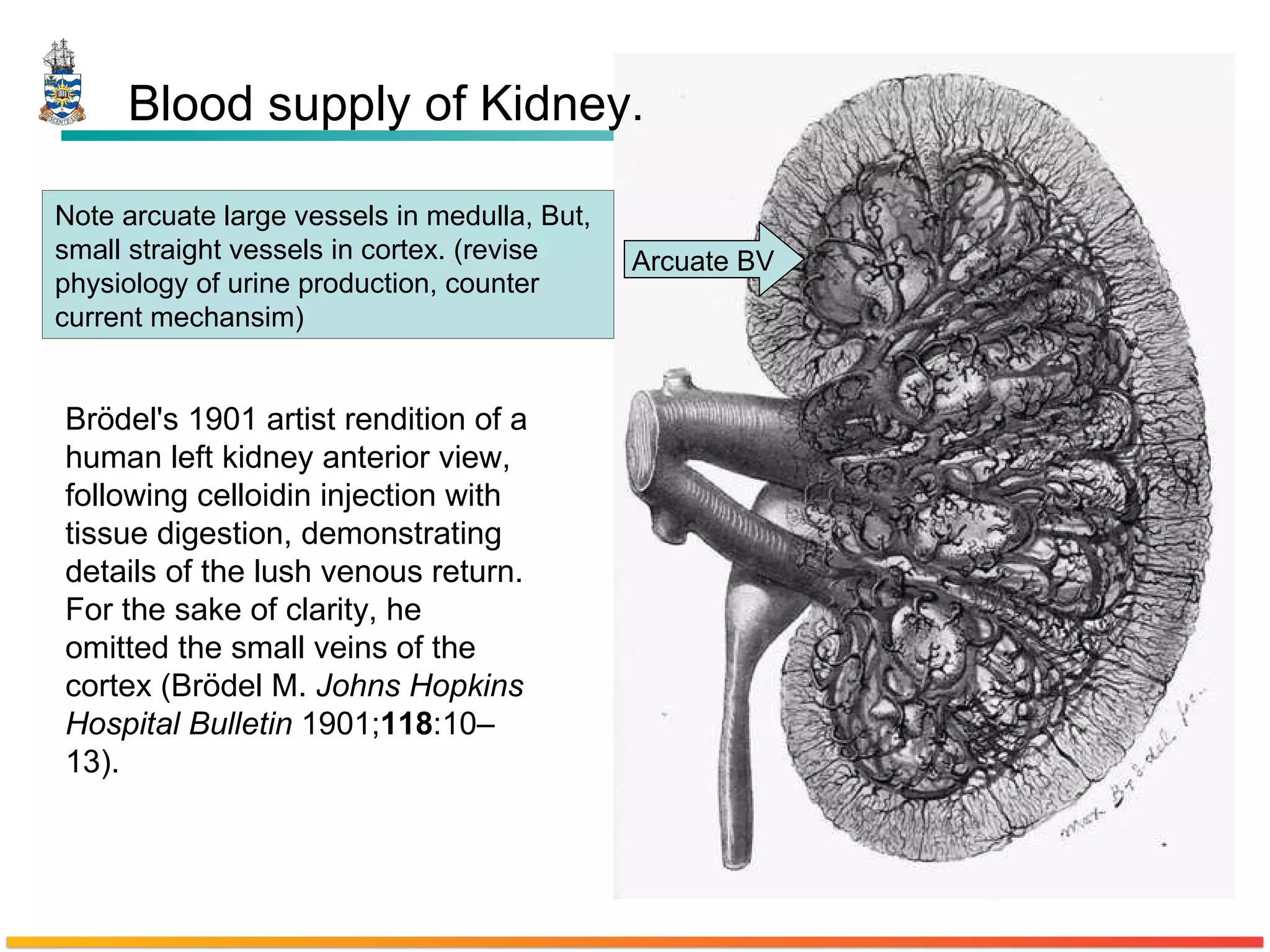
Blood supply of Kidney. Brödel's 1901 artist rendition of a human left kidney anterior view, following celloidin injection with tissue digestion, demonstrating details of the lush venous return. For the sake of clarity, he omitted the small veins of the cortex (Brödel M.  Johns Hopkins Hospital Bulletin  1901; 118 :10–13). Arcuate BV Note arcuate large vessels in medulla, But, small straight vessels in cortex. (revise physiology of urine production, counter current mechansim)
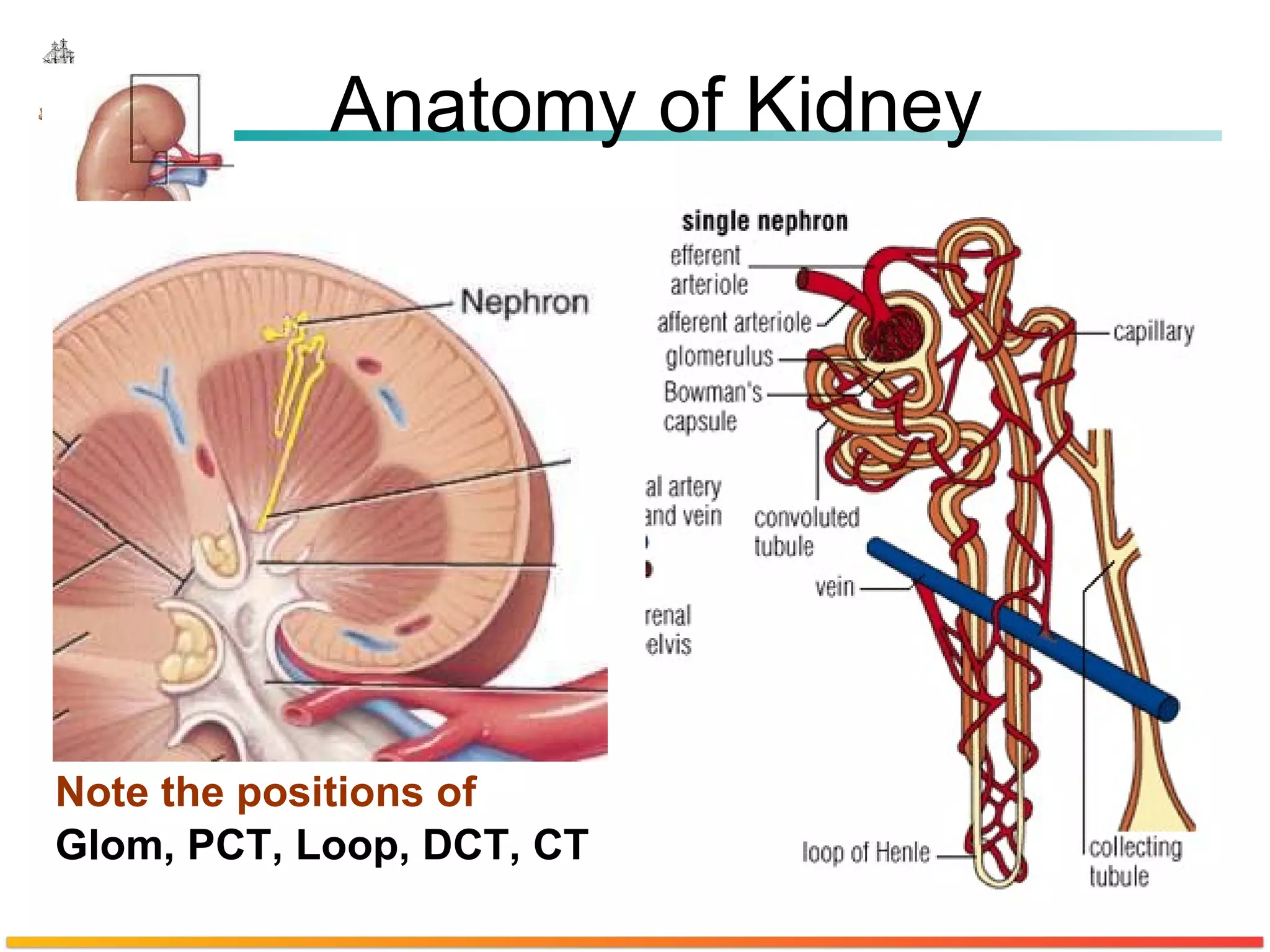
Note the positions of  Glom, PCT, Loop, DCT, CT Anatomy of Kidney
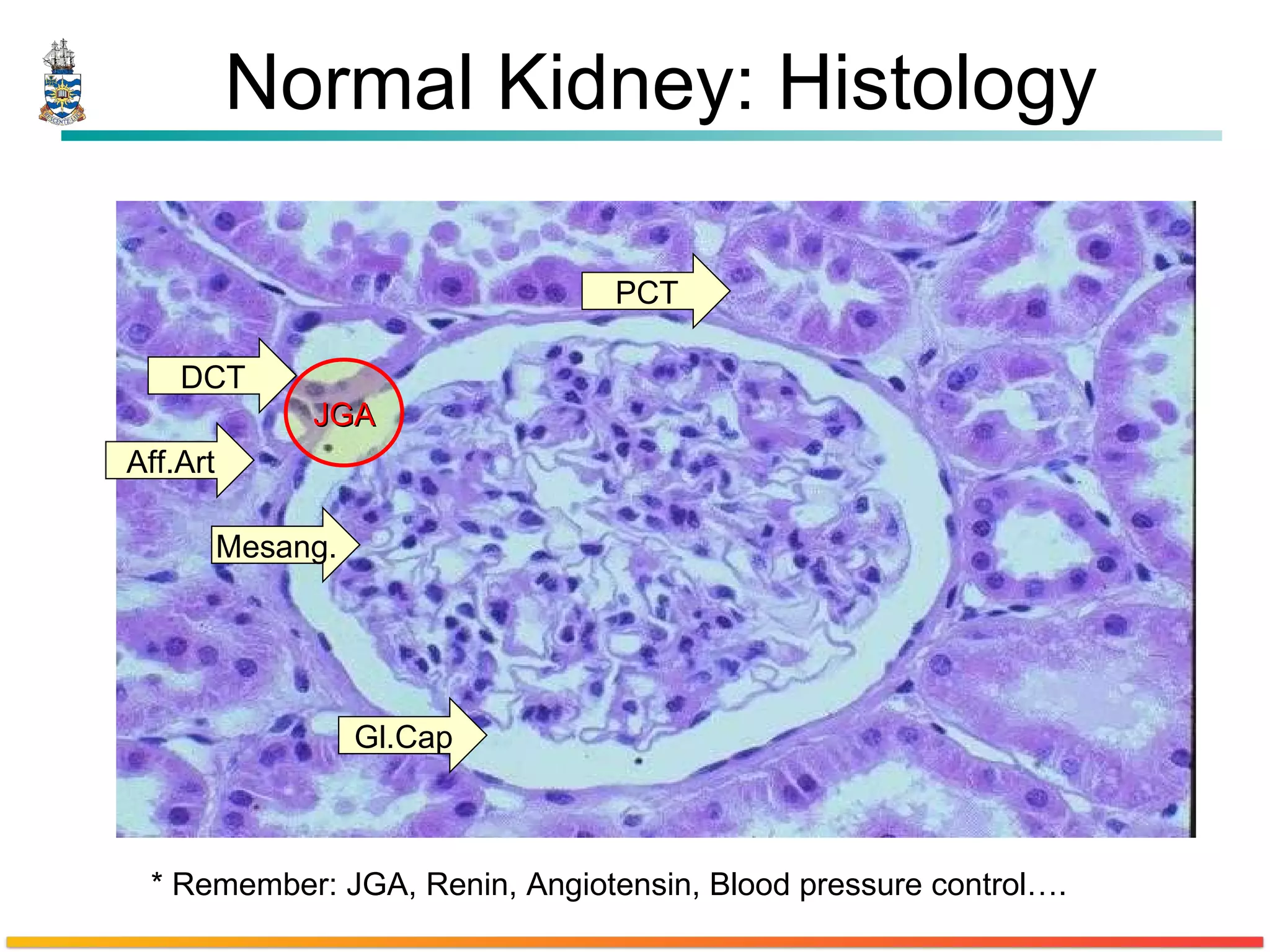
Normal Kidney: Histology DCT PCT Gl.Cap Mesang. Aff.Art JGA * Remember: JGA, Renin, Angiotensin, Blood pressure control….
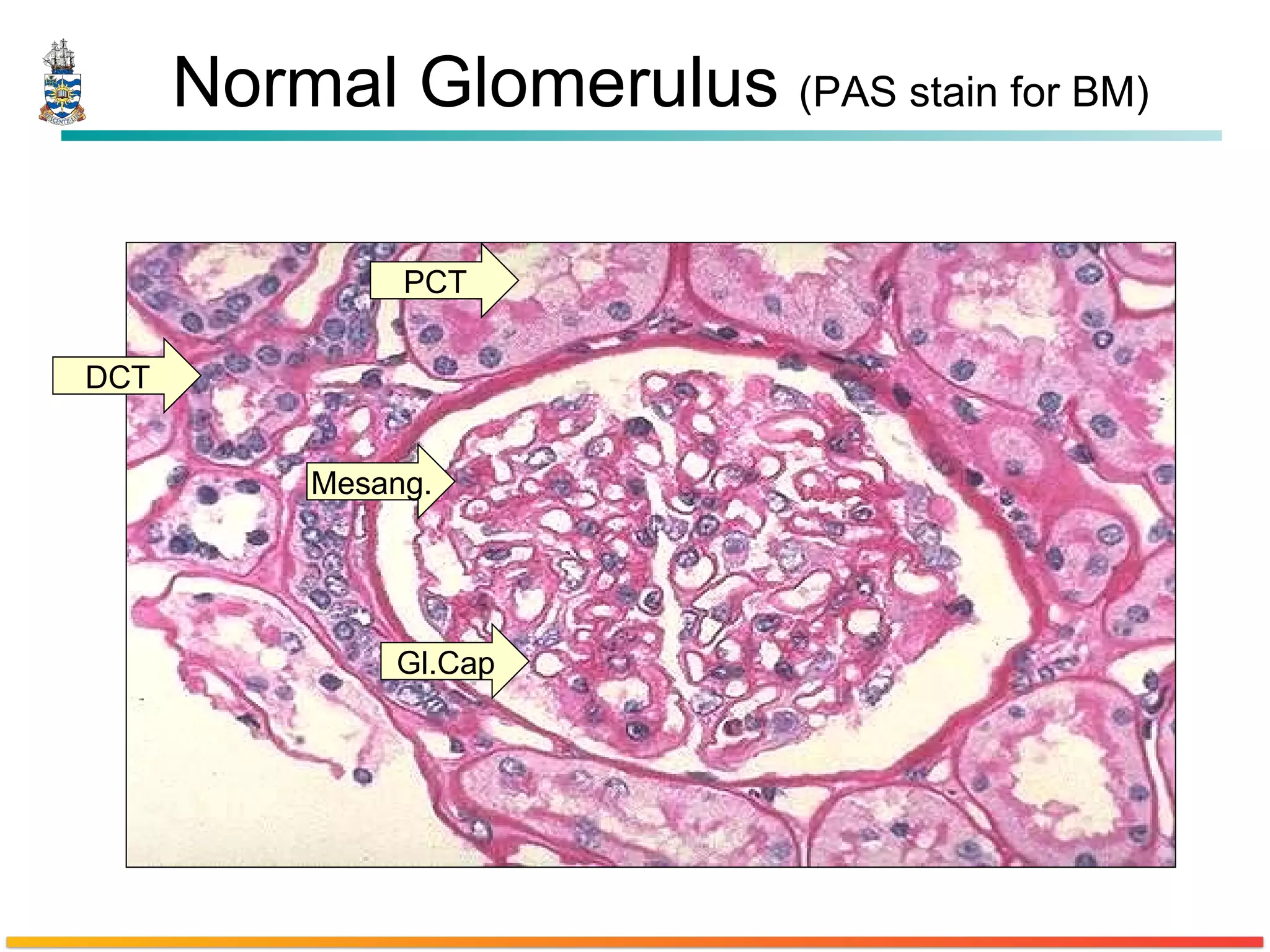
Normal Glomerulus  (PAS stain for BM) DCT PCT Gl.Cap Mesang.
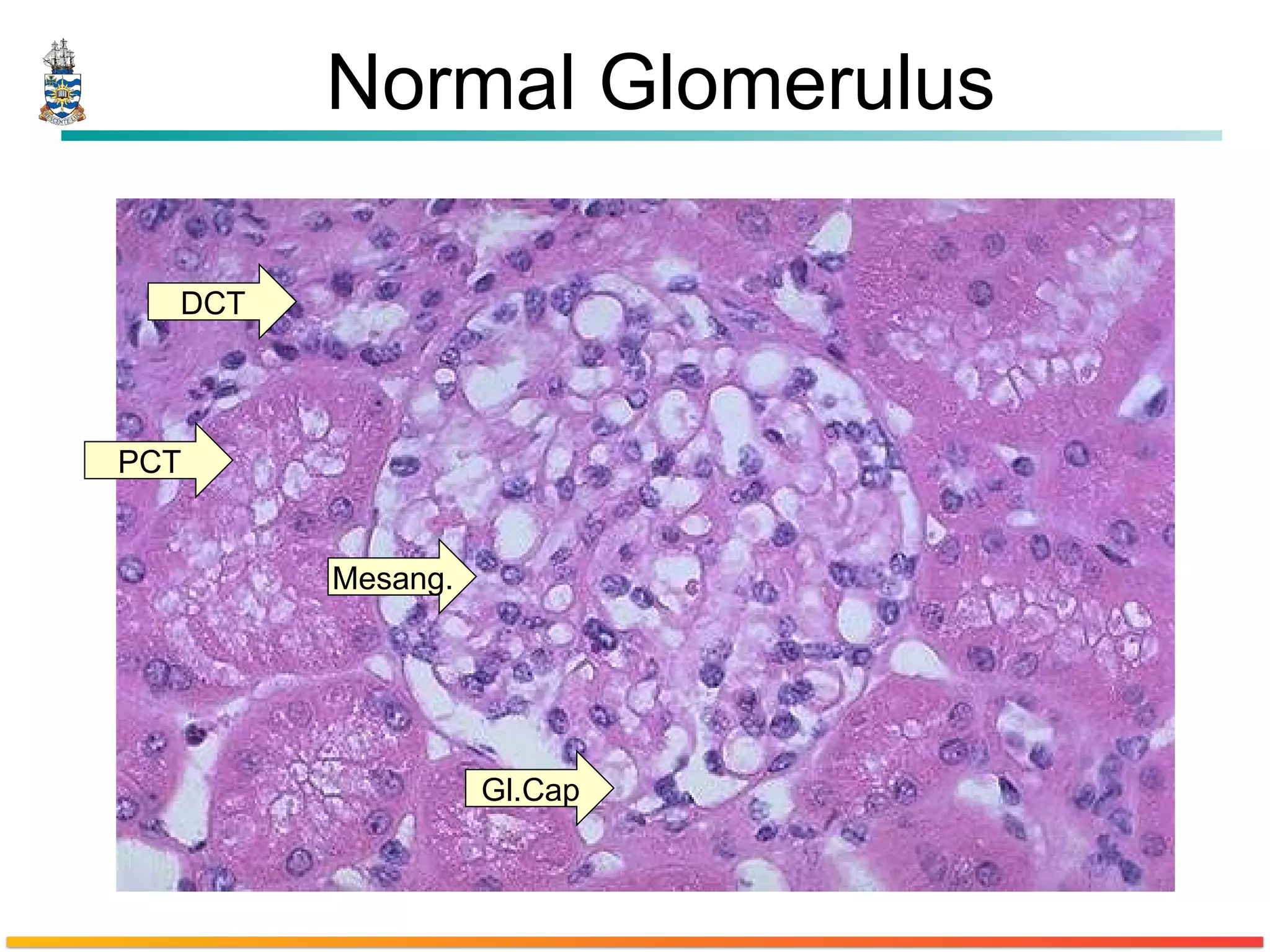
Normal Glomerulus DCT PCT Gl.Cap Mesang.
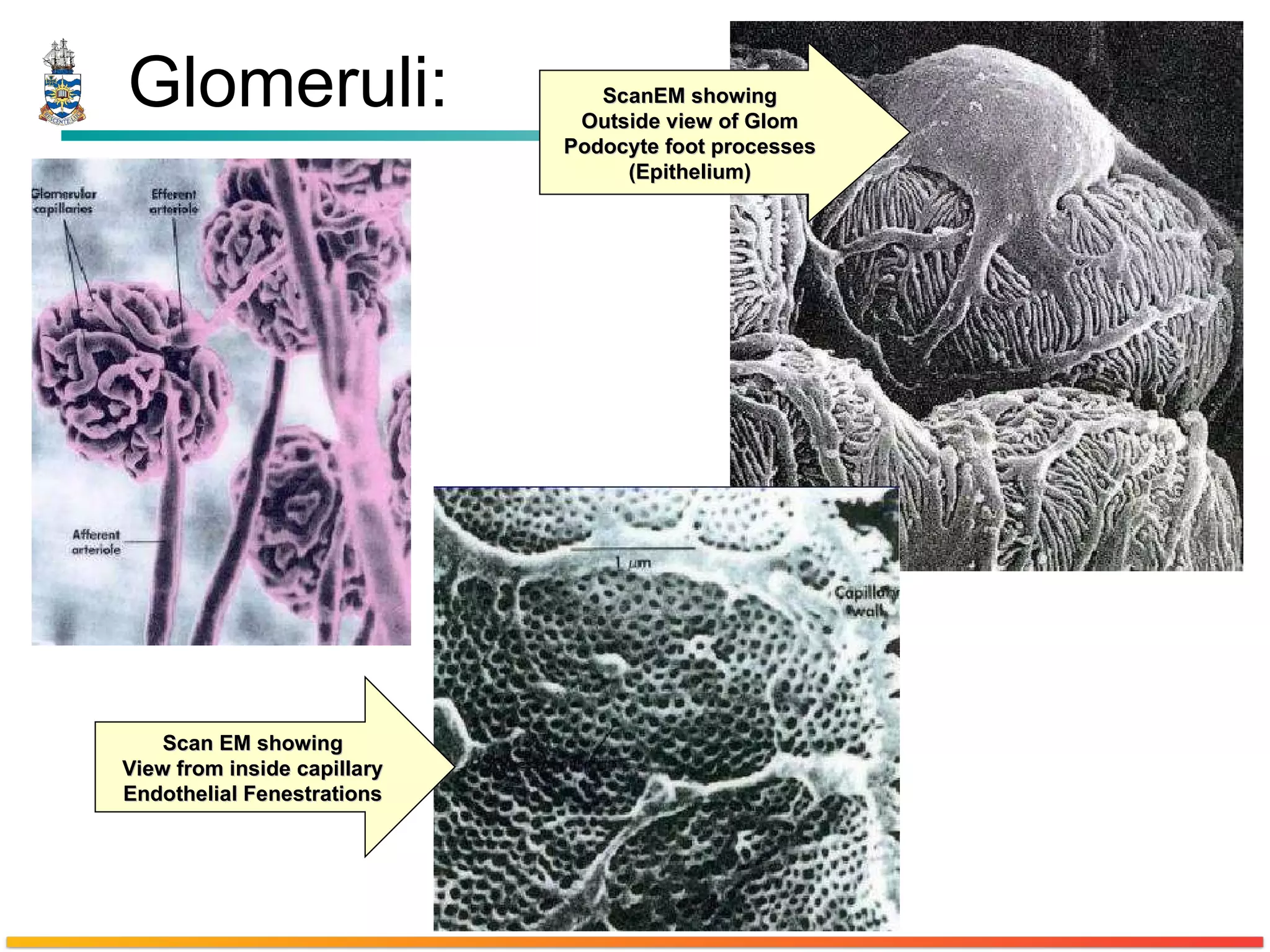
Glomeruli: ScanEM showing Outside view of Glom Podocyte foot processes (Epithelium) Scan EM showing View from inside capillary Endothelial Fenestrations
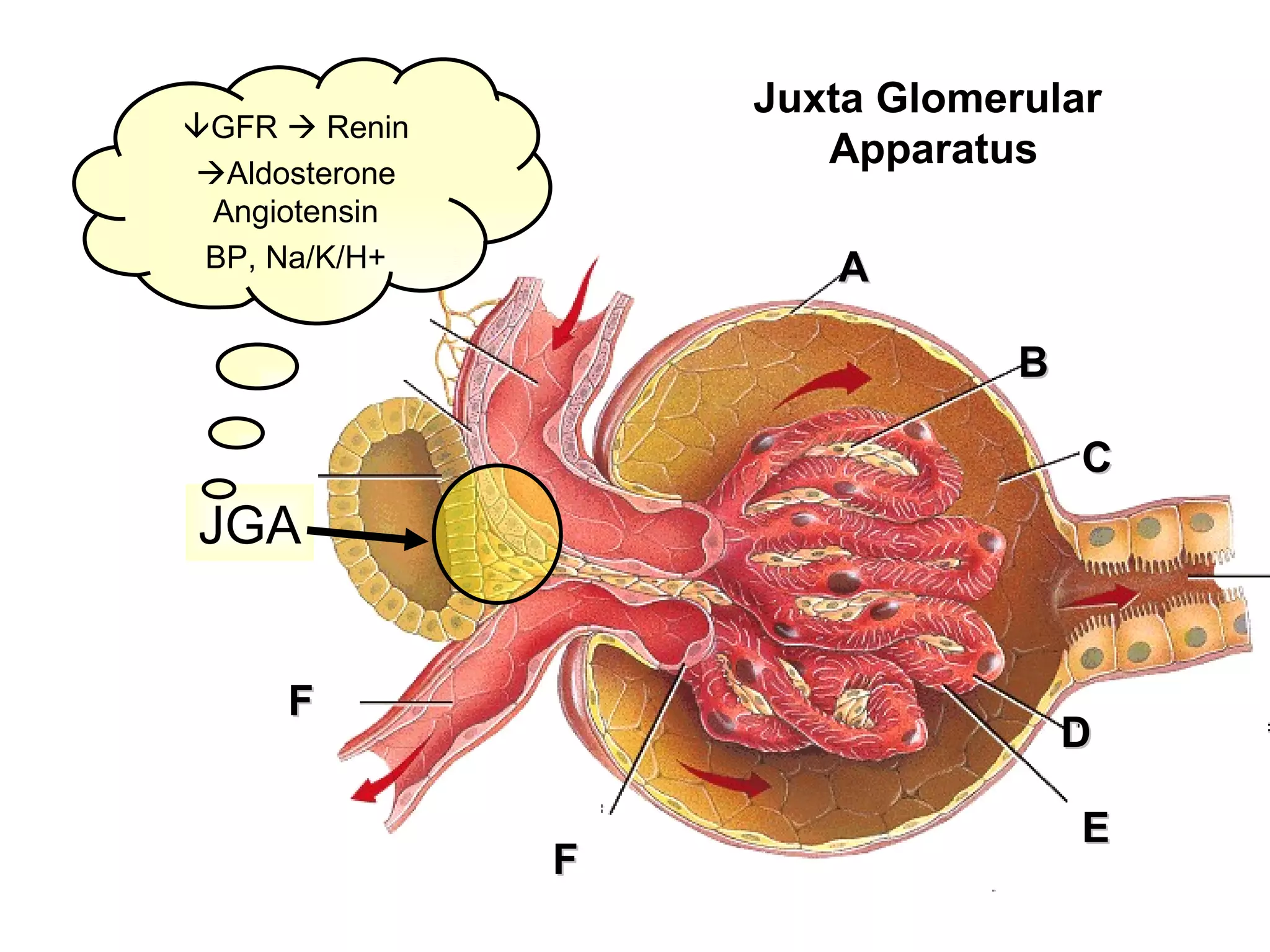
A B C D E F F Juxta Glomerular  Apparatus JGA  GFR    Renin  Aldosterone Angiotensin BP, Na/K/H+
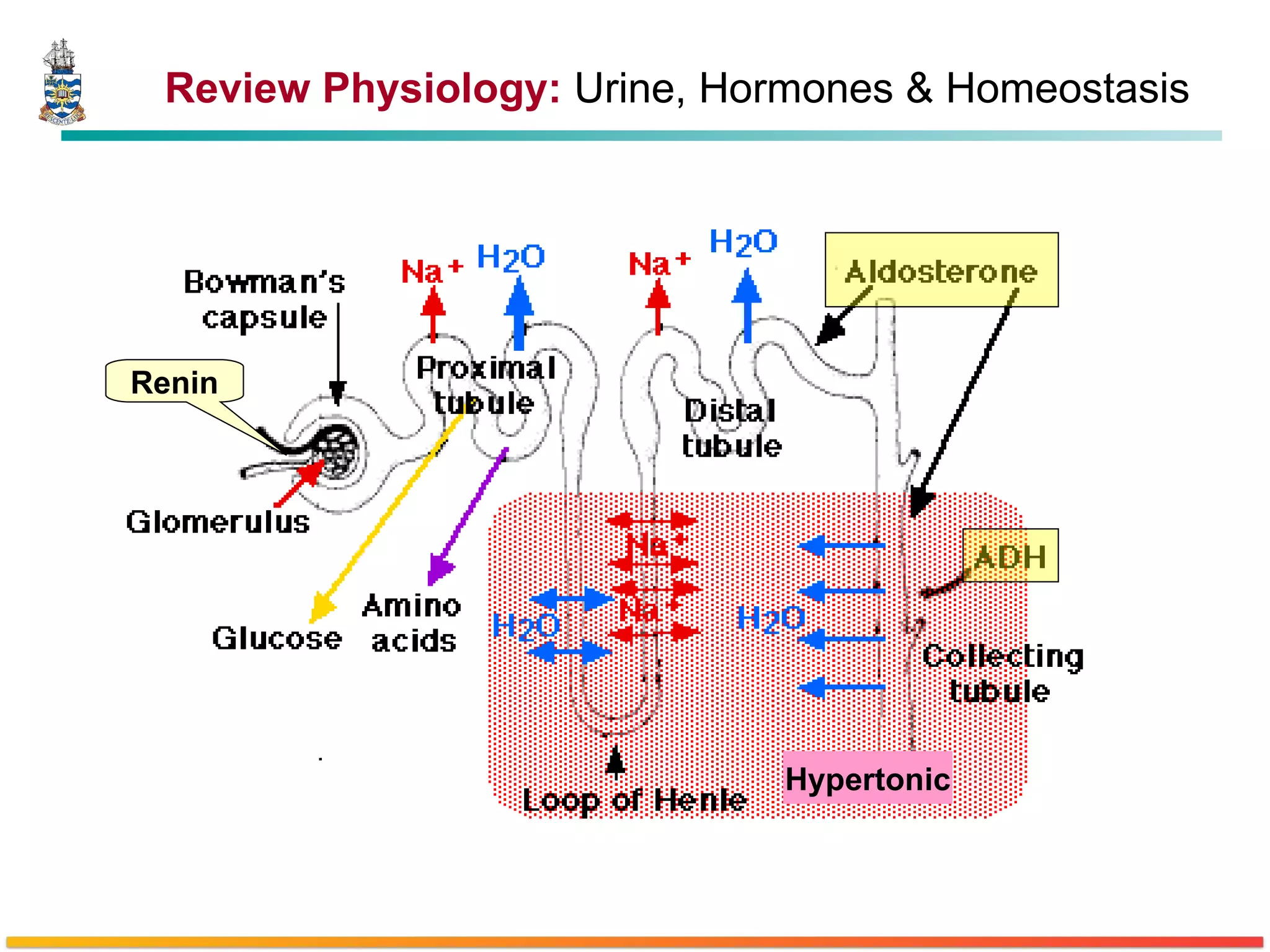
Review Physiology:  Urine, Hormones & Homeostasis Renin Hypertonic
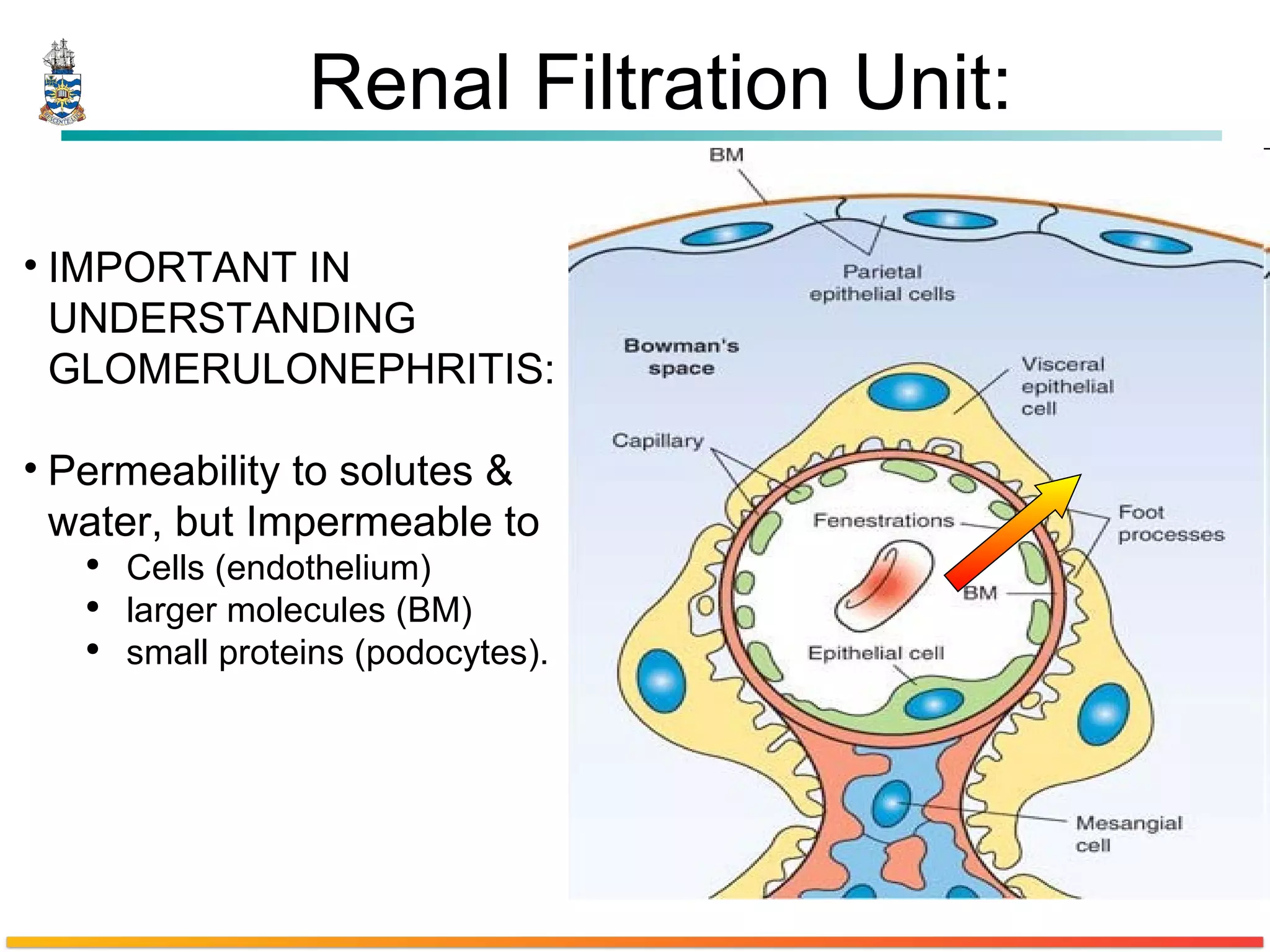
Renal Filtration Unit: IMPORTANT IN UNDERSTANDING GLOMERULONEPHRITIS: Permeability to solutes & water, but Impermeable to  Cells (endothelium) larger molecules (BM)  small proteins (podocytes).
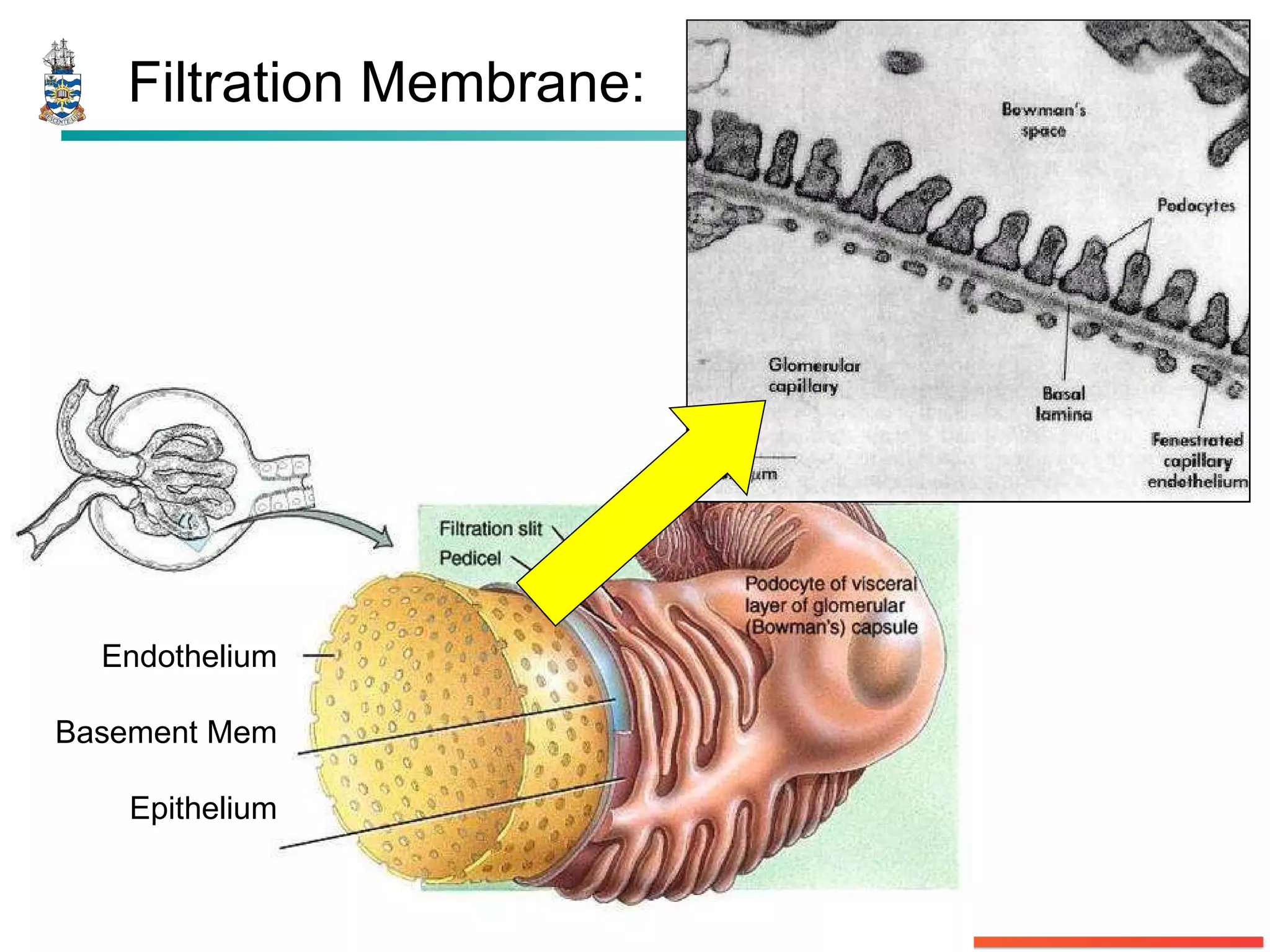
Filtration Membrane: Endothelium Basement Mem Epithelium
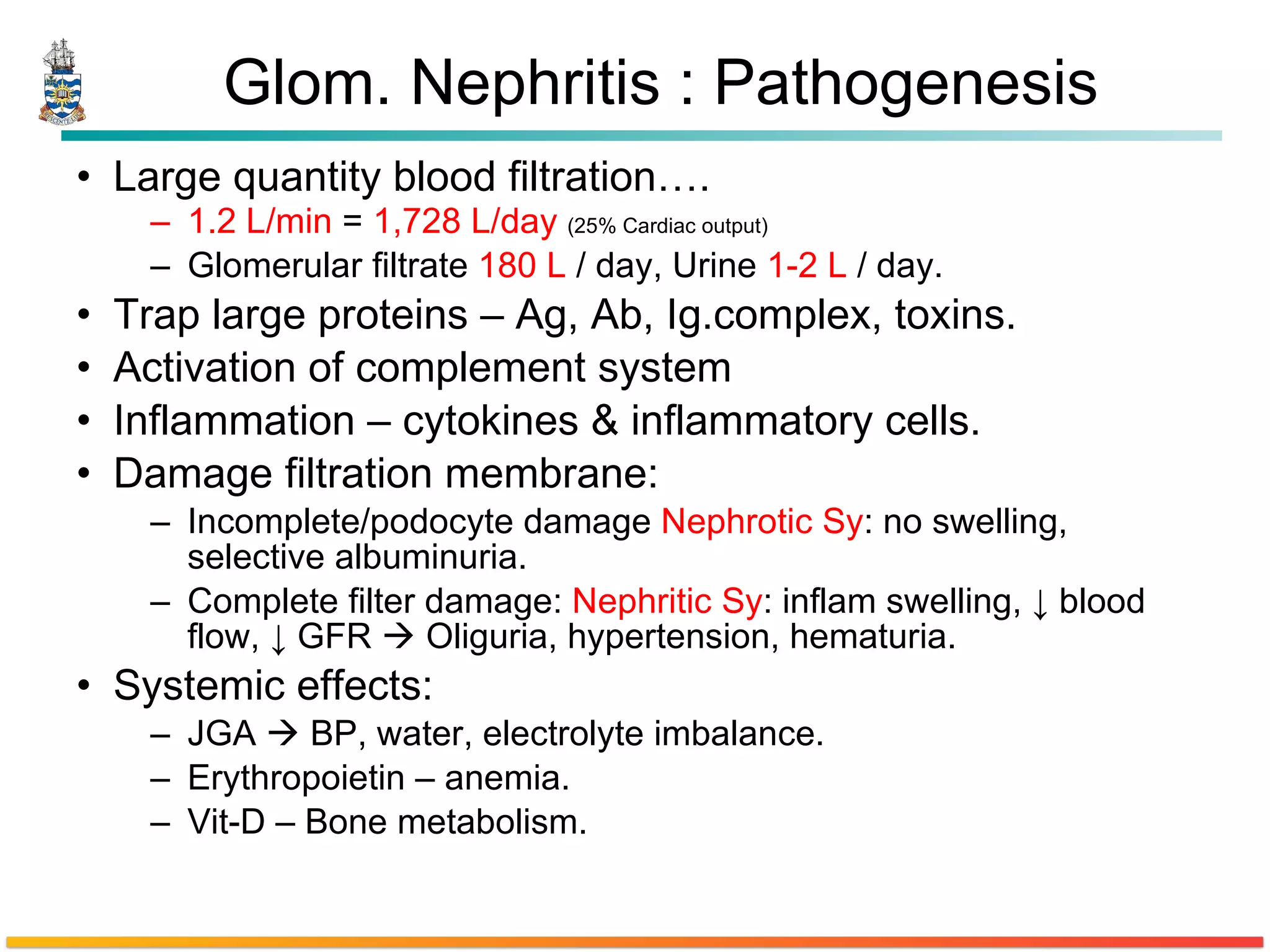
Glom. Nephritis : Pathogenesis Large quantity blood filtration…. 1.2 L/min  =  1,728 L/day  (25% Cardiac output) Glomerular filtrate  180 L  / day, Urine  1-2 L  / day.  Trap large proteins – Ag, Ab, Ig.complex, toxins. Activation of complement system Inflammation – cytokines & inflammatory cells. Damage filtration membrane: Incomplete/podocyte damage  Nephrotic Sy : no swelling, selective albuminuria. Complete filter damage:  Nephritic Sy :  inflam  swelling,  ↓ blood flow, ↓ GFR    Oliguria, hypertension, hematuria. Systemic effects: JGA    BP, water, electrolyte imbalance. Erythropoietin – anemia. Vit-D – Bone metabolism.
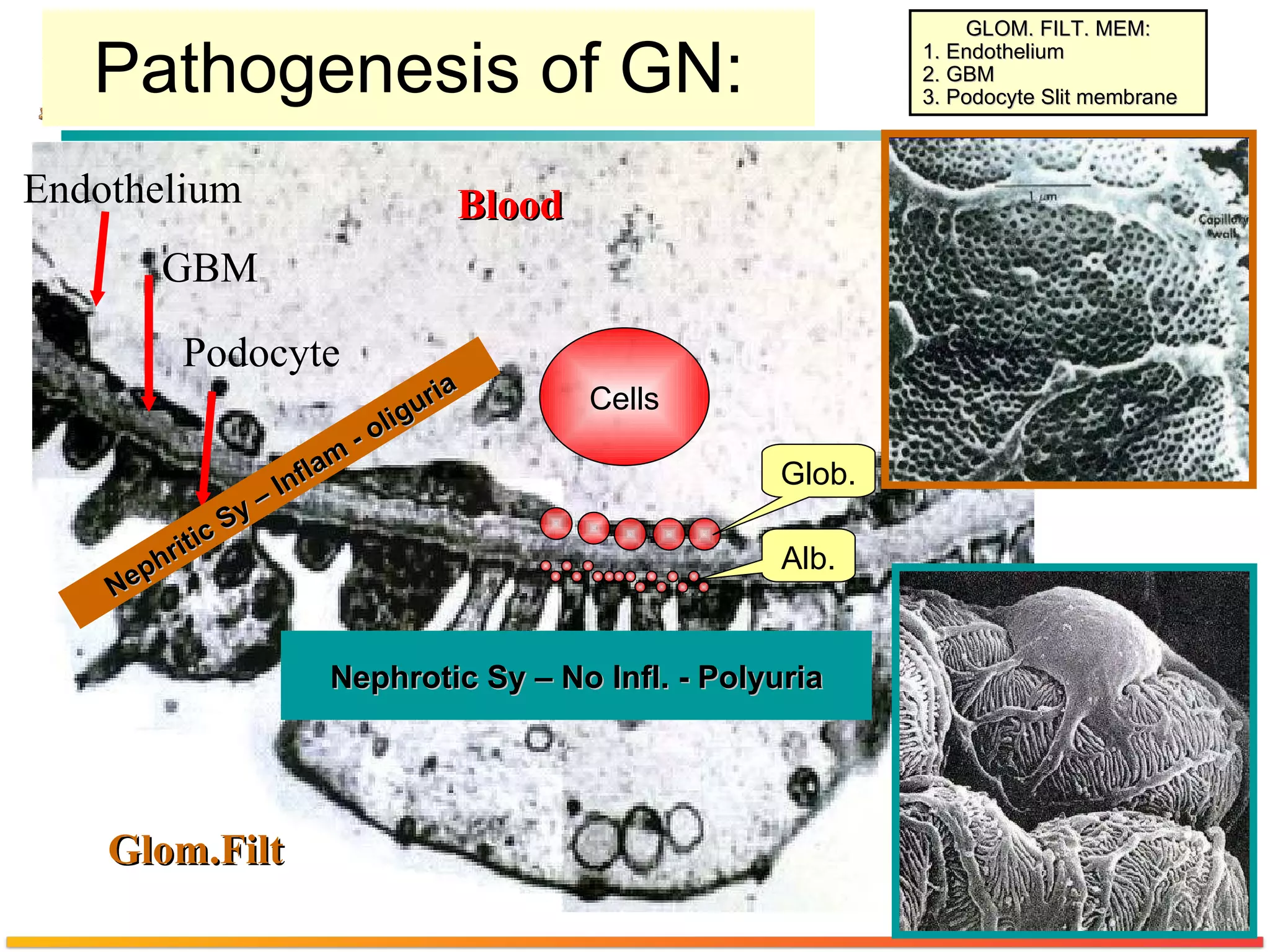
Pathogenesis of GN:  Blood GBM Podocyte GLOM. FILT. MEM: 1. Endothelium 2. GBM 3. Podocyte Slit membrane Endothelium Cells Glom.Filt Glob. Alb. Nephrotic Sy – No Infl. - Polyuria Nephritic Sy – Inflam - oliguria
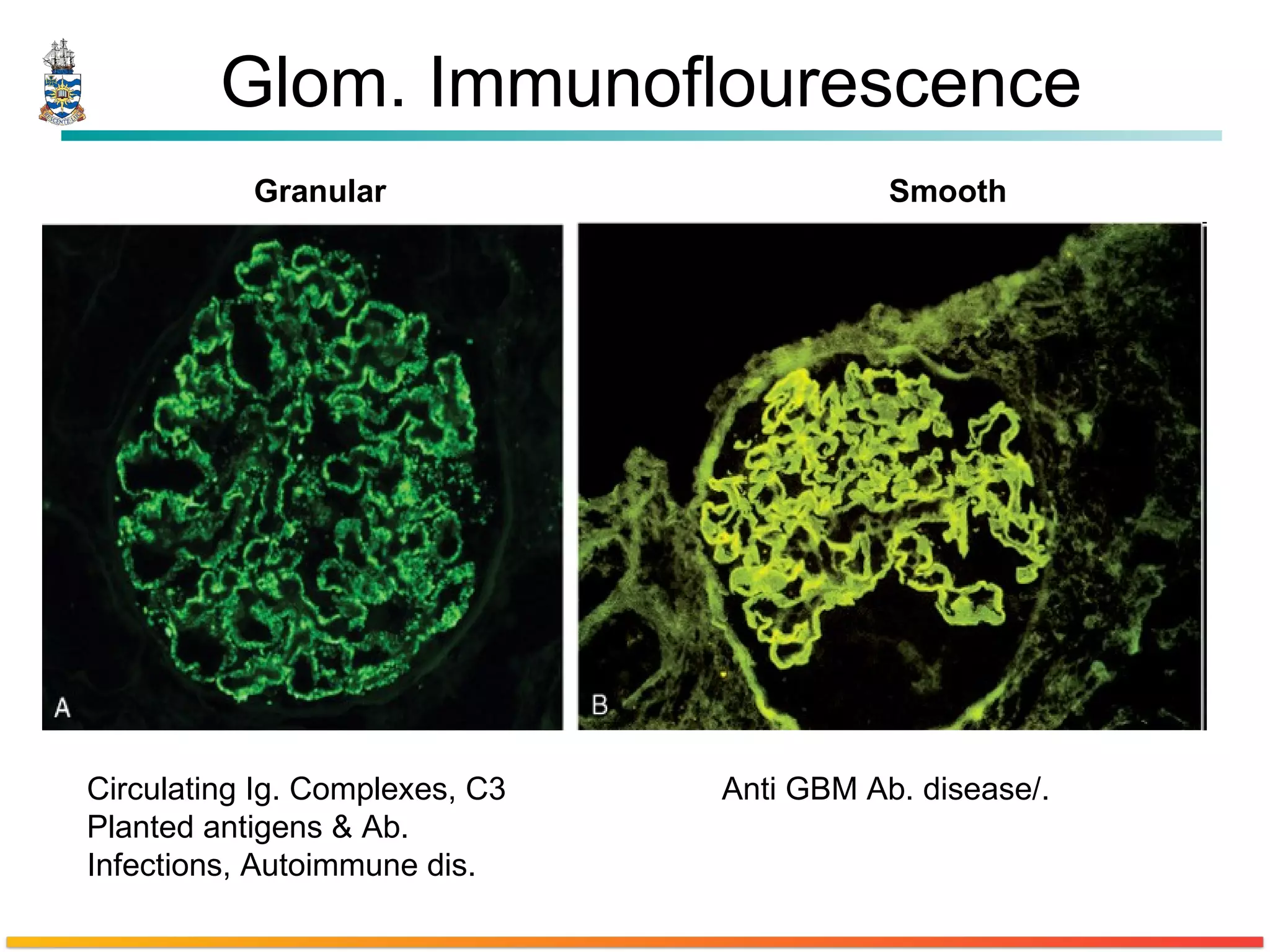
Glom. Immunoflourescence  Granular  Smooth Circulating Ig. Complexes, C3 Anti GBM Ab. disease/. Planted antigens & Ab. Infections, Autoimmune dis.
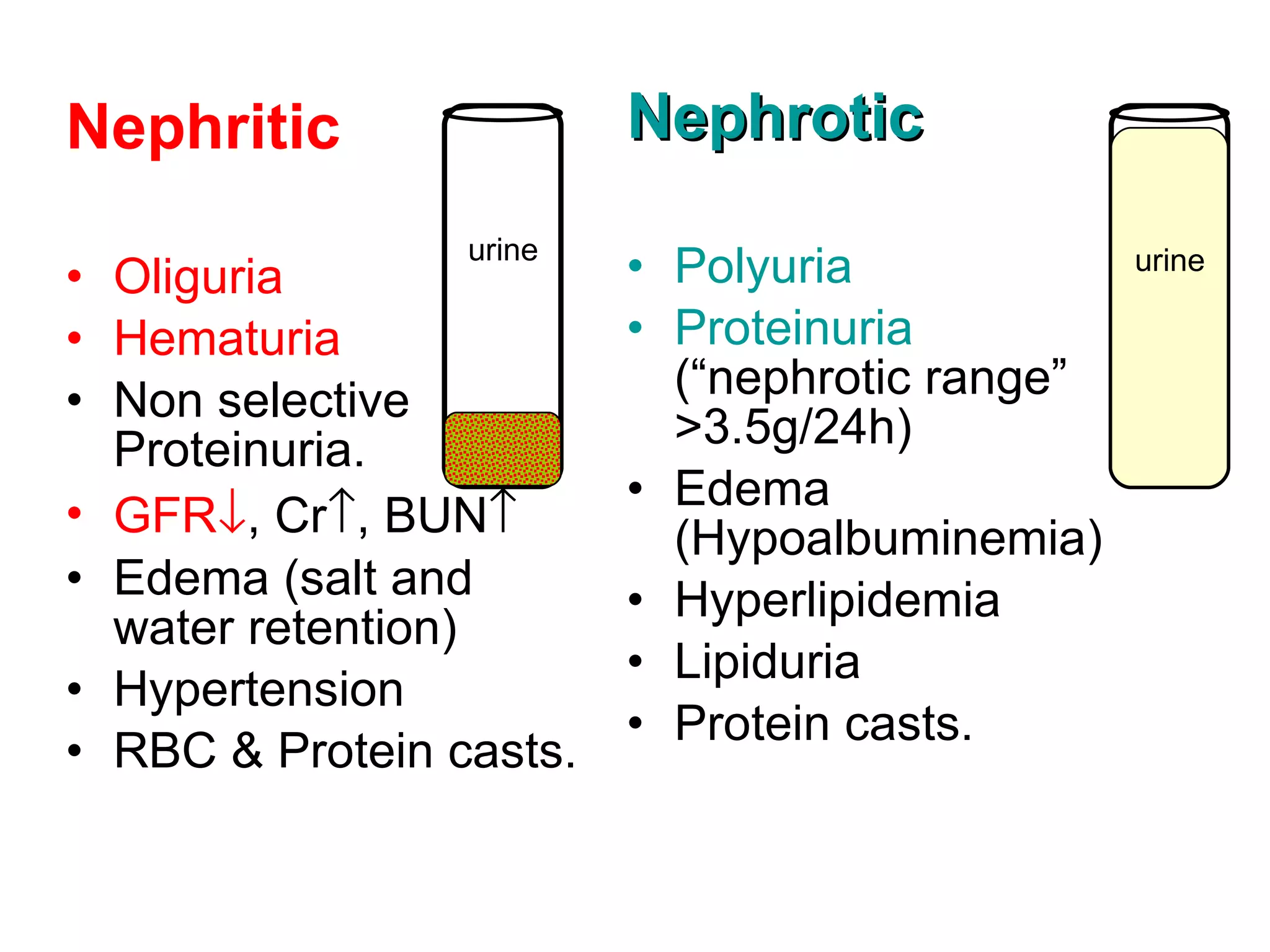
Nephritic Oliguria Hematuria Non selective Proteinuria. GFR  , Cr  , BUN  Edema (salt and water retention) Hypertension RBC & Protein casts. Nephrotic Polyuria Proteinuria  (“nephrotic range” >3.5g/24h) Edema (Hypoalbuminemia) Hyperlipidemia Lipiduria Protein casts. urine urine
Be content with what you have; rejoice in the way things are. When you realize there is nothing lacking, the whole world belongs to you. Lao Tzu
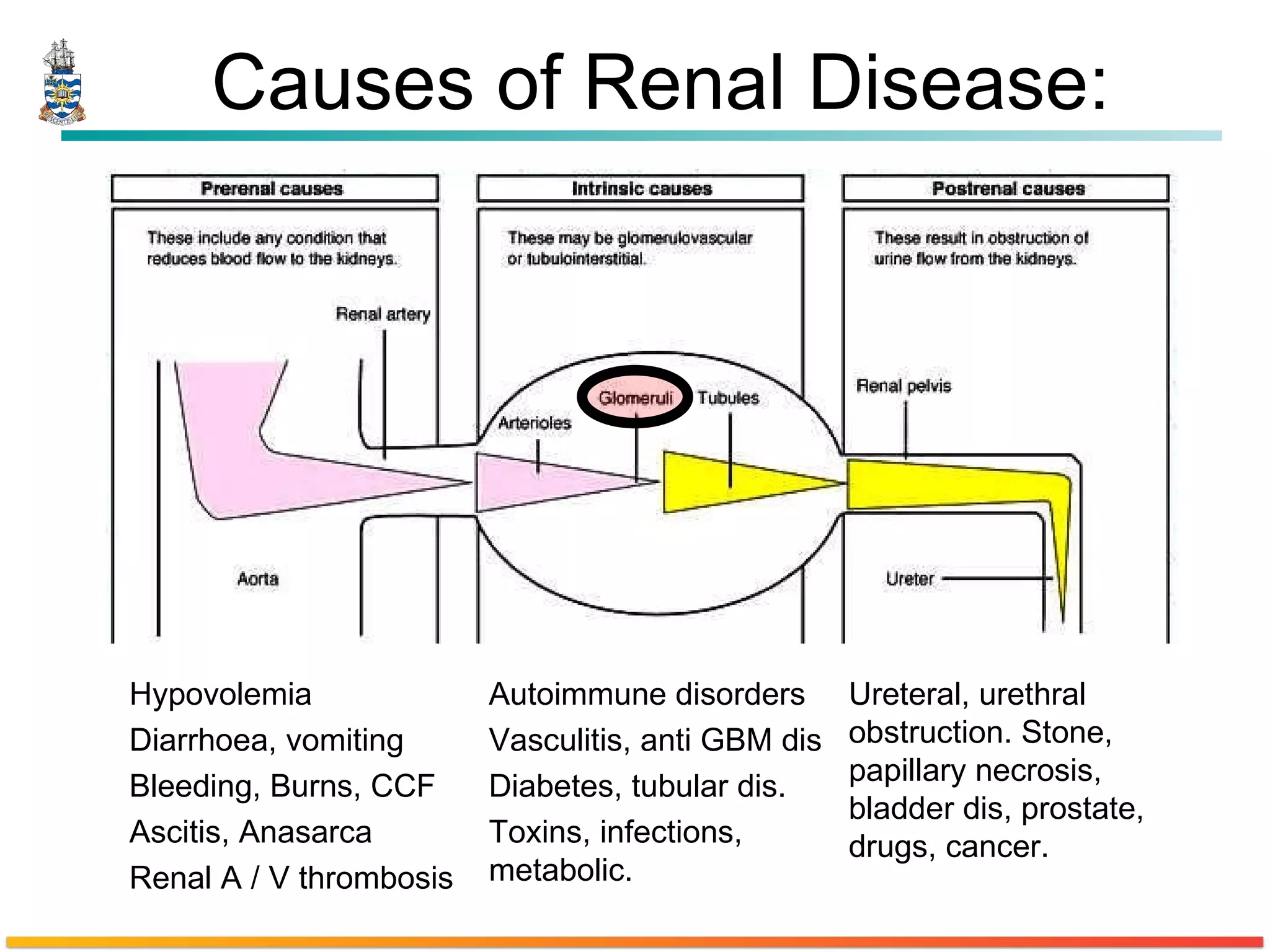
Causes of Renal Disease: Hypovolemia Diarrhoea, vomiting Bleeding, Burns, CCF Ascitis, Anasarca Renal A / V thrombosis Autoimmune disorders Vasculitis, anti GBM dis Diabetes, tubular dis. Toxins, infections, metabolic. Ureteral, urethral obstruction. Stone, papillary necrosis, bladder dis, prostate, drugs, cancer.
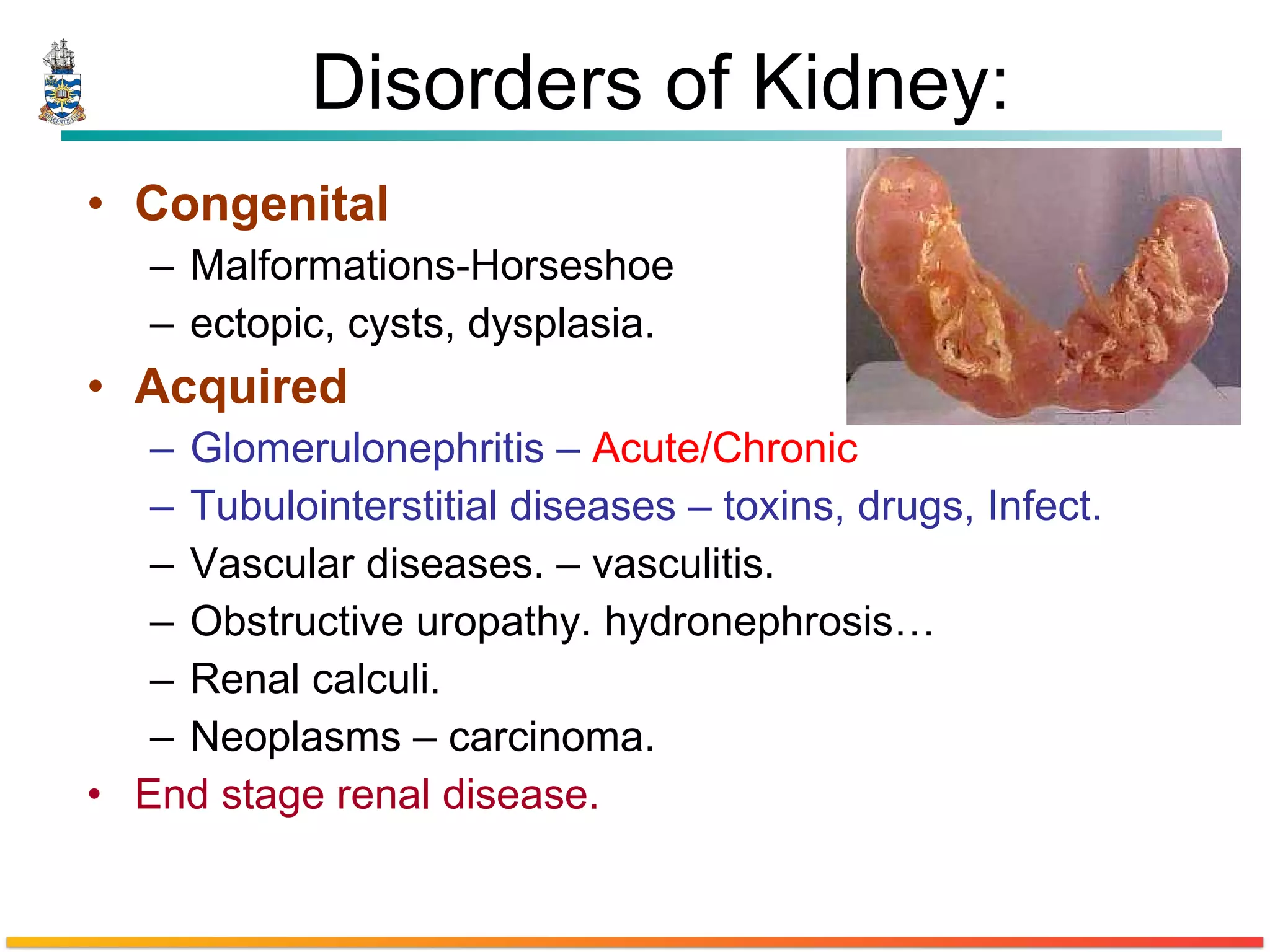
Disorders of Kidney: Congenital  Malformations-Horseshoe ectopic, cysts, dysplasia. Acquired Glomerulonephritis –  Acute/Chronic Tubulointerstitial diseases – toxins, drugs, Infect. Vascular diseases. – vasculitis. Obstructive uropathy. hydronephrosis… Renal calculi. Neoplasms – carcinoma. End stage renal disease.
GN -Clinical Presentations: Asymptomatic Proteinuria: Many types of early GN,  MCD & FSGS Painless hematuria: Bergers (IgA),  SLE, SBE,  Nephr itic  Syndrome: Posts Strep  PGN ,  RPGN , antiGBM, SLE. Nephr otic  Syndrome: Pri:  MCD, MPGN,  FSGS ,  MGN , IgA Neph Sec:  DM, drugs, SLE, Amyloidosis. Renal Failure:   Acute/Chronic & endstage. Common end result, Drugs, infections, ischemic, metabolic. ATN-Acute tubular necrosis. Sec:  Hypertension, DM , GN,  Pri: CRF.
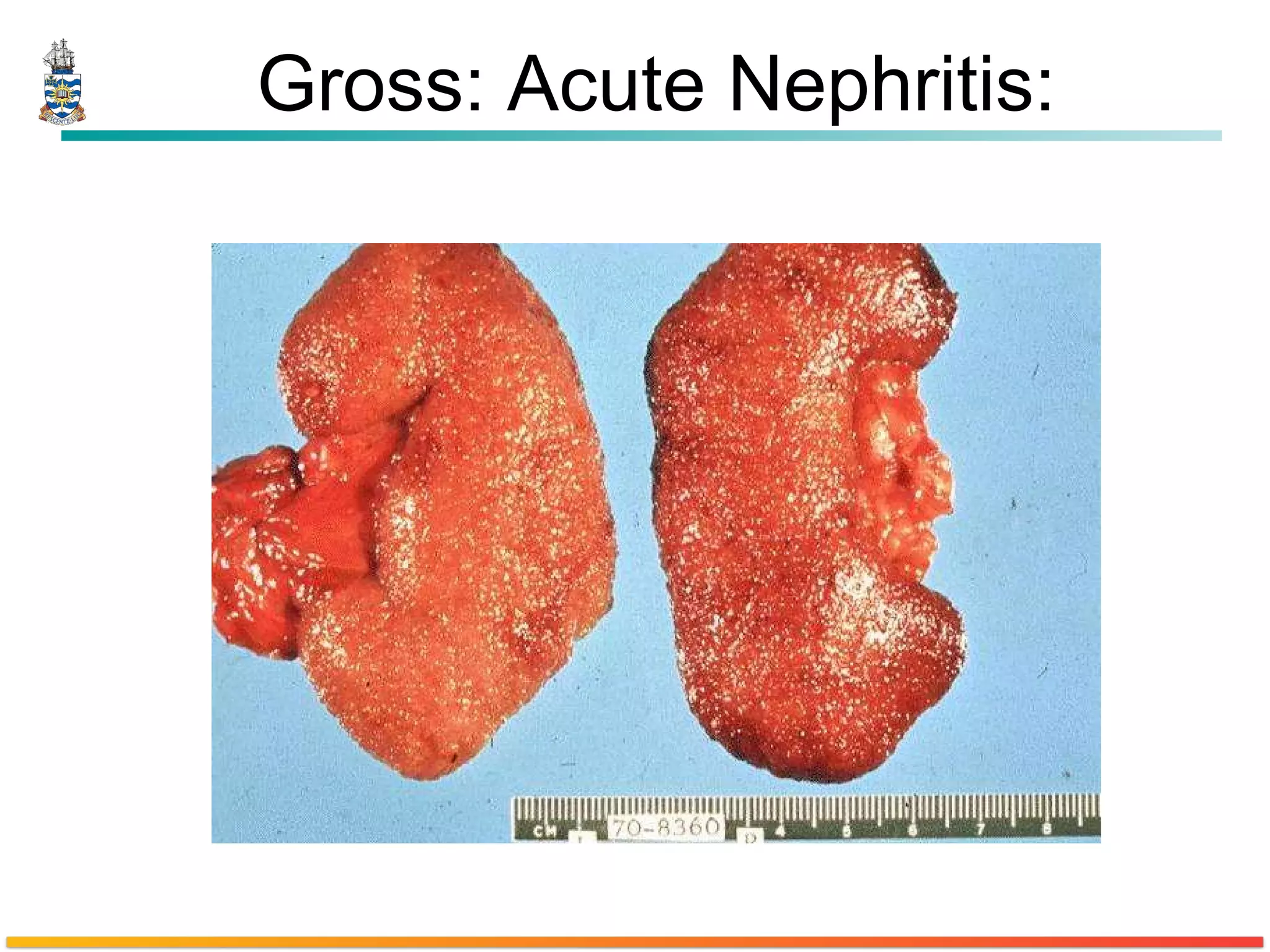
Gross: Acute Nephritis:
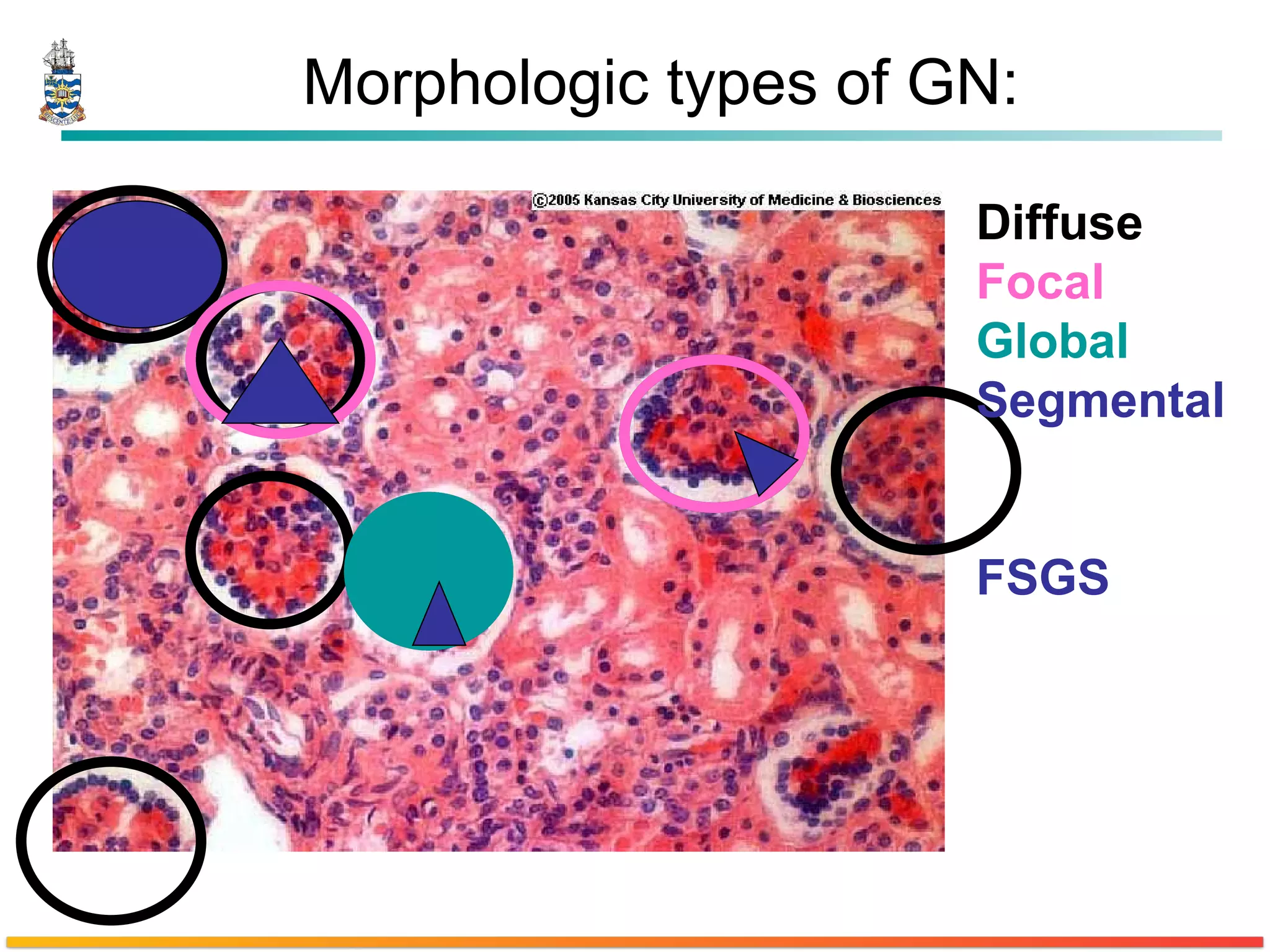
Glom. Dis. Classification: Aetiological   Primary & Secondary Immunological Glomerular Ag (anti GBM) Non-glomerular Ag. (immune complex)  Morphological . diffuse :  all glomeruli  focal : some glomeruli.  global : whole of glom.  segmental : part of glom. Morphologic: proliferative : increased cells  membranous : thickening of BM  membrano-proliferative :  combination  crescentic : epithelial proliferation, florid / severe.
Morphologic types of GN: Diffuse Focal Global Segmental FSGS
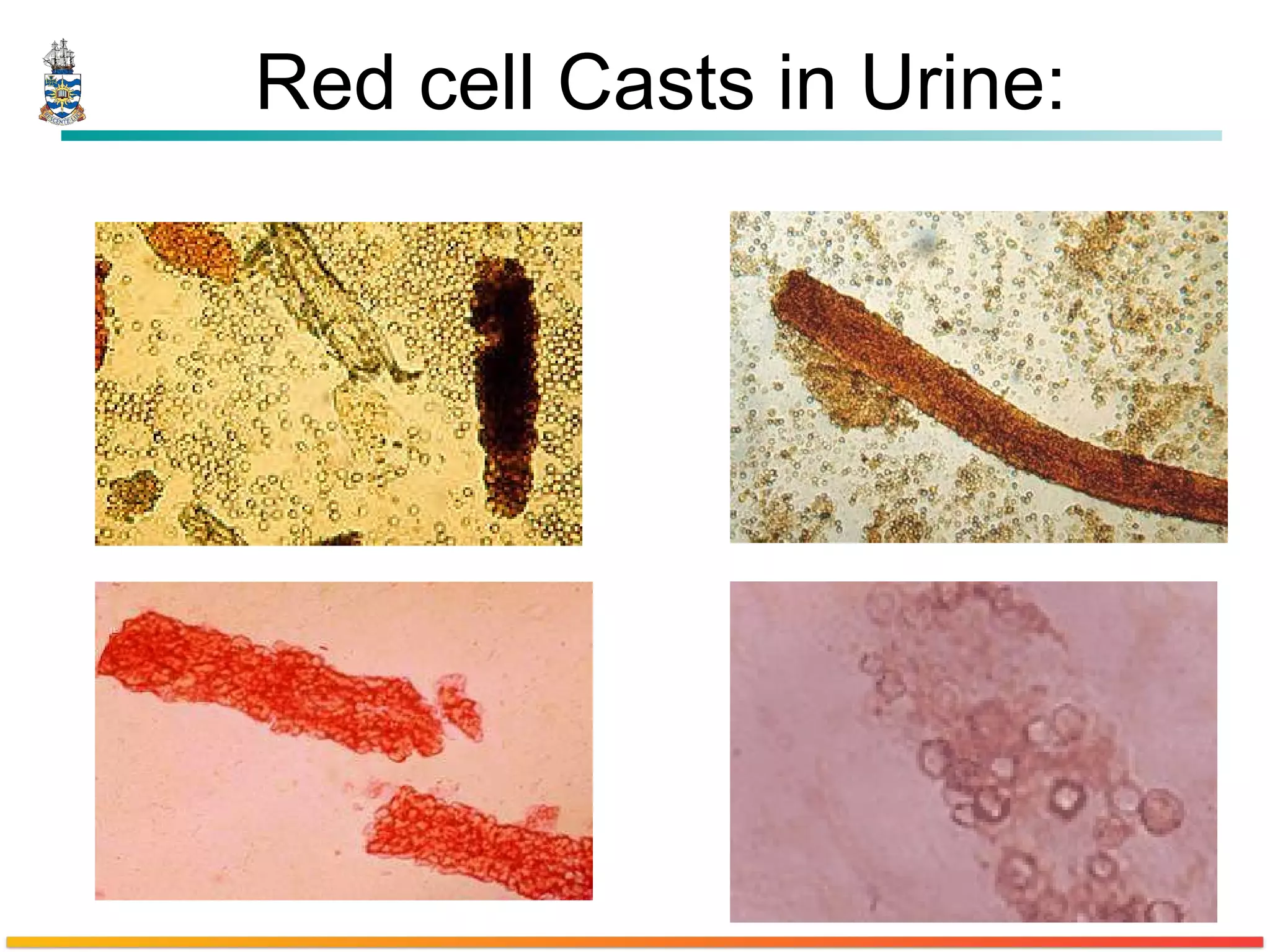
Casts = Glomerular pathology: Kidney Biopsy: Showing RBC, protein & mixed casts within tubules Glomerulus
Red cell Casts in Urine:
Casts in Urine: WBC   Epithelial   RBC  Mixed Granular   Hyaline Online Urinalysis tutorial :  http:// library.med.utah.edu/WebPath/TUTORIAL/URINE/URINE.html
Great achievements can start right where you stand, by applying the habit of going the extra mile, by rendering more service and better service than you are now being paid for.  Napoleon Hill
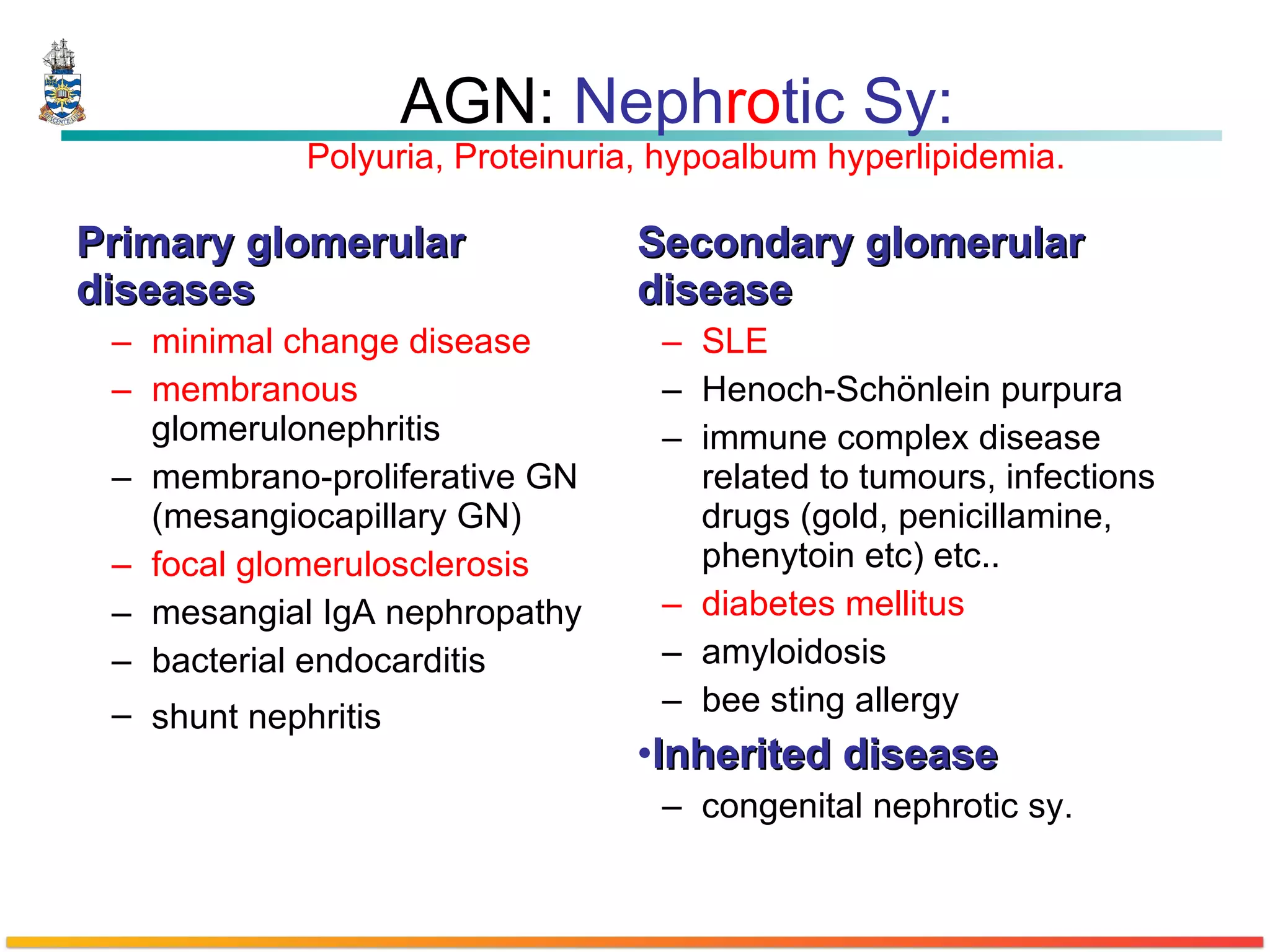
AGN:  Neph ro tic Sy:  Polyuria, Proteinuria, hypoalbum hyperlipidemia. Primary glomerular diseases  minimal change disease   membranous  glomerulonephritis  membrano-proliferative GN (mesangiocapillary GN)  focal glomerulosclerosis   mesangial IgA nephropathy  bacterial endocarditis  shunt nephritis   Secondary glomerular disease  SLE  Henoch-Schönlein purpura  immune complex disease related to tumours, infections drugs (gold, penicillamine, phenytoin etc) etc..  diabetes mellitus   amyloidosis bee sting allergy  Inherited disease   congenital nephrotic sy.
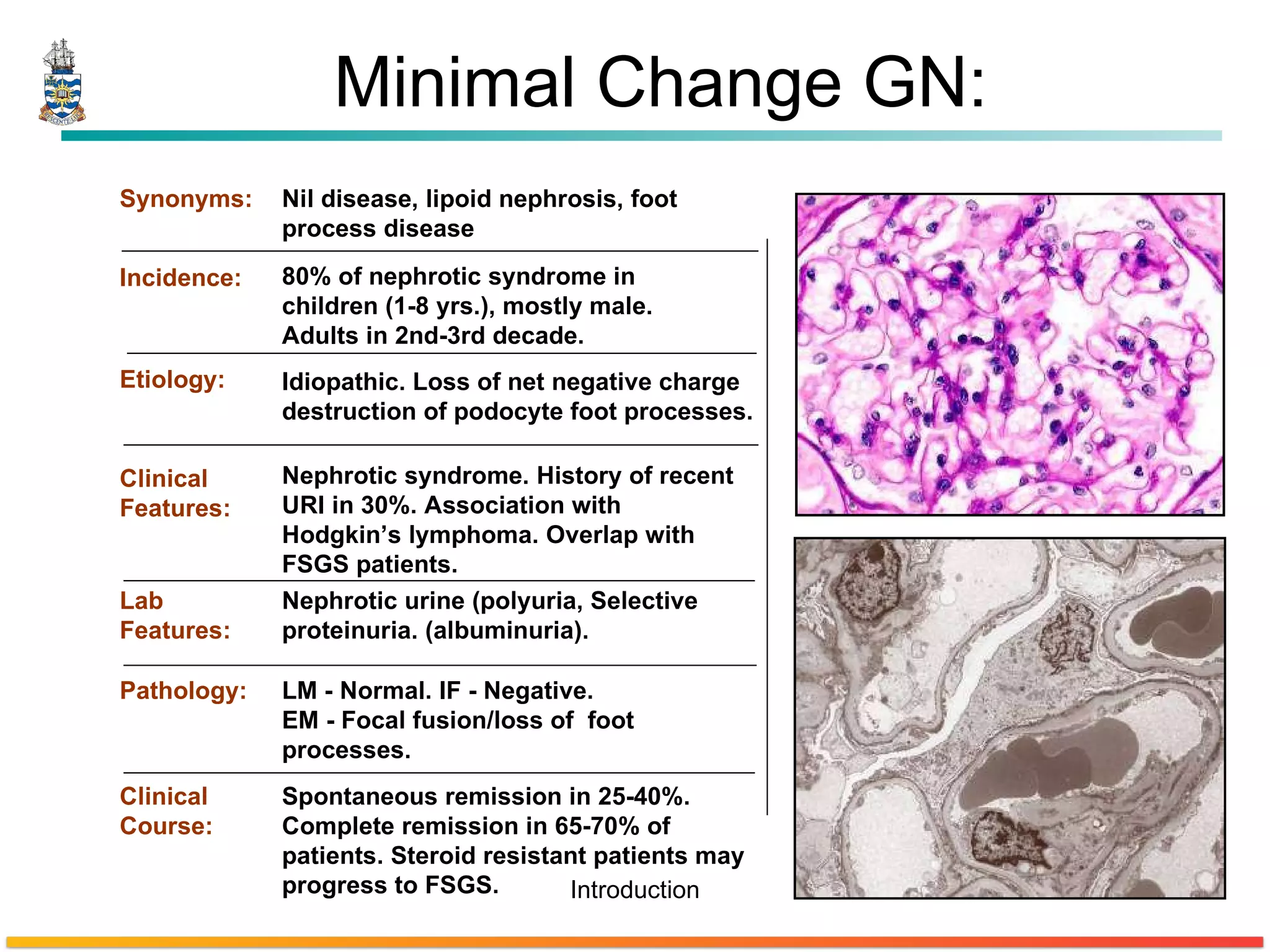
Minimal Change GN: Introduction Synonyms: Incidence: Etiology: Clinical Features: Lab Features: Pathology: Clinical Course: Nil disease, lipoid nephrosis, foot process disease Idiopathic. Loss of net negative charge destruction of podocyte foot processes. Nephrotic syndrome. History of recent URI in 30%. Association with Hodgkin’s lymphoma. Overlap with FSGS patients. Nephrotic urine (polyuria, Selective proteinuria. (albuminuria). Spontaneous remission in 25-40%. Complete remission in 65-70% of patients. Steroid resistant patients may progress to FSGS. LM - Normal. IF - Negative. EM - Focal fusion/loss of  foot processes. 80% of nephrotic syndrome in children (1-8 yrs.), mostly male. Adults in 2nd-3rd decade.
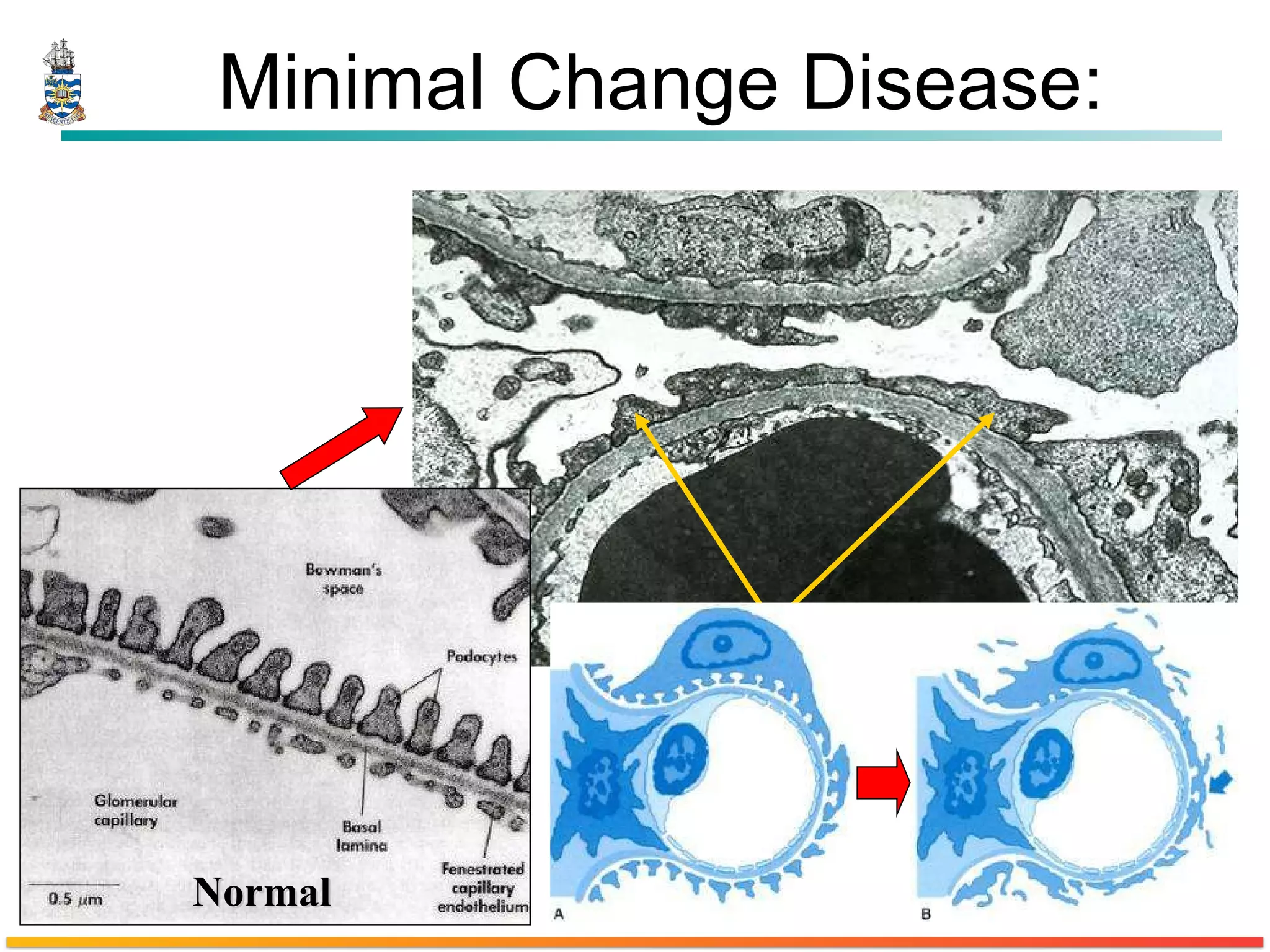
Minimal Change Disease: Loss of Foot processes Normal
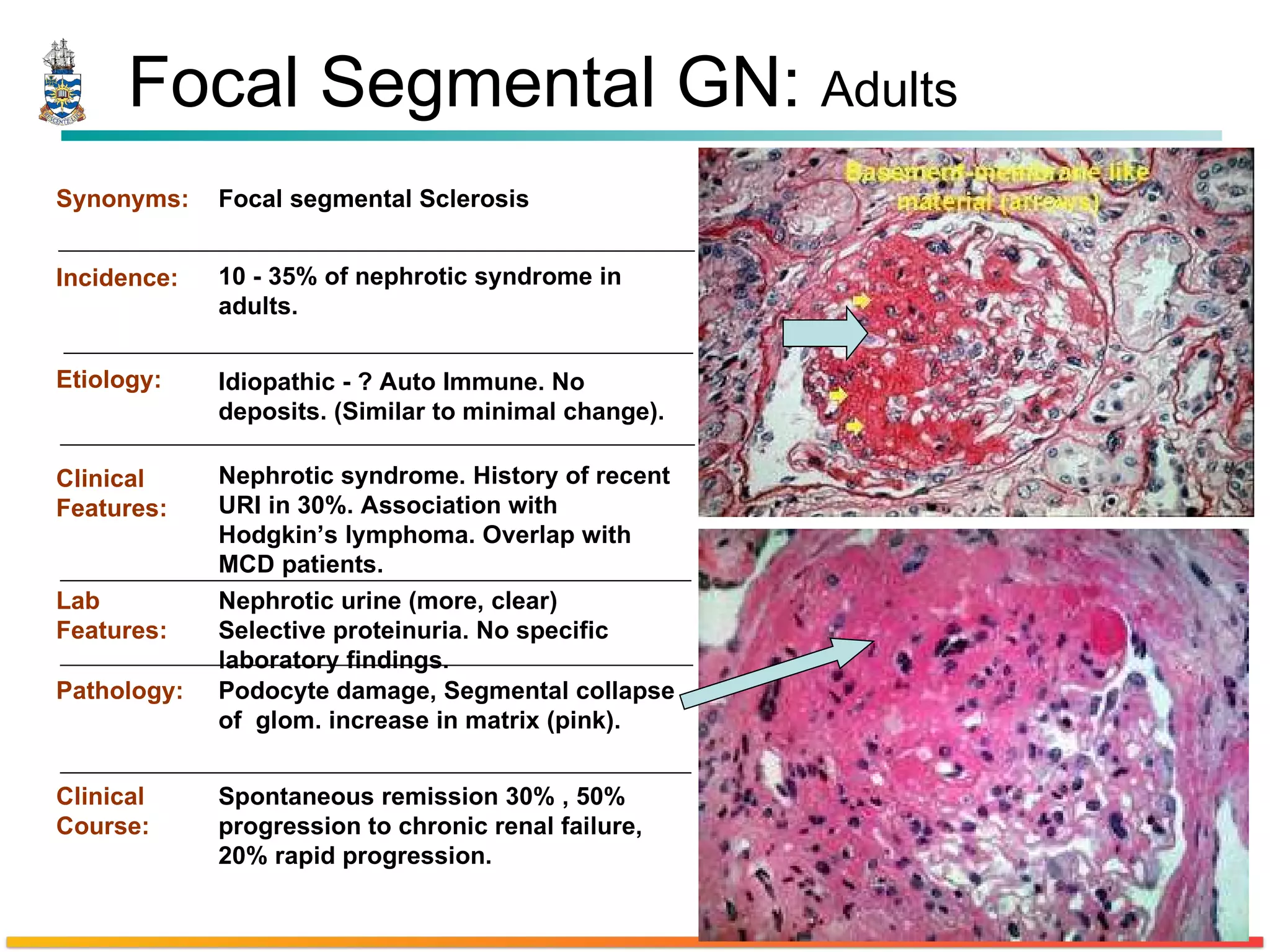
Focal Segmental GN:  Adults Synonyms: Incidence: Etiology: Clinical Features: Lab Features: Pathology: Clinical Course: Focal segmental Sclerosis Idiopathic - ? Auto Immune. No deposits. (Similar to minimal change). Nephrotic syndrome. History of recent URI in 30%. Association with Hodgkin’s lymphoma. Overlap with MCD patients. Nephrotic urine (more, clear) Selective proteinuria. No specific laboratory findings. Spontaneous remission 30% , 50% progression to chronic renal failure, 20% rapid progression. Podocyte damage, Segmental collapse of  glom. increase in matrix (pink).  10 - 35% of nephrotic syndrome in adults.
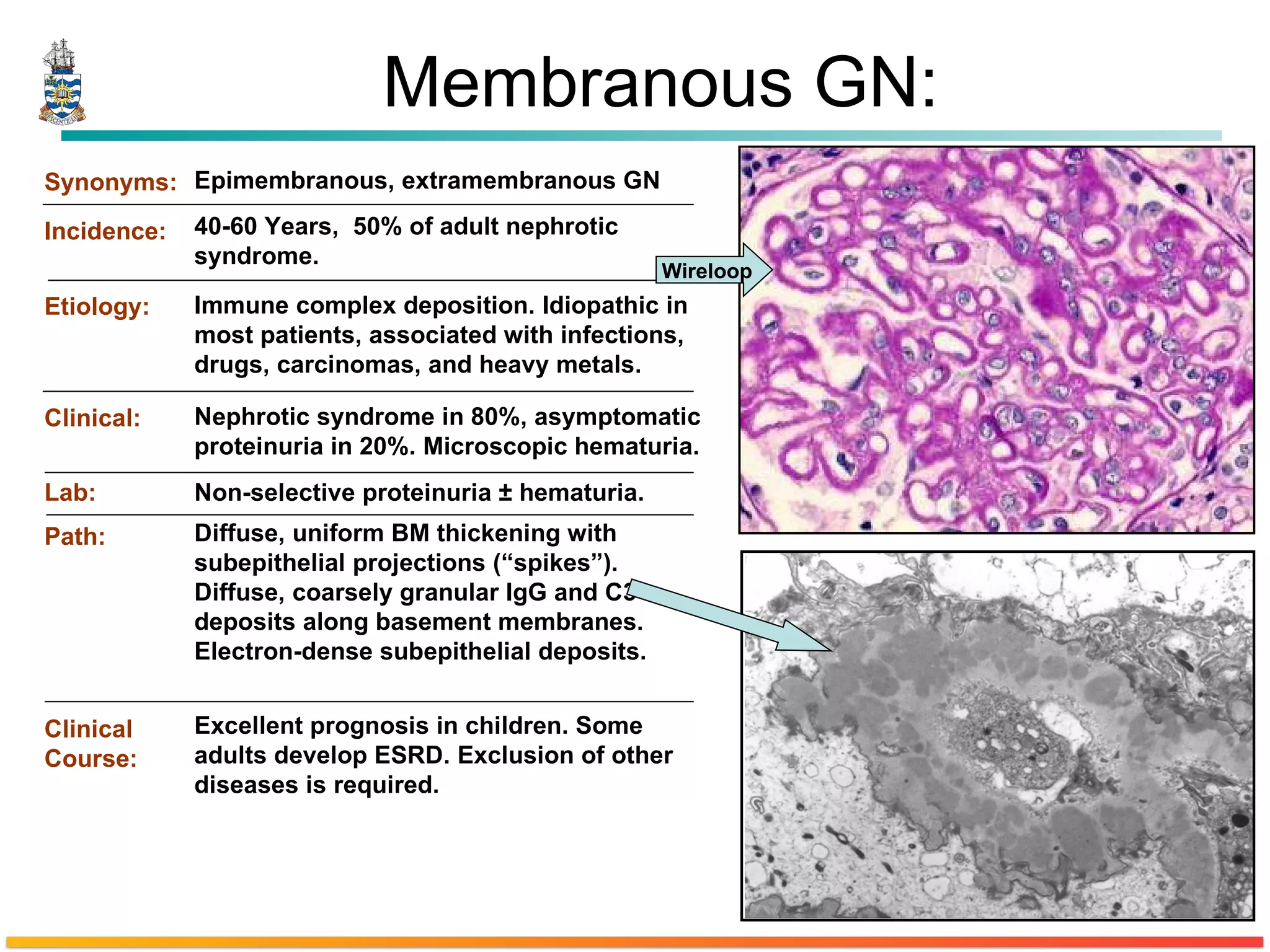
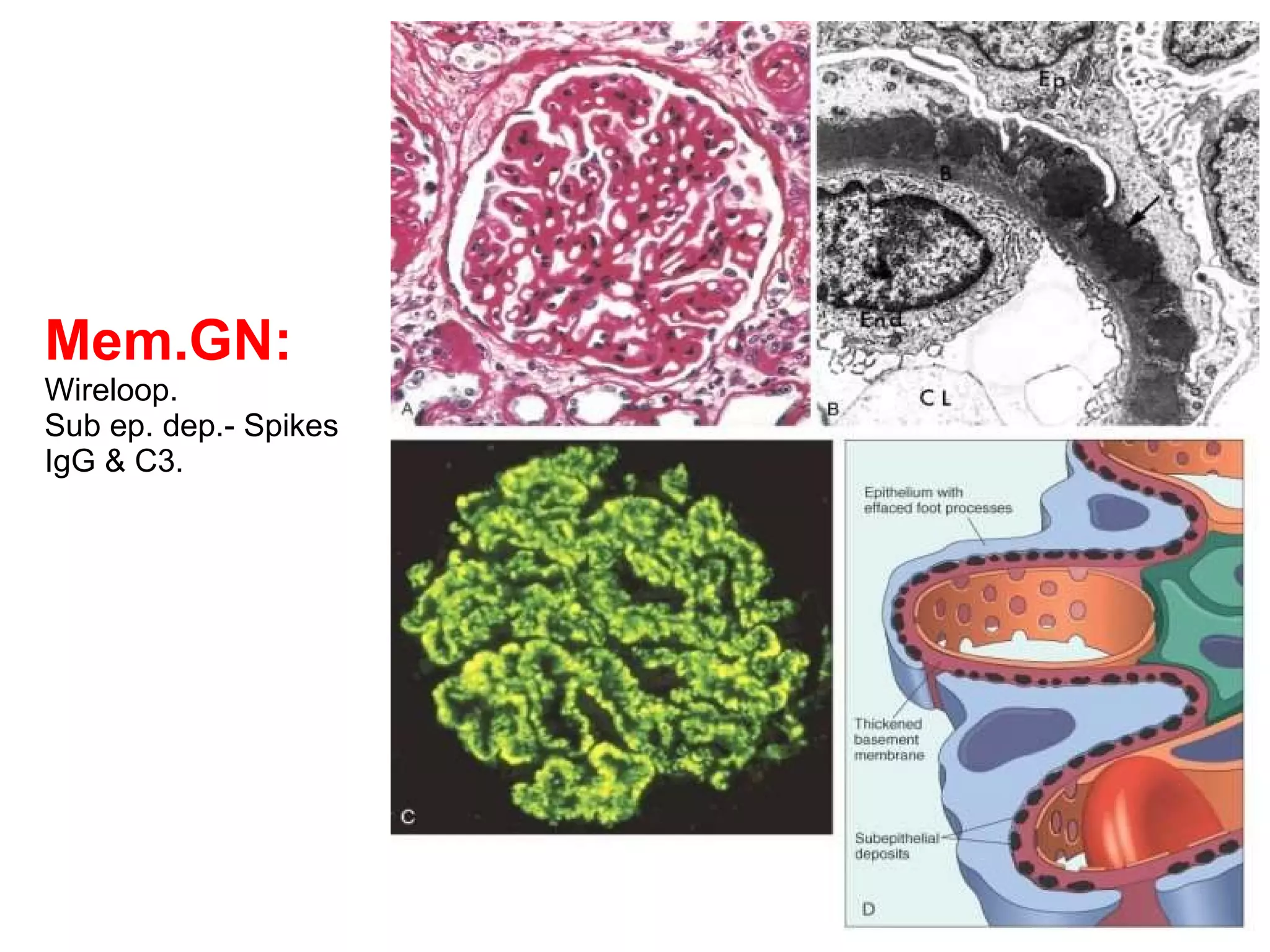
Membranous GN: Synonyms: Incidence: Etiology: Clinical: Lab: Path: Clinical Course: Epimembranous, extramembranous GN Immune complex deposition. Idiopathic in most patients, associated with infections, drugs, carcinomas, and heavy metals. Nephrotic syndrome in 80%, asymptomatic proteinuria in 20%. Microscopic hematuria. Non-selective proteinuria ± hematuria. Excellent prognosis in children. Some adults develop ESRD. Exclusion of other diseases is required. Diffuse, uniform BM thickening with subepithelial projections (“spikes”). Diffuse, coarsely granular IgG and C3 deposits along basement membranes. Electron-dense subepithelial deposits. 40-60 Years,  50% of adult nephrotic syndrome. Wireloop
Mem.GN: Wireloop. Sub ep. dep.- Spikes IgG & C3.
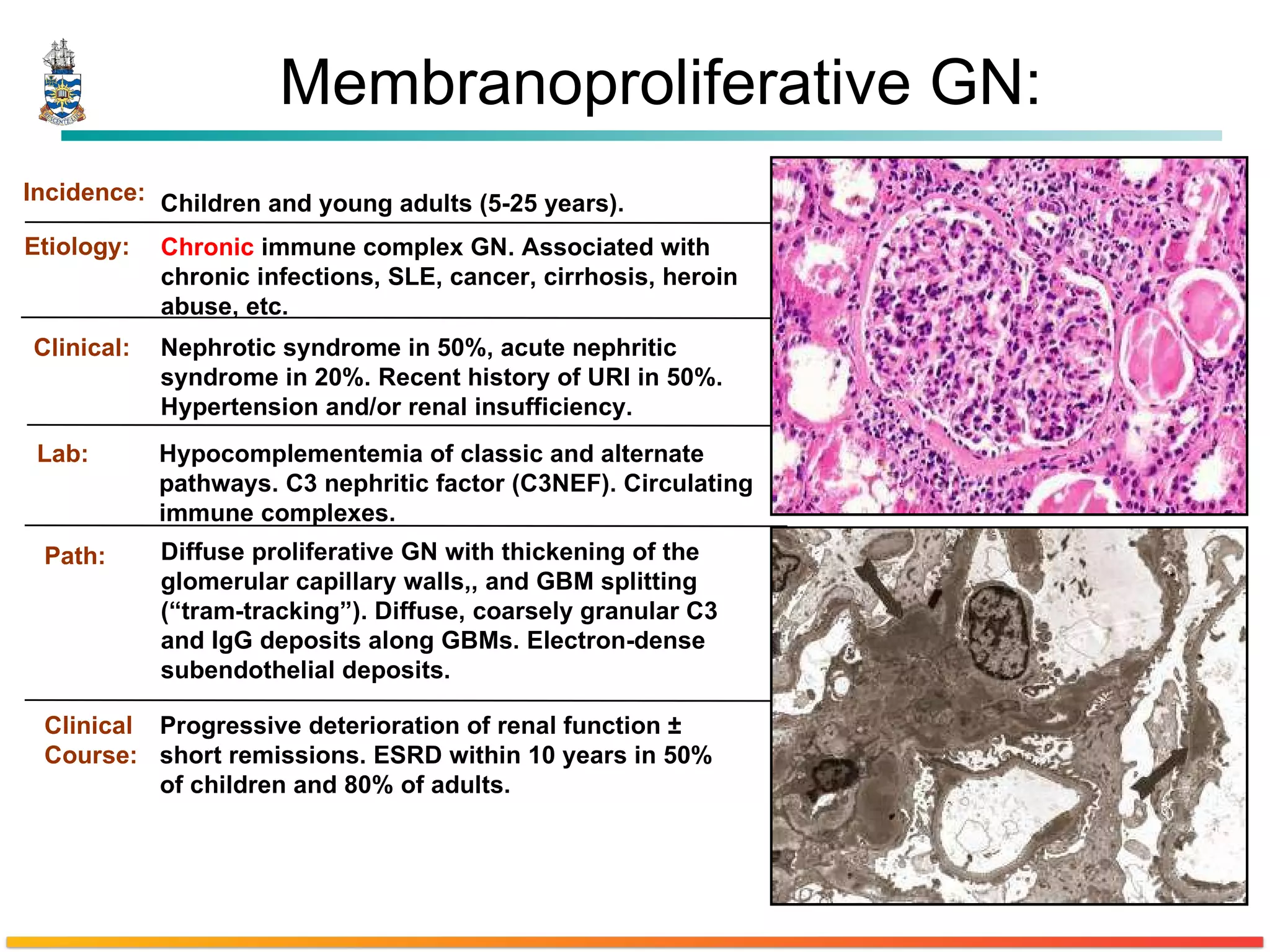
Membranoproliferative GN: Etiology: Chronic  immune complex GN. Associated with chronic infections, SLE, cancer, cirrhosis, heroin abuse, etc. Clinical: Nephrotic syndrome in 50%, acute nephritic syndrome in 20%. Recent history of URI in 50%. Hypertension and/or renal insufficiency. Lab: Hypocomplementemia of classic and alternate pathways. C3 nephritic factor (C3NEF). Circulating immune complexes. Clinical Course: Progressive deterioration of renal function ± short remissions. ESRD within 10 years in 50% of children and 80% of adults. Path: Diffuse proliferative GN with thickening of the glomerular capillary walls,, and GBM splitting (“tram-tracking”). Diffuse, coarsely granular C3 and IgG deposits along GBMs. Electron-dense subendothelial deposits. Incidence: Children and young adults (5-25 years).
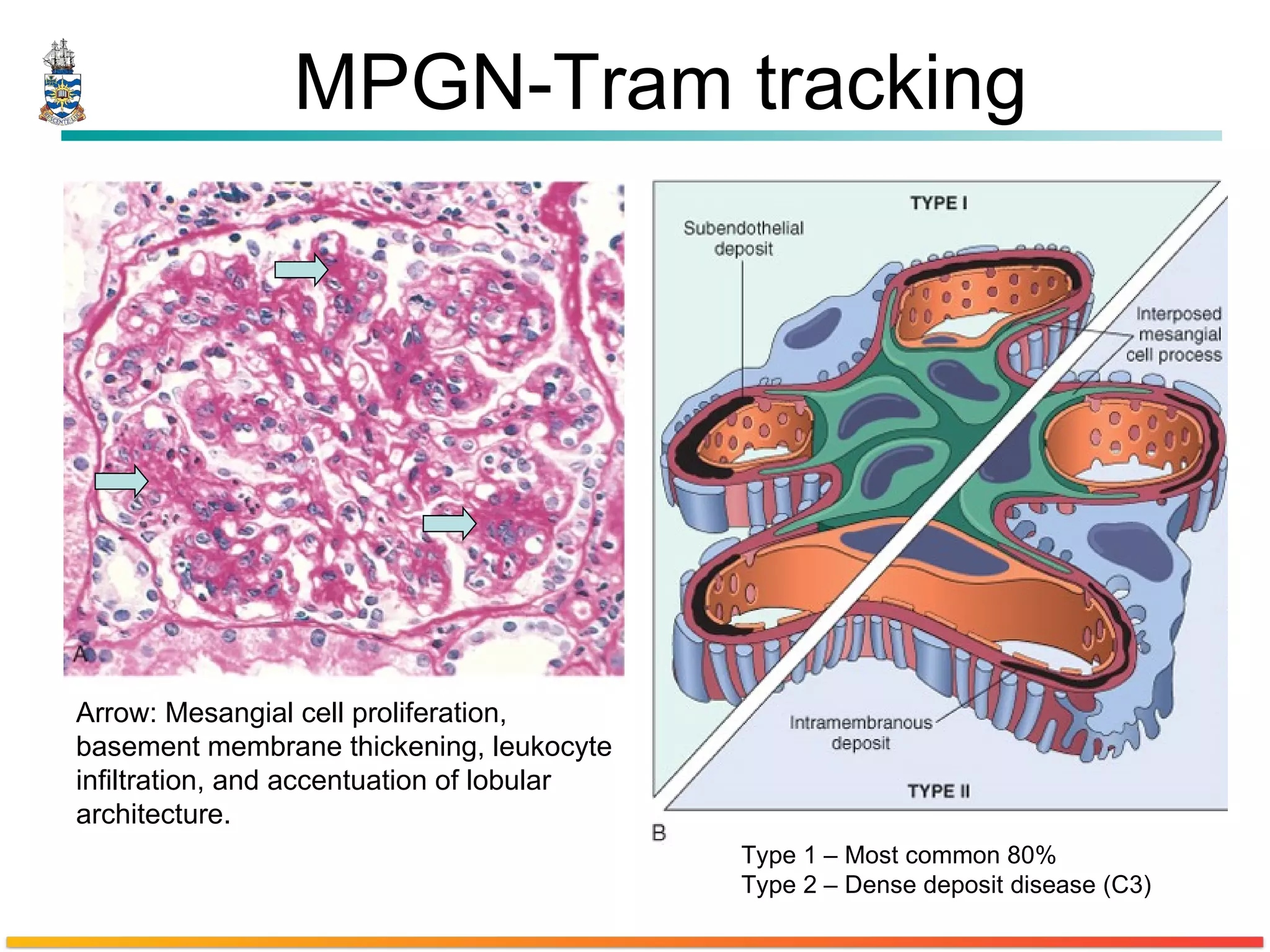
MPGN-Tram tracking Arrow: Mesangial cell proliferation, basement membrane thickening, leukocyte infiltration, and accentuation of lobular architecture.  Type 1 – Most common 80% Type 2 – Dense deposit disease (C3)
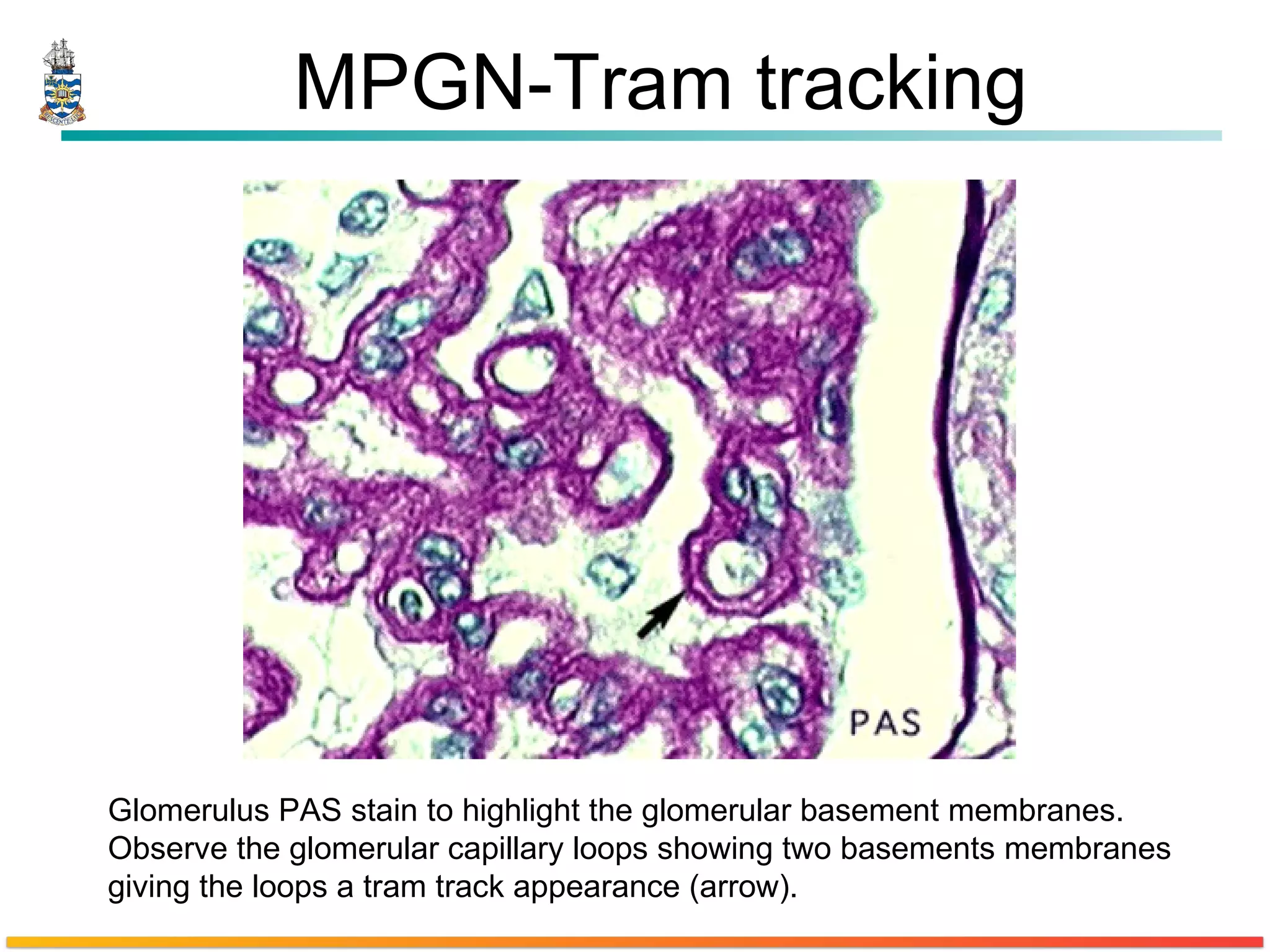
MPGN-Tram tracking Glomerulus PAS stain to highlight the glomerular basement membranes. Observe the glomerular capillary loops showing two basements membranes giving the loops a tram track appearance (arrow).
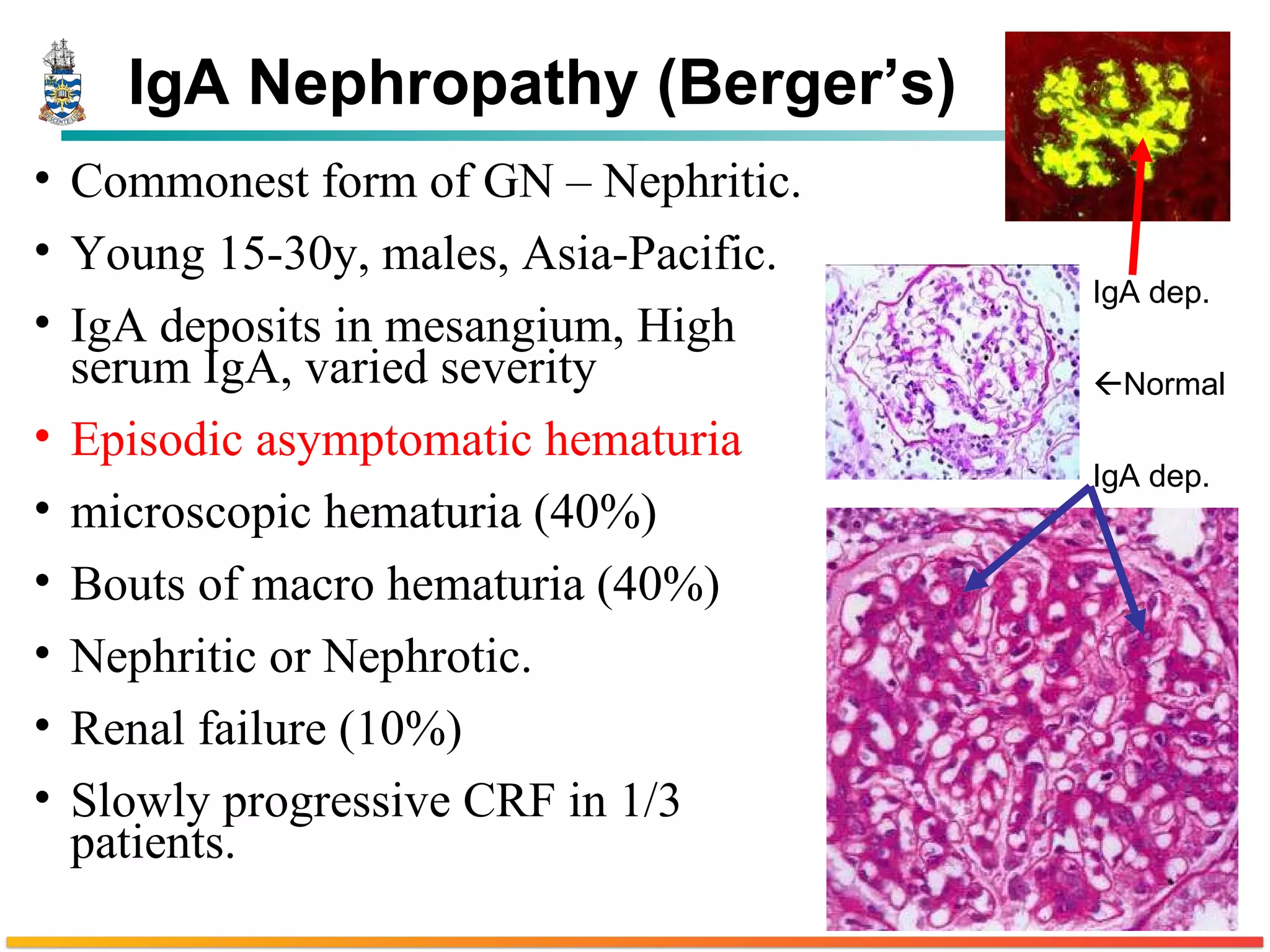
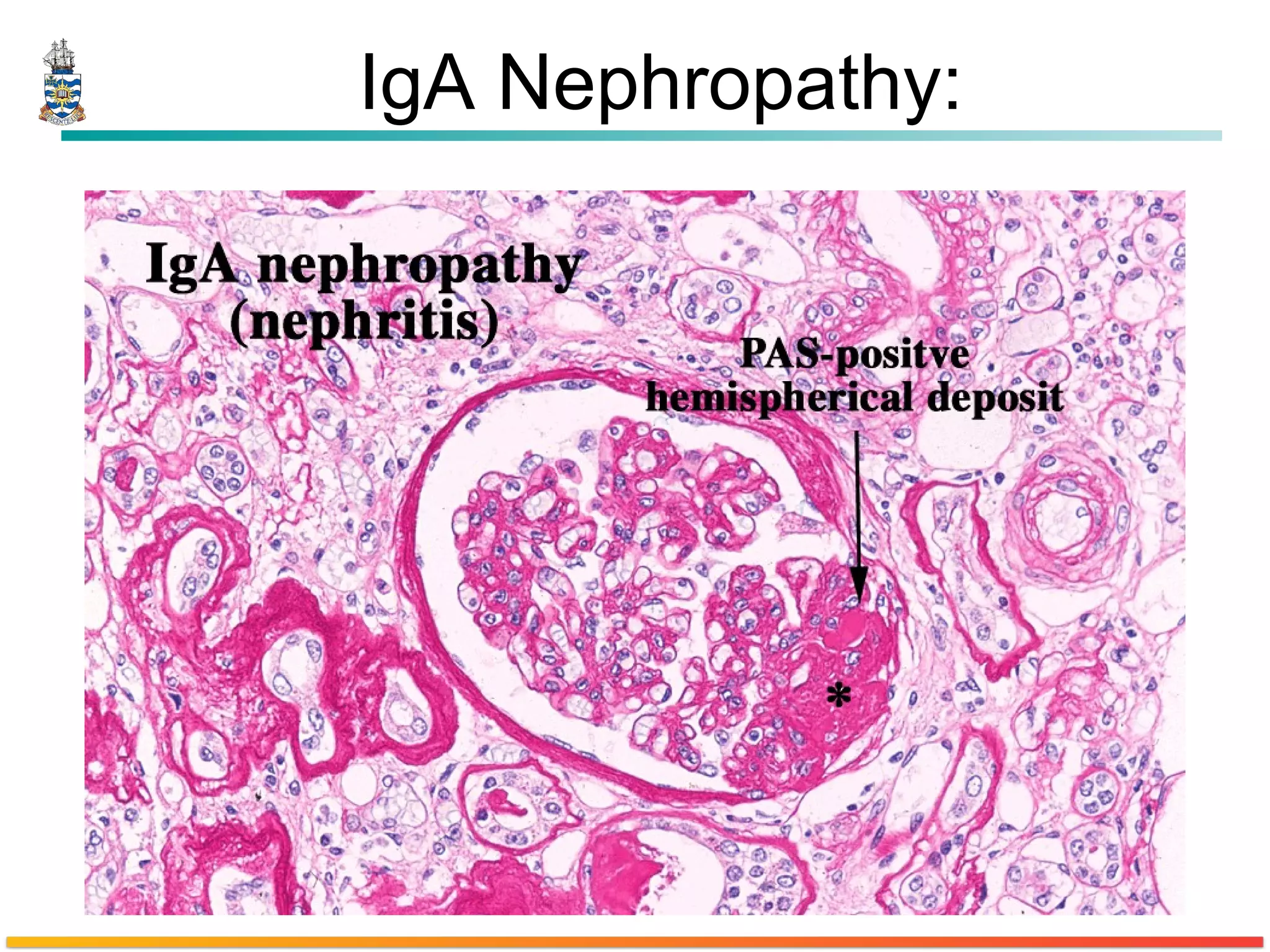
IgA Nephropathy (Berger’s) Commonest form of GN – Nephritic. Young 15-30y, males, Asia-Pacific. IgA deposits in mesangium, High serum IgA, varied severity Episodic asymptomatic hematuria  microscopic hematuria (40%) Bouts of macro hematuria (40%) Nephritic or Nephrotic.  Renal failure (10%) Slowly progressive CRF in 1/3  patients. IgA dep.  Normal IgA dep.
IgA Nephropathy:
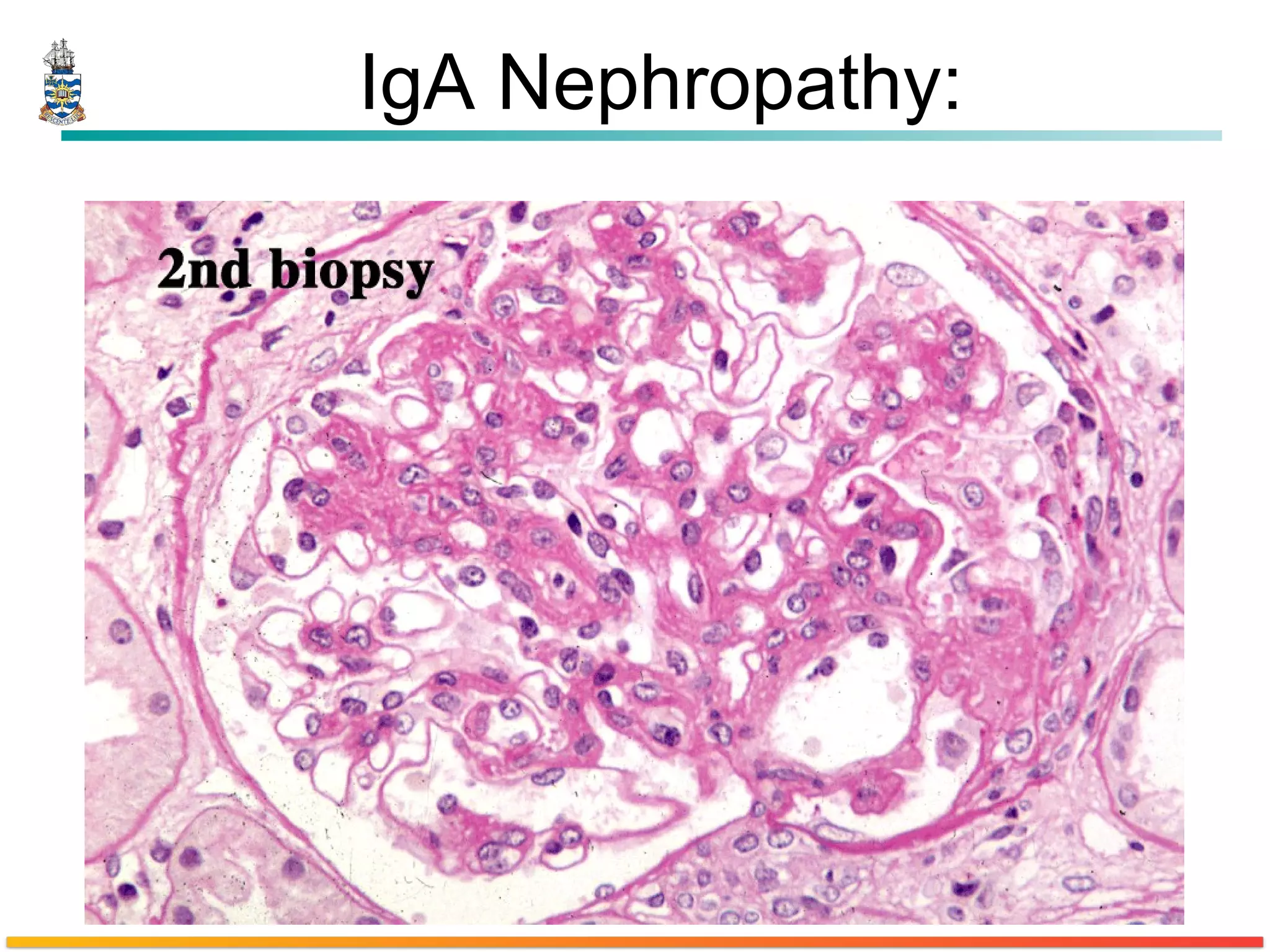
IgA Nephropathy:
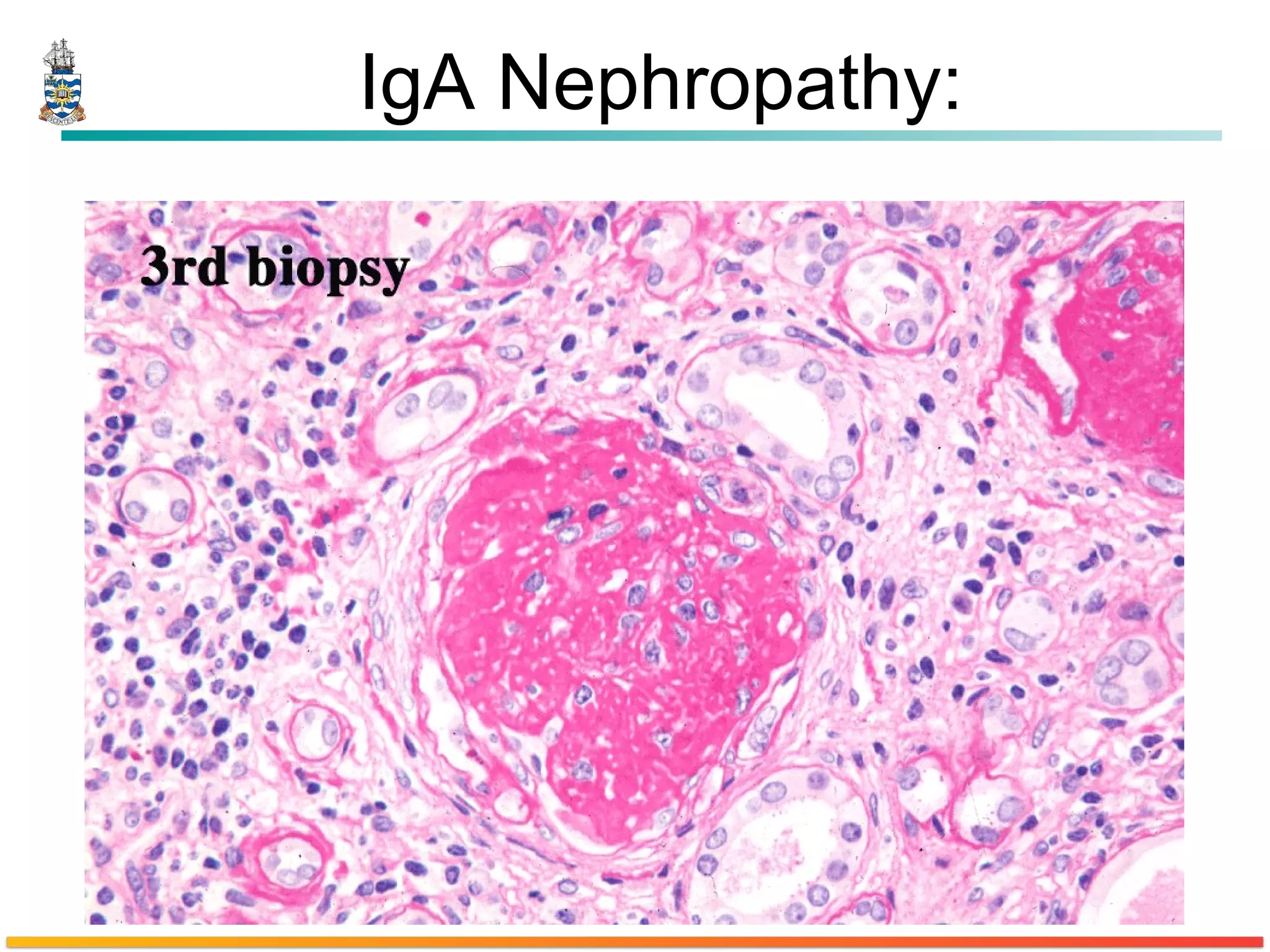
IgA Nephropathy:
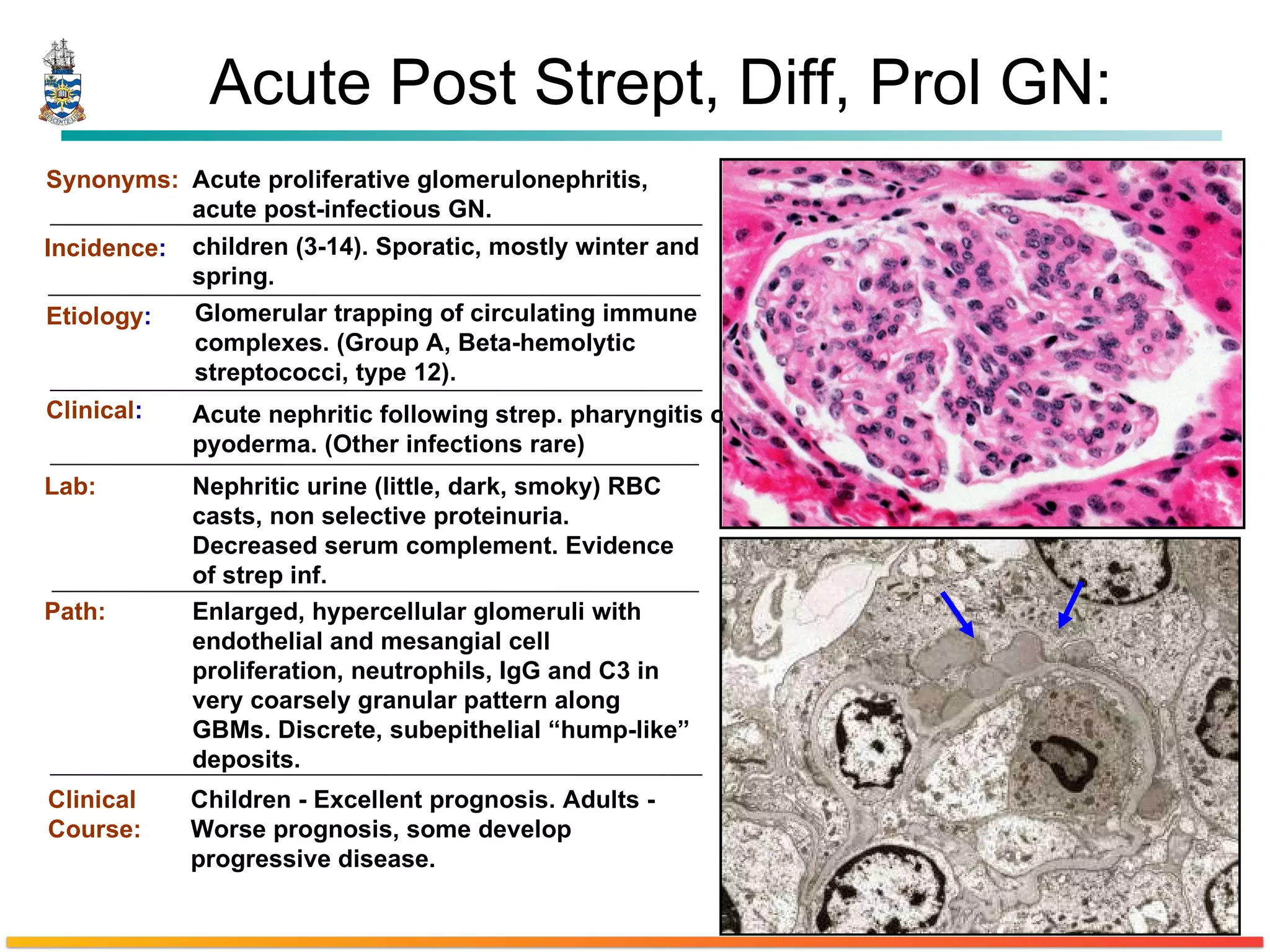
Acute Post Strept, Diff, Prol GN: Synonyms: Incidence : Etiology : Clinical : Lab: Path: Clinical Course: Acute proliferative glomerulonephritis, acute post-infectious GN. Glomerular trapping of circulating immune complexes. (Group A, Beta-hemolytic streptococci, type 12). Acute nephritic following strep. pharyngitis or pyoderma. (Other infections rare) Nephritic urine (little, dark, smoky) RBC casts, non selective proteinuria. Decreased serum complement. Evidence of strep inf. Children - Excellent prognosis. Adults - Worse prognosis, some develop progressive disease.  Enlarged, hypercellular glomeruli with endothelial and mesangial cell proliferation, neutrophils, IgG and C3 in very coarsely granular pattern along GBMs. Discrete, subepithelial “hump-like” deposits. children (3-14). Sporatic, mostly winter and spring.
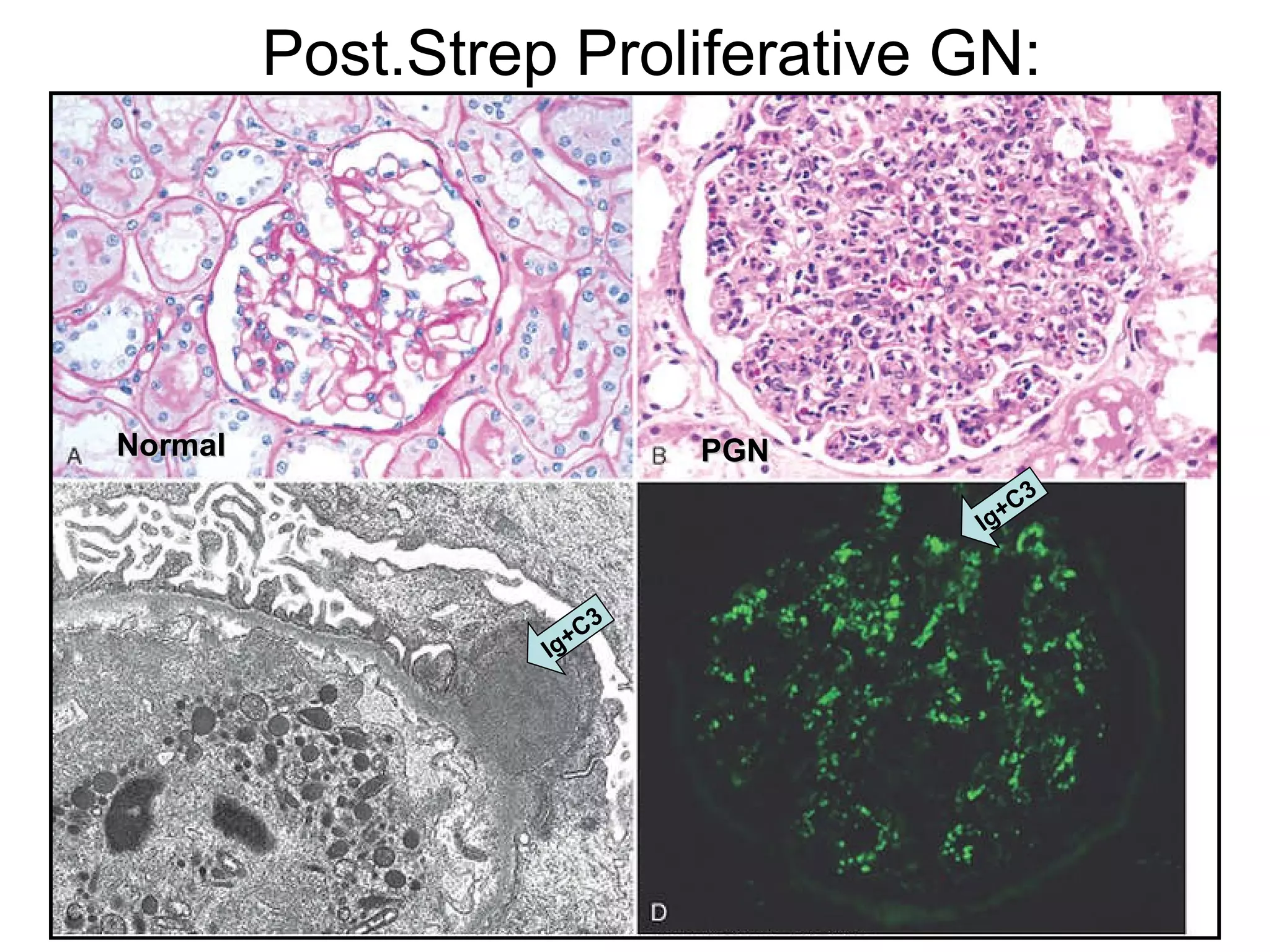
Post.Strep Proliferative GN: Normal PGN Ig+C3 Ig+C3
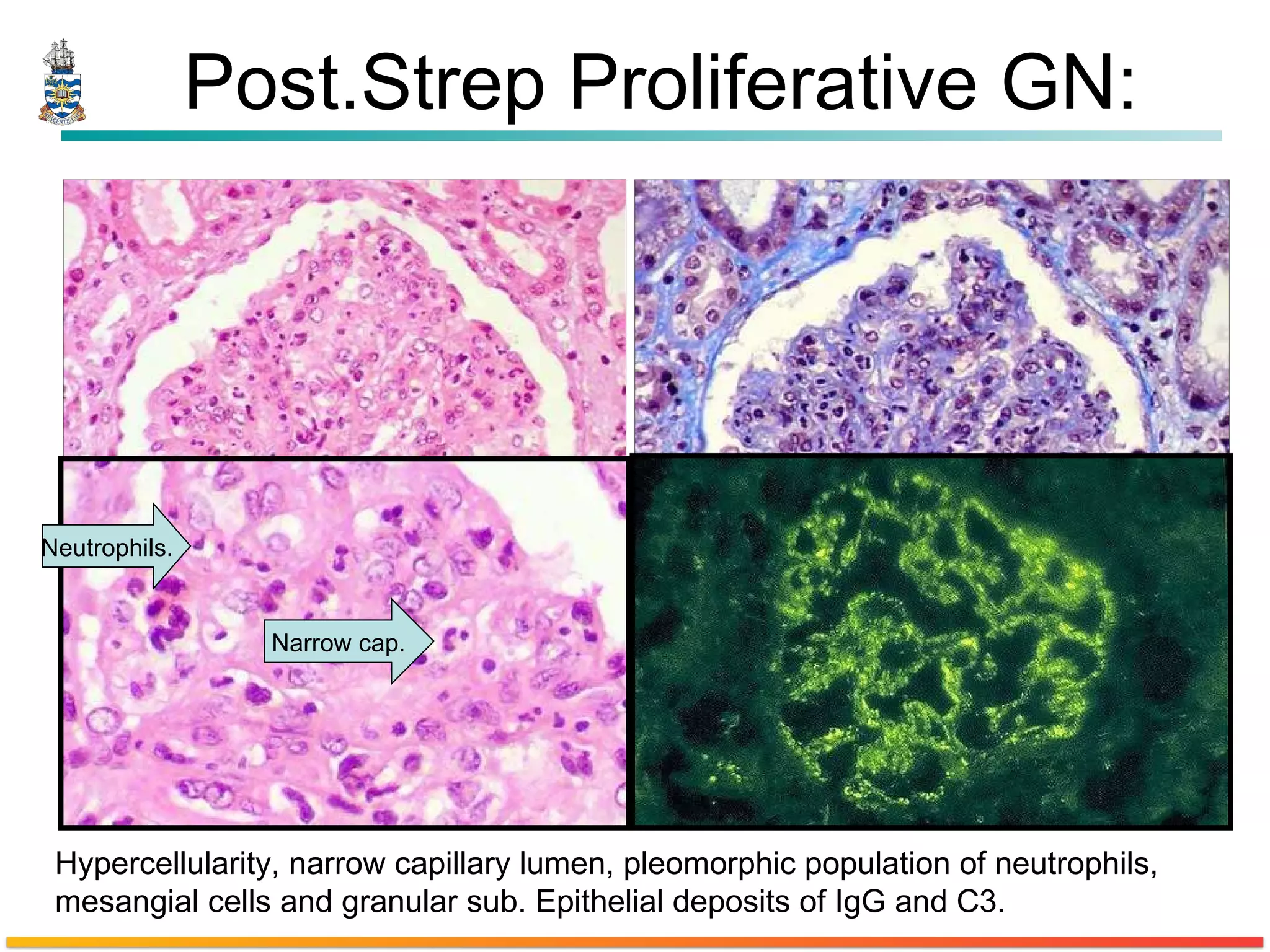
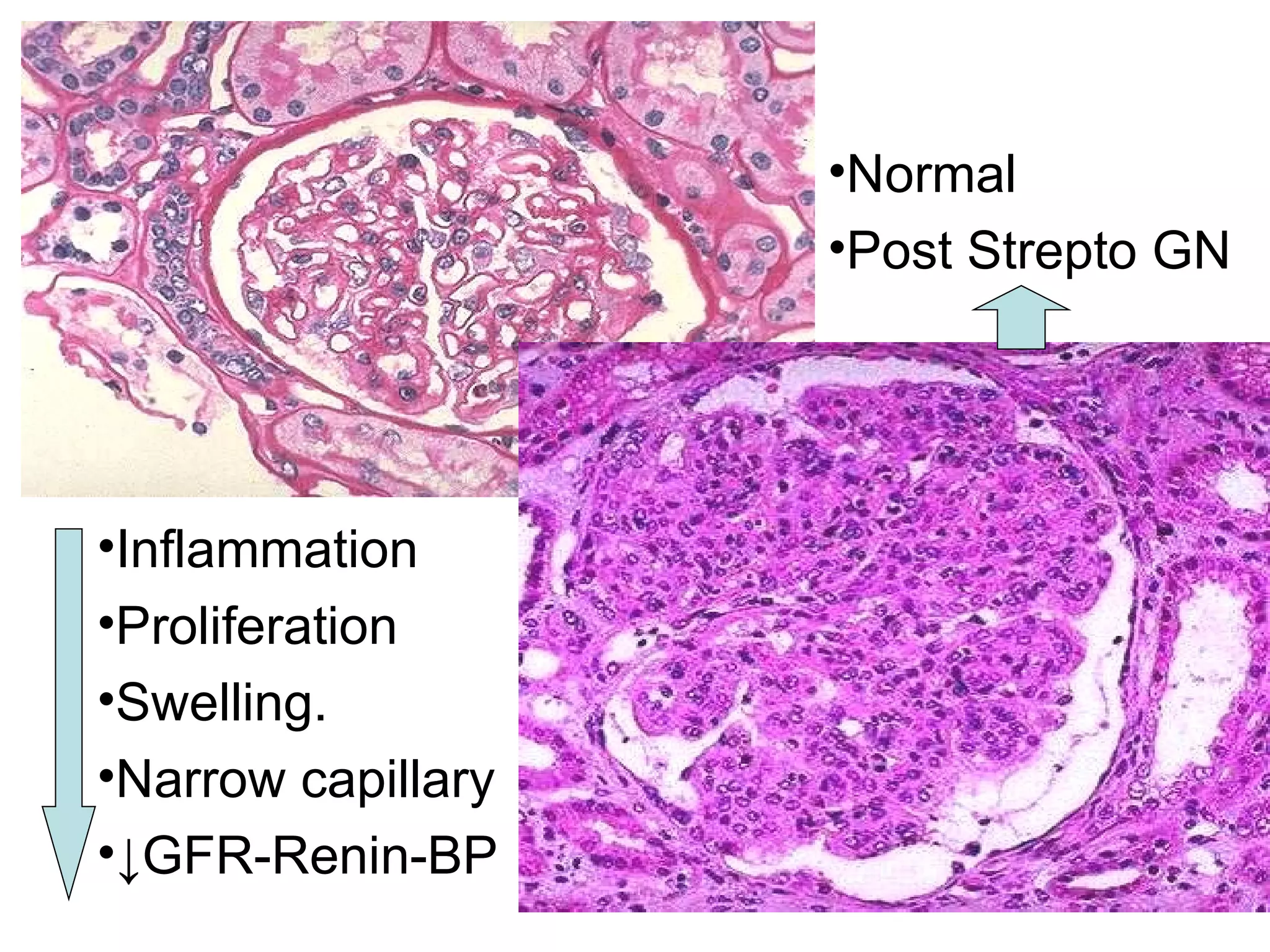
Post.Strep Proliferative GN: Hypercellularity, narrow capillary lumen, pleomorphic population of neutrophils, mesangial cells and granular sub. Epithelial deposits of IgG and C3. Neutrophils. Narrow cap.
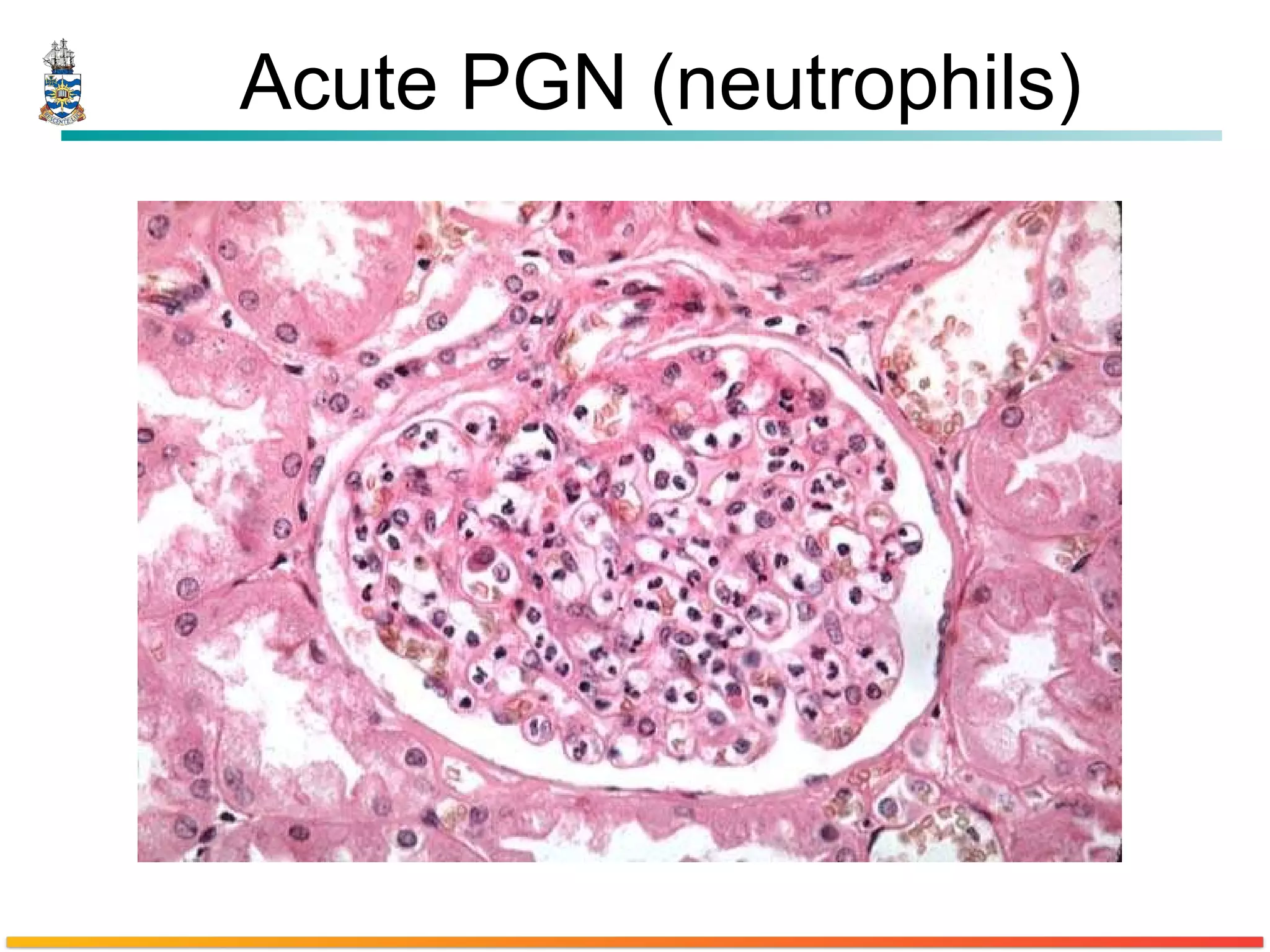
Acute PGN (neutrophils)
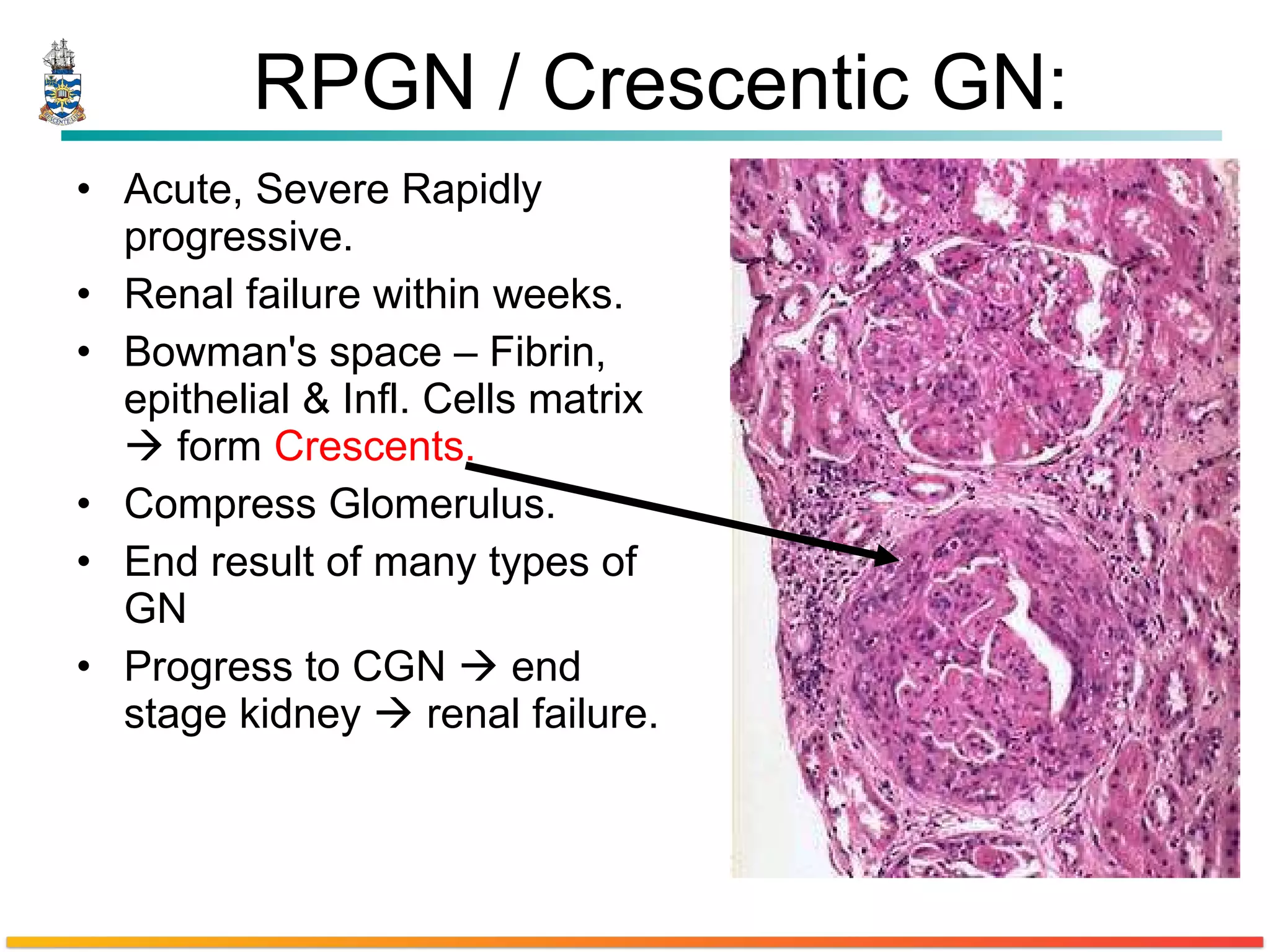
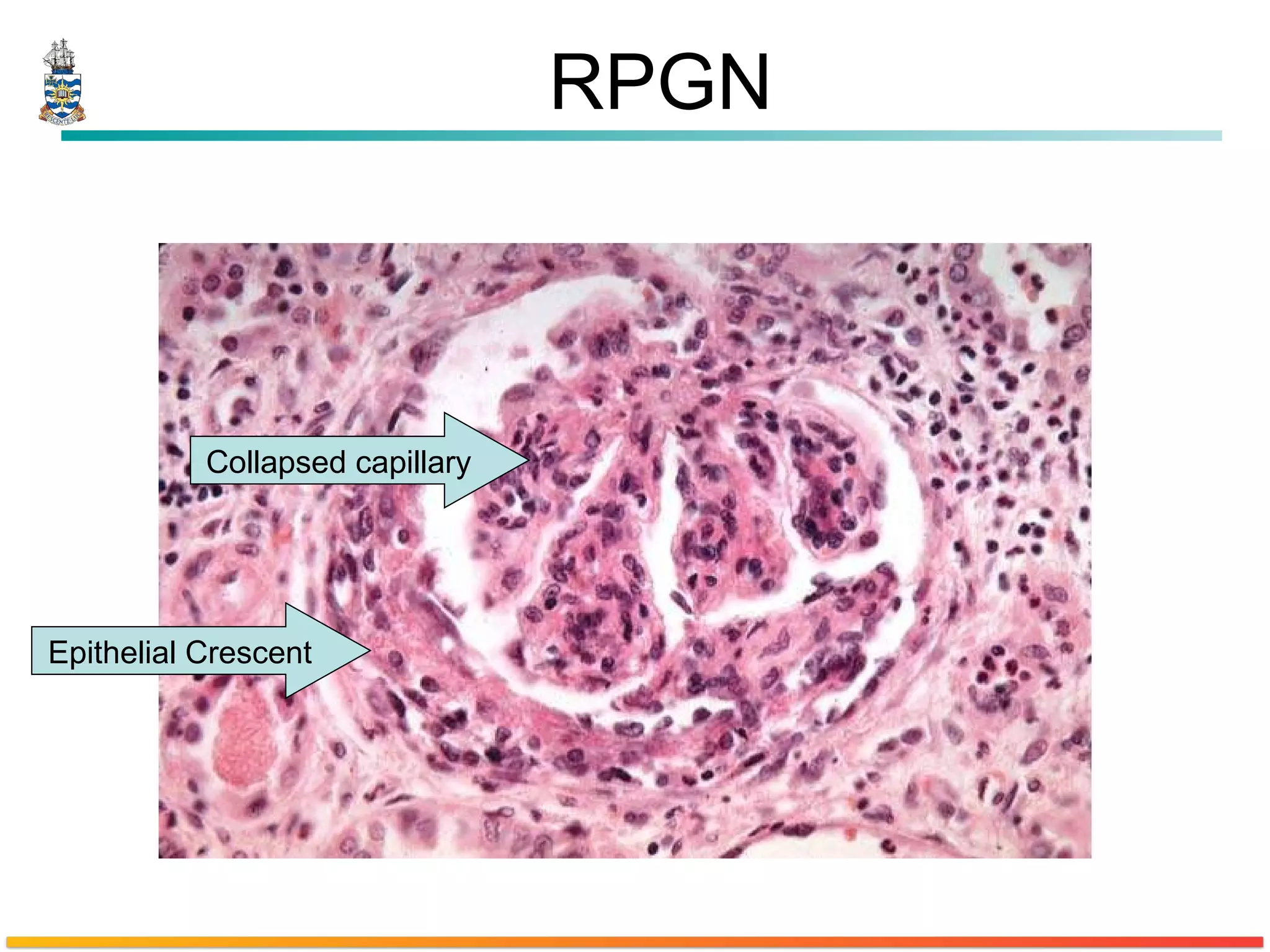
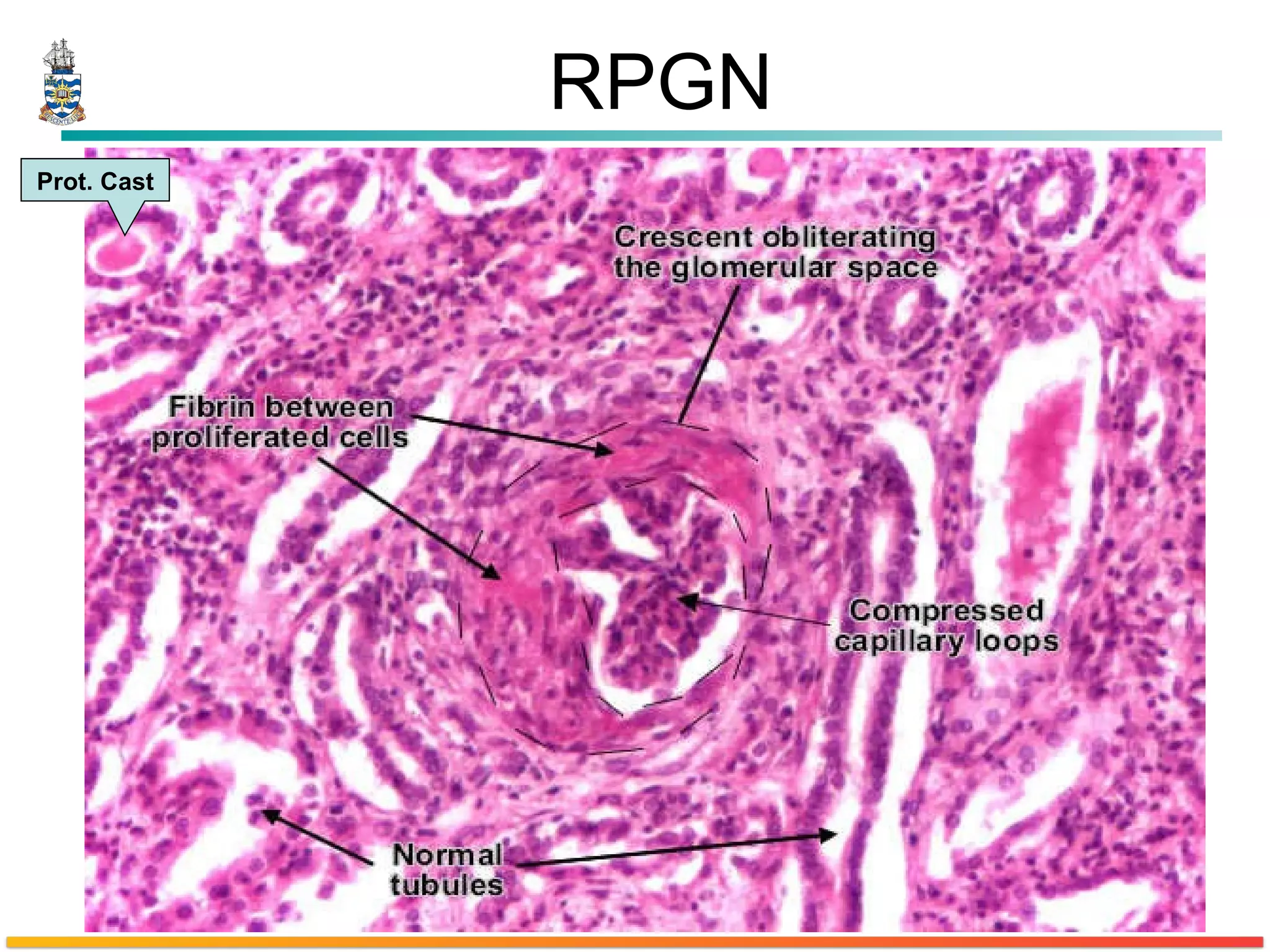
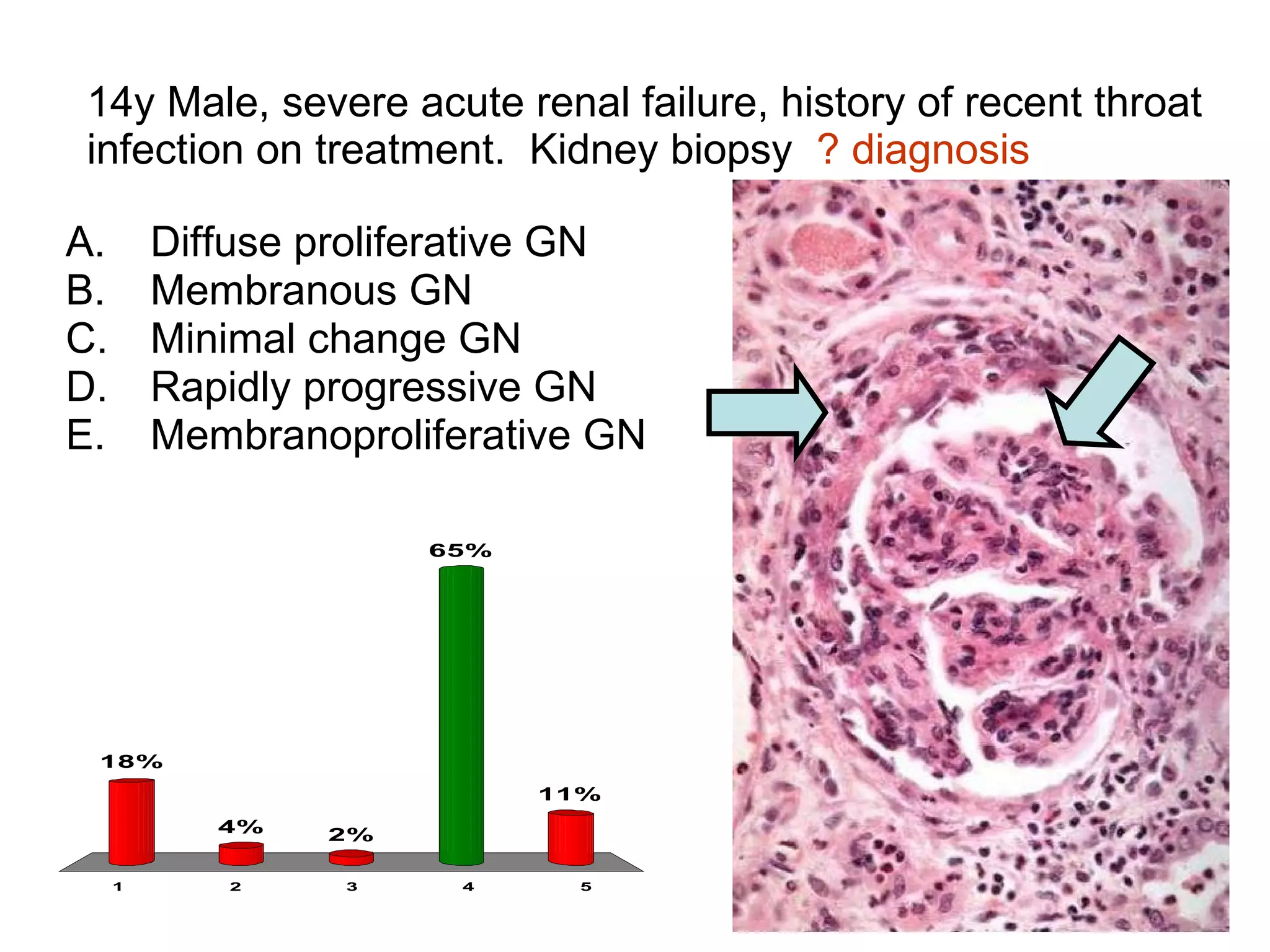
RPGN / Crescentic GN: Acute, Severe Rapidly progressive. Renal failure within weeks. Bowman's space – Fibrin, epithelial & Infl. Cells matrix    form  Crescents.   Compress Glomerulus.  End result of many types of GN  Progress to CGN    end stage kidney    renal failure.
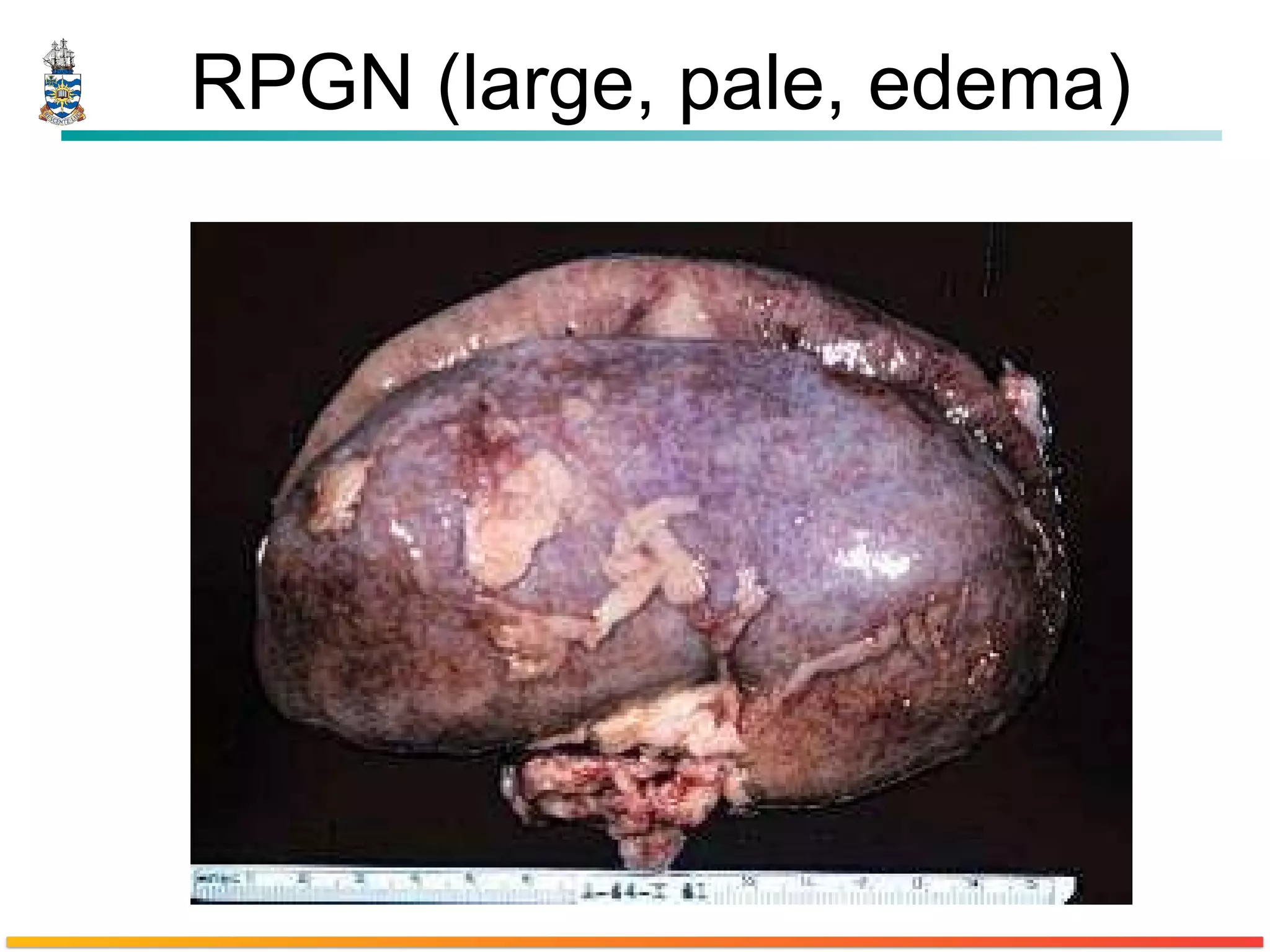
RPGN (large, pale, edema)
RPGN Epithelial Crescent Collapsed capillary
RPGN Prot. Cast
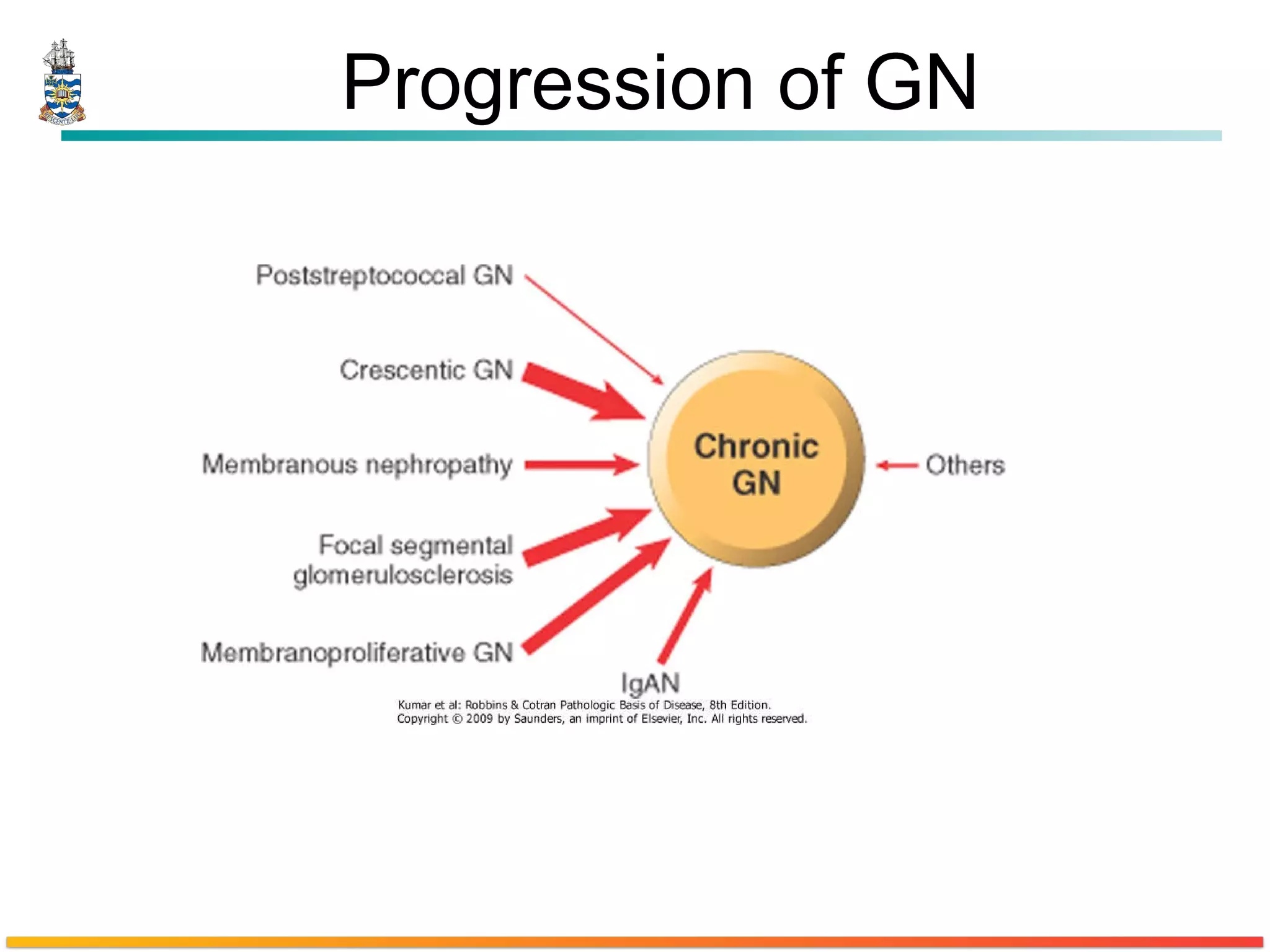
Progression of GN
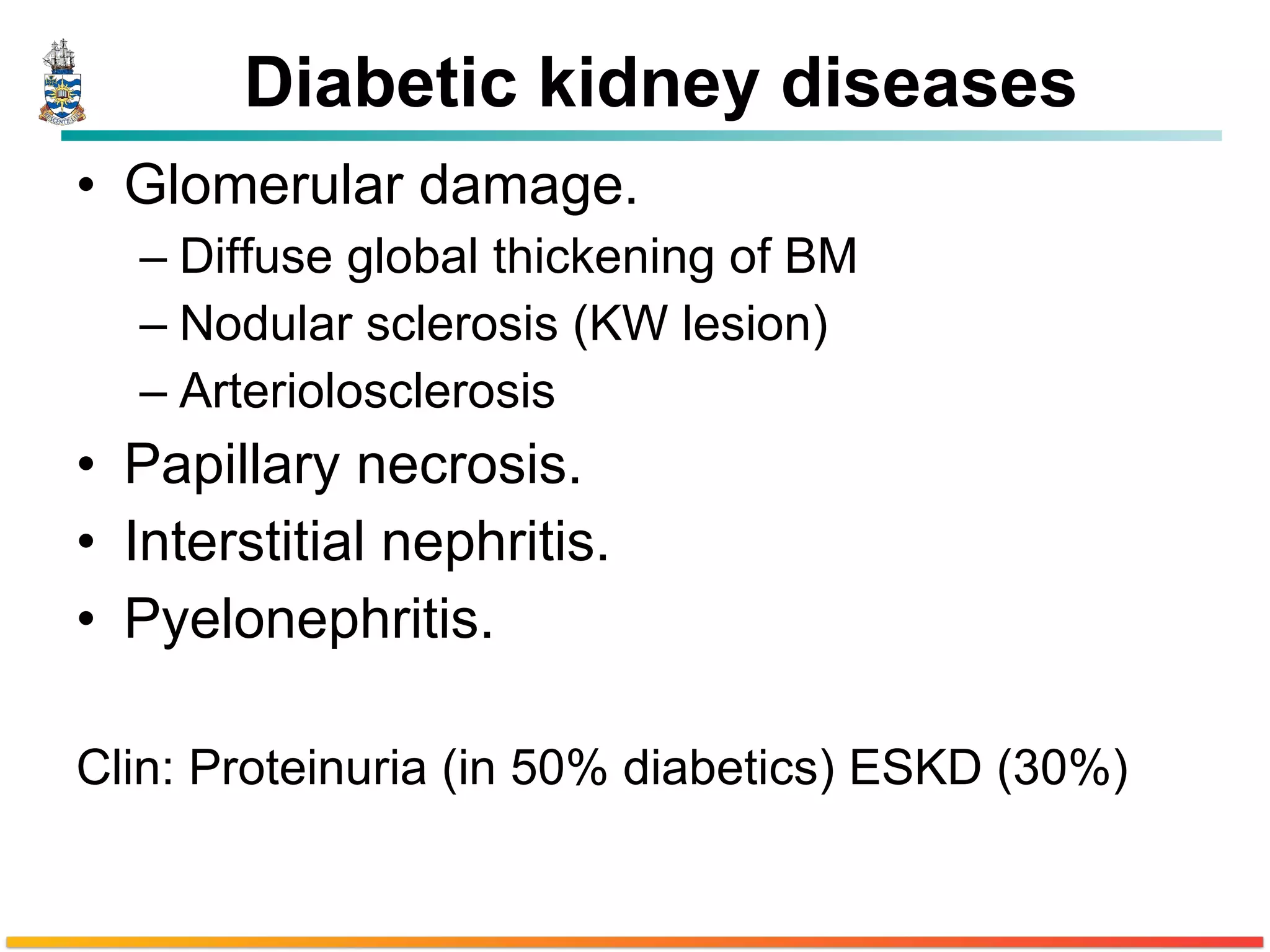
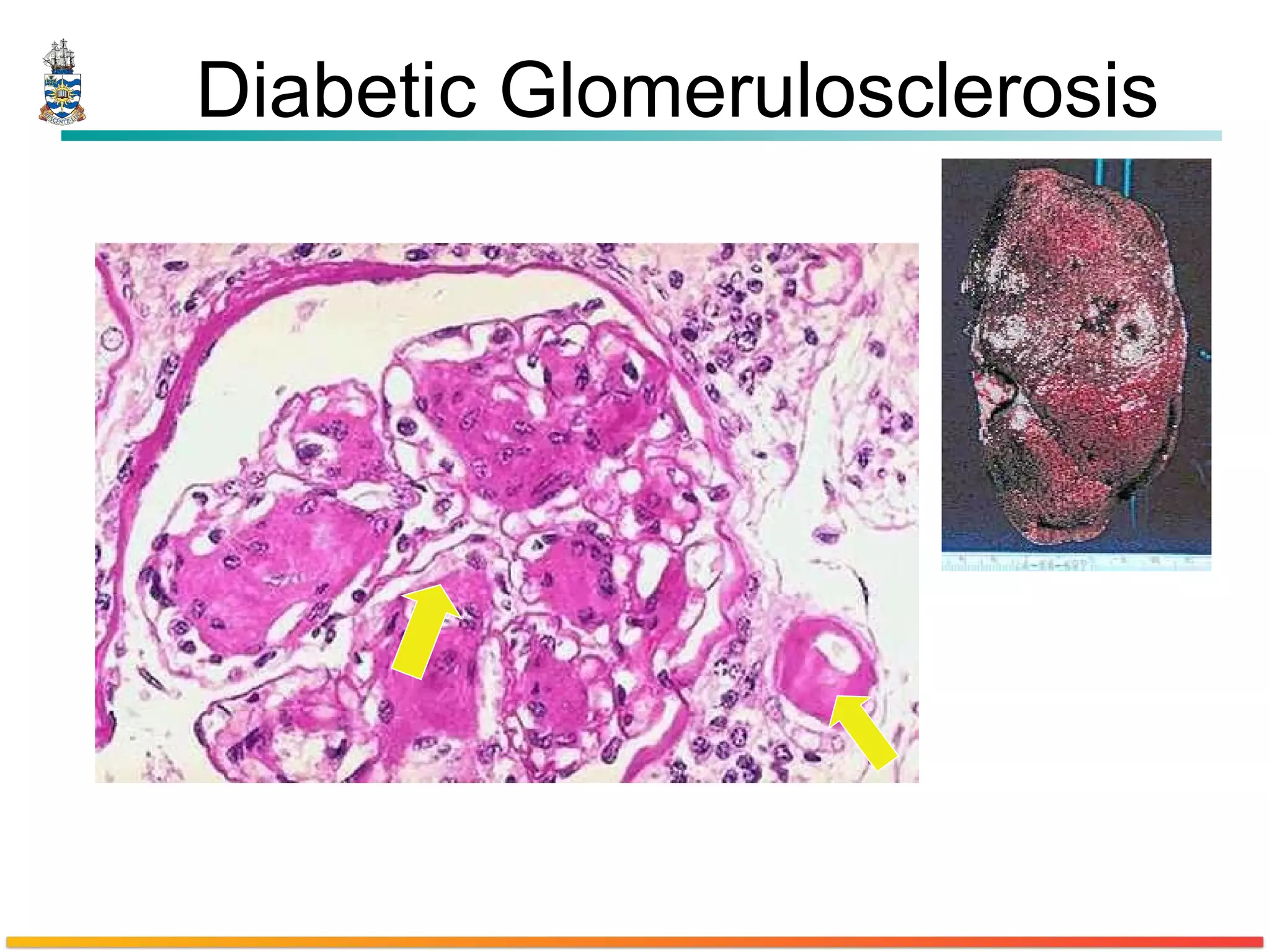
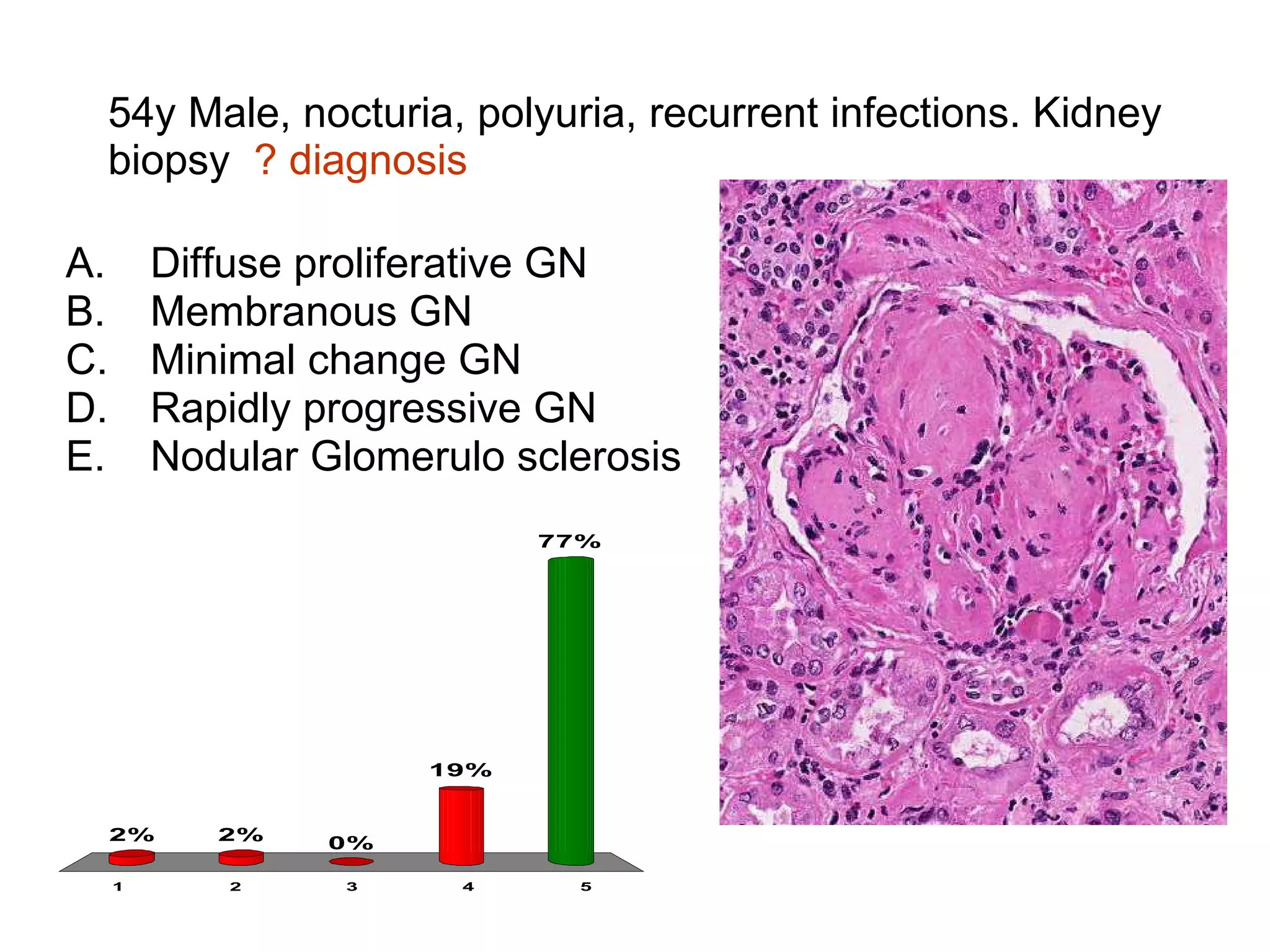
Diabetic kidney diseases Glomerular damage. Diffuse global thickening of BM Nodular sclerosis (KW lesion) Arteriolosclerosis Papillary necrosis. Interstitial nephritis. Pyelonephritis. Clin: Proteinuria (in 50% diabetics) ESKD (30%)
Diabetic Glomerulosclerosis
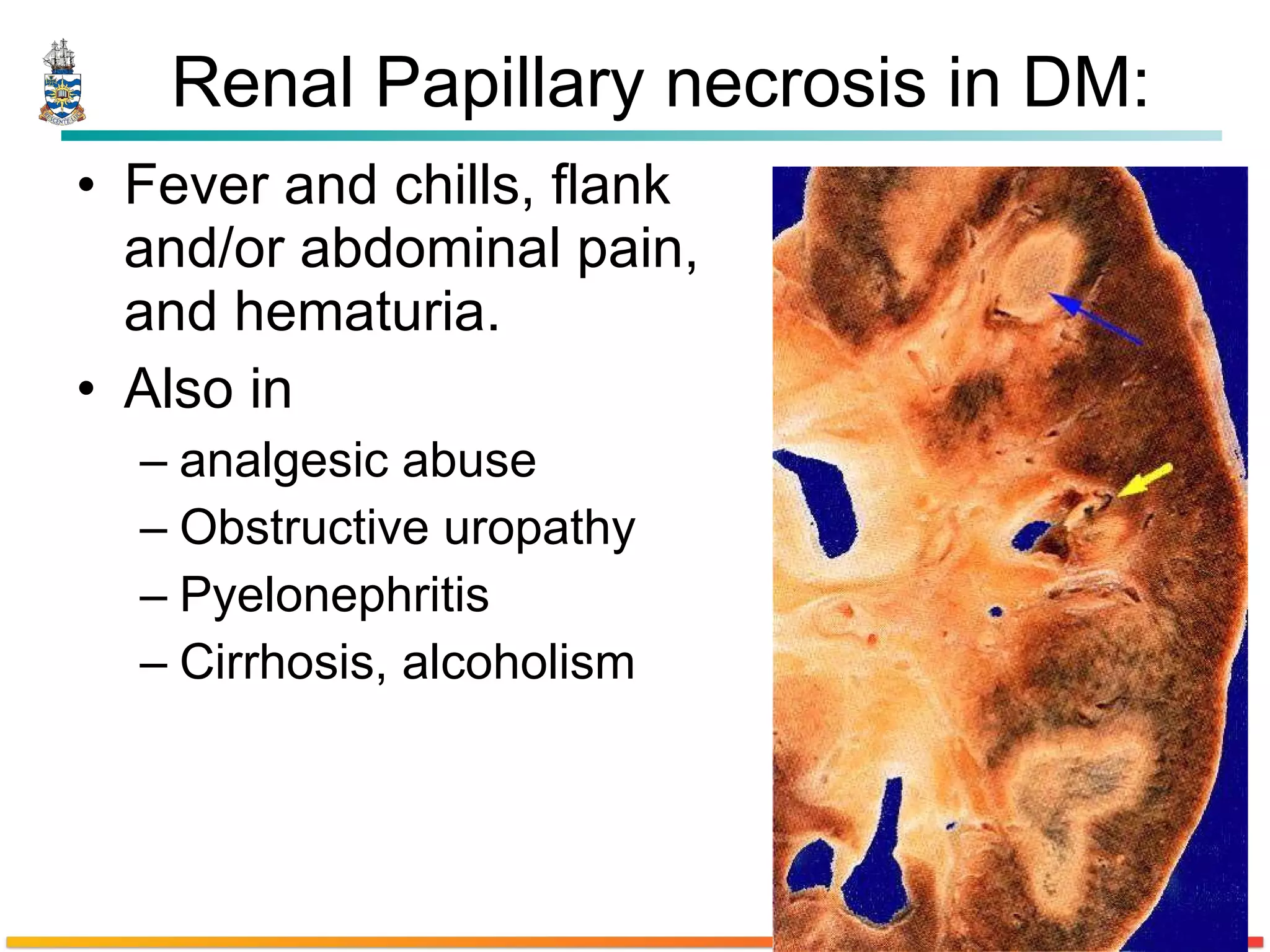
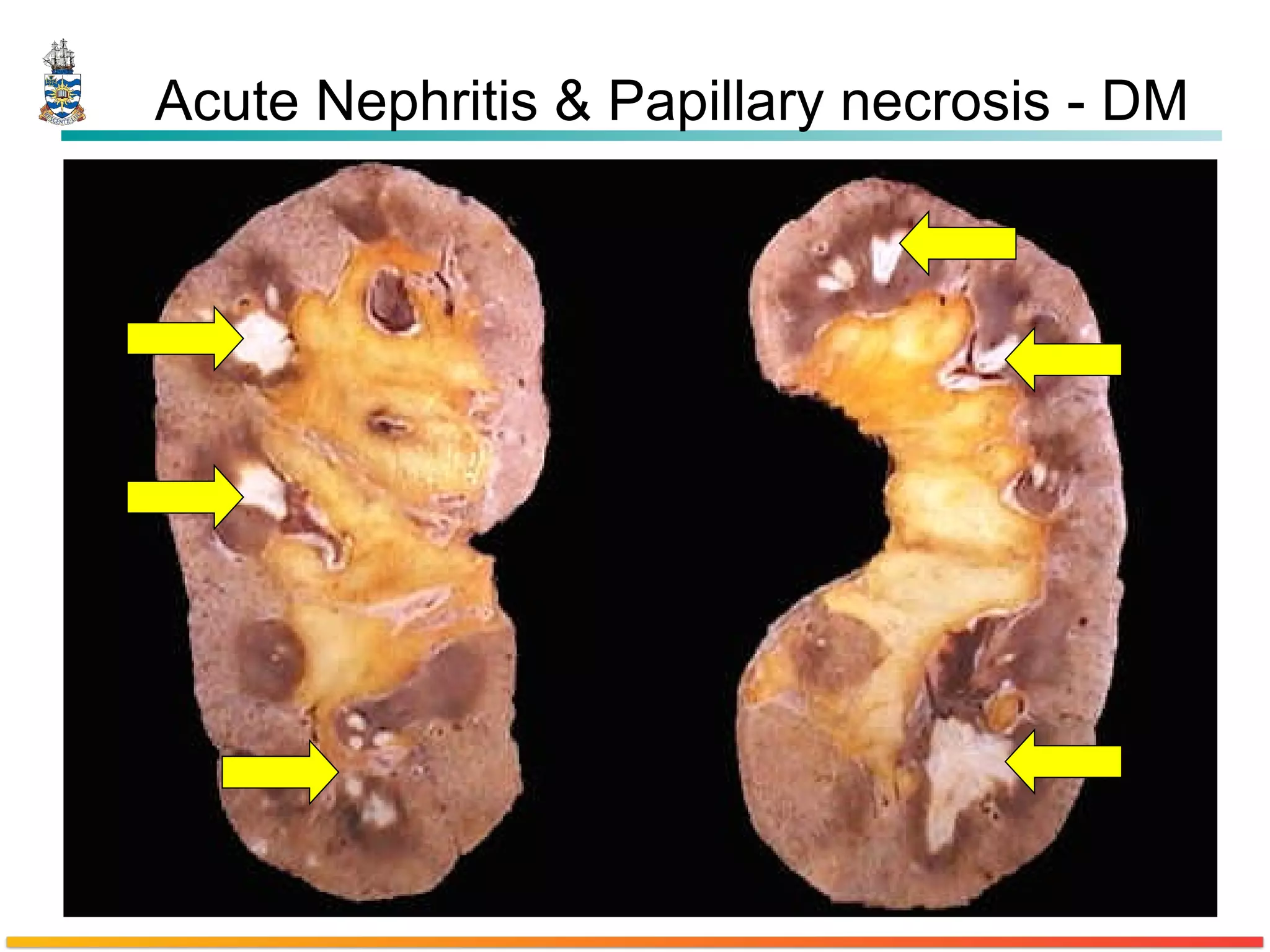
Renal Papillary necrosis in DM: Fever and chills, flank and/or abdominal pain, and hematuria. Also in  analgesic abuse Obstructive uropathy Pyelonephritis Cirrhosis, alcoholism
Acute Nephritis & Papillary necrosis - DM
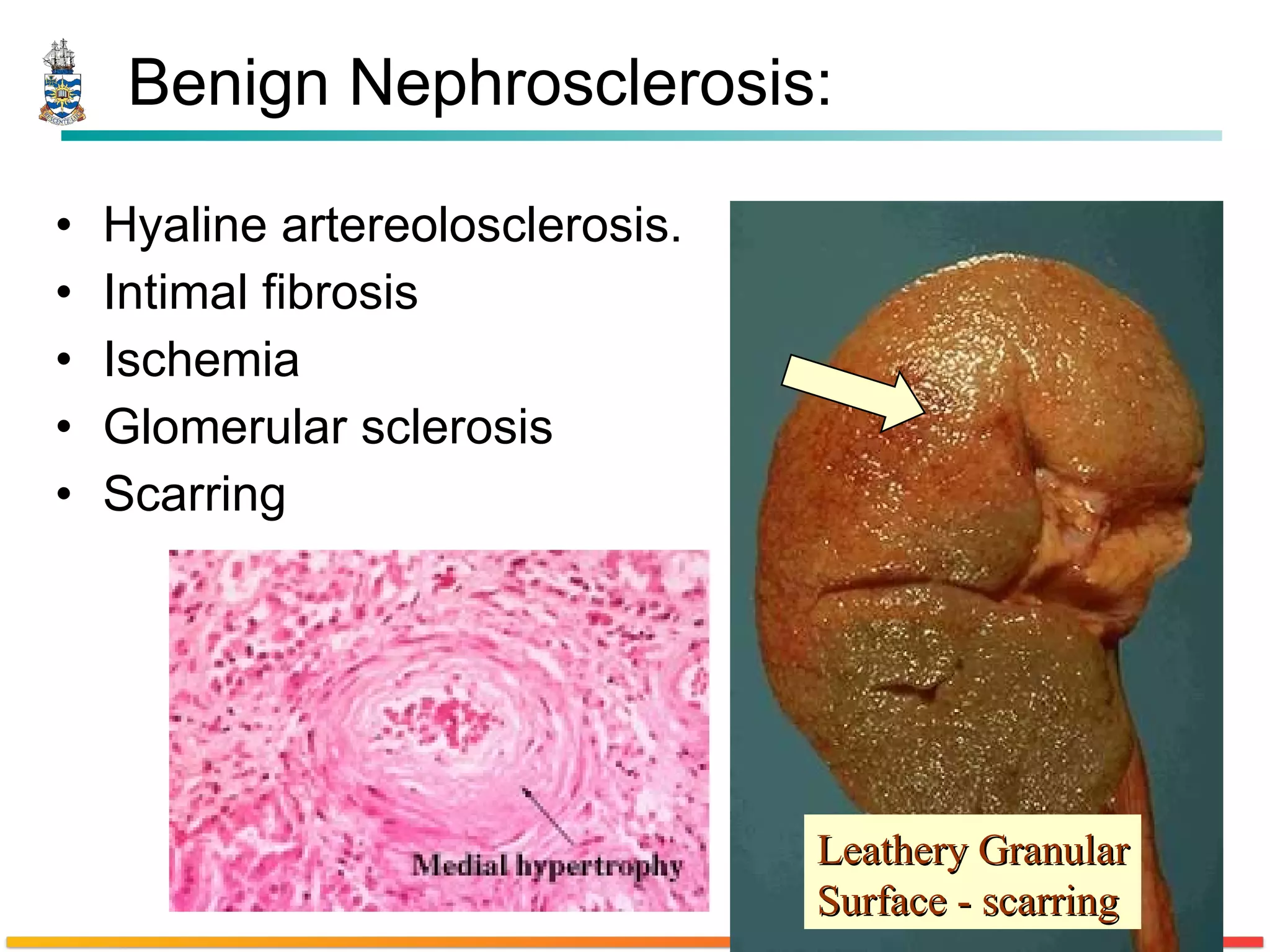
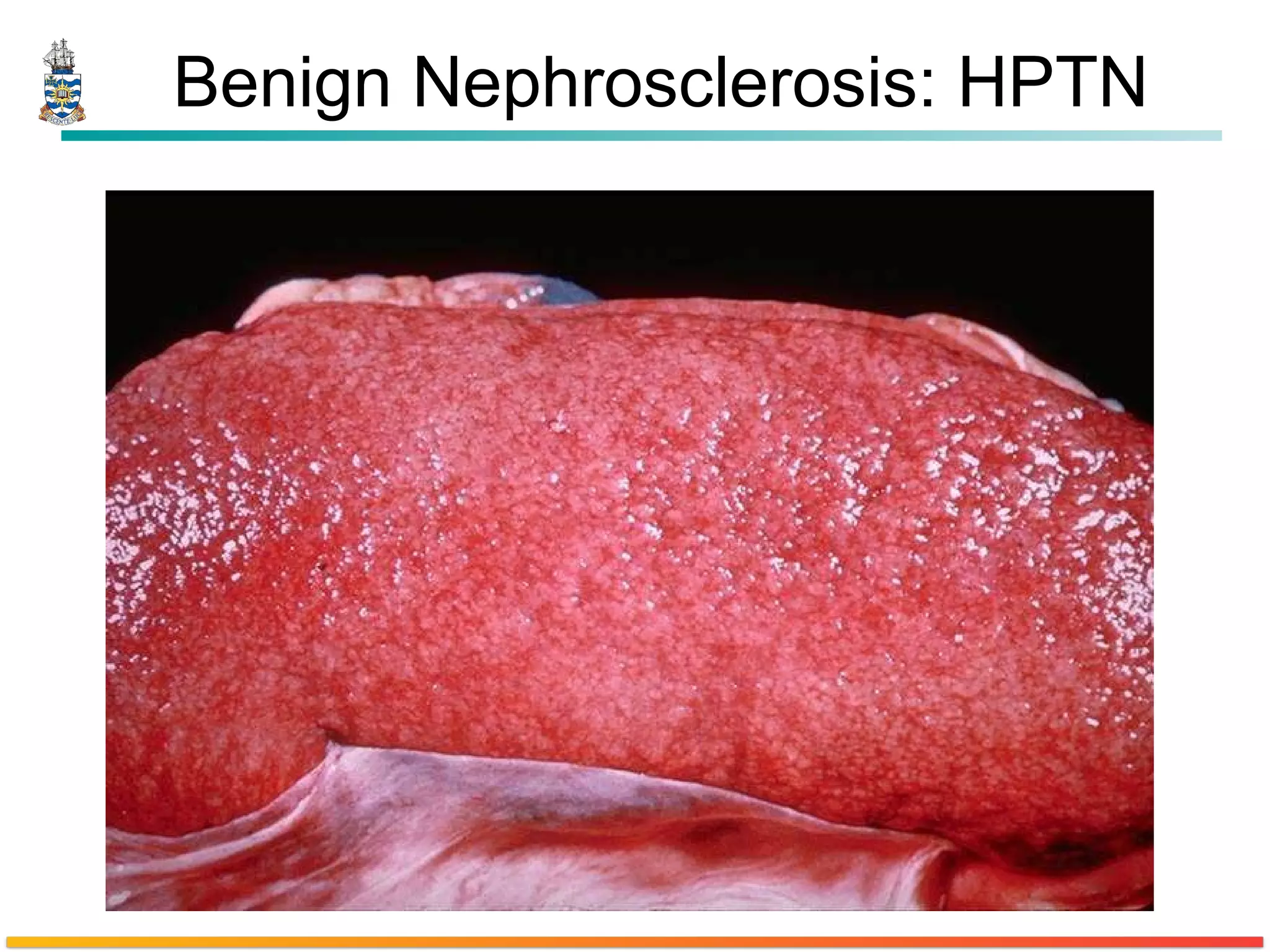
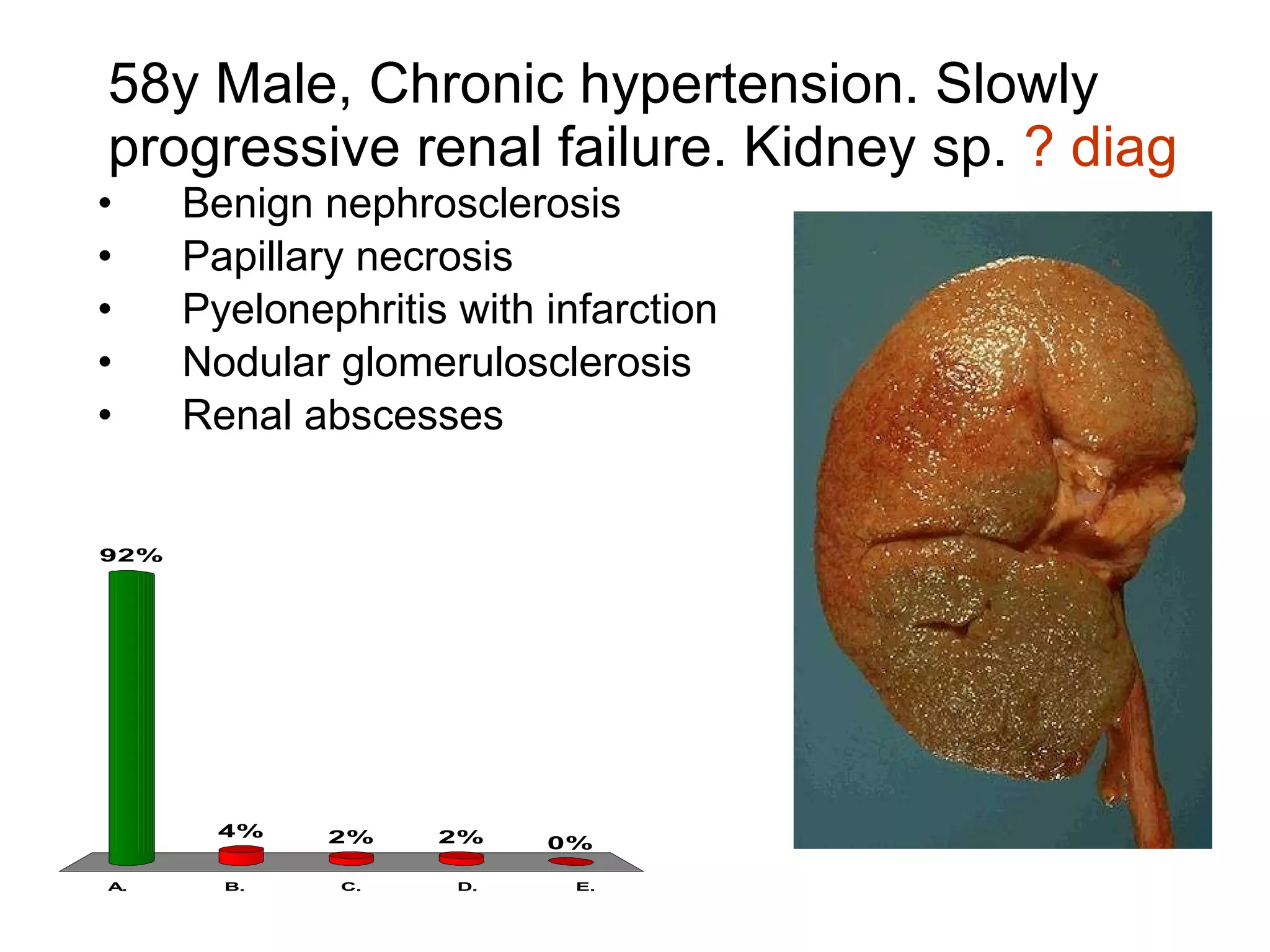
Benign Nephrosclerosis: Hyaline artereolosclerosis. Intimal fibrosis  Ischemia Glomerular sclerosis Scarring Leathery Granular Surface - scarring
Benign Nephrosclerosis: HPTN
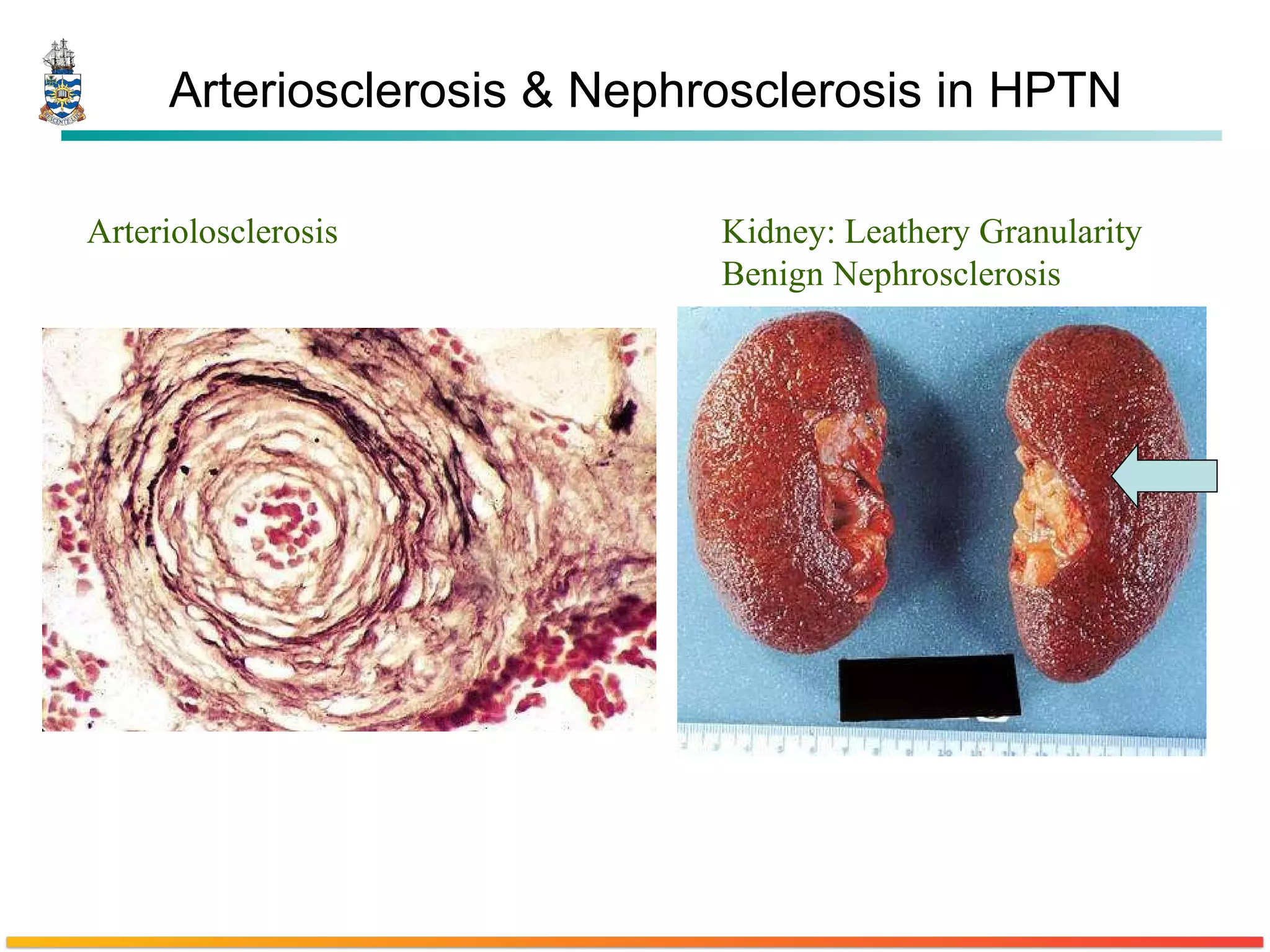
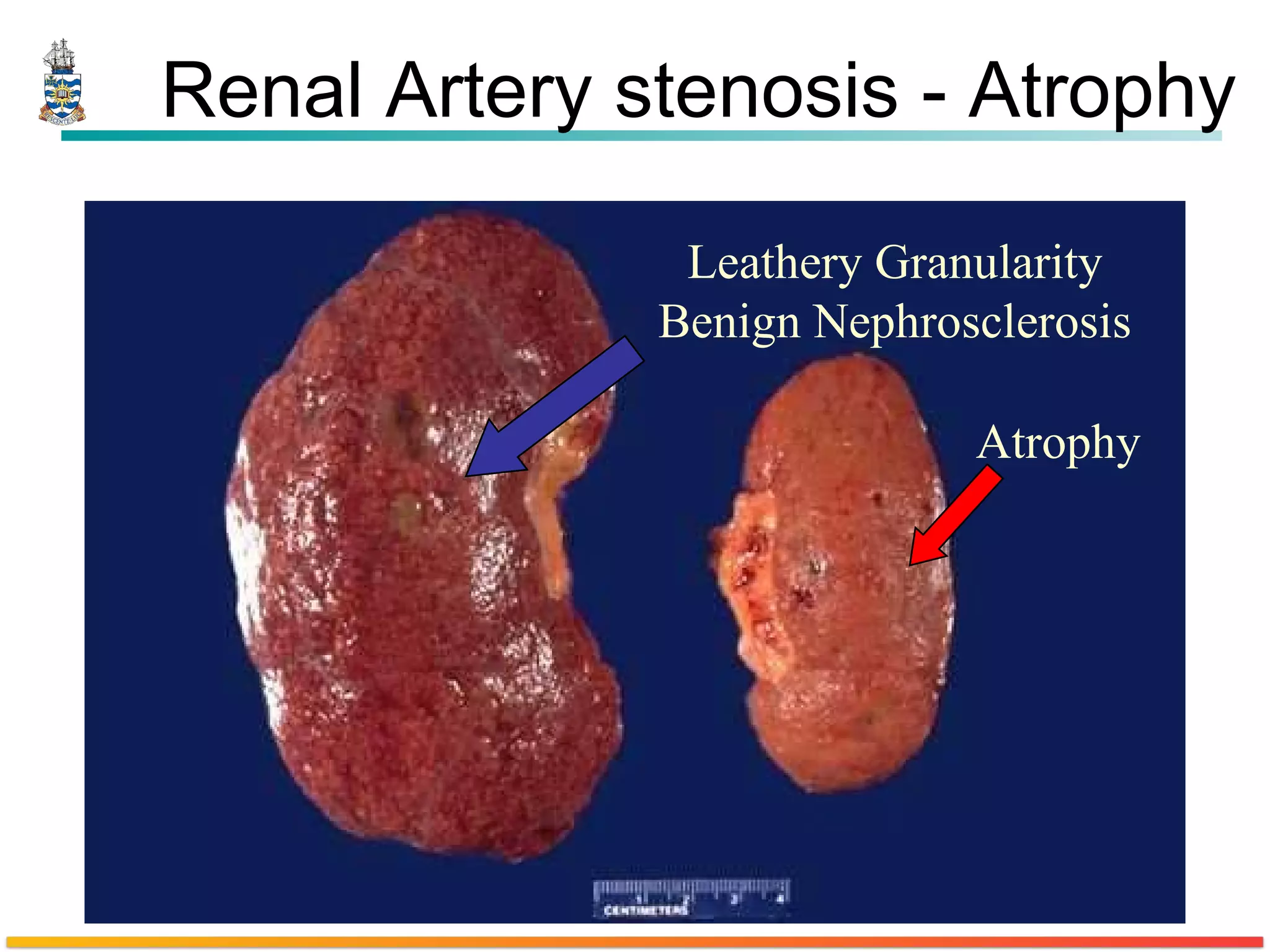
Arteriosclerosis & Nephrosclerosis in HPTN Arteriolosclerosis  Kidney: Leathery Granularity Benign Nephrosclerosis
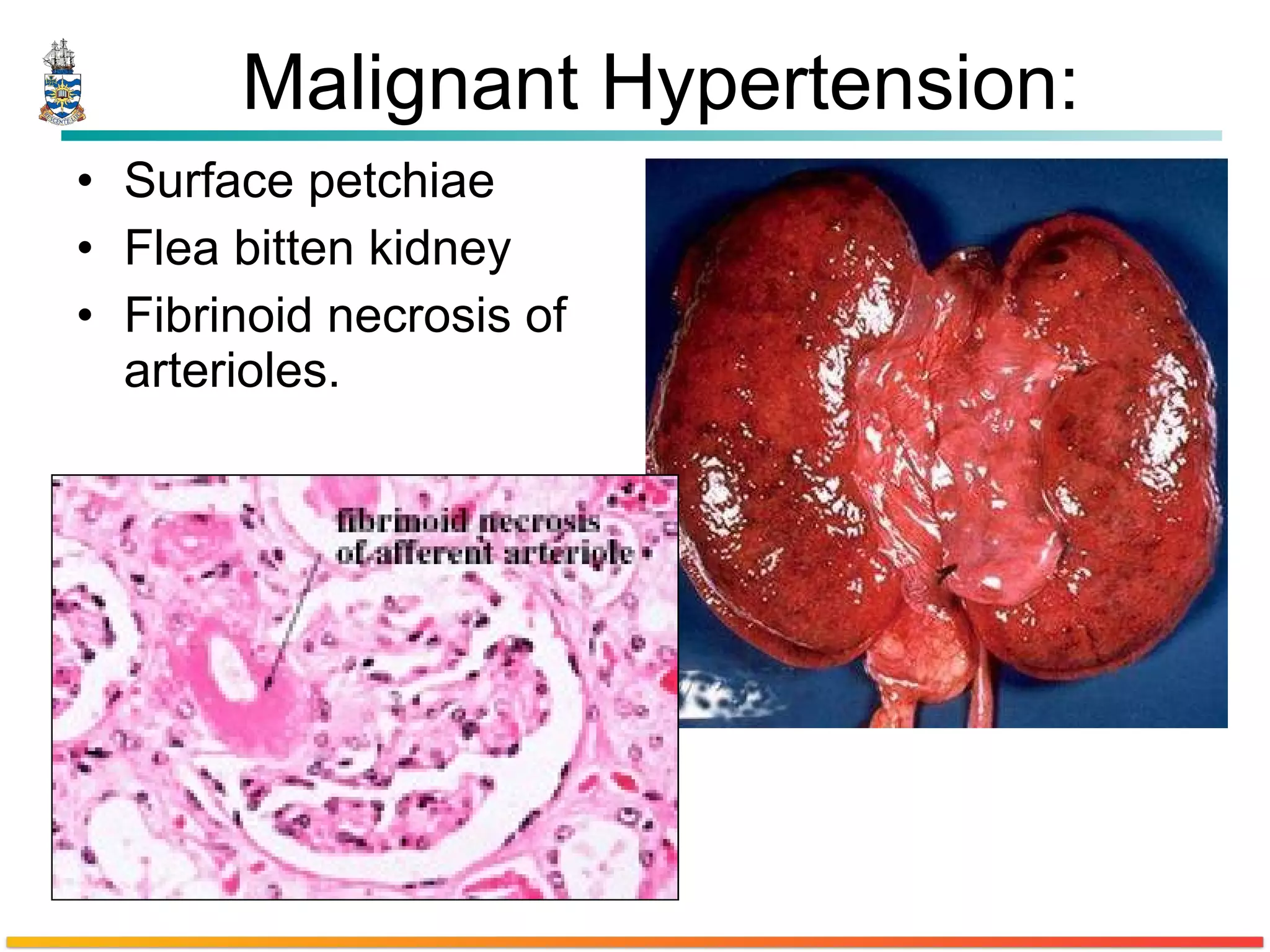
Malignant Hypertension: Surface petchiae Flea bitten kidney Fibrinoid necrosis of arterioles.
Recurrent painless haematuria Asymptomatic, recurrent:  IgA nephropathy (Berger's disease)  systemic lupus erythematosus (SLE)  vasculitis-polyarteritis.  Henoch-Schönlein purpura  bacterial endocarditis  exercise haematuria
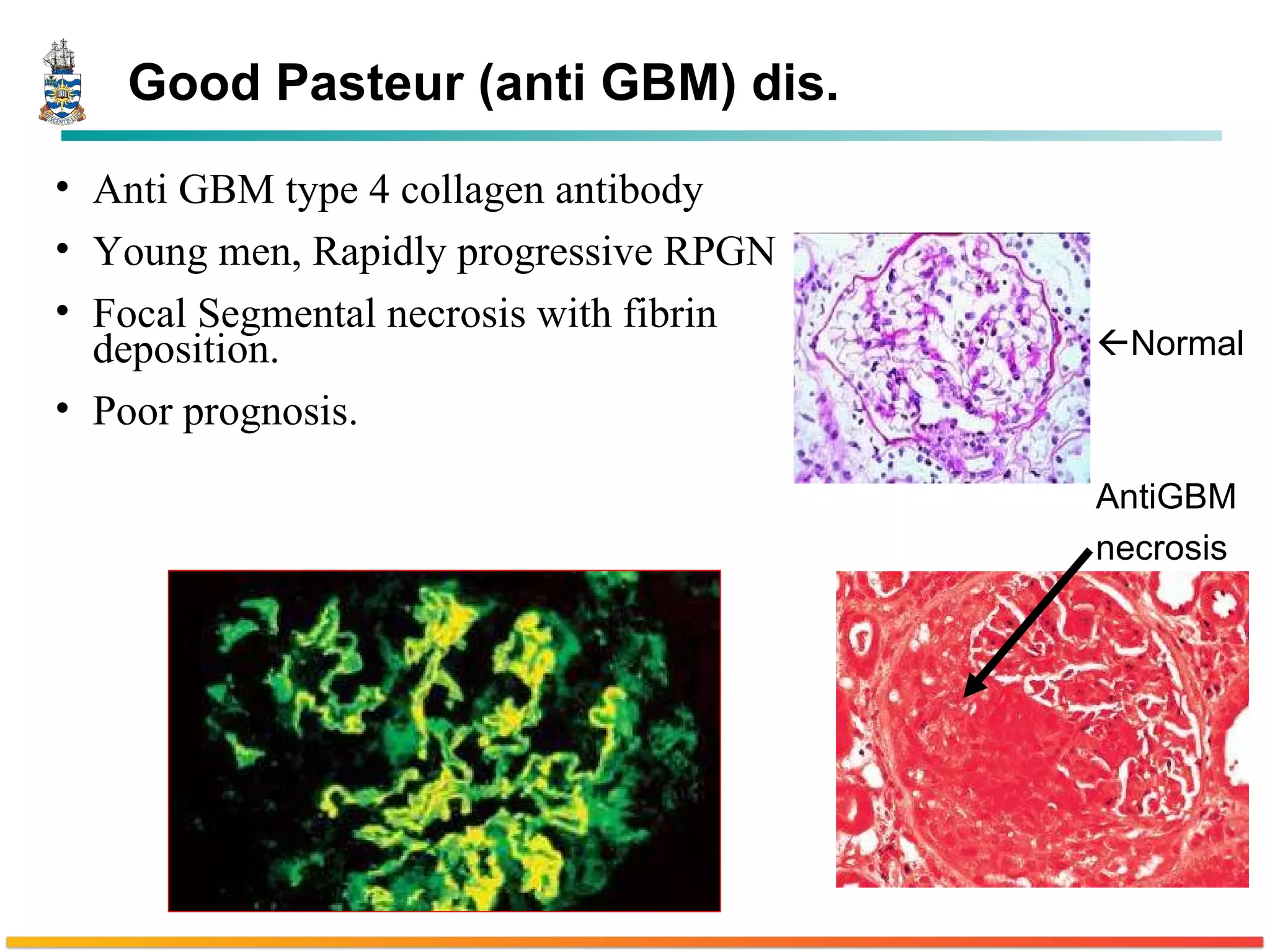
Good Pasteur (anti GBM) dis. Anti GBM type 4 collagen antibody  Young men, Rapidly progressive RPGN Focal Segmental necrosis with fibrin deposition. Poor prognosis.  Normal AntiGBM  necrosis
Tubulo-Interstitial Diseases: Acute Tubular Necrosis Pyelonephritis – Acute & Chronic. Interstitial Nephritis.
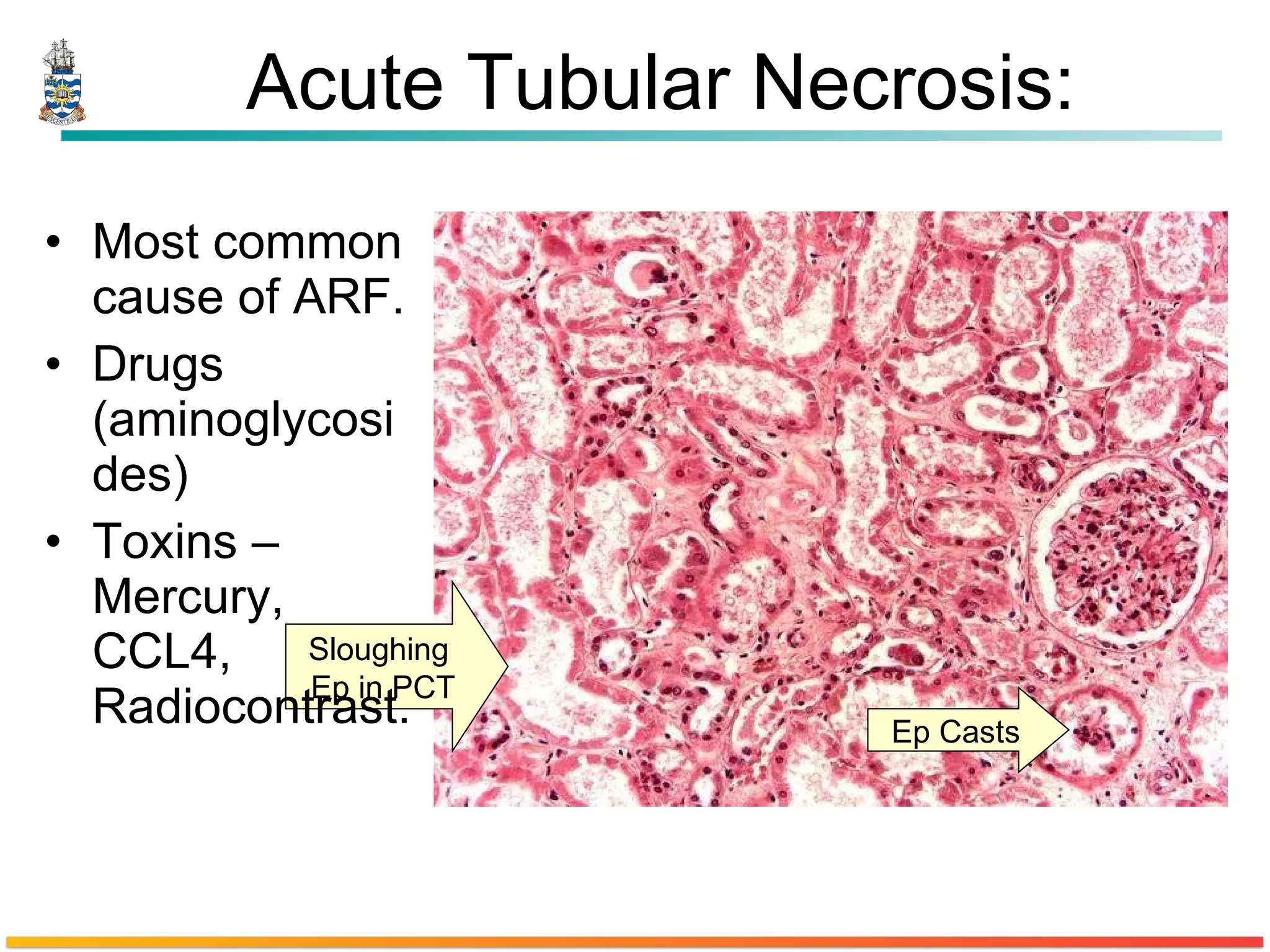
Acute Tubular Necrosis: Most common cause of ARF. Drugs (aminoglycosides) Toxins – Mercury, CCL4, Radiocontrast. Sloughing  Ep in PCT Ep Casts
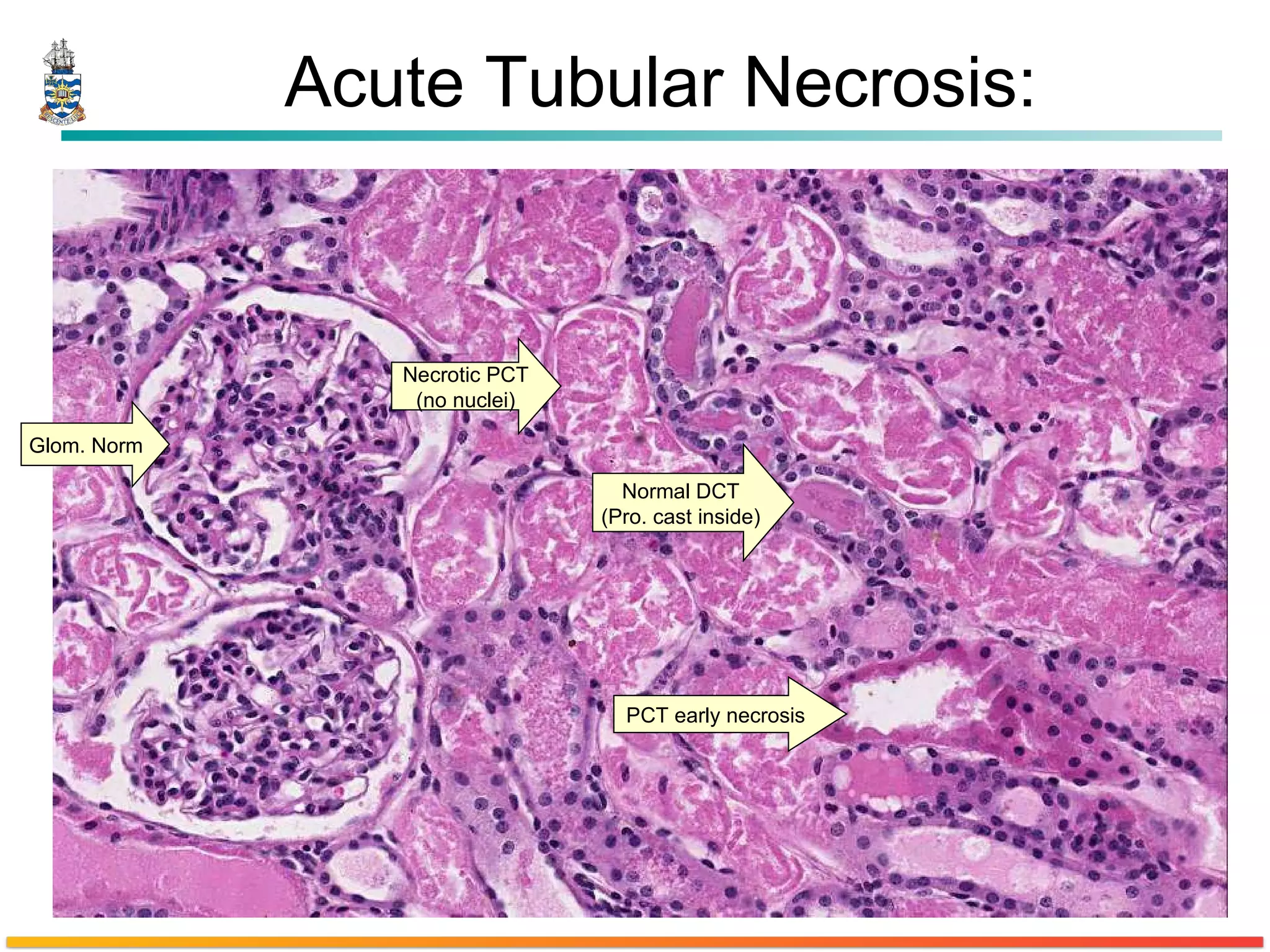
Acute Tubular Necrosis: Glom. Norm Necrotic PCT (no nuclei) Normal DCT (Pro. cast inside) PCT early necrosis
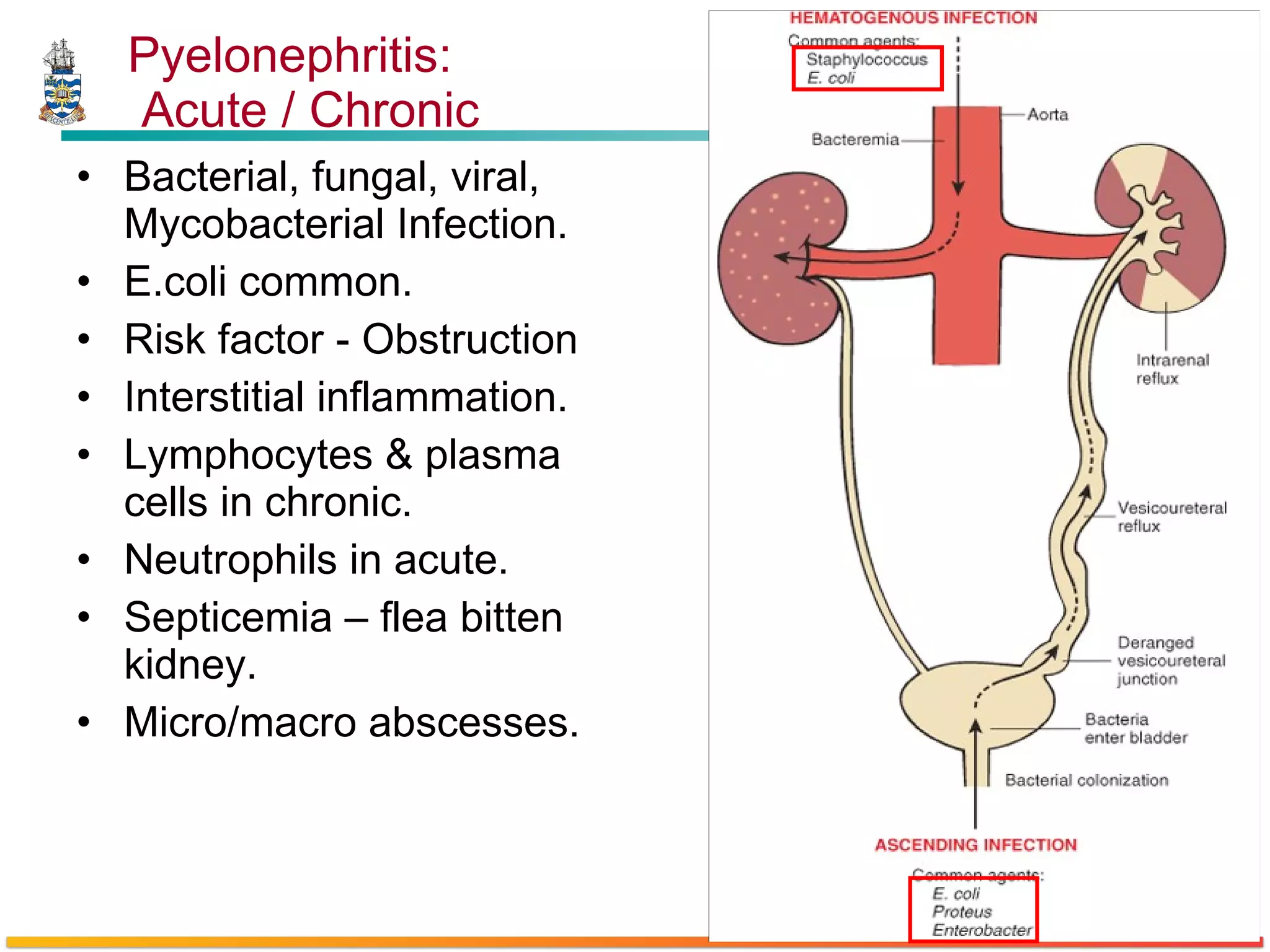
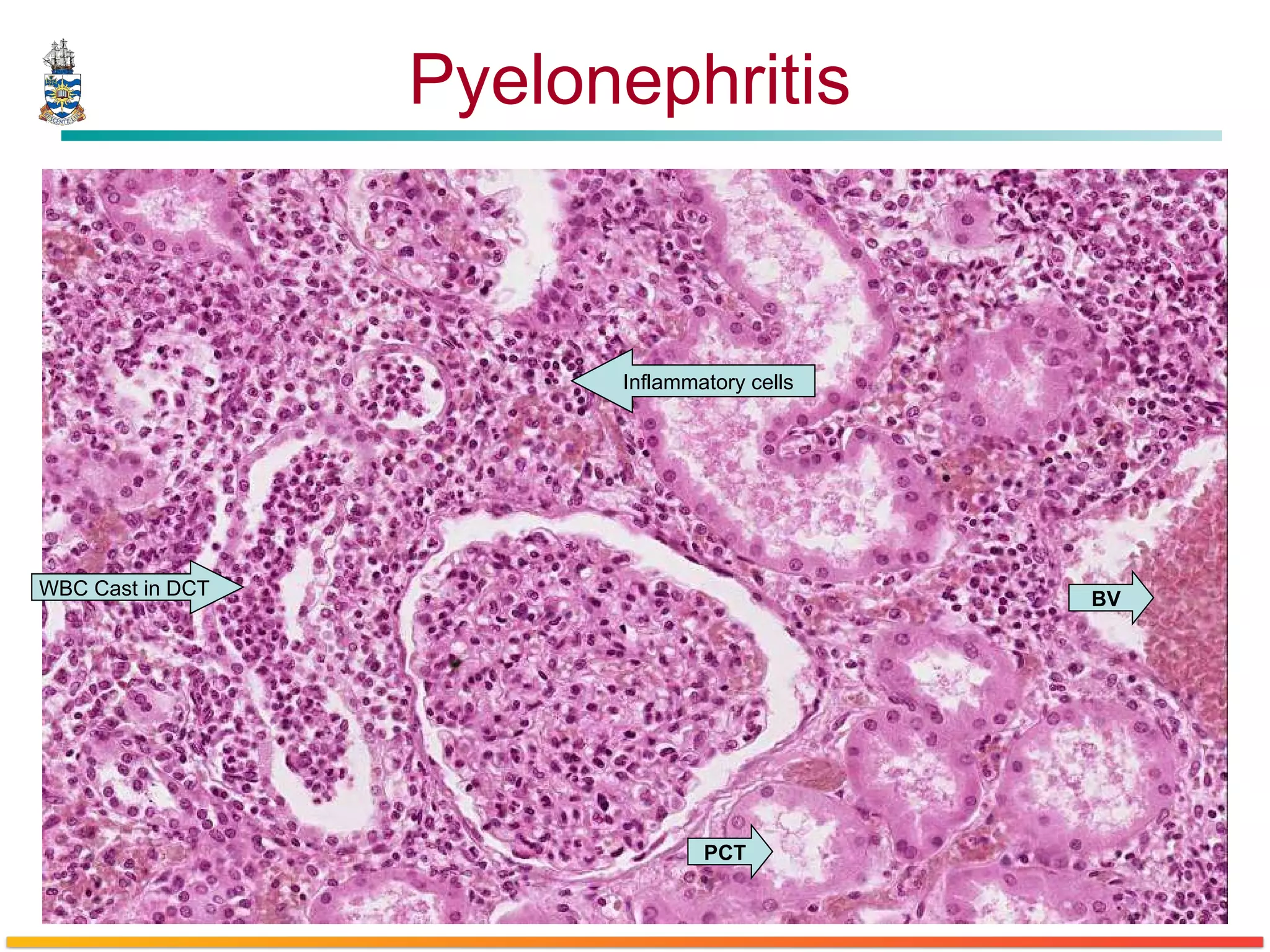
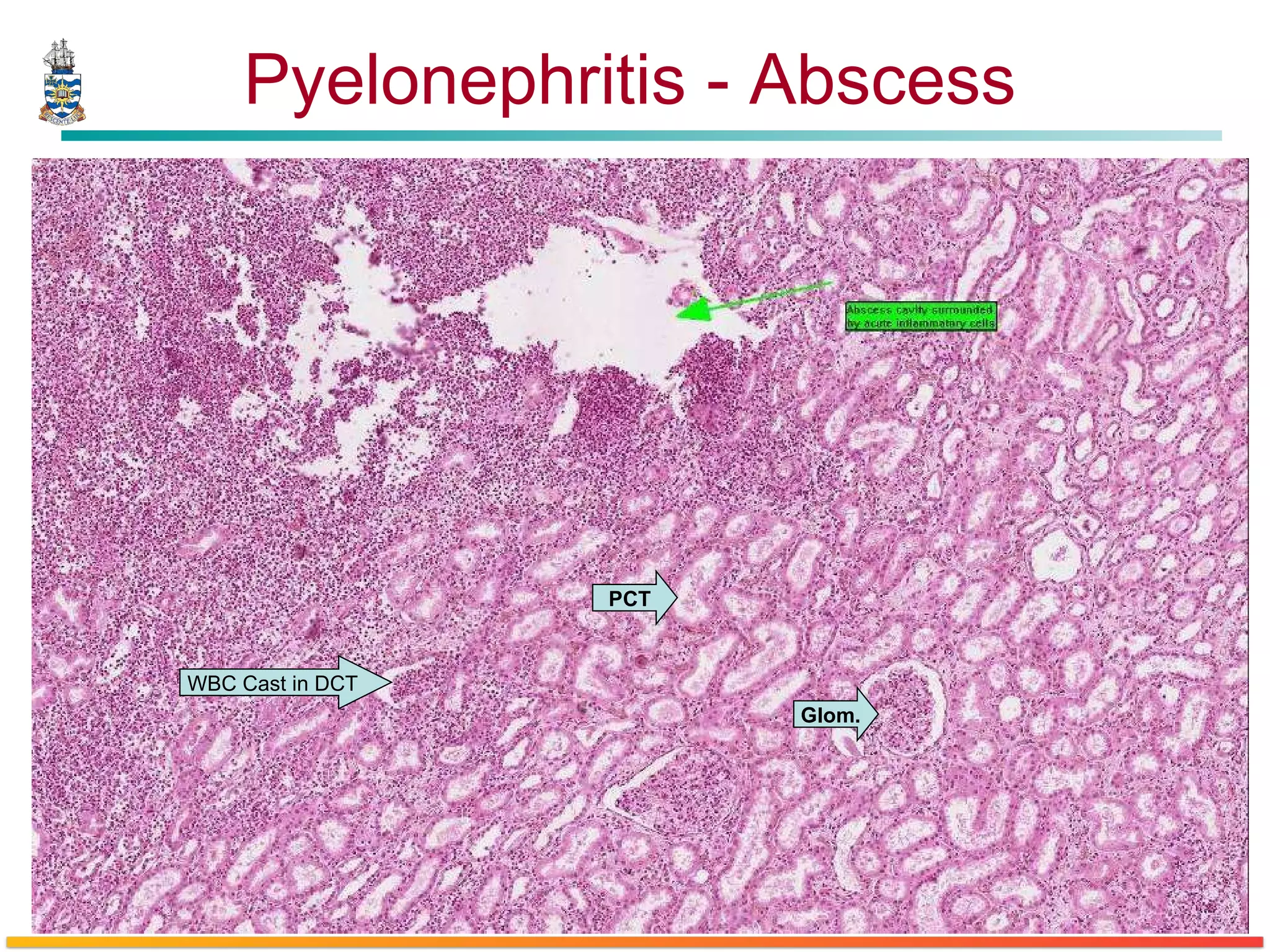
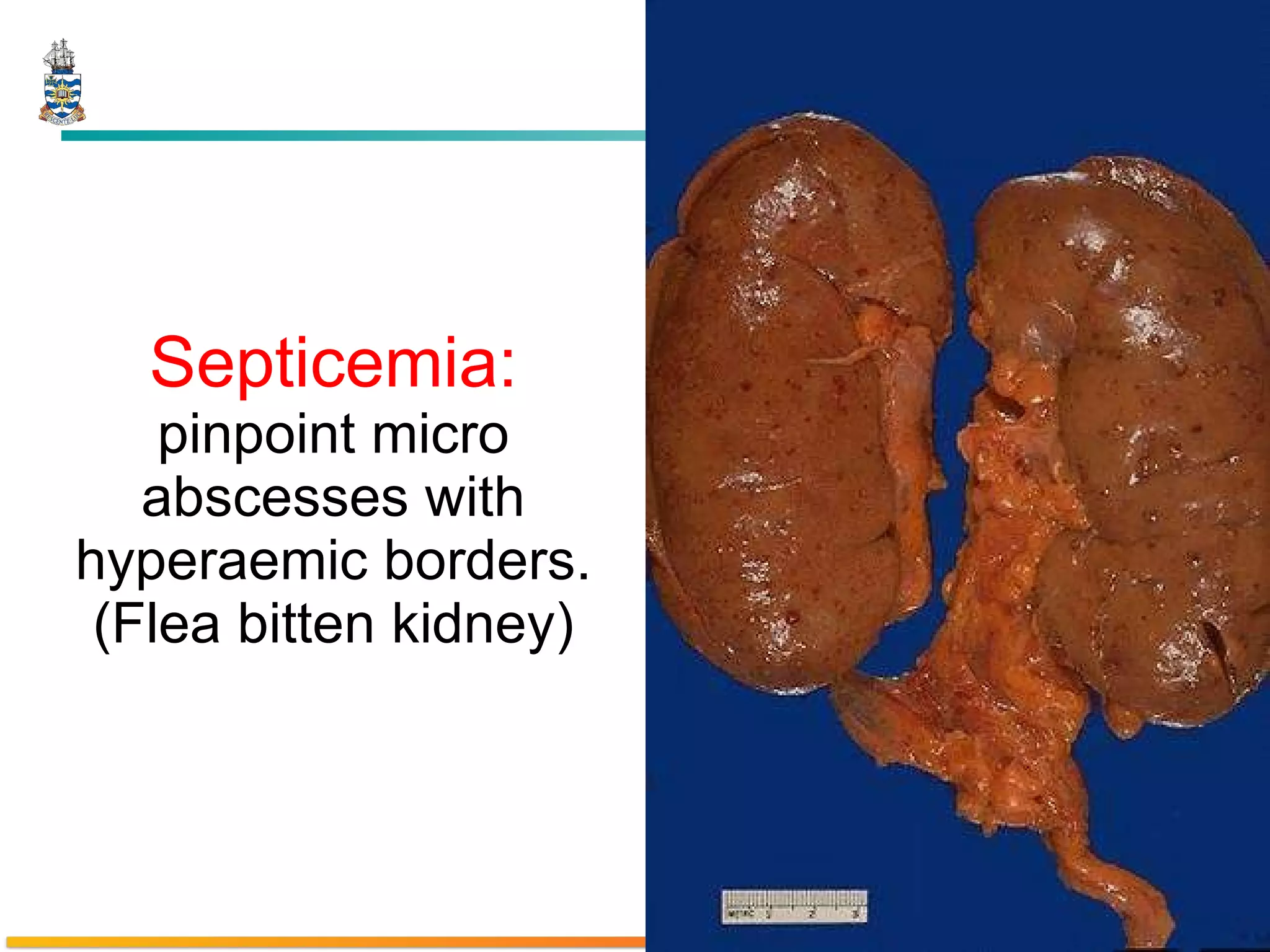
Pyelonephritis:  Acute / Chronic Bacterial, fungal, viral, Mycobacterial Infection. E.coli common. Risk factor - Obstruction  Interstitial inflammation. Lymphocytes & plasma cells in chronic. Neutrophils in acute. Septicemia – flea bitten kidney. Micro/macro abscesses.
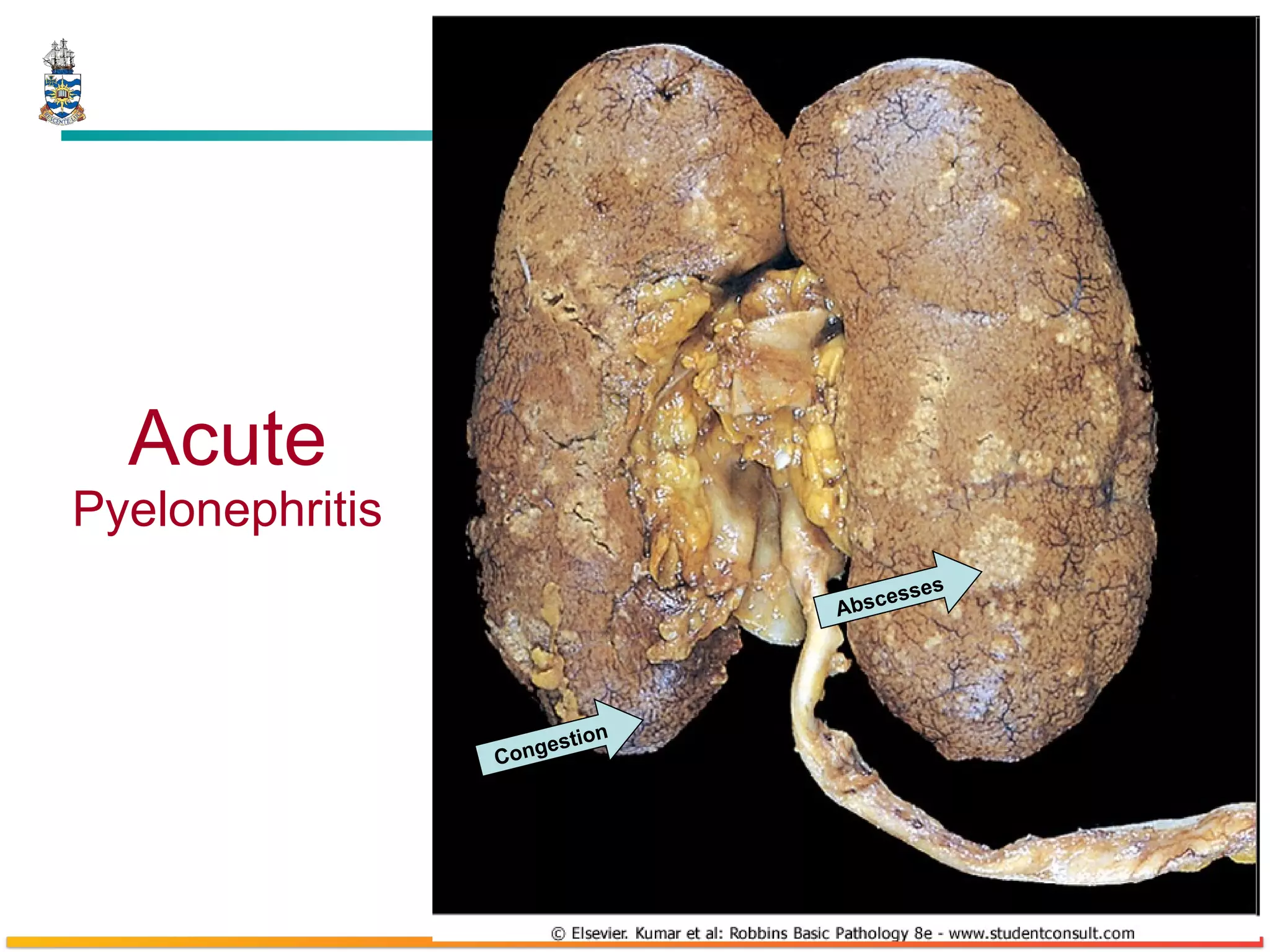
Acute  Pyelonephritis Abscesses Congestion
Pyelonephritis Inflammatory cells WBC Cast in DCT PCT BV
Pyelonephritis - Abscess WBC Cast in DCT PCT Glom.
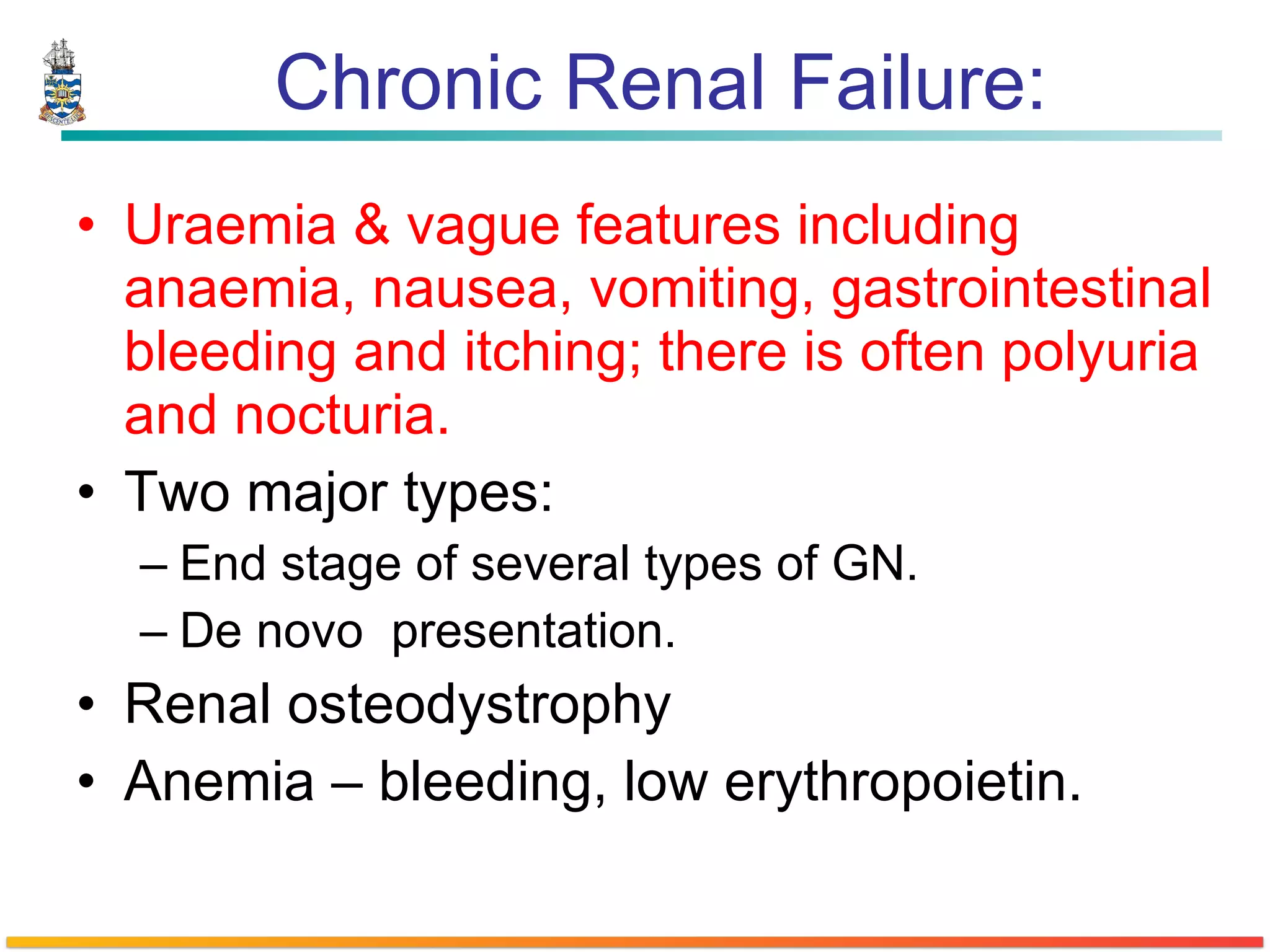
Chronic Renal Failure: Uraemia & vague features including anaemia, nausea, vomiting, gastrointestinal bleeding and itching; there is often polyuria and nocturia.  Two major types: End stage of several types of GN. De novo  presentation. Renal osteodystrophy Anemia – bleeding, low erythropoietin.
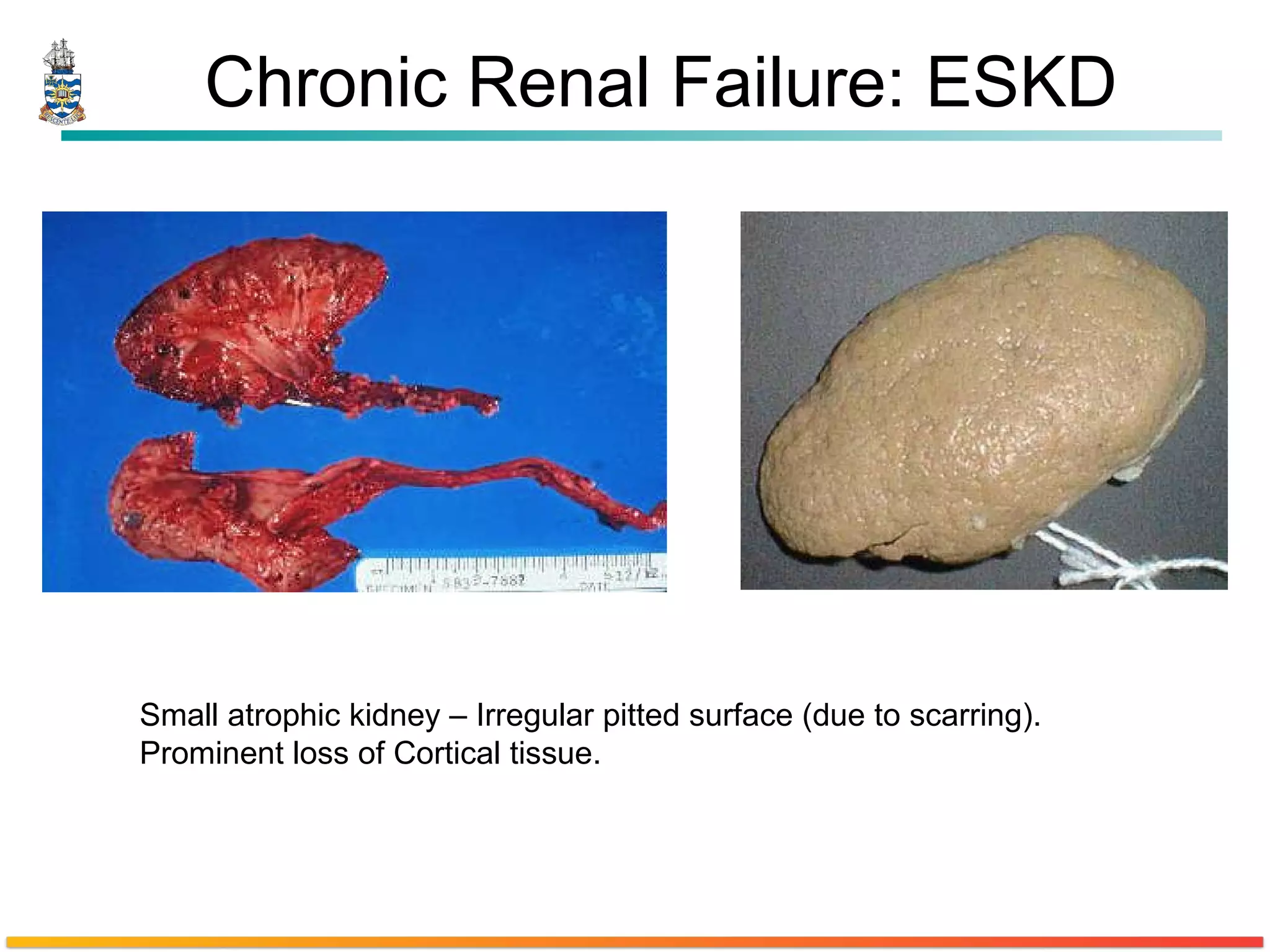
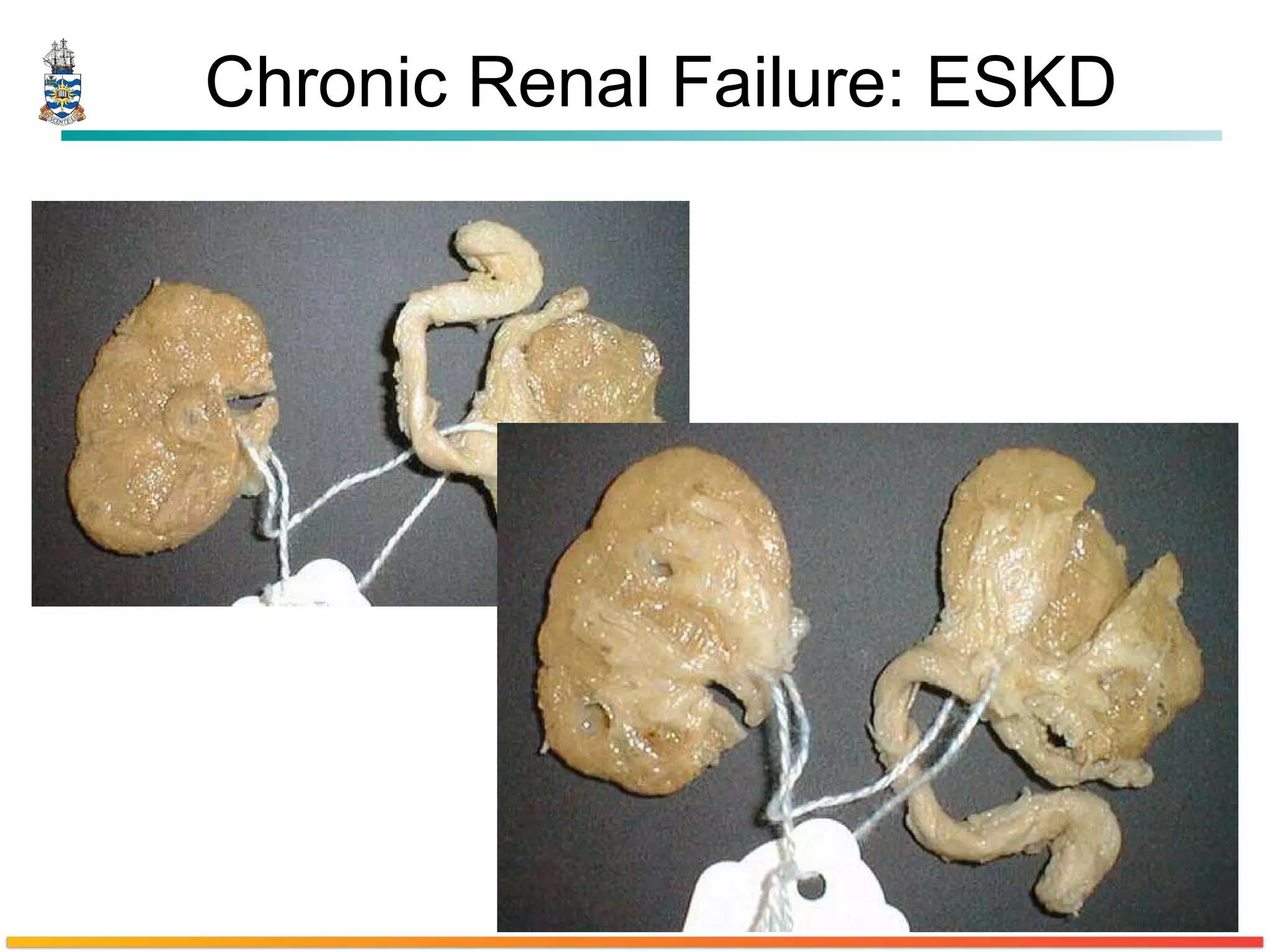
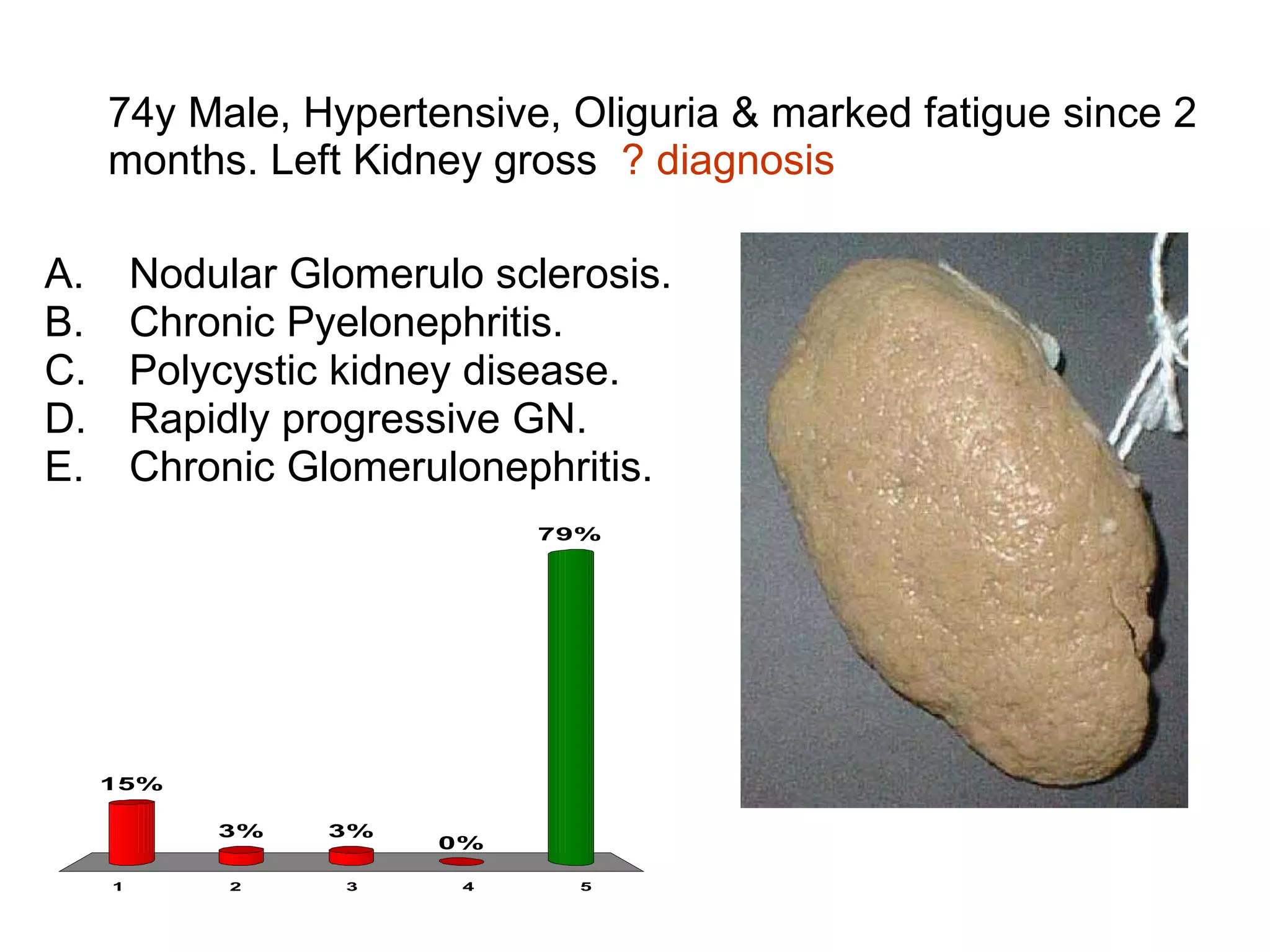
Chronic Renal Failure: ESKD Small atrophic kidney – Irregular pitted surface (due to scarring).  Prominent loss of Cortical tissue.
Chronic Renal Failure: ESKD
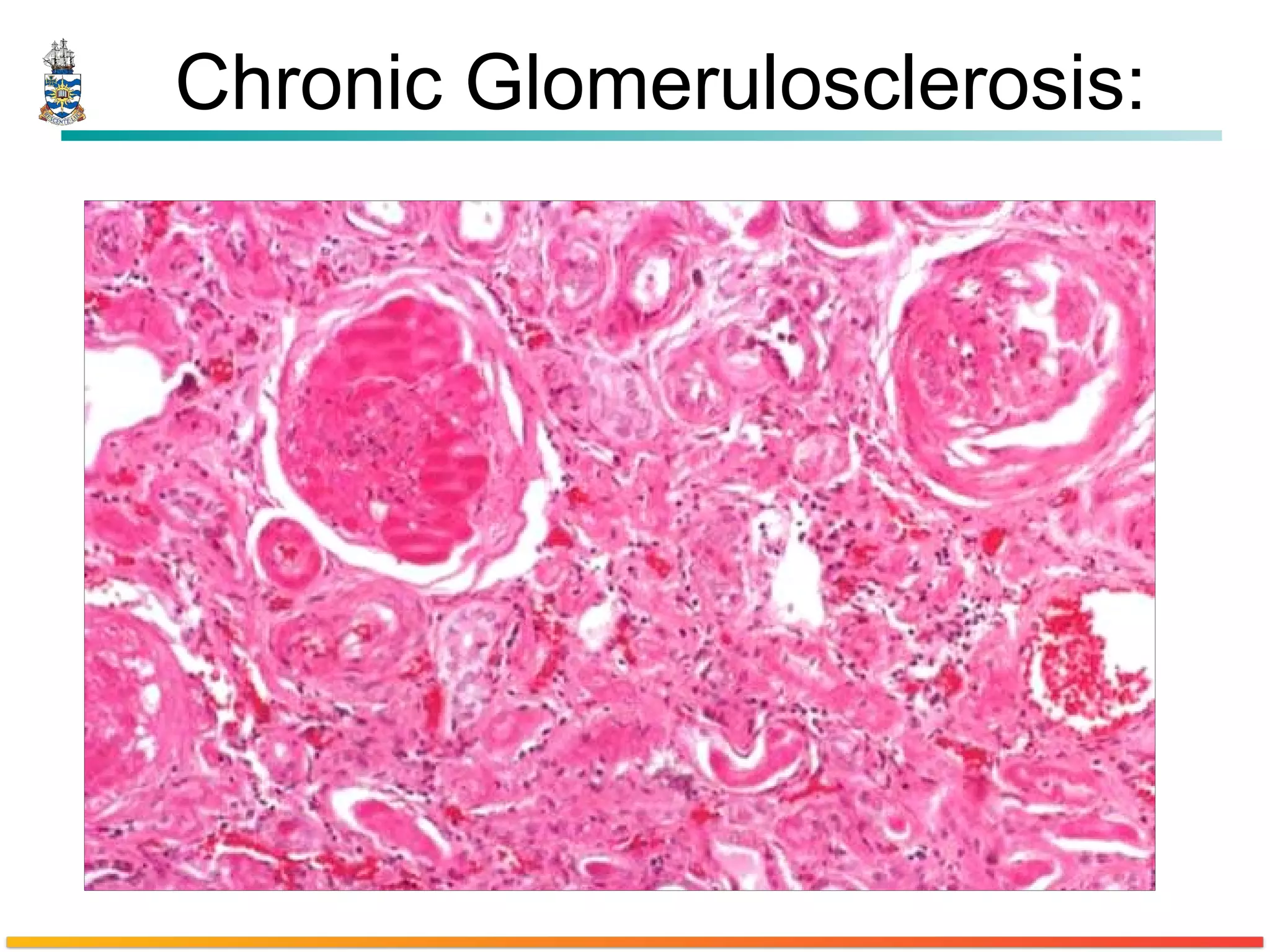
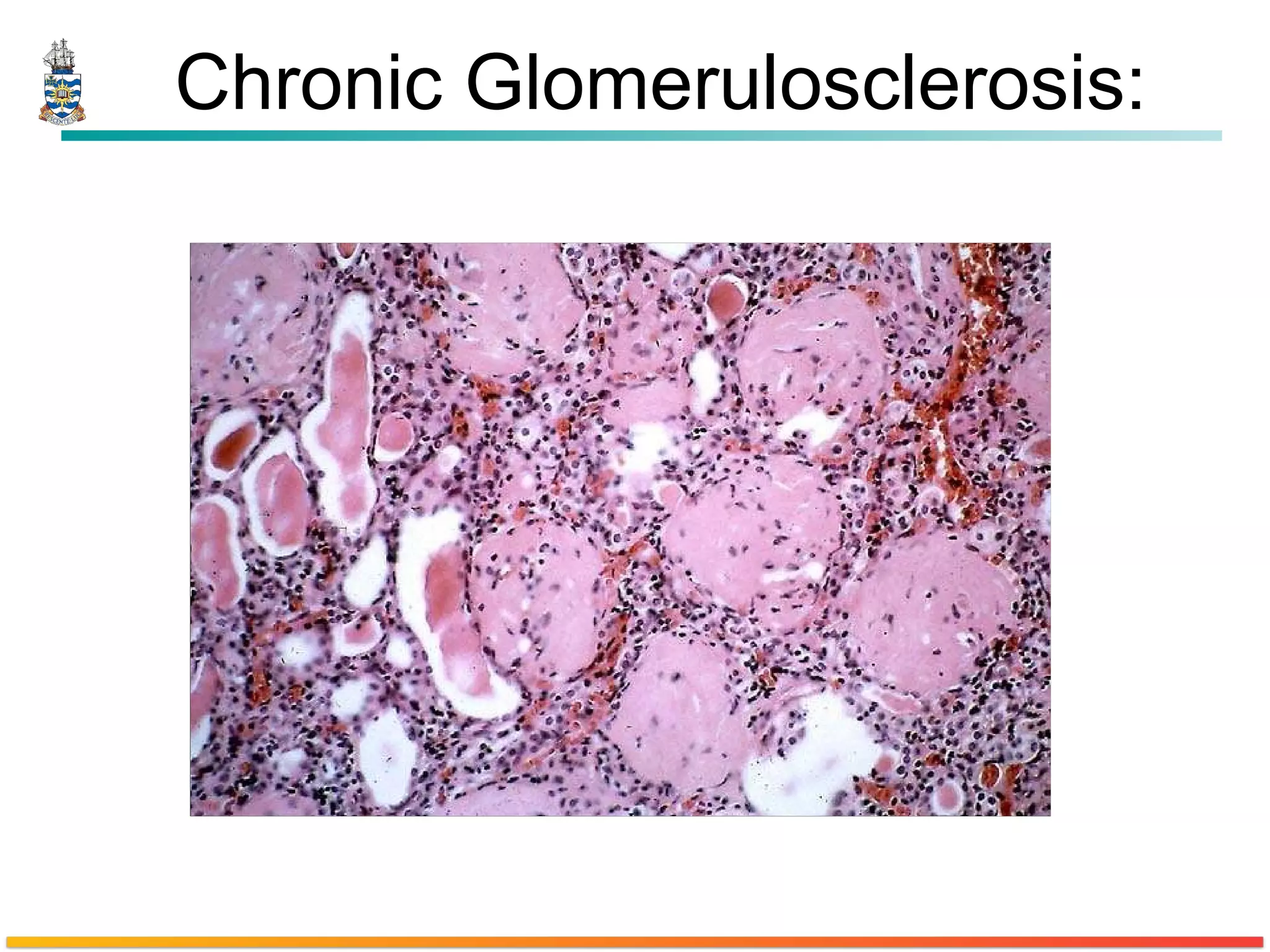
Chronic Glomerulosclerosis :
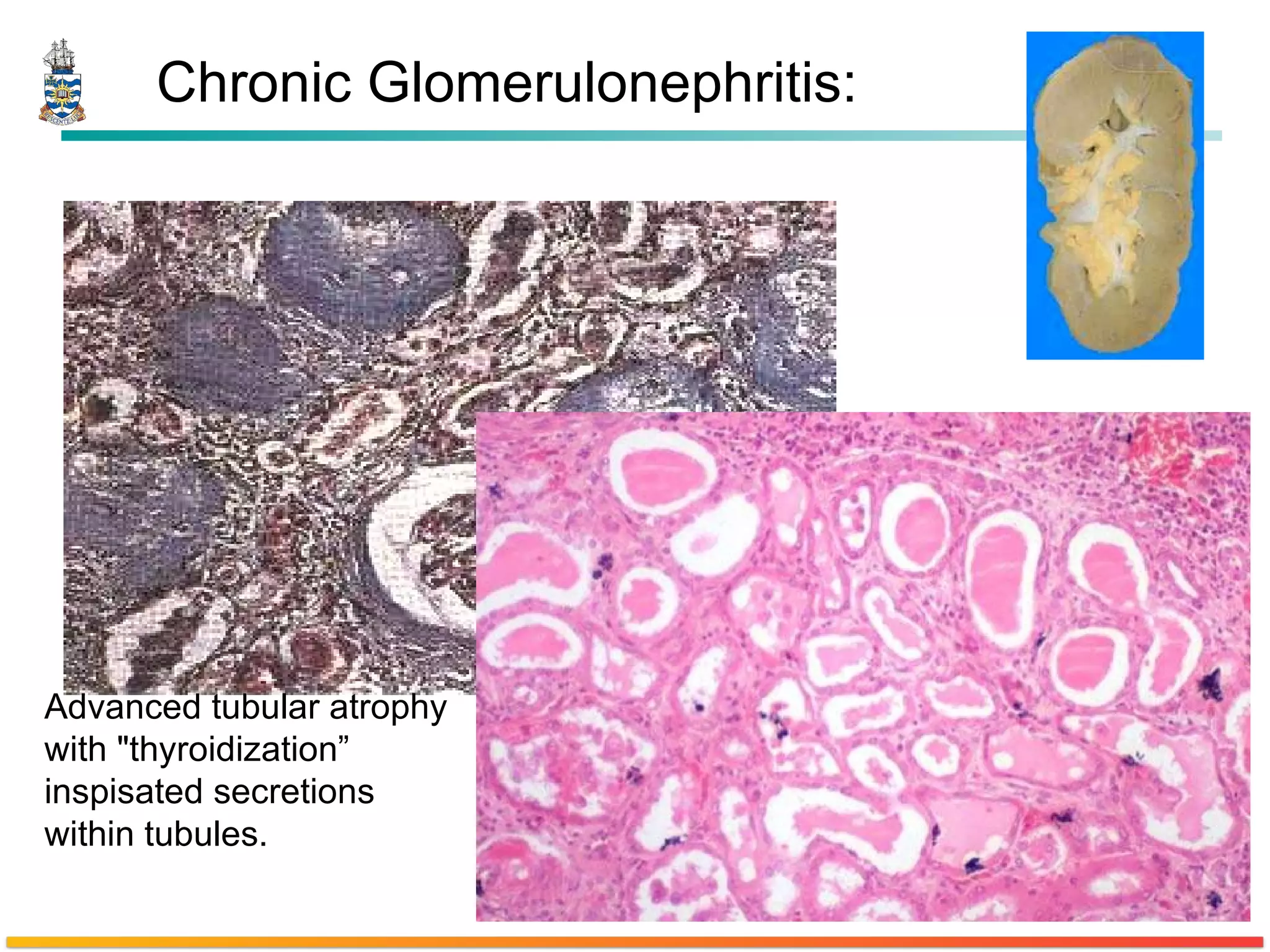
Chronic Glomerulonephritis: Advanced tubular atrophy with &quot;thyroidization” inspisated secretions within tubules.
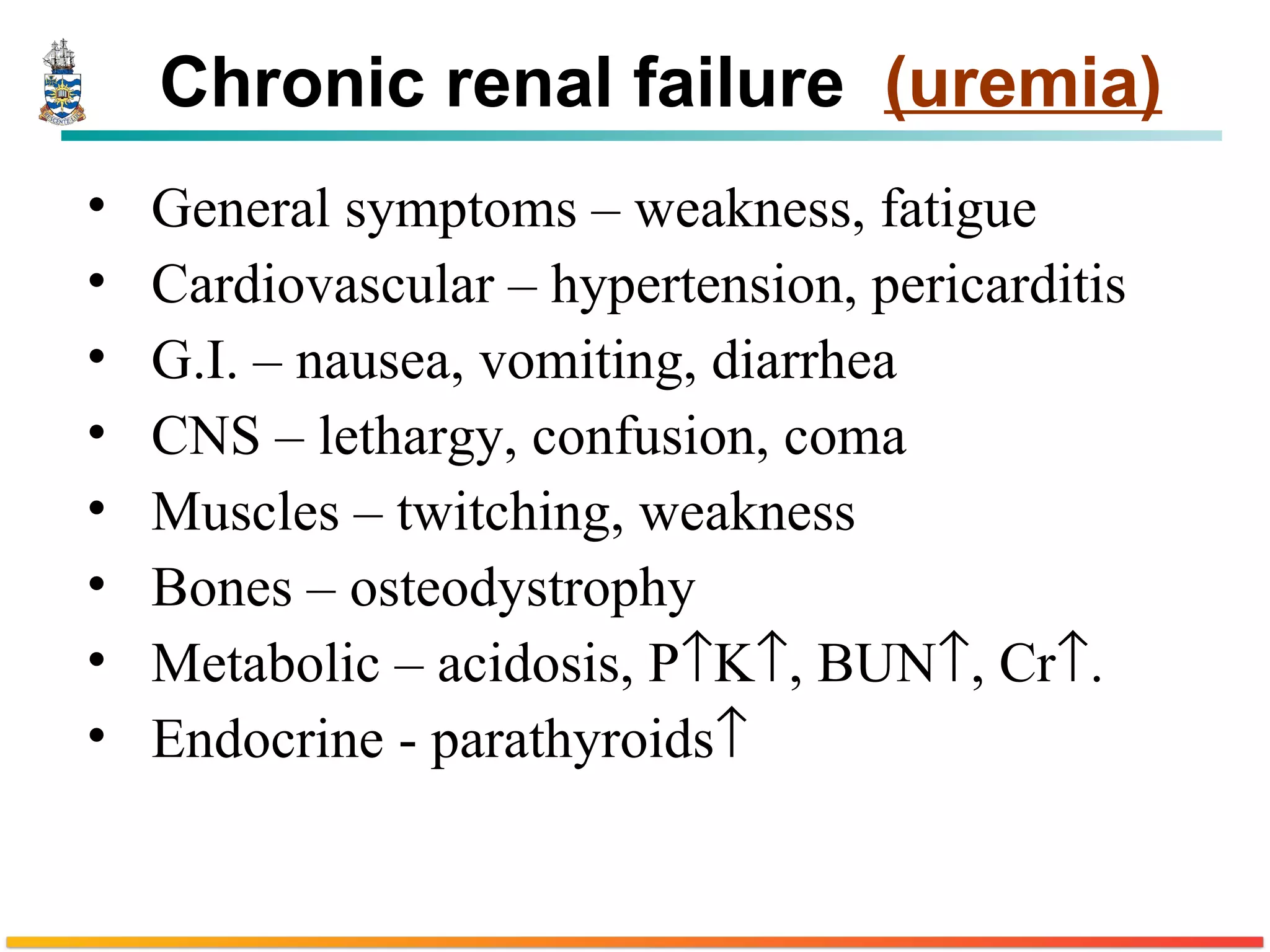
Chronic renal failure  (uremia) General symptoms – weakness, fatigue Cardiovascular – hypertension, pericarditis G.I. – nausea, vomiting, diarrhea CNS – lethargy, confusion, coma Muscles – twitching, weakness Bones – osteodystrophy Metabolic – acidosis, P  K  , BUN  , Cr  . Endocrine - parathyroids 
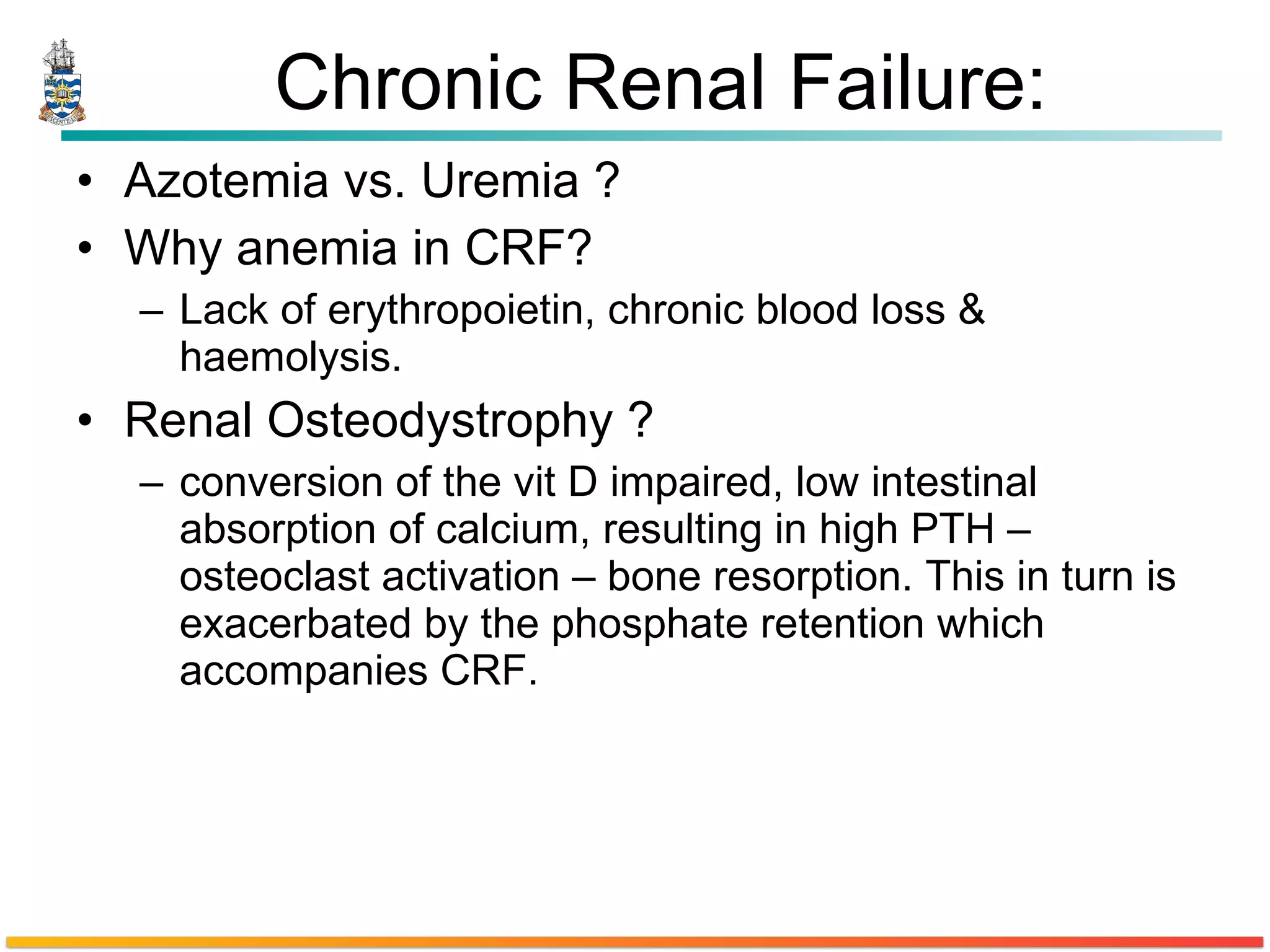
Chronic Renal Failure: Azotemia vs. Uremia ? Why  anemia  in CRF? Lack of erythropoietin, chronic blood loss & haemolysis.  Renal Osteodystrophy ? conversion of the vit D impaired, low intestinal absorption of calcium, resulting in high PTH – osteoclast activation – bone resorption. This in turn is exacerbated by the phosphate retention which accompanies CRF.
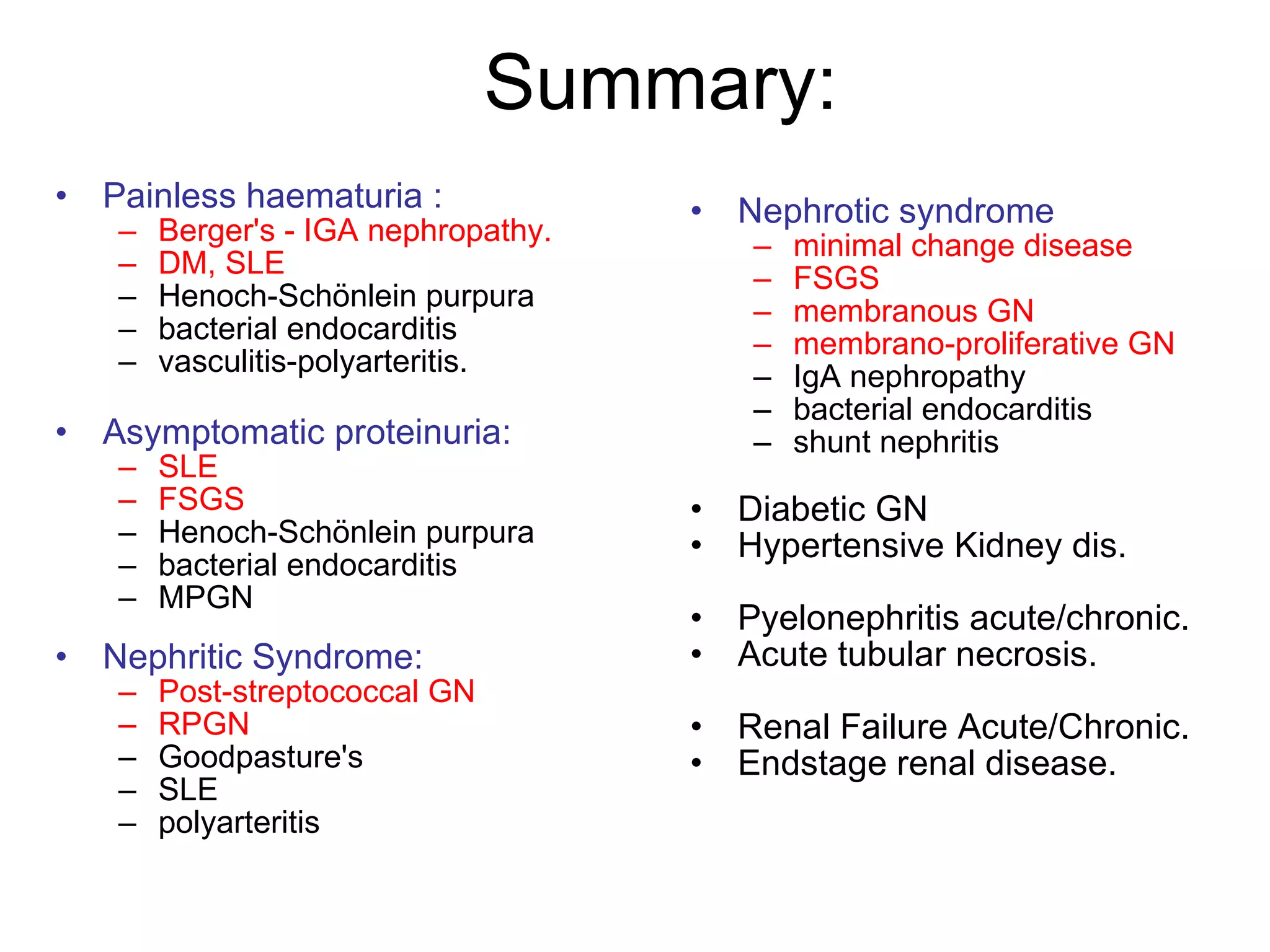
Summary: Painless haematuria :  Berger's - IGA nephropathy. DM, SLE   Henoch-Schönlein purpura  bacterial endocarditis  vasculitis-polyarteritis.  Asymptomatic proteinuria:   SLE   FSGS Henoch-Schönlein purpura  bacterial endocarditis  MPGN  Nephritic Syndrome:   Post-streptococcal   GN RPGN Goodpasture's  SLE  polyarteritis  Nephrotic syndrome minimal   change   disease   FSGS membranous GN  membrano-proliferative GN  IgA nephropathy  bacterial endocarditis  shunt nephritis  Diabetic GN Hypertensive Kidney dis. Pyelonephritis acute/chronic. Acute tubular necrosis. Renal Failure Acute/Chronic. Endstage renal disease.
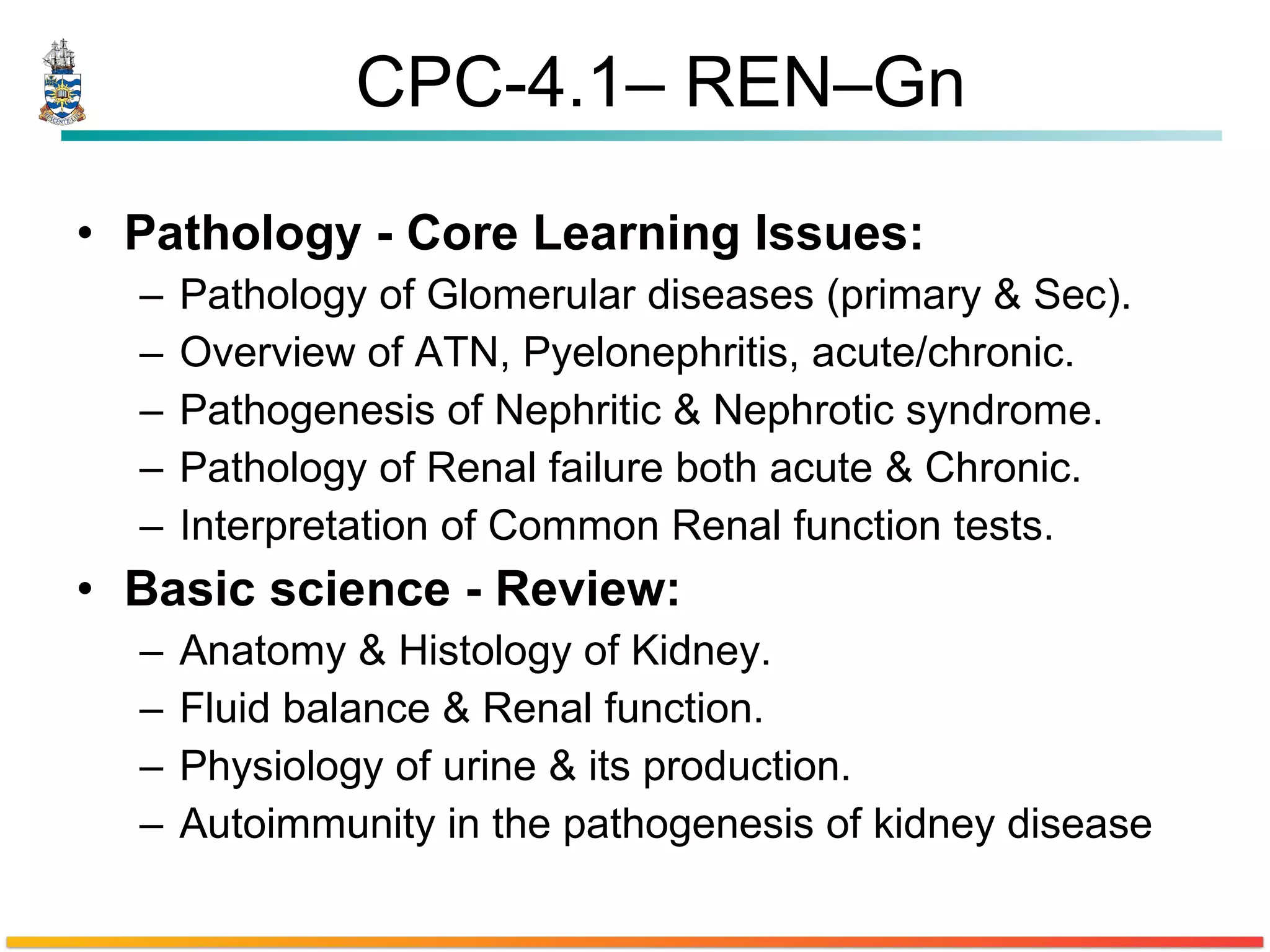
CPC-4.1– REN–Gn Pathology - Core Learning Issues:  Pathology of Glomerular diseases (primary & Sec). Overview of ATN, Pyelonephritis, acute/chronic. Pathogenesis of Nephritic & Nephrotic syndrome. Pathology of Renal failure both acute & Chronic.  Interpretation of Common Renal function tests. Basic science - Review:  Anatomy & Histology of Kidney. Fluid balance & Renal function. Physiology of urine & its production. Autoimmunity in the pathogenesis of kidney disease
&quot;If you tell the truth, you have infinite power supporting you; if not, you have infinite power against you. --Charles Gordon
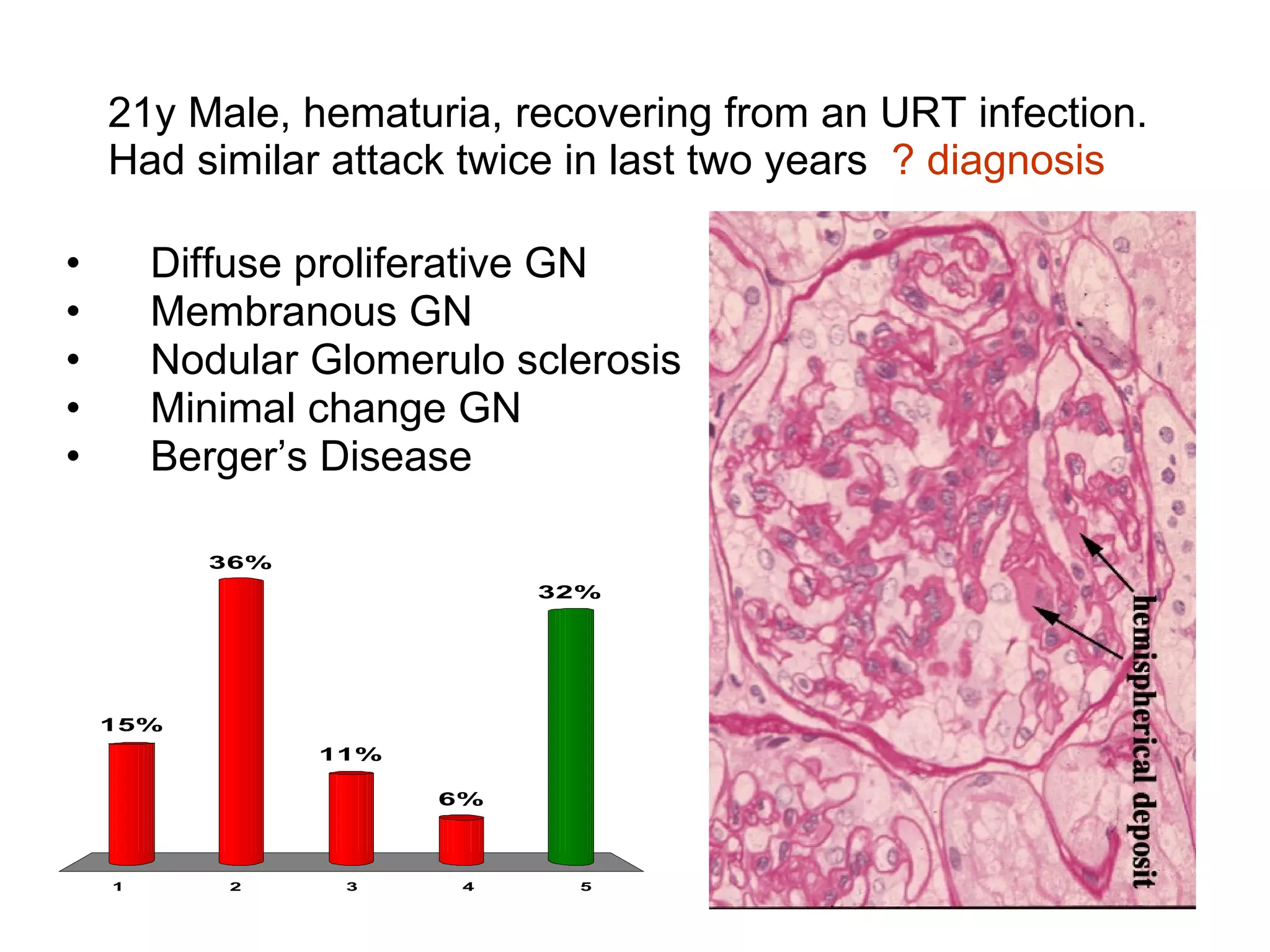
21y Male, hematuria, recovering from an URT infection. Had similar attack twice in last two years  ? diagnosis Diffuse proliferative GN Membranous GN Nodular Glomerulo sclerosis Minimal change GN Berger’s Disease
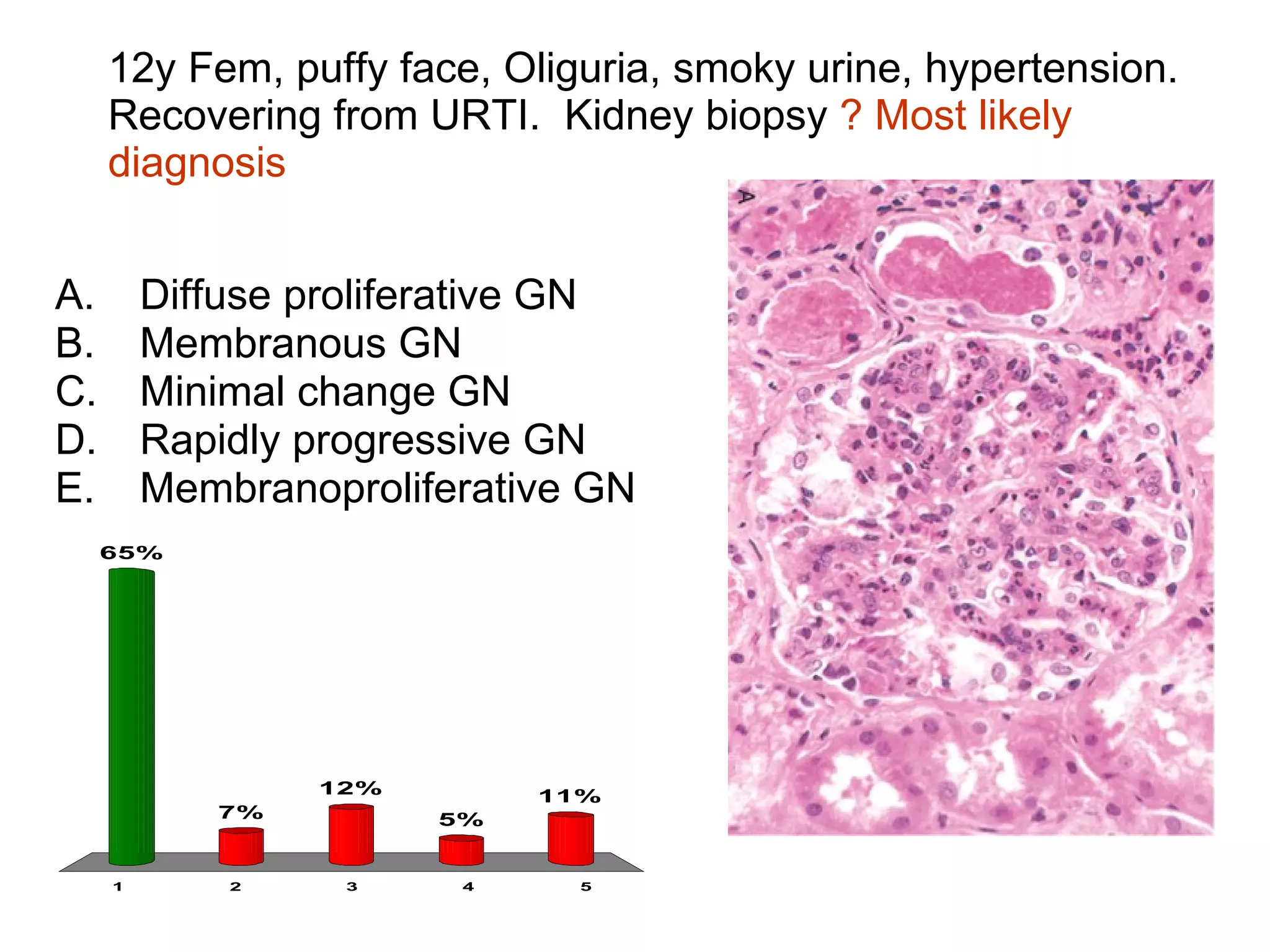
12y Fem, puffy face, Oliguria, smoky urine, hypertension. Recovering from URTI.  Kidney biopsy  ? Most likely diagnosis Diffuse proliferative GN Membranous GN Minimal change GN Rapidly progressive GN Membranoproliferative GN
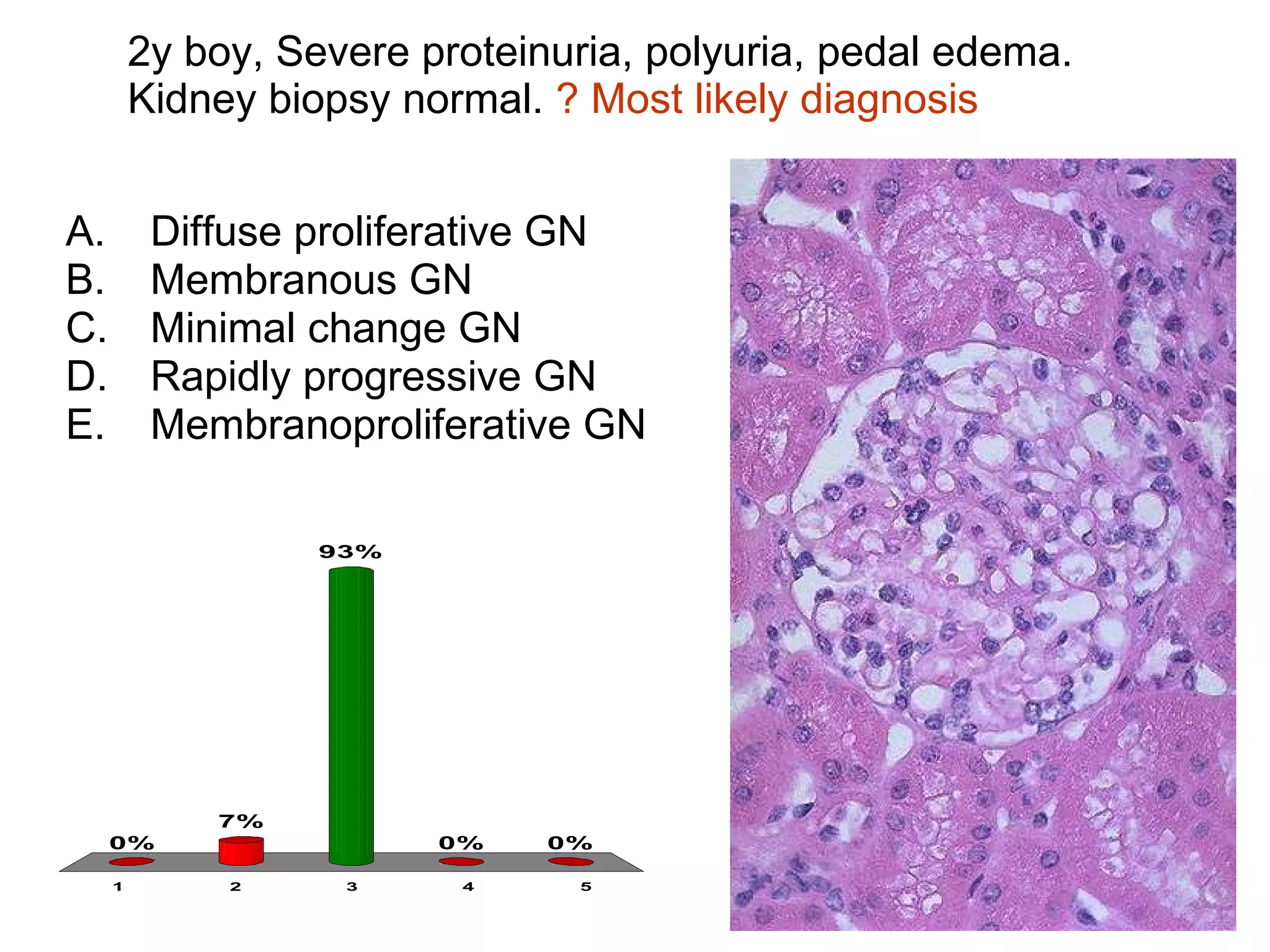
2y boy, Severe proteinuria, polyuria, pedal edema. Kidney biopsy normal.  ? Most likely diagnosis Diffuse proliferative GN Membranous GN Minimal change GN Rapidly progressive GN Membranoproliferative GN
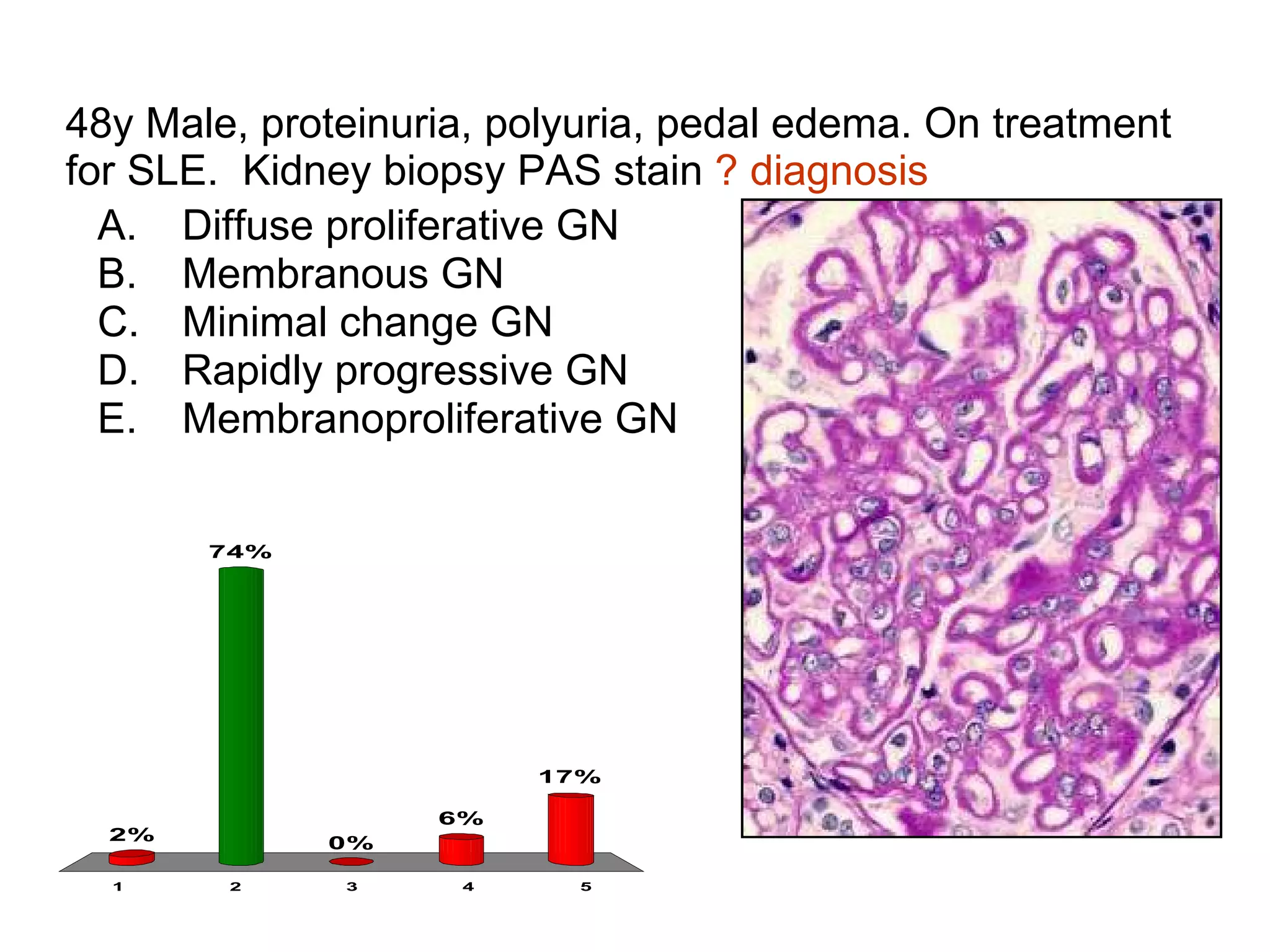
48y Male, proteinuria, polyuria, pedal edema. On treatment for SLE.  Kidney biopsy PAS stain  ? diagnosis Diffuse proliferative GN Membranous GN Minimal change GN Rapidly progressive GN Membranoproliferative GN
54y Male, nocturia, polyuria, recurrent infections. Kidney biopsy  ? diagnosis Diffuse proliferative GN Membranous GN Minimal change GN Rapidly progressive GN Nodular Glomerulo sclerosis
58y Male, Chronic hypertension. Slowly progressive renal failure. Kidney sp.  ? diag Benign nephrosclerosis Papillary necrosis Pyelonephritis with infarction Nodular glomerulosclerosis Renal abscesses
14y Male, severe acute renal failure, history of recent throat infection on treatment.  Kidney biopsy  ? diagnosis Diffuse proliferative GN Membranous GN Minimal change GN Rapidly progressive GN Membranoproliferative GN
74y Male, Hypertensive, Oliguria & marked fatigue since 2 months. Left Kidney gross  ? diagnosis Nodular Glomerulo sclerosis. Chronic Pyelonephritis. Polycystic kidney disease. Rapidly progressive GN. Chronic Glomerulonephritis.
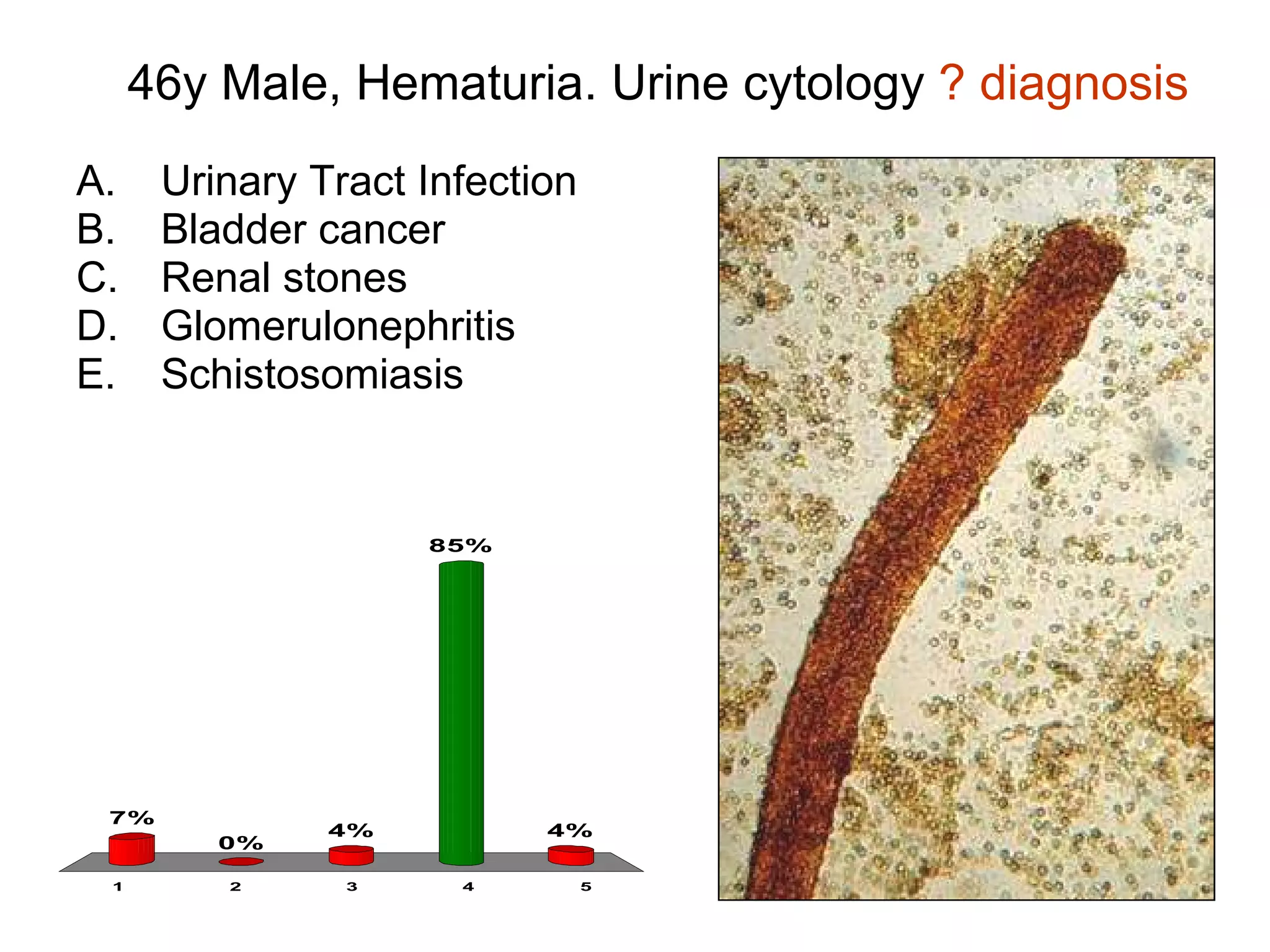
46y Male, Hematuria. Urine cytology  ? diagnosis Urinary Tract Infection Bladder cancer Renal stones Glomerulonephritis Schistosomiasis
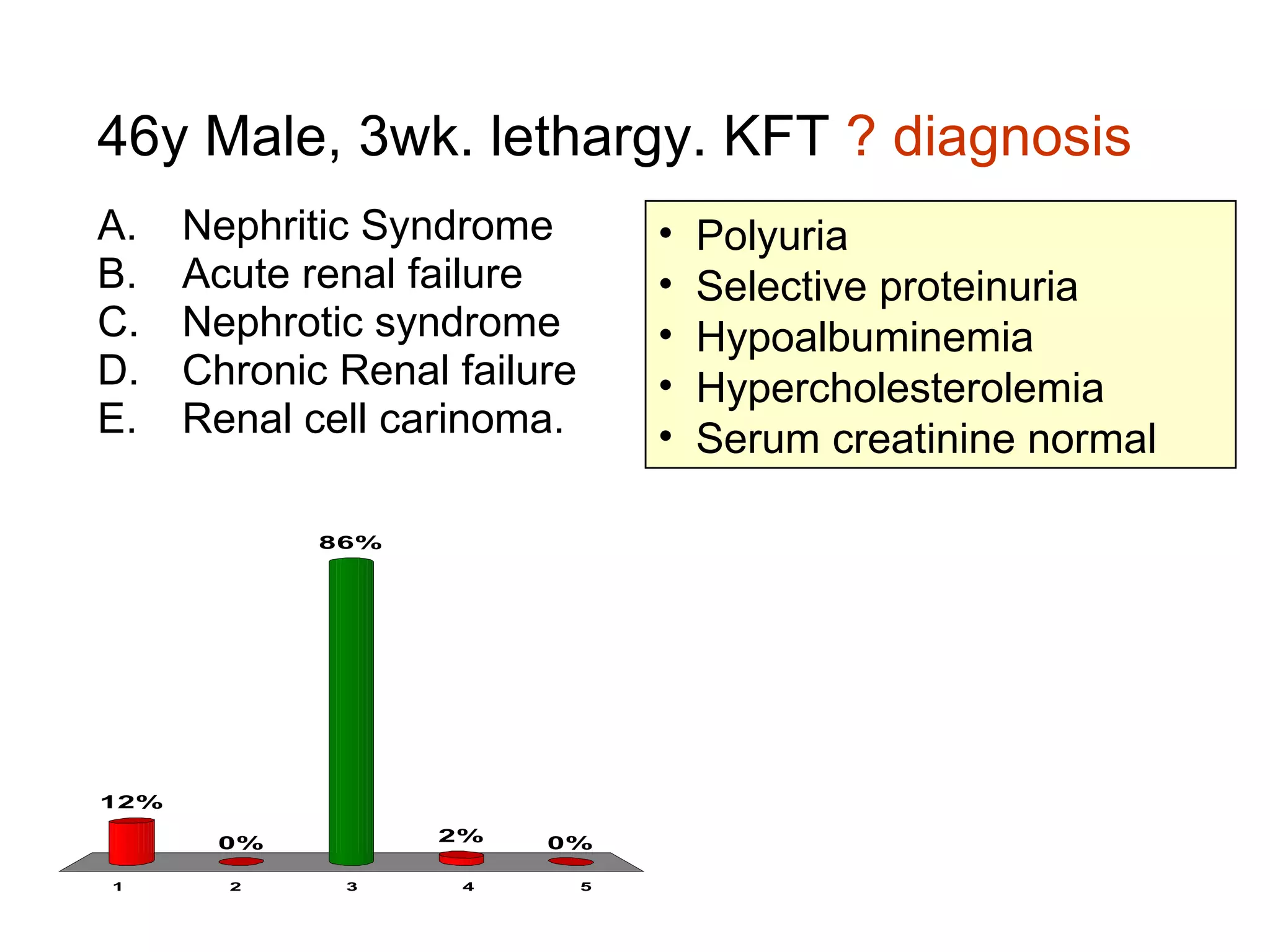
46y Male, 3wk. lethargy. KFT  ? diagnosis Nephritic Syndrome Acute renal failure Nephrotic syndrome Chronic Renal failure Renal cell carinoma. Polyuria Selective proteinuria Hypoalbuminemia Hypercholesterolemia Serum creatinine normal
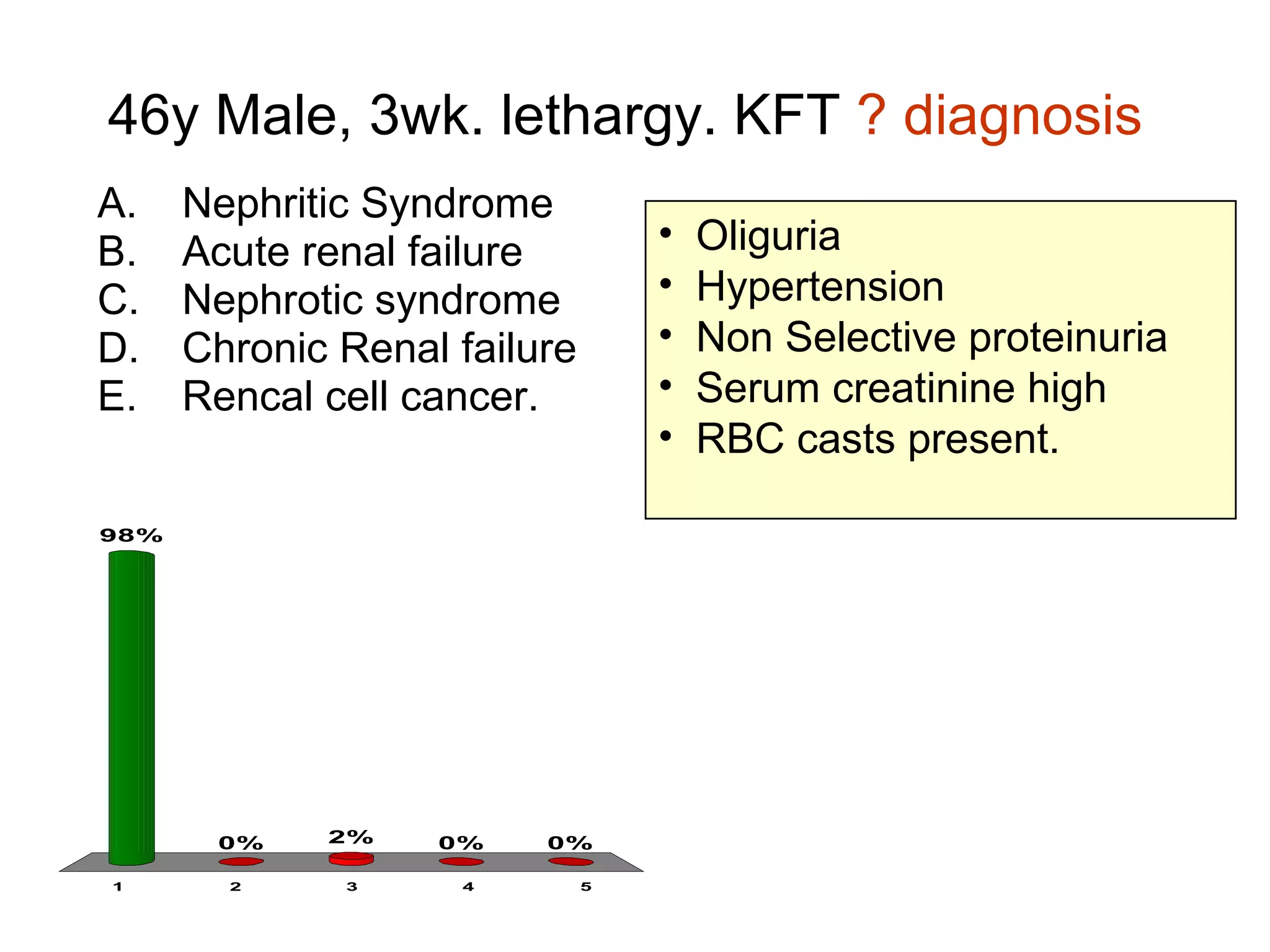
46y Male, 3wk. lethargy. KFT  ? diagnosis Nephritic Syndrome Acute renal failure Nephrotic syndrome Chronic Renal failure Rencal cell cancer. Oliguria Hypertension Non Selective proteinuria Serum creatinine high RBC casts present.
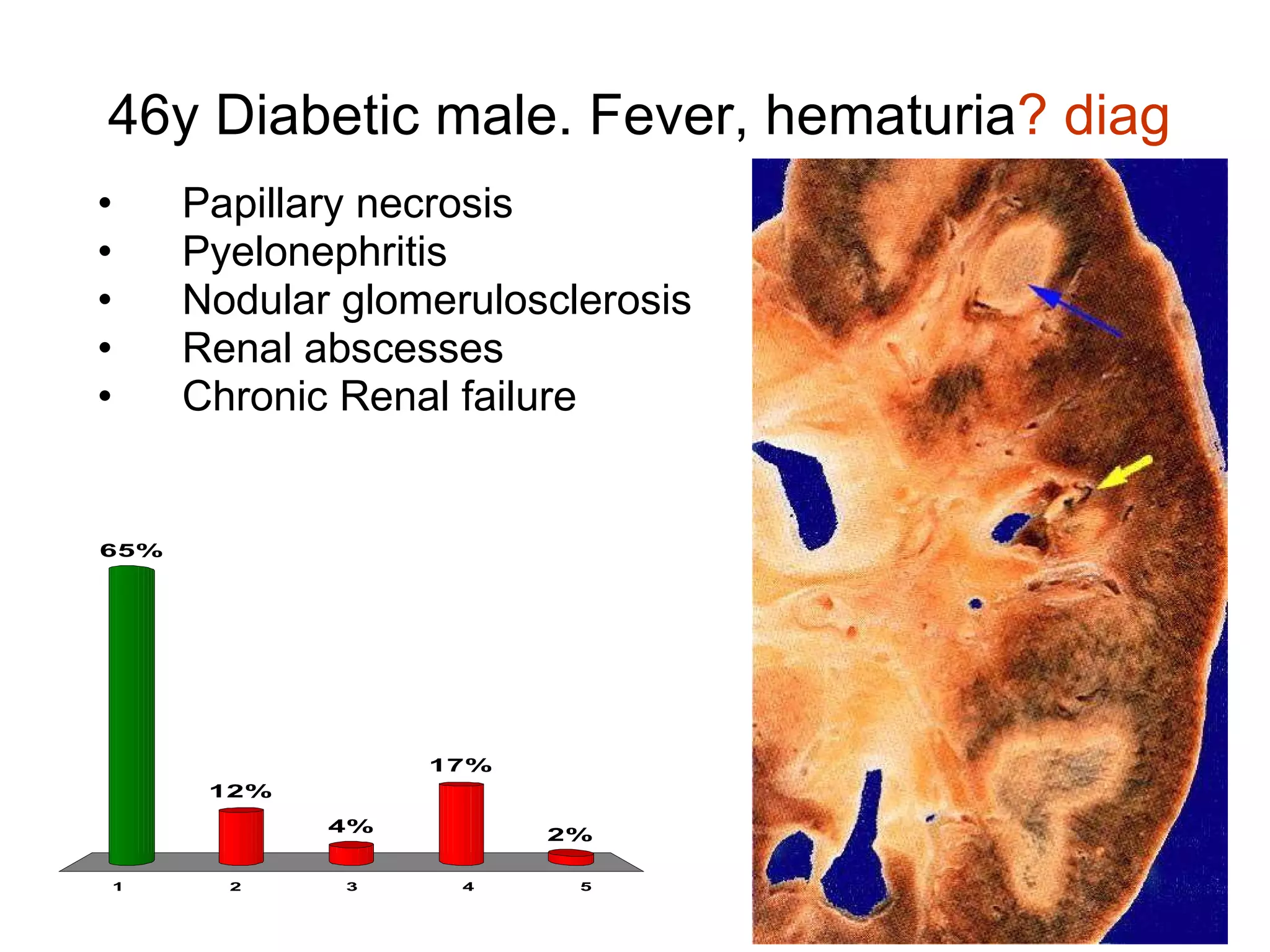
46y Diabetic male. Fever, hematuria ? diag Papillary necrosis Pyelonephritis Nodular glomerulosclerosis Renal abscesses Chronic Renal failure
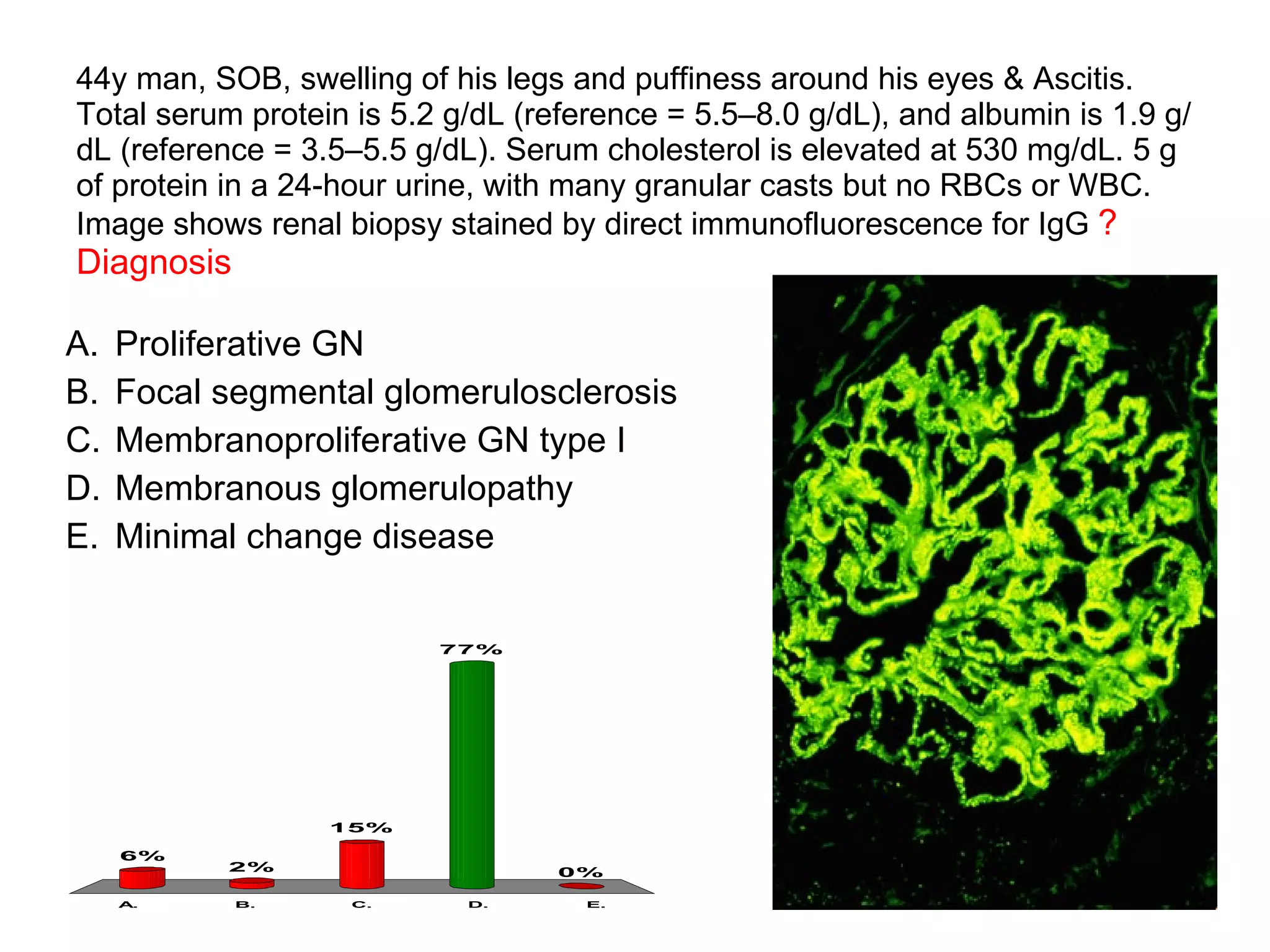
44y man, SOB, swelling of his legs and puffiness around his eyes & Ascitis. Total serum protein is 5.2 g/dL (reference = 5.5–8.0 g/dL), and albumin is 1.9 g/dL (reference = 3.5–5.5 g/dL). Serum cholesterol is elevated at 530 mg/dL. 5 g of protein in a 24-hour urine, with many granular casts but no RBCs or WBC. Image shows renal biopsy stained by direct immunofluorescence for IgG  ? Diagnosis Proliferative GN Focal segmental glomerulosclerosis Membranoproliferative GN type I Membranous glomerulopathy Minimal change disease
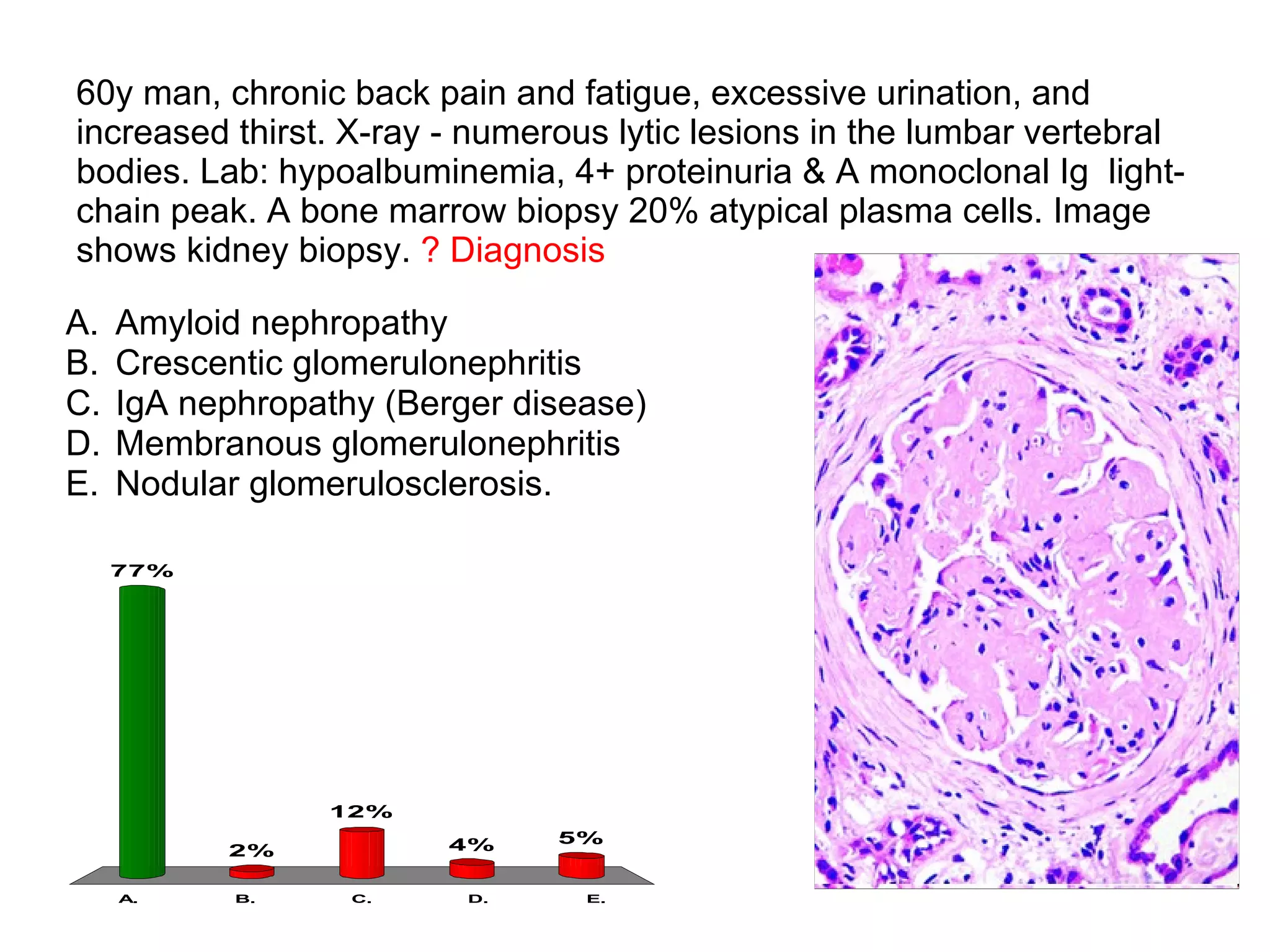
60y man, chronic back pain and fatigue, excessive urination, and increased thirst. X-ray - numerous lytic lesions in the lumbar vertebral bodies. Lab: hypoalbuminemia, 4+ proteinuria & A monoclonal Ig  light-chain peak. A bone marrow biopsy 20% atypical plasma cells. Image shows kidney biopsy.  ? Diagnosis Amyloid nephropathy Crescentic glomerulonephritis IgA nephropathy (Berger disease) Membranous glomerulonephritis Nodular glomerulosclerosis.
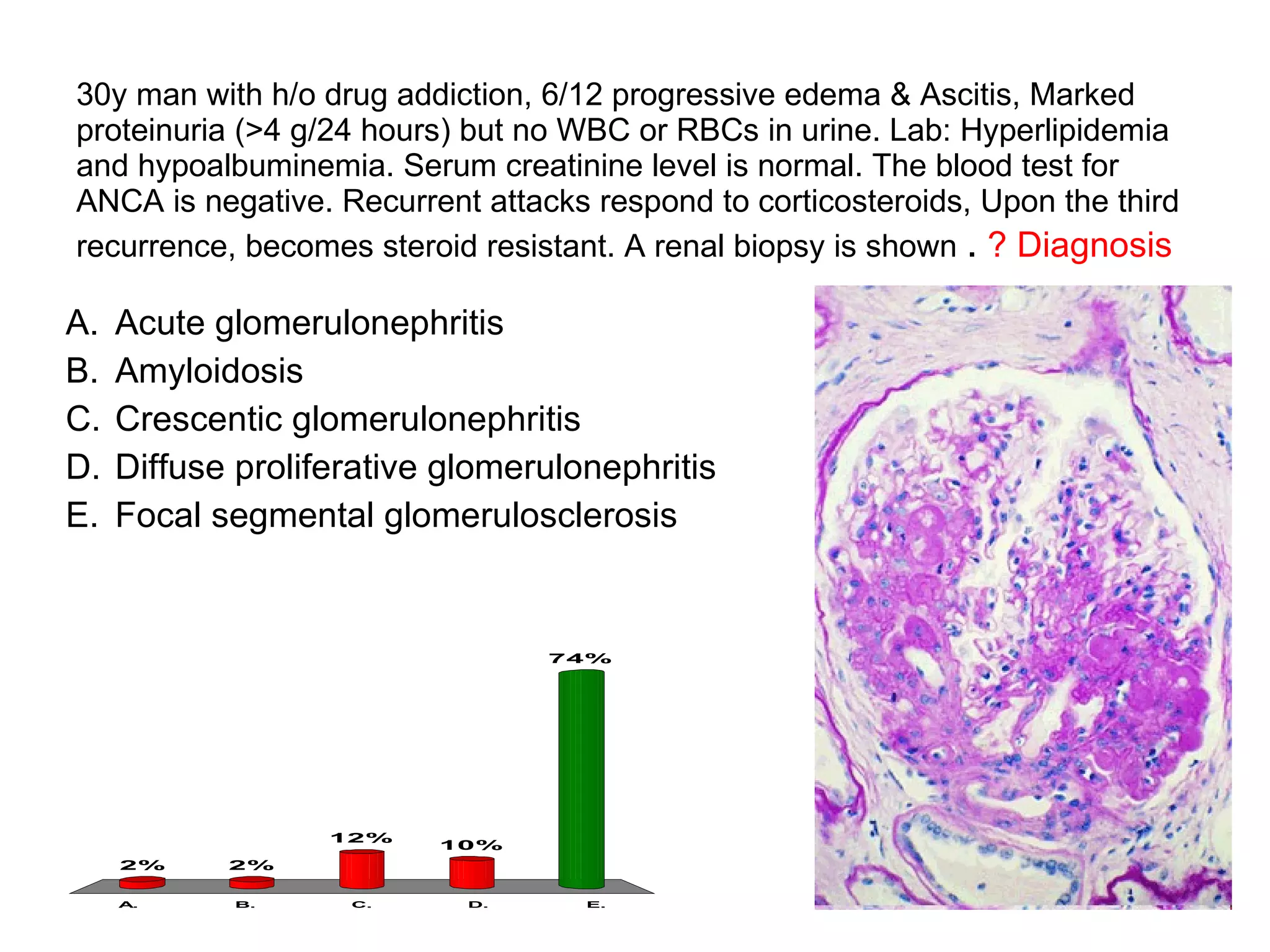
30y man with h/o drug addiction, 6/12 progressive edema & Ascitis, Marked proteinuria (>4 g/24 hours) but no WBC or RBCs in urine. Lab: Hyperlipidemia and hypoalbuminemia. Serum creatinine level is normal. The blood test for ANCA is negative. Recurrent attacks respond to corticosteroids, Upon the third recurrence, becomes steroid resistant. A renal biopsy is shown  .   ? Diagnosis Acute glomerulonephritis Amyloidosis Crescentic glomerulonephritis Diffuse proliferative glomerulonephritis Focal segmental glomerulosclerosis
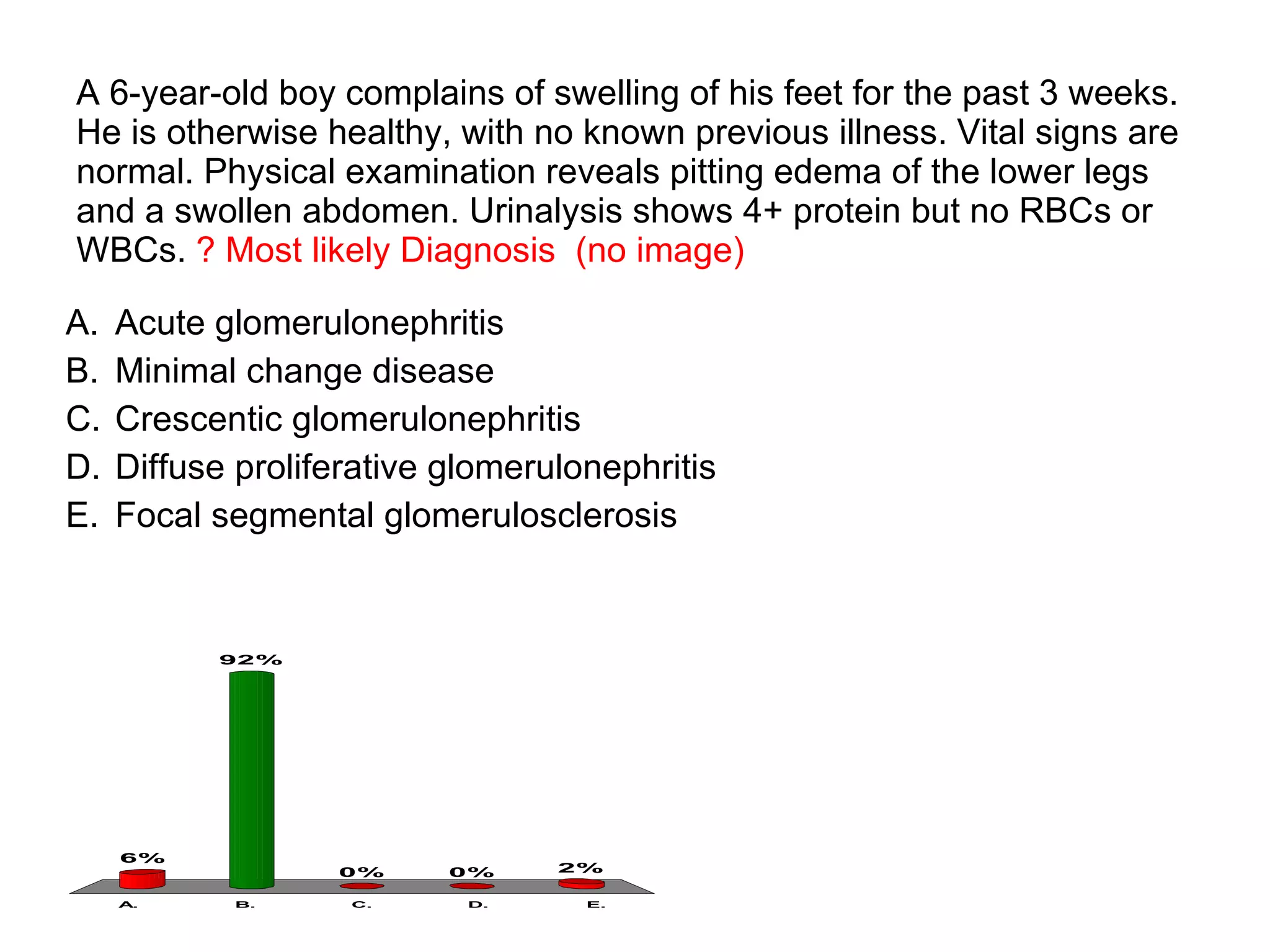
A 6-year-old boy complains of swelling of his feet for the past 3 weeks. He is otherwise healthy, with no known previous illness. Vital signs are normal. Physical examination reveals pitting edema of the lower legs and a swollen abdomen. Urinalysis shows 4+ protein but no RBCs or WBCs.  ? Most likely Diagnosis  (no image) Acute glomerulonephritis Minimal change disease Crescentic glomerulonephritis Diffuse proliferative glomerulonephritis Focal segmental glomerulosclerosis
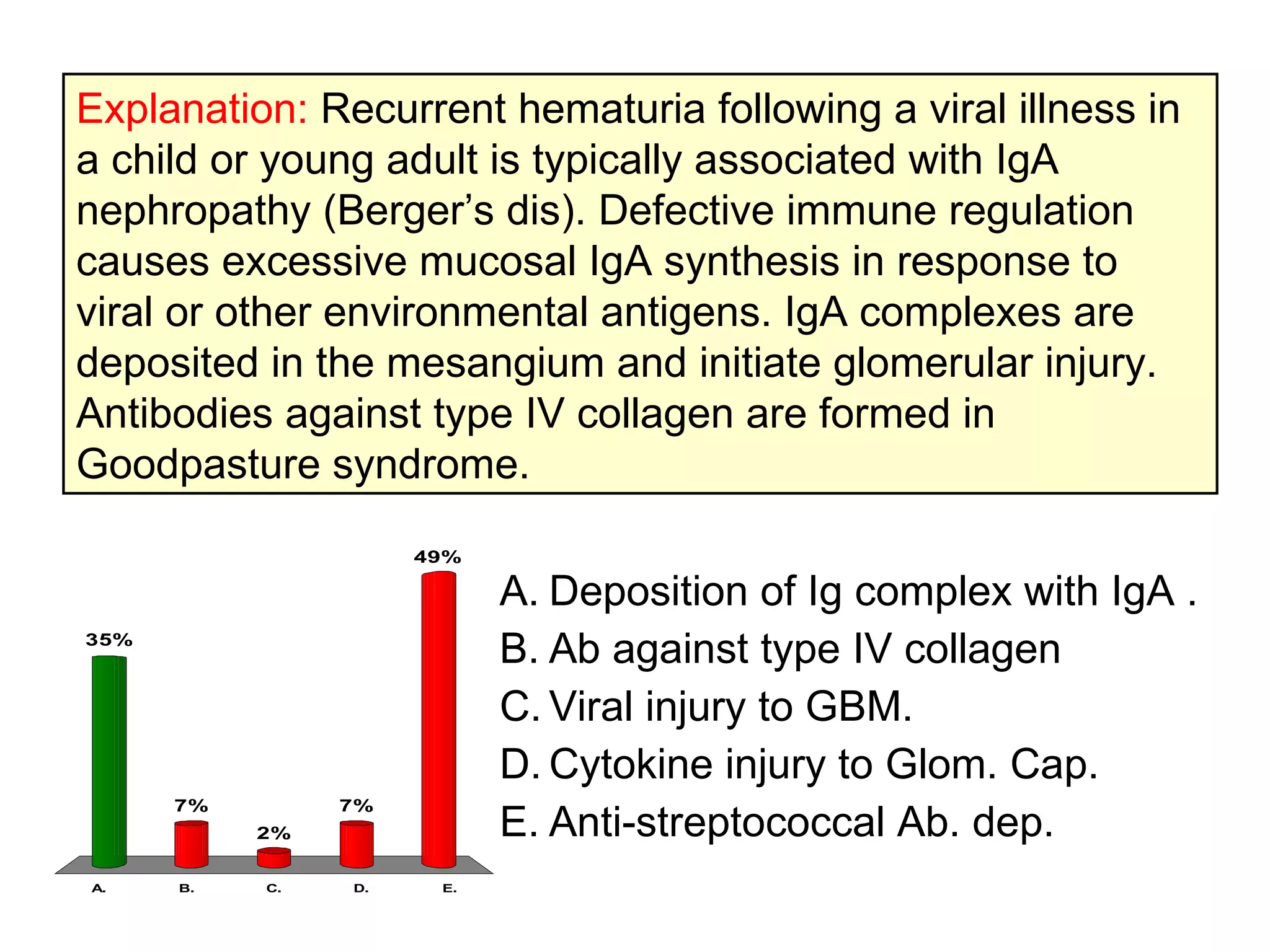
9y boy, episode of hematureia 1wk after flulike illness. One month later his urine is red again. Urinealysis pH7, SG 1.015, Proteinuria 1+, 1+ hematuria. No ketones, glucose or urobilinogen. Serum urea & creat. Normal. Renal biopsy shows mesangial proliferation & electron dense deposits within mesangium. Which of the following mechanisms is most likely to produce his symptoms? Deposition of Ig complex with IgA . Ab against type IV collagen Viral injury to GBM. Cytokine injury to Glom. Cap. Anti-streptococcal Ab. dep. Explanation:  Recurrent hematuria following a viral illness in a child or young adult is typically associated with IgA nephropathy (Berger’s dis). Defective immune regulation causes excessive mucosal IgA synthesis in response to viral or other environmental antigens. IgA complexes are deposited in the mesangium and initiate glomerular injury. Antibodies against type IV collagen are formed in Goodpasture syndrome.
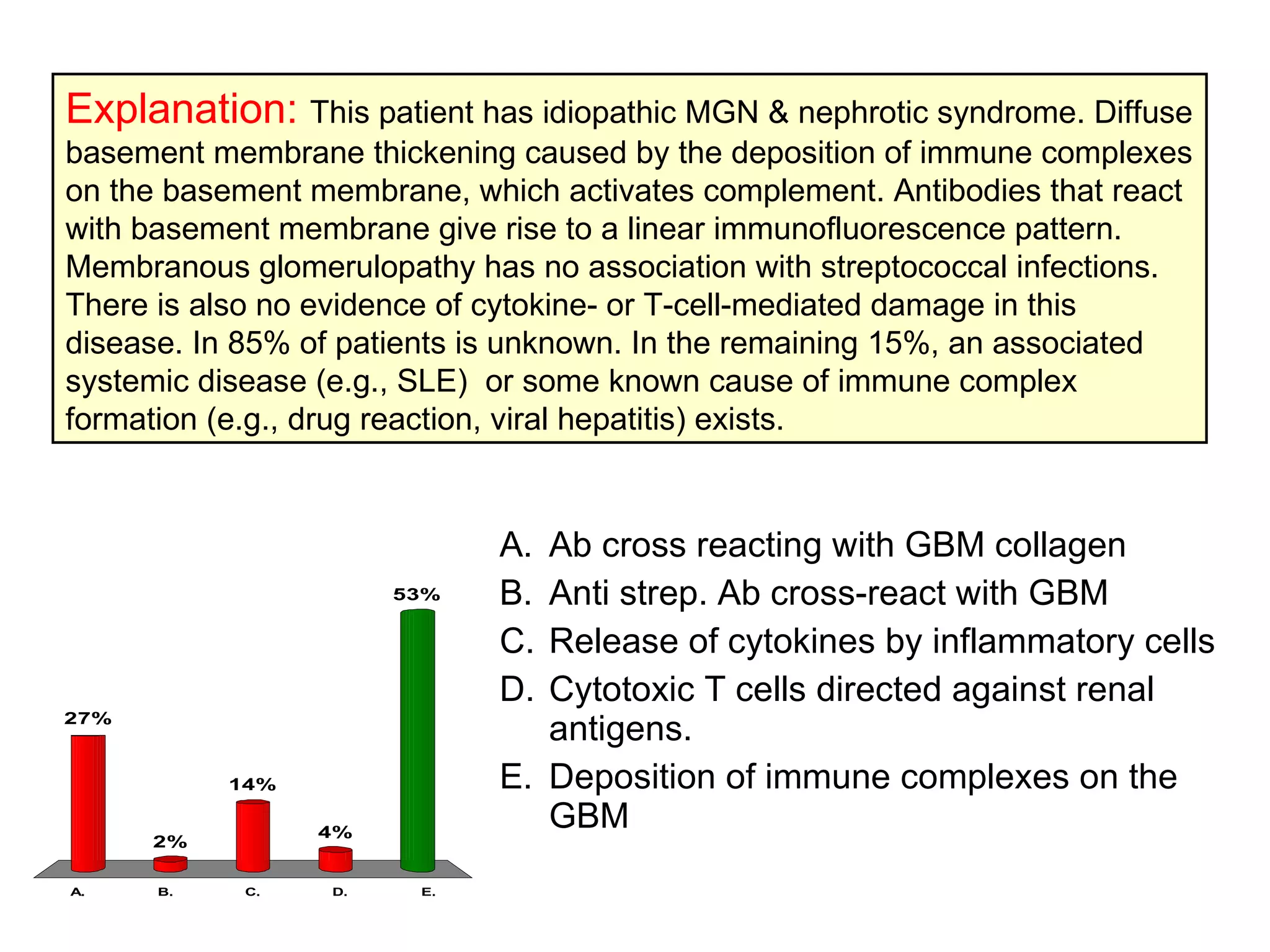
49y male, Ankle & Foot swelling for 2 months.24h urine yielded 4.1g protein. No DM, SLE or Hyepertension. No response to steroid therapy. Renal biopsy showed diffusely thick cap basement membrane with granular C3 deposition. Two years later he developed chronic renal failure. What is the most likely pathogenesis? Ab cross reacting with GBM collagen  Anti strep. Ab cross-react with GBM  Release of cytokines by inflammatory cells  Cytotoxic T cells directed against renal antigens. Deposition of immune complexes on the GBM  Explanation:   This patient has idiopathic MGN & nephrotic syndrome. Diffuse basement membrane thickening caused by the deposition of immune complexes on the basement membrane, which activates complement. Antibodies that react with basement membrane give rise to a linear immunofluorescence pattern. Membranous glomerulopathy has no association with streptococcal infections. There is also no evidence of cytokine- or T-cell-mediated damage in this disease. In 85% of patients is unknown. In the remaining 15%, an associated systemic disease (e.g., SLE)  or some known cause of immune complex formation (e.g., drug reaction, viral hepatitis) exists.
“ The worst times in your life contain seeds of the best. When you can see crisis as an opportunity, your life becomes not only easier, but more satisfying.”    –Joe Kogel
Video tutorials on Digital Pathology Slides on   Acknowledgements:  You Tube  WashingtonDeceit: Dedicated to the greatest pathologist of all time -  Martin A. Swerdlow , MD &quot;Build it and they will come.&quot;
Links to Digital Histopathology Kidney. RPGN -  http:// www.youtube.com/watch?v =CqSyj4cVZPE SLE -  http:// www.youtube.com/watch?v =Tw07BFaDEo0 ADPKD -  http:// www.youtube.com/watch?v =6Ws9cfsjZIk CGN:  http:// www.youtube.com/watch?v =eA1vYarRAWo&feature=related ATN-  http:// www.youtube.com/watch?v =ajCG3sIe2iw Pyelonephritis:  http:// www.youtube.com/watch?v =aZ2il9a63J4 More.. search youtube….!
Challenge….! Jan 2009: 4 th  Year Students at  JCU School of Medicine  set new world record.…!!! 100% Pass & Class Average of over 70% Winners Club is still active….! -  Email me
What motivates senior clinicians to teach Medical students in Australia? Positive: Altruism * Intellectual satisfaction Personal skills Truth seeking Negative: No strong involvement (course) Heavy work load  Feeling it was a waste of time.  Jane Dahlstrom et. al.  ANU, Canberra, Australia BMC Medical Education  2005, 5:27  doi:10.1186/1472-6920-5-27   Be Nice…! Respect, Value teaching,  Show concern
Altruism……!
“ To be a great champion you must believe you are the best. If you’re not, pretend you are….!”     – Muhammad Ali
Urine Analysis: clean-catch, midstream sample after the  external genitalia have been cleansed  with an antiseptic solution. Delay in testing cause bacterial growth, and in the process metabolize any glucose present. The bacteria can also utilize the urea, forming ammonia and increasing the pH. Bilirubin is light sensitive will decompose and will become un reactive. Casts, red blood cells and white cells also tend to disintegrate after only a short time at room temperature.
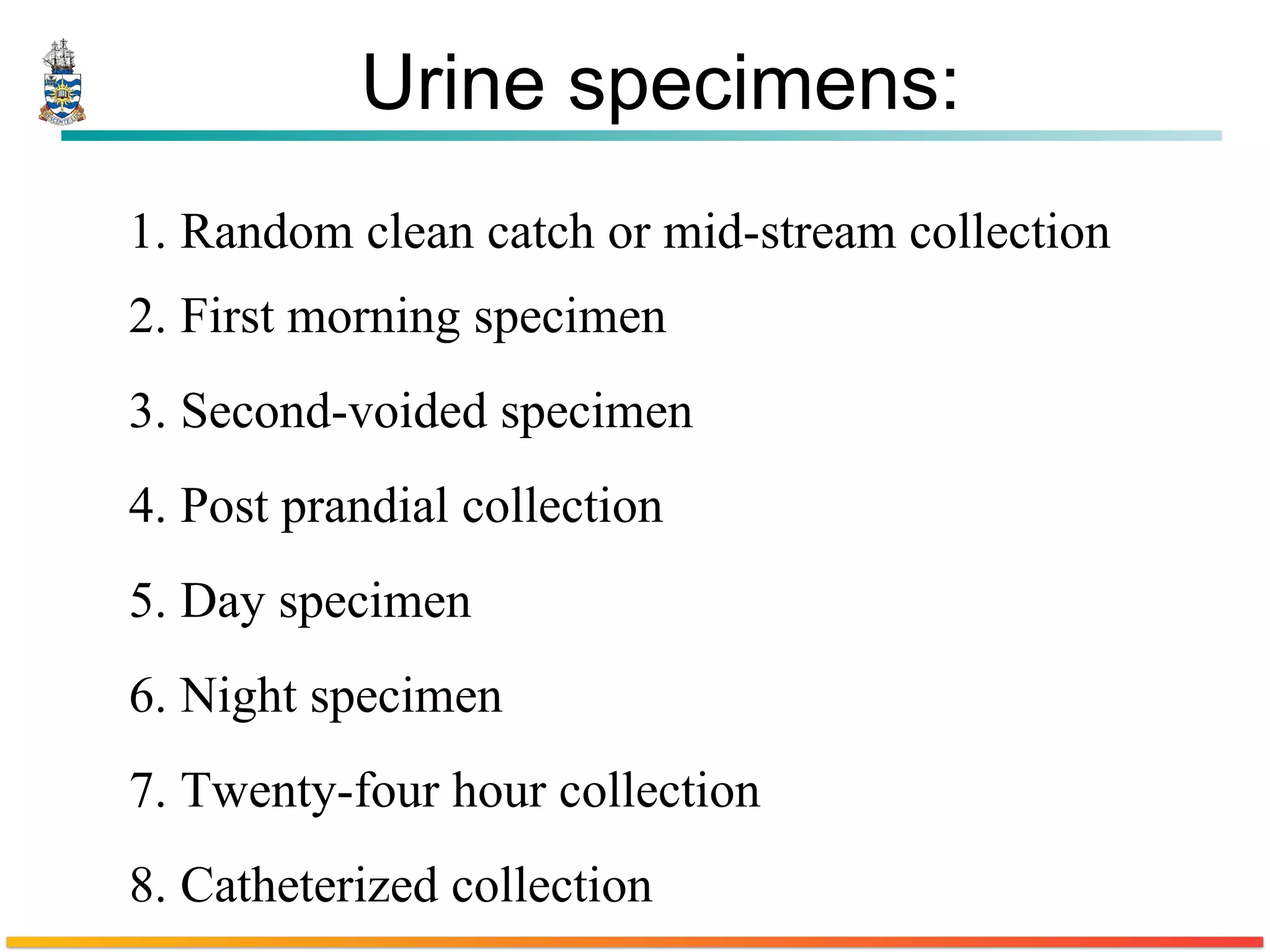
Urine specimens: 1. Random clean catch or mid-stream collection  2. First morning specimen  3. Second-voided specimen  4. Post prandial collection  5. Day specimen  6. Night specimen  7. Twenty-four hour collection  8. Catheterized collection
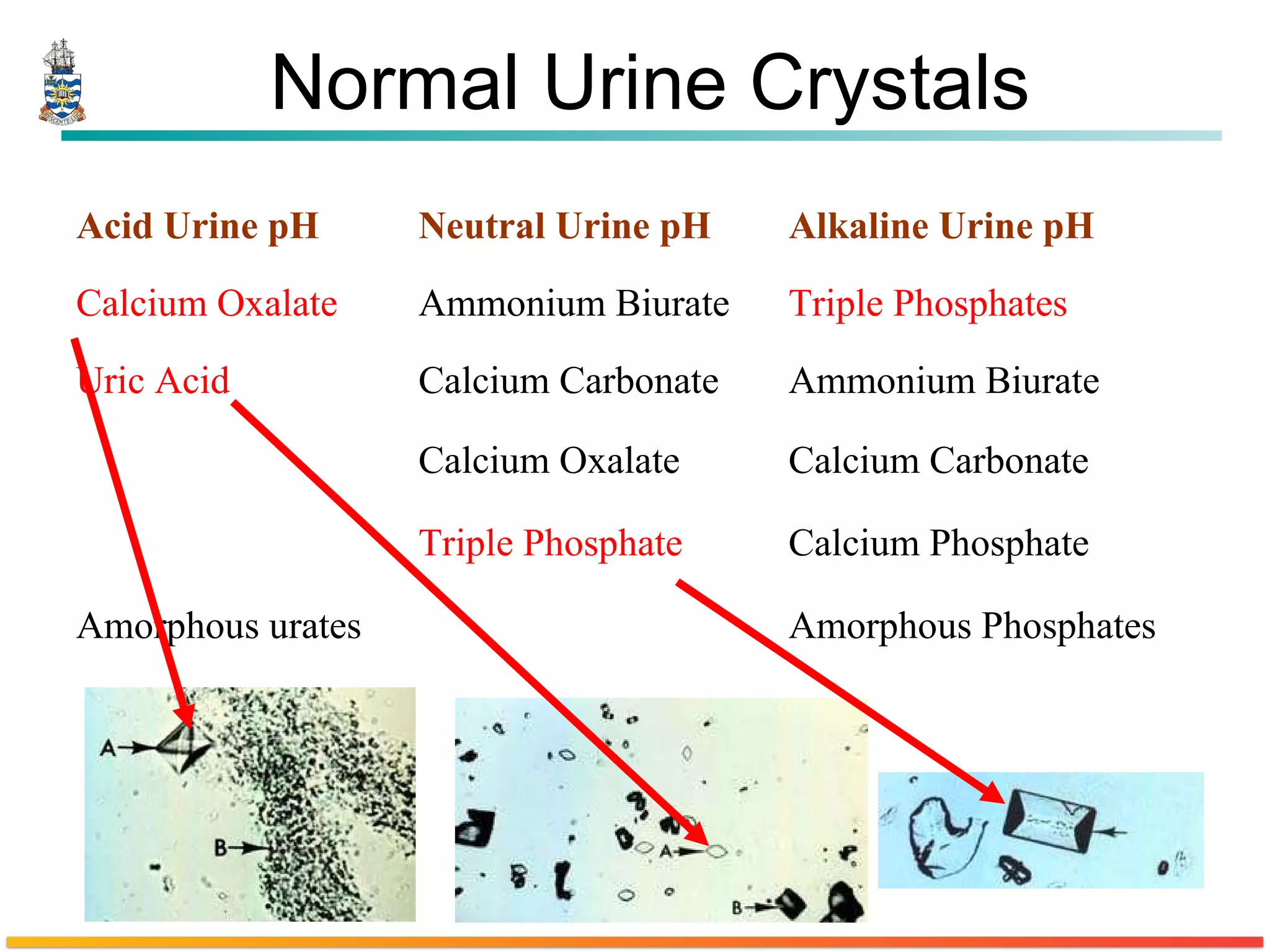
Normal Urine Crystals  Acid Urine pH   Neutral Urine pH   Alkaline Urine pH   Calcium Oxalate   Ammonium Biurate  Triple Phosphates   Uric Acid  Calcium Carbonate  Ammonium Biurate  Calcium Oxalate  Calcium Carbonate  Triple Phosphate   Calcium Phosphate  Amorphous urates  Amorphous Phosphates
Normal Post Strepto GN Inflammation Proliferation Swelling. Narrow capillary ↓ GFR-Renin-BP
CPC4.4.1 – CLI Clinical Core Learning Issues: Approach to, History taking & clinical Assessment of patients with  renal disease . Clinical features of patient with Renal impairment. Over view of  Renal dialysis , renal transplantation. Population, Rural, Indigenous & tropical:  Access to specialist  nephrologist care from Ingham Social / government support for adults who become unable to work due to illness Personal, Professional & Ethical: Dealing with  resource allocation to chronic diseases . Managing  patients with renal failure in rural centers.  Ethical issues  in providing Renal dialysis/transplantation.
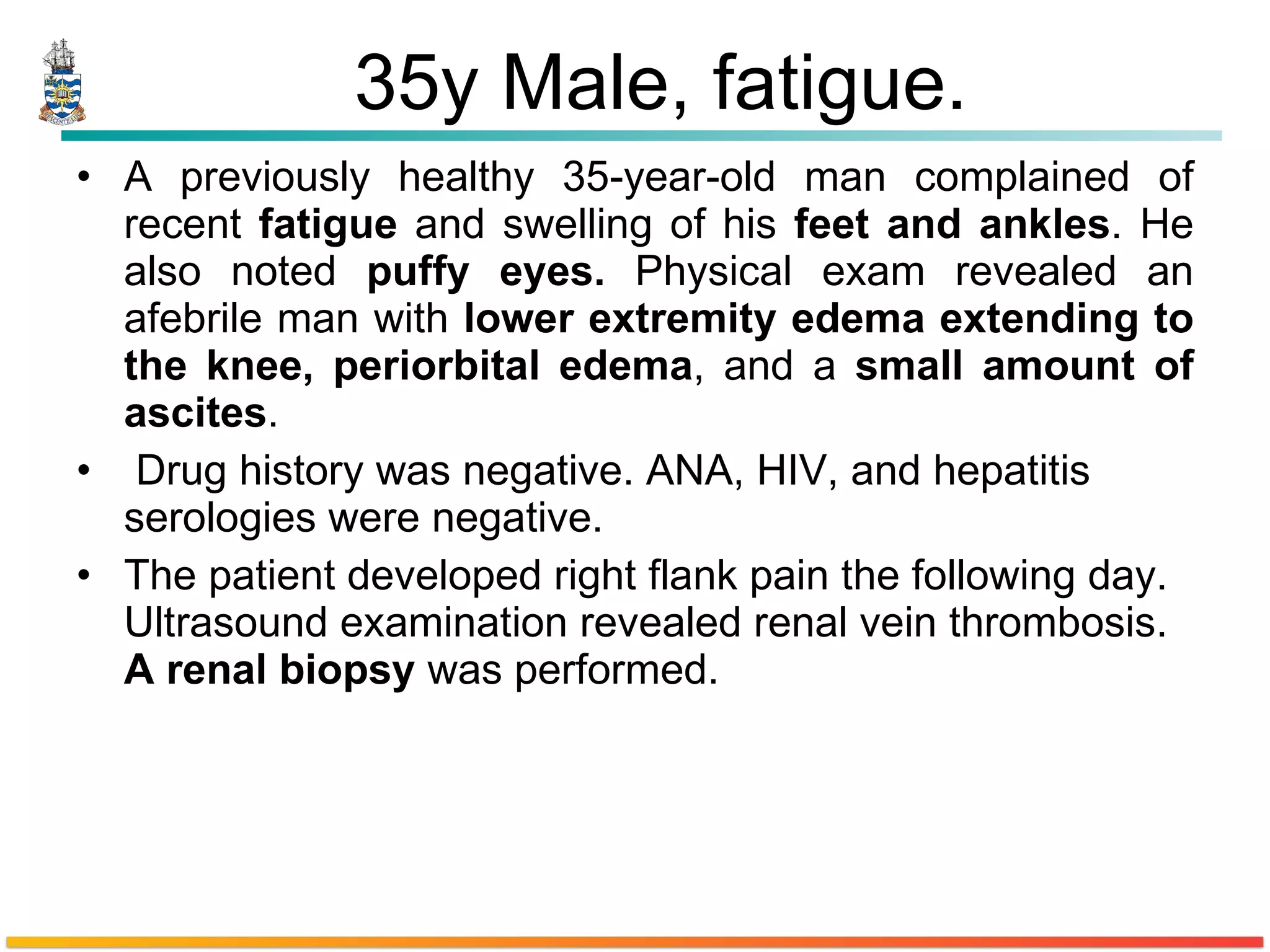
35y Male, fatigue. A previously healthy 35-year-old man complained of recent  fatigue  and swelling of his  feet and ankles . He also noted  puffy   eyes .  Physical exam revealed an afebrile man with  lower extremity  edema  extending to the knee,  periorbital  edema , and a  small amount of ascites . Drug history was negative. ANA, HIV, and hepatitis serologies were negative. The patient developed right  flank   pain  the following day. Ultrasound examination revealed renal vein thrombosis.  A renal biopsy  was performed.
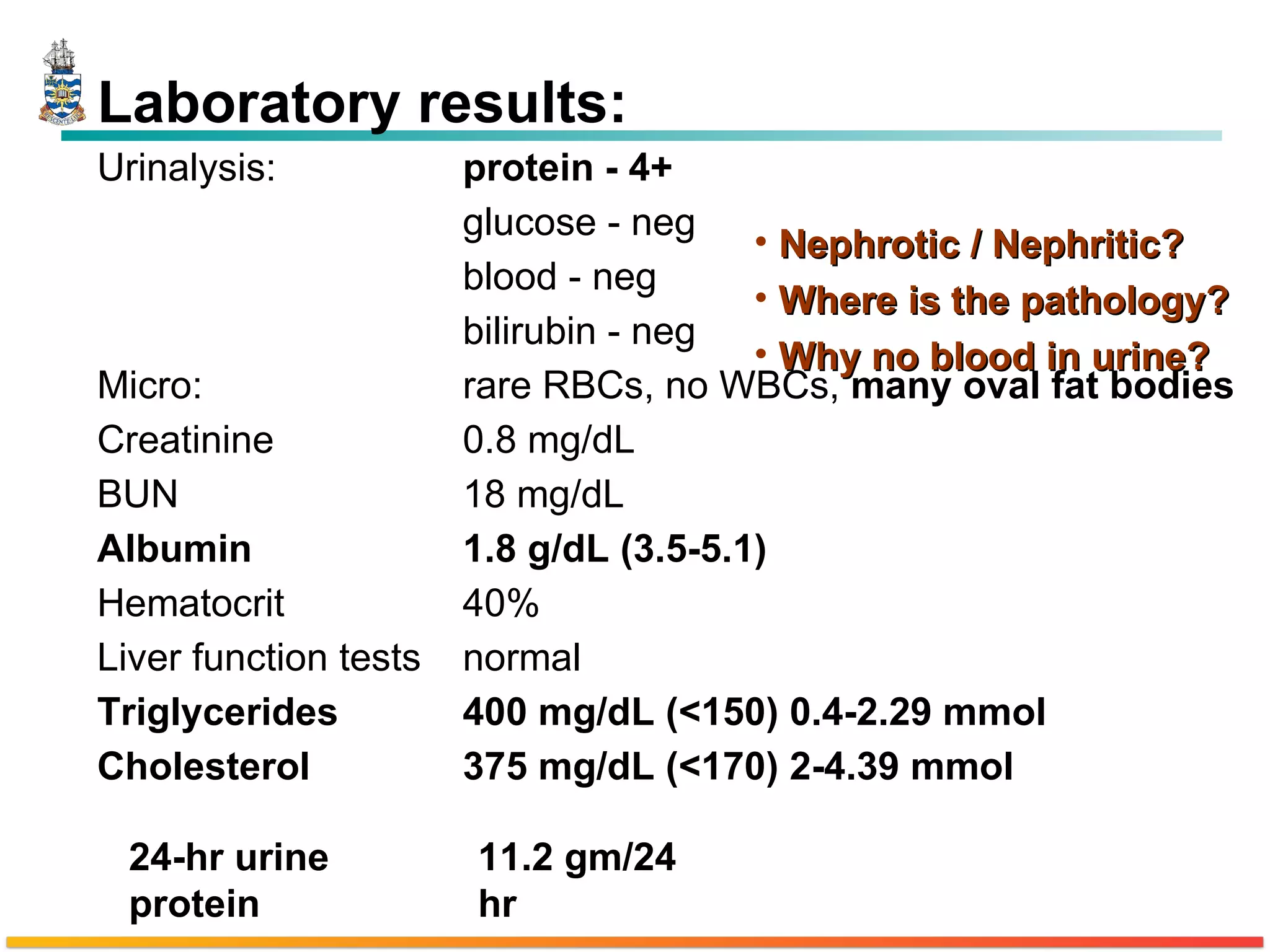
Nephrotic / Nephritic? Where is the pathology? Why no blood in urine? Laboratory results: Urinalysis: protein - 4+ glucose - neg blood - neg bilirubin - neg Micro: rare RBCs, no WBCs,  many oval fat bodies Creatinine 0.8 mg/dL BUN 18 mg/dL Albumin 1.8 g/dL (3.5-5.1) Hematocrit 40% Liver function tests normal Triglycerides 400 mg/dL (<150) 0.4-2.29 mmol Cholesterol 375 mg/dL (<170) 2-4.39 mmol 24-hr urine protein 11.2 gm/24 hr
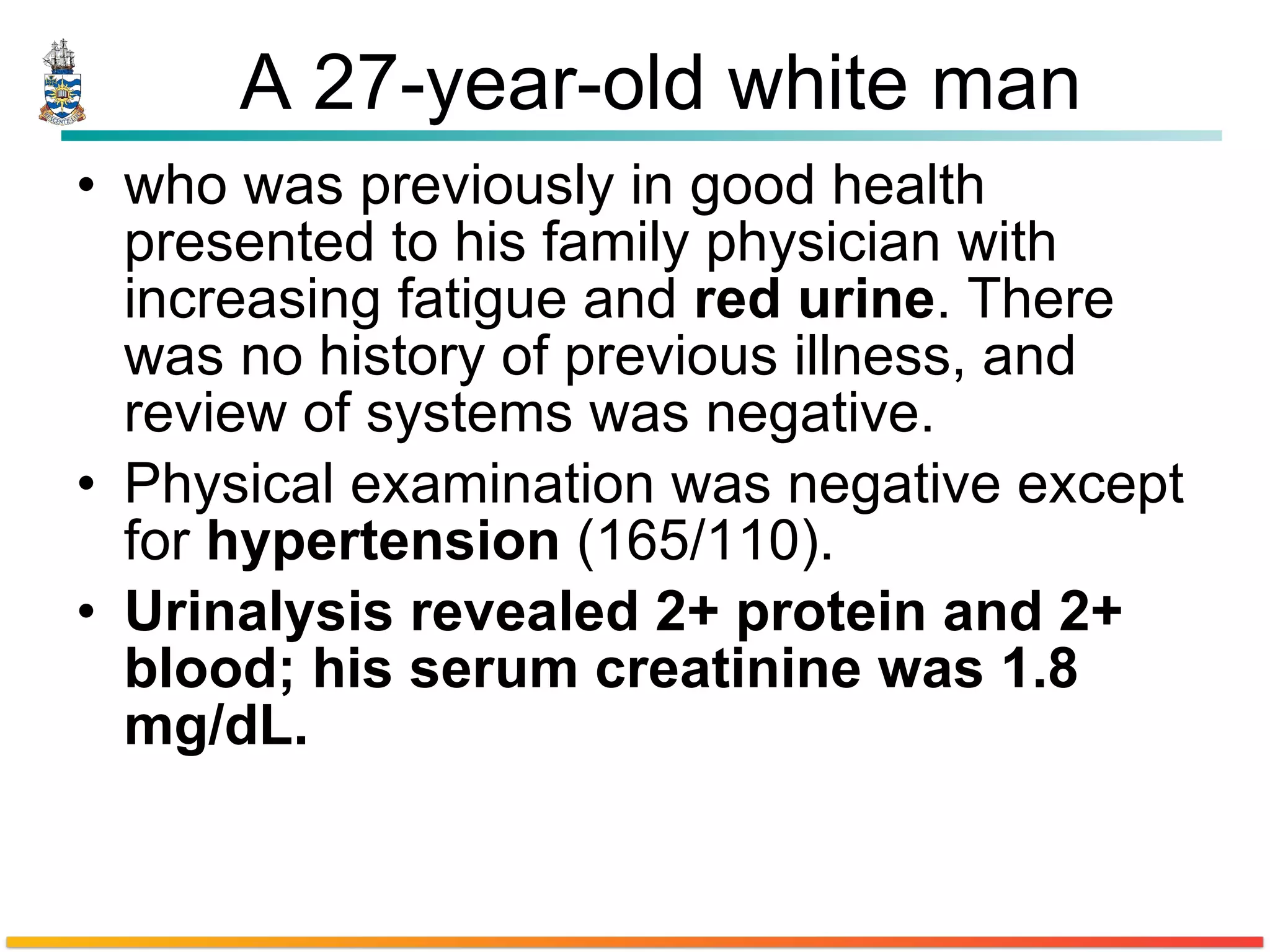
A 27-year-old white man who was previously in good health presented to his family physician with increasing fatigue and  red urine . There was no history of previous illness, and review of systems was negative.  Physical examination was negative except for  hypertension  (165/110).  Urinalysis revealed 2+ protein and 2+ blood; his serum creatinine was 1.8 mg/dL.
A 27-year-old white man A week later deteriorated with intermittent bouts of hematuria and ankle swelling and generalized malaise, nausea and vomiting, and decreasing urine output almost anuric. Blood pressure was 170/110.  An abdominal sonogram showed kidneys of normal size with no evidence of hydronephrosis.  Laboratory exam revealed:
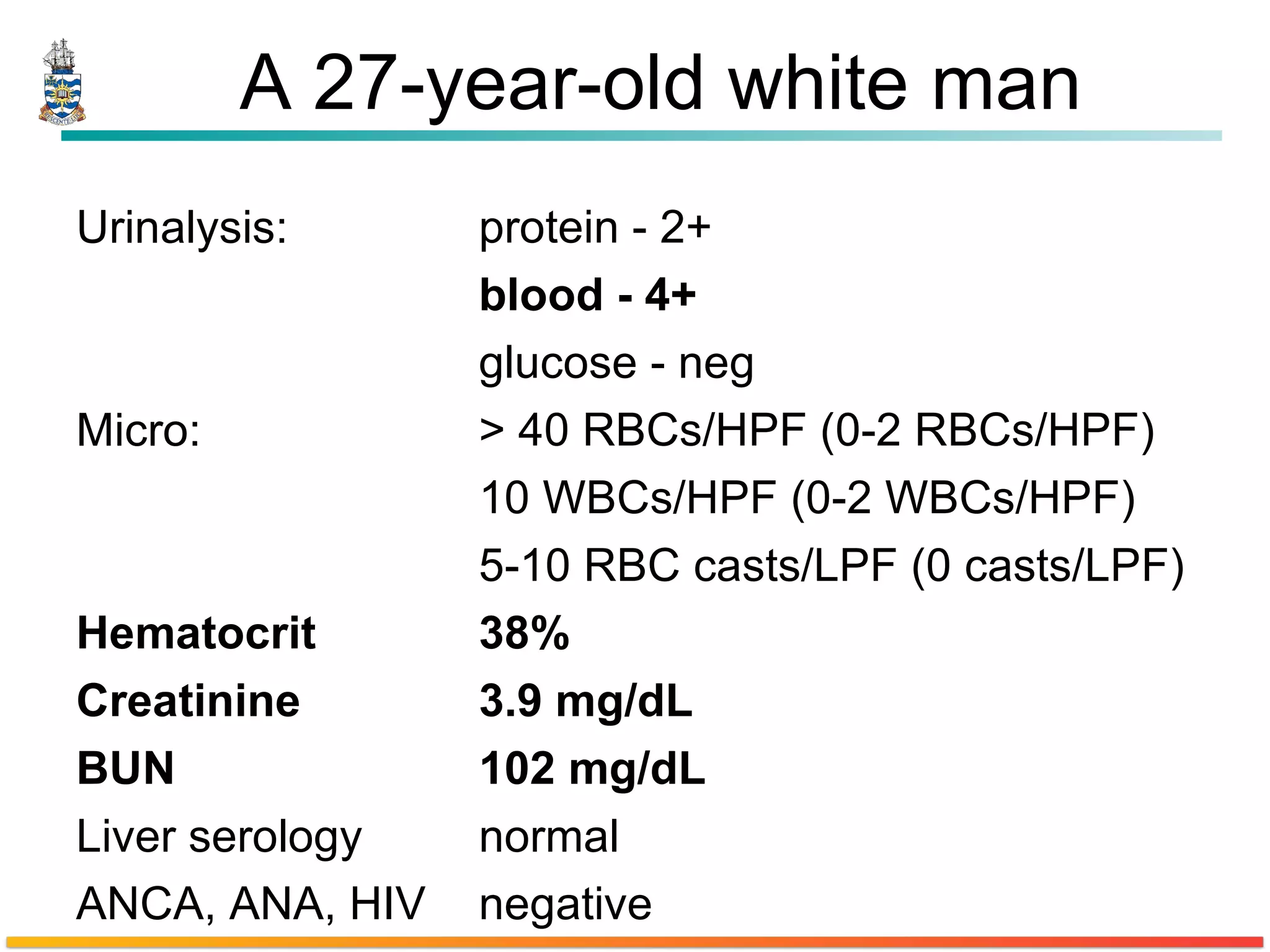
A 27-year-old white man Urinalysis: protein - 2+ blood - 4+ glucose - neg Micro: > 40 RBCs/HPF (0-2 RBCs/HPF) 10 WBCs/HPF (0-2 WBCs/HPF) 5-10 RBC casts/LPF (0 casts/LPF) Hematocrit 38% Creatinine 3.9 mg/dL BUN 102 mg/dL Liver serology normal ANCA, ANA, HIV negative
Renal Artery stenosis - Atrophy Leathery Granularity Benign Nephrosclerosis Atrophy
Septicemia:   pinpoint micro abscesses with hyperaemic borders. (Flea bitten kidney)

Pathology of Glomerulonephritis

  • 1.
    CPC4.1-2008: Miss G.M. is a 37 year old woman with longstanding Type 1 Diabetes . Dysuria (36h), Urinary Frequency, Fatigue , backache(T11,12) – few months. BSL – 9-11 , Pedal edema – few weeks. Diarrhea, anorexia, bloating – year. Microalbuminuria – 1998, Urine: nitrate positive; ketones:+; glucose ++ wbc+++; protein++++ ; blood : trace ; Urine MC+S : leucocytes 10^8 ; E Coli Sensitive to trimethoprim - ? Post micturation bladder volume : 180 ml - ? Anti tissue transglutaminase antibody: 12(normal < 2) - ?
  • 2.
    CPC4.4.1 – ClinicalCases The patient is a 35y Italian female who works as a shop assistant, Tired for years , but has always been able to carry out her work. Over the past two months, however, her fatigue has worsened , and she has noted swelling of her legs and puffiness around eyelids. MGN 2 year old boy presents with sudden onset polyuria , proteinuria mild fever. MCD 8 year old girl presents with fever, oliguria , smoke coloured urine & hypertension following upper respiratory tract infection. PGN
  • 3.
    Investigations: NephroticUrine: 4+ proteinuria, granular casts, RBC +. 24h urine: 6g protein in 24h Serum: creatinine = 0.14 (slightly elevated) LFT, electrolytes, Full blood counts – Normal. Serum albumin is 28 g/l (low); Cholesterol (6.5mmol/l) Triglycerides (2.8mmol/l) Antinuclear antibody (SLE) - Negative Ultrasound of kidneys: normal Renal biopsy – Glomerulonephritis*
  • 4.
    Investigations: NephriticUrine: Oliguria, 2+ protein, RBC ++++, RBC & WBC casts. 24h urine: 0.5 g protein in 24h Serum: creatinine = 0.14 (slightly elevated) LFT, electrolytes, Full blood counts – Normal. Serum albumin – normal ; Antinuclear antibody (SLE) - Negative Ultrasound of kidneys: normal Renal biopsy – Glomerulonephritis*
  • 5.
    CPC4.4.1 – Diff.Diag: Low serum albumin Renal disease – nephrotic syndrome Liver disease (cirrhosis) Gastrointestinal disease: malabsorption or protein-losing enteropathy, starvation. Normal serum albumin Renal disease – Nephritic syndrome acute/chronic GN - diabetic, hypertensive. Acute/Chronic renal failure. Fluid overload Congestive cardiac failure Endocrine : Hypothyroidism.
  • 6.
    Pathogenesis of RenalSymptoms / Signs: Body_ID: TI021001 Proteinuria GBM Damage – Selective (albumin)-nephrotic, non selective nephritic syndrome. Oliguria or anuria Dehydration, GN-Nephritic Sy , renal failure, obstruction. Polyuria Excessive fluid, Osmotic (DM), GN-Nephrotic Sy , Tubule dysfunction (D.Insipidus) Dysuria Inflammation, Obstruction, stone, tumor, stricture. Renal colic Calculus, blood clot or tumour in ureter Uraemia (Fatigue, Nausea, vomiting, encephalopathy) Renal failure Haematuria Infection, stones, tumor, Glomerulonephritis (red cell casts) Casts: Coagulation of proteins in renal tubules. • Hyaline/Gr. casts Protein loss from glomeruli or necrotic cells • RBC, WBC, Ep. Protein with cell loss from glomeruli/tubules. • Waxy casts Degenerated cast following prolonged retention (chronic RF) Hypertension Renal ischaemia, decreased GFR  Renin  Angiotensin. Oedema periorbital* Hypoalbuminaemia due to albumin loss in urine (glomerulonephritis) Aldosterone.
  • 7.
    Pathogenesis of RenalSymptoms / Signs: Body_ID: TI021001 Fatigue/Malaise Renal failure – Azotemia / Uremia. Headache Fluid retention, acidosis, uremia. Flank pain Ureteric Colic – stones. SOB, pallor Anemia – decreased erythropoietin Nausea / Vom. Renal Osteodystrophy – renal failure. Pruritis Uremia / neuropathy. Pigmentation Endocrine abnormality in uremia Smoky urine Microscopic hematuria at glomerular level – RBC casts. Nephritic syndrome. Hematuria UTI, Glomerulonephritis, tumor Painless Hematu. DM, IgA Nephropathy, TB.
  • 8.
    Whenever you seesomeone who is sick, dispirited, disconsolate, or diseased, there is a field of service. Every blood cell, every nerve must tingle with love, When love fills the heart, it transforms into Divinity. ( Genesis 20:13 ) Medicine is the Noble Profession
  • 9.
    Pathology of Glomerulonephritis: Dr. Shashidhar V. Murthy A/Prof. & Head of Pathology
  • 10.
    CPC4.4.1 – CLIPathology Major CLI: Overview & classification Disorders of Kidney. Pathogenesis & Clinical features of Nephrotic, Nephritic Syndromes and Renal Failure. Pathology of common types of Glomerulonephritis. PGN, MGN, MPGN, FSGS, RPGN, CGN. Pathology of Disorders of Tubules, Interstitium & Blood vessels. Pathology of Renal failure both acute & Chronic. Pathology Minor CLI: Interpretation of Common Renal function tests. Pathogenesis of Renal artery stenosis & other Nephrogenic Hypertension. IgA nephropathy. Renal involvement in SLE Analgesic nephropathy. Amyloid nephropathy. Hypertensive nephropathy. Acute tubular necrosis.
  • 11.
  • 12.
    Normal Kidney *note: Lobulations are prominent in fetal kidney Less common in adult kidney.
  • 13.
    Anatomy of RenalSystem Cortex Medulla - pyramid Renal Papilla
  • 14.
    Blood supply ofKidney. Brödel's 1901 artist rendition of a human left kidney anterior view, following celloidin injection with tissue digestion, demonstrating details of the lush venous return. For the sake of clarity, he omitted the small veins of the cortex (Brödel M. Johns Hopkins Hospital Bulletin 1901; 118 :10–13). Arcuate BV Note arcuate large vessels in medulla, But, small straight vessels in cortex. (revise physiology of urine production, counter current mechansim)
  • 15.
    Note the positionsof Glom, PCT, Loop, DCT, CT Anatomy of Kidney
  • 16.
    Normal Kidney: HistologyDCT PCT Gl.Cap Mesang. Aff.Art JGA * Remember: JGA, Renin, Angiotensin, Blood pressure control….
  • 17.
    Normal Glomerulus (PAS stain for BM) DCT PCT Gl.Cap Mesang.
  • 18.
    Normal Glomerulus DCTPCT Gl.Cap Mesang.
  • 19.
    Glomeruli: ScanEM showingOutside view of Glom Podocyte foot processes (Epithelium) Scan EM showing View from inside capillary Endothelial Fenestrations
  • 20.
    A B CD E F F Juxta Glomerular Apparatus JGA  GFR  Renin  Aldosterone Angiotensin BP, Na/K/H+
  • 21.
    Review Physiology: Urine, Hormones & Homeostasis Renin Hypertonic
  • 22.
    Renal Filtration Unit:IMPORTANT IN UNDERSTANDING GLOMERULONEPHRITIS: Permeability to solutes & water, but Impermeable to Cells (endothelium) larger molecules (BM) small proteins (podocytes).
  • 23.
    Filtration Membrane: EndotheliumBasement Mem Epithelium
  • 24.
    Glom. Nephritis :Pathogenesis Large quantity blood filtration…. 1.2 L/min = 1,728 L/day (25% Cardiac output) Glomerular filtrate 180 L / day, Urine 1-2 L / day. Trap large proteins – Ag, Ab, Ig.complex, toxins. Activation of complement system Inflammation – cytokines & inflammatory cells. Damage filtration membrane: Incomplete/podocyte damage Nephrotic Sy : no swelling, selective albuminuria. Complete filter damage: Nephritic Sy : inflam swelling, ↓ blood flow, ↓ GFR  Oliguria, hypertension, hematuria. Systemic effects: JGA  BP, water, electrolyte imbalance. Erythropoietin – anemia. Vit-D – Bone metabolism.
  • 25.
    Pathogenesis of GN: Blood GBM Podocyte GLOM. FILT. MEM: 1. Endothelium 2. GBM 3. Podocyte Slit membrane Endothelium Cells Glom.Filt Glob. Alb. Nephrotic Sy – No Infl. - Polyuria Nephritic Sy – Inflam - oliguria
  • 26.
    Glom. Immunoflourescence Granular Smooth Circulating Ig. Complexes, C3 Anti GBM Ab. disease/. Planted antigens & Ab. Infections, Autoimmune dis.
  • 27.
    Nephritic Oliguria HematuriaNon selective Proteinuria. GFR  , Cr  , BUN  Edema (salt and water retention) Hypertension RBC & Protein casts. Nephrotic Polyuria Proteinuria (“nephrotic range” >3.5g/24h) Edema (Hypoalbuminemia) Hyperlipidemia Lipiduria Protein casts. urine urine
  • 28.
    Be content withwhat you have; rejoice in the way things are. When you realize there is nothing lacking, the whole world belongs to you. Lao Tzu
  • 29.
    Causes of RenalDisease: Hypovolemia Diarrhoea, vomiting Bleeding, Burns, CCF Ascitis, Anasarca Renal A / V thrombosis Autoimmune disorders Vasculitis, anti GBM dis Diabetes, tubular dis. Toxins, infections, metabolic. Ureteral, urethral obstruction. Stone, papillary necrosis, bladder dis, prostate, drugs, cancer.
  • 30.
    Disorders of Kidney:Congenital Malformations-Horseshoe ectopic, cysts, dysplasia. Acquired Glomerulonephritis – Acute/Chronic Tubulointerstitial diseases – toxins, drugs, Infect. Vascular diseases. – vasculitis. Obstructive uropathy. hydronephrosis… Renal calculi. Neoplasms – carcinoma. End stage renal disease.
  • 31.
    GN -Clinical Presentations:Asymptomatic Proteinuria: Many types of early GN, MCD & FSGS Painless hematuria: Bergers (IgA), SLE, SBE, Nephr itic Syndrome: Posts Strep PGN , RPGN , antiGBM, SLE. Nephr otic Syndrome: Pri: MCD, MPGN, FSGS , MGN , IgA Neph Sec: DM, drugs, SLE, Amyloidosis. Renal Failure: Acute/Chronic & endstage. Common end result, Drugs, infections, ischemic, metabolic. ATN-Acute tubular necrosis. Sec: Hypertension, DM , GN, Pri: CRF.
  • 32.
  • 33.
    Glom. Dis. Classification:Aetiological Primary & Secondary Immunological Glomerular Ag (anti GBM) Non-glomerular Ag. (immune complex) Morphological . diffuse : all glomeruli focal : some glomeruli. global : whole of glom. segmental : part of glom. Morphologic: proliferative : increased cells membranous : thickening of BM membrano-proliferative : combination crescentic : epithelial proliferation, florid / severe.
  • 34.
    Morphologic types ofGN: Diffuse Focal Global Segmental FSGS
  • 35.
    Casts = Glomerularpathology: Kidney Biopsy: Showing RBC, protein & mixed casts within tubules Glomerulus
  • 36.
    Red cell Castsin Urine:
  • 37.
    Casts in Urine:WBC Epithelial RBC Mixed Granular Hyaline Online Urinalysis tutorial : http:// library.med.utah.edu/WebPath/TUTORIAL/URINE/URINE.html
  • 38.
    Great achievements canstart right where you stand, by applying the habit of going the extra mile, by rendering more service and better service than you are now being paid for. Napoleon Hill
  • 39.
    AGN: Nephro tic Sy: Polyuria, Proteinuria, hypoalbum hyperlipidemia. Primary glomerular diseases minimal change disease membranous glomerulonephritis membrano-proliferative GN (mesangiocapillary GN) focal glomerulosclerosis mesangial IgA nephropathy bacterial endocarditis shunt nephritis Secondary glomerular disease SLE Henoch-Schönlein purpura immune complex disease related to tumours, infections drugs (gold, penicillamine, phenytoin etc) etc.. diabetes mellitus amyloidosis bee sting allergy Inherited disease congenital nephrotic sy.
  • 40.
    Minimal Change GN:Introduction Synonyms: Incidence: Etiology: Clinical Features: Lab Features: Pathology: Clinical Course: Nil disease, lipoid nephrosis, foot process disease Idiopathic. Loss of net negative charge destruction of podocyte foot processes. Nephrotic syndrome. History of recent URI in 30%. Association with Hodgkin’s lymphoma. Overlap with FSGS patients. Nephrotic urine (polyuria, Selective proteinuria. (albuminuria). Spontaneous remission in 25-40%. Complete remission in 65-70% of patients. Steroid resistant patients may progress to FSGS. LM - Normal. IF - Negative. EM - Focal fusion/loss of foot processes. 80% of nephrotic syndrome in children (1-8 yrs.), mostly male. Adults in 2nd-3rd decade.
  • 41.
    Minimal Change Disease:Loss of Foot processes Normal
  • 42.
    Focal Segmental GN: Adults Synonyms: Incidence: Etiology: Clinical Features: Lab Features: Pathology: Clinical Course: Focal segmental Sclerosis Idiopathic - ? Auto Immune. No deposits. (Similar to minimal change). Nephrotic syndrome. History of recent URI in 30%. Association with Hodgkin’s lymphoma. Overlap with MCD patients. Nephrotic urine (more, clear) Selective proteinuria. No specific laboratory findings. Spontaneous remission 30% , 50% progression to chronic renal failure, 20% rapid progression. Podocyte damage, Segmental collapse of glom. increase in matrix (pink). 10 - 35% of nephrotic syndrome in adults.
  • 43.
    Membranous GN: Synonyms:Incidence: Etiology: Clinical: Lab: Path: Clinical Course: Epimembranous, extramembranous GN Immune complex deposition. Idiopathic in most patients, associated with infections, drugs, carcinomas, and heavy metals. Nephrotic syndrome in 80%, asymptomatic proteinuria in 20%. Microscopic hematuria. Non-selective proteinuria ± hematuria. Excellent prognosis in children. Some adults develop ESRD. Exclusion of other diseases is required. Diffuse, uniform BM thickening with subepithelial projections (“spikes”). Diffuse, coarsely granular IgG and C3 deposits along basement membranes. Electron-dense subepithelial deposits. 40-60 Years, 50% of adult nephrotic syndrome. Wireloop
  • 44.
    Mem.GN: Wireloop. Subep. dep.- Spikes IgG & C3.
  • 45.
    Membranoproliferative GN: Etiology:Chronic immune complex GN. Associated with chronic infections, SLE, cancer, cirrhosis, heroin abuse, etc. Clinical: Nephrotic syndrome in 50%, acute nephritic syndrome in 20%. Recent history of URI in 50%. Hypertension and/or renal insufficiency. Lab: Hypocomplementemia of classic and alternate pathways. C3 nephritic factor (C3NEF). Circulating immune complexes. Clinical Course: Progressive deterioration of renal function ± short remissions. ESRD within 10 years in 50% of children and 80% of adults. Path: Diffuse proliferative GN with thickening of the glomerular capillary walls,, and GBM splitting (“tram-tracking”). Diffuse, coarsely granular C3 and IgG deposits along GBMs. Electron-dense subendothelial deposits. Incidence: Children and young adults (5-25 years).
  • 46.
    MPGN-Tram tracking Arrow:Mesangial cell proliferation, basement membrane thickening, leukocyte infiltration, and accentuation of lobular architecture. Type 1 – Most common 80% Type 2 – Dense deposit disease (C3)
  • 47.
    MPGN-Tram tracking GlomerulusPAS stain to highlight the glomerular basement membranes. Observe the glomerular capillary loops showing two basements membranes giving the loops a tram track appearance (arrow).
  • 48.
    IgA Nephropathy (Berger’s)Commonest form of GN – Nephritic. Young 15-30y, males, Asia-Pacific. IgA deposits in mesangium, High serum IgA, varied severity Episodic asymptomatic hematuria microscopic hematuria (40%) Bouts of macro hematuria (40%) Nephritic or Nephrotic. Renal failure (10%) Slowly progressive CRF in 1/3 patients. IgA dep.  Normal IgA dep.
  • 49.
  • 50.
  • 51.
  • 52.
    Acute Post Strept,Diff, Prol GN: Synonyms: Incidence : Etiology : Clinical : Lab: Path: Clinical Course: Acute proliferative glomerulonephritis, acute post-infectious GN. Glomerular trapping of circulating immune complexes. (Group A, Beta-hemolytic streptococci, type 12). Acute nephritic following strep. pharyngitis or pyoderma. (Other infections rare) Nephritic urine (little, dark, smoky) RBC casts, non selective proteinuria. Decreased serum complement. Evidence of strep inf. Children - Excellent prognosis. Adults - Worse prognosis, some develop progressive disease. Enlarged, hypercellular glomeruli with endothelial and mesangial cell proliferation, neutrophils, IgG and C3 in very coarsely granular pattern along GBMs. Discrete, subepithelial “hump-like” deposits. children (3-14). Sporatic, mostly winter and spring.
  • 53.
    Post.Strep Proliferative GN:Normal PGN Ig+C3 Ig+C3
  • 54.
    Post.Strep Proliferative GN:Hypercellularity, narrow capillary lumen, pleomorphic population of neutrophils, mesangial cells and granular sub. Epithelial deposits of IgG and C3. Neutrophils. Narrow cap.
  • 55.
  • 56.
    RPGN / CrescenticGN: Acute, Severe Rapidly progressive. Renal failure within weeks. Bowman's space – Fibrin, epithelial & Infl. Cells matrix  form Crescents. Compress Glomerulus. End result of many types of GN Progress to CGN  end stage kidney  renal failure.
  • 57.
  • 58.
    RPGN Epithelial CrescentCollapsed capillary
  • 59.
  • 60.
  • 61.
    Diabetic kidney diseasesGlomerular damage. Diffuse global thickening of BM Nodular sclerosis (KW lesion) Arteriolosclerosis Papillary necrosis. Interstitial nephritis. Pyelonephritis. Clin: Proteinuria (in 50% diabetics) ESKD (30%)
  • 62.
  • 63.
    Renal Papillary necrosisin DM: Fever and chills, flank and/or abdominal pain, and hematuria. Also in analgesic abuse Obstructive uropathy Pyelonephritis Cirrhosis, alcoholism
  • 64.
    Acute Nephritis &Papillary necrosis - DM
  • 65.
    Benign Nephrosclerosis: Hyalineartereolosclerosis. Intimal fibrosis Ischemia Glomerular sclerosis Scarring Leathery Granular Surface - scarring
  • 66.
  • 67.
    Arteriosclerosis & Nephrosclerosisin HPTN Arteriolosclerosis Kidney: Leathery Granularity Benign Nephrosclerosis
  • 68.
    Malignant Hypertension: Surfacepetchiae Flea bitten kidney Fibrinoid necrosis of arterioles.
  • 69.
    Recurrent painless haematuriaAsymptomatic, recurrent: IgA nephropathy (Berger's disease) systemic lupus erythematosus (SLE) vasculitis-polyarteritis. Henoch-Schönlein purpura bacterial endocarditis exercise haematuria
  • 70.
    Good Pasteur (antiGBM) dis. Anti GBM type 4 collagen antibody Young men, Rapidly progressive RPGN Focal Segmental necrosis with fibrin deposition. Poor prognosis.  Normal AntiGBM necrosis
  • 71.
    Tubulo-Interstitial Diseases: AcuteTubular Necrosis Pyelonephritis – Acute & Chronic. Interstitial Nephritis.
  • 72.
    Acute Tubular Necrosis:Most common cause of ARF. Drugs (aminoglycosides) Toxins – Mercury, CCL4, Radiocontrast. Sloughing Ep in PCT Ep Casts
  • 73.
    Acute Tubular Necrosis:Glom. Norm Necrotic PCT (no nuclei) Normal DCT (Pro. cast inside) PCT early necrosis
  • 74.
    Pyelonephritis: Acute/ Chronic Bacterial, fungal, viral, Mycobacterial Infection. E.coli common. Risk factor - Obstruction Interstitial inflammation. Lymphocytes & plasma cells in chronic. Neutrophils in acute. Septicemia – flea bitten kidney. Micro/macro abscesses.
  • 75.
    Acute PyelonephritisAbscesses Congestion
  • 76.
    Pyelonephritis Inflammatory cellsWBC Cast in DCT PCT BV
  • 77.
    Pyelonephritis - AbscessWBC Cast in DCT PCT Glom.
  • 78.
    Chronic Renal Failure:Uraemia & vague features including anaemia, nausea, vomiting, gastrointestinal bleeding and itching; there is often polyuria and nocturia. Two major types: End stage of several types of GN. De novo presentation. Renal osteodystrophy Anemia – bleeding, low erythropoietin.
  • 79.
    Chronic Renal Failure:ESKD Small atrophic kidney – Irregular pitted surface (due to scarring). Prominent loss of Cortical tissue.
  • 80.
  • 81.
  • 82.
  • 83.
    Chronic Glomerulonephritis: Advancedtubular atrophy with &quot;thyroidization” inspisated secretions within tubules.
  • 84.
    Chronic renal failure (uremia) General symptoms – weakness, fatigue Cardiovascular – hypertension, pericarditis G.I. – nausea, vomiting, diarrhea CNS – lethargy, confusion, coma Muscles – twitching, weakness Bones – osteodystrophy Metabolic – acidosis, P  K  , BUN  , Cr  . Endocrine - parathyroids 
  • 85.
    Chronic Renal Failure:Azotemia vs. Uremia ? Why anemia in CRF? Lack of erythropoietin, chronic blood loss & haemolysis. Renal Osteodystrophy ? conversion of the vit D impaired, low intestinal absorption of calcium, resulting in high PTH – osteoclast activation – bone resorption. This in turn is exacerbated by the phosphate retention which accompanies CRF.
  • 86.
    Summary: Painless haematuria: Berger's - IGA nephropathy. DM, SLE Henoch-Schönlein purpura bacterial endocarditis vasculitis-polyarteritis. Asymptomatic proteinuria: SLE FSGS Henoch-Schönlein purpura bacterial endocarditis MPGN Nephritic Syndrome: Post-streptococcal GN RPGN Goodpasture's SLE polyarteritis Nephrotic syndrome minimal change disease FSGS membranous GN membrano-proliferative GN IgA nephropathy bacterial endocarditis shunt nephritis Diabetic GN Hypertensive Kidney dis. Pyelonephritis acute/chronic. Acute tubular necrosis. Renal Failure Acute/Chronic. Endstage renal disease.
  • 87.
    CPC-4.1– REN–Gn Pathology- Core Learning Issues: Pathology of Glomerular diseases (primary & Sec). Overview of ATN, Pyelonephritis, acute/chronic. Pathogenesis of Nephritic & Nephrotic syndrome. Pathology of Renal failure both acute & Chronic. Interpretation of Common Renal function tests. Basic science - Review: Anatomy & Histology of Kidney. Fluid balance & Renal function. Physiology of urine & its production. Autoimmunity in the pathogenesis of kidney disease
  • 88.
    &quot;If you tellthe truth, you have infinite power supporting you; if not, you have infinite power against you. --Charles Gordon
  • 89.
    21y Male, hematuria,recovering from an URT infection. Had similar attack twice in last two years ? diagnosis Diffuse proliferative GN Membranous GN Nodular Glomerulo sclerosis Minimal change GN Berger’s Disease
  • 90.
    12y Fem, puffyface, Oliguria, smoky urine, hypertension. Recovering from URTI. Kidney biopsy ? Most likely diagnosis Diffuse proliferative GN Membranous GN Minimal change GN Rapidly progressive GN Membranoproliferative GN
  • 91.
    2y boy, Severeproteinuria, polyuria, pedal edema. Kidney biopsy normal. ? Most likely diagnosis Diffuse proliferative GN Membranous GN Minimal change GN Rapidly progressive GN Membranoproliferative GN
  • 92.
    48y Male, proteinuria,polyuria, pedal edema. On treatment for SLE. Kidney biopsy PAS stain ? diagnosis Diffuse proliferative GN Membranous GN Minimal change GN Rapidly progressive GN Membranoproliferative GN
  • 93.
    54y Male, nocturia,polyuria, recurrent infections. Kidney biopsy ? diagnosis Diffuse proliferative GN Membranous GN Minimal change GN Rapidly progressive GN Nodular Glomerulo sclerosis
  • 94.
    58y Male, Chronichypertension. Slowly progressive renal failure. Kidney sp. ? diag Benign nephrosclerosis Papillary necrosis Pyelonephritis with infarction Nodular glomerulosclerosis Renal abscesses
  • 95.
    14y Male, severeacute renal failure, history of recent throat infection on treatment. Kidney biopsy ? diagnosis Diffuse proliferative GN Membranous GN Minimal change GN Rapidly progressive GN Membranoproliferative GN
  • 96.
    74y Male, Hypertensive,Oliguria & marked fatigue since 2 months. Left Kidney gross ? diagnosis Nodular Glomerulo sclerosis. Chronic Pyelonephritis. Polycystic kidney disease. Rapidly progressive GN. Chronic Glomerulonephritis.
  • 97.
    46y Male, Hematuria.Urine cytology ? diagnosis Urinary Tract Infection Bladder cancer Renal stones Glomerulonephritis Schistosomiasis
  • 98.
    46y Male, 3wk.lethargy. KFT ? diagnosis Nephritic Syndrome Acute renal failure Nephrotic syndrome Chronic Renal failure Renal cell carinoma. Polyuria Selective proteinuria Hypoalbuminemia Hypercholesterolemia Serum creatinine normal
  • 99.
    46y Male, 3wk.lethargy. KFT ? diagnosis Nephritic Syndrome Acute renal failure Nephrotic syndrome Chronic Renal failure Rencal cell cancer. Oliguria Hypertension Non Selective proteinuria Serum creatinine high RBC casts present.
  • 100.
    46y Diabetic male.Fever, hematuria ? diag Papillary necrosis Pyelonephritis Nodular glomerulosclerosis Renal abscesses Chronic Renal failure
  • 101.
    44y man, SOB,swelling of his legs and puffiness around his eyes & Ascitis. Total serum protein is 5.2 g/dL (reference = 5.5–8.0 g/dL), and albumin is 1.9 g/dL (reference = 3.5–5.5 g/dL). Serum cholesterol is elevated at 530 mg/dL. 5 g of protein in a 24-hour urine, with many granular casts but no RBCs or WBC. Image shows renal biopsy stained by direct immunofluorescence for IgG ? Diagnosis Proliferative GN Focal segmental glomerulosclerosis Membranoproliferative GN type I Membranous glomerulopathy Minimal change disease
  • 102.
    60y man, chronicback pain and fatigue, excessive urination, and increased thirst. X-ray - numerous lytic lesions in the lumbar vertebral bodies. Lab: hypoalbuminemia, 4+ proteinuria & A monoclonal Ig light-chain peak. A bone marrow biopsy 20% atypical plasma cells. Image shows kidney biopsy. ? Diagnosis Amyloid nephropathy Crescentic glomerulonephritis IgA nephropathy (Berger disease) Membranous glomerulonephritis Nodular glomerulosclerosis.
  • 103.
    30y man withh/o drug addiction, 6/12 progressive edema & Ascitis, Marked proteinuria (>4 g/24 hours) but no WBC or RBCs in urine. Lab: Hyperlipidemia and hypoalbuminemia. Serum creatinine level is normal. The blood test for ANCA is negative. Recurrent attacks respond to corticosteroids, Upon the third recurrence, becomes steroid resistant. A renal biopsy is shown . ? Diagnosis Acute glomerulonephritis Amyloidosis Crescentic glomerulonephritis Diffuse proliferative glomerulonephritis Focal segmental glomerulosclerosis
  • 104.
    A 6-year-old boycomplains of swelling of his feet for the past 3 weeks. He is otherwise healthy, with no known previous illness. Vital signs are normal. Physical examination reveals pitting edema of the lower legs and a swollen abdomen. Urinalysis shows 4+ protein but no RBCs or WBCs. ? Most likely Diagnosis (no image) Acute glomerulonephritis Minimal change disease Crescentic glomerulonephritis Diffuse proliferative glomerulonephritis Focal segmental glomerulosclerosis
  • 105.
    9y boy, episodeof hematureia 1wk after flulike illness. One month later his urine is red again. Urinealysis pH7, SG 1.015, Proteinuria 1+, 1+ hematuria. No ketones, glucose or urobilinogen. Serum urea & creat. Normal. Renal biopsy shows mesangial proliferation & electron dense deposits within mesangium. Which of the following mechanisms is most likely to produce his symptoms? Deposition of Ig complex with IgA . Ab against type IV collagen Viral injury to GBM. Cytokine injury to Glom. Cap. Anti-streptococcal Ab. dep. Explanation: Recurrent hematuria following a viral illness in a child or young adult is typically associated with IgA nephropathy (Berger’s dis). Defective immune regulation causes excessive mucosal IgA synthesis in response to viral or other environmental antigens. IgA complexes are deposited in the mesangium and initiate glomerular injury. Antibodies against type IV collagen are formed in Goodpasture syndrome.
  • 106.
    49y male, Ankle& Foot swelling for 2 months.24h urine yielded 4.1g protein. No DM, SLE or Hyepertension. No response to steroid therapy. Renal biopsy showed diffusely thick cap basement membrane with granular C3 deposition. Two years later he developed chronic renal failure. What is the most likely pathogenesis? Ab cross reacting with GBM collagen Anti strep. Ab cross-react with GBM Release of cytokines by inflammatory cells Cytotoxic T cells directed against renal antigens. Deposition of immune complexes on the GBM Explanation: This patient has idiopathic MGN & nephrotic syndrome. Diffuse basement membrane thickening caused by the deposition of immune complexes on the basement membrane, which activates complement. Antibodies that react with basement membrane give rise to a linear immunofluorescence pattern. Membranous glomerulopathy has no association with streptococcal infections. There is also no evidence of cytokine- or T-cell-mediated damage in this disease. In 85% of patients is unknown. In the remaining 15%, an associated systemic disease (e.g., SLE) or some known cause of immune complex formation (e.g., drug reaction, viral hepatitis) exists.
  • 107.
    “ The worsttimes in your life contain seeds of the best. When you can see crisis as an opportunity, your life becomes not only easier, but more satisfying.” –Joe Kogel
  • 108.
    Video tutorials onDigital Pathology Slides on Acknowledgements: You Tube WashingtonDeceit: Dedicated to the greatest pathologist of all time - Martin A. Swerdlow , MD &quot;Build it and they will come.&quot;

  • 109.
    Links to DigitalHistopathology Kidney. RPGN - http:// www.youtube.com/watch?v =CqSyj4cVZPE SLE - http:// www.youtube.com/watch?v =Tw07BFaDEo0 ADPKD - http:// www.youtube.com/watch?v =6Ws9cfsjZIk CGN: http:// www.youtube.com/watch?v =eA1vYarRAWo&feature=related ATN- http:// www.youtube.com/watch?v =ajCG3sIe2iw Pyelonephritis: http:// www.youtube.com/watch?v =aZ2il9a63J4 More.. search youtube….!
  • 110.
    Challenge….! Jan 2009:4 th Year Students at JCU School of Medicine set new world record.…!!! 100% Pass & Class Average of over 70% Winners Club is still active….! - Email me
  • 111.
    What motivates seniorclinicians to teach Medical students in Australia? Positive: Altruism * Intellectual satisfaction Personal skills Truth seeking Negative: No strong involvement (course) Heavy work load Feeling it was a waste of time. Jane Dahlstrom et. al. ANU, Canberra, Australia BMC Medical Education 2005, 5:27  doi:10.1186/1472-6920-5-27 Be Nice…! Respect, Value teaching, Show concern
  • 112.
  • 113.
    “ To bea great champion you must believe you are the best. If you’re not, pretend you are….!” – Muhammad Ali
  • 114.
    Urine Analysis: clean-catch,midstream sample after the external genitalia have been cleansed with an antiseptic solution. Delay in testing cause bacterial growth, and in the process metabolize any glucose present. The bacteria can also utilize the urea, forming ammonia and increasing the pH. Bilirubin is light sensitive will decompose and will become un reactive. Casts, red blood cells and white cells also tend to disintegrate after only a short time at room temperature.
  • 115.
    Urine specimens: 1.Random clean catch or mid-stream collection 2. First morning specimen 3. Second-voided specimen 4. Post prandial collection 5. Day specimen 6. Night specimen 7. Twenty-four hour collection 8. Catheterized collection
  • 116.
    Normal Urine Crystals Acid Urine pH Neutral Urine pH Alkaline Urine pH Calcium Oxalate Ammonium Biurate Triple Phosphates Uric Acid Calcium Carbonate Ammonium Biurate Calcium Oxalate Calcium Carbonate Triple Phosphate Calcium Phosphate Amorphous urates Amorphous Phosphates
  • 117.
    Normal Post StreptoGN Inflammation Proliferation Swelling. Narrow capillary ↓ GFR-Renin-BP
  • 118.
    CPC4.4.1 – CLIClinical Core Learning Issues: Approach to, History taking & clinical Assessment of patients with renal disease . Clinical features of patient with Renal impairment. Over view of Renal dialysis , renal transplantation. Population, Rural, Indigenous & tropical: Access to specialist nephrologist care from Ingham Social / government support for adults who become unable to work due to illness Personal, Professional & Ethical: Dealing with resource allocation to chronic diseases . Managing patients with renal failure in rural centers. Ethical issues in providing Renal dialysis/transplantation.
  • 119.
    35y Male, fatigue.A previously healthy 35-year-old man complained of recent fatigue and swelling of his feet and ankles . He also noted puffy eyes . Physical exam revealed an afebrile man with lower extremity edema extending to the knee, periorbital edema , and a small amount of ascites . Drug history was negative. ANA, HIV, and hepatitis serologies were negative. The patient developed right flank pain the following day. Ultrasound examination revealed renal vein thrombosis. A renal biopsy was performed.
  • 120.
    Nephrotic / Nephritic?Where is the pathology? Why no blood in urine? Laboratory results: Urinalysis: protein - 4+ glucose - neg blood - neg bilirubin - neg Micro: rare RBCs, no WBCs, many oval fat bodies Creatinine 0.8 mg/dL BUN 18 mg/dL Albumin 1.8 g/dL (3.5-5.1) Hematocrit 40% Liver function tests normal Triglycerides 400 mg/dL (<150) 0.4-2.29 mmol Cholesterol 375 mg/dL (<170) 2-4.39 mmol 24-hr urine protein 11.2 gm/24 hr
  • 121.
    A 27-year-old whiteman who was previously in good health presented to his family physician with increasing fatigue and red urine . There was no history of previous illness, and review of systems was negative. Physical examination was negative except for hypertension (165/110). Urinalysis revealed 2+ protein and 2+ blood; his serum creatinine was 1.8 mg/dL.
  • 122.
    A 27-year-old whiteman A week later deteriorated with intermittent bouts of hematuria and ankle swelling and generalized malaise, nausea and vomiting, and decreasing urine output almost anuric. Blood pressure was 170/110. An abdominal sonogram showed kidneys of normal size with no evidence of hydronephrosis. Laboratory exam revealed:
  • 123.
    A 27-year-old whiteman Urinalysis: protein - 2+ blood - 4+ glucose - neg Micro: > 40 RBCs/HPF (0-2 RBCs/HPF) 10 WBCs/HPF (0-2 WBCs/HPF) 5-10 RBC casts/LPF (0 casts/LPF) Hematocrit 38% Creatinine 3.9 mg/dL BUN 102 mg/dL Liver serology normal ANCA, ANA, HIV negative
  • 124.
    Renal Artery stenosis- Atrophy Leathery Granularity Benign Nephrosclerosis Atrophy
  • 125.
    Septicemia: pinpoint micro abscesses with hyperaemic borders. (Flea bitten kidney)