PRESENTED BY
AKANSKSHA
NURSING OFFICER
Oxygen therapy, also referred to as supplemental oxygen, is
the use of oxygen as medical treatment. Supplemental
oxygen can also refer to the use of oxygen enriched air at
altitude.
Acute indications for therapy include hypoxemia, carbon
monoxide toxicity and cluster headache.
Wikipedia
 Asthma, bronchitis or emphysema.
 Chronic obstructive pulmonary disease (COPD).
 COVID-19.
 Cystic fibrosis.
 Heart failure.
 Lung cancer or other cancers.
 Pneumonia.
 Pulmonary fibrosis.
 Sleep apnea.
 altitude sickness.
Wikipedia
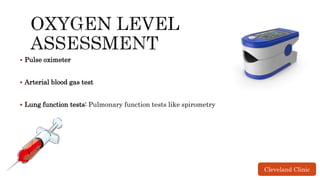
 Pulse oximeter
 Arterial blood gas test
 Lung function tests: Pulmonary function tests like spirometry
Cleveland Clinic
 Shortness of breath.
 Bluish tint to skin, lips and nails.
 Extreme fatigue.
 Severe headaches.
 Coughing or wheezing.
 Fast pulse and heart rate.
 Confusion.
Cleveland Clinic
TWO METHOD OF OXYGEN DELIVERY.
1. Low Flow Administration ( Nasal cannula, Facemask, Non- Breathable
facemask)
2. High Flow Administration (CPAP, bipap, Ventilator)
National Library
of Medicine
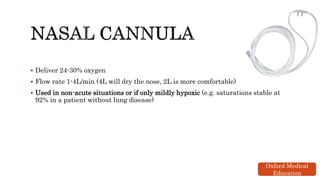
 Deliver 24-30% oxygen
 Flow rate 1-4L/min (4L will dry the nose, 2L is more comfortable)
 Used in non-acute situations or if only mildly hypoxic (e.g. saturations stable at
92% in a patient without lung disease)
Oxford Medical
Education
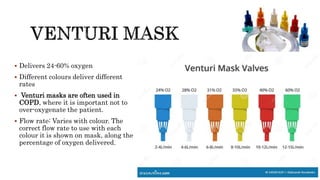
 Delivers 24-60% oxygen
 Different colours deliver different
rates
 Venturi masks are often used in
COPD, where it is important not to
over-oxygenate the patient.
 Flow rate: Varies with colour. The
correct flow rate to use with each
colour it is shown on mask, along the
percentage of oxygen delivered.
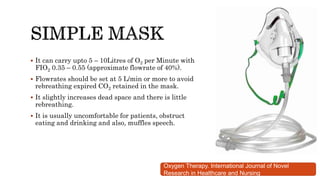
 It can carry upto 5 – 10Litres of O2 per Minute with
FIO2 0.35 – 0.55 (approximate flowrate of 40%).
 Flowrates should be set at 5 L/min or more to avoid
rebreathing expired CO2 retained in the mask.
 It slightly increases dead space and there is little
rebreathing.
 It is usually uncomfortable for patients, obstruct
eating and drinking and also, muffles speech.
Oxygen Therapy. International Journal of Novel
Research in Healthcare and Nursing
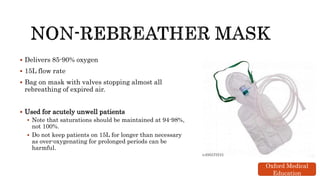
 Delivers 85-90% oxygen
 15L flow rate
 Bag on mask with valves stopping almost all
rebreathing of expired air.
 Used for acutely unwell patients
 Note that saturations should be maintained at 94-98%,
not 100%.
 Do not keep patients on 15L for longer than necessary
as over-oxygenating for prolonged periods can be
harmful.
Oxford Medical
Education
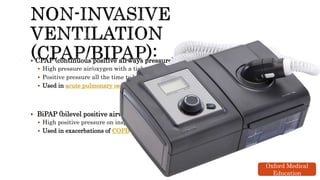
 CPAP (continuous positive airways pressure)
 High pressure air/oxygen with a tight-fitting mask
 Positive pressure all the time to help keep airways open (split them)
 Used in acute pulmonary oedema and sleep apnoea
 BiPAP (bilevel positive airways pressure)
 High positive pressure on inspiration and lower positive pressure on expiration
 Used in exacerbations of COPD and ARDS
Oxford Medical
Education
 Fully controlled oxygen delivery up to 100%
 A ventilation bag or machine is attached to an
artificial airway to ventilate lungs.
 Used in intensive care and theatre
Oxford Medical
Education
Hyperbaric oxygen toxicity:
 Long term hyperbaric O2 therapy can lead to pulmonary, optic and central nervous
system toxicity.
Fire hazard:
 Oxygen enhance combustion of other fuels. Least level of supplemental oxygen
(FiO2 greater than the 21% oxygen in ambient air) should be administered during
laser bronchoscopy to avoid intratracheal ignition.
Absorption atelectasis:
 Given only pure oxygen results in the collapse of the dependent part of the lungs as it
quickly taken up from the alveoli. It is also a risk in general anesthesia induction.
Retinopathy of prematurity (ROP):
 It usually occur in low birth weight, very premature infant.
Physiopedia
oxygen delivery METHOD.pptx

oxygen delivery METHOD.pptx

  • 1.
  • 2.
    Oxygen therapy, alsoreferred to as supplemental oxygen, is the use of oxygen as medical treatment. Supplemental oxygen can also refer to the use of oxygen enriched air at altitude. Acute indications for therapy include hypoxemia, carbon monoxide toxicity and cluster headache. Wikipedia
  • 3.
     Asthma, bronchitisor emphysema.  Chronic obstructive pulmonary disease (COPD).  COVID-19.  Cystic fibrosis.  Heart failure.  Lung cancer or other cancers.  Pneumonia.  Pulmonary fibrosis.  Sleep apnea.  altitude sickness. Wikipedia
  • 4.
     Pulse oximeter Arterial blood gas test  Lung function tests: Pulmonary function tests like spirometry Cleveland Clinic
  • 5.
     Shortness ofbreath.  Bluish tint to skin, lips and nails.  Extreme fatigue.  Severe headaches.  Coughing or wheezing.  Fast pulse and heart rate.  Confusion. Cleveland Clinic
  • 6.
    TWO METHOD OFOXYGEN DELIVERY. 1. Low Flow Administration ( Nasal cannula, Facemask, Non- Breathable facemask) 2. High Flow Administration (CPAP, bipap, Ventilator) National Library of Medicine
  • 7.
     Deliver 24-30%oxygen  Flow rate 1-4L/min (4L will dry the nose, 2L is more comfortable)  Used in non-acute situations or if only mildly hypoxic (e.g. saturations stable at 92% in a patient without lung disease) Oxford Medical Education
  • 8.
     Delivers 24-60%oxygen  Different colours deliver different rates  Venturi masks are often used in COPD, where it is important not to over-oxygenate the patient.  Flow rate: Varies with colour. The correct flow rate to use with each colour it is shown on mask, along the percentage of oxygen delivered.
  • 9.
     It cancarry upto 5 – 10Litres of O2 per Minute with FIO2 0.35 – 0.55 (approximate flowrate of 40%).  Flowrates should be set at 5 L/min or more to avoid rebreathing expired CO2 retained in the mask.  It slightly increases dead space and there is little rebreathing.  It is usually uncomfortable for patients, obstruct eating and drinking and also, muffles speech. Oxygen Therapy. International Journal of Novel Research in Healthcare and Nursing
  • 10.
     Delivers 85-90%oxygen  15L flow rate  Bag on mask with valves stopping almost all rebreathing of expired air.  Used for acutely unwell patients  Note that saturations should be maintained at 94-98%, not 100%.  Do not keep patients on 15L for longer than necessary as over-oxygenating for prolonged periods can be harmful. Oxford Medical Education
  • 11.
     CPAP (continuouspositive airways pressure)  High pressure air/oxygen with a tight-fitting mask  Positive pressure all the time to help keep airways open (split them)  Used in acute pulmonary oedema and sleep apnoea  BiPAP (bilevel positive airways pressure)  High positive pressure on inspiration and lower positive pressure on expiration  Used in exacerbations of COPD and ARDS Oxford Medical Education
  • 12.
     Fully controlledoxygen delivery up to 100%  A ventilation bag or machine is attached to an artificial airway to ventilate lungs.  Used in intensive care and theatre Oxford Medical Education
  • 13.
    Hyperbaric oxygen toxicity: Long term hyperbaric O2 therapy can lead to pulmonary, optic and central nervous system toxicity. Fire hazard:  Oxygen enhance combustion of other fuels. Least level of supplemental oxygen (FiO2 greater than the 21% oxygen in ambient air) should be administered during laser bronchoscopy to avoid intratracheal ignition. Absorption atelectasis:  Given only pure oxygen results in the collapse of the dependent part of the lungs as it quickly taken up from the alveoli. It is also a risk in general anesthesia induction. Retinopathy of prematurity (ROP):  It usually occur in low birth weight, very premature infant. Physiopedia