PRESENTED BY
PANKAJ SINGH RANA
NURSE PRACTITIONER IN
CRITICAL CARE
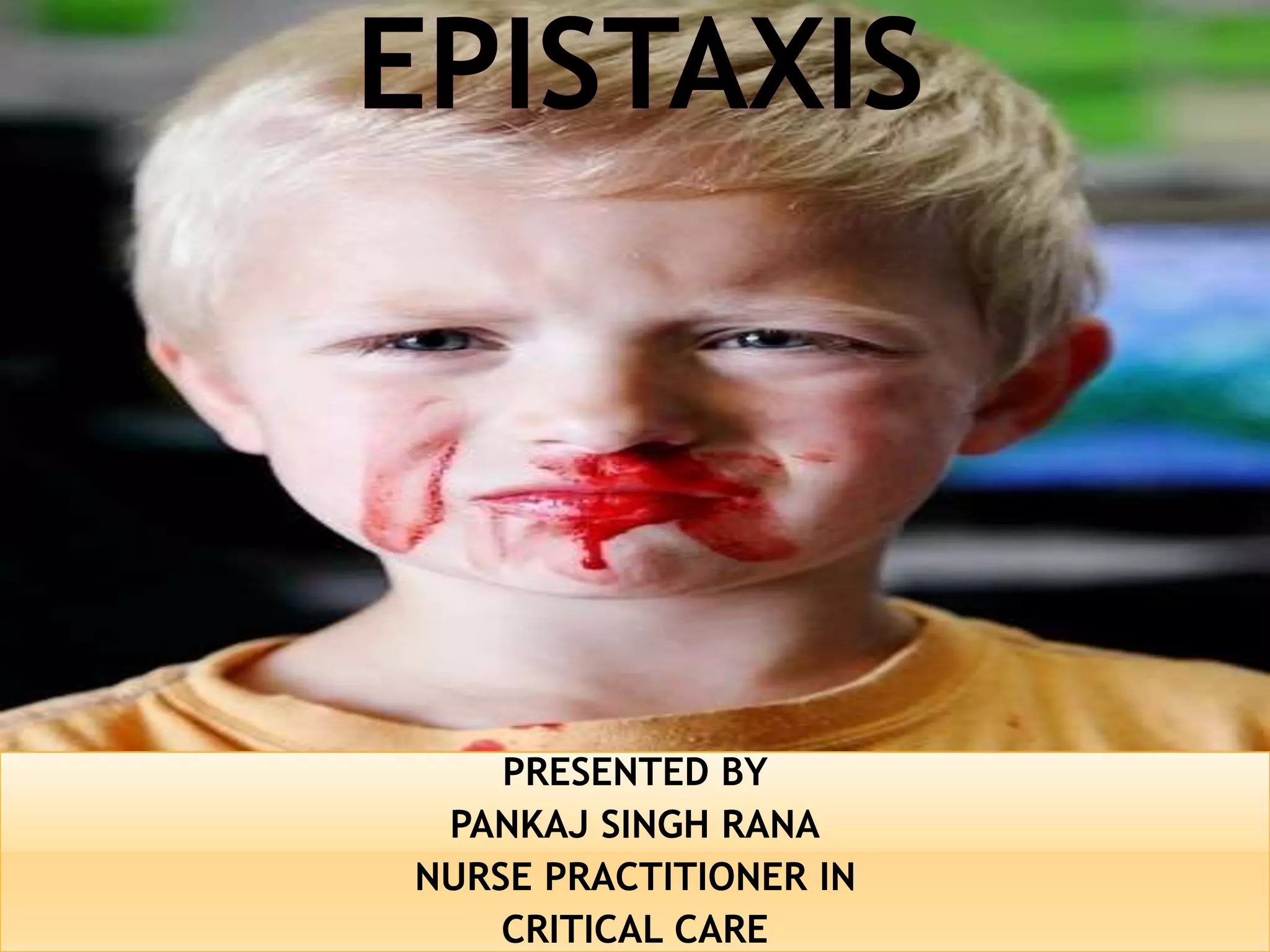
 Epistaxis is common in children. In infant
almost 30% of children.
From 0 to 5 year old have epistaxis of nose
bleed 56% for 6to10yr old children and 64% of
11to15yr old child.
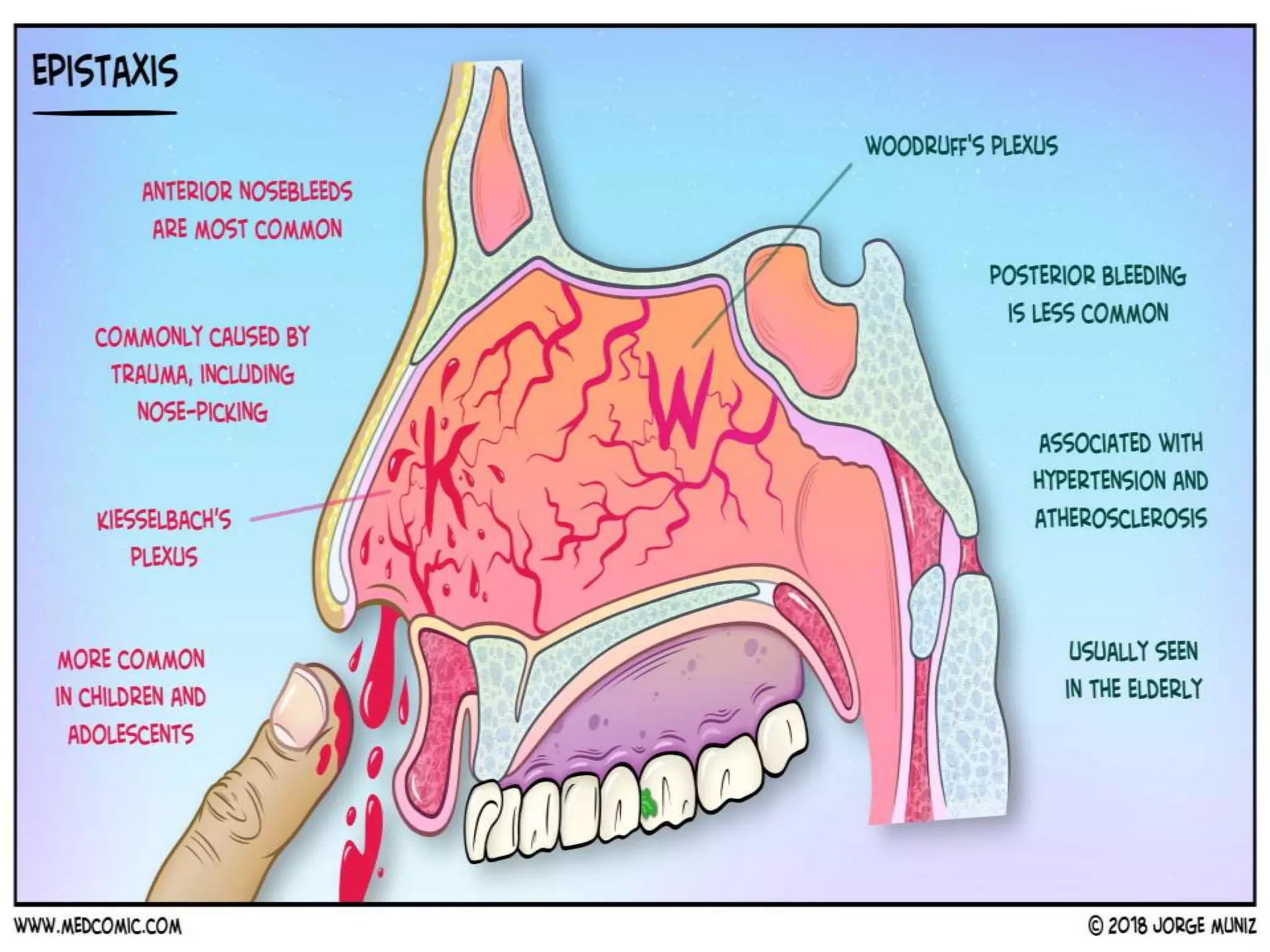
 When one or two small veins in the nose
erupt the resulting condition is nosebleed or
epistaxis
Bleeding occur usually from anterior-
inferior portion of the cartilaginous nasal
septum due to run capillary vasculature in
this zone know as little area or kiesselbach’s
plexus.
 Recurrent Epistaxis:- in recurrent nose
bleeds the episode of bloods happens only at
certain periods of time. Recurrent nosebleed
can be occur in seasonal patter. Its most
happen when the weather get hot and dry.
 Constant Epistaxis:- this is type of
nosebleed that happens for a longer period
of time. The bleeding is continuously occur.(
45min)
 Sudden epistaxis:- These are nosebleeds which
could happen anytime of the day, regardless of
the activity of the child. Whether the child
resting or playing.
 Chronic epistaxis:- condition that are
continuously experienced for more then
6month. Chronic bleeding happen as result of a
chronic disease this include. Chronic liver or
kidney disease, vascular malformation, long
term use medication.
 Heavy nosebleed:- heavy nosebleeds pertain
to episodes where there is a significant
amount of blood coming out of the nose.
Only this type is seen immediate first aid
treatment must be employed.
The common causes of children are
 Major trauma
 Nose picking
 Foreign body in the nose
 Nasal injury
 Nasal polyp
 Rhinitis
 Nasal diphtheria
 Nasopharyngeal tumors
 Nasal spry abuse
 Hot summer month
Other systemic causes:-
 Leukemia
 Hemophilia
 Ingestion of aspirin
 Vitamin K deficiency
 Ca deficiency
 Nephritis
 Solar radiation
 Acute infections
 Thrombocytopenia
Anterior epistaxis
 More common
 Mostly from Little’s
area or anterior part of
lateral wall
 Mostly occurs in
children or young adults
 Mostly trauma
 Usually mild, can be
easily controlled by
local pressure or
anterior pack
Posterior epistaxis
 Less common
 Mostly from
posterosuperior part of
nasal cavity
 After 40 years of age
 Spontaneous; often due to
hypertension or
arteriosclerosis
 Bleeding is severe,
requires hospitalization;
postnasal pack often
required
Signs of excessive blood loss include:
 dizziness
 weakness
 confusion
 fainting
 Hypotension
 Shock
 Anemia
 Secondary infection
 Blood pressure
 Complete blood count
 Coagulation studies
 Angiography
 Endoscopy
 MRI
 X ray
First aid measures:-
 Keep the patient quiet
 Place the patient in a sitting position,
leaning forward, semifowler position.
 Apply direct pressure by pinching the entire
soft lower portion of the nose for 10
tom15min.
 Apply icepack to the nose and check area.
 Loosing clothes and giving reassurance.
 Partially insert a small gauze pad into the
nose.
 Bleeding nostril and apply digital pressure if
bleeding continues.
 Take medical treatment if bleeding dose not
stop.
 Identification of bleeding sit by a nasal
speculum or headlight.
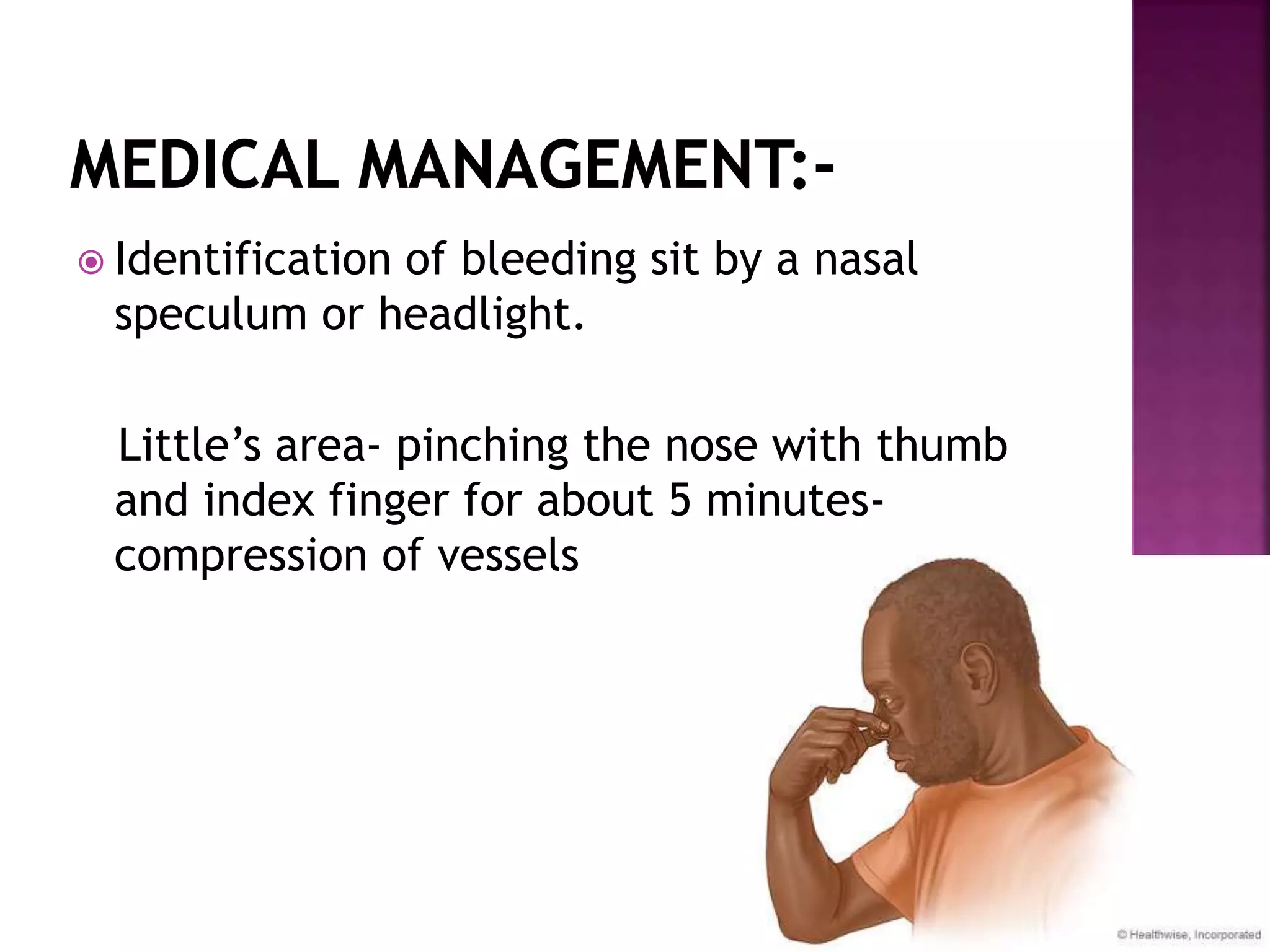
Little’s area- pinching the nose with thumb
and index finger for about 5 minutes-
compression of vessels
 Cauterization
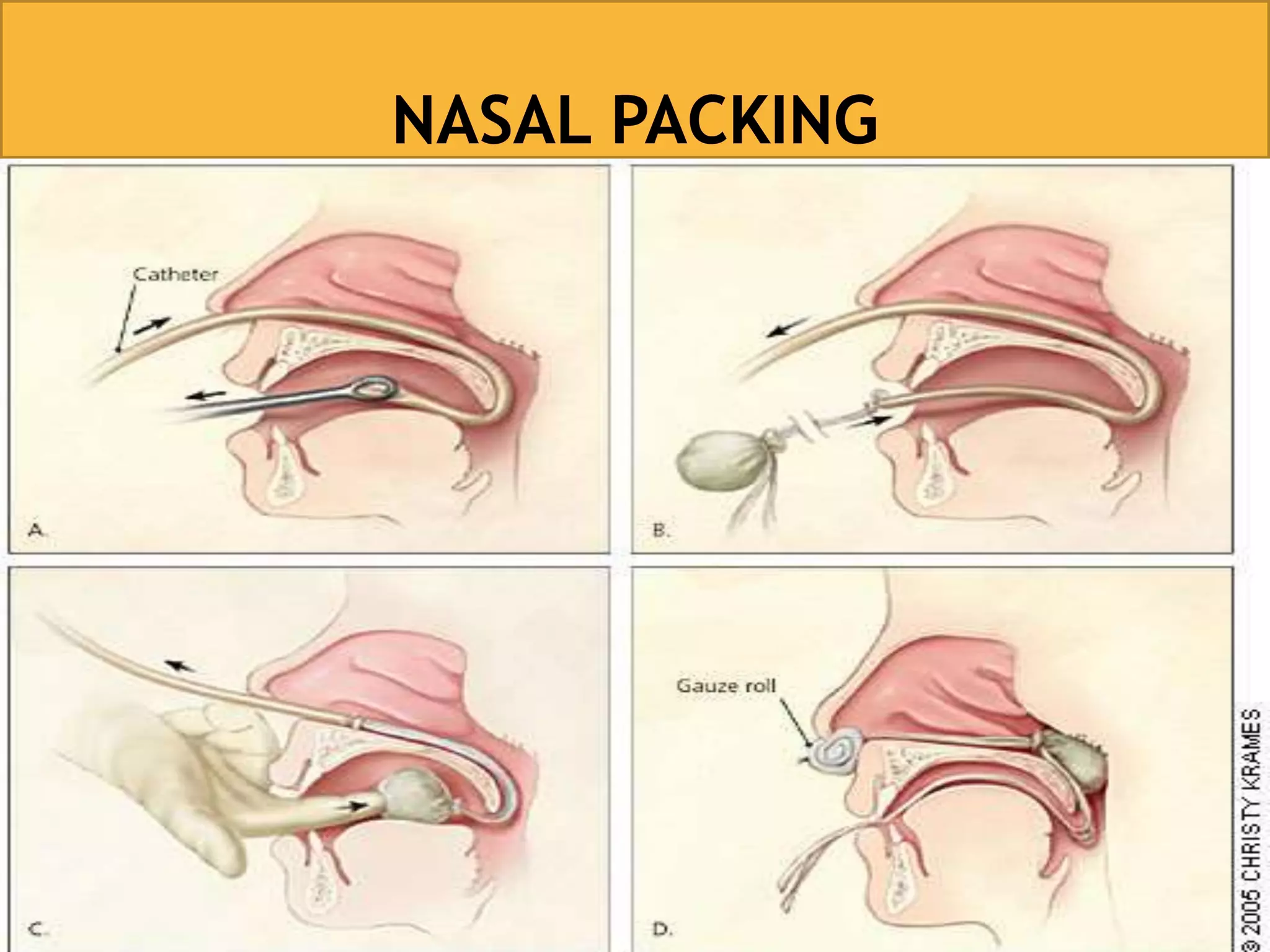
 Nasal packing
Anterior nasal bleeding:-
 Silver nitrate application gelform
 Electrocauterization
 Topical vasoconstrictor
adrenaline(1:100)
creaine(0.5%)
phenylephrine
Posterior nasal bleeding:-
Posterior nasal packing imprognate with a
vasoconstricting soluation.
 Cotton tempon
 Suction to remove the blood clots
 Radiologic embolization of the artery
 Ligation of the internal maxillary artery.
 Monitor vital signs.
 Assisting in the control of bleeding .
 Provide tissue paper and cotton.
 To instructed child to avoid aspiration of
blood.
 Nasal packing may alter respiration status so
closely monitor respiratory rate, heart rate,
rhythm, LOC
 Instruct the child to avoid vigorous nasal
blowing, strenuous activity, or lifting
straining for4-6 weak.
 Also instructed to avoid nasal blowing or
picking nose after nosebleed,
 Instructions to be given to the parents to
apply lubricant to nasal septum twice daily
to reduce dryness.
 Advice to were loose garments
Epistaxis ( nose bleed)

Epistaxis ( nose bleed)

  • 1.
    PRESENTED BY PANKAJ SINGHRANA NURSE PRACTITIONER IN CRITICAL CARE
  • 2.
     Epistaxis iscommon in children. In infant almost 30% of children. From 0 to 5 year old have epistaxis of nose bleed 56% for 6to10yr old children and 64% of 11to15yr old child.
  • 3.
     When oneor two small veins in the nose erupt the resulting condition is nosebleed or epistaxis Bleeding occur usually from anterior- inferior portion of the cartilaginous nasal septum due to run capillary vasculature in this zone know as little area or kiesselbach’s plexus.
  • 5.
     Recurrent Epistaxis:-in recurrent nose bleeds the episode of bloods happens only at certain periods of time. Recurrent nosebleed can be occur in seasonal patter. Its most happen when the weather get hot and dry.  Constant Epistaxis:- this is type of nosebleed that happens for a longer period of time. The bleeding is continuously occur.( 45min)
  • 6.
     Sudden epistaxis:-These are nosebleeds which could happen anytime of the day, regardless of the activity of the child. Whether the child resting or playing.  Chronic epistaxis:- condition that are continuously experienced for more then 6month. Chronic bleeding happen as result of a chronic disease this include. Chronic liver or kidney disease, vascular malformation, long term use medication.
  • 7.
     Heavy nosebleed:-heavy nosebleeds pertain to episodes where there is a significant amount of blood coming out of the nose. Only this type is seen immediate first aid treatment must be employed.
  • 8.
    The common causesof children are  Major trauma  Nose picking  Foreign body in the nose  Nasal injury  Nasal polyp  Rhinitis  Nasal diphtheria  Nasopharyngeal tumors  Nasal spry abuse  Hot summer month
  • 9.
    Other systemic causes:- Leukemia  Hemophilia  Ingestion of aspirin  Vitamin K deficiency  Ca deficiency  Nephritis  Solar radiation  Acute infections  Thrombocytopenia
  • 10.
    Anterior epistaxis  Morecommon  Mostly from Little’s area or anterior part of lateral wall  Mostly occurs in children or young adults  Mostly trauma  Usually mild, can be easily controlled by local pressure or anterior pack Posterior epistaxis  Less common  Mostly from posterosuperior part of nasal cavity  After 40 years of age  Spontaneous; often due to hypertension or arteriosclerosis  Bleeding is severe, requires hospitalization; postnasal pack often required
  • 11.
    Signs of excessiveblood loss include:  dizziness  weakness  confusion  fainting
  • 12.
     Hypotension  Shock Anemia  Secondary infection
  • 13.
     Blood pressure Complete blood count  Coagulation studies  Angiography  Endoscopy  MRI  X ray
  • 14.
    First aid measures:- Keep the patient quiet  Place the patient in a sitting position, leaning forward, semifowler position.  Apply direct pressure by pinching the entire soft lower portion of the nose for 10 tom15min.  Apply icepack to the nose and check area.  Loosing clothes and giving reassurance.  Partially insert a small gauze pad into the nose.
  • 15.
     Bleeding nostriland apply digital pressure if bleeding continues.  Take medical treatment if bleeding dose not stop.
  • 16.
     Identification ofbleeding sit by a nasal speculum or headlight. Little’s area- pinching the nose with thumb and index finger for about 5 minutes- compression of vessels
  • 19.
  • 22.
    Anterior nasal bleeding:- Silver nitrate application gelform  Electrocauterization  Topical vasoconstrictor adrenaline(1:100) creaine(0.5%) phenylephrine Posterior nasal bleeding:- Posterior nasal packing imprognate with a vasoconstricting soluation.
  • 23.
     Cotton tempon Suction to remove the blood clots  Radiologic embolization of the artery  Ligation of the internal maxillary artery.
  • 24.
     Monitor vitalsigns.  Assisting in the control of bleeding .  Provide tissue paper and cotton.  To instructed child to avoid aspiration of blood.  Nasal packing may alter respiration status so closely monitor respiratory rate, heart rate, rhythm, LOC  Instruct the child to avoid vigorous nasal blowing, strenuous activity, or lifting straining for4-6 weak.
  • 25.
     Also instructedto avoid nasal blowing or picking nose after nosebleed,  Instructions to be given to the parents to apply lubricant to nasal septum twice daily to reduce dryness.  Advice to were loose garments