By
SATHISHKUMAR G
(sathishsak111@gmail.com)
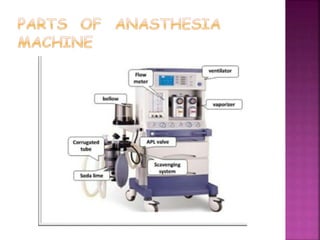
 The Anesthesia gas machine is a device which
delivers a precisely known but variable gas
mixture ,including anesthetizing and life
sustaining gases.
 There are several difference between newer and
older anesthesia machines.
 Advanced ventilators are the biggest difference
between newer and older gas machine.
 Boyle Anesthetic machine is a continuous-flow type of
machine used for administration of inhalational
anesthetic agents.
 It Was introduced by HENRY EDMUND GASKIN BOYLE
in 1917.
 It has undergone modifications
 1920-1926 vapourizer bottles added
 1930 plunger device in vaporizes bottle
 1933 dry bobbin type of flow meter instead of water
sight-feed type
 1937 rotameters replaced dry bobbin type of flow
 INTERMITTENT –Gas flow only during inspiration
 (e.g) : Entonox appartus , Mackessons
 CONTINUOUS-Gas flows both during inspiration
and expiration
 (e.g) : Boyle machine , forregar , dragger
 Comprises of 3 different pressure systems
 HIGH PRESSURE SYSTEM: from cylinder to
pressure reducing valves.
 INTERMEDIATE PRESSURE SYSTEM: from
pressure reducing valves to flow meters.
 LOW PRESSURE SYSTEM: from flow meters to the
common gas outlet on machine.
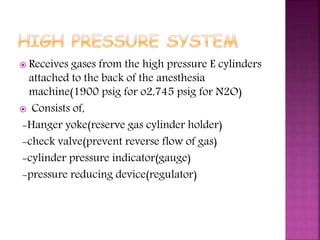
 Receives gases from the high pressure E cylinders
attached to the back of the anesthesia
machine(1900 psig for o2,745 psig for N2O)
 Consists of,
-Hanger yoke(reserve gas cylinder holder)
-check valve(prevent reverse flow of gas)
-cylinder pressure indicator(gauge)
-pressure reducing device(regulator)
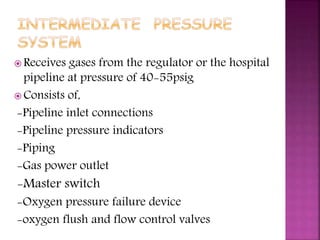
 Receives gases from the regulator or the hospital
pipeline at pressure of 40-55psig
 Consists of,
-Pipeline inlet connections
-Pipeline pressure indicators
-Piping
-Gas power outlet
-Master switch
-Oxygen pressure failure device
-oxygen flush and flow control valves
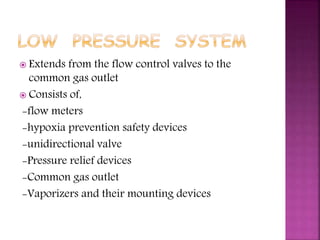
 Extends from the flow control valves to the
common gas outlet
 Consists of,
-flow meters
-hypoxia prevention safety devices
-unidirectional valve
-Pressure relief devices
-Common gas outlet
-Vaporizers and their mounting devices
 CRICLE SYSTEM : Verify adequate fresh C02
absorbent and its proper attachment to the
machine.
 Make all necessary connections of circle system
components .
 Either increased o2 flows or use o2 flush to
pressurize the breathing apparatus to greater
than 30cm H2O.
 Turn the o2 flow control valve off and stop 02
flush . Drop in air way pressure to less than
30cm H2O within seconds.
 Ventilators keep patient breathing during
sedation and help maintain good blood
composition.
 Modern ventilators have multiple settings to help
regulate the breathing patterns of different types
and ages of patient.
 BREATHING CIRCUITS:
This devices effectively breath for patients
as they send the mix of anesthetic gasses to the
lungs and exhale CO2 by product.
 The system expel the gases to the patient releases
from their lungs .
 In an active scavenging system, suction used to
remove the gasses from their patients lungs .
 In an passive system a tube sends gasses out to
the ventilation system for purification.
 Anesthesia ensures can be performed without
pain.
 During General Anesthesia ,where will be
unconscious , and local anesthesia where you
remain awake.
 Avoiding the potential risk of tracheal intubation.
 COMMON SIDE EFFECTS,
-Feeling sick
-damage to teeth
-damage to nerves
-asthma attack
-There is very low risk of more serious problems
such as,
-stroke
-heart attack and kidney damage
Thank U….

ANAESTHESIA MACHINE

  • 1.
  • 2.
     The Anesthesiagas machine is a device which delivers a precisely known but variable gas mixture ,including anesthetizing and life sustaining gases.  There are several difference between newer and older anesthesia machines.  Advanced ventilators are the biggest difference between newer and older gas machine.
  • 3.
     Boyle Anestheticmachine is a continuous-flow type of machine used for administration of inhalational anesthetic agents.  It Was introduced by HENRY EDMUND GASKIN BOYLE in 1917.  It has undergone modifications  1920-1926 vapourizer bottles added  1930 plunger device in vaporizes bottle  1933 dry bobbin type of flow meter instead of water sight-feed type  1937 rotameters replaced dry bobbin type of flow
  • 4.
     INTERMITTENT –Gasflow only during inspiration  (e.g) : Entonox appartus , Mackessons  CONTINUOUS-Gas flows both during inspiration and expiration  (e.g) : Boyle machine , forregar , dragger
  • 5.
     Comprises of3 different pressure systems  HIGH PRESSURE SYSTEM: from cylinder to pressure reducing valves.  INTERMEDIATE PRESSURE SYSTEM: from pressure reducing valves to flow meters.  LOW PRESSURE SYSTEM: from flow meters to the common gas outlet on machine.
  • 7.
     Receives gasesfrom the high pressure E cylinders attached to the back of the anesthesia machine(1900 psig for o2,745 psig for N2O)  Consists of, -Hanger yoke(reserve gas cylinder holder) -check valve(prevent reverse flow of gas) -cylinder pressure indicator(gauge) -pressure reducing device(regulator)
  • 8.
     Receives gasesfrom the regulator or the hospital pipeline at pressure of 40-55psig  Consists of, -Pipeline inlet connections -Pipeline pressure indicators -Piping -Gas power outlet -Master switch -Oxygen pressure failure device -oxygen flush and flow control valves
  • 9.
     Extends fromthe flow control valves to the common gas outlet  Consists of, -flow meters -hypoxia prevention safety devices -unidirectional valve -Pressure relief devices -Common gas outlet -Vaporizers and their mounting devices
  • 11.
     CRICLE SYSTEM: Verify adequate fresh C02 absorbent and its proper attachment to the machine.  Make all necessary connections of circle system components .  Either increased o2 flows or use o2 flush to pressurize the breathing apparatus to greater than 30cm H2O.  Turn the o2 flow control valve off and stop 02 flush . Drop in air way pressure to less than 30cm H2O within seconds.
  • 12.
     Ventilators keeppatient breathing during sedation and help maintain good blood composition.  Modern ventilators have multiple settings to help regulate the breathing patterns of different types and ages of patient.  BREATHING CIRCUITS: This devices effectively breath for patients as they send the mix of anesthetic gasses to the lungs and exhale CO2 by product.
  • 14.
     The systemexpel the gases to the patient releases from their lungs .  In an active scavenging system, suction used to remove the gasses from their patients lungs .  In an passive system a tube sends gasses out to the ventilation system for purification.
  • 15.
     Anesthesia ensurescan be performed without pain.  During General Anesthesia ,where will be unconscious , and local anesthesia where you remain awake.  Avoiding the potential risk of tracheal intubation.
  • 16.
     COMMON SIDEEFFECTS, -Feeling sick -damage to teeth -damage to nerves -asthma attack -There is very low risk of more serious problems such as, -stroke -heart attack and kidney damage
  • 17.