OTITIS MEDIA
Presented By
Sarju Maharjan
ACAS, BSN 3rd
year
DEFINITION
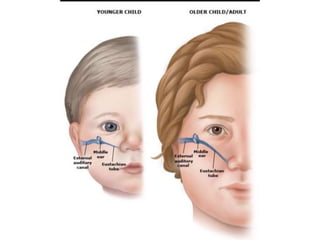
• Inflammation of middle ear
• Most common infection of infancy and childhood
• common between 6months and 2 years of age
RISK FACTORS
• Young age/Allergies
• Cold/URTI/Sinus infection
• Congenital anamolies
• Immune deficiency
• Bottle feeding
TYPES
• Acute otitis media(AOM)
• Otitis media with effusion(OME)
• Chronic suppurative otitis
media(CSOM)
ACUTE OTITIS MEDIA
• Painful type of ear infection
• Comes quickly and lasts less than 3 weeks
• usuallly associated with URTI, measles
CAUSES
• Streptococcus pneumonia
• Hemophilus influenza
• Allergic rhinitis
• Tympanic membranes perforations
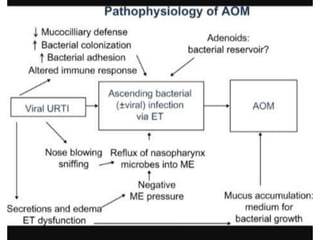
PATHOPHYSIOLOGY
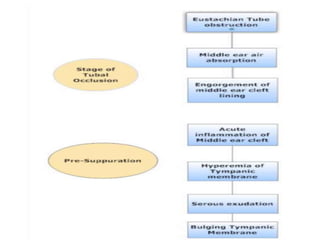
• Stage of tubal occlusion
• Stage of presuppuration
• Stage of suppuration
• Stage of resolution
• Stage of complication
Clinical Features
• Pain and discomfort
• Fever
• Irritability,restlessness,crying
• Ear discharge(ruptured tympanic membranes)
• Hearing impairment
MANAGEMENT
• Antibiotic therapy
• Symptomatic therapy
• Dry heat
• Myringotomy
• Tympanocentesis
• Mastoidectomy
OTITIS MEDIA WITH
EFFUSION
• Insidious condition
• Follows AOM treated appropriately with antibiotics
• Accumulation of non purulent effusion
PATHOLOGY
• Malfunctioning of eustachian tube
• Increased secretory activity of middle ear mucosa
CLINICAL FEATURES
• Hearing impairment
• feeling of fullness
• Mild earaches
• Delayed and defective speech
MANAGEMENT
• some cases spontaneously resolve within 3 months
• Antibiotics,Decongestants
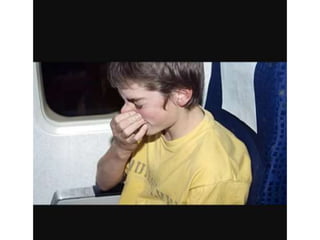
• Valsalva manoevre
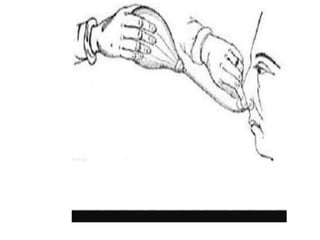
• Politzerization
• Myringotomy
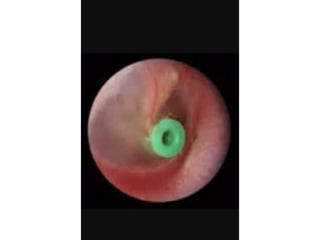
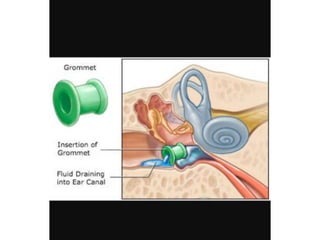
• Grommet insertion
CHRONIC SUPPURATIVE
OTITIS MEDIA
• Chronic ,recurrent infection lasting more than 3
months
• Pain rarely present
• Result of neglected acute infections
• Affects learning ability of child
CAUSES
• Pseudomonas auregenosa
• Staphylococcus aureus
• Klebsiella
• Proteus
PATHOPHYSIOLOGY
Repeated Irritation and
inflammation
Mucosal Ulceration
Formation of Granulation Tissue
Destruction of bony margins
Different complications
TYPES
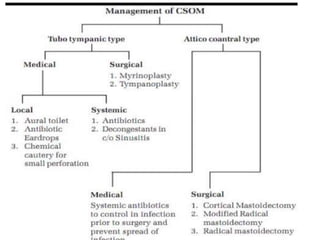
•TUBOTYMPANIC CSOM
•ATTICOANTRAL CSOM
TUBOTYMPANIC CSOM
• Safe type of CSOM
• Involves Antero-inferior part
• Hearing loss not present
• Non offensive Mucoid or mucupurulent discharge
ATTICOANTRAL CSOM
• Unsafe type of CSOM
• Involves posterosuperior part of middle ear
• Associated with bone eroding process
• Brownish ,greenish, offensive discharge present
• Marginal perforation
CLINICAL FEATURES
• Recurrent ear discharge
• Hearing loss of varying degree
• Perforation of Tympanic membrane
MANAGEMENT
•MEDICAL MANAGEMENT
•SURGICAL MANAGEMENT
MEDICAL MANAGEMENT
• Oral broad spectrum antibiotics like penicillin,
amoxicillin,erythromycin
• Topical antibiotics drops
• Management of URTI or allergy
• Mopping or suctioning of discharge
SURGICAL MANAGEMENT
•MYRINGOPLASTY
•CORTICAL MASTOIDECTOMY
•RADICAL MASTOIDECTOMY
•TYMPANOPLASTY
NURSING MANAGEMENT

Otitis Media