Otalgia
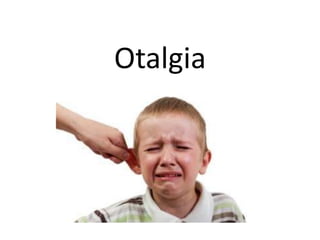
Otalgia
• Is defined as pain in the ear or ear ache.
Types
• Primary
• Referred
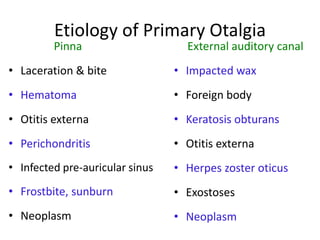
Etiology of Primary Otalgia

Pinna

External auditory canal

• Laceration & bite

• Impacted wax

• Hematoma

• Foreign body

• Otitis externa

• Keratosis obturans

• Perichondritis

• Otitis externa

• Infected pre-auricular sinus

• Herpes zoster oticus

• Frostbite, sunburn

• Exostoses

• Neoplasm

• Neoplasm
Middle Ear
• Bullous myringitis
• Acute otitis media
• Secretory otitis media
• Traumatic perforation
• Hemotympanum

Mastoid
• Mastoiditis
• Mastoid abscess
• Granulomas
• Neoplasm

Inner ear
• Acoustic trauma

• Otitic barotrauma

• Meniere’s disease

• Neoplasm

• Vestibular schwannoma
Cholesteatoma
• It is a cyst in the middle ear or mastoid system that
is lined with squamous epithelium and filled with
keratin debris.
• It occurs due to COM
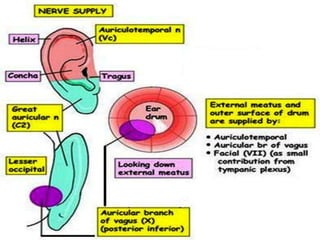
Etiology of referred otalgia
A. Via trigeminal nerve
• Teeth: infection, impacted 3rd molar, malocclusion
• Oral cavity: infection, ulcer, malignancy, Ludwig’s
angina, sialadenitis, salivary calculus
• Temporo-mandibular joint: arthritis, dysfunction
• Nose & PNS: impacted DNS, sinusitis, neoplasm
• Nasopharynx: infection, post- adenoidectomy,

adenoiditis, tumor
• Trigeminal neuralgia
B. Via glossopharyngeal nerve
• Tonsil: tonsillitis, peritonsillar abscess, posttonsillectomy, neoplasm
• Oropharynx: infection, ulcer, retropharyngeal +

parapharyngeal abscess, trauma, neoplasm
• Eagle’s syndrome (stylalgia)
• Glossopharyngeal neuralgia
C. Via facial nerve:
Herpes zoster oticus, vestibular schwannoma

D. Via vagus nerve:

Larynx

+ hypopharynx: neoplasm, infection,

tuberculosis, trauma,
foreign body

E. Via second & third cervical nerves:
Herpes zoster, cervical spondylosis & arthritis
Risk factors
•
•
•
•
•
•

Insertion of unclean/sharp articles into the ear
Instillation of contaminated solutions
Swimming in polluted water
Recent Upper Respiratory Tract Infection
Eustachian tube dysfunction
Allergies
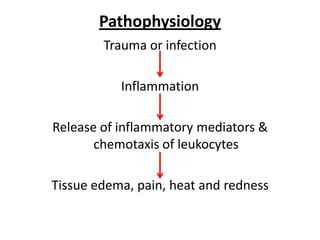
Pathophysiology
Trauma or infection

Inflammation
Release of inflammatory mediators &
chemotaxis of leukocytes
Tissue edema, pain, heat and redness
Clinical manifestations
• Ear ache or ear pain
Management
• Promote healing :
– Ear irrigation
– Antibiotics

• Alleviate pain :
– Analgesics

• Restore normal function and remove foreign
bodies:
Surgical management
• Myringoplasty : Closure of simple perforation
of tympanic membrane.
• Tympanoplasty: Surgical correction of the
perforated Tympanic membrane.
• Ossiculoplasty: Ossicular reconstruction
• Myringotomy: An incision to the tympanic
membrane through which fluid is removed.
• Mastoidectomy:
Precautions after ear surgery
• Client must lye with operated ear up for
several hours after surgery.
• If necessary, the client should blow the nose
gently one side at a time.
• The client should sneeze or cough with the
mouth open for 1 week after surgery.
• Participation in water sports or activities is
prohibited.
• Avoid physical activity for 1 week & exercise or
sports for 3 weeks after surgery.
• Avoid heavy lifting.
• Change the cotton ball in the ear daily.
• Keep the ear dry for 4-6 weeks.
• Do not shampoo for 1 week.
• Avoid airplane flights for the first week after
surgery. For sensation of ear pressure , hold
your nose, close your mouth and swallow to
equalize pressure.
• Wear noise defenders in loud environments.
• Inform in case of bleeding from ear.
Thank You

Otalgia

  • 1.
  • 2.
    Otalgia • Is definedas pain in the ear or ear ache.
  • 3.
  • 4.
    Etiology of PrimaryOtalgia Pinna External auditory canal • Laceration & bite • Impacted wax • Hematoma • Foreign body • Otitis externa • Keratosis obturans • Perichondritis • Otitis externa • Infected pre-auricular sinus • Herpes zoster oticus • Frostbite, sunburn • Exostoses • Neoplasm • Neoplasm
  • 5.
    Middle Ear • Bullousmyringitis • Acute otitis media • Secretory otitis media • Traumatic perforation • Hemotympanum Mastoid • Mastoiditis • Mastoid abscess • Granulomas • Neoplasm Inner ear • Acoustic trauma • Otitic barotrauma • Meniere’s disease • Neoplasm • Vestibular schwannoma
  • 6.
    Cholesteatoma • It isa cyst in the middle ear or mastoid system that is lined with squamous epithelium and filled with keratin debris. • It occurs due to COM
  • 7.
  • 9.
    A. Via trigeminalnerve • Teeth: infection, impacted 3rd molar, malocclusion • Oral cavity: infection, ulcer, malignancy, Ludwig’s angina, sialadenitis, salivary calculus • Temporo-mandibular joint: arthritis, dysfunction • Nose & PNS: impacted DNS, sinusitis, neoplasm • Nasopharynx: infection, post- adenoidectomy, adenoiditis, tumor • Trigeminal neuralgia
  • 10.
    B. Via glossopharyngealnerve • Tonsil: tonsillitis, peritonsillar abscess, posttonsillectomy, neoplasm • Oropharynx: infection, ulcer, retropharyngeal + parapharyngeal abscess, trauma, neoplasm • Eagle’s syndrome (stylalgia) • Glossopharyngeal neuralgia
  • 11.
    C. Via facialnerve: Herpes zoster oticus, vestibular schwannoma D. Via vagus nerve: Larynx + hypopharynx: neoplasm, infection, tuberculosis, trauma, foreign body E. Via second & third cervical nerves: Herpes zoster, cervical spondylosis & arthritis
  • 12.
    Risk factors • • • • • • Insertion ofunclean/sharp articles into the ear Instillation of contaminated solutions Swimming in polluted water Recent Upper Respiratory Tract Infection Eustachian tube dysfunction Allergies
  • 13.
    Pathophysiology Trauma or infection Inflammation Releaseof inflammatory mediators & chemotaxis of leukocytes Tissue edema, pain, heat and redness
  • 14.
  • 15.
    Management • Promote healing: – Ear irrigation – Antibiotics • Alleviate pain : – Analgesics • Restore normal function and remove foreign bodies:
  • 16.
    Surgical management • Myringoplasty: Closure of simple perforation of tympanic membrane. • Tympanoplasty: Surgical correction of the perforated Tympanic membrane. • Ossiculoplasty: Ossicular reconstruction • Myringotomy: An incision to the tympanic membrane through which fluid is removed. • Mastoidectomy:
  • 17.
    Precautions after earsurgery • Client must lye with operated ear up for several hours after surgery. • If necessary, the client should blow the nose gently one side at a time. • The client should sneeze or cough with the mouth open for 1 week after surgery. • Participation in water sports or activities is prohibited.
  • 18.
    • Avoid physicalactivity for 1 week & exercise or sports for 3 weeks after surgery. • Avoid heavy lifting. • Change the cotton ball in the ear daily. • Keep the ear dry for 4-6 weeks. • Do not shampoo for 1 week. • Avoid airplane flights for the first week after surgery. For sensation of ear pressure , hold your nose, close your mouth and swallow to equalize pressure. • Wear noise defenders in loud environments. • Inform in case of bleeding from ear.
  • 19.