LABYRINTHITIS
Mr. Binu Babu
M.Sc. Nursing
Mrs. Jincy Ealias
M.Sc. Nursing
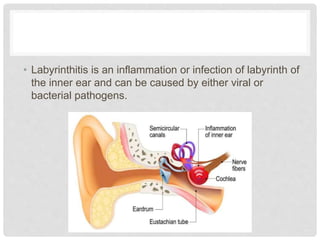
• Labyrinthitis is an inflammation or infection of labyrinth of
the inner ear and can be caused by either viral or
bacterial pathogens.
ETIOLOGY
• Viral infection
• Common cause
• Mumps, rubella, rubeola, and influenza
• Upper respiratory tract infections
• Bacterial infection
• Drug toxicity
• Allergy
• Acute or chronic otitis media
• Head injury
• Herpetiform disorders of the facial and acoustic nerves
(ie, ramsay hunt syndrome)
TYPES
1. Viral Labyrinthitis : caused by viral infection.
2. Bacterial labyrinthitis: caused by bacterial infection
3. Serous labyrinthitis: intralabyrinthine inflammation
without pus formation. It is Reversible if treated early
4. Diffuse suppurative labyrinthitis: Diffuse pyogenic
infection of the labyrinth. Occurs when acute or chronic
otitis media spreads into the inner ear or after middle
ear or mastoid surgery. Cause Permanent loss of
vestibular and cochlear functions
PATHOPHYSIOLOGY
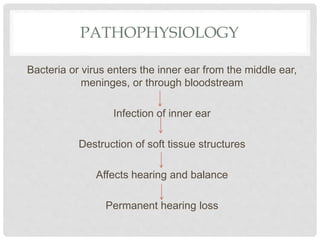
Bacteria or virus enters the inner ear from the middle ear,
meninges, or through bloodstream
Infection of inner ear
Destruction of soft tissue structures
Affects hearing and balance
Permanent hearing loss
CLINICAL MANIFESTATIONS
• Vertigo
• Tinnitus
• hearing loss
• Nystagmus on the affected side
• Pain
• Fever
• Ataxia
• nausea
• vomiting
DIAGNOSTIC MEASURES
• History collection
• Physical examination
• CBC: to rule out infection
• Audiogram: to revel hearing loss
MANAGEMENT
• Symptomatic management
• Patients may be placed on bedrest.
• Antibiotics are used to treat bacterial infections.
• Viral infections usually run their course in about 1 week.
Antiviral drugs are used for viral infection.
• Antihistamine (eg, meclizine [Antivert]) to treat vertigo.
• Antiemetic . Eg: prochlorperazine
• Corticosteroids - prednisone
• Sedatives – diazepam (valium)
NURSING MANAGEMENT
• Help the patient manage symptoms and self-care
• Provide bed rest
• Advice the patient should avoid turning the head quickly
to help alleviate the vertigo.
• Ensure patient safety during acute attacks of vertigo.
• Prevent injury
• Minimize anxiety
• Ensure adequate fluid

Labrinthitis

  • 1.
    LABYRINTHITIS Mr. Binu Babu M.Sc.Nursing Mrs. Jincy Ealias M.Sc. Nursing
  • 2.
    • Labyrinthitis isan inflammation or infection of labyrinth of the inner ear and can be caused by either viral or bacterial pathogens.
  • 3.
    ETIOLOGY • Viral infection •Common cause • Mumps, rubella, rubeola, and influenza • Upper respiratory tract infections • Bacterial infection • Drug toxicity • Allergy • Acute or chronic otitis media • Head injury • Herpetiform disorders of the facial and acoustic nerves (ie, ramsay hunt syndrome)
  • 4.
    TYPES 1. Viral Labyrinthitis: caused by viral infection. 2. Bacterial labyrinthitis: caused by bacterial infection 3. Serous labyrinthitis: intralabyrinthine inflammation without pus formation. It is Reversible if treated early 4. Diffuse suppurative labyrinthitis: Diffuse pyogenic infection of the labyrinth. Occurs when acute or chronic otitis media spreads into the inner ear or after middle ear or mastoid surgery. Cause Permanent loss of vestibular and cochlear functions
  • 5.
    PATHOPHYSIOLOGY Bacteria or virusenters the inner ear from the middle ear, meninges, or through bloodstream Infection of inner ear Destruction of soft tissue structures Affects hearing and balance Permanent hearing loss
  • 6.
    CLINICAL MANIFESTATIONS • Vertigo •Tinnitus • hearing loss • Nystagmus on the affected side • Pain • Fever • Ataxia • nausea • vomiting
  • 7.
    DIAGNOSTIC MEASURES • Historycollection • Physical examination • CBC: to rule out infection • Audiogram: to revel hearing loss
  • 8.
    MANAGEMENT • Symptomatic management •Patients may be placed on bedrest. • Antibiotics are used to treat bacterial infections. • Viral infections usually run their course in about 1 week. Antiviral drugs are used for viral infection. • Antihistamine (eg, meclizine [Antivert]) to treat vertigo. • Antiemetic . Eg: prochlorperazine • Corticosteroids - prednisone • Sedatives – diazepam (valium)
  • 9.
    NURSING MANAGEMENT • Helpthe patient manage symptoms and self-care • Provide bed rest • Advice the patient should avoid turning the head quickly to help alleviate the vertigo. • Ensure patient safety during acute attacks of vertigo. • Prevent injury • Minimize anxiety • Ensure adequate fluid