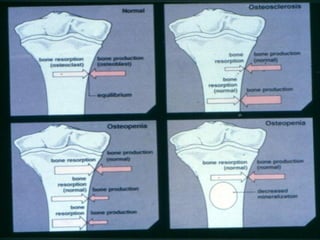
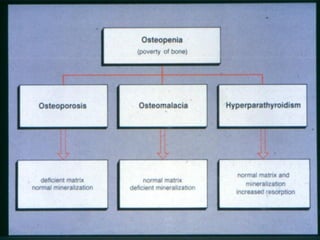

Metabolic Bone
diseases
Asma
Bone Histology
• Recall that bone is a connective tissue that
consists of a matrix, cells, and fibers
• Bone matrix
– Resembles reinforced concrete. Rebar is collagen
fibers, cement is hydroxyapetite
– Organic components (35%)
• Composed of cells, fibers and organic substances
(osteoid)
• Collagen is most abundant organic substance
– Inorganic mineral salts (65%):
• Primarily calcium phosphate (hydroxyapatites)
• Gives bone its hardness; resists compression
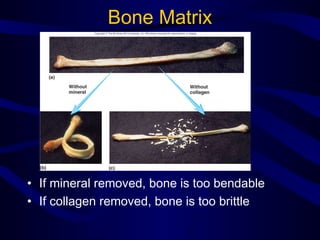
Bone Matrix
• If mineral removed, bone is too bendable
• If collagen removed, bone is too brittle
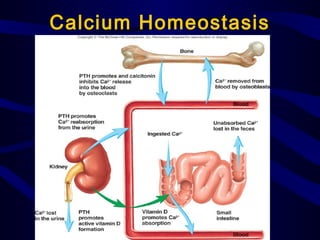
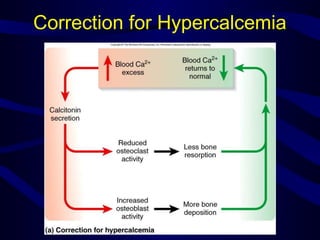
Calcium Homeostasis
• Bone is major storage site for calcium
• The level of calcium in the blood
depends upon movement of calcium
into or out of bone.
• Calcium metabolism is regulated by:
Vitamin D, and two hormones control
blood calcium levels- parathyroid hormone
increases it and calcitonin lowers it.
Vitamin D metabolism
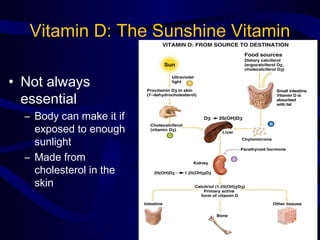
Vitamin D: The Sunshine Vitamin
• Not always
essential
– Body can make it if
exposed to enough
sunlight
– Made from
cholesterol in the
skin
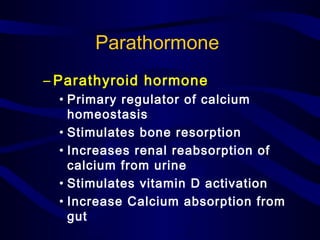
Parathormone
– Parathyroid hormone
• Primary regulator of calcium
homeostasis
• Stimulates bone resorption
• Increases renal reabsorption of
calcium from urine
• Stimulates vitamin D activation
• Increase Calcium absorption from
gut
Calcium Homeostasis
Correction for Hypercalcemia
Osteomalacia
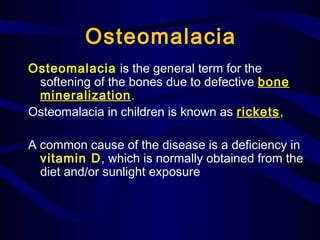
Osteomalacia is the general term for the
softening of the bones due to defective bone
mineralization.
Osteomalacia in children is known as rickets,
A common cause of the disease is a deficiency in
vitamin D, which is normally obtained from the
diet and/or sunlight exposure
Causes
• Insufficient sunlight exposure,
especially in dark-skinned subjects
• Insufficient nutritional quantities or
faulty metabolism of vitamin D or
phosphorus
• Renal tubular acidosis
• Malnutrition during pregnancy
• Malabsorption syndrome
• Chronic renal failure
• Summery it occure duto defect in
anywhere of metabolic pathway of vit
Clinical features
Sympotom usually appear insidiously
Bone pain
Bachach
Muscle weakness
This may be present for years before diagnosis is made
Ofetn the condtion suspected only when the patient admited
to hospital with vertebtal comparsson fractue or insuffcinsy
fracture of femer and tibia.
• Pathologic fractures due to weight bearing may develop. .
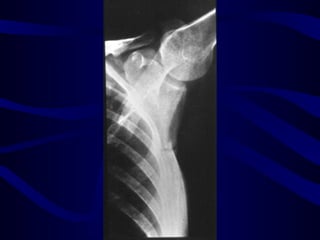
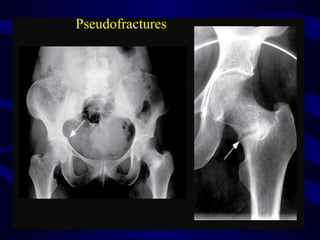
X - rays
Osteomalacia
• Osteopenia
• Looser zone ,
• biconcave vertebra ,
• Spontaneous fractures
Pseudofractures
Investigations
• Calcium
• Phosphorus
• Alkaline phosphatase
• Investgation for malabsorbation
syndrom liver disorder and renel
dieases
Treatement
• Vit. D + Ca supplyment eldery pt
may need very larg dose up
to2000 iu per day
• fracture management
• correct deformity if needed
• Treatment underlying disorder as
Rickets
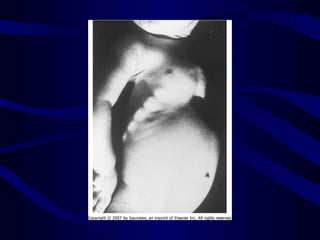
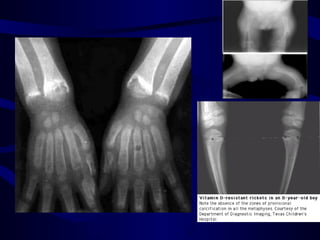
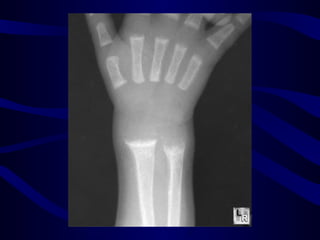
• Rickets is a softening of the bone due to
deficient mineralization at the growth plate.
• It is common in children and is potentially
leading to fractures and deformity.
• Rickets is among the most frequent childhood
diseases in many developing countries. The
predominant cause is a vitamin D deficiency,
but lack of adequate calcium in the diet may
also lead to rickets.
Etiology
• Deficient Intake: Ca, Ph, Vit D.
• Poor absorption: vit D ↓, pseudo vit D↓, vit D
resistance, high phytin content( soy formula),
antacids, anticonvulsants, renal insufficiency, Fanconi
syndrome, hepatic insufficiency, fat malabsorption
(cystic fibrosis).
• Increased excretion: furosemide, renal tubular
dysfunction( phosphaturia, RTA with hypercalciuria),
renal tubular damage e.g. cystinosis, tyrosinosis,
galactosemia, fructose intolerance, wilson disease.
Clinical features of Rickets
• GENERAL
– Failure to thrive; Listlessness;
– Protuding abdomen;
– Muscle weakness (especially proximal);
• HEAD
– Craniotabes;
– Frontal bossing;
– Delayed fontanelle closure;
– Delayed dentition; caries;
c/f
• CHEST
– Rachitic rosary;
– Harrison groove;
– Respiratory infections and
– atelectasis
• BACK Scoliosis ,Kyphosis ,Lordosis
c/f
• EXTREMITIES
– Enlargement of wrists and ankles;
– Valgus or varus deformities
– Bowing of the tibia and femur;
– Coxa vara;
– Leg pain.
• HYPOCALCEMIC SYMPTOMS
– Tetany ; Seizures; Stridor due to laryngeal spasm
Biochemical findings in rickets
• Alkaline phosphatase usually is ↑in all forms
of rickets.
• Serum phosphorus concentrations usually
are↓.
• Serum Ca is ↓only in hypocalcemic rickets.
• Serum parathyroid hormone typically is ↑in
hypocalcemic rickets, in contrast it is N in
hypophosphatemic rickets.
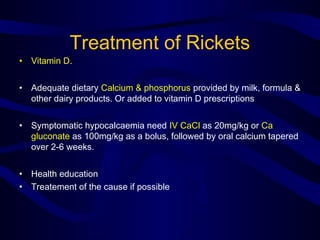
Treatment of Rickets
• Vitamin D.
• Adequate dietary Calcium & phosphorus provided by milk, formula &
other dairy products. Or added to vitamin D prescriptions
• Symptomatic hypocalcaemia need IV CaCl as 20mg/kg or Ca
gluconate as 100mg/kg as a bolus, followed by oral calcium tapered
over 2-6 weeks.
• Health education
• Treatement of the cause if possible
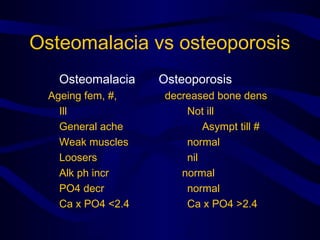
Osteomalacia vs osteoporosis
Osteomalacia Osteoporosis
Ageing fem, #, decreased bone dens
Ill Not ill
General ache Asympt till #
Weak muscles normal
Loosers nil
Alk ph incr normal
PO4 decr normal
Ca x PO4 <2.4 Ca x PO4 >2.4

Osteomalacia

  • 1.
  • 2.
    Bone Histology • Recallthat bone is a connective tissue that consists of a matrix, cells, and fibers • Bone matrix – Resembles reinforced concrete. Rebar is collagen fibers, cement is hydroxyapetite – Organic components (35%) • Composed of cells, fibers and organic substances (osteoid) • Collagen is most abundant organic substance – Inorganic mineral salts (65%): • Primarily calcium phosphate (hydroxyapatites) • Gives bone its hardness; resists compression
  • 3.
    Bone Matrix • Ifmineral removed, bone is too bendable • If collagen removed, bone is too brittle
  • 4.
    Calcium Homeostasis • Boneis major storage site for calcium • The level of calcium in the blood depends upon movement of calcium into or out of bone. • Calcium metabolism is regulated by: Vitamin D, and two hormones control blood calcium levels- parathyroid hormone increases it and calcitonin lowers it.
  • 5.
  • 6.
    Vitamin D: TheSunshine Vitamin • Not always essential – Body can make it if exposed to enough sunlight – Made from cholesterol in the skin
  • 7.
    Parathormone – Parathyroid hormone •Primary regulator of calcium homeostasis • Stimulates bone resorption • Increases renal reabsorption of calcium from urine • Stimulates vitamin D activation • Increase Calcium absorption from gut
  • 8.
  • 9.
  • 12.
    Osteomalacia Osteomalacia is thegeneral term for the softening of the bones due to defective bone mineralization. Osteomalacia in children is known as rickets, A common cause of the disease is a deficiency in vitamin D, which is normally obtained from the diet and/or sunlight exposure
  • 13.
    Causes • Insufficient sunlightexposure, especially in dark-skinned subjects • Insufficient nutritional quantities or faulty metabolism of vitamin D or phosphorus • Renal tubular acidosis • Malnutrition during pregnancy • Malabsorption syndrome • Chronic renal failure • Summery it occure duto defect in anywhere of metabolic pathway of vit
  • 14.
    Clinical features Sympotom usuallyappear insidiously Bone pain Bachach Muscle weakness This may be present for years before diagnosis is made Ofetn the condtion suspected only when the patient admited to hospital with vertebtal comparsson fractue or insuffcinsy fracture of femer and tibia. • Pathologic fractures due to weight bearing may develop. .
  • 15.
    X - rays Osteomalacia •Osteopenia • Looser zone , • biconcave vertebra , • Spontaneous fractures
  • 17.
  • 18.
    Investigations • Calcium • Phosphorus •Alkaline phosphatase • Investgation for malabsorbation syndrom liver disorder and renel dieases
  • 19.
    Treatement • Vit. D+ Ca supplyment eldery pt may need very larg dose up to2000 iu per day • fracture management • correct deformity if needed • Treatment underlying disorder as
  • 20.
    Rickets • Rickets isa softening of the bone due to deficient mineralization at the growth plate. • It is common in children and is potentially leading to fractures and deformity. • Rickets is among the most frequent childhood diseases in many developing countries. The predominant cause is a vitamin D deficiency, but lack of adequate calcium in the diet may also lead to rickets.
  • 21.
    Etiology • Deficient Intake:Ca, Ph, Vit D. • Poor absorption: vit D ↓, pseudo vit D↓, vit D resistance, high phytin content( soy formula), antacids, anticonvulsants, renal insufficiency, Fanconi syndrome, hepatic insufficiency, fat malabsorption (cystic fibrosis). • Increased excretion: furosemide, renal tubular dysfunction( phosphaturia, RTA with hypercalciuria), renal tubular damage e.g. cystinosis, tyrosinosis, galactosemia, fructose intolerance, wilson disease.
  • 22.
    Clinical features ofRickets • GENERAL – Failure to thrive; Listlessness; – Protuding abdomen; – Muscle weakness (especially proximal); • HEAD – Craniotabes; – Frontal bossing; – Delayed fontanelle closure; – Delayed dentition; caries;
  • 23.
    c/f • CHEST – Rachiticrosary; – Harrison groove; – Respiratory infections and – atelectasis • BACK Scoliosis ,Kyphosis ,Lordosis
  • 24.
    c/f • EXTREMITIES – Enlargementof wrists and ankles; – Valgus or varus deformities – Bowing of the tibia and femur; – Coxa vara; – Leg pain. • HYPOCALCEMIC SYMPTOMS – Tetany ; Seizures; Stridor due to laryngeal spasm
  • 28.
    Biochemical findings inrickets • Alkaline phosphatase usually is ↑in all forms of rickets. • Serum phosphorus concentrations usually are↓. • Serum Ca is ↓only in hypocalcemic rickets. • Serum parathyroid hormone typically is ↑in hypocalcemic rickets, in contrast it is N in hypophosphatemic rickets.
  • 29.
    Treatment of Rickets •Vitamin D. • Adequate dietary Calcium & phosphorus provided by milk, formula & other dairy products. Or added to vitamin D prescriptions • Symptomatic hypocalcaemia need IV CaCl as 20mg/kg or Ca gluconate as 100mg/kg as a bolus, followed by oral calcium tapered over 2-6 weeks. • Health education • Treatement of the cause if possible
  • 31.
    Osteomalacia vs osteoporosis OsteomalaciaOsteoporosis Ageing fem, #, decreased bone dens Ill Not ill General ache Asympt till # Weak muscles normal Loosers nil Alk ph incr normal PO4 decr normal Ca x PO4 <2.4 Ca x PO4 >2.4