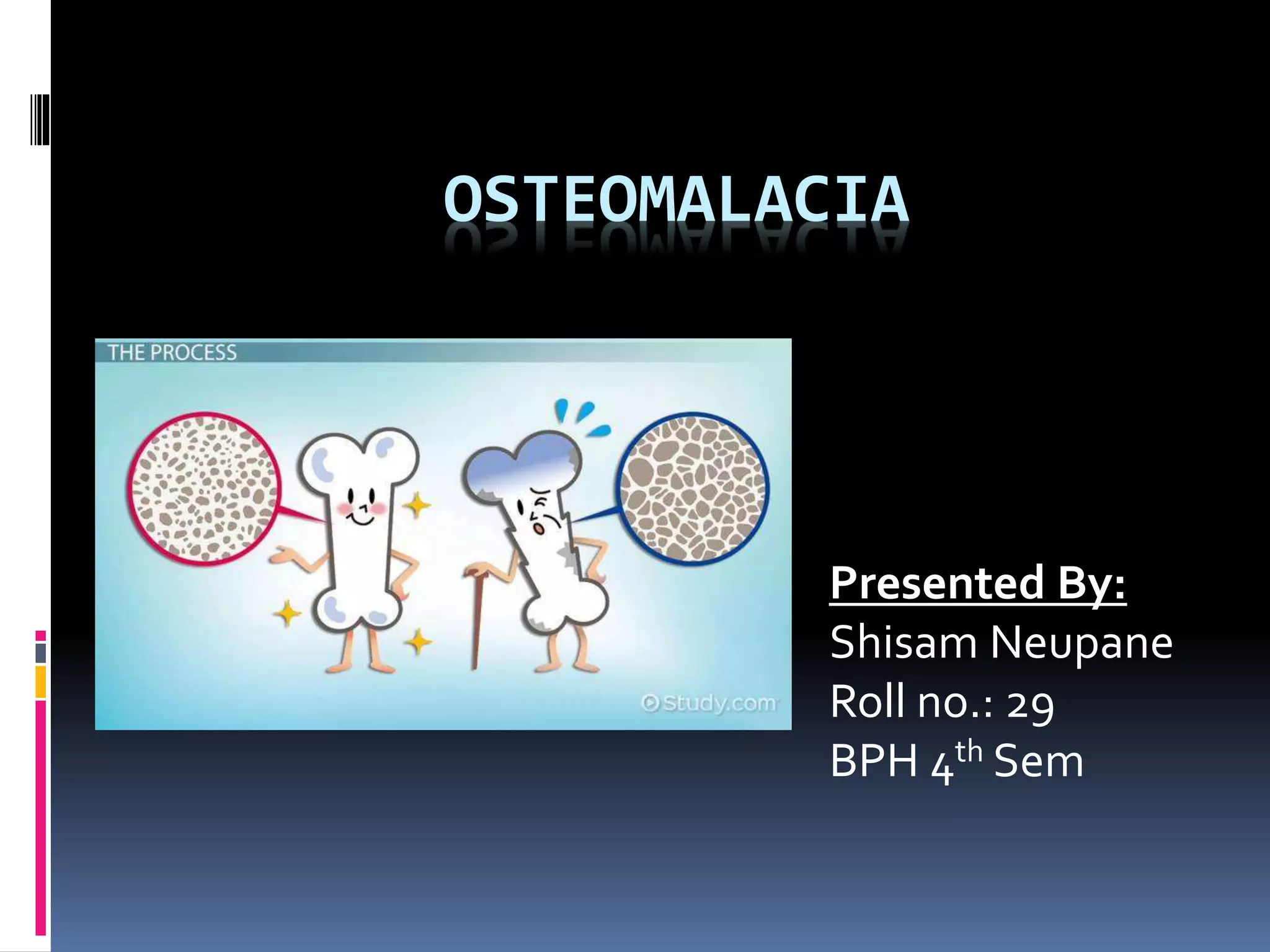
OSTEOMALACIA
Presented By:
Shisam Neupane
Roll no.: 29
BPH 4th Sem
Outline of Presentation
1. Introduction
2. Problem Statement
3. Risk Groups
4. Aetiological Factors
5. Signs and Symptoms
6. Clinical Features
7. Diagnosis
8. Treatment
9. Prevention and Control
1. Introduction
Osteo: Bone
Malacia: Abnormal softening of something
 Osteomalacia is the softening of the bones
caused by defective bone mineralization
secondary to inadequate levels of available
phosphate and calcium.
 Overactive resorption of calcium from the bone
which can be caused by hyperparathyroidism.
 It’s also known as rickets, so, use of the term
“osteomalacia” is often restricted to the disease
in adults.
2. Problem Statement
 The true prevalence of osteomalacia across the
globe remains unknown.
 Among 2,158 subjects (692 male and 1466
female) of 19-60 years, 73.68% had vit. D
deficiency whereas only 26.32% had optimum
level of vit. D.
 Females were more deficient than male by
5.29%.
(Prevalence of vit.D deficiency among adult
population of western region of Nepal, 2016)
3. Risk Groups
 Homebound adults
 Vegetarians
 Women who wear traditional veils or dresses
preventing sun exposure
 Pregnant and lactating women
 Patients with malabsorption gastrointestinal
bypass surgery, kidney and liver problems
4. Aetiological Factors
 Lack of vitamin D
 Less exposure to sunlight
 Lack of foods with vit. D supplement
 Poor absorption of vit. D
 Gastric bypass
 Celiac disease (damaged lining of intestines)
 Liver or kidney disorders (affect metabolism of vit.
D)
 Sometimes genetic too (rare condition)
 Low intake of phosphate or increased renal
losses
5. Signs And Symptoms
 Muscle weakness
 Tiredness
 Bone pain
 Walking with waddling gait
 Stiffness
 Pain in lower back, hips and legs
 Bending of bones
6. Clinical Features
 Weak, soft bones
 Easy and spontaneous fracture
 Looser’s zone
 Tetany by involuntary twitching of the
muscles of the face /carpopedal spasm
7. Diagnosis
 Blood test
 Urine test
 Bone biopsy
 X-ray
8. Treatment
 Oral supplements of vit. D (calciferol,
calcium, phosphate)
 3000 iu of vit. D per day
 Treatment of associated conditions
 Cirrhosis
 Kidney failure
 Braces to correct bone deformation
9. Prevention and Control
 Dietary intake of vit. D rich foods
eg. Milk and milk products, egg, meat, cod liver
oil
 Enough sun exposure
 Timely treatment of associated aetiological
problems
 Food fortification
 RDA: 100 iu in adults
 A recurrence of the disease can probably be
prevented by 1000 iu of vit. D orally everyday for
life.
Thank you!

Osteomalacia

  • 1.
  • 2.
    Outline of Presentation 1.Introduction 2. Problem Statement 3. Risk Groups 4. Aetiological Factors 5. Signs and Symptoms 6. Clinical Features 7. Diagnosis 8. Treatment 9. Prevention and Control
  • 3.
    1. Introduction Osteo: Bone Malacia:Abnormal softening of something  Osteomalacia is the softening of the bones caused by defective bone mineralization secondary to inadequate levels of available phosphate and calcium.  Overactive resorption of calcium from the bone which can be caused by hyperparathyroidism.  It’s also known as rickets, so, use of the term “osteomalacia” is often restricted to the disease in adults.
  • 5.
    2. Problem Statement The true prevalence of osteomalacia across the globe remains unknown.  Among 2,158 subjects (692 male and 1466 female) of 19-60 years, 73.68% had vit. D deficiency whereas only 26.32% had optimum level of vit. D.  Females were more deficient than male by 5.29%. (Prevalence of vit.D deficiency among adult population of western region of Nepal, 2016)
  • 6.
    3. Risk Groups Homebound adults  Vegetarians  Women who wear traditional veils or dresses preventing sun exposure  Pregnant and lactating women  Patients with malabsorption gastrointestinal bypass surgery, kidney and liver problems
  • 7.
    4. Aetiological Factors Lack of vitamin D  Less exposure to sunlight  Lack of foods with vit. D supplement  Poor absorption of vit. D  Gastric bypass  Celiac disease (damaged lining of intestines)  Liver or kidney disorders (affect metabolism of vit. D)  Sometimes genetic too (rare condition)  Low intake of phosphate or increased renal losses
  • 8.
    5. Signs AndSymptoms  Muscle weakness  Tiredness  Bone pain  Walking with waddling gait  Stiffness  Pain in lower back, hips and legs  Bending of bones
  • 11.
    6. Clinical Features Weak, soft bones  Easy and spontaneous fracture  Looser’s zone  Tetany by involuntary twitching of the muscles of the face /carpopedal spasm
  • 13.
    7. Diagnosis  Bloodtest  Urine test  Bone biopsy  X-ray
  • 14.
    8. Treatment  Oralsupplements of vit. D (calciferol, calcium, phosphate)  3000 iu of vit. D per day  Treatment of associated conditions  Cirrhosis  Kidney failure  Braces to correct bone deformation
  • 15.
    9. Prevention andControl  Dietary intake of vit. D rich foods eg. Milk and milk products, egg, meat, cod liver oil  Enough sun exposure  Timely treatment of associated aetiological problems  Food fortification  RDA: 100 iu in adults  A recurrence of the disease can probably be prevented by 1000 iu of vit. D orally everyday for life.
  • 16.