1
Chapter 3
Understanding Perceptions and Attributions
The Perceptual Process* (esp. Figure 3.1, p. 68)
Perceptual Selection*
Person Perception*
Perceptual Errors*
Attributions: Perceived Causes of Behavior*
Exercise: Truth or Consequences?
2
Perception
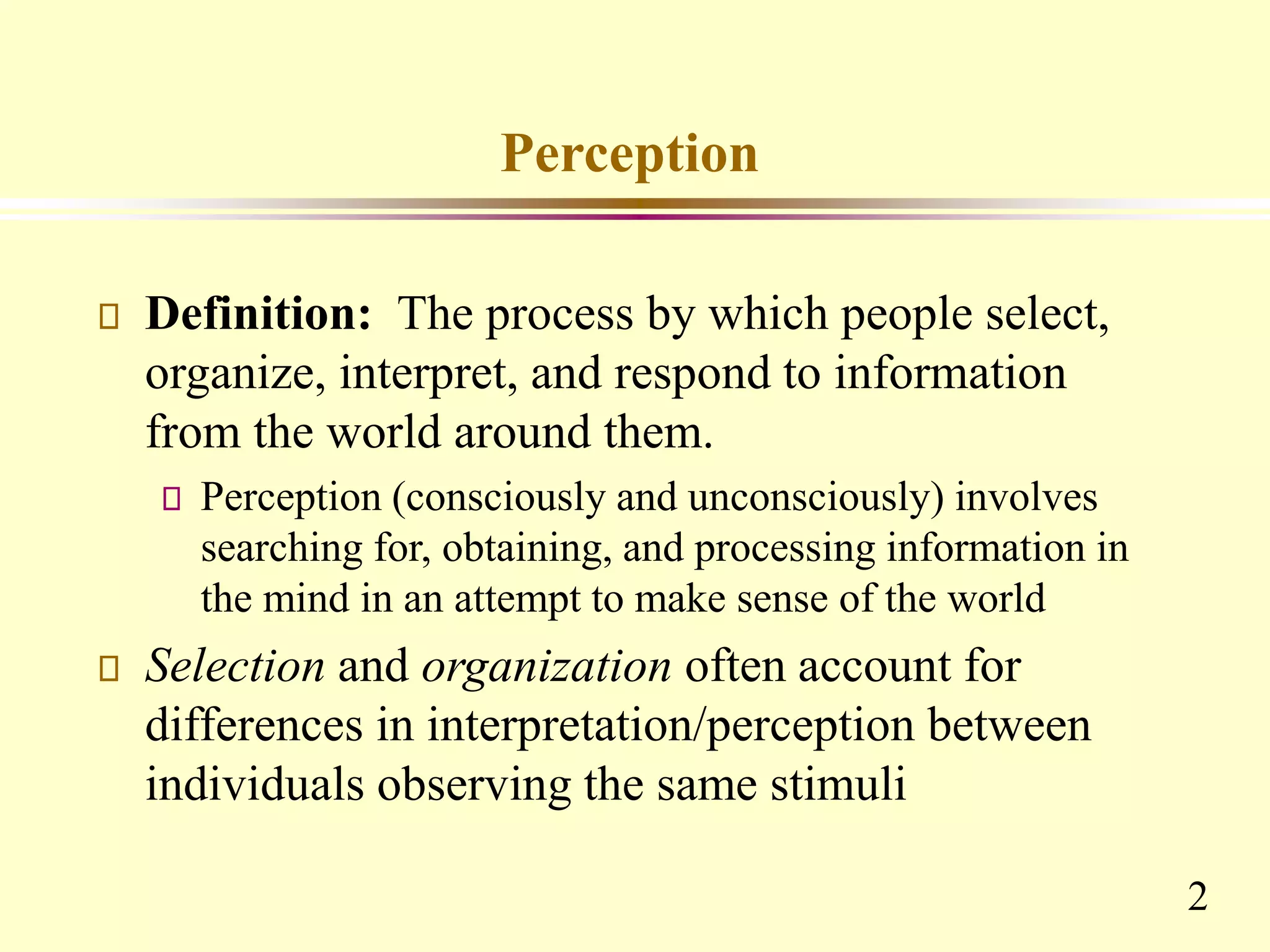
Definition: The process by which people select,
organize, interpret, and respond to information
from the world around them.
Perception (consciously and unconsciously) involves
searching for, obtaining, and processing information in
the mind in an attempt to make sense of the world
Selection and organization often account for
differences in interpretation/perception between
individuals observing the same stimuli
3
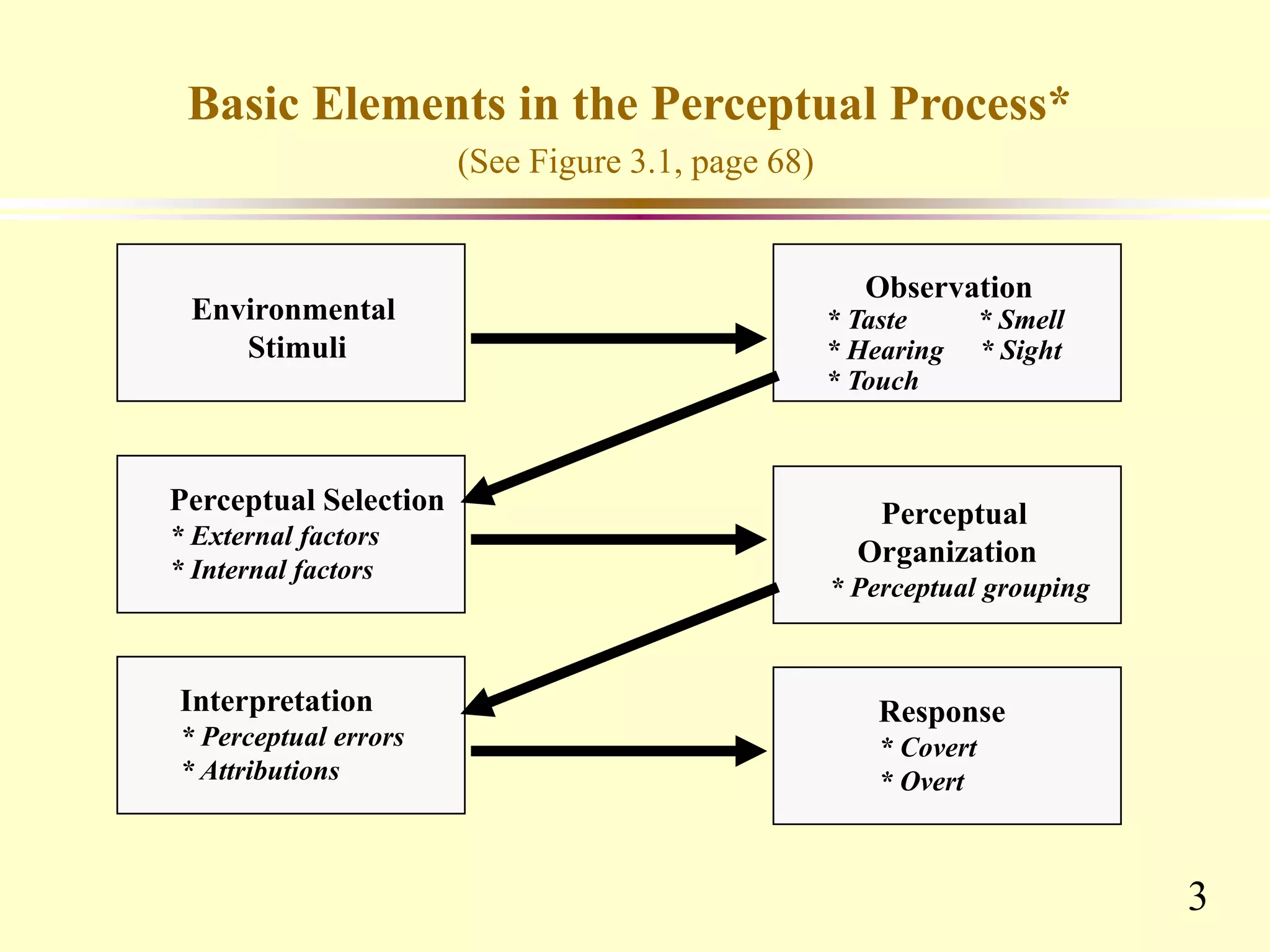
Basic Elements in the Perceptual Process*
(See Figure 3.1, page 68)
Environmental
Stimuli
Observation
* Taste * Smell
* Hearing * Sight
* Touch
Perceptual Selection
* External factors
* Internal factors
Interpretation
* Perceptual errors
* Attributions
Response
* Covert
* Overt
Perceptual
Organization
* Perceptual grouping
4
Concepts Manifest in the Princeton Case
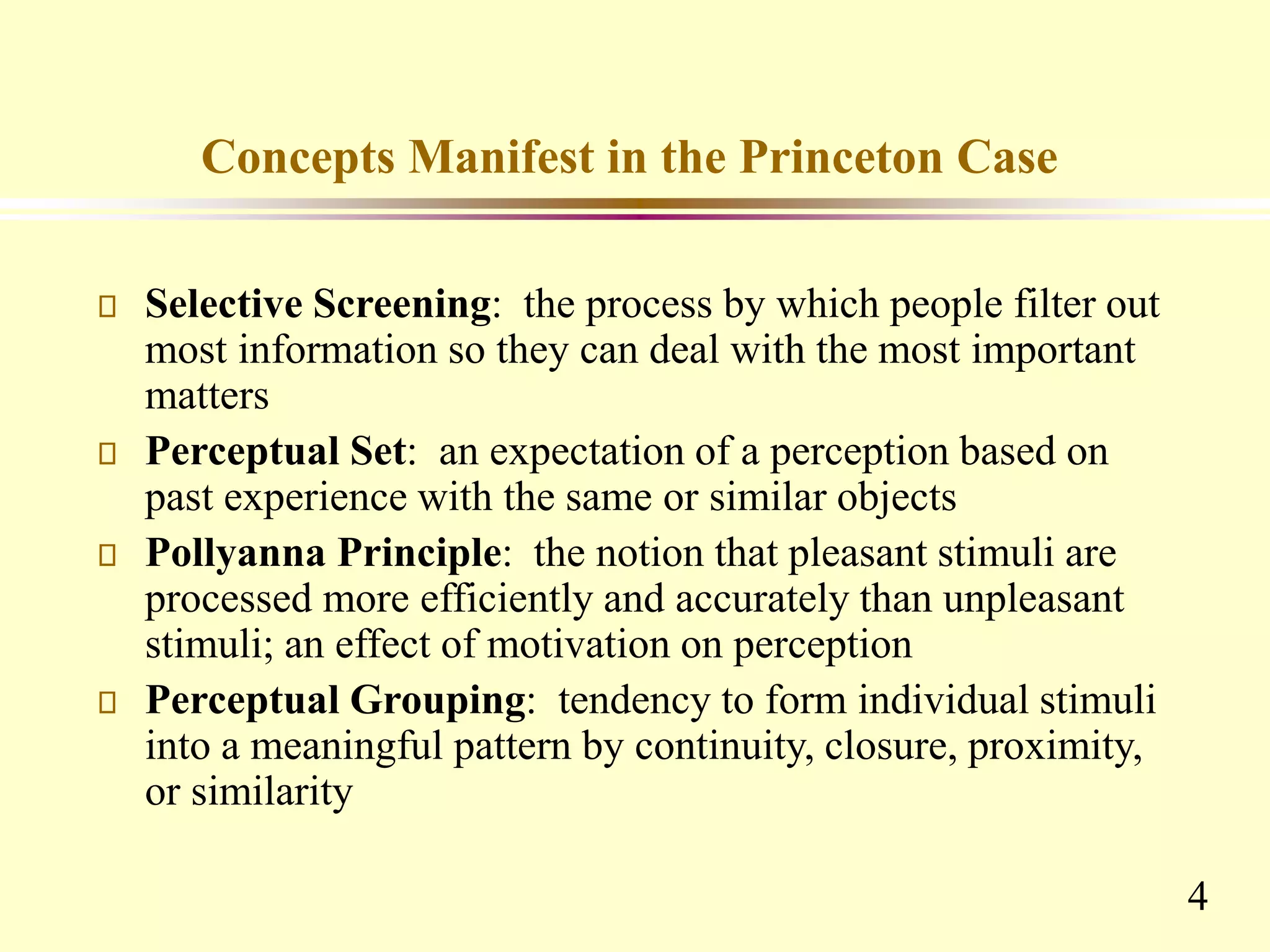
Selective Screening: the process by which people filter out
most information so they can deal with the most important
matters
Perceptual Set: an expectation of a perception based on
past experience with the same or similar objects
Pollyanna Principle: the notion that pleasant stimuli are
processed more efficiently and accurately than unpleasant
stimuli; an effect of motivation on perception
Perceptual Grouping: tendency to form individual stimuli
into a meaningful pattern by continuity, closure, proximity,
or similarity
5
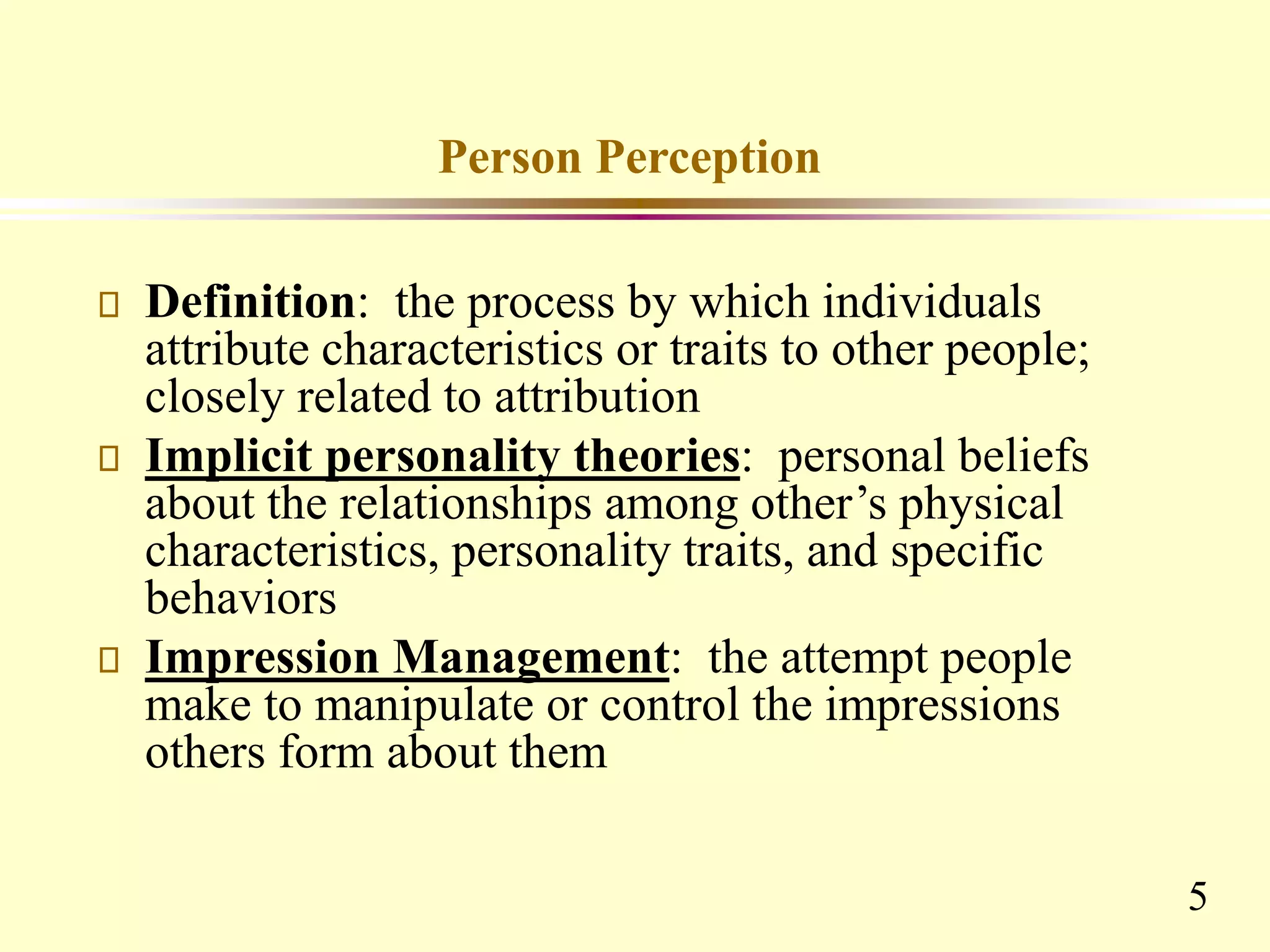
Person Perception
Definition: the process by which individuals
attribute characteristics or traits to other people;
closely related to attribution
Implicit personality theories: personal beliefs
about the relationships among other’s physical
characteristics, personality traits, and specific
behaviors
Impression Management: the attempt people
make to manipulate or control the impressions
others form about them
6
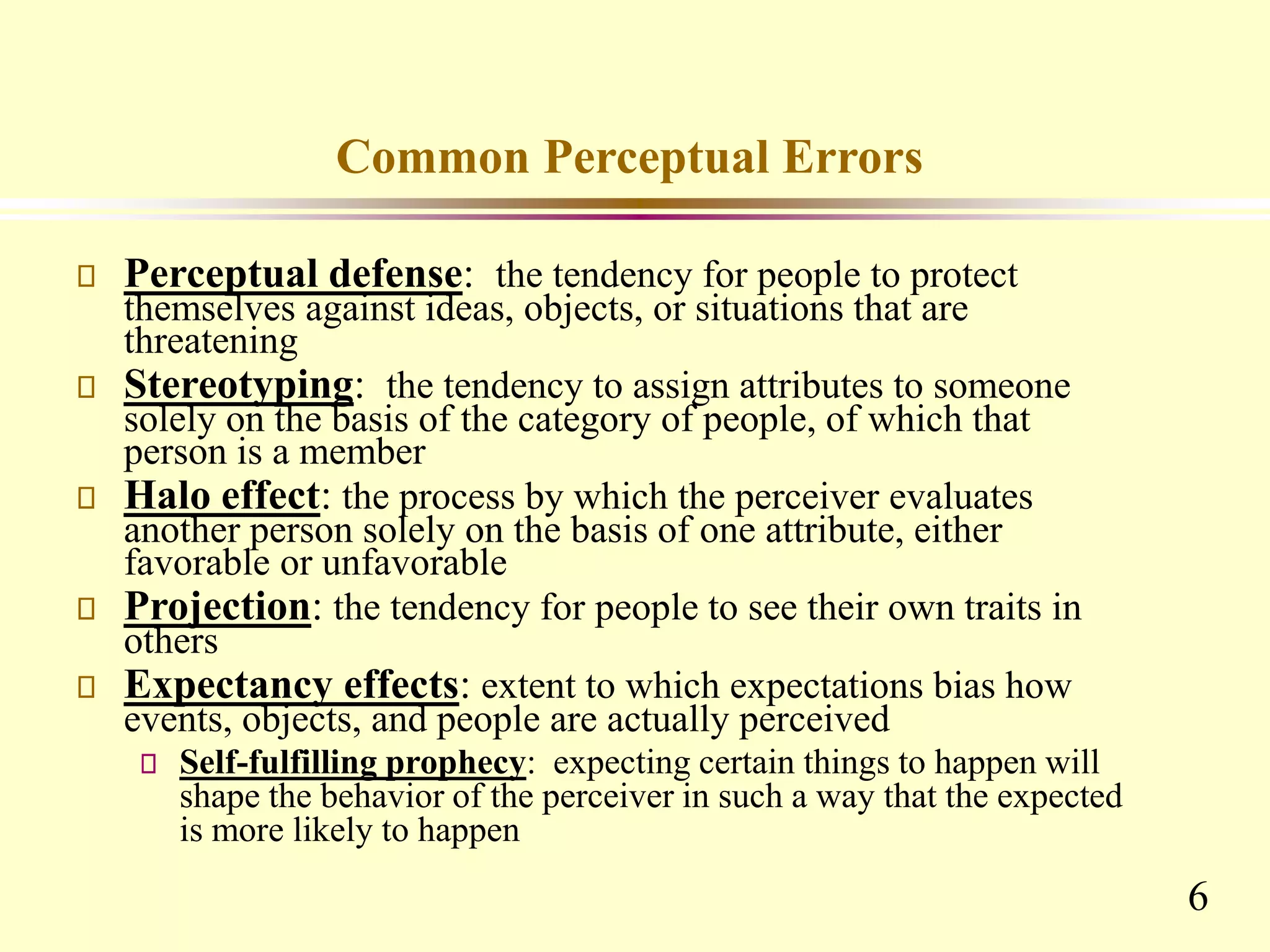
Common Perceptual Errors
Perceptual defense: the tendency for people to protect
themselves against ideas, objects, or situations that are
threatening
Stereotyping: the tendency to assign attributes to someone
solely on the basis of the category of people, of which that
person is a member
Halo effect: the process by which the perceiver evaluates
another person solely on the basis of one attribute, either
favorable or unfavorable
Projection: the tendency for people to see their own traits in
others
Expectancy effects: extent to which expectations bias how
events, objects, and people are actually perceived
Self-fulfilling prophecy: expecting certain things to happen will
shape the behavior of the perceiver in such a way that the expected
is more likely to happen
7
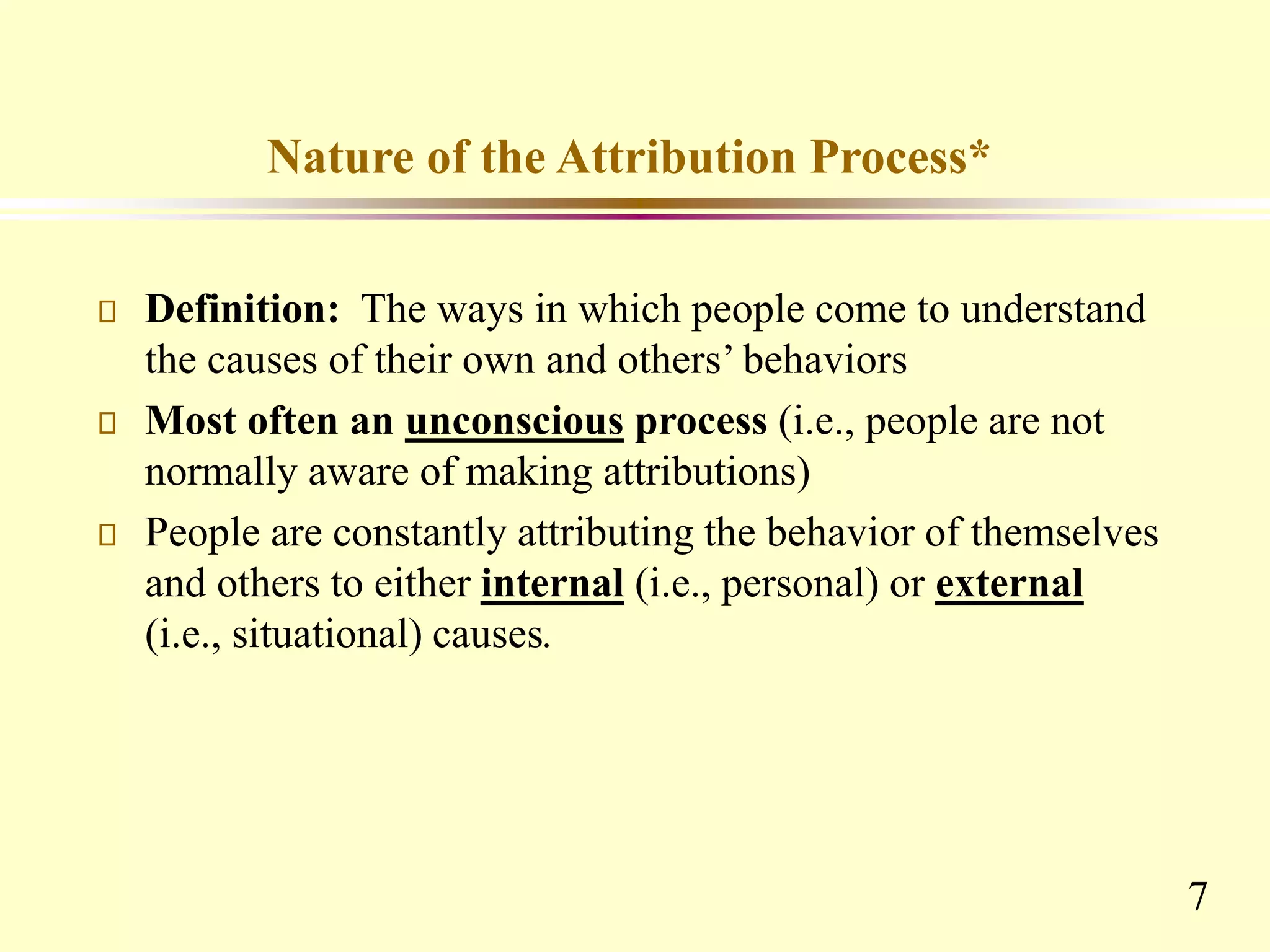
Nature of the Attribution Process*
Definition: The ways in which people come to understand
the causes of their own and others’ behaviors
Most often an unconscious process (i.e., people are not
normally aware of making attributions)
People are constantly attributing the behavior of themselves
and others to either internal (i.e., personal) or external
(i.e., situational) causes.
8
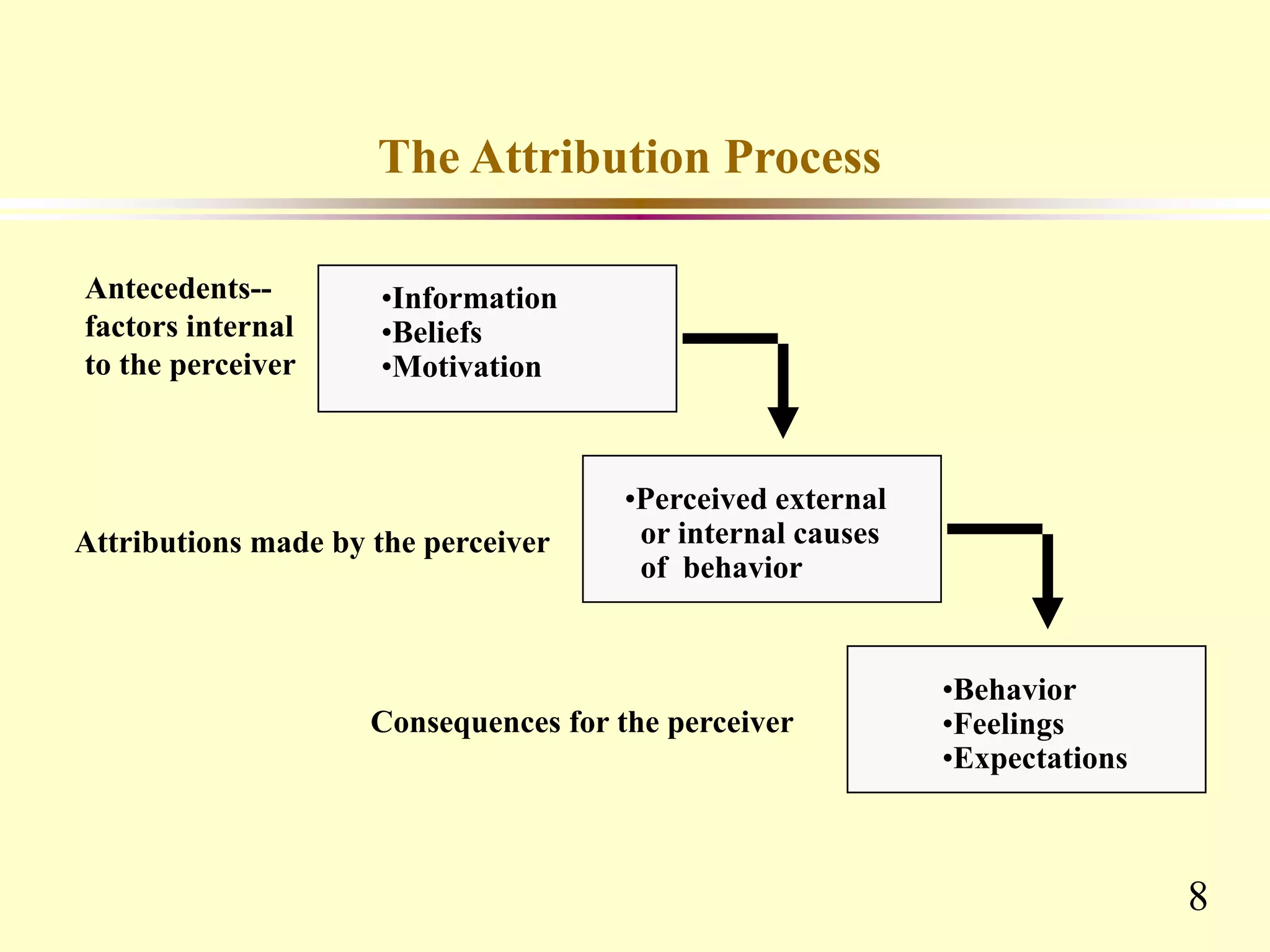
The Attribution Process
Antecedents--
factors internal
to the perceiver
Attributions made by the perceiver
Consequences for the perceiver
•Information
•Beliefs
•Motivation
•Perceived external
or internal causes
of behavior
•Behavior
•Feelings
•Expectations
9
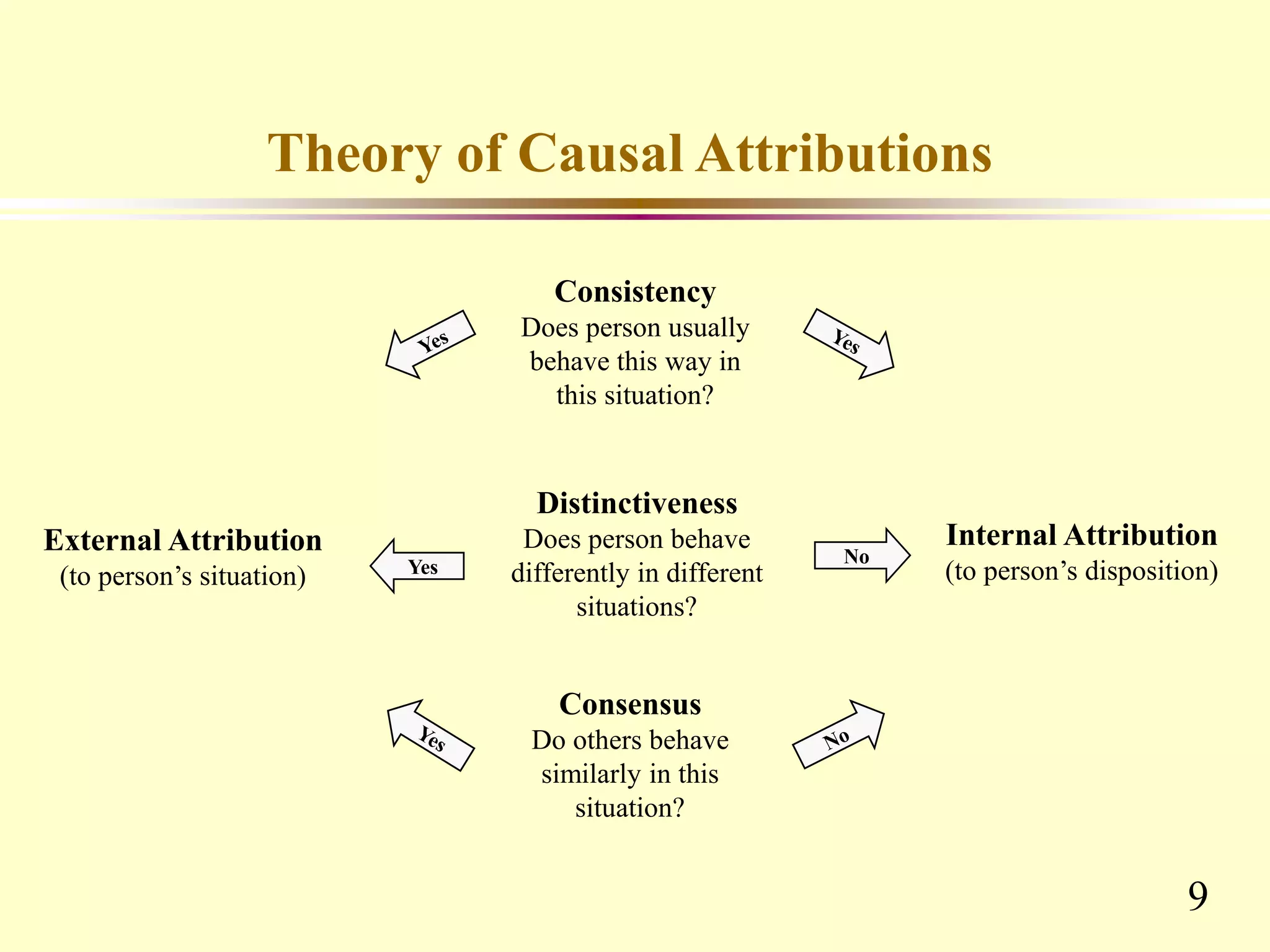
Theory of Causal Attributions
Consistency
Does person usually
behave this way in
this situation?
Distinctiveness
Does person behave
differently in different
situations?
Consensus
Do others behave
similarly in this
situation?
No
Internal Attribution
(to person’s disposition)Yes
External Attribution
(to person’s situation)
10
Frequent Attribution Errors*
Fundamental Attribution Error = overestimating the
personal causes for other’s behavior while underestimating
the situational causes
Self-Serving Bias = attributing personal success to internal
factors and personal failure to external factors

Percep and attribution 1

  • 1.
    1 Chapter 3 Understanding Perceptionsand Attributions The Perceptual Process* (esp. Figure 3.1, p. 68) Perceptual Selection* Person Perception* Perceptual Errors* Attributions: Perceived Causes of Behavior* Exercise: Truth or Consequences?
  • 2.
    2 Perception Definition: The processby which people select, organize, interpret, and respond to information from the world around them. Perception (consciously and unconsciously) involves searching for, obtaining, and processing information in the mind in an attempt to make sense of the world Selection and organization often account for differences in interpretation/perception between individuals observing the same stimuli
  • 3.
    3 Basic Elements inthe Perceptual Process* (See Figure 3.1, page 68) Environmental Stimuli Observation * Taste * Smell * Hearing * Sight * Touch Perceptual Selection * External factors * Internal factors Interpretation * Perceptual errors * Attributions Response * Covert * Overt Perceptual Organization * Perceptual grouping
  • 4.
    4 Concepts Manifest inthe Princeton Case Selective Screening: the process by which people filter out most information so they can deal with the most important matters Perceptual Set: an expectation of a perception based on past experience with the same or similar objects Pollyanna Principle: the notion that pleasant stimuli are processed more efficiently and accurately than unpleasant stimuli; an effect of motivation on perception Perceptual Grouping: tendency to form individual stimuli into a meaningful pattern by continuity, closure, proximity, or similarity
  • 5.
    5 Person Perception Definition: theprocess by which individuals attribute characteristics or traits to other people; closely related to attribution Implicit personality theories: personal beliefs about the relationships among other’s physical characteristics, personality traits, and specific behaviors Impression Management: the attempt people make to manipulate or control the impressions others form about them
  • 6.
    6 Common Perceptual Errors Perceptualdefense: the tendency for people to protect themselves against ideas, objects, or situations that are threatening Stereotyping: the tendency to assign attributes to someone solely on the basis of the category of people, of which that person is a member Halo effect: the process by which the perceiver evaluates another person solely on the basis of one attribute, either favorable or unfavorable Projection: the tendency for people to see their own traits in others Expectancy effects: extent to which expectations bias how events, objects, and people are actually perceived Self-fulfilling prophecy: expecting certain things to happen will shape the behavior of the perceiver in such a way that the expected is more likely to happen
  • 7.
    7 Nature of theAttribution Process* Definition: The ways in which people come to understand the causes of their own and others’ behaviors Most often an unconscious process (i.e., people are not normally aware of making attributions) People are constantly attributing the behavior of themselves and others to either internal (i.e., personal) or external (i.e., situational) causes.
  • 8.
    8 The Attribution Process Antecedents-- factorsinternal to the perceiver Attributions made by the perceiver Consequences for the perceiver •Information •Beliefs •Motivation •Perceived external or internal causes of behavior •Behavior •Feelings •Expectations
  • 9.
    9 Theory of CausalAttributions Consistency Does person usually behave this way in this situation? Distinctiveness Does person behave differently in different situations? Consensus Do others behave similarly in this situation? No Internal Attribution (to person’s disposition)Yes External Attribution (to person’s situation)
  • 10.
    10 Frequent Attribution Errors* FundamentalAttribution Error = overestimating the personal causes for other’s behavior while underestimating the situational causes Self-Serving Bias = attributing personal success to internal factors and personal failure to external factors