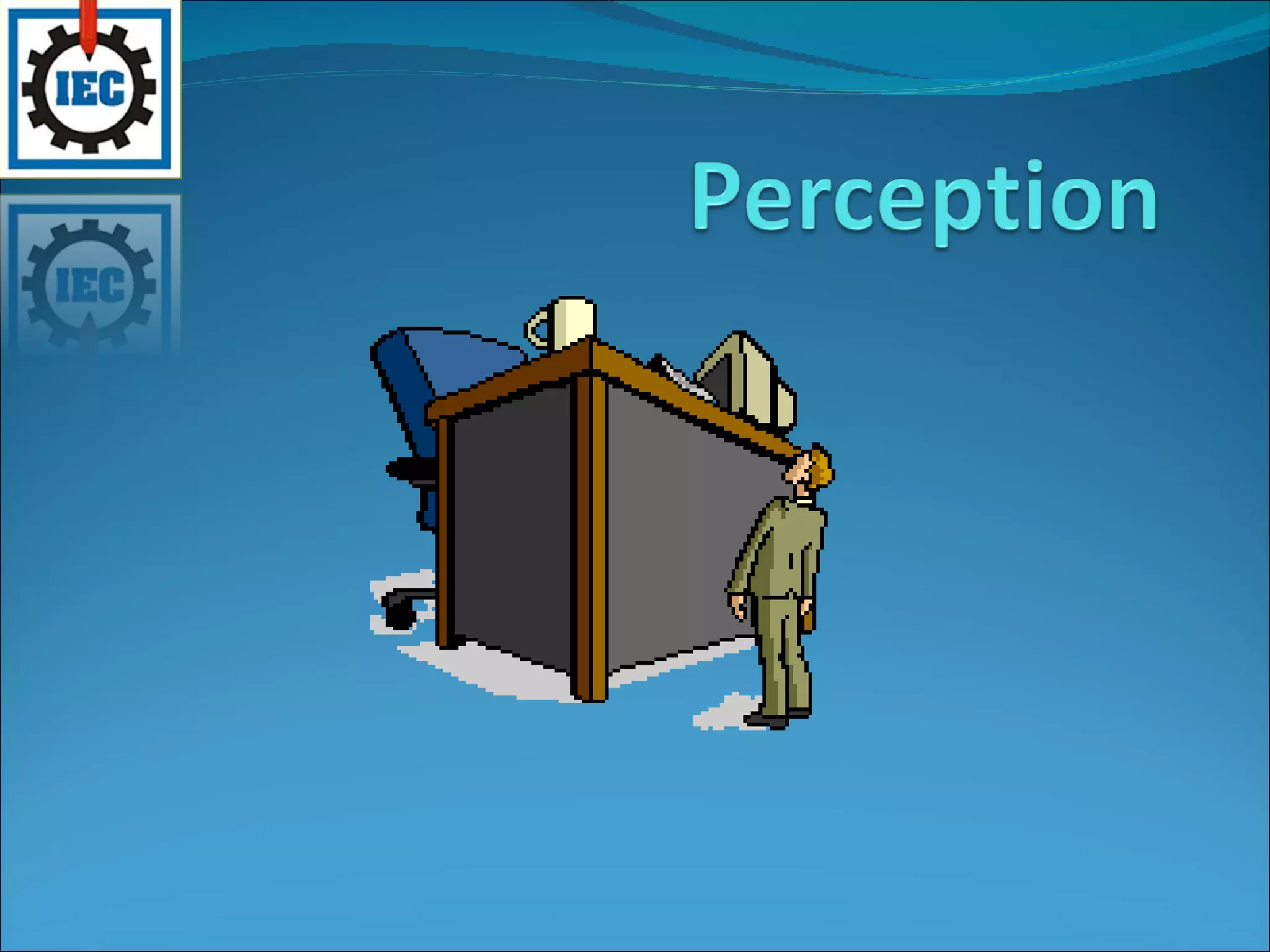
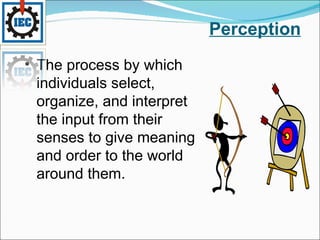
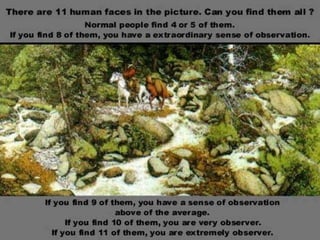
Perception The process by which individuals select, organize, and interpret the input from their senses to give meaning and order to the world around them.
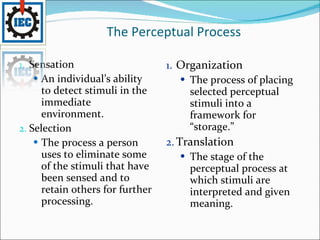
The Perceptual Process Sensation An individual’s ability to detect stimuli in the immediate environment. Selection The process a person uses to eliminate some of the stimuli that have been sensed and to retain others for further processing. Organization The process of placing selected perceptual stimuli into a framework for “storage.” Translation The stage of the perceptual process at which stimuli are interpreted and given meaning.
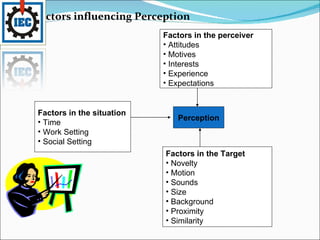
Factors influencing Perception Factors in the perceiver Attitudes Motives Interests Experience Expectations Perception Factors in the Target Novelty Motion Sounds Size Background Proximity Similarity Factors in the situation Time Work Setting Social Setting
Person Perception:  Making Judgments  About Others
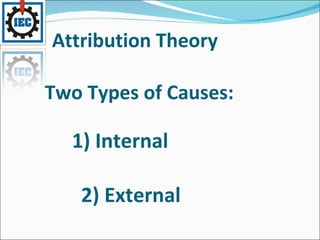
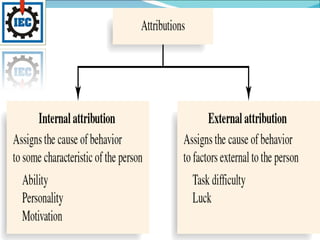
Attribution Theory    Two Types of Causes:    1) Internal   2) External
 
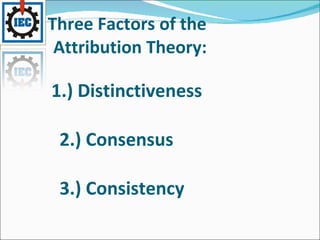
Three Factors of the   Attribution Theory:   1.) Distinctiveness   2.) Consensus   3.) Consistency
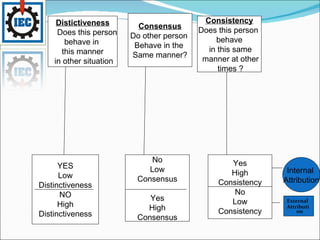
External Attribution Distictiveness Does this person  behave in  this manner in other situation Yes High Consistency No Low Consistency No Low Consensus Yes High Consensus YES Low Distinctiveness NO High Distinctiveness Consensus Do other person  Behave in the  Same manner? Consistency Does this person  behave in this same manner at other times ? Internal  Attribution
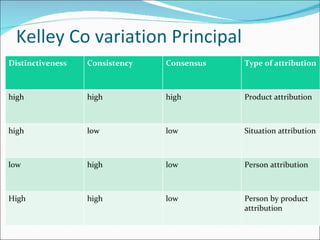
Kelley Co variation Principal Distinctiveness Consistency Consensus Type of attribution high high high Product attribution high low low Situation attribution low high low Person attribution High  high low Person by product attribution
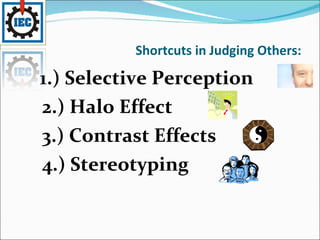
Shortcuts in Judging Others: 1.) Selective Perception 2.) Halo Effect 3.) Contrast Effects 4.) Stereotyping
Specific Applications in Organizations: 1.) Employment Interview 2.) Performance Expectations 3.) Performance Evaluation 4.) Employee Effort
 
Organizational Behavior / Perception
THANK  YOU

Perception

  • 1.
  • 2.
    Perception The processby which individuals select, organize, and interpret the input from their senses to give meaning and order to the world around them.
  • 3.
    The Perceptual ProcessSensation An individual’s ability to detect stimuli in the immediate environment. Selection The process a person uses to eliminate some of the stimuli that have been sensed and to retain others for further processing. Organization The process of placing selected perceptual stimuli into a framework for “storage.” Translation The stage of the perceptual process at which stimuli are interpreted and given meaning.
  • 4.
    Factors influencing PerceptionFactors in the perceiver Attitudes Motives Interests Experience Expectations Perception Factors in the Target Novelty Motion Sounds Size Background Proximity Similarity Factors in the situation Time Work Setting Social Setting
  • 5.
    Person Perception: Making Judgments About Others
  • 6.
    Attribution Theory Two Types of Causes: 1) Internal 2) External
  • 7.
  • 8.
    Three Factors ofthe Attribution Theory: 1.) Distinctiveness 2.) Consensus 3.) Consistency
  • 9.
    External Attribution DistictivenessDoes this person behave in this manner in other situation Yes High Consistency No Low Consistency No Low Consensus Yes High Consensus YES Low Distinctiveness NO High Distinctiveness Consensus Do other person Behave in the Same manner? Consistency Does this person behave in this same manner at other times ? Internal Attribution
  • 10.
    Kelley Co variationPrincipal Distinctiveness Consistency Consensus Type of attribution high high high Product attribution high low low Situation attribution low high low Person attribution High high low Person by product attribution
  • 11.
    Shortcuts in JudgingOthers: 1.) Selective Perception 2.) Halo Effect 3.) Contrast Effects 4.) Stereotyping
  • 12.
    Specific Applications inOrganizations: 1.) Employment Interview 2.) Performance Expectations 3.) Performance Evaluation 4.) Employee Effort
  • 13.
  • 14.
  • 15.
  • 16.