ORGANIZATIONORGANIZATION
STRUCTURESTRUCTURE
WHAT IS ORGANIZATIONALWHAT IS ORGANIZATIONAL
STRUCTURE?STRUCTURE?
 According to STEPHEN P ROBBINS “An organizationalAccording to STEPHEN P ROBBINS “An organizational
structure defines how job tasks are formally divided,structure defines how job tasks are formally divided,
grouped and coordinated.”grouped and coordinated.”
 According to FRED LUTHANS “Organization structureAccording to FRED LUTHANS “Organization structure
represents the skeleton framework for organizationalrepresents the skeleton framework for organizational
behavior.”behavior.”
 Organizational structure is defined as “the framework ofOrganizational structure is defined as “the framework of
tasks, reporting and authority relationships within which antasks, reporting and authority relationships within which an
organization functions.”organization functions.”
NEED FOR FORMALNEED FOR FORMAL
ORGANIZATION STRUCTUREORGANIZATION STRUCTURE
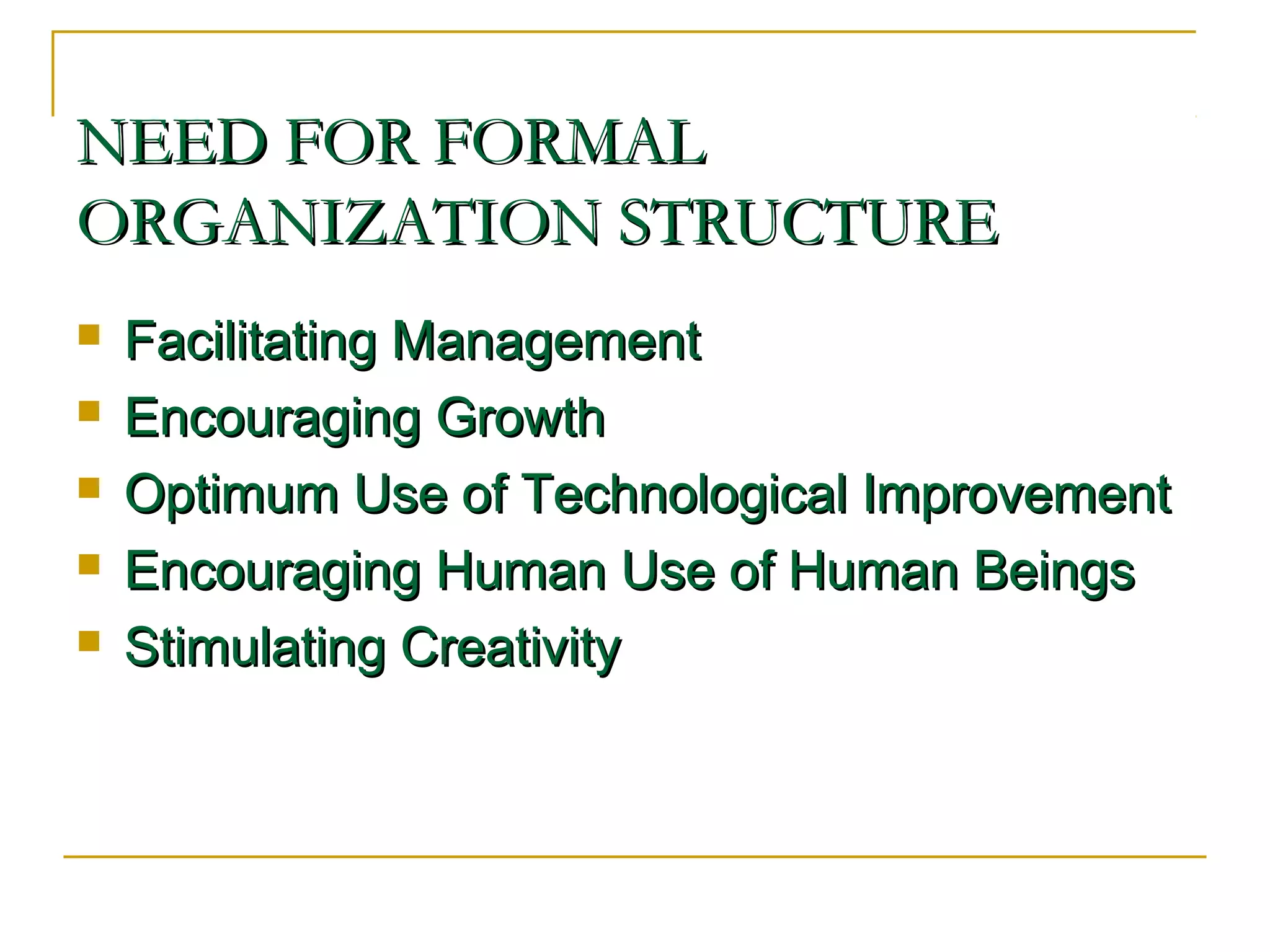
 Facilitating ManagementFacilitating Management
 Encouraging GrowthEncouraging Growth
 Optimum Use of Technological ImprovementOptimum Use of Technological Improvement
 Encouraging Human Use of Human BeingsEncouraging Human Use of Human Beings
 Stimulating CreativityStimulating Creativity
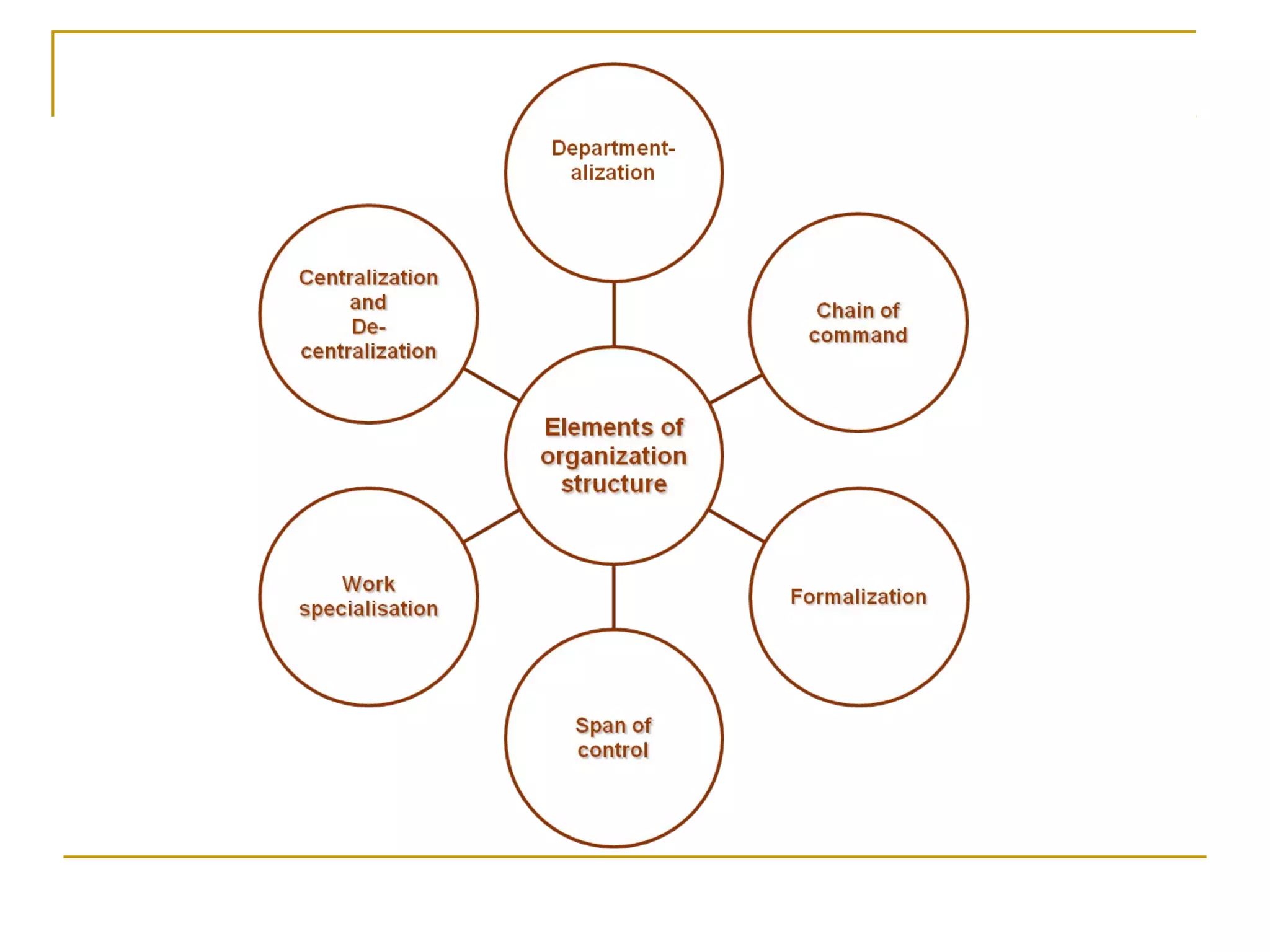
Work SpecializationWork Specialization
Work Specialization or Division Of LaborWork Specialization or Division Of Labor
refers to the degree to which activities in anrefers to the degree to which activities in an
organization are subdivided into separateorganization are subdivided into separate
jobs.jobs.
In essence, individuals specialize in doingIn essence, individuals specialize in doing
part of an activity rather than the entirepart of an activity rather than the entire
activity.activity.
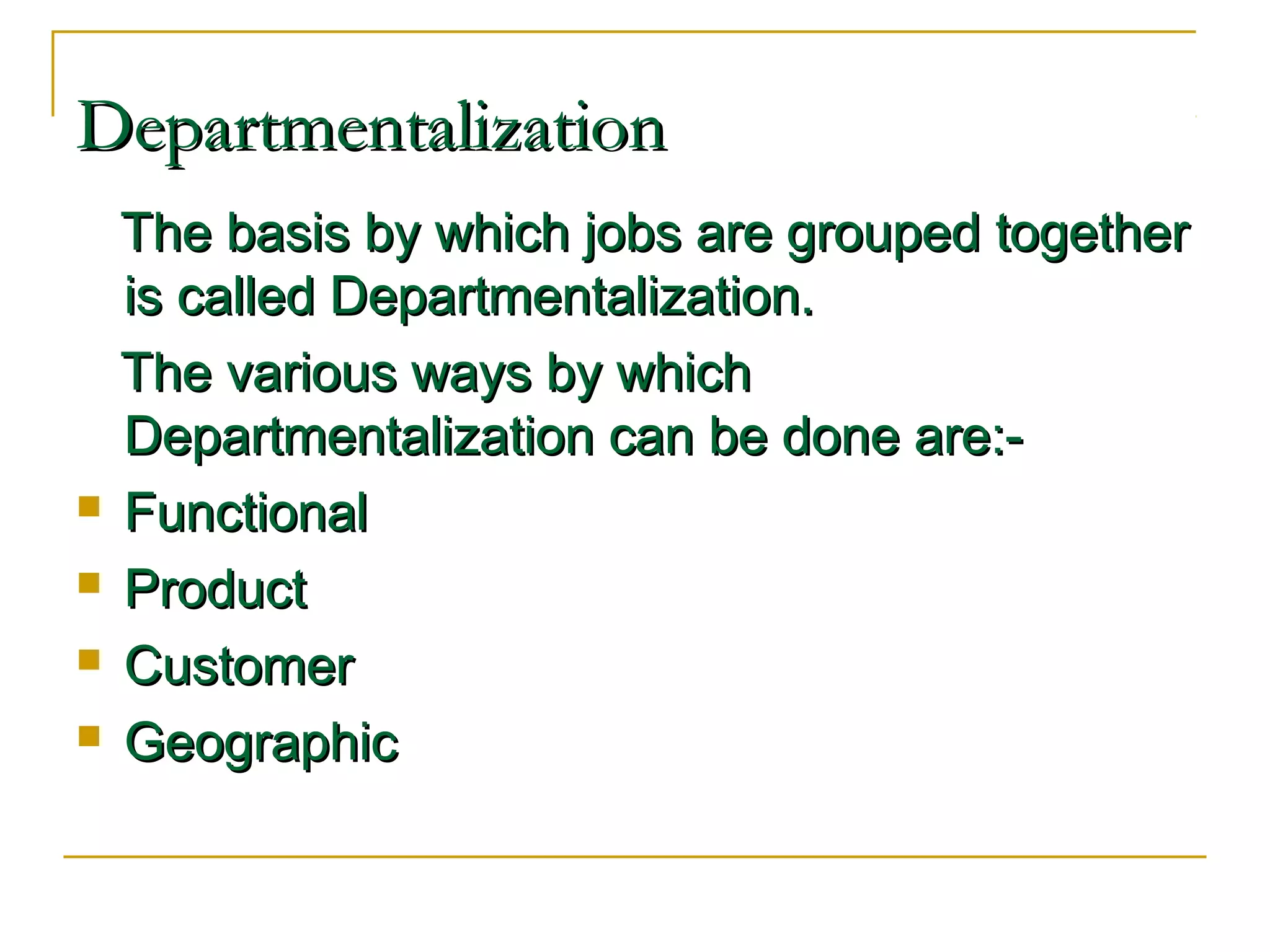
DepartmentalizationDepartmentalization
The basis by which jobs are grouped togetherThe basis by which jobs are grouped together
is called Departmentalization.is called Departmentalization.
The various ways by whichThe various ways by which
Departmentalization can be done are:-Departmentalization can be done are:-
 FunctionalFunctional
 ProductProduct
 CustomerCustomer
 GeographicGeographic
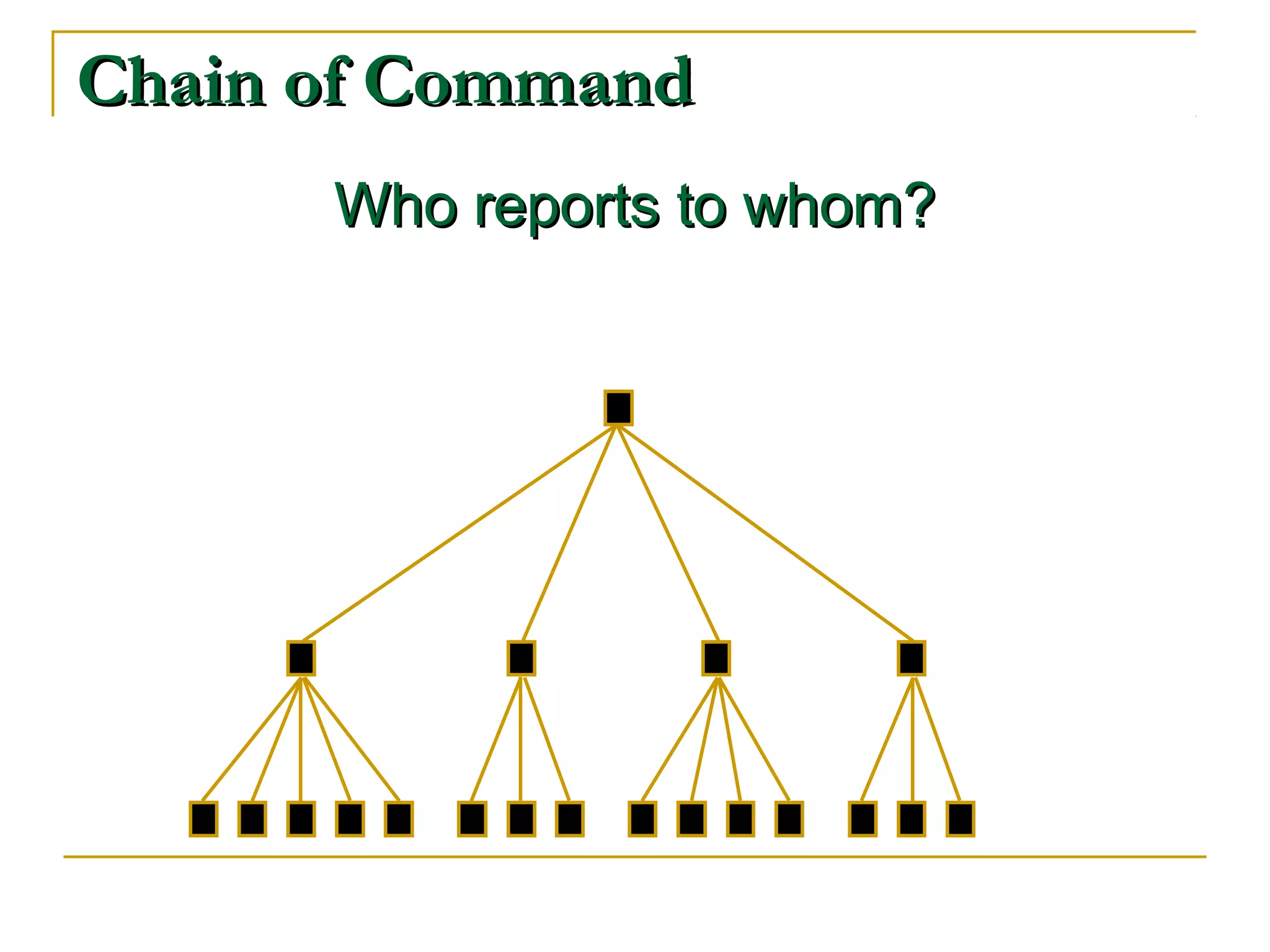
Chain of CommandChain of Command
Who reports to whom?Who reports to whom?
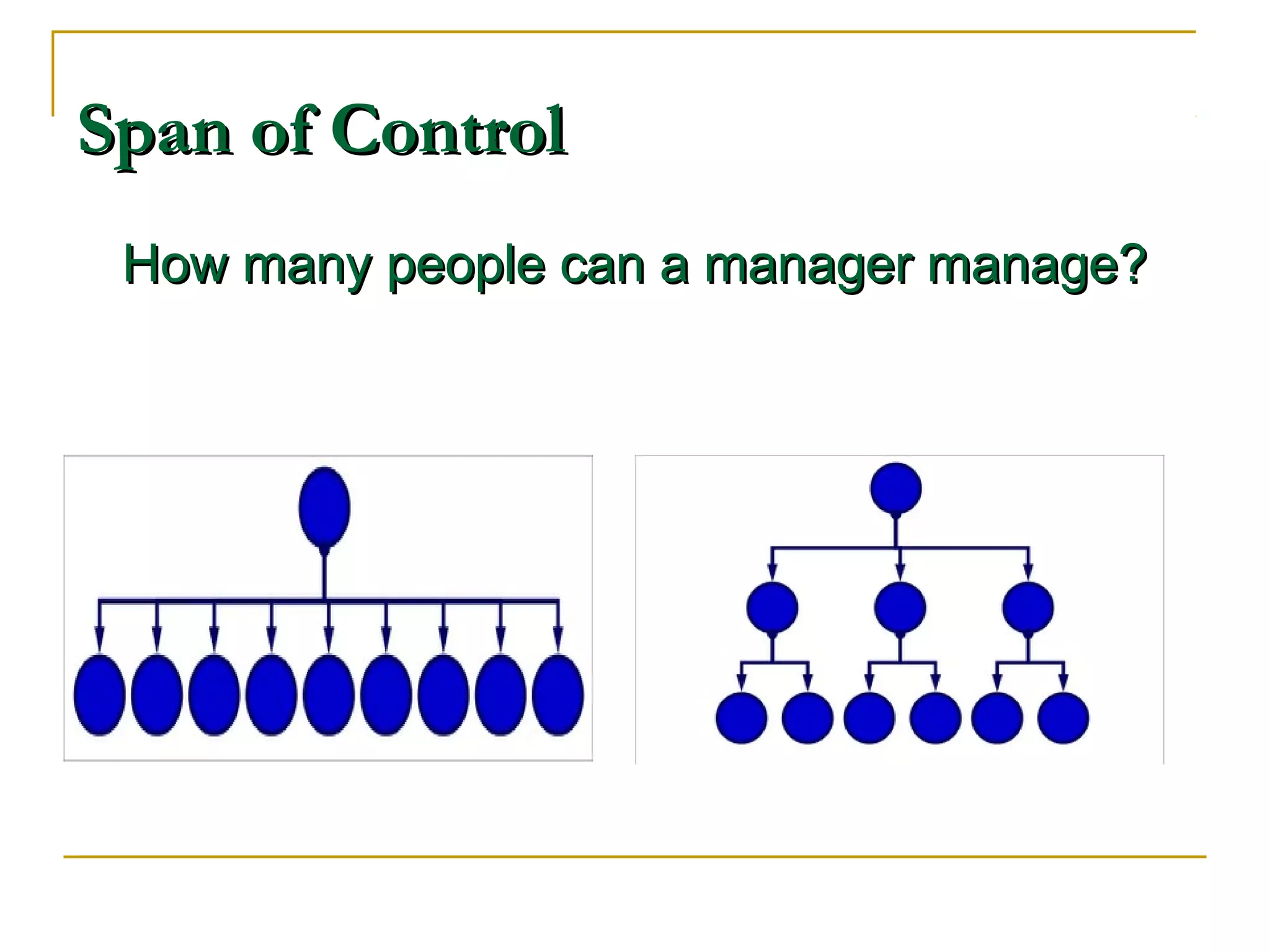
Span of ControlSpan of Control
How many people can a manager manage?How many people can a manager manage?
FormalizationFormalization
It refers to the degree to which the jobs withinIt refers to the degree to which the jobs within
the organization are standardized.the organization are standardized.
The degree of formalization can vary widelyThe degree of formalization can vary widely
between organizations and withinbetween organizations and within
organizations.organizations.
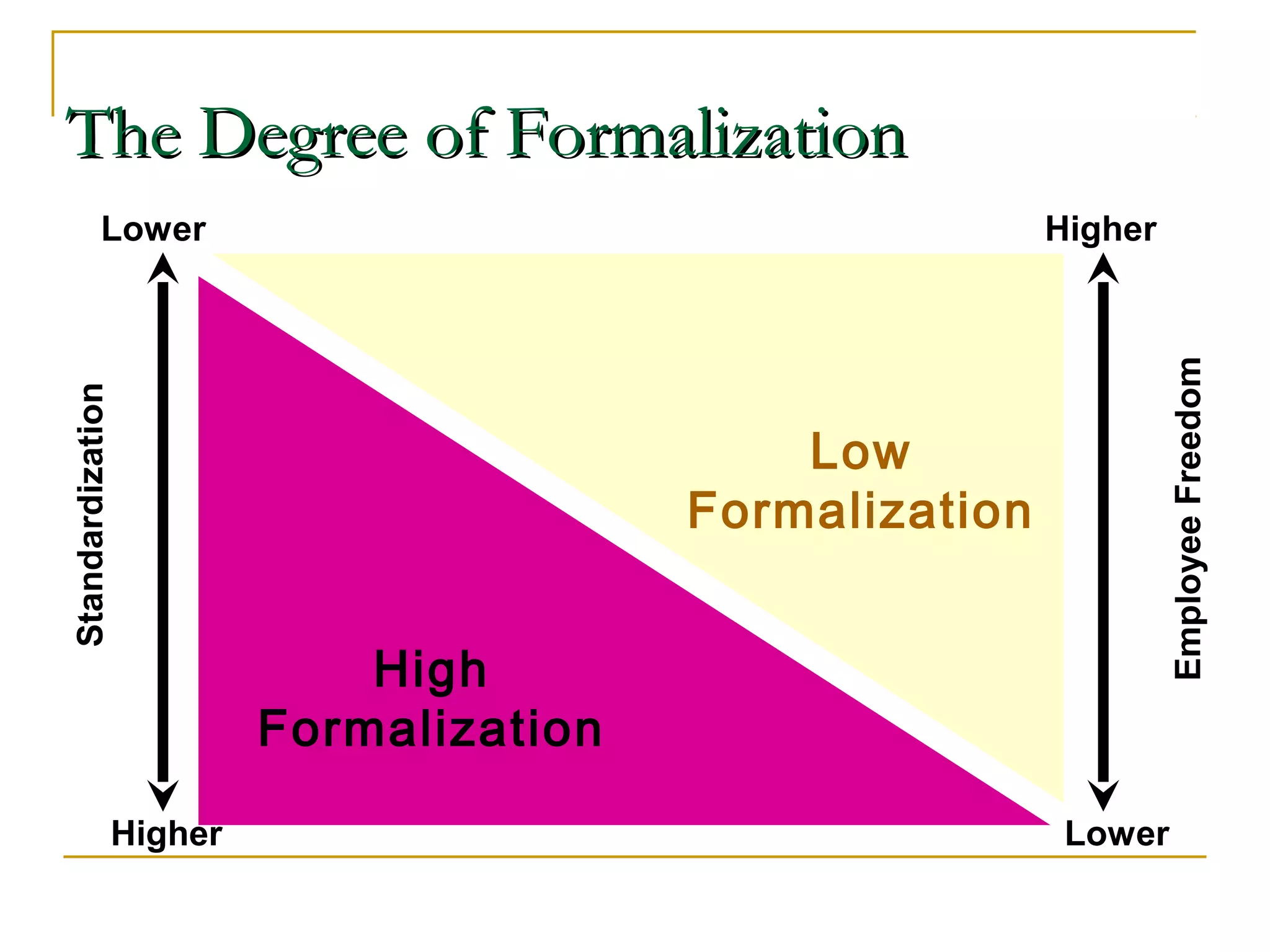
The Degree of FormalizationThe Degree of Formalization
Higher
EmployeeFreedom
High
Formalization
Low
Formalization
HigherLower
Standardization
Lower
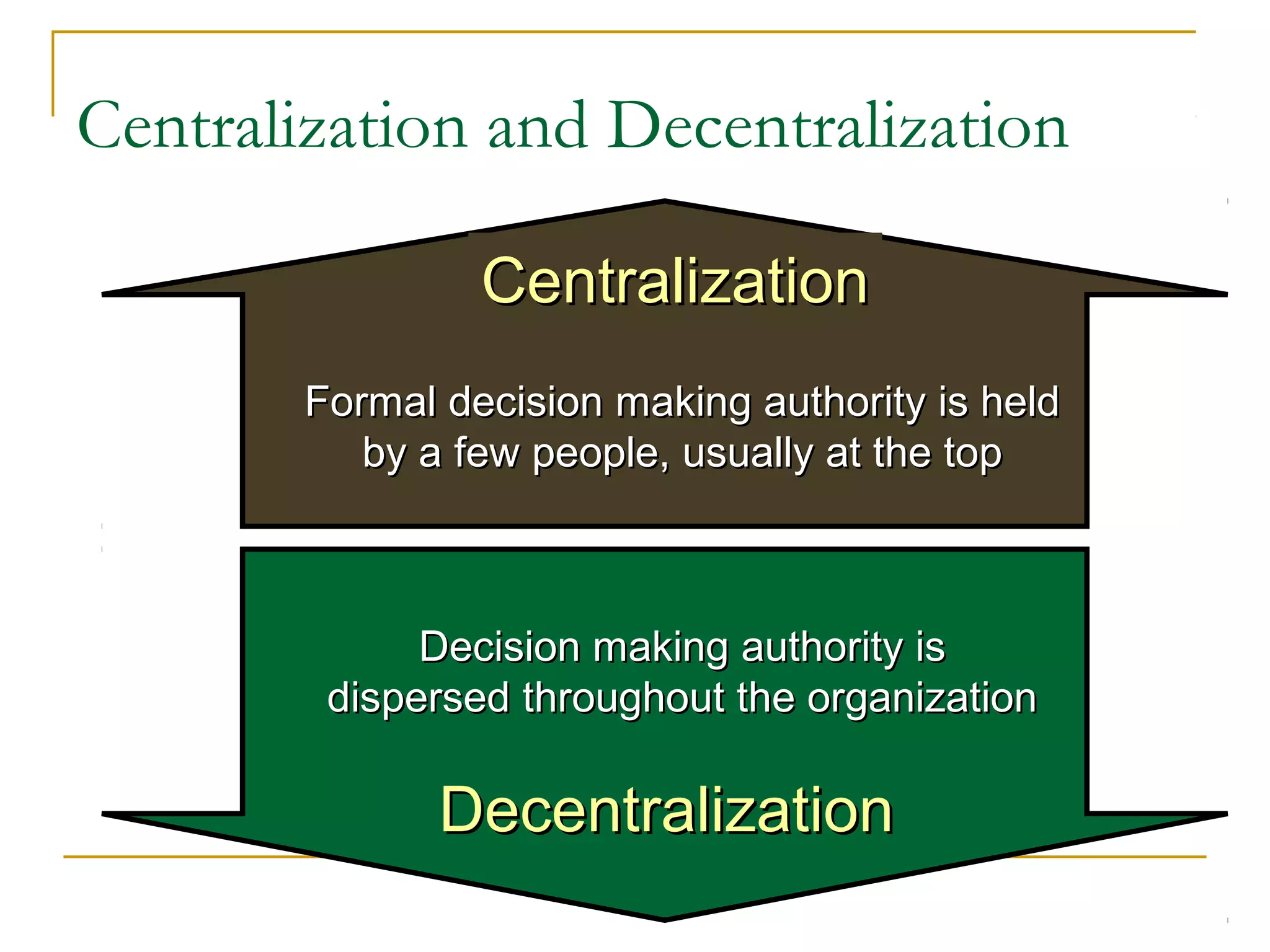
Formal decision making authority is heldFormal decision making authority is held
by a few people, usually at the topby a few people, usually at the top
CentralizationCentralization
Decision making authority isDecision making authority is
dispersed throughout the organizationdispersed throughout the organization
DecentralizationDecentralization
Centralization and Decentralization
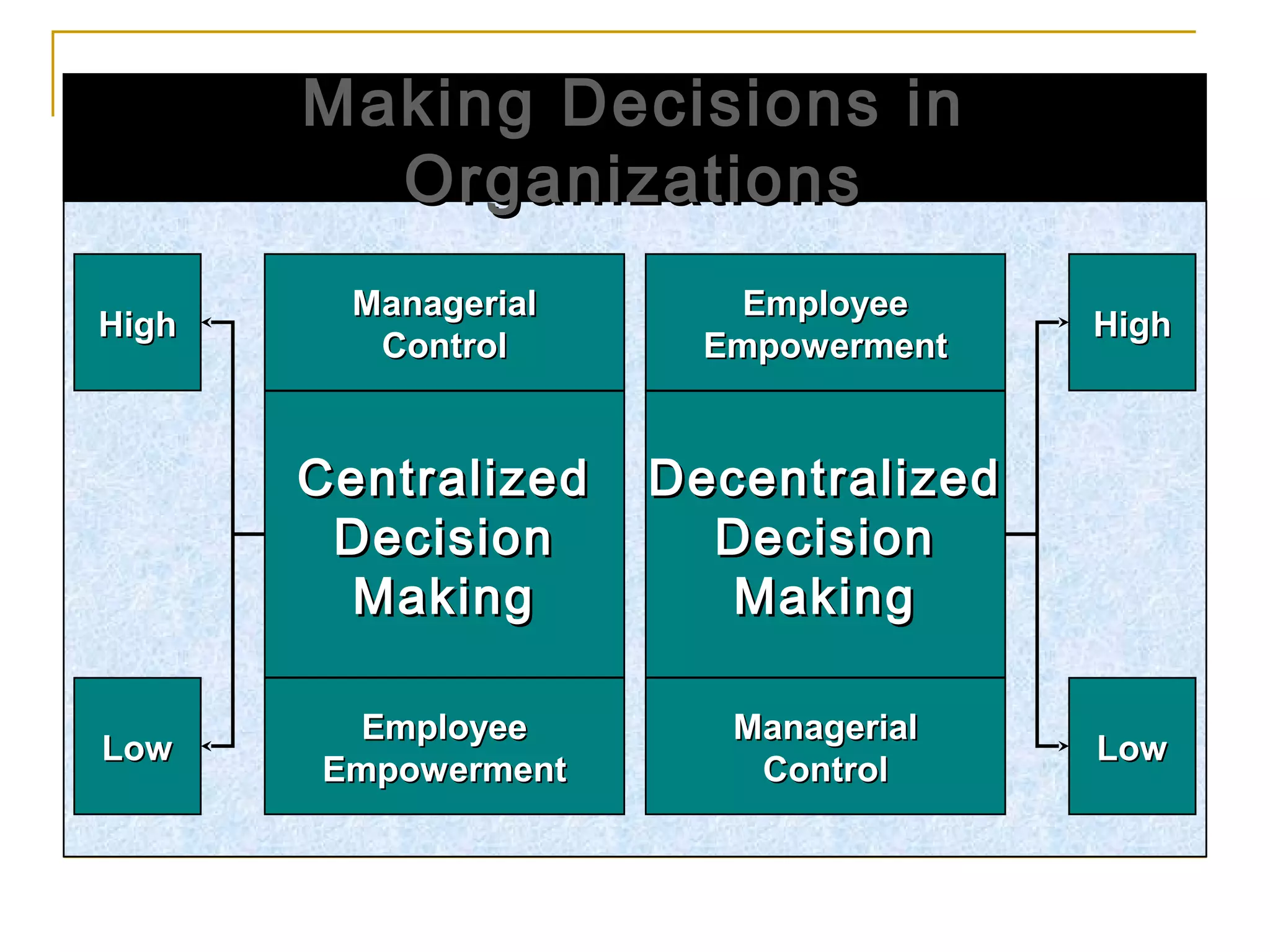
DecentralizedDecentralized
DecisionDecision
MakingMaking
CentralizedCentralized
DecisionDecision
MakingMaking
EmployeeEmployee
EmpowermentEmpowerment
ManagerialManagerial
ControlControl
ManagerialManagerial
ControlControl
EmployeeEmployee
EmpowermentEmpowerment
HighHighHighHigh
LowLow LowLow
Making Decisions inMaking Decisions in
OrganizationsOrganizations
FORMS OF ORGANIZATIONALFORMS OF ORGANIZATIONAL
STUCTURESSTUCTURES
 The Line and Staff Organization StructureThe Line and Staff Organization Structure
 The Functional Organization StructureThe Functional Organization Structure
 The Divisional Organization StructureThe Divisional Organization Structure
 The Matrix StructureThe Matrix Structure
 The Project Organization StructureThe Project Organization Structure
 Free form Organization StructureFree form Organization Structure
 Network Organization StructureNetwork Organization Structure
Line and Staff Organization Structure
 Line Departments – Substantive (direct) in its contribution to
organization’s overall objective
 Staff Departments – Objective (indirect) in its contribution to
organization’s overall objective
Line and Staff conflict
Reasons of conflict are:
• Difference in view points
• Lack of Demarcation between Line and Staff
• Lack of proper understanding of authority
• Different background
Functional Organization Structure
 Traditional concept of organizing.
 The basis of departmentation is the various
functions to be performed by the
organization.
 Widely used in medium and large
organizations.
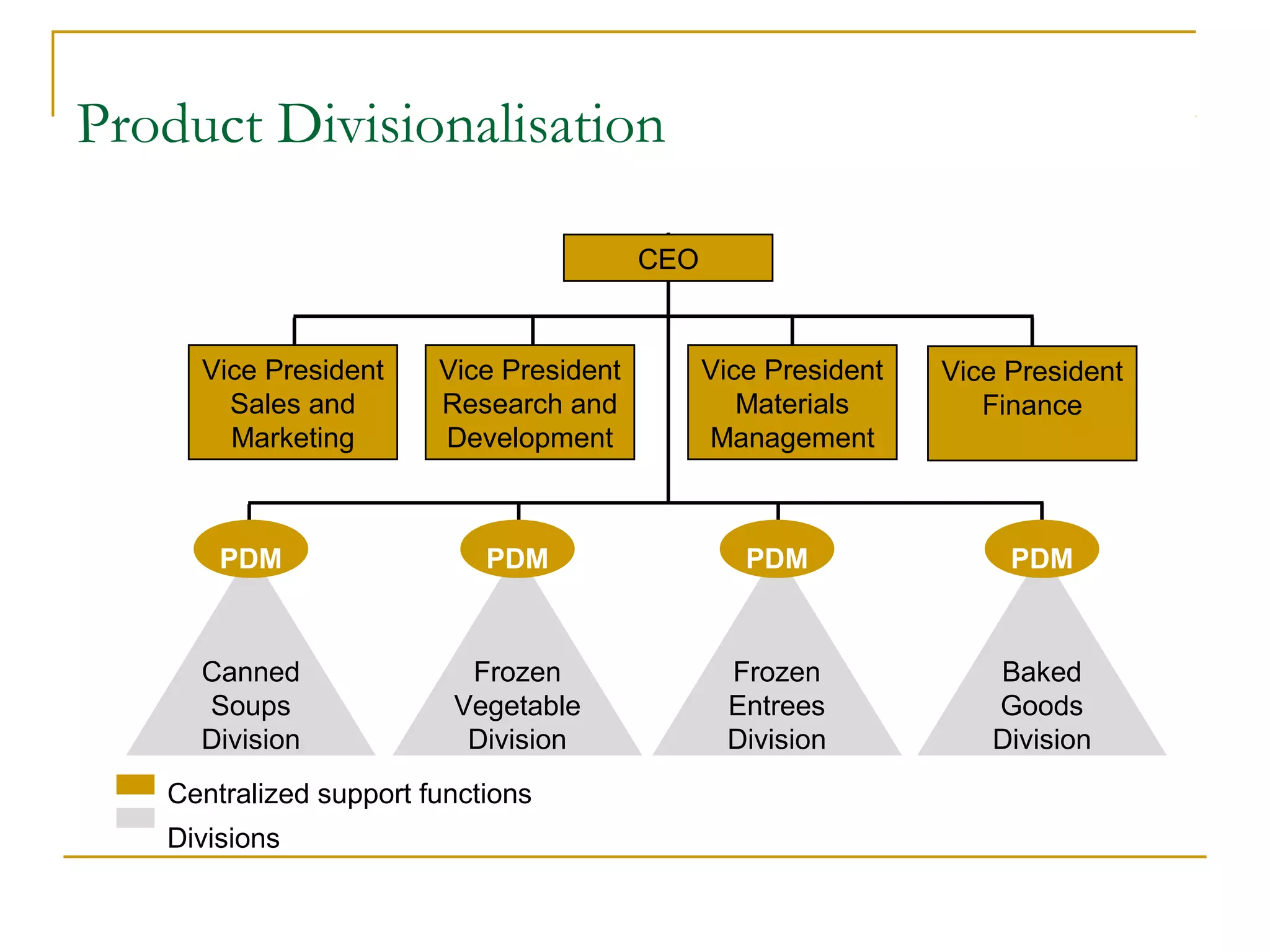
Divisional Organization Structure
 Also known as Profit Decentralization.
 Organization is divided into fairly autonomous units.
 Each unit is self contained and directly accountable
to the organization.
Basis of Divisionalisation
 Product Divisionalisation
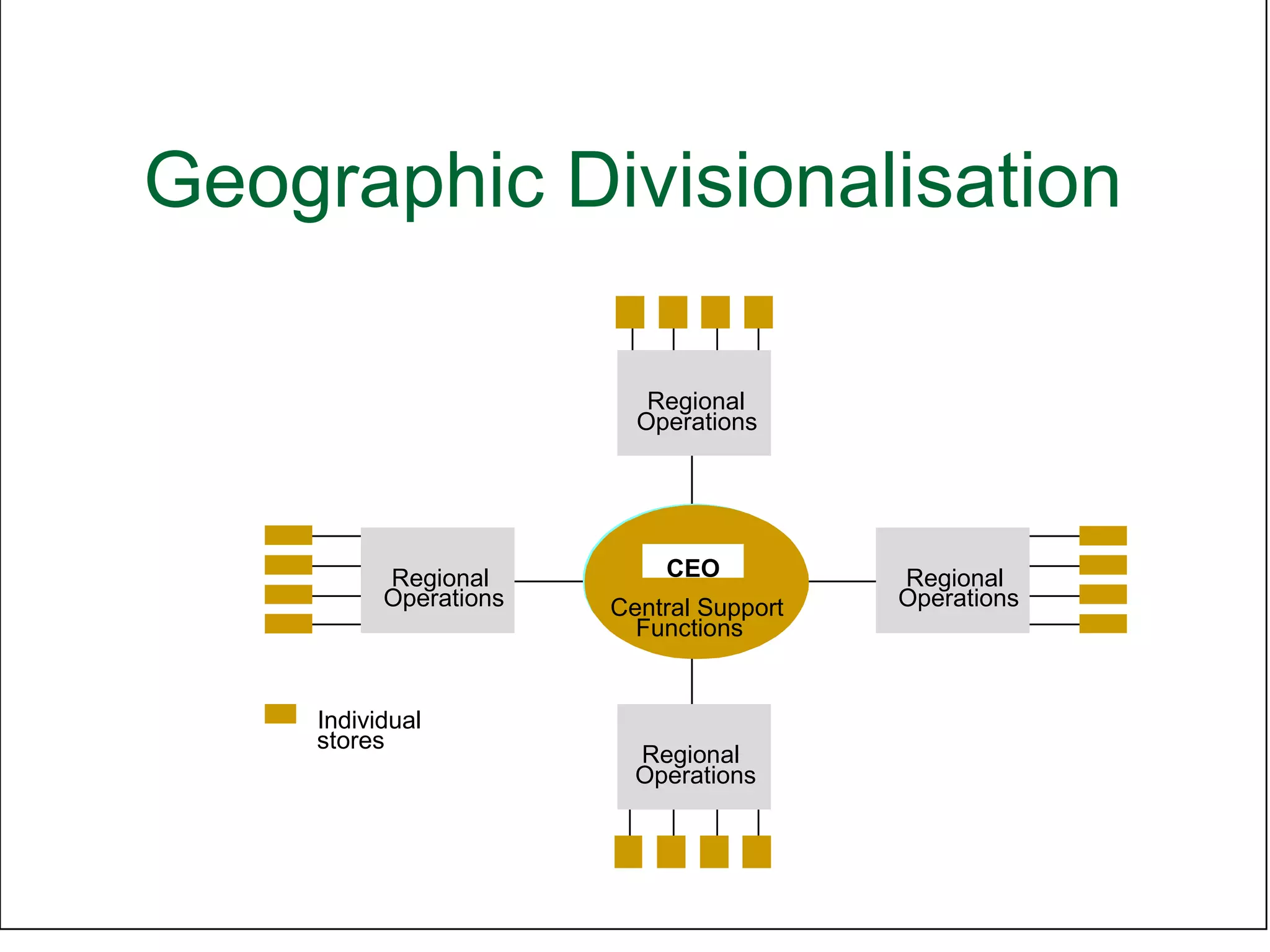
 Territorial Divisionalisation
 Strategic Business Divisionalisation
Product Divisionalisation
Vice President
Sales and
Marketing
Vice President
Research and
Development
Vice President
Materials
Management
CEO
Vice President
Finance
Canned
Soups
Division
PDM
Frozen
Vegetable
Division
PDM
Frozen
Entrees
Division
PDM
Baked
Goods
Division
PDM
Centralized support functions
Divisions
1818
Geographic Divisionalisation
Regional
Operations
Regional
Operations
Regional
Operations
Regional
Operations
CEO
Central Support
Functions
Individual
stores
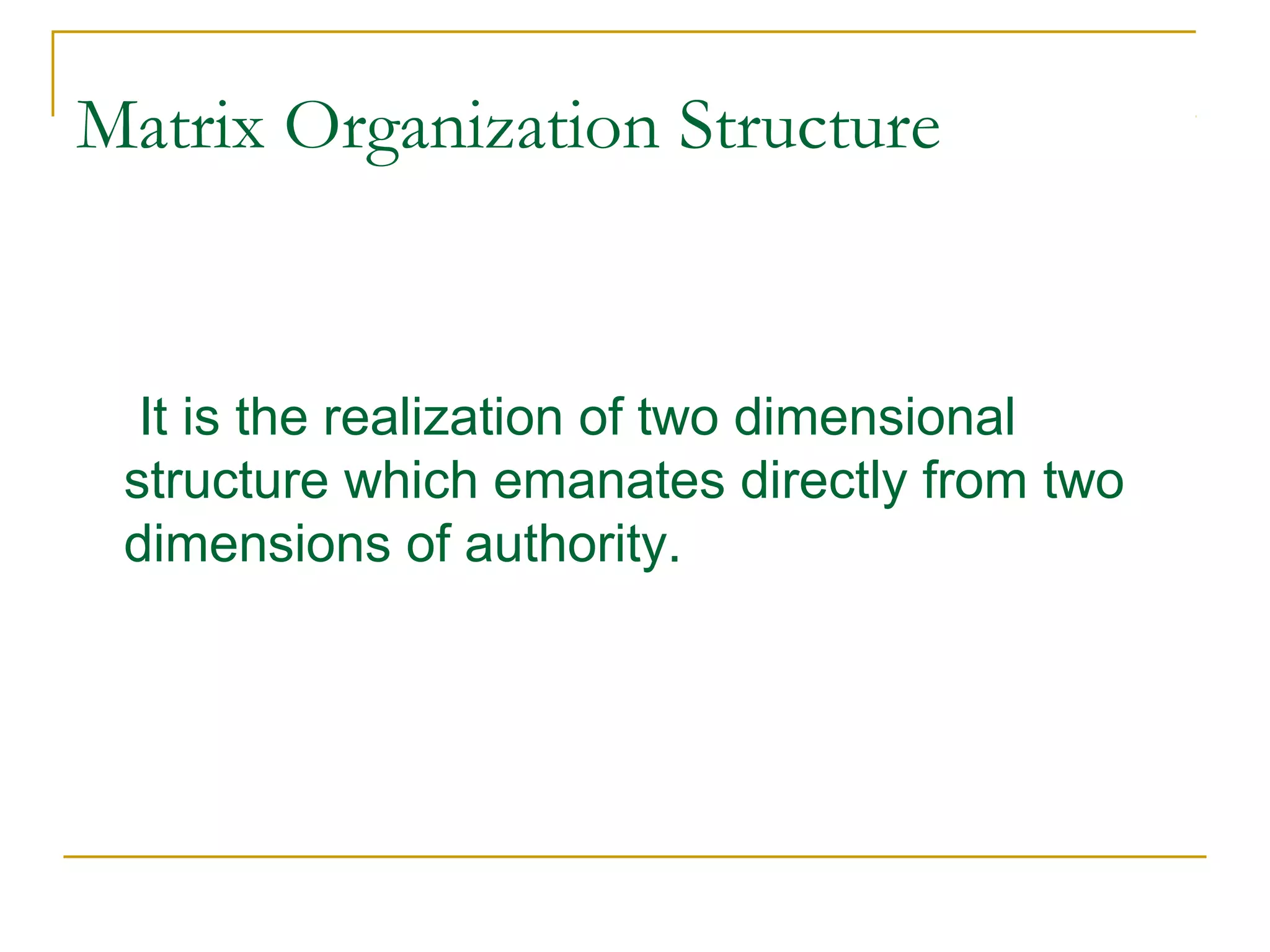
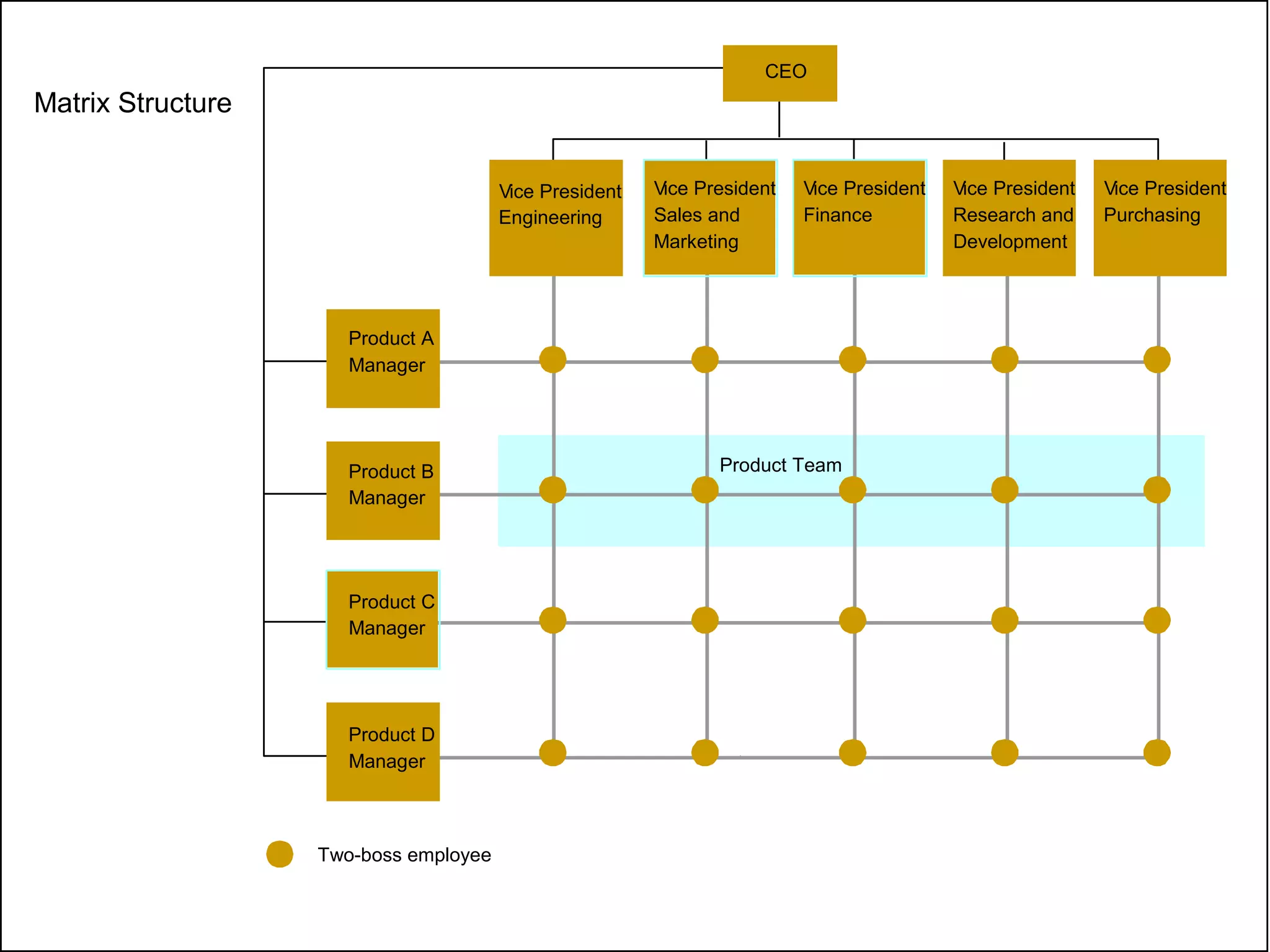
Matrix Organization Structure
It is the realization of two dimensional
structure which emanates directly from two
dimensions of authority.
2020
Matrix Structure
CEO
Vice President
Engineering
Vice President
Finance
Vice President
Purchasing
Vice President
Sales and
Marketing
Vice President
Research and
Development
Product A
Manager
Product B
Manager
Product C
Manager
Product D
Manager
Product Team
Two-boss employee
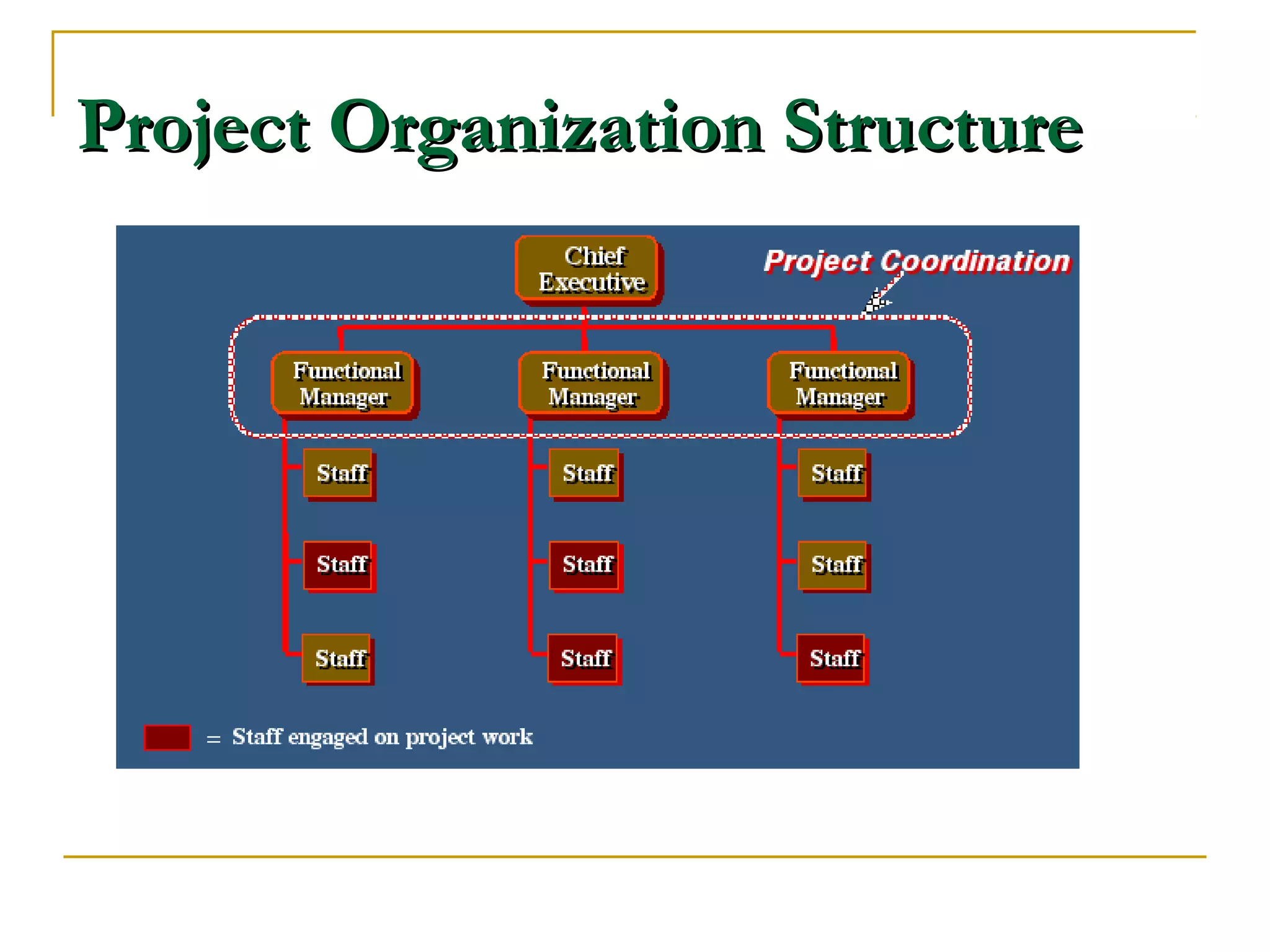
Project Organization StructureProject Organization Structure
Free Form Organization
 Also known as naturalistic, organic form of
organization structure.
 Free form structures reduce the emphasis on
positions, departments and other formal
units, and on the organizational hierarchy.
 Free form organizations are suitable for those
industries which have to work in highly
dynamic environments.
2323
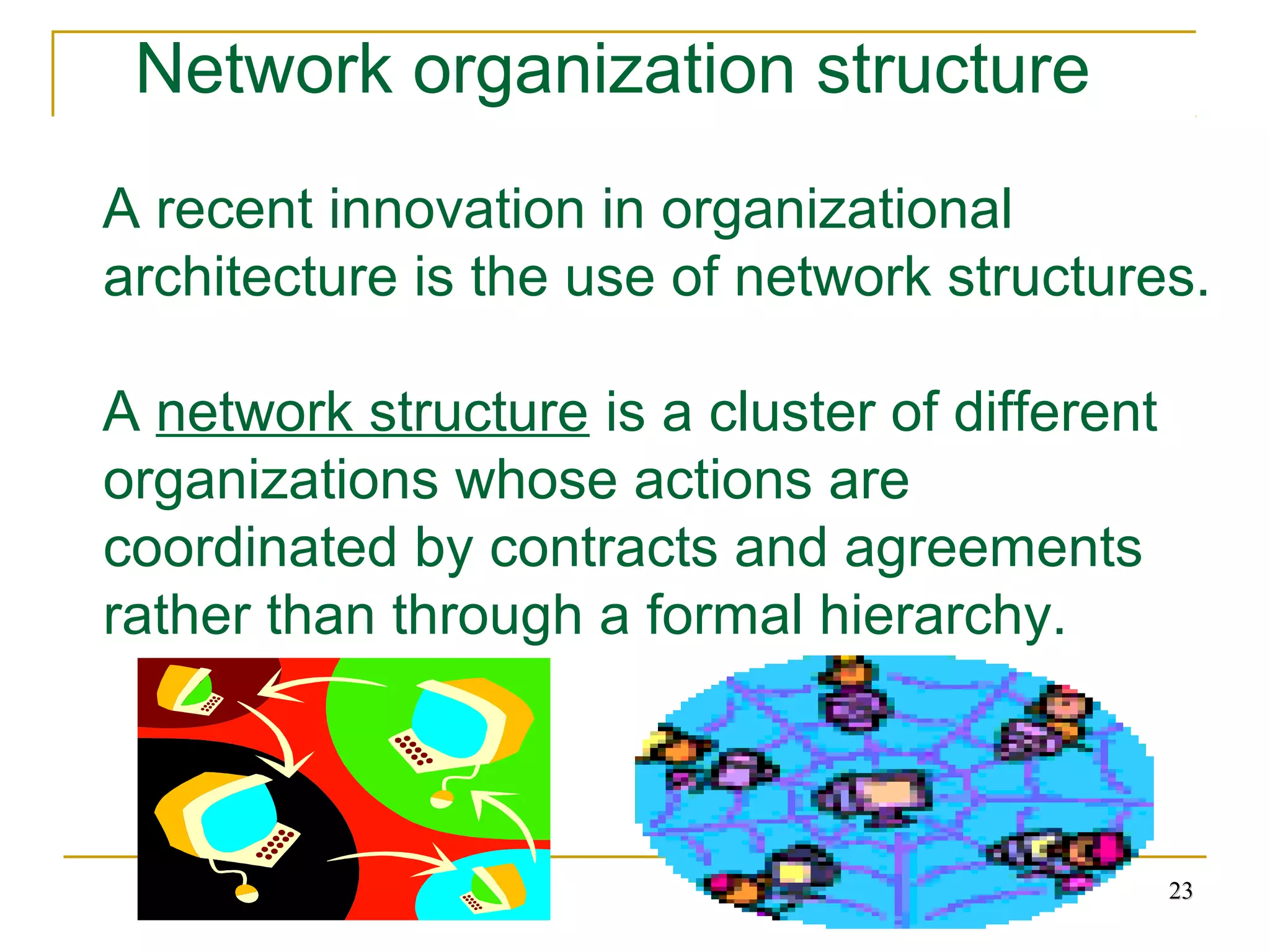
Network organization structure
A recent innovation in organizational
architecture is the use of network structures.
A network structure is a cluster of different
organizations whose actions are
coordinated by contracts and agreements
rather than through a formal hierarchy.

organisational structure

  • 1.
  • 2.
    WHAT IS ORGANIZATIONALWHATIS ORGANIZATIONAL STRUCTURE?STRUCTURE?  According to STEPHEN P ROBBINS “An organizationalAccording to STEPHEN P ROBBINS “An organizational structure defines how job tasks are formally divided,structure defines how job tasks are formally divided, grouped and coordinated.”grouped and coordinated.”  According to FRED LUTHANS “Organization structureAccording to FRED LUTHANS “Organization structure represents the skeleton framework for organizationalrepresents the skeleton framework for organizational behavior.”behavior.”  Organizational structure is defined as “the framework ofOrganizational structure is defined as “the framework of tasks, reporting and authority relationships within which antasks, reporting and authority relationships within which an organization functions.”organization functions.”
  • 3.
    NEED FOR FORMALNEEDFOR FORMAL ORGANIZATION STRUCTUREORGANIZATION STRUCTURE  Facilitating ManagementFacilitating Management  Encouraging GrowthEncouraging Growth  Optimum Use of Technological ImprovementOptimum Use of Technological Improvement  Encouraging Human Use of Human BeingsEncouraging Human Use of Human Beings  Stimulating CreativityStimulating Creativity
  • 5.
    Work SpecializationWork Specialization WorkSpecialization or Division Of LaborWork Specialization or Division Of Labor refers to the degree to which activities in anrefers to the degree to which activities in an organization are subdivided into separateorganization are subdivided into separate jobs.jobs. In essence, individuals specialize in doingIn essence, individuals specialize in doing part of an activity rather than the entirepart of an activity rather than the entire activity.activity.
  • 6.
    DepartmentalizationDepartmentalization The basis bywhich jobs are grouped togetherThe basis by which jobs are grouped together is called Departmentalization.is called Departmentalization. The various ways by whichThe various ways by which Departmentalization can be done are:-Departmentalization can be done are:-  FunctionalFunctional  ProductProduct  CustomerCustomer  GeographicGeographic
  • 7.
    Chain of CommandChainof Command Who reports to whom?Who reports to whom?
  • 8.
    Span of ControlSpanof Control How many people can a manager manage?How many people can a manager manage?
  • 9.
    FormalizationFormalization It refers tothe degree to which the jobs withinIt refers to the degree to which the jobs within the organization are standardized.the organization are standardized. The degree of formalization can vary widelyThe degree of formalization can vary widely between organizations and withinbetween organizations and within organizations.organizations.
  • 10.
    The Degree ofFormalizationThe Degree of Formalization Higher EmployeeFreedom High Formalization Low Formalization HigherLower Standardization Lower
  • 11.
    Formal decision makingauthority is heldFormal decision making authority is held by a few people, usually at the topby a few people, usually at the top CentralizationCentralization Decision making authority isDecision making authority is dispersed throughout the organizationdispersed throughout the organization DecentralizationDecentralization Centralization and Decentralization
  • 12.
  • 13.
    FORMS OF ORGANIZATIONALFORMSOF ORGANIZATIONAL STUCTURESSTUCTURES  The Line and Staff Organization StructureThe Line and Staff Organization Structure  The Functional Organization StructureThe Functional Organization Structure  The Divisional Organization StructureThe Divisional Organization Structure  The Matrix StructureThe Matrix Structure  The Project Organization StructureThe Project Organization Structure  Free form Organization StructureFree form Organization Structure  Network Organization StructureNetwork Organization Structure
  • 14.
    Line and StaffOrganization Structure  Line Departments – Substantive (direct) in its contribution to organization’s overall objective  Staff Departments – Objective (indirect) in its contribution to organization’s overall objective Line and Staff conflict Reasons of conflict are: • Difference in view points • Lack of Demarcation between Line and Staff • Lack of proper understanding of authority • Different background
  • 15.
    Functional Organization Structure Traditional concept of organizing.  The basis of departmentation is the various functions to be performed by the organization.  Widely used in medium and large organizations.
  • 16.
    Divisional Organization Structure Also known as Profit Decentralization.  Organization is divided into fairly autonomous units.  Each unit is self contained and directly accountable to the organization. Basis of Divisionalisation  Product Divisionalisation  Territorial Divisionalisation  Strategic Business Divisionalisation
  • 17.
    Product Divisionalisation Vice President Salesand Marketing Vice President Research and Development Vice President Materials Management CEO Vice President Finance Canned Soups Division PDM Frozen Vegetable Division PDM Frozen Entrees Division PDM Baked Goods Division PDM Centralized support functions Divisions
  • 18.
  • 19.
    Matrix Organization Structure Itis the realization of two dimensional structure which emanates directly from two dimensions of authority.
  • 20.
    2020 Matrix Structure CEO Vice President Engineering VicePresident Finance Vice President Purchasing Vice President Sales and Marketing Vice President Research and Development Product A Manager Product B Manager Product C Manager Product D Manager Product Team Two-boss employee
  • 21.
  • 22.
    Free Form Organization Also known as naturalistic, organic form of organization structure.  Free form structures reduce the emphasis on positions, departments and other formal units, and on the organizational hierarchy.  Free form organizations are suitable for those industries which have to work in highly dynamic environments.
  • 23.
    2323 Network organization structure Arecent innovation in organizational architecture is the use of network structures. A network structure is a cluster of different organizations whose actions are coordinated by contracts and agreements rather than through a formal hierarchy.