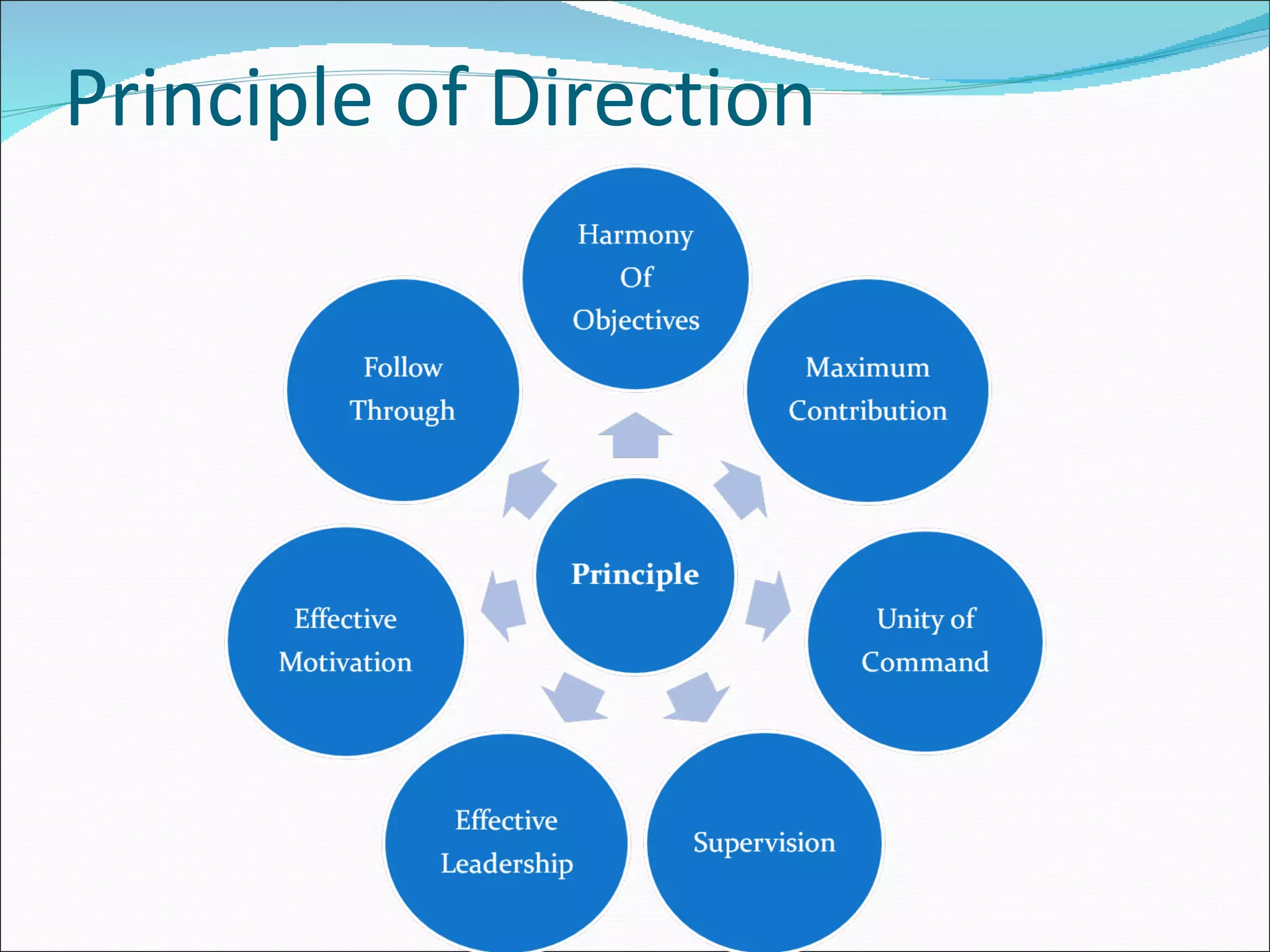
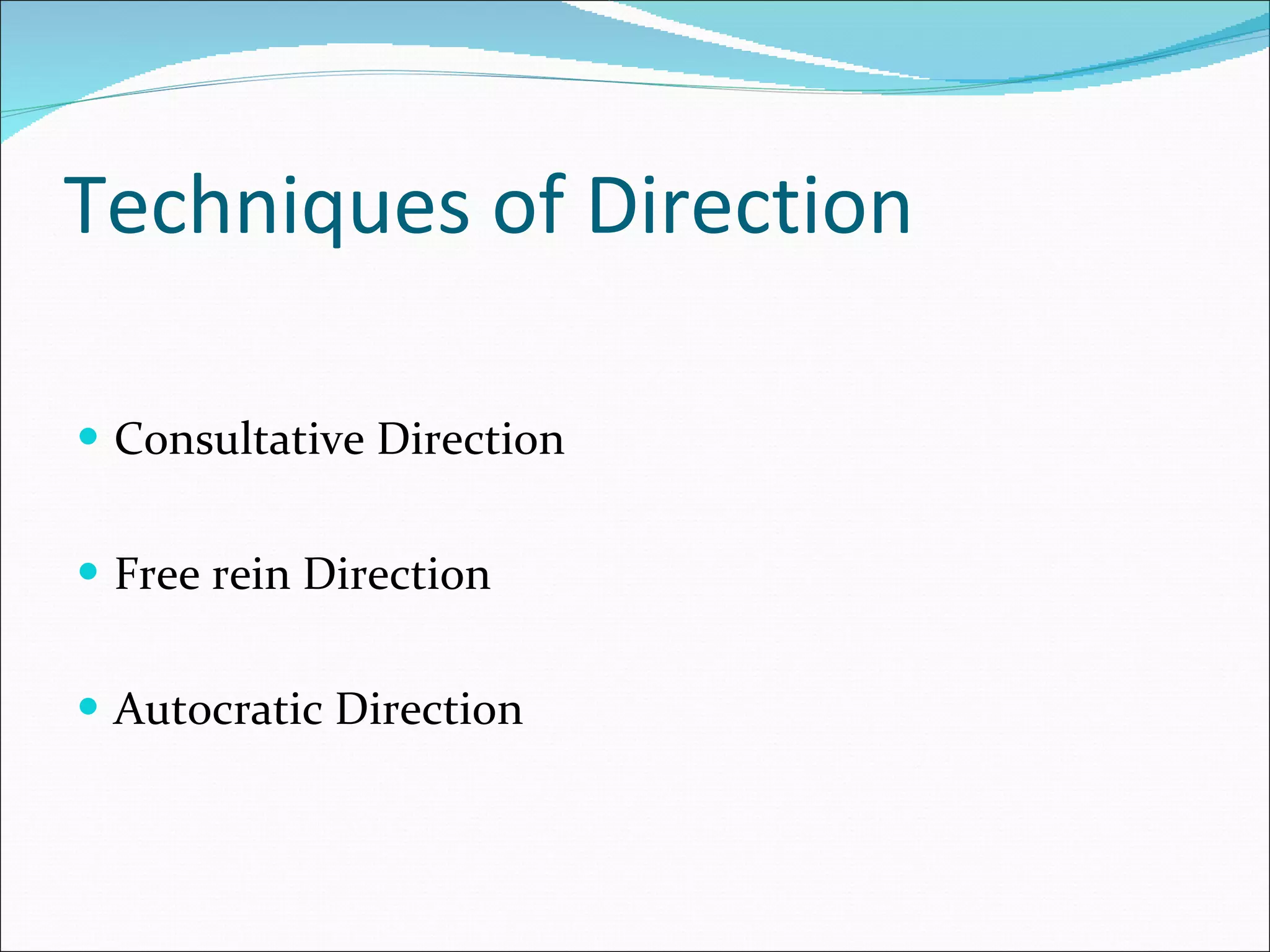
The document discusses several key concepts in management including directing, communication, motivation, and leadership. It defines directing as guiding subordinates towards organizational goals through activities like supervision and inspiration. Communication is defined as the exchange of information between two or more people. Motivation is described as impelling people to action by addressing their needs and incentives. Leadership is the ability to guide followers voluntarily through influence rather than coercion towards achieving goals.
Introduction…. Directing/Direction isa function of management performed by top level management in order to achieve organizational goals. It is very important and necessary function of management. Management has to undertake various activities like, guide people, inspired and lead them as well as supervision of their activity is required in order to achieve desired results.
4.
Meaning and DefinitionDirection consists of the process and techniques utilized in issuing instructions and making certain that operations are carried as originally planned. “ Directing involve determining the course, giving order and instruction and providing dynamic leadership” – Marshall “ Activating means and moving into action- supplying simulative power to the group”- G.R Terry
5.
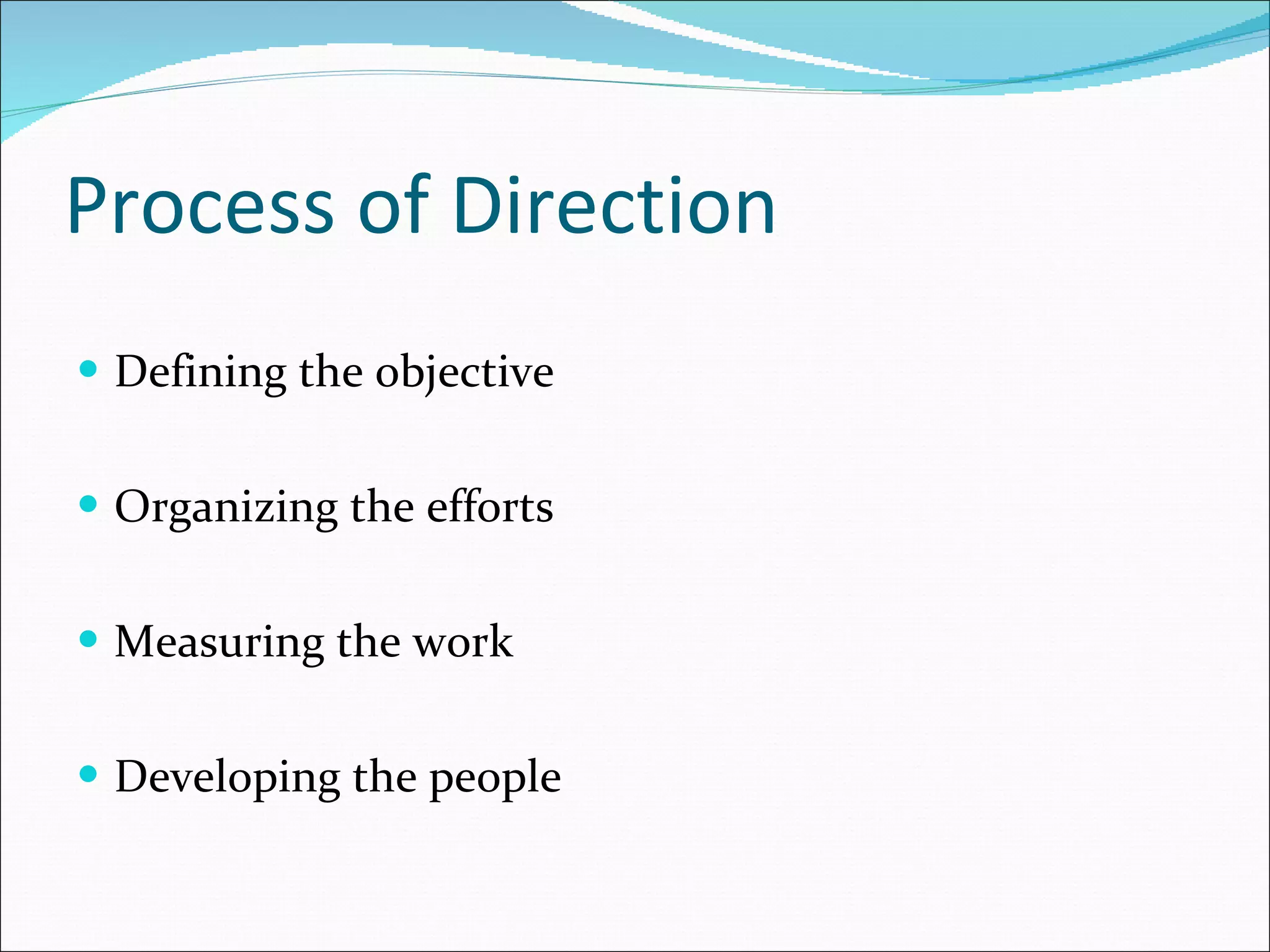
Directing involve….. Telling people what is to be done and explaining how to do it. Issuing instructions and orders to subordinates Inspiring them to contribute towards the achievement of objectives, Supervising their activities; and Providing leadership and motivation
6.
Features of DirectionDeals with People Performance Oriented Pervasive Function Continues Function Management in Action
7.
Element of DirectionCommunication Leadership Motivation Supervision Coordination
8.
Significance of DirectionInitiate Action Ensuring efficiency Achieving Organizational Objectives Better Human Relation Facilitate Changes
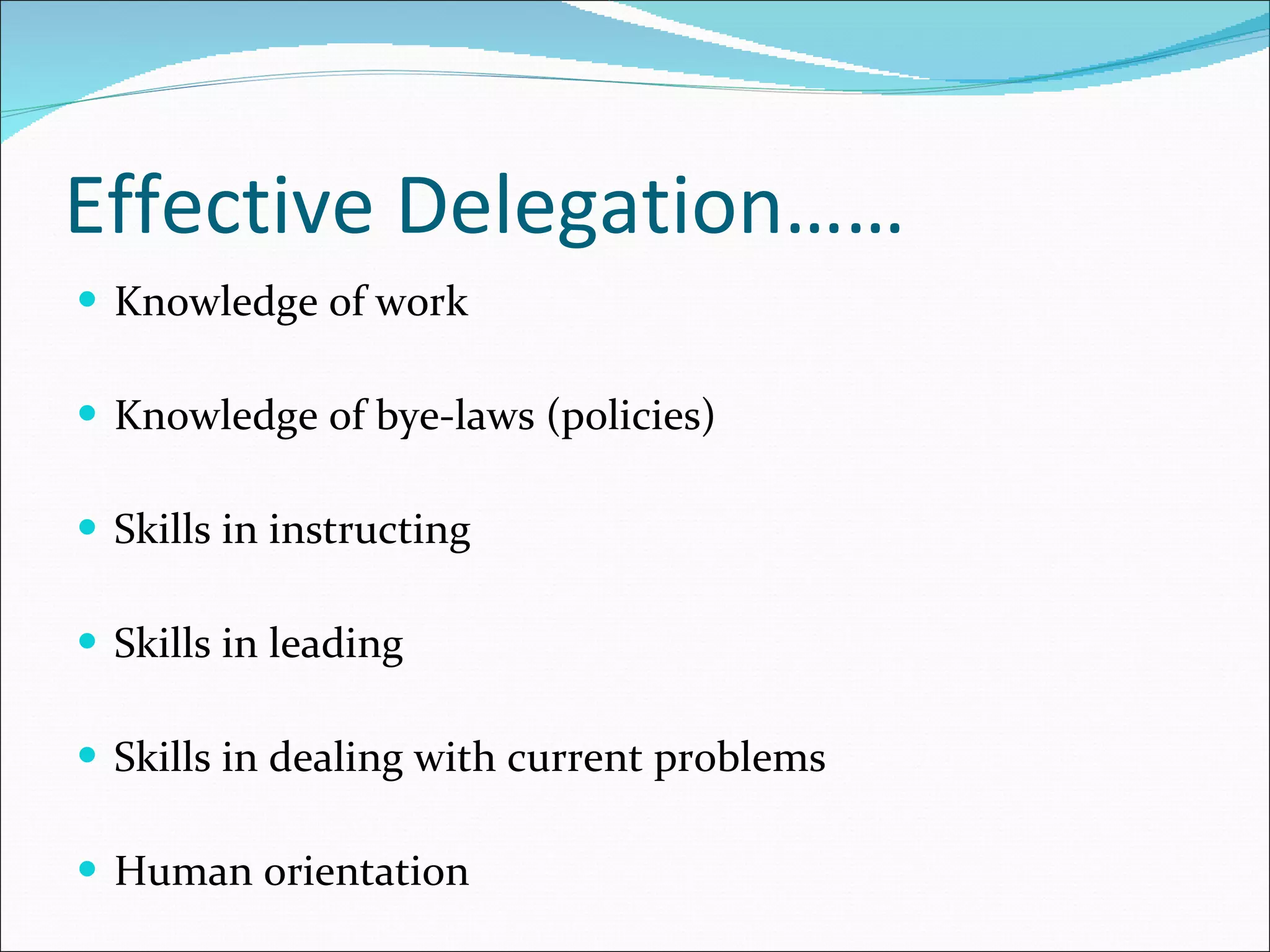
Effective Delegation…… Knowledgeof work Knowledge of bye-laws (policies) Skills in instructing Skills in leading Skills in dealing with current problem s Human orientation
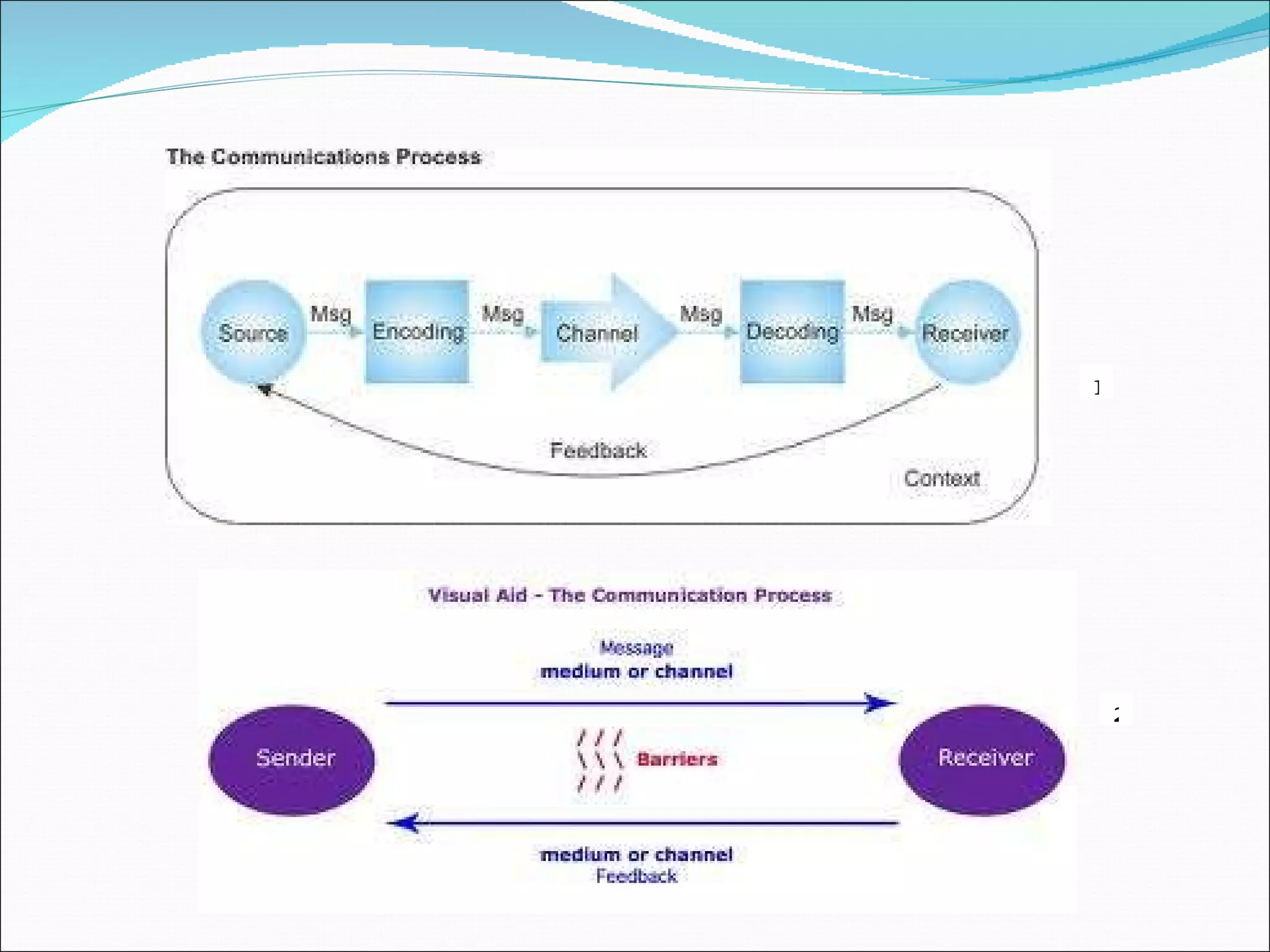
Meaning and Definition“ Communication” word has been derived from Latin word “Communis” which means common, thus communication stands for sharing of an idea in common. “ Communication is an exchange of facts, ideas, opinions or emotions by two or more persons” – Newman and Summer “ It is a sum of all the things one person does when he wants to create understanding in the minds of another. It is a bridge of meaning, it involve systematic telling, listening, and understanding” - Haimann
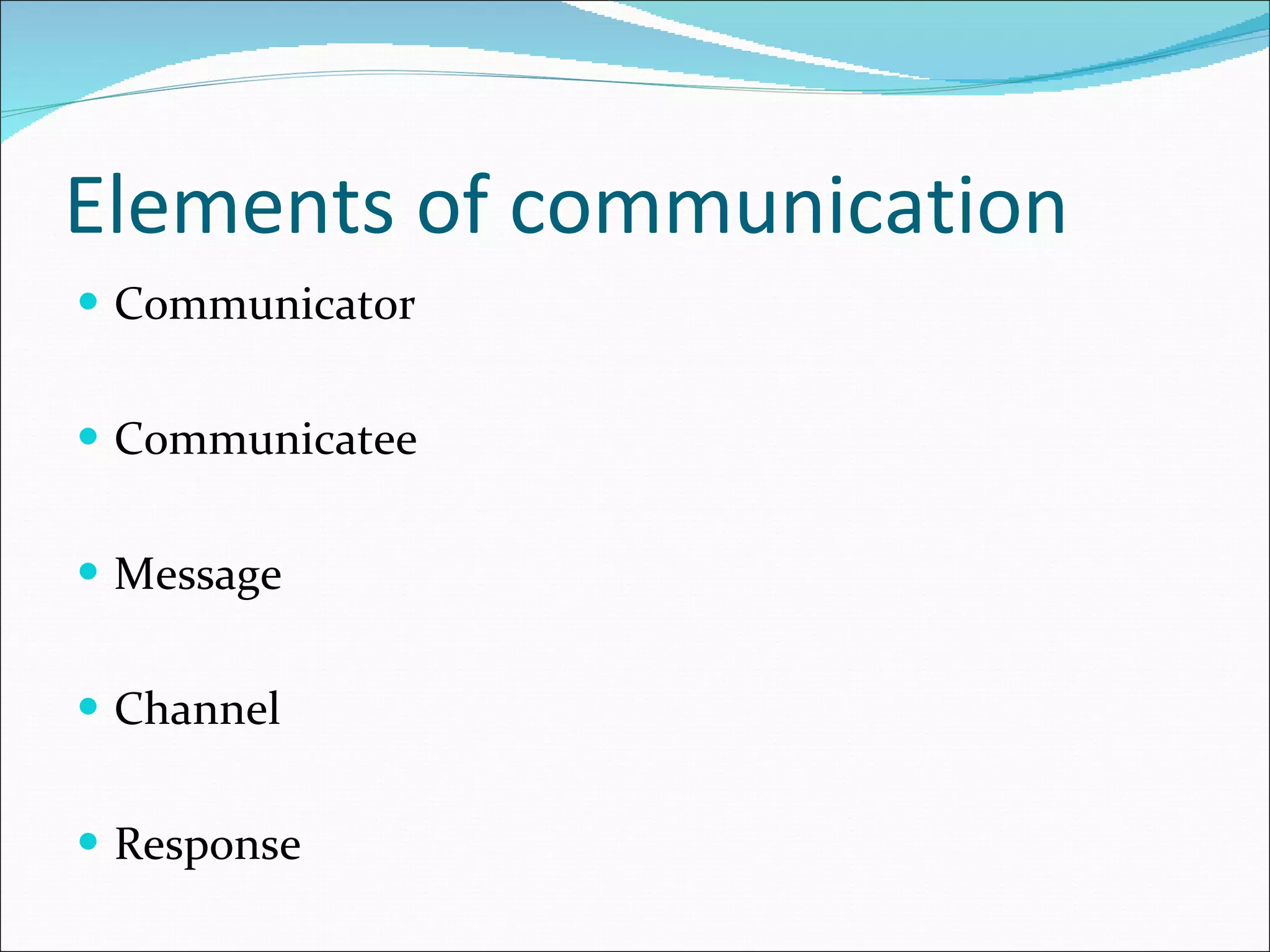
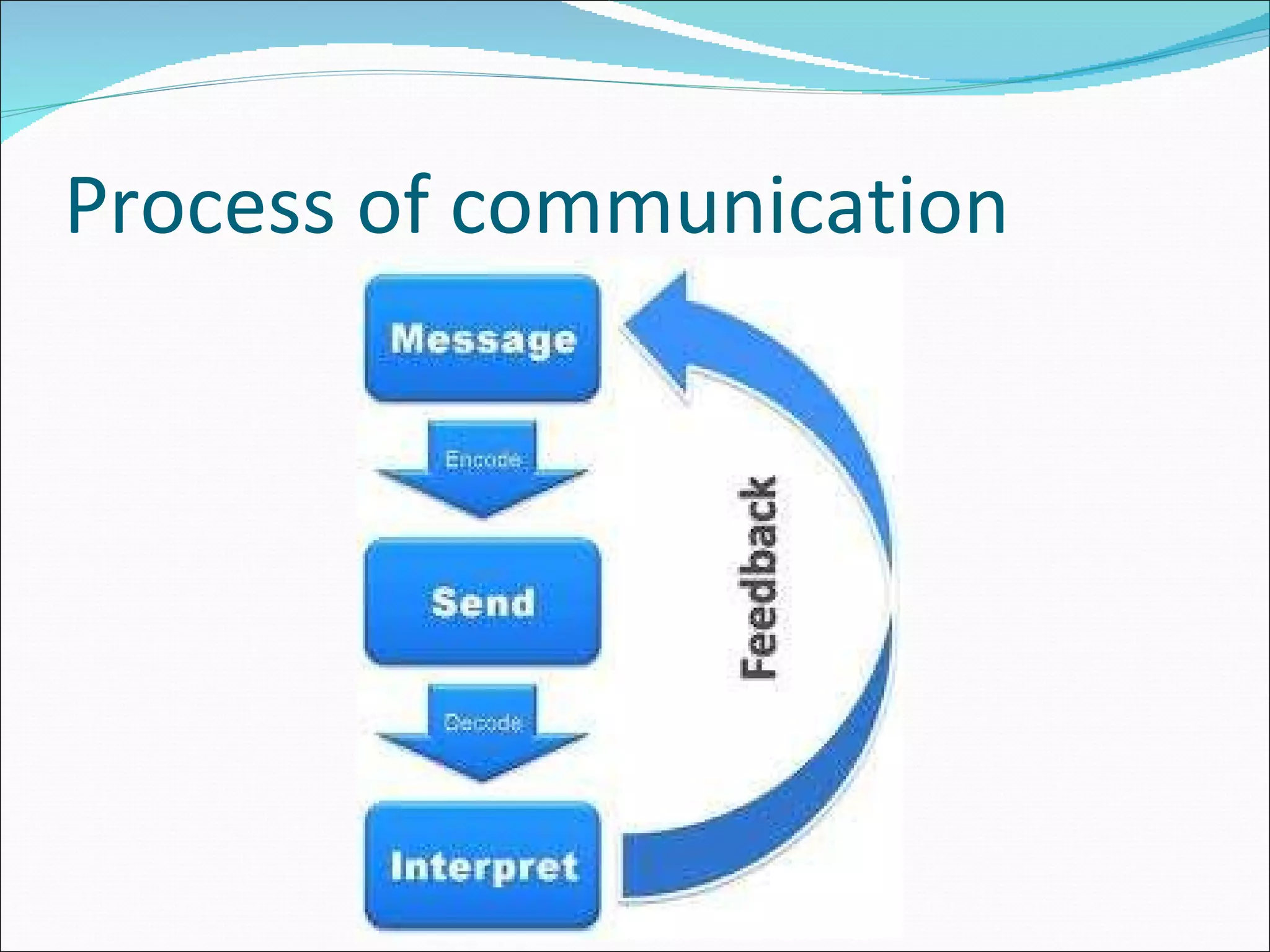
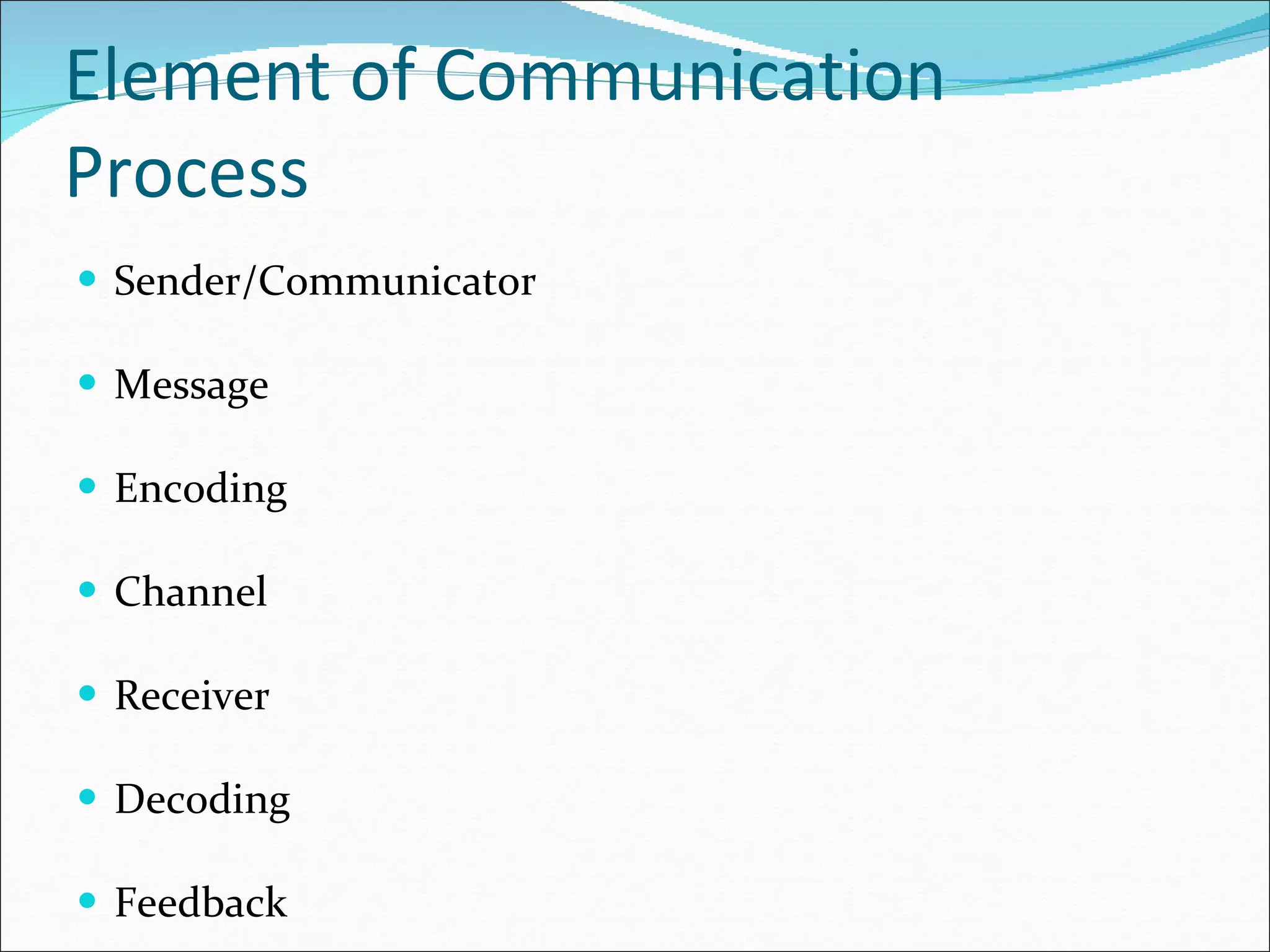
Element of CommunicationProcess Sender/Communicator Message Encoding Channel Receiver Decoding Feedback
19.
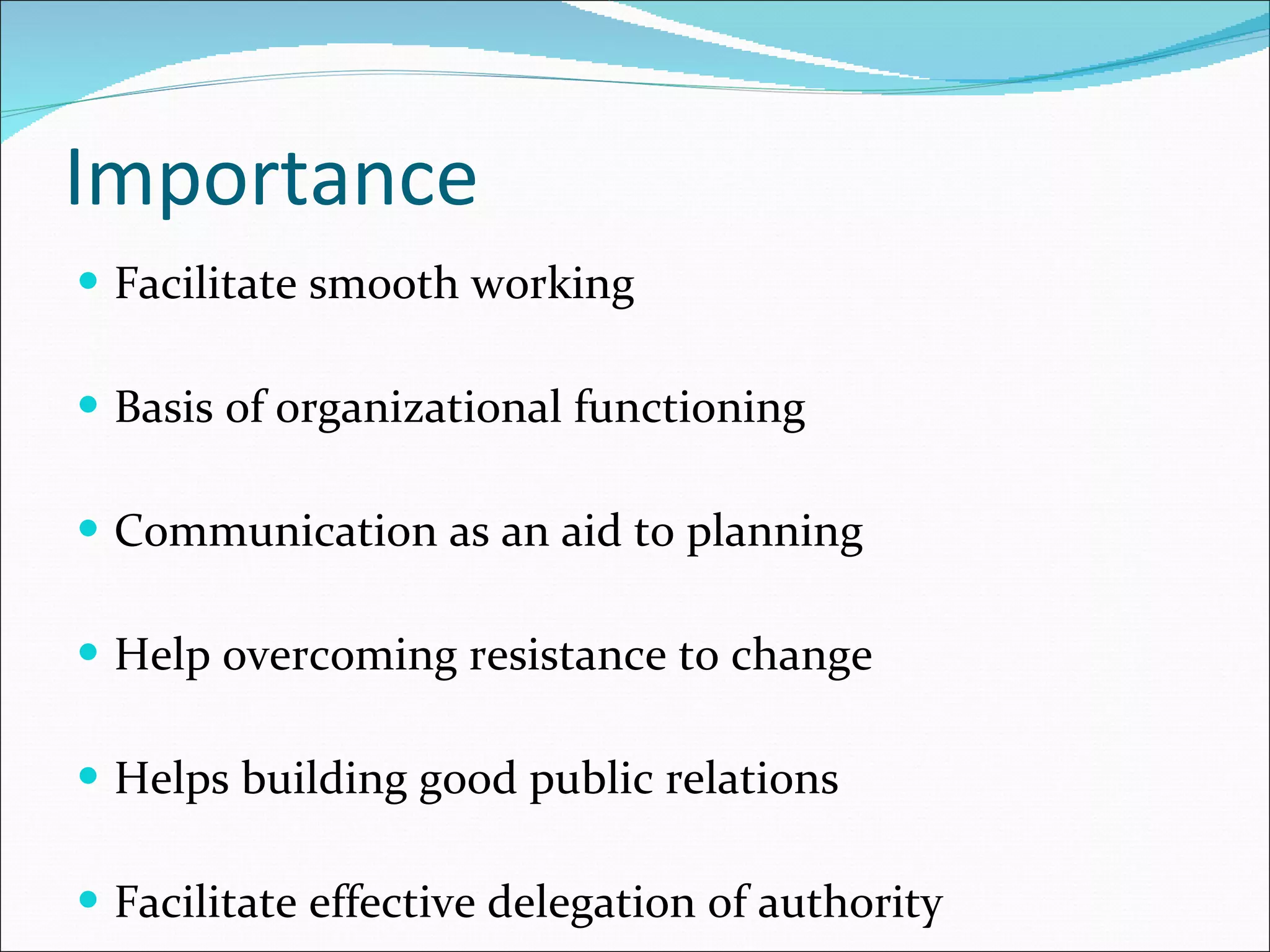
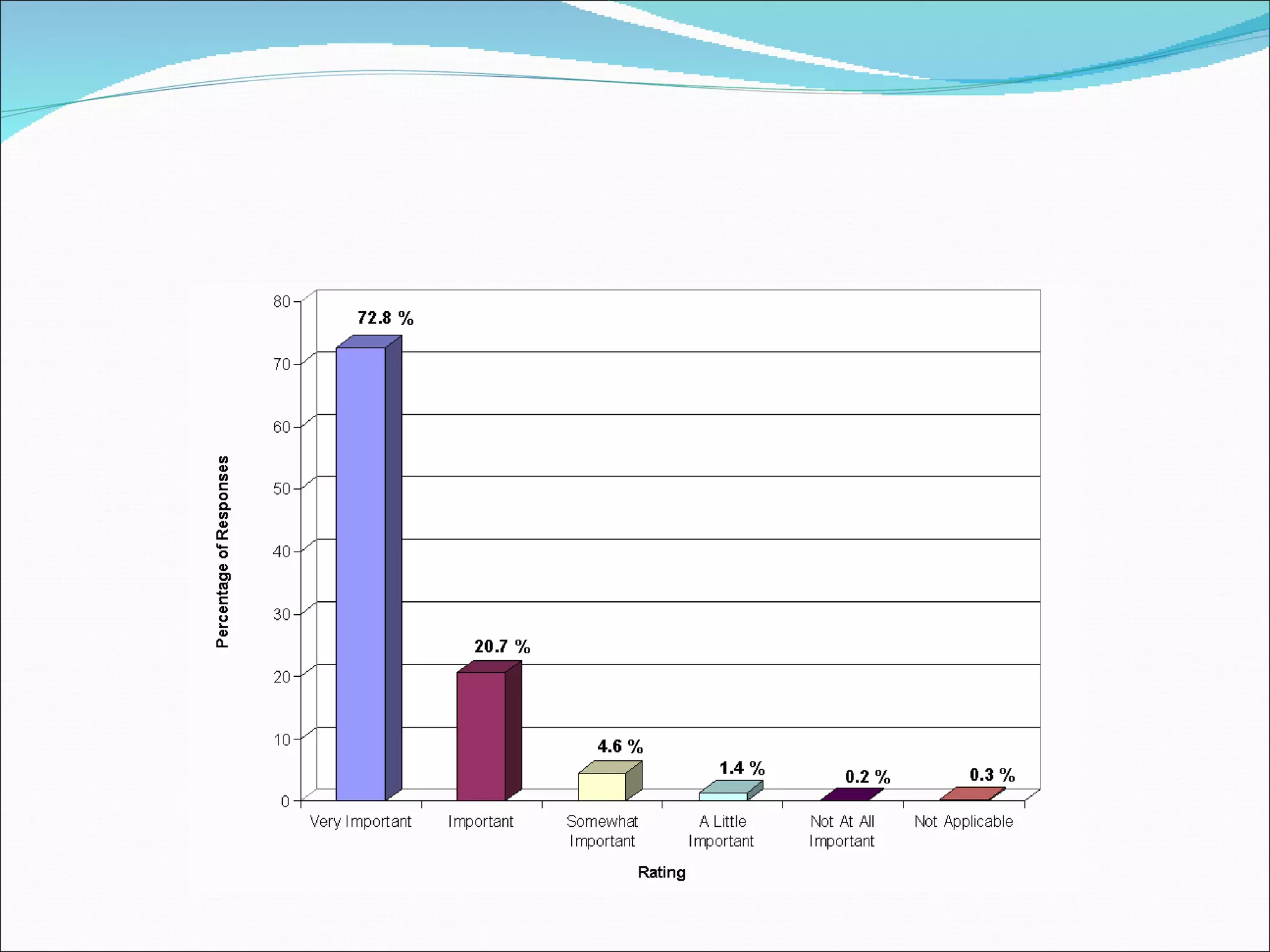
Importance Facilitate smoothworking Basis of organizational functioning Communication as an aid to planning Help overcoming resistance to change Helps building good public relations Facilitate effective delegation of authority
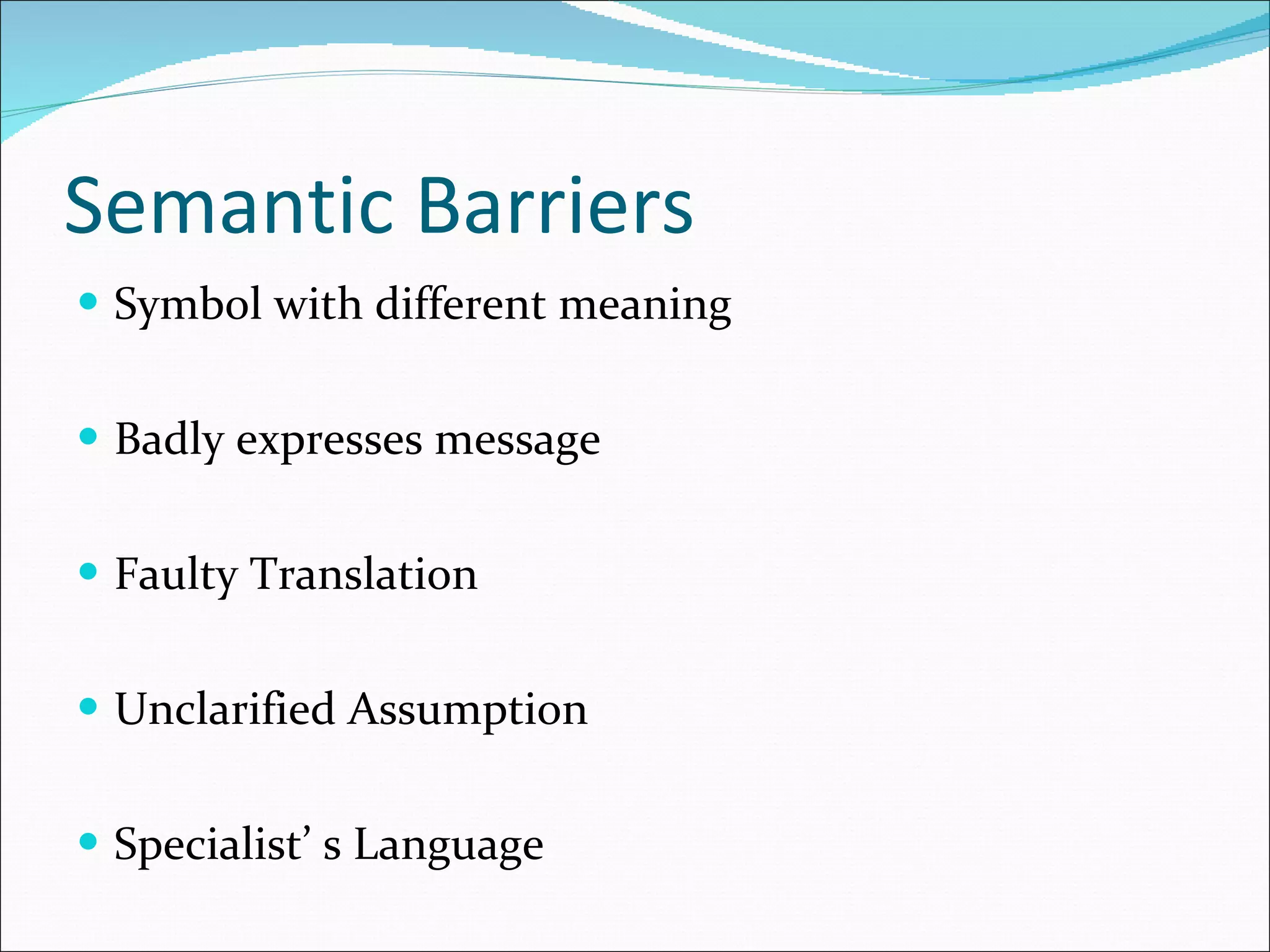
Semantic Barriers Symbolwith different meaning Badly expresses message Faulty Translation Unclarified Assumption Specialist’ s Language
25.
Psychological Barriers Premature Evolution Inattention Loss in Transmission or Poor Retention Distrust of Communication Attitudinal Barriers
26.
Organizational Barriers Organizational Policy Organizational Rules and Regulations Status Retention Rank or Position
27.
Personal Barriers Barriersin Supervision Attitude of Superior Lack of Awareness /knowledge Lack of time Fear of loss of Authority Barriers in Subordinates Fear/ Unwillingness to Communicate
28.
Effective Communication ClarityAdequacy Timing Integrity Gesture and Expressive Maintain eye contact Correct and Concrete Feedback is key to success Complete and Concise
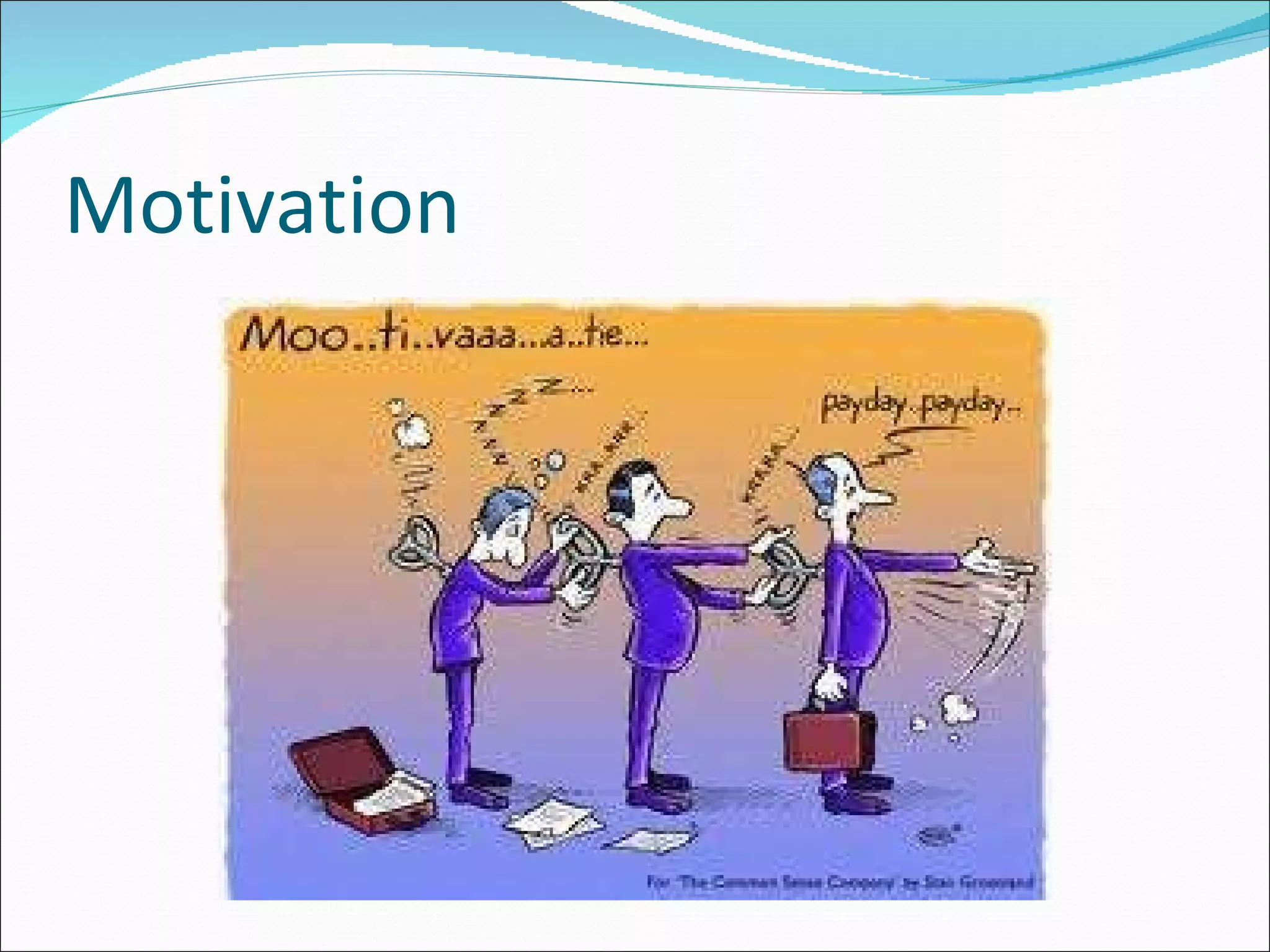
Introduction & Definition To motivate means to provide motive, to impel people to action, and to create incentives to work. “ Motivation is the work a manager performs to inspired, encourage, and impel people to take required action” – Lewis Allen “ The act of stimulating someone or oneself to get a desired course of action”- Michael J
31.
Nature and CharacteristicsMotivation is an internal feeling Motivation is related to needs Motivation lead to goal oriented behavior Motivation can be positive or negative
32.
Elements of soundmotivation Adequateness Flexibility Related to efforts Analysis of motives Simple and blend with organizational requirement
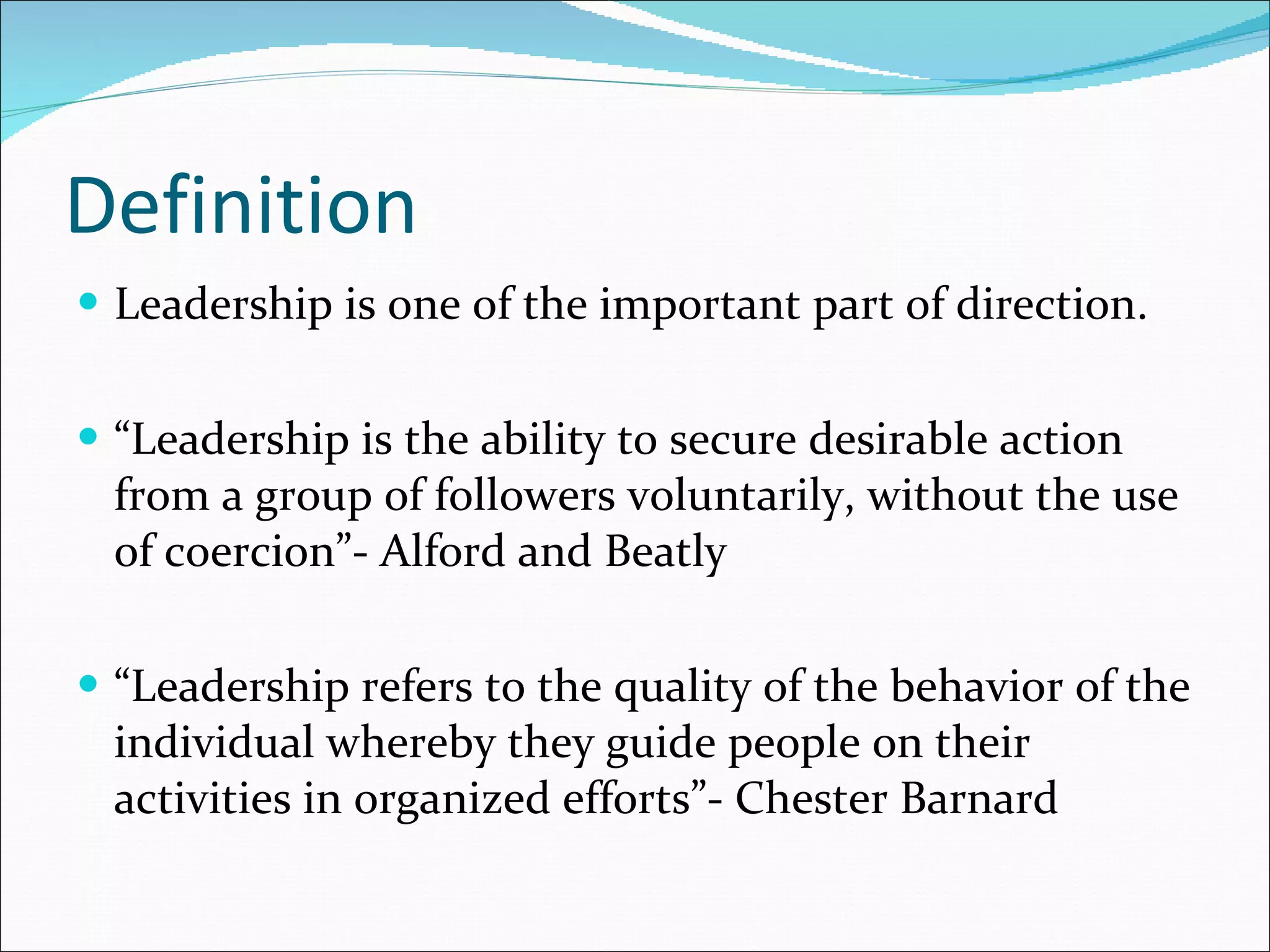
Definition Leadership isone of the important part of direction. “ Leadership is the ability to secure desirable action from a group of followers voluntarily, without the use of coercion”- Alford and Beatly “ Leadership refers to the quality of the behavior of the individual whereby they guide people on their activities in organized efforts”- Chester Barnard
37.
Nature or CharacteristicsLeadership implies the existence of followers Leadership involve a community of interest between Process of influence Process toward achievement of goals Leadership involve exemplary action
38.
Importance of leadershipFacilitate Change Building and increase employees moral e Provide Guidance Determination of Goal Promote team spirit Aid to Authority