



ORD & CD
Spectroscopy
NATURAL LIGHT
Natural light is having two components
electric component and magnetic component,
and both are perpendicular to each other in
different planes.
Both these electric component and magnetic
components are also perpendicular to the
direction of propagation of light.
UNPOLARISED LIGHT POLARISED LIGHT
NATURAL LIGHT
OPTICAL ROTATRY DISPERSION
ORD measures the angle (α) through which the plane of polarization is changed after
linear/plane polarized light is passed through a solution containing a chiral substance.
INSTRUMENTATION
ORD
CIRCULAR DICHROISM
Some materials posses special properties of absorption of the left circulary polarised
light to different extent than the right circularly polarised light. This phenomenon is
called as circular dichroism.
These two motions combined result in a helical displacement when light impinges on a
molecule (both field vectors in the same place are of the same direction but at different
moments of time).
The magnitude of circular dichroism is expressed by the ellipticiy.
OPTICAL ROTATORY DISPERSION
(ORD)
CIRCUALR DICHROISM
(CD)
ORD is If the refractive indices of the
sample for the left and right handed
polarized light are different, when the
components are recombined , the plane
polarized radiation will be rotated through
and angle α
Circular dichroism is the differential
absorption of left and right handed
circularly polarized light
ORD spectra are dispersive CD spectra are absorptive
In ORD the circular polarized light is used
is not converted to elliptical light
In CD the circular polarized lgiht is used
and is converted to elliptical light
ORD graphs are obtained by plotting
specific rotation vs wavelength.
CD graphs are obtained by ploting molar
ellipticity vs wavelength.
DIFFERENECES BETWEEN
ORD & CD
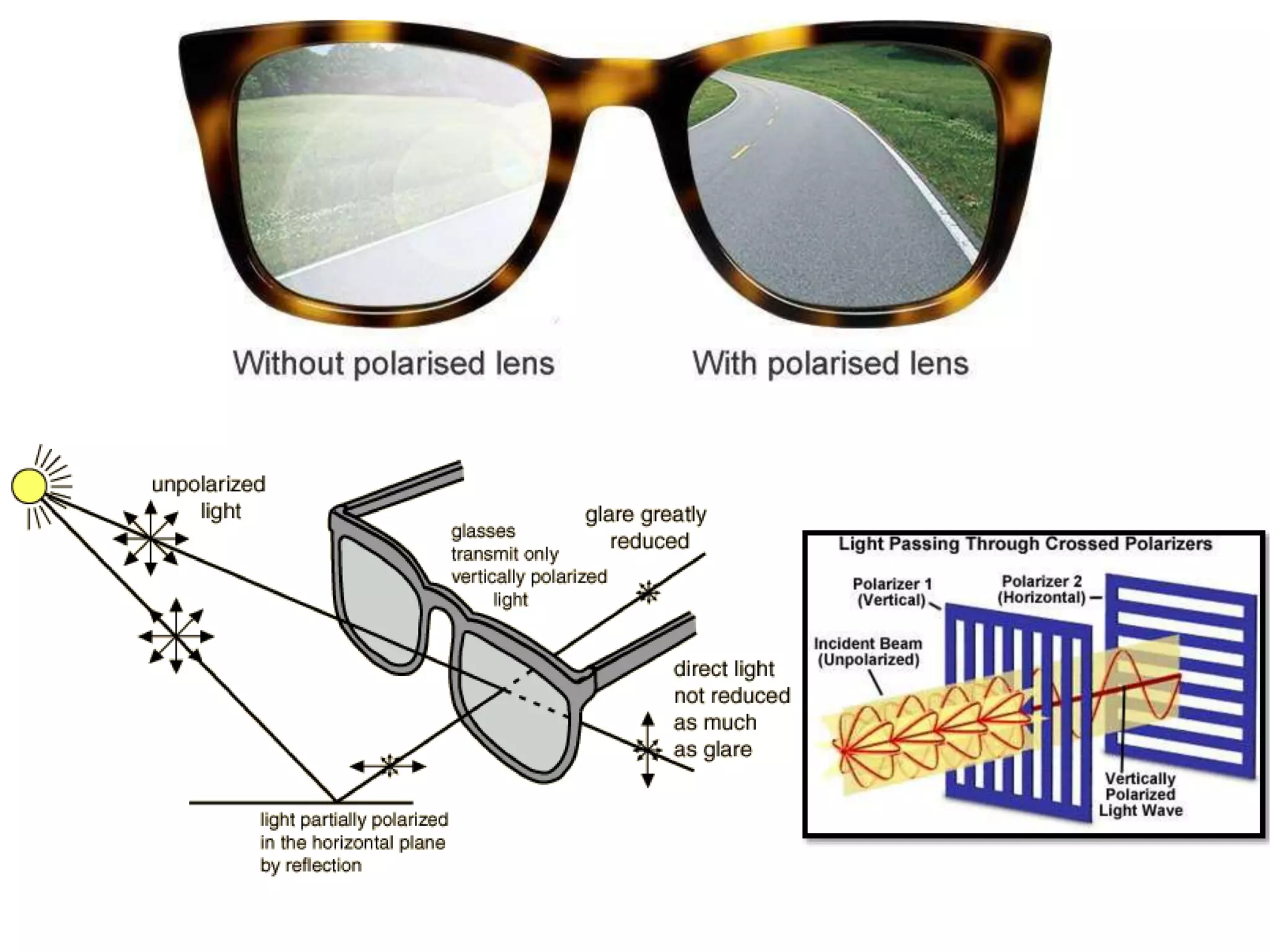
WITH & WITHOUT POLARIZATION
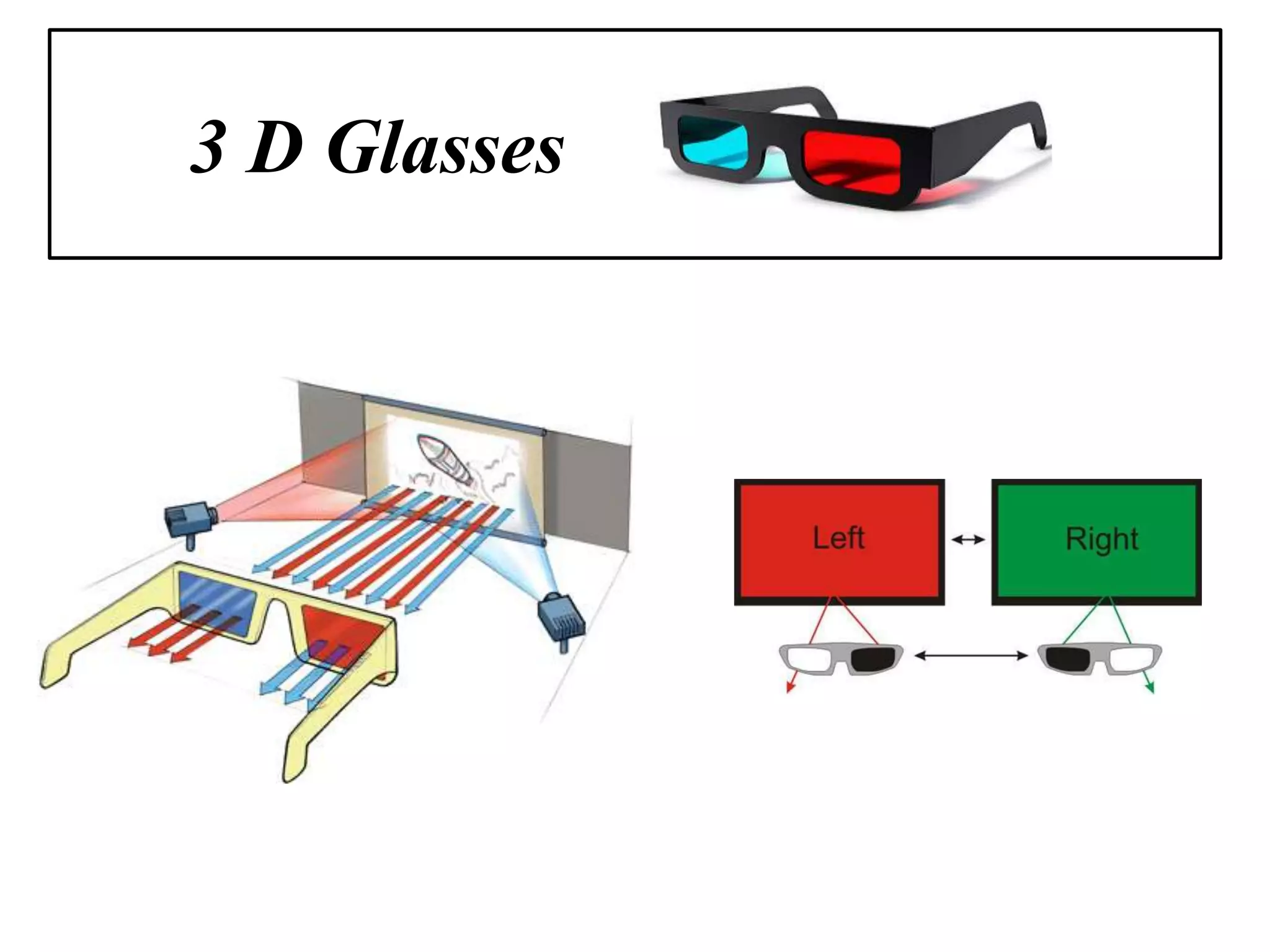
3 D Glasses
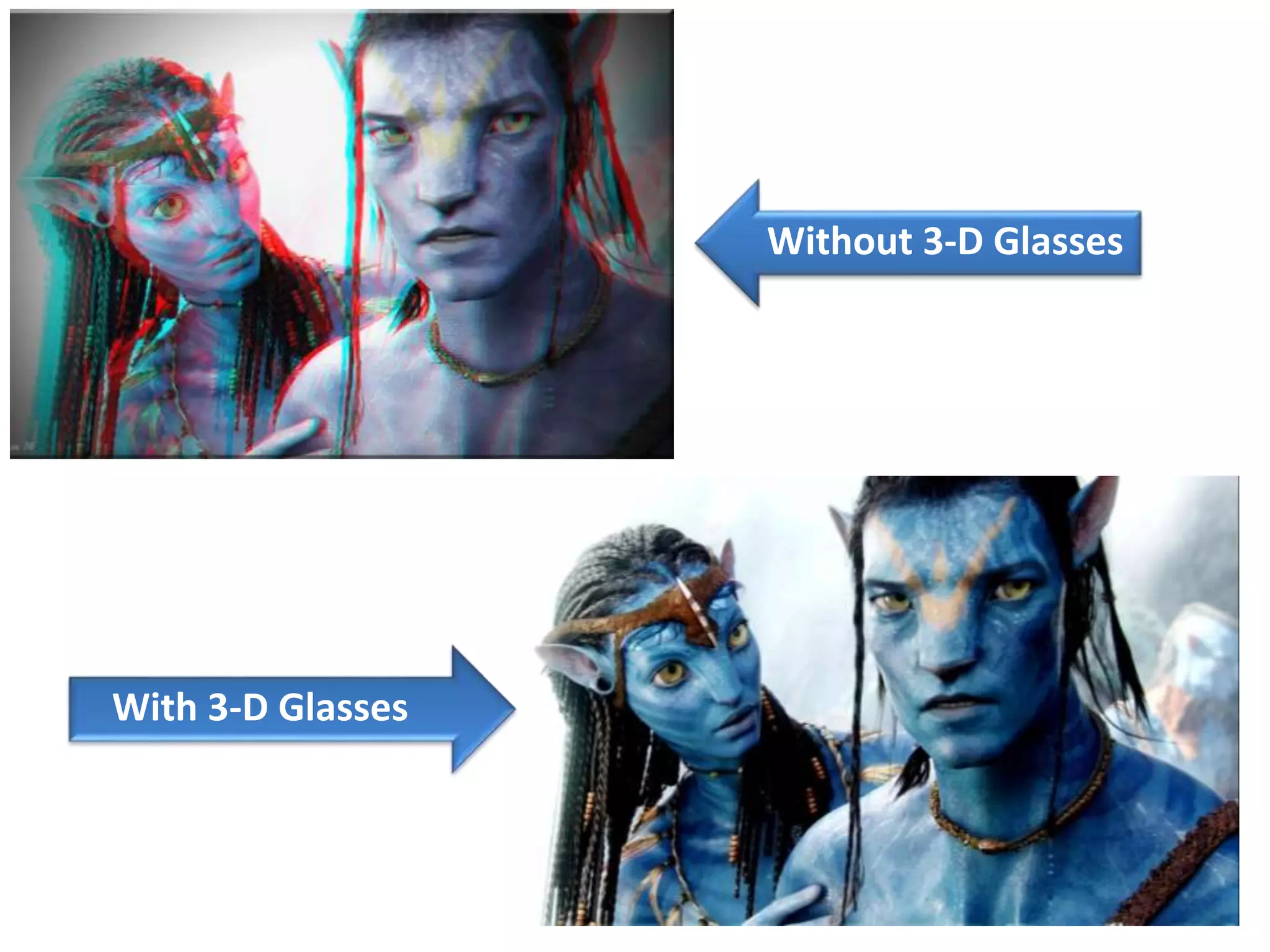
Without 3-D Glasses
With 3-D Glasses
ORD & CD Spectroscopy

ORD & CD Spectroscopy

  • 1.
  • 2.
    NATURAL LIGHT Natural lightis having two components electric component and magnetic component, and both are perpendicular to each other in different planes. Both these electric component and magnetic components are also perpendicular to the direction of propagation of light. UNPOLARISED LIGHT POLARISED LIGHT NATURAL LIGHT
  • 3.
    OPTICAL ROTATRY DISPERSION ORDmeasures the angle (α) through which the plane of polarization is changed after linear/plane polarized light is passed through a solution containing a chiral substance.
  • 4.
  • 6.
    CIRCULAR DICHROISM Some materialsposses special properties of absorption of the left circulary polarised light to different extent than the right circularly polarised light. This phenomenon is called as circular dichroism. These two motions combined result in a helical displacement when light impinges on a molecule (both field vectors in the same place are of the same direction but at different moments of time). The magnitude of circular dichroism is expressed by the ellipticiy.
  • 8.
    OPTICAL ROTATORY DISPERSION (ORD) CIRCUALRDICHROISM (CD) ORD is If the refractive indices of the sample for the left and right handed polarized light are different, when the components are recombined , the plane polarized radiation will be rotated through and angle α Circular dichroism is the differential absorption of left and right handed circularly polarized light ORD spectra are dispersive CD spectra are absorptive In ORD the circular polarized light is used is not converted to elliptical light In CD the circular polarized lgiht is used and is converted to elliptical light ORD graphs are obtained by plotting specific rotation vs wavelength. CD graphs are obtained by ploting molar ellipticity vs wavelength. DIFFERENECES BETWEEN ORD & CD
  • 10.
    WITH & WITHOUTPOLARIZATION
  • 13.
  • 16.