SWISS-PROT
Amandeep Singh
Assistant Professor
Department of Biotechnology
GSSDGS Khalsa College Patiala
Introduction
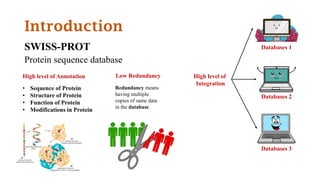
SWISS-PROT
Protein sequence database
High level of Annotation Low Redundancy High level of
Integration
• Sequence of Protein
• Structure of Protein
• Function of Protein
• Modifications in Protein
Redundancy means
having multiple
copies of same data
in the database.
Databases 1
Databases 2
Databases 3
Introduction
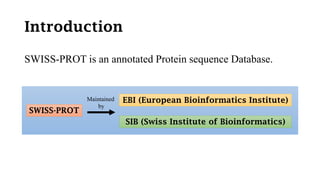
SWISS-PROT is an annotated Protein sequence Database.
SWISS-PROT
EBI (European Bioinformatics Institute)
SIB (Swiss Institute of Bioinformatics)
Maintained
by
Features
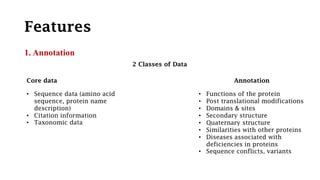
1. Annotation
2 Classes of Data
Core data Annotation
• Sequence data (amino acid
sequence, protein name
description)
• Citation information
• Taxonomic data
• Functions of the protein
• Post translational modifications
• Domains & sites
• Secondary structure
• Quaternary structure
• Similarities with other proteins
• Diseases associated with
deficiencies in proteins
• Sequence conflicts, variants
Features
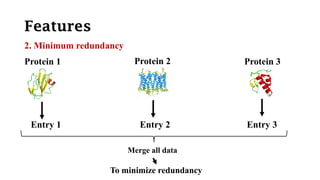
2. Minimum redundancy
Protein 1 Protein 2 Protein 3
Entry 1 Entry 2 Entry 3
Merge all data
To minimize redundancy
Features
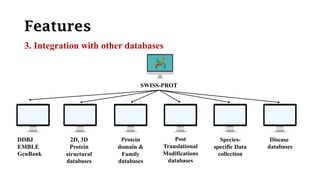
3. Integration with other databases
SWISS-PROT
DDBJ
EMBLE
GenBank
2D, 3D
Protein
structural
databases
Protein
domain &
Family
databases
Post
Translational
Modifications
databases
Species-
specific Data
collection
Disease
databases
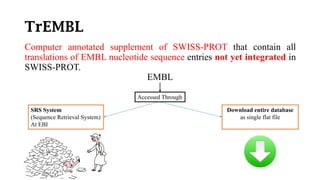
TrEMBL
Computer annotated supplement of SWISS-PROT that contain all
translations of EMBL nucleotide sequence entries not yet integrated in
SWISS-PROT.
SRS System
(Sequence Retrieval System)
At EBI
Download entire database
as single flat file
Accessed Through
EMBL
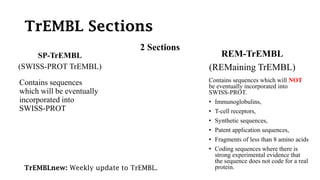
TrEMBL Sections
2 Sections
SP-TrEMBL
(SWISS-PROT TrEMBL)
REM-TrEMBL
(REMaining TrEMBL)
Contains sequences
which will be eventually
incorporated into
SWISS-PROT
Contains sequences which will NOT
be eventually incorporated into
SWISS-PROT.
• Immunoglobulins,
• T-cell receptors,
• Synthetic sequences,
• Patent application sequences,
• Fragments of less than 8 amino acids
• Coding sequences where there is
strong experimental evidence that
the sequence does not code for a real
protein.TrEMBLnew: Weekly update to TrEMBL.

SWISS-PROT

  • 1.
    SWISS-PROT Amandeep Singh Assistant Professor Departmentof Biotechnology GSSDGS Khalsa College Patiala
  • 2.
    Introduction SWISS-PROT Protein sequence database Highlevel of Annotation Low Redundancy High level of Integration • Sequence of Protein • Structure of Protein • Function of Protein • Modifications in Protein Redundancy means having multiple copies of same data in the database. Databases 1 Databases 2 Databases 3
  • 3.
    Introduction SWISS-PROT is anannotated Protein sequence Database. SWISS-PROT EBI (European Bioinformatics Institute) SIB (Swiss Institute of Bioinformatics) Maintained by
  • 4.
    Features 1. Annotation 2 Classesof Data Core data Annotation • Sequence data (amino acid sequence, protein name description) • Citation information • Taxonomic data • Functions of the protein • Post translational modifications • Domains & sites • Secondary structure • Quaternary structure • Similarities with other proteins • Diseases associated with deficiencies in proteins • Sequence conflicts, variants
  • 5.
    Features 2. Minimum redundancy Protein1 Protein 2 Protein 3 Entry 1 Entry 2 Entry 3 Merge all data To minimize redundancy
  • 6.
    Features 3. Integration withother databases SWISS-PROT DDBJ EMBLE GenBank 2D, 3D Protein structural databases Protein domain & Family databases Post Translational Modifications databases Species- specific Data collection Disease databases
  • 7.
    TrEMBL Computer annotated supplementof SWISS-PROT that contain all translations of EMBL nucleotide sequence entries not yet integrated in SWISS-PROT. SRS System (Sequence Retrieval System) At EBI Download entire database as single flat file Accessed Through EMBL
  • 8.
    TrEMBL Sections 2 Sections SP-TrEMBL (SWISS-PROTTrEMBL) REM-TrEMBL (REMaining TrEMBL) Contains sequences which will be eventually incorporated into SWISS-PROT Contains sequences which will NOT be eventually incorporated into SWISS-PROT. • Immunoglobulins, • T-cell receptors, • Synthetic sequences, • Patent application sequences, • Fragments of less than 8 amino acids • Coding sequences where there is strong experimental evidence that the sequence does not code for a real protein.TrEMBLnew: Weekly update to TrEMBL.