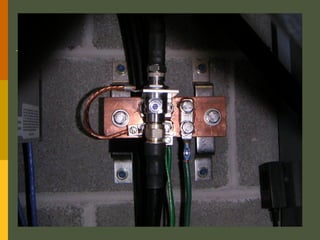

GROUNDING
GROUNDING
 Why ground?
 Types of Grounding methods
 Telecom grounding system
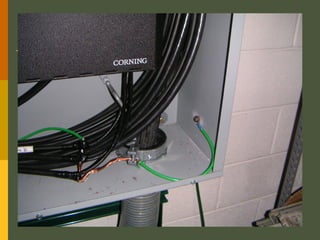
 Bonding in Telecom room
 Materials for grounding and bonding
Why Ground?
 It is required by electrical codes
 It is required by equipment manufactures
 Protect personnel
 Protect equipment
Types of Grounding Methods
 Electrical safety grounds
 Lightning grounds
 RF shielding and grounding
 Electro-static grounds
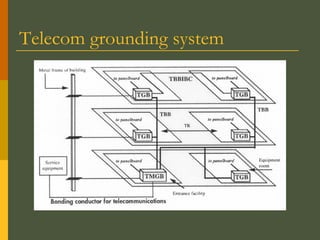
Telecom grounding system
 Telecom bonding conductor
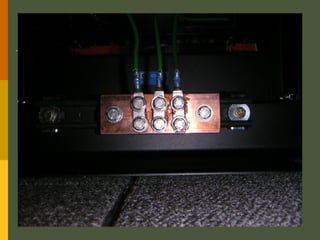
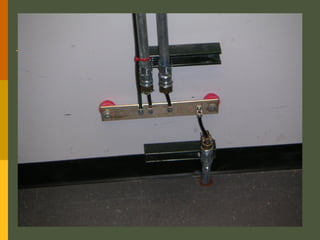
 Telecom main grounding busbar (TMGB)
 Telecom bonding backbone (TBB)
 Telecom bonding backbone interbuilding
conductor (TBBIBC)
 Telecom grounding busbar (TGB)
Telecom grounding system
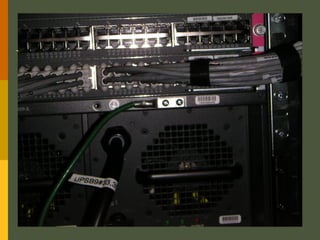
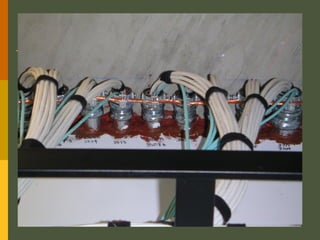
Bonding
 Help to eliminate electro-static discharge
 Help to keep RF interference down
Materials for Grounding & Bonding
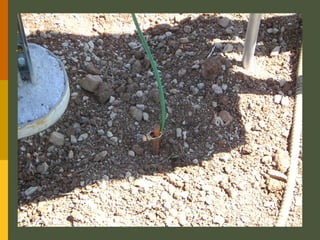
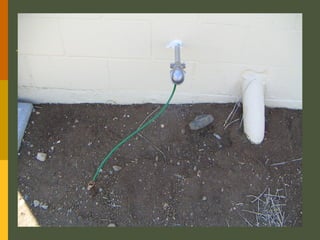
 4 awg & 6 awg stranded copper conductor
 4 awg & 6 awg compression lugs
 Telecom grounding busbars
 Stainless steel hardware
 Copper & Steel conducting compound
Grounding
The End

Grounding for BASIC ELECTRICAL ENGINEERING

  • 1.
  • 2.
    GROUNDING  Why ground? Types of Grounding methods  Telecom grounding system  Bonding in Telecom room  Materials for grounding and bonding
  • 3.
    Why Ground?  Itis required by electrical codes  It is required by equipment manufactures  Protect personnel  Protect equipment
  • 4.
    Types of GroundingMethods  Electrical safety grounds  Lightning grounds  RF shielding and grounding  Electro-static grounds
  • 5.
    Telecom grounding system Telecom bonding conductor  Telecom main grounding busbar (TMGB)  Telecom bonding backbone (TBB)  Telecom bonding backbone interbuilding conductor (TBBIBC)  Telecom grounding busbar (TGB)
  • 6.
  • 7.
    Bonding  Help toeliminate electro-static discharge  Help to keep RF interference down
  • 8.
    Materials for Grounding& Bonding  4 awg & 6 awg stranded copper conductor  4 awg & 6 awg compression lugs  Telecom grounding busbars  Stainless steel hardware  Copper & Steel conducting compound
  • 17.