Chapter 13
From DNA to Protein
From Genes to Proteins
Your traits are determined by proteins that are
built according to instructions in DNA.
These sections of DNA are your genes.
The first step in decoding the DNA instructions is
to copy part of the DNA into RNA.
13.1 RNA
Like DNA, RNA consists of a long chain of
nucleotides.
3 main differences between DNA and RNA:
The sugar in RNA is ribose, not deoxyribose.
RNA is single – stranded, while DNA is double –
stranded
RNA contains uracil instead of thymine.
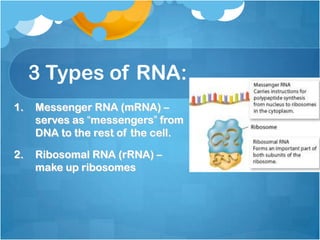
3 Types of RNA:
1. Messenger RNA (mRNA) –
serves as “messengers” from
DNA to the rest of the cell.
2. Ribosomal RNA (rRNA) –
make up ribosomes
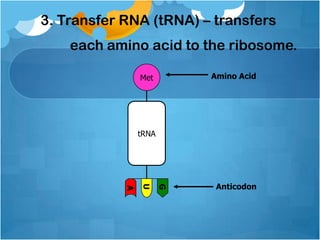
3. Transfer RNA (tRNA) – transfers
each amino acid to the ribosome.
tRNA
A
G
U
Met Amino Acid
Anticodon
RNA Synthesis: Transcription
Occurs in the nucleus
Copying part of DNA into a complementary
sequence in RNA.
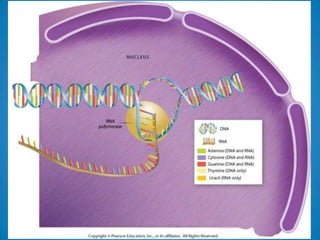
Requires an enzyme known as RNA
polymerase.
RNA polymerase binds to DNA and separates the
DNA strands.
It uses one strand of DNA as a template to make a
strand of mRNA.
How does RNA polymerase
know where to start?
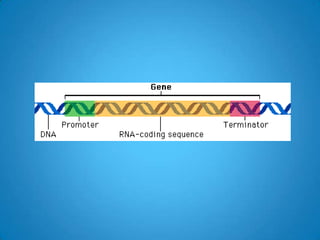
Promoters – have specific base sequences
where RNA polymerase will bind to begin
transcription.
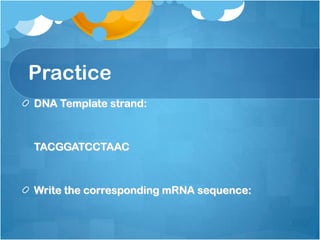
Practice
DNA Template strand:
TACGGATCCTAAC
Write the corresponding mRNA sequence:
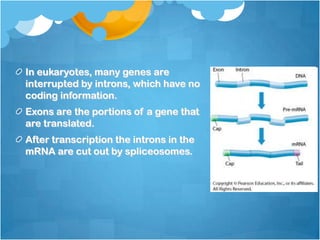
In eukaryotes, many genes are
interrupted by introns, which have no
coding information.
Exons are the portions of a gene that
are translated.
After transcription the introns in the
mRNA are cut out by spliceosomes.
13.2 Ribosomes and
Protein Synthesis
Translation
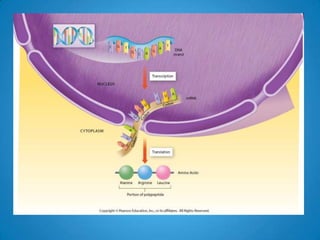
The sequence of bases in mRNA serve as
instructions for the order of amino acids to
produce proteins (polypeptides).
Steps of Translation:
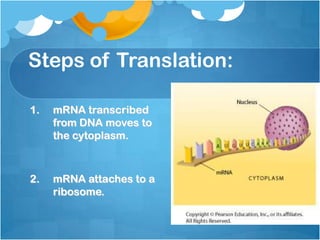
1. mRNA transcribed
from DNA moves to
the cytoplasm.
2. mRNA attaches to a
ribosome.
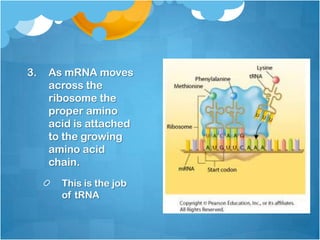
3. As mRNA moves
across the
ribosome the
proper amino
acid is attached
to the growing
amino acid
chain.
This is the job
of tRNA
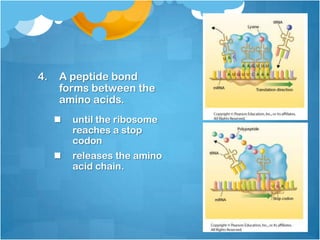
4. A peptide bond
forms between the
amino acids.
 until the ribosome
reaches a stop
codon
 releases the amino
acid chain.
The Genetic Code
RNA contains 4 bases: adenine, uracil, cytosine,
guanine
These 4 letters code for 20 amino acids.
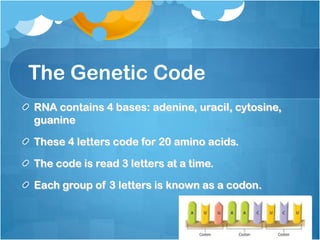
The code is read 3 letters at a time.
Each group of 3 letters is known as a codon.
Separate the following mRNA
sequence into codons:
UCGCACGGU
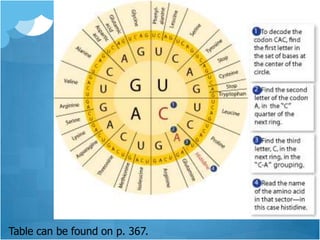
The codon AUG can serve as a “start” codon for
protein synthesis (Methionine).
There are also 3 “stop” codons which act like a
period at the end of a sentence.
Table can be found on p. 367.
Practice Problems
Transcribe and translate the following DNA
sequences:
1. TACGGATATAAGCCGTTAATT
mRNA:
Protein (polypeptide):
2. TACAAATGGTTCCTTACAACT
mRNA:
Protein (polypeptide):
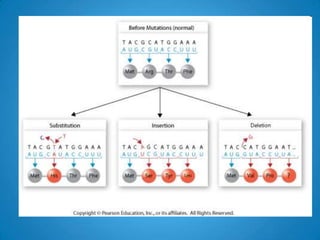
Mutations
Mutations in gametes can be passed on to
offspring, but mutations in body cells affect only
the individual in which they occur.
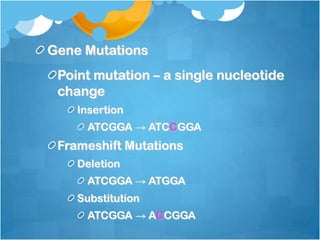
Gene Mutations
Point mutation – a single nucleotide
change
Insertion
ATCGGA → ATCCGGA
Frameshift Mutations
Deletion
ATCGGA → ATGGA
Substitution
ATCGGA → ACCGGA
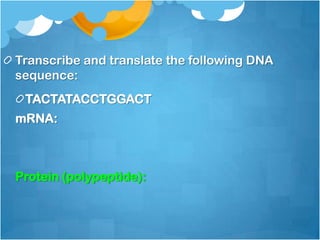
Transcribe and translate the following DNA
sequence:
TACTATACCTGGACT
mRNA:
Protein (polypeptide):
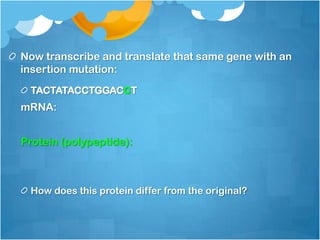
Now transcribe and translate that same gene with an
insertion mutation:
TACTATACCTGGACCT
mRNA:
Protein (polypeptide):
How does this protein differ from the original?

Notes ch13 website

  • 1.
  • 2.
    From Genes toProteins Your traits are determined by proteins that are built according to instructions in DNA. These sections of DNA are your genes. The first step in decoding the DNA instructions is to copy part of the DNA into RNA.
  • 3.
    13.1 RNA Like DNA,RNA consists of a long chain of nucleotides. 3 main differences between DNA and RNA: The sugar in RNA is ribose, not deoxyribose. RNA is single – stranded, while DNA is double – stranded RNA contains uracil instead of thymine.
  • 4.
    3 Types ofRNA: 1. Messenger RNA (mRNA) – serves as “messengers” from DNA to the rest of the cell. 2. Ribosomal RNA (rRNA) – make up ribosomes
  • 5.
    3. Transfer RNA(tRNA) – transfers each amino acid to the ribosome. tRNA A G U Met Amino Acid Anticodon
  • 6.
    RNA Synthesis: Transcription Occursin the nucleus Copying part of DNA into a complementary sequence in RNA. Requires an enzyme known as RNA polymerase. RNA polymerase binds to DNA and separates the DNA strands. It uses one strand of DNA as a template to make a strand of mRNA.
  • 7.
    How does RNApolymerase know where to start? Promoters – have specific base sequences where RNA polymerase will bind to begin transcription.
  • 10.
    Practice DNA Template strand: TACGGATCCTAAC Writethe corresponding mRNA sequence:
  • 11.
    In eukaryotes, manygenes are interrupted by introns, which have no coding information. Exons are the portions of a gene that are translated. After transcription the introns in the mRNA are cut out by spliceosomes.
  • 12.
    13.2 Ribosomes and ProteinSynthesis Translation The sequence of bases in mRNA serve as instructions for the order of amino acids to produce proteins (polypeptides).
  • 14.
    Steps of Translation: 1.mRNA transcribed from DNA moves to the cytoplasm. 2. mRNA attaches to a ribosome.
  • 15.
    3. As mRNAmoves across the ribosome the proper amino acid is attached to the growing amino acid chain. This is the job of tRNA
  • 16.
    4. A peptidebond forms between the amino acids.  until the ribosome reaches a stop codon  releases the amino acid chain.
  • 17.
    The Genetic Code RNAcontains 4 bases: adenine, uracil, cytosine, guanine These 4 letters code for 20 amino acids. The code is read 3 letters at a time. Each group of 3 letters is known as a codon.
  • 18.
    Separate the followingmRNA sequence into codons: UCGCACGGU
  • 19.
    The codon AUGcan serve as a “start” codon for protein synthesis (Methionine). There are also 3 “stop” codons which act like a period at the end of a sentence.
  • 20.
    Table can befound on p. 367.
  • 21.
    Practice Problems Transcribe andtranslate the following DNA sequences: 1. TACGGATATAAGCCGTTAATT mRNA: Protein (polypeptide):
  • 22.
  • 23.
    Mutations Mutations in gametescan be passed on to offspring, but mutations in body cells affect only the individual in which they occur.
  • 24.
    Gene Mutations Point mutation– a single nucleotide change Insertion ATCGGA → ATCCGGA Frameshift Mutations Deletion ATCGGA → ATGGA Substitution ATCGGA → ACCGGA
  • 26.
    Transcribe and translatethe following DNA sequence: TACTATACCTGGACT mRNA: Protein (polypeptide):
  • 27.
    Now transcribe andtranslate that same gene with an insertion mutation: TACTATACCTGGACCT mRNA: Protein (polypeptide): How does this protein differ from the original?