Chapter 3 – The Biosphere
3.1 Ecologists study environments
at different levels of organization.
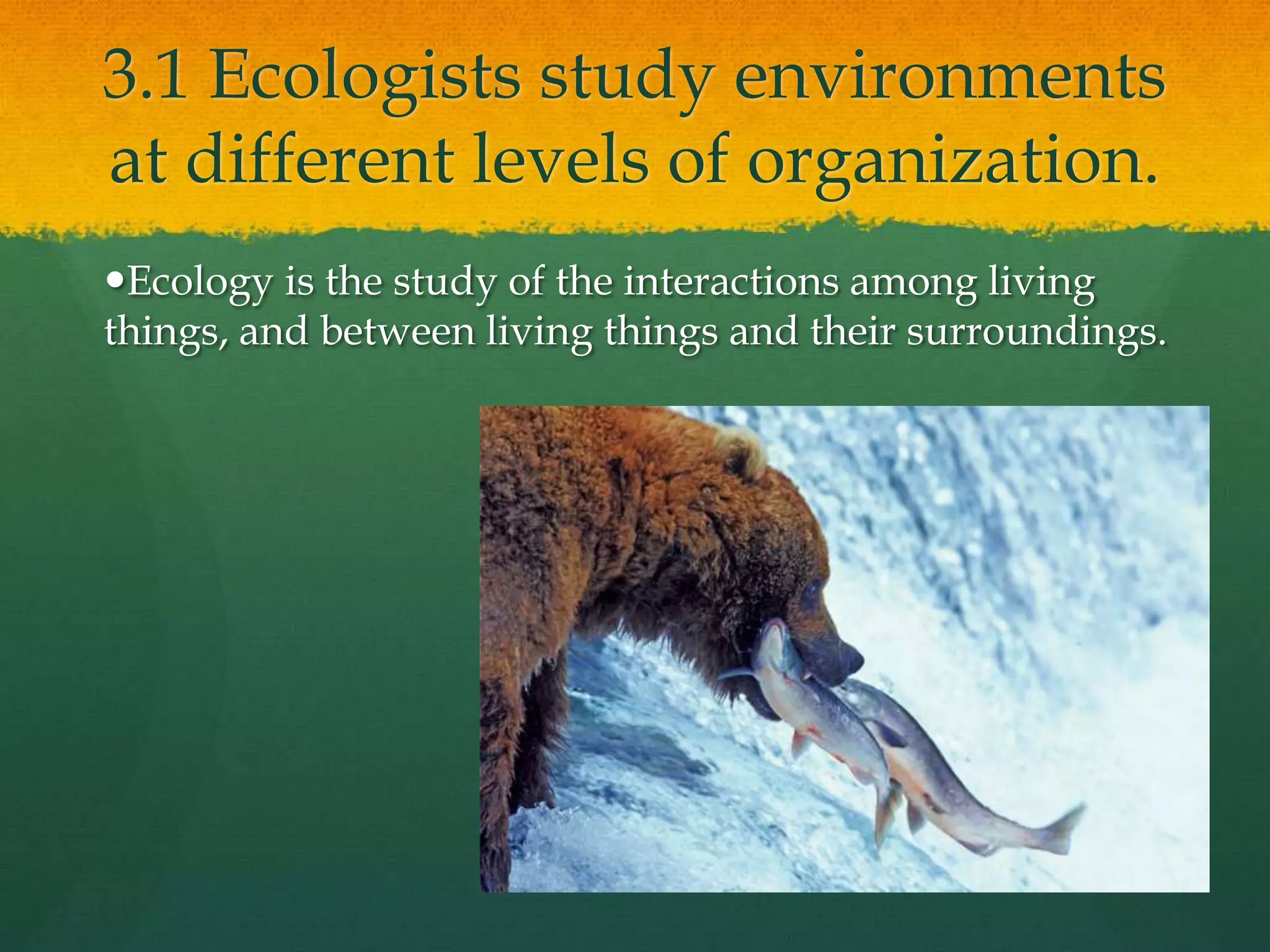
Ecology is the study of the interactions among living
things, and between living things and their surroundings.
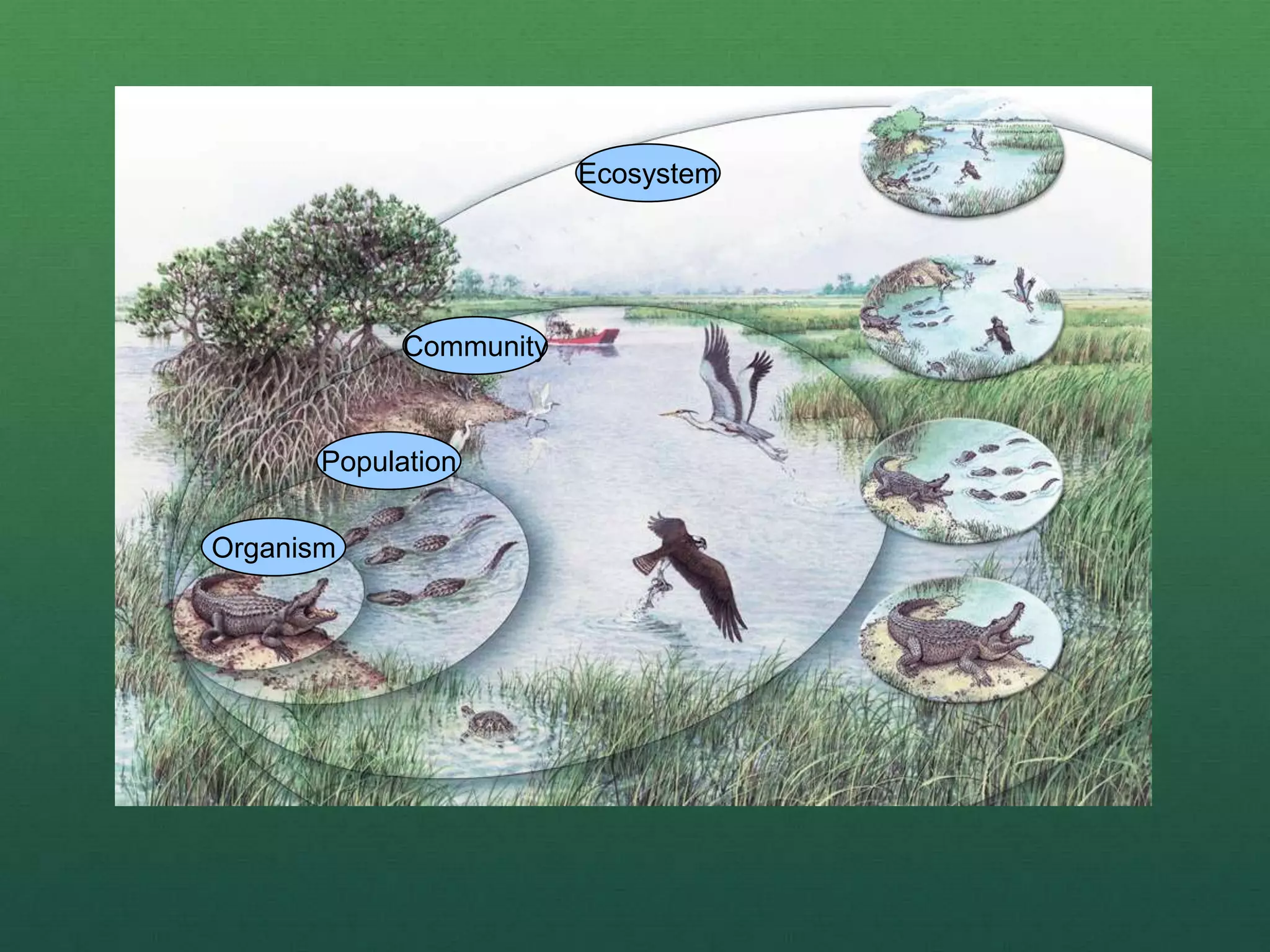
Organism
Population
Community
Ecosystem
Biotic and Abiotic Factors
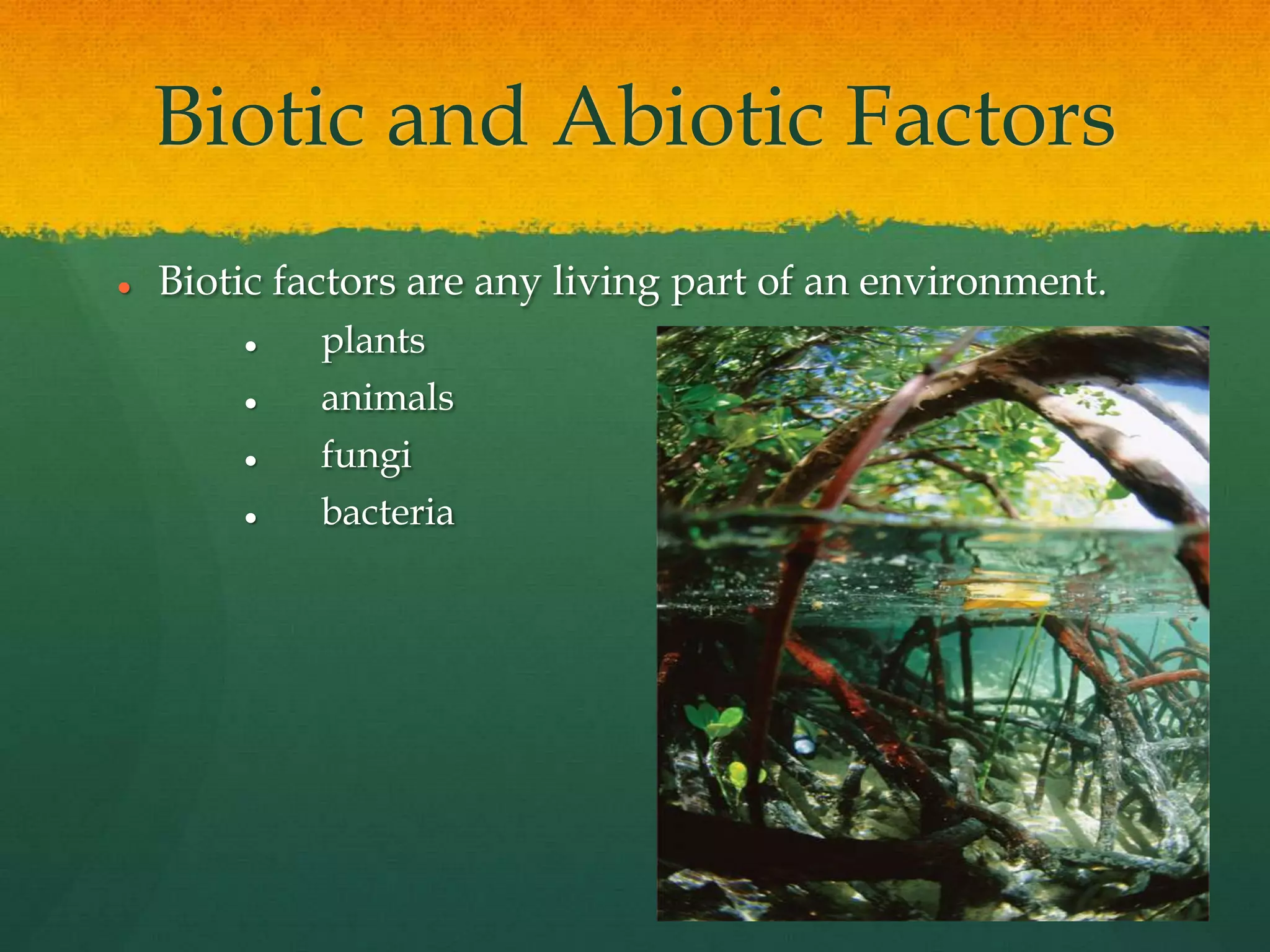
 Biotic factors are any living part of an environment.
 plants
 animals
 fungi
 bacteria
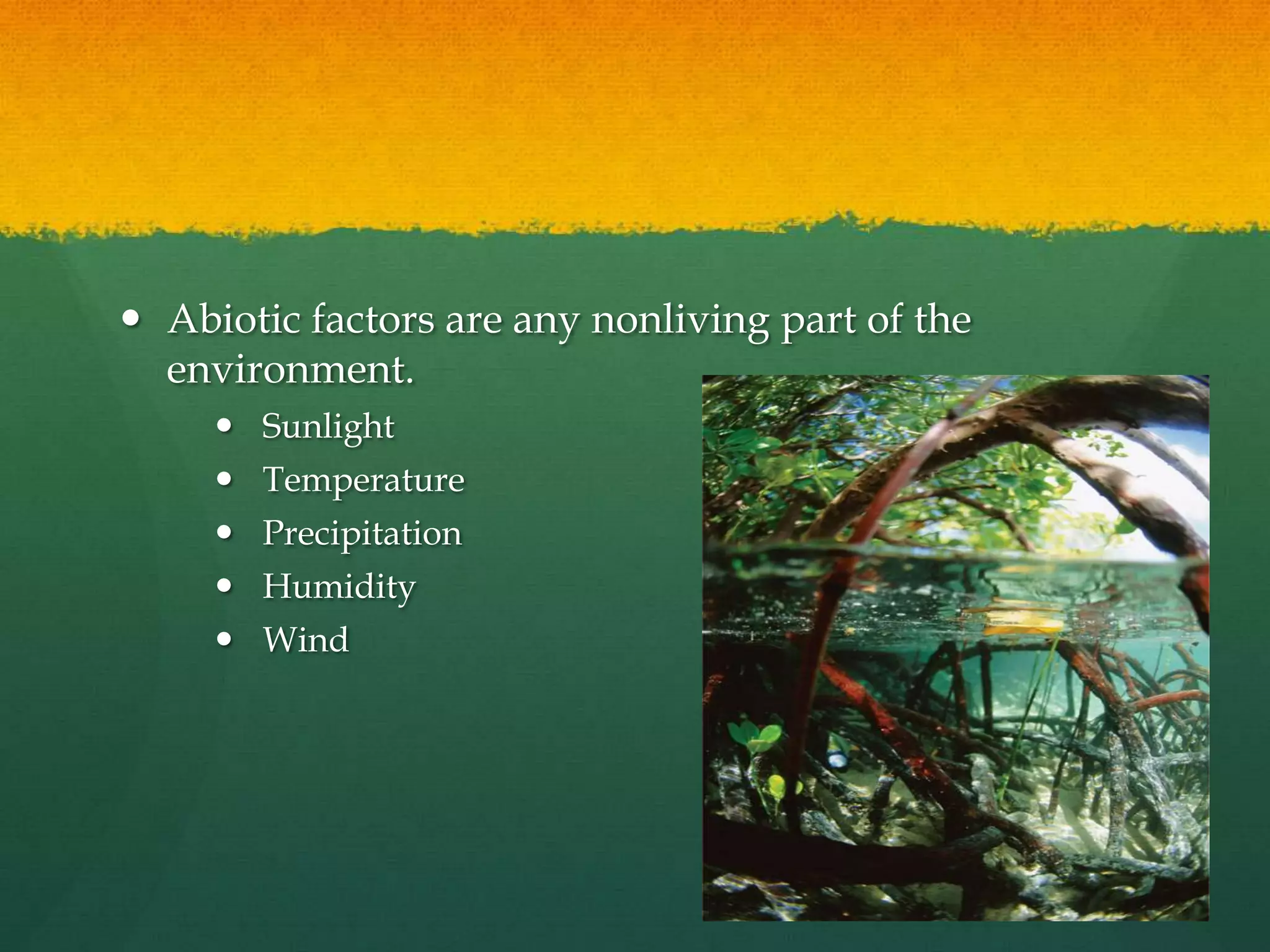
 Abiotic factors are any nonliving part of the
environment.
 Sunlight
 Temperature
 Precipitation
 Humidity
 Wind
Biotic and Abiotic Factors
Together
 Physical factors can be strongly influenced by the
activities of organisms.
 Also, a change in physical factors can strongly affect the
survival of the living organisms.
3.2 Energy in Ecosystems
 Living organisms need energy for
growth, reproduction, and their metabolic processes.
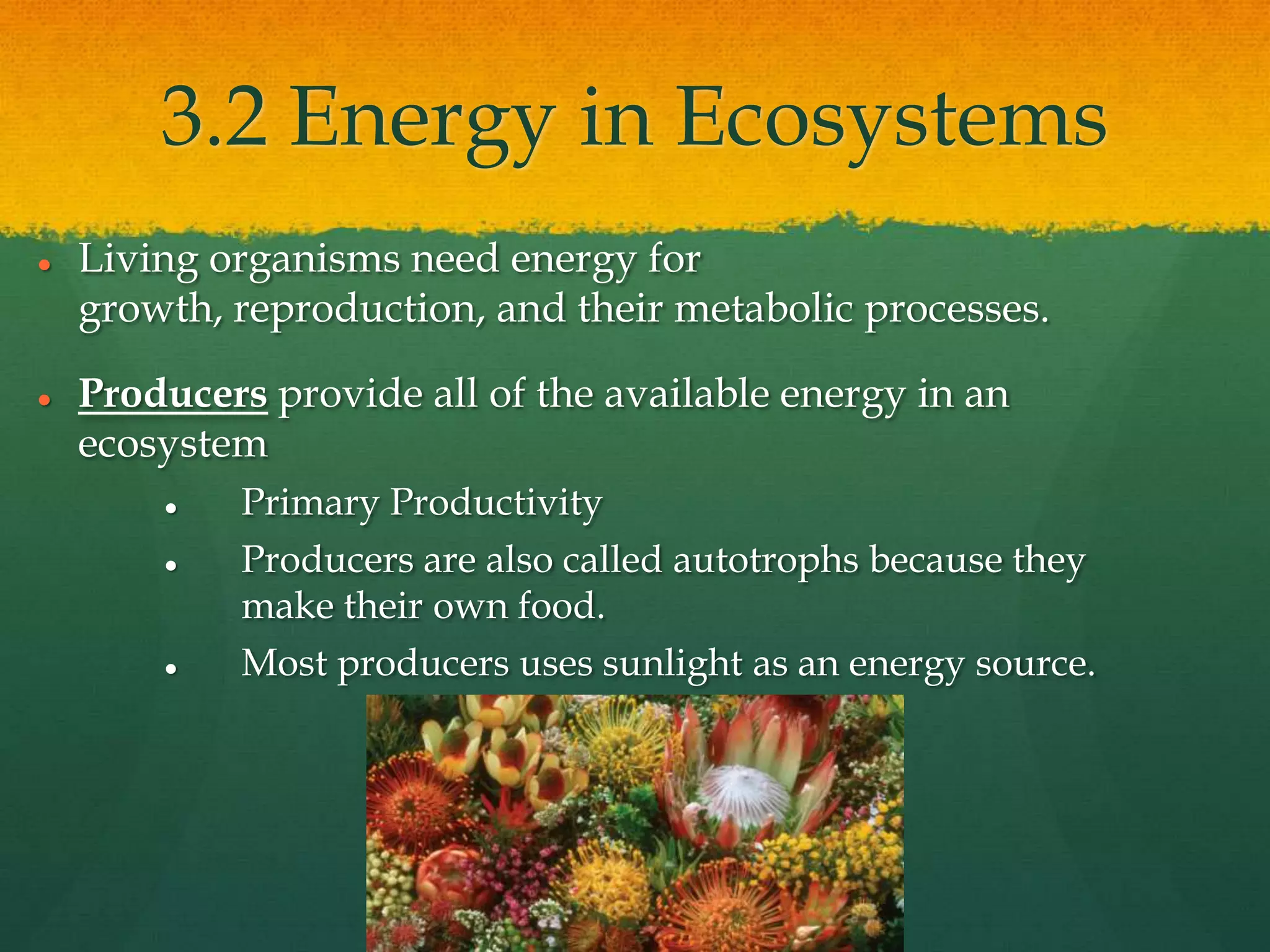
 Producers provide all of the available energy in an
ecosystem
 Primary Productivity
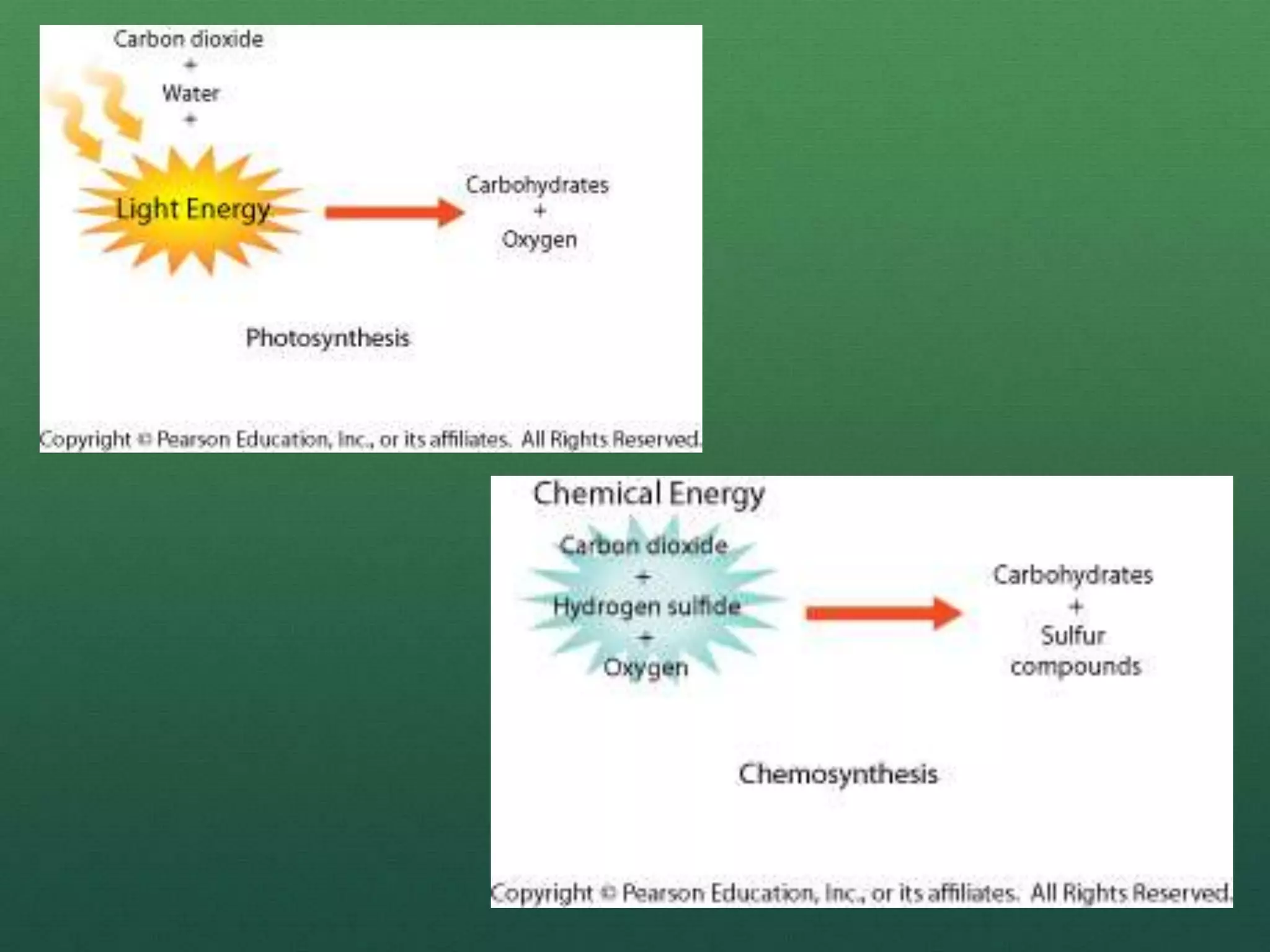
 Producers are also called autotrophs because they
make their own food.
 Most producers uses sunlight as an energy source.
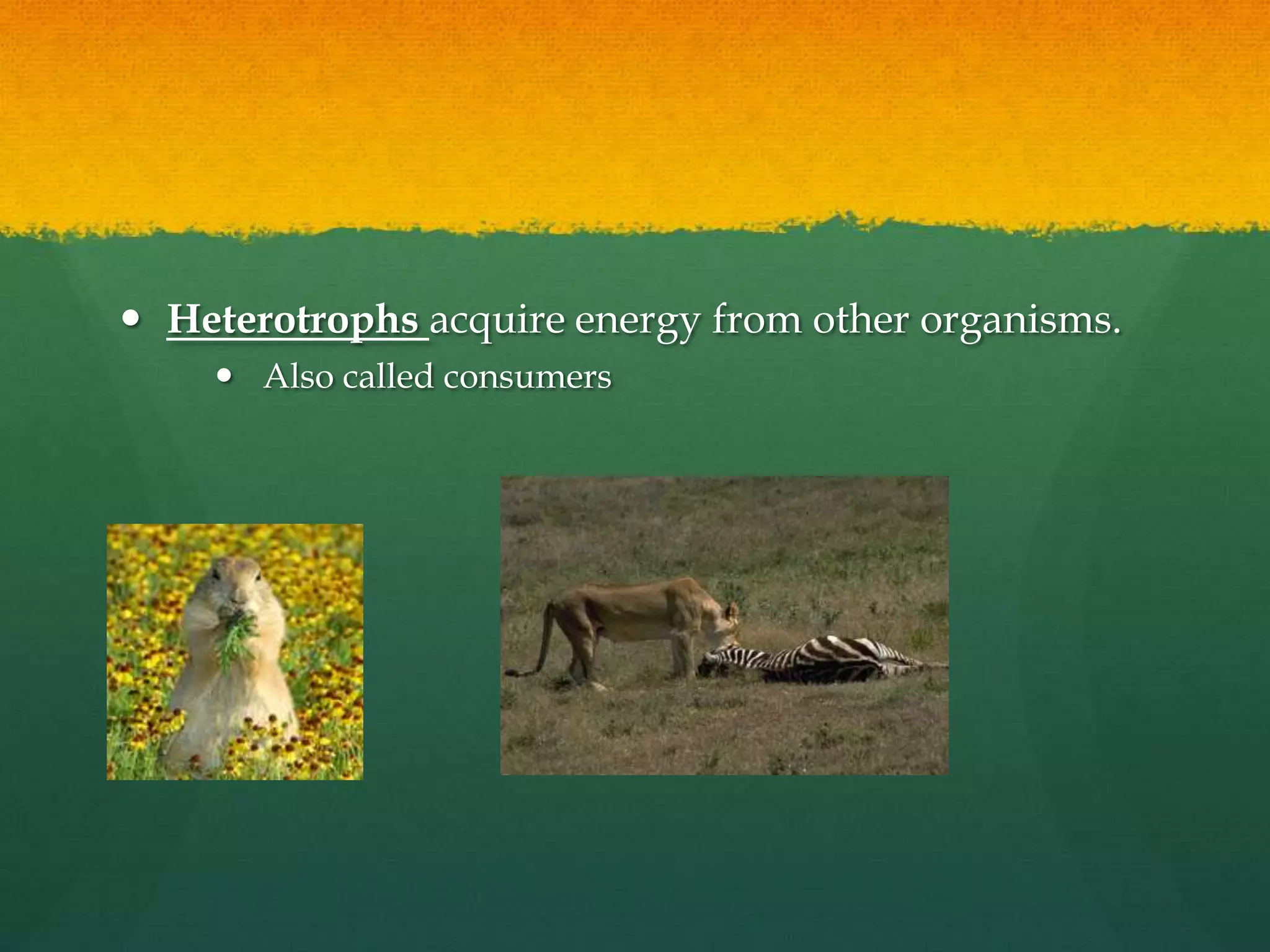
 Heterotrophs acquire energy from other organisms.
 Also called consumers
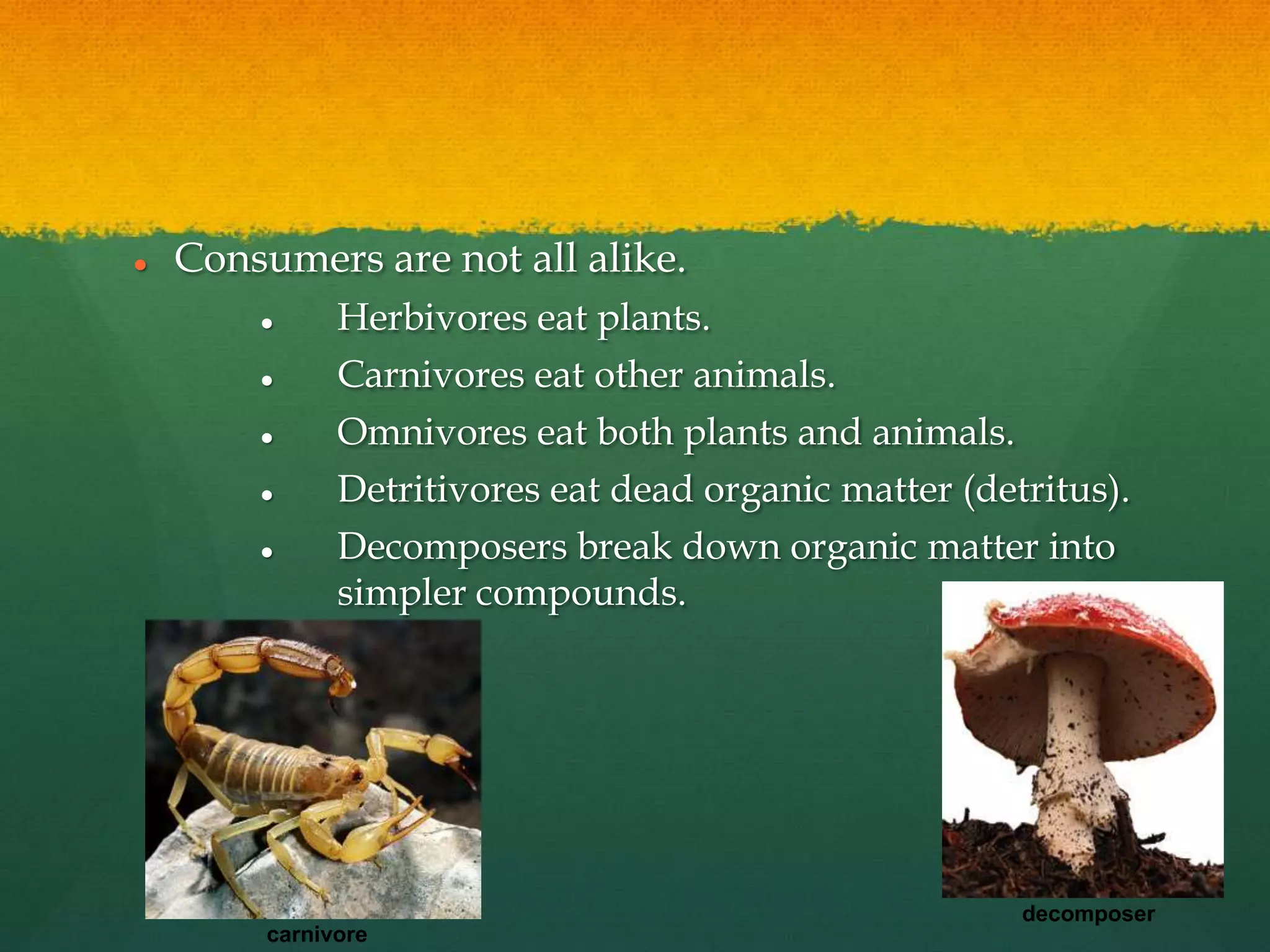
 Consumers are not all alike.
 Herbivores eat plants.
 Carnivores eat other animals.
 Omnivores eat both plants and animals.
 Detritivores eat dead organic matter (detritus).
 Decomposers break down organic matter into
simpler compounds.
carnivore
decomposer
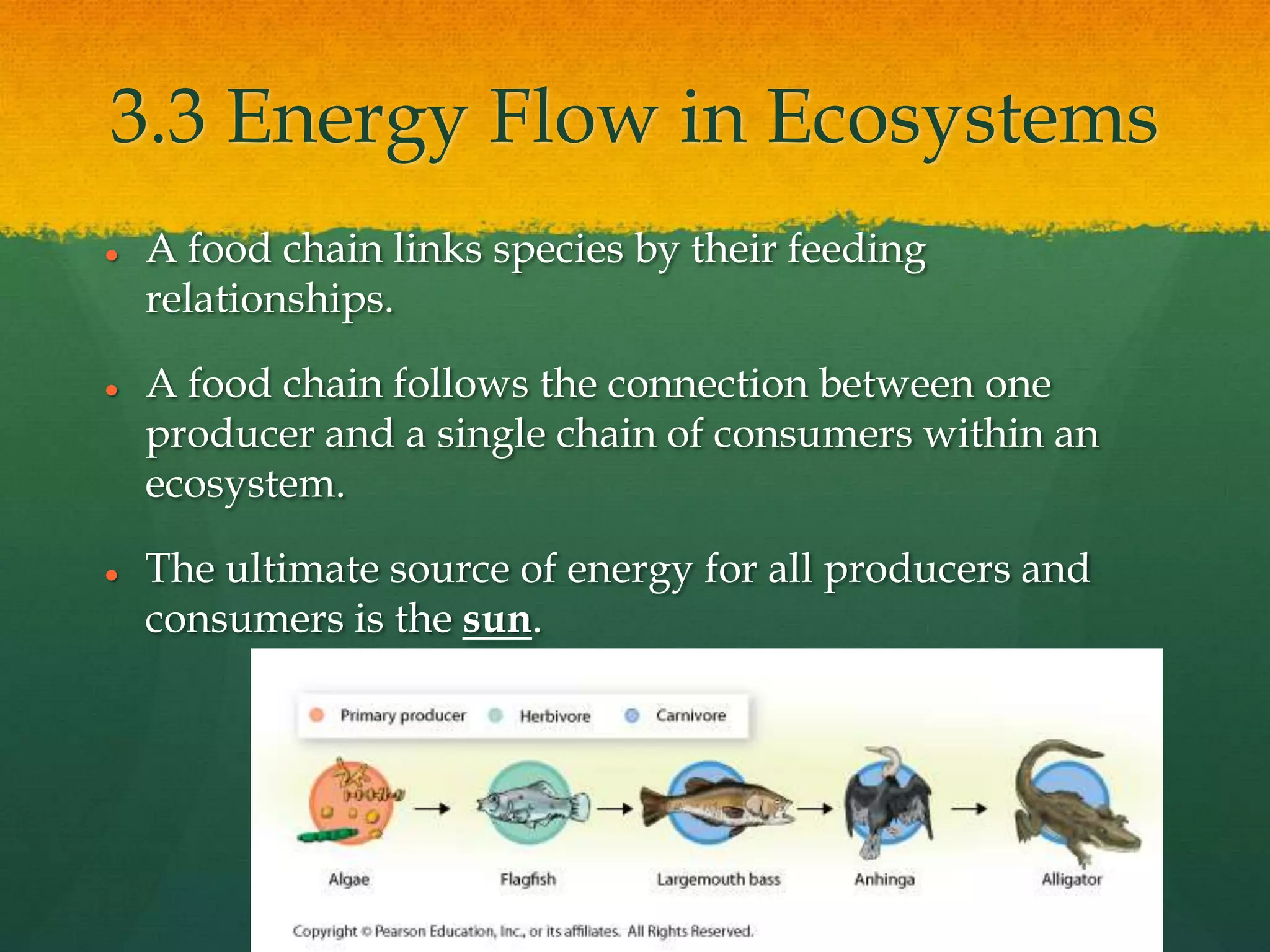
3.3 Energy Flow in Ecosystems
 A food chain links species by their feeding
relationships.
 A food chain follows the connection between one
producer and a single chain of consumers within an
ecosystem.
 The ultimate source of energy for all producers and
consumers is the sun.
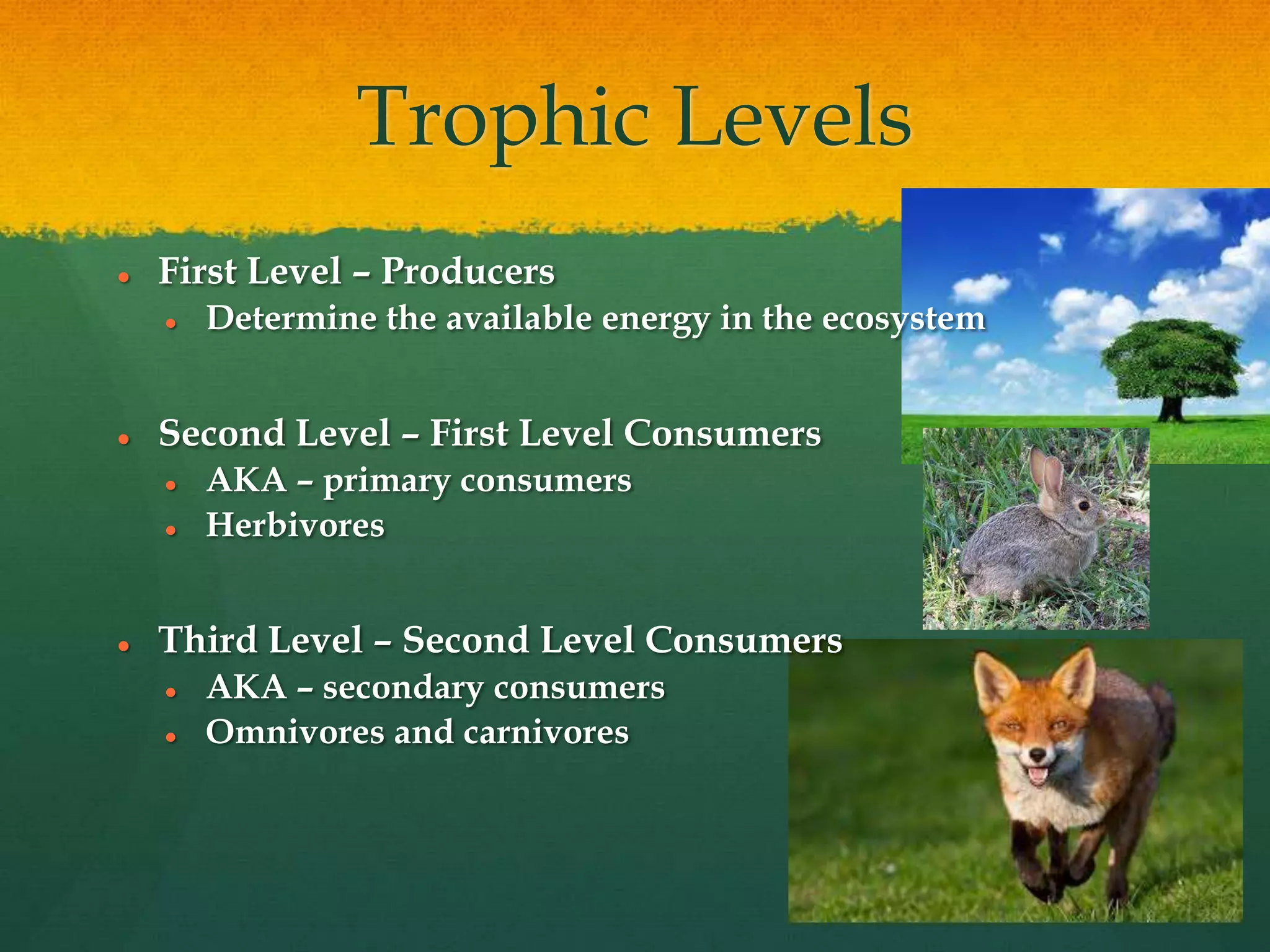
Trophic Levels
 First Level – Producers
 Determine the available energy in the ecosystem
 Second Level – First Level Consumers
 AKA – primary consumers
 Herbivores
 Third Level – Second Level Consumers
 AKA – secondary consumers
 Omnivores and carnivores
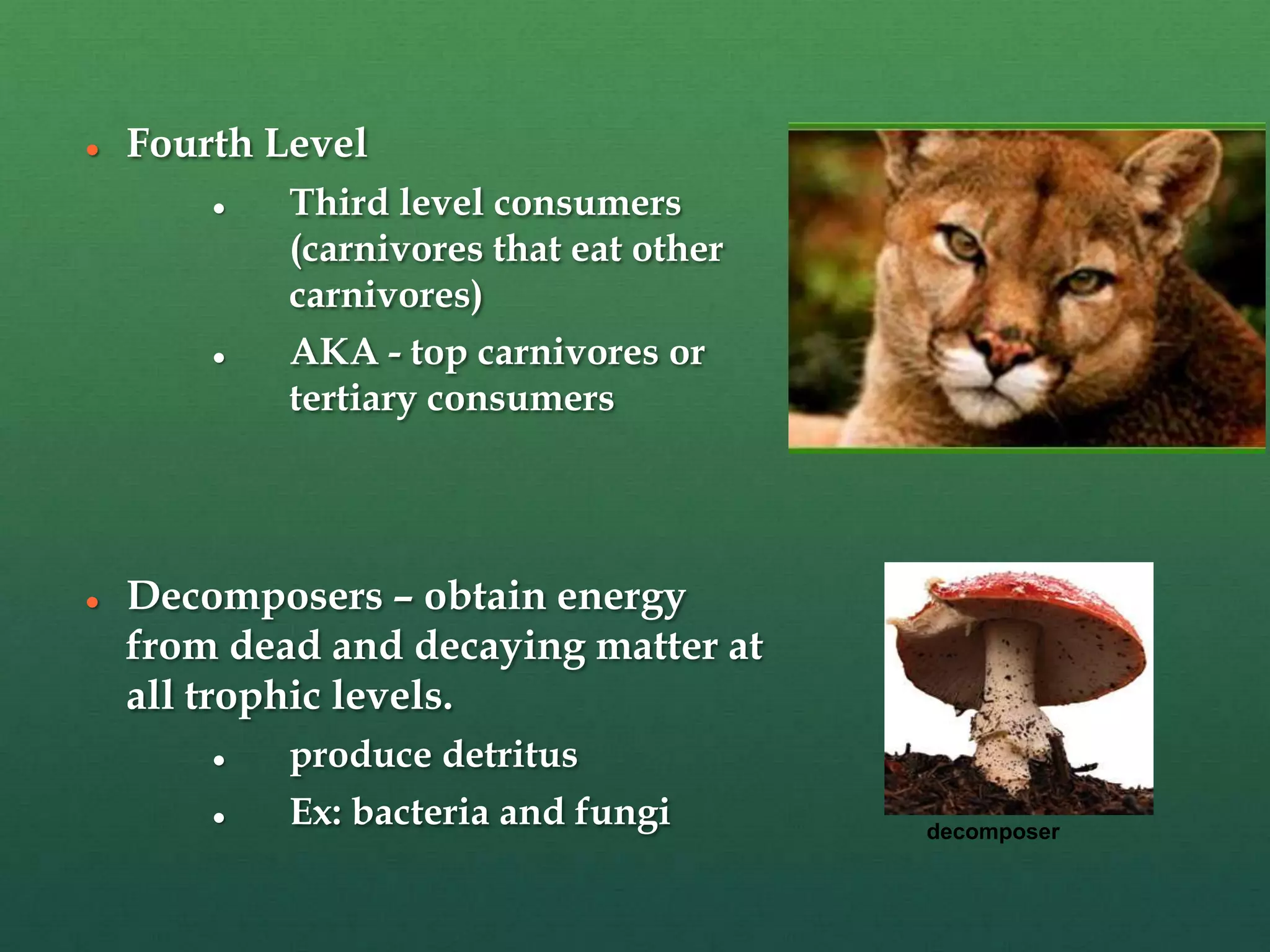
 Fourth Level
 Third level consumers
(carnivores that eat other
carnivores)
 AKA - top carnivores or
tertiary consumers
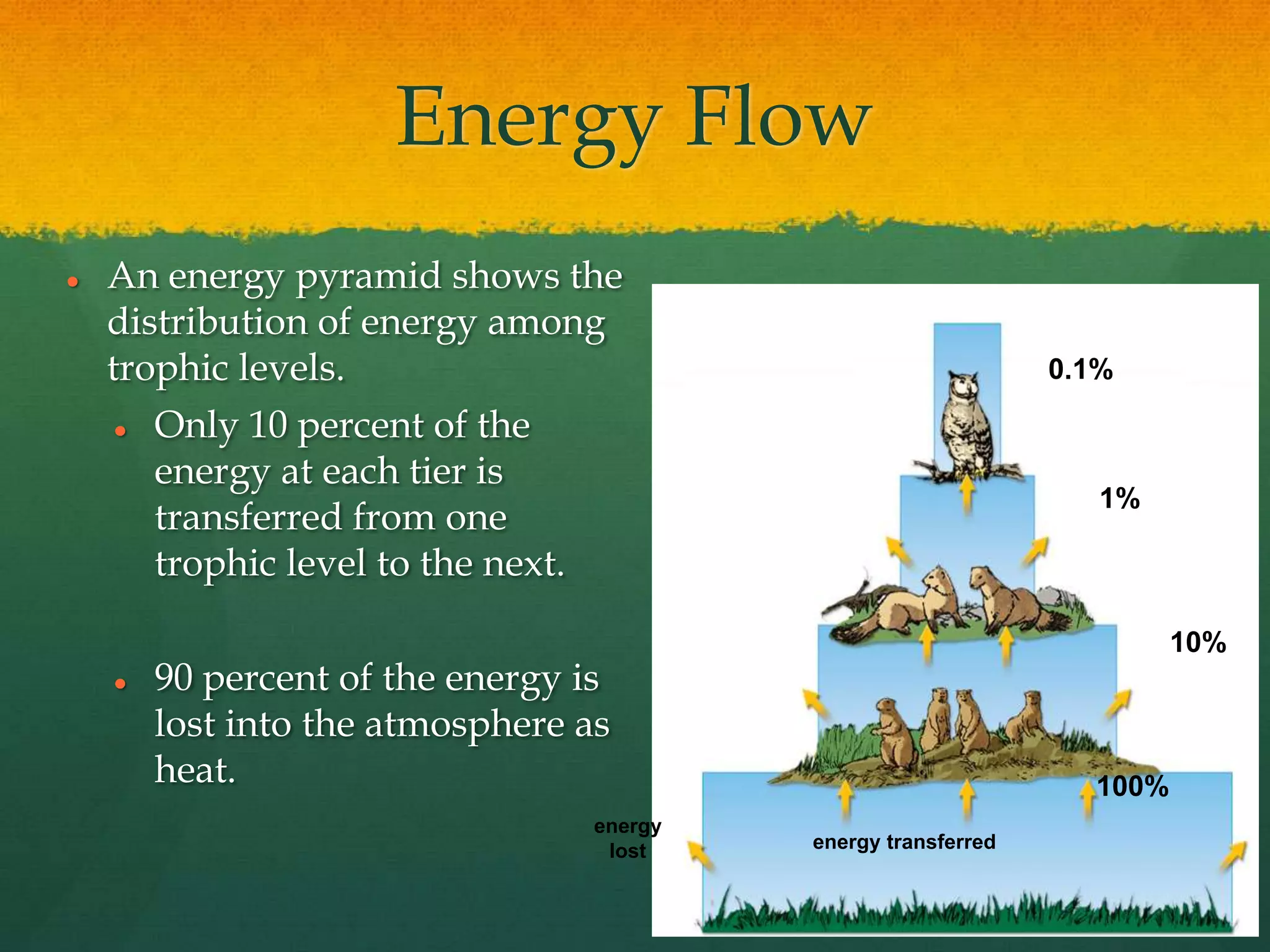
 Decomposers – obtain energy
from dead and decaying matter at
all trophic levels.
 produce detritus
 Ex: bacteria and fungi decomposer
Energy Flow
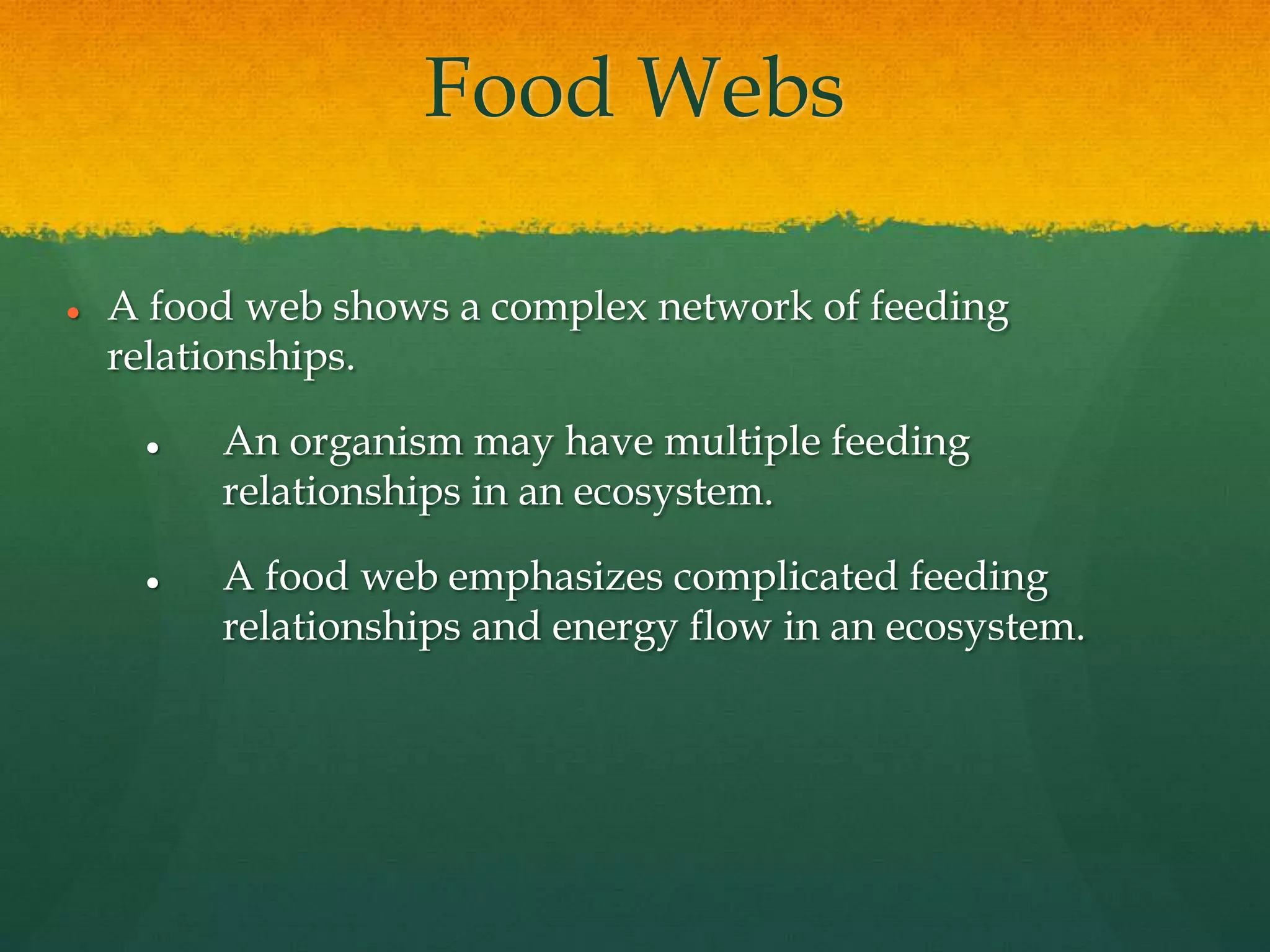
 An energy pyramid shows the
distribution of energy among
trophic levels.
 Only 10 percent of the
energy at each tier is
transferred from one
trophic level to the next.
 90 percent of the energy is
lost into the atmosphere as
heat.
energy transferred
energy
lost
100%
10%
1%
0.1%
Food Webs
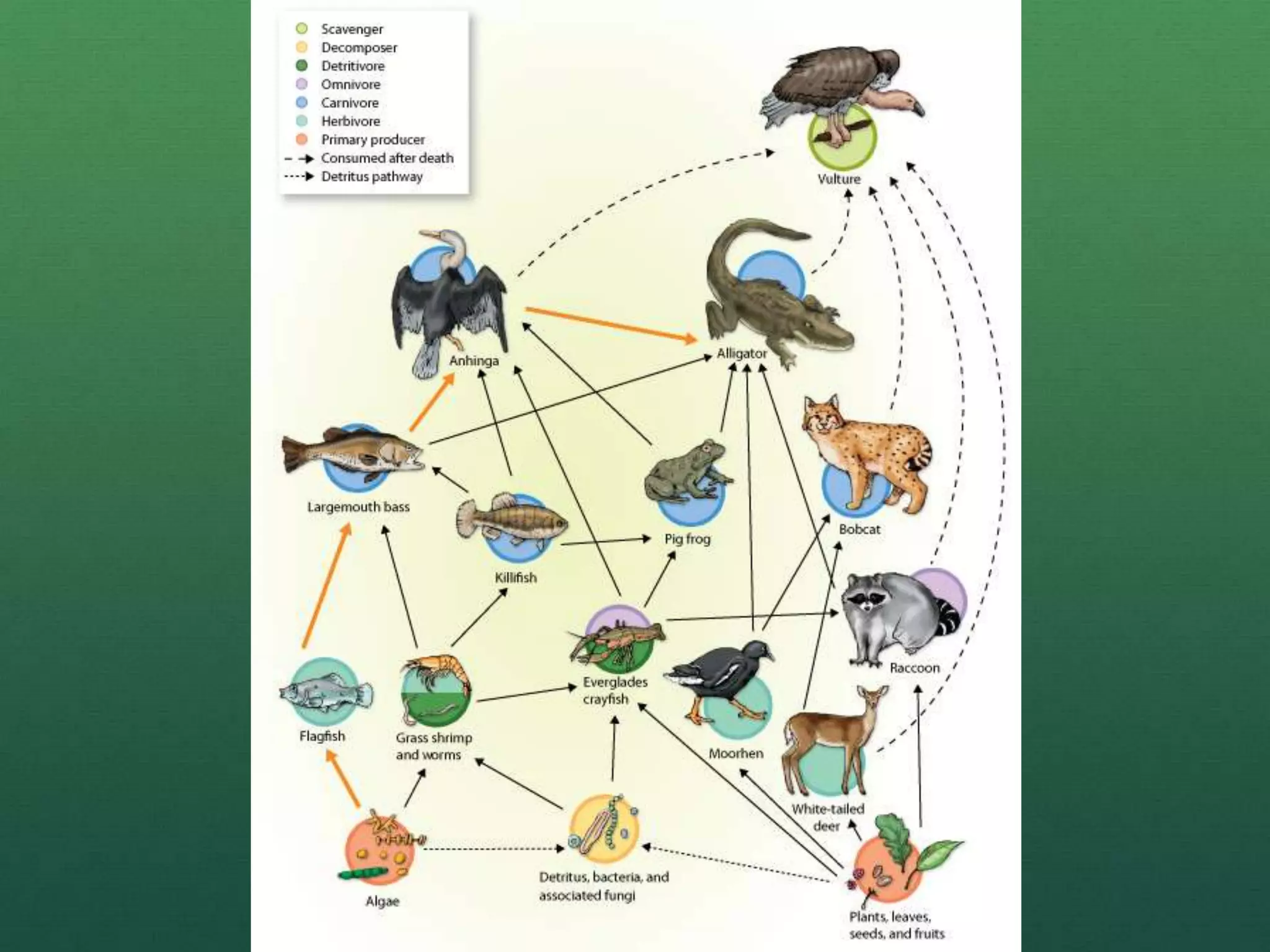
 A food web shows a complex network of feeding
relationships.
 An organism may have multiple feeding
relationships in an ecosystem.
 A food web emphasizes complicated feeding
relationships and energy flow in an ecosystem.
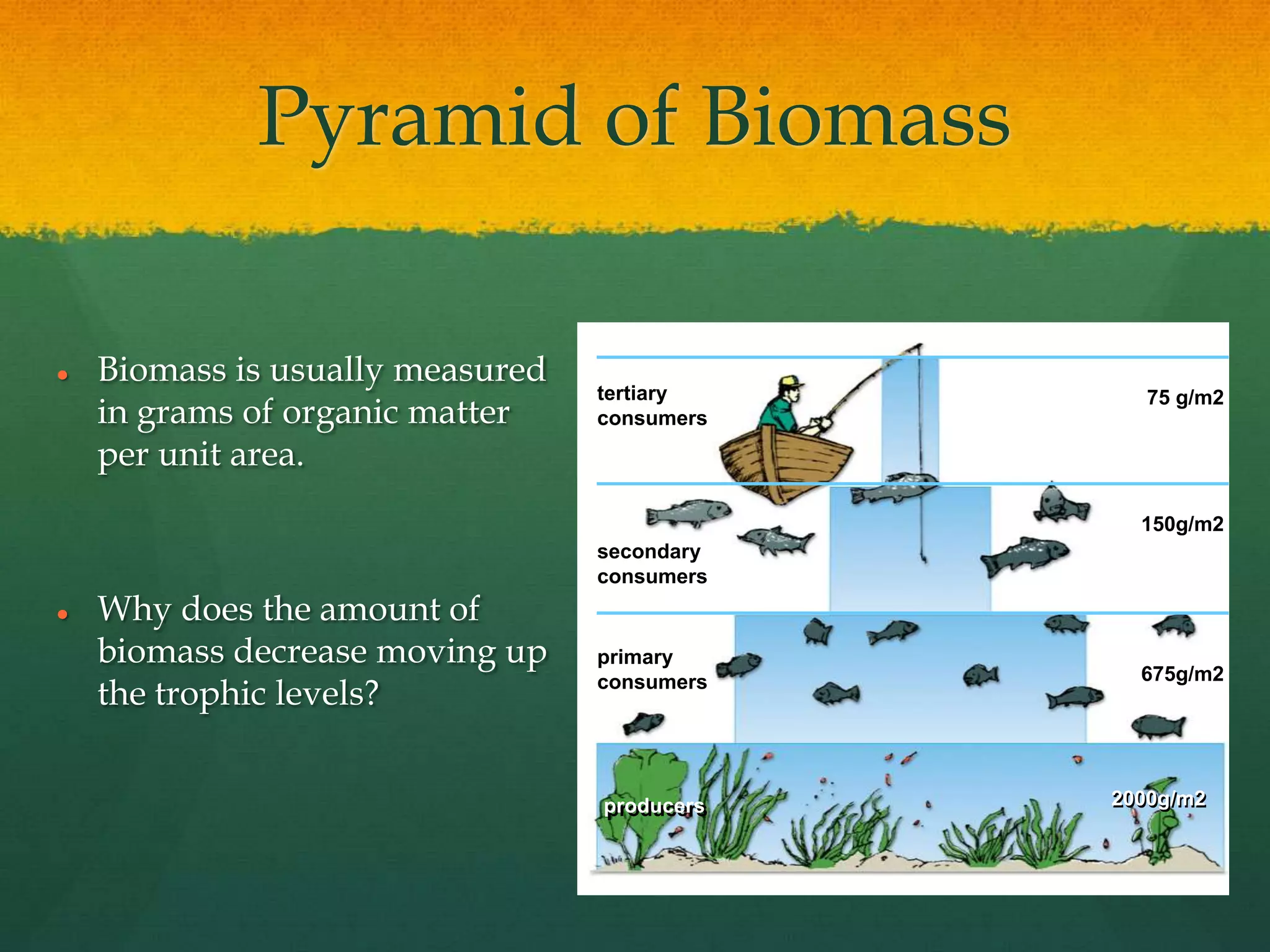
Pyramid of Biomass
 Biomass is usually measured
in grams of organic matter
per unit area.
 Why does the amount of
biomass decrease moving up
the trophic levels?
tertiary
consumers
secondary
consumers
primary
consumers
producers
75 g/m2
150g/m2
675g/m2
2000g/m2producers 2000g/m2
3.4 Cycles of Matter
 Elements essential for life cycle through ecosystems.
 A biogeochemical cycle is the movement of a
particular chemical through the living and non-
living parts of an ecosystem.
 Matter is recycled within and between ecosystems.
 Biogeochemical Cycles
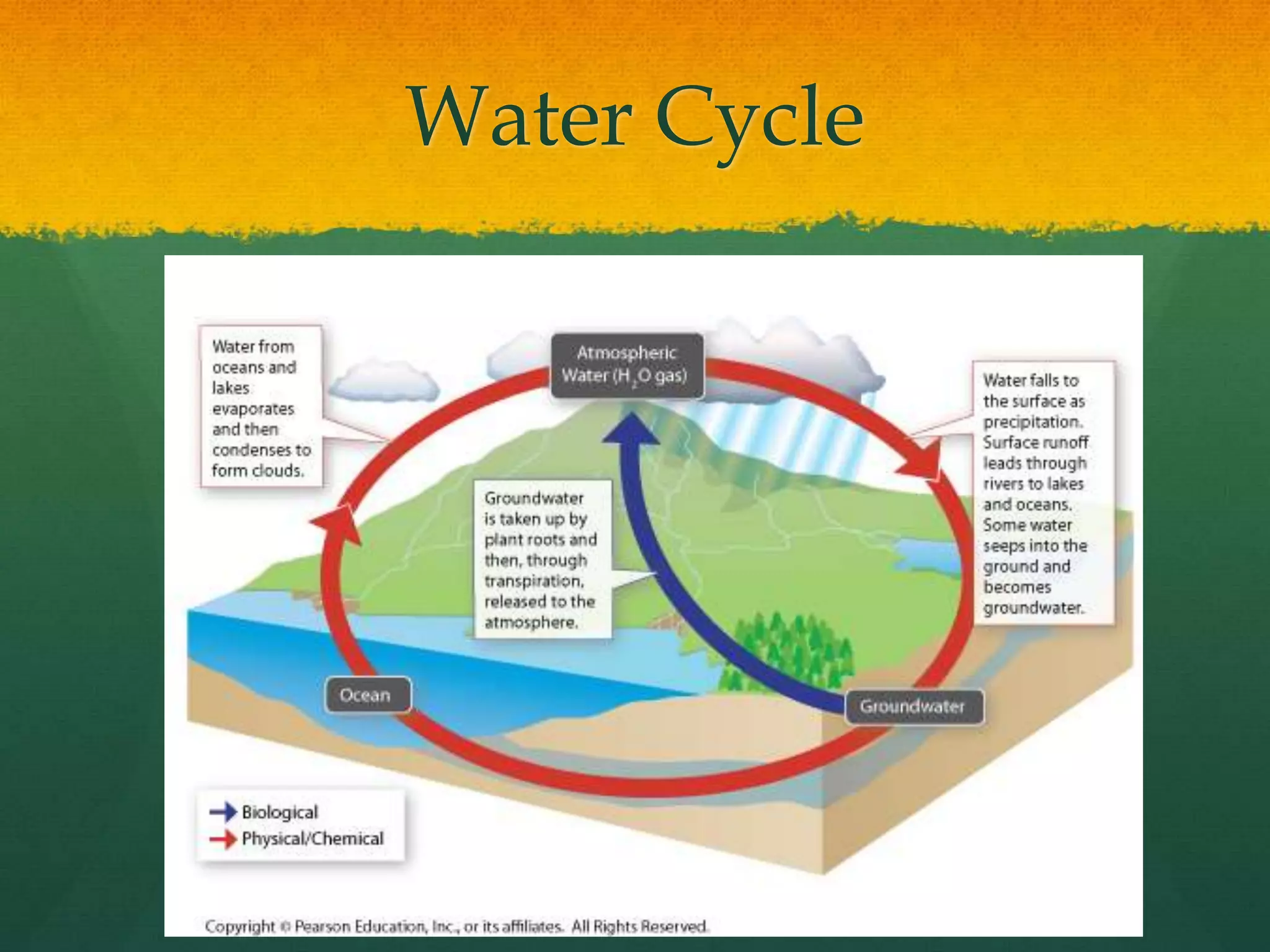
Water Cycle
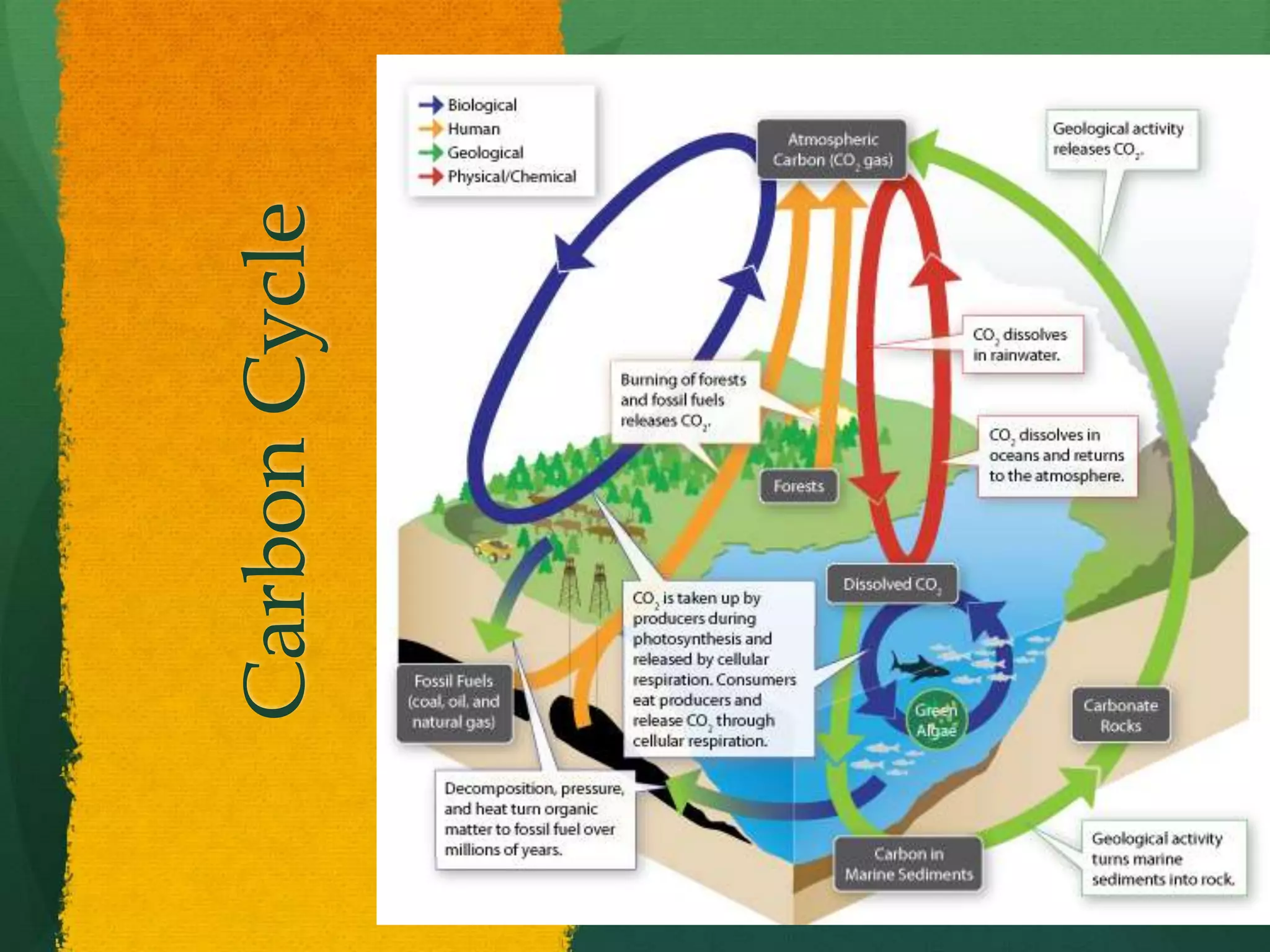
CarbonCycle
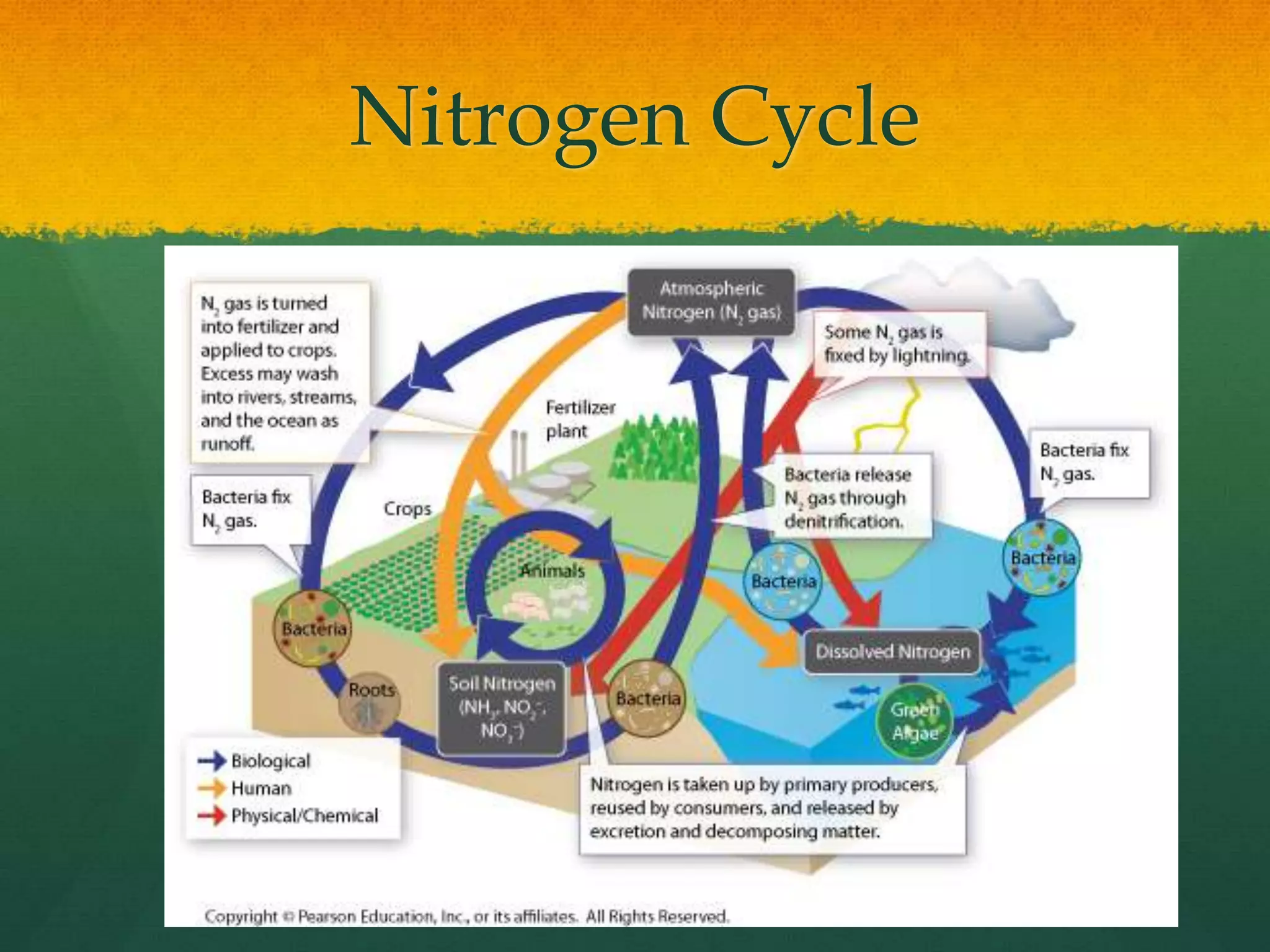
Nitrogen Cycle

Biology 1 Unit 3 notes

  • 1.
    Chapter 3 –The Biosphere
  • 2.
    3.1 Ecologists studyenvironments at different levels of organization. Ecology is the study of the interactions among living things, and between living things and their surroundings.
  • 3.
  • 4.
    Biotic and AbioticFactors  Biotic factors are any living part of an environment.  plants  animals  fungi  bacteria
  • 5.
     Abiotic factorsare any nonliving part of the environment.  Sunlight  Temperature  Precipitation  Humidity  Wind
  • 6.
    Biotic and AbioticFactors Together  Physical factors can be strongly influenced by the activities of organisms.  Also, a change in physical factors can strongly affect the survival of the living organisms.
  • 7.
    3.2 Energy inEcosystems  Living organisms need energy for growth, reproduction, and their metabolic processes.  Producers provide all of the available energy in an ecosystem  Primary Productivity  Producers are also called autotrophs because they make their own food.  Most producers uses sunlight as an energy source.
  • 9.
     Heterotrophs acquireenergy from other organisms.  Also called consumers
  • 10.
     Consumers arenot all alike.  Herbivores eat plants.  Carnivores eat other animals.  Omnivores eat both plants and animals.  Detritivores eat dead organic matter (detritus).  Decomposers break down organic matter into simpler compounds. carnivore decomposer
  • 11.
    3.3 Energy Flowin Ecosystems  A food chain links species by their feeding relationships.  A food chain follows the connection between one producer and a single chain of consumers within an ecosystem.  The ultimate source of energy for all producers and consumers is the sun.
  • 12.
    Trophic Levels  FirstLevel – Producers  Determine the available energy in the ecosystem  Second Level – First Level Consumers  AKA – primary consumers  Herbivores  Third Level – Second Level Consumers  AKA – secondary consumers  Omnivores and carnivores
  • 13.
     Fourth Level Third level consumers (carnivores that eat other carnivores)  AKA - top carnivores or tertiary consumers  Decomposers – obtain energy from dead and decaying matter at all trophic levels.  produce detritus  Ex: bacteria and fungi decomposer
  • 14.
    Energy Flow  Anenergy pyramid shows the distribution of energy among trophic levels.  Only 10 percent of the energy at each tier is transferred from one trophic level to the next.  90 percent of the energy is lost into the atmosphere as heat. energy transferred energy lost 100% 10% 1% 0.1%
  • 15.
    Food Webs  Afood web shows a complex network of feeding relationships.  An organism may have multiple feeding relationships in an ecosystem.  A food web emphasizes complicated feeding relationships and energy flow in an ecosystem.
  • 17.
    Pyramid of Biomass Biomass is usually measured in grams of organic matter per unit area.  Why does the amount of biomass decrease moving up the trophic levels? tertiary consumers secondary consumers primary consumers producers 75 g/m2 150g/m2 675g/m2 2000g/m2producers 2000g/m2
  • 18.
    3.4 Cycles ofMatter  Elements essential for life cycle through ecosystems.  A biogeochemical cycle is the movement of a particular chemical through the living and non- living parts of an ecosystem.  Matter is recycled within and between ecosystems.  Biogeochemical Cycles
  • 19.
  • 20.
  • 21.