Chapter 12: DNA
12.1 The Role of DNA
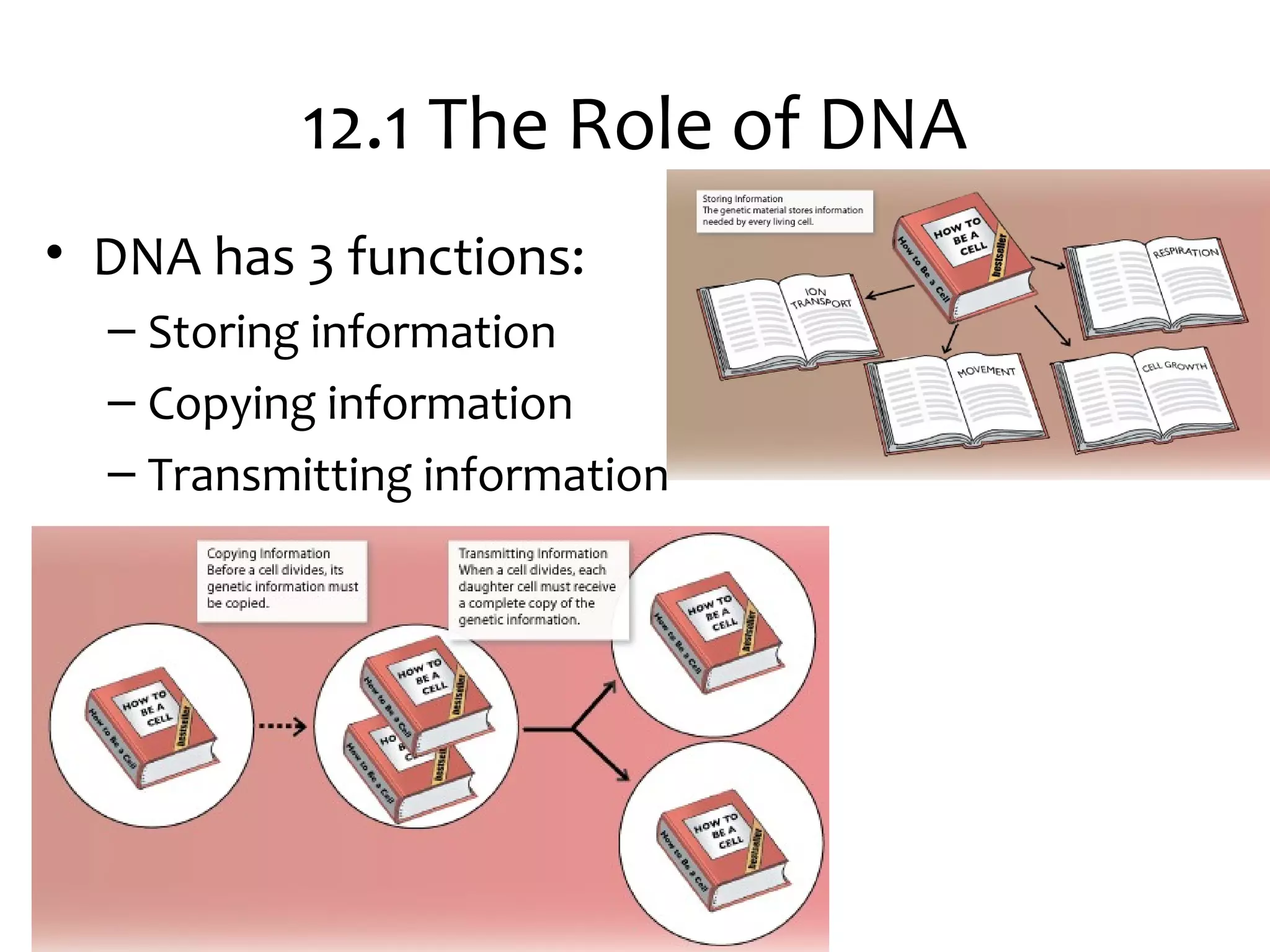
• DNA has 3 functions:
– Storing information
– Copying information
– Transmitting information
12.2 The Structure of DNA
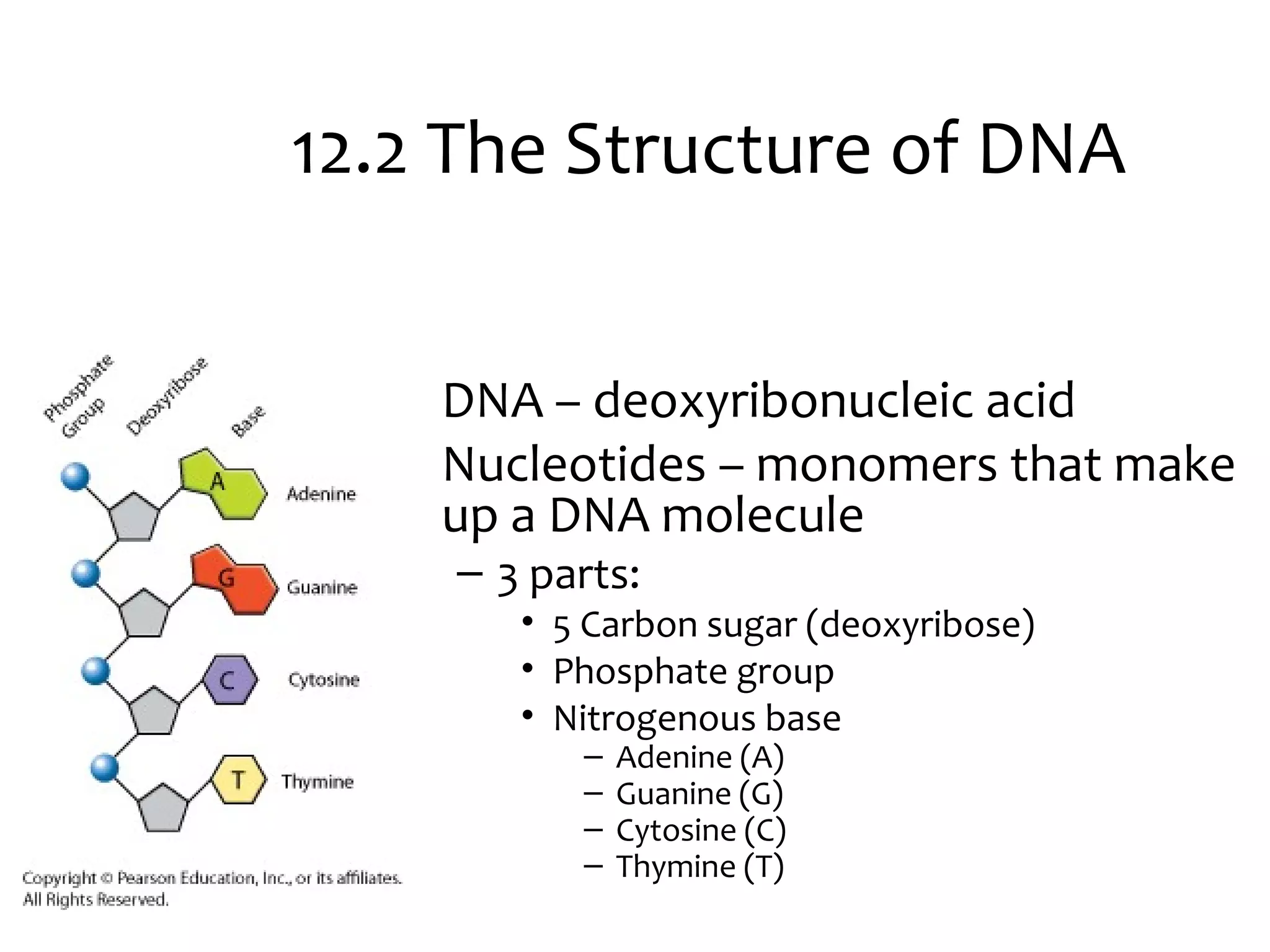
• DNA – deoxyribonucleic acid
• Nucleotides – monomers that make
up a DNA molecule
– 3 parts:
• 5 Carbon sugar (deoxyribose)
• Phosphate group
• Nitrogenous base
– Adenine (A)
– Guanine (G)
– Cytosine (C)
– Thymine (T)
Solving the Structure of DNA
∗Edwin Chargaff (1949)
∗Chargaff’s Rule
∗[A]=[T]
∗[C]=[G]
Adenine Thymine Guanine Cytosine
35%
45%
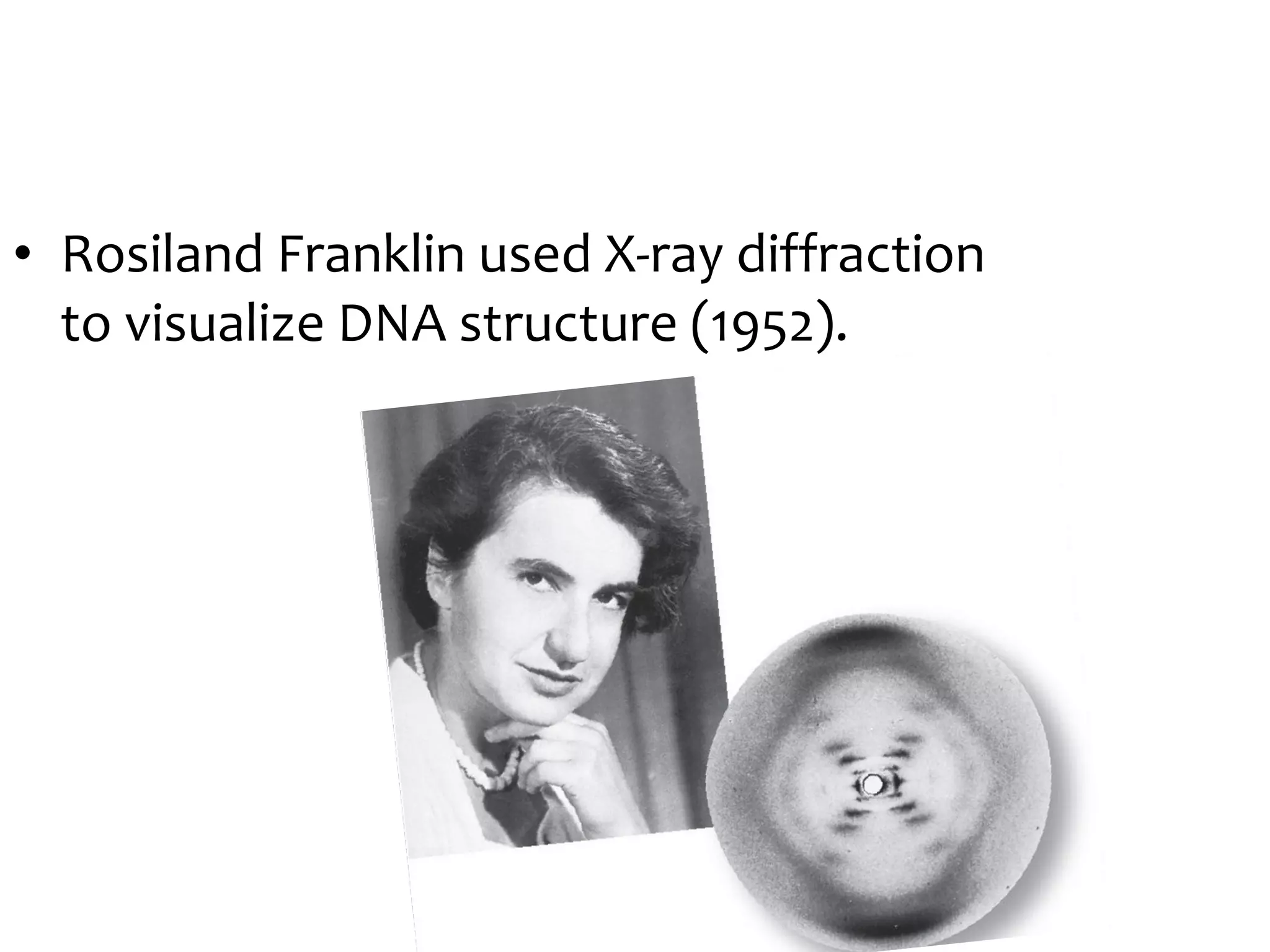
• Rosiland Franklin used X-ray diffraction
to visualize DNA structure (1952).
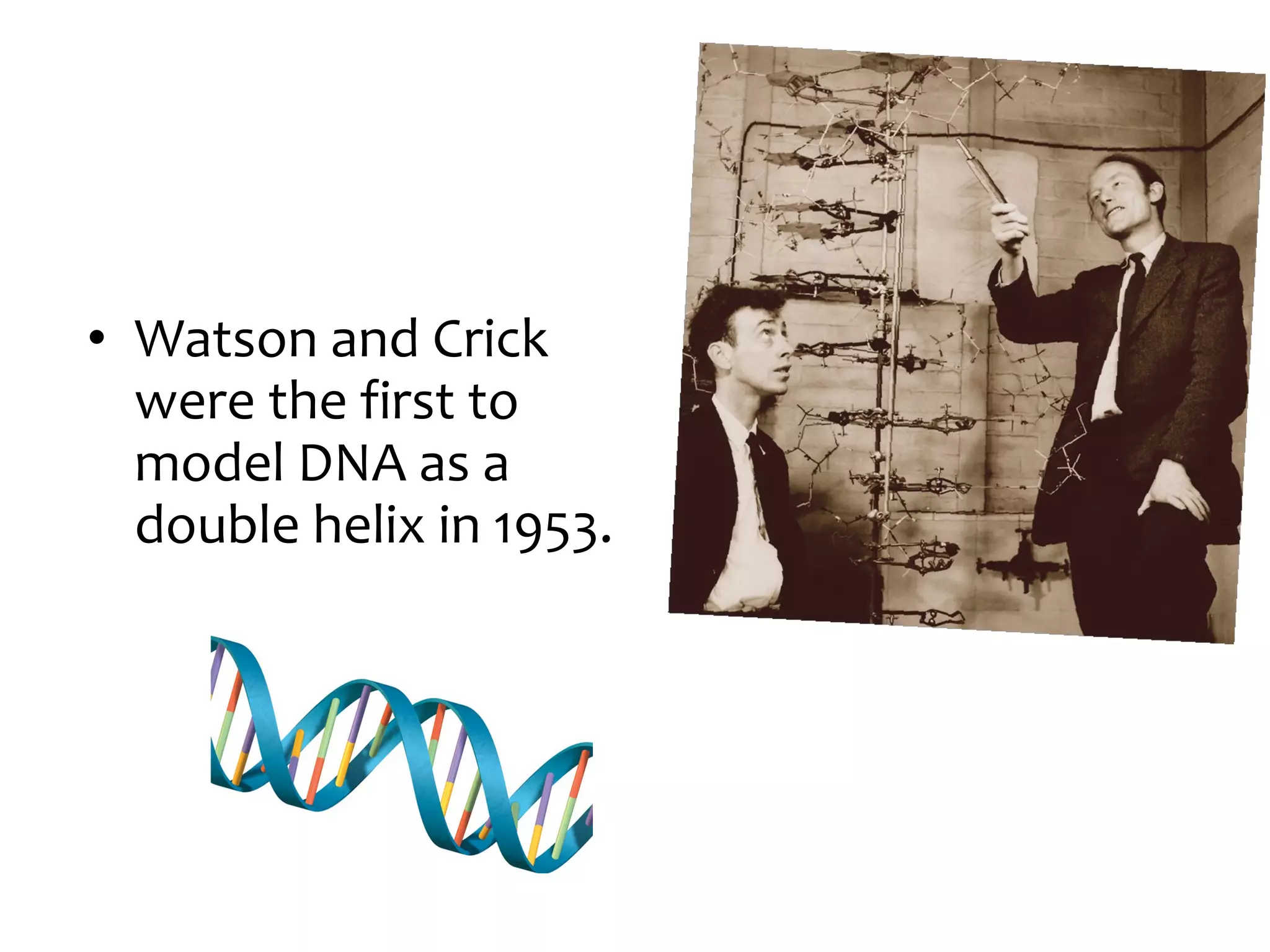
• Watson and Crick
were the first to
model DNA as a
double helix in 1953.
The Double Helix Model
• All the previous discoveries show us the
structure of DNA and how DNA can
function as a carrier of genetic
information.
• Characteristics of the double helix model:
– Antiparallel strands
– Hydrogen Bonding
– Base Pairing
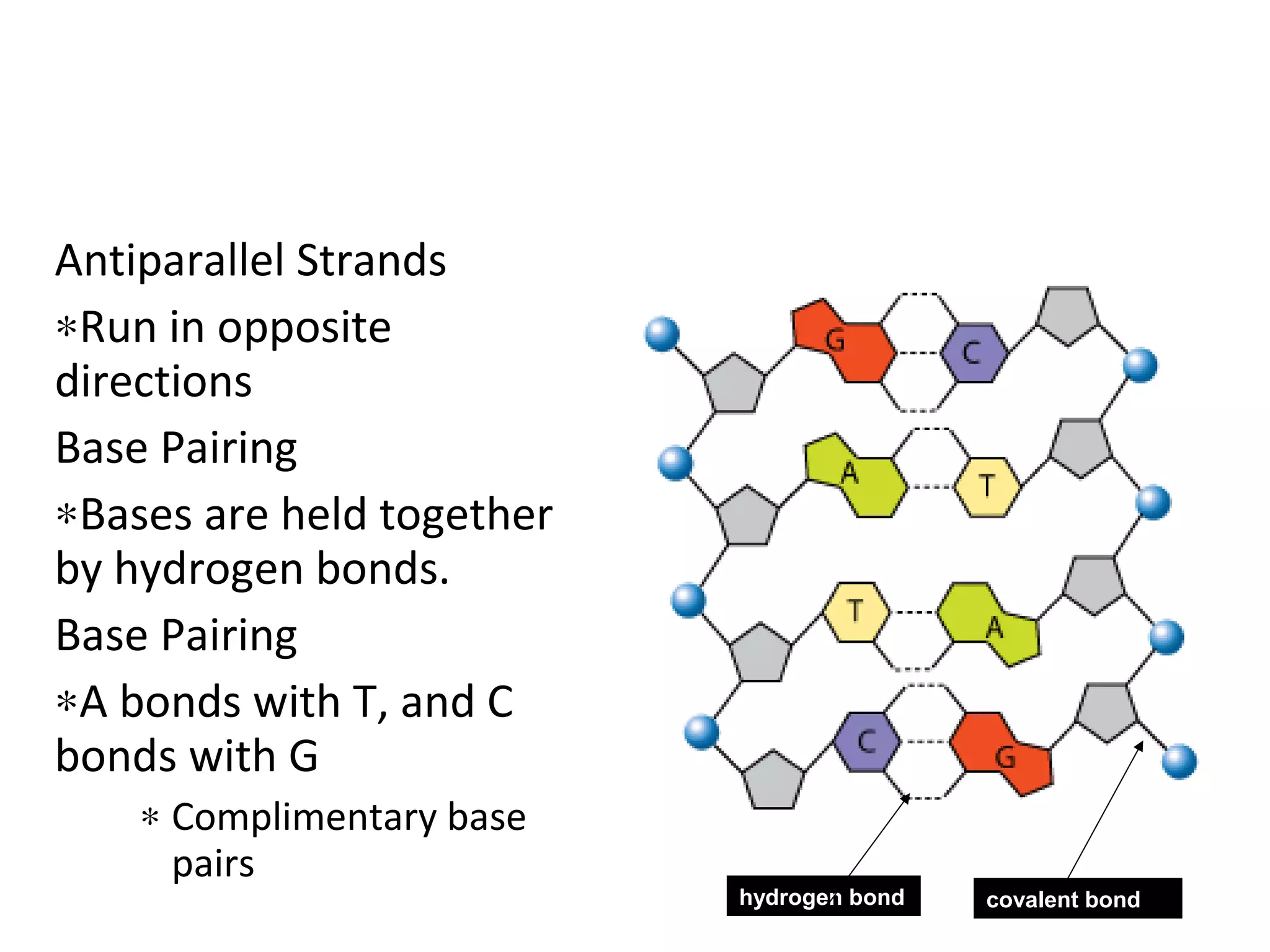
Antiparallel Strands
∗Run in opposite
directions
Base Pairing
∗Bases are held together
by hydrogen bonds.
Base Pairing
∗A bonds with T, and C
bonds with G
∗ Complimentary base
pairs
hydrogen bond covalent bond
Practice Base Pairing
• If the sequence of bases on one strand of a
DNA molecule is TCGAACTGA, the sequence
on the other (complimentary) strand is:
12.3 DNA Replication
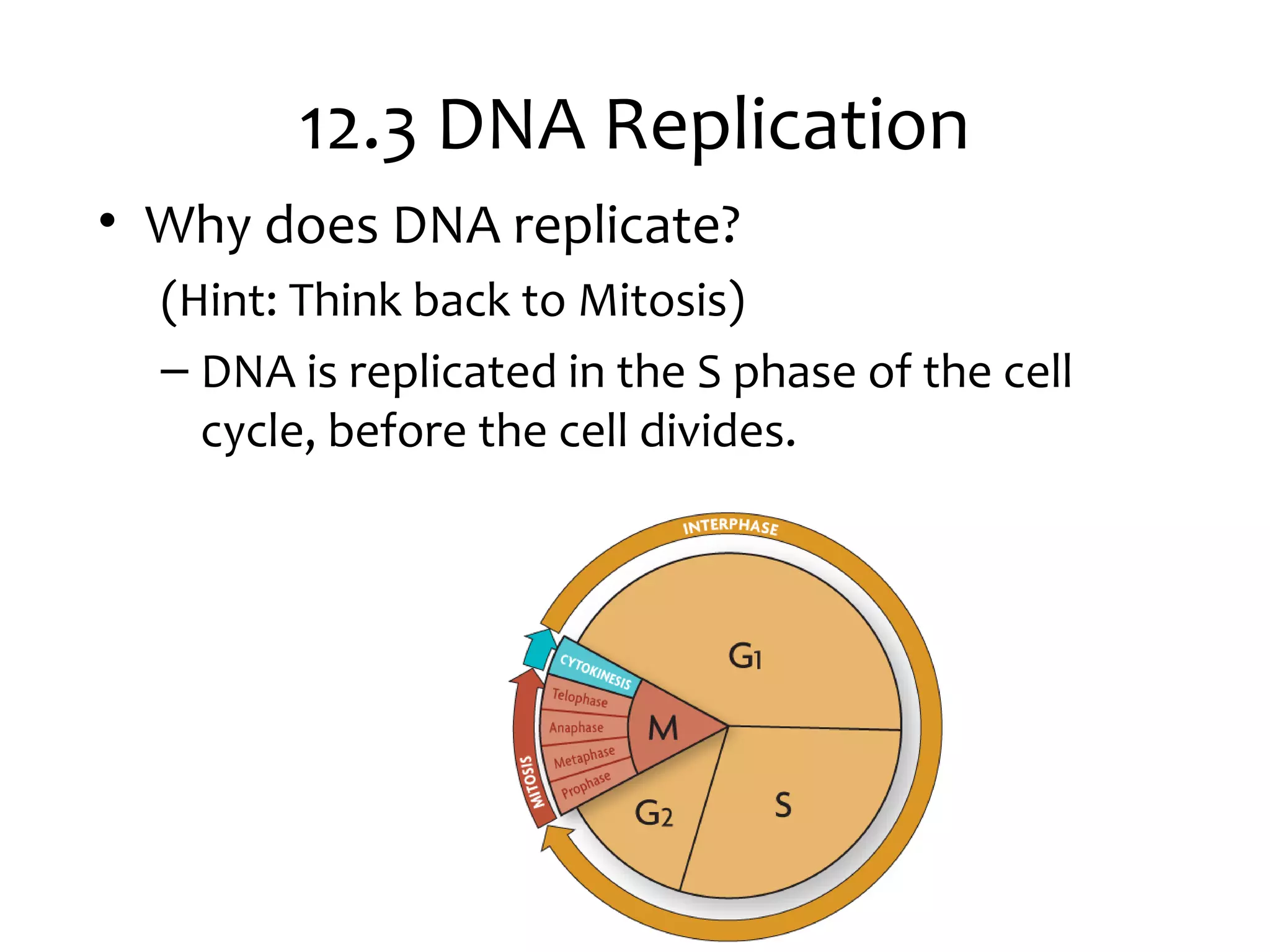
• Why does DNA replicate?
(Hint: Think back to Mitosis)
– DNA is replicated in the S phase of the cell
cycle, before the cell divides.
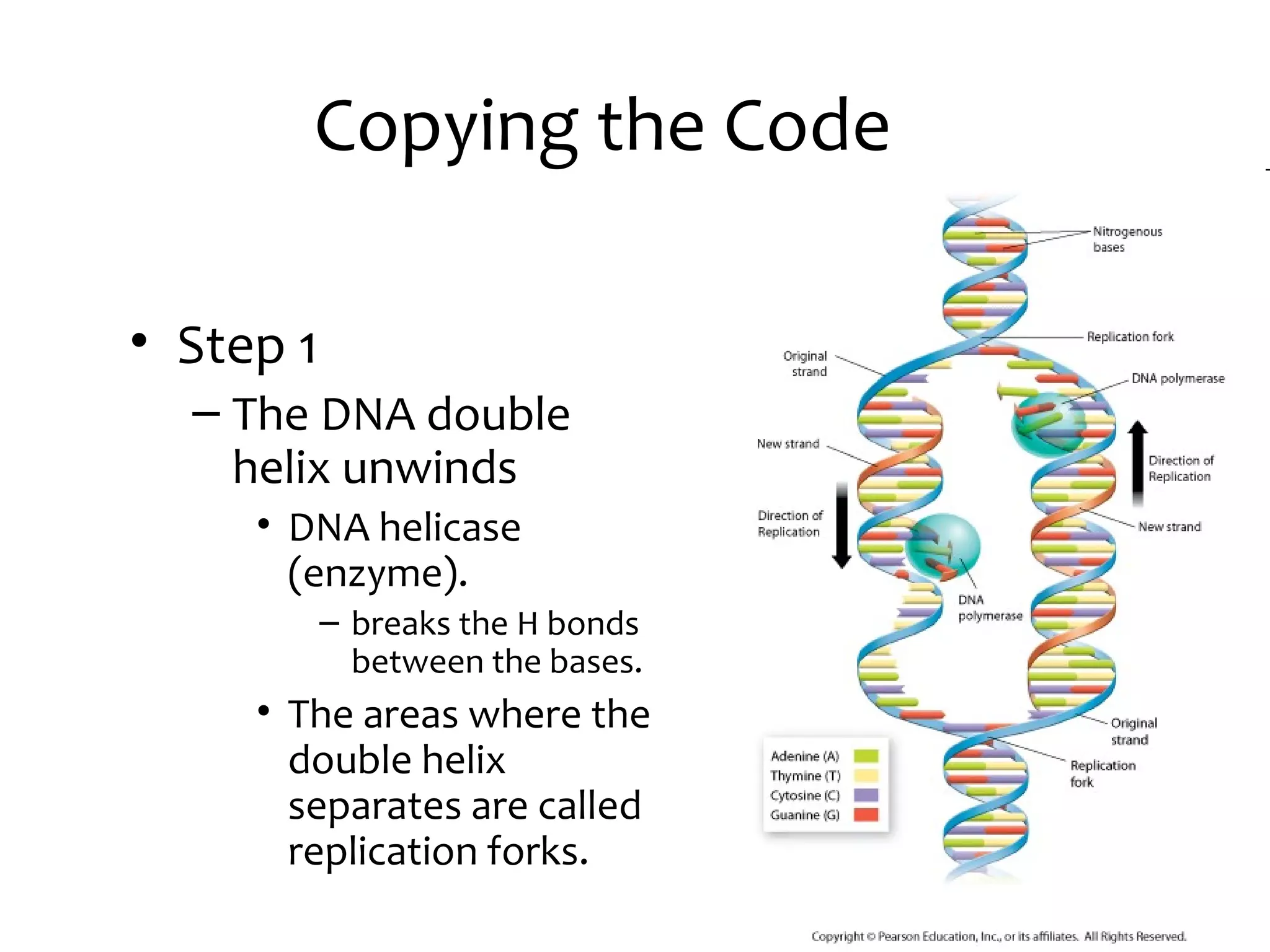
Copying the Code
• Step 1
– The DNA double
helix unwinds
• DNA helicase
(enzyme).
– breaks the H bonds
between the bases.
• The areas where the
double helix
separates are called
replication forks.
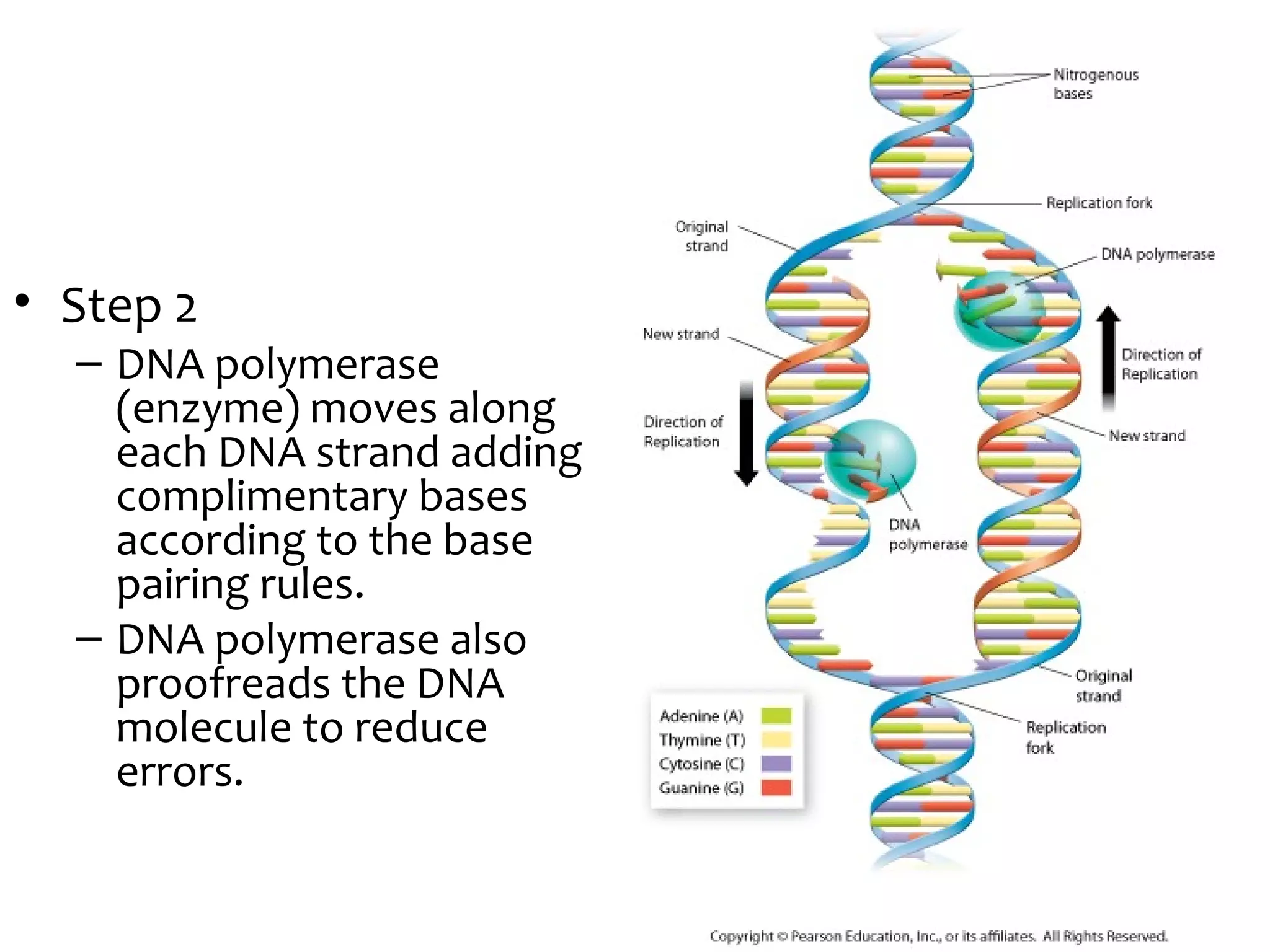
• Step 2
– DNA polymerase
(enzyme) moves along
each DNA strand adding
complimentary bases
according to the base
pairing rules.
– DNA polymerase also
proofreads the DNA
molecule to reduce
errors.
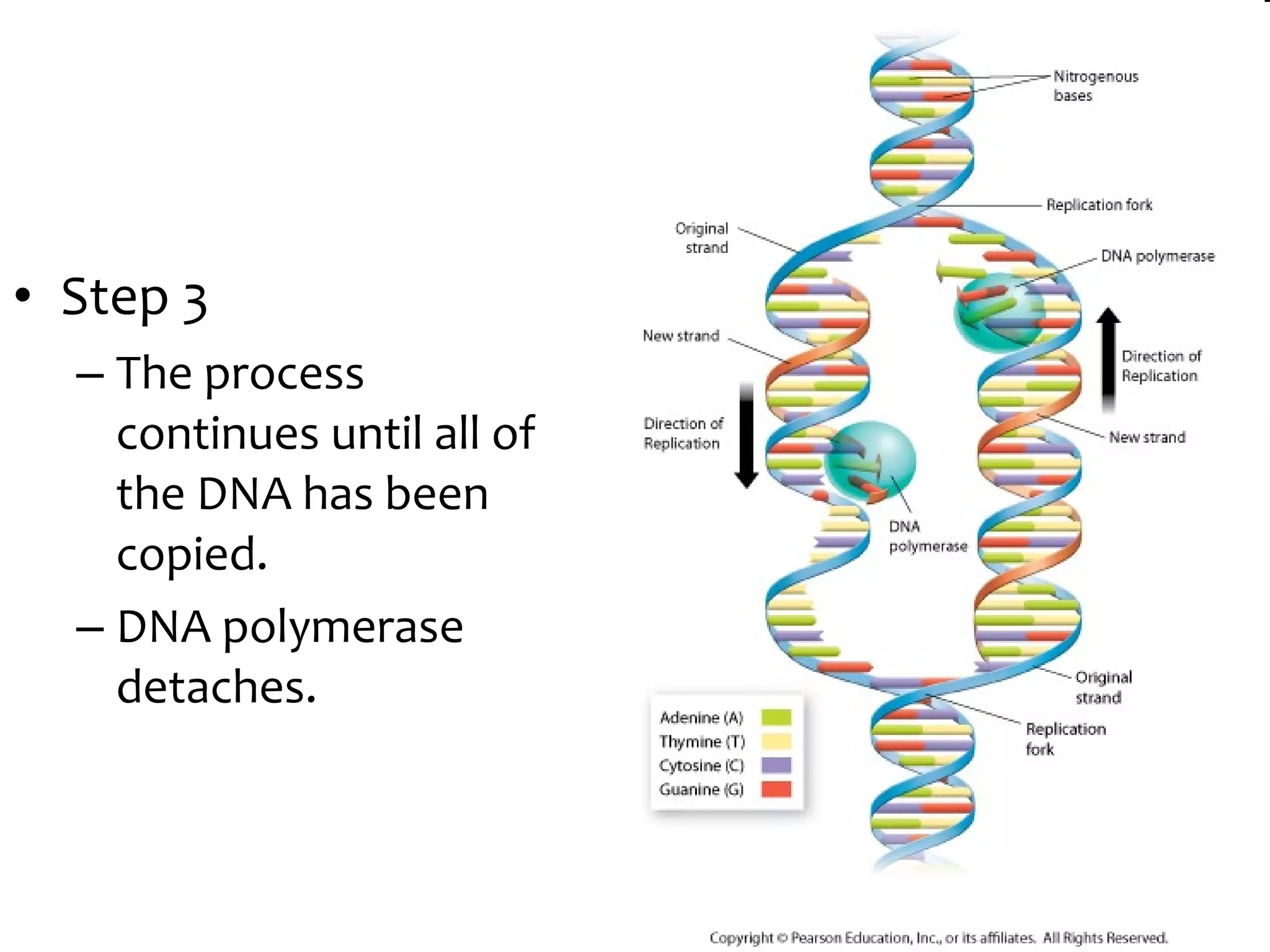
• Step 3
– The process
continues until all of
the DNA has been
copied.
– DNA polymerase
detaches.
• This process produces two DNA
molecules each composed of one new
and one original strand.
• Both DNA molecules produced are
identical to each other.
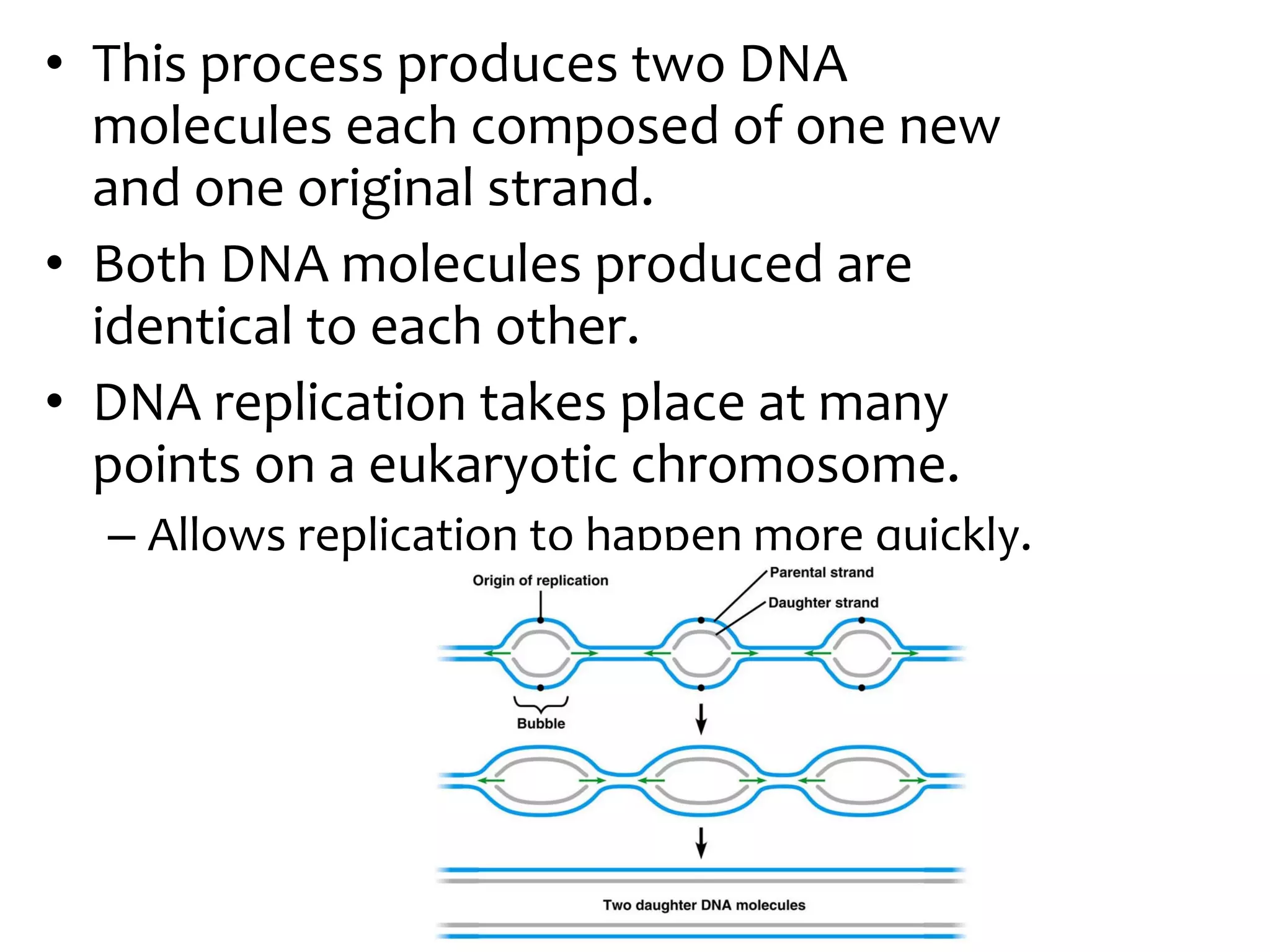
• DNA replication takes place at many
points on a eukaryotic chromosome.
– Allows replication to happen more quickly.

Notes ch12 DNA

  • 1.
  • 2.
    12.1 The Roleof DNA • DNA has 3 functions: – Storing information – Copying information – Transmitting information
  • 3.
    12.2 The Structureof DNA • DNA – deoxyribonucleic acid • Nucleotides – monomers that make up a DNA molecule – 3 parts: • 5 Carbon sugar (deoxyribose) • Phosphate group • Nitrogenous base – Adenine (A) – Guanine (G) – Cytosine (C) – Thymine (T)
  • 4.
    Solving the Structureof DNA ∗Edwin Chargaff (1949) ∗Chargaff’s Rule ∗[A]=[T] ∗[C]=[G] Adenine Thymine Guanine Cytosine 35% 45%
  • 5.
    • Rosiland Franklinused X-ray diffraction to visualize DNA structure (1952).
  • 6.
    • Watson andCrick were the first to model DNA as a double helix in 1953.
  • 7.
    The Double HelixModel • All the previous discoveries show us the structure of DNA and how DNA can function as a carrier of genetic information. • Characteristics of the double helix model: – Antiparallel strands – Hydrogen Bonding – Base Pairing
  • 8.
    Antiparallel Strands ∗Run inopposite directions Base Pairing ∗Bases are held together by hydrogen bonds. Base Pairing ∗A bonds with T, and C bonds with G ∗ Complimentary base pairs hydrogen bond covalent bond
  • 9.
    Practice Base Pairing •If the sequence of bases on one strand of a DNA molecule is TCGAACTGA, the sequence on the other (complimentary) strand is:
  • 10.
    12.3 DNA Replication •Why does DNA replicate? (Hint: Think back to Mitosis) – DNA is replicated in the S phase of the cell cycle, before the cell divides.
  • 11.
    Copying the Code •Step 1 – The DNA double helix unwinds • DNA helicase (enzyme). – breaks the H bonds between the bases. • The areas where the double helix separates are called replication forks.
  • 12.
    • Step 2 –DNA polymerase (enzyme) moves along each DNA strand adding complimentary bases according to the base pairing rules. – DNA polymerase also proofreads the DNA molecule to reduce errors.
  • 13.
    • Step 3 –The process continues until all of the DNA has been copied. – DNA polymerase detaches.
  • 14.
    • This processproduces two DNA molecules each composed of one new and one original strand. • Both DNA molecules produced are identical to each other. • DNA replication takes place at many points on a eukaryotic chromosome. – Allows replication to happen more quickly.