Cell Structure and
Function

Chapter 7
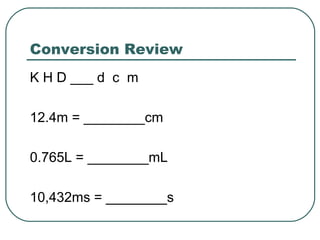
Conversion Review
K H D ___ d c m
12.4m = ________cm
0.765L = ________mL
10,432ms = ________s
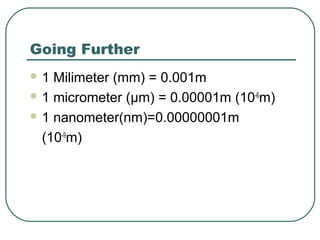
Going Further
1

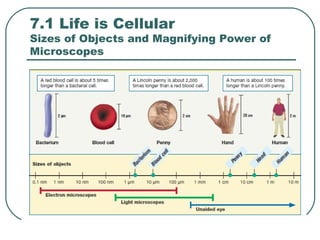
Milimeter (mm) = 0.001m
 1 micrometer (μm) = 0.00001m (10-6m)
 1 nanometer(nm)=0.00000001m
(10-9m)
7.1 Life is Cellular

Sizes of Objects and Magnifying Power of
Microscopes
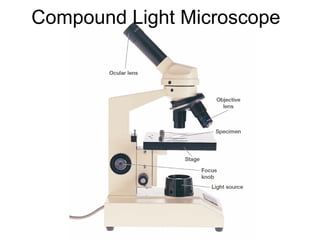
Compound Light Microscope
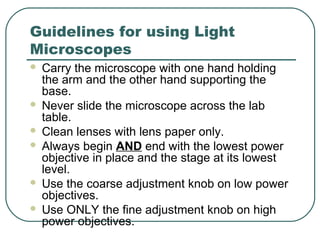
Guidelines for using Light
Microscopes









Carry the microscope with one hand holding
the arm and the other hand supporting the
base.
Never slide the microscope across the lab
table.
Clean lenses with lens paper only.
Always begin AND end with the lowest power
objective in place and the stage at its lowest
level.
Use the coarse adjustment knob on low power
objectives.
Use ONLY the fine adjustment knob on high
power objectives.
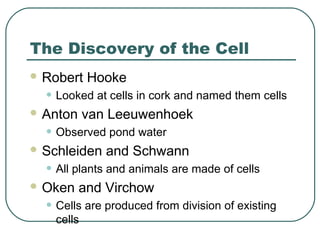
The Discovery of the Cell
 Robert

Hooke

• Looked at cells in cork and named them cells

 Anton

van Leeuwenhoek

• Observed pond water

 Schleiden

and Schwann

• All plants and animals are made of cells

 Oken

and Virchow

• Cells are produced from division of existing
cells
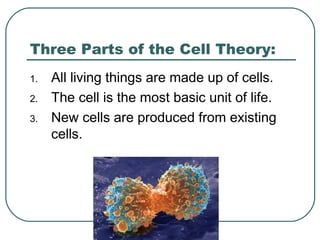
Three Parts of the Cell Theory:
1.
2.
3.

All living things are made up of cells.
The cell is the most basic unit of life.
New cells are produced from existing
cells.
Why are cells so small?
Small cells function more efficiently than
large cells.

• All substances that enter and leave the cell
•

must cross the cell surface.
Cells need a high surface area to volume
ratio in order to exchange substances more
readily.
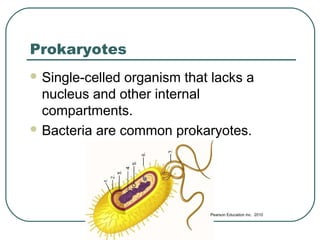
Prokaryotes
 Single-celled

organism that lacks a
nucleus and other internal
compartments.
 Bacteria are common prokaryotes.

Pearson Education inc. 2010


Common Features of Cells

•
•
•
•

Cell membrane – thin flexible barrier that
encloses and separates the cell from it’s
external environment.
Cytoplasm – the cell’s interior
Ribosomes – where proteins are made
Genetic Material – instructions for making
proteins, regulate cellular activities, and
enable reproduction
Eukaryotes
Cells that contain a nucleus and internal
compartments called organelles.
 Eukaryotic organisms can be one-celled
(unicellular) or contain many cells
(multicellular).
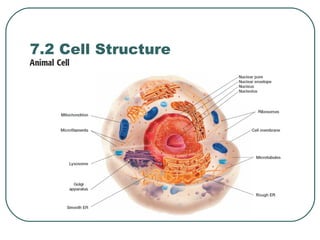
7.2 Cell Structure
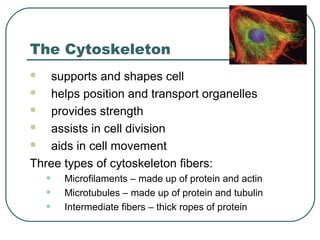
The Cytoskeleton
supports and shapes cell

helps position and transport organelles

provides strength

assists in cell division

aids in cell movement
Three types of cytoskeleton fibers:


•
•
•

Microfilaments – made up of protein and actin
Microtubules – made up of protein and tubulin
Intermediate fibers – thick ropes of protein
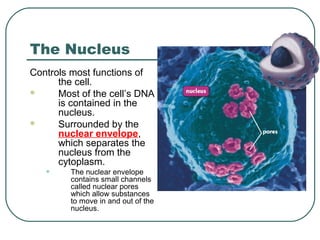
The Nucleus
Controls most functions of
the cell.

Most of the cell’s DNA
is contained in the
nucleus.

Surrounded by the
nuclear envelope,
which separates the
nucleus from the
cytoplasm.

•

The nuclear envelope
contains small channels
called nuclear pores
which allow substances
to move in and out of the
nucleus.
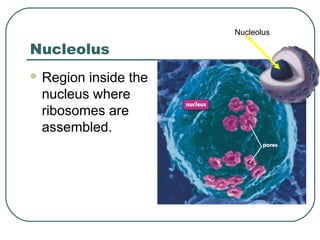
Nucleolus

Nucleolus
 Region

inside the
nucleus where
ribosomes are
assembled.
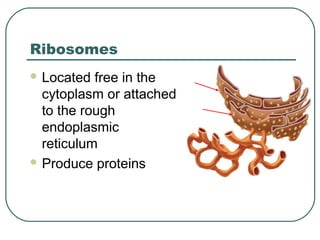
Ribosomes
 Located

free in the
cytoplasm or attached
to the rough
endoplasmic
reticulum
 Produce proteins
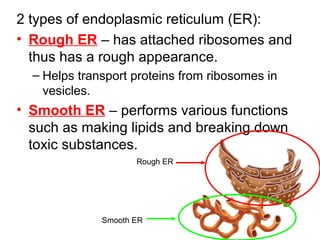
2 types of endoplasmic reticulum (ER):
• Rough ER – has attached ribosomes and
thus has a rough appearance.
– Helps transport proteins from ribosomes in
vesicles.

• Smooth ER – performs various functions
such as making lipids and breaking down
toxic substances.
Rough ER

Smooth ER
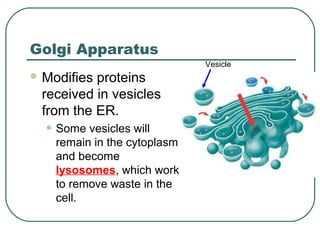
Golgi Apparatus
Vesicle

 Modifies

proteins
received in vesicles
from the ER.

• Some vesicles will

remain in the cytoplasm
and become
lysosomes, which work
to remove waste in the
cell.
Vacuoles
 Used

for storage of water, salts, proteins,
and sugars.
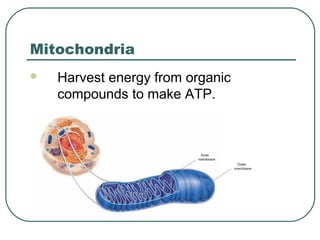
Mitochondria


Harvest energy from organic
compounds to make ATP.
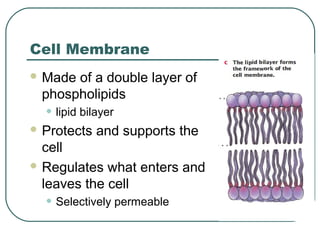
Cell Membrane
 Made

of a double layer of
phospholipids

• lipid bilayer

 Protects

and supports the

cell
 Regulates what enters and
leaves the cell

• Selectively permeable
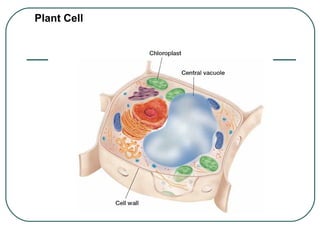
Unique features of plant cells


Cell wall

•


Chloroplast

•


thick layer of protein and cellulose
surrounding the cell membrane.
use light energy to make carbohydrates from
carbon dioxide and water.

Central vacuole

•
•

takes up much of the plant cell’s volume
Stores water and nutrients.
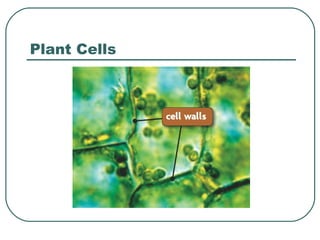
Plant Cells
Plant Cell
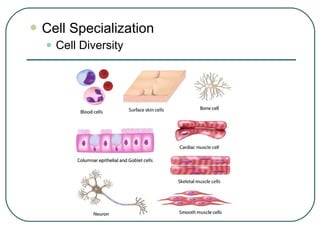
 Cell

Specialization

• Cell Diversity

Notes chapter 7part1

  • 1.
  • 2.
    Conversion Review K HD ___ d c m 12.4m = ________cm 0.765L = ________mL 10,432ms = ________s
  • 3.
    Going Further 1 Milimeter (mm)= 0.001m  1 micrometer (μm) = 0.00001m (10-6m)  1 nanometer(nm)=0.00000001m (10-9m)
  • 4.
    7.1 Life isCellular Sizes of Objects and Magnifying Power of Microscopes
  • 5.
  • 6.
    Guidelines for usingLight Microscopes       Carry the microscope with one hand holding the arm and the other hand supporting the base. Never slide the microscope across the lab table. Clean lenses with lens paper only. Always begin AND end with the lowest power objective in place and the stage at its lowest level. Use the coarse adjustment knob on low power objectives. Use ONLY the fine adjustment knob on high power objectives.
  • 7.
    The Discovery ofthe Cell  Robert Hooke • Looked at cells in cork and named them cells  Anton van Leeuwenhoek • Observed pond water  Schleiden and Schwann • All plants and animals are made of cells  Oken and Virchow • Cells are produced from division of existing cells
  • 8.
    Three Parts ofthe Cell Theory: 1. 2. 3. All living things are made up of cells. The cell is the most basic unit of life. New cells are produced from existing cells.
  • 9.
    Why are cellsso small? Small cells function more efficiently than large cells. • All substances that enter and leave the cell • must cross the cell surface. Cells need a high surface area to volume ratio in order to exchange substances more readily.
  • 10.
    Prokaryotes  Single-celled organism thatlacks a nucleus and other internal compartments.  Bacteria are common prokaryotes. Pearson Education inc. 2010
  • 11.
     Common Features ofCells • • • • Cell membrane – thin flexible barrier that encloses and separates the cell from it’s external environment. Cytoplasm – the cell’s interior Ribosomes – where proteins are made Genetic Material – instructions for making proteins, regulate cellular activities, and enable reproduction
  • 12.
    Eukaryotes Cells that containa nucleus and internal compartments called organelles.  Eukaryotic organisms can be one-celled (unicellular) or contain many cells (multicellular).
  • 13.
  • 14.
    The Cytoskeleton supports andshapes cell  helps position and transport organelles  provides strength  assists in cell division  aids in cell movement Three types of cytoskeleton fibers:  • • • Microfilaments – made up of protein and actin Microtubules – made up of protein and tubulin Intermediate fibers – thick ropes of protein
  • 15.
    The Nucleus Controls mostfunctions of the cell.  Most of the cell’s DNA is contained in the nucleus.  Surrounded by the nuclear envelope, which separates the nucleus from the cytoplasm. • The nuclear envelope contains small channels called nuclear pores which allow substances to move in and out of the nucleus.
  • 16.
  • 17.
    Ribosomes  Located free inthe cytoplasm or attached to the rough endoplasmic reticulum  Produce proteins
  • 18.
    2 types ofendoplasmic reticulum (ER): • Rough ER – has attached ribosomes and thus has a rough appearance. – Helps transport proteins from ribosomes in vesicles. • Smooth ER – performs various functions such as making lipids and breaking down toxic substances. Rough ER Smooth ER
  • 19.
    Golgi Apparatus Vesicle  Modifies proteins receivedin vesicles from the ER. • Some vesicles will remain in the cytoplasm and become lysosomes, which work to remove waste in the cell.
  • 20.
    Vacuoles  Used for storageof water, salts, proteins, and sugars.
  • 21.
    Mitochondria  Harvest energy fromorganic compounds to make ATP.
  • 22.
    Cell Membrane  Made ofa double layer of phospholipids • lipid bilayer  Protects and supports the cell  Regulates what enters and leaves the cell • Selectively permeable
  • 23.
    Unique features ofplant cells  Cell wall •  Chloroplast •  thick layer of protein and cellulose surrounding the cell membrane. use light energy to make carbohydrates from carbon dioxide and water. Central vacuole • • takes up much of the plant cell’s volume Stores water and nutrients.
  • 24.
  • 25.
  • 27.