Medical Microbiology Department of Microbiology, HMU
Section III Bacteriology Normal Microbial Flora  in Human Body Zhao-Hua Zhong, Ph.D., Prof. Department of Microbiology Harbin Medical University
KEY TERMS  Pathogen Opportunistic infection Microdysbiosis Translocation Medical Microecology  Nosocomial Infection
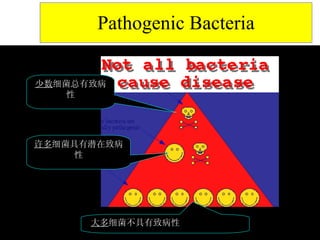
Pathogenic Bacteria 少数 细菌总有致病性 许多 细菌具有潜在致病性 大多 细菌不具有致病性
Normal Microbial Flora the population of microorganisms that inhabit the skin and mucous membranes of healthy normal persons It is doubtful whether a  normal viral flora  exists in humans
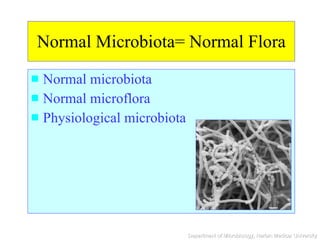
Normal Microbiota= Normal Flora Normal microbiota Normal microflora Physiological microbiota
Normal Microbial Flora Groups Resident flora  consists of relatively fixed types of microorganisms regularly found in a given area at a given age If disturbed, it promptly reestablishes itself Transient flora  consists of nonpathogenic or potentially pathogenic microorganisms that inhabit the skin or mucous membranes for hours, or days
Transient Flora It is  derived from the environment , does not produce disease, and does not establish itself permanently on the surface Members of the transient flora are generally of little significance so long as the normal resident flora remains intact If the  resident flora is disturbed , transient microorganisms may colonize, proliferate, and produce disease
Classifications of Normal Flora Enviroment Autochthony  (= aborigines) Allochthony  (= foreign) Relation with host Symbiotic flora Parasitism flora
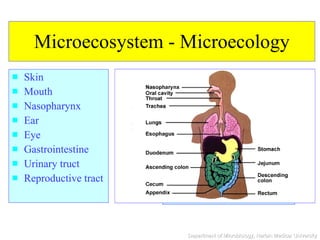
Microecosystem - Microecology Skin Mouth Nasopharynx Ear Eye Gastrointestine Urinary truct Reproductive tract Staphy E. coli Pseudomonas Strepto Nesseria Corynebacteria … . … .
 
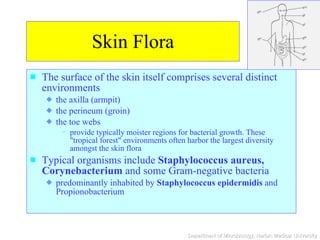
Skin Flora The surface of the skin itself comprises several distinct environments the axilla (armpit) the perineum (groin) the toe webs  provide typically moister regions for bacterial growth. These "tropical forest" environments often harbor the largest diversity amongst the skin flora Typical organisms include  Staphylococcus aureus, Corynebacterium  and some Gram-negative bacteria predominantly inhabited by  Staphylococcus epidermidis  and Propionobacterium
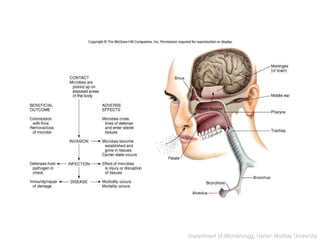
Oral Cavity and Nasopharyngeal Flora Streptococci  predominate in the oral cavity and nasopharyngeal regions Other anaerobes and species of  Neisseria Many potential pathogens may also be found in the nasopharynx of a healthy individual, providing a reservoir for infection of others These pathogens include  Streptococcus pneumoniae ,  Neisseria meningitidis  and  Haemophilus influenzae
Intestinal Flora The intestinal tract is a rather hostile environment for microorganisms the colon may contain 10 9  to 10 11  bacteria per gram of material Most (95 - 99.9%) of these are anaerobes, represented by  Bacteroides , Bifidobacterium, anaerobic streptococci and  Clostridium These organisms  inhibit  the growth of other pathogens but some can be  opportunistic  (e.g.  C. difficile  can produce  pseudomembranous colitis )
Urogenital Flora The urogenital tract is  normally sterile  with the exception of the  vagina  and the distal 1 cm of the  urethra Vagina the genus  Lactobacillus  predominate in the vagina Lactobacillus  generally  lower the pH to around 4-5,  which is optimal for the lactobacilli but inhibitory for the growth of many other bacteria Loss of this protective effect by antibiotic therapy can lead to infection by  Candida  ("yeast infection") Urethra may contain predominantly  skin microorganisms  including staphylococci, streptococci and diphtheroids
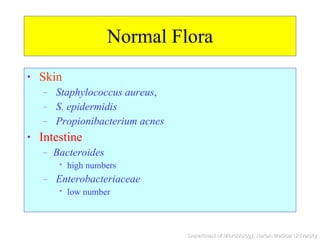
Normal Flora Skin Staphylococcus aureus , S. epidermidis   Propionibacterium acnes Intestine Bacteroides high numbers  Enterobacteriaceae low number
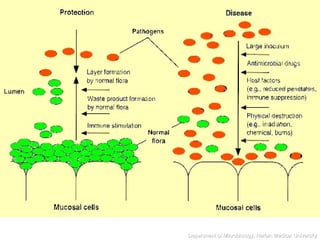
Biological Outcomes Help us by competing with pathogens such as  Salmonella   Help us by providing vitamins or eliminating toxins (e.g. Bacteroides)  Harm us by promoting disease (e.g. dental caries)  Cause neither help nor harm (e.g. "commensals")
Physiological Benefits Antagonism Bio-barrier: microcolony Chemical barrier Nutrient competition Provide nutrients Stimulate immune system Anti-tumor
占位性生物屏障作用
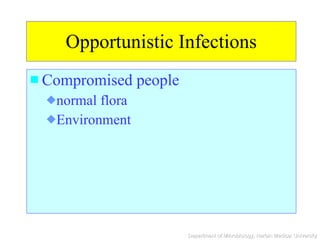
Opportunistic Infections Compromised people normal flora Environment
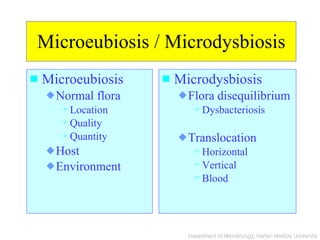
Microeubiosis / Microdysbiosis Microeubiosis Normal flora Location Quality Quantity Host Environment Microdysbiosis Flora disequilibrium Dysbacteriosis Translocation Horizontal Vertical Blood
Causes of Microdysbiosis Abuses of Antibiotics Radiation Surgery Use of immune suppressors Use of hormones Acquired immune deficiency
Opportunistic pathogen E. coli Klebsiella Pseudomonas  Enterbacteria Staphy Opportunities Translocation Dysbacteriosis Immune suppression
Hospital Infection Nosocomial infection  Hospital-acquired infection

normal microbial flora

  • 1.
    Medical Microbiology Departmentof Microbiology, HMU
  • 2.
    Section III BacteriologyNormal Microbial Flora in Human Body Zhao-Hua Zhong, Ph.D., Prof. Department of Microbiology Harbin Medical University
  • 3.
    KEY TERMS Pathogen Opportunistic infection Microdysbiosis Translocation Medical Microecology Nosocomial Infection
  • 4.
    Pathogenic Bacteria 少数细菌总有致病性 许多 细菌具有潜在致病性 大多 细菌不具有致病性
  • 5.
    Normal Microbial Florathe population of microorganisms that inhabit the skin and mucous membranes of healthy normal persons It is doubtful whether a normal viral flora exists in humans
  • 6.
    Normal Microbiota= NormalFlora Normal microbiota Normal microflora Physiological microbiota
  • 7.
    Normal Microbial FloraGroups Resident flora consists of relatively fixed types of microorganisms regularly found in a given area at a given age If disturbed, it promptly reestablishes itself Transient flora consists of nonpathogenic or potentially pathogenic microorganisms that inhabit the skin or mucous membranes for hours, or days
  • 8.
    Transient Flora Itis derived from the environment , does not produce disease, and does not establish itself permanently on the surface Members of the transient flora are generally of little significance so long as the normal resident flora remains intact If the resident flora is disturbed , transient microorganisms may colonize, proliferate, and produce disease
  • 9.
    Classifications of NormalFlora Enviroment Autochthony (= aborigines) Allochthony (= foreign) Relation with host Symbiotic flora Parasitism flora
  • 10.
    Microecosystem - MicroecologySkin Mouth Nasopharynx Ear Eye Gastrointestine Urinary truct Reproductive tract Staphy E. coli Pseudomonas Strepto Nesseria Corynebacteria … . … .
  • 11.
  • 12.
    Skin Flora Thesurface of the skin itself comprises several distinct environments the axilla (armpit) the perineum (groin) the toe webs provide typically moister regions for bacterial growth. These "tropical forest" environments often harbor the largest diversity amongst the skin flora Typical organisms include Staphylococcus aureus, Corynebacterium and some Gram-negative bacteria predominantly inhabited by Staphylococcus epidermidis and Propionobacterium
  • 13.
    Oral Cavity andNasopharyngeal Flora Streptococci predominate in the oral cavity and nasopharyngeal regions Other anaerobes and species of Neisseria Many potential pathogens may also be found in the nasopharynx of a healthy individual, providing a reservoir for infection of others These pathogens include Streptococcus pneumoniae , Neisseria meningitidis and Haemophilus influenzae
  • 14.
    Intestinal Flora Theintestinal tract is a rather hostile environment for microorganisms the colon may contain 10 9 to 10 11 bacteria per gram of material Most (95 - 99.9%) of these are anaerobes, represented by Bacteroides , Bifidobacterium, anaerobic streptococci and Clostridium These organisms inhibit the growth of other pathogens but some can be opportunistic (e.g. C. difficile can produce pseudomembranous colitis )
  • 15.
    Urogenital Flora Theurogenital tract is normally sterile with the exception of the vagina and the distal 1 cm of the urethra Vagina the genus Lactobacillus predominate in the vagina Lactobacillus generally lower the pH to around 4-5, which is optimal for the lactobacilli but inhibitory for the growth of many other bacteria Loss of this protective effect by antibiotic therapy can lead to infection by Candida ("yeast infection") Urethra may contain predominantly skin microorganisms including staphylococci, streptococci and diphtheroids
  • 16.
    Normal Flora SkinStaphylococcus aureus , S. epidermidis Propionibacterium acnes Intestine Bacteroides high numbers Enterobacteriaceae low number
  • 17.
    Biological Outcomes Helpus by competing with pathogens such as Salmonella Help us by providing vitamins or eliminating toxins (e.g. Bacteroides) Harm us by promoting disease (e.g. dental caries) Cause neither help nor harm (e.g. "commensals")
  • 18.
    Physiological Benefits AntagonismBio-barrier: microcolony Chemical barrier Nutrient competition Provide nutrients Stimulate immune system Anti-tumor
  • 19.
  • 20.
    Opportunistic Infections Compromisedpeople normal flora Environment
  • 21.
    Microeubiosis / MicrodysbiosisMicroeubiosis Normal flora Location Quality Quantity Host Environment Microdysbiosis Flora disequilibrium Dysbacteriosis Translocation Horizontal Vertical Blood
  • 22.
    Causes of MicrodysbiosisAbuses of Antibiotics Radiation Surgery Use of immune suppressors Use of hormones Acquired immune deficiency
  • 23.
    Opportunistic pathogen E.coli Klebsiella Pseudomonas Enterbacteria Staphy Opportunities Translocation Dysbacteriosis Immune suppression
  • 24.
    Hospital Infection Nosocomialinfection Hospital-acquired infection