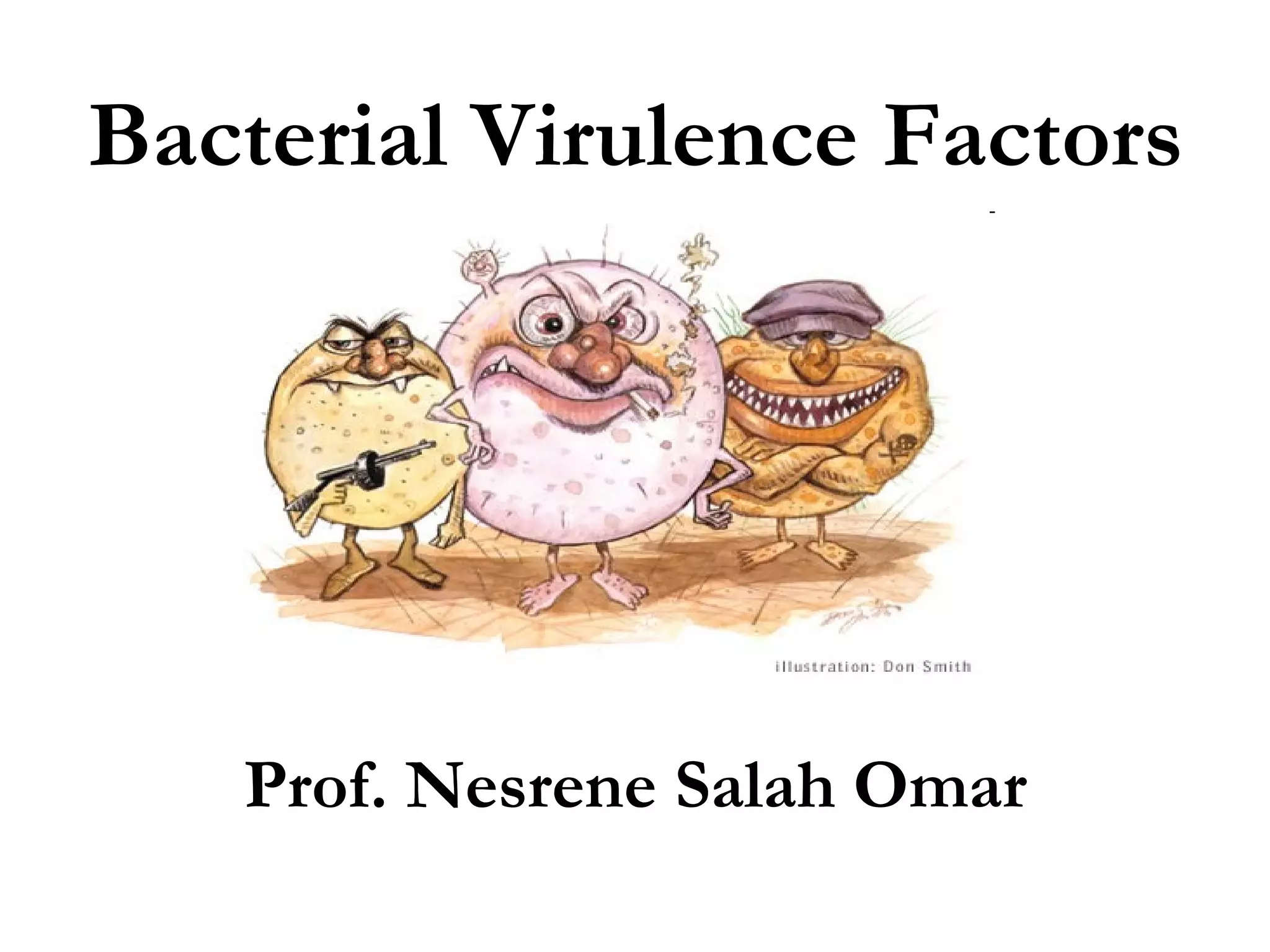
Bacterial Virulence Factors


   Prof. Nesrene Salah Omar
Objectives
•   Microbial Mechanisms of Pathogenic
•   Microbes and humans
•   Virulence factors
•   Host - parasite Interaction
•   Bacterial Virulence Factors
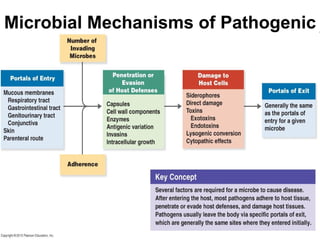
Microbial Mechanisms of Pathogenic
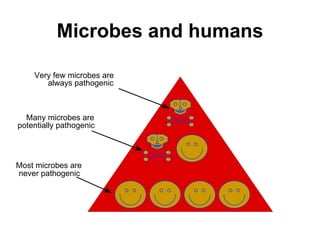
Microbes and humans

    Very few microbes are
       always pathogenic


  Many microbes are
potentially pathogenic


Most microbes are
never pathogenic
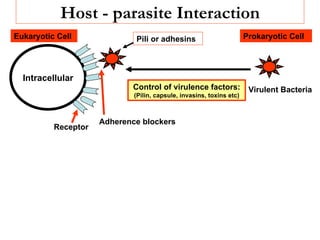
Host - parasite Interaction
Eukaryotic Cell              Pili or adhesins                         Prokaryotic Cell


  Intracellular
                            Control of virulence factors:              Virulent Bacteria
                             (Pilin, capsule, invasins, toxins etc)


                     Adherence blockers
          Receptor
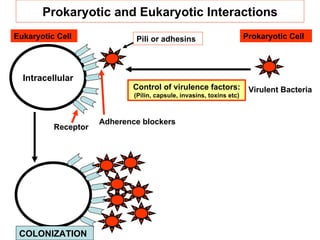
Prokaryotic and Eukaryotic Interactions
Eukaryotic Cell              Pili or adhesins                         Prokaryotic Cell


  Intracellular
                            Control of virulence factors:              Virulent Bacteria
                             (Pilin, capsule, invasins, toxins etc)


                     Adherence blockers
          Receptor


 COLONIZATION
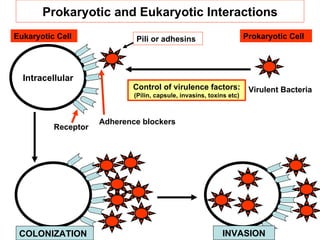
Prokaryotic and Eukaryotic Interactions
Eukaryotic Cell              Pili or adhesins                         Prokaryotic Cell


  Intracellular
                            Control of virulence factors:              Virulent Bacteria
                             (Pilin, capsule, invasins, toxins etc)


                     Adherence blockers
          Receptor


 COLONIZATION                                               INVASION
Virulence
The ability of an agent of infection to produce
 disease.

The virulence of a microorganism is a measure
 of the severity of the disease it causes.
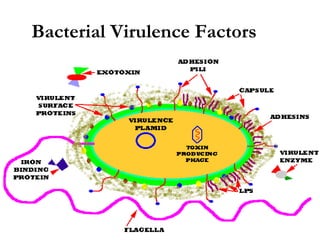
Bacterial Virulence Factors
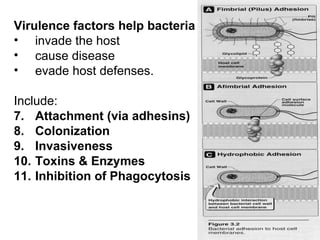
Virulence factors help bacteria
• invade the host
• cause disease
• evade host defenses.

Include:
7. Attachment (via adhesins)
8. Colonization
9. Invasiveness
10. Toxins & Enzymes
11. Inhibition of Phagocytosis
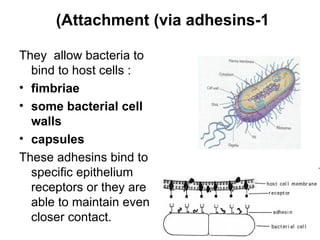
(Attachment (via adhesins-1

They allow bacteria to
  bind to host cells :             Cilia - motion
• fimbriae
• some bacterial cell
  walls
• capsules
These adhesins bind to
  specific epithelium
  receptors or they are
  able to maintain even
  closer contact.             Flagellum - motion
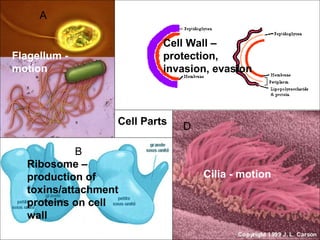
A

                           Cell Wall –
Flagellum -                protection,
motion                     invasion, evasion


                  Cell Parts   D

            B
  Ribosome –
  production of                    Cilia - motion
  toxins/attachment
  proteins on cell
  wall
2-Colonization
• The Ability to Adhere to Host Cells and
  Resist Physical Removal or

• the establishment of the pathogen at the
  appropriate portal of entry.
• Pathogens usually colonize host tissues
  that are in contact with the external
  environment.
Virulence Factors that Promote Bacterial
   Colonization:

3. Using Pili (fimbriae) to Adhere to Host
   Cells
4. Using Adhesins to Adhere to Host Cells
5. Using Biofilms to Adhere to Host Cells
Invasiveness-3

• the ability of a pathogen to invade tissues.
• Invasiveness encompasses
(1) mechanisms for colonization (adherence and
  initial multiplication),
(2) production of extracellular substances
  ("invasins"), that promote the immediate
  invasion of tissues
(3) ability to bypass or overcome host defense
  mechanisms which facilitate the actual invasive
  process.
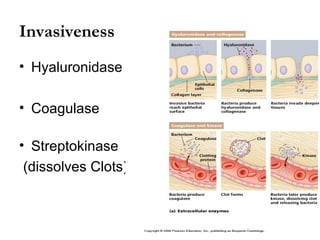
Invasiveness
• Hyaluronidase

• Coagulase

• Streptokinase
 (dissolves Clots)
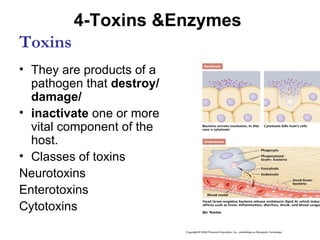
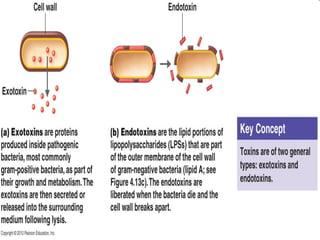
4-Toxins &Enzymes
Toxins
• They are products of a
  pathogen that destroy/
  damage/
• inactivate one or more
  vital component of the
  host.
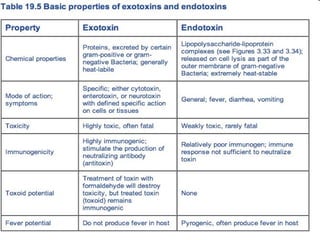
• Classes of toxins
Neurotoxins
Enterotoxins
Cytotoxins
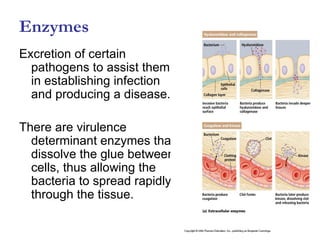
Enzymes
Excretion of certain
  pathogens to assist them
  in establishing infection
  and producing a disease.

There are virulence
  determinant enzymes that
  dissolve the glue between
  cells, thus allowing the
  bacteria to spread rapidly
  through the tissue.
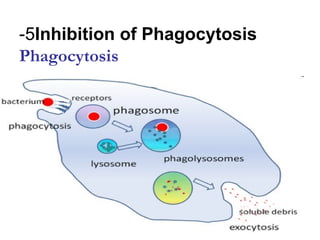
-5Inhibition of Phagocytosis
Phagocytosis
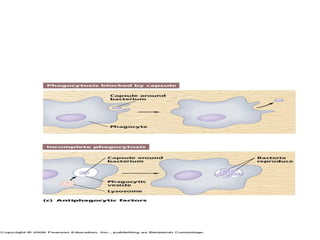
Inhibition of Phagocytosis
• Ability of Pathogens to Avoid or Overcome
  Phagocytes

• Avoiding Contact with Phagocytes

• Inhibition of Phagocytic Engulfment

• Survival Inside of Cells
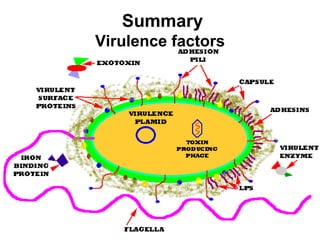
Summary
Virulence factors
Thank you

Bacterial Virulence

  • 1.
    Bacterial Virulence Factors Prof. Nesrene Salah Omar
  • 2.
    Objectives • Microbial Mechanisms of Pathogenic • Microbes and humans • Virulence factors • Host - parasite Interaction • Bacterial Virulence Factors
  • 3.
  • 4.
    Microbes and humans Very few microbes are always pathogenic Many microbes are potentially pathogenic Most microbes are never pathogenic
  • 5.
    Host - parasiteInteraction Eukaryotic Cell Pili or adhesins Prokaryotic Cell Intracellular Control of virulence factors: Virulent Bacteria (Pilin, capsule, invasins, toxins etc) Adherence blockers Receptor
  • 6.
    Prokaryotic and EukaryoticInteractions Eukaryotic Cell Pili or adhesins Prokaryotic Cell Intracellular Control of virulence factors: Virulent Bacteria (Pilin, capsule, invasins, toxins etc) Adherence blockers Receptor COLONIZATION
  • 7.
    Prokaryotic and EukaryoticInteractions Eukaryotic Cell Pili or adhesins Prokaryotic Cell Intracellular Control of virulence factors: Virulent Bacteria (Pilin, capsule, invasins, toxins etc) Adherence blockers Receptor COLONIZATION INVASION
  • 8.
    Virulence The ability ofan agent of infection to produce disease. The virulence of a microorganism is a measure of the severity of the disease it causes.
  • 9.
  • 10.
    Virulence factors helpbacteria • invade the host • cause disease • evade host defenses. Include: 7. Attachment (via adhesins) 8. Colonization 9. Invasiveness 10. Toxins & Enzymes 11. Inhibition of Phagocytosis
  • 11.
    (Attachment (via adhesins-1 Theyallow bacteria to bind to host cells : Cilia - motion • fimbriae • some bacterial cell walls • capsules These adhesins bind to specific epithelium receptors or they are able to maintain even closer contact. Flagellum - motion
  • 12.
    A Cell Wall – Flagellum - protection, motion invasion, evasion Cell Parts D B Ribosome – production of Cilia - motion toxins/attachment proteins on cell wall
  • 13.
    2-Colonization • The Abilityto Adhere to Host Cells and Resist Physical Removal or • the establishment of the pathogen at the appropriate portal of entry. • Pathogens usually colonize host tissues that are in contact with the external environment.
  • 14.
    Virulence Factors thatPromote Bacterial Colonization: 3. Using Pili (fimbriae) to Adhere to Host Cells 4. Using Adhesins to Adhere to Host Cells 5. Using Biofilms to Adhere to Host Cells
  • 15.
    Invasiveness-3 • the abilityof a pathogen to invade tissues. • Invasiveness encompasses (1) mechanisms for colonization (adherence and initial multiplication), (2) production of extracellular substances ("invasins"), that promote the immediate invasion of tissues (3) ability to bypass or overcome host defense mechanisms which facilitate the actual invasive process.
  • 16.
    Invasiveness • Hyaluronidase • Coagulase •Streptokinase (dissolves Clots)
  • 17.
    4-Toxins &Enzymes Toxins • Theyare products of a pathogen that destroy/ damage/ • inactivate one or more vital component of the host. • Classes of toxins Neurotoxins Enterotoxins Cytotoxins
  • 20.
    Enzymes Excretion of certain pathogens to assist them in establishing infection and producing a disease. There are virulence determinant enzymes that dissolve the glue between cells, thus allowing the bacteria to spread rapidly through the tissue.
  • 21.
  • 22.
    Inhibition of Phagocytosis •Ability of Pathogens to Avoid or Overcome Phagocytes • Avoiding Contact with Phagocytes • Inhibition of Phagocytic Engulfment • Survival Inside of Cells
  • 24.
  • 25.