NORMAL MICROBIAL FLORA OF
HUMAN BODY
C.SWAMINATHAN
Assistant Professor of Microbiology
Vivekanandha College of Arts and Sciences
(Autonomous) for Women
Tiruchengode – 637 205
Tamilnadu, South India
The term ‘normal flora’ denotes the population of
microorganisms that inhabit the skin and mucous
membrane of normal healthy individuals
1) Resident Flora:
Constitute a constant population
Cannot be removed completely
2) Transient Flora:
Consists of non-pathogenic or potentially
pathogenic microbes
Derived from the environment
Inhabit the skin or mucous membrane for hours,
days or weeks
ROLE OF NORMAL MICROBIAL
FLORAAdvantages
They prevent or suppress the entry of pathogens
Produce vitamin K and vitamin B
Raise the overall immune status of the host
against pathogens having related or shared
antigens
The antibiotic substance produced by some, for
example, colicins have a harmful effect on
pathogens
Endotoxins liberated by normal flora may help the
defence mechanism of the body
Disadvantages
They become pathogenic when the immunity is
lowered
Act as pathogens in tissues outside their habitat.
e.g. normal flora of intestine may cause UTI
Cause confusion in diagnosis due to their
ubiquitous presence and their resemblance to some
of the pathogens
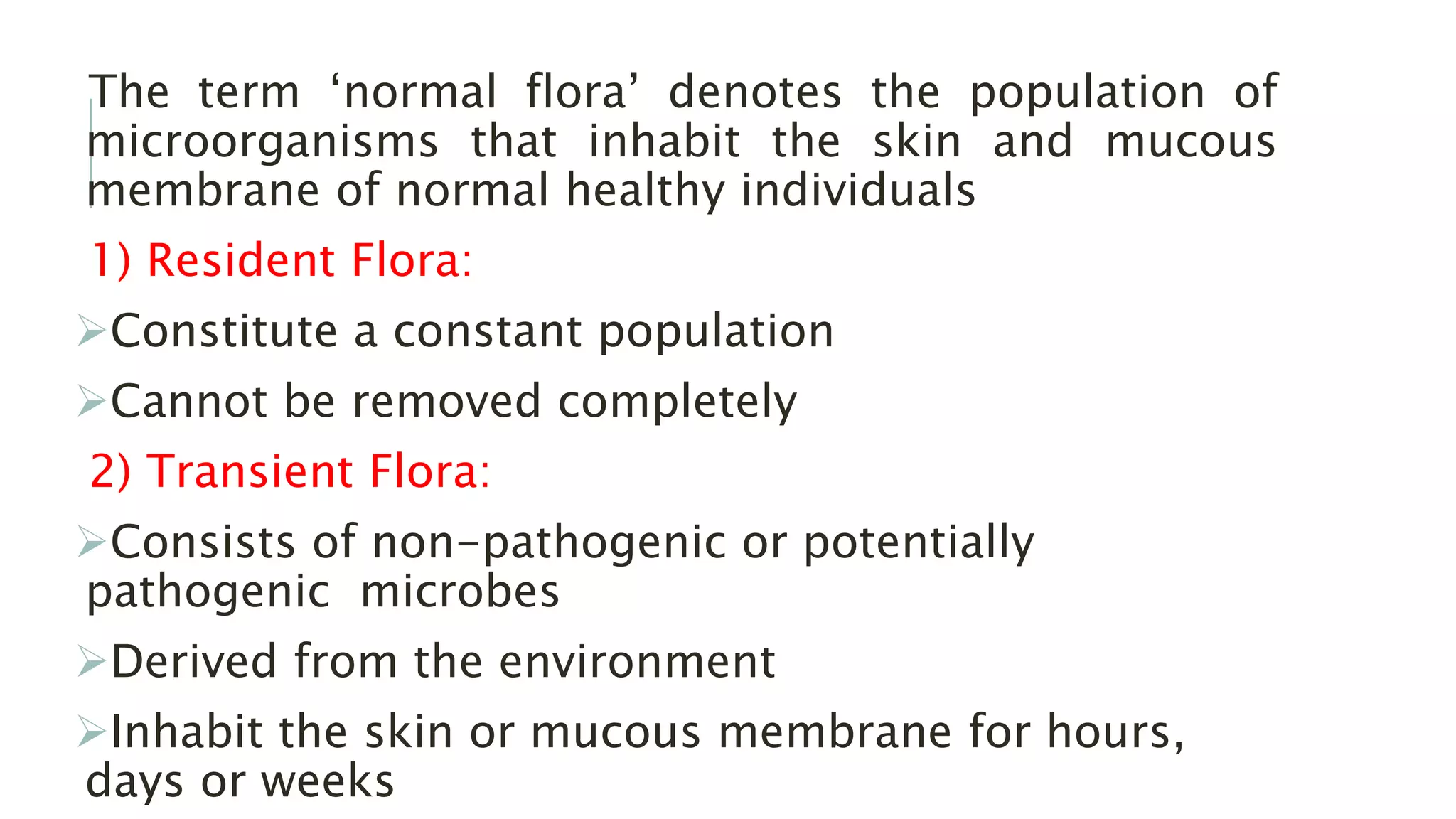
SKIN
Staphylococcus epidermidis
Staphylococcus hominis
Staphylococcus haemolyticus
Staphylococcus capitis
Streptococcus pyogenes
Micrococcus luteus
Corynebacterium xerosis
Peptostreptococcus spp
Propionibacterium spp
Clostridium perfringens
Candida albicans
Malassezia furfur
CONJUNCTIVA
Relatively free from
microorganisms due to the
flushing action of tears and
presence of lysozyme in tears
Corynebacterium xerosis
Moraxella spp
Staphylococcus spp
Non haemolytic Streptococci
NOSE, NASOPHARYNX AND
SINUSES
Corynebacterium spp
Staphylococcus spp
Streptococcus spp
Haemophilus spp
Moraxella lacunata
P.aeruginosa, E.coli, Proteus spp –
occasionally found
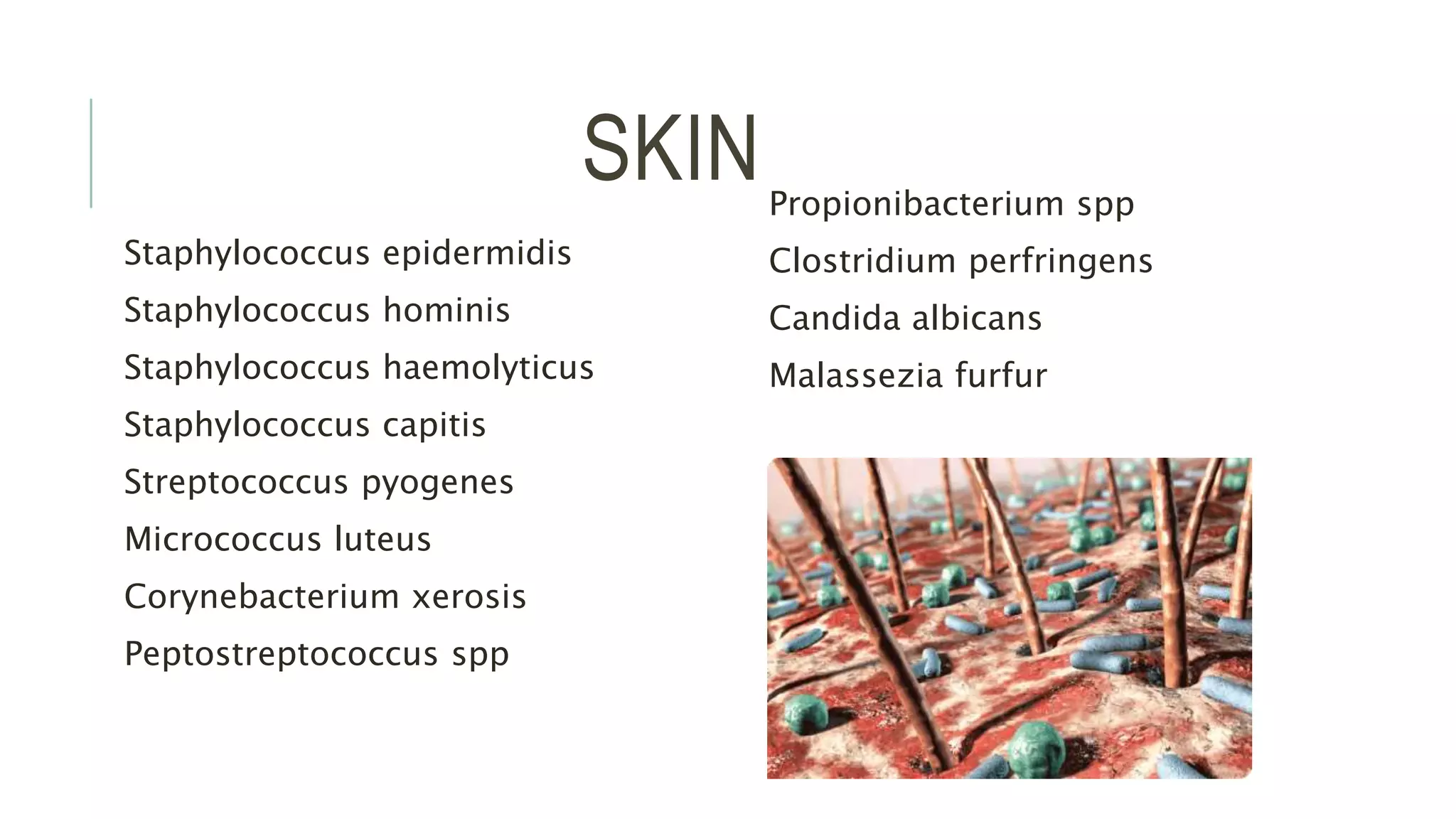
MOUTH AND UPPER RESPIRATORY
TRACTMouth
Pigmented and non pigmented
micrococci
Gram+ aerobic spore bearing bacilli
Coliforms, Proteus, Lactobacilli
Gum pockets and Tonsils
Anaerobic micrococci, Anaerobic
streptococci
Vibrios, Fusiform bacilli,
Corynebacterium spp
Actinomyces, Mycoplasma
Neisseria, Bacteroides
GASTROINTESTINAL TRACT
GI of foetus is sterile. It becomes
contaminated with organism shortly
after birth
Breast fed children
Lactobacillus bifidus
Enterococci
Colon bacilli
Staphylococci
Bottle fed children
Lactobacillus acidophilus
Enterococci
Colon bacilli
Stomach – pH is low – sterile
Small intestine
Lactobacilli
Streptococci
Enterobacteria
Bacteroides
Large intestine
Anaerobic streptococci
Anaerobic lactobacilli
Clostridium spp, Bacteroides
spp,
Coliforms
Enterococci
Proteus
Pseudomonas
Candida
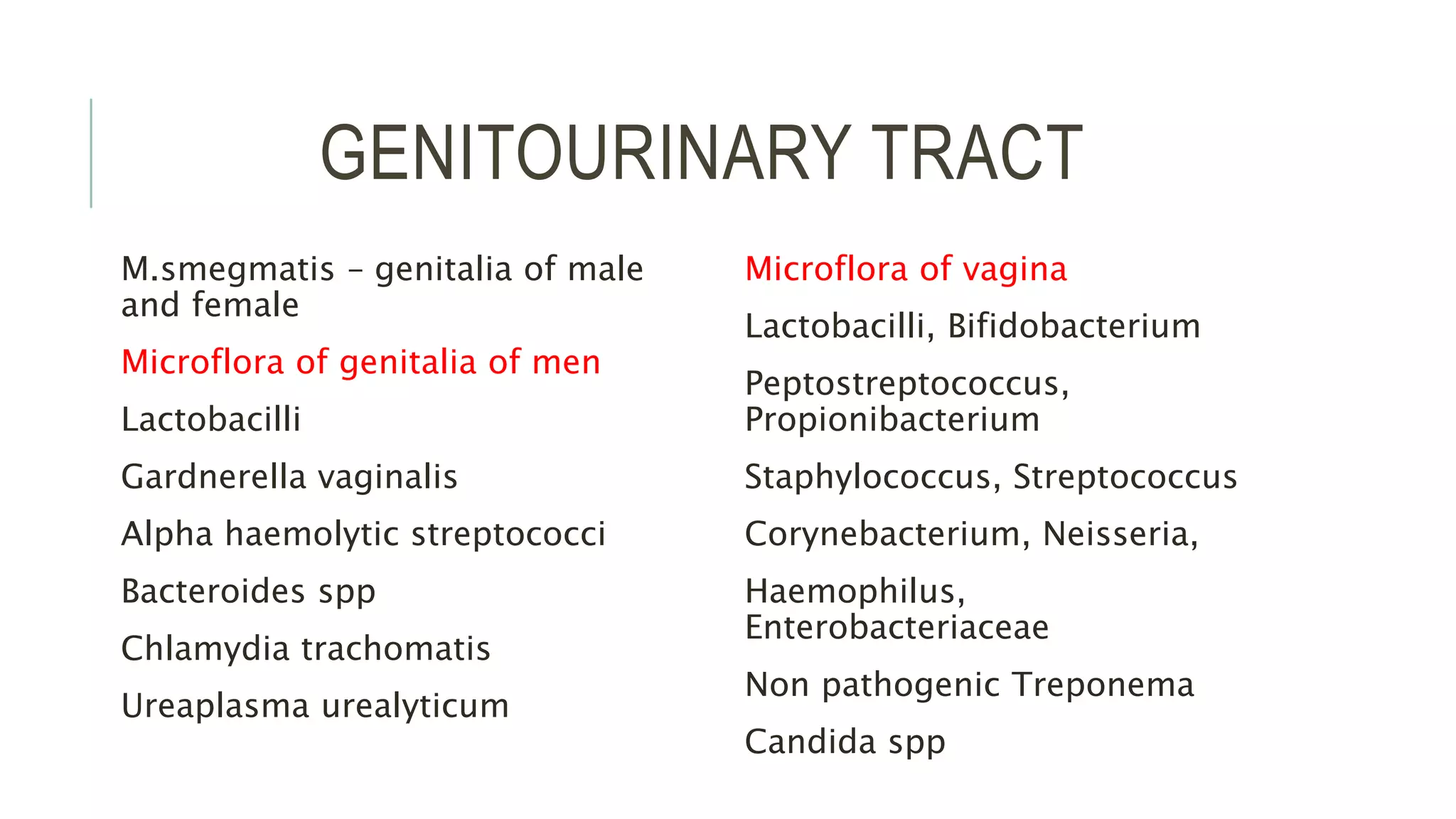
GENITOURINARY TRACT
M.smegmatis – genitalia of male
and female
Microflora of genitalia of men
Lactobacilli
Gardnerella vaginalis
Alpha haemolytic streptococci
Bacteroides spp
Chlamydia trachomatis
Ureaplasma urealyticum
Microflora of vagina
Lactobacilli, Bifidobacterium
Peptostreptococcus,
Propionibacterium
Staphylococcus, Streptococcus
Corynebacterium, Neisseria,
Haemophilus,
Enterobacteriaceae
Non pathogenic Treponema
Candida spp

Normal microbial flora

  • 1.
    NORMAL MICROBIAL FLORAOF HUMAN BODY C.SWAMINATHAN Assistant Professor of Microbiology Vivekanandha College of Arts and Sciences (Autonomous) for Women Tiruchengode – 637 205 Tamilnadu, South India
  • 2.
    The term ‘normalflora’ denotes the population of microorganisms that inhabit the skin and mucous membrane of normal healthy individuals 1) Resident Flora: Constitute a constant population Cannot be removed completely 2) Transient Flora: Consists of non-pathogenic or potentially pathogenic microbes Derived from the environment Inhabit the skin or mucous membrane for hours, days or weeks
  • 3.
    ROLE OF NORMALMICROBIAL FLORAAdvantages They prevent or suppress the entry of pathogens Produce vitamin K and vitamin B Raise the overall immune status of the host against pathogens having related or shared antigens The antibiotic substance produced by some, for example, colicins have a harmful effect on pathogens Endotoxins liberated by normal flora may help the defence mechanism of the body
  • 4.
    Disadvantages They become pathogenicwhen the immunity is lowered Act as pathogens in tissues outside their habitat. e.g. normal flora of intestine may cause UTI Cause confusion in diagnosis due to their ubiquitous presence and their resemblance to some of the pathogens
  • 5.
    SKIN Staphylococcus epidermidis Staphylococcus hominis Staphylococcushaemolyticus Staphylococcus capitis Streptococcus pyogenes Micrococcus luteus Corynebacterium xerosis Peptostreptococcus spp Propionibacterium spp Clostridium perfringens Candida albicans Malassezia furfur
  • 6.
    CONJUNCTIVA Relatively free from microorganismsdue to the flushing action of tears and presence of lysozyme in tears Corynebacterium xerosis Moraxella spp Staphylococcus spp Non haemolytic Streptococci
  • 7.
    NOSE, NASOPHARYNX AND SINUSES Corynebacteriumspp Staphylococcus spp Streptococcus spp Haemophilus spp Moraxella lacunata P.aeruginosa, E.coli, Proteus spp – occasionally found
  • 8.
    MOUTH AND UPPERRESPIRATORY TRACTMouth Pigmented and non pigmented micrococci Gram+ aerobic spore bearing bacilli Coliforms, Proteus, Lactobacilli Gum pockets and Tonsils Anaerobic micrococci, Anaerobic streptococci Vibrios, Fusiform bacilli, Corynebacterium spp Actinomyces, Mycoplasma Neisseria, Bacteroides
  • 9.
    GASTROINTESTINAL TRACT GI offoetus is sterile. It becomes contaminated with organism shortly after birth Breast fed children Lactobacillus bifidus Enterococci Colon bacilli Staphylococci Bottle fed children Lactobacillus acidophilus Enterococci Colon bacilli
  • 10.
    Stomach – pHis low – sterile Small intestine Lactobacilli Streptococci Enterobacteria Bacteroides Large intestine Anaerobic streptococci Anaerobic lactobacilli Clostridium spp, Bacteroides spp, Coliforms Enterococci Proteus Pseudomonas Candida
  • 11.
    GENITOURINARY TRACT M.smegmatis –genitalia of male and female Microflora of genitalia of men Lactobacilli Gardnerella vaginalis Alpha haemolytic streptococci Bacteroides spp Chlamydia trachomatis Ureaplasma urealyticum Microflora of vagina Lactobacilli, Bifidobacterium Peptostreptococcus, Propionibacterium Staphylococcus, Streptococcus Corynebacterium, Neisseria, Haemophilus, Enterobacteriaceae Non pathogenic Treponema Candida spp