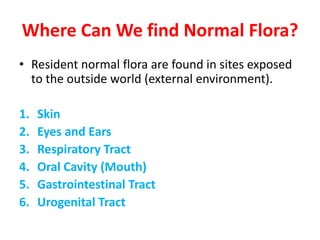
Normal flora are microorganisms that normally inhabit various areas of the human body without causing harm. They have a symbiotic relationship with their human hosts and provide several beneficial functions like protecting against pathogens and stimulating immune system development. The major sites inhabited by normal flora include the skin, eyes, respiratory tract, oral cavity, gastrointestinal tract, and urogenital tract. Disruptions to normal flora populations can allow potential pathogens to overgrow and cause opportunistic infections.















![Human Reproduction [ Reproductive System ] Notes @irfanullah_mehar Irfanullah...](https://cdn.slidesharecdn.com/ss_thumbnails/humanreproductionreproductivesystemnotesirfanullahmeharirfanullahmeharjanantantra-260111172350-56e85778-thumbnail.jpg?width=640&height=640&fit=bounds)


