Developed by
Dr. Abdulrazzak Othman Alagbare
MD.Bhc.MSc –Hematolgy Lecturer
10/12/2010
Benigen WBC disorders 1
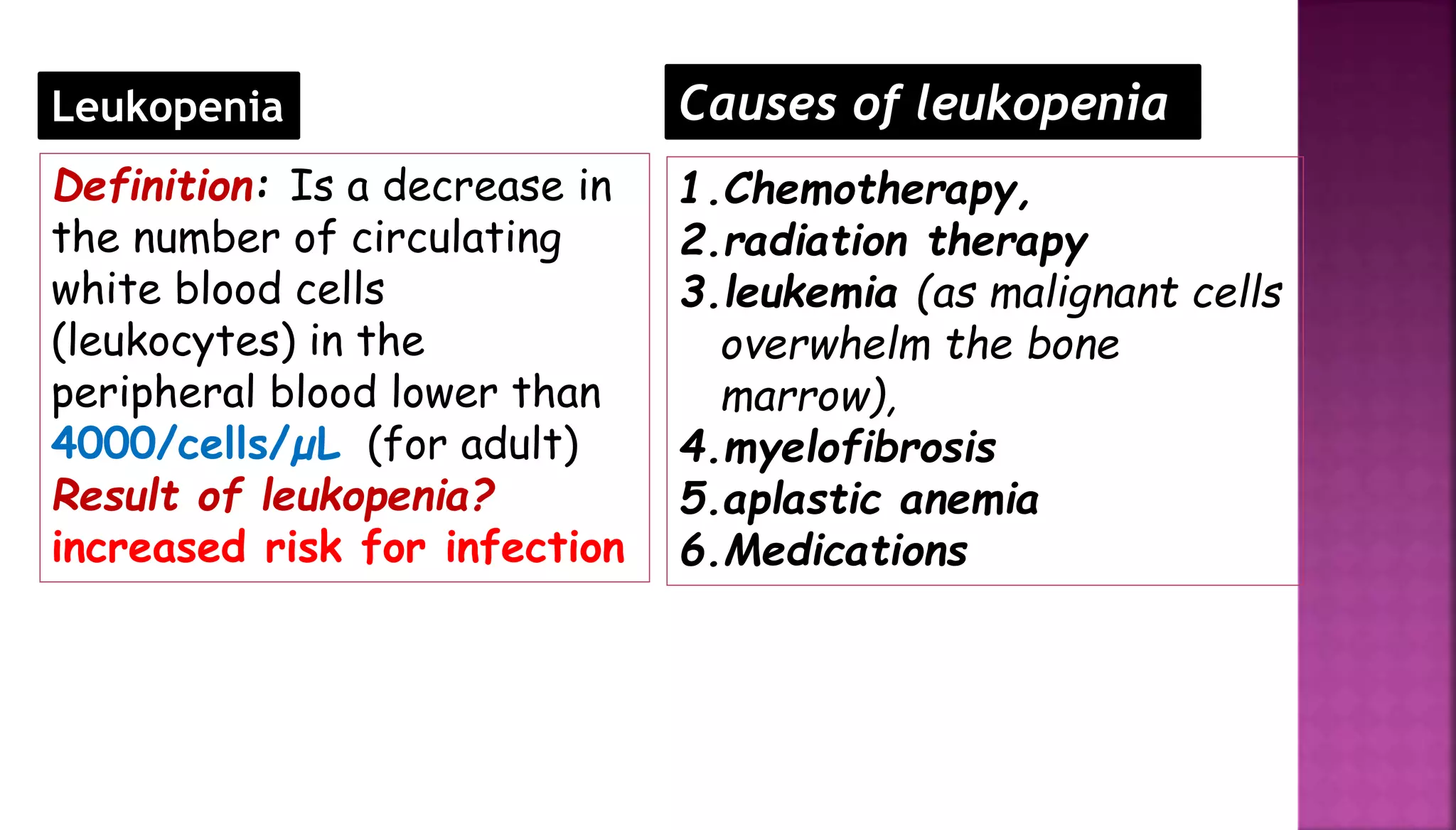
Definition: Is a decrease in
the number of circulating
white blood cells
(leukocytes) in the
peripheral blood lower than
4000/cells/µL (for adult)
Result of leukopenia?
increased risk for infection
Causes of leukopenia
1.Chemotherapy,
2.radiation therapy
3.leukemia (as malignant cells
overwhelm the bone
marrow),
4.myelofibrosis
5.aplastic anemia
6.Medications
Leukopenia
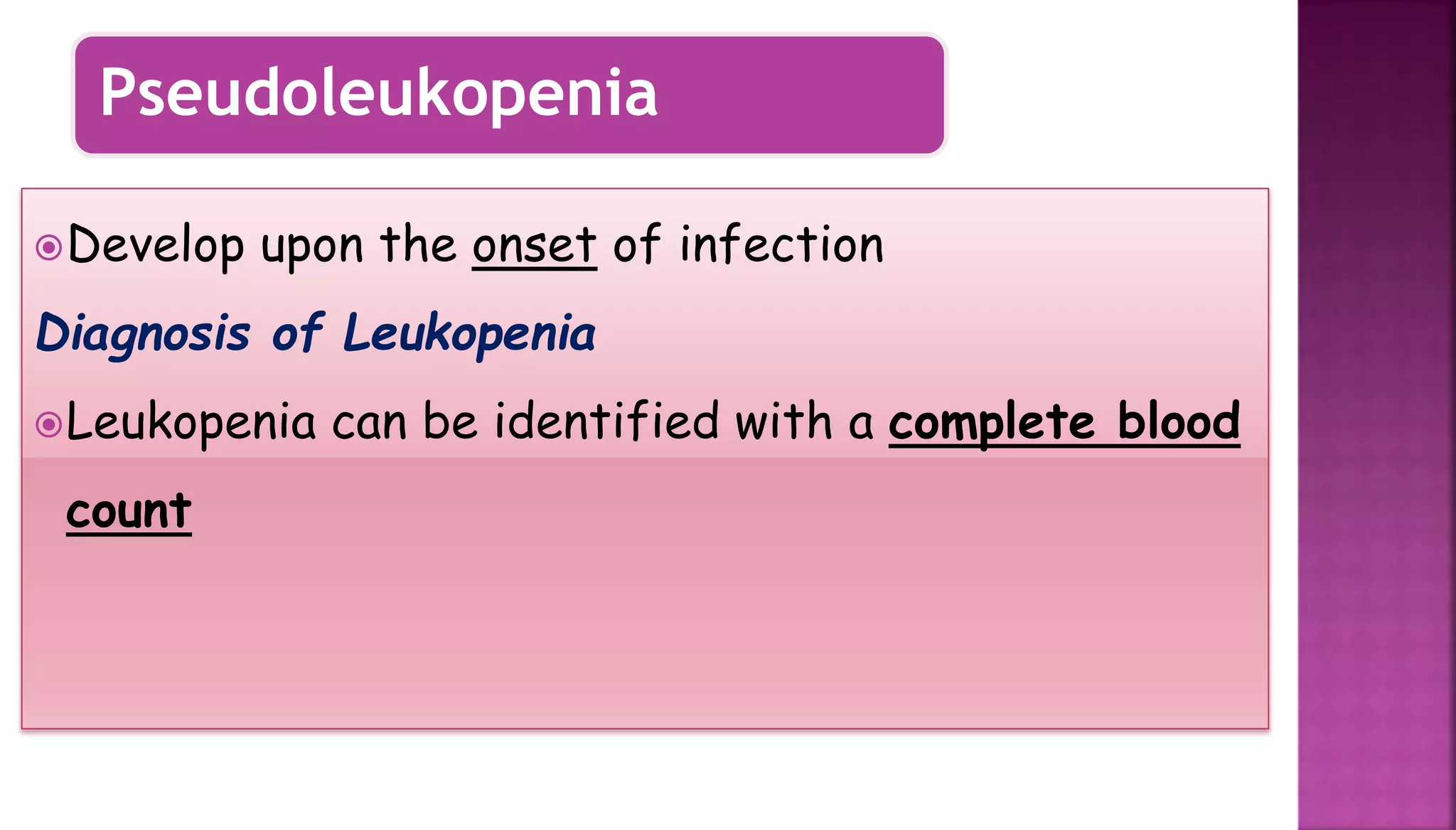
Pseudoleukopenia
Develop upon the onset of infection
Diagnosis of Leukopenia
Leukopenia can be identified with a complete blood
count
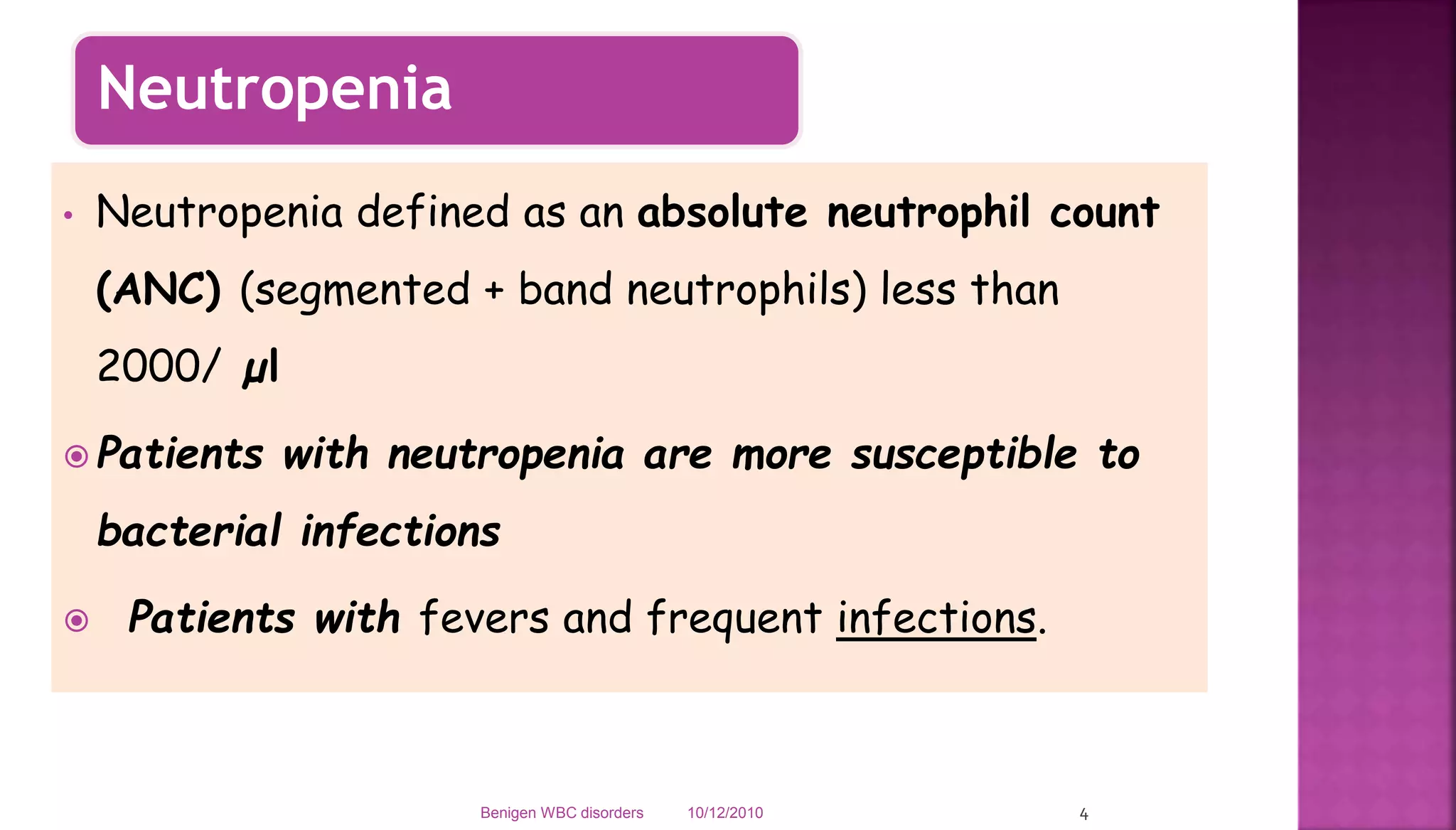
Neutropenia
• Neutropenia defined as an absolute neutrophil count
(ANC) (segmented + band neutrophils) less than
2000/ µl
 Patients with neutropenia are more susceptible to
bacterial infections
 Patients with fevers and frequent infections.
10/12/2010
Benigen WBC disorders 4
Causes of Neutropenia
Decreased production in the bone marrow
Cases
1-aplastic anemia
2-medication
3-radition
4-B12 and folate dificiency
5- congenital neutropenia
6-viral infection
7-metastic cancer
Increased destruction
a) autoimmune neutropenia.
b) chemotherapy treatments,
c) autoimmune diseases
d) Sequestration in spleen
10/12/2010
Benigen WBC disorders 5
• 1-Severe acute neutropenia
• 2-Chronic Neutropenia
• 3-Chronic idiopathic neutropenia
• 4-Cyclic neutropenia
• 5-Congenital neutropenia
• 6-Drug-induced neutropenia
• 7-Autoimmune neutropenia
10/12/2010
Benigen WBC disorders 6
1-Acute Neutropenia
Severe acute neutropenia: An autoimmune reaction where the
body produces antibodies to it's own neutrophils which results in
neutropenia
2-Chronic Neutropenia
A patient has chronic neutropenia if the condition lasts for
longer than 3 months.
3-Chronic idiopathic neutropenia
is a disorder in which the neutrophil count is less than 1.0 x
109/L, but results in few infections
10/12/2010
Benigen WBC disorders 7
10/12/2010
Benigen WBC disorders 8
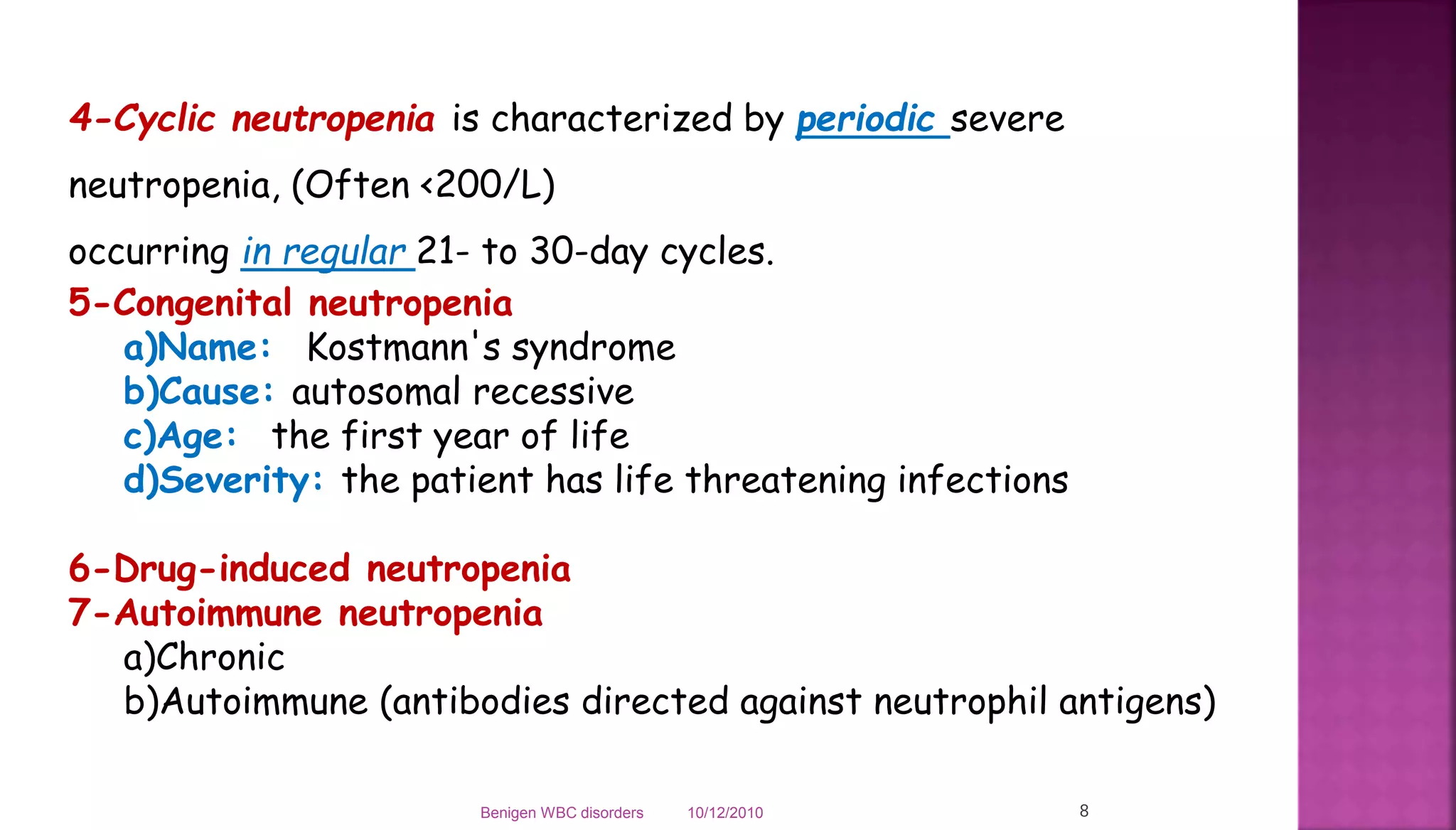
4-Cyclic neutropenia is characterized by periodic severe
neutropenia, (Often <200/L)
occurring in regular 21- to 30-day cycles.
5-Congenital neutropenia
a)Name: Kostmann's syndrome
b)Cause: autosomal recessive
c)Age: the first year of life
d)Severity: the patient has life threatening infections
6-Drug-induced neutropenia
7-Autoimmune neutropenia
a)Chronic
b)Autoimmune (antibodies directed against neutrophil antigens)
10/12/2010
Benigen WBC disorders 9
Blood film with a striking absence of neutrophils, leaving only red blood cells and platelets
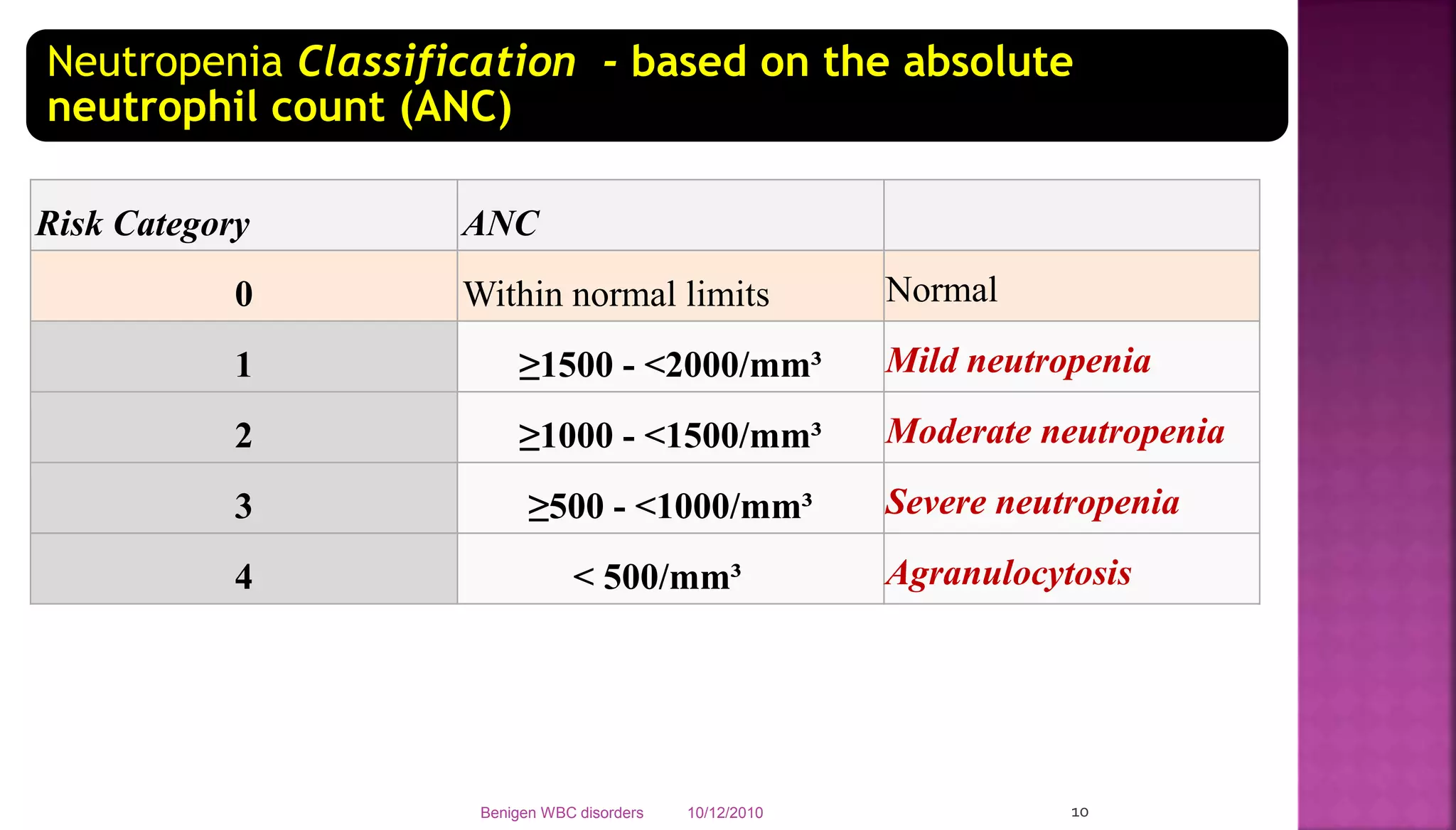
Neutropenia Classification - based on the absolute
neutrophil count (ANC)
Risk Category ANC
0 Within normal limits Normal
1 ≥1500 - <2000/mm³ Mild neutropenia
2 ≥1000 - <1500/mm³ Moderate neutropenia
3 ≥500 - <1000/mm³ Severe neutropenia
4 < 500/mm³ Agranulocytosis
10/12/2010
Benigen WBC disorders 10
Signs and symptoms of neutropenia
Due to low ability to fight bacterial infections
1.severe infections or sepsis
2.Fever
3.Mouth ulcers ,
4.Diarrhea
5.Burning sensation when urinating
6.Sore throat
Diagnosis of
neutropenia
1. A full blood count (low ANC)
2. Bone marrow biopsy is often necessary
3. Antineutrophil antibodies
10/12/2010
Benigen WBC disorders 11
Lymphocytes
10/12/2010
Benigen WBC disorders 12
The primary function of lymphocytes is
immunologic:
1. Forming antibodies; and securing
immunity.
2. Recognizing what is foreign, (non-
self)
 Non-self or foreign substances may
appear as bacteria, cell substances,
proteins, or viruses
10/12/2010
Benigen WBC disorders 13
1. All leukocytes make a one-way trip between blood and tissues.
2. Lymphocytes only can recirculate between blood, tissue, and
lymph fluid.
3. Lymphocytes are the second most common type of
leukocyteso in adults (20–40% of WBC).
4. The lymphocyte number is higher in children between the ages of 1
and 4 to have a relative lymphocytosis
10/12/2010
Benigen WBC disorders 14
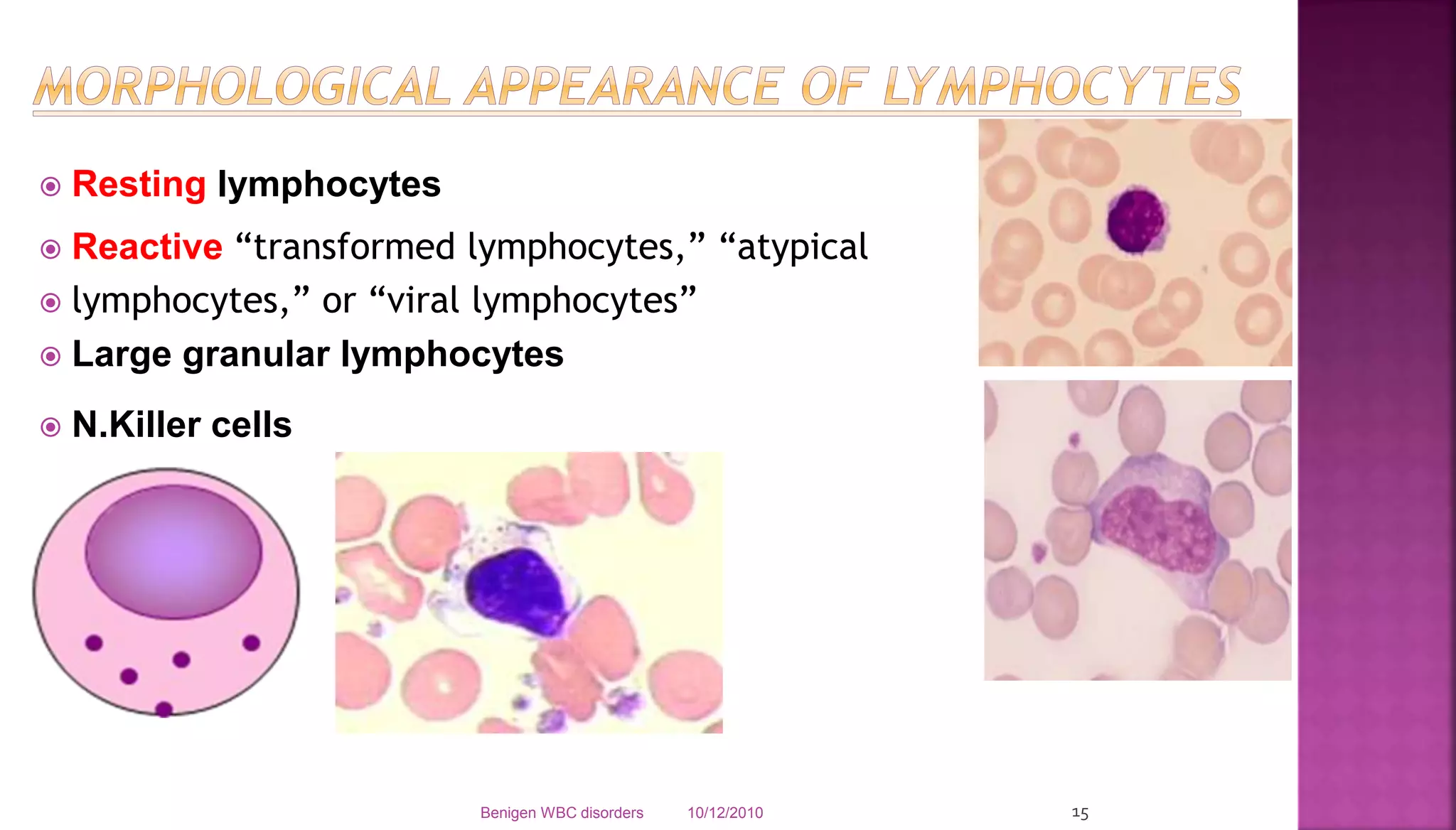
 Resting lymphocytes
 Reactive “transformed lymphocytes,” “atypical
 lymphocytes,” or “viral lymphocytes”
 Large granular lymphocytes
 N.Killer cells
10/12/2010
Benigen WBC disorders 15
 Is an increase in the number of lymphocytes in the blood
 Relative lymphocytosis is normal in children under age 2.
1. Infants: greater than 9000 per microliter
2. older children : greater than 7000 per microliter
3. adults : absolute lymphocytosis over 4000 per microliter
10/12/2010
Benigen WBC disorders 16
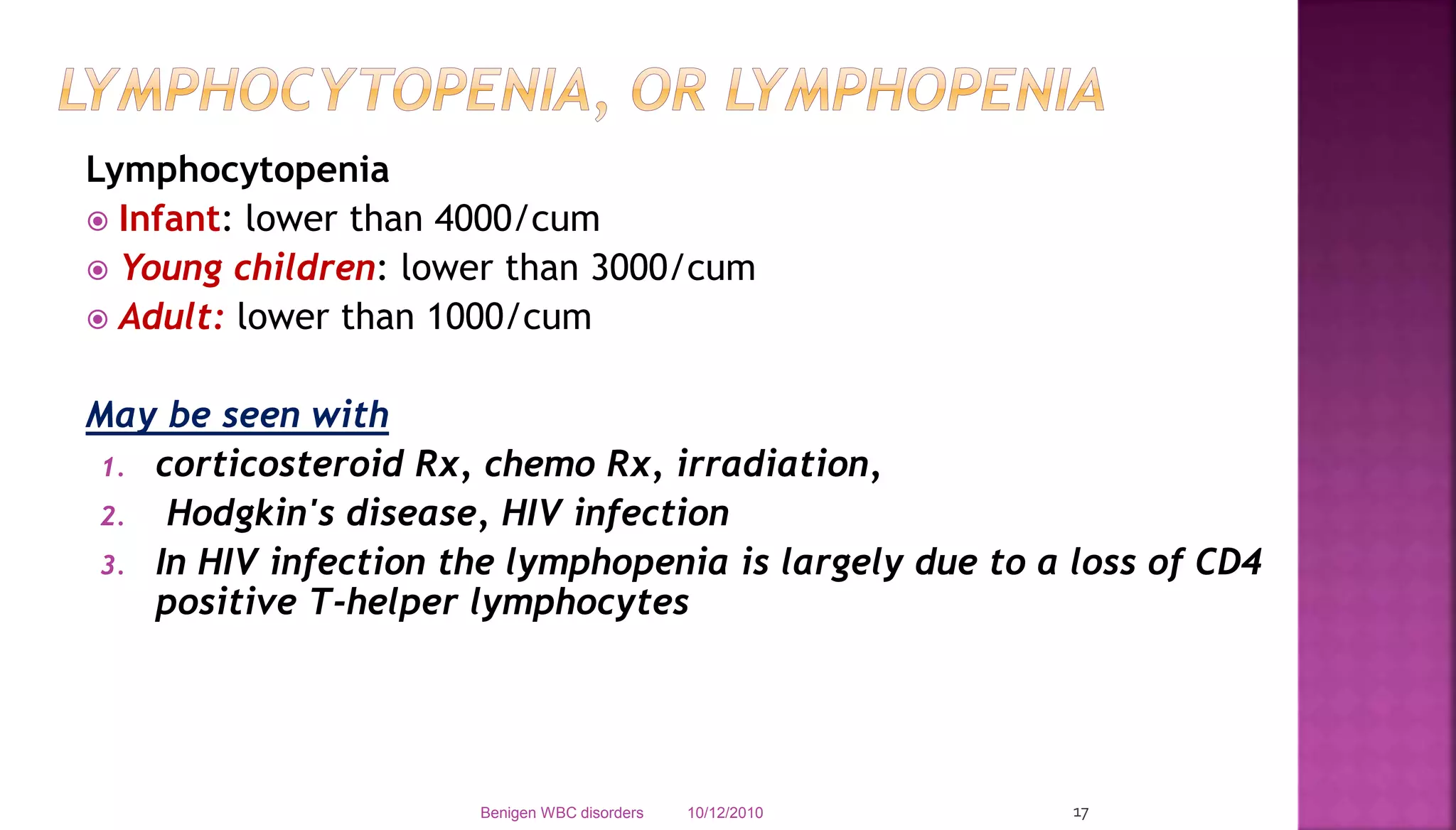
Lymphocytopenia
 Infant: lower than 4000/cum
 Young children: lower than 3000/cum
 Adult: lower than 1000/cum
May be seen with
1. corticosteroid Rx, chemo Rx, irradiation,
2. Hodgkin's disease, HIV infection
3. In HIV infection the lymphopenia is largely due to a loss of CD4
positive T-helper lymphocytes
10/12/2010
Benigen WBC disorders 17
10/12/2010
Benigen WBC disorders 18
Reactive lymphocytes:
a) Used to describe transformed or benign lymphocytes.
b) You should use the term “reactive”,
c) The word “atypical” is used to describe malignant-appearing cells.
d) A few reactive lymphocytes is not abnormal
 1-Pertussis or whooping cough
 2-Toxoplasmosis
 3-Brucellosis
 4-Infectious mononucleosis
 5- CMV
 6-Infectious lymphocytosis (coxsackie virus A or B6, echovirus, and adenovirus 12)
 7-HTLV-1 (Human T Lymphocyte virus)
10/12/2010
Benigen WBC disorders 19
Infectious mononucleosis
10/12/2010
Benigen WBC disorders 20
END OF THE LESSON

Neutropenia & Lymphopenia.ppt

  • 1.
    Developed by Dr. AbdulrazzakOthman Alagbare MD.Bhc.MSc –Hematolgy Lecturer 10/12/2010 Benigen WBC disorders 1
  • 2.
    Definition: Is adecrease in the number of circulating white blood cells (leukocytes) in the peripheral blood lower than 4000/cells/µL (for adult) Result of leukopenia? increased risk for infection Causes of leukopenia 1.Chemotherapy, 2.radiation therapy 3.leukemia (as malignant cells overwhelm the bone marrow), 4.myelofibrosis 5.aplastic anemia 6.Medications Leukopenia
  • 3.
    Pseudoleukopenia Develop upon theonset of infection Diagnosis of Leukopenia Leukopenia can be identified with a complete blood count
  • 4.
    Neutropenia • Neutropenia definedas an absolute neutrophil count (ANC) (segmented + band neutrophils) less than 2000/ µl  Patients with neutropenia are more susceptible to bacterial infections  Patients with fevers and frequent infections. 10/12/2010 Benigen WBC disorders 4
  • 5.
    Causes of Neutropenia Decreasedproduction in the bone marrow Cases 1-aplastic anemia 2-medication 3-radition 4-B12 and folate dificiency 5- congenital neutropenia 6-viral infection 7-metastic cancer Increased destruction a) autoimmune neutropenia. b) chemotherapy treatments, c) autoimmune diseases d) Sequestration in spleen 10/12/2010 Benigen WBC disorders 5
  • 6.
    • 1-Severe acuteneutropenia • 2-Chronic Neutropenia • 3-Chronic idiopathic neutropenia • 4-Cyclic neutropenia • 5-Congenital neutropenia • 6-Drug-induced neutropenia • 7-Autoimmune neutropenia 10/12/2010 Benigen WBC disorders 6
  • 7.
    1-Acute Neutropenia Severe acuteneutropenia: An autoimmune reaction where the body produces antibodies to it's own neutrophils which results in neutropenia 2-Chronic Neutropenia A patient has chronic neutropenia if the condition lasts for longer than 3 months. 3-Chronic idiopathic neutropenia is a disorder in which the neutrophil count is less than 1.0 x 10⁹/L, but results in few infections 10/12/2010 Benigen WBC disorders 7
  • 8.
    10/12/2010 Benigen WBC disorders8 4-Cyclic neutropenia is characterized by periodic severe neutropenia, (Often <200/L) occurring in regular 21- to 30-day cycles. 5-Congenital neutropenia a)Name: Kostmann's syndrome b)Cause: autosomal recessive c)Age: the first year of life d)Severity: the patient has life threatening infections 6-Drug-induced neutropenia 7-Autoimmune neutropenia a)Chronic b)Autoimmune (antibodies directed against neutrophil antigens)
  • 9.
    10/12/2010 Benigen WBC disorders9 Blood film with a striking absence of neutrophils, leaving only red blood cells and platelets
  • 10.
    Neutropenia Classification -based on the absolute neutrophil count (ANC) Risk Category ANC 0 Within normal limits Normal 1 ≥1500 - <2000/mm³ Mild neutropenia 2 ≥1000 - <1500/mm³ Moderate neutropenia 3 ≥500 - <1000/mm³ Severe neutropenia 4 < 500/mm³ Agranulocytosis 10/12/2010 Benigen WBC disorders 10
  • 11.
    Signs and symptomsof neutropenia Due to low ability to fight bacterial infections 1.severe infections or sepsis 2.Fever 3.Mouth ulcers , 4.Diarrhea 5.Burning sensation when urinating 6.Sore throat Diagnosis of neutropenia 1. A full blood count (low ANC) 2. Bone marrow biopsy is often necessary 3. Antineutrophil antibodies 10/12/2010 Benigen WBC disorders 11
  • 12.
  • 13.
    The primary functionof lymphocytes is immunologic: 1. Forming antibodies; and securing immunity. 2. Recognizing what is foreign, (non- self)  Non-self or foreign substances may appear as bacteria, cell substances, proteins, or viruses 10/12/2010 Benigen WBC disorders 13
  • 14.
    1. All leukocytesmake a one-way trip between blood and tissues. 2. Lymphocytes only can recirculate between blood, tissue, and lymph fluid. 3. Lymphocytes are the second most common type of leukocyteso in adults (20–40% of WBC). 4. The lymphocyte number is higher in children between the ages of 1 and 4 to have a relative lymphocytosis 10/12/2010 Benigen WBC disorders 14
  • 15.
     Resting lymphocytes Reactive “transformed lymphocytes,” “atypical  lymphocytes,” or “viral lymphocytes”  Large granular lymphocytes  N.Killer cells 10/12/2010 Benigen WBC disorders 15
  • 16.
     Is anincrease in the number of lymphocytes in the blood  Relative lymphocytosis is normal in children under age 2. 1. Infants: greater than 9000 per microliter 2. older children : greater than 7000 per microliter 3. adults : absolute lymphocytosis over 4000 per microliter 10/12/2010 Benigen WBC disorders 16
  • 17.
    Lymphocytopenia  Infant: lowerthan 4000/cum  Young children: lower than 3000/cum  Adult: lower than 1000/cum May be seen with 1. corticosteroid Rx, chemo Rx, irradiation, 2. Hodgkin's disease, HIV infection 3. In HIV infection the lymphopenia is largely due to a loss of CD4 positive T-helper lymphocytes 10/12/2010 Benigen WBC disorders 17
  • 18.
    10/12/2010 Benigen WBC disorders18 Reactive lymphocytes: a) Used to describe transformed or benign lymphocytes. b) You should use the term “reactive”, c) The word “atypical” is used to describe malignant-appearing cells. d) A few reactive lymphocytes is not abnormal
  • 19.
     1-Pertussis orwhooping cough  2-Toxoplasmosis  3-Brucellosis  4-Infectious mononucleosis  5- CMV  6-Infectious lymphocytosis (coxsackie virus A or B6, echovirus, and adenovirus 12)  7-HTLV-1 (Human T Lymphocyte virus) 10/12/2010 Benigen WBC disorders 19 Infectious mononucleosis
  • 20.