LEUKOCYTOSIS
PRESENTED BY
R.PRIYA
INTRODUCTION
Leukocytosis is the broad term for an elevated white blood cell (WBC) count, typically above
11.0x10^9/L, on a peripheral blood smear collection. The exact value of WBC elevation can vary
slightly between laboratories depending on their 'upper limits of normal' as identified by their
reference ranges. The WBC value represents the sum-total of white blood cell subtypes, including
neutrophils, eosinophils, lymphocytes, monocytes, atypical leukocytes that are not normally present
on a peripheral blood smear (e.g., lymphoblasts), or any combination of these. The clinician should
properly characterize the leukocytosis and determine if further evaluation and workup are indicated.
The broad differential diagnoses of leukocytosis require evaluation beyond basic laboratory workup,
and clinicians should be able to perform physical examinations and targeted histories to ascertain the
possible causes of the presenting lab abnormality. To evaluate for these causes, careful histories,
physical examinations, medication reconciliations, family histories, and the possible need for
consultants for procedures (e.g., genetic testing, hematology/oncology consultations, infectious
disease, etc.) must be completed depending on what is discovered
DEFINITION
Normally you have between 4,000 and 11,000 WBCs per microliter of blood if you aren’t
pregnant. Anything higher is considered leukocytosis.
WBC counts between 50,000 and 100,000 per microliter usually mean a very severe
infection or cancer somewhere in the body.
A WBC count over 100,000 most often occurs with leukemia or other blood and bone
marrow cancer.
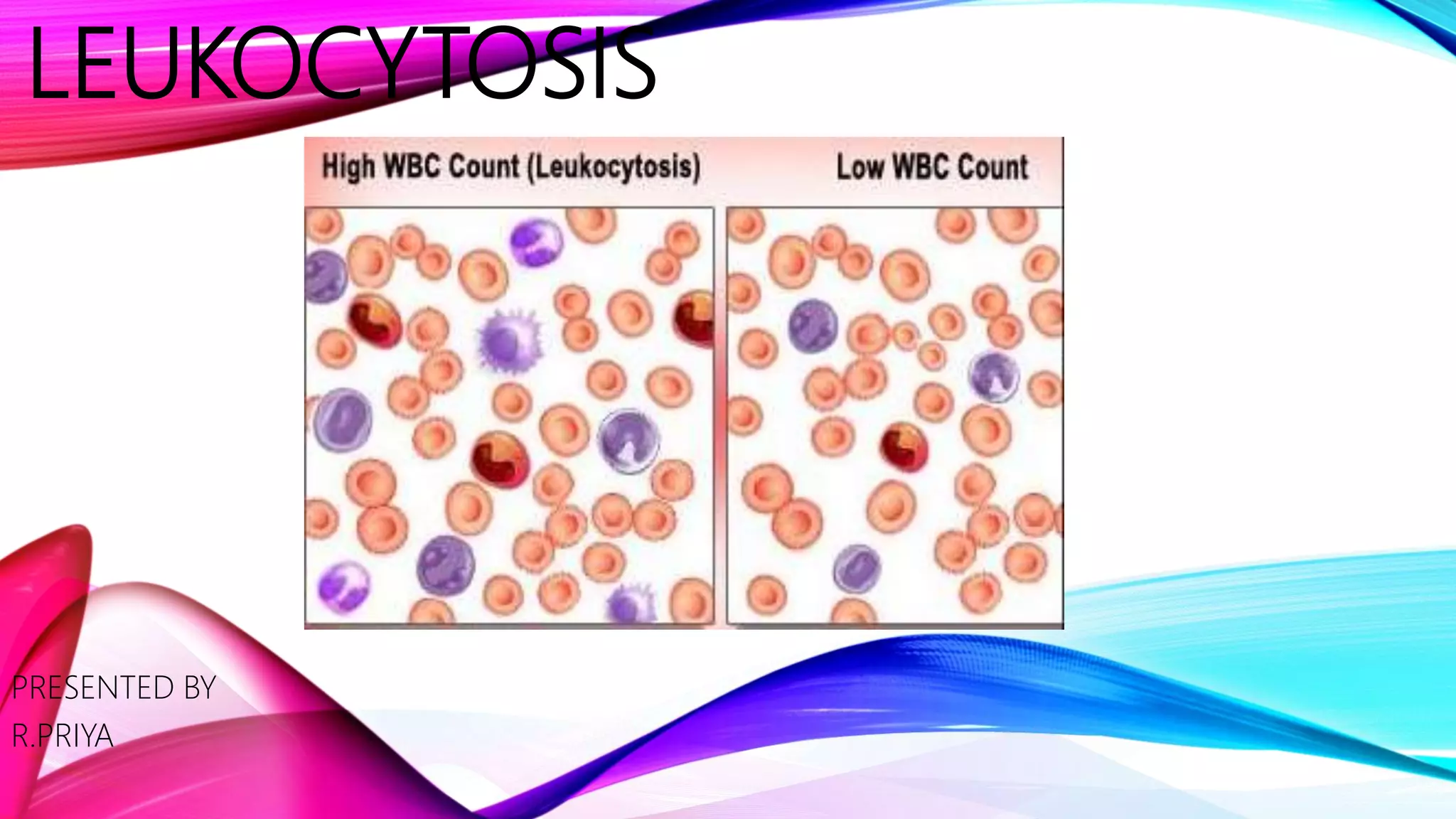
Leukocytosis is a condition in which the white cell (leukocyte count) is above the
normal range in the blood.
TYPES
Leukocytosis is classified by the type of WBC that’s increased. The five types are:
•Neutrophilia. This is an increase in WBCs called neutrophils. They’re the most common type of WBCs, accounting
for 40 to 60 percent of WBCs. Neutrophilia is the type of leukocytosis that occurs most often.
•Lymphocytosis. About 20 to 40 percent of WBCs are lymphocytes. An increased number of these cells is called
lymphocytosis. This type of leukocytosis is very common.
•Monocytosis. This is the name for a high number of monocytes. This cell type makes up only about 2 to 8
percent of WBCs. Monocytosis is uncommon.
•Eosinophilia. This means there are a high number of cells called eosinophils in blood. These cells make up
about 1 to 4 percent of WBCs. Eosinophilia is also an uncommon type of leukocytosis.
•Basophilia. This is a high level of WBCs called basophils. There aren’t many of these cells in blood — only 0.1 to
1 percent of WBCs. Basophilia is rare.
Each type of leukocytosis tends to be associated with a few conditions:
•Neutrophilia is associated with infections and inflammation.
•Lymphocytosis is associated with viral infections and leukemia.
•Monocytosis is associated with certain infections and cancer.
•Eosinophilia is associated with allergies and parasites.
•Basophilia is associated with leukemia.
CAUSES
Causes of neutrophilia:
•infections
•anything that causes long-term inflammation, including injuries and arthritis
•reaction to some drug such as steroids, lithium, and some inhalers
•some kinds of leukemia
•a reaction to emotional or physical stress from things like anxiety, surgery, and exercise
•having spleen removed
•smoking
Causes of lymphocytosis:
•viral infections
•whooping cough
•allergic reactions
•some kinds of leukemia
CAUSES
Causes of eosinophilia:
•allergies and allergic reactions, including hay fever and asthma
•parasite infections
•some skin diseases
•lymphoma (cancer associated with the immune system)
Causes of monocytosis:
•infections from certain things like the Epstein-Barr virus (including mononucleosis), tuberculosis,
and fungus
•autoimmune diseases, like lupus and ulcerative colitis
•having spleen removed
Causes of basophilia:
•leukemia or bone marrow cancer (most often)
•occasionally allergic reactions (occasionally)
Causes of lymphocytosis:
•viral infections
•whooping cough
•allergic reactions
•some kinds of leukemia
SIGNS AND SYMPTOMS
Leukocytosis itself can cause symptoms. If the number of WNCs is high, it makes blood so
thick that it can’t flow properly. This is a medical emergency that can cause:
•a stroke
•problems with vision
•breathing problems
•bleeding from areas covered with mucosa, such as mouth, stomach, and intestines
This is called hyperviscosity syndrome. It happens with leukemia, but it’s rare.
Other symptoms of leukocytosis are related to the condition causing high number of WBCs,
or sometimes due to effects of the specific type of white blood cell. These may include:
•fever and pain or other symptoms at the site of an infection
•fever, easy bruising, weight loss, and night sweats with leukemia and other cancers
•hives, itchy skin, and rashes from an allergic reaction on skin
•breathing problems and wheezing from an allergic reaction in lungs
You may have no symptoms if leukocytosis is related to stress or a reaction to a drug.
DIAGNOSTIC EVAUATION
•Complete blood count (CBC) with differential. This test is almost always done when WBC
count is higher than normal for unknown reasons. For this test, blood drawn from vein is run
through a machine that identifies the percentage of each type of WBC. Knowing which types
have higher than normal percentages can help doctor narrow down the possible causes of high
WBC count.
•Peripheral blood smear. This test is done when neutrophilia or lymphocytosis is found
because doctor can see if there are too many of the different types of leukocytes. For this test, a
thin layer of blood sample is smeared on a slide. A microscope is then used to look at the cells.
•Bone marrow biopsy. WBCs are made in bone marrow and then released into blood. When
a high number of certain types of neutrophils are found on peripheral smear, doctor may
perform this test. Samples of bone marrow are removed from the center of a bone, usually hip,
with a long needle and examined under a microscope. This test can tell doctor if there are
abnormal cells or a problem with the production or release of cells from bone marrow.
MANAGEMENT
Treatment of leukocytosis is based on what’s causing it:
•antibiotics for infection
•treatment of conditions that cause inflammation
•antihistamines and inhalers for allergic reactions
•chemotherapy, radiation, and sometimes a stem cell
transplant for leukemia
•medication changes (if possible) if the cause is a drug
reaction
PREVENTION
•maintaining a healthy lifestyle, including good handwashing to avoid an infection
•staying away from anything you know that might trigger an allergic reaction
•quitting smoking to avoid smoking-related leukocytosis, and lower risk of cancer
•taking medication as directed if you’re being treated for a condition that causes
inflammation
•trying to lower the amount of stress in life, and getting treated for serious anxiety or
emotional problems
Leukocytosis

Leukocytosis

  • 1.
  • 2.
    INTRODUCTION Leukocytosis is thebroad term for an elevated white blood cell (WBC) count, typically above 11.0x10^9/L, on a peripheral blood smear collection. The exact value of WBC elevation can vary slightly between laboratories depending on their 'upper limits of normal' as identified by their reference ranges. The WBC value represents the sum-total of white blood cell subtypes, including neutrophils, eosinophils, lymphocytes, monocytes, atypical leukocytes that are not normally present on a peripheral blood smear (e.g., lymphoblasts), or any combination of these. The clinician should properly characterize the leukocytosis and determine if further evaluation and workup are indicated. The broad differential diagnoses of leukocytosis require evaluation beyond basic laboratory workup, and clinicians should be able to perform physical examinations and targeted histories to ascertain the possible causes of the presenting lab abnormality. To evaluate for these causes, careful histories, physical examinations, medication reconciliations, family histories, and the possible need for consultants for procedures (e.g., genetic testing, hematology/oncology consultations, infectious disease, etc.) must be completed depending on what is discovered
  • 3.
    DEFINITION Normally you havebetween 4,000 and 11,000 WBCs per microliter of blood if you aren’t pregnant. Anything higher is considered leukocytosis. WBC counts between 50,000 and 100,000 per microliter usually mean a very severe infection or cancer somewhere in the body. A WBC count over 100,000 most often occurs with leukemia or other blood and bone marrow cancer. Leukocytosis is a condition in which the white cell (leukocyte count) is above the normal range in the blood.
  • 4.
    TYPES Leukocytosis is classifiedby the type of WBC that’s increased. The five types are: •Neutrophilia. This is an increase in WBCs called neutrophils. They’re the most common type of WBCs, accounting for 40 to 60 percent of WBCs. Neutrophilia is the type of leukocytosis that occurs most often. •Lymphocytosis. About 20 to 40 percent of WBCs are lymphocytes. An increased number of these cells is called lymphocytosis. This type of leukocytosis is very common. •Monocytosis. This is the name for a high number of monocytes. This cell type makes up only about 2 to 8 percent of WBCs. Monocytosis is uncommon. •Eosinophilia. This means there are a high number of cells called eosinophils in blood. These cells make up about 1 to 4 percent of WBCs. Eosinophilia is also an uncommon type of leukocytosis. •Basophilia. This is a high level of WBCs called basophils. There aren’t many of these cells in blood — only 0.1 to 1 percent of WBCs. Basophilia is rare. Each type of leukocytosis tends to be associated with a few conditions: •Neutrophilia is associated with infections and inflammation. •Lymphocytosis is associated with viral infections and leukemia. •Monocytosis is associated with certain infections and cancer. •Eosinophilia is associated with allergies and parasites. •Basophilia is associated with leukemia.
  • 5.
    CAUSES Causes of neutrophilia: •infections •anythingthat causes long-term inflammation, including injuries and arthritis •reaction to some drug such as steroids, lithium, and some inhalers •some kinds of leukemia •a reaction to emotional or physical stress from things like anxiety, surgery, and exercise •having spleen removed •smoking Causes of lymphocytosis: •viral infections •whooping cough •allergic reactions •some kinds of leukemia
  • 6.
    CAUSES Causes of eosinophilia: •allergiesand allergic reactions, including hay fever and asthma •parasite infections •some skin diseases •lymphoma (cancer associated with the immune system) Causes of monocytosis: •infections from certain things like the Epstein-Barr virus (including mononucleosis), tuberculosis, and fungus •autoimmune diseases, like lupus and ulcerative colitis •having spleen removed Causes of basophilia: •leukemia or bone marrow cancer (most often) •occasionally allergic reactions (occasionally) Causes of lymphocytosis: •viral infections •whooping cough •allergic reactions •some kinds of leukemia
  • 7.
    SIGNS AND SYMPTOMS Leukocytosisitself can cause symptoms. If the number of WNCs is high, it makes blood so thick that it can’t flow properly. This is a medical emergency that can cause: •a stroke •problems with vision •breathing problems •bleeding from areas covered with mucosa, such as mouth, stomach, and intestines This is called hyperviscosity syndrome. It happens with leukemia, but it’s rare. Other symptoms of leukocytosis are related to the condition causing high number of WBCs, or sometimes due to effects of the specific type of white blood cell. These may include: •fever and pain or other symptoms at the site of an infection •fever, easy bruising, weight loss, and night sweats with leukemia and other cancers •hives, itchy skin, and rashes from an allergic reaction on skin •breathing problems and wheezing from an allergic reaction in lungs You may have no symptoms if leukocytosis is related to stress or a reaction to a drug.
  • 8.
    DIAGNOSTIC EVAUATION •Complete bloodcount (CBC) with differential. This test is almost always done when WBC count is higher than normal for unknown reasons. For this test, blood drawn from vein is run through a machine that identifies the percentage of each type of WBC. Knowing which types have higher than normal percentages can help doctor narrow down the possible causes of high WBC count. •Peripheral blood smear. This test is done when neutrophilia or lymphocytosis is found because doctor can see if there are too many of the different types of leukocytes. For this test, a thin layer of blood sample is smeared on a slide. A microscope is then used to look at the cells. •Bone marrow biopsy. WBCs are made in bone marrow and then released into blood. When a high number of certain types of neutrophils are found on peripheral smear, doctor may perform this test. Samples of bone marrow are removed from the center of a bone, usually hip, with a long needle and examined under a microscope. This test can tell doctor if there are abnormal cells or a problem with the production or release of cells from bone marrow.
  • 9.
    MANAGEMENT Treatment of leukocytosisis based on what’s causing it: •antibiotics for infection •treatment of conditions that cause inflammation •antihistamines and inhalers for allergic reactions •chemotherapy, radiation, and sometimes a stem cell transplant for leukemia •medication changes (if possible) if the cause is a drug reaction
  • 10.
    PREVENTION •maintaining a healthylifestyle, including good handwashing to avoid an infection •staying away from anything you know that might trigger an allergic reaction •quitting smoking to avoid smoking-related leukocytosis, and lower risk of cancer •taking medication as directed if you’re being treated for a condition that causes inflammation •trying to lower the amount of stress in life, and getting treated for serious anxiety or emotional problems