Spleen structure and Function
Prepared by
Dr. Abdulrazzaq Alagbare- MD-Lecturer of hematology
– Clinical pathologist
The spleen has an important role in
the function of the haemopoietic and
immune systems.
As well as being directly involved in
many diseases of these systems
Spleen- introduction
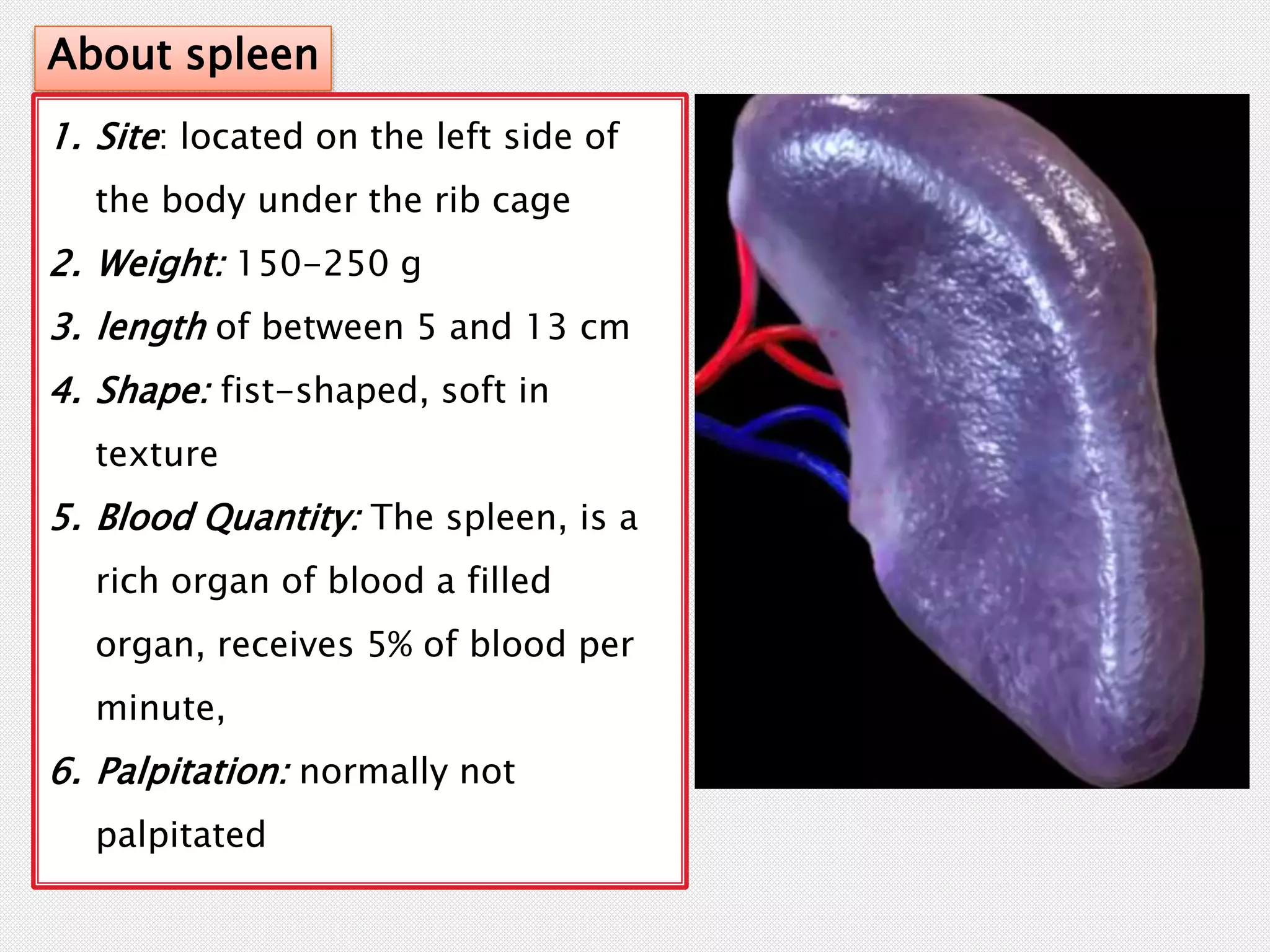
About spleen
1. Site: located on the left side of
the body under the rib cage
2. Weight: 150-250 g
3. length of between 5 and 13 cm
4. Shape: fist-shaped, soft in
texture
5. Blood Quantity: The spleen, is a
rich organ of blood a filled
organ, receives 5% of blood per
minute,
6. Palpitation: normally not
palpitated
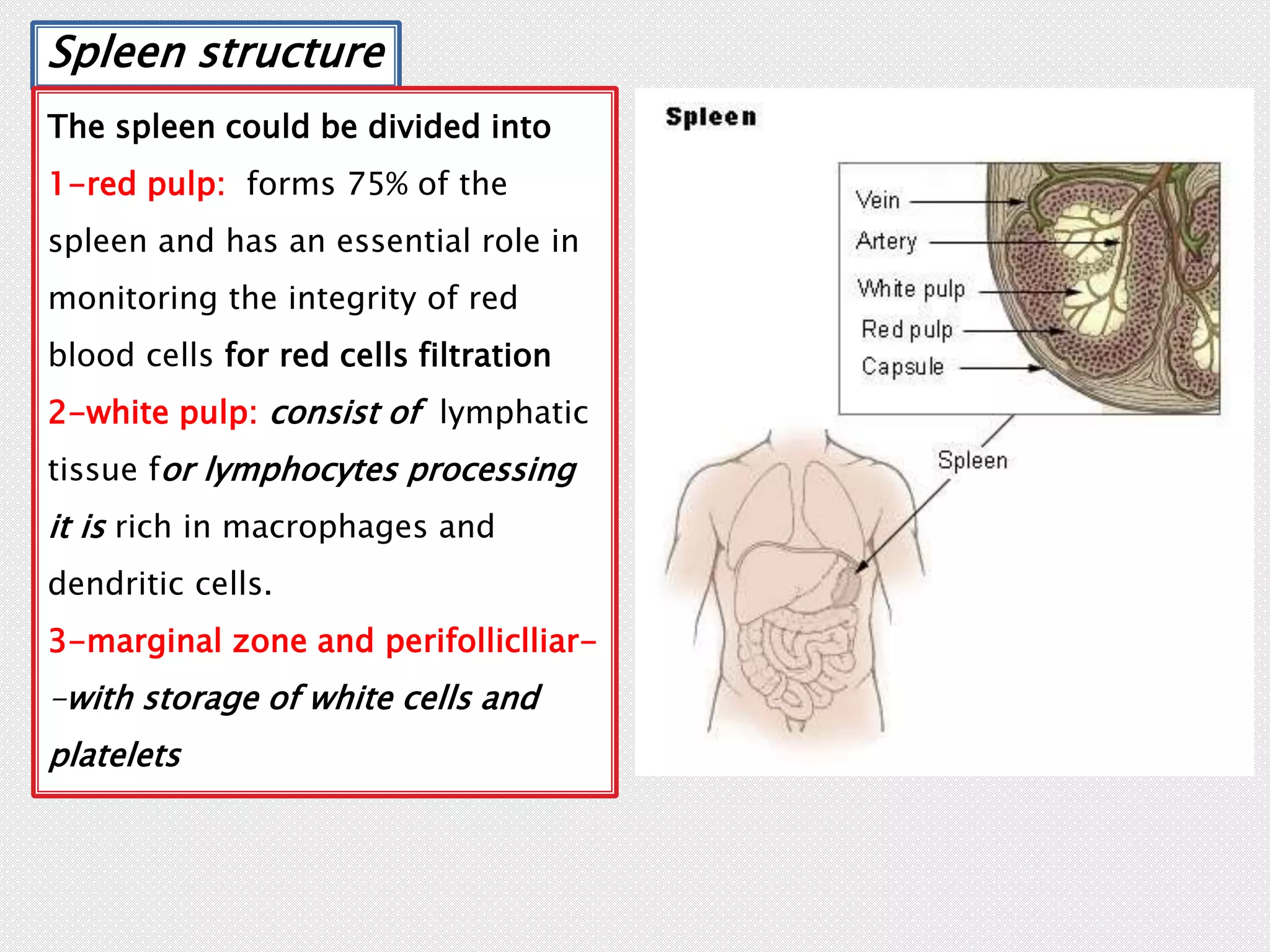
Spleen structure
The spleen could be divided into
1-red pulp: forms 75% of the
spleen and has an essential role in
monitoring the integrity of red
blood cells for red cells filtration
2-white pulp: consist of lymphatic
tissue for lymphocytes processing
it is rich in macrophages and
dendritic cells.
3-marginal zone and perifolliclliar-
-with storage of white cells and
platelets
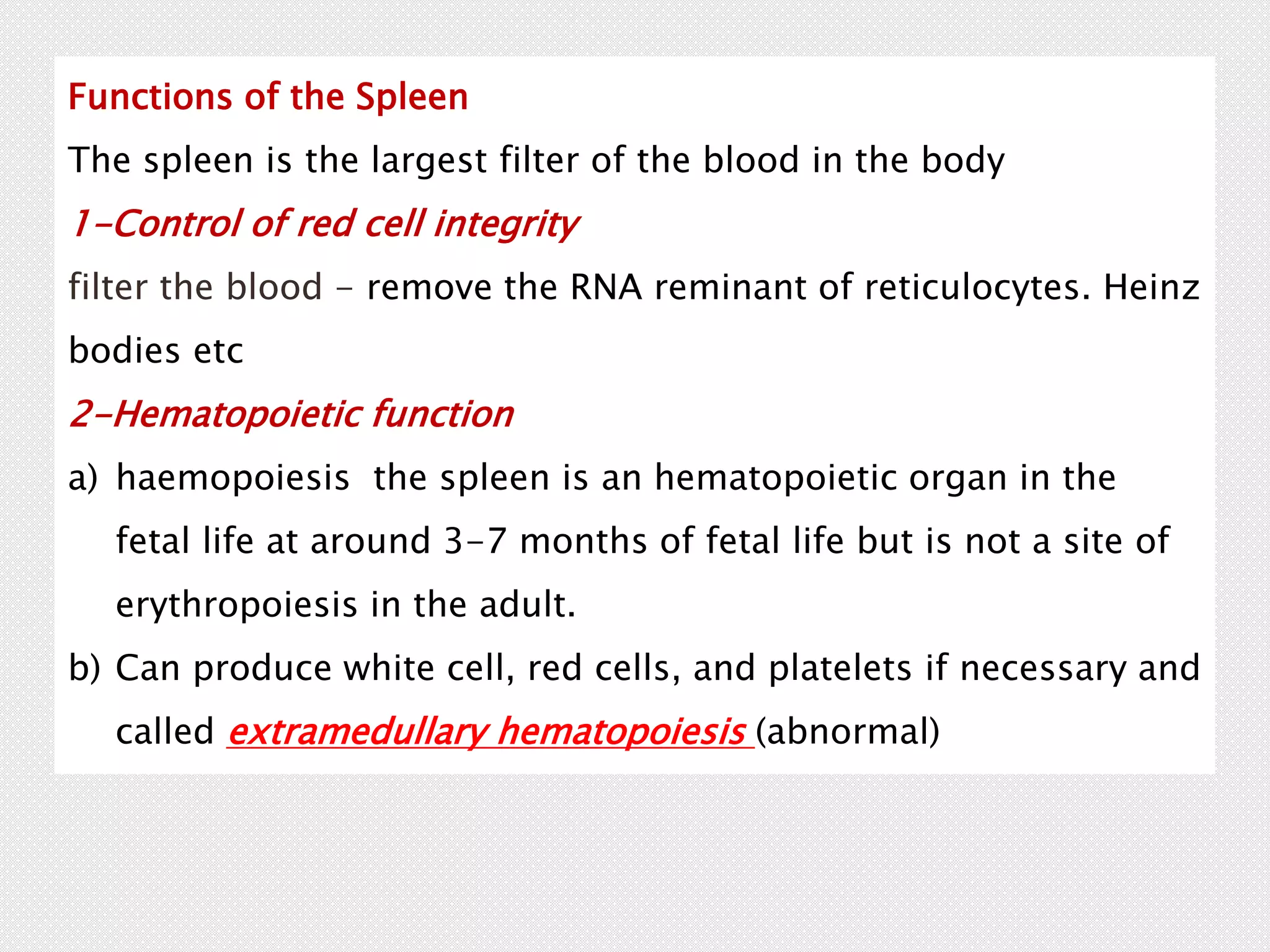
Functions of the Spleen
The spleen is the largest filter of the blood in the body
1-Control of red cell integrity
filter the blood - remove the RNA reminant of reticulocytes. Heinz
bodies etc
2-Hematopoietic function
a) haemopoiesis the spleen is an hematopoietic organ in the
fetal life at around 3-7 months of fetal life but is not a site of
erythropoiesis in the adult.
b) Can produce white cell, red cells, and platelets if necessary and
called extramedullary hematopoiesis (abnormal)
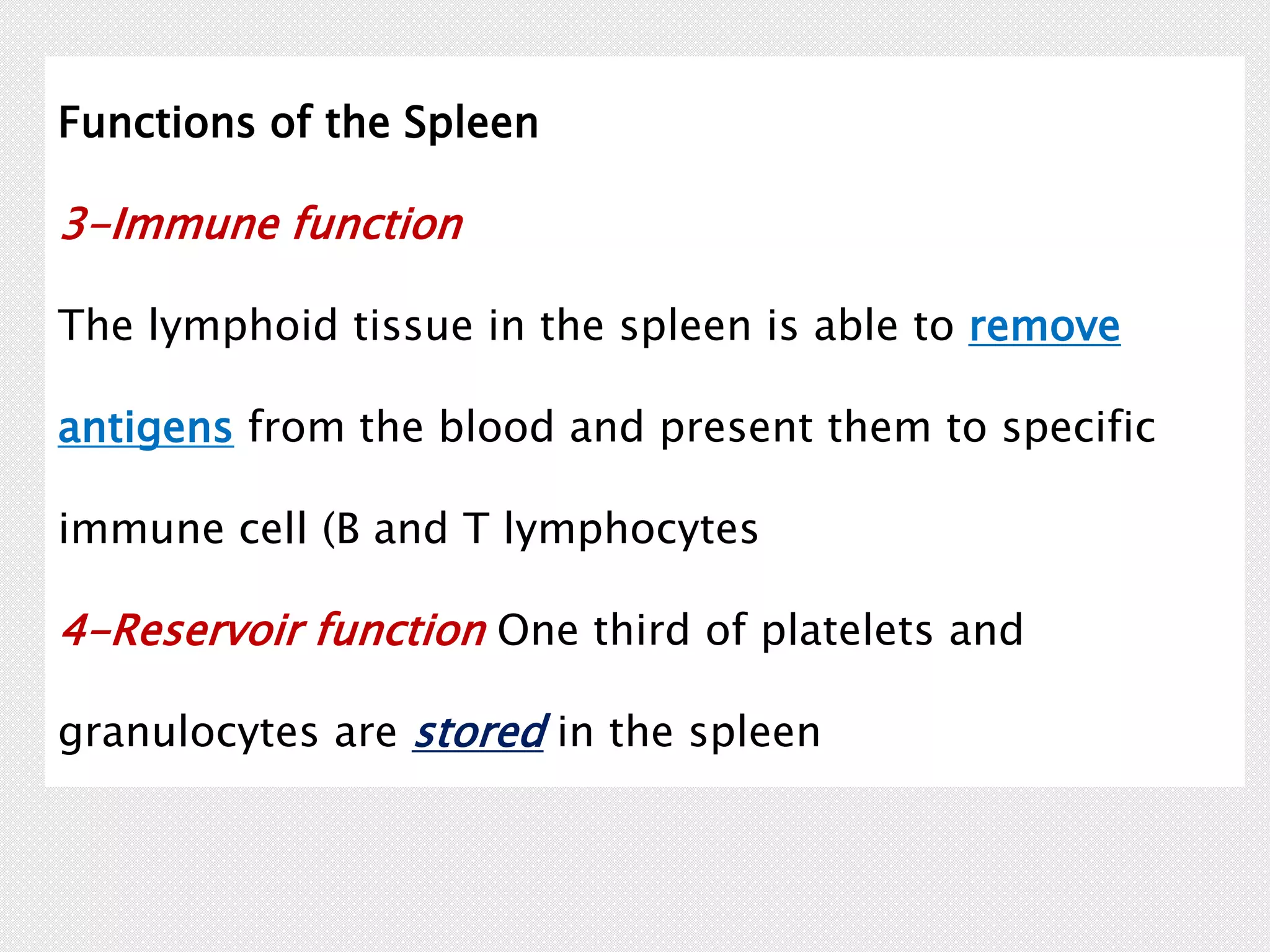
Functions of the Spleen
3-Immune function
The lymphoid tissue in the spleen is able to remove
antigens from the blood and present them to specific
immune cell (B and T lymphocytes
4-Reservoir function One third of platelets and
granulocytes are stored in the spleen
 1-Control of red cell integrity
 2-Hematopoietic function
 3-Immune function
 4-Reservoir function
Spleen Disorders
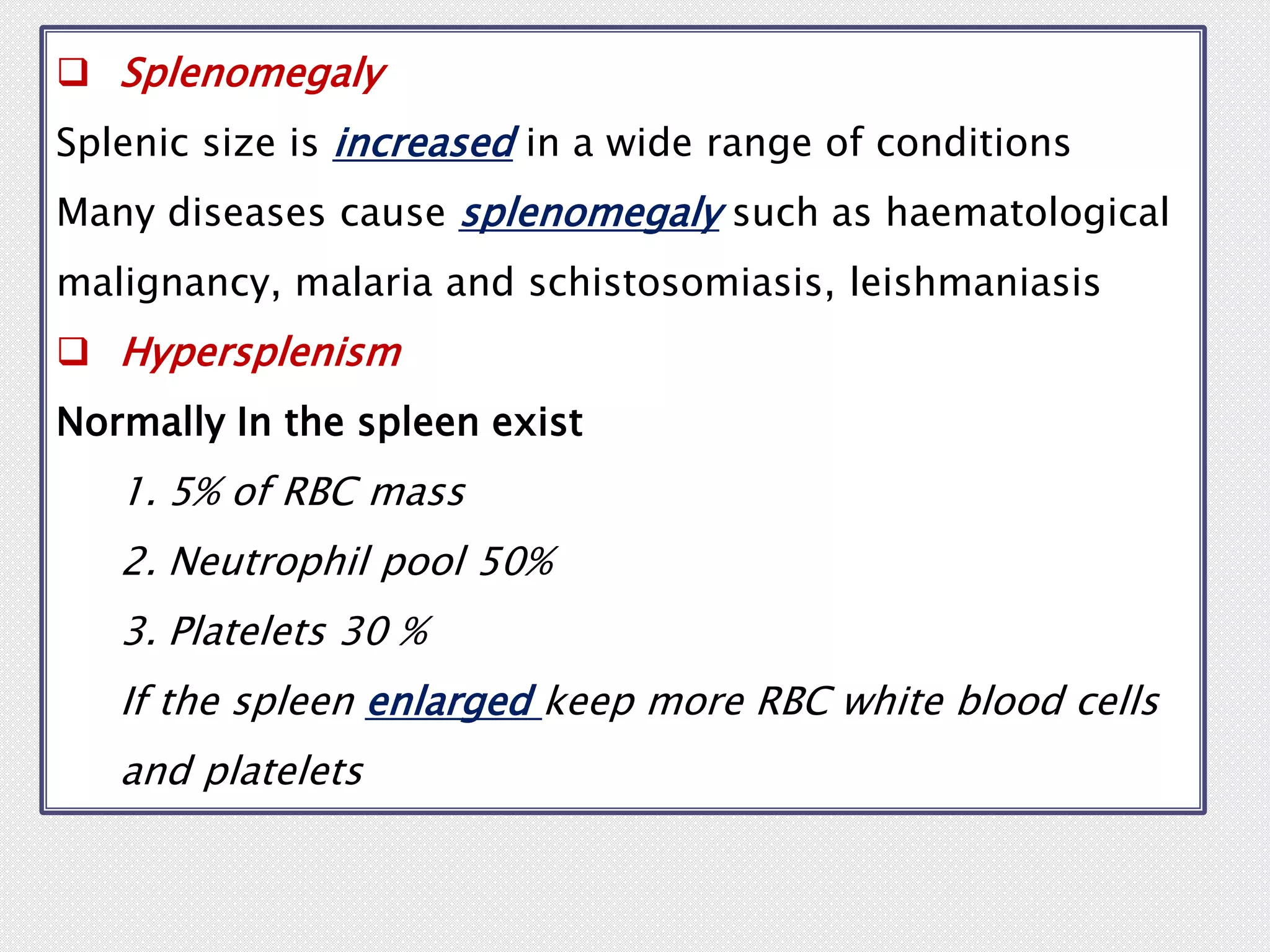
 Splenomegaly
Splenic size is increased in a wide range of conditions
Many diseases cause splenomegaly such as haematological
malignancy, malaria and schistosomiasis, leishmaniasis
 Hypersplenism
Normally In the spleen exist
1. 5% of RBC mass
2. Neutrophil pool 50%
3. Platelets 30 %
If the spleen enlarged keep more RBC white blood cells
and platelets
 Hypersplenism ?
 It is a clinical syndrome that can be seen in any form
of splenomegaly with
1-decrease of blood cells count ( at least one type)
2-Normal bone marrow ( no abnormality in cells)
with increase the reticulocytes or immature
platelets, from the bone marrow into the blood
Causes of hypersplinism
Sickle cell disease , platelets cancer (essential
thrombocythemia), and others
 Splenectomy
Surgical removal of the spleen may be indicated for
treatment of
haematological disorders as well as after splenic
rupture or for splenic tumors or cysts
Effects on the blood cells count increase of
 The platelet count ( reach over million/cum for 2
weeks)
 WBC and RBC also increased
1-The spleen is important in the first years of the life
2-The spleen is not so necessary in adult
3-Some disease occurs splenomegaly and could be
cause health problems and must be removed
(splenoectomy)
1-Splenoectomy improve the hematological health of
the person
2-Splenoctomy in early years may be occur many
problems for the child
Potential Risks of Splenectomy
Spleen function and structure.ppt

Spleen function and structure.ppt

  • 1.
    Spleen structure andFunction Prepared by Dr. Abdulrazzaq Alagbare- MD-Lecturer of hematology – Clinical pathologist
  • 2.
    The spleen hasan important role in the function of the haemopoietic and immune systems. As well as being directly involved in many diseases of these systems Spleen- introduction
  • 3.
    About spleen 1. Site:located on the left side of the body under the rib cage 2. Weight: 150-250 g 3. length of between 5 and 13 cm 4. Shape: fist-shaped, soft in texture 5. Blood Quantity: The spleen, is a rich organ of blood a filled organ, receives 5% of blood per minute, 6. Palpitation: normally not palpitated
  • 4.
    Spleen structure The spleencould be divided into 1-red pulp: forms 75% of the spleen and has an essential role in monitoring the integrity of red blood cells for red cells filtration 2-white pulp: consist of lymphatic tissue for lymphocytes processing it is rich in macrophages and dendritic cells. 3-marginal zone and perifolliclliar- -with storage of white cells and platelets
  • 5.
    Functions of theSpleen The spleen is the largest filter of the blood in the body 1-Control of red cell integrity filter the blood - remove the RNA reminant of reticulocytes. Heinz bodies etc 2-Hematopoietic function a) haemopoiesis the spleen is an hematopoietic organ in the fetal life at around 3-7 months of fetal life but is not a site of erythropoiesis in the adult. b) Can produce white cell, red cells, and platelets if necessary and called extramedullary hematopoiesis (abnormal)
  • 6.
    Functions of theSpleen 3-Immune function The lymphoid tissue in the spleen is able to remove antigens from the blood and present them to specific immune cell (B and T lymphocytes 4-Reservoir function One third of platelets and granulocytes are stored in the spleen
  • 7.
     1-Control ofred cell integrity  2-Hematopoietic function  3-Immune function  4-Reservoir function
  • 8.
  • 9.
     Splenomegaly Splenic sizeis increased in a wide range of conditions Many diseases cause splenomegaly such as haematological malignancy, malaria and schistosomiasis, leishmaniasis  Hypersplenism Normally In the spleen exist 1. 5% of RBC mass 2. Neutrophil pool 50% 3. Platelets 30 % If the spleen enlarged keep more RBC white blood cells and platelets
  • 10.
     Hypersplenism ? It is a clinical syndrome that can be seen in any form of splenomegaly with 1-decrease of blood cells count ( at least one type) 2-Normal bone marrow ( no abnormality in cells) with increase the reticulocytes or immature platelets, from the bone marrow into the blood Causes of hypersplinism Sickle cell disease , platelets cancer (essential thrombocythemia), and others
  • 11.
     Splenectomy Surgical removalof the spleen may be indicated for treatment of haematological disorders as well as after splenic rupture or for splenic tumors or cysts Effects on the blood cells count increase of  The platelet count ( reach over million/cum for 2 weeks)  WBC and RBC also increased
  • 12.
    1-The spleen isimportant in the first years of the life 2-The spleen is not so necessary in adult 3-Some disease occurs splenomegaly and could be cause health problems and must be removed (splenoectomy) 1-Splenoectomy improve the hematological health of the person 2-Splenoctomy in early years may be occur many problems for the child Potential Risks of Splenectomy