Lecture 12
Developed by - Dr.Abdulrazzaq Othman Alagbare – MD-MCP- Lecturer of hematology &
Immunohematology
Solid Tumors
Topic
Solid
Tumors
Osteosarcoma (OSt)
Introduction
REMEMBER
To understanding the nature of sarcoma tumors the Pediatricians
oncologist should recognize the role of
 age,
 genetic conditions,
 and environmental exposures
in the development of malignant solid tumors in children and
adolescents
REMEMBER
Some genes control when our cells grow, divide to make new cells,
and die:
• oncogenes. Genes that help cells grow, divide, or stay alive .
• tumor suppressor Genes that help control cell division, repair
mistakes in DNA, or make cells die at the right time .
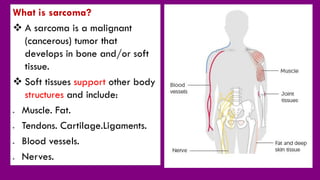
What is sarcoma?
 A sarcoma is a malignant
(cancerous) tumor that
develops in bone and/or soft
tissue.
 Soft tissues support other body
structures and include:
 Muscle. Fat.
 Tendons. Cartilage.Ligaments.
 Blood vessels.
 Nerves.
Sarcoma incidence
One of the most childhood cancer
 15% of childhood cancers
 1% of all adult cancer
Osteosarcoma
(OSt)
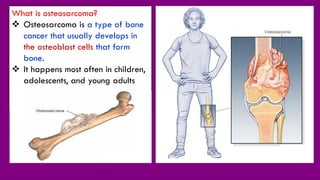
What is osteosarcoma?
 Osteosarcoma is a type of bone
cancer that usually develops in
the osteoblast cells that form
bone.
 It happens most often in children,
adolescents, and young adults
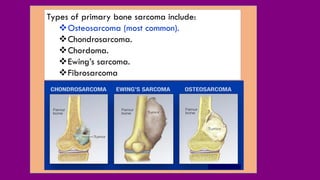
Types of primary bone sarcoma include:
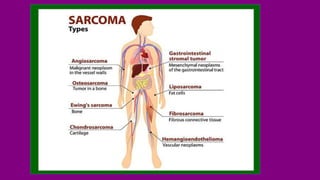
Osteosarcoma (most common).
Chondrosarcoma.
Chordoma.
Ewing’s sarcoma.
Fibrosarcoma
There are more than 70 known subtypes of sarcoma.
Bone sarcomas
Primary bone sarcoma is cancer that starts in the bone.
Many are diagnosed in children. (14-16yrs)
More than one-third of bone sarcomas are diagnosed in
people younger than 35 years old.
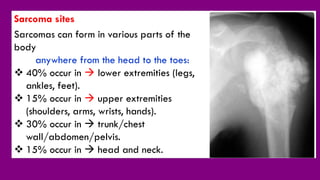
Sarcoma sites
Sarcomas can form in various parts of the
body
anywhere from the head to the toes:
 40% occur in  lower extremities (legs,
ankles, feet).
 15% occur in  upper extremities
(shoulders, arms, wrists, hands).
 30% occur in  trunk/chest
wall/abdomen/pelvis.
 15% occur in  head and neck.
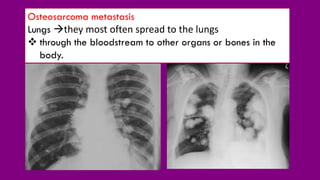
Osteosarcoma metastasis
Lungs they most often spread to the lungs
 through the bloodstream to other organs or bones in the
body.
Metastatic bone cancer
 starts in another location and
travels to the bone.
This cancer comes in many forms,
Source:
thyroid, lung, kidney, breast or prostat
e.
 it can create structural problems in
the bones that may cause pain and
reduce functioning.
Risk factors
These factors increase the risk of
osteosarcoma:
 Previous treatment with radiation
therapy
 Certain bone disorders. These include:
Paget's disease of bone and fibrous
dysplasia
 Certain inherited or genetic conditions,
including hereditary retinoblastoma,
Bloom syndrome, Li-Fraumeni syndrome,
Causes
 It's not clear what causes
osteosarcoma.
 Osteosarcoma begins when a healthy
bone cell develops changes in its DNA
Start to produce abnormal osteoblast
(osteoid.).
Causes
 The result is a mass (tumor) of poorly
formed bone cells that can invade
and destroy healthy body tissue.
 Cells can break away and spread
(metastasize) throughout the body.
What are the symptoms of osteosarcoma?
Each individual may experience symptoms differently.
Symptoms may include:
•Pain in the affected bone
•Increased pain with activity or lifting
•Swelling around the affected site
•Limping
•Decreased movement of the affected limb
•a pathologic fracture
How is osteosarcoma diagnosed?
Medical history
Physical examination
Complete blood count (CBC).
Other blood tests. RFT,LFT .
Biopsy of the tumor. highly
accurate to establish the
diagnosis of OS.
Staging of the tumor
By using
 Chest CT
 Whole body positron emission
tomography (PET) CT
 Whole body bone scan
 Whole body PET MRI
•Grade X: Grade cannot be assessed (undetermined grade)
•Grade 1: Well differentiated (low grade)
•Grade 2: Moderately differentiated (intermediate grade)
•Grade 3: Poorly differentiated (high grade)
•Grade 4: Undifferentiated (high grade)
Biopsy of the tumor.
Undifferentiated cancer
 A term used to describe cells or
tissues that do not have
specialized ("mature") structures
or functions.
 Undifferentiated cancer cells
often grow and spread quickly.
well-differentiated cancer
A term used to describe cells and
tissue that have mature
(specialized) structures and
functions.
In cancer, well-differentiated
cancer cells look more like
normal cells under a
microscope and tend to grow
and spread more slowly than
poorly differentiated or
undifferentiated cancer cells.
X-ray. MRI,CT and Bone scans
lower femur tumor
(thighbone), behind the knee.
Periosteal tumors
typically occur in the
shaft of the tibia
MRI scan shows an osteosarcoma in
the lower left femur (thighbone) of a
10-year-old patient
Treatment may include:
Surgery
Chemotherapy
Radiation therapy
Rehabilitation, including physical and occupational therapy, and
psychosocial adapting
Prosthesis fitting and training
Supportive care for the side effects of treatment
Antibiotics to prevent and treat infections
Continued follow-up care
Many patients higher-grade tumors, will receive a combination of
treatments.
Osteosarcoma.pdf

Osteosarcoma.pdf

  • 1.
    Lecture 12 Developed by- Dr.Abdulrazzaq Othman Alagbare – MD-MCP- Lecturer of hematology & Immunohematology Solid Tumors
  • 2.
  • 3.
  • 4.
    REMEMBER To understanding thenature of sarcoma tumors the Pediatricians oncologist should recognize the role of  age,  genetic conditions,  and environmental exposures in the development of malignant solid tumors in children and adolescents
  • 5.
    REMEMBER Some genes controlwhen our cells grow, divide to make new cells, and die: • oncogenes. Genes that help cells grow, divide, or stay alive . • tumor suppressor Genes that help control cell division, repair mistakes in DNA, or make cells die at the right time .
  • 6.
    What is sarcoma? A sarcoma is a malignant (cancerous) tumor that develops in bone and/or soft tissue.  Soft tissues support other body structures and include:  Muscle. Fat.  Tendons. Cartilage.Ligaments.  Blood vessels.  Nerves.
  • 8.
    Sarcoma incidence One ofthe most childhood cancer  15% of childhood cancers  1% of all adult cancer
  • 10.
  • 11.
    What is osteosarcoma? Osteosarcoma is a type of bone cancer that usually develops in the osteoblast cells that form bone.  It happens most often in children, adolescents, and young adults
  • 12.
    Types of primarybone sarcoma include: Osteosarcoma (most common). Chondrosarcoma. Chordoma. Ewing’s sarcoma. Fibrosarcoma
  • 14.
    There are morethan 70 known subtypes of sarcoma. Bone sarcomas Primary bone sarcoma is cancer that starts in the bone. Many are diagnosed in children. (14-16yrs) More than one-third of bone sarcomas are diagnosed in people younger than 35 years old.
  • 15.
    Sarcoma sites Sarcomas canform in various parts of the body anywhere from the head to the toes:  40% occur in  lower extremities (legs, ankles, feet).  15% occur in  upper extremities (shoulders, arms, wrists, hands).  30% occur in  trunk/chest wall/abdomen/pelvis.  15% occur in  head and neck.
  • 16.
    Osteosarcoma metastasis Lungs theymost often spread to the lungs  through the bloodstream to other organs or bones in the body.
  • 17.
    Metastatic bone cancer starts in another location and travels to the bone. This cancer comes in many forms, Source: thyroid, lung, kidney, breast or prostat e.  it can create structural problems in the bones that may cause pain and reduce functioning.
  • 18.
    Risk factors These factorsincrease the risk of osteosarcoma:  Previous treatment with radiation therapy  Certain bone disorders. These include: Paget's disease of bone and fibrous dysplasia  Certain inherited or genetic conditions, including hereditary retinoblastoma, Bloom syndrome, Li-Fraumeni syndrome,
  • 19.
    Causes  It's notclear what causes osteosarcoma.  Osteosarcoma begins when a healthy bone cell develops changes in its DNA Start to produce abnormal osteoblast (osteoid.).
  • 20.
    Causes  The resultis a mass (tumor) of poorly formed bone cells that can invade and destroy healthy body tissue.  Cells can break away and spread (metastasize) throughout the body.
  • 21.
    What are thesymptoms of osteosarcoma? Each individual may experience symptoms differently. Symptoms may include: •Pain in the affected bone •Increased pain with activity or lifting •Swelling around the affected site •Limping •Decreased movement of the affected limb •a pathologic fracture
  • 24.
    How is osteosarcomadiagnosed? Medical history Physical examination Complete blood count (CBC). Other blood tests. RFT,LFT . Biopsy of the tumor. highly accurate to establish the diagnosis of OS. Staging of the tumor By using  Chest CT  Whole body positron emission tomography (PET) CT  Whole body bone scan  Whole body PET MRI
  • 25.
    •Grade X: Gradecannot be assessed (undetermined grade) •Grade 1: Well differentiated (low grade) •Grade 2: Moderately differentiated (intermediate grade) •Grade 3: Poorly differentiated (high grade) •Grade 4: Undifferentiated (high grade) Biopsy of the tumor.
  • 26.
  • 27.
    Undifferentiated cancer  Aterm used to describe cells or tissues that do not have specialized ("mature") structures or functions.  Undifferentiated cancer cells often grow and spread quickly.
  • 28.
    well-differentiated cancer A termused to describe cells and tissue that have mature (specialized) structures and functions. In cancer, well-differentiated cancer cells look more like normal cells under a microscope and tend to grow and spread more slowly than poorly differentiated or undifferentiated cancer cells.
  • 29.
    X-ray. MRI,CT andBone scans lower femur tumor (thighbone), behind the knee. Periosteal tumors typically occur in the shaft of the tibia
  • 30.
    MRI scan showsan osteosarcoma in the lower left femur (thighbone) of a 10-year-old patient
  • 32.
    Treatment may include: Surgery Chemotherapy Radiationtherapy Rehabilitation, including physical and occupational therapy, and psychosocial adapting Prosthesis fitting and training Supportive care for the side effects of treatment Antibiotics to prevent and treat infections Continued follow-up care Many patients higher-grade tumors, will receive a combination of treatments.