Developed by
Dr.Abdulrazzaq Othman Alagbare
MD. Clinical pathologist-Lecturer of hematology
Introduction of anemia
Full blood count (FBC ) or complete blood count (CBC)
It is a very common test, used routinely to evaluate the most important substances in
human body provide important Information about the blood cells.
1. Most abnormalities in the hematological system and its tests are due to disease in
other systems.
2. It is practically impossible to diagnose most disorders that affect the blood without
laboratory tests.
The FBC done for
1- help in diagnosis
2-follow up of the therapy
2
Introduction of anemia‘s
1.Production state of the blood components.
2.Types of the blood cells in the peripheral blood
❖ Cells counting.
❖ Cells Morphology.
❖ White Cells Percentage %
❖ Cells Content
❖ Normal or abnormal blood Cells or others
The main information, that can get from the CBC test are:
3
Introduction of anemia‘s
Names:
Full blood count (FBC)
Complete blood count (CBC)
Complete blood Picture (CBP)
General blood count (GBC)
General blood picture (GBP)
4
Introduction of anemia‘s
Complete Blood Count
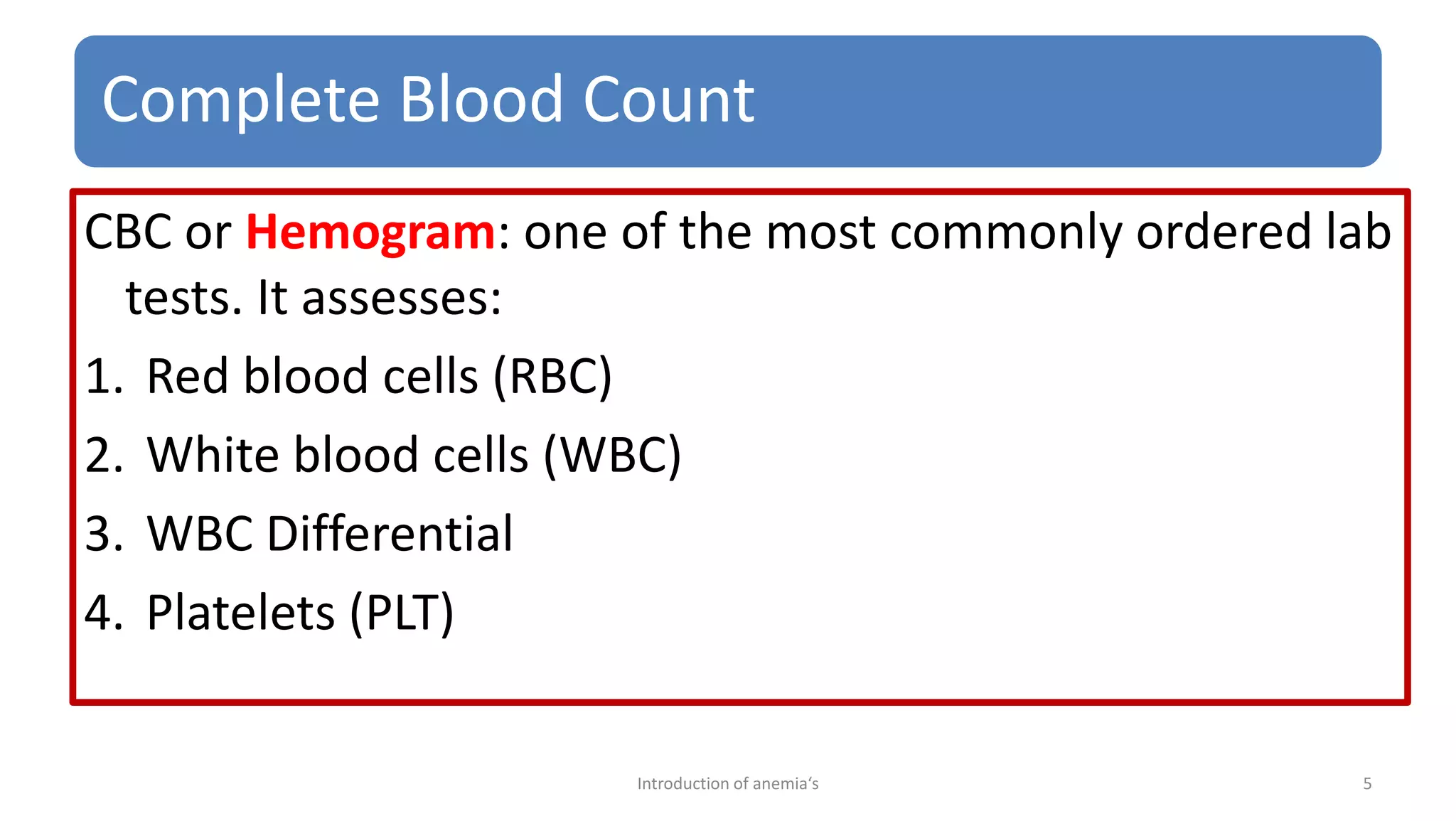
CBC or Hemogram: one of the most commonly ordered lab
tests. It assesses:
1. Red blood cells (RBC)
2. White blood cells (WBC)
3. WBC Differential
4. Platelets (PLT)
5
Introduction of anemia‘s
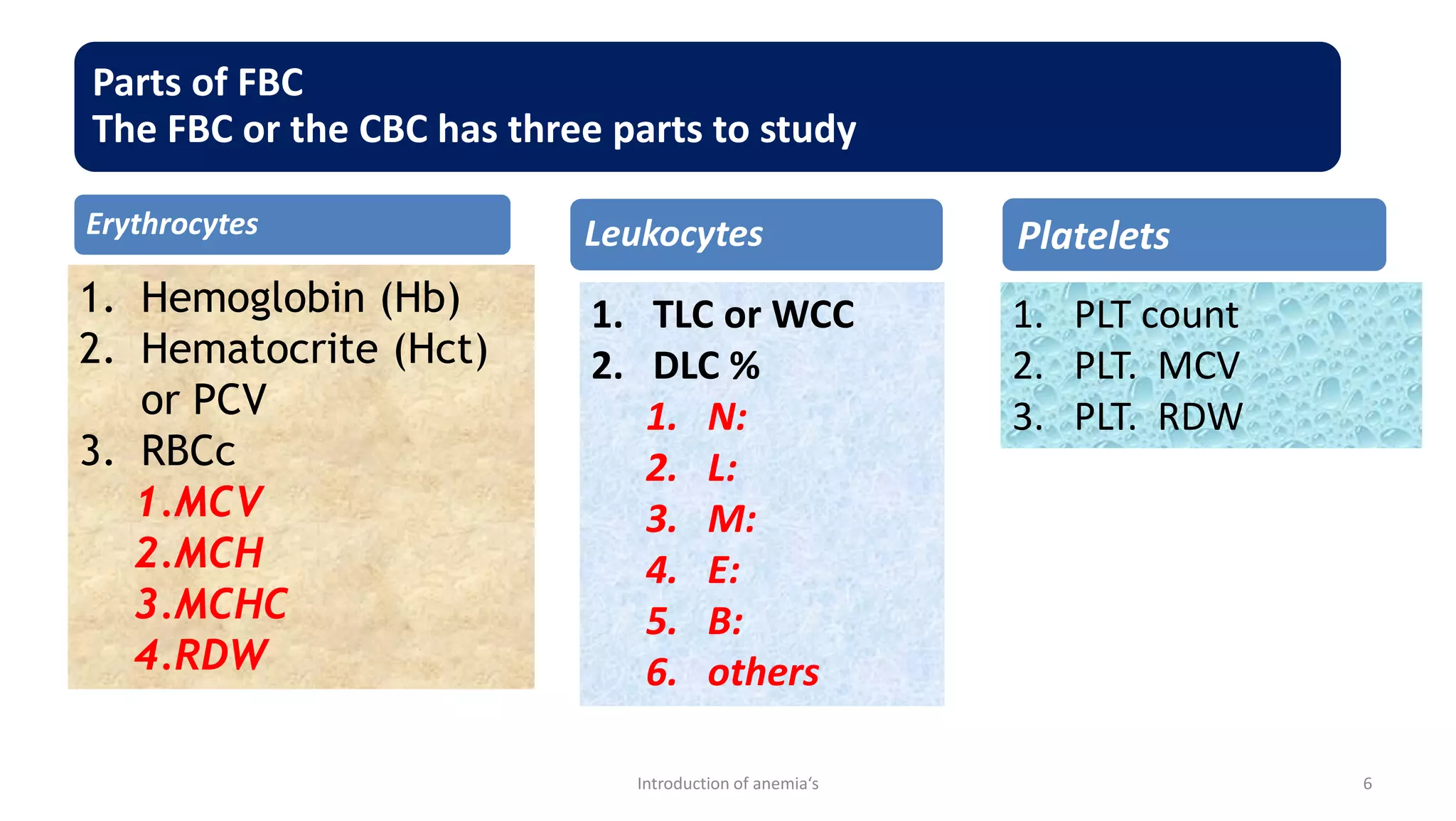
Parts of FBC
The FBC or the CBC has three parts to study
Erythrocytes
1. Hemoglobin (Hb)
2. Hematocrite (Hct)
or PCV
3. RBCc
1.MCV
2.MCH
3.MCHC
4.RDW
1. TLC or WCC
2. DLC %
1. N:
2. L:
3. M:
4. E:
5. B:
6. others
Leukocytes Platelets
1. PLT count
2. PLT. MCV
3. PLT. RDW
6
Introduction of anemia‘s
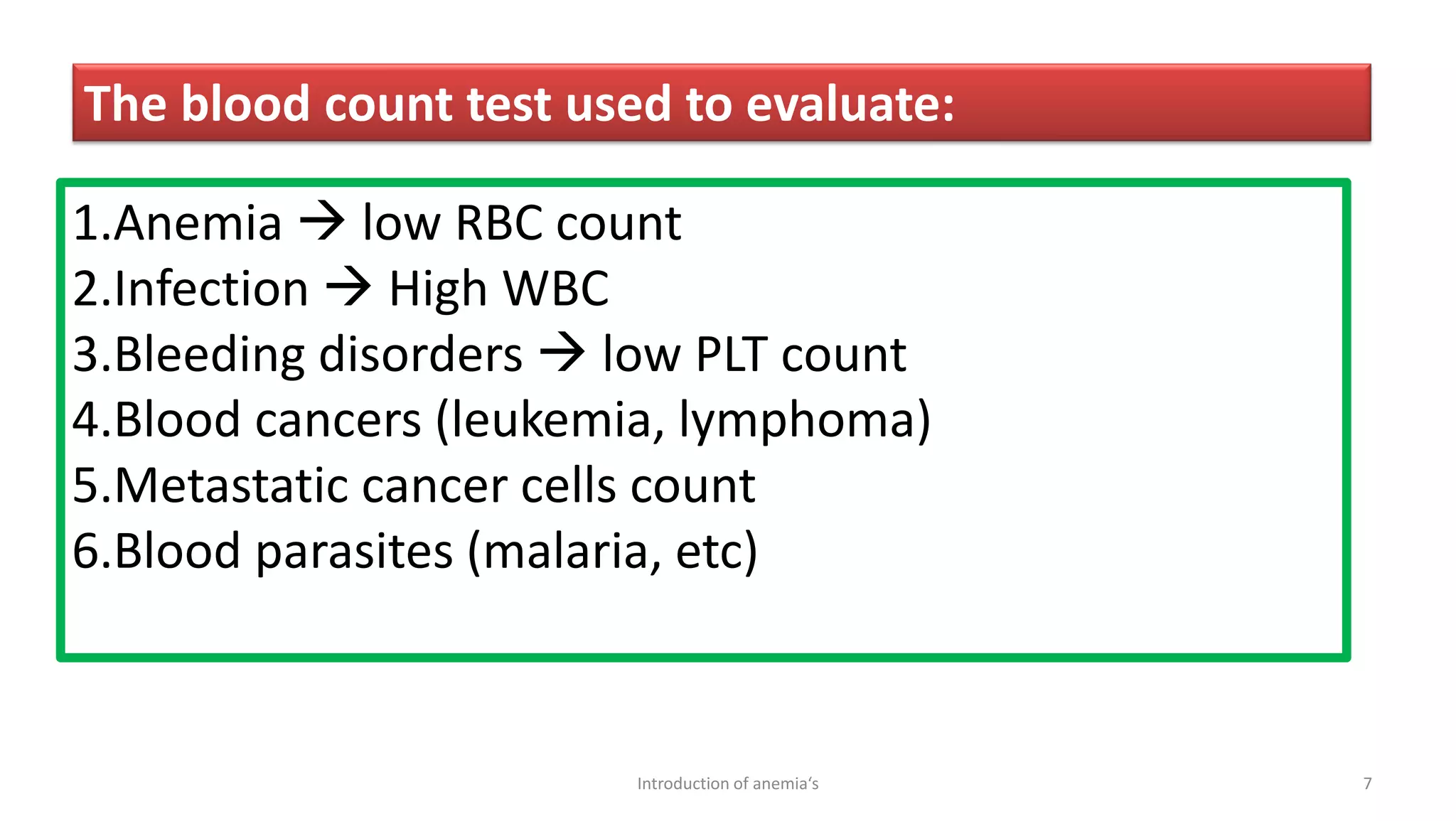
The blood count test used to evaluate:
1.Anemia → low RBC count
2.Infection → High WBC
3.Bleeding disorders → low PLT count
4.Blood cancers (leukemia, lymphoma)
5.Metastatic cancer cells count
6.Blood parasites (malaria, etc)
7
Introduction of anemia‘s
Introduction of anemia‘s 8
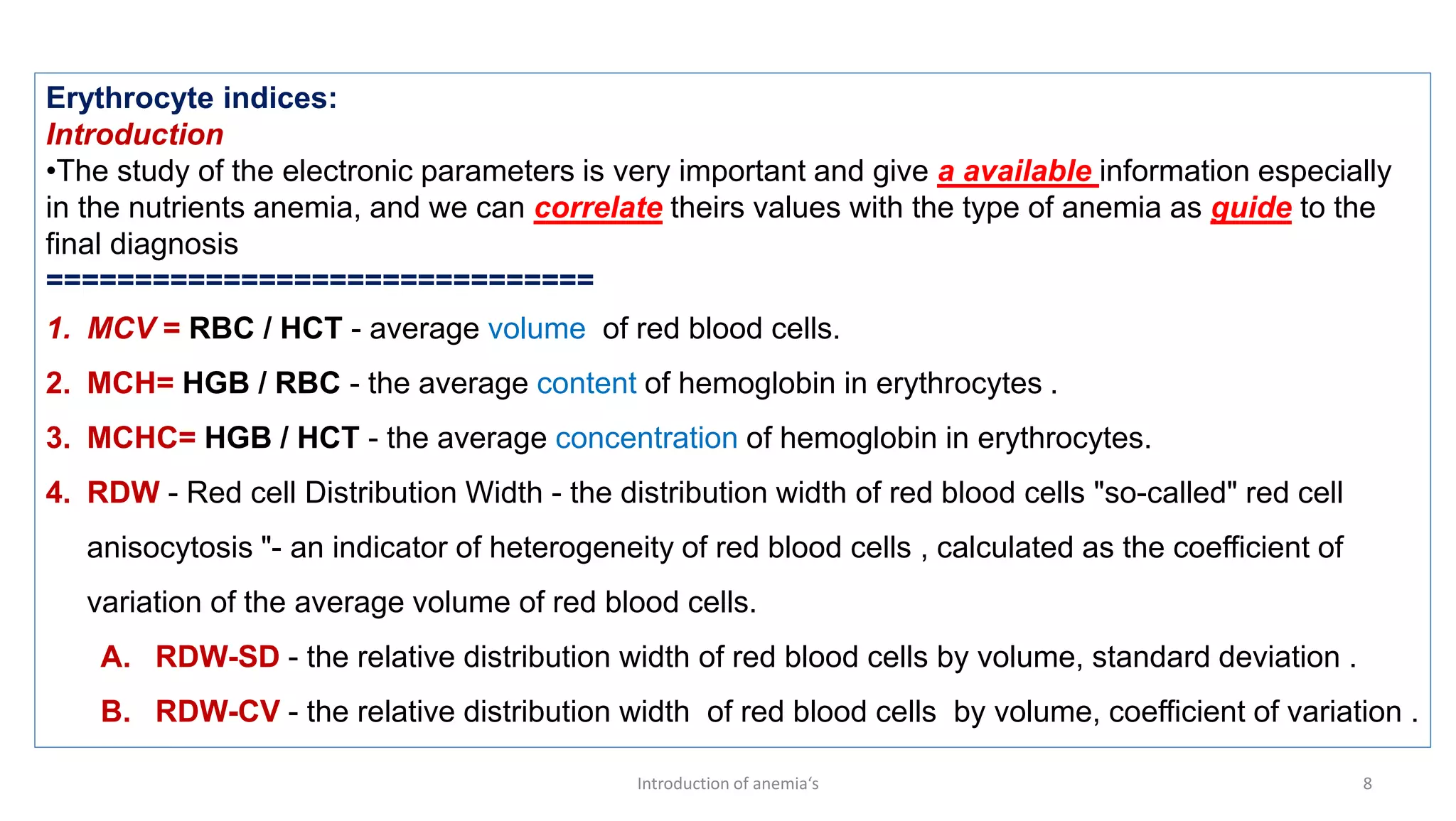
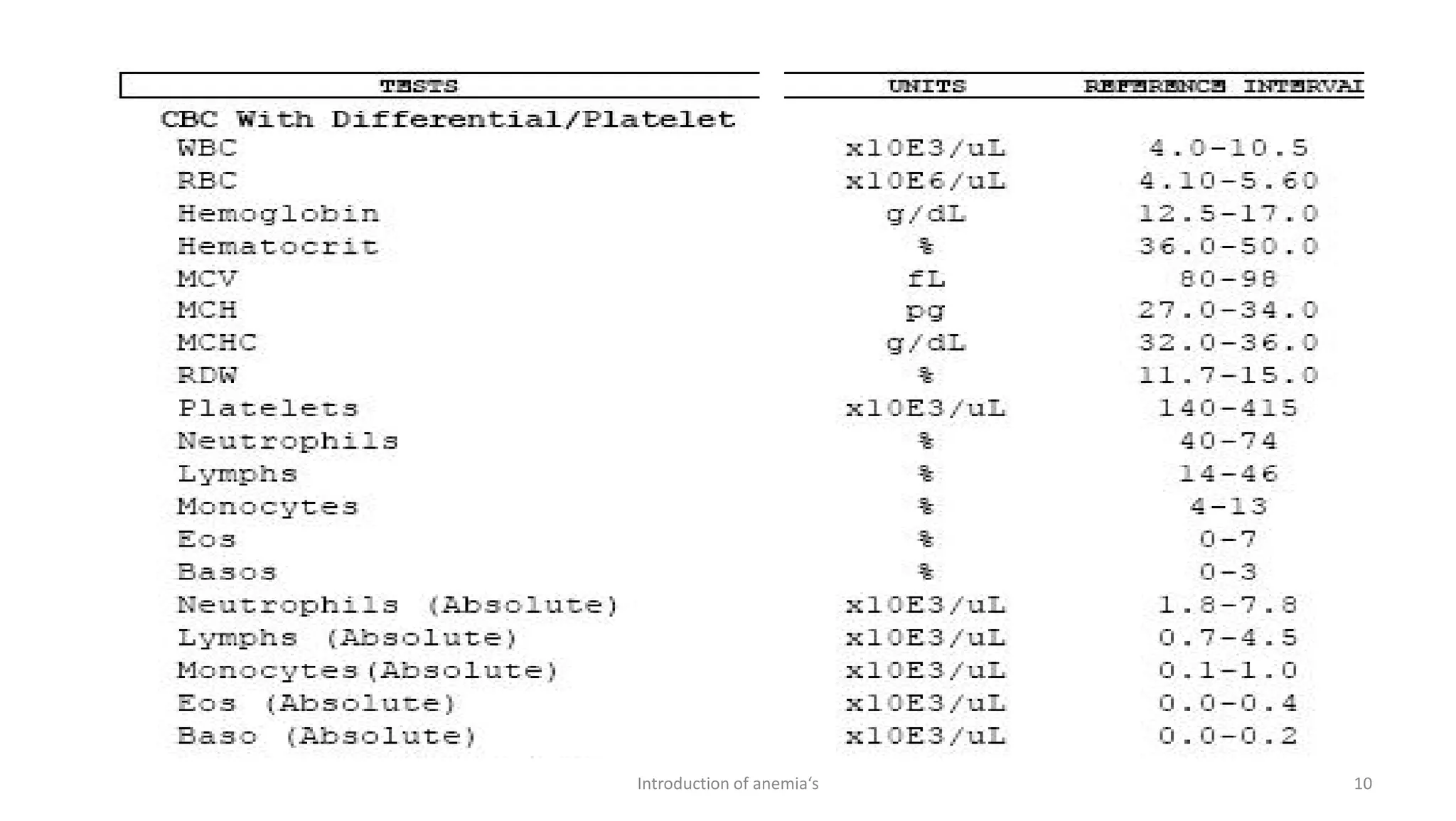
Erythrocyte indices:
Introduction
•The study of the electronic parameters is very important and give a available information especially
in the nutrients anemia, and we can correlate theirs values with the type of anemia as guide to the
final diagnosis
===============================
1. MCV = RBC / HCT - average volume of red blood cells.
2. MCH= HGB / RBC - the average content of hemoglobin in erythrocytes .
3. MCHC= HGB / HCT - the average concentration of hemoglobin in erythrocytes.
4. RDW - Red cell Distribution Width - the distribution width of red blood cells "so-called" red cell
anisocytosis "- an indicator of heterogeneity of red blood cells , calculated as the coefficient of
variation of the average volume of red blood cells.
A. RDW-SD - the relative distribution width of red blood cells by volume, standard deviation .
B. RDW-CV - the relative distribution width of red blood cells by volume, coefficient of variation .
RBC Tests on the CBC
1. Hb: gives the content of the RBC
2. RBC: Gives the count of the RBC
3. PCV: gives the mathematical relation between the RBC mass and plasma
===================================
1. MCV: gives the average volume of erythrocytes..
2. MCH : gives the average weight of Hgb per eyrthrocyte.
3. MCHC: gives the average Hgb concentration in all erythrocyte.
4. RDW: give the Hb distribution inside the RBC. ( anoisocytosis)
9
Introduction of anemia‘s
10
Introduction of anemia‘s
1-Manual method tech.
1. Needs more blood for test.
2. Long time to carry out.
3. High cost.
4. Not reproducible result.
5. Needs to prepare reagents.
6. To use many instruments.
7. Long time for training
Errors in manual method counting
1. RBC and WCC about 15%
2. PLT 20 to 25%
Method Advantage → It is a reference method
11
Introduction of anemia‘s
Methods study of the CBC
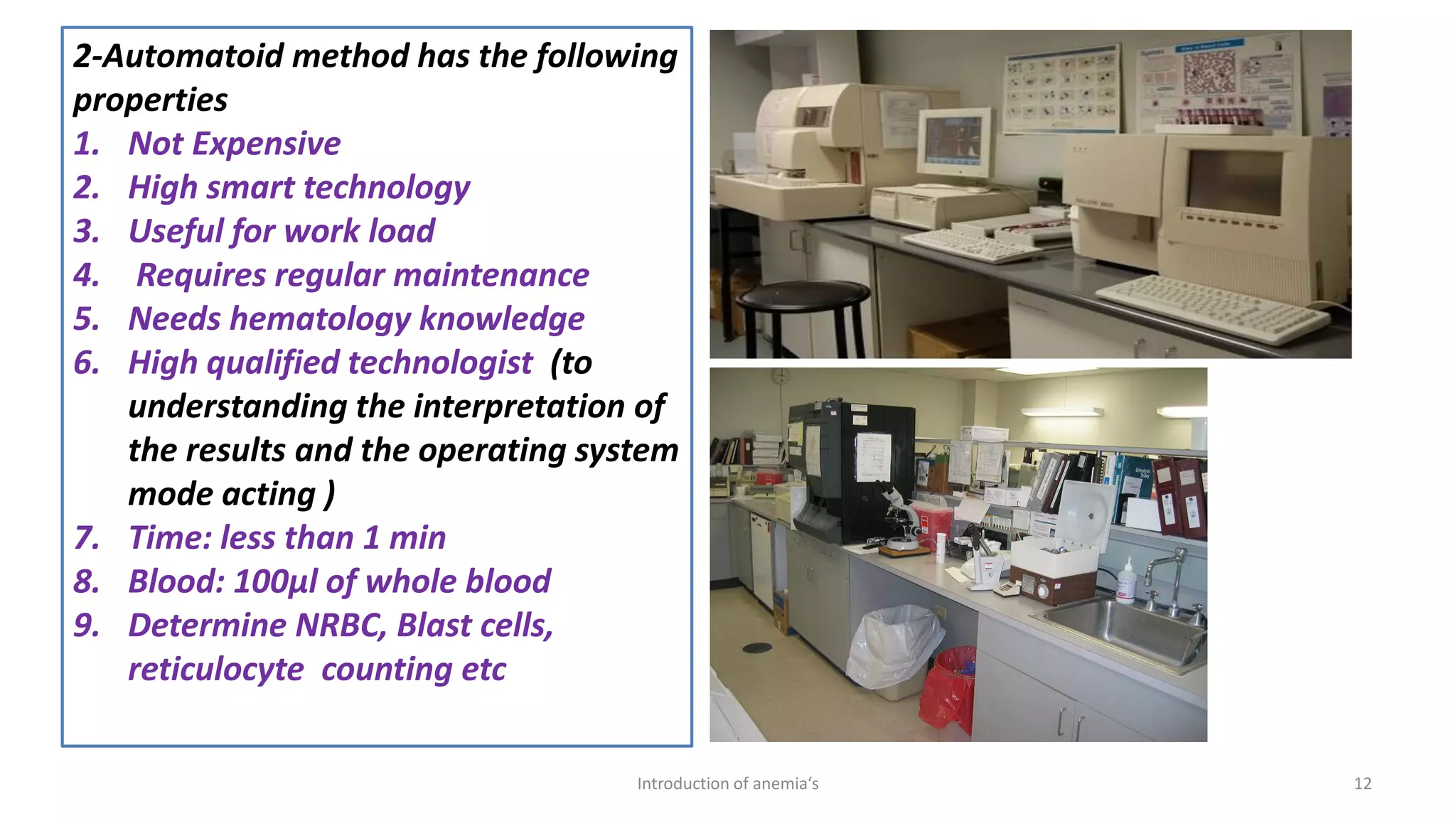
2-Automatoid method has the following
properties
1. Not Expensive
2. High smart technology
3. Useful for work load
4. Requires regular maintenance
5. Needs hematology knowledge
6. High qualified technologist (to
understanding the interpretation of
the results and the operating system
mode acting )
7. Time: less than 1 min
8. Blood: 100μl of whole blood
9. Determine NRBC, Blast cells,
reticulocyte counting etc
12
Introduction of anemia‘s
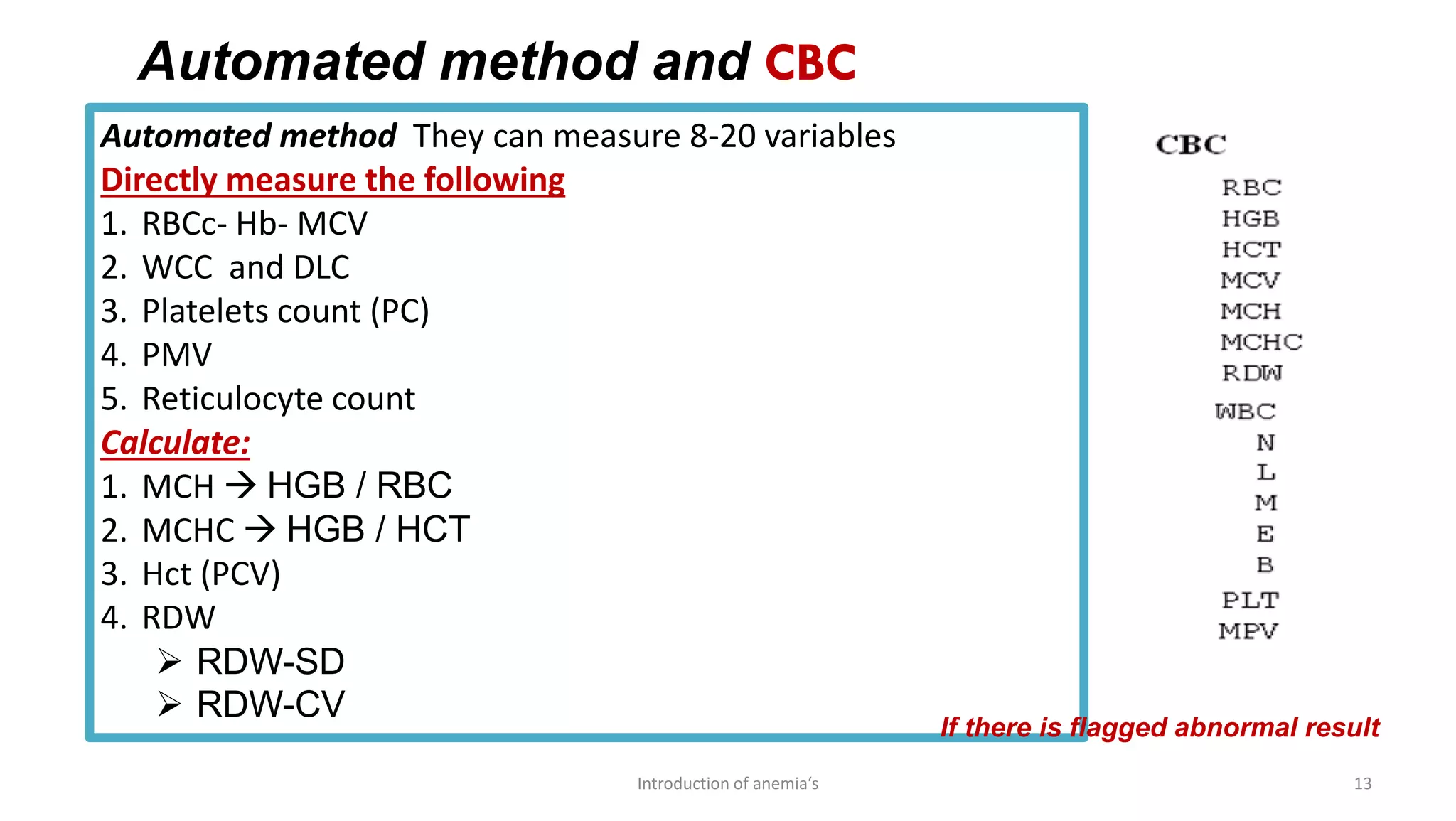
Automated method They can measure 8-20 variables
Directly measure the following
1. RBCc- Hb- MCV
2. WCC and DLC
3. Platelets count (PC)
4. PMV
5. Reticulocyte count
Calculate:
1. MCH → HGB / RBC
2. MCHC → HGB / HCT
3. Hct (PCV)
4. RDW
➢ RDW-SD
➢ RDW-CV
Automated method and CBC
Introduction of anemia‘s 13
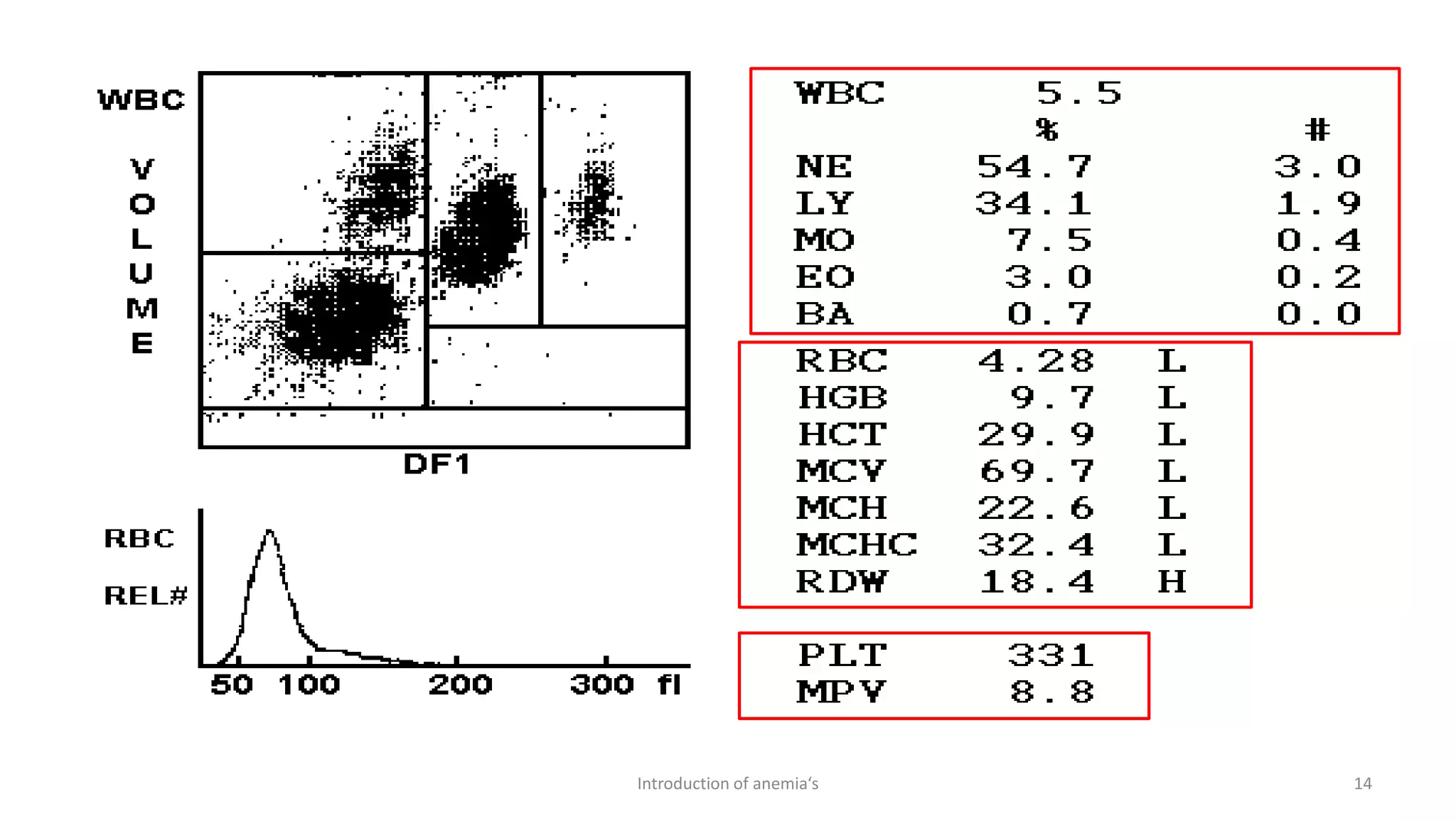
If there is flagged abnormal result
14
Introduction of anemia‘s
15
Introduction of anemia‘s

Introduction of anemias.pdf

  • 1.
    Developed by Dr.Abdulrazzaq OthmanAlagbare MD. Clinical pathologist-Lecturer of hematology Introduction of anemia
  • 2.
    Full blood count(FBC ) or complete blood count (CBC) It is a very common test, used routinely to evaluate the most important substances in human body provide important Information about the blood cells. 1. Most abnormalities in the hematological system and its tests are due to disease in other systems. 2. It is practically impossible to diagnose most disorders that affect the blood without laboratory tests. The FBC done for 1- help in diagnosis 2-follow up of the therapy 2 Introduction of anemia‘s
  • 3.
    1.Production state ofthe blood components. 2.Types of the blood cells in the peripheral blood ❖ Cells counting. ❖ Cells Morphology. ❖ White Cells Percentage % ❖ Cells Content ❖ Normal or abnormal blood Cells or others The main information, that can get from the CBC test are: 3 Introduction of anemia‘s
  • 4.
    Names: Full blood count(FBC) Complete blood count (CBC) Complete blood Picture (CBP) General blood count (GBC) General blood picture (GBP) 4 Introduction of anemia‘s
  • 5.
    Complete Blood Count CBCor Hemogram: one of the most commonly ordered lab tests. It assesses: 1. Red blood cells (RBC) 2. White blood cells (WBC) 3. WBC Differential 4. Platelets (PLT) 5 Introduction of anemia‘s
  • 6.
    Parts of FBC TheFBC or the CBC has three parts to study Erythrocytes 1. Hemoglobin (Hb) 2. Hematocrite (Hct) or PCV 3. RBCc 1.MCV 2.MCH 3.MCHC 4.RDW 1. TLC or WCC 2. DLC % 1. N: 2. L: 3. M: 4. E: 5. B: 6. others Leukocytes Platelets 1. PLT count 2. PLT. MCV 3. PLT. RDW 6 Introduction of anemia‘s
  • 7.
    The blood counttest used to evaluate: 1.Anemia → low RBC count 2.Infection → High WBC 3.Bleeding disorders → low PLT count 4.Blood cancers (leukemia, lymphoma) 5.Metastatic cancer cells count 6.Blood parasites (malaria, etc) 7 Introduction of anemia‘s
  • 8.
    Introduction of anemia‘s8 Erythrocyte indices: Introduction •The study of the electronic parameters is very important and give a available information especially in the nutrients anemia, and we can correlate theirs values with the type of anemia as guide to the final diagnosis =============================== 1. MCV = RBC / HCT - average volume of red blood cells. 2. MCH= HGB / RBC - the average content of hemoglobin in erythrocytes . 3. MCHC= HGB / HCT - the average concentration of hemoglobin in erythrocytes. 4. RDW - Red cell Distribution Width - the distribution width of red blood cells "so-called" red cell anisocytosis "- an indicator of heterogeneity of red blood cells , calculated as the coefficient of variation of the average volume of red blood cells. A. RDW-SD - the relative distribution width of red blood cells by volume, standard deviation . B. RDW-CV - the relative distribution width of red blood cells by volume, coefficient of variation .
  • 9.
    RBC Tests onthe CBC 1. Hb: gives the content of the RBC 2. RBC: Gives the count of the RBC 3. PCV: gives the mathematical relation between the RBC mass and plasma =================================== 1. MCV: gives the average volume of erythrocytes.. 2. MCH : gives the average weight of Hgb per eyrthrocyte. 3. MCHC: gives the average Hgb concentration in all erythrocyte. 4. RDW: give the Hb distribution inside the RBC. ( anoisocytosis) 9 Introduction of anemia‘s
  • 10.
  • 11.
    1-Manual method tech. 1.Needs more blood for test. 2. Long time to carry out. 3. High cost. 4. Not reproducible result. 5. Needs to prepare reagents. 6. To use many instruments. 7. Long time for training Errors in manual method counting 1. RBC and WCC about 15% 2. PLT 20 to 25% Method Advantage → It is a reference method 11 Introduction of anemia‘s Methods study of the CBC
  • 12.
    2-Automatoid method hasthe following properties 1. Not Expensive 2. High smart technology 3. Useful for work load 4. Requires regular maintenance 5. Needs hematology knowledge 6. High qualified technologist (to understanding the interpretation of the results and the operating system mode acting ) 7. Time: less than 1 min 8. Blood: 100μl of whole blood 9. Determine NRBC, Blast cells, reticulocyte counting etc 12 Introduction of anemia‘s
  • 13.
    Automated method Theycan measure 8-20 variables Directly measure the following 1. RBCc- Hb- MCV 2. WCC and DLC 3. Platelets count (PC) 4. PMV 5. Reticulocyte count Calculate: 1. MCH → HGB / RBC 2. MCHC → HGB / HCT 3. Hct (PCV) 4. RDW ➢ RDW-SD ➢ RDW-CV Automated method and CBC Introduction of anemia‘s 13 If there is flagged abnormal result
  • 14.
  • 15.