Dr. Abdulrazzaq Othman Alagbare
MD. Clinical Pathologist – lecturer of haemato-Oncology
Normocytic anemia
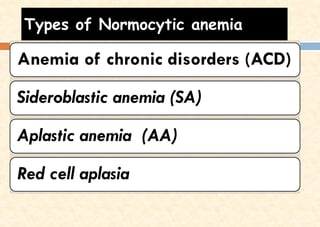
Types of Normocytic anemia
Anemia of chronic disorders (ACD)
Sideroblastic anemia (SA)
Aplastic anemia (AA)
Red cell aplasia
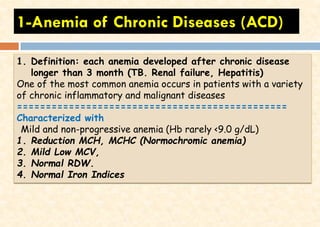
1-Anemia of Chronic Diseases (ACD)
1. Definition: each anemia developed after chronic disease
longer than 3 month (TB. Renal failure, Hepatitis)
One of the most common anemia occurs in patients with a variety
of chronic inflammatory and malignant diseases
===============================================
Characterized with
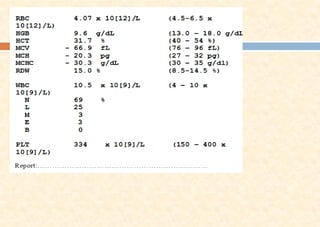
Mild and non-progressive anemia (Hb rarely <9.0 g/dL)
1. Reduction MCH, MCHC (Normochromic anemia)
2. Mild Low MCV,
3. Normal RDW.
4. Normal Iron Indices
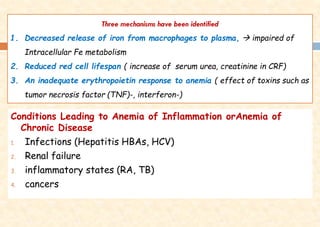
Three mechanisms have been identified
1. Decreased release of iron from macrophages to plasma, → impaired of
Intracellular Fe metabolism
2. Reduced red cell lifespan ( increase of serum urea, creatinine in CRF)
3. An inadequate erythropoietin response to anemia ( effect of toxins such as
tumor necrosis factor (TNF)-, interferon-)
Conditions Leading to Anemia of Inflammation orAnemia of
Chronic Disease
1. Infections (Hepatitis HBAs, HCV)
2. Renal failure
3. inflammatory states (RA, TB)
4. cancers
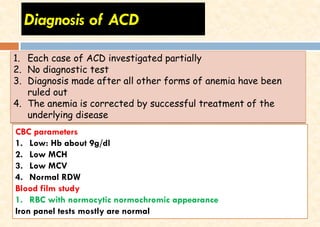
Diagnosis of ACD
1. Each case of ACD investigated partially
2. No diagnostic test
3. Diagnosis made after all other forms of anemia have been
ruled out
4. The anemia is corrected by successful treatment of the
underlying disease
CBC parameters
1. Low: Hb about 9g/dl
2. Low MCH
3. Low MCV
4. Normal RDW
Blood film study
1. RBC with normocytic normochromic appearance
Iron panel tests mostly are normal
ANEMIAS RELATED TO IRON
OVERLOAD CONDITIONS
1-Sideroblastic anemia's (SA)
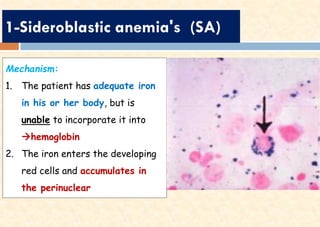
Mechanism:
1. The patient has adequate iron
in his or her body, but is
unable to incorporate it into
→hemoglobin
2. The iron enters the developing
red cells and accumulates in
the perinuclear
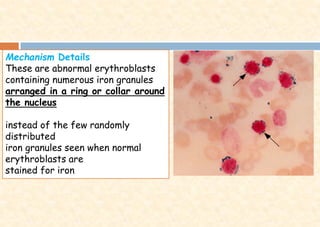
Mechanism Details
These are abnormal erythroblasts
containing numerous iron granules
arranged in a ring or collar around
the nucleus
instead of the few randomly
distributed
iron granules seen when normal
erythroblasts are
stained for iron
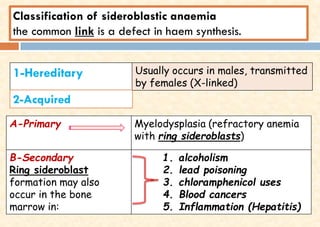
Classification of sideroblastic anaemia
the common link is a defect in haem synthesis.
1-Hereditary Usually occurs in males, transmitted
by females (X-linked)
A-Primary Myelodysplasia (refractory anemia
with ring sideroblasts)
B-Secondary
Ring sideroblast
formation may also
occur in the bone
marrow in:
1. alcoholism
2. lead poisoning
3. chloramphenicol uses
4. Blood cancers
5. Inflammation (Hepatitis)
2-Acquired
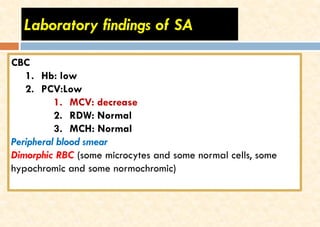
Laboratory findings of SA
CBC
1. Hb: low
2. PCV:Low
1. MCV: decrease
2. RDW: Normal
3. MCH: Normal
Peripheral blood smear
Dimorphic RBC (some microcytes and some normal cells, some
hypochromic and some normochromic)
Iron profile tests
1-S.Ferritine→ Increase
2-Serum TIBC → Increase
3-Serum Iron →Increase
4-Serum saturation: → Increase
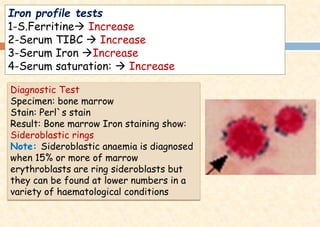
Diagnostic Test
Specimen: bone marrow
Stain: Perl`s stain
Result: Bone marrow Iron staining show:
Sideroblastic rings
Note: Sideroblastic anaemia is diagnosed
when 15% or more of marrow
erythroblasts are ring sideroblasts but
they can be found at lower numbers in a
variety of haematological conditions
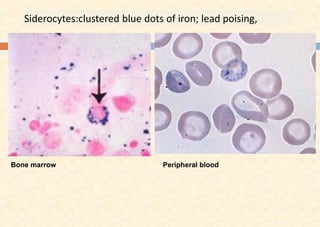
Siderocytes:clustered blue dots of iron; lead poising,
Peripheral blood
Bone marrow
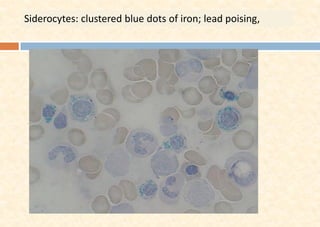
Siderocytes: clustered blue dots of iron; lead poising,
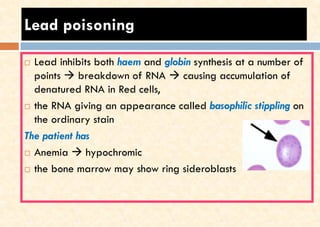
Lead poisoning
 Lead inhibits both haem and globin synthesis at a number of
points → breakdown of RNA → causing accumulation of
denatured RNA in Red cells,
 the RNA giving an appearance called basophilic stippling on
the ordinary stain
The patient has
 Anemia → hypochromic
 the bone marrow may show ring sideroblasts
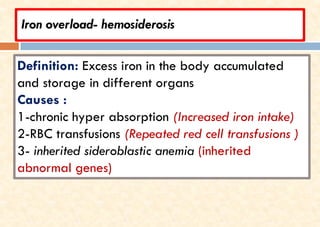
Iron overload- hemosiderosis
Definition: Excess iron in the body accumulated
and storage in different organs
Causes :
1-chronic hyper absorption (Increased iron intake)
2-RBC transfusions (Repeated red cell transfusions )
3- inherited sideroblastic anemia (inherited
abnormal genes)
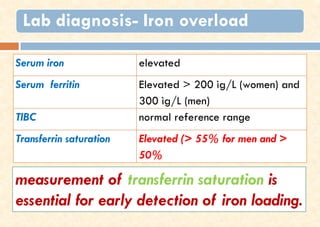
Lab diagnosis- Iron overload
Serum iron elevated
Serum ferritin Elevated > 200 ìg/L (women) and
300 ìg/L (men)
TIBC normal reference range
Transferrin saturation Elevated (> 55% for men and >
50%
measurement of transferrin saturation is
essential for early detection of iron loading.
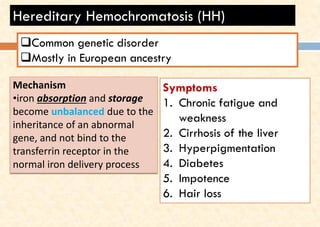
Hereditary Hemochromatosis (HH)
Mechanism
•iron absorption and storage
become unbalanced due to the
inheritance of an abnormal
gene, and not bind to the
transferrin receptor in the
normal iron delivery process
❑Common genetic disorder
❑Mostly in European ancestry
Symptoms
1. Chronic fatigue and
weakness
2. Cirrhosis of the liver
3. Hyperpigmentation
4. Diabetes
5. Impotence
6. Hair loss
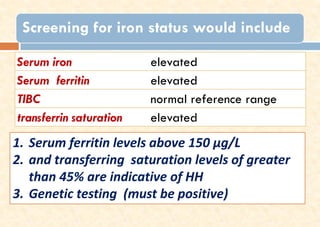
Screening for iron status would include
Serum iron elevated
Serum ferritin elevated
TIBC normal reference range
transferrin saturation elevated
1. Serum ferritin levels above 150 μg/L
2. and transferring saturation levels of greater
than 45% are indicative of HH
3. Genetic testing (must be positive)
Aplastic
anemia
(AA)
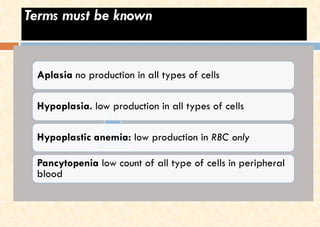
Terms must be known
Aplasia no production in all types of cells
Hypoplasia. low production in all types of cells
Hypoplastic anemia: low production in RBC only
Pancytopenia low count of all type of cells in peripheral
blood
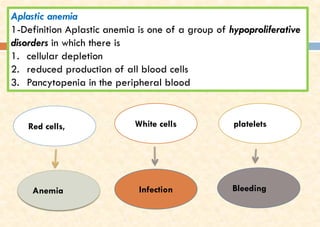
Red cells, White cells platelets
Anemia Infection Bleeding
Aplastic anemia
1-Definition Aplastic anemia is one of a group of hypoproliferative
disorders in which there is
1. cellular depletion
2. reduced production of all blood cells
3. Pancytopenia in the peripheral blood
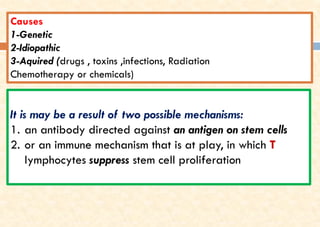
Causes
1-Genetic
2-Idiopathic
3-Aquired (drugs , toxins ,infections, Radiation
Chemotherapy or chemicals)
It is may be a result of two possible mechanisms:
1. an antibody directed against an antigen on stem cells
2. or an immune mechanism that is at play, in which T
lymphocytes suppress stem cell proliferation
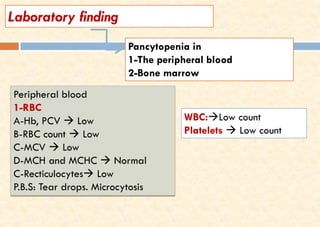
Laboratory finding
Peripheral blood
1-RBC
A-Hb, PCV → Low
B-RBC count → Low
C-MCV → Low
D-MCH and MCHC → Normal
C-Recticulocytes→ Low
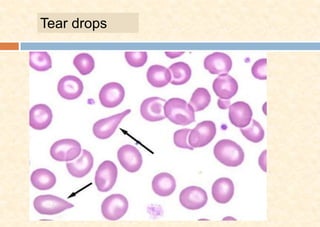
P.B.S: Tear drops. Microcytosis
Pancytopenia in
1-The peripheral blood
2-Bone marrow
WBC:→Low count
Platelets → Low count
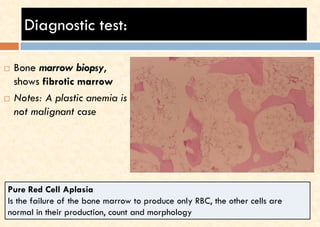
Diagnostic test:
 Bone marrow biopsy,
shows fibrotic marrow
 Notes: A plastic anemia is
not malignant case
Pure Red Cell Aplasia
Is the failure of the bone marrow to produce only RBC, the other cells are
normal in their production, count and morphology
Tear drops
END OF THE
LESSON
Thank You
ANY
QUESTION?

Normocytic Anemias.pdf

  • 1.
    Dr. Abdulrazzaq OthmanAlagbare MD. Clinical Pathologist – lecturer of haemato-Oncology Normocytic anemia
  • 2.
    Types of Normocyticanemia Anemia of chronic disorders (ACD) Sideroblastic anemia (SA) Aplastic anemia (AA) Red cell aplasia
  • 3.
    1-Anemia of ChronicDiseases (ACD) 1. Definition: each anemia developed after chronic disease longer than 3 month (TB. Renal failure, Hepatitis) One of the most common anemia occurs in patients with a variety of chronic inflammatory and malignant diseases =============================================== Characterized with Mild and non-progressive anemia (Hb rarely <9.0 g/dL) 1. Reduction MCH, MCHC (Normochromic anemia) 2. Mild Low MCV, 3. Normal RDW. 4. Normal Iron Indices
  • 4.
    Three mechanisms havebeen identified 1. Decreased release of iron from macrophages to plasma, → impaired of Intracellular Fe metabolism 2. Reduced red cell lifespan ( increase of serum urea, creatinine in CRF) 3. An inadequate erythropoietin response to anemia ( effect of toxins such as tumor necrosis factor (TNF)-, interferon-) Conditions Leading to Anemia of Inflammation orAnemia of Chronic Disease 1. Infections (Hepatitis HBAs, HCV) 2. Renal failure 3. inflammatory states (RA, TB) 4. cancers
  • 5.
    Diagnosis of ACD 1.Each case of ACD investigated partially 2. No diagnostic test 3. Diagnosis made after all other forms of anemia have been ruled out 4. The anemia is corrected by successful treatment of the underlying disease CBC parameters 1. Low: Hb about 9g/dl 2. Low MCH 3. Low MCV 4. Normal RDW Blood film study 1. RBC with normocytic normochromic appearance Iron panel tests mostly are normal
  • 7.
    ANEMIAS RELATED TOIRON OVERLOAD CONDITIONS 1-Sideroblastic anemia's (SA)
  • 8.
    1-Sideroblastic anemia's (SA) Mechanism: 1.The patient has adequate iron in his or her body, but is unable to incorporate it into →hemoglobin 2. The iron enters the developing red cells and accumulates in the perinuclear
  • 9.
    Mechanism Details These areabnormal erythroblasts containing numerous iron granules arranged in a ring or collar around the nucleus instead of the few randomly distributed iron granules seen when normal erythroblasts are stained for iron
  • 10.
    Classification of sideroblasticanaemia the common link is a defect in haem synthesis. 1-Hereditary Usually occurs in males, transmitted by females (X-linked) A-Primary Myelodysplasia (refractory anemia with ring sideroblasts) B-Secondary Ring sideroblast formation may also occur in the bone marrow in: 1. alcoholism 2. lead poisoning 3. chloramphenicol uses 4. Blood cancers 5. Inflammation (Hepatitis) 2-Acquired
  • 11.
    Laboratory findings ofSA CBC 1. Hb: low 2. PCV:Low 1. MCV: decrease 2. RDW: Normal 3. MCH: Normal Peripheral blood smear Dimorphic RBC (some microcytes and some normal cells, some hypochromic and some normochromic)
  • 12.
    Iron profile tests 1-S.Ferritine→Increase 2-Serum TIBC → Increase 3-Serum Iron →Increase 4-Serum saturation: → Increase Diagnostic Test Specimen: bone marrow Stain: Perl`s stain Result: Bone marrow Iron staining show: Sideroblastic rings Note: Sideroblastic anaemia is diagnosed when 15% or more of marrow erythroblasts are ring sideroblasts but they can be found at lower numbers in a variety of haematological conditions
  • 13.
    Siderocytes:clustered blue dotsof iron; lead poising, Peripheral blood Bone marrow
  • 14.
    Siderocytes: clustered bluedots of iron; lead poising,
  • 15.
    Lead poisoning  Leadinhibits both haem and globin synthesis at a number of points → breakdown of RNA → causing accumulation of denatured RNA in Red cells,  the RNA giving an appearance called basophilic stippling on the ordinary stain The patient has  Anemia → hypochromic  the bone marrow may show ring sideroblasts
  • 16.
    Iron overload- hemosiderosis Definition:Excess iron in the body accumulated and storage in different organs Causes : 1-chronic hyper absorption (Increased iron intake) 2-RBC transfusions (Repeated red cell transfusions ) 3- inherited sideroblastic anemia (inherited abnormal genes)
  • 17.
    Lab diagnosis- Ironoverload Serum iron elevated Serum ferritin Elevated > 200 ìg/L (women) and 300 ìg/L (men) TIBC normal reference range Transferrin saturation Elevated (> 55% for men and > 50% measurement of transferrin saturation is essential for early detection of iron loading.
  • 18.
    Hereditary Hemochromatosis (HH) Mechanism •ironabsorption and storage become unbalanced due to the inheritance of an abnormal gene, and not bind to the transferrin receptor in the normal iron delivery process ❑Common genetic disorder ❑Mostly in European ancestry Symptoms 1. Chronic fatigue and weakness 2. Cirrhosis of the liver 3. Hyperpigmentation 4. Diabetes 5. Impotence 6. Hair loss
  • 19.
    Screening for ironstatus would include Serum iron elevated Serum ferritin elevated TIBC normal reference range transferrin saturation elevated 1. Serum ferritin levels above 150 μg/L 2. and transferring saturation levels of greater than 45% are indicative of HH 3. Genetic testing (must be positive)
  • 20.
  • 21.
    Terms must beknown Aplasia no production in all types of cells Hypoplasia. low production in all types of cells Hypoplastic anemia: low production in RBC only Pancytopenia low count of all type of cells in peripheral blood
  • 22.
    Red cells, Whitecells platelets Anemia Infection Bleeding Aplastic anemia 1-Definition Aplastic anemia is one of a group of hypoproliferative disorders in which there is 1. cellular depletion 2. reduced production of all blood cells 3. Pancytopenia in the peripheral blood
  • 23.
    Causes 1-Genetic 2-Idiopathic 3-Aquired (drugs ,toxins ,infections, Radiation Chemotherapy or chemicals) It is may be a result of two possible mechanisms: 1. an antibody directed against an antigen on stem cells 2. or an immune mechanism that is at play, in which T lymphocytes suppress stem cell proliferation
  • 24.
    Laboratory finding Peripheral blood 1-RBC A-Hb,PCV → Low B-RBC count → Low C-MCV → Low D-MCH and MCHC → Normal C-Recticulocytes→ Low P.B.S: Tear drops. Microcytosis Pancytopenia in 1-The peripheral blood 2-Bone marrow WBC:→Low count Platelets → Low count
  • 25.
    Diagnostic test:  Bonemarrow biopsy, shows fibrotic marrow  Notes: A plastic anemia is not malignant case Pure Red Cell Aplasia Is the failure of the bone marrow to produce only RBC, the other cells are normal in their production, count and morphology
  • 26.
  • 27.
    END OF THE LESSON ThankYou ANY QUESTION?