Dr B T Sampath Kumar
Professor
Department of Library and Information Science
Tumkur University, Tumakuru, INDIA
www.sampathkumar.info
Network Topology
Network topology
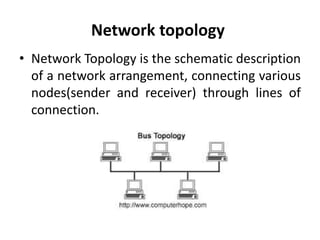
• Network Topology is the schematic description
of a network arrangement, connecting various
nodes(sender and receiver) through lines of
connection.
Types of topologies
• Star topology
• Bus topology
• Ring topology
• Tree topology
• Mesh topology
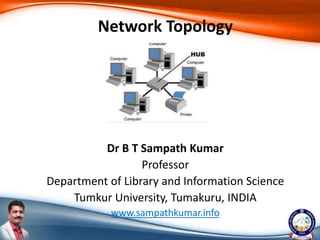
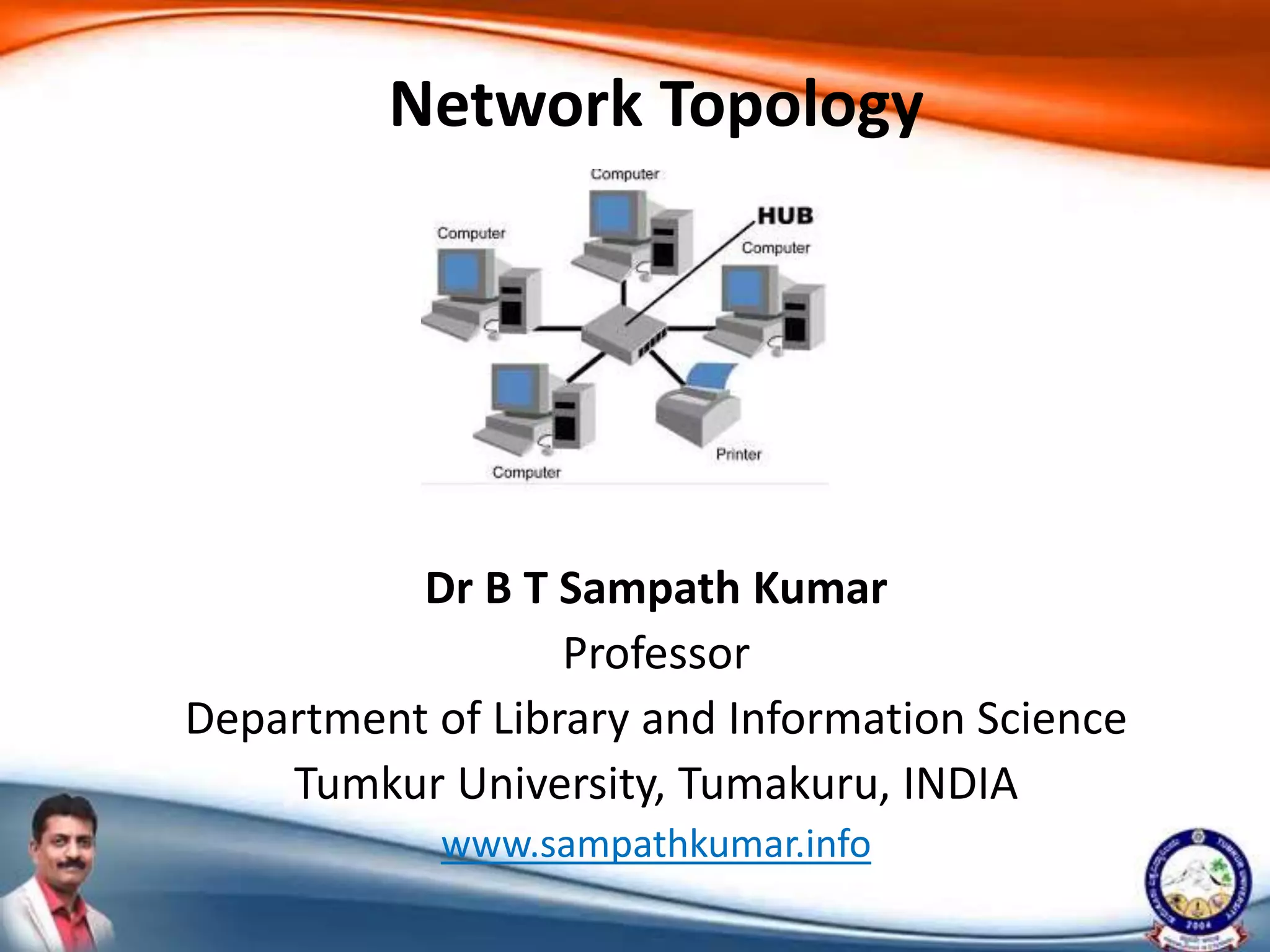
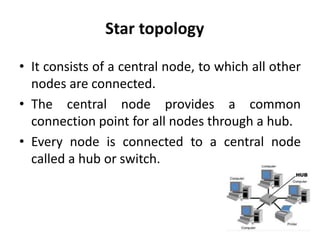
Star topology
• It consists of a central node, to which all other
nodes are connected.
• The central node provides a common
connection point for all nodes through a hub.
• Every node is connected to a central node
called a hub or switch.
Advantages and disadvantages
Advantages
• Good performance.
• Easy to set up and to expand.
• Any non-centralized failure will have very little
effect on the network.
Disadvantages
• All nodes are connected to main computer.
• Expensive to install.
• Extra hardware is required.
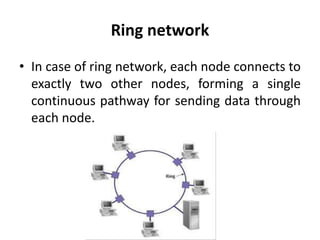
Ring network
• In case of ring network, each node connects to
exactly two other nodes, forming a single
continuous pathway for sending data through
each node.
Advantages
• Very orderly network where every device has
been connected.
• Performs better than a bus topology under
heavy network load.
• Does not require a central node to manage
the connectivity between the computers.
Disadvantages
• Data packets must pass through every
computer between the sender and recipient
therefore this makes it slower.
• If any of the nodes fail then the ring is broken
and data cannot be transmitted successfully.
• It is difficult to troubleshoot the ring.
• Troubleshooting is a form of problem solving,
often applied to repair failed products or
processes.
Bus network
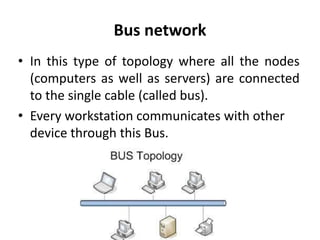
• In this type of topology where all the nodes
(computers as well as servers) are connected
to the single cable (called bus).
• Every workstation communicates with other
device through this Bus.
Advantages
• Easy to implement and extend.
• Cable length required for this topology is the
least compared to other networks.
Disadvantages
• If the main cable (i.e. bus ) encounters any
problem, then the whole network breaks down.
• It is difficult to detect and troubleshoot fault(s)
at individual station.
Tree topology
• In this topology two or more hubs and/or
computers are connected to one another in a
succession of levels.
•
Advantages
• It is an extension of Star and bus Topologies.
• Expansion of Network is possible and easy.
• The whole network has been divided into
segments, which can be easily managed and
maintained.
• If one segment is damaged, other segments
are not affected.
Disadvantages
• As more and more nodes and segments are
added, the maintenance becomes difficult.
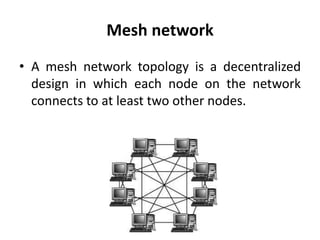
Mesh network
• A mesh network topology is a decentralized
design in which each node on the network
connects to at least two other nodes.
Advantages
• Data can be transmitted from different devices
simultaneously.
• This topology can withstand high traffic.
• Even if one of the components fails there is
always an alternative present. So data transfer
doesn’t get affected.
• Expansion and modification can be done
without disrupting other nodes.
Disadvantages
• Set-up and maintenance of this topology is
very difficult.
• Even administration of the network is tough.

Network topology

  • 1.
    Dr B TSampath Kumar Professor Department of Library and Information Science Tumkur University, Tumakuru, INDIA www.sampathkumar.info Network Topology
  • 2.
    Network topology • NetworkTopology is the schematic description of a network arrangement, connecting various nodes(sender and receiver) through lines of connection.
  • 3.
    Types of topologies •Star topology • Bus topology • Ring topology • Tree topology • Mesh topology
  • 4.
    Star topology • Itconsists of a central node, to which all other nodes are connected. • The central node provides a common connection point for all nodes through a hub. • Every node is connected to a central node called a hub or switch.
  • 5.
    Advantages and disadvantages Advantages •Good performance. • Easy to set up and to expand. • Any non-centralized failure will have very little effect on the network. Disadvantages • All nodes are connected to main computer. • Expensive to install. • Extra hardware is required.
  • 6.
    Ring network • Incase of ring network, each node connects to exactly two other nodes, forming a single continuous pathway for sending data through each node.
  • 7.
    Advantages • Very orderlynetwork where every device has been connected. • Performs better than a bus topology under heavy network load. • Does not require a central node to manage the connectivity between the computers.
  • 8.
    Disadvantages • Data packetsmust pass through every computer between the sender and recipient therefore this makes it slower. • If any of the nodes fail then the ring is broken and data cannot be transmitted successfully. • It is difficult to troubleshoot the ring. • Troubleshooting is a form of problem solving, often applied to repair failed products or processes.
  • 9.
    Bus network • Inthis type of topology where all the nodes (computers as well as servers) are connected to the single cable (called bus). • Every workstation communicates with other device through this Bus.
  • 10.
    Advantages • Easy toimplement and extend. • Cable length required for this topology is the least compared to other networks.
  • 11.
    Disadvantages • If themain cable (i.e. bus ) encounters any problem, then the whole network breaks down. • It is difficult to detect and troubleshoot fault(s) at individual station.
  • 12.
    Tree topology • Inthis topology two or more hubs and/or computers are connected to one another in a succession of levels. •
  • 13.
    Advantages • It isan extension of Star and bus Topologies. • Expansion of Network is possible and easy. • The whole network has been divided into segments, which can be easily managed and maintained. • If one segment is damaged, other segments are not affected.
  • 14.
    Disadvantages • As moreand more nodes and segments are added, the maintenance becomes difficult.
  • 15.
    Mesh network • Amesh network topology is a decentralized design in which each node on the network connects to at least two other nodes.
  • 16.
    Advantages • Data canbe transmitted from different devices simultaneously. • This topology can withstand high traffic. • Even if one of the components fails there is always an alternative present. So data transfer doesn’t get affected. • Expansion and modification can be done without disrupting other nodes.
  • 17.
    Disadvantages • Set-up andmaintenance of this topology is very difficult. • Even administration of the network is tough.