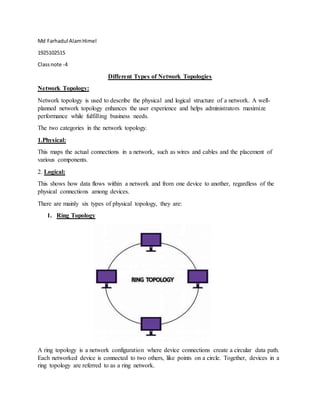
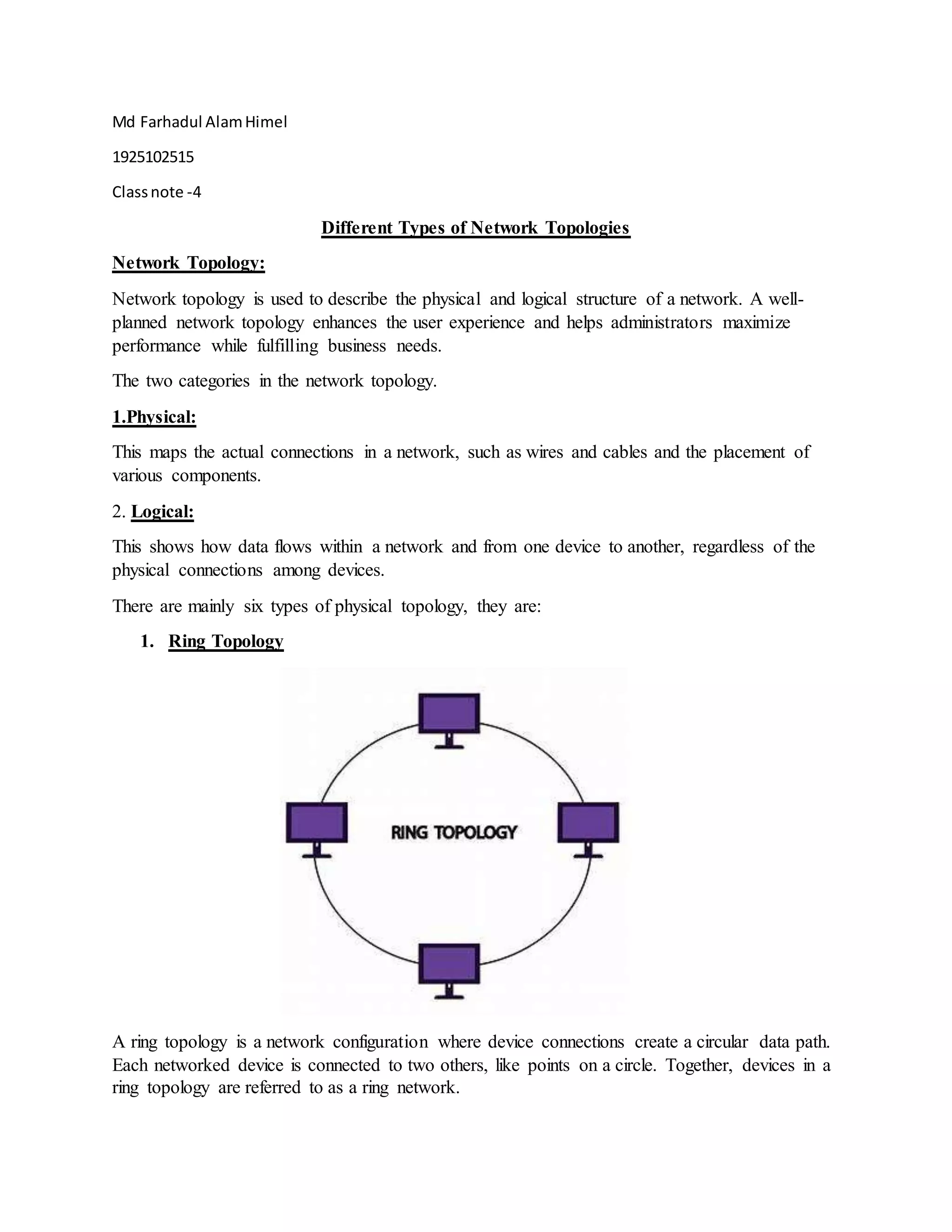
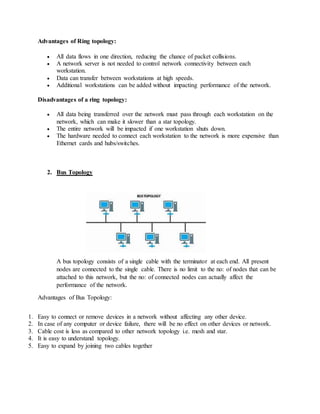
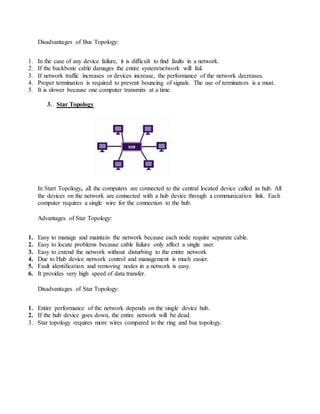
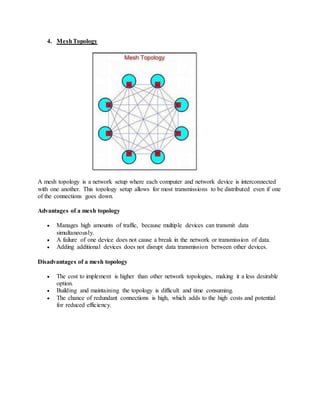
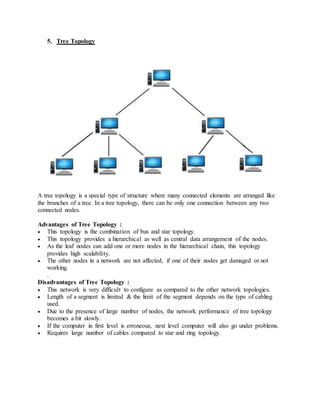
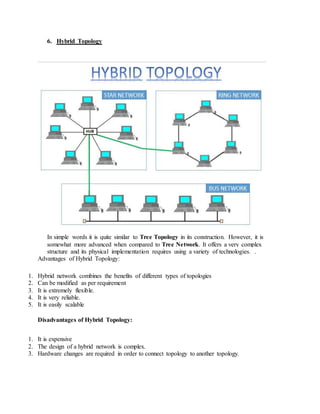
This document discusses different types of network topologies, including physical topologies like ring, bus, star, mesh, tree, and hybrid, as well as logical topologies. For each physical topology, the key advantages and disadvantages are outlined. A ring topology forms a circular data path between devices, while a bus topology uses a single backbone cable. A star topology connects all devices to a central hub. A mesh topology interconnects all devices, providing redundancy. A tree topology arranges devices hierarchically like branches. A hybrid topology combines benefits of different topologies but with increased complexity.