There are two main types of computer network architectures: peer-to-peer and client/server. Peer-to-peer networks connect computers of equal status without a central server, making them useful for small networks but less secure. Client/server networks have a central server that manages resources and authorization for client computers, providing better security, performance, and backup but at a higher cost than peer-to-peer.
• Computer NetworkArchitecture is defined as the
physical and logical design of the software,
hardware, protocols, and media of the
transmission of data.
• Simply we can say that how computers are
organized and how tasks are allocated to the
computer. The two types of network
architectures are used:
The two types of Network Architectures are used:
• Peer-To-Peer network
• Client/Server network
3.
Peer-To-Peer network
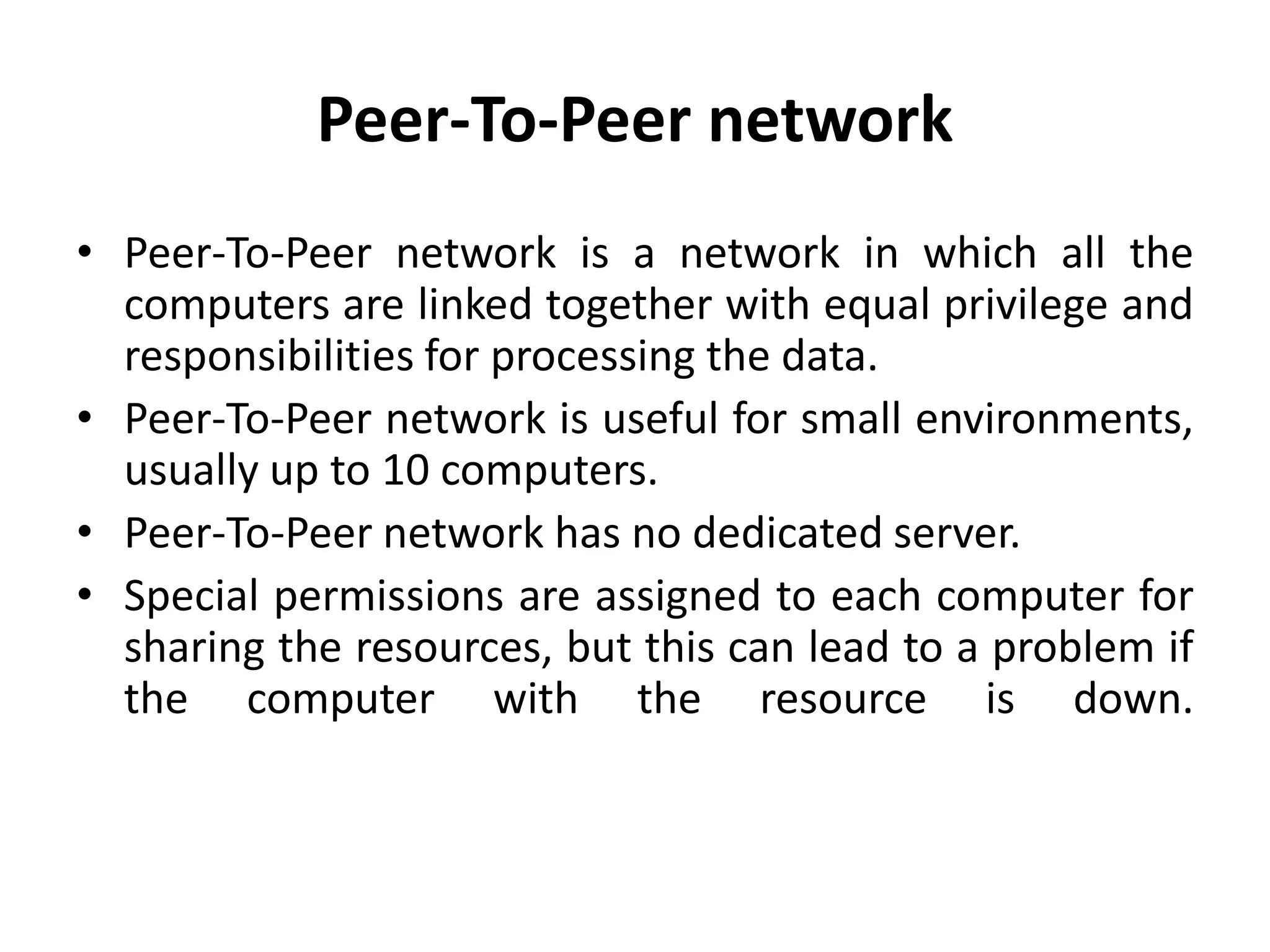
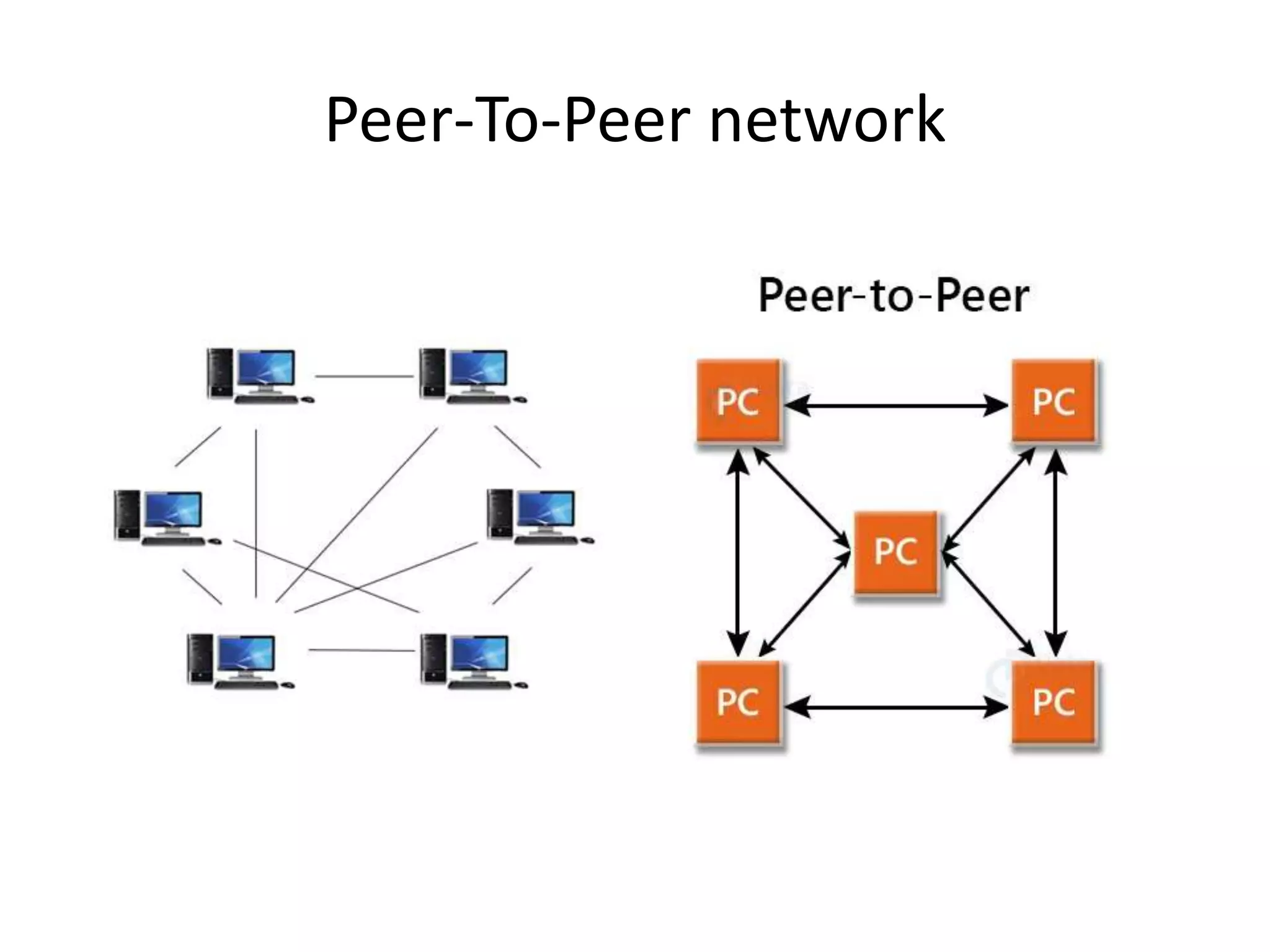
• Peer-To-Peernetwork is a network in which all the
computers are linked together with equal privilege and
responsibilities for processing the data.
• Peer-To-Peer network is useful for small environments,
usually up to 10 computers.
• Peer-To-Peer network has no dedicated server.
• Special permissions are assigned to each computer for
sharing the resources, but this can lead to a problem if
the computer with the resource is down.
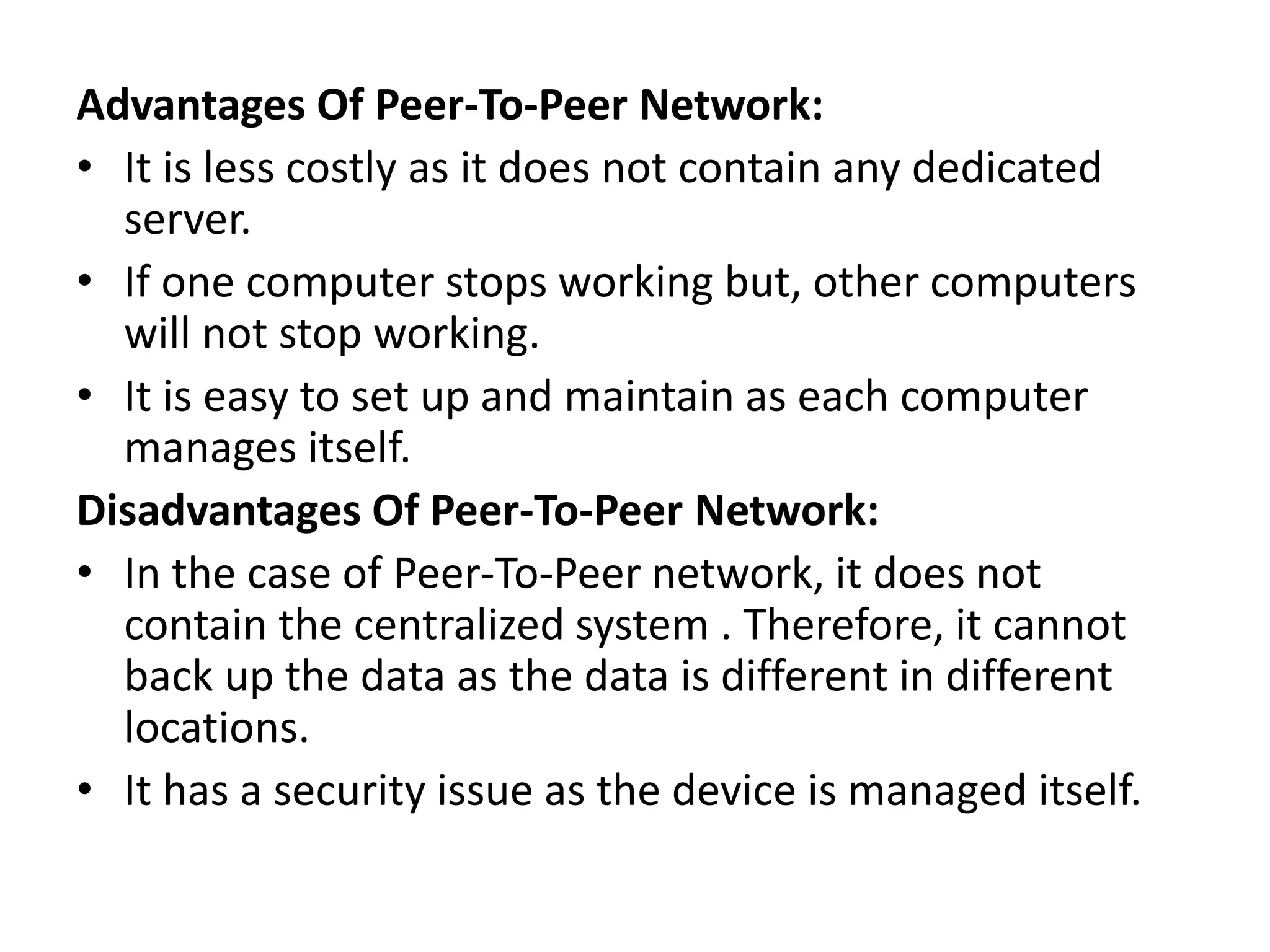
Advantages Of Peer-To-PeerNetwork:
• It is less costly as it does not contain any dedicated
server.
• If one computer stops working but, other computers
will not stop working.
• It is easy to set up and maintain as each computer
manages itself.
Disadvantages Of Peer-To-Peer Network:
• In the case of Peer-To-Peer network, it does not
contain the centralized system . Therefore, it cannot
back up the data as the data is different in different
locations.
• It has a security issue as the device is managed itself.
6.
Client/Server Network
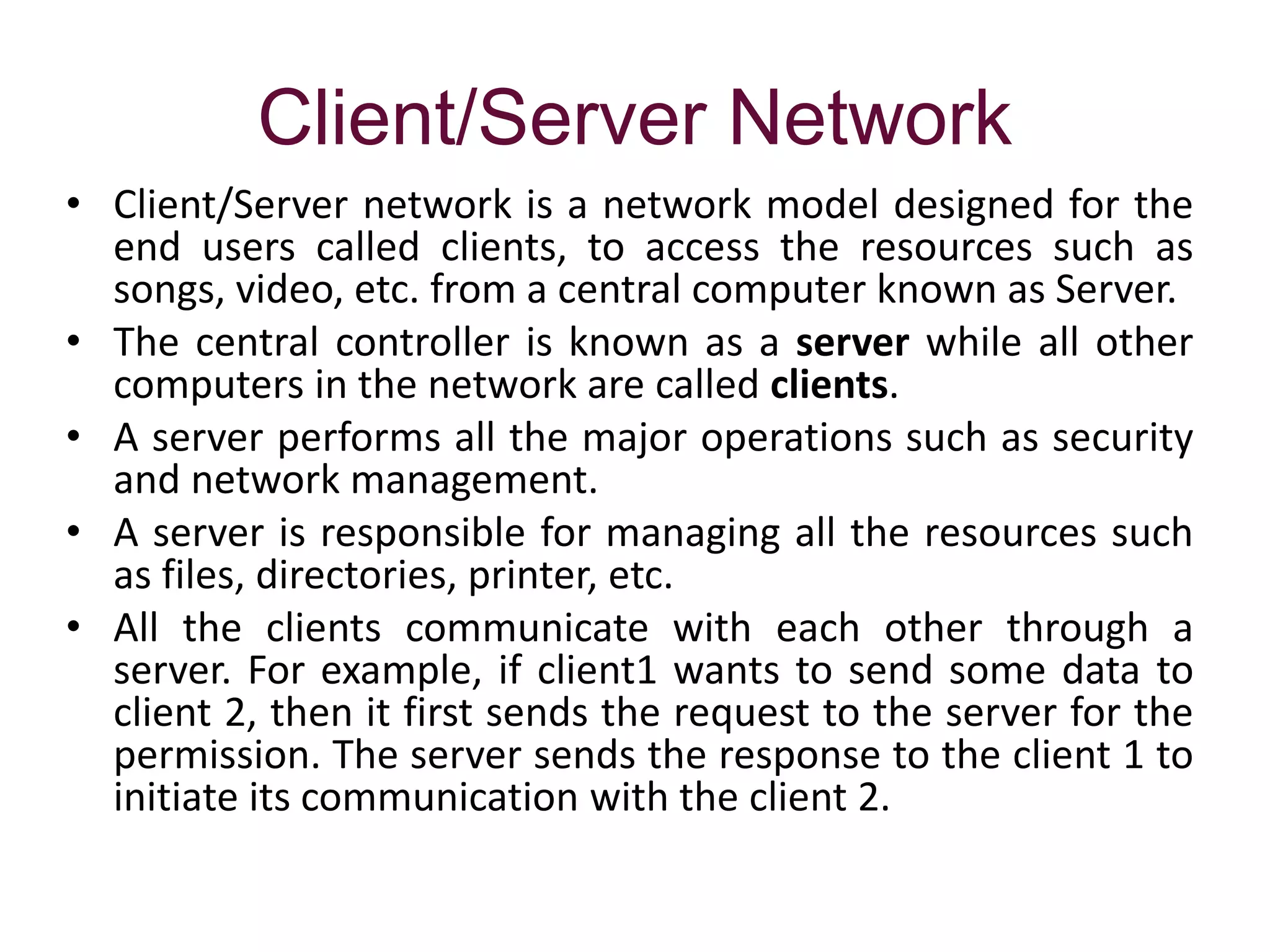
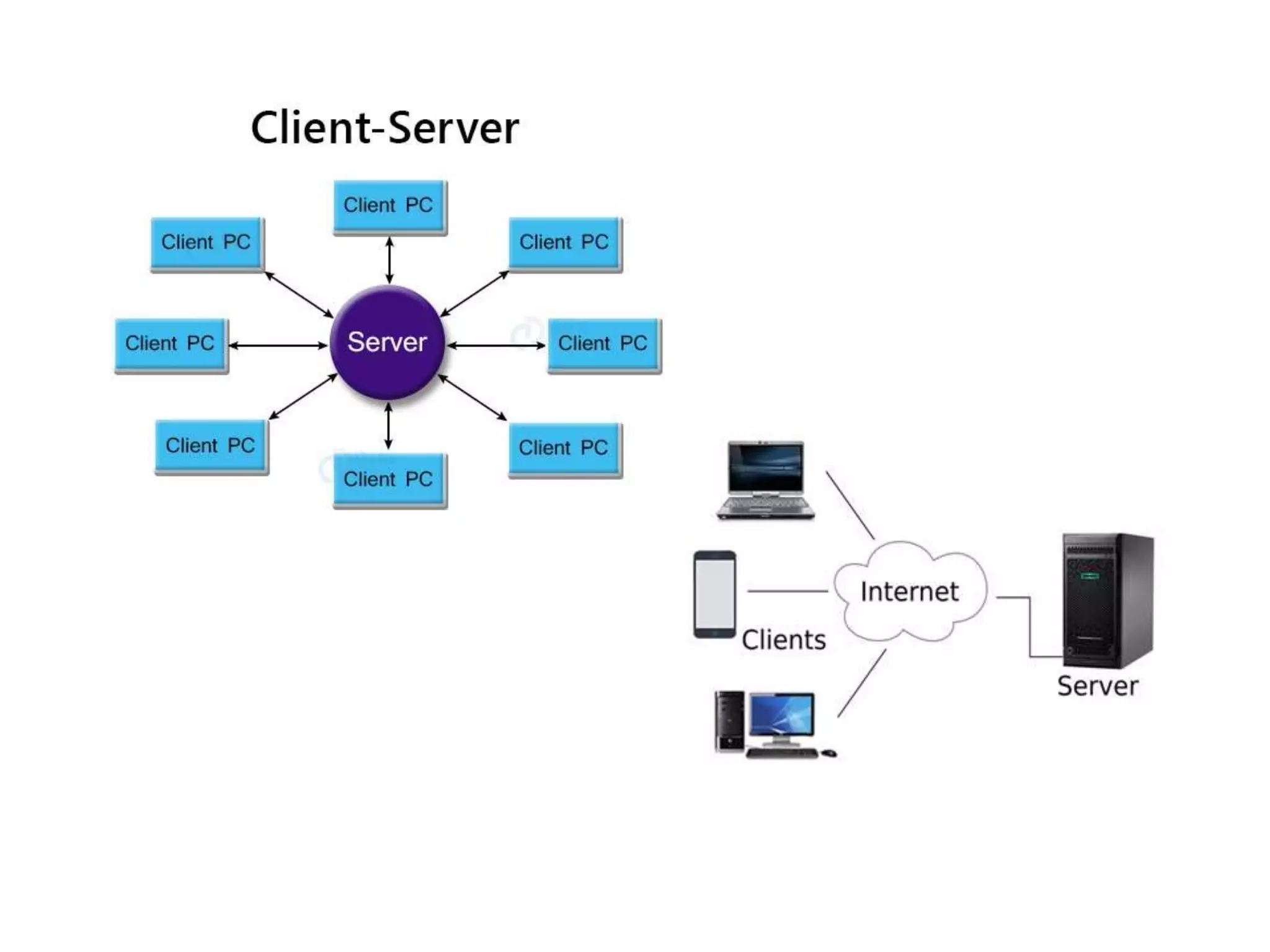
• Client/Servernetwork is a network model designed for the
end users called clients, to access the resources such as
songs, video, etc. from a central computer known as Server.
• The central controller is known as a server while all other
computers in the network are called clients.
• A server performs all the major operations such as security
and network management.
• A server is responsible for managing all the resources such
as files, directories, printer, etc.
• All the clients communicate with each other through a
server. For example, if client1 wants to send some data to
client 2, then it first sends the request to the server for the
permission. The server sends the response to the client 1 to
initiate its communication with the client 2.
8.
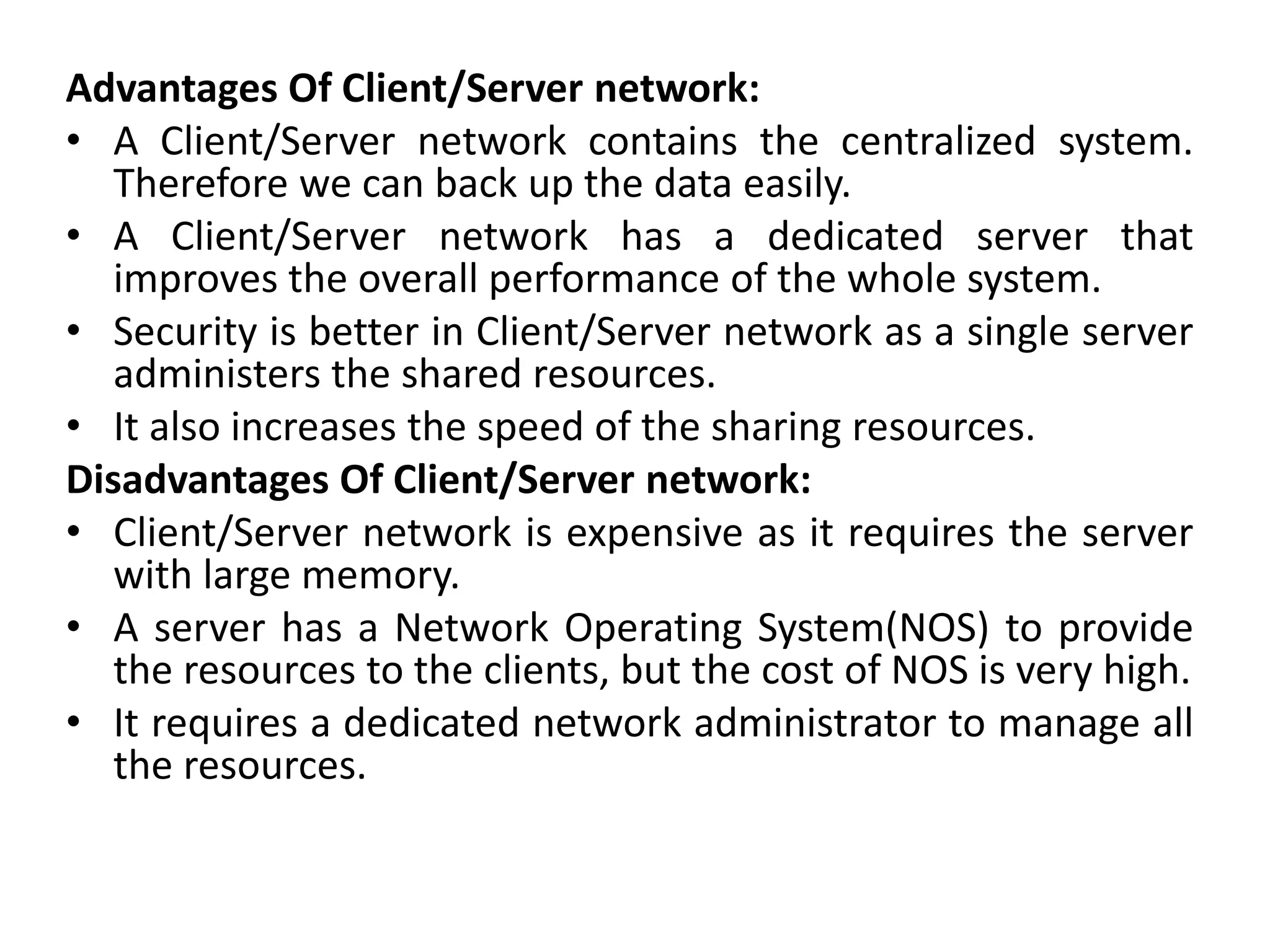
Advantages Of Client/Servernetwork:
• A Client/Server network contains the centralized system.
Therefore we can back up the data easily.
• A Client/Server network has a dedicated server that
improves the overall performance of the whole system.
• Security is better in Client/Server network as a single server
administers the shared resources.
• It also increases the speed of the sharing resources.
Disadvantages Of Client/Server network:
• Client/Server network is expensive as it requires the server
with large memory.
• A server has a Network Operating System(NOS) to provide
the resources to the clients, but the cost of NOS is very high.
• It requires a dedicated network administrator to manage all
the resources.