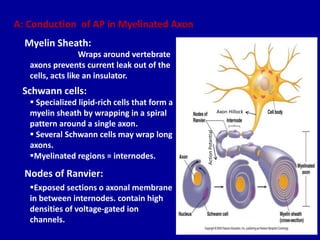
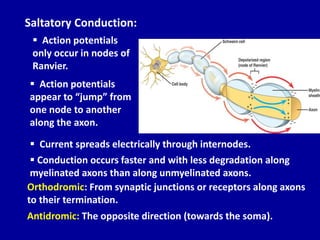
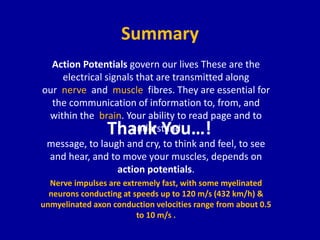
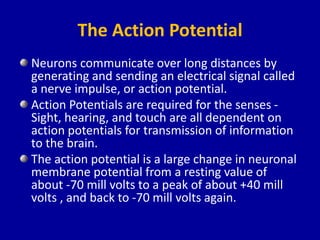
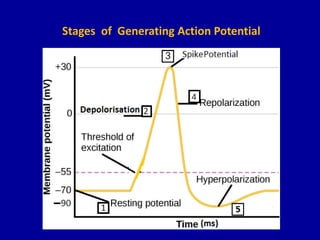
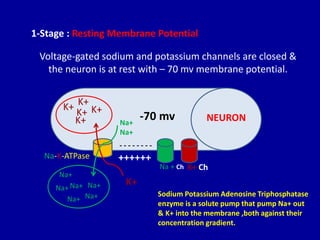
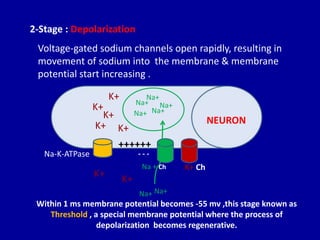
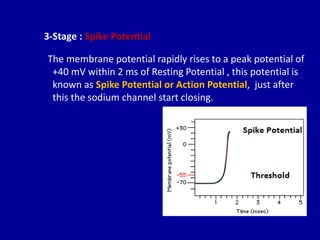
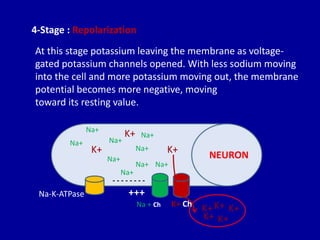
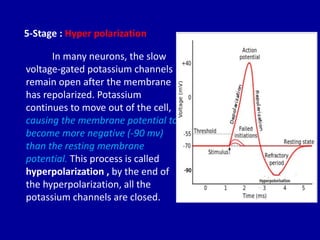
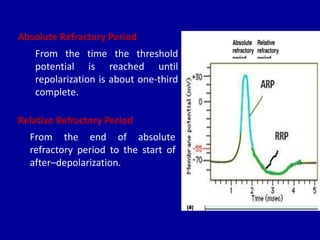
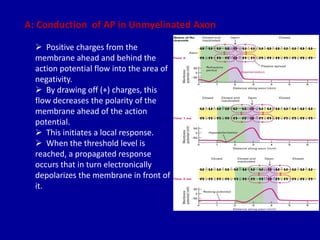
Action potentials are electrical signals that neurons use to communicate over long distances, essential for sensory information transmission to the brain. The process involves several stages: resting potential, depolarization, spike potential, repolarization, and hyperpolarization, influenced by sodium and potassium ion movements through voltage-gated channels. Action potentials propagate in an 'all-or-none' manner, and myelinated axons conduct these signals faster due to saltatory conduction, highlighting their crucial role in nerve and muscle function.

 Most read
 Most read

 Most read