Vijaylaxmi Pattanshetti
Nissl bodies
 .
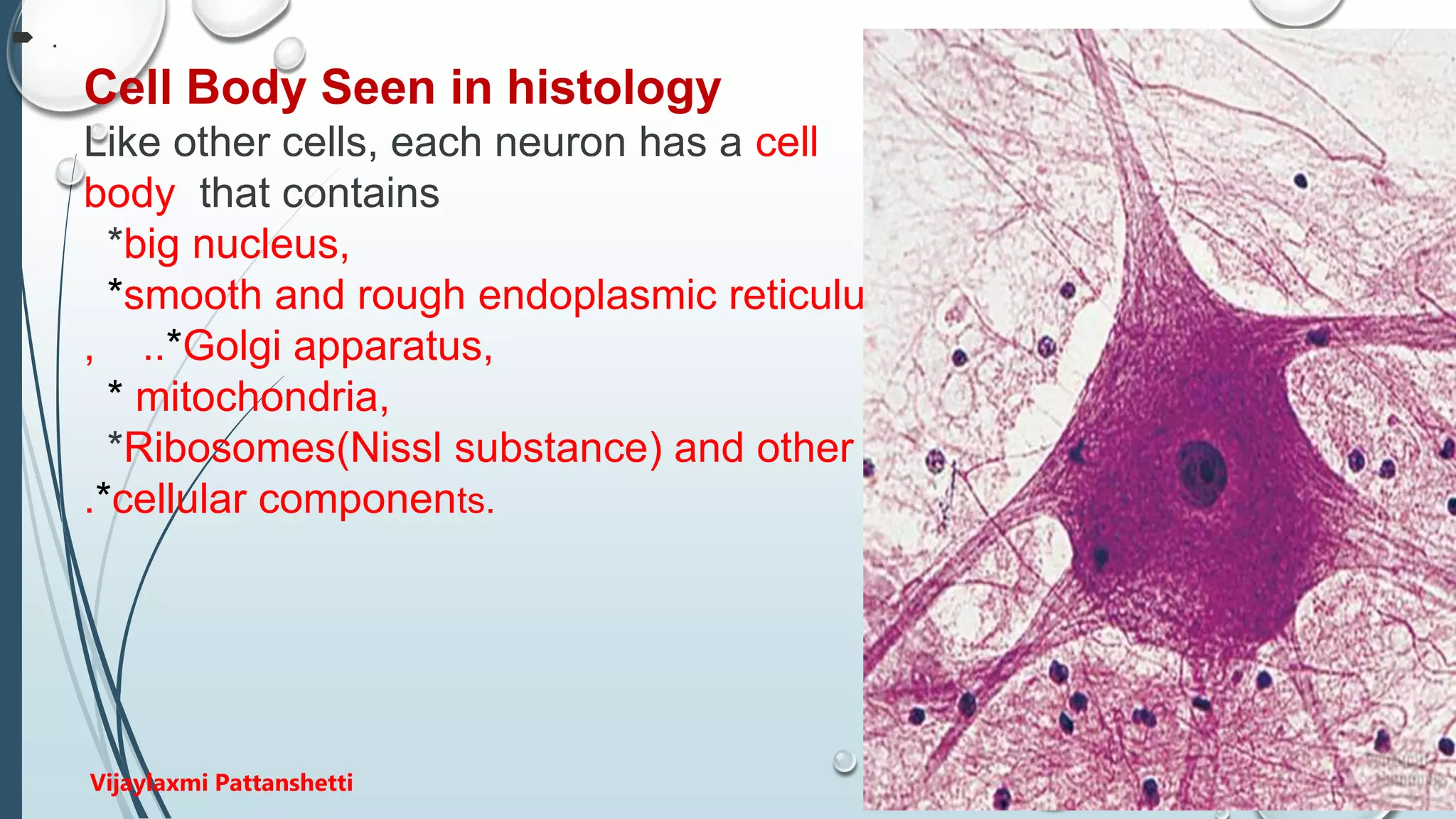
Cell Body Seen in histology
Like other cells, each neuron has a cell
body that contains
*big nucleus,
*smooth and rough endoplasmic reticulum
, ..*Golgi apparatus,
* mitochondria,
*Ribosomes(Nissl substance) and other .
.*cellular components.
Vijaylaxmi Pattanshetti
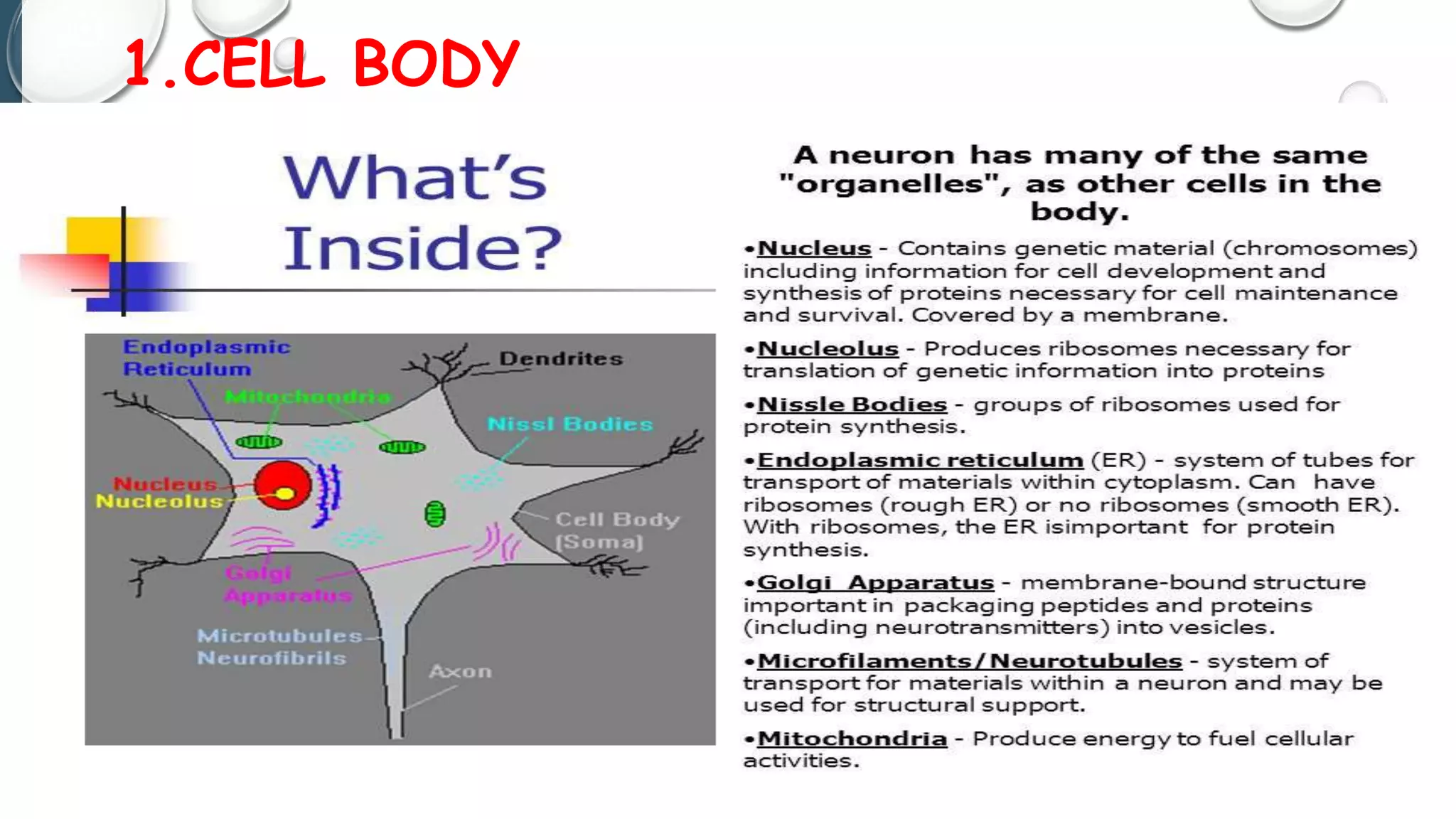
1.CELL BODY
Vijaylaxmi Pattanshetti
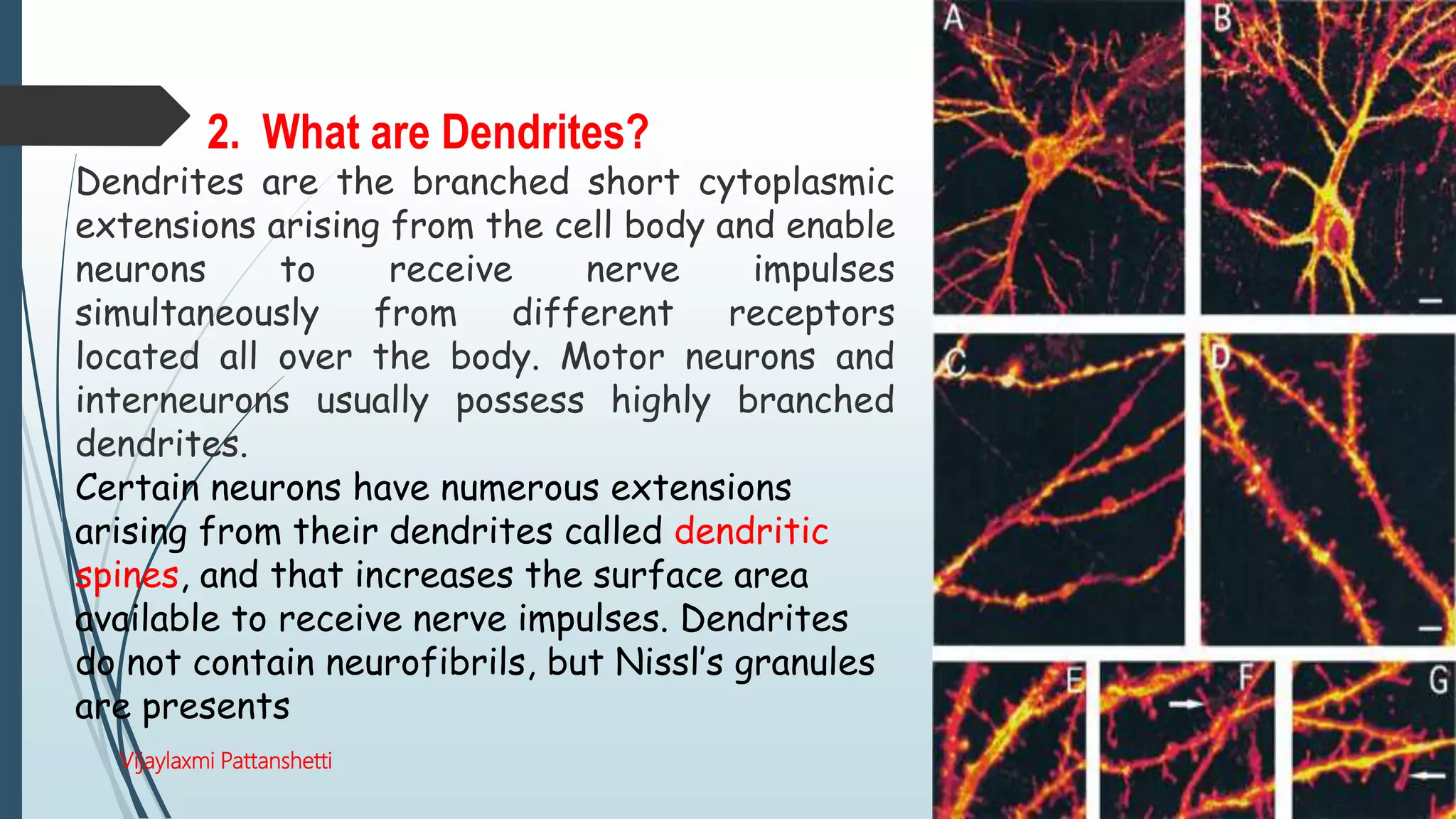
2. What are Dendrites?
Dendrites are the branched short cytoplasmic
extensions arising from the cell body and enable
neurons to receive nerve impulses
simultaneously from different receptors
located all over the body. Motor neurons and
interneurons usually possess highly branched
dendrites.
Certain neurons have numerous extensions
arising from their dendrites called dendritic
spines, and that increases the surface area
available to receive nerve impulses. Dendrites
do not contain neurofibrils, but Nissl’s granules
are presents
Vijaylaxmi Pattanshetti
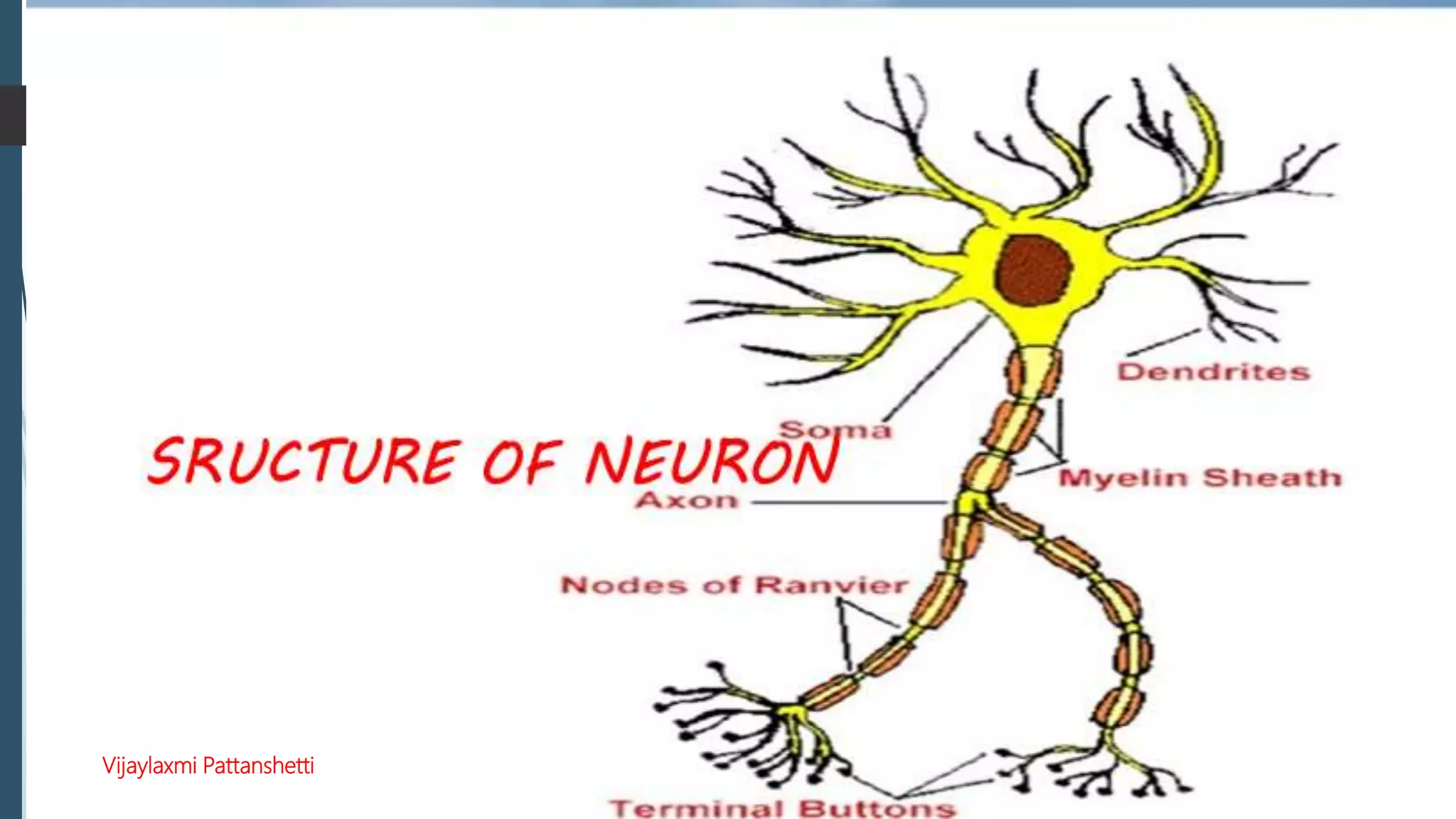
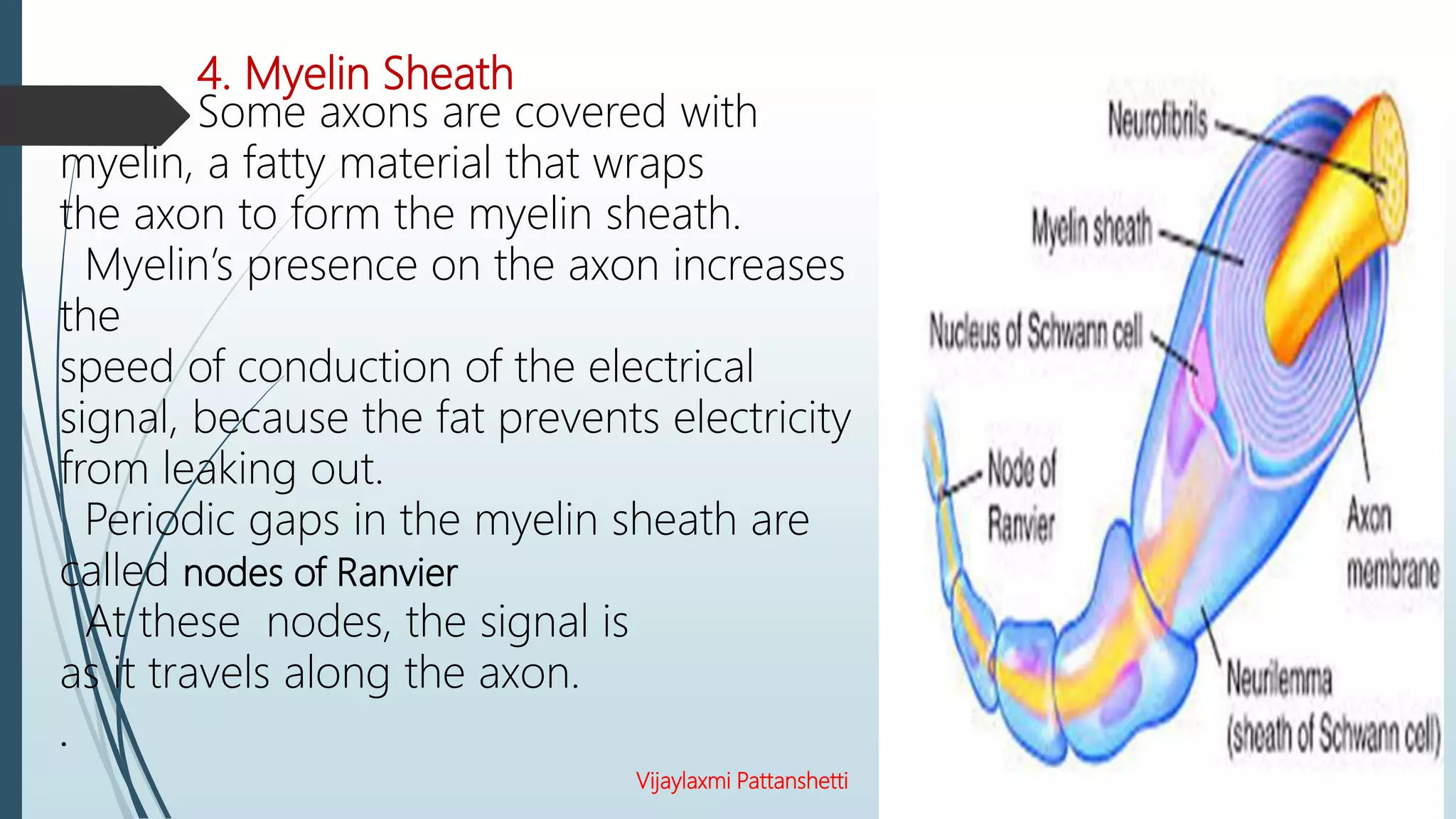
4. Myelin Sheath
Some axons are covered with
myelin, a fatty material that wraps
the axon to form the myelin sheath.
Myelin’s presence on the axon increases
the
speed of conduction of the electrical
signal, because the fat prevents electricity
from leaking out.
Periodic gaps in the myelin sheath are
called nodes of Ranvier
At these nodes, the signal is
as it travels along the axon.
.
Vijaylaxmi Pattanshetti
5. Glial Cells:
Myelin is produced by glial cells which are non-
neuronal cells that provide support for the nervous system.
Glia function to
i) holds neurons in place
,ii) supply them with nutrients,
iii) provide insulation,
iv) remove pathogens and
v) dead neurons.
In the central nervous system, the glial cells that form the
myelin sheath are called oligodendrocytes;
In the peripheral nervous system myelin sheath formed by
Schwann cells.
Vijaylaxmi Pattanshetti
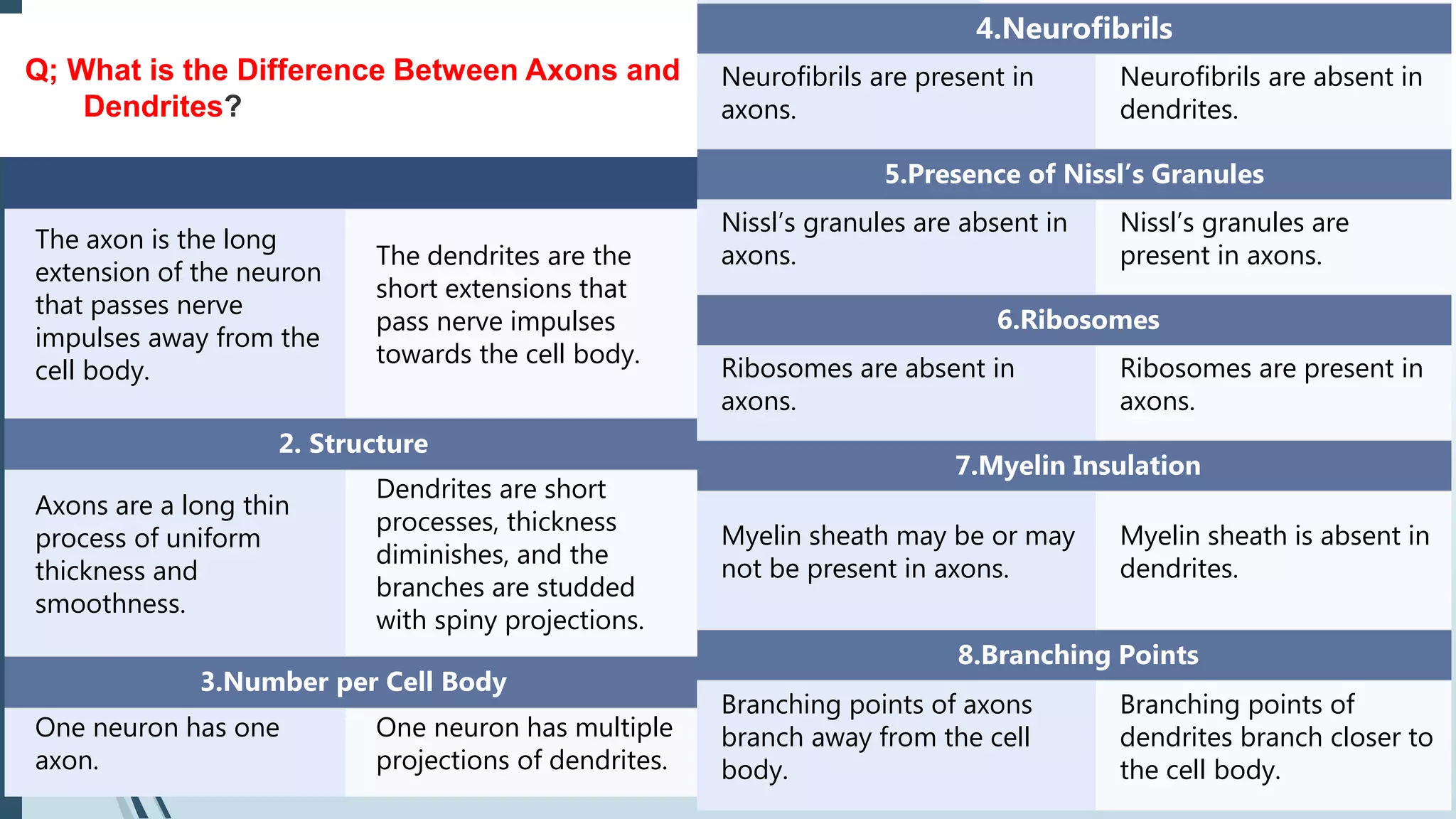
1.Axons vs Dendrites
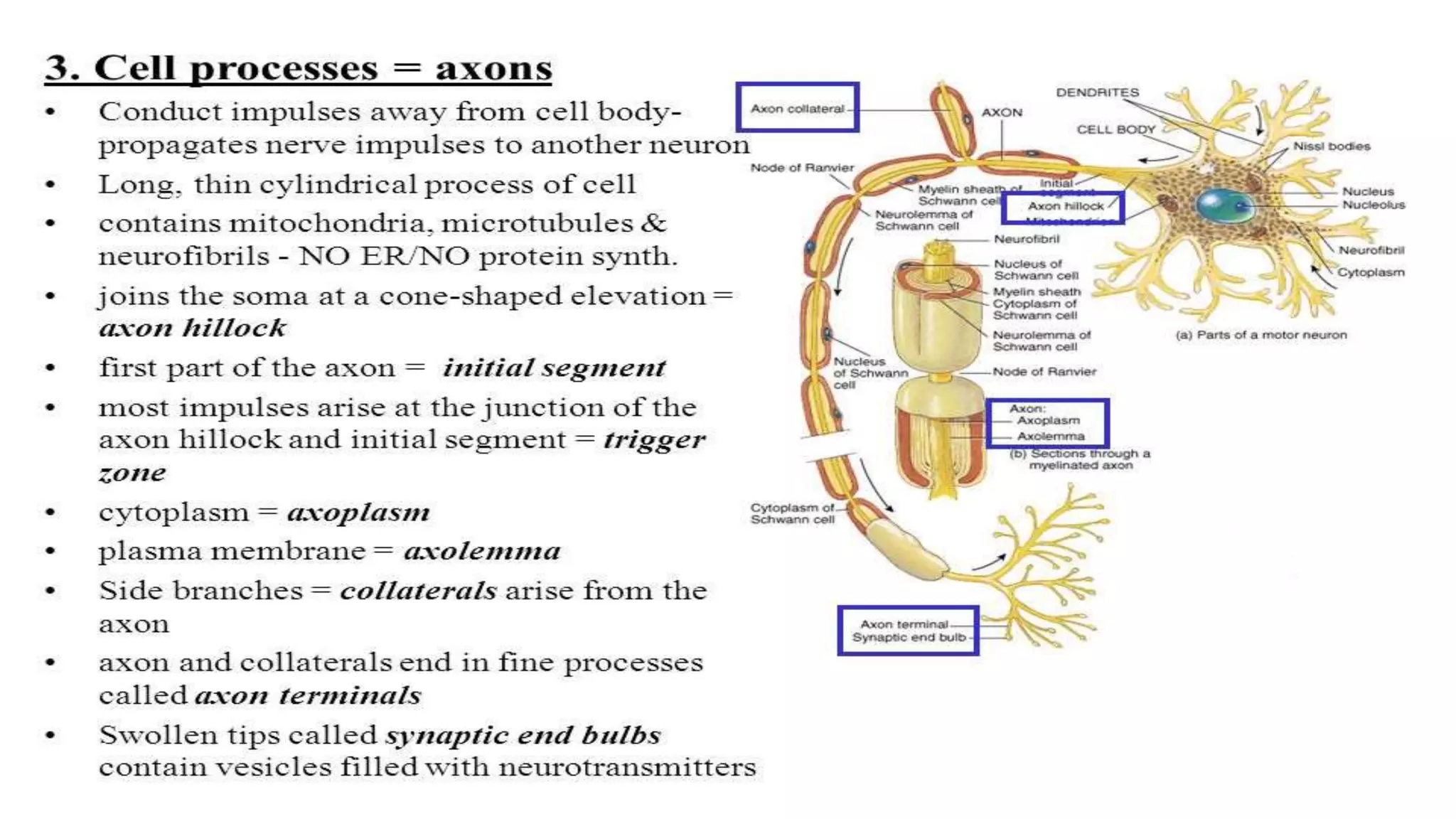
The axon is the long
extension of the neuron
that passes nerve
impulses away from the
cell body.
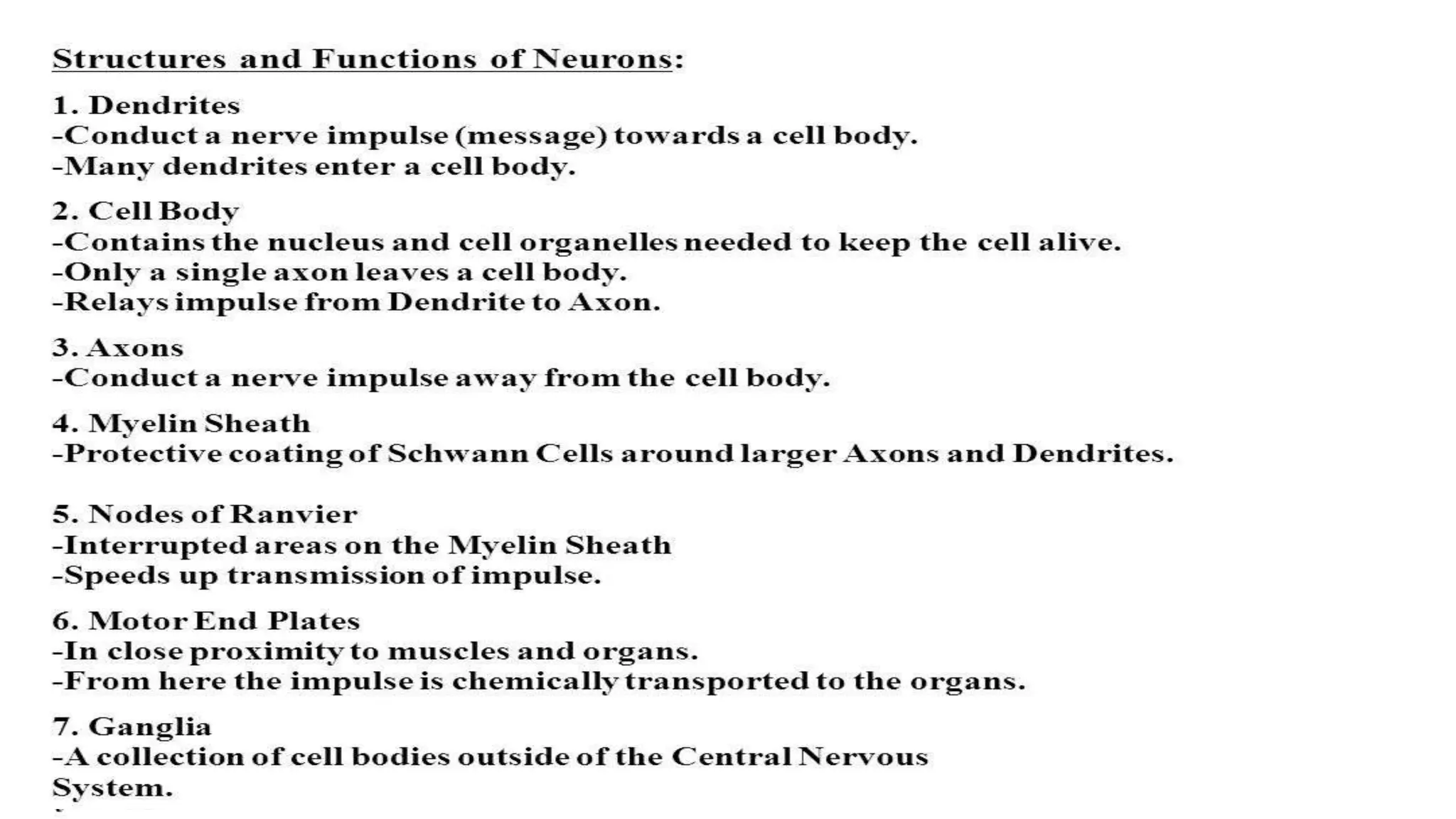
The dendrites are the
short extensions that
pass nerve impulses
towards the cell body.
2. Structure
Axons are a long thin
process of uniform
thickness and
smoothness.
Dendrites are short
processes, thickness
diminishes, and the
branches are studded
with spiny projections.
3.Number per Cell Body
One neuron has one
axon.
One neuron has multiple
projections of dendrites.
Q; What is the Difference Between Axons and
Dendrites?
4.Neurofibrils
Neurofibrils are present in
axons.
Neurofibrils are absent in
dendrites.
5.Presence of Nissl’s Granules
Nissl’s granules are absent in
axons.
Nissl’s granules are
present in axons.
6.Ribosomes
Ribosomes are absent in
axons.
Ribosomes are present in
axons.
7.Myelin Insulation
Myelin sheath may be or may
not be present in axons.
Myelin sheath is absent in
dendrites.
8.Branching Points
Branching points of axons
branch away from the cell
body.
Branching points of
dendrites branch closer to
the cell body.
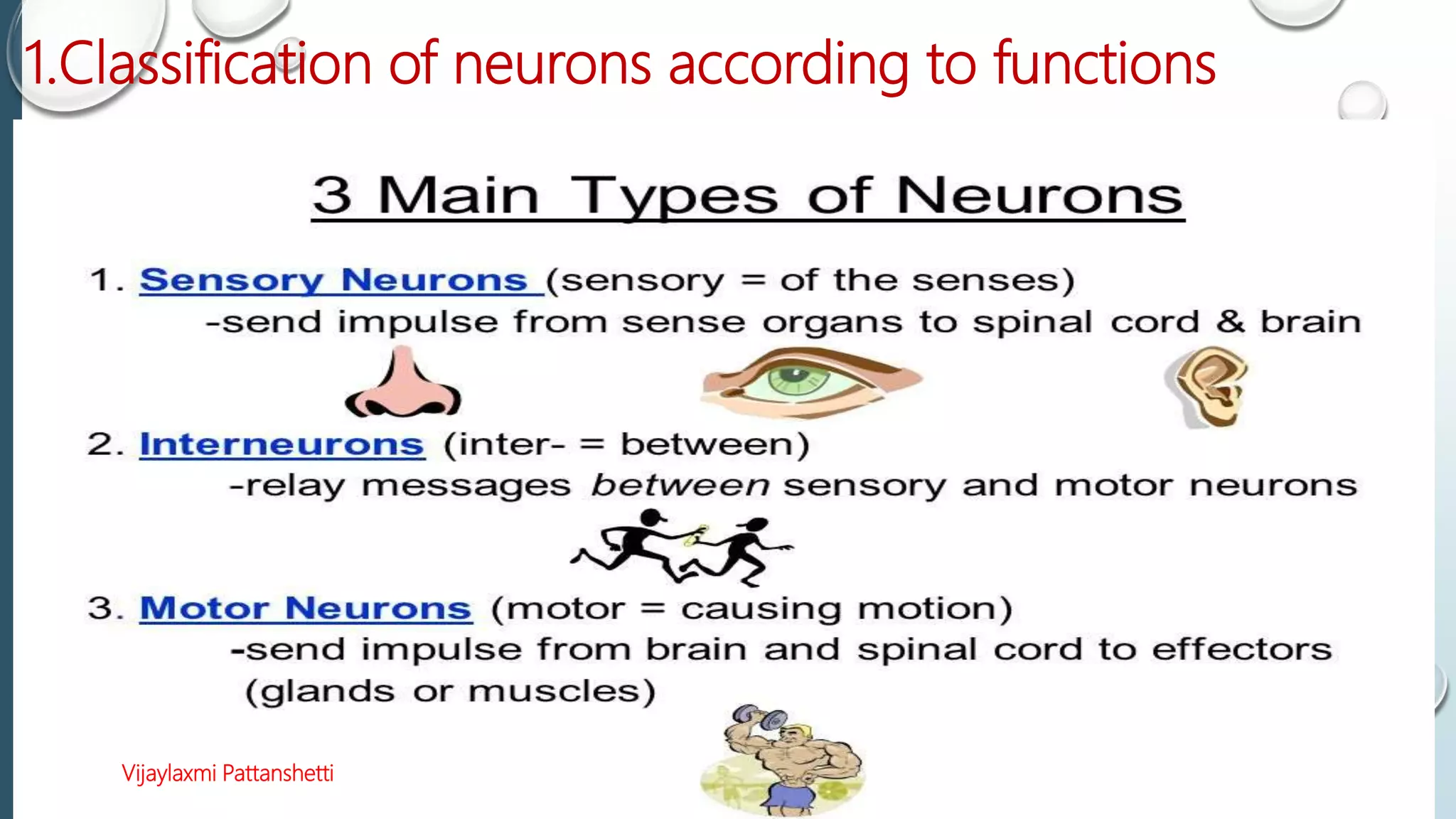
1.Classification of neurons according to functions
Vijaylaxmi Pattanshetti
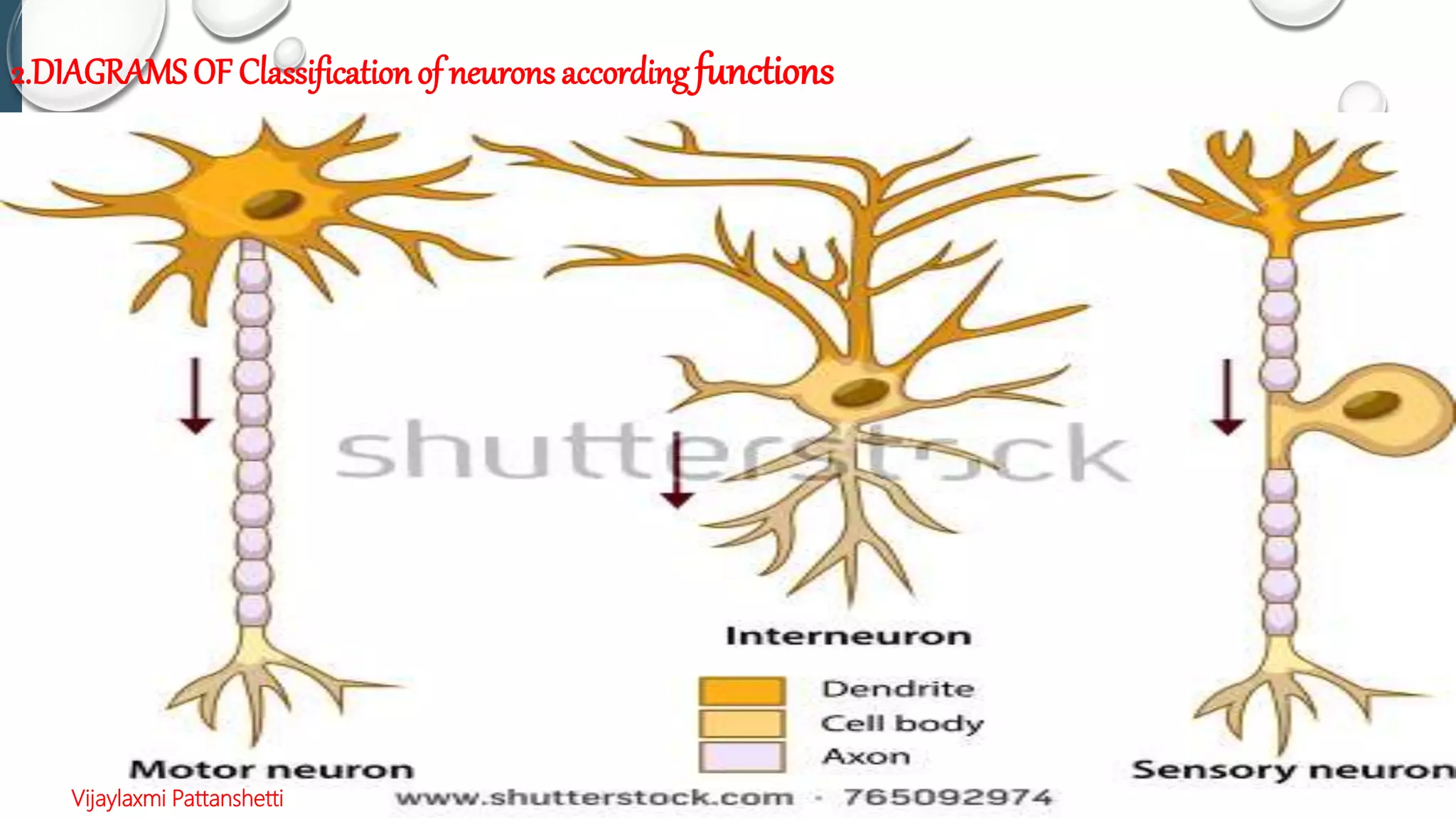
2.DIAGRAMS OF Classificationof neurons according functions
Vijaylaxmi Pattanshetti
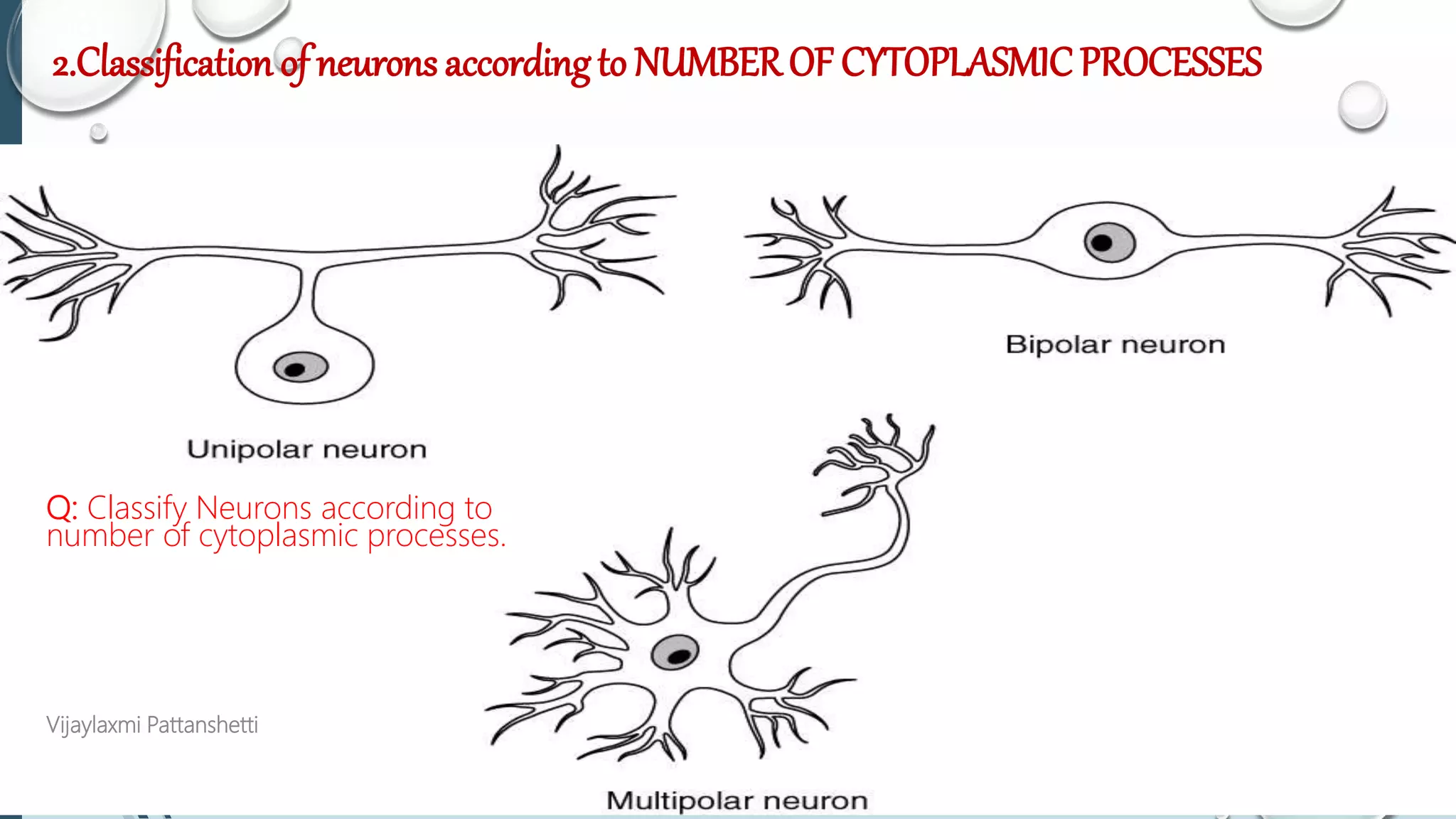
2.Classification of neurons accordingto NUMBEROF CYTOPLASMIC PROCESSES
Q: Classify Neurons according to
number of cytoplasmic processes.
Vijaylaxmi Pattanshetti
Histology of nervous TISSUE
1).neurons have large central nucleus ---------
WITH PROMINENT NUCLEOLUS
2). SEVERAL RADIATING CELL PROCESSES THE -------
-- DENDRITES PRESENT, WITH SINGLE AXON
3). CONE SHAPED CLEAR AREA OF NEURON IS ……
AXON HILLOCK
4). CYTOPLASM OF NEURON HAVE NISSL BODIES ARE
DARKLY STAINED, EXTEND IN TO DENDRITES,
BUT NOT IN TO AXON HILLOCK
5). SURROUNDING DARK STAINED NUCLEUS …….
ARE OF NEUROGLIAL CELLS
6). SURROUNDING NEURONS AND NEUROGLIA ARE ..
.. NUMEROUS BLOOD VESSELS OF DIFFERENT SIZE.
VJAYLAXMI PATTANSHETTIVijaylaxmi Pattanshetti
endsstructure of neuron ends

Structure of neuron

  • 1.
  • 2.
  • 3.
     . Cell BodySeen in histology Like other cells, each neuron has a cell body that contains *big nucleus, *smooth and rough endoplasmic reticulum , ..*Golgi apparatus, * mitochondria, *Ribosomes(Nissl substance) and other . .*cellular components. Vijaylaxmi Pattanshetti
  • 4.
  • 5.
    Vijaylaxmi Pattanshetti 2. Whatare Dendrites? Dendrites are the branched short cytoplasmic extensions arising from the cell body and enable neurons to receive nerve impulses simultaneously from different receptors located all over the body. Motor neurons and interneurons usually possess highly branched dendrites. Certain neurons have numerous extensions arising from their dendrites called dendritic spines, and that increases the surface area available to receive nerve impulses. Dendrites do not contain neurofibrils, but Nissl’s granules are presents
  • 6.
  • 7.
    4. Myelin Sheath Someaxons are covered with myelin, a fatty material that wraps the axon to form the myelin sheath. Myelin’s presence on the axon increases the speed of conduction of the electrical signal, because the fat prevents electricity from leaking out. Periodic gaps in the myelin sheath are called nodes of Ranvier At these nodes, the signal is as it travels along the axon. . Vijaylaxmi Pattanshetti
  • 8.
    Vijaylaxmi Pattanshetti 5. GlialCells: Myelin is produced by glial cells which are non- neuronal cells that provide support for the nervous system. Glia function to i) holds neurons in place ,ii) supply them with nutrients, iii) provide insulation, iv) remove pathogens and v) dead neurons. In the central nervous system, the glial cells that form the myelin sheath are called oligodendrocytes; In the peripheral nervous system myelin sheath formed by Schwann cells.
  • 9.
  • 10.
    Vijaylaxmi Pattanshetti 1.Axons vsDendrites The axon is the long extension of the neuron that passes nerve impulses away from the cell body. The dendrites are the short extensions that pass nerve impulses towards the cell body. 2. Structure Axons are a long thin process of uniform thickness and smoothness. Dendrites are short processes, thickness diminishes, and the branches are studded with spiny projections. 3.Number per Cell Body One neuron has one axon. One neuron has multiple projections of dendrites. Q; What is the Difference Between Axons and Dendrites? 4.Neurofibrils Neurofibrils are present in axons. Neurofibrils are absent in dendrites. 5.Presence of Nissl’s Granules Nissl’s granules are absent in axons. Nissl’s granules are present in axons. 6.Ribosomes Ribosomes are absent in axons. Ribosomes are present in axons. 7.Myelin Insulation Myelin sheath may be or may not be present in axons. Myelin sheath is absent in dendrites. 8.Branching Points Branching points of axons branch away from the cell body. Branching points of dendrites branch closer to the cell body.
  • 11.
    1.Classification of neuronsaccording to functions Vijaylaxmi Pattanshetti
  • 12.
  • 13.
    2.DIAGRAMS OF Classificationofneurons according functions Vijaylaxmi Pattanshetti
  • 14.
    2.Classification of neuronsaccordingto NUMBEROF CYTOPLASMIC PROCESSES Q: Classify Neurons according to number of cytoplasmic processes. Vijaylaxmi Pattanshetti
  • 15.
    Histology of nervousTISSUE 1).neurons have large central nucleus --------- WITH PROMINENT NUCLEOLUS 2). SEVERAL RADIATING CELL PROCESSES THE ------- -- DENDRITES PRESENT, WITH SINGLE AXON 3). CONE SHAPED CLEAR AREA OF NEURON IS …… AXON HILLOCK 4). CYTOPLASM OF NEURON HAVE NISSL BODIES ARE DARKLY STAINED, EXTEND IN TO DENDRITES, BUT NOT IN TO AXON HILLOCK 5). SURROUNDING DARK STAINED NUCLEUS ……. ARE OF NEUROGLIAL CELLS 6). SURROUNDING NEURONS AND NEUROGLIA ARE .. .. NUMEROUS BLOOD VESSELS OF DIFFERENT SIZE. VJAYLAXMI PATTANSHETTIVijaylaxmi Pattanshetti
  • 16.

Editor's Notes