Human Anatomy and Physiology-II
Nervous system
(Action potential)
Mr N.JEGAN
Associate Professor
K.M.COLLEGE OF PHARMACY.
MADURAI.
Action potential
All cells for example muscle cells , neuron
cells( nerve cells ) and cardiac cells posses
electrical excitability, the ability to response to a
stimulus and convert it into an action potential.
Nerve impulse
A signal transmitted along a
nerve fibre.
It consists of a wave of electrical
depolarization that reverses the
potential difference across the
nerve cell membranes.
Action potential-Definition
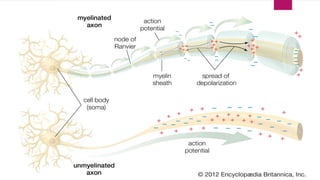
An electrical signal that propagates along the surface of
the membrane of a neuron (nerve cell ) due to the movement
of ions ( sodium & potassium) between interstitial fluid and the
inside of a neuron through specific ion channels in its plasma
membrane.
MEMBRANE POTENTIAL
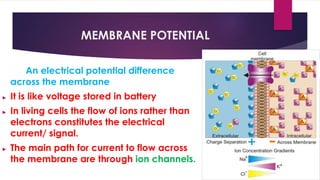
An electrical potential difference
across the membrane
► It is like voltage stored in battery
► In living cells the flow of ions rather than
electrons constitutes the electrical
current/ signal.
► The main path for current to flow across
the membrane are through ion channels.
ION CHANNELS
► Ion channels open and close due to presence of gates
► When ion channels are opened, they allow specific ions to move across
the plasma membrane, down their electrochemical gradient.
► As ions move , they create a flow of electrical current that can charge the
membrane potential.
GENERATION OF ACTION POTENTIAL
The principal ions involved
are:
1.sodium (Na+) the main
extracellular cation
2.potassium (K+) the main
intracellular cation.
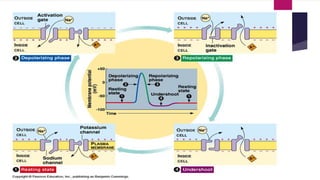
Action Potential-Phase
It occur in four phase
1.Resting potential
2.Depolarizing Phase
3. Repolarizing phase
4. Repolarizing continue
Resting potential
1.All voltage gated Na+ and K +
channel closed
2.Small buildup of negative charge
along the inside the surface of
membrane and equal amount of
positive charge along the outside
the membrane.
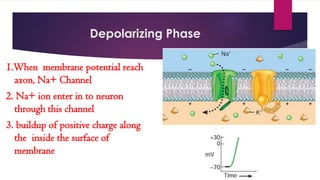
Depolarizing Phase
1.When membrane potential reach
axon, Na+ Channel
2. Na+ ion enter in to neuron
through this channel
3. buildup of positive charge along
the inside the surface of
membrane
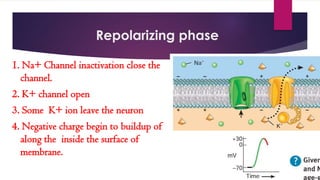
Repolarizing phase
1. Na+ Channel inactivation close the
channel.
2. K+ channel open
3. Some K+ ion leave the neuron
4. Negative charge begin to buildup of
along the inside the surface of
membrane.
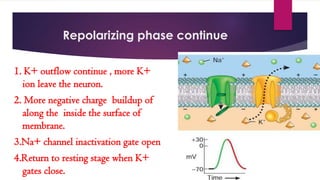
Repolarizing phase continue
1. K+ outflow continue , more K+
ion leave the neuron.
2. More negative charge buildup of
along the inside the surface of
membrane.
3.Na+ channel inactivation gate open
4.Return to resting stage when K+
gates close.
GENERATION OF ACTION POTENTIAL ALONG AXON
Refractory period
It refers to the
amount of time it takes for an
excitable membrane to be
ready to respond to a second
stimulus once it returns to a
resting state.
Thank you

Action potential

  • 1.
    Human Anatomy andPhysiology-II Nervous system (Action potential) Mr N.JEGAN Associate Professor K.M.COLLEGE OF PHARMACY. MADURAI.
  • 2.
    Action potential All cellsfor example muscle cells , neuron cells( nerve cells ) and cardiac cells posses electrical excitability, the ability to response to a stimulus and convert it into an action potential.
  • 3.
    Nerve impulse A signaltransmitted along a nerve fibre. It consists of a wave of electrical depolarization that reverses the potential difference across the nerve cell membranes.
  • 4.
    Action potential-Definition An electricalsignal that propagates along the surface of the membrane of a neuron (nerve cell ) due to the movement of ions ( sodium & potassium) between interstitial fluid and the inside of a neuron through specific ion channels in its plasma membrane.
  • 6.
    MEMBRANE POTENTIAL An electricalpotential difference across the membrane ► It is like voltage stored in battery ► In living cells the flow of ions rather than electrons constitutes the electrical current/ signal. ► The main path for current to flow across the membrane are through ion channels.
  • 7.
    ION CHANNELS ► Ionchannels open and close due to presence of gates ► When ion channels are opened, they allow specific ions to move across the plasma membrane, down their electrochemical gradient. ► As ions move , they create a flow of electrical current that can charge the membrane potential.
  • 8.
    GENERATION OF ACTIONPOTENTIAL The principal ions involved are: 1.sodium (Na+) the main extracellular cation 2.potassium (K+) the main intracellular cation.
  • 9.
    Action Potential-Phase It occurin four phase 1.Resting potential 2.Depolarizing Phase 3. Repolarizing phase 4. Repolarizing continue
  • 10.
    Resting potential 1.All voltagegated Na+ and K + channel closed 2.Small buildup of negative charge along the inside the surface of membrane and equal amount of positive charge along the outside the membrane.
  • 11.
    Depolarizing Phase 1.When membranepotential reach axon, Na+ Channel 2. Na+ ion enter in to neuron through this channel 3. buildup of positive charge along the inside the surface of membrane
  • 12.
    Repolarizing phase 1. Na+Channel inactivation close the channel. 2. K+ channel open 3. Some K+ ion leave the neuron 4. Negative charge begin to buildup of along the inside the surface of membrane.
  • 13.
    Repolarizing phase continue 1.K+ outflow continue , more K+ ion leave the neuron. 2. More negative charge buildup of along the inside the surface of membrane. 3.Na+ channel inactivation gate open 4.Return to resting stage when K+ gates close.
  • 16.
    GENERATION OF ACTIONPOTENTIAL ALONG AXON
  • 17.
    Refractory period It refersto the amount of time it takes for an excitable membrane to be ready to respond to a second stimulus once it returns to a resting state.
  • 18.