PRESENTATION ON TRANSMISSION OF
IMPULSE
THROUGH
NERVES AND SYNAPSE
Submitted to: Presented by:
Dr.D.K Sharma Bivek Rai
Dept. of Zoology M.Sc II SEM
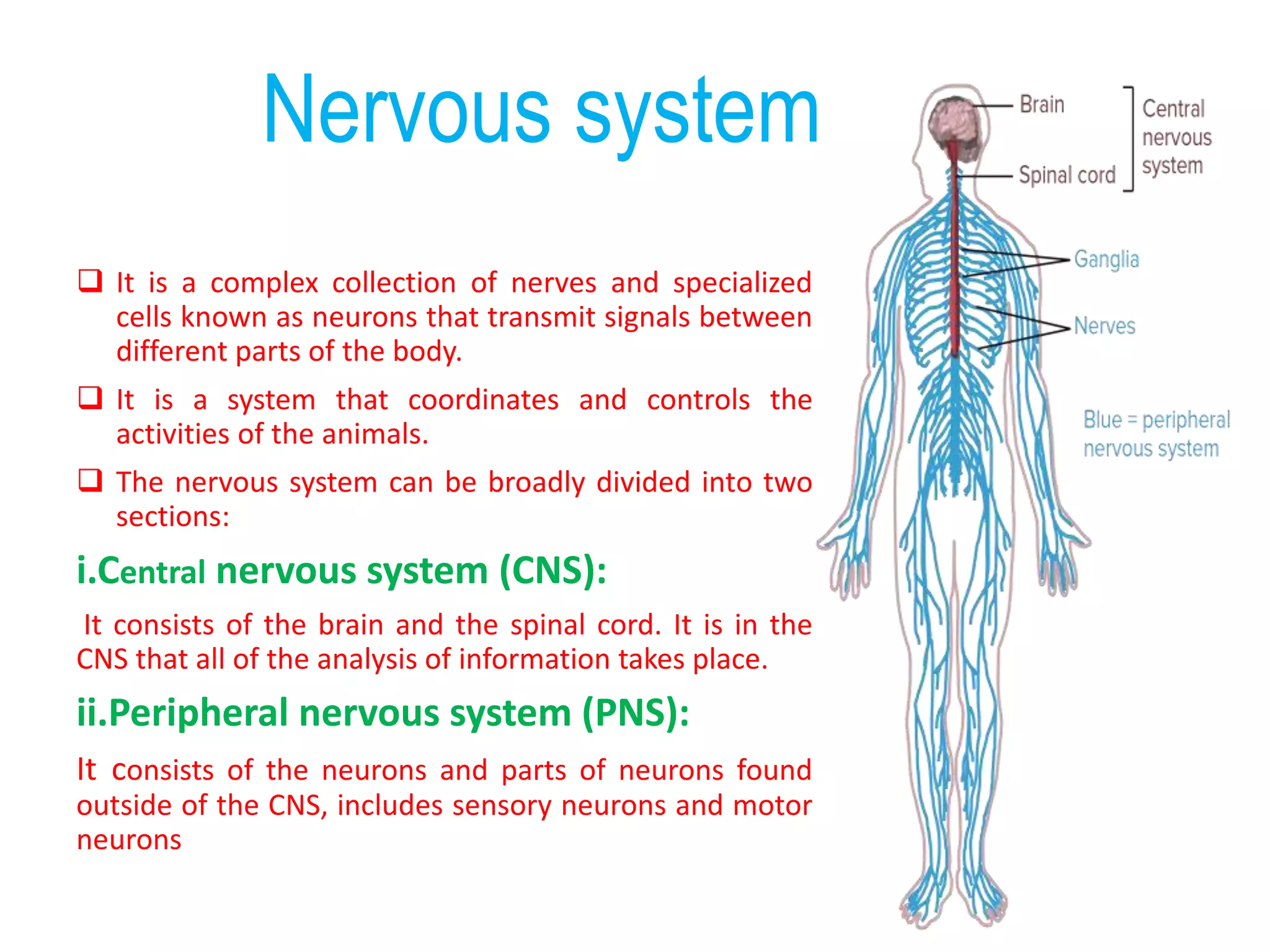
Nervous system
 It is a complex collection of nerves and specialized
cells known as neurons that transmit signals between
different parts of the body.
 It is a system that coordinates and controls the
activities of the animals.
 The nervous system can be broadly divided into two
sections:
i.Central nervous system (CNS):
It consists of the brain and the spinal cord. It is in the
CNS that all of the analysis of information takes place.
ii.Peripheral nervous system (PNS):
It consists of the neurons and parts of neurons found
outside of the CNS, includes sensory neurons and motor
neurons
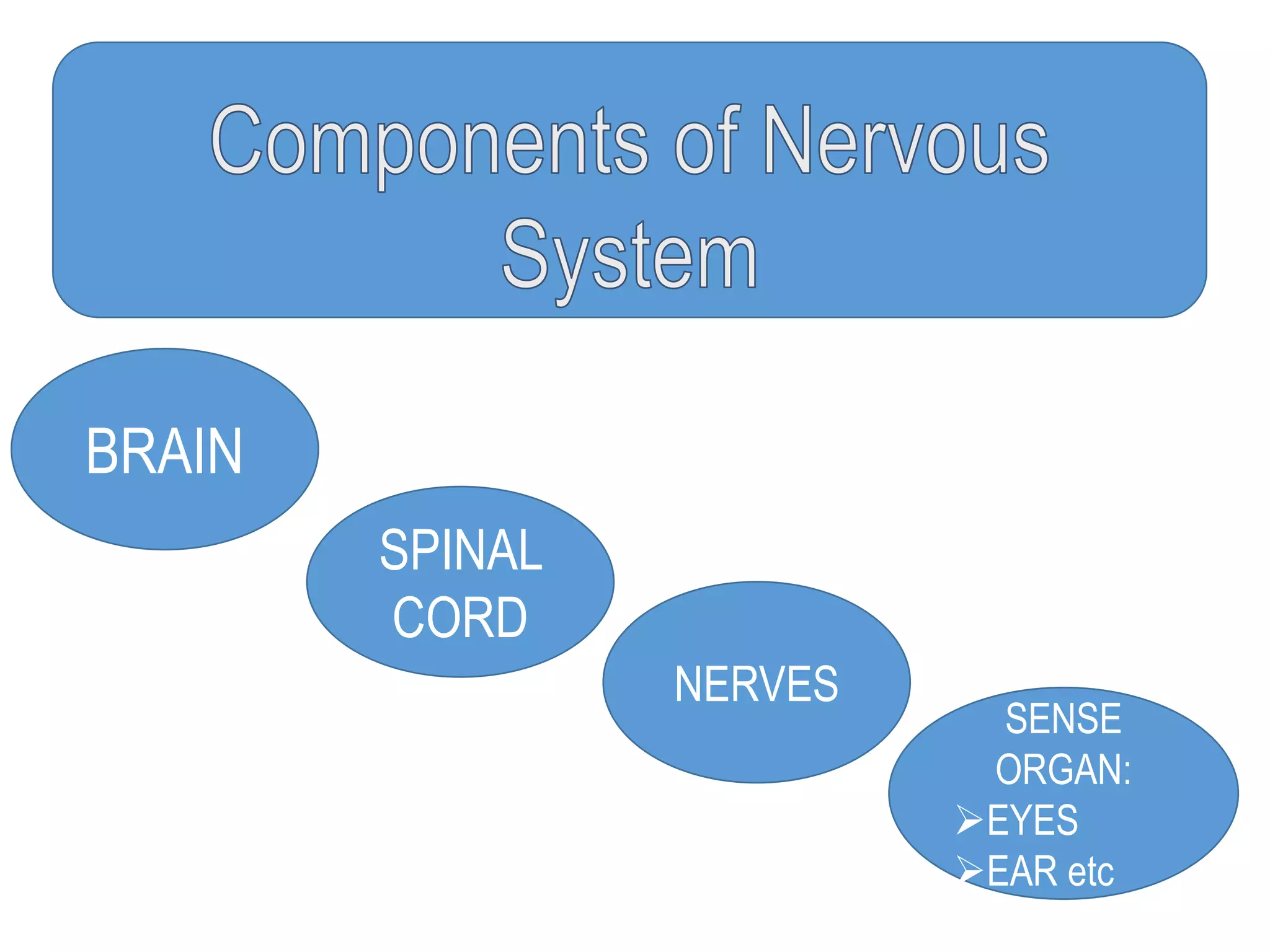
BRAIN
SPINAL
CORD
SENSE
ORGAN:
EYES
EAR etc
NERVES
Neuron
 Neuron is an electrically excitable cell that receives,
processes, and transmits information through electrical
and chemical signals
Impulse Transmission Through
Nerves
 Nerve impulse is the electrical signal which is
transmitted by neuron around the nervous system
The nerve impulse travel quickly because they are electrical
impulse and ranges from approximately 1m/s to 100m/s
The inside of a neuron’s cell membrane is negatively-
charged while the outside is positively charged
When sodium and potassium ions change places, this
reverses the inner and outer charges causing the nerve
impulse to travel down the membrane
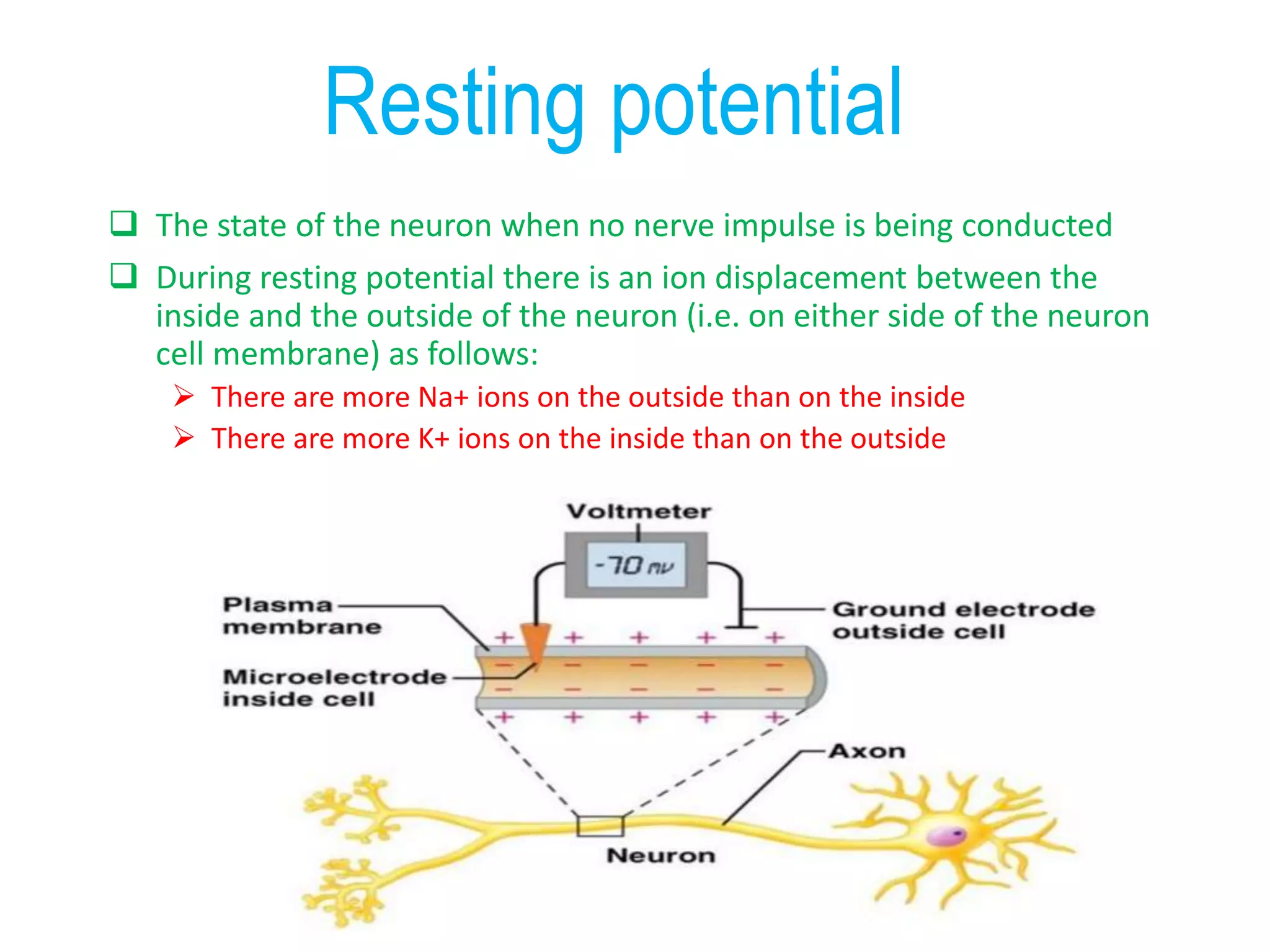
Resting potential
 The state of the neuron when no nerve impulse is being conducted
 During resting potential there is an ion displacement between the
inside and the outside of the neuron (i.e. on either side of the neuron
cell membrane) as follows:
 There are more Na+ ions on the outside than on the inside
 There are more K+ ions on the inside than on the outside
Action Potential
 An action potential occurs when a neuron is conducting a nerve impulse
 In order for an action potential to occur, the neuron must receive sufficient
stimulation to open enough Na gates to reach the threshold level
 If sufficient Na gates are opened to reach the threshold level, other Na and K
gates will be stimulated to open
Action potential can be divided into 2 phases:
I. Depolarization
II. Repolarization
Depolarization
 If a neuron received sufficient stimulation to reach the membrane threshold,
successive Na gates along the entire neuron membrane will open
 The opening of the Na gates allows Na ions to move into the neuron
 The movement of Na ions into the neuron causes the membrane potential to
change from -70mV to +40mV
 As the membrane potential becomes more positive, Na gates begin to close.
At the end of depolarization, the Na gates are all closed
Repolarization
 At the end of the depolarization phase, K gates begin to open,
allowing K to leave the neuron
These K gates are activated at the +ve membrane potential value of
about +40mV
The movement of K ions out of the neuron produces a change in
membrane potential such that the potential becomes more –ve
Graphical Representation of Impulse
Transmission
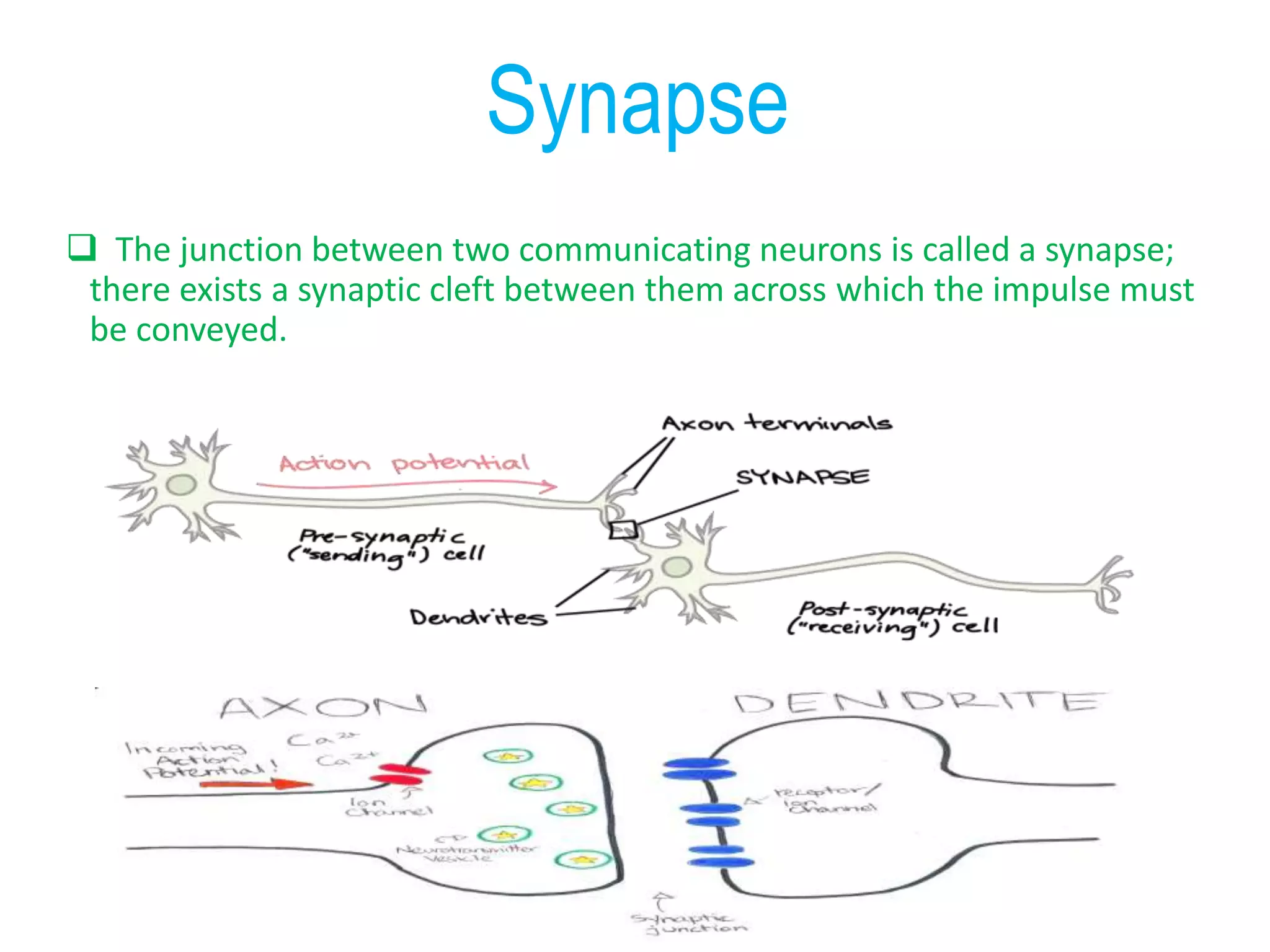
 The junction between two communicating neurons is called a synapse;
there exists a synaptic cleft between them across which the impulse must
be conveyed.
Synapse
Synaptic Transmission
The process by which the impulse in the presynaptic neuron is
transmitted across the synaptic cleft to the postsynaptic neuron
is called synaptic transmission.
Synaptic cleft: The space between two neuron is called synaptic
cleft. It is approx. 20-55nm.
 Action potential reaches axon terminal
 Calcium channel open
 Ca2+ causes vesicles to release neurotransmitter
 Neurotransmitter crosses synapse cleft
 Neurotransmitter bind to neuroreceptors
 Triggers signals in post-synaptic neuron
Steps of Synaptic Transmission
Overview of the process
Impulse transmission

Impulse transmission

  • 1.
    PRESENTATION ON TRANSMISSIONOF IMPULSE THROUGH NERVES AND SYNAPSE Submitted to: Presented by: Dr.D.K Sharma Bivek Rai Dept. of Zoology M.Sc II SEM
  • 2.
    Nervous system  Itis a complex collection of nerves and specialized cells known as neurons that transmit signals between different parts of the body.  It is a system that coordinates and controls the activities of the animals.  The nervous system can be broadly divided into two sections: i.Central nervous system (CNS): It consists of the brain and the spinal cord. It is in the CNS that all of the analysis of information takes place. ii.Peripheral nervous system (PNS): It consists of the neurons and parts of neurons found outside of the CNS, includes sensory neurons and motor neurons
  • 3.
  • 4.
    Neuron  Neuron isan electrically excitable cell that receives, processes, and transmits information through electrical and chemical signals
  • 5.
    Impulse Transmission Through Nerves Nerve impulse is the electrical signal which is transmitted by neuron around the nervous system The nerve impulse travel quickly because they are electrical impulse and ranges from approximately 1m/s to 100m/s The inside of a neuron’s cell membrane is negatively- charged while the outside is positively charged When sodium and potassium ions change places, this reverses the inner and outer charges causing the nerve impulse to travel down the membrane
  • 6.
    Resting potential  Thestate of the neuron when no nerve impulse is being conducted  During resting potential there is an ion displacement between the inside and the outside of the neuron (i.e. on either side of the neuron cell membrane) as follows:  There are more Na+ ions on the outside than on the inside  There are more K+ ions on the inside than on the outside
  • 7.
    Action Potential  Anaction potential occurs when a neuron is conducting a nerve impulse  In order for an action potential to occur, the neuron must receive sufficient stimulation to open enough Na gates to reach the threshold level  If sufficient Na gates are opened to reach the threshold level, other Na and K gates will be stimulated to open Action potential can be divided into 2 phases: I. Depolarization II. Repolarization
  • 8.
    Depolarization  If aneuron received sufficient stimulation to reach the membrane threshold, successive Na gates along the entire neuron membrane will open  The opening of the Na gates allows Na ions to move into the neuron  The movement of Na ions into the neuron causes the membrane potential to change from -70mV to +40mV  As the membrane potential becomes more positive, Na gates begin to close. At the end of depolarization, the Na gates are all closed
  • 9.
    Repolarization  At theend of the depolarization phase, K gates begin to open, allowing K to leave the neuron These K gates are activated at the +ve membrane potential value of about +40mV The movement of K ions out of the neuron produces a change in membrane potential such that the potential becomes more –ve
  • 10.
    Graphical Representation ofImpulse Transmission
  • 11.
     The junctionbetween two communicating neurons is called a synapse; there exists a synaptic cleft between them across which the impulse must be conveyed. Synapse
  • 12.
    Synaptic Transmission The processby which the impulse in the presynaptic neuron is transmitted across the synaptic cleft to the postsynaptic neuron is called synaptic transmission. Synaptic cleft: The space between two neuron is called synaptic cleft. It is approx. 20-55nm.
  • 13.
     Action potentialreaches axon terminal  Calcium channel open  Ca2+ causes vesicles to release neurotransmitter  Neurotransmitter crosses synapse cleft  Neurotransmitter bind to neuroreceptors  Triggers signals in post-synaptic neuron Steps of Synaptic Transmission
  • 14.