Synaptic Transmission
DR. KARISHMA R. PANDEY
ASSISTANT PROFESSOR
DEPARTMENT OF BASIC AND CLINICAL PHYSIOLOGY
Topics
1) What is synapse and synaptic transmission?
2) Types
3) Structures that form the synapse
4) Process of synaptic transmission
5) Properties
A number of neurons are
involved in the transmission of
nerve impulse from its origin
to destination.
Synapses are the junctions
between two neurons.
Synaptic transmission: communication between neurons
Two principal kinds of synapses: electrical and chemical
Chemical
synapses: the
predominant
means of
communication
between
neurons
Synapse Structure
 The part of the synapse that belongs to the initiating neuron is
called the presynaptic membrane.
 The part of the synapse that belongs to the
receiving neuron is called the postsynaptic
membrane.
 The space between the two is called
the synaptic cleft. It is approx 20-50 nm
wide.
Presynaptic terminals contain numerous synaptic vesicles
Synaptic vesicles contain Neurotransmitters, chemical substances which
ultimately cause postsynaptic changes in the receiving neuron, is contained within
the synaptic vesicles. Common neurotransmitters include : Acetylcholine,
Dopamine, Norepinephrine (a.k.a., noradrenaline), Serotonin
Functional Anatomy of chemical synapses
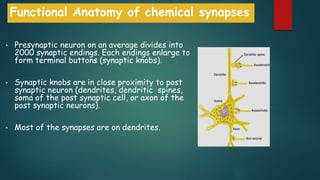
• Presynaptic neuron on an average divides into
2000 synaptic endings. Each endings enlarge to
form terminal buttons (synaptic knobs).
• Synaptic knobs are in close proximity to post
synaptic neuron (dendrites, dendritic spines,
soma of the post synaptic cell, or axon of the
post synaptic neurons).
• Most of the synapses are on dendrites.
Action potential signal arrives at the presynaptic axon terminal
Opening of voltage gated Ca channels
Ca enters into the presynaptic terminal
Ca mediated exocytosis of neurotransmitter
Neurotransmitter binds to the receptors at post synaptic membrane
Opeining of ion channels
Movement of ions through the post synaptic membrane
Synaptic potential generated
Change in membrane potential in post synaptic membrane
Steps of Synaptic Transmission
EPSP
IPSP
Synaptic Potential
Electrical Synapse
1) EPSP short latency
2) Transmission is bidirectional
3) Signal is not magnified
4) Less time consuming for
impulse to travel
Chemical Synapse
1) Long latency
2) Unidirectional
3) Magnified/modified
4) Time consuming
Degradation: Enzymes located in the synaptic cleft break down the
neurotransmitter into a substance which has no effect on the receptor
channel
Reuptake: The neurotransmitter can reenter the presynaptic cell through
channels in the membrane.
Diffusion
Fate of the neurotransmitter discharged in the
synaptic cleft
Properties of synaptic transmission
1. Synaptic delay: All the events involved in synaptic transmission need some time
usually between 0.5 &1 ms
2. Law of forward conduction: impulse always travels from presynaptic to
postsynaptic neuron
3a. Spatial
summation: If a
number of fibers
converging on a
single neuron are
stimulating
simultaneously with
sub-threshold
stimuli, the
postsynaptic neuron
may fire action
potential.
55
5
3b. Temporal
summation: If a
sub-threshold
stimulus is repeated
several times in
quick succession,
the postsynaptic
neuron may fire.
Properties of synaptic transmission
4a. Facilitation: The effect of stimulating two nerve fibres may turn out to be
greater than the sum of stimulating either of them separately.
4b. Occlusion: with stronger stimuli, the effect of stimulating two nerve fibres
may turn out to be less than the sum of stimulating either of them separately.
Properties of synaptic transmission
5. Inhibition: Inhibitory pre-synaptic neuron – release of Inhibitory NT
IPSP
6. Fatigue: Repeated stimulation of a synapse leads to gradual diminution and
finally disappearance of the postsynaptic response.
Plasticity of synaptic transmission
1. Habituation: When a stimulus is repeated over and over, the response to the
stimulus gradually disappears.
2. Sensitization: When a stimulus accompanied by painful/unpleasant sensation, the
response increase is more and more.
3. Posttetanic potentiation: If rapidly repeated stimulation (tetanic stimulation) is
followed by a brief pause, the response to subsequent stimulation is frequently
enhanced lasts up to 60 seconds.
4. Long-term potentiation: Persistent enhancement of the postsynaptic potential
response to presynaptic stimulation after a brief period of rapidly repeated
stimulation of the presynaptic neurons.
5. Long-term depression: It is opposite to the LTP. It is characterized by a decrease in
synaptic strength.

Synaptic transmission

  • 1.
    Synaptic Transmission DR. KARISHMAR. PANDEY ASSISTANT PROFESSOR DEPARTMENT OF BASIC AND CLINICAL PHYSIOLOGY
  • 2.
    Topics 1) What issynapse and synaptic transmission? 2) Types 3) Structures that form the synapse 4) Process of synaptic transmission 5) Properties
  • 3.
    A number ofneurons are involved in the transmission of nerve impulse from its origin to destination. Synapses are the junctions between two neurons.
  • 4.
  • 5.
    Two principal kindsof synapses: electrical and chemical
  • 6.
  • 9.
    Synapse Structure  Thepart of the synapse that belongs to the initiating neuron is called the presynaptic membrane.  The part of the synapse that belongs to the receiving neuron is called the postsynaptic membrane.  The space between the two is called the synaptic cleft. It is approx 20-50 nm wide. Presynaptic terminals contain numerous synaptic vesicles Synaptic vesicles contain Neurotransmitters, chemical substances which ultimately cause postsynaptic changes in the receiving neuron, is contained within the synaptic vesicles. Common neurotransmitters include : Acetylcholine, Dopamine, Norepinephrine (a.k.a., noradrenaline), Serotonin
  • 10.
    Functional Anatomy ofchemical synapses • Presynaptic neuron on an average divides into 2000 synaptic endings. Each endings enlarge to form terminal buttons (synaptic knobs). • Synaptic knobs are in close proximity to post synaptic neuron (dendrites, dendritic spines, soma of the post synaptic cell, or axon of the post synaptic neurons). • Most of the synapses are on dendrites.
  • 11.
    Action potential signalarrives at the presynaptic axon terminal Opening of voltage gated Ca channels Ca enters into the presynaptic terminal Ca mediated exocytosis of neurotransmitter Neurotransmitter binds to the receptors at post synaptic membrane Opeining of ion channels Movement of ions through the post synaptic membrane Synaptic potential generated Change in membrane potential in post synaptic membrane Steps of Synaptic Transmission
  • 13.
  • 14.
    Electrical Synapse 1) EPSPshort latency 2) Transmission is bidirectional 3) Signal is not magnified 4) Less time consuming for impulse to travel Chemical Synapse 1) Long latency 2) Unidirectional 3) Magnified/modified 4) Time consuming
  • 15.
    Degradation: Enzymes locatedin the synaptic cleft break down the neurotransmitter into a substance which has no effect on the receptor channel Reuptake: The neurotransmitter can reenter the presynaptic cell through channels in the membrane. Diffusion Fate of the neurotransmitter discharged in the synaptic cleft
  • 16.
    Properties of synaptictransmission 1. Synaptic delay: All the events involved in synaptic transmission need some time usually between 0.5 &1 ms 2. Law of forward conduction: impulse always travels from presynaptic to postsynaptic neuron
  • 17.
    3a. Spatial summation: Ifa number of fibers converging on a single neuron are stimulating simultaneously with sub-threshold stimuli, the postsynaptic neuron may fire action potential. 55 5 3b. Temporal summation: If a sub-threshold stimulus is repeated several times in quick succession, the postsynaptic neuron may fire. Properties of synaptic transmission
  • 18.
    Properties of synaptictransmission 4a. Facilitation: The effect of stimulating two nerve fibres may turn out to be greater than the sum of stimulating either of them separately. 4b. Occlusion: with stronger stimuli, the effect of stimulating two nerve fibres may turn out to be less than the sum of stimulating either of them separately.
  • 19.
    Properties of synaptictransmission 5. Inhibition: Inhibitory pre-synaptic neuron – release of Inhibitory NT IPSP 6. Fatigue: Repeated stimulation of a synapse leads to gradual diminution and finally disappearance of the postsynaptic response.
  • 20.
    Plasticity of synaptictransmission 1. Habituation: When a stimulus is repeated over and over, the response to the stimulus gradually disappears. 2. Sensitization: When a stimulus accompanied by painful/unpleasant sensation, the response increase is more and more. 3. Posttetanic potentiation: If rapidly repeated stimulation (tetanic stimulation) is followed by a brief pause, the response to subsequent stimulation is frequently enhanced lasts up to 60 seconds. 4. Long-term potentiation: Persistent enhancement of the postsynaptic potential response to presynaptic stimulation after a brief period of rapidly repeated stimulation of the presynaptic neurons. 5. Long-term depression: It is opposite to the LTP. It is characterized by a decrease in synaptic strength.

Editor's Notes

  • #16 Autoreceptors: Receptors for a particular neurotransmitter are located on the presynaptic membrane that act like a thermostat. When there is too much neurotransmitter released in the synapse, it decreases the release of further neurotransmitter when the action potential arrives at the presynaptic membrane. It may accomplish this by decreasing the number of Ca2+channels that open when the next action potential arrives at the presynaptic terminal
  • #21 St modified to suit the need of the body and to learn to react against a particular stimulus in an appropriate manner These changes are memorized by the concerned cells involved in learning and memory This involves long term change in the synapse and is j known as plasticity.