The document discusses the mechanisms of protein sorting, highlighting two primary modes: co-translational and post-translational transportation. Co-translational transportation involves the delivery of proteins to the endoplasmic reticulum during their synthesis, while post-translational transportation refers to protein transport to organelles such as mitochondria and chloroplasts after synthesis. The importance of protein sorting lies in ensuring proper protein delivery and functionality within the cell.
Introduction -
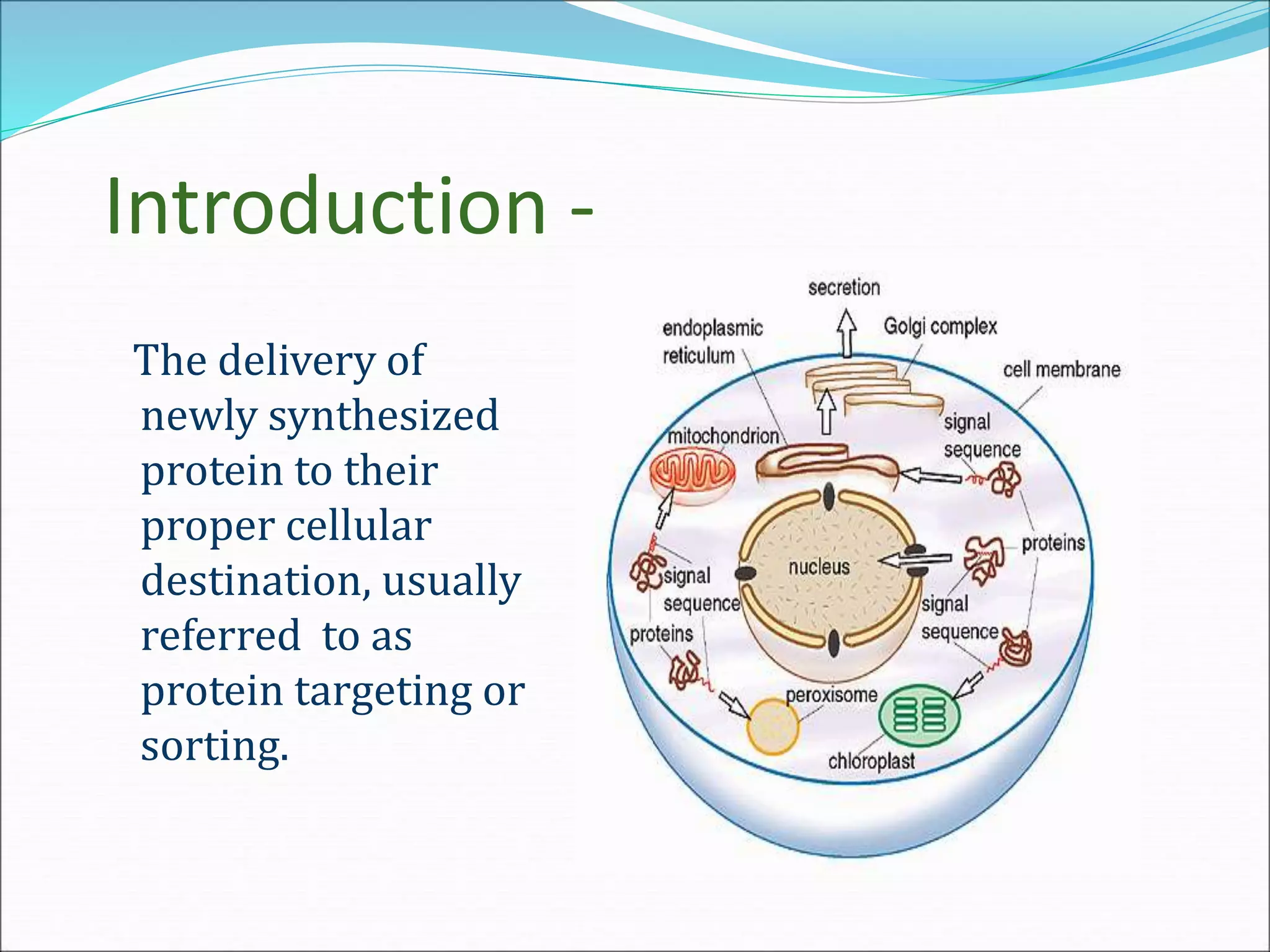
The deliveryof
newly synthesized
protein to their
proper cellular
destination, usually
referred to as
protein targeting or
sorting.
4.
Modes of proteinSorting -
The mode of protein transport depends chiefly on
the location in the cell cytoplasm of the polysomes
involved in protein synthesis.
There are two modes of protein sorting:-
1) Co - translational Transportation.
2) Post - translational Transportation.
5.
Co – TranslationalTransportation
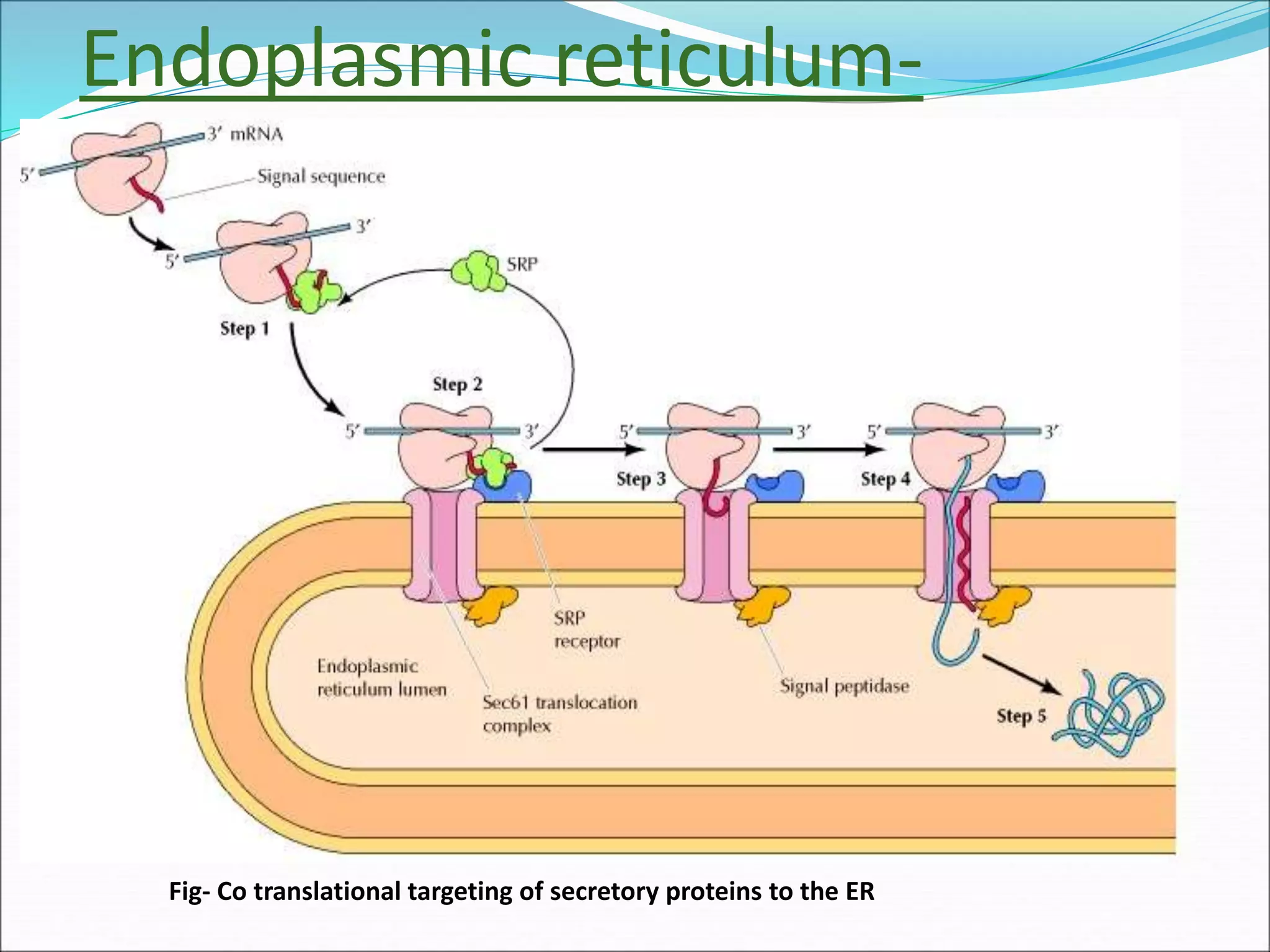
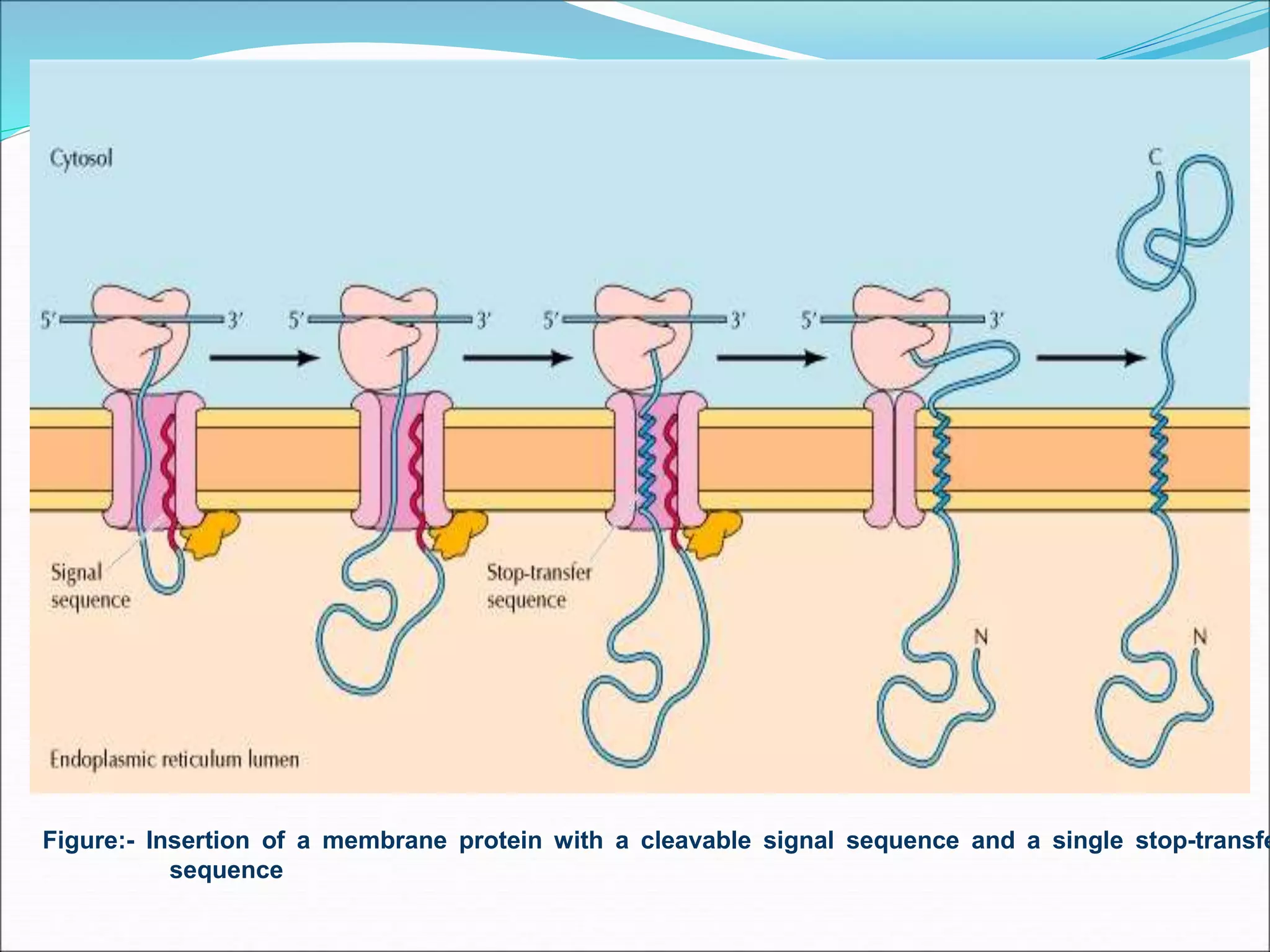
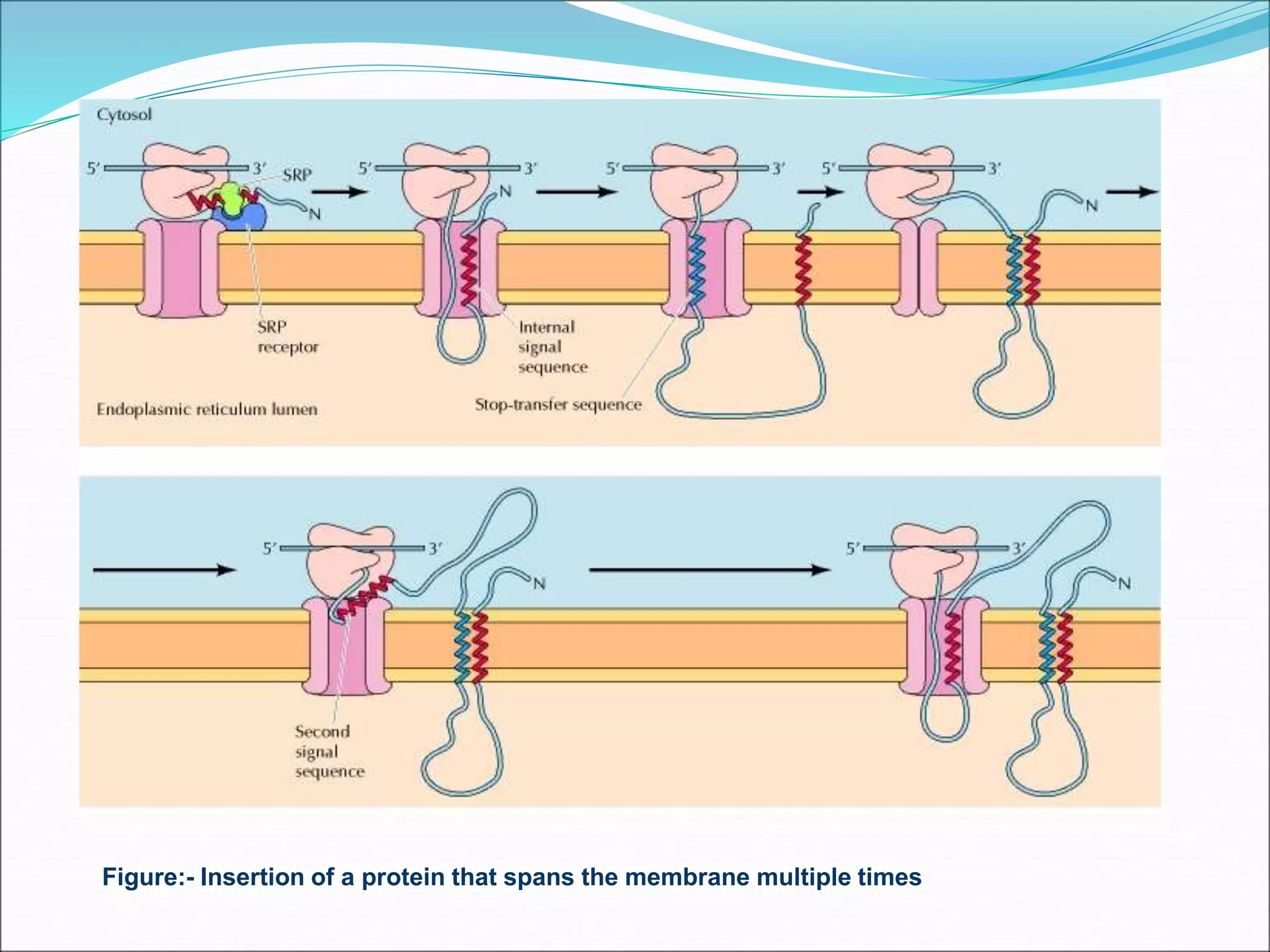
Protein synthesized on membrane bound polysome
being to enter the endoplasmic reticulum as they are
being synthesized called Co-Translational
transportation of protein.
In this process some organelles are involve given
below-
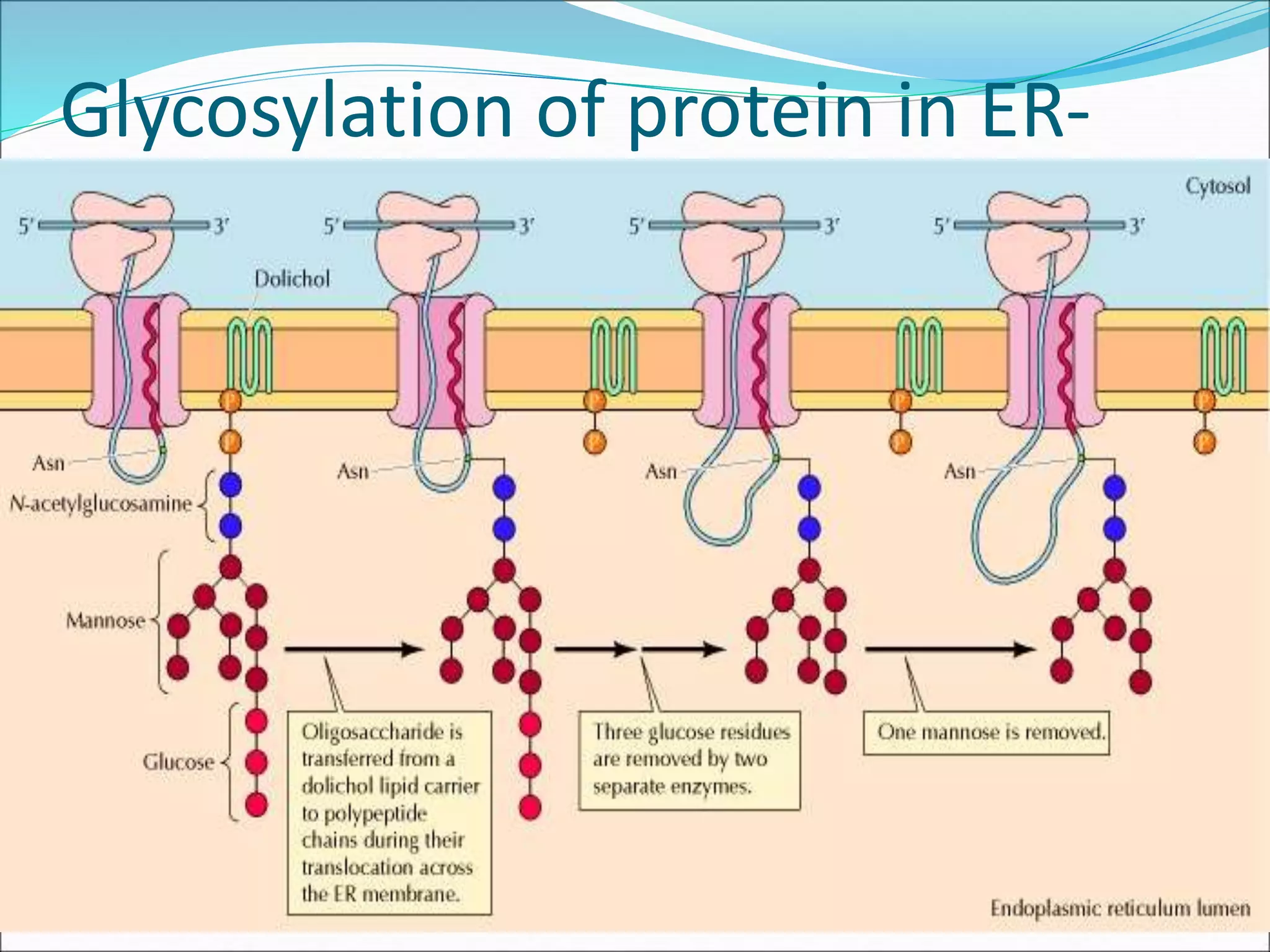
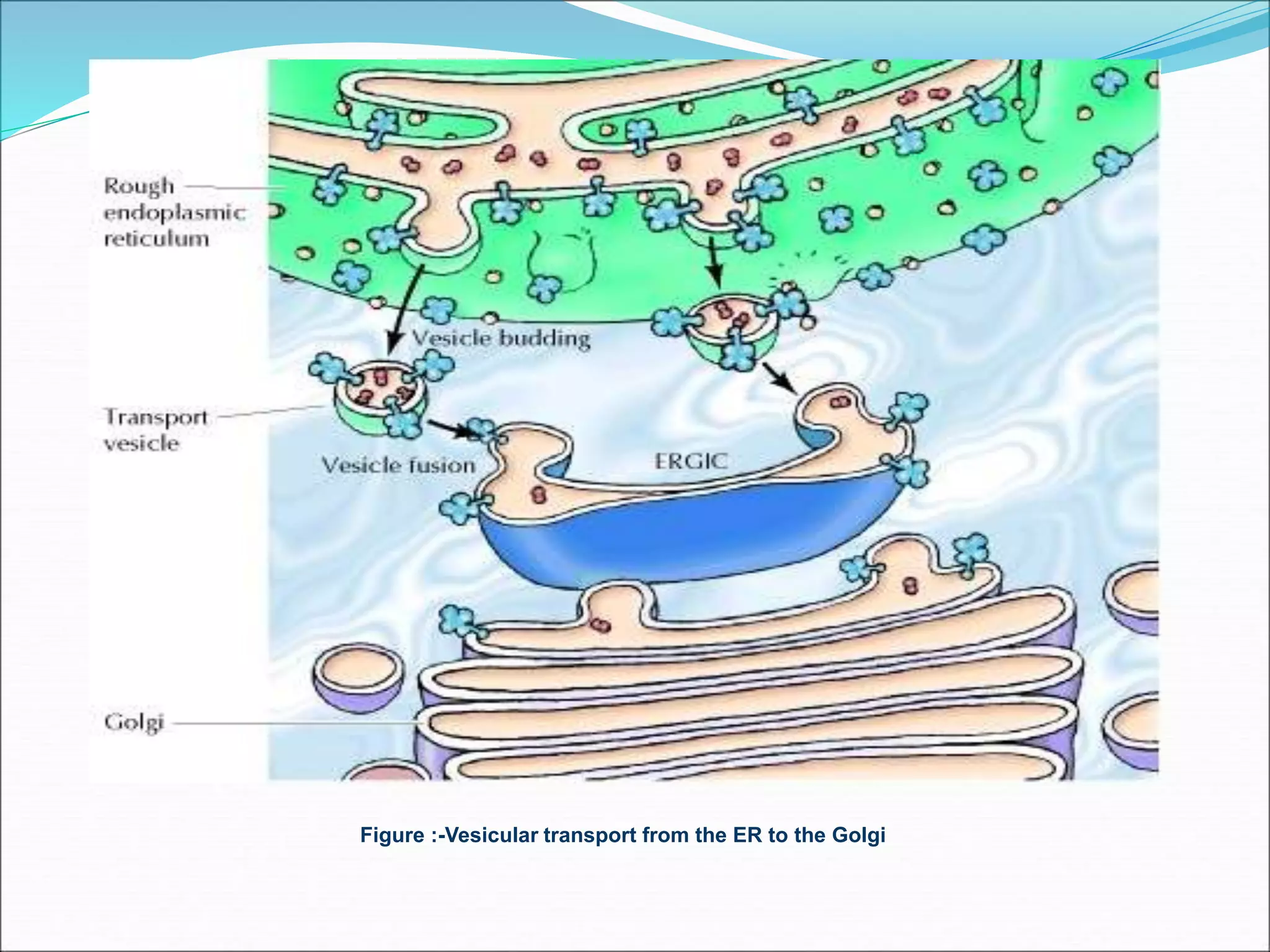
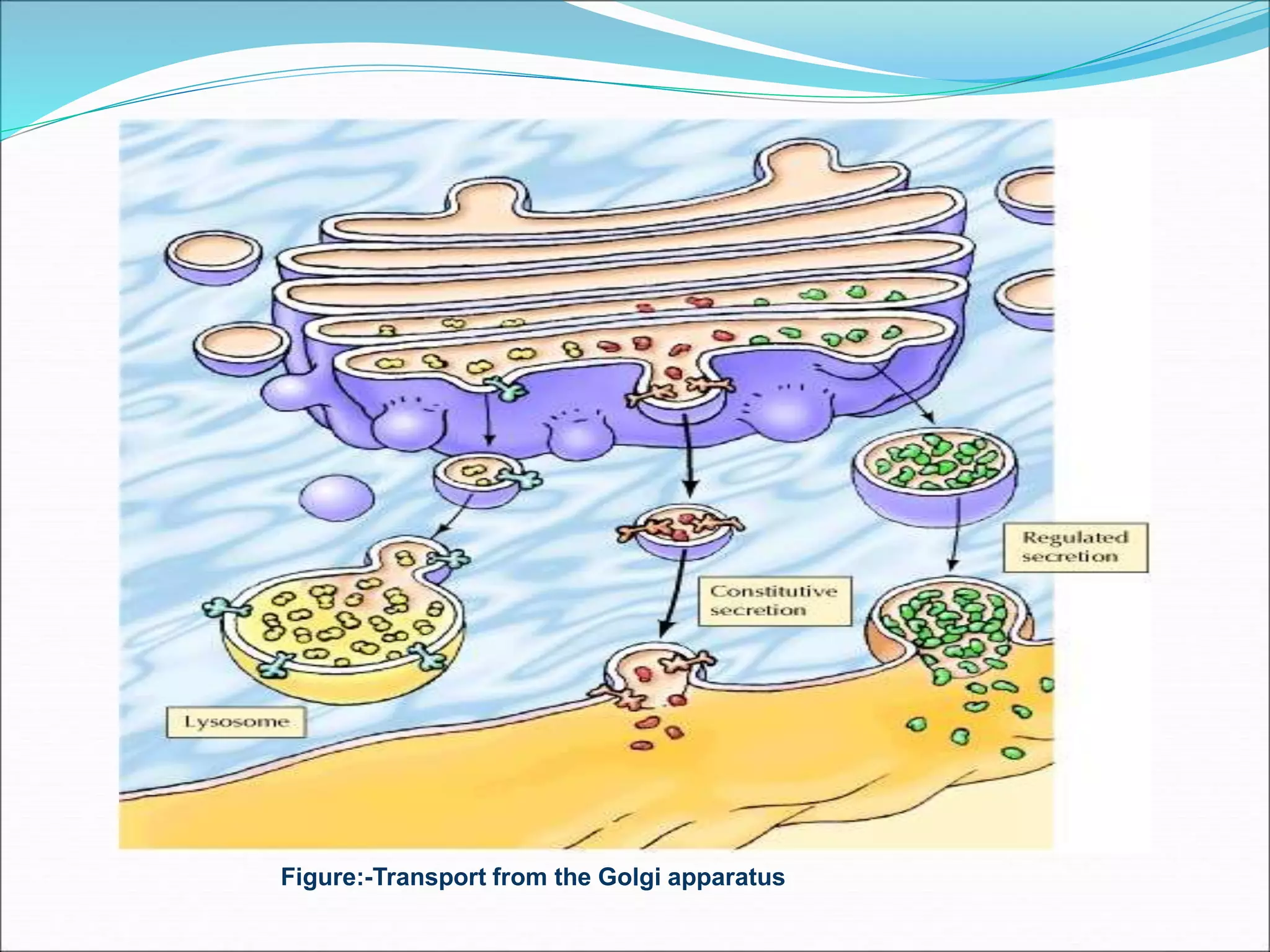
1)Endoplasmic reticulum
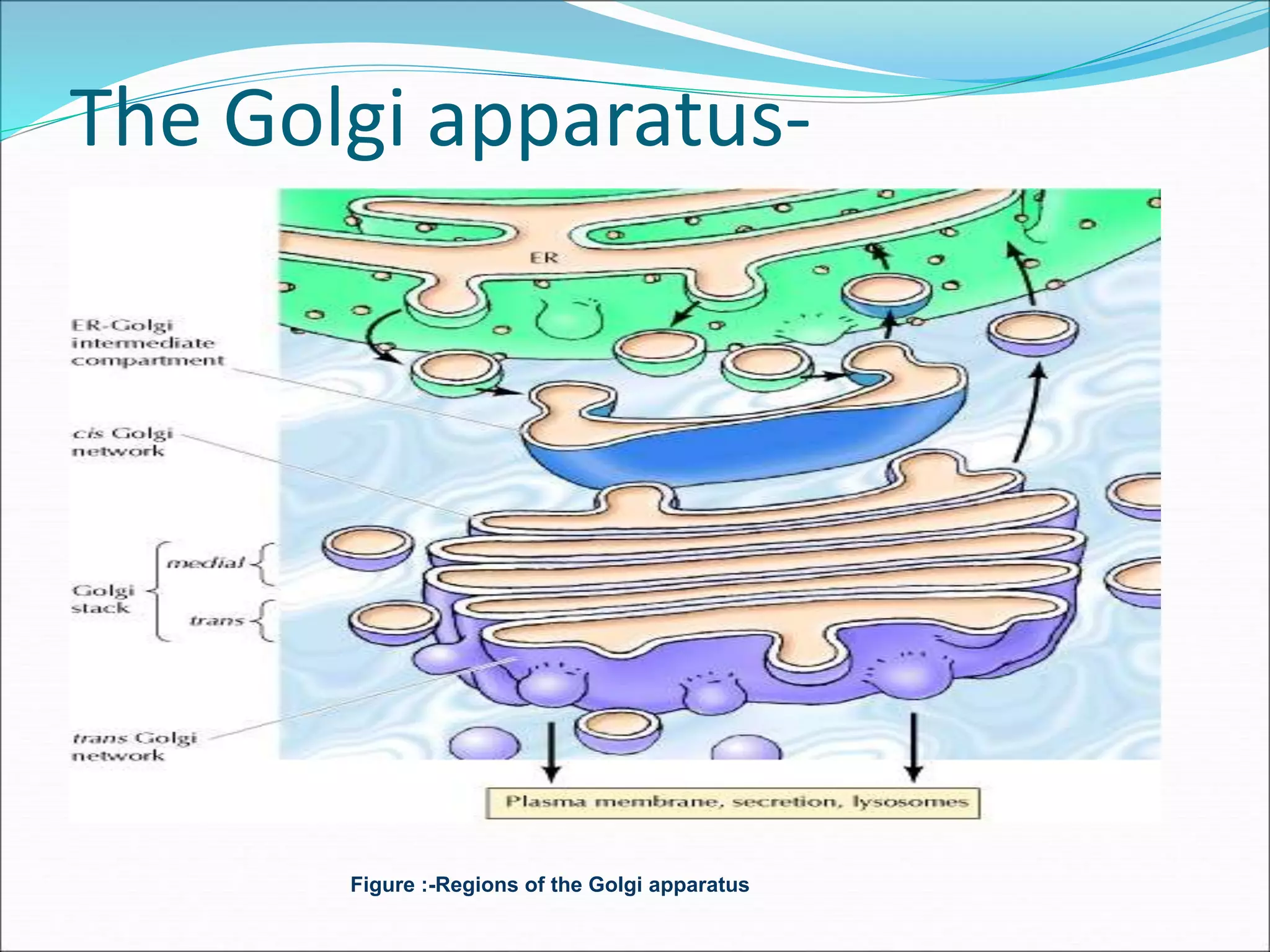
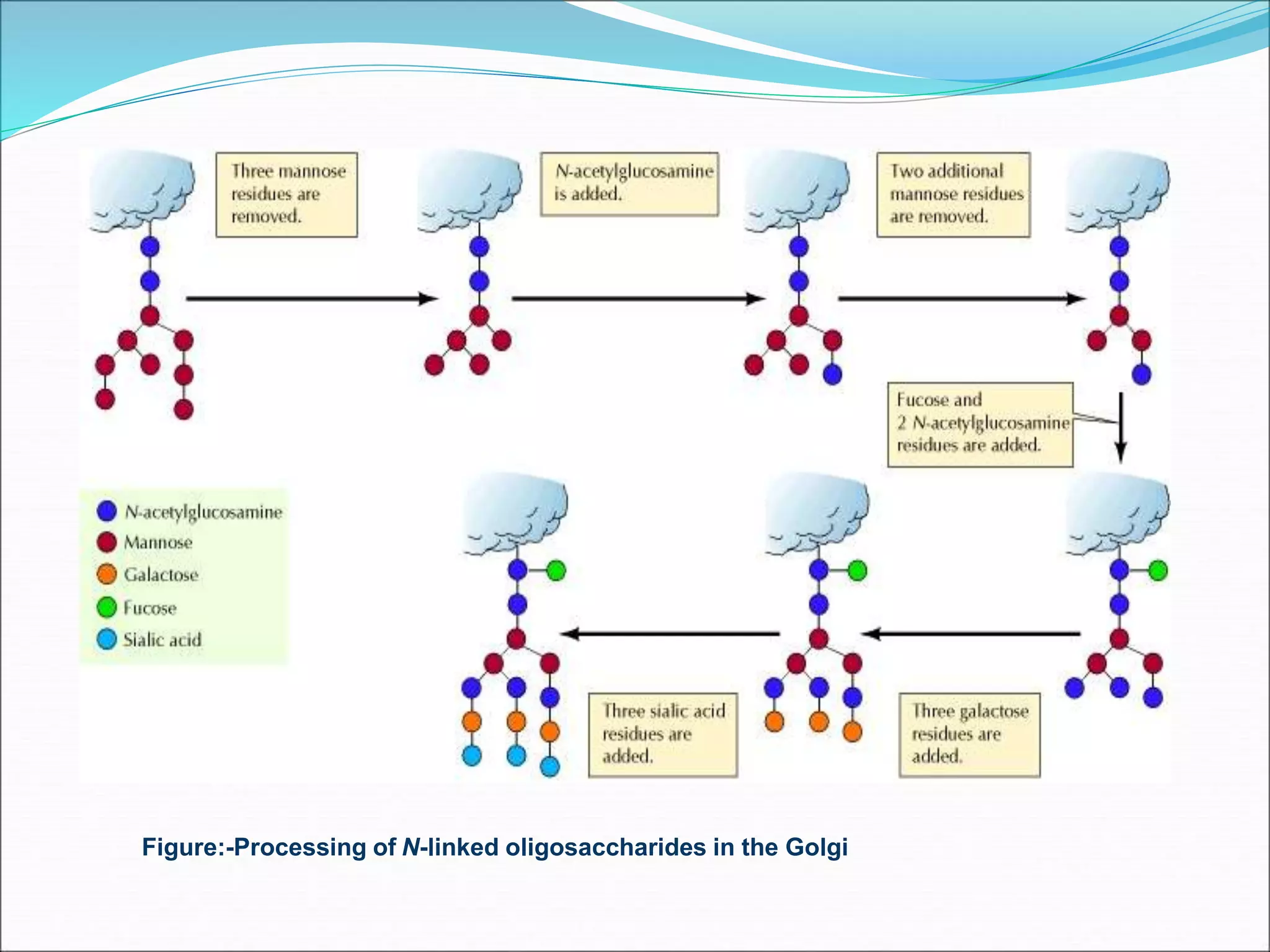
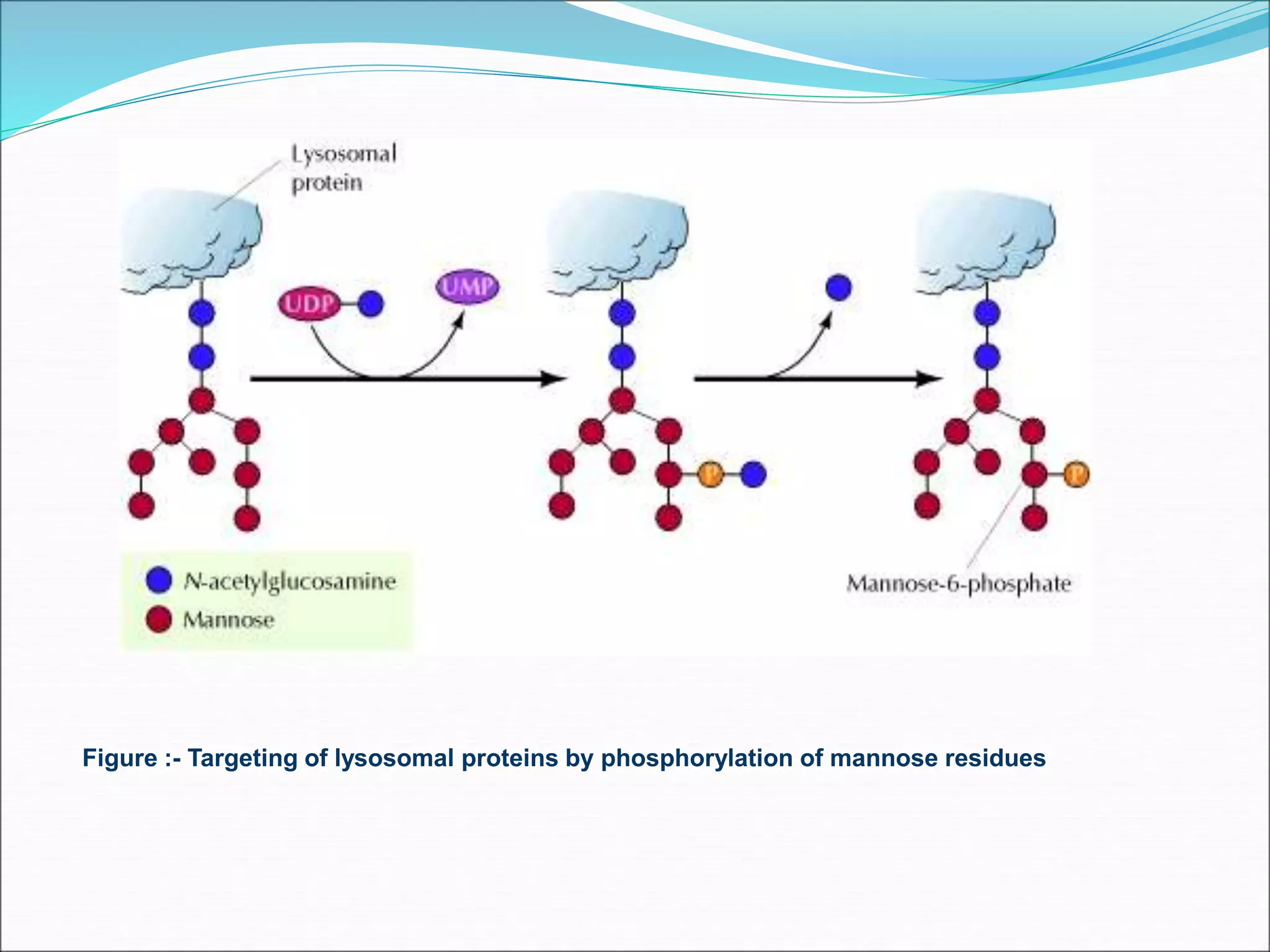
2) Golgi complex
3) Lysosome
Post-Translational transportation-
Most proteinsare cotranslationally translocated, some are
translated in the cytosol and later transported to their
destination. This occurs for proteins that go to a
mitochondrion, a chloroplast.
This process is called Post-Translational transportation.
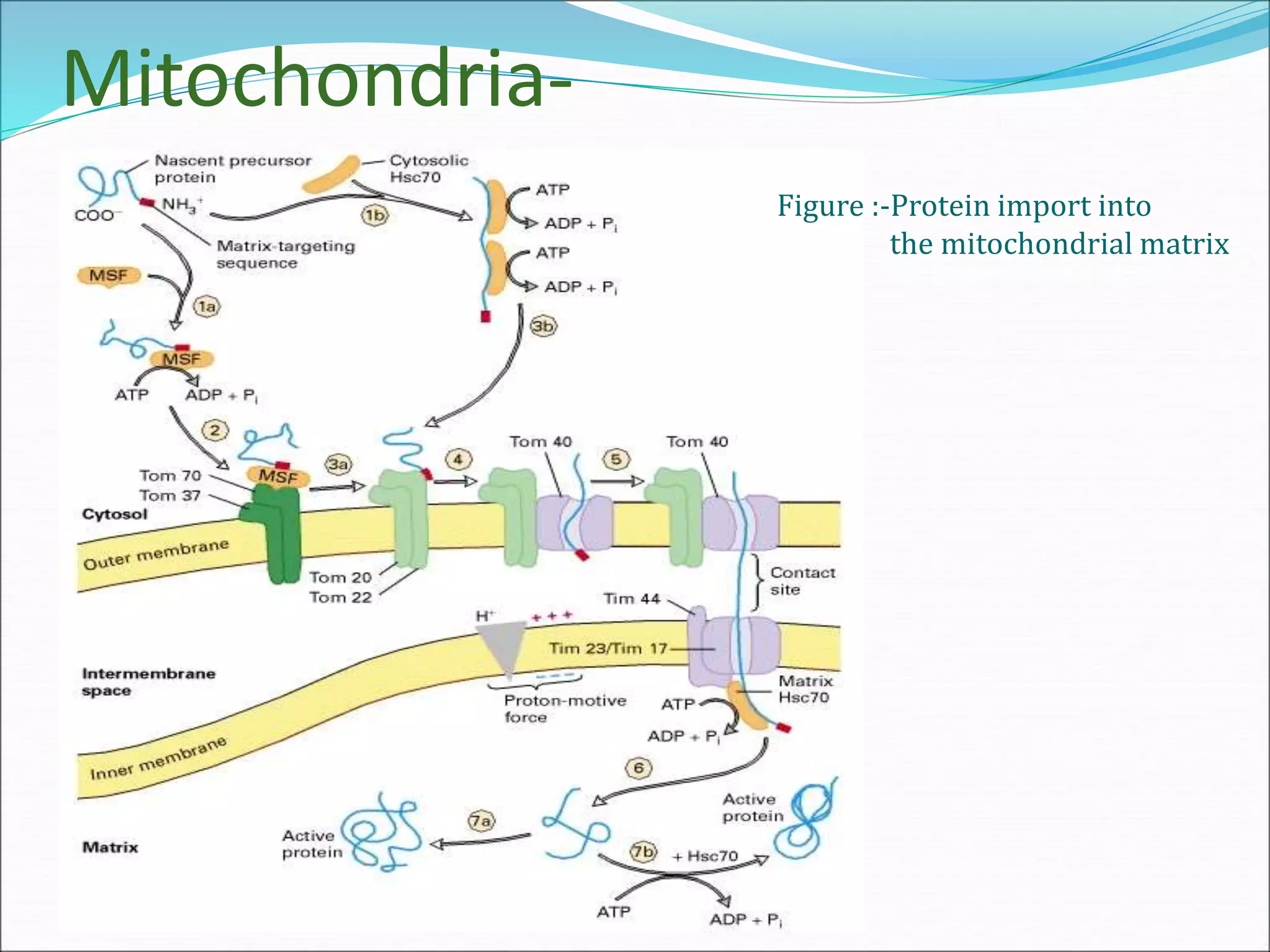
1) Mitochondria
2) choloroplast
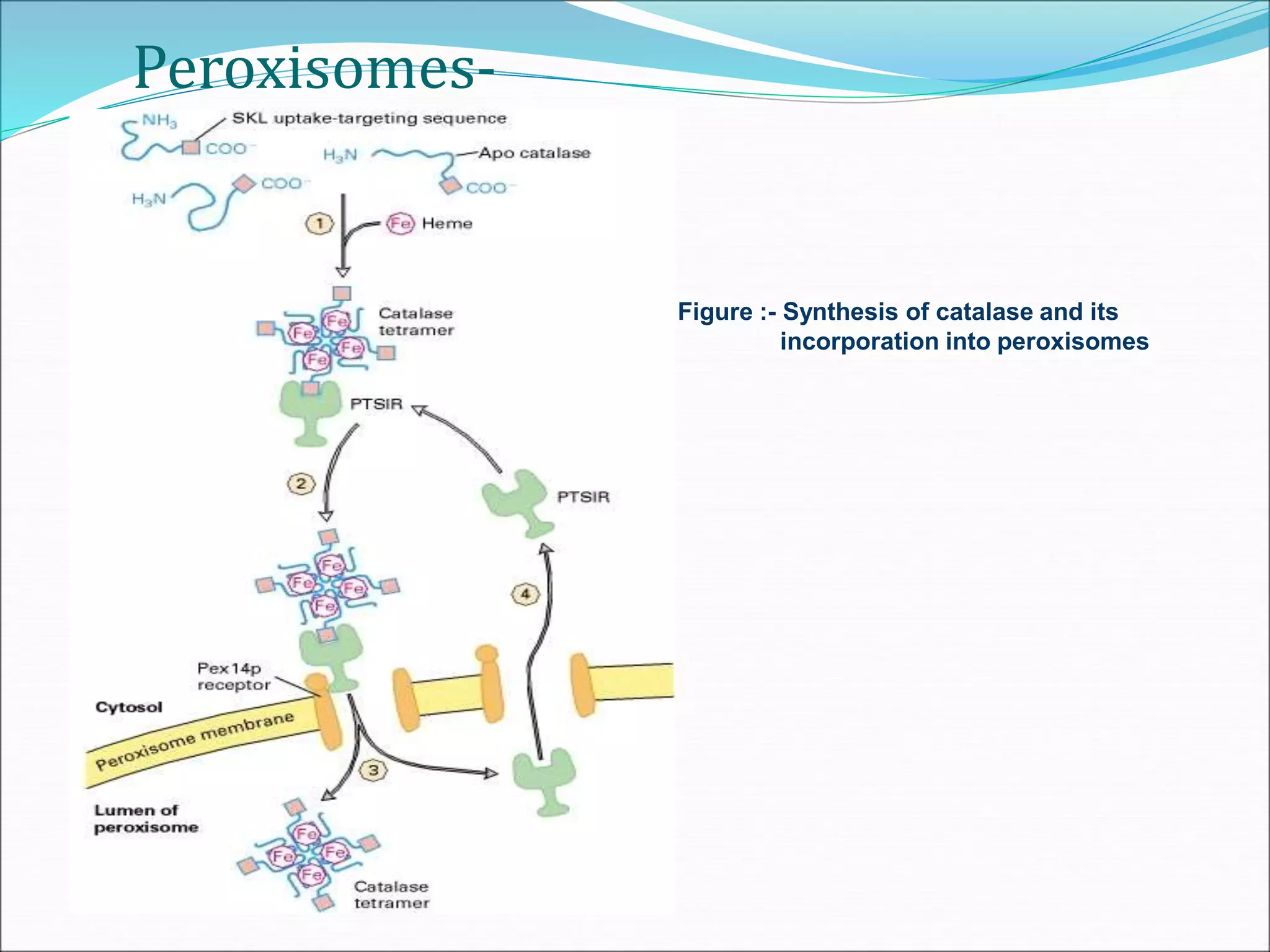
3) Peroxisomes
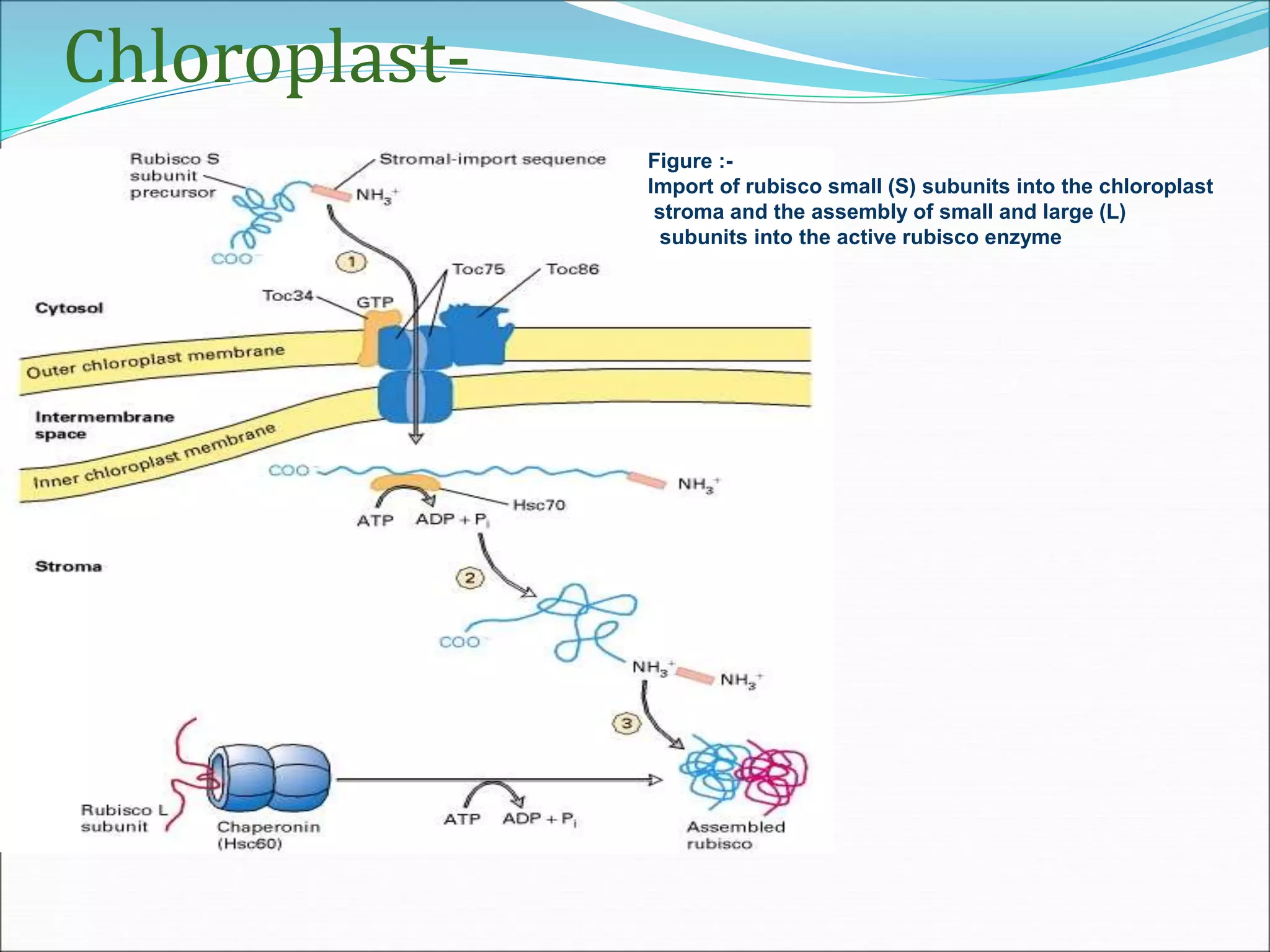
Chloroplast-
Figure :-
Import ofrubisco small (S) subunits into the chloroplast
stroma and the assembly of small and large (L)
subunits into the active rubisco enzyme
18.
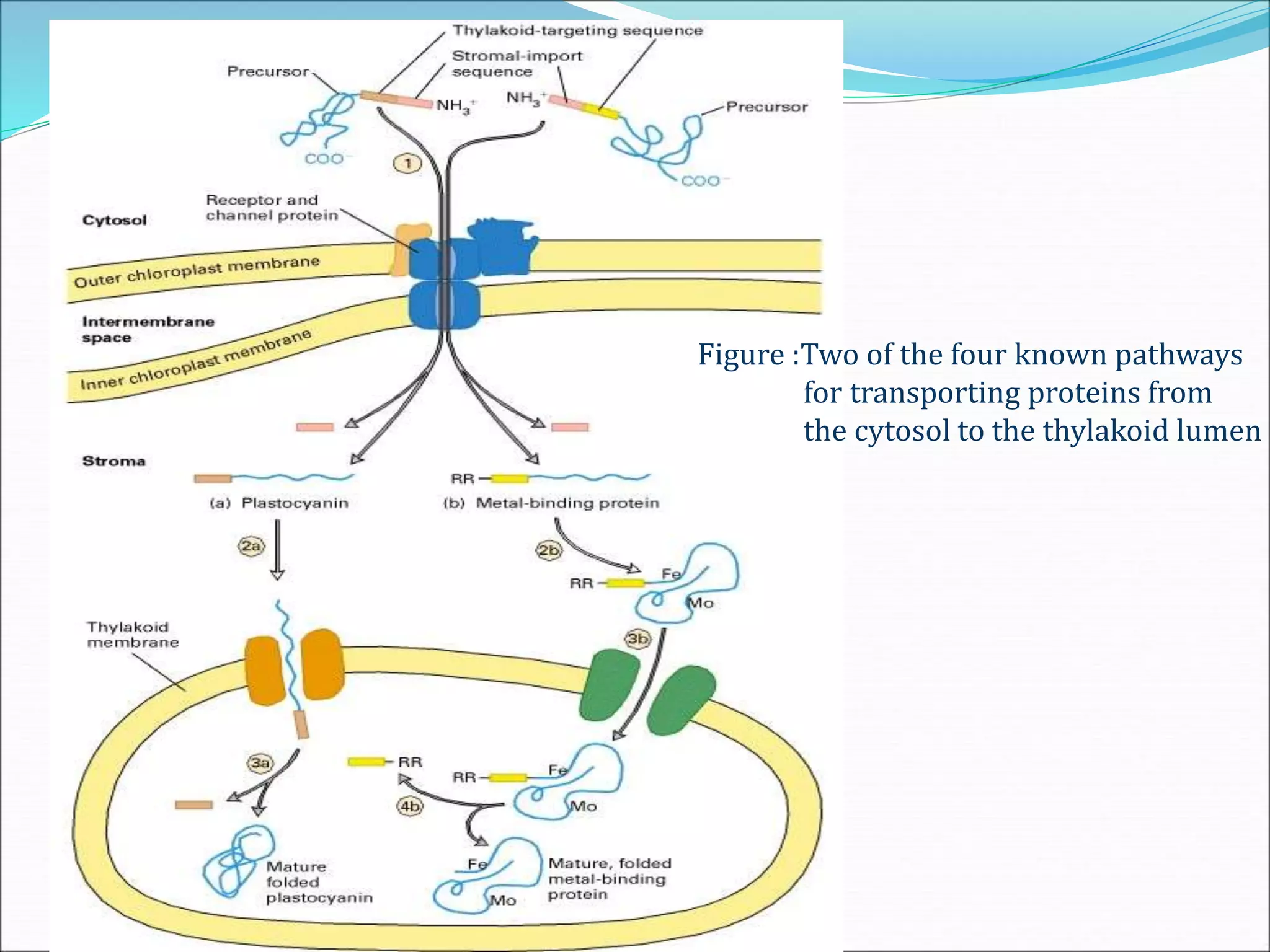
Figure :Two ofthe four known pathways
for transporting proteins from
the cytosol to the thylakoid lumen
Importance of proteinsorting-
•The delivery of the newly synthesized protein to there correct
destination is most important task.
•ER are assists protein in correct folding chaperones and protein
processing enzymes in the ER lumen.
•The important role of the ER is to identify misfolded protein,
mark them, and divert them to a degradation pathway.
•The Golgi apparatus is thus involved in the processing the broad
range of cellular constitute that travel along the secretory
pathway
21.
Reference-
The cell,a molecular approach,M.Cooper
&Geoffrey,2006
The cell and molecular biology,Lohdish,2nd edition


![Endoplasmic reticulum[1]](https://cdn.slidesharecdn.com/ss_thumbnails/endoplasmicreticulum1-160424155701-thumbnail.jpg?width=640&height=640&fit=bounds)


