Mycobacterium tuberculosis
and
Mycobacterium leprae
Prepared by
Samira Fattah
Assis. Lec.
College of health sciences-HMU
Lab 10
Mycobacterium
โ€ข A large family of bacteria that have unusually
waxy cell walls that are resistant to digestion.
โ€ข The mycobacteria have two significant
pathogenic species:
- Mycobacterium tuberculosis
-Mycobacterium leprae
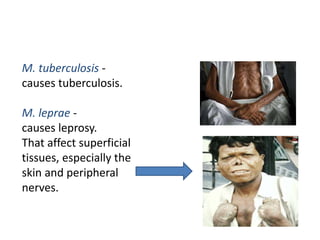
M. tuberculosis -
causes tuberculosis.
M. leprae -
causes leprosy.
That affect superficial
tissues, especially the
skin and peripheral
nerves.
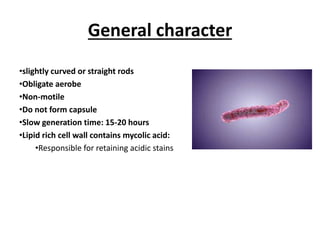
General character
โ€ขslightly curved or straight rods
โ€ขObligate aerobe
โ€ขNon-motile
โ€ขDo not form capsule
โ€ขSlow generation time: 15-20 hours
โ€ขLipid rich cell wall contains mycolic acid:
โ€ขResponsible for retaining acidic stains
Mycobacterium tuberculosis
Laboratory diagnosis
Specimen:
โ€ข Fresh sputum
โ€ข Gastric wash
โ€ข pleural fluid
โ€ข cerebrospinal fluid
โ€ข urine
โ€ข Biopsy material
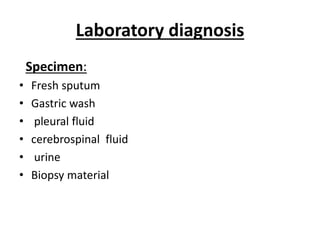
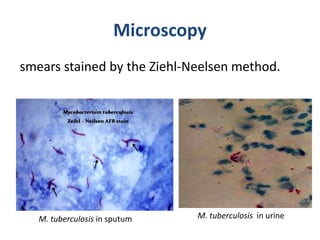
Microscopy
smears stained by the Ziehl-Neelsen method.
M. tuberculosis in urineM. tuberculosis in sputum
โ€ข sputum is the most commonly tested sample for M.
tuberculosis.
โ€ข The detection of acid-fast bacilli (AFB) in stained sputum
smears examined microscopically is the easiest and quickest
procedure, and provides the physician with a preliminary
confirmation of a TB diagnosis.
โ€ข It also gives a quantitative estimation of the number of bacilli
being excreted, which makes it important clinically and
epidemiologically for assessing the patient's infectiousness.
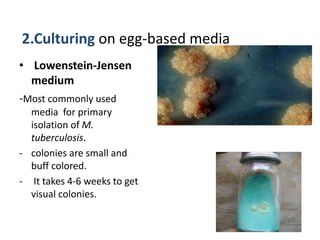
2.Culturing on egg-based media
โ€ข Lowenstein-Jensen
medium
-Most commonly used
media for primary
isolation of M.
tuberculosis.
- colonies are small and
buff colored.
- It takes 4-6 weeks to get
visual colonies.
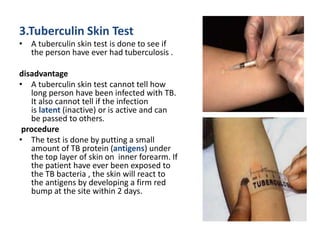
3.Tuberculin Skin Test
โ€ข A tuberculin skin test is done to see if
the person have ever had tuberculosis .
disadvantage
โ€ข A tuberculin skin test cannot tell how
long person have been infected with TB.
It also cannot tell if the infection
is latent (inactive) or is active and can
be passed to others.
procedure
โ€ข The test is done by putting a small
amount of TB protein (antigens) under
the top layer of skin on inner forearm. If
the patient have ever been exposed to
the TB bacteria , the skin will react to
the antigens by developing a firm red
bump at the site within 2 days.
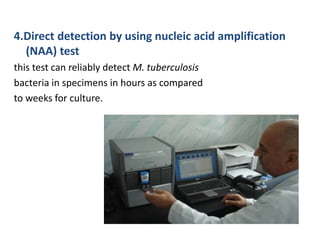
4.Direct detection by using nucleic acid amplification
(NAA) test
this test can reliably detect M. tuberculosis
bacteria in specimens in hours as compared
to weeks for culture.
Mycobacterium leprae
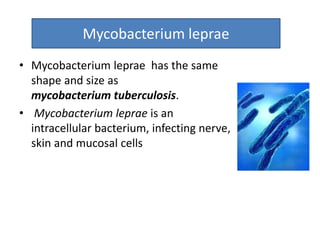
โ€ข Mycobacterium leprae has the same
shape and size as
mycobacterium tuberculosis.
โ€ข Mycobacterium leprae is an
intracellular bacterium, infecting nerve,
skin and mucosal cells
Mycobacterium leprae
โ€ข has the longest doubling time of all known
bacteria (13-15 days) which makes doing
laboratory research (in vitro) on this organism
quite difficult.
โ€ข unable to be cultured on artificial media
because it is obligate intracellular
mycobacterium.
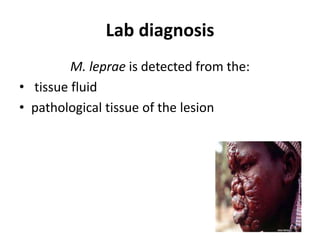
Lab diagnosis
M. leprae is detected from the:
โ€ข tissue fluid
โ€ข pathological tissue of the lesion
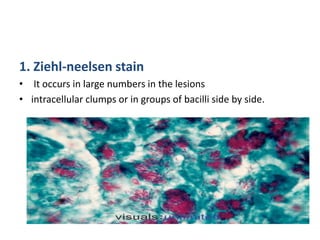
1. Ziehl-neelsen stain
โ€ข It occurs in large numbers in the lesions
โ€ข intracellular clumps or in groups of bacilli side by side.
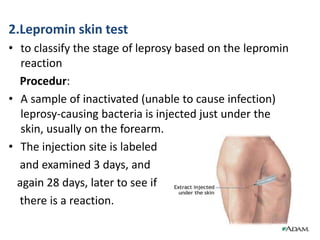
2.Lepromin skin test
โ€ข to classify the stage of leprosy based on the lepromin
reaction
Procedur:
โ€ข A sample of inactivated (unable to cause infection)
leprosy-causing bacteria is injected just under the
skin, usually on the forearm.
โ€ข The injection site is labeled
and examined 3 days, and
again 28 days, later to see if
there is a reaction.
3.PCR amplification
โ€ข using PCR amplification is to verify the
presence of DNA specific to M. leprae.

Mycobacterium tuberculosis

  • 1.
    Mycobacterium tuberculosis and Mycobacterium leprae Preparedby Samira Fattah Assis. Lec. College of health sciences-HMU Lab 10
  • 2.
    Mycobacterium โ€ข A largefamily of bacteria that have unusually waxy cell walls that are resistant to digestion. โ€ข The mycobacteria have two significant pathogenic species: - Mycobacterium tuberculosis -Mycobacterium leprae
  • 3.
    M. tuberculosis - causestuberculosis. M. leprae - causes leprosy. That affect superficial tissues, especially the skin and peripheral nerves.
  • 4.
    General character โ€ขslightly curvedor straight rods โ€ขObligate aerobe โ€ขNon-motile โ€ขDo not form capsule โ€ขSlow generation time: 15-20 hours โ€ขLipid rich cell wall contains mycolic acid: โ€ขResponsible for retaining acidic stains
  • 5.
  • 6.
    Laboratory diagnosis Specimen: โ€ข Freshsputum โ€ข Gastric wash โ€ข pleural fluid โ€ข cerebrospinal fluid โ€ข urine โ€ข Biopsy material
  • 7.
    Microscopy smears stained bythe Ziehl-Neelsen method. M. tuberculosis in urineM. tuberculosis in sputum
  • 8.
    โ€ข sputum isthe most commonly tested sample for M. tuberculosis. โ€ข The detection of acid-fast bacilli (AFB) in stained sputum smears examined microscopically is the easiest and quickest procedure, and provides the physician with a preliminary confirmation of a TB diagnosis. โ€ข It also gives a quantitative estimation of the number of bacilli being excreted, which makes it important clinically and epidemiologically for assessing the patient's infectiousness.
  • 9.
    2.Culturing on egg-basedmedia โ€ข Lowenstein-Jensen medium -Most commonly used media for primary isolation of M. tuberculosis. - colonies are small and buff colored. - It takes 4-6 weeks to get visual colonies.
  • 10.
    3.Tuberculin Skin Test โ€ขA tuberculin skin test is done to see if the person have ever had tuberculosis . disadvantage โ€ข A tuberculin skin test cannot tell how long person have been infected with TB. It also cannot tell if the infection is latent (inactive) or is active and can be passed to others. procedure โ€ข The test is done by putting a small amount of TB protein (antigens) under the top layer of skin on inner forearm. If the patient have ever been exposed to the TB bacteria , the skin will react to the antigens by developing a firm red bump at the site within 2 days.
  • 11.
    4.Direct detection byusing nucleic acid amplification (NAA) test this test can reliably detect M. tuberculosis bacteria in specimens in hours as compared to weeks for culture.
  • 12.
  • 13.
    โ€ข Mycobacterium lepraehas the same shape and size as mycobacterium tuberculosis. โ€ข Mycobacterium leprae is an intracellular bacterium, infecting nerve, skin and mucosal cells Mycobacterium leprae
  • 14.
    โ€ข has thelongest doubling time of all known bacteria (13-15 days) which makes doing laboratory research (in vitro) on this organism quite difficult. โ€ข unable to be cultured on artificial media because it is obligate intracellular mycobacterium.
  • 15.
    Lab diagnosis M. lepraeis detected from the: โ€ข tissue fluid โ€ข pathological tissue of the lesion
  • 16.
    1. Ziehl-neelsen stain โ€ขIt occurs in large numbers in the lesions โ€ข intracellular clumps or in groups of bacilli side by side.
  • 17.
    2.Lepromin skin test โ€ขto classify the stage of leprosy based on the lepromin reaction Procedur: โ€ข A sample of inactivated (unable to cause infection) leprosy-causing bacteria is injected just under the skin, usually on the forearm. โ€ข The injection site is labeled and examined 3 days, and again 28 days, later to see if there is a reaction.
  • 18.
    3.PCR amplification โ€ข usingPCR amplification is to verify the presence of DNA specific to M. leprae.