Cerebrovascular accident(Stroke)
Presented by-
Abhay Rajpoot
DEFINITION
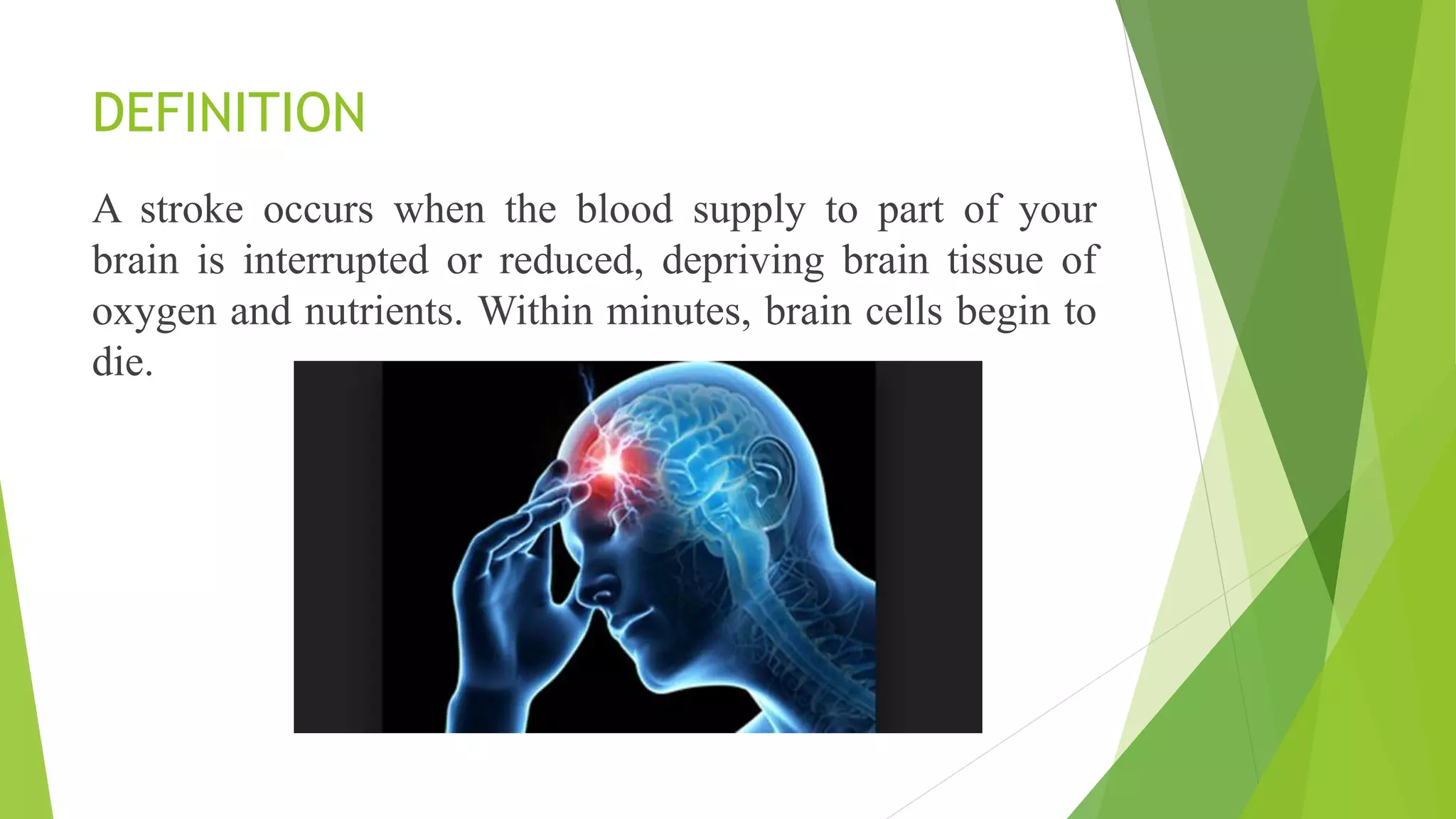
A stroke occurs when the blood supply to part of your
brain is interrupted or reduced, depriving brain tissue of
oxygen and nutrients. Within minutes, brain cells begin to
die.
INCIDENCE
Stroke is one of the leading causes of death and disability in
India. The estimated adjusted prevalence rate of stroke
range, 84-262/100,000 in rural and 334-424/100,000 in urban
areas. ... There is also a wide variation in case fatality rates
with the highest being 42% in Kolkata.(2018)
RISK FACTOR
Lifestyle risk factors
 Being overweight or obese
 Physical inactivity
 Heavy or binge drinking
 Use of illicit drugs such as cocaine and methamphetamines
Medical risk factors
 Blood pressure readings higher than 120/80 millimeters of
mercury (mm Hg)
 Cigarette smoking or exposure to secondhand smoke
 High cholesterol
 Diabetes
CONTI……
 Obstructive sleep apnea
 Cardiovascular disease, including heart failure, heart defects,
heart infection or abnormal heart rhythm
Other factors associated with a higher risk of stroke include:
 Age —People age 55 or older have a higher risk of stroke
than do younger people.
 Race — African-Americans have a higher risk of stroke than
do people of other races.
 Sex — Men have a higher risk of stroke than women. Women
are usually older when they have strokes, and they're more
likely to die of strokes than are men.
CAUSES
a) Ischemic stroke
About 80 percent of strokes are ischemic strokes.
Ischemic strokes occur when the arteries to your brain
become narrowed or blocked, causing severely reduced
blood flow (ischemia). The most common ischemic
strokes include:
CONTI…..
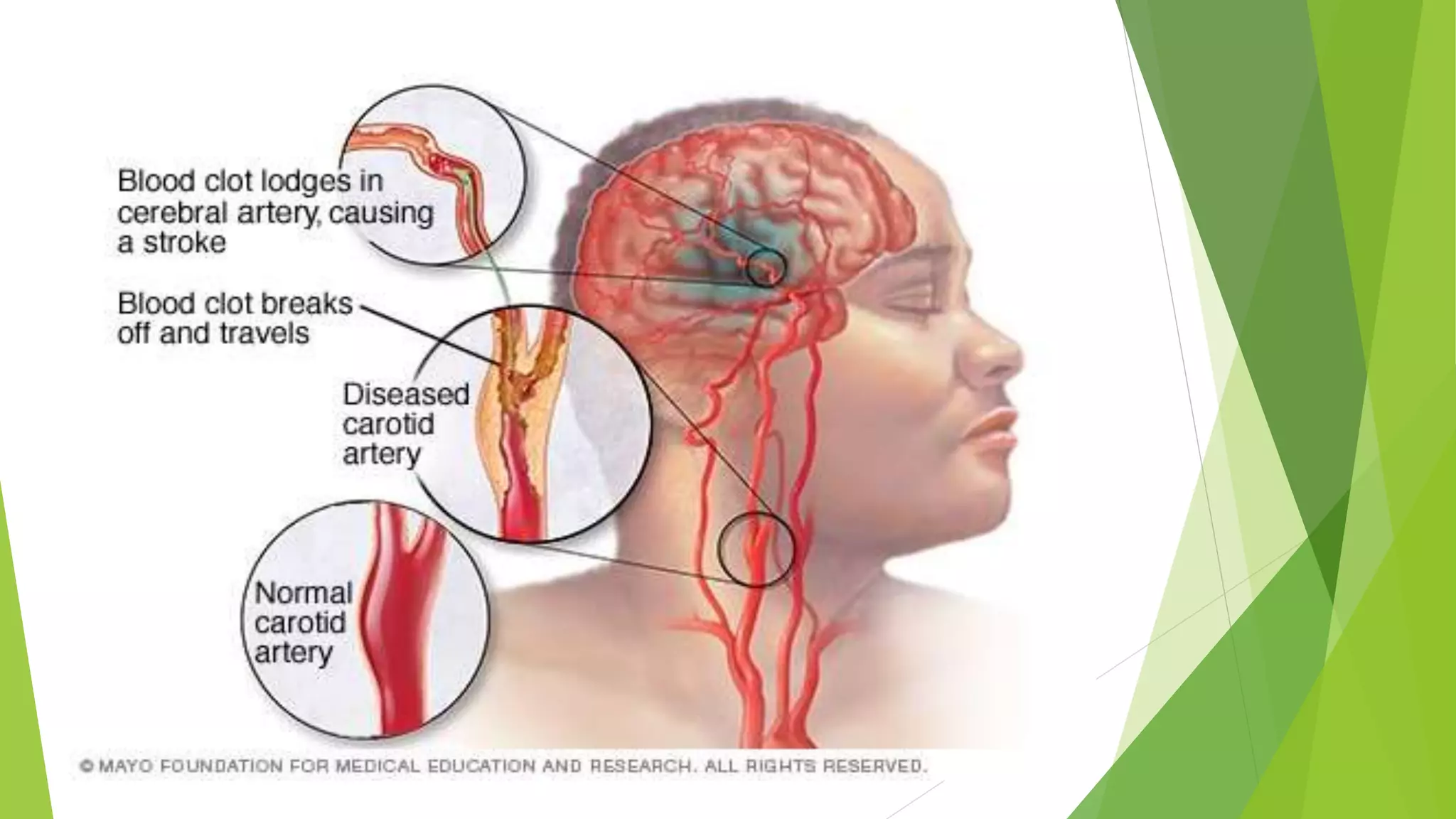
 Thrombotic stroke. A thrombotic stroke occurs when a
blood clot (thrombus) forms in one of the arteries that supply
blood to the brain.
 Embolic stroke. An embolic stroke occurs when a blood clot
or other debris forms away from the brain.
CONTI…..
b) Hemorrhagic stroke
Hemorrhagic stroke occurs when a blood
vessel in your brain leaks or ruptures. Brain
hemorrhages can result from many conditions
that affect your blood vessels.
CONTI….
 Intracerebral hemorrhage. In an intracerebral
hemorrhage, a blood vessel in the brain bursts and spills
into the surrounding brain tissue, damaging brain cells.
 Subarachnoid hemorrhage. In a subarachnoid
hemorrhage, an artery on or near the surface of the brain
bursts and spills into the space between the surface of
the brain and the skull.
CONTI…..
c)Transient ischemic attack (TIA)
A transient ischemic attack (TIA) — sometimes known as a
ministroke. A temporary decrease in blood supply to part of the
brain causes TIAs, which may last as little as five minutes.
SYMPTOMS
DIAGNOSTIC EVALUATION
 Physical examination
 Blood tests.
 Computerized tomography (CT) scan.
 Magnetic resonance imaging (MRI).
 Carotid ultrasound.
Cerebral angiogram.
Echocardiogram-
COMPLICATION
 Paralysis or loss of muscle movement
 Difficulty talking or swallowing
 Memory loss or thinking difficulties.
 Emotional problems
 Changes in behavior and self-care ability
PREVENTION
 Controlling high blood pressure (hypertension).
 Lowering the amount of cholesterol and saturated fat in
diet
 Quitting tobacco use
 Controlling diabetes
 Eating a diet rich in fruits and vegetables.
 Exercising regularly
 Drinking alcohol in moderation, if at all.
 Treating obstructive sleep apnea
 Avoiding illegal drugs.
PREVENTIVE MEDICATIONS
 Anti-platelet drugs
 Anticoagulants
MEDICAL MANAGEMENT
a)Ischemic stroke
Emergency treatment with medications.
Therapy with clot-busting drugs must start within 4.5 hours if
they are given into the vein.
 Intravenous injection of tissue plasminogen activator (tPA)
Emergency endovascular procedures.
 Medications delivered directly to the brain.
 Removing the clot with a stent retriever.
 Carotid endarterectomy.
 Angioplasty and stents.
b)Hemorrhagic stroke
Surgical blood vessel repair. Surgery may be used to
repair blood vessel abnormalities associated with
hemorrhagic strokes.
SURGICAL MANAGEMENT
 Surgical clipping
Coiling (endovascular embolization)
Surgical AVM removal
Stereotactic radiosurgery
NURSING MANAGEMENT
 Pain related to increased intracranial pressure as evidenced
by patient verbalisation
 Hyperthermia related to disease condition as evidenced by
raised body temperature
 Imbalanced nutrition less than body requirement related to
less intake of food as evidenced by weight loss
 Disturbed sleep pattern related to hospitalisation as
evidenced by patient verbalization
BIBLIOGRAPHY
Cerebrovascular accident

Cerebrovascular accident

  • 1.
  • 2.
    DEFINITION A stroke occurswhen the blood supply to part of your brain is interrupted or reduced, depriving brain tissue of oxygen and nutrients. Within minutes, brain cells begin to die.
  • 4.
    INCIDENCE Stroke is oneof the leading causes of death and disability in India. The estimated adjusted prevalence rate of stroke range, 84-262/100,000 in rural and 334-424/100,000 in urban areas. ... There is also a wide variation in case fatality rates with the highest being 42% in Kolkata.(2018)
  • 5.
    RISK FACTOR Lifestyle riskfactors  Being overweight or obese  Physical inactivity  Heavy or binge drinking  Use of illicit drugs such as cocaine and methamphetamines Medical risk factors  Blood pressure readings higher than 120/80 millimeters of mercury (mm Hg)  Cigarette smoking or exposure to secondhand smoke  High cholesterol  Diabetes
  • 6.
    CONTI……  Obstructive sleepapnea  Cardiovascular disease, including heart failure, heart defects, heart infection or abnormal heart rhythm Other factors associated with a higher risk of stroke include:  Age —People age 55 or older have a higher risk of stroke than do younger people.  Race — African-Americans have a higher risk of stroke than do people of other races.  Sex — Men have a higher risk of stroke than women. Women are usually older when they have strokes, and they're more likely to die of strokes than are men.
  • 7.
    CAUSES a) Ischemic stroke About80 percent of strokes are ischemic strokes. Ischemic strokes occur when the arteries to your brain become narrowed or blocked, causing severely reduced blood flow (ischemia). The most common ischemic strokes include:
  • 8.
    CONTI…..  Thrombotic stroke.A thrombotic stroke occurs when a blood clot (thrombus) forms in one of the arteries that supply blood to the brain.  Embolic stroke. An embolic stroke occurs when a blood clot or other debris forms away from the brain.
  • 9.
    CONTI….. b) Hemorrhagic stroke Hemorrhagicstroke occurs when a blood vessel in your brain leaks or ruptures. Brain hemorrhages can result from many conditions that affect your blood vessels.
  • 10.
    CONTI….  Intracerebral hemorrhage.In an intracerebral hemorrhage, a blood vessel in the brain bursts and spills into the surrounding brain tissue, damaging brain cells.  Subarachnoid hemorrhage. In a subarachnoid hemorrhage, an artery on or near the surface of the brain bursts and spills into the space between the surface of the brain and the skull.
  • 11.
    CONTI….. c)Transient ischemic attack(TIA) A transient ischemic attack (TIA) — sometimes known as a ministroke. A temporary decrease in blood supply to part of the brain causes TIAs, which may last as little as five minutes.
  • 12.
  • 13.
    DIAGNOSTIC EVALUATION  Physicalexamination  Blood tests.  Computerized tomography (CT) scan.  Magnetic resonance imaging (MRI).  Carotid ultrasound.
  • 14.
  • 15.
  • 16.
    COMPLICATION  Paralysis orloss of muscle movement  Difficulty talking or swallowing  Memory loss or thinking difficulties.  Emotional problems  Changes in behavior and self-care ability
  • 17.
    PREVENTION  Controlling highblood pressure (hypertension).  Lowering the amount of cholesterol and saturated fat in diet  Quitting tobacco use  Controlling diabetes  Eating a diet rich in fruits and vegetables.  Exercising regularly  Drinking alcohol in moderation, if at all.  Treating obstructive sleep apnea  Avoiding illegal drugs.
  • 18.
  • 19.
    MEDICAL MANAGEMENT a)Ischemic stroke Emergencytreatment with medications. Therapy with clot-busting drugs must start within 4.5 hours if they are given into the vein.  Intravenous injection of tissue plasminogen activator (tPA) Emergency endovascular procedures.  Medications delivered directly to the brain.  Removing the clot with a stent retriever.  Carotid endarterectomy.  Angioplasty and stents.
  • 20.
    b)Hemorrhagic stroke Surgical bloodvessel repair. Surgery may be used to repair blood vessel abnormalities associated with hemorrhagic strokes.
  • 21.
  • 22.
  • 23.
  • 24.
  • 25.
    NURSING MANAGEMENT  Painrelated to increased intracranial pressure as evidenced by patient verbalisation  Hyperthermia related to disease condition as evidenced by raised body temperature  Imbalanced nutrition less than body requirement related to less intake of food as evidenced by weight loss  Disturbed sleep pattern related to hospitalisation as evidenced by patient verbalization
  • 26.