ANAESTHESIOLOGYANAESTHESIOLOGYANAESTHESIOLOGY
M.P.M.P.
Editor: Dr. Meenu Chadha
Co-editor: Dr. Alok Biyani
?October 2016 Volume 2? ?Issue 2
Anaesthesiology M.P. 1
CONTENTS
ANAESTHESIOLOGY
M.P
Dr. Meenu Chadha
From Editor's Desk - Anaesthesia for Robotic Surgery
021EDITOR
Dr. Meenu Chadha
CO-EDITOR
Dr. Alok Biyani
EDITORIAl BOARD
Dr. Harsha Desai Phulambrikar
Dr. Ashwin Soni
Dr. Suman Gupta
Dr. Ruchi Tandon
Dr. Ashish Sethi
Dr. Harsh Mangal
ADVISORS
Dr. T.C. Kriplani
Dr. V.M. Agnihotri
Dr. R.C. Agarwal
Dr. V.K. Joshi
Dr. M.M. Neema
Dr. Bhanu Ved
Dr. K.G. Vijayan
Dr. K.K. Arora
Dr. Shikha Mehrotra
Dr. Aditya Agarwal
Dr. Dilip Kothari
Dr. Sadhana Sanwatsarkar
DR. Sudhakar Diwedi
Senior Anaesthetist &
Pain Physician
CHL Indore.
chadha.meenu@gmail.com
9977161035
Consultant
Apollo Hospitals
Indore
drolokbiyani@gmail.com
9329548444
Dr. T.C. Kriplani
Blood components -
An Evolving issue in transfusion medicine
042
Dr. Mukesh Nigam
A Poor Historian
133
Dr. Suman Gupta, Dr. Satyendra Singh, Dr. Preeti Goyal
Dr. Bhanu Chaudhary
Excerpt for Pre-Anaesthetic Evaluation
154
Dr. Charu Neema, Dr. Vinayak Gour, Dr. Devik Mishra,
Dr. S. Sanwatsarkar
Severe rheumatic mitral stenosis in an obstetric patient
posted for caesaren section: An anaesthetic challenge
195
Dr Dharna Jain
Letter to Editor
246
Anaesthesiology M.P.2
From Editor's Desk -
Robot assisted surgery has come into vogue since the past
decade and is being widely used for lot of procedures. It
has evolved gradually from minimally invasive surgeries.
Robotic surgery is now becoming the need of the day because
of its unprecedented control and precision of surgical
instruments.
Main benefits of robot assisted surgeries to the patient are
less post-operative pain, less trauma to the tissues, less hospitalization, early
recovery and cosmetic incisions. There are also various benefits for the surgeon
also; first the operating surgeon has a unique three dimensional stereoscopic view
of the operating field with adjustable magnification and camera. Second the
surgeon gets the extra degrees of motion that are not there with conventional
laparoscopy and lastly the surgeon benefits from tremor filtering and motion
1
scaling .
Anaesthesiologistsneedtobeupdatedwiththistechniquesothattheycanplan
the anesthesia and the anesthetic techniques accordingly. Main drawback is the
bulky equipment and spatial restriction so the anesthesiologist can't easily access
the patient. Anaesthesiologists have the experience of working in remote locations
and managing the patient'sairway. It is important that all the lines and monitors be
2
placed beforehand toavoidkinking and displacement . Upper abdominal , thoracic
and head and neck surgeries place the head away from the anaesthesiologist and
3
anaesthesia work stations so access to the airway is impossible intraoperatively .
The anaesthesiologist must familiarize himself/herself with fast detachment of the
robotic system in case of emergency. Otherwise no movement should be allowed
during the procedure because any movement can lead to tearing or puncturing of
4
internalorgansorvascularorgansleadingtoseriousconsequences.
Another importantaspect is thatrobotic surgerymay require positioning thatis
much steeper than conventional laparoscopy. This may sometimes cause the
patient to slide off the operating table, so restraints should always be used. The
bulky robotic arms and extremes of positioning and long duration of surgeries may
increase the risk of positioning injuries. The anaesthesiologists should be aware of
these risks and take due precautions. In one center, positioning injuries
documented were6.6%in 334robot assisted urologicalprocedures.Long surgeries
Anaesthesia for Robotic Surgery
DR. Meenu Chadha
Anaesthesiology M.P. 3
and extreme positions may further increase the risk. Positioning neuropathy is
also common in robotic surgeries. Inadequate padding or positioning and
inadvertent robotic arm placement may result in external nerve compression.
Arms and shoulders should be well protected and avoid conflict with robotic
5
armstodecreasetheriskofbrachialplexusesinjury
So,in spite of various advantages of robotic surgeries there are certain
importantconsiderationswhichshouldbekeptinmind–
a) Theequipmentisverybulkyandrequireslotofspace.
b) Large size of the robot may result in collision with its own arms, assistants or
patients.
c) It is difficult for the anesthesiologist to quickly access the patient and
impossibletorepositionthepatientoncetherobotisstationed.
Future research is needed to find out long term outcomes, cost effectiveness
and whether this technology should be widely used or restricted to special
procedures. Robot assisted surgery is the need of the hour and its usage is going
to increase. Anaesthesiologists should stay updated with the latest techniques
sothattheycanprovidequalityanaesthesia.
1. Mirnezami AH, Mirnezami R, Venkatasubramaniam AK, Chandrakumaran K,
Cecil TD, Moran BJ. Robotic colorectal surgery: hype or new hope? A
systematic review of robotics in colorectal surgery.Colorectal Dis.
2010;12:1084–1093
2. Baltayian S. A brief review: anesthesia for robotic prostatectomy. J Robotic
Surg.2008;2:59–66
3. Sullivan MJ, Frost EA, Lew MW. Anesthetic care of the patient for robotic
surgery.MiddleEastJAnesthesiol.2008;19:967–982
4. SteenwykB,LyerlyR., 3rdAdvancementsinrobotic-assistedthoracicsurgery.
AnesthesiolClin.2012;30:699–708
5. Lehr EJ, Rodriguez E, Chitwood WR. Robotic cardiac surgery. Curr Opin
Anaesthesiol.2011;24:77–85
REFERENCES
In the recent past many changes have occurred
in transfusion medicine. Advancement in the field
of transfusion medicine has increased our
knowledge and understanding about the
unnecessaryuseofwholeblood.
World Health Organization reports large
difference in the use of whole blood compared to
the use of blood components in developed versus
developing countries. In high income countries
97% blood is processed to prepare Blood
Components whereas in low income countries
only 28% of donated blood is used for component
therapy.
Component therapy requires more expensive
infrastructure and system as compared to whole
blood therapy but it makes more efficient use of a
valuable resource “donated blood” by allowing a
single unit to address specific needs of multiple
patients.
Now days there are only limited indications of
whole blood transfusion (massive blood loss
especially in trauma patients, autologous blood
transfusion and situation where facility for
componenttherapyisnotavailable).
Before describing the blood coagulation tests
and it’s interpretations it will be worthwhile to
review the mechanism of “Hemostasis”. Blood
coagulation is part of an important host defense
mechanism and is composed of 4 major events
that occur in a set order following loss of vascular
integrity.
1. Initialphaseofvascularconstriction.
2. Activation and aggregation of platelets at the
site of injury and later change their shape to
formtheplug.
3. Entrapment of fibrin mesh (also called clot) to
ensurestabilitytolooseplateletplug.
4. DissolutionofclotbyFibrinolyticsystem.
In order for hemostasis to occur, platelets must
adhere to exposed collagen; release the contents
of their granules and aggregate. This process of
adhesion is mediated by Von Will brand factor
(vWF). Inherited deficiencies of vWF are the
causes of Von Willebrand disease. The function of
vWF is to act as a bridge between specific
glycoprotein complex on the surface of platelets
andcollagenfibrils.
Certain antiplatelet agents decrease platelet
aggregation hence inhibit thrombus formation.
Platelets are derived from megakaryocytes in the
bone marrow and survive for 10 days after
entering in tothe circulation. One third of platelets
are found in spleen as a pool that can freely
exchangewithcirculation.
The procoagulant phase of coagulation
consistsofthreepathways:-
COAGULATION CASCADES
Anaesthesiology M.P.4
BLOOD COMPONENTS - AN EVOLVING
ISSUE IN TRANSFUSION MEDICINE
1.Ex.Prof.&H.O.DofAnaesthesiology,N.S.C.BMedicalCollege,Jabalpur(M.P.)
1
lDr. T.C. Kriplani
Anaesthesiology M.P. 5
(i) ExtrinsicPathways
(ii) IntrinsicPathways
(iii) CommonPathways
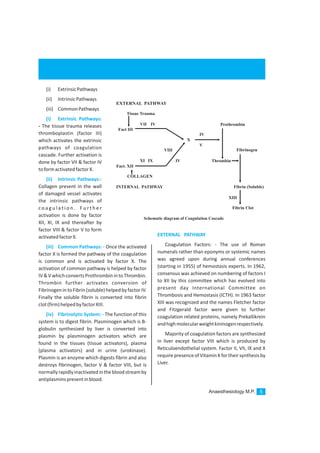
- The tissue trauma releases
thromboplastin (factor III)
which activates the extrinsic
pathways of coagulation
cascade. Further activation is
done by factor VII & factor IV
toformactivatedfactorX.
Collagen present in the wall
of damaged vessel activates
the intrinsic pathways of
c o a g u l a t i o n . F u r t h e r
activation is done by factor
XII, XI, IX and thereafter by
factor VIII & factor V to form
activatedfactorX.
Once the activated
factor X is formed the pathway of the coagulation
is common and is activated by factor X. The
activation of common pathway is helped by factor
IV&VwhichconvertsProthrombinintoThrombin.
Thrombin further activates conversion of
FibrinogenintoFibrin(soluble)helpedbyfactorIV.
Finally the soluble fibrin is converted into fibrin
clot(firm)helpedbyfactorXIII.
The function of this
system is to digest fibrin. Plasminogen which is B-
globulin synthesized by liver is converted into
plasmin by plasminogen activators which are
found in the tissues (tissue activators), plasma
(plasma activators) and in urine (urokinase).
Plasmin is an enzyme which digests fibrin and also
destroys fibrinogen, factor V & factor VIII, but is
normallyrapidlyinactivatedinthebloodstreamby
antiplasminspresentinblood.
(i) Extrinsic Pathways:
(ii) Intrinsic Pathways:-
(iii) Common Pathways: -
(iv) Fibrinolytic System: -
EXTERNAL PATHWAY
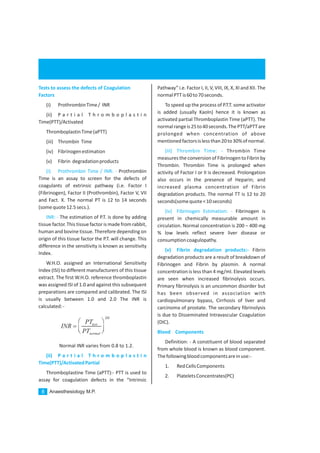
Coagulation Factors: - The use of Roman
numerals rather than eponyms or systemic names
was agreed upon during annual conferences
(starting in 1955) of hemostasis experts. In 1962,
consensus was achieved on numbering of factors I
to XII by this committee which has evolved into
present day International Committee on
Thrombosis and Hemostasis (ICTH). In 1963 factor
XIII was recognized and the names Fletcher factor
and Fitzgerald factor were given to further
coagulation related proteins, namely Prekallikrein
andhighmolecularweightkininogenrespectively.
Majority of coagulation factors are synthesized
in liver except factor VIII which is produced by
Reticuloendothelial system. Factor II, VII, IX and X
requirepresenceofVitaminKfortheirsynthesisby
Liver.
EXTERNAL PATHWAY
Tissue Trauma
VII IV
Fact III
VIII
XI IX
X
IV
Fact. XII
COLLAGEN
INTERNAL PATHWAY
Schematic diagram of Coagulation Cascade
Thrombin
Fibrinogen
Fibrin (Soluble)
XIII
Fibrin Clot
Prothrombin
IV
V
Blood Coagulation Tests and Interpretations
1. Tests for Platelets
Laboratory tests must evaluate the platelets
and various coagulant factors. A knowledge of
these tests is crucial for diagnosis and
managementofcoagulationabnormalities.
(i)BleedingTime
(ii)PlateletCount
The Ivy method for
determining the bleeding time involves the use of
B.P. cuffwhich is applied in forearm and inflated to
40 mm of Hg. A superficial incision is made 9 mm.
long & 1 mm. depth) with a special knife on volar
aspect of forearm. The incision is touched with
absorbent paper every 30 seconds till blood no
(i) Bleeding Time: -
longer moistens the paper. Normal bleeding time
should be less than 5 minutes (some consider less
than9minutesbythismethod).
A less invasive bleeding time test which is
commonly performedisbyDuke’smethod.A3to
4 mm. deep prick is made with lancet or needle on
the finger tip or ear lobe. Bleeding should cease
within1to3minutesbythismethod.
(Normal 1, 50,000 to 4,
50,000/cu.mm.)
A platelet count below 50,000/cu.mm is
associated with prolonged bleeding time (some
quote value of less than 1, 00000/cumm) The
platelet count estimates only the number and not
thefunction(quality)ofplatelets.
(ii) Platelet Count: -
Anaesthesiology M.P.4 Anaesthesiology M.P.6
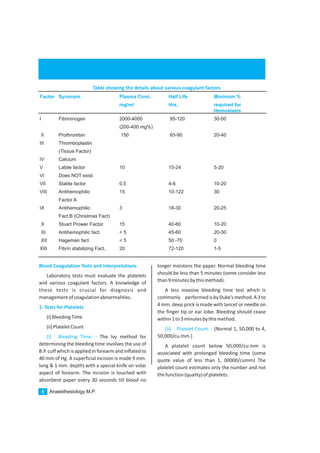
Table showing the details about various coagulant factors
Factor Synonym Plasma Conc. Half Life Minimum %
mg/ml Hrs. required for
Hemostasis
I Fibrininogen 2000-4000 95-120 30-50
(200-400 mg%)
II Prothrombin 150 65-90 20-40
III Thromboplastin
(Tissue Factor)
IV Calcium
V Labile factor 10 15-24 5-20
VI Does NOT exist
VII Stable factor 0.5 4-6 10-20
VIII Antihemophilic 15 10-122 30
Factor A
IX Antihemophilic 3 18-30 20-25
Fact.B (Christmas Fact)
X Stuart Prower Factor 15 40-60 10-20
XI Antihemophilic fact. < 5 45-60 20-30
XII Hageman fact < 5 50 -70 0
XIII Fibrin stabilizing Fact. 20 72-120 1-5
When platelet count is normal and bleeding
time is increased one should see the platelet
function. Evaluation of platelet aggregation in
response to Adenosine diaphosphates,
epinephrine or collagen may be useful for
detectingfunctionalabnormalityofplatelets.
Recently instruments have been introduced to
measuretheviscoelasticstrengthofthebloodclot
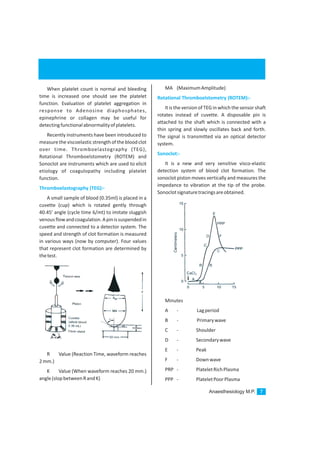
over time. Thromboelastography (TEG),
Rotational Thromboelstometry (ROTEM) and
Sonoclot are instruments which are used to elicit
etiology of coagulopathy including platelet
function.
A small sample of blood (0.35ml) is placed in a
cuvette (cup) which is rotated gently through
40.45’ angle (cycle time 6/mt) to imitate sluggish
venousflowandcoagulation.Apinissuspendedin
cuvette and connected to a detector system. The
speed and strength of clot formation is measured
in various ways (now by computer). Four values
that represent clot formation are determined by
thetest.
R Value (Reaction Time, waveform reaches
2mm.)
K Value (When waveform reaches 20 mm.)
angle(slopbetweenRandK)
Thromboelastography (TEG):-
MA (MaximumAmplitude)
It is the version of TEG in which the sensor shaft
rotates instead of cuvette. A disposable pin is
attached to the shaft which is connected with a
thin spring and slowly oscillates back and forth.
The signal is transmitted via an optical detector
system.
It is a new and very sensitive visco-elastic
detection system of blood clot formation. The
sonoclot piston moves vertically and measures the
impedance to vibration at the tip of the probe.
Sonoclotsignaturetracingsareobtained.
Minutes
A - Lagperiod
B - Primarywave
C - Shoulder
D - Secondarywave
E - Peak
F - Downwave
PRP - PlateletRichPlasma
PPP - PlateletPoorPlasma
Rotational Thromboelstometry (ROTEM):-
Sonoclot:-
Anaesthesiology M.P. 7
Anaesthesiology M.P.8
Tests to assess the defects of Coagulation
Factors
(i) ProthrombinTime/ INR
(ii) P a r t i a l T h r o m b o p l a s t i n
Time(PTT)/Activated
ThromboplastinTime(aPTT)
(iii) Thrombin Time
(iv) Fibrinogenestimation
(v) Fibrin degradationproducts
Prothrombin
Time is an assay to screen for the defects of
coagulants of extrinsic pathway (i.e. Factor I
(Fibrinogen), Factor II (Prothrombin), Factor V, VII
and Fact. X. The normal PT is 12 to 14 seconds
(somequote12.5secs.).
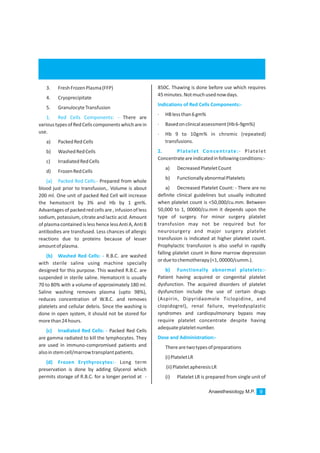
The estimation of P.T. is done by adding
tissue factor. This tissue factor is made from rabbit,
human and bovine tissue. Therefore depending on
origin of this tissue factor the P.T. will change. This
difference in the sensitivity is known as sensitivity
Index.
W.H.O. assigned an International Sensitivity
Index (ISI) to different manufacturers of this tissue
extract. The first W.H.O. reference thromboplastin
was assigned ISI of 1.0 and against this subsequent
preparations are compared and calibrated. The ISI
is usually between 1.0 and 2.0 The INR is
calculated:-
Normal INR varies from 0.8 to 1.2.
Thromboplastine Time (aPTT):- PTT is used to
assay for coagulation defects in the “Intrinsic
(i) Prothrombin Time / INR: -
INR: -
(ii) P a r t i a l T h r o m b o p l a s t i n
Time(PTT)/ActivatedPartial
Pathway” i.e. Factor I, II, V, VIII, IX, X, XI and XII. The
normalPTTis60to70seconds.
To speed up the process of P.T.T. some activator
is added (usually Kaoln) hence it is known as
activated partial Thromboplastin Time (aPTT). The
normalrangeis25to40seconds.ThePTT/aPTTare
prolonged when concentration of above
mentionedfactorsislessthan20to30%ofnormal.
Thrombin Time
measures the conversion of FibrinogentoFibrin by
Thrombin. Thrombin Time is prolonged when
activity of Factor I or II is decreased. Prolongation
also occurs in the presence of Heparin; and
increased plasma concentration of Fibrin
degradation products. The normal TT is 12 to 20
seconds(somequote<10seconds)
Fibrinogen is
present in chemically measurable amount in
circulation. Normal concentration is 200 – 400 mg
% low levels reflect severe liver disease or
consumptioncoagulopathy.
Fibrin
degradation products are a result of breakdown of
Fibrinogen and Fibrin by plasmin. A normal
concentration is less than 4 mg/ml. Elevated levels
are seen when increased fibrinolysis occurs.
Primary fibrinolysis is an uncommon disorder but
has been observed in association with
cardiopulmonary bypass, Cirrhosis of liver and
carcinoma of prostate. The secondary fibrinolysis
is due to Disseminated Intravascular Coagulation
(DIC).
Definition: - A constituent of blood separated
from whole blood is known as blood component.
Thefollowingbloodcomponentsareinuse:-
1. RedCellsComponents
2. PlateletsConcentrates(PC)
(iii) Thrombin Time: -
(iv) Fibrinogen Estimation: -
(v) Fibrin degradation products:-
Blood Components
ISI
test
normal
PT
INR
PT
æ ö
=ç ÷è ø
Anaesthesiology M.P. 9
3. FreshFrozenPlasma(FFP)
4. Cryoprecipitate
5. GranulocyteTransfusion
There are
varioustypesofRedCellscomponentswhicharein
use.
a) PackedRedCells
b) WashedRedCells
c) IrradiatedRedCells
d) FrozenRedCells
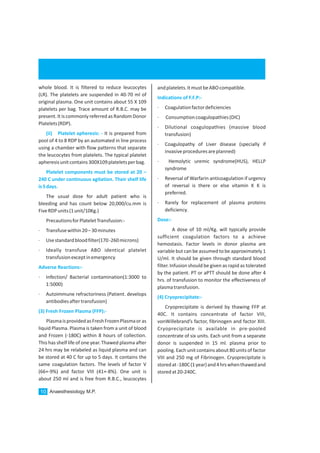
Prepared from whole
blood just prior to transfusion,. Volume is about
200 ml. One unit of packed Red Cell will increase
the hemotocrit by 3% and Hb by 1 gm%.
Advantagesof packed red cells are , infusion of less
sodium, potassium, citrate and lactic acid. Amount
of plasma contained is lesshence lessAntiA, AntiB
antibodies are transfused. Less chances of allergic
reactions due to proteins because of lesser
amountofplasma.
R.B.C. are washed
with sterile saline using machine specially
designed for this purpose. This washed R.B.C. are
suspended in sterile saline. Hematocrit is usually
70 to 80% with a volume of approximately 180 ml.
Saline washing removes plasma (upto 98%),
reduces concentration of W.B.C. and removes
platelets and cellular debris. Since the washing is
done in open system, it should not be stored for
morethan24hours.
Packed Red Cells
are gamma radiated to kill the lymphocytes. They
are used in immuno-compromised patients and
alsoinstemcell/marrowtransplantpatients.
Long term
preservation is done by adding Glycerol which
permits storage of R.B.C. for a longer period at -
1. Red Cells Components: -
(a) Packed Red Cells:-
(b) Washed Red Cells: -
(c) Irradiated Red Cells: -
(d) Frozen Erythyrocytes:-
850C. Thawing is done before use which requires
45minutes.Notmuchusednowdays.
· HBlessthan6gm%
· Basedonclinicalassessment(Hb6-9gm%)
· Hb 9 to 10gm% in chromic (repeated)
transfusions.
Platelet
Concentrateareindicatedinfollowingconditions:-
a) DecreasedPlateletCount
b) FunctionallyabnormalPlatelets
a) Decreased Platelet Count: - There are no
definite clinical guidelines but usually indicated
when platelet count is <50,000/cu.mm. Between
50,000 to 1, 00000/cu.mm it depends upon the
type of surgery. For minor surgery platelet
transfusion may not be required but for
neurosurgery and major surgery platelet
transfusion is indicated at higher platelet count.
Prophylactic transfusion is also useful in rapidly
falling platelet count in Bone marrow depression
orduetochemotherapy(<1,00000/cumm.).
Patient having acquired or congenital platelet
dysfunction. The acquired disorders of platelet
dysfunction include the use of certain drugs
(Aspirin, Dipyridaomole Ticlopidine, and
clopidogrel), renal failure, myelodysplastic
syndromes and cardiopulmonary bypass may
require platelet concentrate despite having
adequateplateletnumber.
Therearetwotypesofpreparations
(i)PlateletLR
(ii)PlateletapheresisLR
(i) Platelet LR is prepared from single unit of
Indications of Red Cells Components:-
2. Platelet Concentrate:-
Dose and Administration:-
b) Functionally abnormal platelets:-
Anaesthesiology M.P.10
whole blood. It is filtered to reduce leucocytes
(LR). The platelets are suspended in 40-70 ml of
original plasma. One unit contains about 55 X 109
platelets per bag. Trace amount of R.B.C. may be
present.It is commonly referred as Random Donor
Platelets(RDP).
It is prepared from
pool of 4 to 8 RDP by an automated in line process
using a chamber with flow patterns that separate
the leucocytes from platelets. The typical platelet
apheresisunitcontains300X109plateletsperbag.
The usual dose for adult patient who is
bleeding and has count below 20,000/cu.mm is
FiveRDPunits(1unit/10Kg.)
PrecautionsforPlateletTransfusion:-
· Transfusewithin20–30minutes
· Usestandardbloodfilter(170-260microns)
· Ideally transfuse ABO identical platelet
transfusionexceptinemergency
· Infection/ Bacterial contamination(1:3000 to
1:5000)
· Autoimmune refractoriness (Patient. develops
antibodiesaftertransfusion)
PlasmaisprovidedasFreshFrozenPlasmaoras
liquid Plasma. Plasma is taken from a unit of blood
and Frozen (-180C) within 8 hours of collection.
This has shelf life of one year. Thawed plasma after
24 hrs may be relabeled as liquid plasma and can
be stored at 40 C for up to 5 days. It contains the
same coagulation factors. The levels of factor V
(66+-9%) and factor VIII (41+-8%). One unit is
about 250 ml and is free from R.B.C., leucocytes
(ii) Platelet apheresis: -
Platelet components must be stored at 20 –
240 C under continuous agitation. Their shelf life
is5days.
Adverse Reactions:-
(3) Fresh Frozen Plasma (FFP):-
andplatelets.ItmustbeABOcompatible.
· Coagulationfactordeficiencies
· Consumptioncoagulopathies(DIC)
· Dilutional coagulopathies (massive blood
transfusion)
· Coagulopathy of Liver disease (specially if
invasiveproceduresareplanned)
· Hemolytic uremic syndrome(HUS), HELLP
syndrome
· Reversal of Warfarin anticoagulation if urgency
of reversal is there or else vitamin K K is
preferred.
· Rarely for replacement of plasma proteins
deficiency.
A dose of 10 ml/Kg. will typically provide
sufficient coagulation factors to a achieve
hemostasis. Factor levels in donor plasma are
variable but can be assumed to be approximately 1
U/ml. It should be given through standard blood
filter. Infusion should be given as rapid as tolerated
by the patient. PT or aPTT should be done after 4
hrs. of transfusion to monitor the effectiveness of
plasmatransfusion.
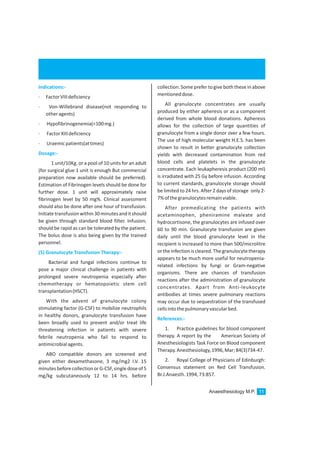
Cryoprecipitate is derived by thawing FFP at
40C. It contains concentrate of factor VIII,
vonWillebrand’s factor, fibrinogen and factor XIII.
Cryoprecipitate is available in pre-pooled
concentrate of six units. Each unit from a separate
donor is suspended in 15 ml. plasma prior to
pooling. Each unit contains about 80 units of factor
VIII and 250 mg of Fibrinogen. Cryoprecipitate is
storedat-180C(1year)and4hrswhenthawedand
storedat20-240C.
Indications of F.F.P:-
Dose:-
(4) Cryoprecipitate:-
Anaesthesiology M.P. 11
Indications:-
Dosage:-
(5) Granulocyte Transfusion Therapy:-
· FactorVIIIdeficiency
· Von-Willebrand disease(not responding to
otheragents)
· Hypofibrinogenemia(<100mg.)
· FactorXIIIdeficiency
· Uraemicpatients(attimes)
1 unit/10Kg. or a pool of 10 units for an adult
(for surgical glue 1 unit is enough But commercial
preparation now available should be preferred).
Estimation of Fibrinogen levels should be done for
further dose. 1 unit will approximately raise
fibrinogen level by 50 mg%. Clinical assessment
should also be done after one hour of transfusion.
Initiatetransfusionwithin30minutesanditshould
be given through standard blood filter. Infusion;
should be rapid as can be tolerated by the patient.
The bolus dose is also being given by the trained
personnel.
Bacterial and fungal infections continue to
pose a major clinical challenge in patients with
prolonged severe neutropenia especially after
chemotherapy or hematopoietic stem cell
transplantation(HSCT).
With the advent of granulocyte colony
stimulating factor (G-CSF) to mobilize neutrophils
in healthy donors, granulocyte transfusion have
been broadly used to prevent and/or treat life
threatening infection in patients with severe
febrile neutropenia who fail to respond to
antimicrobialagents.
ABO compatible donors are screened and
given either dexamethasone, 3 mg/mg2 I.V. 15
minutesbeforecollectionorG-CSF,singledoseof5
mg/kg subcutaneously 12 to 14 hrs. before
collection. Some prefer togive both these in above
mentioneddose.
All granulocyte concentrates are usually
produced by either apheresis or as a component
derived from whole blood donations. Apheresis
allows for the collection of large quantities of
granulocyte from a single donor over a few hours.
The use of high molecular weight H.E.S. has been
shown to result in better granulocyte collection
yields with decreased contamination from red
blood cells and platelets in the granulocyte
concentrate. Each leukapheresis product (200 ml)
is irradiated with 25 Gy before infusion. According
to current standards, granulocyte storage should
be limited to 24 hrs. After 2 days of storage only 2-
7%ofthegranulocytesremainviable.
After premedicating the patients with
acetaminophen, pheniramine maleate and
hydrocortisone, the granulocytes are infused over
60 to 90 min. Granulocyte transfusion are given
daily until the blood granulocyte level in the
recipient is increased to more than 500/microlitre
ortheinfectioniscleared.Thegranulocytetherapy
appears to be much more useful for neutropenia-
related infections by fungi or Gram-negative
organisms. There are chances of transfusion
reactions after the administration of granulocyte
concentrates. Apart from Anti-leukocyte
antibodies at times severe pulmonary reactions
may occur due to sequestration of the transfused
cellsintothepulmonaryvascularbed.
1. Practice guidelines for blood component
therapy. A report by the American Society of
Anesthesiologists Task Force on Blood component
Therapy.Anesthesiology,1996,Mar;84(3)734-47.
2. Royal College of Physicians of Edinburgh:
Consensus statement on Red Cell Transfusion.
Br.J.Anaesth.1994,73:857.
References:-
Anaesthesiology M.P.12
3. Miller RD “Transfusion Therapy” Text
bookofAnesthesia5thed.2005,46:1613-61.New-
York,Churchill-Livingstone.
4. Yao & Artusio’s Anesthesiology, 6th ed.
2008, 338-46.Lippincott Williams & Wilkins,
Philadelphia.
5. Blood component utilization review:
mhtml: file:1/H:C:Coagulation of blood chapter 5,
6/26/2012.
6. ISIandINR,Practical-Haemostasis.com
7. C l i n i c a l u s e o f B l o o d H a n d
Book:2001,Geneva:WorldHealthOrganization,
8. Clinical efficacy of granulocyte
transfusion therapy in patients with neutropenia-
related infections: Lee J.J. et al.Leukemia (2001)
15,203-207.
9. Granulocyte transfusion in children and
adults with hematological malignancies: benefits
and controversies. Cugno et al. J Trans/Med(2015)
13:36210.1186/13613-015-0104-6
Anaesthesiology M.P. 13
A POOR HISTORIAN
1.ChiefandMedicalDirector,DepartmentofAnesthesioloy,DRMC,VIRGINIA,USA
1
lDr. Mukesh Nigam
was called by Post-anesthetic recovery room for
a 36 year old patient “not looking good andIbehaving different” on whom we just finished an
orthopedic procedure without any incident. I
rushed there and found patient not responding
and what it looked like a series of seizures. Patient
was intubated, was given intralipids thinking of
local anesthetic toxicity what was injected by
surgeonintheknee.PatientwasinICUovernight,a
CT head was normal and recovered next day. He
later revealed having seizure before when was
infected once with cysticercosis and had a low
threshold for seizures. Patient’s preoperative
interview and history was reported normal for an
averagebuilt36yearsold.
Another recent example I came across was a
severe bronchospasm during anesthetic and
postoperative oxygendesaturationfor a while on a
patient who didn’t admit on interview being heavy
smoker and marihuana abuse which again, we
learntafterwards.
We consider patients as poor historian looking
atdifferentreasons:
Geriatric patients are most commonly seen as
poor historians, secondary to Alzheimer’s,
undiagnosed stroke and, aging as a factor itself.
These patients may not be able to give you what
weallseekasvitalinformation.
Patients with no or little education or low IQ
won’t be able to give satisfactory history which
could impact postoperative outcome. This
scenarioisn’tuncommonasweallexperience.
Medical therapy should be looked at very
carefully. Patients are on multiple drugs and the
combination may be confused, what can be called
as chemically induced altered status of mind,
causing these patients to answer incorrectlyat the
interview
Some patients, even younger, do have mental
retardation of varying levels and they will not be
abletogiveallinformation.
Factors like language barrier are also
responsible if someone not able to explain
required health history. As we are aware, some
patients have cultural issues and may not express
themselves.
On the other hand,there will be patients, even
fully competent, may give inadequate
information. They may be anxious, trying to be
funny, thinking the history we are seeking is not
important to them, or they feel they are healthy
otherwise and don’t need to provide all
“irrelevant” information. Here is one example
where patients think they are healthy and some
past events don’t count. We as physician
anesthesiologists need to be very inquisitive so as
not to face problems but sometimes it cannot be
avoided.
Ii was a 40 years old patient who did not reveal
having kidney dysfunction, intermittent
hyperkalemia (taking chelating agents) and bad
reflux went through procedure and ended up with
severe complications related to hyperkalemia. In
his mind, those issues were not much of a concern
Anaesthesiology M.P.14
forhissurgery.
What should be the best approach to have
information orwhat can be the best strategy to put
together so we can get what is most important to
us? It is not an easy task. Each one of us can recall
where we didn’t have all vital parts of history and
found it somehow later whether procedure was
eventfulornot
First, history and physical by surgeon is very
important who has seen patient beforehand and
may be few times than us, they may have more
informationfrompatient’sprimaryphysician.
Secondly, if we have time like with elective
cases, try to get old medical records including any
previous surgical record. These are hard to get at
times but its worth of your time compared to any
abnormaloutcomeafterorduringtheprocedure.
Talking to a responsible family member can be
averyhelpfultoolinsomecases.
Always instruct patients to bring their
medications and any previous medical treatment
paperstheyhaveavailable.
Do a pertinent lab work if you have any doubt
or questions. This can be a lifesaver for you as you
could see from the example above with
undisclosedhistoryofhyperkalemia.
If possible, ask another colleague or physician
provider who cared for the patient before about
the patient. They may tell you more than what is
availabletoyou as information. In a reciprocalway,
weshouldkeepagoodpatientrecordandhighlight
anysignificantfindingsforfutureproviders.
We have avoided many day of surgery
cancellations and get to know patient’s critical
issues by seeing these elective surgery patients in
our pre-anesthetic testing clinic where a qualified
anesthesiologist sees and examines the patient,
order appropriate referral, labs and plan a
technique best suited for that patient and
procedure. Patients may have information from
their treating physicians but sometimes that
physician doesn’t see what we see as important
piece of patients’ history. One of the examples is
personal airway assessment which no one will tell
you, you have the patient on table and have
nothing on hand ready to deal with the situation.
We need to dig out these ourselves than relying on
3rd party to furnish everything you will require.
Ultimately, who would be responsible for
providingpatientcareandoutcome?
So, the best to be a vigilant physician, prepare
and prevent any trouble for yourself and patient in
today’s offensive environment around you. It can
save you from lot of mental stress, legal issues and
family anxiety in case of untoward event with the
procedure where other “physician or surgeon
relied” on you to have details “you needed”. Lastly,
you did your best and have an undesired outcome;
best way is to get family members understand in
simple language why this happened and how you
are taking care of it. Sometimes you won’t be able
to do much about it but stay positive and make a
bestdocumentationpossible which wouldhelp in a
longway.
1.Assistant Professor, 2.Associate Professor, 3.Associate Professor, 4. Professor and HOD
Department ofAnaesthesia, Gajra Raja Medical College Gwalior (M.P.).
ABSTRACT
INTRODUCTION
Pre-anesthetic evaluation (PAE) is the process
of clinical assessment that precedes the delivery
of anesthesia care for surgery and non surgical
procedures. The PAE is the responsibility of the
anaesthesiologist. Anaesthesiologist comes
across wide array of cases ranging from neonates
to frail elderly patients coming for varied types of
surgeries. Thereby proper consultation,
counseling, co morbidity optimization prior to
administering anaesthesia is mandatory to
improvepostoperativeoutcome.
Anaesthesia, Preanaesthetic
evaluation, Preoperative assessment,
Preoperativetesting
Pre-anesthetic evaluation (PAE) is the process
of clinical assessment that precedes the delivery
of anesthesia care for surgery and non surgical
procedures. The PAE is the responsibility of the
1
anesthesiologist, even a skilled and experienced
anesthesiologist who is able to manage multi-
disciplinary cases varying from neonates, difficult
airways, to open heart surgical procedures, may
carryout PAE ina very hurried,withlittleexpertise
and in an unorganized manner. It has been shown
in studies that inadequate PAE and preparation of
the patient is the leading cause of peri- operative
2,3
mortality and morbidity. Recently done audit
showed that overall quality of PAE done is
KEY WORDS:
incompleteandneedsimprovement.
The overall goals of pre anesthetic evaluation
5
are
a. Documentation of illness for which surgery is
needed
b. Gradingofsurgery
c. Assessmentofpatient’shealthstatus.
d. Identifying co-morbid conditions(
cardiovascular,respiratory,diabetesmellitus)
e. American Society of Anesthesiologist (ASA)
gradingandriskdetermination
f. Optimizationofpatientmedicalcondition
g. Development of an appropriate peri operative
plan
h. Education and counseling the patient
regarding anesthesia , surgery, postoperative
painrelieftoallayanxietyandbetterrecovery
i. Reducing cost, shortening hospital stay,
avoiding cancellation and increased patient
satisfaction.
But to achieve these goals, it is very difficult to
formulate perfect guidelines for PAE as there are
insufficient scientific evidences and randomized
controlled trials. Thus recommendations made
are the opinions, suggestions and views from
experts, open forums, panel discussion and public
sources. Hence the process of PAE varies with
4
DISCUSSION
Anaesthesiology M.P. 15
EXCERPT FOR PRE-ANAESTHETIC
EVALUATION
1 2 3 4
lDr. Suman Gupta , Dr. Satyendra Singh Yadva , Dr. Preeti Goyal , Dr. Bhanu Choudhary ,
4. Timing of PAE should be guided by considering
combinations of surgical invasiveness and
severity of disease, for high severity of disease
1
itshouldbedoneadaybeforesurgery.
5. Routine preoperative test should not be
ordered for elective surgery , even in pediatric
age, as they do not make an important
assessment regarding management of the
patient by the anesthesiologist . It can lead to
unnecessary delays or cancellation of
operations as well as inconvenience and
discomfort to patients because of ‘false
1,7
positive’ test results It has been seen 60% of
the routine test are not indicated and 0.22%
7
revealedpertinentabnormalities
6. The appropriateness of selective preoperative
testing depends on the characteristics of
patients, for example their age, other illnesses,
complexity of surgical procedure and the type
of surgery that is planned. Anesthesiologist
should balance the risk and cost of these
evaluations against benefit. The NICE guideline
makes recommendations about the
appropriateness of carrying out the following
6
tests:
•PlainchestX-ray(radiograph)
•Restingelectrocardiogram(ECG)
• Full blood count (for example to test for
anemia)
•Haemostasis(totesthowwellthebloodclots)
•Renalfunction
•Randombloodglucose(totestfordiabetes)
• Urine analysis (for example to test for urinary
infectionsorkidneyproblems)
• Blood gases (to test for cardiovascular or lung
problems)
•Lungfunction
respect to time of doing it, a month, a day before,
or on the day of surgery. Incomplete
documentation in pre anesthetic evaluating form(
PEF), patient being evaluated by a anesthesia
traineeor atrainednurse.Anesthesiologistseeing
the patient is different from anesthesiologist
administering anesthesia, ordering un indicated
laboratory test, continuing drugs preoperatively
which need to be stopped and vice versa and
sending consultation at the last minute leads to
poorworkupofthepatient.
Certain Societies have developed guidelines to
rationalize pre operative evaluation and testing in
anesthesia practice i.e. Task force of American
1
societyof Anesthesiologist , The National institute
6
forclinicalExcellence(NICE) , European SocietyOf
Anesthesiology (ESA), Canadian Anesthesiologist
Society (CAS), The Ontario preoperative Task force
(OPTF). These are not intended to be followed as
standard but may be changed, modified and
adoptedaccordingtoourowninstitutionalnorms.
From all these guidelines, Task forces, and
recommendationstheconclusionsdrawnare
1. History is the most important component of
PAE. It should include past, current medical
history, history of allergies, current and recent
drug therapy, unusual reaction to drug and
5
complicationwithpreviousanesthetic
2. At a minimum, a focused pre anesthetic
physical examination, includes an assessment
of the airway, lungs and heart with
1
documentationofvitalsigns
3. It is the obligation of the health care system to
provide pertinent information to the
anesthesiologist for the appropriate
assessment of the severity of medical
condition and invasiveness of the proposed
surgical procedure well in advance of the
anticipated day of procedure for elective
1
patient.
Anaesthesiology M.P.16
•Pregnancy
•Sicklecellanaemia
These recommendations for preoperative
testing are set out in ‘Look-up tables’ cross
referenced by the type of surgery, common
6
chronicillnessesandage.
7.Testresultobtainedfromthemedicalrecord,
within 6 months of surgery are generally
acceptable if the patient medical history has not
changed substantially. [1] Ausset et al had
formulated modified Global Quality index which
include 15 criteria to be incorporated in
preoperative assessment as shown in (Table1.)
below.
2
Table 1: Modified GQI * Criteria
Name
Age
Cardiopulmonarystatus
Surgicalprocedure
Preoperativediagnosis
Preoperativevitalsigns
Peroralstatus
Medications
Allergies
Weight
ASA
Anesthetichistoryandcomplications
Assessment
Plan
*GQI=100X (a-b)/a5 = the percentage of
proportion of criteria present on the PEF to the 15
GQI criteria, where a is the total number of criteria
selected (a=15) and b is the number of criteria
lacking.
The “set mind” of surgeons, anesthesiologist,
and other clinical personnel need to be changed
regarding PAE through communication and
educationandasystemofprinciplesandmethods
should be employed to perform pre anesthetic
evaluation of patients of all ages scheduled to
receive general anesthesia, regional anesthesia,
moderate or deep sedation for elective surgical
andnonsurgicalprocedures.
One should not expertise ourselves in
dictating the series of investigation that do not
make any important contribution to preoperative
assessment of patient and for safe Anesthesia.
Specific tests should be individualized based upon
information retrieved from the patients past
medical record, physical examination, and the
type and severity of planned, major or minor
surgical procedure.PAE not only aids in adequate
documentation and record keeping but as well
establishes a good familiarity with the concerned
anesthesiologist which allays anxiety and
apprehension. At a minimum, assessment of
airway, lungs and heart should not be out of sight,
outofmindofanesthesiologist
1. American society of anesthesiologist Task
force on pre-anesthesia evaluation. Practice
advisory for pre -anesthesia evaluation: An
updated report by the American society of
anesthesiologist task force on pre-anesthesia
evaluation.Anesthesiology2012;116:522-38
2. Ausset S, Bouaziz H, Brossea M, Kinirons B,
Benhamou D. Improvement of information
gained from the pre-anesthetic visit through a
quality of assurance programme. Br J Anaesth
2002;88:280-283.
3. Kluger MT,Tham EJ, ColemanNA, Runciman
WB, Bullock MF . Inadequate pre-operative
evaluation and preparation: A review of 197
reports from the Australian incident monitoring
study.Anesthesia2000;55:1173-1178
CONCLUSION
References
Anaesthesiology M.P. 17
4. Mokgwathi GT, Baloyi BJ,Ogunbanjo GA. An
audit of preoperative evaluation of general
surgery patient at Dr. George Mukhari hospital. S
Afr JAnaesth.Analg.2011;17(2):177-180
5. Zambouri A. Preoperative evaluation and
preparation for anesthesia surgery. Hippokratia
2007;11(1):13-21
6. National Institute of Health and Clinical
Excellence (NICE).Guidance on the use of
preoperative tests for elective surgery. NICE
clinical guideline NO. 3 London: National institute
ofhealthandclinicalExcellence;2003.
7. Elizabeth A.M Frost, Preanaesthetic
Assessment what do we really need?
Anestesiologia2007;30:ppS25-S29.)
Anaesthesiology M.P.18
Anaesthesiology M.P. 19
1. Consultant Anaesthesiologis, Bombay Hospital, Indore
2. Post Graduate student, Dept. ofAnaesthesiology & Critical Care, Sri Aurobindo Institute of Medical Sciences. Indore
3. Post Graduate student, Dept. ofAnaesthesiology & Critical Care, Sri Aurobindo Institute of Medical Sciences. Indore
4. Professor and HOD, Department ofAnaesthesiology & Critical Care, Sri Aurobindo Institute of Medical Sciences. Indore
SEVERE RHEUMATIC MITRAL STENOSIS
IN AN OBSTETRIC PATIENT POSTED FOR
CAESAREAN SECTION: AN ANAESTHETIC
CHALLENGE
1 2 3 4
lDr. Charu Neema , Dr. Vinayak Gour , Dr. Devik Mishra , Dr. S. Sanwatsarkar ,
Abstract
INTRODUCTION
Epidural anesthesia in an obstetric patient with
severe rheumatic mitral stenosis posted for
caesarean section ,can be a better option, than
general anesthesia, ensuring stable
hemodynamics and better postoperative
analgesia.
Rheumatic heart disease, severe
mitral stenosis, epidural anaesthesia, caesarean
section,pregnancy.
Heart diseases occur during pregnancy in 0.4%
to 4.1% of patients and is a leading non obstetrics
causeof maternalmortalityrangingfrom0.4%-1%
among patientsof class I and II to 5-15%among in
class III and IV NYHA (New York Heart Association)
1
functionalclassification.
Anesthetic management of parturients with
cardiac valvular pathology, such as rheumatic
heartdisease(RHD)canbechallenging.Rheumatic
heart disease is still a major heart problem
associated with pregnancy in India, despite its
decliningtrend. The incidence of rheumatic mitral
stenosis was 5.4 per 1000 school children in
Key words:
1995(2), and it has been reduced to 0.5 to 0.64 per
3,4
1000.
Mitral stenosis (MS) of rhematic origin forms
88%of the heart diseases complicating pregnancy
5
inthetertiaryreferralcentreinIndia .
In this case report, we present the anesthetic
management of a parturient having severe mitral
stenosis with mild PAH(pulmonary artery
hypertension) posted for elective caesarean
sectionunderepiduralanesthesia.
A 25year old female, primigravida with 37
weeks of intrauterine pregnancy, was posted for
elective caesarean section.She weighed 45kg with
a height of 139cm.During her antenatal checkup,
she was diagnosed to have severe mitral
stenosis(0.8 square cm) of rheumatic origin.
Patientgavehistoryoffeverwithjointpain10years
backwithongoingbreathlessness.
She was already on the medication which
consisted of Tablet digoxin (0.25mg) 1OD for 5
days/week, Tablet Lasix(40mg) 1 BD and Injection
peniduraevery21dayssince2months.
CASE REPORT
Anaesthesiology M.P.20
On examination her pulse was 90/min, regular
with no apex pulse deficit, blood pressure of
110/70mm Hg and dyspnea of NYHA stage III. On
auscultation, there was mid diastolic murmur
grade 3/6 with loud S1, opening snap at the apical
area, loud P2 at pulmonary area.Breath sounds
werenormal.
Her electrocardiogram revealed bifid P waves,
wide >(0.11sec)in V1,II and aVL in favor of an
enlarged left atrium. And 2D- echocardiography
revealed RHD, resting LVEF 60%, severe MS (MVA
0.8cmsquare),mildtomoderateMR,mildTR,mild
PAH(40mmHg).
All other investigations were within normal
limits.
After taking written informed high risk consent
and keeping her nil by mouth for8 hours, patient
was wheeled to the operating room
complex.Premedication was done with Injection
Ranitidine 50mg and Injection Metoclopromide
10mg via intravenous routeand injection penidura
1.2 IU one hour before induction of anesthesia.
Epidural anesthesia was planned. Inside the
operation theatre, a20 guage radial arterial line
was placed in the left hand for invasive blood
pressure monitoring and a 7.0french triple lumen
catheter was threaded in the right internal jugular
veinforCentralVenouspressuremonitoring.
Patient was preloaded with 200ml of Ringers's
lactate and 200ml of Hesstarch. All routine
mandatory monitors were attached and foley's
catheterizationwasdone.
All aseptic precautions were followed to place
a18 gauge epidural catheter through a 18 gauge
Tuohy's needle in L2 L3 interspinousspace,with
loss of resistance technique in lateral decubitus
position.
A test dose of 1.5 ml of lignocaine with
adrenaline was given via epidural catheter.
Anesthesia was acheivedtill T6 dermatome level
with 9ml of 0.75% ropivacaine in divided doses.
Left lateral tilt was performed to avoid aortocaval
compression.
Intraoperative tachycardia was managed by
Injection Esmolol bolus and hypotension was
controlledbyInjectionPhenylephrine.
After delivery of the fetus, an infusion of
oxytocin 10 units per hour was started, Fluid
(hestarch) was given keeping central venous
pressure between 4 to 8cm of water and mean
arterial pressure was maintained within 20
percent of baseline levels. Surgery was completed
in an hour, the whole course of anaesthesia and
surgerywasuneventful.
Patient was shifted to Intensive care unit for
further management. Post operative analgesia
was maintained with epidural catheter with 100
microgramofbuprenorphine.
Mitral stenosis refers to decrease in mitral
valve orifice area.Most common cause of mitral
stenosisisrheumaticheartdisease.
Rheumatic fever leads to cardiac inflammation
causing pancarditis which heals with
scaring,causing the valve leaflets to thicken,
calcify, and become funnel shaped; annular
calcification may also be present .In acute phase,
rheumatic fever may cause mitral regurgitation.
Mitral stenosis develops few years later and
symptoms develop after many more years when
mitralvalveorificeareareducessignificantly.
The normal mitral valve orifice area is 4 to 5
square cm.(6) Our patient's mitral valve area was
0.8 square cm which comes under severe mitral
stenosis grading. As mitral valve orifice area goes
below 1 square cm, left atrial pressure increases to
about 25mmHg (normal left atrial pressure is
5mmHg) since there are no valves between
DISCUSSION
pulmonary circulation and left atrium, increased
left atrial pressure is transmitted to pulmonary
circulation causing pulmonary artery
hypertension.
Managementofmitralstenosisincludes;
Medicalmanagement;
1. Diuretics, bed rest and oxygen therapy if
congestivesymptomspresent.
2. Drugs for ventricular rate control mainly
calcium channel blocker/beta blocker.Beta-
blocker also reduces the risk of maternal
pulmonaryoedema(7).
3. In presence of atrial fibrillation; digoxin and
beta blockers to revert it to sinus rhythm and
Anticoagulants like warfarin for thrombosis
(8,9).
4. Penicillin prophylaxis of group A hemolytic
streptococcal infections for secondary
prevention of rheumatic fever is important for
at-riskpatientswithrheumaticMS.
Percutaneous Balloon mitral valvotomy and
balloon mitral valvuloplasty, surgical valvotomyor
mitral valve replacement in patients with
moderate or severe mitral stenosis (10).During
pregnancy, the second trimester is the preferred
timeforanyinvasiveprocedure.
Primary concerns in patient with MS include
management of ventricular preload, heart rate,
coexisting pulmonary hypertension and
potentially diminished right ventricular and left
ventricularcontractilefunction.
There is 45% increase in blood volume during
pregnancy thus increasing the pulmonary capillary
hydrostatic pressure,aggravated by the mitral
stenosisthatincreasesleftatrialpressure,whichis
transmitted to pulmonary circulation causing
pulmonaryhypertension.Measuretopreventfluid
overload included implementing minimal
Surgical management;
intravenous and moderate oral hydration.
Asaortocaval compression is released after
delivery, the involution of the uterus and
autotransfusion of placental blood, there is a surge
of blood, back into the pulmonary circulation.In
addition, there continues to be autologous blood
for 24-72 hours after delivery. Thus,this risk
(11)
extendsoverseveraldaysafterbirth .
In pregnancy there is physiological increase in
heart rate by 25% and sympathetic stimulus due to
pain in delivery or caeserean section increase it
further.Tachycardia may be poorly tolerated
because of the decreased time of diastolic filling.
The left atrium is often markedly dilated ,
promoting supra ventricular tachycardia,
particularly atrial fibrillation. Blood flow stasis in
the atrium promotes the formation of thrombi,
usually in the left atrial appendage. When atrial
fibrillation has occurred, the atrial kick is lost.
However, the most important factor in
deterioration of the patient's clinical condition is
tachycardiaitselfratherthanlossoftheatrialkick.
Long standing elevations in pulmonary venous
pressure eventually cause right ventricle
contractile dysfunction andcan result in tricuspid
orpulmonaryvalveregurgitation.
In a patient with residual pulmonary vascular
disease and right ventricle dysfunction, supporting
a failing or marginally functional right ventricle
becomesthetopclinicalpriorty.
Monitoring for these patients includes
standard noninvasive modalities and invasive
monitoring of blood pressure, central venous
pressure, and intraoperative echocardiography.
The use of invasive monitors during caesarean
section is controversial especially for placement of
pulmonary arterial catheter.(12) Central venous
pressure was used to guide our management on
patient fluid status. Pulmonary arterial pressure
was not monitored because the risks outweighed
Anaesthesiology M.P. 21
thebenefits.
There are no controlled studies examining the
best type of anesthetic technique in these
patients, guidelines and standards are lacking.The
implications of various anesthetic agents and
techniques is required to ensure the highest level
of patient safety and care.(13)No single technique
is exclusively indicated or contraindicated. The
primary concern is to avoid and treat specific
pathophysiologic changes that exacerbate the
diseaseprocess.
In some cases it was found thatepidural
anesthesia is the choice in the patient with
moderate stenosis while in the patient with severe
stenosis general anesthesia is beneficial.(14,15).
But we chose epidural anesthesia in severe mitral
stenosis patient with careful titration of local
anesthetic drugs and cautiously treated
hypotensionwith fluid infusion to stablise normal
filling pressures. As the on-set of blockade is slow
therefore the haemodynamics are more
controllable.Drop in systemic vascular resistance
and blood pressure is managed with
phenylephrine hydrochloride. Ephedrine increase
heartratesonotusefulinmitralstenosispatient.
In case of general anesthesia there is risk of
increase heart rate, pulmonary arterial pressure
and blood pressure during laryngoscopy and
tracheal intubation. Lidocaine can be used to
avoid laryngeal reflexes. Esmolol has rapid onset
and short duration of action, it is a better choice in
controlling tachycardia. Since fetal bradycardia has
been reported after esmolol, fetal heart rate
should be monitored. However, adverse effects of
positive-pressure ventilation on venous return
m a y u l t i m a t e l y l e a d t o c a r d i a c
failure.(16,17)Opioids are used to provide
excellent analgesia,but could result in respiratory
depressionofneonate.
After delivery,slow oxytocin infusion was
started, as it is known to lower the systemic
vascular resistance as well as elevate pulmonary
vascular resistance, resulting in reduced cardiac
o u t p u t . M e t h y l e r g o m e t r i n e o r 1 5 -
methylprostaglandin F2 Alpha produces severe
hypertension, tachycardia and increased
pulmonaryvascularresistance.(18,19)
The postpartum period is the most critical
period for acute pulmonary hypertension,
decompensations and tachycardia due to pain.
Epidural analgesia technique with opioids is good
optionfor postoperative pain relief with minimal
fall in blood pressure.Therefore, intensive
monitoring should be continued till the
haemodynamicparametersreturntonormal.
Our patient was referred for further
management,balloonvalvuloplastyafterwards.
Patients with severe mitral stenosis require
careful preoperative, multidisciplinary
assessment, postoperative management
andanesthesic planning in order to optimize
cardiacfunction.
Anesthetic considerations are to maintain, a
slow heart rate, venous return and systemic
vascular resistance. Avoid hypoxia, hypercarbia,
acidosis, lighter plane of anesthesia and
hypervolemia, as all increase pulmonary vascular
resistance. Epidural anesthesia combined with
invasivemonitoringtechniquesandwiththeuseof
appropriate vasopressor, rate controlling drug,and
meticulous fluid administration, we could achieve
stable hemodynamics during the surgery. Epidural
analgesic supplements after surgery ensured a
painfreepostoperativeperiod.
1 . M a r k D J h o n s o n a n d D a n i e l H
Saltzman,Cardiacdisease.In: Sanjay
Datta.Anesthetic and Obstetric Management
CONCLUSION
REFERENCES
Anaesthesiology M.P.22
10.Fawzy ME, Kinsara AJ, Stefadouros M, Hegazy
H, Chaudhary A, et al. Long-term outcome of
mitral balloon valvotomy in pregnant women.
JHeartValveDis.2001;10:153-7.
11.Maganti K, Rigolin VH, Sarano ME, Bonow RO.
Valvular Heart Disease: Diagnosis and
Management. Mayo ClinProc.2010;85(5):483-
500.
12.Hemmings GT, Whalley DG, O'Connor PJ,
Benjamin A, Dunn C.Invasive monitoring and
anaesthetic management of a parturient with
mitralstenosis.CanJAnaesth1987;34:182-5.
13.Fox C, Kalarickal PL, Yarborough MJ, Jin
JY:Perioperative management including new
pharmacological vistas for patients with
pulmonary hypertension for noncardiac
surgery. CurrOpinAnaesthesiol 2008,21:467-
472.
14.Erie F J. The pregnant patient with heart
disease. In Faust R J. (ed): Anaesthesiology
review,ChurchillLivingstone,1994.
15.Kannan M, Vijayanand G. Mitral stenosis and
pregnancy:current concepts in anaesthetic
practice.IndianJAnaesth.2010;54(5):439-444.
16. Weekks SK, Smith JB: Obstetric anaesthesia in
patients with primary pulmonary
hypertension.CanJAnaesth1991,38:814-6.
17.Blaise G, Langleben D, Hubert B: Pulmonary
arterial hypertension: Pathophysiology and
anesthetic approach. Anesthesiology
2003,99:1415-32.
18.Secher NJ, Arnabo P, Wallin L. Haemodynamic
effects of oxytocin (syntocinon) and methyl
ergometrine (methergin) on the systemic and
pulmonary circulations of pregnant
anaesthetized women. ActaObstetGynecol
Scand.1978;57:97-103.
19.Secher NJ, Thayssen P, Arnsbo P, Olsen J. Effect
of prostaglandin E2 and F2 alpha on the
systemic and pulmonary circulations of
p r e g n a n t a n a e s t h e t i ze d w o m e n .
ActaObstetGynecolScand.1982;61:213-8.
o f H i g h R i s k p r e g n a n c y, s e c o n d
edition;1996:235-243.
2. PadmavatiS.Presentstatusofrheumaticheart
diseaseinindia.IndianHeartj.1995;47:395-8.
3. Jose VJ,Gomathi M. Declining prevalence of
rheumatic heart disease in rural school
children in india:2001-202.India Heart
J.2003;55:158-60.
4. Mishra M, Mittal M, Singh R, Verma A, Rai R,
ChandraG,etal.Prevalenceofrheumaticheart
disease in school going children of Eastern
UttarPradesh.IndianHeartJ.2007;59:42-3.
5. Bhatla N, LalS,Behera G, Kriplani A, Mittal S,
Agarwal N, et al. Cardiac disease in pregnancy.
IntJGynaecolObstet.2003;82:153-9.
6. Bonow RO, Carabello BA, Chatterjee K, et al:
ACC/AHA2006guidelinesforthemanagement
of patients with valvular heart disease: A
report of the American College of
Cardiology/American Heart Association Task
Force on Practice Guidelines (Writing
Committee to Revise the 1998 Guidelines for
the Management of Patients with Valvular
Heart Disease) developed in collaboration
with the Society of Cardiovascular
Anesthesiologists endorsed by the Society for
Cardiovascular Angiography and Interventions
and the Society of Thoracic Surgeons. J Am
CollCardiol 2006;48:e1-e148.
7. Al Kasab SM, Sabag T, al Zaibag M, Awaad M, al
Bitar I, Halim MA, et al. Beta-adrenergic
blockade in the management of pregnant
women with mitral stenosis. Am J Obstet
Gynecol.1990;165:37-40.
8. Reimold SC, Rutherford JD. Valvular heart
d i s e a s e i n p r e g n a n c y. N E n g l J
Med.2003;349:52-9.
9. Hameed A, Akhter MW, Bitar F, Khan SA,Sarma
R, Goodwin TM, et al. Left atrial thrombosis in
pregnant women with mitral stenosis and
s i n u s r h y t h m . A m J O b s t e t
Gynecol.2005;193:501-4.
Anaesthesiology M.P. 23
Anaesthesiology M.P.24
1. ConsultantAnaesthetist, Vishesh Hospital, Indore
LETTER TO EDITOR
1
lDr. Dharna Jain ,
racheostomy is a frequently done procedure,
in both elective and emergency settings.TComplications associated with tracheostomy are
generally controllable, but sometimes fatal
.Pneumothorax is a known complication of
tracheostomy but bilateral pneumothorax
following tracheostomy is rare1,2 in adults and
therefore we report such an occurrence
immediately following elective tracheostomy
donebyanopensurgicaltechnique.
A 24 year old male with polytrauma was
admitted to intensive care unit. Patient was
received with an endotracheal tube in place on T
piece. CT brain and 3 D face showed multiple facio-
maxillary fractures, pneumocephalus in right
temporal fossa and right temporal region, extra
cerebral acute convex hematoma in left anterior
temporal and basifrontal region with no mass
effect, non-hemorrhagic contusion in left frontal
cortex subcortical location and left perisylvian
cortex. X-ray left lower leg showed a comminuted
fracture in the mid shaft of left tibia. Chest X ray,
ultrasound abdomen and other blood
investigations were normal. Patient was GCS score
E4V3M6.
Hewaspostedforelectivetracheostomyunder
local anaesthesia and sedation before planning a
definitive faciomaxillary and orthopedic surgery.
Patient was shifted to operation theatre with
oxygenviaTpiece.Afterconnectingthemonitors–
pulse oximeter, ECG, capnograph and noninvasive
blood pressure, intravenous sedation was given
with midazolam 5 mg, fentanyl 100µgm and
Propofol100mgindivideddoses.
Local infiltration with 2 % xylocaine adrenaline
5 ml was done and a vertical incision was given at
C5-C6 level. Tracheal rings were visualized and an
incisionwasgiveninthetrachea.Theendotracheal
tube was withdrawn but thetracheostomy tube
went into false passage. Patient was reintubated
and maintained on oxygen. Oxygen saturation
decreased to 65% and positive pressure
ventilation was given for about 10 minutes after
which a successful tracheostomy tube size 8.5 was
placed in the trachea. In the meantime, chest
expansion of the patient decreased and patient
developed subcutaneous emphysema in chest and
neck. Blood gas analysis showed ph. – 7.34, pO2-
41.4, PCO2- 52.6 and SpO2-74%. A chest X-ray was
done immediately which revealed bilateral
pneumothorax which was managed by bilateral
intercostal tube drainage with under water seal.
Pneumothorax resolved in 1 to 2 days and
intercostal tube removed after full chest
expansion. Patient was taken for definitive surgery
after 5 days of the event with tracheostomy in situ.
The whole procedure was uneventful. Patient was
dischargedafter25days.
Tracheostomy is one of the oldest surgical
procedure and it is frequently performed on
critically ill patients in the ICU, usually indicated in
patients where prolonged airway protection or
mechanical ventilation is required 3,4. Our
indication for tracheostomy was need for
Anaesthesiology M.P. 25
prolonged airway protection. Pneumothorax
incidence during tracheostomy is reported tobe 0-
4% in adultsand 10-17% in pediatric age.When
cervical incision is used for tracheostomy, during
inspiration air passes along the outside of trachea
into the mediastinum. During inspiratory effort
airway obstruction helps the passage of air by
creating excessive negative intrathoracic pressure
5. This mechanism seems to be most commonly
involved in the development of mediastinal
emphysema following tracheostomy and other
necksurgery6.
Some precautions which can be practiced are
that the head of the patient should not be over
retroflexed, overextension of tracheobronchial
tree should be avoided, and upper tracheostomy
should be done in midline with minimal cervical
fascia separation. Intubating the patient prior to
the tracheostomy will help to prevent extreme
diaphragmaticcontractionduringsurgery.
1. Kumar, K. S., Nampoothiri, P. M, Suma, R., &
Renu, P. (2002). Pneumothorax following
tracheostomy and its management. Indian J
REFERENCES
OtolaryngologyHeadNeckSurg,54,236-237.
2. Karakaya, Z., Demir, S., Sagay, S. S., Karakaya,
O., & Ozdinç, S. (2012). Bilateral spontaneous
pneumothorax, pneumomediastinum, and
subcutaneous emphysema: rare and fatal
complications of asthma. Case Rep Emerg
Med,2012,242579.
3. Klein,M.,Weksler,N.,Kaplan,D.M.,Weksler,
D., Chorny, I., & Gurman, G.M. (2004).
Emergency percutaneous tracheostomy is
feasible in experienced hands. Eur J Emerg
Med,11,108–112.
4. Heffner, J. E., Miller, K. S., & Sahn, S. A. (1986).
Tracheostomy in the intensive care unit. Part
1: Indications, technique, management.
Chest;90,269–274.
5. Forbes GB, Herweg JC: Further observations
on post- tracheotomy mediastinal
emphysema and pneumothorax. J Pediat 31:
172-194,1947
6. Rabuzzi DD, Reed GF: Intrathoracic
complications following tracheotomy in
children. Trans Am Laryngol Rhinol Otol Soc
74:71-79,1971

Mp anaesthesiology october 2016

  • 1.
    ANAESTHESIOLOGYANAESTHESIOLOGYANAESTHESIOLOGY M.P.M.P. Editor: Dr. MeenuChadha Co-editor: Dr. Alok Biyani ?October 2016 Volume 2? ?Issue 2
  • 2.
    Anaesthesiology M.P. 1 CONTENTS ANAESTHESIOLOGY M.P Dr.Meenu Chadha From Editor's Desk - Anaesthesia for Robotic Surgery 021EDITOR Dr. Meenu Chadha CO-EDITOR Dr. Alok Biyani EDITORIAl BOARD Dr. Harsha Desai Phulambrikar Dr. Ashwin Soni Dr. Suman Gupta Dr. Ruchi Tandon Dr. Ashish Sethi Dr. Harsh Mangal ADVISORS Dr. T.C. Kriplani Dr. V.M. Agnihotri Dr. R.C. Agarwal Dr. V.K. Joshi Dr. M.M. Neema Dr. Bhanu Ved Dr. K.G. Vijayan Dr. K.K. Arora Dr. Shikha Mehrotra Dr. Aditya Agarwal Dr. Dilip Kothari Dr. Sadhana Sanwatsarkar DR. Sudhakar Diwedi Senior Anaesthetist & Pain Physician CHL Indore. chadha.meenu@gmail.com 9977161035 Consultant Apollo Hospitals Indore drolokbiyani@gmail.com 9329548444 Dr. T.C. Kriplani Blood components - An Evolving issue in transfusion medicine 042 Dr. Mukesh Nigam A Poor Historian 133 Dr. Suman Gupta, Dr. Satyendra Singh, Dr. Preeti Goyal Dr. Bhanu Chaudhary Excerpt for Pre-Anaesthetic Evaluation 154 Dr. Charu Neema, Dr. Vinayak Gour, Dr. Devik Mishra, Dr. S. Sanwatsarkar Severe rheumatic mitral stenosis in an obstetric patient posted for caesaren section: An anaesthetic challenge 195 Dr Dharna Jain Letter to Editor 246
  • 3.
    Anaesthesiology M.P.2 From Editor'sDesk - Robot assisted surgery has come into vogue since the past decade and is being widely used for lot of procedures. It has evolved gradually from minimally invasive surgeries. Robotic surgery is now becoming the need of the day because of its unprecedented control and precision of surgical instruments. Main benefits of robot assisted surgeries to the patient are less post-operative pain, less trauma to the tissues, less hospitalization, early recovery and cosmetic incisions. There are also various benefits for the surgeon also; first the operating surgeon has a unique three dimensional stereoscopic view of the operating field with adjustable magnification and camera. Second the surgeon gets the extra degrees of motion that are not there with conventional laparoscopy and lastly the surgeon benefits from tremor filtering and motion 1 scaling . Anaesthesiologistsneedtobeupdatedwiththistechniquesothattheycanplan the anesthesia and the anesthetic techniques accordingly. Main drawback is the bulky equipment and spatial restriction so the anesthesiologist can't easily access the patient. Anaesthesiologists have the experience of working in remote locations and managing the patient'sairway. It is important that all the lines and monitors be 2 placed beforehand toavoidkinking and displacement . Upper abdominal , thoracic and head and neck surgeries place the head away from the anaesthesiologist and 3 anaesthesia work stations so access to the airway is impossible intraoperatively . The anaesthesiologist must familiarize himself/herself with fast detachment of the robotic system in case of emergency. Otherwise no movement should be allowed during the procedure because any movement can lead to tearing or puncturing of 4 internalorgansorvascularorgansleadingtoseriousconsequences. Another importantaspect is thatrobotic surgerymay require positioning thatis much steeper than conventional laparoscopy. This may sometimes cause the patient to slide off the operating table, so restraints should always be used. The bulky robotic arms and extremes of positioning and long duration of surgeries may increase the risk of positioning injuries. The anaesthesiologists should be aware of these risks and take due precautions. In one center, positioning injuries documented were6.6%in 334robot assisted urologicalprocedures.Long surgeries Anaesthesia for Robotic Surgery DR. Meenu Chadha
  • 4.
    Anaesthesiology M.P. 3 andextreme positions may further increase the risk. Positioning neuropathy is also common in robotic surgeries. Inadequate padding or positioning and inadvertent robotic arm placement may result in external nerve compression. Arms and shoulders should be well protected and avoid conflict with robotic 5 armstodecreasetheriskofbrachialplexusesinjury So,in spite of various advantages of robotic surgeries there are certain importantconsiderationswhichshouldbekeptinmind– a) Theequipmentisverybulkyandrequireslotofspace. b) Large size of the robot may result in collision with its own arms, assistants or patients. c) It is difficult for the anesthesiologist to quickly access the patient and impossibletorepositionthepatientoncetherobotisstationed. Future research is needed to find out long term outcomes, cost effectiveness and whether this technology should be widely used or restricted to special procedures. Robot assisted surgery is the need of the hour and its usage is going to increase. Anaesthesiologists should stay updated with the latest techniques sothattheycanprovidequalityanaesthesia. 1. Mirnezami AH, Mirnezami R, Venkatasubramaniam AK, Chandrakumaran K, Cecil TD, Moran BJ. Robotic colorectal surgery: hype or new hope? A systematic review of robotics in colorectal surgery.Colorectal Dis. 2010;12:1084–1093 2. Baltayian S. A brief review: anesthesia for robotic prostatectomy. J Robotic Surg.2008;2:59–66 3. Sullivan MJ, Frost EA, Lew MW. Anesthetic care of the patient for robotic surgery.MiddleEastJAnesthesiol.2008;19:967–982 4. SteenwykB,LyerlyR., 3rdAdvancementsinrobotic-assistedthoracicsurgery. AnesthesiolClin.2012;30:699–708 5. Lehr EJ, Rodriguez E, Chitwood WR. Robotic cardiac surgery. Curr Opin Anaesthesiol.2011;24:77–85 REFERENCES
  • 5.
    In the recentpast many changes have occurred in transfusion medicine. Advancement in the field of transfusion medicine has increased our knowledge and understanding about the unnecessaryuseofwholeblood. World Health Organization reports large difference in the use of whole blood compared to the use of blood components in developed versus developing countries. In high income countries 97% blood is processed to prepare Blood Components whereas in low income countries only 28% of donated blood is used for component therapy. Component therapy requires more expensive infrastructure and system as compared to whole blood therapy but it makes more efficient use of a valuable resource “donated blood” by allowing a single unit to address specific needs of multiple patients. Now days there are only limited indications of whole blood transfusion (massive blood loss especially in trauma patients, autologous blood transfusion and situation where facility for componenttherapyisnotavailable). Before describing the blood coagulation tests and it’s interpretations it will be worthwhile to review the mechanism of “Hemostasis”. Blood coagulation is part of an important host defense mechanism and is composed of 4 major events that occur in a set order following loss of vascular integrity. 1. Initialphaseofvascularconstriction. 2. Activation and aggregation of platelets at the site of injury and later change their shape to formtheplug. 3. Entrapment of fibrin mesh (also called clot) to ensurestabilitytolooseplateletplug. 4. DissolutionofclotbyFibrinolyticsystem. In order for hemostasis to occur, platelets must adhere to exposed collagen; release the contents of their granules and aggregate. This process of adhesion is mediated by Von Will brand factor (vWF). Inherited deficiencies of vWF are the causes of Von Willebrand disease. The function of vWF is to act as a bridge between specific glycoprotein complex on the surface of platelets andcollagenfibrils. Certain antiplatelet agents decrease platelet aggregation hence inhibit thrombus formation. Platelets are derived from megakaryocytes in the bone marrow and survive for 10 days after entering in tothe circulation. One third of platelets are found in spleen as a pool that can freely exchangewithcirculation. The procoagulant phase of coagulation consistsofthreepathways:- COAGULATION CASCADES Anaesthesiology M.P.4 BLOOD COMPONENTS - AN EVOLVING ISSUE IN TRANSFUSION MEDICINE 1.Ex.Prof.&H.O.DofAnaesthesiology,N.S.C.BMedicalCollege,Jabalpur(M.P.) 1 lDr. T.C. Kriplani
  • 6.
    Anaesthesiology M.P. 5 (i)ExtrinsicPathways (ii) IntrinsicPathways (iii) CommonPathways - The tissue trauma releases thromboplastin (factor III) which activates the extrinsic pathways of coagulation cascade. Further activation is done by factor VII & factor IV toformactivatedfactorX. Collagen present in the wall of damaged vessel activates the intrinsic pathways of c o a g u l a t i o n . F u r t h e r activation is done by factor XII, XI, IX and thereafter by factor VIII & factor V to form activatedfactorX. Once the activated factor X is formed the pathway of the coagulation is common and is activated by factor X. The activation of common pathway is helped by factor IV&VwhichconvertsProthrombinintoThrombin. Thrombin further activates conversion of FibrinogenintoFibrin(soluble)helpedbyfactorIV. Finally the soluble fibrin is converted into fibrin clot(firm)helpedbyfactorXIII. The function of this system is to digest fibrin. Plasminogen which is B- globulin synthesized by liver is converted into plasmin by plasminogen activators which are found in the tissues (tissue activators), plasma (plasma activators) and in urine (urokinase). Plasmin is an enzyme which digests fibrin and also destroys fibrinogen, factor V & factor VIII, but is normallyrapidlyinactivatedinthebloodstreamby antiplasminspresentinblood. (i) Extrinsic Pathways: (ii) Intrinsic Pathways:- (iii) Common Pathways: - (iv) Fibrinolytic System: - EXTERNAL PATHWAY Coagulation Factors: - The use of Roman numerals rather than eponyms or systemic names was agreed upon during annual conferences (starting in 1955) of hemostasis experts. In 1962, consensus was achieved on numbering of factors I to XII by this committee which has evolved into present day International Committee on Thrombosis and Hemostasis (ICTH). In 1963 factor XIII was recognized and the names Fletcher factor and Fitzgerald factor were given to further coagulation related proteins, namely Prekallikrein andhighmolecularweightkininogenrespectively. Majority of coagulation factors are synthesized in liver except factor VIII which is produced by Reticuloendothelial system. Factor II, VII, IX and X requirepresenceofVitaminKfortheirsynthesisby Liver. EXTERNAL PATHWAY Tissue Trauma VII IV Fact III VIII XI IX X IV Fact. XII COLLAGEN INTERNAL PATHWAY Schematic diagram of Coagulation Cascade Thrombin Fibrinogen Fibrin (Soluble) XIII Fibrin Clot Prothrombin IV V
  • 7.
    Blood Coagulation Testsand Interpretations 1. Tests for Platelets Laboratory tests must evaluate the platelets and various coagulant factors. A knowledge of these tests is crucial for diagnosis and managementofcoagulationabnormalities. (i)BleedingTime (ii)PlateletCount The Ivy method for determining the bleeding time involves the use of B.P. cuffwhich is applied in forearm and inflated to 40 mm of Hg. A superficial incision is made 9 mm. long & 1 mm. depth) with a special knife on volar aspect of forearm. The incision is touched with absorbent paper every 30 seconds till blood no (i) Bleeding Time: - longer moistens the paper. Normal bleeding time should be less than 5 minutes (some consider less than9minutesbythismethod). A less invasive bleeding time test which is commonly performedisbyDuke’smethod.A3to 4 mm. deep prick is made with lancet or needle on the finger tip or ear lobe. Bleeding should cease within1to3minutesbythismethod. (Normal 1, 50,000 to 4, 50,000/cu.mm.) A platelet count below 50,000/cu.mm is associated with prolonged bleeding time (some quote value of less than 1, 00000/cumm) The platelet count estimates only the number and not thefunction(quality)ofplatelets. (ii) Platelet Count: - Anaesthesiology M.P.4 Anaesthesiology M.P.6 Table showing the details about various coagulant factors Factor Synonym Plasma Conc. Half Life Minimum % mg/ml Hrs. required for Hemostasis I Fibrininogen 2000-4000 95-120 30-50 (200-400 mg%) II Prothrombin 150 65-90 20-40 III Thromboplastin (Tissue Factor) IV Calcium V Labile factor 10 15-24 5-20 VI Does NOT exist VII Stable factor 0.5 4-6 10-20 VIII Antihemophilic 15 10-122 30 Factor A IX Antihemophilic 3 18-30 20-25 Fact.B (Christmas Fact) X Stuart Prower Factor 15 40-60 10-20 XI Antihemophilic fact. < 5 45-60 20-30 XII Hageman fact < 5 50 -70 0 XIII Fibrin stabilizing Fact. 20 72-120 1-5
  • 8.
    When platelet countis normal and bleeding time is increased one should see the platelet function. Evaluation of platelet aggregation in response to Adenosine diaphosphates, epinephrine or collagen may be useful for detectingfunctionalabnormalityofplatelets. Recently instruments have been introduced to measuretheviscoelasticstrengthofthebloodclot over time. Thromboelastography (TEG), Rotational Thromboelstometry (ROTEM) and Sonoclot are instruments which are used to elicit etiology of coagulopathy including platelet function. A small sample of blood (0.35ml) is placed in a cuvette (cup) which is rotated gently through 40.45’ angle (cycle time 6/mt) to imitate sluggish venousflowandcoagulation.Apinissuspendedin cuvette and connected to a detector system. The speed and strength of clot formation is measured in various ways (now by computer). Four values that represent clot formation are determined by thetest. R Value (Reaction Time, waveform reaches 2mm.) K Value (When waveform reaches 20 mm.) angle(slopbetweenRandK) Thromboelastography (TEG):- MA (MaximumAmplitude) It is the version of TEG in which the sensor shaft rotates instead of cuvette. A disposable pin is attached to the shaft which is connected with a thin spring and slowly oscillates back and forth. The signal is transmitted via an optical detector system. It is a new and very sensitive visco-elastic detection system of blood clot formation. The sonoclot piston moves vertically and measures the impedance to vibration at the tip of the probe. Sonoclotsignaturetracingsareobtained. Minutes A - Lagperiod B - Primarywave C - Shoulder D - Secondarywave E - Peak F - Downwave PRP - PlateletRichPlasma PPP - PlateletPoorPlasma Rotational Thromboelstometry (ROTEM):- Sonoclot:- Anaesthesiology M.P. 7
  • 9.
    Anaesthesiology M.P.8 Tests toassess the defects of Coagulation Factors (i) ProthrombinTime/ INR (ii) P a r t i a l T h r o m b o p l a s t i n Time(PTT)/Activated ThromboplastinTime(aPTT) (iii) Thrombin Time (iv) Fibrinogenestimation (v) Fibrin degradationproducts Prothrombin Time is an assay to screen for the defects of coagulants of extrinsic pathway (i.e. Factor I (Fibrinogen), Factor II (Prothrombin), Factor V, VII and Fact. X. The normal PT is 12 to 14 seconds (somequote12.5secs.). The estimation of P.T. is done by adding tissue factor. This tissue factor is made from rabbit, human and bovine tissue. Therefore depending on origin of this tissue factor the P.T. will change. This difference in the sensitivity is known as sensitivity Index. W.H.O. assigned an International Sensitivity Index (ISI) to different manufacturers of this tissue extract. The first W.H.O. reference thromboplastin was assigned ISI of 1.0 and against this subsequent preparations are compared and calibrated. The ISI is usually between 1.0 and 2.0 The INR is calculated:- Normal INR varies from 0.8 to 1.2. Thromboplastine Time (aPTT):- PTT is used to assay for coagulation defects in the “Intrinsic (i) Prothrombin Time / INR: - INR: - (ii) P a r t i a l T h r o m b o p l a s t i n Time(PTT)/ActivatedPartial Pathway” i.e. Factor I, II, V, VIII, IX, X, XI and XII. The normalPTTis60to70seconds. To speed up the process of P.T.T. some activator is added (usually Kaoln) hence it is known as activated partial Thromboplastin Time (aPTT). The normalrangeis25to40seconds.ThePTT/aPTTare prolonged when concentration of above mentionedfactorsislessthan20to30%ofnormal. Thrombin Time measures the conversion of FibrinogentoFibrin by Thrombin. Thrombin Time is prolonged when activity of Factor I or II is decreased. Prolongation also occurs in the presence of Heparin; and increased plasma concentration of Fibrin degradation products. The normal TT is 12 to 20 seconds(somequote<10seconds) Fibrinogen is present in chemically measurable amount in circulation. Normal concentration is 200 – 400 mg % low levels reflect severe liver disease or consumptioncoagulopathy. Fibrin degradation products are a result of breakdown of Fibrinogen and Fibrin by plasmin. A normal concentration is less than 4 mg/ml. Elevated levels are seen when increased fibrinolysis occurs. Primary fibrinolysis is an uncommon disorder but has been observed in association with cardiopulmonary bypass, Cirrhosis of liver and carcinoma of prostate. The secondary fibrinolysis is due to Disseminated Intravascular Coagulation (DIC). Definition: - A constituent of blood separated from whole blood is known as blood component. Thefollowingbloodcomponentsareinuse:- 1. RedCellsComponents 2. PlateletsConcentrates(PC) (iii) Thrombin Time: - (iv) Fibrinogen Estimation: - (v) Fibrin degradation products:- Blood Components ISI test normal PT INR PT æ ö =ç ÷è ø
  • 10.
    Anaesthesiology M.P. 9 3.FreshFrozenPlasma(FFP) 4. Cryoprecipitate 5. GranulocyteTransfusion There are varioustypesofRedCellscomponentswhicharein use. a) PackedRedCells b) WashedRedCells c) IrradiatedRedCells d) FrozenRedCells Prepared from whole blood just prior to transfusion,. Volume is about 200 ml. One unit of packed Red Cell will increase the hemotocrit by 3% and Hb by 1 gm%. Advantagesof packed red cells are , infusion of less sodium, potassium, citrate and lactic acid. Amount of plasma contained is lesshence lessAntiA, AntiB antibodies are transfused. Less chances of allergic reactions due to proteins because of lesser amountofplasma. R.B.C. are washed with sterile saline using machine specially designed for this purpose. This washed R.B.C. are suspended in sterile saline. Hematocrit is usually 70 to 80% with a volume of approximately 180 ml. Saline washing removes plasma (upto 98%), reduces concentration of W.B.C. and removes platelets and cellular debris. Since the washing is done in open system, it should not be stored for morethan24hours. Packed Red Cells are gamma radiated to kill the lymphocytes. They are used in immuno-compromised patients and alsoinstemcell/marrowtransplantpatients. Long term preservation is done by adding Glycerol which permits storage of R.B.C. for a longer period at - 1. Red Cells Components: - (a) Packed Red Cells:- (b) Washed Red Cells: - (c) Irradiated Red Cells: - (d) Frozen Erythyrocytes:- 850C. Thawing is done before use which requires 45minutes.Notmuchusednowdays. · HBlessthan6gm% · Basedonclinicalassessment(Hb6-9gm%) · Hb 9 to 10gm% in chromic (repeated) transfusions. Platelet Concentrateareindicatedinfollowingconditions:- a) DecreasedPlateletCount b) FunctionallyabnormalPlatelets a) Decreased Platelet Count: - There are no definite clinical guidelines but usually indicated when platelet count is <50,000/cu.mm. Between 50,000 to 1, 00000/cu.mm it depends upon the type of surgery. For minor surgery platelet transfusion may not be required but for neurosurgery and major surgery platelet transfusion is indicated at higher platelet count. Prophylactic transfusion is also useful in rapidly falling platelet count in Bone marrow depression orduetochemotherapy(<1,00000/cumm.). Patient having acquired or congenital platelet dysfunction. The acquired disorders of platelet dysfunction include the use of certain drugs (Aspirin, Dipyridaomole Ticlopidine, and clopidogrel), renal failure, myelodysplastic syndromes and cardiopulmonary bypass may require platelet concentrate despite having adequateplateletnumber. Therearetwotypesofpreparations (i)PlateletLR (ii)PlateletapheresisLR (i) Platelet LR is prepared from single unit of Indications of Red Cells Components:- 2. Platelet Concentrate:- Dose and Administration:- b) Functionally abnormal platelets:-
  • 11.
    Anaesthesiology M.P.10 whole blood.It is filtered to reduce leucocytes (LR). The platelets are suspended in 40-70 ml of original plasma. One unit contains about 55 X 109 platelets per bag. Trace amount of R.B.C. may be present.It is commonly referred as Random Donor Platelets(RDP). It is prepared from pool of 4 to 8 RDP by an automated in line process using a chamber with flow patterns that separate the leucocytes from platelets. The typical platelet apheresisunitcontains300X109plateletsperbag. The usual dose for adult patient who is bleeding and has count below 20,000/cu.mm is FiveRDPunits(1unit/10Kg.) PrecautionsforPlateletTransfusion:- · Transfusewithin20–30minutes · Usestandardbloodfilter(170-260microns) · Ideally transfuse ABO identical platelet transfusionexceptinemergency · Infection/ Bacterial contamination(1:3000 to 1:5000) · Autoimmune refractoriness (Patient. develops antibodiesaftertransfusion) PlasmaisprovidedasFreshFrozenPlasmaoras liquid Plasma. Plasma is taken from a unit of blood and Frozen (-180C) within 8 hours of collection. This has shelf life of one year. Thawed plasma after 24 hrs may be relabeled as liquid plasma and can be stored at 40 C for up to 5 days. It contains the same coagulation factors. The levels of factor V (66+-9%) and factor VIII (41+-8%). One unit is about 250 ml and is free from R.B.C., leucocytes (ii) Platelet apheresis: - Platelet components must be stored at 20 – 240 C under continuous agitation. Their shelf life is5days. Adverse Reactions:- (3) Fresh Frozen Plasma (FFP):- andplatelets.ItmustbeABOcompatible. · Coagulationfactordeficiencies · Consumptioncoagulopathies(DIC) · Dilutional coagulopathies (massive blood transfusion) · Coagulopathy of Liver disease (specially if invasiveproceduresareplanned) · Hemolytic uremic syndrome(HUS), HELLP syndrome · Reversal of Warfarin anticoagulation if urgency of reversal is there or else vitamin K K is preferred. · Rarely for replacement of plasma proteins deficiency. A dose of 10 ml/Kg. will typically provide sufficient coagulation factors to a achieve hemostasis. Factor levels in donor plasma are variable but can be assumed to be approximately 1 U/ml. It should be given through standard blood filter. Infusion should be given as rapid as tolerated by the patient. PT or aPTT should be done after 4 hrs. of transfusion to monitor the effectiveness of plasmatransfusion. Cryoprecipitate is derived by thawing FFP at 40C. It contains concentrate of factor VIII, vonWillebrand’s factor, fibrinogen and factor XIII. Cryoprecipitate is available in pre-pooled concentrate of six units. Each unit from a separate donor is suspended in 15 ml. plasma prior to pooling. Each unit contains about 80 units of factor VIII and 250 mg of Fibrinogen. Cryoprecipitate is storedat-180C(1year)and4hrswhenthawedand storedat20-240C. Indications of F.F.P:- Dose:- (4) Cryoprecipitate:-
  • 12.
    Anaesthesiology M.P. 11 Indications:- Dosage:- (5)Granulocyte Transfusion Therapy:- · FactorVIIIdeficiency · Von-Willebrand disease(not responding to otheragents) · Hypofibrinogenemia(<100mg.) · FactorXIIIdeficiency · Uraemicpatients(attimes) 1 unit/10Kg. or a pool of 10 units for an adult (for surgical glue 1 unit is enough But commercial preparation now available should be preferred). Estimation of Fibrinogen levels should be done for further dose. 1 unit will approximately raise fibrinogen level by 50 mg%. Clinical assessment should also be done after one hour of transfusion. Initiatetransfusionwithin30minutesanditshould be given through standard blood filter. Infusion; should be rapid as can be tolerated by the patient. The bolus dose is also being given by the trained personnel. Bacterial and fungal infections continue to pose a major clinical challenge in patients with prolonged severe neutropenia especially after chemotherapy or hematopoietic stem cell transplantation(HSCT). With the advent of granulocyte colony stimulating factor (G-CSF) to mobilize neutrophils in healthy donors, granulocyte transfusion have been broadly used to prevent and/or treat life threatening infection in patients with severe febrile neutropenia who fail to respond to antimicrobialagents. ABO compatible donors are screened and given either dexamethasone, 3 mg/mg2 I.V. 15 minutesbeforecollectionorG-CSF,singledoseof5 mg/kg subcutaneously 12 to 14 hrs. before collection. Some prefer togive both these in above mentioneddose. All granulocyte concentrates are usually produced by either apheresis or as a component derived from whole blood donations. Apheresis allows for the collection of large quantities of granulocyte from a single donor over a few hours. The use of high molecular weight H.E.S. has been shown to result in better granulocyte collection yields with decreased contamination from red blood cells and platelets in the granulocyte concentrate. Each leukapheresis product (200 ml) is irradiated with 25 Gy before infusion. According to current standards, granulocyte storage should be limited to 24 hrs. After 2 days of storage only 2- 7%ofthegranulocytesremainviable. After premedicating the patients with acetaminophen, pheniramine maleate and hydrocortisone, the granulocytes are infused over 60 to 90 min. Granulocyte transfusion are given daily until the blood granulocyte level in the recipient is increased to more than 500/microlitre ortheinfectioniscleared.Thegranulocytetherapy appears to be much more useful for neutropenia- related infections by fungi or Gram-negative organisms. There are chances of transfusion reactions after the administration of granulocyte concentrates. Apart from Anti-leukocyte antibodies at times severe pulmonary reactions may occur due to sequestration of the transfused cellsintothepulmonaryvascularbed. 1. Practice guidelines for blood component therapy. A report by the American Society of Anesthesiologists Task Force on Blood component Therapy.Anesthesiology,1996,Mar;84(3)734-47. 2. Royal College of Physicians of Edinburgh: Consensus statement on Red Cell Transfusion. Br.J.Anaesth.1994,73:857. References:-
  • 13.
    Anaesthesiology M.P.12 3. MillerRD “Transfusion Therapy” Text bookofAnesthesia5thed.2005,46:1613-61.New- York,Churchill-Livingstone. 4. Yao & Artusio’s Anesthesiology, 6th ed. 2008, 338-46.Lippincott Williams & Wilkins, Philadelphia. 5. Blood component utilization review: mhtml: file:1/H:C:Coagulation of blood chapter 5, 6/26/2012. 6. ISIandINR,Practical-Haemostasis.com 7. C l i n i c a l u s e o f B l o o d H a n d Book:2001,Geneva:WorldHealthOrganization, 8. Clinical efficacy of granulocyte transfusion therapy in patients with neutropenia- related infections: Lee J.J. et al.Leukemia (2001) 15,203-207. 9. Granulocyte transfusion in children and adults with hematological malignancies: benefits and controversies. Cugno et al. J Trans/Med(2015) 13:36210.1186/13613-015-0104-6
  • 14.
    Anaesthesiology M.P. 13 APOOR HISTORIAN 1.ChiefandMedicalDirector,DepartmentofAnesthesioloy,DRMC,VIRGINIA,USA 1 lDr. Mukesh Nigam was called by Post-anesthetic recovery room for a 36 year old patient “not looking good andIbehaving different” on whom we just finished an orthopedic procedure without any incident. I rushed there and found patient not responding and what it looked like a series of seizures. Patient was intubated, was given intralipids thinking of local anesthetic toxicity what was injected by surgeonintheknee.PatientwasinICUovernight,a CT head was normal and recovered next day. He later revealed having seizure before when was infected once with cysticercosis and had a low threshold for seizures. Patient’s preoperative interview and history was reported normal for an averagebuilt36yearsold. Another recent example I came across was a severe bronchospasm during anesthetic and postoperative oxygendesaturationfor a while on a patient who didn’t admit on interview being heavy smoker and marihuana abuse which again, we learntafterwards. We consider patients as poor historian looking atdifferentreasons: Geriatric patients are most commonly seen as poor historians, secondary to Alzheimer’s, undiagnosed stroke and, aging as a factor itself. These patients may not be able to give you what weallseekasvitalinformation. Patients with no or little education or low IQ won’t be able to give satisfactory history which could impact postoperative outcome. This scenarioisn’tuncommonasweallexperience. Medical therapy should be looked at very carefully. Patients are on multiple drugs and the combination may be confused, what can be called as chemically induced altered status of mind, causing these patients to answer incorrectlyat the interview Some patients, even younger, do have mental retardation of varying levels and they will not be abletogiveallinformation. Factors like language barrier are also responsible if someone not able to explain required health history. As we are aware, some patients have cultural issues and may not express themselves. On the other hand,there will be patients, even fully competent, may give inadequate information. They may be anxious, trying to be funny, thinking the history we are seeking is not important to them, or they feel they are healthy otherwise and don’t need to provide all “irrelevant” information. Here is one example where patients think they are healthy and some past events don’t count. We as physician anesthesiologists need to be very inquisitive so as not to face problems but sometimes it cannot be avoided. Ii was a 40 years old patient who did not reveal having kidney dysfunction, intermittent hyperkalemia (taking chelating agents) and bad reflux went through procedure and ended up with severe complications related to hyperkalemia. In his mind, those issues were not much of a concern
  • 15.
    Anaesthesiology M.P.14 forhissurgery. What shouldbe the best approach to have information orwhat can be the best strategy to put together so we can get what is most important to us? It is not an easy task. Each one of us can recall where we didn’t have all vital parts of history and found it somehow later whether procedure was eventfulornot First, history and physical by surgeon is very important who has seen patient beforehand and may be few times than us, they may have more informationfrompatient’sprimaryphysician. Secondly, if we have time like with elective cases, try to get old medical records including any previous surgical record. These are hard to get at times but its worth of your time compared to any abnormaloutcomeafterorduringtheprocedure. Talking to a responsible family member can be averyhelpfultoolinsomecases. Always instruct patients to bring their medications and any previous medical treatment paperstheyhaveavailable. Do a pertinent lab work if you have any doubt or questions. This can be a lifesaver for you as you could see from the example above with undisclosedhistoryofhyperkalemia. If possible, ask another colleague or physician provider who cared for the patient before about the patient. They may tell you more than what is availabletoyou as information. In a reciprocalway, weshouldkeepagoodpatientrecordandhighlight anysignificantfindingsforfutureproviders. We have avoided many day of surgery cancellations and get to know patient’s critical issues by seeing these elective surgery patients in our pre-anesthetic testing clinic where a qualified anesthesiologist sees and examines the patient, order appropriate referral, labs and plan a technique best suited for that patient and procedure. Patients may have information from their treating physicians but sometimes that physician doesn’t see what we see as important piece of patients’ history. One of the examples is personal airway assessment which no one will tell you, you have the patient on table and have nothing on hand ready to deal with the situation. We need to dig out these ourselves than relying on 3rd party to furnish everything you will require. Ultimately, who would be responsible for providingpatientcareandoutcome? So, the best to be a vigilant physician, prepare and prevent any trouble for yourself and patient in today’s offensive environment around you. It can save you from lot of mental stress, legal issues and family anxiety in case of untoward event with the procedure where other “physician or surgeon relied” on you to have details “you needed”. Lastly, you did your best and have an undesired outcome; best way is to get family members understand in simple language why this happened and how you are taking care of it. Sometimes you won’t be able to do much about it but stay positive and make a bestdocumentationpossible which wouldhelp in a longway.
  • 16.
    1.Assistant Professor, 2.AssociateProfessor, 3.Associate Professor, 4. Professor and HOD Department ofAnaesthesia, Gajra Raja Medical College Gwalior (M.P.). ABSTRACT INTRODUCTION Pre-anesthetic evaluation (PAE) is the process of clinical assessment that precedes the delivery of anesthesia care for surgery and non surgical procedures. The PAE is the responsibility of the anaesthesiologist. Anaesthesiologist comes across wide array of cases ranging from neonates to frail elderly patients coming for varied types of surgeries. Thereby proper consultation, counseling, co morbidity optimization prior to administering anaesthesia is mandatory to improvepostoperativeoutcome. Anaesthesia, Preanaesthetic evaluation, Preoperative assessment, Preoperativetesting Pre-anesthetic evaluation (PAE) is the process of clinical assessment that precedes the delivery of anesthesia care for surgery and non surgical procedures. The PAE is the responsibility of the 1 anesthesiologist, even a skilled and experienced anesthesiologist who is able to manage multi- disciplinary cases varying from neonates, difficult airways, to open heart surgical procedures, may carryout PAE ina very hurried,withlittleexpertise and in an unorganized manner. It has been shown in studies that inadequate PAE and preparation of the patient is the leading cause of peri- operative 2,3 mortality and morbidity. Recently done audit showed that overall quality of PAE done is KEY WORDS: incompleteandneedsimprovement. The overall goals of pre anesthetic evaluation 5 are a. Documentation of illness for which surgery is needed b. Gradingofsurgery c. Assessmentofpatient’shealthstatus. d. Identifying co-morbid conditions( cardiovascular,respiratory,diabetesmellitus) e. American Society of Anesthesiologist (ASA) gradingandriskdetermination f. Optimizationofpatientmedicalcondition g. Development of an appropriate peri operative plan h. Education and counseling the patient regarding anesthesia , surgery, postoperative painrelieftoallayanxietyandbetterrecovery i. Reducing cost, shortening hospital stay, avoiding cancellation and increased patient satisfaction. But to achieve these goals, it is very difficult to formulate perfect guidelines for PAE as there are insufficient scientific evidences and randomized controlled trials. Thus recommendations made are the opinions, suggestions and views from experts, open forums, panel discussion and public sources. Hence the process of PAE varies with 4 DISCUSSION Anaesthesiology M.P. 15 EXCERPT FOR PRE-ANAESTHETIC EVALUATION 1 2 3 4 lDr. Suman Gupta , Dr. Satyendra Singh Yadva , Dr. Preeti Goyal , Dr. Bhanu Choudhary ,
  • 17.
    4. Timing ofPAE should be guided by considering combinations of surgical invasiveness and severity of disease, for high severity of disease 1 itshouldbedoneadaybeforesurgery. 5. Routine preoperative test should not be ordered for elective surgery , even in pediatric age, as they do not make an important assessment regarding management of the patient by the anesthesiologist . It can lead to unnecessary delays or cancellation of operations as well as inconvenience and discomfort to patients because of ‘false 1,7 positive’ test results It has been seen 60% of the routine test are not indicated and 0.22% 7 revealedpertinentabnormalities 6. The appropriateness of selective preoperative testing depends on the characteristics of patients, for example their age, other illnesses, complexity of surgical procedure and the type of surgery that is planned. Anesthesiologist should balance the risk and cost of these evaluations against benefit. The NICE guideline makes recommendations about the appropriateness of carrying out the following 6 tests: •PlainchestX-ray(radiograph) •Restingelectrocardiogram(ECG) • Full blood count (for example to test for anemia) •Haemostasis(totesthowwellthebloodclots) •Renalfunction •Randombloodglucose(totestfordiabetes) • Urine analysis (for example to test for urinary infectionsorkidneyproblems) • Blood gases (to test for cardiovascular or lung problems) •Lungfunction respect to time of doing it, a month, a day before, or on the day of surgery. Incomplete documentation in pre anesthetic evaluating form( PEF), patient being evaluated by a anesthesia traineeor atrainednurse.Anesthesiologistseeing the patient is different from anesthesiologist administering anesthesia, ordering un indicated laboratory test, continuing drugs preoperatively which need to be stopped and vice versa and sending consultation at the last minute leads to poorworkupofthepatient. Certain Societies have developed guidelines to rationalize pre operative evaluation and testing in anesthesia practice i.e. Task force of American 1 societyof Anesthesiologist , The National institute 6 forclinicalExcellence(NICE) , European SocietyOf Anesthesiology (ESA), Canadian Anesthesiologist Society (CAS), The Ontario preoperative Task force (OPTF). These are not intended to be followed as standard but may be changed, modified and adoptedaccordingtoourowninstitutionalnorms. From all these guidelines, Task forces, and recommendationstheconclusionsdrawnare 1. History is the most important component of PAE. It should include past, current medical history, history of allergies, current and recent drug therapy, unusual reaction to drug and 5 complicationwithpreviousanesthetic 2. At a minimum, a focused pre anesthetic physical examination, includes an assessment of the airway, lungs and heart with 1 documentationofvitalsigns 3. It is the obligation of the health care system to provide pertinent information to the anesthesiologist for the appropriate assessment of the severity of medical condition and invasiveness of the proposed surgical procedure well in advance of the anticipated day of procedure for elective 1 patient. Anaesthesiology M.P.16
  • 18.
    •Pregnancy •Sicklecellanaemia These recommendations forpreoperative testing are set out in ‘Look-up tables’ cross referenced by the type of surgery, common 6 chronicillnessesandage. 7.Testresultobtainedfromthemedicalrecord, within 6 months of surgery are generally acceptable if the patient medical history has not changed substantially. [1] Ausset et al had formulated modified Global Quality index which include 15 criteria to be incorporated in preoperative assessment as shown in (Table1.) below. 2 Table 1: Modified GQI * Criteria Name Age Cardiopulmonarystatus Surgicalprocedure Preoperativediagnosis Preoperativevitalsigns Peroralstatus Medications Allergies Weight ASA Anesthetichistoryandcomplications Assessment Plan *GQI=100X (a-b)/a5 = the percentage of proportion of criteria present on the PEF to the 15 GQI criteria, where a is the total number of criteria selected (a=15) and b is the number of criteria lacking. The “set mind” of surgeons, anesthesiologist, and other clinical personnel need to be changed regarding PAE through communication and educationandasystemofprinciplesandmethods should be employed to perform pre anesthetic evaluation of patients of all ages scheduled to receive general anesthesia, regional anesthesia, moderate or deep sedation for elective surgical andnonsurgicalprocedures. One should not expertise ourselves in dictating the series of investigation that do not make any important contribution to preoperative assessment of patient and for safe Anesthesia. Specific tests should be individualized based upon information retrieved from the patients past medical record, physical examination, and the type and severity of planned, major or minor surgical procedure.PAE not only aids in adequate documentation and record keeping but as well establishes a good familiarity with the concerned anesthesiologist which allays anxiety and apprehension. At a minimum, assessment of airway, lungs and heart should not be out of sight, outofmindofanesthesiologist 1. American society of anesthesiologist Task force on pre-anesthesia evaluation. Practice advisory for pre -anesthesia evaluation: An updated report by the American society of anesthesiologist task force on pre-anesthesia evaluation.Anesthesiology2012;116:522-38 2. Ausset S, Bouaziz H, Brossea M, Kinirons B, Benhamou D. Improvement of information gained from the pre-anesthetic visit through a quality of assurance programme. Br J Anaesth 2002;88:280-283. 3. Kluger MT,Tham EJ, ColemanNA, Runciman WB, Bullock MF . Inadequate pre-operative evaluation and preparation: A review of 197 reports from the Australian incident monitoring study.Anesthesia2000;55:1173-1178 CONCLUSION References Anaesthesiology M.P. 17
  • 19.
    4. Mokgwathi GT,Baloyi BJ,Ogunbanjo GA. An audit of preoperative evaluation of general surgery patient at Dr. George Mukhari hospital. S Afr JAnaesth.Analg.2011;17(2):177-180 5. Zambouri A. Preoperative evaluation and preparation for anesthesia surgery. Hippokratia 2007;11(1):13-21 6. National Institute of Health and Clinical Excellence (NICE).Guidance on the use of preoperative tests for elective surgery. NICE clinical guideline NO. 3 London: National institute ofhealthandclinicalExcellence;2003. 7. Elizabeth A.M Frost, Preanaesthetic Assessment what do we really need? Anestesiologia2007;30:ppS25-S29.) Anaesthesiology M.P.18
  • 20.
    Anaesthesiology M.P. 19 1.Consultant Anaesthesiologis, Bombay Hospital, Indore 2. Post Graduate student, Dept. ofAnaesthesiology & Critical Care, Sri Aurobindo Institute of Medical Sciences. Indore 3. Post Graduate student, Dept. ofAnaesthesiology & Critical Care, Sri Aurobindo Institute of Medical Sciences. Indore 4. Professor and HOD, Department ofAnaesthesiology & Critical Care, Sri Aurobindo Institute of Medical Sciences. Indore SEVERE RHEUMATIC MITRAL STENOSIS IN AN OBSTETRIC PATIENT POSTED FOR CAESAREAN SECTION: AN ANAESTHETIC CHALLENGE 1 2 3 4 lDr. Charu Neema , Dr. Vinayak Gour , Dr. Devik Mishra , Dr. S. Sanwatsarkar , Abstract INTRODUCTION Epidural anesthesia in an obstetric patient with severe rheumatic mitral stenosis posted for caesarean section ,can be a better option, than general anesthesia, ensuring stable hemodynamics and better postoperative analgesia. Rheumatic heart disease, severe mitral stenosis, epidural anaesthesia, caesarean section,pregnancy. Heart diseases occur during pregnancy in 0.4% to 4.1% of patients and is a leading non obstetrics causeof maternalmortalityrangingfrom0.4%-1% among patientsof class I and II to 5-15%among in class III and IV NYHA (New York Heart Association) 1 functionalclassification. Anesthetic management of parturients with cardiac valvular pathology, such as rheumatic heartdisease(RHD)canbechallenging.Rheumatic heart disease is still a major heart problem associated with pregnancy in India, despite its decliningtrend. The incidence of rheumatic mitral stenosis was 5.4 per 1000 school children in Key words: 1995(2), and it has been reduced to 0.5 to 0.64 per 3,4 1000. Mitral stenosis (MS) of rhematic origin forms 88%of the heart diseases complicating pregnancy 5 inthetertiaryreferralcentreinIndia . In this case report, we present the anesthetic management of a parturient having severe mitral stenosis with mild PAH(pulmonary artery hypertension) posted for elective caesarean sectionunderepiduralanesthesia. A 25year old female, primigravida with 37 weeks of intrauterine pregnancy, was posted for elective caesarean section.She weighed 45kg with a height of 139cm.During her antenatal checkup, she was diagnosed to have severe mitral stenosis(0.8 square cm) of rheumatic origin. Patientgavehistoryoffeverwithjointpain10years backwithongoingbreathlessness. She was already on the medication which consisted of Tablet digoxin (0.25mg) 1OD for 5 days/week, Tablet Lasix(40mg) 1 BD and Injection peniduraevery21dayssince2months. CASE REPORT
  • 21.
    Anaesthesiology M.P.20 On examinationher pulse was 90/min, regular with no apex pulse deficit, blood pressure of 110/70mm Hg and dyspnea of NYHA stage III. On auscultation, there was mid diastolic murmur grade 3/6 with loud S1, opening snap at the apical area, loud P2 at pulmonary area.Breath sounds werenormal. Her electrocardiogram revealed bifid P waves, wide >(0.11sec)in V1,II and aVL in favor of an enlarged left atrium. And 2D- echocardiography revealed RHD, resting LVEF 60%, severe MS (MVA 0.8cmsquare),mildtomoderateMR,mildTR,mild PAH(40mmHg). All other investigations were within normal limits. After taking written informed high risk consent and keeping her nil by mouth for8 hours, patient was wheeled to the operating room complex.Premedication was done with Injection Ranitidine 50mg and Injection Metoclopromide 10mg via intravenous routeand injection penidura 1.2 IU one hour before induction of anesthesia. Epidural anesthesia was planned. Inside the operation theatre, a20 guage radial arterial line was placed in the left hand for invasive blood pressure monitoring and a 7.0french triple lumen catheter was threaded in the right internal jugular veinforCentralVenouspressuremonitoring. Patient was preloaded with 200ml of Ringers's lactate and 200ml of Hesstarch. All routine mandatory monitors were attached and foley's catheterizationwasdone. All aseptic precautions were followed to place a18 gauge epidural catheter through a 18 gauge Tuohy's needle in L2 L3 interspinousspace,with loss of resistance technique in lateral decubitus position. A test dose of 1.5 ml of lignocaine with adrenaline was given via epidural catheter. Anesthesia was acheivedtill T6 dermatome level with 9ml of 0.75% ropivacaine in divided doses. Left lateral tilt was performed to avoid aortocaval compression. Intraoperative tachycardia was managed by Injection Esmolol bolus and hypotension was controlledbyInjectionPhenylephrine. After delivery of the fetus, an infusion of oxytocin 10 units per hour was started, Fluid (hestarch) was given keeping central venous pressure between 4 to 8cm of water and mean arterial pressure was maintained within 20 percent of baseline levels. Surgery was completed in an hour, the whole course of anaesthesia and surgerywasuneventful. Patient was shifted to Intensive care unit for further management. Post operative analgesia was maintained with epidural catheter with 100 microgramofbuprenorphine. Mitral stenosis refers to decrease in mitral valve orifice area.Most common cause of mitral stenosisisrheumaticheartdisease. Rheumatic fever leads to cardiac inflammation causing pancarditis which heals with scaring,causing the valve leaflets to thicken, calcify, and become funnel shaped; annular calcification may also be present .In acute phase, rheumatic fever may cause mitral regurgitation. Mitral stenosis develops few years later and symptoms develop after many more years when mitralvalveorificeareareducessignificantly. The normal mitral valve orifice area is 4 to 5 square cm.(6) Our patient's mitral valve area was 0.8 square cm which comes under severe mitral stenosis grading. As mitral valve orifice area goes below 1 square cm, left atrial pressure increases to about 25mmHg (normal left atrial pressure is 5mmHg) since there are no valves between DISCUSSION
  • 22.
    pulmonary circulation andleft atrium, increased left atrial pressure is transmitted to pulmonary circulation causing pulmonary artery hypertension. Managementofmitralstenosisincludes; Medicalmanagement; 1. Diuretics, bed rest and oxygen therapy if congestivesymptomspresent. 2. Drugs for ventricular rate control mainly calcium channel blocker/beta blocker.Beta- blocker also reduces the risk of maternal pulmonaryoedema(7). 3. In presence of atrial fibrillation; digoxin and beta blockers to revert it to sinus rhythm and Anticoagulants like warfarin for thrombosis (8,9). 4. Penicillin prophylaxis of group A hemolytic streptococcal infections for secondary prevention of rheumatic fever is important for at-riskpatientswithrheumaticMS. Percutaneous Balloon mitral valvotomy and balloon mitral valvuloplasty, surgical valvotomyor mitral valve replacement in patients with moderate or severe mitral stenosis (10).During pregnancy, the second trimester is the preferred timeforanyinvasiveprocedure. Primary concerns in patient with MS include management of ventricular preload, heart rate, coexisting pulmonary hypertension and potentially diminished right ventricular and left ventricularcontractilefunction. There is 45% increase in blood volume during pregnancy thus increasing the pulmonary capillary hydrostatic pressure,aggravated by the mitral stenosisthatincreasesleftatrialpressure,whichis transmitted to pulmonary circulation causing pulmonaryhypertension.Measuretopreventfluid overload included implementing minimal Surgical management; intravenous and moderate oral hydration. Asaortocaval compression is released after delivery, the involution of the uterus and autotransfusion of placental blood, there is a surge of blood, back into the pulmonary circulation.In addition, there continues to be autologous blood for 24-72 hours after delivery. Thus,this risk (11) extendsoverseveraldaysafterbirth . In pregnancy there is physiological increase in heart rate by 25% and sympathetic stimulus due to pain in delivery or caeserean section increase it further.Tachycardia may be poorly tolerated because of the decreased time of diastolic filling. The left atrium is often markedly dilated , promoting supra ventricular tachycardia, particularly atrial fibrillation. Blood flow stasis in the atrium promotes the formation of thrombi, usually in the left atrial appendage. When atrial fibrillation has occurred, the atrial kick is lost. However, the most important factor in deterioration of the patient's clinical condition is tachycardiaitselfratherthanlossoftheatrialkick. Long standing elevations in pulmonary venous pressure eventually cause right ventricle contractile dysfunction andcan result in tricuspid orpulmonaryvalveregurgitation. In a patient with residual pulmonary vascular disease and right ventricle dysfunction, supporting a failing or marginally functional right ventricle becomesthetopclinicalpriorty. Monitoring for these patients includes standard noninvasive modalities and invasive monitoring of blood pressure, central venous pressure, and intraoperative echocardiography. The use of invasive monitors during caesarean section is controversial especially for placement of pulmonary arterial catheter.(12) Central venous pressure was used to guide our management on patient fluid status. Pulmonary arterial pressure was not monitored because the risks outweighed Anaesthesiology M.P. 21
  • 23.
    thebenefits. There are nocontrolled studies examining the best type of anesthetic technique in these patients, guidelines and standards are lacking.The implications of various anesthetic agents and techniques is required to ensure the highest level of patient safety and care.(13)No single technique is exclusively indicated or contraindicated. The primary concern is to avoid and treat specific pathophysiologic changes that exacerbate the diseaseprocess. In some cases it was found thatepidural anesthesia is the choice in the patient with moderate stenosis while in the patient with severe stenosis general anesthesia is beneficial.(14,15). But we chose epidural anesthesia in severe mitral stenosis patient with careful titration of local anesthetic drugs and cautiously treated hypotensionwith fluid infusion to stablise normal filling pressures. As the on-set of blockade is slow therefore the haemodynamics are more controllable.Drop in systemic vascular resistance and blood pressure is managed with phenylephrine hydrochloride. Ephedrine increase heartratesonotusefulinmitralstenosispatient. In case of general anesthesia there is risk of increase heart rate, pulmonary arterial pressure and blood pressure during laryngoscopy and tracheal intubation. Lidocaine can be used to avoid laryngeal reflexes. Esmolol has rapid onset and short duration of action, it is a better choice in controlling tachycardia. Since fetal bradycardia has been reported after esmolol, fetal heart rate should be monitored. However, adverse effects of positive-pressure ventilation on venous return m a y u l t i m a t e l y l e a d t o c a r d i a c failure.(16,17)Opioids are used to provide excellent analgesia,but could result in respiratory depressionofneonate. After delivery,slow oxytocin infusion was started, as it is known to lower the systemic vascular resistance as well as elevate pulmonary vascular resistance, resulting in reduced cardiac o u t p u t . M e t h y l e r g o m e t r i n e o r 1 5 - methylprostaglandin F2 Alpha produces severe hypertension, tachycardia and increased pulmonaryvascularresistance.(18,19) The postpartum period is the most critical period for acute pulmonary hypertension, decompensations and tachycardia due to pain. Epidural analgesia technique with opioids is good optionfor postoperative pain relief with minimal fall in blood pressure.Therefore, intensive monitoring should be continued till the haemodynamicparametersreturntonormal. Our patient was referred for further management,balloonvalvuloplastyafterwards. Patients with severe mitral stenosis require careful preoperative, multidisciplinary assessment, postoperative management andanesthesic planning in order to optimize cardiacfunction. Anesthetic considerations are to maintain, a slow heart rate, venous return and systemic vascular resistance. Avoid hypoxia, hypercarbia, acidosis, lighter plane of anesthesia and hypervolemia, as all increase pulmonary vascular resistance. Epidural anesthesia combined with invasivemonitoringtechniquesandwiththeuseof appropriate vasopressor, rate controlling drug,and meticulous fluid administration, we could achieve stable hemodynamics during the surgery. Epidural analgesic supplements after surgery ensured a painfreepostoperativeperiod. 1 . M a r k D J h o n s o n a n d D a n i e l H Saltzman,Cardiacdisease.In: Sanjay Datta.Anesthetic and Obstetric Management CONCLUSION REFERENCES Anaesthesiology M.P.22
  • 24.
    10.Fawzy ME, KinsaraAJ, Stefadouros M, Hegazy H, Chaudhary A, et al. Long-term outcome of mitral balloon valvotomy in pregnant women. JHeartValveDis.2001;10:153-7. 11.Maganti K, Rigolin VH, Sarano ME, Bonow RO. Valvular Heart Disease: Diagnosis and Management. Mayo ClinProc.2010;85(5):483- 500. 12.Hemmings GT, Whalley DG, O'Connor PJ, Benjamin A, Dunn C.Invasive monitoring and anaesthetic management of a parturient with mitralstenosis.CanJAnaesth1987;34:182-5. 13.Fox C, Kalarickal PL, Yarborough MJ, Jin JY:Perioperative management including new pharmacological vistas for patients with pulmonary hypertension for noncardiac surgery. CurrOpinAnaesthesiol 2008,21:467- 472. 14.Erie F J. The pregnant patient with heart disease. In Faust R J. (ed): Anaesthesiology review,ChurchillLivingstone,1994. 15.Kannan M, Vijayanand G. Mitral stenosis and pregnancy:current concepts in anaesthetic practice.IndianJAnaesth.2010;54(5):439-444. 16. Weekks SK, Smith JB: Obstetric anaesthesia in patients with primary pulmonary hypertension.CanJAnaesth1991,38:814-6. 17.Blaise G, Langleben D, Hubert B: Pulmonary arterial hypertension: Pathophysiology and anesthetic approach. Anesthesiology 2003,99:1415-32. 18.Secher NJ, Arnabo P, Wallin L. Haemodynamic effects of oxytocin (syntocinon) and methyl ergometrine (methergin) on the systemic and pulmonary circulations of pregnant anaesthetized women. ActaObstetGynecol Scand.1978;57:97-103. 19.Secher NJ, Thayssen P, Arnsbo P, Olsen J. Effect of prostaglandin E2 and F2 alpha on the systemic and pulmonary circulations of p r e g n a n t a n a e s t h e t i ze d w o m e n . ActaObstetGynecolScand.1982;61:213-8. o f H i g h R i s k p r e g n a n c y, s e c o n d edition;1996:235-243. 2. PadmavatiS.Presentstatusofrheumaticheart diseaseinindia.IndianHeartj.1995;47:395-8. 3. Jose VJ,Gomathi M. Declining prevalence of rheumatic heart disease in rural school children in india:2001-202.India Heart J.2003;55:158-60. 4. Mishra M, Mittal M, Singh R, Verma A, Rai R, ChandraG,etal.Prevalenceofrheumaticheart disease in school going children of Eastern UttarPradesh.IndianHeartJ.2007;59:42-3. 5. Bhatla N, LalS,Behera G, Kriplani A, Mittal S, Agarwal N, et al. Cardiac disease in pregnancy. IntJGynaecolObstet.2003;82:153-9. 6. Bonow RO, Carabello BA, Chatterjee K, et al: ACC/AHA2006guidelinesforthemanagement of patients with valvular heart disease: A report of the American College of Cardiology/American Heart Association Task Force on Practice Guidelines (Writing Committee to Revise the 1998 Guidelines for the Management of Patients with Valvular Heart Disease) developed in collaboration with the Society of Cardiovascular Anesthesiologists endorsed by the Society for Cardiovascular Angiography and Interventions and the Society of Thoracic Surgeons. J Am CollCardiol 2006;48:e1-e148. 7. Al Kasab SM, Sabag T, al Zaibag M, Awaad M, al Bitar I, Halim MA, et al. Beta-adrenergic blockade in the management of pregnant women with mitral stenosis. Am J Obstet Gynecol.1990;165:37-40. 8. Reimold SC, Rutherford JD. Valvular heart d i s e a s e i n p r e g n a n c y. N E n g l J Med.2003;349:52-9. 9. Hameed A, Akhter MW, Bitar F, Khan SA,Sarma R, Goodwin TM, et al. Left atrial thrombosis in pregnant women with mitral stenosis and s i n u s r h y t h m . A m J O b s t e t Gynecol.2005;193:501-4. Anaesthesiology M.P. 23
  • 25.
    Anaesthesiology M.P.24 1. ConsultantAnaesthetist,Vishesh Hospital, Indore LETTER TO EDITOR 1 lDr. Dharna Jain , racheostomy is a frequently done procedure, in both elective and emergency settings.TComplications associated with tracheostomy are generally controllable, but sometimes fatal .Pneumothorax is a known complication of tracheostomy but bilateral pneumothorax following tracheostomy is rare1,2 in adults and therefore we report such an occurrence immediately following elective tracheostomy donebyanopensurgicaltechnique. A 24 year old male with polytrauma was admitted to intensive care unit. Patient was received with an endotracheal tube in place on T piece. CT brain and 3 D face showed multiple facio- maxillary fractures, pneumocephalus in right temporal fossa and right temporal region, extra cerebral acute convex hematoma in left anterior temporal and basifrontal region with no mass effect, non-hemorrhagic contusion in left frontal cortex subcortical location and left perisylvian cortex. X-ray left lower leg showed a comminuted fracture in the mid shaft of left tibia. Chest X ray, ultrasound abdomen and other blood investigations were normal. Patient was GCS score E4V3M6. Hewaspostedforelectivetracheostomyunder local anaesthesia and sedation before planning a definitive faciomaxillary and orthopedic surgery. Patient was shifted to operation theatre with oxygenviaTpiece.Afterconnectingthemonitors– pulse oximeter, ECG, capnograph and noninvasive blood pressure, intravenous sedation was given with midazolam 5 mg, fentanyl 100µgm and Propofol100mgindivideddoses. Local infiltration with 2 % xylocaine adrenaline 5 ml was done and a vertical incision was given at C5-C6 level. Tracheal rings were visualized and an incisionwasgiveninthetrachea.Theendotracheal tube was withdrawn but thetracheostomy tube went into false passage. Patient was reintubated and maintained on oxygen. Oxygen saturation decreased to 65% and positive pressure ventilation was given for about 10 minutes after which a successful tracheostomy tube size 8.5 was placed in the trachea. In the meantime, chest expansion of the patient decreased and patient developed subcutaneous emphysema in chest and neck. Blood gas analysis showed ph. – 7.34, pO2- 41.4, PCO2- 52.6 and SpO2-74%. A chest X-ray was done immediately which revealed bilateral pneumothorax which was managed by bilateral intercostal tube drainage with under water seal. Pneumothorax resolved in 1 to 2 days and intercostal tube removed after full chest expansion. Patient was taken for definitive surgery after 5 days of the event with tracheostomy in situ. The whole procedure was uneventful. Patient was dischargedafter25days. Tracheostomy is one of the oldest surgical procedure and it is frequently performed on critically ill patients in the ICU, usually indicated in patients where prolonged airway protection or mechanical ventilation is required 3,4. Our indication for tracheostomy was need for
  • 26.
    Anaesthesiology M.P. 25 prolongedairway protection. Pneumothorax incidence during tracheostomy is reported tobe 0- 4% in adultsand 10-17% in pediatric age.When cervical incision is used for tracheostomy, during inspiration air passes along the outside of trachea into the mediastinum. During inspiratory effort airway obstruction helps the passage of air by creating excessive negative intrathoracic pressure 5. This mechanism seems to be most commonly involved in the development of mediastinal emphysema following tracheostomy and other necksurgery6. Some precautions which can be practiced are that the head of the patient should not be over retroflexed, overextension of tracheobronchial tree should be avoided, and upper tracheostomy should be done in midline with minimal cervical fascia separation. Intubating the patient prior to the tracheostomy will help to prevent extreme diaphragmaticcontractionduringsurgery. 1. Kumar, K. S., Nampoothiri, P. M, Suma, R., & Renu, P. (2002). Pneumothorax following tracheostomy and its management. Indian J REFERENCES OtolaryngologyHeadNeckSurg,54,236-237. 2. Karakaya, Z., Demir, S., Sagay, S. S., Karakaya, O., & Ozdinç, S. (2012). Bilateral spontaneous pneumothorax, pneumomediastinum, and subcutaneous emphysema: rare and fatal complications of asthma. Case Rep Emerg Med,2012,242579. 3. Klein,M.,Weksler,N.,Kaplan,D.M.,Weksler, D., Chorny, I., & Gurman, G.M. (2004). Emergency percutaneous tracheostomy is feasible in experienced hands. Eur J Emerg Med,11,108–112. 4. Heffner, J. E., Miller, K. S., & Sahn, S. A. (1986). Tracheostomy in the intensive care unit. Part 1: Indications, technique, management. Chest;90,269–274. 5. Forbes GB, Herweg JC: Further observations on post- tracheotomy mediastinal emphysema and pneumothorax. J Pediat 31: 172-194,1947 6. Rabuzzi DD, Reed GF: Intrathoracic complications following tracheotomy in children. Trans Am Laryngol Rhinol Otol Soc 74:71-79,1971