A. Prof. Dr. Aisha Mohamed El-Bareg
MBBS, DGO, MMedSci (ART), ABOG, (MD), PhD(UK)
Consultant Obstetrician & Gynecologist/subspecialty in
Endoscopic Surgery and Reproductive medicine
Al-Amal Hospital for Obs &Gyne. Infertility Treatments
and Genetic Research
Faculty of Medicine , Misurata University/Libya
Endometrial Ablation
Destruction of Endometrium
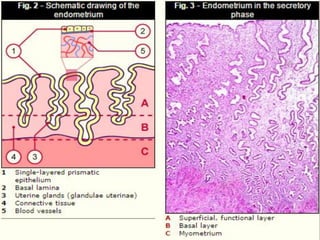
Removal of the basal endometrium
By
Freeze, fry, roast, boil, broil,
vaporize
Abnormal uterine bleeding (AUB)
Any deviation from normal frequency, duration
or amount of menstruation in women of
reproductive age.
NORMAL MENSES
•Frequency: 21-35 d
•Duration: 3-7 d
•Volume: 30-80 ml
AUB- Clinical types
•Polymenorrhoea: frequent (<21 d) menstruation,
at regular intervals
•Menorrhagia: Excessive (>80 ml) & / or prolonged
menstruation, at regular intervals
•Metrorrhagia: Mensturation at irregular intervals.
AUB- Clinical types
•Menometrorrhagia: both.
•Intermenstual bleeding: episodes of uterine
bleeding between regular menstruations.
•Hypomenorrhoea: scanty menstruation.
•Oligomenorrhea: infrequent menstruation (>35 d)
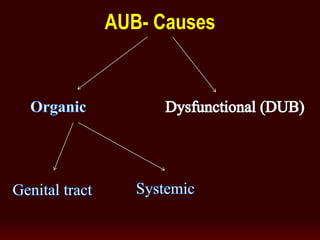
AUB- Causes
Organic cause
1. Pregnancy complications:
•Miscarriages
•Ectopic pregnancy
•Trophoblastic disease
AUB- Causes
2. Genital disease
. Tumors:
Benign- Fibroid, cervical & endometrial polyp.
Malignant:- Cervical, endometrial Ca.
- Ovarian (estrogen secreting) tumor.
. Infection: - PID
. Endometriosis, Adenomyosis
. IUCD
. Marked uterovaginal prolapse
AUB- Causes
Systemic cause:
. Endocrine: - Hypo & hyperthyroidism, DM
- Adrenal gland disease
- Hyperprolactinemia
. Coagulopathy:
•Idiopathic thrombocytopenic purpura,
•Von-Willebrand disease, Liver failure.
AUB- Causes
• Chronic systemic disease: anemia,
heart failure, liver failure
• Iatrogenic: Hormonal contraception, HRT,
anticoagulants, antipsychotic drugs.
• Emotional
• Under & over weight
AUB- Causes
•Definition:
Abnormal uterine bleeding in absence of
obvious pelvic organ disease or a
systemic disorder
•Incidence:
• 60 % of AUB
Dysfunctional uterine bleeding (DUB)
Treatment options for DUB
• The only option for menorrhagia earlier was
dilation & curettage or hysterectomy.
• For gynaecologists, the hysterectomy is the
operative procedure demanding the highest
standard of skill and represents the pinnacle
of his surgical dexterity .
• For the patient, the operation symbolizes the
disintegration of her womanhood.
Hysterectomy creates
 Iatrogenic psychoreactive problems.
 Disturbances of bladder & rectum function.
 Reduced sexual performance because of
excision of paravaginal and paracervical
network of nerves and ligation of uterine artery.
boon for feminityA
With advancement in technology, minimally
invasive techniques has emerged as a boon
with 2 fold benefits.
 Get rid of excessive bleeding.
 Uterus & ovaries remain intact to maintain
feminity.
Unfortunately, still many young women
undergo surgery in the form of hysterectomy.
Why not minimum invasive technique ?
 Lack of expertise for MIS.
 lack of facilities.
 Inadequate counselling by doctors.
 Misguidance by quacks and family
members.
 Repeated visits to clinics.
 Lack of knowledge, transport in under
developed rural areas.
With explosion of information
 Women are asking “why their uterus is being
removed?”
 Hysterectomy is perhaps the excessive
surgery for menorrhagia where only
endometrium is the culprit and not the uterus.
Abnormal uterine bleeding
 Affects approximately 10-30% of premenop-
ausal women and up to 50% of perimenopausal
women.
 It is a common reason for outpatient
gynecologic visits and is one of the most
common causes for surgery among women.
App. 600.000 hysterectomies are performed
each year in the U.S.
Abnormal uterine bleeding is reported as the
primary indication in 20% of patient.
With advent of endometrial ablation, 120,000
women annually has a less invasive alternative
to hysterectomy.
Abnormal uterine bleeding
Although the first medical literature reports of
endometrial destructive procedures are older
than 100 years, widespread adoption of this
modality did not occur until the advent of
hysteroscopically guided techniques.
Until the mid-1990s, hysteroscopically guided
ablation (Resectoscopic endometrial ablation)
using laser, fulguration, or vaporization
techniques was the most common approach.
Endometrial ablation
Endometrial ablation is primarily designed for
the treatment of abnormal or dysfunctional
uterine bleeding (AUB/DUB).
The goal of endometrial ablation is destruction
of the basal layer of the endometrium resulting
in decreased bleeding or even amenorrhea.
Endometrial ablation
The endometrium should be destroyed to the
basilis level which is approximately 4–6 mm
deep.
Approximately 90% of patients will be
successfully treated with endometrial ablation.
 The majority of these patients will experience
decreased bleeding ranging from normal to
light cycles.
 However, anywhere from 15–60% will develop
amenorrhea depending on the endometrial
technique employed.
Endometrial ablation
Advantages of endometrial ablation
compared to hysterectomy
Shorter time (30 min).
Can be done under local anesthesia- cervical
block +/- sedation which also allow office
setting.
Day case procedure, no hospital stay.
Lower cost.
Lower morbidity, Back to regular activities next
day.
Aim & action of ablation
AIM – To destroy the visible endometrium
including the cornual endometrium .
ACTION:
 Heat penetrates 3-5 mm deeper, burns the
superficial myometrium and coagulates the
radial branches uterine plexus.
No regeneration due to loss of basal and spiral
arterioles. 6-8 weeks later the uterine walls
scars and shrinks.
Endometrial Ablation – indications
(inclusion criteria)
Abnormal uterine bleeding of benign etiology
not responding to medical therapy.
No desire for future fertility.
High risk for surgery (hysterectomy) but desire
to retain the uterus.
Absolute CI:
Pregnancy or desire to future pregnancy
Active urogenital or pelvic infection
Suspected or documented premalignant or
malignant condition of the uterus
Endometrial Ablation – contraindications
(Exclusion criteria)
 Others:
• Large uterine cavity > 12 cm, hydrosalpinx
• History of classical cesarean section
• History of a transmural myomectomy
• Uterine anomalies
Preoperative patient counselling
Adequate preoperative counseling
 Hypomenorrhea. Amenorrhea
 Rare need for hysterectomy
 Not a method of contraception
 No protection - endometrial Ca.
Failure of procedures - 2nd intervention
Pre-operative workup
The preoperative workup should give a
complete diagnosis of the interactivity pathology
(submucous leiomyoma, polyp) or myometrial
pathology (interstitial fibroid, adenomyosis) that
can account for the abnormal bleeding.
It should also ensure that there is no suspicious
lesion.
CBC, coagulation profile, s. electrolytes.
TVS: detailed uterine contour, pathology.
Diagnostic hysteroscopy with biopsy of
endometrium.
Patient written consent.
Endometrial preparation:
Reduces operation time
 Increases efficacy of the procedure
Decreases the possibility of fluid overload.
Pre-operative workup
Endometrial preparation
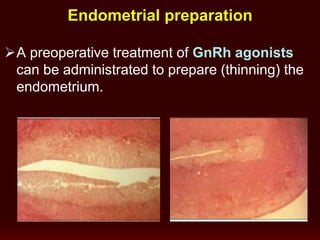
A preoperative treatment of GnRh agonists
can be administrated to prepare (thinning) the
endometrium.
Progesterone can also be used.
Some authors recommend curettage or
aspiration of the endometrium before surgery
if was not possible to submit the patient to an
appropriate pharmacological therapy.
Endometrial suppresion treatment course is
useful even in the postoperative phase.
Endometrial preparation
Cervical preparation
Misoprostol – PGE1 analogue
200-400 mcg PO/PV, 4-6 hrs before surgery.
Intracervical vasopressin
(10 units in 50 mL saline) injected as 3 or 4 mL
into the stroma of the cervix which causes
intense myometrial and arterial wall contractions
for 20–30 minutes.
Significant reduction in force of cx. Dilation.
Decrease risk for absorption syndrome,
bleeding.
Failure of endometrial ablation
 Adenomyosis
 Bulky uterus: >12mm
Curettage, immediately prior to ablation.
No preoperative endometrial suppression.
I.Hysteroscopic:
1. Electrosurgical
a.Roller ball vaporization
b.Wire loop resection
2. Laser II.Non-hysteroscopic:
Endometrial ablation
Tips for endometrial ablation
Essentially the entire endometrium must be
ablated, small foci of endometrial remnant may
give rise to extensive re-epitheliazation.
The entire endometrial thickness must be
ablated. However, to prevent immediate
complications and induce scarring, ablation
should not be carried too deep into the
myometrium.
Normally, the isthmic epithelium is spared to
prevent cervical stenosis and adhesion.
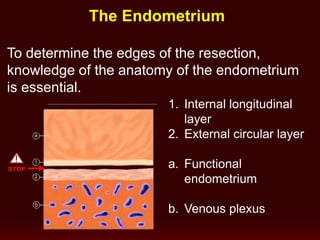
1. Internal longitudinal
layer
2. External circular layer
a. Functional
endometrium
b. Venous plexus
The Endometrium
To determine the edges of the resection,
knowledge of the anatomy of the endometrium
is essential.
 Ideally, patients are followed up by keeping
open option of inspecting the uterine cavity via
hysteroscopy.
 Hysteroscopy-guided techniques are currently
considered superior to blind methods:
 More effective.
 Allow direct visualization of other lesion
which can be removed at the same time.
 Permit histological evaluation of the sample
specimen
Tips for endometrial ablation
Cervical Resection-Trans
of the Endometrium
TCRE)(
election criteria for TCRES
 Abnormal or excessive menstrual bleeding
justifying hysterectomy.
 No relief from medical therapy or medical
treatment not tolerated or rejected.
 Benign endometrial histology and pap smear.
 Uterine size not more than10weeks pregnancy
or uterine cavity <10 -12cm.
 Submucous fibroid of <6 cm in size.
 Completed family.
Anaesthesia
 Sedation.
 Local anaesthesia with or without vasocon-
stricting agents.
 Spinal or epidural anaesthesia:- as it gives less
bleeding, patient remains conscious and can
report of fluid overload.
 Short general anaesthesia.
Operative Technique
Dilation of the cervix
 Bimanual examination is performed to
evaluate the position of the uterus before
dilation. This lowers the risk of perforation.
 A speculum is inserted and the cervix is
grasped to bring the uterus into an
intermediary position.
 The procedure routinely begins with a
diagnostic hysteroscopy if this was not done
during the preoperative evaluation.
 The cervix is then dilated with Hegar’s
dilators, using progressively larger dilators
until a No. 10 dilator can be inserted.
Operative Technique
Inserting the Resectoscope:
 The endo-camera, the resectoscope and the
electrode are then assembled and connected
to the Xenon light source, the electro-surgical
generator and the suction-irrigation tubing.
 Care must be taken to remove all air bubbles
from the tubing. The resectoscope is then
introduced under videoscopic guidance.
Resection Technique
 The resection is usually begun on the posterior
surface, creating a groove from the fundus of
the uterus to the isthmus with a regular,
continuous, flexing motion of the arm.
 The initial groove is used to determine how
deep the resection must be.
 Stopping on the muscular wall whose limits
are defined by the external circular fibers of
the myometrium, before the venous plexus
layer .
 Classically, the resection of the endometrium
is completed in a clock wise direction, and
includes the posterior surface, the left edge,
the anterior surface and the right edge.
 The margins of the isthmic portion of the
uterus must be preserved due to the proximity
of the uterine vessels,
 The endocervical portion must not be
resected, to avoid endocervical adhesions that
can lead to pain, adhesion.
End of Procedure
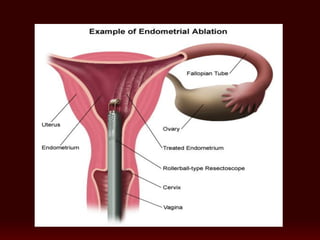
 The hysteroscope is then removed and the
loop resection electrode is replaced by a
Rollerball coagulation electrode that rotates on
an axis to ensures a homogeneous
coagulation.
 As the uterine wall is thinner at the level of the
ostia, and because of the difficulty involved in
resecting the fundus of the uterus, it may be
easier to begin the procedure by coagulating
the 2 ostis and the fundus of the uterus.
 During the resection of the endometrium,
hemostasis is performed as needed with
elective coagulation of the vessels.
 At the end of the procedure, irregularities of
the uterine wall must be eliminated..
 The shavings of the endometrium are
collected for histologic examination using the
loop or blindly by forceps..
 Preferably, the shavings are not removed as
they are resected, but pushed towards the
bottom of the cavity and removed at the end of
the procedure.
Advantages TCRE
Compared to other methods of ablation
 Endometrial tissue for HP is provided.
 Superficial resection of myometrium reduces
failure rates when adenomyosis is present.
 Resection of polyp, septum, adhesions and
submucous myoma can be done at the same
sitting.
Disadvantages of TCER
Compared to other methods of ablation:
• Requires greater hysteroscopy skills
• Longer duration
• Extensive understanding of uterine anatomy.
Intraoperative complication
Cervical trauma, uterine perforation,
Intra peritoneal hemorrhage.
Thermal injury to adjacent structures.
Intra operative hemorrhage.
Fluid overload, hyponatremia, hypoosmolarity
& brain oedema
Air embolism.
Post operative complications
Short term
 Infection
 Haematometra
 Secondary haemorrhage
 Cyclical pain
 Treatment failure
long term
 Recurrence of symptoms.
 Pregnancy.
 Cancer.
Steps to avoid complications of TCER
• Preoperative GnRh analogs, progesterone,
injection of intracervical vasopressin.
• Use least pressure to maintain uterine
distension below mean arterial pressure of
patient.
• Strict adherence to a protocol for measurement
of systemic absorption.
• continuous monitoring of distension media
used by accurate of fluid deficit.
• Check s. electrolytes before, after procedure.
Non-hysteroscopic
Global Endometrial Ablation (GEA)
Balloon ablation
Cavaterm thermal balloon ablation
Radio frequency probe
Unipolar electrodes
Bipolar electrodes
Microwave endometrial ablation (MEA).
Hydrothermal ablation (HTA) microsulis.
Diode laser photodynamic therapy.
Photodynamic therapy
Cryo surgery
Global Endometrial Ablation
• Non-hysteroscopic blind procedures
• Also called 2nd generation techniques.
• Advantages
• Easier to perform
• With less skill & training
• With local anaesthesia
• Disadvantages
• No material for HP examination
• Non-repeatable
Non-hysteroscopic
Global Endometrial Ablation (GEA)
 Thermachoice balloon ablation
 Cavaterm thermal balloon ablation
 Radio frequency probe
 Unipolar electrodes
 Bipolar electrodes
 Microwave endometrial ablation (MEA).
 Hydrothermal ablation (HTA) microsulis.
 Diode laser photodynamic therapy.
 Photodynamic therapy
 Cryo surgery
Indication
 Young women with uterus of normal size and
heavy bleeding.
 Can be offered to mentally disabled, bed
ridden, paralysis, medically unfit like too obese,
hypertensive, diabetes, renal failure, terminal
cancer patient
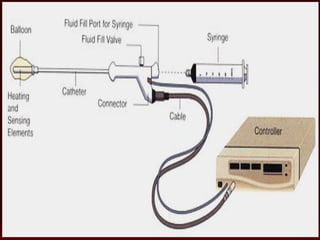
ThermaChoice Balloon Ablation
Contraindications
 Pregnancy desired.
 History of latex allergy.
 Suspected endometrial cancer.
 Existence of weak myometrium (c.s,
myomectomy).
 Active genital or urinary tract infection.
ThermaChoice Balloon Ablation
The procedure can be done under local anaes-
thesia or sedation. As there is no necessity of
cervical dilation prior to insertion of the catheter,
short general anaesthesia can be used in
apprehensive patient.
step 1
An initial PV examination reveals the size of the
uterus.
Procedure
ThermaChoice Balloon Ablation
Step 2
a suction curettage is done to thin the endomet-
rium prior to the procedure.
Step 3
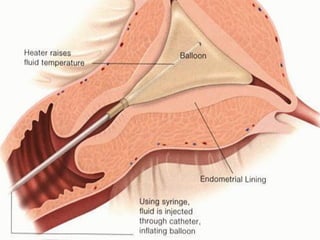
After holding the cervix, the catheter is primed &
inserted upto the fundus.
Step 4
Sterile 5 percent dextrose water is injected into
the balloon slowly until the intrauterine pressure
stabilizes between 160 and 180 mmHg.
Step 5
Endometrial tissue is thermally ablated by
maintaining temperature 87⁰C for 8 minutes.
Step 6
Fluid is drawn out and the deflated catheter is
withdrawn. For safety, the machine automatically
switches off if the pressure or temperature
fluctuates or is above preset values.
Post operative care & follow up
Cramping / pelvic pain – ranges from mild to
severe.
Nausea & vomiting.
Vaginal discharge – may be watery for 2 – 3
weeks.
Sexual intercourse to be avoided.
Regular pap smear to be continued.
Results
• 76% eumenorrhoea or hypomenorrhoea.
• success depends on.
• Age of patient.
• Duration of menorrhagia.
• Thickness of endometrium.
• if more than 4mm, then preoperative
medical preparation should be done.
conclusion
• Thermachoice balloon ablation is an effective
method and can reduce hysterectomy rate
thus reducing morbidity in women.
• Easy, No much skills required
Microwave Endometrial ablation (MEA)
• Developed and pioneered in the UK in the mid
1990’s.
• Received US FDA approval in 2003.
• Electromagnetic waves with a wave-length of
0.3-30cm.
• At a frequency of 9.2 GHz, and at a low power
of 30 W, microwave energy and effectively
ensures the 5–6 mm depth of necrosis, which
is required to completely destroy the basal
layer of the endometrium.
• The system computer screen provides the
surgeon with a proven temperature band
of 70– 80°C.
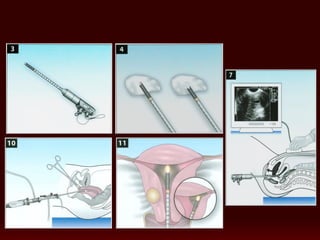
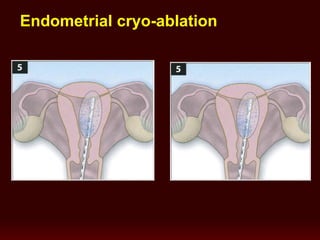
Endometrial cryo-ablation
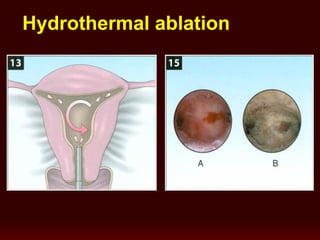
Hydrothermal ablation
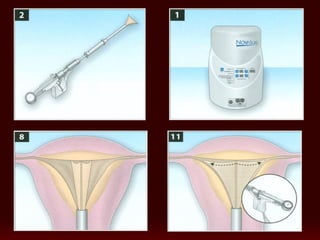
Novasure System
• Three dimensional, Fan shaped, expandable
Bipolar device.
• Porus metallic membrane draped around
metallic skeleton
• Power used 180w (radiofrequency)
• Treatment time (3min).
• Depth of destruction 4-4.5mm in uterine
corpus, at corneal region 2.2 – 2.9 mm.
• Satisfaction rate 83%.
Cavaterm Thermal Balloon Ablation
• Introduced in 1996
• Silicon balloon catheter attached with central
unit.
• 1.5% glycine fills the balloon
• fluid heated for 15 minutes
• 1-3yrs follow up showed 70% amenorrhea or
minimum bleeding.
• Cavaterm Procedure & novasure procedure
were found to be safe & effective.
Repeat endometrial ablation
Endometrial ablation by many methods will be
successful up to 90% of the time.
Women in whom the procedure is not
successful have the choice of hysterectomy,
observation, or repeat ablation.
Repeat ablation done after 6 months of the
initial one.
Yag laser or roller ball is used
Global ablation should not be used as the
repeat ablation should be performed under
direct vision.
Repeat endometrial ablation
Why repeat endometrial ablation???
1. Uterine bleeding improved, but still heavy or
prolonged and adversely affecting the patient’s
quality of life.
2. Physical or mental disability in which
amenorrhea is desired.
3. Initial procedure not completed because of
excess fluid absorption, leiomyomas, instrumen
4. malfunction, or uterine perforation.
5. Amenorrhea desired by patient despite
achieving reduced or normal flow.
6. Unimproved.
conclusion
Evidence based studies and reviews reveal that:
TCRE is an excellent successful treatment and
a genuine alternative to hysterectomy.
Visual techniques are definitely superior to non
visual techniques of ablation.
Success rate reported as 79 – 95%.
YOU WILL REMEMBER
A LITTLE OF WHAT YOU HEAR,
SOME OF WHAT YOU READ,
CONSIDERABLY MORE OF WHAT
YOU SEE,
BUT
ALMOST ALL OF WHAT YOU
UNDERSTAND.

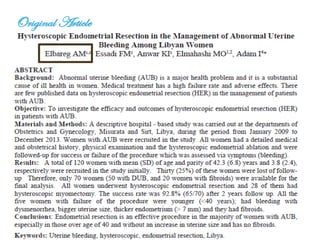
Hysteroscopic endometial resection

  • 1.
    A. Prof. Dr.Aisha Mohamed El-Bareg MBBS, DGO, MMedSci (ART), ABOG, (MD), PhD(UK) Consultant Obstetrician & Gynecologist/subspecialty in Endoscopic Surgery and Reproductive medicine Al-Amal Hospital for Obs &Gyne. Infertility Treatments and Genetic Research Faculty of Medicine , Misurata University/Libya
  • 2.
    Endometrial Ablation Destruction ofEndometrium Removal of the basal endometrium By Freeze, fry, roast, boil, broil, vaporize
  • 4.
    Abnormal uterine bleeding(AUB) Any deviation from normal frequency, duration or amount of menstruation in women of reproductive age. NORMAL MENSES •Frequency: 21-35 d •Duration: 3-7 d •Volume: 30-80 ml
  • 5.
    AUB- Clinical types •Polymenorrhoea:frequent (<21 d) menstruation, at regular intervals •Menorrhagia: Excessive (>80 ml) & / or prolonged menstruation, at regular intervals •Metrorrhagia: Mensturation at irregular intervals.
  • 6.
    AUB- Clinical types •Menometrorrhagia:both. •Intermenstual bleeding: episodes of uterine bleeding between regular menstruations. •Hypomenorrhoea: scanty menstruation. •Oligomenorrhea: infrequent menstruation (>35 d)
  • 7.
  • 8.
    Organic cause 1. Pregnancycomplications: •Miscarriages •Ectopic pregnancy •Trophoblastic disease AUB- Causes
  • 9.
    2. Genital disease .Tumors: Benign- Fibroid, cervical & endometrial polyp. Malignant:- Cervical, endometrial Ca. - Ovarian (estrogen secreting) tumor. . Infection: - PID . Endometriosis, Adenomyosis . IUCD . Marked uterovaginal prolapse AUB- Causes
  • 10.
    Systemic cause: . Endocrine:- Hypo & hyperthyroidism, DM - Adrenal gland disease - Hyperprolactinemia . Coagulopathy: •Idiopathic thrombocytopenic purpura, •Von-Willebrand disease, Liver failure. AUB- Causes
  • 11.
    • Chronic systemicdisease: anemia, heart failure, liver failure • Iatrogenic: Hormonal contraception, HRT, anticoagulants, antipsychotic drugs. • Emotional • Under & over weight AUB- Causes
  • 12.
    •Definition: Abnormal uterine bleedingin absence of obvious pelvic organ disease or a systemic disorder •Incidence: • 60 % of AUB Dysfunctional uterine bleeding (DUB)
  • 13.
    Treatment options forDUB • The only option for menorrhagia earlier was dilation & curettage or hysterectomy. • For gynaecologists, the hysterectomy is the operative procedure demanding the highest standard of skill and represents the pinnacle of his surgical dexterity . • For the patient, the operation symbolizes the disintegration of her womanhood.
  • 14.
    Hysterectomy creates  Iatrogenicpsychoreactive problems.  Disturbances of bladder & rectum function.  Reduced sexual performance because of excision of paravaginal and paracervical network of nerves and ligation of uterine artery.
  • 15.
    boon for feminityA Withadvancement in technology, minimally invasive techniques has emerged as a boon with 2 fold benefits.  Get rid of excessive bleeding.  Uterus & ovaries remain intact to maintain feminity. Unfortunately, still many young women undergo surgery in the form of hysterectomy.
  • 16.
    Why not minimuminvasive technique ?  Lack of expertise for MIS.  lack of facilities.  Inadequate counselling by doctors.  Misguidance by quacks and family members.  Repeated visits to clinics.  Lack of knowledge, transport in under developed rural areas.
  • 17.
    With explosion ofinformation  Women are asking “why their uterus is being removed?”  Hysterectomy is perhaps the excessive surgery for menorrhagia where only endometrium is the culprit and not the uterus.
  • 18.
    Abnormal uterine bleeding Affects approximately 10-30% of premenop- ausal women and up to 50% of perimenopausal women.  It is a common reason for outpatient gynecologic visits and is one of the most common causes for surgery among women.
  • 19.
    App. 600.000 hysterectomiesare performed each year in the U.S. Abnormal uterine bleeding is reported as the primary indication in 20% of patient. With advent of endometrial ablation, 120,000 women annually has a less invasive alternative to hysterectomy. Abnormal uterine bleeding
  • 20.
    Although the firstmedical literature reports of endometrial destructive procedures are older than 100 years, widespread adoption of this modality did not occur until the advent of hysteroscopically guided techniques. Until the mid-1990s, hysteroscopically guided ablation (Resectoscopic endometrial ablation) using laser, fulguration, or vaporization techniques was the most common approach. Endometrial ablation
  • 21.
    Endometrial ablation isprimarily designed for the treatment of abnormal or dysfunctional uterine bleeding (AUB/DUB). The goal of endometrial ablation is destruction of the basal layer of the endometrium resulting in decreased bleeding or even amenorrhea. Endometrial ablation
  • 22.
    The endometrium shouldbe destroyed to the basilis level which is approximately 4–6 mm deep. Approximately 90% of patients will be successfully treated with endometrial ablation.  The majority of these patients will experience decreased bleeding ranging from normal to light cycles.  However, anywhere from 15–60% will develop amenorrhea depending on the endometrial technique employed. Endometrial ablation
  • 23.
    Advantages of endometrialablation compared to hysterectomy Shorter time (30 min). Can be done under local anesthesia- cervical block +/- sedation which also allow office setting. Day case procedure, no hospital stay. Lower cost. Lower morbidity, Back to regular activities next day.
  • 24.
    Aim & actionof ablation AIM – To destroy the visible endometrium including the cornual endometrium . ACTION:  Heat penetrates 3-5 mm deeper, burns the superficial myometrium and coagulates the radial branches uterine plexus. No regeneration due to loss of basal and spiral arterioles. 6-8 weeks later the uterine walls scars and shrinks.
  • 25.
    Endometrial Ablation –indications (inclusion criteria) Abnormal uterine bleeding of benign etiology not responding to medical therapy. No desire for future fertility. High risk for surgery (hysterectomy) but desire to retain the uterus.
  • 26.
    Absolute CI: Pregnancy ordesire to future pregnancy Active urogenital or pelvic infection Suspected or documented premalignant or malignant condition of the uterus Endometrial Ablation – contraindications (Exclusion criteria)  Others: • Large uterine cavity > 12 cm, hydrosalpinx • History of classical cesarean section • History of a transmural myomectomy • Uterine anomalies
  • 27.
    Preoperative patient counselling Adequatepreoperative counseling  Hypomenorrhea. Amenorrhea  Rare need for hysterectomy  Not a method of contraception  No protection - endometrial Ca. Failure of procedures - 2nd intervention
  • 28.
    Pre-operative workup The preoperativeworkup should give a complete diagnosis of the interactivity pathology (submucous leiomyoma, polyp) or myometrial pathology (interstitial fibroid, adenomyosis) that can account for the abnormal bleeding. It should also ensure that there is no suspicious lesion.
  • 29.
    CBC, coagulation profile,s. electrolytes. TVS: detailed uterine contour, pathology. Diagnostic hysteroscopy with biopsy of endometrium. Patient written consent. Endometrial preparation: Reduces operation time  Increases efficacy of the procedure Decreases the possibility of fluid overload. Pre-operative workup
  • 30.
    Endometrial preparation A preoperativetreatment of GnRh agonists can be administrated to prepare (thinning) the endometrium.
  • 31.
    Progesterone can alsobe used. Some authors recommend curettage or aspiration of the endometrium before surgery if was not possible to submit the patient to an appropriate pharmacological therapy. Endometrial suppresion treatment course is useful even in the postoperative phase. Endometrial preparation
  • 32.
    Cervical preparation Misoprostol –PGE1 analogue 200-400 mcg PO/PV, 4-6 hrs before surgery. Intracervical vasopressin (10 units in 50 mL saline) injected as 3 or 4 mL into the stroma of the cervix which causes intense myometrial and arterial wall contractions for 20–30 minutes. Significant reduction in force of cx. Dilation. Decrease risk for absorption syndrome, bleeding.
  • 34.
    Failure of endometrialablation  Adenomyosis  Bulky uterus: >12mm Curettage, immediately prior to ablation. No preoperative endometrial suppression.
  • 35.
    I.Hysteroscopic: 1. Electrosurgical a.Roller ballvaporization b.Wire loop resection 2. Laser II.Non-hysteroscopic: Endometrial ablation
  • 36.
    Tips for endometrialablation Essentially the entire endometrium must be ablated, small foci of endometrial remnant may give rise to extensive re-epitheliazation. The entire endometrial thickness must be ablated. However, to prevent immediate complications and induce scarring, ablation should not be carried too deep into the myometrium. Normally, the isthmic epithelium is spared to prevent cervical stenosis and adhesion.
  • 37.
    1. Internal longitudinal layer 2.External circular layer a. Functional endometrium b. Venous plexus The Endometrium To determine the edges of the resection, knowledge of the anatomy of the endometrium is essential.
  • 38.
     Ideally, patientsare followed up by keeping open option of inspecting the uterine cavity via hysteroscopy.  Hysteroscopy-guided techniques are currently considered superior to blind methods:  More effective.  Allow direct visualization of other lesion which can be removed at the same time.  Permit histological evaluation of the sample specimen Tips for endometrial ablation
  • 39.
  • 40.
    election criteria forTCRES  Abnormal or excessive menstrual bleeding justifying hysterectomy.  No relief from medical therapy or medical treatment not tolerated or rejected.  Benign endometrial histology and pap smear.  Uterine size not more than10weeks pregnancy or uterine cavity <10 -12cm.  Submucous fibroid of <6 cm in size.  Completed family.
  • 41.
    Anaesthesia  Sedation.  Localanaesthesia with or without vasocon- stricting agents.  Spinal or epidural anaesthesia:- as it gives less bleeding, patient remains conscious and can report of fluid overload.  Short general anaesthesia.
  • 42.
    Operative Technique Dilation ofthe cervix  Bimanual examination is performed to evaluate the position of the uterus before dilation. This lowers the risk of perforation.  A speculum is inserted and the cervix is grasped to bring the uterus into an intermediary position.  The procedure routinely begins with a diagnostic hysteroscopy if this was not done during the preoperative evaluation.
  • 43.
     The cervixis then dilated with Hegar’s dilators, using progressively larger dilators until a No. 10 dilator can be inserted.
  • 44.
    Operative Technique Inserting theResectoscope:  The endo-camera, the resectoscope and the electrode are then assembled and connected to the Xenon light source, the electro-surgical generator and the suction-irrigation tubing.  Care must be taken to remove all air bubbles from the tubing. The resectoscope is then introduced under videoscopic guidance.
  • 45.
    Resection Technique  Theresection is usually begun on the posterior surface, creating a groove from the fundus of the uterus to the isthmus with a regular, continuous, flexing motion of the arm.  The initial groove is used to determine how deep the resection must be.  Stopping on the muscular wall whose limits are defined by the external circular fibers of the myometrium, before the venous plexus layer .
  • 46.
     Classically, theresection of the endometrium is completed in a clock wise direction, and includes the posterior surface, the left edge, the anterior surface and the right edge.  The margins of the isthmic portion of the uterus must be preserved due to the proximity of the uterine vessels,  The endocervical portion must not be resected, to avoid endocervical adhesions that can lead to pain, adhesion.
  • 47.
    End of Procedure The hysteroscope is then removed and the loop resection electrode is replaced by a Rollerball coagulation electrode that rotates on an axis to ensures a homogeneous coagulation.  As the uterine wall is thinner at the level of the ostia, and because of the difficulty involved in resecting the fundus of the uterus, it may be easier to begin the procedure by coagulating the 2 ostis and the fundus of the uterus.
  • 48.
     During theresection of the endometrium, hemostasis is performed as needed with elective coagulation of the vessels.  At the end of the procedure, irregularities of the uterine wall must be eliminated..  The shavings of the endometrium are collected for histologic examination using the loop or blindly by forceps..  Preferably, the shavings are not removed as they are resected, but pushed towards the bottom of the cavity and removed at the end of the procedure.
  • 50.
    Advantages TCRE Compared toother methods of ablation  Endometrial tissue for HP is provided.  Superficial resection of myometrium reduces failure rates when adenomyosis is present.  Resection of polyp, septum, adhesions and submucous myoma can be done at the same sitting.
  • 51.
    Disadvantages of TCER Comparedto other methods of ablation: • Requires greater hysteroscopy skills • Longer duration • Extensive understanding of uterine anatomy.
  • 52.
    Intraoperative complication Cervical trauma,uterine perforation, Intra peritoneal hemorrhage. Thermal injury to adjacent structures. Intra operative hemorrhage. Fluid overload, hyponatremia, hypoosmolarity & brain oedema Air embolism.
  • 53.
    Post operative complications Shortterm  Infection  Haematometra  Secondary haemorrhage  Cyclical pain  Treatment failure long term  Recurrence of symptoms.  Pregnancy.  Cancer.
  • 54.
    Steps to avoidcomplications of TCER • Preoperative GnRh analogs, progesterone, injection of intracervical vasopressin. • Use least pressure to maintain uterine distension below mean arterial pressure of patient. • Strict adherence to a protocol for measurement of systemic absorption. • continuous monitoring of distension media used by accurate of fluid deficit. • Check s. electrolytes before, after procedure.
  • 57.
    Non-hysteroscopic Global Endometrial Ablation(GEA) Balloon ablation Cavaterm thermal balloon ablation Radio frequency probe Unipolar electrodes Bipolar electrodes Microwave endometrial ablation (MEA). Hydrothermal ablation (HTA) microsulis. Diode laser photodynamic therapy. Photodynamic therapy Cryo surgery
  • 58.
    Global Endometrial Ablation •Non-hysteroscopic blind procedures • Also called 2nd generation techniques. • Advantages • Easier to perform • With less skill & training • With local anaesthesia • Disadvantages • No material for HP examination • Non-repeatable
  • 59.
    Non-hysteroscopic Global Endometrial Ablation(GEA)  Thermachoice balloon ablation  Cavaterm thermal balloon ablation  Radio frequency probe  Unipolar electrodes  Bipolar electrodes  Microwave endometrial ablation (MEA).  Hydrothermal ablation (HTA) microsulis.  Diode laser photodynamic therapy.  Photodynamic therapy  Cryo surgery
  • 60.
    Indication  Young womenwith uterus of normal size and heavy bleeding.  Can be offered to mentally disabled, bed ridden, paralysis, medically unfit like too obese, hypertensive, diabetes, renal failure, terminal cancer patient ThermaChoice Balloon Ablation
  • 61.
    Contraindications  Pregnancy desired. History of latex allergy.  Suspected endometrial cancer.  Existence of weak myometrium (c.s, myomectomy).  Active genital or urinary tract infection. ThermaChoice Balloon Ablation
  • 62.
    The procedure canbe done under local anaes- thesia or sedation. As there is no necessity of cervical dilation prior to insertion of the catheter, short general anaesthesia can be used in apprehensive patient. step 1 An initial PV examination reveals the size of the uterus. Procedure ThermaChoice Balloon Ablation
  • 63.
    Step 2 a suctioncurettage is done to thin the endomet- rium prior to the procedure. Step 3 After holding the cervix, the catheter is primed & inserted upto the fundus. Step 4 Sterile 5 percent dextrose water is injected into the balloon slowly until the intrauterine pressure stabilizes between 160 and 180 mmHg.
  • 64.
    Step 5 Endometrial tissueis thermally ablated by maintaining temperature 87⁰C for 8 minutes. Step 6 Fluid is drawn out and the deflated catheter is withdrawn. For safety, the machine automatically switches off if the pressure or temperature fluctuates or is above preset values.
  • 67.
    Post operative care& follow up Cramping / pelvic pain – ranges from mild to severe. Nausea & vomiting. Vaginal discharge – may be watery for 2 – 3 weeks. Sexual intercourse to be avoided. Regular pap smear to be continued.
  • 68.
    Results • 76% eumenorrhoeaor hypomenorrhoea. • success depends on. • Age of patient. • Duration of menorrhagia. • Thickness of endometrium. • if more than 4mm, then preoperative medical preparation should be done.
  • 69.
    conclusion • Thermachoice balloonablation is an effective method and can reduce hysterectomy rate thus reducing morbidity in women. • Easy, No much skills required
  • 70.
    Microwave Endometrial ablation(MEA) • Developed and pioneered in the UK in the mid 1990’s. • Received US FDA approval in 2003. • Electromagnetic waves with a wave-length of 0.3-30cm. • At a frequency of 9.2 GHz, and at a low power of 30 W, microwave energy and effectively ensures the 5–6 mm depth of necrosis, which is required to completely destroy the basal layer of the endometrium.
  • 71.
    • The systemcomputer screen provides the surgeon with a proven temperature band of 70– 80°C.
  • 73.
  • 74.
  • 75.
    Novasure System • Threedimensional, Fan shaped, expandable Bipolar device. • Porus metallic membrane draped around metallic skeleton • Power used 180w (radiofrequency) • Treatment time (3min). • Depth of destruction 4-4.5mm in uterine corpus, at corneal region 2.2 – 2.9 mm. • Satisfaction rate 83%.
  • 77.
    Cavaterm Thermal BalloonAblation • Introduced in 1996 • Silicon balloon catheter attached with central unit. • 1.5% glycine fills the balloon • fluid heated for 15 minutes • 1-3yrs follow up showed 70% amenorrhea or minimum bleeding. • Cavaterm Procedure & novasure procedure were found to be safe & effective.
  • 78.
    Repeat endometrial ablation Endometrialablation by many methods will be successful up to 90% of the time. Women in whom the procedure is not successful have the choice of hysterectomy, observation, or repeat ablation.
  • 79.
    Repeat ablation doneafter 6 months of the initial one. Yag laser or roller ball is used Global ablation should not be used as the repeat ablation should be performed under direct vision. Repeat endometrial ablation
  • 80.
    Why repeat endometrialablation??? 1. Uterine bleeding improved, but still heavy or prolonged and adversely affecting the patient’s quality of life. 2. Physical or mental disability in which amenorrhea is desired. 3. Initial procedure not completed because of excess fluid absorption, leiomyomas, instrumen 4. malfunction, or uterine perforation. 5. Amenorrhea desired by patient despite achieving reduced or normal flow. 6. Unimproved.
  • 81.
    conclusion Evidence based studiesand reviews reveal that: TCRE is an excellent successful treatment and a genuine alternative to hysterectomy. Visual techniques are definitely superior to non visual techniques of ablation. Success rate reported as 79 – 95%.
  • 82.
    YOU WILL REMEMBER ALITTLE OF WHAT YOU HEAR, SOME OF WHAT YOU READ, CONSIDERABLY MORE OF WHAT YOU SEE, BUT ALMOST ALL OF WHAT YOU UNDERSTAND.