Anesthesia:
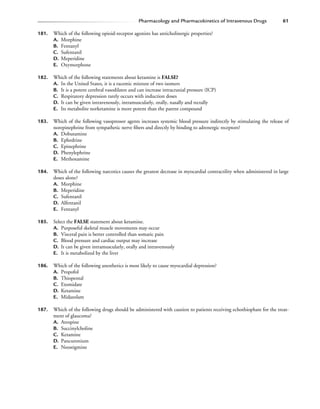
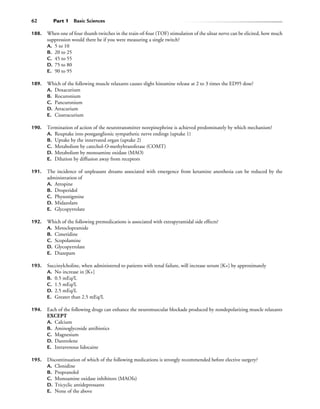
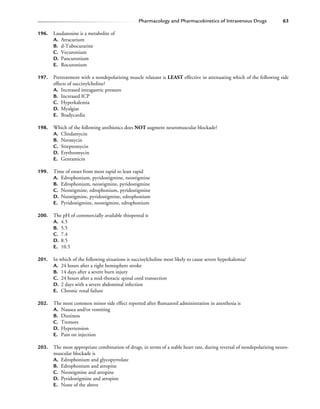
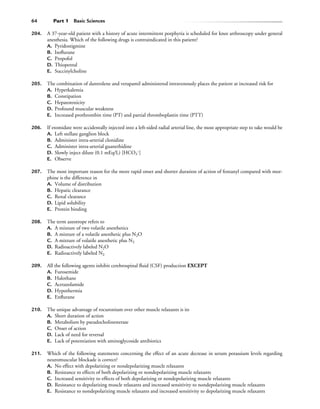
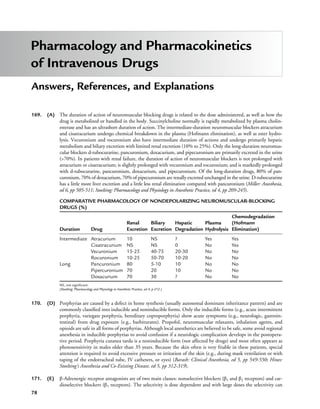
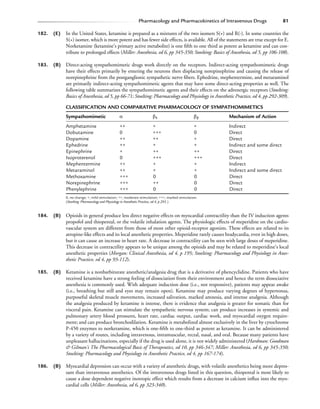
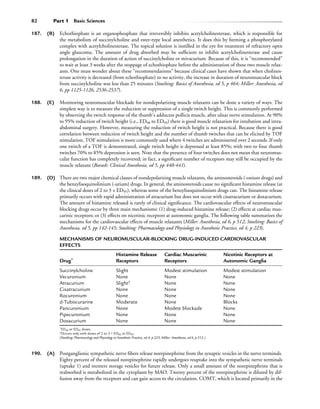
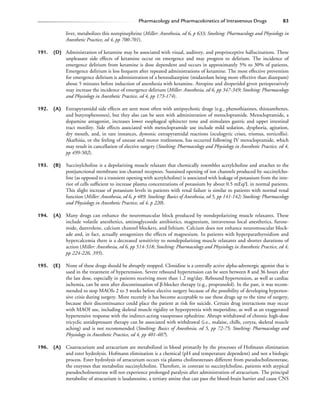
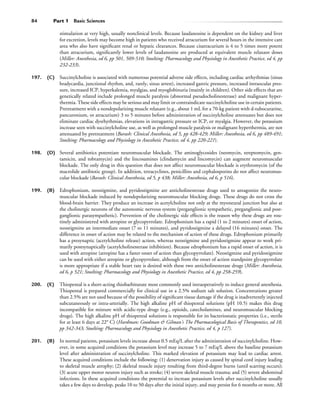
A Comprehensive Review
This page intentionally left blank
Anesthesia:
A Comprehensive Review
4th Edition
Brian A. Hall, M.D.
Assistant Professor of Anesthesiology
College of Medicine, Mayo Clinic
Rochester, Minnesota
Robert C. Chantigian, M.D.
Associate Professor of Anesthesiology
College of Medicine, Mayo Clinic
Rochester, Minnesota
Previous editions copyrighted 1997, 1992
Library of Congress Cataloging-in-Publication Data
Hall, Brian A.
Anesthesia: a comprehensive review / Brian A. Hall, Robert C. Chantigian.—4th ed.
p. ; cm.
Includes bibliographical references and index.
ISBN 978-0-323-06857-4
1. Anesthesiology—Examinations, questions, etc. 2. Anesthesiology—Outlines, syllabi,
etc. I. Chantigian, Robert C. II. Mayo Foundation for Medical Education and Research. III. Title.
[DNLM: 1. Anesthesia—Examination Questions. WO 218.2 H174a 2009]
RD82.3 .H35 2009
617.9’6076—dc22 2009039292
Editor: Natasha Andjelkovic
Editorial Assistant: Bradley McIlwain
Publishing Services Manager: Anitha Rajarathnam
Project Manager: Mahalakshmi Nithyanand
Design Direction: Louis Forgione
ISBN: 978-0-323-06857-4
Printed in the United States of America
Last digit is the print number: 9╇ 8╇ 7╇ 6╇ 5╇ 4╇ 3╇ 2╇ 1
3251 Riverport Lane
Maryland Heights, Missouri 63043
Notice
Knowledge and best practice in this field are constantly changing. As new research and experience broaden our
knowledge, changes in practice, treatment and drug therapy may become necessary or appropriate. Readers are
advised to check the most current information provided (i) on procedures featured or (ii) by the manufacturer
of each product to be administered, to verify the recommended dose or formula, the method and duration of
administration, and contraindications. It is the responsibility of the practitioner, relying on his or her own
experience and knowledge of the patient, to make diagnoses, to determine dosages and the best treatment for
each individual patient, and to take all appropriate safety precautions. To the fullest extent of the law, neither
the Publisher nor the Editors assume any liability for any injury and/or damage to persons or property arising
out of or related to any use of the material contained in this book.
The Publisher
ANESTHESIA: A COMPREHENSIVE REVIEW
Fourth Edition
Copyright © 2010, 2003, 1997, 1992 by Mayo Foundation for Medical Education and Research
All rights reserved. No part of this publication may be reproduced of transmitted in any from or by any means,
electronic or mechanical, including photocopy, recording, or any �
information storage and retrival system, without
permission in writing from the publisher.
Permissions may be sought directly from Elsevier’s Health Sciences Rights
Department in Philadelphia, PA, USA: phone: (+1) 215 239 3804, fax: (+1) 215 239 3805,
e-mail: healthpermissions@elsevier.com. You may also complete your request on-line
via the Elsevier homepage (http://www.elsevier.com), by selecting ‘Customer Support’
and then ‘Obtaining Permissions’.
v
Preface
Work started on the first edition of this book more than 20 years ago. Over the ensuing years
and with each edition, changes in medicine and anesthesiology have occurred at an astounding
rate. Several drugs were discovered and marketed and have since been withdrawn or replaced
with better drugs. Some procedures and techniques, once very popular, have been relegated to
historic significance only.
Although these advances and improvements in anesthesiology have been reflected in each
subsequent edition, the fourth edition has unquestionably seen the greatest number of changes
in both content and testing format.
Questions have been carefully reviewed. Those of dubious merit have been replaced. The for-
mat of the entire book has been changed to include type A (single answer) questions exclusively.
All K-type (multiple true/false) questions have been eliminated because these are no longer
used in the certification process.
This book, like its predecessors, is intended as a guide to aid learners in identifying �
areas
of weakness. It was written to solidify the readers’ knowledge and point out topics and
concepts requiring further study. The questions range from very basic to complex and are
useful for individuals just entering the field as well as for experienced practitioners preparing
for recertification.
Brian A. Hall, M.D.
Robert C. Chantigian, M.D.
This page intentionally left blank
vii
Contributors
Dorothee H. Bremerich, M.D.
Professor and Chairman
Department of Anesthesiology
and Intensive Care Medicine
St. Vincenz Hospital
Limburg, Germany
Dawit T. Haile, M.D.
Instructor of Anesthesiology
College of Medicine, Mayo Clinic
Rochester, Minnesota
Keith A. Jones, M.D.
Professor and Chairman
Department of Anesthesiology
University of Alabama School of Medicine
Birmingham, Alabama
C. Thomas Wass, M.D.
Associate Professor of Anesthesiology
College of Medicine, Mayo Clinic
Rochester, Minnesota
Francis X. Whalen, M.D.
Assistant Professor
Department of Anesthesiology
and Critical Care Medicine
College of Medicine, Mayo Clinic
Rochester, Minnesota
This page intentionally left blank
ix
The following figures and tables are reprinted from other
sources:
Figure on page 6
From van Genderingen HR, Gravenstein N, et al:
�
Computer-assisted capnogram analysis. J Clin Monit
3:198, 1987, with kind permission of Kluwer Academic
Publishers.
Figure on page 12
Modified from Willis BA, Pender JW, Mapleson WW:
Rebreathing in a T-piece: Volunteer and theoretical �
studies
of Jackson-Rees modification of Ayre’s T-piece during
�
spontaneous respiration. Br J Anaesth 47:1239-1246,
1975. © The Board of Management and Trustees of the
British Journal of Anaesthesia. Reproduced by permission
of Oxford University Press/British Journal of Anaesthesia.
Tables on pages 15, 67, 150 and 171
From Stoelting RK, Miller RD: Basics of Anesthesia, ed 4.
New York, Churchill Livingstone, 2000.
Figure on page 15
Based on Check-out: A Guide for Preoperative Inspection
of an Anesthesia Machine/1987 of the American Society
of Anesthesiologists. A copy of the full text can be obtained
from ASA, 520 N. Northwest Highway, Park Ridge,
�
Illinois 60068-2573.
Figure on page 18
From Andrews JJ: Understanding your anesthesia
�
machine€and ventilator. In International Anesthesia
�
Research Society (ed): 1989 Review Course Lectures.
�
Cleveland, Ohio, 1989, p 59.
Figure on page 23
Courtesy of Draeger Medical, Inc., Telford, Pa
Figure on page 24
From Azar I, Eisenkraft JB: Waste anesthetic gas spillage
and scavenging systems. In Ehrenwerth J, Eisenkraft JB
(eds): Anesthesia Equipment: Principles and Applications.
St. Louis, Mosby, 1993, p 128.
Figures on pages 41 and 108;
Tables on pages 41, 65, 67, 68, 69 and 74
From Stoelting RK: Pharmacology and Physiology
in �
Anesthetic Practice, ed 3. Philadelphia, Lippincott
�
Williams & Wilkins, 1999.
Figure on page 44
From Stoelting RK, Dierdorf SF: Anesthesia and
Co-existing Disease, ed 4. New York, Churchill
�
Livingstone, 2002.
Credits
Table on page 78
Modified from Miller RD (ed): Anesthesia, ed 5.
New€York, Churchill Livingstone, 2000, p 1794.
Figure on page 160
From Avery ME: Lung and Its Disorders in the Newborn,
ed 3. Philadelphia, WB Saunders, 1974, p 134.
Figure on page 173
From Moore KL (ed): Clinically Oriented Anatomy.
Baltimore, Williams & Wilkins, 1980, p 653.
Figure on page 179
From Coté CJ, Todres ID: The pediatric airway.
In Coté CJ, Ryan JF, Todres ID, et al (eds): A Practice
of �
Anesthesia for Infants and Children. Philadelphia,
WB Saunders, 1992, p 55.
Figure on page 199
From Benedetti TJ: Obstetric hemorrhage. In Gabbe
SG, Niebyl JR, Simpson JL (eds): Obstetrics: Normal
and �
Problem Pregnancies, ed 3. New York, Churchill
�
Livingstone, 1996, p 511.
Figure on page 209
From Miller RD (ed): Anesthesia, ed 3. New York,
Churchill Livingstone, 1990, p 1745.
Tables on page 217
From Darby JM, Stein K, Grenvik A, et al: Approach
to management of the heart beating “brain dead” organ
donor. JAMA 261: 2222, 1989. Copyrighted 1989,
American Medical Association.
Figure on page 218
From Cucchiara RJ, Black S, Steinkeler JA: Anesthesia
for intracranial procedures. In Barash PG, Cullen BF,
�
Stoelting RK (eds): Clinical Anesthesia. Philadelphia,
JB Lippincott, 1989, p 849.
Figure on page 243
By permission of Mayo Foundation for Medical Education
and Research
Figure on page 244
From Raj PP: Practical Management of Pain, ed 2.
St.€Louis, Mosby-Year Book, 1992, p 785.
Figure on page 250
From Cousins MJ, Bridenbaugh PO (eds): Neural
�
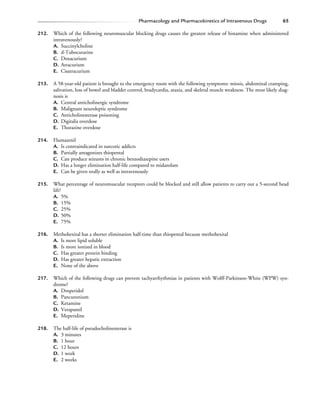
Blockade in Clinical Anesthesia and Management of Pain,
ed 2. Philadelphia, JB Lippincott, 1988, pp 255-263.
Figure on page 261
From Mark JB: Atlas of Cardiovascular Monitoring.
New€York, Churchill Livingstone, 1998.
Figure on page 262
From Jackson JM, Thomas SJ, Lowenstein E: Anesthetic
Management of Patients with Valvular Heart Disease.
Semin Anesth 1:244, 1982.
Figure on page 264, question 961
From Morgan GE, Mikhail MS: Clinical Anesthesiology.
East Norwalk, Appleton & Lange, 1992, p 301.
Figure on page 264, question 962
From Spiess BD, Ivankovich AD: Thromboelastography:
A coagulation-monitoring technique applied to
cardiopulmonary bypass. In Effective Hemostasis in
Cardiac Surgery. Philadelphia, WB Saunders, 1988,
p 165.
Credits
x
xi
Acknowledgements
The practice of anesthesiology has become increasingly subspecialized and technical. The
�
authors and co-authors are indebted to a multitude of other contributors. The combined
efforts of all these individuals in proofreading, examining, and critiquing the �
questions and
explanations have resulted in a very useful and technically accurate work. The authors wish
to thank the anesthesia residents who checked the references for all questions taken from the
third edition and updated them: Drs. Fawn Atchison, Ann Baetzel, Eric Deutsch, Andrea
Dutoit, Tara Frost, Kendra Grim, Adam Niesen, Eduardo Rodrigues, William Shakespeare,
Brandon Sloop, and Peter Stiles. Each chapter underwent a final proofreading before produc-
tion; the authors are very appreciative of the efforts of Drs. Eric Deutsch, Joel Farmer, Antolin
Flores, Ryan Gassin, Kendra Grim, Erin Grund, Rebecca Johnson, Westley Manske, David
Prybilla, Troy Russon, and Hans Sviggum.
Several anesthesia staff members from the Mayo Clinic and other institutions were very
helpful with development of many of the new questions. The authors wish to express their
�
gratitude to Drs. Martin Abel, Thomas Comfere, Tim Curry, Niki Dietz, Robert Friedhoff,
Tracy Harrison, James Hebl, Jeff Jensen, D.J. Kor, William Lanier, James Lynch, David Martin,
Linda Mason, William Mauermann, Brian McGlinch, James Munis, Michael Johnson, Joseph
Neal, Jeff Pasternak, William Perkins, Kent Rehfeldt, Greg Schears, David Warner, Denise
Wedel, Margaret Weglinski, and Roger White.
The authors also thank Tara Hall, RRT; Robin Hardt, CRNA; and Natalie Johnson,
CRNA, for help with proofreading and suggestions for question topics.
Work for the first edition of this book began in 1987, but the formation of the early manu-
script into an organized book did not occur until 1989 at the suggestion of and with strong
encouragement from Drs. Michael J. Joyner, Ronald A. MacKenzie, and Kenneth P. Scott.
The chairman of our department, Bradly J. Narr, was very supportive of our efforts in pro-
ducing this book, and we wish to thank him.€Lastly, our friends at Elsevier Medical Publishers,
Dr. Natasha Andjelkovic, Angela Norton, Mahalakshmi Nithyanand, and Virgina Wilson
were very patient, helpful, and supportive in the preparation of this manuscript. We are very
appreciative of their benevolence.
Brian A. Hall, M.D.
Robert C. Chantigian, M.D.
This page intentionally left blank
xiii
Contents
Part 1╇╛Basic Sciences
1 Anesthesia Equipment and Physics . .  .  .  .  .  .  .  .  .  .  .  .  .  .  .  .  .  .  .  .  .  .  .  .  .  .  .  .  .  .  .  .  .  .  .  .  .  .  .  .  .  .  .  .  .  . 1
		 Answers, References and Explanationsâ•… 15
2 Respiratory Physiology and Critical Care Medicine .  .  .  .  .  .  .  .  .  .  .  .  .  .  .  .  .  .  .  .  .  .  .  .  .  .  .  . 33
		 Answers, References and Explanationsâ•… 45
3 Pharmacology and Pharmacokinetics of Intravenous Drugs . .  .  .  .  .  .  .  .  .  .  .  .  .  .  .  .  .  . 59
		 Answers, References and Explanationsâ•… 78
4 Pharmacology and Pharmacokinetics of Volatile Anesthetics .  .  .  .  .  .  .  .  .  .  .  .  .  .  . 104
		 Answers, References and Explanationsâ•… 114
Part 2╇╛Clinical Sciences
5 Blood Products, Transfusion, and Fluid Therapy . .  .  .  .  .  .  .  .  .  .  .  .  .  .  .  .  .  .  .  .  .  .  .  .  .  .  .  . 125
		 Answers, References and Explanationsâ•… 131
6 General Anesthesia .  .  .  .  .  .  .  .  .  .  .  .  .  .  .  .  .  .  .  .  .  .  .  .  .  .  .  .  .  .  .  .  .  .  .  .  .  .  .  .  .  .  .  .  .  .  .  .  .  .  .  .  .  .  .  .  .  .  .  .  . 138
		 Answers, References and Explanationsâ•… 160
7 Pediatric Physiology and Anesthesia .  .  .  .  .  .  .  .  .  .  .  .  .  .  .  .  .  .  .  .  .  .  .  .  .  .  .  .  .  .  .  .  .  .  .  .  .  .  .  .  .  . 181
		 Answers, References and Explanationsâ•… 193
8 Obstetric Physiology and Anesthesia . .  .  .  .  .  .  .  .  .  .  .  .  .  .  .  .  .  .  .  .  .  .  .  .  .  .  .  .  .  .  .  .  .  .  .  .  .  .  .  .  . 208
		 Answers, References and Explanationsâ•… 220
9 Neurologic Physiology and Anesthesia . .  .  .  .  .  .  .  .  .  .  .  .  .  .  .  .  .  .  .  .  .  .  .  .  .  .  .  .  .  .  .  .  .  .  .  .  .  .  . 234
		 Answers, References and Explanationsâ•… 244
10 Anatomy, Regional Anesthesia, and Pain Management  .  .  .  .  .  .  .  .  .  .  .  .  .  .  .  .  .  .  .  .  . 256
		 Answers, References and Explanationsâ•… 273
11 Cardiovascular Physiology and Anesthesia .  .  .  .  .  .  .  .  .  .  .  .  .  .  .  .  .  .  .  .  .  .  .  .  .  .  .  .  .  .  .  .  .  .  . 290
		 Answers, References and Explanationsâ•… 305
Bibliography . .  .  .  .  .  .  .  .  .  .  .  .  .  .  .  .  .  .  .  .  .  .  .  .  .  .  .  .  .  .  .  .  .  .  .  .  .  .  .  .  .  .  .  .  .  .  .  .  .  .  .  .  .  . 321
Index����������������������������������尓������������������������������������尓������������������������������������尓��������������323
This page intentionally left blank
1
Anesthesia Equipment and Physics
Chapter 1
1. 
A 58-year-old patient has severe shortness of breath and “wheezing.” On examination, it is found that the patient has
inspiratory and expiratory stridor. Further evaluation reveals marked extrinsic compression of the midtrachea by a
tumor. The type of airflow at the point of obstruction within the trachea is
A. 
Laminar flow
B. 
Orifice flow
C. 
Undulant flow
D. 
Stenotic flow
E. 
None of the above
2. 
Concerning the patient in question 1, administration of 70% helium in O2 instead of 100% O2 will decrease the
resistance to airflow through the stenotic region within the trachea because
A. 
Helium decreases the viscosity of the gas mixture
B. 
Helium decreases the friction coefficient of the gas mixture
C. 
Helium decreases the density of the gas mixture
D. 
Helium increases the Reynolds number of the gas mixture
E. 
None of the above
3. 
A 56-year-old patient is brought to the operating room (OR) for elective replacement of a stenotic aortic valve. An
awake 20-gauge arterial catheter is placed into the right radial artery and is then connected to a transducer located at
the same level as the patient’s left ventricle. The entire system is zeroed at the transducer. Several seconds later, the
patient raises both arms into the air such that his right wrist is 20 cm above his heart. As he is doing this, the blood
pressure (BP) on the monitor reads 120/80. What would this patient’s true BP be at this time?
A. 
140/100 mm Hg
B. 
135/95 mm Hg
C. 
120/80 mm Hg
D. 
105/65 mm Hg
E. 
100/60 mm Hg
DIRECTIONS (Questions 1 through 90): Each of the questions or incomplete statements in this section is
followed by answers or by completions of the statement, respectively. Select the ONE BEST answer or comple-
tion for each item.
Basic Sciences PART 1
2 Part 1â•… Basic Sciences
4. 
An admixture of room air in the waste gas disposal system during an appendectomy in a paralyzed, mechanically ven-
tilated patient under general volatile anesthesia can best be explained by which mechanism of entry?
A. 
Venous air embolism
B. 
Positive pressure relief valve
C. 
Negative pressure relief valve
D. 
Soda lime canister
E. 
Ventilator bellows
5. 
The relationship between intra-alveolar pressure, surface tension, and the radius of an alveolus is described by
A. 
Graham’s law
B. 
Beer’s law
C. 
Newton’s law
D. 
Laplace’s law
E. 
Bernoulli’s law
6. 
A size “E” compressed-gas cylinder completely filled with N2O contains how many liters?
A. 
1160 L
B. 
1470 L
C. 
1590 L
D. 
1640 L
E. 
1750 L
7. 
Which of the following methods can be used to detect all leaks in the low-pressure circuit of any contemporary anes-
thesia machine?
A. 
Oxygen flush test
B. 
Common gas outlet occlusion test
C. 
Traditional positive-pressure leak test
D. 
Negative-pressure leak test
E. 
No test can verify the integrity of all contemporary anesthesia machines
8. 
Which of the following valves prevents transfilling between compressed-gas cylinders?
A. 
Fail-safe valve
B. 
Pop-off valve
C. 
Pressure-sensor shutoff valve
D. 
Adjustable pressure-limiting valve
E. 
Check valve
9. 
The expression that for a fixed mass of gas at constant temperature, the product of pressure and volume is constant is
known as
A. 
Graham’s law
B. 
Bernoulli’s law
C. 
Boyle’s law
D. 
Dalton’s law
E. 
Charles’ law
10. 
The pressure gauge on a size “E” compressed-gas cylinder containing O2 reads 1600 psi. How long could O2 be deliv-
ered from this cylinder at a rate of 2 L/min?
A. 
90 minutes
B. 
140 minutes
C. 
250 minutes
D. 
320 minutes
E. 
Cannot be calculated
3
Anesthesia Equipment and Physics
11. 
A 25-year-old healthy patient is anesthetized for a femoral hernia repair. Anesthesia is maintained with isoflurane and
N2O 50% in O2 and the patient’s lungs are mechanically ventilated. Suddenly, the “low-arterial saturation” warning
signal on the pulse oximeter alarms. After the patient is disconnected from the anesthesia machine, he is ventilated
with an Ambu bag with 100% O2 without difficulty and the arterial saturation quickly improves. During inspection of
your anesthesia equipment, you notice that the bobbin in the O2 rotameter is not rotating. This most likely indicates
A. 
The flow of N2O through the O2 rotameter
B. 
No flow of O2 through the O2 rotameter
C. 
A flow of O2 through the O2 rotameter that is markedly lower than indicated
D. 
A leak in the O2 rotameter above the bobbin
E. 
A leak in the O2 rotameter below the bobbin
12. 
The O2 pressure-sensor shutoff valve requires what O2 pressure to remain open and allow N2O to flow into the N2O
rotameter?
A. 
10 psi
B. 
25 psi
C. 
50 psi
D. 
100 psi
E. 
600 psi
13. 
A 78-year-old patient is anesthetized for resection of a liver tumor. After induction and tracheal intubation, a 20-gauge
arterial line is placed and connected to a transducer that is located 20 cm below the level of the heart. The system is
zeroed at the stopcock located at the wrist while the patient’s arm is stretched out on an arm board. How will the arte-
rial line pressure compare with the true BP?
A. 
It will be 20 mm Hg higher
B. 
It will be 15 mm Hg higher
C. 
It will be the same
D. 
It will be 15 mm Hg lower
E. 
It will be 20 mm Hg lower
14. 
The second-stage O2 pressure regulator delivers a constant O2 pressure to the rotameters of
A. 
4 psi
B. 
8 psi
C. 
16 psi
D. 
32 psi
E. 
64 psi
15. 
The highest trace concentration of N2O allowed in the OR atmosphere by the National Institute for Occupational
Safety and Health (NIOSH) is
A. 
1 part per million (ppm)
B. 
5 ppm
C. 
25 ppm
D. 
50 ppm
E. 
100 ppm
16. 
A sevoflurane vaporizer will deliver an accurate concentration of an unknown volatile anesthetic if the latter shares
which property with sevoflu�
rane?
A. 
Molecular weight
B. 
Viscosity
C. 
Vapor pressure
D. 
Blood/gas partition coefficient
E. 
Oil/gas partition coefficient
4 Part 1â•… Basic Sciences
17. 
The portion of the ventilator (Ohmeda 7000, 7810, and 7900) on the anesthesia machine that compresses the bellows
is driven by
A. 
Compressed oxygen
B. 
Compressed air
C. 
Electricity alone
D. 
Electricity and compressed oxygen
E. 
Electricity and compressed air
18. 
Which of the following rotameter flow indicators is read in the middle of the dial?
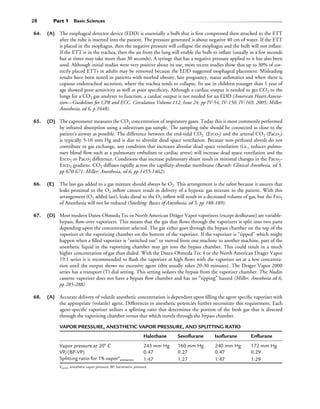
A. 
Bobbin
B. 
“H” float
C. 
Ball float
D. 
Skirted float
E. 
Nonrotating float
19. 
When the pressure gauge on a size “E” compressed-gas cylinder containing N2O begins to fall from its previous
constant pressure of 750 psi, approximately how many liters of gas will remain in the cylinder?
A. 
200 L
B. 
400 L
C. 
600 L
D. 
800 L
E. 
Cannot be calculated
20. 
A 3-year-old child with severe congenital facial anomalies is anesthetized for extensive facial reconstruction. After
inhalation induction with sevoflurane and oral tracheal intubation, a 22-gauge arterial line is placed in the right radial
artery. The arterial cannula is then connected to a transducer that is located 10 cm below the patient’s heart. After
zeroing the arterial line at the transducer, how will the given pressure compare with the true arterial pressure?
A. 
It will be 10 mm Hg higher
B. 
It will be 7.5 mm Hg higher
C. 
It will be the same
D. 
It will be 7.5 mm Hg lower
E. 
It will be 10 mm Hg lower
21. 
If the internal diameter of an intravenous catheter were doubled, flow through the catheter would be
A. 
Decreased by a factor of 2
B. 
Decreased by a factor of 4
C. 
Increased by a factor of 8
D. 
Increased by a factor of 16
E. 
Increased by a factor of 32
22. 
Of the following statements concerning the safe storage of compressed-gas cylinders, choose the one that is FALSE.
A. 
Should not be handled with oily hands
B. 
Should not be stored near flammable material
C. 
Should not be stored in extreme heat or cold
D. 
Paper or plastic covers should not be removed from the cylinders before storage
E. 
All of the above statements are true
23. 
For any given concentration of volatile anesthetic, the splitting ratio is dependent on which of the following charac-
teristics of that volatile anesthetic?
A. 
Vapor pressure
B. 
Barometric pressure
C. 
Molecular weight
D. 
Specific heat
E. 
Minimum alveolar concentration (MAC) at 1 atmosphere
5
Anesthesia Equipment and Physics
24. 
A mechanical ventilator (e.g., Ohmeda 7000) is set to deliver a tidal volume (Vt) of 500 mL at a rate of 10 breaths/
min and an inspiratory-to-expiratory (I:E) ratio of 1:2. The fresh gas flow into the breathing circuit is 6 L/min. In a
patient with normal total pulmonary compliance, the actual Vt delivered to the patient would be
A. 
400 mL
B. 
500 mL
C. 
600 mL
D. 
700 mL
E. 
800 mL
25. 
In reference to question 24, if the ventilator rate were decreased from 10 to 6 breaths/min, the approximate Vt deliv-
ered to the patient would be
A. 
600 mL
B. 
700 mL
C. 
800 mL
D. 
900 mL
E. 
1000 mL
26. 
Vaporizers for which of the following volatile anesthetics could be used interchangeably with accurate delivery of the
concentration of anesthetic set on the vaporizer dial?
A. 
Halothane, sevoflurane, and isoflurane
B. 
Sevoflurane and isoflurane
C. 
Halothane and sevoflurane
D. 
Halothane and isoflurane
E. 
Sevoflurane and desflurane
27. 
If the anesthesia machine is discovered Monday morning having run with 5 L/min of oxygen all weekend long, the
most reasonable course of action to take before administering the next anesthetic would be
A. 
Turn machine off for 30 minutes before induction
B. 
Place humidifier in line with the expiratory limb
C. 
Avoid use of sevoflurane
D. 
Change the CO2 absorbent
E. 
Administer 100% oxygen for the first hour of the next case
28. 
According to NIOSH regulations, the highest concentration of volatile anesthetic contamination allowed in the OR
atmosphere when administered in conjunction with N2O is
A. 
0.5 ppm
B. 
2 ppm
C. 
5 ppm
D. 
25 ppm
E. 
50 ppm
29. 
The device on anesthesia machines that most reliably detects delivery of hypoxic gas mixtures is the
A. 
Fail-safe valve
B. 
O2 analyzer
C. 
Second-stage O2 pressure regulator
D. 
Proportion-limiting control system
E. 
Diameter-index safety system
30. 
A ventilator pressure-relief valve stuck in the closed position can result in
A. 
Barotrauma
B. 
Hypoventilation
C. 
Hypoxia
D. 
Hyperventilation
E. 
Low breathing circuit pressure
6 Part 1â•… Basic Sciences
31. 
A mixture of 1% isoflurane, 70% N2O, and 30% O2 is administered to a patient for 30 minutes. The expired isoflu�
rane concentration measured is 1%. N2O is shut off and a mixture of 30% O2, 70% N2 with 1% isoflurane is adminis�
tered. The expired isoflurane concentration measured one minute after the start of this new mixture is 2.3%. The best
explanation for this observation is
A. 
Intermittent back pressure (pumping effect)
B. 
Diffusion hypoxia
C. 
Concentration effect
D. 
Effect of N2O solubility in isoflurane
E. 
Effect of similar mass-to-charge ratios of N2O and CO2
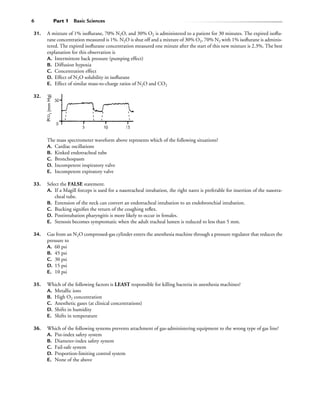
32. 
The mass spectrometer waveform above represents which of the following situations?
A. 
Cardiac oscillations
B. 
Kinked endotracheal tube
C. 
Bronchospasm
D. 
Incompetent inspiratory valve
E. 
Incompetent expiratory valve
33. 
Select the FALSE statement.
A. 
If a Magill forceps is used for a nasotracheal intubation, the right nares is preferable for insertion of the nasotra-
cheal tube.
B. 
Extension of the neck can convert an endotracheal intubation to an endobronchial intubation.
C. 
Bucking signifies the return of the coughing reflex.
D. 
Postintubation pharyngitis is more likely to occur in females.
E. 
Stenosis becomes symptomatic when the adult tracheal lumen is reduced to less than 5 mm.
34. 
Gas from an N2O compressed-gas cylinder enters the anesthesia machine through a pressure regulator that reduces the
pressure to
A. 
60 psi
B. 
45 psi
C. 
30 psi
D. 
15 psi
E. 
10 psi
35. 
Which of the following factors is LEAST responsible for killing bacteria in anesthesia machines?
A. 
Metallic ions
B. 
High O2 concentration
C. 
Anesthetic gases (at clinical concentrations)
D. 
Shifts in humidity
E. 
Shifts in temperature
36. 
Which of the following systems prevents attachment of gas-administering equipment to the wrong type of gas line?
A. 
Pin-index safety system
B. 
Diameter-index safety system
C. 
Fail-safe system
D. 
Proportion-limiting control system
E. 
None of the above
7
Anesthesia Equipment and Physics
37. 
A volatile anesthetic has a saturated vapor pressure of 360 mm Hg at room temperature. At what flow would this agent
be delivered from a bubble-through vaporizer if the carrier-gas flow through the vaporizing chamber is 100 mL/min?
A. 
30 mL/min
B. 
60 mL/min
C. 
90 mL/min
D. 
120 mL/min
E. 
150 mL/min
38. 
The dial of an isoflurane-specific, variable bypass, temperature-compensated, flowover, out-of-circuit vaporizer (i.e.,
modern vaporizer) is set on 2% and the mass spectrometer measures 2% isoflurane vapor from the common gas out-
let. The flowmeter is set at a rate of 700 mL/min during this measurement. The output measurements are repeated
with the flowmeter set at 100 mL/min and 15 L/min (vapor dial still set on 2%). How will these two measurements
compare with the first measurement taken?
A. 
Output will be less than 2% in both cases
B. 
Output will be greater than 2% in both cases
C. 
Output will be 2% at 100 mL/min O2 flow and less than 2% at 15 L/min flow
D. 
Output will be 2% in both cases
E. 
Output will be less than 2% at 100 mL/min and 2% at 15 L/min
39. 
Which of the following would result in the greatest decrease in the arterial hemoglobin saturation (Spo2) value
�
measured by the dual-wavelength pulse �
oximeter?
A. 
Intravenous injection of indigo carmine
B. 
Intravenous injection of indocyanine green
C. 
Intravenous injection of methylene blue
D. 
Presence of elevated bilirubin
E. 
Presence of fetal hemoglobin
40. 
A 75-year-old patient with chronic obstructive pulmonary disease is ventilated with a mixture of 50% oxygen with
50% helium. Isoflurane 2% is added to this mixture. What effect will helium have on the mass spectrometer reading
of the isoflurane concentration?
A. 
The mass spectrometer will give a slightly increased false value
B. 
The mass spectrometer will give a false value equal to double the isoflurane concentration
C. 
The mass spectrometer will give the correct value
D. 
The mass spectrometer will give a wrong value equal to half the isoflurane concentration
E. 
The mass spectrometer will give an erroneous value slightly less than the correct value of isoflurane
41. 
Which of the following combinations would result in delivery of a higher-than-expected concentration of volatile
anesthetic to the patient?
A. 
Halothane vaporizer filled with sevoflurane
B. 
Halothane vaporizer filled with isoflurane
C. 
Isoflurane vaporizer filled with halothane
D. 
Isoflurane vaporizer filled with sevoflurane
E. 
Sevoflurane vaporizer filled with halothane
42. 
At high altitudes, the flow of a gas through a rotameter will be
A. 
Greater than expected
B. 
Less than expected
C. 
Greater than expected at high flows but less than expected at low flows
D. 
Less than expected at high flows but greater than expected at low flows
E. 
Greater than expected at high flows but accurate at low flows
43. 
A patient presents for knee arthroscopy and tells his anesthesiologist that he has a VDD pacemaker. Select the true
statement regarding this pacemaker.
A. 
It senses only the ventricle
B. 
It paces only the ventricle
C. 
Its response to a sensed event is always inhibition
D. 
Its response to a sensed event is always a triggered pulse
E. 
It is not useful in a patient with AV nodal block
8 Part 1â•… Basic Sciences
44. 
All of the following would result in less trace gas pollution of the OR atmosphere EXCEPT
A. 
Using a high gas flow in a circular system
B. 
Tight mask seal during mask induction
C. 
Use of a scavenging system
D. 
Periodic maintenance of the anesthesia machine
E. 
Allow patient to breath 100% O2 as long as possible before extubation
45. 
The greatest source for contamination of the OR atmosphere is leakage of volatile anesthetics
A. 
Around the anesthesia mask
B. 
At the vaporizer
C. 
At the rotameter
D. 
At the CO2 absorber
E. 
At the endotracheal tube
46. 
Uptake of sevoflurane from the lungs during the first minute of general anesthesia is 50 mL. How much sevoflurane
would be taken up from the lungs between the 16th and 36th minutes?
A. 
25 mL
B. 
50 mL
C. 
100 mL
D. 
200 mL
E. 
500 mL
47. 
Which of the drugs below would have the LEAST impact on somatosensory evoked potentials (SSEP) monitoring in
a 15-year-old patient undergoing scoliosis surgery?
A. 
Midazolam
B. 
Fentanyl
C. 
Thiopental
D. 
Isoflurane
E. 
Vecuronium
48. 
Select the FALSE statement regarding iatrogenic bacterial infections from anesthetic equipment.
A. 
Even low concentrations of O2 are lethal to airborne bacteria
B. 
Bacteria released from the airway during violent exhalation originate almost exclusively from the anterior oropharynx
C. 
Of all the bacterial forms, acid-fast bacteria are the most resistant to destruction
D. 
Shifts in temperature and humidity are probably the most important factors responsible for bacterial killing
E. 
Bacterial filters in the anesthesia breathing system lower the incidence of postoperative pulmonary infections
49. 
Frost develops on the outside of an N2O compressed-gas cylinder during general anesthesia. This phenomenon indicates that
A. 
The saturated vapor pressure of N2O within the cylinder is rapidly increasing
B. 
The cylinder is almost empty
C. 
There is a rapid transfer of heat to the cylinder
D. 
The flow of N2O from the cylinder into the anesthesia machine is rapid
E. 
None of the above
50. 
The LEAST reliable site for central temperature monitoring is the
A. 
Pulmonary artery
B. 
Skin on forehead
C. 
Distal third of the esophagus
D. 
Nasopharynx
E. 
Tympanic membrane
51. 
Each of the following statements concerning rotameters is true EXCEPT
A. 
Rotation of the bobbin within the Thorpe tube is important for accurate function
B. 
The Thorpe tube increases in diameter from bottom to top
C. 
Its accuracy is affected by changes in temperature and atmospheric pressure
D. 
The rotameter for N2O and CO2 are interchangeable
E. 
The rotameter for O2 should be the last in the series
9
Anesthesia Equipment and Physics
52. 
The reason a 40:60 mixture of helium and O2 is more desirable than a 40:60 mixture of nitrogen and O2 for a
�
spontaneously breathing patient with tracheal stenosis is
A. 
Helium has a lower density than nitrogen
B. 
Helium is a smaller molecule than O2
C. 
Absorption atelectasis decreased
D. 
Helium has a lower critical velocity for turbulent flow than does O2
E. 
Helium is toxic to most microorganisms
53. 
The maximum Fio2 that can be delivered by a nasal cannula is
A. 
0.25
B. 
0.30
C. 
0.35
D. 
0.40
E. 
0.45
54. 
General anesthesia is administered to an otherwise healthy 38-year-old patient undergoing repair of a right inguinal
hernia. During mechanical ventilation, the anesthesiologist notices that the scavenging system reservoir bag is dis-
tended during inspiration. The most likely cause of this is
A. 
An incompetent pressure-relief valve in the mechanical ventilator
B. 
An incompetent pressure-relief valve in the patient breathing circuit
C. 
An incompetent inspiratory unidirectional valve in the patient breathing circuit
D. 
An incompetent expiratory unidirectional valve in the patient breathing circuit
E. 
None of the above; the scavenging system reservoir bag is supposed to distend during �
inspiration
55. 
Which color of nail polish would have the greatest effect on the accuracy of dual-wavelength pulse oximeters?
A. 
Red
B. 
Yellow
C. 
Blue
D. 
Green
E. 
White
56. 
The minimum macroshock current required to elicit ventricular fibrillation is
A. 
1 mA
B. 
10 mA
C. 
100 mA
D. 
500 mA
E. 
5000 mA
57. 
The line isolation monitor
A. 
Prevents microshock
B. 
Prevents macroshock
C. 
Provides electrical isolation in the OR
D. 
Sounds an alarm when grounding occurs in the OR
E. 
Provides a safe electrical ground
58. 
Kinking or occlusion of the transfer tubing from the patient breathing circuit to the closed scavenging system interface
can result in
A. 
Barotrauma
B. 
Hypoventilation
C. 
Hypoxia
D. 
Hyperventilation
E. 
None of the above
10 Part 1â•… Basic Sciences
59. 
If the isoflurane vaporizer dial of an older (non- �
pressure compensating) machine is set to deliver 1.15% in Denver,
Colo. (barometric pressure 630 mm Hg), how many MAC will the patient receive?
A. 
About 20% more than 1 MAC
B. 
About 10% more than 1 MAC
C. 
One MAC
D. 
About 10% less than 1 MAC
E. 
About 20% less than 1 MAC
60. 
Select the FALSE statement regarding noninvasive arterial BP monitoring devices.
A. 
If the width of the BP cuff is too narrow, the measured BP will be falsely lowered
B. 
The width of the BP cuff should be 40% of the circumference of the patient’s arm
C. 
If the BP cuff is wrapped around the arm too loosely, the measured BP will be falsely elevated
D. 
Oscillometric BP measurements are accurate in neonates
E. 
Frequent cycling of automated BP monitoring devices can result in edema distal to the cuff
61. 
An incompetent ventilator pressure-relief valve can result in
A. 
Hypoxia
B. 
Barotrauma
C. 
A low-circuit-pressure signal
D. 
Hypoventilation
E. 
Hyperventilation
62. 
The pressure gauge of a size “E” compressed-gas cylinder containing air shows a pressure of 1000 psi. Approximately
how long could air be delivered from this cylinder at the rate of 10 L/min?
A. 
10 minutes
B. 
20 minutes
C. 
30 minutes
D. 
40 minutes
E. 
50 minutes
63. 
The most frequent cause of mechanical failure of the anesthesia delivery system to deliver adequate O2 to the patient is
A. 
Attachment of the wrong compressed-gas cylinder to the O2 yoke
B. 
Crossing of pipelines during construction of the OR
C. 
Improperly assembled O2 rotameter
D. 
Fresh-gas line disconnection from the anesthesia machine to the in-line hosing
E. 
Disconnection of the O2 supply system from the patient
64. 
The esophageal detector device
A. 
Uses a negative pressure bulb
B. 
Is especially useful in children younger than 1 year of age
C. 
Requires a cardiac output to function appropriately
D. 
Is reliable in morbidly obese patients and parturients
E. 
Is contraindicated if there is blood in the airway
65. 
The reason CO2 measured by capnometer is less than the arterial Paco2 value measure simultaneously is?
A. 
Use of ion specific electrode for blood gas determination
B. 
Alveolar capillary gradient
C. 
One way values
D. 
Alveolar dead space
E. 
Intrapulmonary shunt
66. 
Which of the following arrangements of rotameters on the anesthesia machine manifold is safest with left to right gas flow?
A. 
O2, CO2, N2O, air
B. 
CO2, O2, N2O, air
C. 
N2O, O2, CO2, air
D. 
Air, CO2, O2, N2O
E. 
Air, CO2, N2O, O2
11
Anesthesia Equipment and Physics
67. 
A Datex Ohmeda Sevotec 5 vaporizer is tipped over while being attached to the anesthesia machine, but is placed
upright and installed. The soonest it can be safely used is
A. 
After 30 minutes of flushing with dial set to “off”
B. 
After 6 hours of flushing with dial to “off”
C. 
After 24 hours of flushing with dial set to “off”
D. 
After 30 minutes with dial set at low concentration
E. 
After 12 hours with dial set to low concentration
68 
In the event of misfilling, what percent sevoflurane would be delivered from an isoflurane vaporizer set at 1%?
A. 
0.6%
B. 
0.8%
C. 
1.0%
D. 
1.2%
E. 
1.4%
69. 
How long would a vaporizer (filled with 150 mL volatile) deliver 2% isoflurane if total flow set at 4.0 L/minute?
A. 
2 hours
B. 
4 hours
C. 
6 hours
D. 
8 hours
E. 
10 hours
70. 
Raising the frequency of an ultrasound transducer used for line placement or regional anesthesia, e.g., from 3 MHz to
10 MHz, will result in
A. 
Higher penetration of tissue with lower resolution
B. 
Higher penetration of tissue with higher resolution
C. 
Lower penetration of tissue with higher resolution
D. 
Higher resolution with no change in tissue penetration
E. 
Higher penetration with no change in resolution
71. 
The fundamental difference between microshock and macroshock is related to
A. 
Location of shock
B. 
Duration
C. 
Voltage
D. 
Capacitance
E. 
Lethality
72. 
Intraoperative awareness under general anesthesia can be eliminated by closely monitoring
A. 
EEG
B. BP/heart rate
C. Bispectral index (BIS)
D. End tidal volatile
E. None of the above
73. 
A mechanically ventilated patient is transported from the OR to the intensive care unit (ICU) using a portable
�
ventilator that consumes 2 L/min of oxygen to run the mechanically controlled valves and drive the ventilator. The
transport cart is equipped with an “E” cylinder with a gauge pressure of 2000 psi. The patient receives a VT of 500 mL
at a rate of 10 breaths/minute. If the ventilator requires 200 psi to operate, how long could the patient be mechanically
ventilated?
A. 
20 min
B. 
40 min
C. 
60 min
D. 
80 min
E. 
100 min
12 Part 1â•… Basic Sciences
74. 
A 135 Kg man is ventilated at a rate of 14 breaths/minute with a Vt of 600 mL and positive end-expiratory pressure
(PEEP) of 5 cm H2O during a laparoscopic banding procedure. Peak airway pressure is 50 cm H2O and the patient
is fully relaxed with a non-depolarizing neuromuscular blocking agent. How can peak airway pressure be reduced
without a loss of alveolar ventilation?
A. 
Increase the inspiratory flow rate
B. 
Take off PEEP
C. 
Reduce the I:E ratio (e.g., change from 1:3 to 1:2)
D. 
Decrease Vt to 300 and increase rate to 28
E. 
None of the above
75. 
The pressure and volume per minute delivered from the central hospital oxygen supply are:
A. 
2100 psi and 650 L/minute
B. 
1600 psi and 100 L/minute
C. 
75 psi and 100 L/minute
D. 
50 psi and 50 L/minute
E. 
30 psi and 25 L/minute
76. 
During normal laminar airflow, resistance is dependent upon which characteristic of oxygen?
A. 
Density
B. 
Viscosity
C. 
Molecular weight
D. 
Vapor pressure
E. 
Temperature
77. 
If the oxygen cylinder is being used as the source of oxygen at a remote anesthetizing location and the oxygen flush
valve on an anesthesia machine were pressed and held down, as during an emergency situation, each of the items below
would be bypassed during 100% oxygen delivery EXCEPT:
A. 
O2 flowmeter
B. 
First stage regulator
C. 
Vaporizer check valve
D. 
Vaporizers
E. 
Second stage regulator
78. 
After induction and intubation with confirmation of tracheal placement, the O2 saturation begins to fall. The O2
analyzer as well as mass spectrometer show 4% inspired oxygen. The oxygen line pressure is 65 psi. The O2 tank on
the back of anesthesia machine has a pressure of 2100 psi and is turned on. The oxygen saturation continues to fall.
The next step should be
A. 
Exchange the tank
B. 
Switch the O2 line with N2O line
C. 
Disconnect the O2 line from hospital source
D. 
Extubate and start mask ventilation
E. 
Replace pulse oximeter probe
79. 
The correct location for placement of the V5 lead is
A. 
Midclavicular line third intercostal space
B. 
Anterior axillary line fourth intercostal space
C. 
Midclavicular line fifth intercostal space
D. 
Anterior axillary line fifth intercostal space.
E. 
Any position on precordium
80. 
The Diameter Index Safety System (DISS) refers to the interface between
A. 
Pipeline source and anesthesia machine
B. 
Gas cylinders and anesthesia machine
C. 
Vaporizers and refilling connectors attached to bottles of volatile anesthetics
D. 
Float and tapered flow tube on machine manifold
E. 
Both pipeline and gas cylinders interfaces with anesthesia machine
13
Anesthesia Equipment and Physics
81. 
Each of the following is cited as an advantage of calcium hydroxide lime (Amsorb Plus, Drägersorb) over soda lime
EXCEPT:
A. 
Compound A is not formed
B. 
Carbon monoxide is not formed
C. 
More absorptive capacity per 100 g of granules
D. 
Indicator dye once changed does not revert to normal
E. 
It does not contain NaOH or KOH
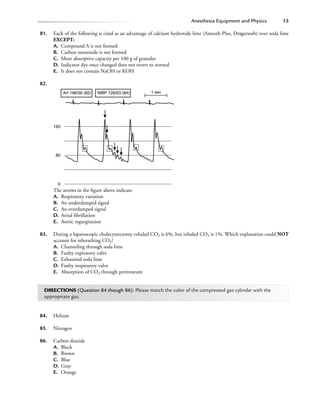
82. 
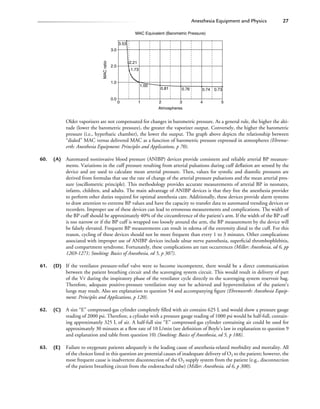
Art 166/56 (82) NIBP 126/63 (84) 1 sec
160
80
0
The arrows in the figure above indicate
A. 
Respiratory variation
B. 
An underdamped signal
C. 
An overdamped signal
D. 
Atrial fibrillation
E. 
Aortic regurgitation
83. 
During a laparoscopic cholecystectomy exhaled CO2 is 6%, but inhaled CO2 is 1%. Which explanation could NOT
account for rebreathing CO2?
A. 
Channeling through soda lime
B. 
Faulty expiratory valve
C. 
Exhausted soda lime
D. 
Faulty inspiratory valve
E. 
Absorption of CO2 through peritoneum
84. 
Helium
85. 
Nitrogen
86. 
Carbon dioxide
A. 
Black
B. 
Brown
C. 
Blue
D. 
Gray
E. 
Orange
DIRECTIONS (Question 84 though 86): Please match the color of the compressed gas cylinder with the
appropriate gas.
14 Part 1â•… Basic Sciences
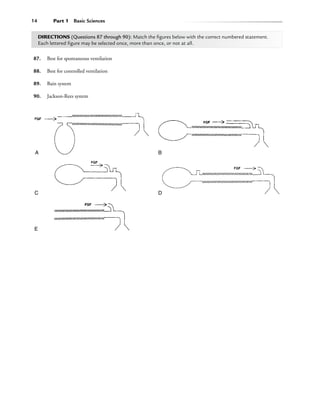
87. 
Best for spontaneous ventilation
88. 
Best for controlled ventilation
89. 
Bain system
90. 
Jackson-Rees system
A B
C D
E
DIRECTIONS (Questions 87 through 90): Match the figures below with the correct numbered statement.
Each lettered figure may be selected once, more than once, or not at all.
Answers, References, and Explanations
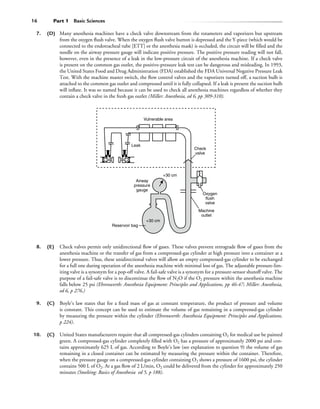
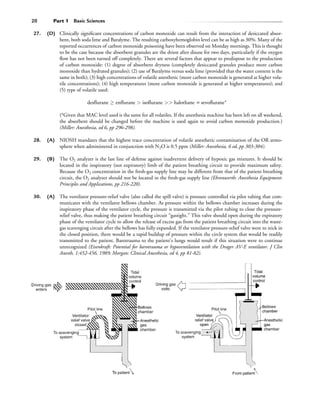
1. (B) 
Orifice flow occurs when gas flows through a region of severe constriction such as described in this question.
Laminar flow occurs when gas flows down parallel-sided tubes at a rate less than critical velocity. When the
gas flow exceeds the critical velocity, it becomes turbulent (Miller: Anesthesia, ed 6, pp 690-691; Ehrenwerth:
Anesthesia Equipment: Principles and Applications, pp 224-225).
2. (C) 
During orifice flow, the resistance to gas flow is directly proportional to the density of the gas mixture. Substi-
tuting helium for nitrogen will decrease the density of the gas mixture, thereby decreasing the resistance to gas
flow (as much as threefold) through the region of constriction (Ehrenwerth: Anesthesia Equipment: Principles and
Applications, pp 224-225; Miller: Anesthesia, ed 6, pp 690-691, 2539).
3. (C) 
Modern electronic blood pressure (BP) monitors are designed to interface with electromechanical transducer
systems. These systems do not require extensive technical skill on the part of the anesthesia provider for accu-
rate usage. A static zeroing of the system is built into most modern electronic monitors. Thus, after the zeroing
procedure is accomplished, the system is ready for operation. The system should be zeroed with the reference
point of the transducer at the approximate level of the aortic root, eliminating the effect of the fluid column of
the system on arterial BP readings (Ehrenwerth: Anesthesia Equipment: Principles and Applications, pp 275-278).
4. (C) 
Waste gas disposal systems, also called scavenging systems, are designed to decrease pollution of the OR by
anesthetic gases. These scavenging systems can be passive (waste gases flow from the anesthesia machine to
a ventilation system on their own) or active (anesthesia machine connected to a vacuum system then to the
ventilation system). The amount of air from a venous gas embolism would not be enough to be detected in the
disposal system. Positive pressure relief valves open if there is an obstruction between the anesthesia machine
and the disposal system, which would then leak the gas into the OR. A leak in the soda lime canisters would
also vent to the OR. Since most ventilator bellows are powered by oxygen, a leak in the bellows would not add
air to the evacuation system. The negative pressure relief valve is used in active systems and will entrap room air
if the pressure in the system is less than -0.5 cm H2O. (Miller: Anesthesia, 6th ed. pp 303-307; Stoelting: Basics of
Anesthesia, ed 5, pp 198-199).
5. (D) 
The relationship between intra-alveolar pressure, surface tension, and the radius of alveoli is described by
Laplace’s law for a sphere, which states that the surface tension of the sphere is directly proportional to the radius
of the sphere and pressure within the sphere. With regard to pulmonary alveoli, the mathematical expression of
Laplace’s law is as follows:
T= PR
½
where T is the surface tension, P is the intra-alveolar pressure, and R is the radius of the alveolus. In pulmonary
alveoli, surface tension is produced by a liquid film lining the alveoli. This occurs because the attractive forces
between the molecules of the liquid film are much greater than the attractive forces between the liquid film and
gas. Thus, the surface area of the liquid tends to become as small as possible, which could collapse the alveoli
(Miller: Anesthesia, ed 6, pp 689-690).
6. (C) 
The World Health Organization requires that compressed-gas cylinders containing N2O for medical use be
painted blue. Size “E” compressed-gas cylinders completely filled with N2O contain approximately 1590 L of
gas (Stoelting: Basics of Anesthesia, ed 5, p 188).
Anesthesia Equipment and Physics
15
16 Part 1â•… Basic Sciences
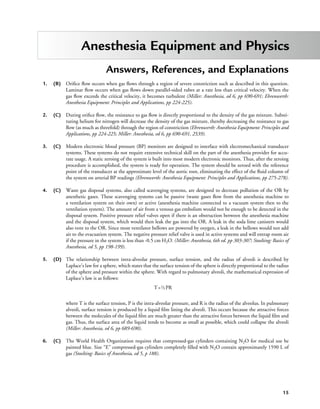
7. (D) 
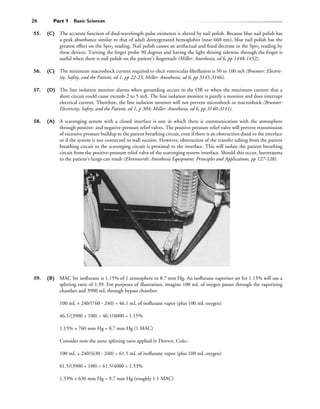
Many anesthesia machines have a check valve downstream from the rotameters and vaporizers but upstream
from the oxygen flush valve. When the oxygen flush valve button is depressed and the Y-piece (which would be
connected to the endotracheal tube [ETT] or the anesthesia mask) is occluded, the circuit will be filled and the
needle on the airway pressure gauge will indicate positive pressure. The positive pressure reading will not fall,
however, even in the presence of a leak in the low-pressure circuit of the anesthesia machine. If a check valve
is present on the common gas outlet, the positive-pressure leak test can be dangerous and misleading. In 1993,
the United States Food and Drug Administration (FDA) established the FDA Universal Negative Pressure Leak
Test. With the machine master switch, the flow control valves and the vaporizers turned off, a suction bulb is
attached to the common gas outlet and compressed until it is fully collapsed. If a leak is present the suction bulb
will inflate. It was so named because it can be used to check all anesthesia machines regardless of whether they
contain a check valve in the fresh gas outlet (Miller: Anesthesia, ed 6, pp 309-310).
Reservoir bag
Airway
pressure
gauge
Machine
outlet
Oxygen
flush
valve
Check
valve
Vulnerable area
Leak
+30 cm
+30 cm
8. (E) 
Check valves permit only unidirectional flow of gases. These valves prevent retrograde flow of gases from the
anesthesia machine or the transfer of gas from a compressed-gas cylinder at high pressure into a container at a
lower pressure. Thus, these unidirectional valves will allow an empty compressed-gas cylinder to be exchanged
for a full one during operation of the anesthesia machine with minimal loss of gas. The adjustable pressure-lim-
iting valve is a synonym for a pop-off valve. A fail-safe valve is a synonym for a pressure-sensor shutoff valve. The
purpose of a fail-safe valve is to discontinue the flow of N2O if the O2 pressure within the anesthesia machine
falls below 25 psi (Ehrenwerth: Anesthesia Equipment: Principles and Applications, pp 46-47; Miller: Anesthesia,
ed 6, p 276.)
9. (C) 
Boyle’s law states that for a fixed mass of gas at constant temperature, the product of pressure and volume
is constant. This concept can be used to estimate the volume of gas remaining in a compressed-gas cylinder
by measuring the pressure within the cylinder (Ehrenwerth: Anesthesia Equipment: Principles and Applications,
p 224).
10. (C) 
United States manufacturers require that all compressed-gas cylinders containing O2 for medical use be painted
green. A compressed-gas cylinder completely filled with O2 has a pressure of approximately 2000 psi and con-
tains approximately 625 L of gas. According to Boyle’s law (see explanation to question 9) the volume of gas
remaining in a closed container can be estimated by measuring the pressure within the container. Therefore,
when the pressure gauge on a compressed-gas cylinder containing O2 shows a pressure of 1600 psi, the cylinder
contains 500 L of O2. At a gas flow of 2 L/min, O2 could be delivered from the cylinder for approximately 250
minutes (Stoelting: Basics of Anesthesia ed 5, p 188).
17
Anesthesia Equipment and Physics
CHARACTERISTICS OF COMPRESSED GASES STORED IN “E” SIZE CYLINDERS THAT MAY BE
ATTACHED TO THE ANESTHESIA MACHINE
Characteristics Oxygen Nitrous Oxide Carbon Dioxide Air
Cylinder color Green* Blue Gray Yellow*
Physical state in cylinder Gas Liquid and gas Liquid and gas Gas
Cylinder contents (L) 625 1590 1590 625
Cylinder weight empty (kg) 5.90 5.90 5.90 5.90
Cylinder weight full (kg) 6.76 8.80 8.90
Cylinder pressure full (psi) 2000 750 838 1800
*The World Health Organization specifies that cylinders containing oxygen for medial use be painted white, but manufacturers in the United States
use green. Likewise, the international color for air is white and black, whereas cylinders in the United States are color-coded yellow.
*(Stoelting: Basics of Anesthesia, ed 5, p 188.)
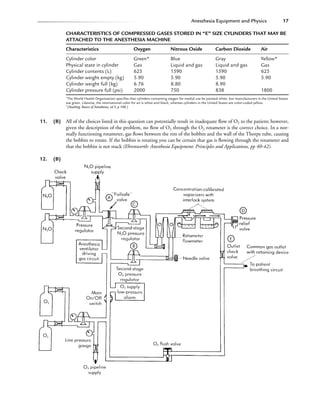
11. (B) 
All of the choices listed in this question can potentially result in inadequate flow of O2 to the patient; however,
given the description of the problem, no flow of O2 through the O2 rotameter is the correct choice. In a nor-
mally functioning rotameter, gas flows between the rim of the bobbin and the wall of the Thorpe tube, causing
the bobbin to rotate. If the bobbin is rotating you can be certain that gas is flowing through the rotameter and
that the bobbin is not stuck (Ehrenwerth: Anesthesia Equipment: Principles and Applications, pp 40-42).
12. (B)
18 Part 1â•… Basic Sciences
Fail-safe valve is a synonym for pressure-sensor shutoff valve. The purpose of the fail-safe valve is to prevent
delivery of hypoxic gas mixtures from the anesthesia machine to the patient due to failure of the O2 supply.
When the O2 pressure within the anesthesia machine decreases below 25 psi, this valve discontinues the flow
of N2O or proportionally decreases the flow of all gases. It is important to realize that this valve will not pre-
vent delivery of hypoxic gas mixtures or pure N2O when the O2 rotameter is off, but the O2 pressure within
the circuits of the anesthesia machine is maintained by an open O2 compressed-gas cylinder or central supply
source. Under these circumstances, an O2 analyzer would be needed to detect delivery of a hypoxic gas mixture
(Ehrenwerth: Anesthesia Equipment: Principles and Applications, pp 37-38).
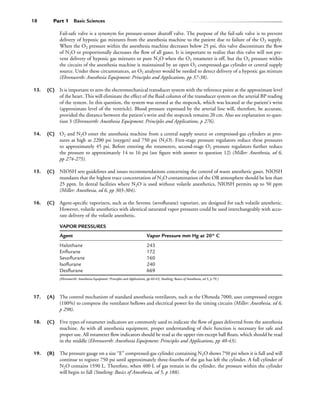
13. (C) 
It is important to zero the electromechanical transducer system with the reference point at the approximate level
of the heart. This will eliminate the effect of the fluid column of the transducer system on the arterial BP reading
of the system. In this question, the system was zeroed at the stopcock, which was located at the patient’s wrist
(approximate level of the ventricle). Blood pressure expressed by the arterial line will, therefore, be accurate,
provided the distance between the patient’s wrist and the stopcock remains 20 cm. Also see explanation to ques-
tion 3 (Ehrenwerth: Anesthesia Equipment: Principles and Applications, p 276).
14. (C) 
O2 and N2O enter the anesthesia machine from a central supply source or compressed-gas cylinders at pres-
sures as high as 2200 psi (oxygen) and 750 psi (N2O). First-stage pressure regulators reduce these pressures
to approximately 45 psi. Before entering the rotameters, second-stage O2 pressure regulators further reduce
the pressure to approximately 14 to 16 psi (see figure with answer to question 12) (Miller: Anesthesia, ed 6,
pp 274-275).
15. (C) 
NIOSH sets guidelines and issues recommendations concerning the control of waste anesthetic gases. NIOSH
mandates that the highest trace concentration of N2O contamination of the OR atmosphere should be less than
25 ppm. In dental facilities where N2O is used without volatile anesthetics, NIOSH permits up to 50 ppm
(Miller: Anesthesia, ed 6, pp 303-304).
16. (C) 
Agent-specific vaporizers, such as the Sevotec (sevoflurane) vaporizer, are designed for each volatile anesthetic.
However, volatile anesthetics with identical saturated vapor pressures could be used interchangeably with accu-
rate delivery of the volatile anesthetic.
VAPOR PRESSURES
Agent Vapor Pressure mm Hg at 20° C
Halothane 243
Enflurane 172
Sevoflurane 160
Isoflurane 240
Desflurane 669
(Ehrenwerth: Anesthesia Equipment: Principles and Applications, pp 60-63; Stoelting: Basics of Anesthesia, ed 5, p 79.)
17. (A) 
The control mechanism of standard anesthesia ventilators, such as the Ohmeda 7000, uses compressed oxygen
(100%) to compress the ventilator bellows and electrical power for the timing circuits (Miller: Anesthesia, ed 6,
p 298).
18. (C) 
Five types of rotameter indicators are commonly used to indicate the flow of gases delivered from the anesthesia
machine. As with all anesthesia equipment, proper understanding of their function is necessary for safe and
proper use. All rotameter flow indicators should be read at the upper rim except ball floats, which should be read
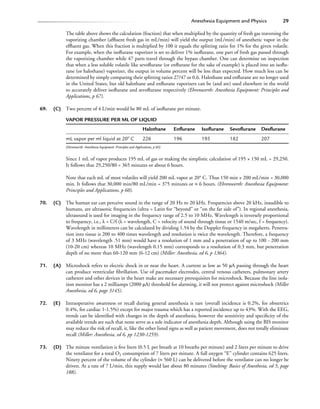
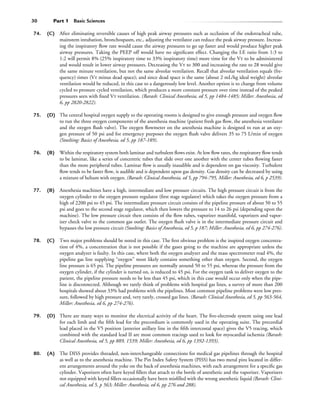
in the middle (Ehrenwerth: Anesthesia Equipment: Principles and Applications, pp 40-43).
19. (B) 
The pressure gauge on a size “E” compressed-gas cylinder containing N2O shows 750 psi when it is full and will
continue to register 750 psi until approximately three-fourths of the gas has left the cylinder. A full cylinder of
N2O contains 1590 L. Therefore, when 400 L of gas remain in the cylinder, the pressure within the cylinder
will begin to fall (Stoelting: Basics of Anesthesia, ed 5, p 188).
19
Anesthesia Equipment and Physics
20. (B) 
In this question the reference point is the transducer, which is located 10 cm below the level of the patient’s
heart. Thus, there is an approximate 10 cm H2O fluid column from the level of the patient’s heart to the trans-
ducer. This will cause the pressure reading from the transducer system to read approximately 7.5 mm Hg higher
than a true arterial pressure of the patient. A 20-cm column of H2O will exert a pressure equal to 14.7 mm
Hg. Also see explanations to questions 3 and 13 (Ehrenwerth: Anesthesia Equipment: Principles and Applications,
p 275).
21. (D) 
Factors that influence the rate of laminar flow of a substance through a tube is described by the Hagen-Poiseuille
law of friction. The mathematical expression of the Hagen-Poiseuille law of friction is as follows:
˙ (D P)
V
r
=
p 4
8 Lm
where V
.
is the flow of the substance, r is the radius of the tube, ∆P is the pressure gradient down the tube,
L is the length of the tube, and μ is the viscosity of the substance. Note that the rate of laminar flow is pro-
portional to the radius of the tube to the fourth power. If the diameter of an intravenous catheter is doubled,
flow would increase by a factor of 2 raised to the fourth power (i.e., a factor of 16) (Ehrenwerth: Anesthesia
�
Equipment: Principles and Applications, p 225).
22. (D) 
The safe storage and handling of compressed-gas cylinders is of vital importance. Compressed-gas cylinders
should not be stored in extremes of heat or cold, and they should be unwrapped when stored or when in use.
Flames should not be used to detect the presence of a gas. Oily hands can lead to difficulty in handling of the
cylinder, which can result in dropping the cylinder. This can cause damage to or rupture of the cylinder, which
can lead to an explosion (Ehrenwerth: Anesthesia Equipment: Principles and Applications, pp 8-11).
23. (A) 
Vaporizers can be categorized into variable-bypass and measured-flow vaporizers. Measured-flow vaporizers
(nonconcentration calibrated vaporizers) include the copper kettle and Vernitrol vaporizer. With measured-
flow vaporizers, the flow of oxygen is selected on a separate flowmeter to pass into the vaporizing chamber from
which the anesthetic vapor emerges at its saturated vapor pressure. By contrast, in variable-bypass vaporizers,
the total gas flow is split between a variable bypass and the vaporizer chamber containing the anesthetic agent.
The ratio of these two flows is called the splitting ratio. The splitting ratio depends on the anesthetic agent,
temperature, the chosen vapor concentration set to be delivered to the patient, and the saturated vapor pressure
of the anesthetic (Ehrenwerth: Anesthesia Equipment: Principles and Applications, p 63).
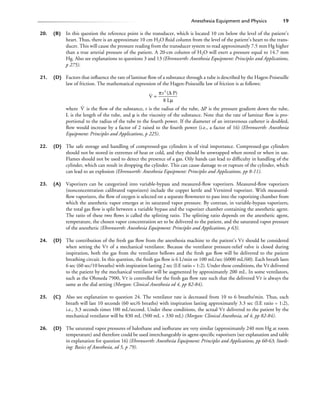
24. (D) 
The contribution of the fresh gas flow from the anesthesia machine to the patient’s Vt should be considered
when setting the Vt of a mechanical ventilator. Because the ventilator pressure-relief valve is closed during
inspiration, both the gas from the ventilator bellows and the fresh gas flow will be delivered to the patient
breathing circuit. In this question, the fresh gas flow is 6 L/min or 100 mL/sec (6000 mL/60). Each breath lasts
6 sec (60 sec/10 breaths) with inspiration lasting 2 sec (I:E ratio = 1:2). Under these conditions, the Vt delivered
to the patient by the mechanical ventilator will be augmented by approximately 200 mL. In some ventilators,
such as the Ohmeda 7900, Vt is controlled for the fresh gas flow rate such that the delivered Vt is always the
same as the dial setting (Morgan: Clinical Anesthesia ed 4, pp 82-84).
25. (C) 
Also see explanation to question 24. The ventilator rate is decreased from 10 to 6 breaths/min. Thus, each
breath will last 10 seconds (60 sec/6 breaths) with inspiration lasting approximately 3.3 sec (I:E ratio = 1:2),
i.e., 3.3 seconds times 100 mL/second. Under these conditions, the actual Vt delivered to the patient by the
mechanical ventilator will be 830 mL (500 mL + 330 mL) (Morgan: Clinical Anesthesia, ed 4, pp 82-84).
26. (D) 
The saturated vapor pressures of halothane and isoflurane are very similar (approximately 240 mm Hg at room
temperature) and therefore could be used interchangeably in agent-specific vaporizers (see explanation and table
in explanation for question 16) (Ehrenwerth: Anesthesia Equipment: Principles and Applications, pp 60-63; Stoelt-
ing: Basics of Anesthesia, ed 5, p 79).
20 Part 1â•… Basic Sciences
27. (D) 
Clinically significant concentrations of carbon monoxide can result from the interaction of desiccated absor-
bent, both soda lime and Baralyme. The resulting carboxyhemoglobin level can be as high as 30%. Many of the
reported occurrences of carbon monoxide poisoning have been observed on Monday mornings. This is thought
to be the case because the absorbent granules are the driest after disuse for two days, particularly if the oxygen
flow has not been turned off completely. There are several factors that appear to predispose to the production
of carbon monoxide: (1) degree of absorbent dryness (completely desiccated granules produce more carbon
monoxide than hydrated granules); (2) use of Baralyme versus soda lime (provided that the water content is the
same in both); (3) high concentrations of volatile anesthetic (more carbon monoxide is generated at higher vola-
tile concentrations); (4) high temperatures (more carbon monoxide is generated at higher temperatures); and
(5) type of volatile used:
(*Given that MAC level used is the same for all volatiles. If the anesthesia machine has been left on all weekend,
the absorbent should be changed before the machine is used again to avoid carbon monoxide production.)
(Miller: Anesthesia, ed 6, pp 296-298).
28. (A) 
NIOSH mandates that the highest trace concentration of volatile anesthetic contamination of the OR atmo-
sphere when administered in conjunction with N2O is 0.5 ppm (Miller: Anesthesia, 6 ed, pp 303-304).
29. (B) 
The O2 analyzer is the last line of defense against inadvertent delivery of hypoxic gas mixtures. It should be
located in the inspiratory (not expiratory) limb of the patient breathing circuit to provide maximum safety.
Because the O2 concentration in the fresh-gas supply line may be different from that of the patient breathing
circuit, the O2 analyzer should not be located in the fresh-gas supply line (Ehrenwerth: Anesthesia Equipment:
Principles and Applications, pp 216-220).
30. (A) 
The ventilator pressure-relief valve (also called the spill valve) is pressure controlled via pilot tubing that com-
municates with the ventilator bellows chamber. As pressure within the bellows chamber increases during the
inspiratory phase of the ventilator cycle, the pressure is transmitted via the pilot tubing to close the pressure-
relief valve, thus making the patient breathing circuit “gastight.” This valve should open during the expiratory
phase of the ventilator cycle to allow the release of excess gas from the patient breathing circuit into the waste-
gas scavenging circuit after the bellows has fully expanded. If the ventilator pressure-relief valve were to stick in
the closed position, there would be a rapid buildup of pressure within the circle system that would be readily
transmitted to the patient. Barotrauma to the patient’s lungs would result if this situation were to continue
unrecognized (Eisenkraft: Potential for barotrauma or hypoventilation with the Drager AV-E ventilator. J Clin
Anesth, 1:452-456, 1989; Morgan: Clinical Anesthesia, ed 4, pp 81-82).
21
Anesthesia Equipment and Physics
31. (D) 
Vaporizer output can be affected by the composition of the carrier gas used to vaporize the volatile agent in
the vaporizing chamber, especially when nitrous oxide is either initiated or discontinued. This observation can
be explained by the solubility of nitrous oxide in the volatile agent. When nitrous oxide and oxygen enter the
vaporizing chamber, a portion of the nitrous oxide dissolves in the liquid agent. Thus, the vaporizer output
transiently decreases. Conversely, when nitrous oxide is withdrawn as part of the carrier gas, the nitrous oxide
dissolved in the volatile agent comes out of solution, thereby transiently increases the vaporizer output (Miller:
Anesthesia, ed 6, pp 286-288).
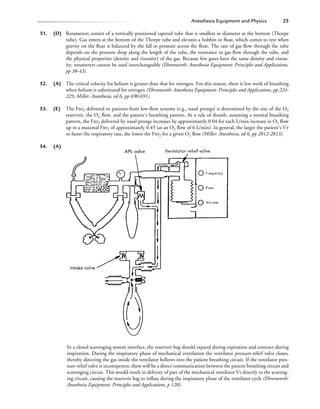
32. (E) 
The capnogram can provide a variety of information, such as verification of the presence of exhaled CO2 after
tracheal intubation, estimation of the difference in Paco2 and Petco2, abnormalities of ventilation, and the
presence of hypercapnia or hypocapnia. The four phases of the capnogram are inspiratory baseline, expiratory
upstroke, expiratory plateau, and inspiratory downstroke. The shape of the capnogram can be used to recognize
and diagnose a variety of potentially adverse circumstances. Under normal conditions, the inspiratory baseline
should be 0, indicating that there is no rebreathing of CO2 with a normal functioning circle breathing system. If
the inspiratory baseline is elevated above 0, there is rebreathing of CO2. If this occurs, the differential diagnosis
should include an incompetent expiratory valve, exhausted CO2 absorbent, or gas channeling through the CO2
absorbent. However, the inspiratory baseline may be elevated when the inspiratory valve is incompetent (e.g.,
there may be a slanted inspiratory downstroke). The expiratory upstroke occurs when the fresh gas from the
anatomic dead space is quickly replaced by CO2-rich alveolar gas. Under normal conditions the upstroke should
be steep; however, it may become slanted during partial airway obstruction, if a sidestream analyzer is sampling
gas too slowly, or if the response time of the capnograph is too slow for the patient’s respiratory rate. Partial
obstruction may be the result of an obstruction in the breathing system (e.g., by a kinked endotracheal tube) or
in the patient’s airway (e.g., the presence of chronic obstructive pulmonary disease or acute bronchospasm). The
expiratory plateau is normally characterized by a slow but shallow progressive increase in CO2 concentration.
This occurs because of imperfect matching of ventilation and perfusion in all lung units. Partial obstruction of
gas flow either in the breathing system or in the patient’s airways may cause a prolonged increase in the slope of
the expiratory plateau, which may continue rising until the next inspiratory downstroke begins. The inspiratory
downstroke is caused by the rapid influx of fresh gas, which washes the CO2 away from the CO2 sensing or
sampling site. Under normal conditions the inspiratory downstroke is very steep. Causes of a slanted or blunted
inspiratory downstroke include an incompetent inspiratory valve, slow mechanical inspiration, slow gas sam-
pling, and partial CO2 rebreathing (Ehrenwerth: Anesthesia Equipment: Principles and Applications, p 240).
33. (B) 
Complications of tracheal intubation can be divided into those associated with direct laryngoscopy and intu-
bation of the trachea, tracheal tube placement, and extubation of the trachea. The most frequent compli-
cation associated with direct laryngoscopy and tracheal intubation is dental trauma. If a tooth is dislodged
and not found, radiographs of the chest and abdomen should be taken to determine whether the tooth has
passed through the glottic opening into the lungs. Should dental trauma occur, immediate consultation with
a dentist is indicated. Other complications of direct laryngoscopy and tracheal intubation include hyperten-
sion, tachycardia, cardiac dysrhythmias, and aspiration of gastric contents. The most common complica-
tion that occurs while the ETT is in place is inadvertent endobronchial intubation. Flexion, not extension,
of the neck or change from the supine to the head-down position can shift the carina upward, which may
convert a mid-tracheal tube placement into a bronchial intubation. Extension of the neck can cause ceph-
alad displacement of the tube into the pharynx. Lateral rotation of the head can displace the distal end of
the ETT approximately 0.7 cm away from the carina. Complications associated with extubation of the tra-
chea can be immediate or delayed. The two most serious immediate complications associated with extuba-
tion of the trachea are laryngospasm and aspiration of gastric contents. Laryngospasm is most likely to occur
in patients who are lightly anesthetized at the time of extubation. If laryngospasm occurs, positive-pressure
mask-bag ventilation with 100% O2 and forward displacement of the mandible may be sufficient treatment.
However, if laryngospasm persists, succinylcholine should be administered intravenously or intramuscularly.
Pharyngitis is another frequent complication after extubation of the trachea. This complication occurs most
commonly in females, presumably because of the thinner mucosal covering over the posterior vocal cords com-
pared with males. This complication usually does not require treatment and spontaneously resolves in 48 to 72
hours. Delayed complications associated with extubation of the trachea include laryngeal ulcerations, tracheitis,
tracheal stenosis, vocal cord paralysis, and arytenoid cartilage dislocation (Stoelting: Basics of Anesthesia, ed 5,
pp 231-232).
22 Part 1â•… Basic Sciences
34. (B) 
Gas leaving a compressed-gas cylinder is directed through a pressure-reducing valve, which lowers the pressure
within the metal tubing of the anesthesia machine to 45 to 55 psi (Miller: Anesthesia, ed 6, p 276).
35. (C) 
There is considerable controversy regarding the role of bacterial contamination of anesthesia machines and
equipment in cross-infection between patients. The incidence of postoperative pulmonary infection is not
reduced by the use of sterile disposable anesthetic breathing circuits (as compared with the use of reusable
circuits that are cleaned with basic hygienic techniques). Furthermore, inclusion of a bacterial filter in the
anesthesia breathing circuit has no effect on the incidence of cross-infection. Clinically relevant concentrations
of volatile anesthetics have no bacteriocidal or bacteriostatic effects. Low concentrations of volatile anesthet-
ics, however, may inhibit viral replication. Shifts in humidity and temperature in the anesthesia breathing and
scavenging circuits are the most important factors responsible for killing bacteria. In addition, high O2 concen-
tration and metallic ions present in the anesthesia machine and other equipment have a significant lethal effect
on bacteria. Acid-fast bacilli are the most resistant bacterial form to destruction. Nevertheless, there has been
no case documenting transmission of tuberculosis via a contaminated anesthetic machine from one patient to
another. When managing patients who can potentially cause cross-infection of other patients (e.g., patients with
tuberculosis, pneumonia, or known viral infections, such as acquired immune deficiency syndrome [AIDS]) a
disposable anesthetic breathing circuit should be used and nondisposable equipment should be disinfected with
glutaraldehyde (Cidex). Sodium hypochlorite (bleach), which destroys the human immunodeficiency virus,
should be used to disinfect nondisposable equipment, including laryngoscope blades, if patients with AIDS
require anesthesia (Ehrenwerth: Anesthesia Equipment: Principles and Applications, p 100).
36. (B) 
The diameter-index safety system prevents incorrect connections of medical gas lines. This system consists of
two concentric and specific bores in the body of one connection, which correspond to two concentric and spe-
cific shoulders on the nipple of the other connection (Ehrenwerth: Anesthesia Equipment: Principles and Applica-
tions, pp 21, 30, 37).
37. (C) 
The amount of anesthetic vapor (mL) in effluent gas from a vaporizing chamber can be calculated using the
following equation:
VO
CG ´ SVPanes
=
Pb anes
- SVP
where VO is the vapor output (mL) of effluent gas from the vaporizer, CG is the carrier gas flow (mL/min)
into the vaporizing chamber, SVPanes is the saturated vapor pressure (mm Hg) of the anesthetic gas at room
temperature, and Pb is the barometric pressure (mm Hg). In this question, fresh gas flow is 100 mL/min.
100 mL/min × 0.9â•›=â•›90 mL/min (Ehrenwerth: Anesthesia Equipment: Principles and Applications, p 61).
VO =
VO =
VO = 90 mL
100 ´ 360
760 - 360
36,000
400
38. (A) 
The output of the vaporizer will be lower at flow rates less than 250 mL/min because there is insufficient pres-
sure to advance the molecules of the volatile agent upward. At extremely high carrier gas flow rates (15 L/ min)
there is insufficient mixing in the vaporizing chamber (Miller: Anesthesia, ed 6, p 286).
39. (C) 
Pulse oximeters estimate arterial hemoglobin saturation (Sao2) by measuring the amount of light transmitted
through a pulsatile vascular tissue bed. Pulse oximeters measure the alternating current (AC) component of light
absorbance at each of two wavelengths (660 and 940 nm) and then divide this measurement by the correspond-
ing direct current component. Then the ratio (R) of the two absorbance measurements is determined by the
following equation:
R
AC /
660 DC660
AC /
940 DC940
=
23
Anesthesia Equipment and Physics
Using an empirical calibration curve that relates arterial hemoglobin saturation to R, the actual arterial hemo-
globin saturation is calculated. Based on the physical principles outlined above, the sources of error in Spo2
readings can be easily predicted. Pulse oximeters can function accurately when only two hemoglobin spe-
cies, oxyhemoglobin and reduced hemoglobin, are present. If any light-absorbing species other than oxyhe-
moglobin and reduced hemoglobin are present, the pulse oximeter measurements will be inaccurate. Fetal
hemoglobin has minimal effect on the accuracy of pulse oximetry, because the extinction coefficients for fetal
hemoglobin at the two wavelengths used by pulse oximetry are very similar to the corresponding values for
adult hemoglobin. In addition to abnormal hemoglobins, any substance present in the blood that absorbs
light at either 660 or 940 nm, such as intravenous dyes used for diagnostic purposes, will affect the value of
R, making accurate measurements of the pulse oximeter impossible. These dyes include methylene blue and
indigo carmine. Methylene blue has the greatest effect on Sao2 measurements because the extinction coef-
ficient is so similar to that of oxyhemoglobin (Ehrenwerth: Anesthesia Equipment: Principles and Applications,
pp 254-255).
40. (B) 
The mass spectrometer functions by separating the components of a stream of charged particles into a spectrum
based on their mass-to-charge ratio. The amount of each ion at specific mass-to-charge ratios is then determined
and expressed as the fractional composition of the original gas mixture. The charged particles are created and
manipulated in a high vacuum to avoid interference by outside air and minimize random collisions among the
ions and residual gases. An erroneous reading will be displayed by the mass spectrometer when a gas that is not
detected by the collector plate system is present in the gas mixture to be analyzed. Helium, which has a mass
charge ratio of 4, is not detected by standard mass spectrometers. Consequently, the standard gases (i.e., halo-
thane, enflurane, isoflurane, oxygen, nitrous oxide, nitrogen, and carbon dioxide) will be summed to 100% as if
helium were not present. All readings would be approximately twice their real values in the original gas mixture
in the presence of 50% helium (Ehrenwerth: Anesthesia Equipment: Principles and Applications, pp 203-205).
41. (E) 
Because halothane and isoflurane have similar saturated vapor pressures, the vaporizers for these volatile anes-
thetics could be used interchangeably with accurate delivery of the anesthetic concentration set by the vaporizer
dial. If a sevoflurane vaporizer were filled with a volatile anesthetic that has a greater saturated vapor pres-
sure than sevoflurane (e.g., halothane or isoflurane), a higher-than-expected concentration would be deliv-
ered from the vaporizer. If a halothane or isoflurane vaporizer were filled with a volatile anesthetic that had a
lower saturated vapor pressure than halothane or isoflurane (e.g., sevoflurane, enflurane, or methoxyflurane), a
lower-than-expected concentration would be delivered from the vaporizer (Ehrenwerth: Anesthesia Equipment:
Principles and Applications, pp 66-67).
VAPOR PRESSURE AND MINIMUM ALVEOLAR CONCENTRATION
Halothane Enflurane Sevoflurane Isoflurane Desflurane Methoxyflurane
Vapor pressure
20° C mm Hg
243 172 160 240 669 23
MAC 30-55 yr 0.75 1.63 1.8 1.17 6.6 0.16
MAC, minimal alveolar concentration.
42. (E) 
Gas density decreases with increasing altitude (i.e., the density of a gas is directly proportional to atmospheric
pressure). Atmospheric pressure will influence the function of rotameters because the accurate function of rota-
meters is influenced by the physical properties of the gas, such as density and viscosity. The magnitude of this
influence, however, depends on the rate of gas flow. At low gas flows, the pattern of gas flow is laminar. Atmo-
spheric pressure will have little effect on the accurate function of rotameters at low gas flows because laminar gas
flow is influenced by gas viscosity (which is minimally affected by atmospheric pressure) and not gas density.
However, at high gas flows, the gas flow pattern is turbulent and is influenced by gas density (see explanation
to question 2). At high altitudes (i.e., low atmospheric pressure), the gas flow through the rotameter will be
greater than expected at high flows but accurate at low flows (Ehrenwerth: Anesthesia Equipment: Principles and
Applications, pp 38-43, 224-225).
24 Part 1â•… Basic Sciences
43. (B) 
Pacemakers have a three to five letter code that describes the pacemaker type and function. Since the purpose
of the pacemaker is to send electrical current to the heart, the first letter identifies the chamber(s) paced; A for
atrial, V for ventricle and D for dual chamber (A+V). The second letter identifies the chamber where endog-
enous current is sensed; A,V, D, and O for none sensed. The third letter describes the response to sensing; O for
none, I for inhibited, T for triggered and D for dual (I+T). The fourth letter describes programmability or rate
modulation; O for none and R for rate modulation (i.e., faster heart rate with exercise). The fifth letter describes
multisite pacing (more important in dilated heart chambers); A, V or D (A+V) or O. A VDD pacemaker is used
for patients with AV node dysfunction but intact sinus node activity. (Miller: Anesthesia, ed 6, pp 1416-1418).
44. (A) 
Although controversial, it is thought that chronic exposure to low concentrations of volatile anesthetics may
constitute a health hazard to OR personnel. Therefore, removal of trace concentrations of volatile anesthetic
gases from the OR atmosphere with a scavenging system and steps to reduce and control gas leakage into the
environment are required. High-pressure system leakage of volatile anesthetic gases into the OR atmosphere
occurs when gas escapes from compressed-gas cylinders attached to the anesthetic machine (e.g., faulty yokes) or
from tubing delivering these gases to the anesthesia machine from a central supply source. The most common
cause of low-pressure leakage of anesthetic gases into the OR atmosphere is the escape of gases from sites located
between the flowmeters of the anesthesia machine and the patient, such as a poor mask seal. The use of high
gas flows in a circle system will not reduce trace gas contamination of the OR atmosphere. In fact, this could
contribute to the contamination if there is a leak in the circle system (Miller: Anesthesia, ed 6, pp 3151-3153).
45. (A) 
Although all of the choices in this question can contribute as sources of contamination, leakage around the
anesthesia face mask poses the greatest threat (Ehrenwerth: Anesthesia Equipment: Principles and Applications, pp
128-129; Miller: Anesthesia, ed 6, pp 3151-3153).
46. (C) 
The amount of volatile anesthetic taken up by the patient in the first minute is equal to that amount taken up
between the squares of any two consecutive minutes. Accordingly, 50 mL would be taken up between the 16th
(4 × 4) and 25th (5 × 5) minute, and another 50 mL would be taken up between the 25th and 36th (6 × 6)
minute (Miller: Anesthesia, ed 5, p 87).
47. (E) 
In evaluating SSEPs, one looks at both the amplitude or voltage of the recorded response wave as well as the
latency (time measured from the stimulus to the onset or peak of the response wave). A decrease in amplitude
(50%) and/or an increase in latency (10%) is usually clinically significant. These changes may reflect hypoper-
fusion, neural ischemia, temperature changes, or drug effects. All of the volatile anesthetics as well as barbiturates
cause a decrease in amplitude as well as an increase in latency. Etomidate causes an increase in latency and an
increase in amplitude. Midazolam decreases the amplitude but has little effect on latency. Opioids cause small
and not clinically significant increases in latency and decrease in amplitude of the SSEPs. Muscle relaxants have
no effect of the SSEP (Miller: Anesthesia, ed 6, pp 1525-1537; Stoelting: Basics of Anesthesia, ed 5, pp 312-314).
48. (E) 
Also see explanation to question 35. There is no evidence that the incidence of postoperative pulmonary infec-
tion is altered by the use of sterile disposable anesthesia breathing systems (compared with the use of reusable
systems that are cleaned with basic hygienic techniques) or by the inclusion of a bacterial filter in the anesthesia
breathing system (Ehrenwerth: Anesthesia Equipment: Principles and Applications, p 100).
49. (D) 
Vaporization of a liquid requires the transfer of heat from the objects in contact with the liquid (e.g., the metal
cylinder and surrounding atmosphere). For this reason, at high gas flows, atmospheric water will condense as
frost on the outside of compressed-gas cylinders (Stoelting: Basics of Anesthesia, ed 5, p 188).
50. (B) 
Pulmonary artery, esophageal, axillary, nasopharyngeal, and tympanic membrane temperature measurements
correlate with central temperature in patients undergoing noncardiac surgery. Skin temperature does not reflect
central temperature and does not warn adequately of malignant hyperthermia or excessive hypothermia (Miller:
Anesthesia, ed 6, p 1591).
25
Anesthesia Equipment and Physics
51. (D) 
Rotameters consist of a vertically positioned tapered tube that is smallest in diameter at the bottom (Thorpe
tube). Gas enters at the bottom of the Thorpe tube and elevates a bobbin or float, which comes to rest when
gravity on the float is balanced by the fall in pressure across the float. The rate of gas flow through the tube
depends on the pressure drop along the length of the tube, the resistance to gas flow through the tube, and
the physical properties (density and viscosity) of the gas. Because few gases have the same density and viscos-
ity, rotameters cannot be used interchangeably (Ehrenwerth: Anesthesia Equipment: Principles and Applications,
pp 38-43).
52. (A) 
The critical velocity for helium is greater than that for nitrogen. For this reason, there is less work of breathing
when helium is substituted for nitrogen (Ehrenwerth: Anesthesia Equipment: Principles and Applications, pp 224-
225; Miller: Anesthesia, ed 6, pp 690-691).
53. (E) 
The Fio2 delivered to patients from low-flow systems (e.g., nasal prongs) is determined by the size of the O2
reservoir, the O2 flow, and the patient’s breathing pattern. As a rule of thumb, assuming a normal breathing
pattern, the Fio2 delivered by nasal prongs increases by approximately 0.04 for each L/min increase in O2 flow
up to a maximal Fio2 of approximately 0.45 (at an O2 flow of 6 L/min). In general, the larger the patient’s Vt
or faster the respiratory rate, the lower the Fio2 for a given O2 flow (Miller: Anesthesia, ed 6, pp 2812-2813).
54. (A) 
In a closed scavenging system interface, the reservoir bag should expand during expiration and contract during
inspiration. During the inspiratory phase of mechanical ventilation the ventilator pressure-relief valve closes,
thereby directing the gas inside the ventilator bellows into the patient breathing circuit. If the ventilator pres-
sure-relief valve is incompetent, there will be a direct communication between the patient breathing circuit and
scavenging circuit. This would result in delivery of part of the mechanical ventilator Vt directly to the scaveng-
ing circuit, causing the reservoir bag to inflate during the inspiratory phase of the ventilator cycle (Ehrenwerth:
Anesthesia Equipment: Principles and Applications, p 128).
26 Part 1â•… Basic Sciences
55. (C) 
The accurate function of dual-wavelength pulse oximeters is altered by nail polish. Because blue nail polish has
a peak absorbance similar to that of adult deoxygenated hemoglobin (near 660 nm), blue nail polish has the
greatest effect on the Spo2 reading. Nail polish causes an artifactual and fixed decrease in the Spo2 reading by
these devices. Turning the finger probe 90 degrees and having the light shining sidewise through the finger is
useful when there is nail polish on the patient’s fingernails (Miller: Anesthesia, ed 6, pp 1448-1452).
56. (C) 
The minimum macroshock current required to elicit ventricular fibrillation is 50 to 100 mA (Brunner: Electric-
ity, Safety, and the Patient, ed 1, pp 22-23; Miller: Anesthesia, ed 6, pp 3145-3146).
57. (D) 
The line isolation monitor alarms when grounding occurs in the OR or when the maximum current that a
short circuit could cause exceeds 2 to 5 mA. The line isolation monitor is purely a monitor and does interrupt
electrical current. Therefore, the line isolation monitor will not prevent microshock or macroshock (Brunner:
Electricity, Safety, and the Patient, ed 1, p 304; Miller: Anesthesia, ed 6, pp 3140-3141).
58. (A) 
A scavenging system with a closed interface is one in which there is communication with the atmosphere
through positive- and negative-pressure relief valves. The positive-pressure relief valve will prevent transmission
of excessive pressure buildup to the patient breathing circuit, even if there is an obstruction distal to the interface
or if the system is not connected to wall suction. However, obstruction of the transfer tubing from the patient
breathing circuit to the scavenging circuit is proximal to the interface. This will isolate the patient breathing
circuit from the positive-pressure relief valve of the scavenging system interface. Should this occur, barotrauma
to the patient’s lungs can result (Ehrenwerth: Anesthesia Equipment: Principles and Applications, pp 127-128).
59. (B) 
MAC for isoflurane is 1.15% of 1 atmosphere or 8.7 mm Hg. An isoflurane vaporizer set for 1.15% will use a
splitting ratio of 1:39. For purposes of illustration, imagine 100 mL of oxygen passes through the vaporizing
chamber and 3900 mL through bypass chamber.
100 mL × 240/(760 - 240) = 46.1 mL of isoflurane vapor (plus 100 mL oxygen)
46.1/(3900 + 100) = 46.1/4000 = 1.15%
1.15% × 760 mm Hg = 8.7 mm Hg (1 MAC)
Consider now the same splitting ratio applied in Denver, Colo.:
100 mL × 240/(630 - 240) = 61.5 mL of isoflurane vapor (plus 100 mL oxygen)
61.5/(3900 + 100) = 61.5/4000 = 1.53%
1.53% × 630 mm Hg = 9.7 mm Hg (roughly 1.1 MAC)
27
Anesthesia Equipment and Physics
1.0
2.21
1.73
1.00
0.81 0.76 0.74 0.73
3.53
0.0
3.0
2.0
MAC
ratio
0 1 2 3
Atmospheres
MAC Equivalent (Barometric Pressure)
4 5
Older vaporizers are not compensated for changes in barometric pressure. As a general rule, the higher the alti-
tude (lower the barometric pressure), the greater the vaporizer output. Conversely, the higher the barometric
pressure (i.e., hyperbaric chamber), the lower the output. The graph above depicts the relationship between
“dialed” MAC versus delivered MAC as a function of barometric pressure expressed in atmospheres (Ehrenw-
erth: Anesthesia Equipment: Principles and Applications, p 70).
60. (A) 
Automated noninvasive blood pressure (ANIBP) devices provide consistent and reliable arterial BP measure-
ments. Variations in the cuff pressure resulting from arterial pulsations during cuff deflation are sensed by the
device and are used to calculate mean arterial pressure. Then, values for systolic and diastolic pressures are
derived from formulas that use the rate of change of the arterial pressure pulsations and the mean arterial pres-
sure (oscillometric principle). This methodology provides accurate measurements of arterial BP in neonates,
infants, children, and adults. The main advantage of ANIBP devices is that they free the anesthesia provider
to perform other duties required for optimal anesthesia care. Additionally, these devices provide alarm systems
to draw attention to extreme BP values and have the capacity to transfer data to automated trending devices or
recorders. Improper use of these devices can lead to erroneous measurements and complications. The width of
the BP cuff should be approximately 40% of the circumference of the patient’s arm. If the width of the BP cuff
is too narrow or if the BP cuff is wrapped too loosely around the arm, the BP measurement by the device will
be falsely elevated. Frequent BP measurements can result in edema of the extremity distal to the cuff. For this
reason, cycling of these devices should not be more frequent than every 1 to 3 minutes. Other complications
associated with improper use of ANIBP devices include ulnar nerve paresthesia, superficial thrombophlebitis,
and compartment syndrome. Fortunately, these complications are rare occurrences (Miller: Anesthesia, ed 6, pp
1269-1271; Stoelting: Basics of Anesthesia, ed 5, p 307).
61. (D) 
If the ventilator pressure-relief valve were to become incompetent, there would be a direct communication
between the patient breathing circuit and the scavenging system circuit. This would result in delivery of part
of the Vt during the inspiratory phase of the ventilator cycle directly to the scavenging system reservoir bag.
Therefore, adequate positive-pressure ventilation may not be achieved and hypoventilation of the patient’s
lungs may result. Also see explanation to question 54 and accompanying figure (Ehrenwerth: Anesthesia Equip-
ment: Principles and Applications, p 120).
62. (C) 
A size “E” compressed-gas cylinder completely filled with air contains 625 L and would show a pressure gauge
reading of 2000 psi. Therefore, a cylinder with a pressure gauge reading of 1000 psi would be half-full, contain-
ing approximately 325 L of air. A half-full size “E” compressed-gas cylinder containing air could be used for
approximately 30 minutes at a flow rate of 10 L/min (see definition of Boyle’s law in explanation to question 9
and explanation and table from question 10) (Stoelting: Basics of Anesthesia, ed 5, p 188).
63. (E) 
Failure to oxygenate patients adequately is the leading cause of anesthesia-related morbidity and mortality. All
of the choices listed in this question are potential causes of inadequate delivery of O2 to the patient; however, the
most frequent cause is inadvertent disconnection of the O2 supply system from the patient (e.g., disconnection
of the patient breathing circuit from the endotracheal tube) (Miller: Anesthesia, ed 6, p 300).
28 Part 1â•… Basic Sciences
64. (A) 
The esophageal detector device (EDD) is essentially a bulb that is first compressed then attached to the ETT
after the tube is inserted into the patient. The pressure generated is about negative 40 cm of water. If the ETT
is placed in the esophagus, then the negative pressure will collapse the esophagus and the bulb will not inflate.
If the ETT is in the trachea, then the air from the lung will enable the bulb to inflate (usually in a few seconds
but at times may take more than 30 seconds). A syringe that has a negative pressure applied to it has also been
used. Although initial studies were very positive about its use, more recent studies show that up to 30% of cor-
rectly placed ETTs in adults may be removed because the EDD suggested esophageal placement. Misleading
results have been noted in patients with morbid obesity, late pregnancy, status asthmatics and when there is
copious endotracheal secretion, where the trachea tends to collapse. Its use in children younger than 1 year of
age showed poor sensitivity as well as poor specificity. Although a cardiac output is needed to get CO2 to the
lungs for a CO2 gas analyzer to function, a cardiac output is not needed for an EDD (American Heart Associa-
tion—Guidelines for CPR and ECC. Circulation Volume 112, Issue 24, pp IV-54, IV-150, IV-169, 2005; Miller:
Anesthesia, ed 6, p 1648).
65. (D) 
The capnometer measures the CO2 concentration of respiratory gases. Today this is most commonly performed
by infrared absorption using a sidestream gas sample. The sampling tube should be connected as close to the
patient’s airway as possible. The difference between the end-tidal CO2 (Etco2) and the arterial CO2 (Paco2)
is typically 5-10 mm Hg and is due to alveolar dead space ventilation. Because non-perfused alveoli do not
contribute to gas exchange, any condition that increases alveolar dead space ventilation (i.e., reduces pulmo-
nary blood flow such as a pulmonary embolism or cardiac arrest) will increase dead space ventilation and the
Etco2 to Paco2 difference. Conditions that increase pulmonary shunt result in minimal changes in the Paco2-
Etco2 gradient. CO2 diffuses rapidly across the capillary-alveolar membrane (Barash: Clinical Anesthesia, ed 5,
pp 670-671; Miller: Anesthesia, ed 6, pp 1455-1462).
66. (E) 
The last gas added to a gas mixture should always be O2. This arrangement is the safest because it assures that
leaks proximal to the O2 inflow cannot result in delivery of a hypoxic gas mixture to the patient. With this
arrangement (O2 added last), leaks distal to the O2 inflow will result in a decreased volume of gas, but the Fio2
of Anesthesia will not be reduced (Stoelting: Basics of Anesthesia, ed 5, pp 188-189).
67. (D) 
Most modern Datex-Ohmeda Tec or North American Dräger Vapor vaporizers (except desflurane) are variable-
bypass, flow-over vaporizers. This means that the gas that flows through the vaporizers is split into two parts
depending upon the concentration selected. The gas either goes through the bypass chamber on the top of the
vaporizer or the vaporizing chamber on the bottom of the vaporizer. If the vaporizer is “tipped” which might
happen when a filled vaporizer is “switched out” or moved from one machine to another machine, part of the
anesthetic liquid in the vaporizing chamber may get into the bypass chamber. This could result in a much
higher concentration of gas than dialed. With the Datex-Ohmeda Tec 4 or the North American Drager Vapor
19.1 series it is recommended to flush the vaporizer at high flows with the vaporizer set at a low concentra-
tion until the output shows no excessive agent (this usually takes 20-30 minutes). The Drager Vapor 2000
series has a transport (T) dial setting. This setting isolates the bypass from the vaporizer chamber. The Aladin
cassette vaporizer does not have a bypass flow chamber and has no “tipping” hazard (Miller: Anesthesia ed 6,
pp 285-288).
68. (A) 
Accurate delivery of volatile anesthetic concentration is dependant upon filling the agent specific vaporizer with
the appropriate (volatile) agent. Differences in anesthetic potencies further necessitate this requirement. Each
agent-specific vaporizer utilizes a splitting ratio that determines the portion of the fresh gas that is directed
through the vaporizing chamber versus that which travels through the bypass chamber.
VAPOR PRESSURE, ANESTHETIC VAPOR PRESSURE, AND SPLITTING RATIO
Halothane Sevoflurane Isoflurane Enflurane
Vapor pressure at 20° C 243 mm Hg 160 mm Hg 240 mm Hg 172 mm Hg
VP/(BP-VP) 0.47 0.27 0.47 0.29
Splitting ratio for 1% vapor°anesanes 1:47 1:27 1:47 1:29
Vpanes, anesthetic vapor pressure; BP, barometric pressure.
29
Anesthesia Equipment and Physics
The table above shows the calculation (fraction) that when multiplied by the quantity of fresh gas traversing the
vaporizing chamber (affluent fresh gas in mL/min) will yield the output (mL/min) of anesthetic vapor in the
effluent gas. When this fraction is multiplied by 100 it equals the splitting ratio for 1% for the given volatile.
For example, when the isoflurane vaporizer is set to deliver 1% isoflurane, one part of fresh gas passed through
the vaporizing chamber while 47 parts travel through the bypass chamber. One can determine on inspection
that when a less soluble volatile like sevoflurane (or enflurane for the sake of example) is placed into an isoflu-
rane (or halothane) vaporizer, the output in volume percent will be less than expected. How much less can be
determined by simply comparing their splitting ratios 27/47 or 0.6. Halothane and enflurane are no longer used
in the United States, but old halothane and enflurane vaporizers can be (and are) used elsewhere in the world
to accurately deliver isoflurane and sevoflurane respectively (Ehrenwerth: Anesthesia Equipment: Principles and
Applications, p 67).
69. (C) 
Two percent of 4 L/min would be 80 mL of isoflurane per minute.
VAPOR PRESSURE PER ML OF LIQUID
Halothane Enflurane Isoflurane Sevoflurane Desflurane
mL vapor per ml liquid at 20° C 226 196 195 182 207
(Ehrenwerth: Anesthesia Equipment: Principles and Applications, p 60)
Since 1 mL of vapor produces 195 mL of gas or making the simplistic calculation of 195 × 150 mL = 29,250.
It follows that 29,250/80 = 365 minutes or about 6 hours.
Note that each mL of most volatiles will yield 200 mL vapor at 20° C. Thus 150 min × 200 mL/min = 30,000
min. It follows that 30,000 min/80 mL/min = 375 minutes or ≈ 6 hours. (Ehrenwerth: Anesthesia Equipment:
Principles and Applications, p 60).
70. (C) 
The human ear can perceive sound in the range of 20 Hz to 20 kHz. Frequencies above 20 kHz, inaudible to
humans, are ultrasonic frequencies (ultra = Latin for “beyond” or “on the far side of”). In regional anesthesia,
ultrasound is used for imaging in the frequency range of 2.5 to 10 MHz. Wavelength is inversely proportional
to frequency, i.e., λ = C/f (λ = wavelength, C = velocity of sound through tissue or 1540 m/sec, f = frequency).
Wavelength in millimeters can be calculated by dividing 1.54 by the Doppler frequency in megahertz. Penetra-
tion into tissue is 200 to 400 times wavelength and resolution is twice the wavelength. Therefore, a frequency
of 3 MHz (wavelength .51 mm) would have a resolution of 1 mm and a penetration of up to 100 - 200 mm
(10-20 cm) whereas 10 MHz (wavelength 0.15 mm) corresponds to a resolution of 0.3 mm, but penetration
depth of no more than 60-120 mm (6-12 cm) (Miller: Anesthesia, ed 6, p 1364).
71. (A) 
Microshock refers to electric shock in or near the heart. A current as low as 50 μA passing through the heart
can produce ventricular fibrillation. Use of pacemaker electrodes, central venous catheters, pulmonary artery
catheters and other devices in the heart make are necessary prerequisites for microshock. Because the line isola-
tion monitor has a 2 milliamps (2000 μA) threshold for alarming, it will not protect against microshock (Miller
Anesthesia, ed 6, page 3145).
72. (E) 
Intraoperative awareness or recall during general anesthesia is rare (overall incidence is 0.2%, for obstetrics
0.4%, for cardiac 1-1.5%) except for major trauma which has a reported incidence up to 43%. With the EEG,
trends can be identified with changes in the depth of anesthesia, however the sensitivity and specificity of the
available trends are such that none serve as a sole indicator of anesthesia depth. Although using the BIS monitor
may reduce the risk of recall, it, like the other listed signs as well as patient movement, does not totally eliminate
recall (Miller: Anesthesia, ed 6, pp 1230-1259).
73. (D) 
The minute ventilation is five liters (0.5 L per breath at 10 breaths per minute) and 2 liters per minute to drive
the ventilator for a total O2 consumption of 7 liters per minute. A full oxygen “E” cylinder contains 625 liters.
Ninety percent of the volume of the cylinder (≈ 560 L) can be delivered before the ventilator can no longer be
driven. At a rate of 7 L/min, this supply would last about 80 minutes (Stoelting: Basics of Anesthesia, ed 5, page
188).
30 Part 1â•… Basic Sciences
74. (C) 
After eliminating reversible causes of high peak airway pressures such as occlusion of the endotracheal tube,
mainstem intubation, bronchospasm, etc., adjusting the ventilator can reduce the peak airway pressure. Increas-
ing the inspiratory flow rate would cause the airway pressures to go up faster and would produce higher peak
airway pressures. Taking the PEEP off would have no significant effect. Changing the I:E ratio from 1:3 to
1:2 will permit 8% (25% inspiratory time to 33% inspiratory time) more time for the Vt to be administered
and would result in lower airway pressures. Decreasing the Vt to 300 and increasing the rate to 28 would give
the same minute ventilation, but not the same alveolar ventilation. Recall that alveolar ventilation equals (fre-
quency) times (Vt minus dead space); and since dead space is the same (about 2 mL/kg ideal weight) alveolar
ventilation would be reduced, in this case to a dangerously low level. Another option is to change from volume
cycled to pressure cycled ventilation, which produces a more constant pressure over time instead of the peaked
pressures seen with fixed Vt ventilation. (Barash: Clinical Anesthesia, ed 5, pp 1484-1485; Miller: Anesthesia, ed
6, pp 2820-2822).
75. (D) 
The central hospital oxygen supply to the operating rooms is designed to give enough pressure and oxygen flow
to run the three oxygen components of the anesthesia machine (patient fresh gas flow, the anesthesia ventilator
and the oxygen flush valve). The oxygen flowmeter on the anesthesia machine is designed to run at an oxy-
gen pressure of 50 psi and for emergency purposes the oxygen flush valve delivers 35 to 75 L/min of oxygen
(Stoelting: Basics of Anesthesia, ed 5, pp 187-189).
76. (B) 
Within the respiratory system both laminar and turbulent flows exist. At low flow rates, the respiratory flow tends
to be laminar, like a series of concentric tubes that slide over one another with the center tubes flowing faster
than the more peripheral tubes. Laminar flow is usually inaudible and is dependent on gas viscosity. Turbulent
flow tends to be faster flow, is audible and is dependent upon gas density. Gas density can be decreased by using
a mixture of helium with oxygen. (Barash: Clinical Anesthesia, ed 5, pp 794-795, Miller: Anesthesia, ed 6, p 2539).
77. (B) 
Anesthesia machines have a high, intermediate and low pressure circuits. The high pressure circuit is from the
oxygen cylinder to the oxygen pressure regulator (first stage regulator) which takes the oxygen pressure from a
high of 2200 psi to 45 psi. The intermediate pressure circuit consists of the pipeline pressure of about 50 to 55
psi and goes to the second stage regulator, which then lowers the pressure to 14 to 26 psi (depending upon the
machine). The low pressure circuit then consists of the flow tubes, vaporizer manifold, vaporizers and vapor-
izer check valve to the common gas outlet. The oxygen flush valve is in the intermediate pressure circuit and
bypasses the low pressure circuit (Stoelting: Basics of Anesthesia, ed 5, p 187; Miller: Anesthesia, ed 6, pp 274-276).
78. (C) 
Two major problems should be noted in this case. The first obvious problem is the inspired oxygen concentra-
tion of 4%, a concentration that is not possible if the gases going to the machine are appropriate unless the
oxygen analyzer is faulty. In this case, where both the oxygen analyzer and the mass spectrometer read 4%, the
pipeline gas line supplying “oxygen” most likely contains something other than oxygen. Second, the oxygen
line pressure is 65 psi. The pipeline pressures are normally around 50 to 55 psi, whereas the pressure from the
oxygen cylinder, if the cylinder is turned on, is reduced to 45 psi. For the oxygen tank to deliver oxygen to the
patient, the pipeline pressure needs to be less than 45 psi, which in this case would occur only when the pipe-
line is disconnected. Although we rarely think of problems with hospital gas lines, a survey of more than 200
hospitals showed about 33% had problems with the pipelines. Most common pipeline problems were low pres-
sure, followed by high pressure and, very rarely, crossed gas lines. (Barash: Clinical Anesthesia, ed 5, pp 563-564,
Miller: Anesthesia, ed 6, pp 274-276).
79. (D) 
There are many ways to monitor the electrical activity of the heart. The five-electrode system using one lead
for each limb and the fifth lead for the precordium is commonly used in the operating suite. The precordial
lead placed in the V5 position (anterior axillary line in the fifth intercostal space) gives the V5 tracing, which
combined with the standard lead II are most common tracings used to look for myocardial ischemia (Barash:
Clinical Anesthesia, ed 5, pp 889, 1539; Miller: Anesthesia, ed 6, pp 1392-1393).
80. (A) 
The DISS provides threaded, non-interchangeable connections for medical gas pipelines through the hospital
as well as to the anesthesia machine. The Pin Index Safety System (PISS) has two metal pins located in differ-
ent arrangements around the yoke on the back of anesthesia machines, with each arrangement for a specific gas
cylinder. Vaporizers often have keyed fillers that attach to the bottle of anesthetic and the vaporizer. Vaporizers
not equipped with keyed fillers occasionally have been misfilled with the wrong anesthetic liquid (Barash: Clini-
cal Anesthesia, ed 5, p 563; Miller: Anesthesia, ed 6, pp 276 and 288).
31
Anesthesia Equipment and Physics
81. (C) 
Calcium hydroxide lime does not contain the monovalent hydroxide bases that are present in soda lime (namely
NaOH and KOH). Sevoflurane in the presence of NaOH or KOH is degraded to trace amounts of Compound
A, which is nephrotoxic to rats at high concentrations. Soda lime normally contains about 13% to 15% water,
but if the soda lime is desiccated (water content  5% — which has occurred if the machine is not used for a
while and the fresh gas flow is left on) and exposed to current volatile anesthetics (isoflurane, sevoflurane and
especially desflurane), carbon monoxide can be produced. Neither Compound A nor carbon monoxide are
formed when calcium hydroxide lime is used. With soda lime and calcium hydroxide lime the indicator dye
changes from white to purple as the granules become exhausted; however, over time, exhausted soda may revert
back to white. With calcium hydroxide lime the dye once changed does not revert to normal. The two major
disadvantages of calcium hydroxide lime are the expense and the fact that its absorptive capacity is about half
of soda lime (10.2 L of CO2/100 g of calcium hydroxide lime versus 26 L of CO2/100 g of soda lime) (Barash:
Clinical Anesthesia, ed 5, pp 411-413; Miller: Anesthesia, ed 6, pp 296-298; Stoelting: Basics of Anesthesia, ed 5, pp
200-202).
82. (B) 
The aim of direct invasive monitoring is to give continuous arterial BPs that are similar to the intermittent
noninvasive arterial BPs from a cuff, as well as to give a port for arterial blood samples. The displayed signal
reflects the actual pressure as well as distortions from the measuring system (i.e., the catheter, tubing, stopcocks,
amplifier). Although most of the time the signal is accurate, at times we see an underdamped or an overdamped
signal. In an underdamped signal, as in this case, exaggerated readings are noted (widened pulse pressure). In an
overdamped signal, readings are diminished (narrowed pulse pressure). Note however the mean BP tends to be
accurate in both underdamped and overdamped signals (Miller: Anesthesia, ed 6, pp 1272-1279).
83. (E) 
Rebreathing of expired gases (e.g., stuck open expiratory or inspiratory valves), faulty removal of CO2 from the car-
bon dioxide absorber (e.g., exhausted CO2 absorber, channeling through a CO2 absorber or having the CO2 absorber
bypassed — an option in some older anesthetic machines), or adding CO2 from a gas supply (rarely done with cur-
rent anesthetic machines) can all increase inspired CO2. Absorption of CO2 during laparoscopic surgery when CO2
is used as the abdominal distending gas would increase absorption of CO2 but would not cause an increase in inspired
CO2 (Miller: Anesthesia, ed 6, pp 1458-1461; Stoelting: Basics of Anesthesia, ed 5, pp 199-201, 314).
84. (B) 
85. (A) 86. (D)
Medical gas cylinders are color coded but may differ from one country to another. If there is a combination of
two gases, the tank would have both corresponding colors, for example, a tank containing oxygen and helium
would be green and brown. The only exception to the mixed gas color scheme is O2 and N2 in the proportion
of 19.5% to 23.5% mixed with N2, which is solid yellow (air).
GAS COLOR CODES
Gas United States International
Air Yellow White and Black
Carbon Dioxide Gray Gray
Helium Brown Brown
Nitrogen Black Black
Nitrous Oxide Blue Blue
Oxygen Green White
(Ehrenwerth: Anesthesia Equipment: Principles and Applications, p 7.)
87. (A) 
88. (D) 89. (D) 90. (E)
There are five different types of Mapleson breathing circuits (designated A through E). These circuits vary in
arrangement of the fresh-gas-flow inlet, tubing, mask, reservoir bag, and unidirectional expiratory valve. These
systems are lightweight, portable, easy to clean, offer low resistance to breathing, and, because of high fresh gas
inflows, prevent rebreathing of exhaled gases. In addition, with these breathing circuits, the concentration of
volatile anesthetic gases and O2 delivered to the patient can be accurately estimated. The reservoir bag enables
the anesthesia provider to provide assisted or controlled ventilation of the lungs. The unidirectional expira-
tory valve functions to direct fresh gas into the patient and exhaled gases out of the circuit. In the Mapleson
A breathing circuit, the unidirectional expiratory valve is located near the patient and the fresh-gas-flow inlet
32 Part 1â•… Basic Sciences
is located proximal to the reservoir bag. This arrangement is the most efficient for elimination of CO2 �
during
spontaneous breathing. However, because the unidirectional expiratory valve must be tightened to permit pro-
duction of positive airway pressure when the gas reservoir bag is manually compressed, this breathing circuit
is less efficient in preventing rebreathing of CO2 during assisted or controlled ventilation of the lungs. The
structure of the Mapleson D breathing circuit is similar to that of the Mapleson A breathing circuit except that
the positions of the fresh-gas-flow inlet and the unidirectional expiratory valve are reversed. The placement of
the fresh-gas-flow inlet near the patient produces efficient elimination of CO2, regardless of whether the patient
is breathing spontaneously or the patient’s ventilation is controlled. The Bain anesthesia breathing circuit is
a coaxial version of the Mapleson D breathing circuit except that the fresh gas enters through a narrow tube
within the corrugated expiratory limb of the circuit. The Jackson-Rees breathing circuit is a modification of
the Mapleson E breathing circuit. In the Jackson-Rees breathing circuit, the adjustable unidirectional expira-
tory valve is incorporated into the reservoir bag and the fresh-gas-flow inlet is located close to the patient. This
arrangement offers the advantage of ease of instituting assisted or controlled ventilation of the lungs, as well as
monitoring ventilation by movement of the reservoir bag during spontaneous breathing (Ehrenwerth: Anesthesia
Equipment: Principles and Applications, pp 102-108; Miller: Anesthesia, ed 6, pp 293-295).
33
Respiratory Physiology and Critical
Care Medicine
Chapter 2
91. 
A 29-year-old man is admitted to the intensive care unit (ICU) after a drug overdose. The patient is placed on a
�
ventilator with a set tidal volume (Vt) of 750 mL at a rate of 10 breaths/min. The patient is making no inspiratory
effort. The measured �
minute ventilation is 6 L and the peak airway pressure is 30 cm H2O. What is the compression
factor for this ventilator delivery circuit?
A. 
1 mL (cm H2O)–1
B. 
2 mL (cm H2O)–1
C. 
3 mL (cm H2O)–1
D. 
4 mL (cm H2O)–1
E. 
5 mL (cm H2O)–1
92. 
A 62-year-old male is brought to the ICU after elective repair of an abdominal aortic aneurysm. His vital signs are
stable, but he requires a sodium nitroprusside infusion at a rate of 10 μg/kg/min to keep the systolic blood pressure
below 110 mm Hg. The Sao2 is 98% with controlled ventilation at 12 breaths/min and an Fio2 of 0.60. After 3 days,
his Sao2 decreases to 85% on the pulse oximeter. Chest x-ray film and results of physical examination are unchanged.
Which of the following would most likely account for this desaturation?
A. 
Cyanide toxicity
B. 
Thiocyanate toxicity
C. 
O2 toxicity
D. 
Thiosulfate toxicity
E. 
Methemoglobinemia
93. 
Maximizing which of the following lung parameters is the most important factor in prevention of postoperative
pulmonary complications?
A. 
Tidal volume (Vt)
B. 
Inspiratory reserve volume
C. 
Vital capacity
D. 
Functional residual capacity (FRC)
E. 
Inspiratory capacity
94. 
An 83-year-old woman is admitted to the ICU after coronary artery surgery. A pulmonary artery catheter is in place
and yields the following data: central venous pressure (CVP) 5 mm Hg, cardiac output (CO) 4.0 L/min, mean �
arterial
pressure (MAP) 90€mm Hg, mean pulmonary artery pressure (PAP) 20 mm Hg, pulmonary artery �
occlusion pressure
(PAOP) 12 mm Hg, and heart rate 90. Calculate this patient’s pulmonary vascular resistance (PVR)
A. 
40 dynes-sec-cm–5
B. 
80 dynes-sec-cm–5
C. 
160 dynes-sec-cm–5
D. 
200 dynes-sec-cm–5
E. 
240 dynes-sec-cm–5
DIRECTIONS (Questions 91 through 168): Each of the questions or incomplete statements in this sec-
tion is followed by answers or by completions of the statement, respectively. Select the ONE BEST answer or
completion for each item.
34 Part 1â•… Basic Sciences
95. 
A 72-year-old male patient with a history of myocardial infarction 12 months earlier is scheduled to undergo elective
repair of a 6-cm abdominal aortic aneurysm under general anesthesia. When would this patient be at highest risk for
another myocardial infarction?
A. 
On induction of anesthesia
B. 
During placement of the aortic cross-clamp
C. 
Upon release of the aortic cross-clamp
D. 
24 hours postoperatively
E. 
On the third postoperative day
96. 
Calculate the body mass index of a male 200 cm (6 feet 6 inches) tall who weighs 100 kg (220 pounds)
A. 
20
B. 
25
C. 
30
D. 
35
E. 
40
97. 
The normal FEV1/FVC ratio is
A. 
0.95
B. 
0.80
C. 
0.60
D. 
0.50
E. 
0.40
98. 
Directcurrent(DC)cardioversion isnotusefulandtherefore NOTindicatedinan unstablepatientwithwhich ofthefollowing?
A. 
Supraventricular tachycardia in a patient with Wolff-Parkinson-White syndrome
B. 
Atrial flutter
C. 
Multifocal atrial tachycardia
D. 
New-onset atrial fibrillation
E. 
All of these rhythms should be DC cardioverted in an unstable patient
99. 
During the first minute of apnea, the Paco2 will rise
A. 
2 mm Hg/min
B. 
4 mm Hg/min
C. 
6 mm Hg/min
D. 
8 mm Hg/min
E. 
10 mm Hg/min
100. 
Potential complications associated with total parenteral nutrition (TPN) include all of the following EXCEPT
A. 
Ketoacidosis
B. 
Hyperglycemia
C. 
Hypoglycemia
D. 
Hypophosphatemia
E. 
Increased work of breathing
101. 
O2 requirement for a 70-kg adult is
A. 
150 mL/min
B. 
250 mL/min
C. 
350 mL/min
D. 
450 mL/min
E. 
550 mL/min
102. 
The FRC is composed of the
A. 
Expiratory reserve volume and residual volume
B. 
Inspiratory reserve volume and residual volume
C. 
Inspiratory capacity and vital capacity
D. 
Expiratory capacity and Vt
E. 
Expiratory reserve volume and tidal volume
35
Respiratory Physiology and Critical Care Medicine
103. 
Which of the following statements correctly defines the relationship between minute ventilation (VE
.
), dead space
ventilation (Vd), and Paco2?
A. 
If VE
.
is constant and Vd increases, then Paco2 will increase
B. 
If VE
.
is constant and Vd increases, then Paco2 will decrease
C. 
If Vd is constant and VE
.
increases, then Paco2 will increase
D. 
If Vd is constant and VE
.
decreases, then Paco2 will decrease
E. 
None of the above
104. 
A 22-year-old patient who sustained a closed head injury is brought to the operating room (OR) from the ICU for
placement of a dural bolt. Hemoglobin has been stable at 15 g/dL. Blood gas analysis immediately before induction
reveals a Pao2 of 120 mm Hg and an arterial saturation of 100%. After induction, the Pao2 rises to 150 mm Hg and
the saturation remains the same. How has the oxygen content of this patient’s blood changed?
A. 
It has increased by 10%
B. 
It has increased by 5%
C. 
It has increased by less than 1%
D. 
Cannot be determined without Paco2
E. 
Cannot be determined without pH
105. 
Inhalation of CO2 increases VE
.
by
A. 
0.5 to 1 L/min/mm Hg increase in Paco2
B. 
2 to 3 L/min/mm Hg increase in Paco2
C. 
3 to 5 L/min/mm Hg increase in Paco2
D. 
5 to 10 L/min/mm Hg increase in Paco2
E. 
10 to 20 L/min/mm Hg increase in Paco2
106. 
What is the O2 content of whole blood if the hemoglobin concentration is 10 g/dL, the Pao2 is 60 mm Hg, and the
Sao2 is 90%?
A. 
10 mL/dL
B. 
12.5 mL/dL
C. 
15 mL/dL
D. 
17.5 mL/dL
E. 
21 mL/dL
107. 
Each of the following will cause erroneous readings by dual-wavelength pulse oximeters EXCEPT
A. 
Carboxyhemoglobin
B. 
Methylene blue
C. 
Fetal hemoglobin
D. 
Methemoglobin
E. 
Nail polish
108. 
The mechanism for the compensatory shift of the oxyhemoglobin dissociation curve toward normal in response to
chronic (24 hours) respiratory alkalosis is
A. 
Increased renal excretion of HCO3
−
B. 
An influx of potassium into red blood cells
C. 
Altered erythrocyte 2,3-diphosphoglycerate (2,3-DPG) metabolism
D. 
Decreased sensitivity of the central nervous system to changes in Paco2
E. 
None of the above
109. 
The P50 for normal adult hemoglobin is approximately
A. 
15 mm Hg
B. 
25 mm Hg
C. 
35 mm Hg
D. 
45 mm Hg
E. 
50 mm Hg
36 Part 1â•… Basic Sciences
110. 
During a normal Vt (500-mL) breath, the transpulmonary pressure increases from 0 to 5 cm H2O. The product of
transpulmonary pressure and Vt is 2500 cm H2O-mL. This expression of the pressure-volume relationship during
breathing determines what parameter of respiratory mechanics?
A. 
Lung compliance
B. 
Airway resistance
C. 
Pulmonary elastance
D. 
Work of breathing
E. 
Closing capacity
111. 
An oximetric pulmonary artery catheter is placed in a 69-year-old male patient who is undergoing surgical resection of an
abdominal aortic aneurysm under general anesthesia. Before the aortic cross-clamp is placed, the mixed venous O2 saturation
decreases from 75% to 60%. Each of the following could account for the decrease in mixed venous O2 saturation EXCEPT
A. 
Hypovolemia
B. 
Bleeding
C. 
Hypoxia
D. 
Sepsis
E. 
Congestive heart failure
112. 
The normal vital capacity for a 70-kg man is
A. 
1 L
B. 
2 L
C. 
5 L
D. 
7 L
E. 
9 L
113. 
A 32-year-old male is found unconscious by the fire department in a room where he has inhaled 0.1% carbon �
monoxide
for a prolonged period. His respiratory rate is 42 breaths/min, but he is not cyanotic. Carbon monoxide has increased
this patient’s minute ventilation by which of the following mechanisms?
A. 
Shifting the O2 hemoglobin dissociation curve to the left
B. 
Increasing CO2 production
C. 
Causing lactic acidosis
D. 
Decreasing Pao2
E. 
Producing methemoglobin
114. 
An acute increase in Paco2 of 10 mm Hg will result in a decrease in pH of
A. 
0.01 pH units
B. 
0.02 pH units
C. 
0.04 pH units
D. 
0.08 pH units
E. 
None of the above
115. 
A 20-year-old, 75-kg patient with a history of insulin-dependent diabetes mellitus arrives in the emergency room (ER)
in diabetic ketoacidosis. The arterial blood gases (ABGs) while on room air are as follows: pH 6.95, Paco2 30 mm Hg,
Pao2 98 mm Hg, [HCO3
–] 6 mEq/L. What is the total body deficit of HCO3
– in this patient?
A. 
500 mEq
B. 
400 mEq
C. 
300 mEq
D. 
200 mEq
E. 
100 mEq
116. 
A 44-year-old patient is hyperventilated to a Paco2 of 24 mm Hg for 48 hours. What [HCO3
–] would you expect
(normal [HCO3
–] is 24 mEq/L)?
A. 
10 mEq/L
B. 
12 mEq/L
C. 
14 mEq/L
D. 
16 mEq/L
E. 
18 mEq/L
37
Respiratory Physiology and Critical Care Medicine
117. 
The diagram below depicts which mode of �
ventilation?
A. 
Spontaneous ventilation
B. 
Controlled ventilation
C. 
Assisted ventilation
D. 
Assisted/controlled ventilation
E. 
Synchronized intermittent mandatory ventilation
118. 
A 35-year-old morbidly obese patient is discharged after gastric bypass surgery. She is readmitted 4€days later
after she falls and twists her ankle. She is noted in the ER to be in atrial fibrillation, she is hypotensive, but only
complains of leg pain. She is admitted to the hospital and temperature on admission is 38.6° C and heart rate 105.
The next step in management of her dysrhythmia should be
A. 
Ibutilide
B. 
Procainamide
C. 
Echocardiographic study
D. 
DC cardioversion
E. 
Digitalis
119. 
The P50 of sickle cell hemoglobin is
A. 
19 mm Hg
B. 
26 mm Hg
C. 
31 mm Hg
D. 
35 mm Hg
E. 
40 mm Hg
120. 
The leftward shift of the oxyhemoglobin dissociation curve caused by hypocarbia is known as the
A. 
Fick principle
B. 
Bohr effect
C. 
Haldane effect
D. 
Law of Laplace
E. 
None of the above
121. 
Which of the following is the correct mathematical expression of Fick’s law of diffusion of a gas through a lipid mem-
brane (V
.
= rate of diffusion, D = diffusion coefficient of the gas, A = area of the membrane, P1 – P2 = transmembrane
partial pressure gradient of the gas, T = thickness of the membrane)?
A. V D
A T
P P
1 2
˙ = ×
×
−
B. V =
A T
D(P1 − P2 )
˙ ×
C. V = D
A(P P )
T
1 2
˙ ×
−
D. V = D
T(P P )
A
1 2
˙ ×
−
E. V
D T A
P P
1 2
˙ =
× ×
−
38 Part 1â•… Basic Sciences
122. 
Each of the following is decreased in elderly patients compared with their younger counterparts EXCEPT
A. 
Pao2
B. 
FEV1
C. 
Ventilatory response to hypercarbia
D. 
Vital capacity
E. 
Closing volume
123. 
Calculate the Vd/Vt ratio (physiologic dead-space ventilation) based on the following data: Paco2 45 mm Hg, mixed
expired CO2 tension (Peco2) 30 mm Hg.
A. 
0.1
B. 
0.2
C. 
0.3
D. 
0.4
E. 
0.5
124. 
Which of the following statements concerning the distribution of O2 and CO2 in the upright lungs is true?
A. 
Pao2 is greater at the apex than at the base
B. 
Paco2 is greater at the apex than at the base
C. 
Both Pao2 and Paco2 are greater at the apex than at the base
D. 
Both Pao2 and Paco2 are greater at the base than at the apex
E. 
Paco2 is equal throughout the lung
125. 
Which of the following acid-base disturbances is the least well compensated?
A. 
Metabolic alkalosis
B. 
Respiratory alkalosis
C. 
Increased anion gap metabolic acidosis
D. 
Normal anion gap metabolic acidosis
E. 
Respiratory acidosis
126. 
What is the Pao2 of a patient on room air in �
Denver, Colo. (assume a barometric pressure of 630€mm Hg, respiratory
quotient of 0.8, and Paco2 of 34€mm€Hg)?
A. 
40 mm Hg
B. 
50 mm Hg
C. 
60 mm Hg
D. 
70 mm Hg
E. 
80 mm Hg
127. 
A venous blood sample from which of the following sites would correlate most reliably with Pao2 and
Paco2?
A. 
Jugular vein
B. 
Subclavian vein
C. 
Antecubital vein
D. 
Femoral vein
E. 
Vein on posterior surface of a warmed hand
128. 
Which of the following pulmonary function tests is least dependent on patient effort?
A. 
Forced expiratory volume in 1 second (FEV1)
B. 
Forced vital capacity (FVC)
C. 
FEF 800-1200
D. 
FEF 25%-75%
E. 
Maximum voluntary ventilation (MVV)
39
Respiratory Physiology and Critical Care Medicine
129. 
A 33-year-old woman with 20% carboxyhemoglobin is brought to the ER for treatment of smoke inhalation. Which
of the following is LEAST consistent with a diagnosis of carbon monoxide poisoning?
A. 
Cyanosis
B. 
Pao2 105 mm Hg, oxygen saturation 80% on initial room air ABGs
C. 
98% oxygen saturation on dual-wavelength pulse oximeter
D. 
Dizziness
E. 
Oxyhemoglobin dissociation curve shifted far to the left
130. 
The PAo2 – Pao2 of a patient breathing 100% O2 is 240 mm Hg. The estimated fraction of the cardiac output
shunted past the lungs without exposure to ventilated alveoli (i.e., transpulmonary shunt) is
A. 
5%
B. 
12%
C. 
17%
D. 
20%
E. 
34%
131. 
Each of the following will alter the position or slope of the CO2-ventilatory response curve EXCEPT
A. 
Hypoxemia
B. 
Fentanyl
C. 
N2O
D. 
Isoflurane
E. 
Ketamine
132. 
Which of the following statements concerning the distribution of alveolar ventilation (VA)
.
in the upright lungs is true?
A. 
The distribution of VA
.
is not affected by body posture
B. 
Alveoli at the apex of the lungs (nondependent alveoli) are better ventilated than those at the base
C. 
All areas of the lungs are ventilated equally
D. 
Alveoli at the base of the lungs (dependent �
alveoli) are better ventilated than those at the apex
E. 
Alveoli at the central regions of the lungs are �
better ventilated than those at the base or apex
133. 
In the resting adult, what percentage of total body O2 consumption is due to the work of breathing?
A. 
2%
B. 
5%
C. 
10%
D. 
20%
E. 
50%
134. 
The anatomic dead space in a 70-kg male is
A. 
50 mL
B. 
150 mL
C. 
250 mL
D. 
500 mL
E. 
700 to 1000 mL
135. 
The most important buffering system in the body is
A. 
Hemoglobin
B. 
Plasma proteins
C. 
Bone
D. 
[HCO3
–]
E. 
Phosphate
136. 
A decrease in Paco2 of 10 mm Hg will result in
A. 
A decrease in serum potassium concentration [K+] of 0.5 mEq/L
B. 
A decrease in [K+] of 1.0 mEq/L
C. 
No change in [K+] under normal circumstances
D. 
An increase in [K+] of 0.5 mEq/L
E. 
An increase in [K+] of 1.0 mEq/L
40 Part 1â•… Basic Sciences
137. 
An increase in [HCO3
–] of 10 mEq/L will result in an increase in pH of
A. 
0.10 pH units
B. 
0.15 pH units
C. 
0.20 pH units
D. 
0.25 pH units
E. 
None of the above
138. 
A 28-year-old, 70-kg woman with ulcerative colitis is receiving a general anesthetic for a colon resection and ileos-
tomy. The patient’s lungs are mechanically ventilated with the following parameters: VE
.
5000€mL and respiratory rate
10 breaths/min. Assuming no change in VE
.
how would VA
.
change if the respiratory rate were increased from 10 to
20 breaths/min?
A. 
Increase by 500 mL
B. 
Increase by 1000 mL
C. 
No change
D. 
Decrease by 750 mL
E. 
Decrease by 1500 mL
139. 
Each of the following will shift the oxyhemoglobin dissociation curve to the right EXCEPT
A. 
Volatile anesthetics
B. 
Decreased Pao2
C. 
Decreased pH
D. 
Increased temperature
E. 
Increased red blood cell 2,3-DPG content
140. 
The half-life of carboxyhemoglobin in a patient breathing 100% O2 is
A. 
5 minutes
B. 
1 hour
C. 
2 hours
D. 
4 hours
E. 
12 hours
141. 
Disadvantage of using propofol for prolonged sedation (days) of intubated patients in the ICU is �
potential
A. 
Acidosis
B. 
Tachyphylaxis
C. 
Hyperglycemia
D. 
Bradycardia
E. 
Prolonged neurocognitive deficiency
142. 
A 17-year-old type I diabetic with history of renal failure is in the preoperative holding area awaiting an operation for
acute appendicitis. Arterial blood gases are obtained with the following results: Pao2 88€mm Hg, Paco2 32 mm Hg,
pH 7.2, [HCO3
–] 12, [Cl-] 115 mEq/L, [Na+] 138 mEq/L, and glucose 251 mg/dL. The most likely cause of this
patient’s acidosis is
A. 
Renal tubular acidosis
B. 
Lactic acidosis
C. 
Diabetic ketoacidosis
D. 
Aspirin overdose
E. 
Nasogastric suction
143. 
Methods to decrease the incidence of central venous catheter infections include all of the following EXCEPT
A. 
Using chlorhexidine over povidone-iodine for skin decontamination
B. 
Using minocycline/rifampin impregnated catheters over chlorhexidine/silver sulfadiazine impregnated catheters
for suspected long term use
C. 
Using the subclavian over the internal jugular route for access
D. 
Using a single lumen over a multi-lumen �
catheter
E. 
Changing the central catheter every 3 to 4 days over a guidewire.
41
Respiratory Physiology and Critical Care Medicine
144. 
Signs of Sarin nerve gas poisoning include all of the following EXCEPT
A. 
Diarrhea
B. 
Urination
C. 
Mydriasis
D. 
Bronchoconstriction
E. 
Lacrimation
145. 
Which of the following conditions would be associated with the LEAST risk of venous air embolism during removal
of a central line?
A. 
Spontaneous breathing, head up
B. 
Spontaneous breathing, flat
C. 
Spontaneous breathing, Trendelenburg
D. 
Mechanical ventilation, head up
E. 
Mechanical ventilation, Trendelenburg
146. 
Which of the following adverse effects is NOT attributable to respiratory or metabolic acidosis?
A. 
Increased incidence of cardiac dysrhythmias
B. 
Vasoconstriction
C. 
Increased pulmonary vascular resistance
D. 
Increased serum potassium concentration
E. 
Increased intracranial pressure
147. 
Which of the following maneuvers is LEAST likely to raise arterial saturation in a patient in whom the endotracheal
tube (ETT) is seated in the right mainstem bronchus? The patient has normal lung �
function.
A. 
Inflating the pulmonary artery catheter balloon (in the left pulmonary artery)
B. 
Raising hemoglobin from 8 mg/dL to 12 mg/dL
C. 
Raising Fio2 from 0.8 to 1.0
D. 
Increasing cardiac output from 2 to 5 L/min
E. 
Withdrawing the tube into the trachea
148. 
A 100-kg male patient is 24 hours status post four-vessel coronary artery bypass graft. Which of the following pulmo-
nary parameters would be compatible with successful extubation in this patient?
A. 
Vital capacity 2.5 L
B. 
Paco2 44 mm Hg
C. 
Maximum inspiratory pressure 38 cm H2O
D. 
Pao2 155 mm Hg on Fio2 0.40
E. 
All of the above
149. 
Which of the following can cause a rightward shift of the oxyhemoglobin dissociation curve?
A. 
Methemoglobinemia
B. 
Carboxyhemoglobinemia
C. 
Hypothermia
D. 
Pregnancy
E. 
Alkalosis
150. 
A 24-year-old patient is brought to the operating room one hour after motor vehicle accident. He has C7 �
spinal
cord transection and ruptured spleen. Regarding his neurologic injury, anesthetic concerns include
A. 
Risk of hyperkalemia with succinylcholine administration
B. 
Risk of autonomic hyperreflexia with urinary catheter insertion
C. 
Need for fiberoptic intubation
D. 
Increased risk of hypothermia
E. 
All of the above
42 Part 1â•… Basic Sciences
151. 
After sustaining traumatic brain injury, a 37-year-old patient in the ICU develops polyuria and a plasma sodium concen-
tration of 159 mEq/L. What pathologic condition is associated with these clinical �
findings?
A. 
Syndrome of inappropriate antidiuretic hormone (SIADH)
B. 
Diabetes mellitus
C. 
Diabetes insipidus
D. 
Cerebral salt wasting syndrome
E. 
Spinal shock
152. 
Which of the following drugs is best choice for treating hypotension in the setting of severe acidemia?
A. 
Norepinephrine
B. 
Epinephrine
C. 
Phenylephrine
D. 
Vasopressin
E. 
Dopamine
153. 
The end tidal CO2 measured by a mass spectrometer is 35 mm Hg. An arterial blood gas sample drawn at exactly the
same moment is 45 mm Hg. Which of the following is the LEAST plausible explanation for this?
A. 
Cystic fibrosis
B. 
Pulmonary embolism
C. 
Intrapulmonary shunt
D. 
Chronic obstructive pulmonary disease (COPD)
E. 
Morbid obesity
154. 
A transfusion related lung injury (TRALI) reaction is suspected in 48 year old man in the ICU after a 10€hour opera-
tion for scoliosis during which multiple units of blood and factors were administered. Which of the following items is
inconsistent with the diagnosis of a TRALI reaction?
A. 
Fever
B. 
Arterial to alveolar oxygen gradient of 25 mm Hg
C. 
Acute rise in neutrophil count after onset of symptoms
D. 
Bilateral pulmonary infiltrates
E. 
High pulmonary pressures with hyperdynamic left ventricular function
155. 
If a central line located in the superior vena cava (SVC) is withdrawn such that the tip of the catheter is just proximal
to the SVC, it would be located in which vessel?
A. 
Subclavian vein
B. 
Brachiocephalic vein
C. 
Cephalic vein
D. 
Internal jugular vein
E. 
External jugular vein
156. 
The time course of anticoagulation therapy is variable after different percutaneous coronary interventions (PCI).
Arrange the interventions in order starting with the one requiring the shortest course of aspirin and clopidogrel
(Plavix) therapy to the one requiring the longest course.
A. 
Bare metal stent, percutaneous transluminal coronary angioplasty (PTCA), drug eluting stent
B. 
Drug eluting stent, bare metal stent, PTCA
C. 
PTCA, drug eluting stent, bare metal stent
D. 
PTCA, bare metal stent, drug eluting stent
E. 
Bare metal stent, drug eluting stent, PTCA
157. 
Basic Life Support Working Group’s single rescuer cardiac compression-ventilation ratio for infant, child and adult
victims (excluding newborns) is
A. 
10: 1
B. 
15: 2
C. 
30: 2
D. 
60: 2
E. 
None of the above
43
Respiratory Physiology and Critical Care Medicine
158. 
Which of the features below is suggestive of weaponized anthrax exposure as opposed to a common flu-like viral
�
illness?
A. 
Widened mediastinum
B. 
Fever, chills
C. 
Cough
D. 
Pharyngitis
E. 
Myalgia
159. 
Which of the following factors could not explain a Pao2 of 48 mm Hg in a patient breathing a mixture of nitrous oxide
and oxygen?
A. 
Hypoxic gas mixture
B. 
Eisenmenger syndrome
C. 
Profound anemia
D. 
Hypercarbia
E. 
Lab error
160. 
During a left hepatectomy under general isoflurane anesthesia, arterial blood gases are: O2 138, CO2 39, pH 7.38,
saturation 99%. At the same time, CO2 on mass spectrometer is 26 mm Hg. The most plausible explanation for the
difference between CO2 measured with mass spectrometer versus arterial blood gas gradient is
A. 
Mainstem intubation
B. 
Atelectasis
C. 
Shunting through thebesian veins
D. 
Hypovolemia
E. 
Ablation of hypoxic pulmonary vasoconstriction by isoflurane
161. 
Under which set of circumstance would energy expenditure per day be the greatest?
A. 
Sepsis with fever
B. 
60% burn
C. 
Multiple fractures
D. 
1 hour status post after liver transplantation
E. 
After 20 days of starvation
162. 
Select the FALSE statement regarding amiodarone (Cordarone)
A. 
It is shown to decrease mortality after myocardial infarction
B. 
It is indicated for ventricular tachycardia and fibrillation refractory to electrical defibrillation
C. 
Adverse effects include pulmonary fibrosis and thyroid dysfunction
D. 
It has an elimination half-time of 29 days
E. 
It is useful in treatment of torsades de pointes
163. 
A 58-year-old woman is awaiting orthotopic liver transplantation for primary biliary cirrhosis in the ICU. An �
oximetric
pulmonary artery catheter is placed and an Svo2 of 90% is measured. Which of the following blood pressure interven-
tions is the LEAST appropriate for treatment of hypotension in this patient?
A. 
Milrinone
B. 
Norepinephrine
C. 
Vasopressin
D. 
Phenylephrine
E. 
Epinephrine
164. 
Recombinant human activated protein C (Xigris) is indicated in the treatment of
A. 
Factor V Leiden deficiency
B. 
Heparin induced thrombocytopenia
C. 
Septic shock
D. 
Acute respiratory distress syndrome
E. 
Disseminated intravascular coagulation (DIC)
44 Part 1â•… Basic Sciences
165. 
A 55-year-old main with polycystic liver disease undergoes an eight-hour right hepatectomy. The patient receives
5 units of packed red cell, 1000 mL Hextend and 6 L normal saline. The patient is extubated and taken to a postanes-
thesia care unit (PACU) where ABGs are: Pao2 135, Paco2 44, pH 7.17, base deficit −11, Hco3
−, 12, 97% saturation,
[Cl] 119, [Na+] 145, and [K+] 5.6. The most likely cause for this acidosis is
A. 
Lactic acid
B. 
Use of normal saline
C. 
Diabetic ketoacidosis
D. 
Narcotics
E. 
Ethylene glycol from bowel prep
166. 
Which of the following is the LEAST appropriate use of non-invasive positive pressure ventilation (NIPPV)?
A. 
Acute respiratory distress syndrome (ARDS)
B. 
Chronic obstructive pulmonary disease (COPD) exacerbation
C. 
Obstructive sleep apnea
D. 
Multiple sclerosis exacerbation
E. 
Human immunodeficiency virus (HIV) patient with acute hypoxic respiratory failure
167. 
A 68-year-old asthmatic, drunk driver comes into the ER after being in a motor vehicle accident. After a difficult
intubation you fail to observe end-tidal CO2 on the monitor. Reasons for this include all of the following EXCEPT
A. 
You intubated the esophagus by mistake
B. 
You forgot to ventilate the patient
C. 
The connection between the circuit and monitor has become disconnected
D. 
The patient also has a pneumothorax and high airway pressures are needed to adequately ventilate the patient
E. 
The patient has also sustained a cardiac arrest
168. 
A 30-year-old woman has undergone a 2 hour abdominal surgical procedure and is sent to the ICU intubated for
postoperative monitoring due to suspected sepsis. Three hours later, the ventilator malfunctions and the resident
disconnects the patient from the ventilator and hand ventilates the patient with 100% oxygen. The patient has good
bilateral breath sounds, the chest rises nicely and moisture is seen in the endotracheal tube. Shortly thereafter, the
patient’s heart rate slows. The heart rate is 30 and the blood pressure is 50 systolic. The next thing that should be done
in addition to chest compressions is
A. 
Atropine
B. 
Epinephrine
C. 
Isoproterenol infusion
D. 
External pacing
E. 
Recheck the endotracheal tube position
45
Respiratory Physiology and Critical Care
Answers, References, and Explanations
91. (E) 
A volume-cycled ventilator set to deliver a volume of 750 mL at a rate of 10/min would deliver a minute ven-
tilation of 7.5 L. The measured minute ventilation, however, is only 6 L; therefore, 1.5 L must be absorbed by
the breathing circuit. This volume is known as the compression volume. If one divides the volume by 10 (num-
ber of breaths/min), then one determines the compression volume/breath. This number (mL) can be further
divided by the peak inflation pressure (cm H2O) to determine the actual compression factor, which in this case
is 5 mL (cm H2O)–1 (Stoelting: Basics of Anesthesia, ed 5, p 195).
Compression Volume =
(V V ) / Respiratory Rate
Peak Airway Pressure (cm H O)
delivered measured
2
˙ ˙
−
= −
5 mL (cm H O)
2
1
92. (E) 
The metabolism of nitroprusside in the body requires the conversion of oxyhemoglobin (Fe++) to methemoglo-
bin (Fe+++). The presence of sufficient quantities of methemoglobin in the blood will cause the pulse oximeter to
read 85% saturation regardless of the true arterial saturation. Cyanide toxicity is also a possibility in any patient
who is receiving nitroprusside. Cyanide toxicity should be suspected when the patient develops metabolic aci-
dosis or becomes resistant to the hypotensive effects of this drug despite a sufficient infusion rate. This can be
confirmed by measuring the mixed venous Pao2, which would be elevated in the presence of cyanide toxicity.
Thiocyanate toxicity is also a potential hazard of nitroprusside administration in patients with renal failure.
Patients suffering from thiocyanate toxicity display nausea, mental confusion, and skeletal-muscle weakness
(Miller: Anesthesia, ed 6, pp 1450, 2187; Stoelting: Pharmacology and Physiology, ed 4, pp 357-358).
93. (D) 
FRC is composed of expiratory reserve volume plus residual volume. It is essential to maximize FRC in the
postoperative period to ensure that it will be greater than closing volume. Closing volume is that lung volume
at which small-airway closure begins to occur. Maximizing FRC, therefore, reduces atelectasis and lessens the
incidence of arterial hypoxemia and pneumonia. Maneuvers aimed at increasing FRC include early ambulation,
incentive spirometry, deep breathing, and intermittent positive pressure breathing (Barash: Clinical Anesthesia,
ed 5, pp 804-805).
94. (C)  PVR =
(PAP PAOP)
CO
mean -
´ 80
		 
where PVR is the pulmonary vascular resistance, PAPmean is the mean pulmonary artery pressure, PAOP is the
mean pulmonary capillary occlusion pressure, and CO is the cardiac output.
PVR =
(20 )
-
´ 80 = 160 dynes-sec-cm-5
12
4
The normal range for PVR is 50 to 150 dynes-sec-cm–5 (Miller: Anesthesia, ed 6, pp 1333-1334).
95. (E) 
For reasons that are not fully understood, patients who have sustained a myocardial infarction and subsequently
undergo surgery are most likely to have another infarction on the third postoperative day (Stoelting: Basics of
Anesthesia, ed 5, p 367).
96. (B) 
Calculation of body mass index (BMI) is a convenient way to define obesity and morbid obesity (31 kg/m2).
Obesity, defined as a weight 25% greater than ideal body weight, would correspond to a BMI of 27 for women
and 28 for men.
46 Part 1â•… Basic Sciences
BMI =
mass ( )
kg
Height meters
( ) ( )
2
BMI =
100
25
2
( )
2
=
All major organ systems are affected as a consequence of obesity. The greatest concerns for the anesthesiolo-
gist are, however, related to the heart and lungs. Cardiac output must increase about 0.1 L/min for each extra
kilogram of adipose tissue. As a consequence, obese patients frequently are hypertensive, and many ultimately
develop cardiomegaly and left-sided heart failure. FRC is reduced in obese patients and management of the
airway often can be difficult (Miller: Anesthesia, ed 6, pp 1028-1029).
97. (B) 
The forced expiratory volume in 1 second (FEV1) is the total volume of air that can be exhaled in the first sec-
ond. Normal healthy adults can exhale approximately 75% to 85% of their forced vital capacity (FVC) in the
first second, 94% in 2 seconds and 97% in 3 seconds. Therefore, the normal FEV1/FVC ratio is 0.75 or higher.
In the presence of obstructive airway disease, the FEV1/FVC ratio less than 70% reflects mild obstruction, less
than 60% moderate obstruction and less than 50% severe obstruction. This ratio can be used to determine the
severity of obstructive airway disease and to monitor the efficacy of bronchodilator therapy (Barash: Clinical
Anesthesia, ed 5, p 805; Miller: Anesthesia, ed 6, pp 1000-1001).
98. (C) 
Multifocal atrial tachycardia (MAT) is a non-reentrant, ectopic atrial rhythm often seen in patients with chronic
obstructive pulmonary disease (COPD). It is frequently confused with atrial fibrillation but, in contrast to atrial
fibrillation, atrial flutter, and paroxysmal supraventricular tachycardia, DC cardioversion is ineffective in con-
verting it to normal sinus rhythm. Ectopic atrial tachydysrhythmias are not amenable to cardioversion because
they lack the reentrant mechanism, which is necessary for successful termination with electrical counter shock
(Miller: Anesthesia, ed 6, pp 2930-2933).
99. (C) 
During apnea, the Paco2 will increase approximately 6 mm Hg during the first minute and then 3 to 4 mm Hg
each minute thereafter (Miller: Anesthesia, ed 6, p 1901).
100. (A) 
Total parenteral nutrition (TPN) therapy is associated with numerous potential complications. Blood sugars
need to be carefully monitored since hyperglycemia may develop due to the high glucose load and require
treatment with insulin, and hypoglycemia may develop if TPN is abruptly stopped (i.e., infusion turned off
or mechanical obstruction in the IV tubing). Other complications include electrolyte disturbances (e.g., hypo-
kalemia, hypophosphatemia, hypomagnesemia, hypocalcemia), volume overload, catheter-related sepsis, renal
and hepatic dysfunction, thrombosis of the central veins, and nonketotic hyperosmolar coma. Increased work
of breathing is related to increased production of CO2 most frequently due to overfeeding. Acidosis in these
patients is hyperchloremic metabolic acidosis resulting from formation of HCl during metabolism of amino
acids. Ketoacidosis is not associated with TPN therapy (Hines: Stoelting’s Anesthesia and Co-Existing Disease, ed
5, p 312).
101. (B) 
The O2 requirement for an adult is 3 to 4 mL/kg/min. The O2 requirement for a newborn is 7 to 9 mL/kg/
min. Alveolar ventilation (Va) in neonates is double that of adults to help meet their increased O2 requirements.
This increase in Va is achieved primarily by an increase in respiratory rate as Vt is similar to that of adults (i.e.,
7 mL/kg). Although CO2 production also is increased in neonates, the elevated Va maintains the Paco2 near
38 to 40 mm Hg (Barash: Clinical Anesthesia, ed 5, pp 1186-1187).
102. (A) 
A comprehensive understanding of respiratory physiology is important for understanding the effects of both
regional and general anesthesia on respiratory mechanics and pulmonary gas exchange. The volume of gas
remaining in the lungs after a normal expiration is called the functional residual capacity. The volume of gas
remaining in the lungs after a maximal expiration is called the residual volume. The difference between these
two volumes is called the expiratory reserve volume. Therefore, the FRC is composed of the expiratory reserve
volume and residual volume (Barash: Clinical Anesthesia, ed 5, pp 804-805; Stoelting: Pharmacology and Physiol-
ogy in Anesthetic Practice, ed 4, pp 776-777).
47
Respiratory Physiology and Critical Care Medicine
LUNG VOLUMES AND CAPACITIES
Measurement Abbreviation Normal Adult Value
Tidal volume Vt 500 mL (6-8 mL/kg)
Inspiratory reserve volume IRV 3000 mL
Expiratory reserve volume ERV 1200 mL
Residual volume RV 1200 mL
Inspiratory capacity IC 3500 mL
Functional residual capacity FRC 2400 mL
Vital capacity VC 4500 mL (60-70 mL/kg)
Forced exhaled volume in 1 second FEV1 80%
Total lung capacity TLC 5900 mL
1200
2400
3600
4800
6000
0
Lung
volume
(ml)
RV
ERV
VT
IRV
IC
FRC
VC TLC
103. (A) 
The volume of gas in the conducting airways of the lungs (and not available for gas exchange) is called the
anatomic dead space. The volume of gas in ventilated alveoli that are unperfused (and not available for gas
exchange) is called the functional dead space. The anatomic dead space together with the functional dead space
is called the physiologic dead space. Physiologic dead-space ventilation (Vd) can be calculated by the Bohr dead-
space equation, which is mathematically expressed as follows:
V /V =
(Pa P )
Pa
D T
CO ECO
CO
2 2
2
−
where Vd/Vt is the ratio of Vd to Vt, and the subscripts a and E represent arterial and mixed expired, respec-
tively. Of the choices given, only the first is correct. A large increase in Vd will result in an increase in Paco2
(Barash: Clinical Anesthesia, ed 5, pp 801-803; Miller: Anesthesia, ed 6, pp 697-698; West: Respiratory Physiology,
ed 6, pp 16-18).
104. (C) 
The oxygen content of blood can be calculated with the following formula:
O2 content = (1.39 × hemoglobin × arterial saturation) + (0.003 × Pao2)
First oxygen content = (1.39 × 15 × 1.0) + 0.003 × 120 = 21.21 mL/dL
Second oxygen content = (1.39 × 15 × 1.0) + 0.003 × 150 = 21.30 mL/dL
The difference in the oxygen content is 0.09 mL/dL. This represents a change of 0.42% (Stoelting: Basics of
Anesthesia, ed 5, p 327).
48 Part 1â•… Basic Sciences
105. (B) 
The degree of ventilatory depression caused by volatile anesthetics can be assessed by measuring resting Paco2,
the ventilatory response to hypercarbia, and the ventilatory response to hypoxemia. Of these techniques, the
resting Paco2 is the most frequently used index. However, measuring the effects of increased Paco2 on ventila-
tion is the most sensitive method of quantifying the effects of drugs on ventilation. In awake unanesthetized
humans, inhalation of CO2 increases minute ventilation VE
.
by approximately 2 to 3 L/min/mm Hg increase
in Paco2. Using this technique, halothane, isoflurane, enflurane, and N2O cause a dose-dependent depression
of the ventilation (Miller: Anesthesia, ed 6, pp 178-179; Stoelting: Basics of Anesthesia, ed 5, pp 92-93; Stoelting:
Pharmacology and Physiology in Anesthetic Practice, ed 4, pp 60-61, 780).
106. (B) 
The amount of O2 in blood (O2 content) is the sum of the amount of O2 dissolved in plasma and the amount
of O2 combined with hemoglobin. The amount of O2 dissolved in plasma is directly proportional to the prod-
uct of the blood/gas solubility coefficient of O2 (0.003) and Pao2. The amount of O2 bound to hemoglobin is
directly related to the fraction of hemoglobin that is saturated. One gram of hemoglobin can bind 1.39 mL of
O2. The mathematical expression of O2 content is as follows:
2
2
2
O content = 1.39 × [Hgb] × Sao + (0.003 × Pao )
where [Hgb] is the hemoglobin concentration (g/dL), Sao2 is the fraction of hemoglobin saturated with O2, and
(0.003 × Pao2) is the amount of O2 dissolved in plasma. In this case (1.39 × 10 × 0.9) + (0.003 × 60) = 12.51 + 0.18
= 12.69 or approximately 13 mL/dL (Miller: Anesthesia, ed 6, p 2812; Stoelting: Basics of Anesthesia, ed 5, p 327).
107. (C) 
The presence of hemoglobin species other than oxyhemoglobin can cause erroneous readings by dual-wave-
length pulse oximeters. Hemoglobin species such as carboxyhemoglobin and methemoglobin, dyes such as
methylene blue and indocyanine green, and some colors of nail polish will cause erroneous readings. Because
the absorption spectrum of fetal hemoglobin is similar to that of adult oxyhemoglobin, fetal hemoglobin does
not significantly affect the accuracy of these types of pulse oximeters. High levels of bilirubin have no significant
effect on the accuracy of dual-wavelength pulse oximeters, but may cause falsely low readings by nonpulsatile
oximeters (Miller: Anesthesia, ed 6, pp 1450-1452).
108. (C) 
The compensatory shift of the oxyhemoglobin dissociation curve toward normal in response to chronic acid-
base abnormalities is a result of altered erythrocyte-2,3-DPG metabolism (Miller: Anesthesia, ed 6, p 701).
109. (B) 
P50 is the Pao2 required to produce 50% saturation of hemoglobin. The P50 for adult hemoglobin at a pH of
7.4 and body temperature of 37° C is 26 mm Hg (Stoelting: Pharmacology and Physiology in Anesthetic Practice,
ed 4, pp 788-789).
110. (D) 
The work of breathing is defined as the product of transpulmonary pressure and Vt. The work of breathing is
related to two factors: the work required to overcome the elastic forces of the lungs and the work required to
overcome airflow or frictional resistances of the airways (Barash: Clinical Anesthesia, ed 5, pp 793-794; Miller:
Anesthesia, ed 6, pp 692-693).
111. (D) 
The normal mixed venous O2 saturation is 75%. Physiologic factors that affect mixed venous O2 saturation
include hemoglobin concentration, arterial Pao2, cardiac output, and O2 consumption. Anemia, hypoxia,
decreased cardiac output, and increased O2 consumption decrease mixed venous O2 saturation. During sepsis
with adequate volume resuscitation, the cardiac output is increased and maldistribution of perfusion (distribu-
tive shock) results in an elevated mixed-venous O2 saturation. Mixed venous O2 saturation ( )
SvO2 is related to
a number of factors, as shown in this equation:
Sv
V
13.9 Q Hgb
O O
O
2 2
2
Sa
= -
´ ´
˙
˙
(
(
where Hgb is hemoglobin concentration, 13.9 is a constant (O2 combining power of Hgb [mL/10 g]), 
Q is
cardiac output, and Vo2
.
is the oxygen consumption (Barash: Clinical Anesthesia, ed 5, p 679; Miller: Anesthesia,
ed 6, pp 1331-1332).
49
Respiratory Physiology and Critical Care Medicine
112. (C) 
The volume of gas exhaled during a maximum expiration is the vital capacity. In a normal healthy adult, the
vital capacity is 60 to 70 mL/kg. In a 70-kg patient, the vital capacity is approximately 5 L (Stoelting: Pharmacol-
ogy and Physiology in Anesthetic Practice, ed 4, p 776; Barash: Clinical Anesthesia, ed 5, p 804).
113. (C) 
Carbon monoxide inhalation is the most common immediate cause of death from fire. Carbon monoxide binds
to hemoglobin with an affinity 200 times greater than that of oxygen. For this reason very small concentrations
of carbon monoxide can greatly reduce the oxygen-carrying capacity of blood. In spite of this, the arterial Pao2
often is normal. Because the carotid bodies respond to arterial Pao2, there would not be an increase in minute
ventilation until tissue hypoxia were sufficient to produce lactic acidosis (Hines: Stoelting’s Anesthesia and Co-
Existing Disease, ed 5, pp 552-553; Miller: Anesthesia, ed 6, pp 2671-2672; West: Respiratory Physiology, ed 6, pp
66-69).
114. (D) 
Respiratory acidosis is present when the Paco2 exceeds 44 mm Hg. Respiratory acidosis is caused by decreased
elimination of CO2 by the lungs (i.e., hypoventilation) or increased metabolic production of CO2. An acute
increase in Paco2 of 10 mm Hg will result in a decrease in pH of approximately 0.08 pH units. The acidosis of
arterial blood will stimulate ventilation via the carotid bodies and the acidosis of cerebrospinal fluid will stimu-
late ventilation via the medullary chemoreceptors located in the fourth cerebral ventricle. Volatile anesthetics
greatly attenuate the carotid body-mediated and aortic body-mediated ventilatory responses to arterial acidosis,
but they have little effect on the medullary chemoreceptor-mediated ventilatory response to cerebrospinal fluid
acidosis (Stoelting: Basics of Anesthesia, ed 5, p 321; West: Respiratory Physiology, ed 6, pp 72-74).
115. (B) 
Metabolic acidosis occurs when the pH is less than 7.36 and [HCO3
–] is less than 24 mEq/L. A decrease
in [HCO3
–] is caused by decreased elimination of [H+] by the renal tubules (e.g., renal tubular acidosis) or
increased metabolic production of [H+] relative to [HCO3
–] (e.g., lactic acidosis, ketoacidosis, or uremia).
Total body deficit in [HCO3
–] can be estimated using the following formula:
Total body deficit (mEq) = Total body weight (kg) × Deviation of [HCO3
–] from 24 mEq/L × Extracellular
fluid volume as a fraction of body mass (0.3)
The total body deficit in [HCO3
–] in this patient is 75 × (24 – 6) × 0.3 = 405 mEq. When administering
sodium bicarbonate, half the calculated dose is administered and repeat measurements are made to determine
the need for further treatment (Barash: Clinical Anesthesia, ed 5, pp 177-178; Stoelting: Basics of Anesthesia,
ed 5, p 323).
116. (D) 
Respiratory alkalosis is present when the Paco2 is less than 36 mm Hg. There are three compensatory mecha-
nisms responsible for attenuating the increase in pH that accompanies respiratory alkalosis. First, there is an
immediate shift in the equilibrium of the [HCO3
–] buffer system, which results in the production of CO2.
Second, alkalosis stimulates the activity of phosphofructokinase, which increases glycolysis and the produc-
tion of pyruvate and lactic acid. Third, there is a decrease in reabsorption of [HCO3
–] by the proximal and
distal renal tubules. These three compensatory mechanisms result in a maximum decrease in [HCO3–] of
approximately 5 mEq/L for every 10 mm Hg decrease in Paco2 less than 40 mm Hg (Stoelting: Basics of Anes-
thesia, ed 5, pp 320-321).
117. (D) 
Mechanical ventilation of the lungs can be accomplished by various modes. These modes are categorized as
controlled, assisted, assisted/controlled, controlled with positive end-expiratory pressure (PEEP), and assisted/
controlled using intermittent mandatory ventilation (IMV). Assisted/controlled modes of mechanical ventila-
tion are best used in patients when the muscles of respiration require rest because minimal breathing efforts are
required. IMV exercises inspiratory muscles and decreases mean thoracic pressure and thus is used most fre-
quently when weaning patients from mechanical ventilation. With the assisted/controlled mode of ventilation,
positive-pressure ventilation is triggered by small breathing efforts produced by the patient. The airway pressure
tracing shown is typical of that of a patient requiring assisted/controlled ventilation (Hines: Stoelting’s Anesthesia
and Co-Existing Disease, ed 5, pp 187-188).
50 Part 1â•… Basic Sciences
Basics of Anesthesia is page 79
118. (C) 
The first step in evaluating any patient with a tachycardia is to determine if the patient is hemodynamically
stable or unstable (serious signs or symptoms are chest pain or congestive heart failure due to the tachycardia).
In the unstable patient, DC cardioversion should be performed for rapid heart rate control regardless of the
duration of atrial fibrillation. In this case, where the patient is reasonably stable, the three major goals in the
management of atrial fibrillation should be considered. These goals are control of ventricular rate, assessment
of anticoagulation needs, and conversion to sinus rhythm. In addition, the underlying cause of atrial fibrillation
should be sought and treated. Because this patient is febrile and may be dehydrated, an intravenous (IV) line for
fluid resuscitation should be initiated. Because we do not know when atrial fibrillation developed (after 48 hours
embolic events may occur with conversion to sinus rhythm), it would be best not to convert the atrial fibrillation
to sinus rhythm using either ibutilide or procainamide until the patient is adequately anticoagulated. Adequate
anticoagulation should usually be therapeutic for at least 3 weeks. In marginal cases where the duration of atrial
fibrillation is uncertain, cardiac consultation and transesophageal echocardiography to exclude atrial thrombus
should be performed before cardioversion. This patient should undergo cardiac echocardiographic study to look
for intra-atrial thrombus and to determine the ejection fraction (EF) of the ventricle. After adequate hydration,
rate control could be improved with calcium channel blockers or beta-blockers in patients with preserved left
ventricular function (EF  40%) or with digoxin, diltiazem, or amiodarone if EF is less than 40% (2005 AHA
Guidelines for CPR and Emergency Cardiovascular Care: Circulation 112 (Suppl. I): IV 67 - IV 77, 2005).
119. (C) 
A P50 less than 26 mm Hg defines a leftward shift of the oxyhemoglobin dissociation curve. This means that at
any given Pao2, hemoglobin has a higher affinity for O2. A P50 greater than 26 mm Hg describes a rightward
51
Respiratory Physiology and Critical Care Medicine
shift of the oxyhemoglobin dissociation curve. This means that at any given Pao2, hemoglobin has a lower affin-
ity for O2. Conditions that cause a rightward shift of the oxyhemoglobin dissociation curve are metabolic and
respiratory acidosis, hyperthermia, increased erythrocyte 2,3-DPG content, pregnancy, and abnormal hemoglo-
bins, such as sickle cell hemoglobin or thalassemia. Alkalosis, hypothermia, fetal hemoglobin, abnormal hemo-
globin species, such as carboxyhemoglobin, methemoglobin, and sulfhemoglobin, and decreased erythrocyte
2,3-DPG content will cause a leftward shift of the oxyhemoglobin dissociation curve. Also see explanation to
question 109 (Miller: Anesthesia, ed 6, pp 699-701; Stoelting: Pharmacology and Physiology in Anesthetic Practice,
ed 4, pp 788-789).
120. (B) 
The effects of Paco2 and pH on the position of the oxyhemoglobin dissociation curve is known as the Bohr
effect. Hypercarbia and acidosis shift the curve to the right, and hypocarbia and alkalosis shift the curve to the
left. The Bohr effect is attributed primarily to the action of CO2 and pH on erythrocyte 2,3-DPG metabolism
(Miller: Anesthesia, ed 6, p 703).
121. (C) 
The rate at which a gas diffuses through a lipid membrane is directly proportional to the area of the membrane,
the transmembrane partial pressure gradient of the gas, and the diffusion coefficient of the gas, and it is inversely
proportional to the thickness of the membrane. The diffusion coefficient of the gas is directly proportional to
the square root of gas solubility and is inversely proportional to the square root of the molecular weight of the
gas. This is known as Fick’s law of diffusion (Barash: Clinical Anesthesia, ed 5, p 1154).
122. (E) 
Aging is associated with reduced ventilatory volumes and capacities, and decreased efficiency of pulmonary gas
exchange. These changes are caused by progressive stiffening of cartilage and replacement of elastic tissue in the
intercostal and intervertebral areas, which decreases compliance of the thoracic cage. In addition, progressive
kyphosis or scoliosis produces upward and anterior rotation of the ribs and sternum, which further restricts chest
wall expansion during inspiration. With aging, the FRC, residual volume, and closing volume are increased,
whereas the vital capacity, total lung capacity, maximum breathing capacity, FEV1, and ventilatory response to
hypercarbia and hypoxemia are reduced. In addition, age-related changes in lung parenchyma, alveolar surface
area, and diminished pulmonary capillary bed density cause ventilation/perfusion mismatch, which decreases
resting Pao2 (Hines: Stoelting’s Anesthesia and Co-Existing Disease, ed 4, p 641; Stoelting: Basics of Anesthesia, ed
5, pp 519-520).
123. (C) 
Physiologic dead-space ventilation can be estimated using the Bohr equation (described in the explanation to
question 103):
V /V
45 mm Hg 30 mm Hg
45 mm Hg
15 mm Hg
45 mm Hg
0.33
D T =
−
= =
(Barash: Clinical Anesthesia, ed 5, pp 801-803; Miller: Anesthesia, ed 6, pp 697-698.)
124. (A) 
The ventilation/perfusion ratio is greater at the apex of the lungs than at the base of the lungs. Thus, dependent
regions of the lungs are hypoxic and hypercarbic compared to the nondependent regions. Also see explanation
to question 132 (Miller: Anesthesia, ed 6, pp 679-683; West: Respiratory Physiology, ed 6, pp 18, 19, 37, 38).
125. (A) 
The degree to which a person can hypoventilate to compensate for metabolic alkalosis is limited; hence, this is
the least well-compensated acid-based disturbance. Respiratory compensation for metabolic alkalosis is rarely
more than 75% complete. Hypoventilation to a Paco2 greater than 55 mm Hg is the maximum respiratory
compensation for metabolic alkalosis. A Paco2 greater than 55 mm Hg most likely reflects concomitant respira-
tory acidosis (Stoelting: Basics of Anesthesia, ed 5, p 323).
126. (E) 
Pao2 can be estimated using the alveolar gas equation, which is given as follows:
PaO (P )F
Pa
R
B IO
CO2
2 2
47
= − −
where PB is the barometric pressure (mm Hg), Fio2 is the fraction of inspired O2, Paco2 is the arterial CO2
tension (mm Hg), and R is the respiratory quotient (Barash: Clinical Anesthesia, ed 5, p 803; West: Respiratory
Physiology, ed 6, p 47).
52 Part 1â•… Basic Sciences
127. (E) 
When arterial sampling is not possible, “arterialized” venous blood can be used to estimate ABG tensions. Because
blood in the veins on the back of the hands has very little O2 extracted, the O2 content in this blood best approxi-
mates the O2 content in a sample of blood obtained from an artery (Stoelting: Basics of Anesthesia, ed 5, p 324).
128. (D) 
Pulmonary function tests can be divided into those that assess ventilatory capacity and those that assess pul-
monary gas exchange. The simplest test to assess ventilatory capacity is the FEV1/FVC ratio. Other tests to
assess ventilatory capacity include the maximum mid-expiratory flow (FEF 25%-75%), MVV, and flow-volume
curves. The most significant disadvantage of these tests is that they are dependent on patient effort. However,
because the FEF 25%-75% is obtained from the mid-expiratory portion of the flow-volume loop, it is least
dependent on patient effort. Also see explanation to question 97 (Barash: Clinical Anesthesia, ed 5, p 805; Miller:
Anesthesia, ed 6, pp 1000-1001).
129. (A) 
Carbon monoxide binds to hemoglobin with an affinity greater than 200 times that of oxygen. This stabilizes
the oxygen-hemoglobin complex and hinders release of oxygen to the tissues, leading to a leftward shift of the
oxyhemoglobin dissociation curve. The diagnosis is suggested when there is a low oxygen hemoglobin satu-
ration in the face of a normal Pao2. The two-wave pulse oximeter cannot distinguish oxyhemoglobin from
carboxyhemoglobin so that a normal oxyhemoglobin saturation would be observed in the presence of high
concentrations of carboxyhemoglobin. Carbon monoxide poisoning is not associated with cyanosis. See also
explanations for questions 113 and 140. (Hines: Stoelting’s Anesthesia and Co-Existing Disease, ed 5, pp 552-553;
Miller: Anesthesia, ed 6, pp 1447-1448, 2671-2672).
130. (B) 
The fraction of total cardiac output that traverses the pulmonary circulation without participating in gas
exchange is called the transpulmonary shunt. It can be calculated exactly by the equation:
˙
Q̇s/QT =
Cc CaO
Cc CvO
O
O
2
2
¢ -
¢ -
2
2
where Cc′, Ca, and CvO2 stand for the content of oxygen in the alveolar capillary, artery, and mixed venous
samples respectively. This information is not provided in the question; however, the alveolar to arterial partial
pressure of oxygen difference is using high inspired oxygen concentrations. The alveolar to arterial oxygen dif-
ference can be used to estimate venous admixture, most commonly transpulmonary shunt. For every increase in
alveolar-arterial O2 of 20 mm Hg, there is an increase in shunt fraction of 1% of the cardiac output. In the exam-
ple, 240/20 = 12 and the transpulmonary shunt can be estimated at 12% (Miller: Anesthesia, ed 6, pp 701-703).
131. (E) 
Measuring the ventilatory response to increased Paco2 is a sensitive method for quantifying the effects of drugs
on ventilation. In general, all volatile anesthetics (including N2O), narcotics, benzodiazepines, and barbiturates
depress the ventilatory response to increased Paco2 in a dose-dependent manner. The magnitude of ventilatory
depression by volatile anesthetics is greater in patients with COPD than in healthy patients. Arterial blood gases
(ABGs) may need to be monitored during recovery from general anesthesia in patients with COPD. Ketamine
causes minimal respiratory depression. Typically, respiratory rate is decreased only 2 to 3 breaths/min and the
ventilatory response to changes in Paco2 is maintained during ketamine anesthesia. Also see explanation to
question 105 (Miller: Anesthesia, ed 6, pp 178-179; Stoelting: Basics of Anesthesia, ed 5, pp 92-93; Stoelting: Phar-
macology and Physiology in Anesthetic Practice, ed 4, pp 60-61, 173, 780).
132. (D) 
The orientation of the lungs relative to gravity has a profound effect on efficiency of pulmonary gas exchange.
Because alveoli in dependent regions of the lungs expand more per unit change in transpulmonary pressure (i.e.,
are more compliant) than alveoli in nondependent regions of the lungs, V
.
a increases from the top to the bottom
of the lungs. Because pulmonary blood flow increases more from the top to the bottom of the lungs than does
V
.
a, the ventilation/perfusion ratio is high in nondependent regions of the lungs and is low in dependent regions
of the lungs. Therefore, in the upright lungs, the Pao2 and pH are greater at the apex, whereas the Paco2 is
greater at the base (Barash: Clinical Anesthesia, ed 5, p 801; Miller: Anesthesia, ed 6, pp 679-683; West: Respiratory
Physiology, ed 6, pp 18, 19, 37, 38).
133. (A) 
The work required to overcome the elastic recoil of the lungs and thorax, along with airflow or frictional
resistances of the airways, contributes to the work of breathing. When the respiratory rate or airway resistance
is high or pulmonary or chest wall compliance is reduced, a large amount of energy is spent overcoming the
work of breathing. In the healthy resting adult, only 1% to 3% of total O2 consumption is used for the work
53
Respiratory Physiology and Critical Care Medicine
of �
breathing at rest, but up to 50% may be needed in patients with pulmonary disease. Also see explanation to
question 110. (Miller: Anesthesia, ed 6, pp 692-693).
134. (B) 
The conducting airways (trachea, right and left mainstem bronchi, and lobar and segmental bronchi) do not
contain alveoli and therefore do not take part in pulmonary gas exchange. These structures constitute the ana-
tomic dead space. In the adult, the anatomic dead space is approximately 2 mL/kg. The anatomic dead space
increases during inspiration because of the traction exerted on the conducting airways by the surrounding lung
parenchyma. In addition, the anatomic dead space depends on the size and posture of the subject. Also see
explanation to question 103 (Barash: Clinical Anesthesia, ed 5, pp 801-803; Miller: Anesthesia, ed 6, pp 697;
Stoelting: Pharmacology and Physiology in Anesthetic Practice, ed 4, p 778).
135. (D) 
There are three main mechanisms that the body has to prevent changes in pH. The buffer systems (immediate),
the ventilatory response (takes minutes) and the renal response (takes hours to days). The buffer systems repre-
sent the first line of defense against adverse changes in pH. The [HCO3
-] buffer system is the most important
system and represents greater than 50% of the total buffering capacity of the body. Other important buffer
systems include hemoglobin, which is responsible for approximately 35% of the buffering capacity of blood,
phosphates, plasma proteins, and bone (Stoelting: Basics of Anesthesia, ed 5, pp 318-319; Stoelting: Pharmacology
and Physiology in Anesthetic Practice, ed 4, pp 794-799).
136. (A) 
Cardiac dysrhythmias are a common complication associated with acid-base abnormalities. The etiology of
these dysrhythmias is related partly to the effects of pH on myocardial potassium homeostasis. As a general rule,
there is an inverse relationship between [K+] and pH. For every 0.08 unit change in pH there is a reciprocal
change in [K+] of approximately 0.5 mEq/L (Miller: Anesthesia, ed 6, pp 1105-1106).
137. (B) 
There are several guidelines that can be used in the initial interpretation of ABGs that will permit rapid rec-
ognition of the type of acid-base disturbance. These guidelines are as follows: 1) a 1 mm Hg change in Paco2
above or below 40 mm Hg results in a 0.008 unit change in the pH in the opposite direction; 2) the Paco2
will decrease by about 1 mm Hg for every 1 mEq/L reduction in [HCO3
–] below 24 mEq/L; 3) a change in
[HCO3
–] of 10 mEq/L from 24 mEq/L will result in a change in pH of approximately 0.15 pH units in the
same direction (Stoelting: Basics of Anesthesia, ed 5, p 321).
138. (E) 
A patient with a Vd of 150 mL and a Va of 350 mL (assuming a normal Vt of 500 mL) will have a Vd minute
ventilation (Vd) of 1500 mL and a Va minute ventilation (VA)
.
of 3500 mL (V
.
E of 5000 mL) at a respiratory
rate of 10 breaths/min. If the respiratory rate is doubled but V
.
E remains unchanged, then the VD
.
would double
to 3000 mL and there would be an increase in VD
.
of 1500 mL and decrease in VA
.
of 1500 mL. Also see expla-
nation to questions 103 and 134 (Barash: Clinical Anesthesia, ed 5, pp 801-803; Miller: Anesthesia, ed 6, pp 697-
698; West: Respiratory Physiology, ed 6, pp 14-15).
139. (B) 
In addition to the items listed in this question, other factors that shift the oxyhemoglobin dissociation curve to
the right include pregnancy and all abnormal hemoglobins such as hemoglobin S (sickle cell hemoglobin). For
reasons unknown, volatile anesthetics increase the P50 of adult hemoglobin by 2 to 3.5 mm Hg. A rightward
shift of the oxyhemoglobin dissociation curve will decrease the transfer of O2 from alveoli to hemoglobin and
improve release of O2 from hemoglobin to peripheral tissues. Also see explanation to questions 108 and 109
(Miller: Anesthesia, ed 6, pp 700-701; Stoelting: Pharmacology and Physiology in Anesthetic Practice, ed 4, pp 788-
789; West: Respiratory Physiology, ed 6, pp 64-67).
140. (B) 
The most frequent immediate cause of death from fires is carbon monoxide toxicity. Carbon monoxide is
a colorless, odorless gas that exerts its adverse effects by decreasing O2 delivery to peripheral tissues. This is
accomplished by two mechanisms. First, because the affinity of carbon monoxide for the O2 binding sites
on hemoglobin is more than 200 times that of O2, O2 is readily displaced from hemoglobin. Thus, O2 con-
tent is reduced. Second, carbon monoxide causes a leftward shift of the oxyhemoglobin dissociation curve,
which increases the affinity of hemoglobin for O2 at peripheral tissues. Treatment of carbon monoxide
toxicity is administration of 100% O2. Supplemental oxygen decreases the half-time of carboxyhemoglobin
from 4 to 6 hours with room air to about 1 hour with 100% oxygen. Breathing 100% oxygen at 3 Atm in a
hyperbaric chamber reduces the half-time even more to 15-30 minutes. See also explanations for questions
113 and 129 (Barash: Clinical Anesthesia, ed 5, p 1280; Hines: Stoelting’s Anesthesia and Co-Existing Disease,
ed 5, pp 552-553; Miller: Anesthesia, ed 6, pp€2671-2672).
54 Part 1â•… Basic Sciences
141. (A) 
Propofol infusion syndrome is a rare condition associated with prolonged (greater than 48 hour) administration
of propofol at a dose of 5 mg/kg/hr (83 μg/kg/min) or higher. This syndrome was first described in children,
but later observed in critically ill adults as well. It is manifested by cardiomyopathy with acute cardiac failure,
metabolic acidosis, skeletal muscle myopathy, hepatomegaly, hyperkalemia and lipidemia. It is thought to be
related a failure of free fatty acid transport into the mitochondria and failure of the mitochondrial respiratory
chain. Bradycardia can be a late sign with this syndrome and heralds a bad prognosis (Miller: Anesthesia, ed 6,
p 326).
142. (A) 
Calculating the anion gap (i.e., the unmeasured anions in the plasma) is helpful in determining the cause of a
metabolic acidosis. Anion gap = [Na+] - ([Cl-] + [HCO3
-]) and is normally 10 to 12 nmol/L. In this case the
anion gap = 138 - (115 + 12) = 11, a normal anion gap. Causes of a high anion gap metabolic acidosis include:
lactic acidosis, ketoacidosis, acute and chronic renal failure, as well as toxins (e.g., salicylates, ethylene glycol,
methanol). Nonanion gap metabolic acidosis include: renal tubular acidosis, expansion acidosis (e.g., rapid
saline infusion), GI bicarbonate loss (e.g., diarrhea, small bowel drainage), drug-induced hyperkalemia and acid
loads (e.g., ammonium chloride, hyperalimentation). Vomiting and nasogastric drainage are some of the many
causes of metabolic alkalosis (Kasper: Harrison’s Principles of Internal Medicine, ed 16, pp 263-268).
143. (E) 
Bloodstream infectious complications with central venous catheters are the most common late complication
seen with central catheters (5%). Current Centers for Disease Control and Prevention (CDC) guidelines do
not recommend replacing central venous catheters. All the other statements are true. In addition, evidence is
suggesting that the use of ultrasound may decrease the time needed to place catheters and the number of skin
punctures needed for central vein access and may also decrease infections Miller: Anesthesia, ed 6, pp 1289-
1296, 2797; O’Grady NP, Alexander M, Dellinger EP, et al: Guidelines for the prevention of intravascular catheter-
related infections. Centers for Disease Control and Prevention. MMWR Recomm Rep, 51(RR10):1-29, 2002.
144. (C) 
Sarin (also called GB), like GA (Tabun), GD (Soman), GF, VR and VX are all clear liquid organophosphates
that vaporize at room temperatures. These chemical nerve gases mainly bind with acetylcholinesterase and pro-
duce clinical signs of excessive parasympathetic activity. The term DUMBELS – Diarrhea, Urination, Miosis,
Bronchorrhea and bronchoconstriction, Emesis, Lacrimation and Salivation) can help you remember several of
the signs. Note the eye signs are pupillary constriction (miosis) and not pupillary dilation (mydriasis). Other
signs relate to the cardiovascular system and include bradycardia, prolonged QT interval as well as ventricular
dysrhythmias. These chemicals also affect the GABA and NMDA receptors and may also cause central nervous
system (CNS) excitation (i.e., convulsions) (Barash: Clinical Anesthesia, ed 5, pp 1533-1534; Miller: Anesthesia,
ed 6, pp 2504-2509).
145. (E) 
Venous air embolism occurs when air enters the venous system through an incised or cannulated vein. When
cannulating or decannulating central veins, it is important to keep a positive venous-to-atmospheric pressure
gradient. This is usually accomplished by placing the site below the level of the heart (i.e., Trendelenburg posi-
tion). In addition, under mechanical ventilation or when the spontaneously breathing patient exhales or valsal-
vas, the venous-to-atmospheric pressure is greater than if a spontaneously breathing patient inhales, a time when
the venous pressure may be less than atmospheric pressure (Lobato: Complications in Anesthesiology, pp 198-200).
146. (B) 
Adverse physiologic effects of respiratory or metabolic acidosis include CNS depression and increased intracra-
nial pressure (ICP), cardiovascular system depression (partially offset by increased secretion of catecholamines
and elevated [Ca++]), cardiac dysrhythmias, vasodilation, hypovolemia (which is a result of decreased precapil-
lary and increased postcapillary sphincter tone), pulmonary hypertension, and hyperkalemia (Miller: Anesthesia,
ed 6, p 1603; Stoelting: Basics of Anesthesia, ed 5, p 322).
147. (C) 
Withdrawing the tube into the trachea obviously would improve arterial saturation and is the treatment of
choice for inadvertent mainstem intubation. Short of pulling the ETT back, all other successful options address
ways of improving arterial oxygenation during one-lung ventilation. In essence, any maneuver that improves
the saturation of the venous blood will also improve the saturation of arterial blood (in this question). Normal
pulmonary circulation is in series with the systemic circulation. Blood exiting the lungs is nearly 100% oxygen-
ated regardless of the saturation of the venous blood when it exits the right ventricle and enters the lungs via
the pulmonary artery. In one-lung ventilation, deliberate or accidental, blood exiting the ventilated side of the
lungs (the right side in this question) is also essentially fully saturated, but it mixes with non-oxygenated blood.
The non-oxygenated blood has effectively bypassed the lungs by passing through an area that is perfused but not
55
Respiratory Physiology and Critical Care Medicine
ventilated, that is, a shunt. When the blood from the ventilated lung (nearly 100% oxygenated) mixes with the
shunted blood, a mixture will be formed that has saturation less than 100%, but higher than the mixed venous
O2 saturation.
2 2 2
Svo = Sao - V O /Q × 1.39 × Hgb
where Svo2 = mixed venous hemoglobin saturation and Sao2 = arterial oxygen saturation
2
2
2
O content = 1.39 × [Hgb] × Sao + (0.003 × Pao )
The exact saturation of the arterial blood in this question depends on the ratio of blood exiting the right lung
versus that exiting the left lung. Fortunately, during one-lung ventilation, the non-ventilated lung collapses and
in so doing raises its resistance to blood flow. This results in preferentially directing blood to the right ventilated
lung. A second factor to consider is how well saturated the shunted blood is. “Red” blood from the right lung
mixes with “blue” blood from the left lung to give a mixture of partially saturated blood. The saturation of the
shunted “blue” blood depends on the hemoglobin concentration and cardiac output. From equation 1 above
you can see that raising either of these would improve the mixed venous oxygen saturation and ultimately the
arterial saturation during one-lung ventilation. Inflating the PA catheter balloon located in the non-ventilated
(left) lung would also improve arterial saturation by limiting blood flow to the left lung. Raising the Fio2 from
80% to 100% percent will do little if anything to improve arterial saturation since the blood exiting the “work-
ing” lung is already fully saturated. The small rise in Pao2 which would result from an increase in Fio2, once
multiplied by .003 (see equation 2 above) would be a very small and insignificant number. In other words, rais-
ing Fio2 does not improve arterial saturation in the presence of a shunt (Miller: Anesthesia, ed 6, pp 1331-1332,
1440; Stoelting: Basics of Anesthesia, ed 5, pp 422, 569).
148. (E) 
The decision to stop mechanical support of the lungs is based on a variety of factors that can be measured.
Guidelines suggesting that cessation of mechanical inflation of the lungs is likely to be successful include a vital
capacity greater than 15 mL/kg, arterial Pao2 greater than 60 mm Hg (Fio2  0.5), A – a gradient less than
350 mm Hg (Fio2 = 1.0), arterial pH greater than 7.3, Paco2 less than 50 mm Hg, dead space/tidal volume ratio
less than 0.6, and maximum inspiratory pressure of at least –20 cm H2O. In addition to these guidelines, the
patient should be hemodynamically stable, conscious, and oriented, and be in good nutritional status (Morgan:
Clinical Anesthesiology, ed 4, pp 1029, 1036; Stoelting: Basics of Anesthesia, ed 5, pp 596-597).
149. (D) 
A shift to the left in the oxyhemoglobin dissociation curve occurs with fetal hemoglobin, alkalosis, hypothermia,
carboxyhemoglobin, methemoglobin, decreased levels of 2,3 diphosphoglycerate (2,3-DPG). Storage of blood
lowers 2,3-DPG levels in acid-citrate-dextrose stored blood, but minimal changes are seen in 2,3-DPG with
citrate-dextrose-stored blood. A shift to the right occurs with acidosis, hyperthermia, increased levels of 2,3
diphosphoglycerate (2,3-DPG), inhaled anesthetics and pregnancy (Hines: Stoelting’s Anesthesia and Co-Existing
Disease, ed 5, p 415; Miller: Anesthesia, ed 6, pp 700-701).
150. (D) 
With acute spinal cord injuries the major anesthetic concerns are airway management and management of
hemodynamic perturbations associated with interruption of the sympathetic nervous system below the level of
the transection. Hyperkalemia in response to succinylcholine does not occur until at least 24 hours after the
injury. Autonomic hyperreflexia is not a concern in the acute management of patients with spinal cord injuries.
There is no evidence that awake intubation (fiberoptic) is superior to direct laryngoscopy as long as in-line trac-
tion is held in both cases. These patients are more susceptible to hypothermia compared with patients without
spinal cord injuries because they lack thermoregulation below the level of the cord injury (Hines: Stoelting’s
Anesthesia and Co-Existing Disease, ed 5, pp 240-241; Stoelting: Basics of Anesthesia, ed 5, pp 461-462).
151. (C) 
Polyuria of neurogenic (rather than nephrogenic) diabetes insipidus is caused by diminished or absent antidi-
uretic hormone (ADH) synthesis or release following injury to the hypothalamus, pituitary stalk or posterior
pituitary gland. Hemoconcentration resulting in hypernatremia often results. In contrast, SIADH is associated
with excessive amounts of ADH which in turn causes hyponatremia. Cerebral salt wasting syndrome results
from release of brain natriuretic peptide in subarachnoid hemorrhage patients. The resulting natriuresis-medi-
ated electrolyte perturbation is hyponatremia. Diabetes mellitus and spinal shock do not cause hypernatremia
(Kasper: Harrison’s Principles of Internal Medicine, ed 16, pp 254-258; Lobato: Complications in Anesthesiology, pp
461-466).
56 Part 1â•… Basic Sciences
152. (D) 
Vasopressin, also known as antidiuretic hormone, is a naturally occurring peptide synthesized in the hypothala-
mus and stored in the posterior pituitary. It is used clinically to treat diabetes insipidus, and in the ICU it is
used to treat hypotension. Patients with severe sepsis and septic shock have a relative deficiency of vasopressin
and these patients may be sensitive to vasopressin. Vasopressin interacts with a different receptor and, unlike the
catecholamines, it is effective even in the presence of acidemia (Stoelting: Basics of Anesthesia, ed 5, p 605).
153. (C) 
Confusion may exist between the concepts of shunt versus dead space. Both of these are forms of  
V/Q mis-
match. With shunts, there is a gradient between arterial oxygen saturation and Pao2 (PA is calculated from the
alveolar gas equation). The Paco2 with shunt is compensated and is usually normal even in the presence of a
significant  
V/Q mismatch. Dead space refers to the portion of a breath that does not reach perfused alveoli.
In pathological conditions, such as COPD, morbid obesity and pulmonary embolism, dead space is increased
because air passes into alveoli, which are ventilated, but not perfused. This air does not participate in gas
exchange and simply exits these unperfused alveoli and “dilutes” the carbon dioxide exiting the lungs from the
perfused alveoli. Under these circumstances the mixed expired CO2 measured with capnometry will be less than
the actual arterial CO2 (Miller: Anesthesia, ed 6, pp 697-698; Stoelting: Basics of Anesthesia, ed 5, p 59).
154. (C) 
Transfusion related lung injury (TRALI) reactions are a serious complication of transfusing any product con-
taining plasma, that is, FFP, whole blood, packed RBC’s, platelets or factor concretes derived from human
blood. The clinical diagnosis is made 1 to 2 hours after transfusion (but may occur up to 6 hours later in the
ICU). The key features include wide A-a gradient, non-cardiogenic pulmonary edema and leukopenia (not
leukocytosis) secondary to sequestration in the lungs. Transfusion relate lung injury (TRALI) reactions are one
of the leading causes of transfusion-related mortality (Stoelting: Basics of Anesthesia, ed. 5, p 569).
155. (B) 
The right internal jugular vein and the right subclavian vein form the right brachiocephalic vein, similarly the
left internal jugular vein and the left subclavian vein form the left brachiocephalic vein. These two brachioce-
phalic veins form the superior vena cava (Netter: Atlas of Human Anatomy, plates 68, 195, 201).
156. (D) 
Patients who have undergone a PCI are placed on a course of a thienopyridine (ticlopidine or clopidogrel) and
aspirin. The thienopyridine is used for at least two weeks after PTCA, one month after a bare-metal stent is
placed and one year after a drug eluting stent is placed. Aspirin is continued for a longer period of time. This is
to decrease the chance of thrombosis of the treated coronary artery (ACC/AHA 2007 Guidelines on Perioperative
Cardiovascular Evaluation and Care for Noncardiac Surgery: Executive Summary. Anesth and Analg, 106:685-712,
2008).
157. (C) 
The universal compression-ventilation ratio for infant, child and adult victims (excluding newborns) is 30 chest
compressions to two breath cycles (5 cycles in 2 minutes). Once an advanced airway is in place two rescuers no
longer deliver “cycles”, but compressions at a rate of 100/minute and ventilation is 8 to 10/min. For newborns
the ratio is 3:1 (90 compressions and 30 breaths/min. (2005 American Heart Association guidelines for cardiopul-
monary resuscitation and emergency cardiovascular care. Circulation, 2005;112, p IV-12-13, 192).
158. (A) 
After an incubation period commonly within 2 weeks, inhalational anthrax symptoms initially look like viral
flu (fever, chills, myalgia, and a non-productive cough). Although leucocytosis is common with anthrax and
rare with viral flu, WBC counts initially may be normal at the time the patient presents. After a short while the
patient suddenly appears critically ill and without treatment, death can occur within a few days. Substernal chest
pain, hypoxemia, cyanosis, dyspnea, abdominal pain and sepsis syndrome are common with inhaled anthrax but
rare with viral flu. After the anthrax spores are inhaled, macrophages phagocytize the spores and transport them
to mediastinal lymph nodes where the spores germinate, producing enlarged nodes and a widened mediastinum
on the chest x-ray film. A widened mediastinum is not seen with viral flu. Pharyngitis is common with viral flu
and occasionally is seen with anthrax (Kasper: Harrison’s Principles of Internal Medicine ed 16, pp 1280-1281;
Stoelting: Basics of Anesthesia, ed 5, pp 622-623).
159. (C) 
To answer this question it is helpful to review the alveolar gas equation:
Pao FIo (Pb PH O) Pao /R
2 2 2 2
= − −
Pao2 = partial pressure of oxygen in the alveolar gas; Fio2 = fraction of inhaled oxygen; Pb = barometric
pressure; R = respiratory quotient.
57
Respiratory Physiology and Critical Care Medicine
Any factor that lowers Pao2 (below 100 mm Hg or so) will also lower Pao2. Hypoxic gas mixture lowers
Fio2, hence Pao2. Hypercarbia makes the term Paco2/R larger and therefore reduces Pao2. Eisenmenger
syndrome results in a larger shunt fraction and lower Pao2 on that basis (see explanation to question 147).
In normally functioning lungs, anemia has a minimal impact on Pao2 because physiologic shunt is normally
only 2% to 5% of cardiac output (Barash: Clinical Anesthesia, ed 5, pp 803-804).
160. (D) 
The difference between the Paco2 and the CO2 value measured by the mass spectrometer is a function of the
patient’s physiologic dead space. Physiologic dead space is equal to anatomic dead space plus alveolar dead
space. Anatomic dead space is roughly 1 mL/pound of body weight. Since anatomic dead space is relatively
“fixed,” changes in physiologic dead space are mainly attributable to changes in alveolar dead space. Alveoli
that are ventilated, but not perfused, add to alveolar dead space. In essence, air goes into these alveoli, but does
not participate in gas exchanges and merely exits the alveoli upon exhalation. Ventilation of dead space serves
no useful purpose, but does result in “dilution” of the exhaled CO2, thus explaining why the CO2 seen on the
mass spectrometer can be substantially lower than that obtained from arterial blood gas analysis. Several fac-
tors increase dead space such as lung diseases like COPD, cystic fibrosis, and pulmonary emboli. In addition,
decreased alveolar perfusion from low cardiac output or hypovolemia may also contribute to increased dead
space. Mainstem intubation, atelectasis, shunting through the besian veins and ablation of hypoxic pulmonary
vasoconstriction by isoflurane are various causes of shunting. Shunting is also a mismatch between ventilation
and perfusion, but, in contrast to  
V/Q mismatch from dead space ventilation, shunting results in a normal or
nearly normal Paco2, but a larger than expected A-a O2 gradient. The only choice in this question that would
explain an increase in dead space ventilation is hypovolemia (Barash: Clinical Anesthesia, ed 5, pp 802-803;
Stoelting: Basics of Anesthesia, ed 5, p 322).
161. (B) 
The normal man’s resting energy expenditure as well as the postoperative state is about 1800 kcal/24 hr. With
starvation (20 days), energy expenditure decreases to about 1080 kcal/day (60% of normal). Patients who
have sustained multiple fractures (2160 kcal/day or 120% of normal), major sepsis (2520 kcal/day or 140%
normal) and burns have increased energy expenditures. The energy expenditure in a patient with a major burn
also depends on the temperature of the room. The highest energy expenditure is at a room temperature of
25° C (3819 kcal/day or 212% normal) and is lower at 33° C (342 kcal/day or 185% normal) and at 21° C
(3600 kcal/day or 200% normal) (Miller: Anesthesia, ed 6, p 2906).
162. (E) 
Amiodarone is useful in the treatment of a variety of supraventricular and ventricular cardiac arrhythmias.
For the treatment of ventricular tachycardia or fibrillation that is refractory to electrical defibrillation, the
recommended dose is 300 mg IV. Similar to β blockers, amiodarone decreases mortality after myocardial
infarctions. About 5% to 15% of treated patients develop pulmonary toxicity (especially when doses are 
400 mg/day, or underlying lung disease is present) and 2% to 4% develop thyroid dysfunction (amiodarone
is a structural analogue of thyroid hormone). It has a prolonged elimination half-time of 29 hours and a large
volume of distribution. Because it prolongs the QTc interval, it may lead to the production of ventricular
tachydysrhythmias and thus is not useful in treating torsades de pointes (Hardman: Goodman and Gilman’s
The Pharmacological Basis of Therapeutics, ed 10, pp 953-957; Stoelting: Pharmacology and Physiology, ed 4,
pp€381-383).
163. (A) 
Patients with cirrhosis have hyperdynamic circulations as noted here with the elevated Svo2 of 90%. The
cardiac output is usually increased, peripheral vascular resistance is low, intravascular volume is increased and
arteriovenous shunts are present. Hypotension is common. Milrinone is a positive inotrope with vasodilating
properties, something this patient does not need. If a treatment for hypotension is needed, drugs with α-agonist
properties may be helpful. In addition, vasopressin is also a good choice since it increases SVR, but does not
increase the already high cardiac output (Morgan: Clinical Anesthesiology, ed 4, p 794; Stoelting: Basics of Anesthe-
sia, ed 5, p 432; Stoelting: Pharmacology and Physiology in Anesthetic Practice, ed 4, pp 317-318).
164. (C) 
Recombinant human activated protein C is a naturally occurring serum protein with anticoagulant properties
indicated for the treatment of septic shock. APC is indicated for patients with APACHE scores greater than
or equal to 25. Its mechanism is inhibition of factors Va and VIIIa. Inhibition of these proteins directly or
indirectly reduces inflammation and microthrombi. APC also blocks production of tissue necrosis factor and it
can bind selectins that promote inflammation on endothelial surfaces by activation of neutrophils. The major
side effect of this drug is hemorrhage (Hines: Stoelting’s Anesthesia and Co-Existing Disease, ed 5, p 480; Miller:
Anesthesia, ed 6, p 2796).
58 Part 1â•… Basic Sciences
165. (B) 
This patient has a metabolic acidosis. Recall that anion gap = [Na+] − ([Cl−] + [HCO3
–]) and is normally 10
to 12 nmol/L. In this case the anion gap = 145 − (119+12) = 14, which is slightly above the normal anion gap
range. In looking at this case, the acidosis is quite profound and would most likely be related to the rapid infu-
sion of normal saline. Lactic acid, ketoacidosis and ethylene glycol produce a high anion gap metabolic acidosis.
Narcotics may produce respiratory but not metabolic acidosis. See also question 142 (Kasper: Harrison’s Prin-
ciples of Internal Medicine, ed 16, pp 263-268).
166. (A) 
Noninvasive positive pressure ventilation (NIPPV) refers to delivering positive pressure ventilation to patients
by way of a nasal mask, or full face mask, without the placement of an endotracheal or tracheostomy tube. This
mode of therapy requires conscious and cooperative patients and does not protect the airway. NIPPV has been
very useful in COPD patients and in immunosuppressed patients in acute respiratory failure. It most likely
will fail (i.e., intubation would be needed) in patients with pneumonia and ARDS. (Miller: Anesthesia, ed 6,
pp 2825-2828).
167. (D) 
Capnography has been a valuable monitor for the cardiac and pulmonary systems as well as checking the anes-
thetic equipment. Forgetting to ventilate the patient, intubating the esophagus as well as having the sensing tube
become disconnected from the monitor quickly will show no CO2 detected. Any significant reduction in lung
perfusion (i.e., air embolism, decreased cardiac output or decreased blood pressure) increases alveolar dead space
and leads to a lowering of the detected CO2. A cardiac arrest where there is no blood flow to the lungs and hence
no carbon dioxide going to the lungs would also give you no detectable CO2. As CPR is started, detectable CO2
would be a sign of lung perfusion and ventilation. A patient with a pneumothorax and high airway pressures
would still give you CO2 readings (Morgan: Clinical Anesthesiology, ed 4, pp 141-143).
168. (E) 
Always confirm an adequate Airway and Breathing before treating a Cardiac rhythm (A,B before C). Having
the endotracheal tube in proper position for several hours does not ensure that it remains in proper position.
In this case, the endotracheal tube slipped out of the trachea and went into the esophagus. The only way you
know the endotracheal tube is in the trachea is to see the tube passing between the vocal cords directly with a
conventional laryngoscope or by putting a fiberoptic bronchoscope through the tube and seeing carina. Other
forms of confirmation such as bilateral breath sounds, adequate chest rise, and moisture in the tube are helpful,
but could also be seen with an esophageal intubation. Getting a consistent and adequate end tidal CO2 on a
monitor confirms some gas exchange, but in cases where blood does not get to the lungs, as in a cardiac arrest,
CO2 cannot be removed from the lungs. The first part in the treatment of bradycardia is adequate ventilation
with oxygen. After that the other choices may be indicated (Miller: Anesthesia, ed 6, p 1648).
59
Pharmacology and Pharmacokinetics
of Intravenous Drugs
Chapter 3
169. 
Which of the following muscle relaxants is eliminated the most by renal excretion?
A. 
Pancuronium
B. 
Vecuronium
C. 
d-Tubocurare
D. 
Rocuronium
E. 
Atracurium
170. 
Special considerations for patients with porphyria cutanea tarda would include which of the following?
A. 
Avoidance of regional techniques because of neurotoxicity
B. 
Avoidance of sodium pentothal
C. 
Need for higher doses of nondepolarizing neuromuscular blocking drugs
D. 
Special attention to skin pressure
E. 
Need for reduced doses of renally metabolized drugs
171. 
Which of the following β-adrenergic antagonists is a nonselective β1 and β2 blocker?
A. 
Atenolol
B. 
Betaxolol
C. 
Esmolol
D. 
Metoprolol
E. 
Nadolol
172. 
A 78-year-old patient with Parkinson’s disease undergoes a cataract operation under general anesthesia. In the recov-
ery room, the patient has two episodes of emesis and complains of severe nausea. Which of the following antiemetics
would be the best choice for treatment of nausea in this patient?
A. 
Droperidol
B. 
Promethazine
C. 
Ondansetron
D. 
Thiethylperazine
E. 
Metoclopramide
173. 
Which of the following diseases is associated with increased resistance to neuromuscular blockade with succinylcho-
line?
A. 
Myasthenia gravis
B. 
Myasthenic syndrome
C. 
Huntington’s chorea
D. 
Polymyositis
E. 
Duchenne’s muscular dystrophy (pseudohypertrophic muscular dystrophy)
DIRECTIONS (Questions 169 through 282): Each of the questions or incomplete statements in this sec-
tion is followed by answers or by completions of the statement, respectively. Select the ONE BEST answer or
completion for each item.
60 Part 1â•… Basic Sciences
174. 
At what intravenous dose does dopamine increase renal blood flow?
A. 
0.5 to 3 μg/kg/min
B. 
3 to 10 μg/kg/min
C. 
10 to 20 μg/kg/min
D. 
20 to 50 μg/kg/min
E. 
Greater than 50 μg/kg/min
175. 
Which of the following intravenous anesthetics is converted from a water-soluble to a lipid-soluble drug after exposure
to the bloodstream?
A. 
Propofol
B. 
Thiopental
C. 
Etomidate
D. 
Ketamine
E. 
Midazolam
176. 
A 33-year-old, 70-kg patient is brought to the operating room for resection of an anterior pituitary prolactin-secreting tumor.
Anesthesia is induced with sevoflurane, nitrous oxide, and oxygen. The patient is intubated and nitrous oxide is discontinued.
Anesthesia is maintained with 1.2 minimum alveolar concentration (MAC) sevoflurane in oxygen. The surgeon plans to
inject epinephrine into the nasal mucosa to minimize bleeding. What is the maximum volume of a 1:100,000 epinephrine
solution that can be administered safely to this patient without producing ventricular arrhythmias?
A. 
55 mL
B. 
45 mL
C. 
35 mL
D. 
25 mL
E. 
15 mL
177. 
Patients receiving antihypertensive therapy with propranolol are at increased risk for each of the following EXCEPT
A. 
Blunted response to hypoglycemia
B. 
Bronchoconstriction
C. 
Rebound tachycardia after discontinuation
D. 
Orthostatic hypotension
E. 
Atrioventricular heart block
178. 
Atropine causes each of the following EXCEPT
A. 
Decreased gastric acid secretion
B. 
Inhibition of salivary secretion
C. 
Tachycardia
D. 
Mydriasis
E. 
Increased lower esophageal sphincter tone
179. 
Which of the following drugs is capable of crossing the blood-brain barrier?
A. 
Neostigmine
B. 
Pyridostigmine
C. 
Edrophonium
D. 
Physostigmine
E. 
None of the above
180. 
Which drug exerts its main central nervous system (CNS) action by inhibiting the N-methyl-d-aspartate (NMDA)
receptors?
A. 
Thiopental
B. 
Midazolam
C. 
Etomidate
D. 
Ketamine
E. 
Propofol
61
Pharmacology and Pharmacokinetics of Intravenous Drugs
181. 
Which of the following opioid-receptor agonists has anticholinergic properties?
A. 
Morphine
B. 
Fentanyl
C. 
Sufentanil
D. 
Meperidine
E. 
Oxymorphone
182. 
Which of the following statements about ketamine is FALSE?
A. 
In the United States, it is a racemic mixture of two isomers
B. 
It is a potent cerebral vasodilator and can increase intracranial pressure (ICP)
C. 
Respiratory depression rarely occurs with induction doses
D. 
It can be given intravenously, intramuscularly, orally, nasally and rectally
E. 
Its metabolite norketamine is more potent than the parent compound
183. 
Which of the following vasopressor agents increases systemic blood pressure indirectly by stimulating the release of
norepinephrine from sympathetic nerve fibers and directly by binding to adrenergic receptors?
A. 
Dobutamine
B. 
Ephedrine
C. 
Epinephrine
D. 
Phenylephrine
E. 
Methoxamine
184. 
Which of the following narcotics causes the greatest decrease in myocardial contractility when administered in large
doses alone?
A. 
Morphine
B. 
Meperidine
C. 
Sufentanil
D. 
Alfentanil
E. 
Fentanyl
185. 
Select the FALSE statement about ketamine.
A. 
Purposeful skeletal muscle movements may occur
B. 
Visceral pain is better controlled than somatic pain
C. 
Blood pressure and cardiac output may increase
D. 
It can be given intramuscularly, orally and intravenously
E. 
It is metabolized by the liver
186. 
Which of the following anesthetics is most likely to cause myocardial depression?
A. 
Propofol
B. 
Thiopental
C. 
Etomidate
D. 
Ketamine
E. 
Midazolam
187. 
Which of the following drugs should be administered with caution to patients receiving echothiophate for the treat-
ment of glaucoma?
A. 
Atropine
B. 
Succinylcholine
C. 
Ketamine
D. 
Pancuronium
E. 
Neostigmine
62 Part 1â•… Basic Sciences
188. 
When one of four thumb twitches in the train-of-four (TOF) stimulation of the ulnar nerve can be elicited, how much
suppression would there be if you were measuring a single twitch?
A. 
5 to 10
B. 
20 to 25
C. 
45 to 55
D. 
75 to 80
E. 
90 to 95
189. 
Which of the following muscle relaxants causes slight histamine release at 2 to 3 times the ED95 dose?
A. 
Doxacurium
B. 
Rocuronium
C. 
Pancuronium
D. 
Atracurium
E. 
Cisatracurium
190. 
Termination of action of the neurotransmitter norepinephrine is achieved predominately by which mechanism?
A. 
Reuptake into postganglionic sympathetic nerve endings (uptake 1)
B. 
Uptake by the innervated organ (uptake 2)
C. 
Metabolism by catechol-O-methyltransferase (COMT)
D. 
Metabolism by monoamine oxidase (MAO)
E. 
Dilution by diffusion away from receptors
191. 
The incidence of unpleasant dreams associated with emergence from ketamine anesthesia can be reduced by the
administration of
A. 
Atropine
B. 
Droperidol
C. 
Physostigmine
D. 
Midazolam
E. 
Glycopyrrolate
192. 
Which of the following premedications is associated with extrapyramidal side effects?
A. 
Metoclopramide
B. 
Cimetidine
C. 
Scopolamine
D. 
Glycopyrrolate
E. 
Diazepam
193. 
Succinylcholine, when administered to patients with renal failure, will increase serum [K+] by approximately
A. 
No increase in [K+]
B. 
0.5 mEq/L
C. 
1.5 mEq/L
D. 
2.5 mEq/L
E. 
Greater than 2.5 mEq/L
194. 
Each of the following drugs can enhance the neuromuscular blockade produced by nondepolarizing muscle relaxants
EXCEPT
A. 
Calcium
B. 
Aminoglycoside antibiotics
C. 
Magnesium
D. 
Dantrolene
E. 
Intravenous lidocaine
195. 
Discontinuation of which of the following medications is strongly recommended before elective �
surgery?
A. 
Clonidine
B. 
Propranolol
C. 
Monoamine oxidase inhibitors (MAOIs)
D. 
Tricyclic antidepressants
E. 
None of the above
63
Pharmacology and Pharmacokinetics of Intravenous Drugs
196. 
Laudanosine is a metabolite of
A. 
Atracurium
B. 
d-Tubocurarine
C. 
Vecuronium
D. 
Pancuronium
E. 
Rocuronium
197. 
Pretreatment with a nondepolarizing muscle relaxant is LEAST effective in attenuating which of the following side
effects of succinylcholine?
A. 
Increased intragastric pressure
B. 
Increased ICP
C. 
Hyperkalemia
D. 
Myalgias
E. 
Bradycardia
198. 
Which of the following antibiotics does NOT augment neuromuscular blockade?
A. 
Clindamycin
B. 
Neomycin
C. 
Streptomycin
D. 
Erythromycin
E. 
Gentamicin
199. 
Time of onset from most rapid to least rapid
A. 
Edrophonium, pyridostigmine, neostigmine
B. 
Edrophonium, neostigmine, pyridostigmine
C. 
Neostigmine, edrophonium, pyridostigmine
D. 
Neostigmine, pyridostigmine, edrophonium
E. 
Pyridostigmine, neostigmine, edrophonium
200. 
The pH of commercially available thiopental is
A. 
4.5
B. 
5.5
C. 
7.4
D. 
8.5
E. 
10.5
201. 
In which of the following situations is succinylcholine most likely to cause severe hyperkalemia?
A. 
24 hours after a right hemisphere stroke
B. 
14 days after a severe burn injury
C. 
24 hours after a mid-thoracic spinal cord transection
D. 
2 days with a severe abdominal infection
E. 
Chronic renal failure
202. 
The most common minor side effect reported after flumazenil administration in anesthesia is
A. 
Nausea and/or vomiting
B. 
Dizziness
C. 
Tremors
D. 
Hypertension
E. 
Pain on injection
203. 
The most appropriate combination of drugs, in terms of a stable heart rate, during reversal of nondepolarizing neuro-
muscular blockade is
A. 
Edrophonium and glycopyrrolate
B. 
Edrophonium and atropine
C. 
Neostigmine and atropine
D. 
Pyridostigmine and atropine
E. 
None of the above
64 Part 1â•… Basic Sciences
204. 
A 37-year-old patient with a history of acute intermittent porphyria is scheduled for knee arthroscopy under general
anesthesia. Which of the following drugs is contraindicated in this patient?
A. 
Pyridostigmine
B. 
Isoflurane
C. 
Propofol
D. 
Thiopental
E. 
Succinylcholine
205. 
The combination of dantrolene and verapamil administered intravenously places the patient at increased risk for
A. 
Hyperkalemia
B. 
Constipation
C. 
Hepatotoxicity
D. 
Profound muscular weakness
E. 
Increased prothrombin time (PT) and partial thromboplastin time (PTT)
206. 
If etomidate were accidentally injected into a left-sided radial arterial line, the most appropriate step to take would be
A. 
Left stellate ganglion block
B. 
Administer intra-arterial clonidine
C. 
Administer intra-arterial guanethidine
D. 
Slowly inject dilute (0.1 mEq/L) [HCO3
–]
E. 
Observe
207. 
The most important reason for the more rapid onset and shorter duration of action of fentanyl compared with mor-
phine is the difference in
A. 
Volume of distribution
B. 
Hepatic clearance
C. 
Renal clearance
D. 
Lipid solubility
E. 
Protein binding
208. 
The term azeotrope refers to
A. 
A mixture of two volatile anesthetics
B. 
A mixture of a volatile anesthetic plus N2O
C. 
A mixture of volatile anesthetic plus N2
D. 
Radioactively labeled N2O
E. 
Radioactively labeled N2
209. 
All the following agents inhibit cerebrospinal fluid (CSF) production EXCEPT
A. 
Furosemide
B. 
Halothane
C. 
Acetazolamide
D. 
Hypothermia
E. 
Enflurane
210. 
The unique advantage of rocuronium over other muscle relaxants is its
A. 
Short duration of action
B. 
Metabolism by pseudocholinesterase
C. 
Onset of action
D. 
Lack of need for reversal
E. 
Lack of potentiation with aminoglycoside antibiotics
211. 
Which of the following statements concerning the effect of an acute decrease in serum potassium levels regarding
neuromuscular blockade is correct?
A. 
No effect with depolarizing or nondepolarizing muscle relaxants
B. 
Resistance to effects of both depolarizing or nondepolarizing muscle relaxants
C. 
Increased sensitivity to effects of both depolarizing or nondepolarizing muscle relaxants
D. 
Resistance to depolarizing muscle relaxants and increased sensitivity to nondepolarizing muscle relaxants
E. 
Resistance to nondepolarizing muscle relaxants and increased sensitivity to depolarizing muscle relaxants
65
Pharmacology and Pharmacokinetics of Intravenous Drugs
212. 
Which of the following neuromuscular blocking drugs causes the greatest release of histamine when administered
intravenously?
A. 
Succinylcholine
B. 
d-Tubocurarine
C. 
Doxacurium
D. 
Atracurium
E. 
Cisatracurium
213. 
A 58-year-old patient is brought to the emergency room with the following symptoms: miosis, abdominal cramping,
salivation, loss of bowel and bladder control, bradycardia, ataxia, and skeletal muscle weakness. The most likely diag-
nosis is
A. 
Central anticholinergic syndrome
B. 
Malignant neuroleptic syndrome
C. 
Anticholinesterase poisoning
D. 
Digitalis overdose
E. 
Thorazine overdose
214. 
Flumazenil
A. 
Is contraindicated in narcotic addicts
B. 
Partially antagonizes thiopental
C. 
Can produce seizures in chronic benzodiazepine users
D. 
Has a longer elimination half-life compared to midazolam
E. 
Can be given orally as well as intravenously
215. 
What percentage of neuromuscular receptors could be blocked and still allow patients to carry out a 5-second head
lift?
A. 
5%
B. 
15%
C. 
25%
D. 
50%
E. 
75%
216. 
Methohexital has a shorter elimination half-time than thiopental because methohexital
A. 
Is more lipid soluble
B. 
Is more ionized in blood
C. 
Has greater protein binding
D. 
Has greater hepatic extraction
E. 
None of the above
217. 
Which of the following drugs can prevent tachyarrhythmias in patients with Wolff-Parkinson-White (WPW) syn-
drome?
A. 
Droperidol
B. 
Pancuronium
C. 
Ketamine
D. 
Verapamil
E. 
Meperidine
218. 
The half-life of pseudocholinesterase is
A. 
3 minutes
B. 
1 hour
C. 
12 hours
D. 
1 week
E. 
2 weeks
66 Part 1â•… Basic Sciences
219. 
A 29-year-old patient undergoes a herniorrhaphy under general anesthesia. Ketorolac 30 mg is administered intramus-
cularly after the patient is induced and intubated. Intravenous morphine 4 mg also is administered. The operation is
carried out uneventfully. The patient is extubated and taken to the recovery room. One hour later she is resting quietly
and complains of no pain. The effects of ketorolac on transmission of painful stimuli are exerted at which part in the
afferent sensory pathway?
A. 
At the level of peripheral sensory receptors
B. 
At the dorsal route ganglia
C. 
At the spinal thalamic tract
D. 
At the thalamus
E. 
At the sensory cortex
220. 
Which of the following equals the anti-inflammatory activity of 50 mg of prednisone (Deltasone)?
A. 
100 mg cortisol (Solu-Cortef)
B. 
80 mg methylprednisolone (Solu-Medrol)
C. 
7.5 mg dexamethasone (Decadron)
D. 
4 mg betamethasone (Celestone)
E. 
20 mg prednisolone (Delta-Cortef)
221. 
The recovery index (RI) of which of the following nondepolarizing muscle relaxants is not altered by aging?
A. 
Atracurium
B. 
Vecuronium
C. 
d-Tubocurarine
D. 
Pancuronium
E. 
Rocuronium
222. 
Side effects associated with cyclosporine therapy include each of the following EXCEPT
A. 
Nephrotoxicity
B. 
Pulmonary toxicity
C. 
Hypertension
D. 
Limb paresthesias
E. 
Seizures
223. 
What is the predominant mechanism for succinylcholine-induced tachycardia in adults?
A. 
Histamine release from mast cells
B. 
Stimulation of nicotinic receptors at autonomic ganglia
C. 
Blockade of nicotinic receptors at autonomic ganglia
D. 
Direct vagolytic effect at postjunctional muscarinic receptors
E. 
Direct sympathomimetic effect at postjunctional muscarinic receptors
224. 
Bradycardia observed after administration of succinylcholine to children is attributable to which mechanism?
A. 
Nicotinic stimulation at the autonomic ganglia
B. 
Nicotinic blockade at the autonomic ganglia
C. 
Muscarinic stimulation at the sinus node
D. 
Muscarinic blockade at the sinus node
E. 
Stimulation of the vagus nerve centrally
225. 
A 72-year-old retired farmer with essential hypertension takes 100 mg of guanethidine daily. Which of the follow-
ing most accurately describes this patient’s blood pressure response to direct- and indirect-acting sympathomimetic
agents?
A. 
Normal response to indirect-acting agents; exaggerated response to direct-acting agents
B. 
Reduced response to indirect-acting agents; exaggerated response to direct-acting agents
C. 
Exaggerated response to both direct- and indirect-acting agents
D. 
Reduced response to both direct- and indirect-acting agents
E. 
Normal response to both direct- and indirect-acting agents
67
Pharmacology and Pharmacokinetics of Intravenous Drugs
226. 
Succinylcholine is contraindicated for routine tracheal intubation in children because of an increased incidence of
which of the following side effects?
A. 
Hyperkalemia
B. 
Malignant hyperthermia
C. 
Masseter spasm
D. 
Sinus bradycardia
E. 
Severe myalgias
227. 
From MOST to LEAST rapid, select the correct temporal sequence of neuromuscular blockade in the adductor of
the thumb, the orbicularis oculi, and the diaphragm after administration of an intubating dose of vecuronium to an
otherwise healthy patient.
A. 
Diaphragm, orbicularis oculi, thumb
B. 
Orbicularis oculi, diaphragm, thumb
C. 
Orbicularis oculi, thumb, diaphragm
D. 
Thumb, orbicularis oculi, diaphragm
E. 
Orbicularis oculi same as diaphragm, thumb
228. 
Select the true statement regarding interaction of nondepolarizing neuromuscular blocking drugs when durations of
action are dissimilar.
A. 
If a long-acting drug is administered after an intermediate-acting drug, the duration of the long-acting drug will
be longer than normal
B. 
If a long-acting drug is administered after an intermediate-acting drug, the duration of the long-acting drug will
be about the same as expected
C. 
If an intermediate-acting drug is administered after a long-acting drug, the duration of the intermediate-acting
drug will be about the same as expected
D. 
If an intermediate-acting drug is administered after a long-acting drug, the duration of action of the intermediate-
acting drug will be shorter than expected
E. 
If an intermediate-acting drug is administered after a long-acting drug, the duration of action of the intermediate-
acting drug will be longer than expected
229. 
Select the correct statement regarding the effects of volatile anesthetics on nondepolarizing neuromuscular blocking
drugs and the reversal agents.
A. 
Volatile anesthetics potentiate neuromuscular blockade but retard reversal agents
B. 
Volatile anesthetics potentiate both neuromuscular blocking drugs and reversal agents
C. 
Volatile anesthetics retard both neuromuscular blocking drugs and reversal agents
D. 
Volatile anesthetics retard neuromuscular blocking drugs but potentiate reversal agents
E. 
Volatile anesthetics have no effect on both neuromuscular blocking drugs and reversal agents
230. 
Meperidine is contraindicated in patients taking which of the following drugs for Parkinson’s disease?
A. 
Bromocriptine
B. 
Levodopa
C. 
Selegiline (Eldepryl)
D. 
Amantadine (Symmetrel)
E. 
Trihexyphenidyl (Artane)
231. 
Which of the following benzylisoquinolinium nondepolarizing neuromuscular blocking drugs is unique among this
class of drugs in that it does not cause release of histamine?
A. 
d-Tubocurarine
B. 
Cisatracurium
C. 
Rocuronium
D. 
Atracurium
E. 
Pipecuronium
68 Part 1â•… Basic Sciences
232. 
The most common reason for patients to rate anesthesia with etomidate as unsatisfactory is
A. 
Postoperative nausea and vomiting
B. 
Pain on injection
C. 
Recall of intubation
D. 
Myoclonus
E. 
Postoperative hiccups
233. 
Which of the following muscle relaxants inhibits the reuptake of norepinephrine by the adrenergic nerves?
A. 
Pancuronium
B. 
Pipecuronium
C. 
Rocuronium
D. 
Doxacurium
E. 
Vecuronium
234. 
The most common side effect of oral dantrolene used to prevent malignant hyperthermia is
A. 
Nausea and vomiting
B. 
Muscle weakness
C. 
Blurred vision
D. 
Hepatitis
E. 
Diarrhea
235. 
If not discontinued 24 hours before surgery, there is a risk of developing intraoperative lactic acidosis with which of
the following oral hypoglycemic drugs?
A. 
Metformin (Glucophage)
B. 
Glyburide (DiaBeta, Micronase)
C. 
Glipizide (Glucotrol)
D. 
Tolbutamide (Orinase)
E. 
Chlorpropamide (Diabinese)
236. 
A 37-year-old man is brought to the operating room for repair of a broken mandible sustained in a motor vehicle
accident. No other injuries are significant. The patient has been in treatment for alcohol abuse and takes disulfiram
and naltrexone. Which of the following would be the best technique for management of this patient’s postoperative
pain?
A. 
Continue naltrexone with round-the-clock low-dose methadone
B. 
Continue naltrexone with small doses of morphine every 4 hours as needed
C. 
Continue naltrexone with small doses of nalbuphine every 4 hours as needed
D. 
Discontinue naltrexone and treat pain with morphine as needed
E. 
Discontinue naltrexone and treat pain with acetaminophen as needed
237. 
Which of the following muscle relaxants is most suitable for rapid intubation in a patient in whom succinylcholine is
contraindicated?
A. 
d-Tubocurare
B. 
Rocuronium
C. 
Doxacurium
D. 
Pipecuronium
E. 
Vecuronium
238. 
The neuromuscular effects of an intubation dose of vecuronium are terminated by
A. 
Pseudocholinesterase
B. 
Nonspecific plasma cholinesterases
C. 
The kidneys
D. 
The liver
E. 
Diffusion from the neuromuscular junction back into the plasma
69
Pharmacology and Pharmacokinetics of Intravenous Drugs
239. 
Respiratory depression produced by which of the following analgesics is not readily reversed by administration of
naloxone?
A. 
Propoxyphene
B. 
Methadone
C. 
Hydromorphone
D. 
Buprenorphine
E. 
Opium
240. 
Which of the following intravenous anesthetic agents is associated with the highest incidence of nausea and vomiting?
A. 
Thiopental
B. 
Etomidate
C. 
Ketamine
D. 
Propofol
E. 
Midazolam
241. 
If naloxone were administered to a patient who is receiving ketorolac for postoperative pain, the most likely result
would be
A. 
Bradycardia
B. 
Hypotension
C. 
Pain
D. 
Somnolence
E. 
None of the above
242. 
Which drug produces strong pulmonary arterial dilation with the least amount of systemic artery dilation?
A. 
Nitroprusside
B. 
Prostaglandin E1
C. 
Phentolamine
D. 
Nitric oxide
E. 
Nitroglycerin IV
243. 
The action of succinylcholine at the neuromuscular junction is terminated by which mechanism?
A. 
Hydrolysis by pseudocholinesterase
B. 
Hydrolysis by acetylcholinesterase
C. 
Reuptake into nerve tissue
D. 
Reuptake into muscle tissue
E. 
Diffusion into extracellular fluid
244. 
The LEAST likely side effect of dexmedetomidine in a healthy patient is
A. 
Hypertension
B. 
Bradycardia
C. 
Sinus arrest
D. 
Hypotension
E. 
Respiratory arrest
245. 
The advantage of fospropofol (Lusedra) over propofol is the absence of
A. 
Pain on injection
B. 
Risk of hypertriglyceridemia
C. 
Risk of pulmonary embolism
D. 
Risk of infection, sepsis, or both
E. 
All of the above
246. 
Which of the following features of chronic morphine therapy is NOT subject to tolerance?
A. 
Analgesia
B. 
Respiratory depression
C. 
Constipation
D. 
Nausea
E. 
Euphoria
70 Part 1â•… Basic Sciences
247. 
Intravenous cimetidine (Tagamet) 300 mg is administered to an obese 78-year-old woman with a history of reactive
airways disease. It is administered 30 minutes before induction of anesthesia for an exploratory laparotomy. Possible
side effects associated with this drug include all of the following EXCEPT
A. 
Bradycardia
B. 
Elevation of aminotransaminase enzymes
C. 
Confusion
D. 
Increased metabolism of diazepam
E. 
Delayed awakening
248. 
Intraoperative allergic reactions are LEAST common after patient exposure to
A. 
Ketamine
B. 
Latex
C. 
Muscle relaxants
D. 
Hydroxyethyl starch
E. 
Radiocontrast media
249. 
Which of the following medications would be �
useful in the definitive treatment of Sarin nerve gas �
poisoning?
A. 
Sodium nitroprusside
B. 
Methylene blue
C. 
Nitroglycerin
D. 
Atropine
E. 
Any of the above could be used to treat this toxicity
250. 
Alfentanil
A. 
Has a more rapid onset of action compared to fentanyl
B. 
Has a longer duration of action compared with fentanyl
C. 
Is more potent than fentanyl
D. 
Is excreted unchanged in the urine
E. 
Undergoes little hepatic metabolism
251. 
Which of the following medications is NOT useful in the immediate management of status asthmaticus?
A. 
Terbutaline
B. 
Subcutaneous (SQ) epinephrine
C. 
Magnesium sulfate
D. 
Cromolyn
E. 
Isoflurane
252. 
Clonidine
A. 
Is an α2 blocker
B. 
Increases CNS sympathetic response to painful stimuli
C. 
Can be given orally as well as IV, but not epidurally or intrathecally
D. 
Decreases postanesthetic shivering
E. 
Should be discontinued 24 hours or more prior to elective surgery
253. 
The plasma half-times of which of the following drugs is prolonged in patients with end-stage cirrhotic liver disease?
A. 
Diazepam
B. 
Pancuronium
C. 
Alfentanil
D. 
Procaine
E. 
All are prolonged
71
Pharmacology and Pharmacokinetics of Intravenous Drugs
254. 
A 24-year-old, 100-kg patient is brought to the ER by the fire department after suffering smoke inhalation and third
degree burns on abdomen, chest and thighs 30 minutes earlier. The best muscle relaxant choice for the most rapid
intubation would be
A. 
2 mg vecuronium followed by succinylcholine
B. 
1 mg of vecuronium, then 2 to 4 minutes later 9 mg vecuronium
C. 
Rocuronium
D. 
d-Tubocurarine
E. 
Succinylcholine
255. 
Clonidine is useful in each of the following applications EXCEPT
A. 
Reducing blood pressure with pheochromocytoma
B. 
Treatment of postoperative shivering
C. 
Use as sole analgesic in a spinal
D. 
Agent for prolonging bupivacaine spinal
E. 
Protection against perioperative myocardial �
ischemia
256. 
A 79-year-old male patient is brought to the operating room for elective repair of bilateral inguinal hernias. The
patient has a history of awareness during general anesthesia and refuses regional anesthesia. The patient is preoxygen-
ated before induction of general anesthesia; 5 mg of midazolam and 500 mg of fentanyl are administered. One minute
later the patient loses consciousness and chest wall stiffness develops to the extent that positive-pressure ventilation is
very difficult. The most appropriate therapy for reversal of chest wall stiffness at this point could include
A. 
Flumazenil
B. 
Naloxone
C. 
Thiopental
D. 
Albuterol
E. 
Succinylcholine
257. 
Respiratory depression is LEAST after the induction dose of which of the following drugs?
A. 
Etomidate
B. 
Ketamine
C. 
Methohexital
D. 
Propofol
E. 
Thiopental
258. 
A 64-year-old man with colon cancer is anesthetized for hepatic resection of liver metastasizes. Medical history is
significant for ileal conduit surgery for bladder cancer, diabetes treated with glyburide, 50 pack per year smoking his-
tory, and family history of malignant hyperthermia. Anesthesia is provided with morphine, midazolam, oxygen and a
propofol infusion. After 3 unit packed red blood cell (RBC) transfusion and 8 hours of surgery, the following blood
gas values are recorded: pH 7.2, CO2 34, [HCO3
–] 14, base deficit -13, [Na+] 135, [K+] 5, Cl 95, glucose 240 mg/dL.
The most likely cause of this patient’s acidosis is
A. 
Ureteroenteric fistula (ileal conduit)
B. 
Renal tubular acidosis
C. 
Propofol infusion syndrome
D. 
Diabetic ketoacidosis
E. 
Excessive infusion of normal saline
259. 
Treatment of neuroleptic malignant syndrome may be carried out with administration of the following drugs EXCEPT
A. 
Amantadine
B. 
Dantrolene
C. 
Bromocriptine
D. 
Physostigmine
E. 
Stopping haloperidol administration
72 Part 1â•… Basic Sciences
260. 
A patient with a normal quantity of pseudocholinesterase (plasma cholinesterase) has a dibucaine number of 57. A
1 mg/kg dose of intravenous succinylcholine would likely result in
A. 
Hyperkalemic cardiac arrest
B. 
Paralysis lasting 5 to 10 minutes
C. 
Paralysis lasting 20 to 30 minutes
D. 
Paralysis lasting more than 1 to 3 hours
E. 
No effect
261. 
Cyanide toxicity may be treated with all of the following drugs EXCEPT
A. 
Sodium nitrite
B. 
Hydroxycobalamine
C. 
Sodium thiosulfate
D. 
Methylene blue
E. 
Amyl nitrite
262. 
A prolonged neuromuscular block with succinylcholine can be seen in all of the following patients EXCEPT
A. 
Chronically exposed to malathion
B. 
Treated with echothiophate for glaucoma
C. 
Treated with cyclophosphamide for metastatic cancer
D. 
Genetically homozygous for atypical pseudocholinesterase
E. 
Having a C5 isoenzyme variant
263. 
Which of the following statements concerning midazolam is FALSE?
A. 
Midazolam has greater amnestic properties than sedative properties
B. 
It produces anterograde amnesia
C. 
It produces retrograde amnesia
D. 
It facilitates the inhibitory neurotransmitter GABA’s actions in the CNS
E. 
Its breakdown is inhibited by cimetidine
264. 
After a 2 hour vertical gastric banding procedure under desflurane, oxygen and remifentanil anesthesia, the trocar is
removed and the wound is closed. Upon emergence, the most likely scenario is
A. 
Adequate analgesia for 2 hours
B. 
Delayed emergence from narcotic
C. 
Pain
D. 
Respiratory depression in postanesthesia care unit (PACU)
E. 
Chest wall stiffness
265. 
An oral surgeon is about to perform a full mouth extraction on a 70-kg, 63-year-old man under conscious sedation. He
inquires as to the maximum dose of lidocaine with epinephrine that he can safely infiltrate.
A. 
200 mg
B. 
300 mg
C. 
400 mg
D. 
500 mg
E. 
600 mg
266. 
Postanesthetic shivering can be treated with all of the following EXCEPT
A. 
Meperidine
B. 
Physostigmine
C. 
Magnesium sulfate
D. 
Dexmedetomidine
E. 
Naloxone
267. 
The main disadvantage of Sugammadex (ORG 25969) compared with neostigmine is
A. 
Recurarization
B. 
Profound bradycardia
C. 
Not effective with benzylisoquinoline relaxants
D. 
High incidence of allergic reactions
E. 
Contraindicated with renal failure
73
Pharmacology and Pharmacokinetics of Intravenous Drugs
268. 
Treatment for accidental intra-arterial injection of thiopental could include
A. 
Stellate ganglion block
B. 
Heparin administration
C. 
Intra-arterial injection of lidocaine
D. 
Intra-arterial injection of papaverine
E. 
All are useful
269. 
Above which infusion rate does cyanide toxicity become a concern in a healthy adult receiving sodium nitroprusside?
A. 
0.5 μg/kg/min
B. 
2 μg/kg/min
C. 
10 μg/kg/min
D. 
20 μg/kg/min
E. 
Never
270. 
Important interactions involving chlorpromazine include all of the following EXCEPT
A. 
Potentiation of the depressant effects of narcotics
B. 
Lowering of the seizure threshold
C. 
Interference with the antihypertensive effects of guanethidine
D. 
Potentiation of neuromuscular blockade
E. 
Prolongation of the QT interval
271. 
Amrinone
A. 
Is a positive inotropic drug
B. 
Is antagonized by esmolol
C. 
Is a vasoconstrictor
D. 
Has weak antidysrhythmic properties
E. 
Is a catecholamine
272. 
Which statements concerning tricyclic antidepressants in patients receiving general anesthesia is TRUE
A. 
They should be discontinued two weeks before elective operations
B. 
They may decrease the requirement for volatile anesthetics (decrease MAC)
C. 
Meperidine may produce hyperpyrexia in patients taking tricyclic antidepressants
D. 
They may exaggerate the response to ephedrine
E. 
They produce cholinergic side effects
273. 
Which of the following types of insulin preparations has the fastest onset of action if administered subcutaneously
(SQ)?
A. 
Glargine (Lantus)
B. 
Lispro (Humalog)
C. 
Regular (Humulin-R)
D. 
NPH (Humulin-N)
E. 
Ultralente
274. 
Which of the following intravenous adrenergic blockers would be the most suitable drug for the treatment of hyper-
tension and tachycardia in a 68-year-old patient with a reactive airway disease?
A. 
Propranolol
B. 
Nadolol
C. 
Atenolol
D. 
Pindolol
E. 
Timolol
275. 
The duration of action of remifentanil is attributable to which mode of metabolism?
A. 
Spontaneous degradation in blood (Hoffman elimination)
B. 
Hydrolysis by nonspecific plasma esterases
C. 
Hydrolysis by pseudocholinesterase
D. 
Rapid metabolism in the large intestine
E. 
Urinary excretion
74 Part 1â•… Basic Sciences
276. 
Pain at the intravenous site is LEAST with which IV drug
A. 
Diazepam
B. 
Etomidate
C. 
Methohexital
D. 
Propofol
E. 
Thiopental
277. 
A 35-year-old patient with history of grand mal seizures is anesthetized for thyroid biopsy under general anesthesia
consisting of 4 mg midazolam with infusion of propofol (150 μg/kg/min) and remifentanil (1 μg/kg/min). The patient
takes phenytoin for control of seizures. After 30 minutes, the infusion is stopped and the patient is transported intu-
bated to the recovery room where he is arousable, but not breathing. The most reasonable course of action would be
A. 
Administer naloxone
B. 
Administer flumazenil
C. 
Administer naloxone and flumazenil
D. 
Place on flumazenil infusion
E. 
Ventilate by hand
278. 
Which of the following α-antagonists produces an irreversible blockade?
A. 
Phentolamine
B. 
Prazosin
C. 
Yohimbine
D. 
Phenoxybenzamine
E. 
Tolazoline
279. 
Which of the following drugs should not be used in the treatment of severe bradycardia induced by an excess of
β-adrenergic receptor blockade?
A. 
Atropine
B. 
Dobutamine
C. 
Dopamine
D. 
Glucagon
E. 
Isoproterenol
280. 
A dose of 150 mg of IV dantrolene is administered to a 24-year-old male (75-kg) patient in whom incipient malignant
hyperthermia is suspected. An expected consequence of this therapy would be
A. 
Muscle spasticity in the postoperative period
B. 
Hypothermia
C. 
Cardiac dysrhythmias
D. 
Diuresis
E. 
Emergence delirium
281. 
Atracurium differs from cis-atracurium in which way?
A. 
Molecular weight
B. 
Formation of laudanosine
C. 
Histamine release
D. 
No renal metabolism
E. 
No hepatic metabolism
282. 
Signs and symptoms of opioid withdrawal include all of the following EXCEPT
A. 
Increased blood pressure (BP) and heart rate
B. 
Seizures
C. 
Abdominal cramps
D. 
Jerking of the legs
E. 
Hyperthermia
75
Pharmacology and Pharmacokinetics of Intravenous Drugs
Group 283-287
283. 
Adrenal suppression
284. 
Thrombosis, phlebitis, specific antagonist available
285. 
Pain on injection, severe hypotension in elderly
286. 
Increases ICP
287. 
Lactic acidosis may develop with prolonged use
A. 
Thiopental
B. 
Diazepam
C. 
Etomidate
D. 
Propofol
E. 
Ketamine
Group 288-292
288. 
Reduces MAC
289. 
Is associated with pericardial effusion and cardiac tamponade
290. 
With high doses may cause a systemic lupus erythematosus-like syndrome
291. 
Produces α-adrenergic receptor and β-adrenergic receptor blockade
292. 
May result in severe rebound hypertension when abruptly discontinued
A. 
Captopril
B. 
Hydralazine
C. 
Minoxidil
D. 
Labetalol
E. 
Clonidine
Group 293-297
293. 
Increases systemic vascular resistance at low and high doses. Cardiac output is usually unchanged or decreased. Heart
rate and blood flow to the kidneys are decreased
294. 
At low doses lowers systemic vascular resistance, at high doses increases systemic vascular resistance. Cardiac output
increases at all doses. Decreases renal blood flow, and has a significant effect on metabolism.
295. 
Lowers systemic vascular resistance and mean arterial pressure, with marked tachycardia.
296. 
Little change in systemic vascular resistance with mild increases in heart rate and mean arterial pressure.
297. 
Little change in systemic vascular resistance, at low or intermediate doses increases renal blood flow, but at high doses
decreases renal blood flow.
A. 
Dopamine (5 μg/kg/min)
B. 
Norepinephrine (10 μg/min)
C. 
Epinephrine (10 μg/min)
D. 
Isoproterenol (10 μg/min)
E. 
Dobutamine (10 μg/kg/min)
DIRECTIONS (Questions 283 through 320): Each group of questions consists of several numbered state-
ments followed by lettered headings. For each numbered statement, select the ONE lettered heading that is
most closely associated with it. Each lettered heading may be selected once, more than once, or not at all.
76 Part 1â•… Basic Sciences
Group 298-301
298. 
Analgesia (supraspinal and spinal)
299. 
Supraspinal analgesia and prolactin release
300. 
Depressed ventilation and marked constipation
301. 
Little respiratory depression but dysphoria and diuresis
A. 
μ (mu), κ (kappa), and δ (delta) opioid receptors
B. 
μ1 (mu1) opioid receptors
C. 
μ2 (mu2) opioid receptors
D. 
δ (delta) opioid receptors
E. 
κ (kappa) opioid receptors
Group 302-305
302. 
Block is antagonized with anticholinesterase drugs
303. 
Block is enhanced with anticholinesterase drugs
304. 
Post-tetanic facilitation occurs
305. 
Sustained response to tetanic stimulus is seen
A. 
True of nondepolarizing blockade only
B. 
True of phase I depolarizing blockade only
C. 
True of phase II depolarizing blockade only
D. 
True of nondepolarizing and phase II depolarizing blockade
E. 
True of phase I and phase II depolarizing blockade
Group 306-315
306. 
Amphetamines
307. 
α2 Agonists (clonidine, dexmedetomidine)
308. 
Hyperthyroidism
309. 
Ethanol
310. 
Lidocaine
311. 
Lithium
312. 
Opioids
313. 
Duration of anesthesia
314. 
Pregnancy
315. 
Pao2 35 mm Hg
A. 
No change in MAC
B. 
Increases MAC
C. 
Decreases MAC
D. 
Acute administration increases MAC; chronic administration decreases MAC
E. 
Acute administration decreases MAC; chronic administration increases MAC
77
Pharmacology and Pharmacokinetics of Intravenous Drugs
Group 316-320
316. 
Least effective antisialagogue
317. 
Produces best sedation
318. 
Increases gastric fluid pH at usual clinical doses
319. 
Does not produce central anticholinergic syndrome
320. 
May produce mydriasis and cycloplegia when placed topically in the eye
A. 
Atropine
B. 
Glycopyrrolate
C. 
Scopolamine
D. 
Atropine and scopolamine
E. 
None of the above
78
Pharmacology and Pharmacokinetics
of Intravenous Drugs
169. (A) 
The duration of action of neuromuscular blocking drugs is related to the dose administered, as well as how the
drug is metabolized or handled in the body. Succinylcholine normally is rapidly metabolized by plasma cholin-
esterase and has an ultrashort duration of action. The intermediate-duration neuromuscular blockers atracurium
and cisatracurium undergo chemical breakdown in the plasma (Hofmann elimination), as well as ester hydro-
lysis. Vecuronium and rocuronium also have intermediate duration of actions and undergo primarily hepatic
metabolism and biliary excretion with limited renal excretion (10% to 25%). Only the long-duration neuromus-
cular blockers d-tubocurarine, pancuronium, doxacurium, and pipecuronium are primarily excreted in the urine
(70%). In patients with renal failure, the duration of action of neuromuscular blockers is not prolonged with
atracurium or cisatracurium; is slightly prolonged with vecuronium and rocuronium; and is markedly prolonged
with d-tubocurarine, pancuronium, doxacurium, and pipecuronium. Of the long-duration drugs, 80% of pan-
curonium, 70% of doxacurium, 70% of pipecuronium are renally excreted unchanged in the urine. D-tubocurarine
has a little more liver excretion and a little less renal elimination compared with pancuronium (Miller: Anesthesia,
ed 6, pp 505-511; Stoelting: Pharmacology and Physiology in Anesthetic Practice, ed 4, pp 209-245).
COMPARATIVE PHARMACOLOGY OF NONDEPOLARIZING NEUROMUSCULAR-BLOCKING
DRUGS (%)
Duration Drug
Renal
Excretion
Biliary
Excretion
Hepatic
Degradation
Plasma
Hydrolysis
Chemodegradation
(Hofmann
Elimination)
Intermediate Atracurium 10 NS ? Yes Yes
Cisatracurium NS NS 0 No Yes
Vecuronium 15-25 40-75 20-30 No No
Rocuronium 10-25 50-70 10-20 No No
Long Pancuronium 80 5-10 10 No No
Pipercuronium 70 20 10 No No
Doxacurium 70 30 ? No No
NS, not significant.
(Stoelting: Pharmacology and Physiology in Anesthetic Practice, ed 4, p 212.)
170. (D) 
Porphyrias are caused by a defect in heme synthesis (usually autosomal dominant inheritance pattern) and are
commonly classified into inducible and noninducible forms. Only the inducible forms (e.g., acute intermittent
porphyria, variegate porphyria, hereditary coproporphyria) show acute symptoms (e.g., neurologic, gastroin-
testinal) from drug exposure (e.g., barbiturates). Propofol, neuromuscular relaxants, inhalation agents, and
opioids are safe in all forms of porphyrias. Although local anesthetics are believed to be safe, some avoid regional
anesthesia in inducible porphyrias to avoid confusion if a neurologic complication develops in the postopera-
tive period. Porphyria cutanea tarda is a noninducible form (not affected by drugs) and most often appears as
photosensitivity in males older than 35 years. Because the skin often is very friable in these patients, special
attention is required to avoid excessive pressure or irritation of the skin (e.g., during mask ventilation or with
taping of the endotracheal tube, IV catheters, or eyes) (Barash: Clinical Anesthesia, ed 5, pp 549-550; Hines:
Stoelting’s Anesthesia and Co-Existing Disease, ed 5, pp 312-319).
171. (E)	
β-Adrenergic receptor antagonists are of two main classes: nonselective blockers (β1 and β2 receptors) and car-
dioselective blockers (β1 receptors). The selectivity is dose dependent and with large doses the selectivity can
Answers, References, and Explanations
79
Pharmacology and Pharmacokinetics of Intravenous Drugs
be lost. Propranolol, nadolol, pindolol and timolol are nonselective antagonists. Atenolol, acebutolol, betaxolol,
bisoprolol, esmolol and metoprolol are cardioselective β1 antagonists (Stoelting: Pharmacology and Physiology in
Anesthetic Practice, ed 4, pp 323-330).
172. (C) 
Parkinson’s disease (paralysis agitans or shaking palsy) is a degenerative CNS disease. It is caused by greater than
80% destruction of dopaminergic neurons in the substantia nigra of the basal ganglia. Dopamine acts as a neu-
rotransmitter to inhibit the rate of firing of neurons that control the extrapyramidal motor system. The imbal-
ance of neurotransmitters that results leads to the extrapyramidal symptoms of this disease. Symptoms include
bradykinesia (slowness of movement), muscular rigidity, resting tremor (that lessens with voluntary movement),
and impaired balance. Drugs that can produce extrapyramidal effects, such as the dopamine antagonists droperi-
dol, promethazine, and thiethylperazine, as well as the dopamine and serotonin antagonist metoclopramide, are
contraindicated. Ondansetron, a 5-HT3 receptor antagonist, is the preferred drug to treat nausea and vomiting
for this patient (Barash: Clinical Anesthesia, ed 5, pp 513-514; Hardman: Goodman  Gilman’s The Pharmacologi-
cal Basis of Therapeutics, ed 10, pp 552-560, 1029-1031; Hines: Stoelting’s Anesthesia and Co-Existing Disease, ed
5, pp 227-228, 644).
173. (A) 
In order for depolarizing muscle relaxants such as succinylcholine to work, the drug must interact with the
receptor at the myoneural junction. Patients with myasthenia gravis have fewer acetylcholine receptors on the
muscle and are more resistant to succinylcholine but are much more sensitive to nondepolarizing muscle relax-
ants. Patients with myasthenic syndrome (Eaton-Lambert syndrome) have a decreased release of acetylcholine
at the myoneural junction; however, the number of receptors is normal. Patients with myasthenic syndrome are
more sensitive to both depolarizing and nondepolarizing muscle relaxants. Huntington’s chorea is a degenera-
tive CNS disease that is associated with decreased plasma cholinesterase activity, and prolonged responses to
succinylcholine use have been seen. The response to depolarizing and nondepolarizing muscle relaxants appears
to be unchanged in patients with polymyositis. Succinylcholine is contraindicated in patients with Duchenne’s
muscular dystrophy because of the risks of rhabdomyolysis, hyperkalemia, and cardiac arrest. Nondepolarizing
muscle relaxants have a normal response in patients with Duchenne’s muscular dystrophy, although some
patients have prominent coexisting skeletal muscle weakness (Hines: Stoelting’s Anesthesia and Co-Existing Dis-
ease, ed 5, pp 229, 445-455).
174. (A) 
Dopamine can directly stimulate dopamine, and β- and α-adrenergic receptors. Because of its rapid metabolism
and marked potency, it is only administered intravenously. The pharmacologic effects of dopamine are dose related.
Dopamine receptors stimulated at the low dose of 0.5 to 3 μg/kg/min produce renal vasodilation and an increase
in renal blood flow. When the dose is increased to 3 to 10 μg/kg/min, β-adrenergic stimulation occurs as well. At
doses between 10 and 20 μg/kg/min, both β- and α-adrenergic stimulation are seen (i.e., increased cardiac output
and systemic vascular resistance). When the dose is greater than 20 μg/kg/min, α-adrenergic effects predominate
(Miller: Anesthesia, ed 6, pp 798-799; Stoelting: Pharmacology and Physiology in Anesthetic Practice, ed 4, p 300).
175. (E) 
Diazepam is a benzodiazepine drug that is not water soluble and must be mixed with propylene glycol to
become soluble. This intravenous mixture is quite painful. Midazolam (pH 3.5) is a water-soluble drug that
is converted to a lipid-soluble drug when exposed to the blood’s pH and has very quickly replaced diazepam
in clinical practice because of the lack of pain on injection and the shorter half-life. The lipid-soluble form of
midazolam can readily cross the blood-brain barrier and exert its pharmacologic effects. None of the other drugs
changes form when exposed to blood (Miller: Anesthesia, ed 6, p 335; Stoelting: Pharmacology and Physiology in
Anesthetic Practice, ed 4, pp 142-147).
176. (C) 
The amount of submucosally injected epinephrine required to produce ventricular cardiac dysrhythmias (i.e.,
three or more premature ventricular contractions during or after injection) varies with the volatile anesthetic
administered. Patients under halothane anesthesia are particularly sensitive to ventricular arrhythmias, whereas
patients with isoflurane, desflurane and sevoflurane are less sensitive to epinephrine. Fifty percent of patients
have ventricular arrhythmias when a dose of 2.1 μg/kg of epinephrine is administered submucosally into
patients under halothane anesthesia. Ventricular arrhythmias do not seem to occur when a dose of up to 5 μg/
kg of epinephrine is injected submucosally into patients under 1.2 MAC of sevoflurane or isoflurane in oxygen
anesthesia. However, when the dose of epinephrine is increased to between 5 and 15 μg/kg, then about one
third of patients will exhibit ventricular ectopy under sevoflurane or isoflurane anesthesia. Thus, using the
5 μg/kg maximum dose, a 70-kg patient could receive up to 350 μg of epinephrine (70 kg × 5 μg/kg) or 35 mL
of this 1:100,000 solution (10 μg/mL) without ventricular arrhythmias (Johnston: A comparative interaction of
80 Part 1â•… Basic Sciences
epinephrine with enflurane, isoflurane and halothane in man. Anesth Analg, 55:709-712, 1976; Navarro: Humans
anesthetized with sevoflurane or isoflurane have similar arrhythmic response to epinephrine. Anesthesiology, 80:545-
549, 1994; Stoelting: Pharmacology and Physiology in Anesthetic Practice, ed 4, pp 54-56).
177. (D) 
β-Adrenergic receptor antagonists are effective in the treatment of essential hypertension and angina pectoris.
They can be used to decrease mortality in patients suffering myocardial infarctions; to treat hyperthyroidism, or
hypertrophic obstructive cardiomyopathy; and to prevent migraine headaches. Although they are useful drugs,
their use is limited by many side effects, which include bronchoconstriction, suppression of insulin secretion,
blunting of the catecholamine response to hypoglycemia, excessive myocardial depression, atrioventricular heart
block, accentuated increases in plasma concentrations of potassium with intravenous infusion of potassium
chloride, fatigue, and rebound tachycardia associated with abrupt drug discontinuation. An important advan-
tage of β-adrenergic receptor antagonists used in treating hypertension is the lack of orthostatic hypotension
(Miller: Anesthesia, ed 6, pp 654-657; Stoelting: Basics of Anesthesia, ed 5, pp 74-75).
178. (E) 
Anticholinergics are rarely given with premedication today unless a specific effect is needed (e.g., drying of the
mouth before fiberoptic intubation, prevention of bradycardias, and rarely as a mild sedative). Side effects are
many and include relaxation or a decrease of the lower esophageal sphincter tone that may make patients more
likely to regurgitate gastric contents. Although these drugs can decrease gastric acid secretion and increase gas-
tric pH, the pH effects are small and the dose needed to accomplish this is much higher than clinically used.
The following table compares the effects of various anticholinergics (Miller: Anesthesia, ed 6, pp 660-662; Stoelt-
ing: Basics of Anesthesia, ed 5, pp 171-173; Stoelting: Pharmacology and Physiology in Anesthetic Practice, ed 4,
pp 268-273).
COMPARATIVE EFFECTS OF ANTICHOLINERGICS ADMINISTERED INTRAMUSCULARLY AS
PHARMACOLOGIC PREMEDICATION
Atropine Scopolamine Glycopyrrolate
Antisialagogue effect + +++ ++
Sedative and amnesic effects + +++ 0
Increase in heart rate +++ + ++
Decreased gastric hydrogen ion secretion + + +
Prevent motion-induced nausea + +++ 0
Central nervous system toxicity + ++ 0
Relaxation of lower esophageal sphincter tone ++ ++ ++
Mydriasis, cycloplegia + +++ 0
0, none; +, mild; ++, moderate; +++, marked.
(Stoelting: Basics of Anesthesia, ed 5, p172; Stoelting: Pharmacology and Physiology in Anesthetic Practice, ed 4, p 268.)
179. (D) 
Neostigmine, pyridostigmine, edrophonium, and physostigmine are anticholinesterase drugs. Neostigmine,
pyridostigmine, and edrophonium are quaternary ammonium compounds and do not pass the blood-brain
barrier. However, physostigmine is a tertiary amine and does cross the blood-brain barrier. This property makes
physostigmine useful in the treatment for central anticholinergic syndrome (also called postoperative delirium
or atropine toxicity) (Barash: Clinical Anesthesia, ed 5, pp 300-302; Miller: Anesthesia, ed 6, p 662).
180. (D) 
Whereas propofol, barbiturates, etomidate, and benzodiazepines exert much, if not all of their pharmacologic
effects via the GABA receptors, ketamine has only weak activity on the GABA receptors. Ketamine’s mechanism
of action is complex with most of the effects due to interaction with NMDA receptors. Ketamine also interacts
with monoaminergic, muscarinic and opioid receptors as well as voltage-sensitive calcium ion channels (Barash:
Clinical Anesthesia, ed 5, pp 344-345; Miller: Anesthesia, ed 6, pp 346-347; Stoelting: Basics of Anesthesia, ed 5, pp
98-109; Stoelting: Pharmacology and Physiology in Anesthetic Practice, ed 4, pp 167-168).
181. (D) 
All of the drugs listed are opioids. Meperidine is structurally similar to atropine and possesses mild anticho-
linergic properties. In contrast to other opioid-receptor agonists, meperidine rarely causes bradycardia but can
increase heart rate. Normeperidine, a metabolite of meperidine with some CNS-stimulating properties, may
cause delirium and seizures if the level is high enough. This is more likely in patients who have renal impairment
and are receiving meperidine over several days (Stoelting: Pharmacology and Physiology in Anesthetic Practice, ed
4, pp 102-104).
81
Pharmacology and Pharmacokinetics of Intravenous Drugs
182. (E) 
In the United States, ketamine is prepared as a mixtures of the two isomers S(+) and R(-). In some countries the
S(+) isomer, which is more potent and has fewer side effects, is available. All of the statements are true except for E.
Norketamine (ketamine’s primary active metabolite) is one fifth to one third as potent as ketamine and can con-
tribute to prolonged effects (Miller: Anesthesia, ed 6, pp 345-350; Stoelting: Basics of Anesthesia, ed 5, pp 106-108).
183. (B) 
Direct-acting sympathomimetic drugs work directly on the receptors. Indirect-acting sympathomimetic drugs
have their effects primarily by entering the neurons then displacing norepinephrine and causing the release of
norepinephrine from the postganglionic sympathetic nerve fibers. Ephedrine, mephentermine, and metaraminol
are primarily indirect-acting sympathomimetic agents that may have some direct-acting properties as well. The
following table summarizes the sympathomimetic agents and their effects on the adrenergic receptors (Stoelting:
Basics of Anesthesia, ed 5, pp 66-71; Stoelting: Pharmacology and Physiology in Anesthetic Practice, ed 4, pp 292-309).
CLASSIFICATION AND COMPARATIVE PHARMACOLOGY OF SYMPATHOMIMETICS
Sympathomimetic α β1 β2 Mechanism of Action
Amphetamine ++ + + Indirect
Dobutamine 0 +++ 0 Direct
Dopamine ++ ++ + Direct
Ephedrine ++ + + Indirect and some direct
Epinephrine + ++ ++ Direct
Isoproterenol 0 +++ +++ Direct
Mephentermine ++ + + Indirect
Metaraminol ++ + + Indirect and some direct
Methoxamine +++ 0 0 Direct
Norepinephrine +++ ++ 0 Direct
Phenylephrine +++ 0 0 Direct
0, no change; +, mild stimulation; ++, moderate stimulation; +++, marked stimulation.
(Stoelting: Pharmacology and Physiology in Anesthetic Practice, ed 4, p 293.)
184. (B) 
Opioids in general produce less direct negative effects on myocardial contractility than the IV induction agents
propofol and thiopental, or the volatile inhalation agents. The physiologic effects of meperidine on the cardio-
vascular system are different from those of most other opioid-receptor agonists. These effects are related to its
atropine-like effects and its local anesthetic properties. Meperidine rarely causes bradycardia, even in high doses,
but it can cause an increase in heart rate. A decrease in contractility can be seen with large doses of meperidine.
This decrease in contractility appears to be unique among the opioids and may be related to meperidine’s local
anesthetic properties (Morgan: Clinical Anesthesia, ed 4, p 195; Stoelting: Pharmacology and Physiology in Anes-
thetic Practice, ed 4, pp 93-112).
185. (B) 
Ketamine is a nonbarbiturate anesthetic/analgesia drug that is a derivative of phencyclidine. Patients who have
received ketamine have a strong feeling of dissociation from their environment and hence the term dissociative
anesthesia is commonly used. With adequate induction dose (i.e., not responsive), patients may appear awake
(i.e., breathing but still and eyes may remain open). Ketamine may produce varying degrees of hypertonus,
purposeful skeletal muscle movements, increased salivation, marked amnesia, and intense analgesia. Although
the analgesia produced by ketamine is intense, there is evidence that analgesia is greater for somatic than for
visceral pain. Ketamine can stimulate the sympathetic nervous system; can produce increases in systemic and
pulmonary artery blood pressures, heart rate, cardiac output, cardiac work, and myocardial oxygen require-
ment; and can produce bronchodilation. Ketamine is metabolized almost exclusively in the liver by cytochrome
P-450 enzymes to norketamine, which is one-fifth to one-third as potent as ketamine. It can be administered
by a variety of routes, including intravenous, intramuscular, rectal, nasal, and oral. Because many patients have
unpleasant hallucinations, especially if the drug is used alone, it is not widely administered (Hardman: Goodman
 Gilman’s The Pharmacological Basis of Therapeutics, ed 10, pp 346-347; Miller: Anesthesia, ed 6, pp 345-350;
Stoelting: Pharmacology and Physiology in Anesthetic Practice, ed 4, pp 167-174).
186. (B) 
Myocardial depression can occur with a variety of anesthetic drugs, with volatile anesthetics being more depres-
sant than intravenous anesthetics. Of the intravenous drugs listed in this question, thiopental is most likely to
cause a dose dependent negative inotropic effect which results from a decrease in calcium influx into the myo-
cardial cells (Miller: Anesthesia, ed 6, pp 323-340).
82 Part 1â•… Basic Sciences
187. (B) 
Echothiophate is an organophosphate that irreversibly inhibits acetylcholinesterase, which is responsible for
the metabolism of succinylcholine and ester-type local anesthetics. It does this by forming a phosphorylated
complex with acetylcholinesterase. The topical solution is instilled in the eye for treatment of refractory open
angle glaucoma. The amount of drug absorbed may be sufficient to inhibit acetylcholinesterase and cause
p�
rolongation in the duration of action of succinylcholine or mivacurium. Because of this, it is “recommended”
to wait at least 3 weeks after the stoppage of echothiophate before the administration of these two muscle relax-
ants. One must wonder about these “recommendations” because clinical cases have shown that when cholines-
terase activity is decreased (from echothiophate) to no activity, the increase in duration of neuromuscular block
from succinylcholine was less than 25 minutes (Stoelting: Basics of Anesthesia, ed 5, p 464; Miller: Anesthesia, ed
6, pp 1125-1126, 2536-2537).
188. (E) 
Monitoring neuromuscular blockade for nondepolarizing muscle relaxants can be done a variety of ways. The
simplest way is to measure the reduction or suppression of a single twitch height. This is commonly performed
by observing the twitch response of the thumb’s adductor pollicis muscle, after ulnar nerve stimulation. At 90%
to 95% reduction of twitch height (i.e., ED90 to ED95) there is good muscle relaxation for intubation and intra-
abdominal surgery. However, measuring the reduction of twitch height is not practical. Because there is good
correlation between reduction of twitch height and the number of thumb twitches that can be elicited by TOF
stimulation, TOF stimulation is more commonly used where 4 twitches are administered over 2 seconds. If only
one twitch of a TOF is demonstrated, single twitch height is depressed at least 85%; with two to four thumb
twitches 70% to 85% depression is seen. Note that the presence of four twitches does not mean that neuromus-
cular function has completely recovered; in fact, a significant number of receptors may still be occupied by the
muscle relaxant (Barash: Clinical Anesthesia, ed 5, pp 440-441).
189. (D) 
There are two major chemical classes of nondepolarizing muscle relaxants, the aminosteroids (-onium drugs) and
the benzylisoquinolinium (-urium) drugs. In general, the aminosteroids cause no significant histamine release (at
the clinical doses of 2 to 3 × ED95), whereas some of the benzylisoquinolinium drugs can. The histamine release
primarily occurs with rapid administration of atracurium but does not occur with cisatracurium or doxacurium.
The amount of histamine released is rarely of clinical significance. The cardiovascular effects of neuromuscular
blocking drugs occur by three main mechanisms: (1) drug-induced histamine release; (2) effects at cardiac mus-
carinic receptors; or (3) effects on nicotinic receptors at autonomic ganglia. The following table summarizes the
mechanisms for the cardiovascular effects of muscle relaxants (Miller: Anesthesia, ed 6, p 512; Stoelting: Basics of
Anesthesia, ed 5, pp 142-145; Stoelting: Pharmacology and Physiology in Anesthetic Practice, ed 4, p 223).
MECHANISMS OF NEUROMUSCULAR-BLOCKING DRUG-INDUCED CARDIOVASCULAR
EFFECTS
Drug*
Histamine Release
Receptors
Cardiac Muscarinic
Receptors
Nicotinic Receptors at
Autonomic Ganglia
Succinylcholine Slight Modest stimulation Modest stimulation
Vecuronium None None None
Atracurium Slight† None None
Cisatracurium None None None
Rocuronium None None None
d-Tubocurarine Moderate None Blocks
Pancuronium None Modest blockade None
Pipecuronium None None None
Doxacurium None None None
*ED90 or ED95 doses.
†Occurs only with doses of 2 to 3 × ED90 or ED95.
(Stoelting: Pharmacology and Physiology in Anesthetic Practice, ed 4, p 223; Miller: Anesthesia, ed 6, p 512.)
190. (A) 
Postganglionic sympathetic nerve fibers release norepinephrine from the synaptic vesicles in the nerve terminals.
Eighty percent of the released norepinephrine rapidly undergoes reuptake into the sympathetic nerve terminals
(uptake 1) and reenters storage vesicles for future release. Only a small amount of the norepinephrine that is
reabsorbed is metabolized in the cytoplasm by MAO. Twenty percent of the norepinephrine is diluted by dif-
fusion away from the receptors and can gain access to the circulation. COMT, which is located primarily in the
83
Pharmacology and Pharmacokinetics of Intravenous Drugs
liver, metabolizes this norepinephrine (Miller: Anesthesia, ed 6, p 633; Stoelting: Pharmacology and Physiology in
Anesthetic Practice, ed 4, pp 700-701).
191. (D) 
Administration of ketamine may be associated with visual, auditory, and proprioceptive hallucinations. These
unpleasant side effects of ketamine occur on emergence and may progress to delirium. The incidence of
�
emergence delirium from ketamine is dose dependent and occurs in approximately 5% to 30% of patients.
Emergence delirium is less frequent after repeated administrations of ketamine. The most effective prevention
for emergence delirium is administration of a benzodiazepine (midazolam being more effective than diazepam)
about 5 minutes before induction of anesthesia with ketamine. Atropine and droperidol given perioperatively
may increase the incidence of emergence delirium (Miller: Anesthesia, ed 6, pp 347-349; Stoelting: Pharmacology
and Physiology in Anesthetic Practice, ed 4, pp 173-174).
192. (A) 
Extrapyramidal side effects are seen most often with antipsychotic drugs (e.g., phenothiazines, thioxanthenes,
and butyrophenones), but they also can be seen with administration of metoclopramide. Metoclopramide, a
dopamine antagonist, increases lower esophageal sphincter tone and stimulates gastric and upper intestinal
tract motility. Side effects associated with metoclopramide use include mild sedation, dysphoria, agitation,
dry mouth, and, in rare instances, dystonic extrapyramidal reactions (oculogyric crises, trismus, torticollis).
Akathisia, or the feeling of unease and motor restlessness, has occurred following IV metoclopramide, which
may result in cancellation of elective surgery (Stoelting: Pharmacology and Physiology in Anesthetic Practice, ed 4,
pp 499-502).
193. (B) 
Succinylcholine is a depolarizing muscle relaxant that chemically resembles acetylcholine and attaches to the
postjunctional membrane ion channel receptors. Sustained opening of ion channels produced by succinylcho-
line (as opposed to a transient opening with acetylcholine) is associated with leakage of potassium from the inte-
rior of cells sufficient to increase plasma concentrations of potassium by about 0.5 mEq/L in normal patients.
This slight increase of potassium levels in patients with renal failure is similar to patients with normal renal
function (Miller: Anesthesia, ed 6, p 489; Stoelting: Basics of Anesthesia, ed 5, pp 141-142; Stoelting: Pharmacology
and Physiology in Anesthetic Practice, ed 4, p 220).
194. (A) 
Many drugs can enhance the neuromuscular block produced by nondepolarizing muscle relaxants. These
include volatile anesthetics, aminoglycoside antibiotics, magnesium, intravenous local anesthetics, furose-
mide, dantrolene, calcium channel blockers, and lithium. Calcium does not enhance neuromuscular block-
ade and, in fact, actually antagonizes the effects of magnesium. In patients with hyperparathyroidism and
hypercalcemia there is a decreased sensitivity to nondepolarizing muscle relaxants and shorter durations of
action (Miller: Anesthesia, ed 6, pp 514-518; Stoelting: Pharmacology and Physiology in Anesthetic Practice, ed 4,
pp 224-226, 395).
195. (E) 
None of these drugs should be abruptly stopped. Clonidine is a centrally active alpha-adrenergic agonist that is
used in the treatment of hypertension. Severe rebound hypertension can be seen between 8 and 36 hours after
the last dose, especially in patients receiving more than 1.2 mg/day. Rebound hypertension, as well as cardiac
ischemia, can be seen after discontinuation of β-blocker therapy (e.g., propranolol). In the past, it was recom-
mended to stop MAOIs 2 to 3 weeks before elective surgery because of the possibility of developing hyperten-
sive crisis during surgery. More recently it has become acceptable to use these drugs up to the time of surgery,
because their discontinuance could place the patient at risk for suicide. Certain drug interactions may occur
with MAOI use, including skeletal muscle rigidity or hyperpyrexia with meperidine, as well as an exaggerated
hypertensive response with the indirect-acting vasopressor ephedrine. Abrupt withdrawal of chronic high-dose
tricyclic antidepressant therapy can be associated with withdrawal (i.e., malaise, chills, coryza, skeletal muscle
aching) and is not recommended (Stoelting: Basics of Anesthesia, ed 5, pp 72-75; Stoelting: Pharmacology and
Physiology in Anesthetic Practice, ed 4, pp 401-407).
196. (A) 
Cisatracurium and atracurium are metabolized in blood primarily by the processes of Hofmann elimination
and ester hydrolysis. Hofmann elimination is a chemical (pH and temperature dependent) and not a biologic
process. Ester hydrolysis of atracurium occurs via plasma cholinesterases different from pseudocholinesterase,
the enzymes that metabolize succinylcholine. Therefore, in contrast to succinylcholine, patients with atypical
pseudocholinesterase will not experience prolonged paralysis after administration of atracurium. The principal
metabolite of atracurium is laudanosine, a tertiary amine that can pass the blood-brain barrier and cause CNS
84 Part 1â•… Basic Sciences
stimulation at very high, usually nonclinical levels. Because laudanosine is dependent on the kidney and liver
for excretion, levels may become high in patients who received atracurium for several hours in the intensive care
area who also have significant renal or hepatic clearances. Because cisatracurium is 4 to 5 times more potent
than atracurium, significantly lower levels of laudanosine are produced at equivalent muscle relaxant doses
(Miller: Anesthesia, ed 6, pp 501, 509-510; Stoelting: Pharmacology and Physiology in Anesthetic Practice, ed 4, pp
232-233).
197. (C) 
Succinylcholine is associated with numerous potential adverse side effects, including cardiac arrhythmias (sinus
bradycardia, junctional rhythm, and, rarely, sinus arrest), increased gastric pressure, increased intraocular pres-
sure, increased ICP, hyperkalemia, myalgias, and myoglobinuria (mainly in children). Other side effects that are
genetically related include prolonged muscle paralysis (abnormal pseudocholinesterase) and malignant hyper-
thermia. These side effects may be serious and may limit or contraindicate succinylcholine use in certain patients.
Pretreatment with a nondepolarizing muscle relaxant (e.g., about 1 mL for a 70-kg patient with d-tubocurarine,
pancuronium, or atracurium) 3 to 5 minutes before administration of succinylcholine attenuates but does not
eliminate cardiac dysrhythmias, elevations in intragastric pressure or ICP, or myalgia. However, the potassium
increase seen with succinylcholine use, as well as prolonged muscle paralysis or malignant hyperthermia, are not
attenuated by pretreatment (Barash: Clinical Anesthesia, ed 5, pp 428-429; Miller: Anesthesia, ed 6, pp 489-491;
Stoelting: Pharmacology and Physiology in Anesthetic Practice, ed 4, pp 220-221).
198. (D) 
Several antibiotics potentiate neuromuscular blockade. The aminoglycosides (neomycin, streptomycin, gen-
tamicin, and tobramycin) and the lincosamines (clindamycin and lincomycin) can augment neuromuscular
blockade. The only drug in this question that does not affect neuromuscular blockade is erythromycin (of the
macrolide antibiotic group). In addition, tetracyclines, penicillins and cephalosporins do not affect neuromus-
cular blockade (Barash: Clinical Anesthesia, ed 5, p 438; Miller: Anesthesia, ed 6, p 516).
199. (B) 
Edrophonium, neostigmine, and pyridostigmine are anticholinesterase drugs used to antagonize the neuro-
muscular blockade induced by nondepolarizing neuromuscular blocking drugs. These drugs do not cross the
blood-brain barrier. They produce an increase in acetylcholine not only at the myoneural junction but also at
the cholinergic neurons of the autonomic nervous system (preganglionic sympathetic, preganglionic and post-
ganglionic parasympathetic). Prevention of the cholinergic side effects is the reason why these drugs are rou-
tinely administered with atropine or glycopyrrolate. Edrophonium has a rapid (1 to 2 minutes) onset of action,
neostigmine an intermediate onset (7 to 11 minutes), and pyridostigmine a delayed (16 minutes) onset. The
difference in onset of action may be related to the mechanism of action of these drugs. Edrophonium primarily
has a presynaptic (acetylcholine release) action, whereas neostigmine and pyridostigmine appear to work pri-
marily postsynaptically (acetylcholinesterase inhibition). Because edrophonium has a rapid onset of action, it is
used with atropine (atropine has a faster onset of action than glycopyrrolate). Neostigmine and pyridostigmine
can be used with either atropine or glycopyrrolate, although from the onset of action standpoint glycopyrrolate
is more appropriate if a stable heart rate is desired with these two anticholinesterase drugs (Miller: Anesthesia,
ed 6, p 521; Stoelting: Pharmacology and Physiology in Anesthetic Practice, ed 4, pp 258-259).
200. (E) 
Thiopental is a short-acting thiobarbiturate most commonly used intraoperatively to induce general anesthesia.
Thiopental is prepared commercially for clinical use in a 2.5% sodium salt solution. Concentrations greater
than 2.5% are not used because of the possibility of significant tissue damage if the drug is inadvertently injected
subcutaneously or intra-arterially. The high alkaline pH of thiopental solutions (pH 10.5) makes this drug
incompatible for mixture with acidic-type drugs (e.g., opioids, catecholamines, and neuromuscular blocking
drugs). The high alkaline pH of thiopental solutions is responsible for its bacteriostatic properties (i.e., sterile
for at least 6 days at 22° C) (Hardman: Goodman  Gilman’s The Pharmacological Basis of Therapeutics, ed 10,
pp 342-343; Stoelting: Pharmacology and Physiology in Anesthetic Practice, ed 4, p 127).
201. (B) 
In normal patients, potassium levels increase about 0.5 mEq/L after the administration of succinylcholine. How-
ever, in some acquired conditions the potassium level may increase 5 to 7 mEq/L above the baseline potassium
level after administration of succinylcholine. This marked elevation of potassium may lead to cardiac arrest.
These acquired conditions include the following: (1) denervation injury as caused by spinal cord injury leading
to skeletal muscle atrophy; (2) skeletal muscle injury resulting from third-degree burns (until scarring occurs);
(3) acute upper motor neuron injury such as stroke; (4) severe skeletal muscle trauma; and (5) severe abdominal
infections. In these acquired conditions the potential to increase potassium levels after succinylcholine usually
takes a few days to develop, peaks 10 to 50 days after the initial injury, and may persist for 6 months or more. All
85
Pharmacology and Pharmacokinetics of Intravenous Drugs
factors considered, it might be prudent to avoid administration of succinylcholine to any patient more than 24
hours after the conditions listed here. This vulnerability to hyperkalemia may reflect a proliferation of extrajunc-
tional cholinergic receptors, which provide more sites for potassium to leak outward across the cell membrane
during depolarization. Some have suggested that the number of receptors is unchanged but that the receptors
themselves have altered affinity to acetylcholine or drugs. Similar marked elevations of potassium may develop
in cases of undiagnosed myopathy (Hines: Stoelting’s Anesthesia and Co-Existing Disease, ed 5, pp 240-242; Miller:
Anesthesia, ed 6, pp 489-490; Stoelting: Pharmacology and Physiology in Anesthetic Practice, ed 4, pp 220-221).
202. (A) 
Although flumazenil (a specific benzodiazepine antagonist) inhibits the activity at the GABA receptor, it
works only at the benzodiazepine recognition site and has no effect in reversing other drugs that work on
the GABA site (e.g., barbiturates, etomidate, propofol). It has a fast onset (within minutes), with peak brain
levels occurring within 6 to 10 minutes, and a relatively short duration of action. Flumazenil can reverse all
benzodiazepine CNS effects, including sedative, amnestic, muscle relaxant, and anticonvulsant effects. Side
effects are rare, the most common being nausea, vomiting, or both (about 10%). Nausea occurs more com-
monly when flumazenil is given to patients after general anesthesia than after conscious sedation. Patients
receiving flumazenil should be monitored for possible resedation and respiratory depression due to its short
clinical duration of action (Miller: Anesthesia, ed 6, pp 343-345; Physicians Desk Reference, ed 63, 2009,
pp 2646-2649).
203. (B) 
The onset of action of edrophonium is fast (1 to 2 minutes), neostigmine is intermediate (7 to 11 minutes), and
pyridostigmine is slow (about 16 minutes). If these drugs are given without an anticholinergic drug, marked
cholinergic activity (e.g., bradycardia, increased salivation) is seen, along with the reversal of neuromuscular
blockade. The onset of action of atropine (7 μg/kg) is very rapid and is similar to that of edrophonium (0.5 mg/
kg). Little change in heart rate is usually noted with this combination. Since glycopyrrolate has a slow onset of
action compared to atropine, it is better suited for use with the slower onset neostigmine or pyridostigmine. If
glycopyrrolate is used with edrophonium, a marked bradycardia will initially develop (Miller: Anesthesia, ed 6,
p 523; Stoelting: Pharmacology and Physiology in Anesthetic Practice, ed 4, pp 254-259).
204. (D) 
Acute intermittent porphyria is the most serious form of porphyria. This disease affects both the central and
peripheral nervous systems. An acute intermittent porphyria attack can be triggered by a variety of conditions,
including starvation, dehydration, stress, sepsis, and some drugs (especially barbiturates such as thiopental).
Drugs that are safe or probably safe include local anesthetics, inhaled anesthetics, neuromuscular blocking
drugs, some intravenous anesthetics (propofol and ketamine), some analgesics (acetaminophen, aspirin, mor-
phine, fentanyl, sufentanil), antiemetics (droperidol, H2 blockers, metoclopramide, ondansetron), and some
benzodiazepines (midazolam, lorazepam). Drugs that are contraindicated include some intravenous anesthetics
(barbiturates and perhaps etomidate), some analgesics (ketorolac, pentazocine), some benzodiazepines (diaz-
epam), and hydantoin anticonvulsants. Etomidate is potentially porphyrinogenic in animal studies, despite its
safe use in humans. Also see explanation to question 170 (Barash: Clinical Anesthesia, ed 5, pp 549-550; Hines:
Stoelting’s Anesthesia and Co-Existing Disease, ed 5, pp 312-318).
205. (A) 
Both verapamil and dantrolene have the ability to inhibit intracellular calcium flux and excitation-contraction
coupling. This combination suggests that it might be useful in the treatment of malignant hyperthermia. Clini-
cally however, calcium antagonists do not increase survival. Calcium has been useful in treating severe hyper-
kalemia during episodes of malignant hyperthermia. In laboratory animals and in case reports, administration
of dantrolene in the presence of verapamil has resulted in hyperkalemia and, at times, cardiovascular collapse.
Dantrolene can produce hepatitis in less than 1% of patients treated chronically for more than 60 days (Miller:
Anesthesia, ed 6, p 1184, Stoelting: Pharmacology and Physiology in Anesthetic Practice, ed 4, pp 396, 596-597).
206. (E) 
Although etomidate causes pain on intravenous injection in up to 80% of patients, the unintentional admin-
istration of etomidate into an artery does not result in detrimental effects to the artery (Miller: Anesthesia, ed 6,
p 354).
207. (D) 
Fentanyl is more lipid soluble than morphine, so it passes through the blood-brain barrier more easily and has
a faster onset of action. Fentanyl also has a larger volume of distribution, slower plasma clearance, and longer
elimination half-life than morphine. However, the duration of action of fentanyl (when given in small doses) is
much shorter than that of morphine because fentanyl is rapidly redistributed from the brain to inactive tissue
sites (e.g., lipid sites). In larger doses, these tissue sites can become saturated, and the pharmacologic action of