SANRIDGE
 Measles is an acute highly contagious viral
disease of childhood caused by measles virus.
It is characterised by fever,URT catarrhal
inflammation,koplik spots and maculopapules.
 Also called rubeolla,measles can be serious and
even fatal for small children. As a result of high
vaccination rates,measles has not been
widespread for more than a decade now.
1. The pathogen that causes measles is called the
measles virus, a member of the paramyxovirus
of the genus morbilli. It is spherical in
appearance, measuring about 100-150nm in
diameter. It has an outer envelope composed of
M-Protein, H-Protein, F-Protein, and internal
core is RNA.
2. Sites where the measles virus can be detected
include blood and nasal, pharyngeal secretions.
3. Three kinds of antibodies are produced after
infection, that is
 Complement combining antibody
 Hemagglutinin inhibiting antibody
 Neutralizing antibody
4. Only one antigen type of measles virus is known.
5. Resistant measles virus is sensitive to
 Heat or disinfectant, it is also inactivated by
ultraviolet light easily.
1. Source Of Infection
 The patients are the only source of infection
2. Route Of Transmission
 Airborne spread
 Direct contact with infectious droplets
 It is usually spread through respiration
 Contact with fluids from an infected persons
nose and mouth
3. Susceptibility Of population
Measles is common in many developing countries,
particularly in Africa and Asia . Despite being
considered primarily a childhood illness, measles can
affect people of all ages and is usually fatal in
HIV/AIDS patients
4. Epidemic Features
Mostly occurs in winter and spring
 Measles first gains access to the body via the upper
respiratory tract or conjunctiva, the virus once acquired
establishes a localized infection at the site of inoculation.
 After this, the virus quickly spreads to the regional lymph
nodes and endothelial cells. Destruction of the lymphoid
tissues leads to a profound leukopenia. A Primary Viremia
then leads to the spread of the the infection throughout the
reticuloendethelial and respiratory systems.
 Reticuloendethelial tissue infection also leads to immune
suppression ,characterized by a loss of delayed
hypersensitivity responses limited lymphocyte responses.
 A secondary viremia follows whereby the virus is further
spread to involve the skin, the viscera kidney and bladder.
the koplik spots in measles are said to result from delayed
hypersensitivity reaction, the virus antigen being absent from
the lesion itself
 Although the immune suppression is transient, it can
last for some weeks and puts infected people at risk of
developing secondary opportunistic infections.
 The measles virus induces on effective life-long
response, which clears the virus and results in life long
immunity. Measles has a suppressive effect on the
immunity especially cell mediated immunity.
 Natural immunity to measles is known to last at least
65 years.
 Measles virus may normally persist in the body,
possibly in lymphocytes so that immunity is re -
stimulated from within
Prodomal stage (1-2 days)
 Stage of non-specific symptoms
 Fever
 Conjuctivitis
 Coryza
 Cough
 Malaise
 Lacrimation
 Photophobia in some cases
 Running nose
 Conjuctivitis
 Barking cough
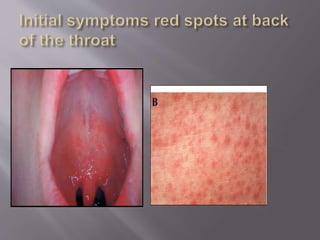
 Koplik spots
 Disease is highly infectious during this stage
EXANTHEMATOUS STAGE (3-4 days)
 Koplik spots disappear
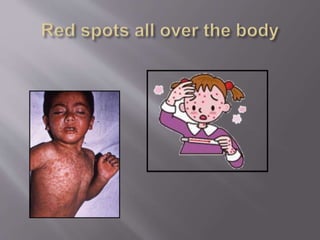
 Maculo-papular rash develops
 First at the back of the ears, forehead, and then spreads
to the trunk and the rest of the body.
 Spots become numerous and fuse to form the characteristic
appearance of measles
 Rash starts disappearing following the sequence of its
appearance
 The rash is accompanied by either fine or serous
desquamations
 Rash lasts for about 6-7 days
 Fever falls following the onset of rash
 Conjuctivitis and nasal symptoms reduce as fever falls
 Cough usually loosens up with the appearance of rash
 In some cases,fever may be as high as 40 degrees
celcius
 There may also be spleenomegally
 Bronchopneumonia
 Myocarditis
 Laryngitis
 Neurologic complications such as encephalitis
 Otitis media
 Diarrhea
 Hospitalization
 death
Laboratory Investigations
 Blood routine, WBC count is usually very low
 Serum Ab measurement
 Complement combining antibody,
hemagglutinin inhibiting antibody,
neutralizing antibody
 Confirmation of positive IgM antibodies
 Other Ag and multinucleated giant cells
 The separation of the virus
 History of fever, coryza, cough and
conjuctivitis
 Observation of koplik spots
DIFFERENTIAL DIAGNOSIS
1. Rubella
2. Roseola
3. Drug rushes
 There is no specific treatment or antiviral theraphy
for uncomplicated measles
 Most patients with uncmplicated measles recover
with rest and supprtive treatment
 General theraphy: rest, nursing care and good diet
 Adequate bed rest with antipyretic and sedative
 Encourage adequate intake of fluids
 Oral toilet twice daily to soothe the sore mouth
 Antibiotic such as amoxycillin to prevent
infection
 Control source of infection
 Interruption of transmissions
 Protection of the susceptible host
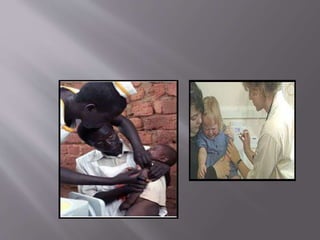
 Active immunisation
 Passive immunisation
 Avoiding crowds
MEASLES.pptx

MEASLES.pptx

  • 1.
  • 2.
     Measles isan acute highly contagious viral disease of childhood caused by measles virus. It is characterised by fever,URT catarrhal inflammation,koplik spots and maculopapules.  Also called rubeolla,measles can be serious and even fatal for small children. As a result of high vaccination rates,measles has not been widespread for more than a decade now.
  • 3.
    1. The pathogenthat causes measles is called the measles virus, a member of the paramyxovirus of the genus morbilli. It is spherical in appearance, measuring about 100-150nm in diameter. It has an outer envelope composed of M-Protein, H-Protein, F-Protein, and internal core is RNA. 2. Sites where the measles virus can be detected include blood and nasal, pharyngeal secretions.
  • 4.
    3. Three kindsof antibodies are produced after infection, that is  Complement combining antibody  Hemagglutinin inhibiting antibody  Neutralizing antibody 4. Only one antigen type of measles virus is known. 5. Resistant measles virus is sensitive to  Heat or disinfectant, it is also inactivated by ultraviolet light easily.
  • 5.
    1. Source OfInfection  The patients are the only source of infection 2. Route Of Transmission  Airborne spread  Direct contact with infectious droplets  It is usually spread through respiration  Contact with fluids from an infected persons nose and mouth
  • 6.
    3. Susceptibility Ofpopulation Measles is common in many developing countries, particularly in Africa and Asia . Despite being considered primarily a childhood illness, measles can affect people of all ages and is usually fatal in HIV/AIDS patients 4. Epidemic Features Mostly occurs in winter and spring
  • 7.
     Measles firstgains access to the body via the upper respiratory tract or conjunctiva, the virus once acquired establishes a localized infection at the site of inoculation.  After this, the virus quickly spreads to the regional lymph nodes and endothelial cells. Destruction of the lymphoid tissues leads to a profound leukopenia. A Primary Viremia then leads to the spread of the the infection throughout the reticuloendethelial and respiratory systems.  Reticuloendethelial tissue infection also leads to immune suppression ,characterized by a loss of delayed hypersensitivity responses limited lymphocyte responses.  A secondary viremia follows whereby the virus is further spread to involve the skin, the viscera kidney and bladder. the koplik spots in measles are said to result from delayed hypersensitivity reaction, the virus antigen being absent from the lesion itself
  • 8.
     Although theimmune suppression is transient, it can last for some weeks and puts infected people at risk of developing secondary opportunistic infections.  The measles virus induces on effective life-long response, which clears the virus and results in life long immunity. Measles has a suppressive effect on the immunity especially cell mediated immunity.  Natural immunity to measles is known to last at least 65 years.  Measles virus may normally persist in the body, possibly in lymphocytes so that immunity is re - stimulated from within
  • 9.
    Prodomal stage (1-2days)  Stage of non-specific symptoms  Fever  Conjuctivitis  Coryza  Cough  Malaise  Lacrimation  Photophobia in some cases
  • 10.
     Running nose Conjuctivitis  Barking cough  Koplik spots  Disease is highly infectious during this stage EXANTHEMATOUS STAGE (3-4 days)  Koplik spots disappear  Maculo-papular rash develops  First at the back of the ears, forehead, and then spreads to the trunk and the rest of the body.  Spots become numerous and fuse to form the characteristic appearance of measles
  • 11.
     Rash startsdisappearing following the sequence of its appearance  The rash is accompanied by either fine or serous desquamations  Rash lasts for about 6-7 days  Fever falls following the onset of rash  Conjuctivitis and nasal symptoms reduce as fever falls  Cough usually loosens up with the appearance of rash  In some cases,fever may be as high as 40 degrees celcius  There may also be spleenomegally
  • 14.
     Bronchopneumonia  Myocarditis Laryngitis  Neurologic complications such as encephalitis  Otitis media  Diarrhea  Hospitalization  death
  • 15.
    Laboratory Investigations  Bloodroutine, WBC count is usually very low  Serum Ab measurement  Complement combining antibody, hemagglutinin inhibiting antibody, neutralizing antibody  Confirmation of positive IgM antibodies  Other Ag and multinucleated giant cells  The separation of the virus
  • 16.
     History offever, coryza, cough and conjuctivitis  Observation of koplik spots DIFFERENTIAL DIAGNOSIS 1. Rubella 2. Roseola 3. Drug rushes
  • 17.
     There isno specific treatment or antiviral theraphy for uncomplicated measles  Most patients with uncmplicated measles recover with rest and supprtive treatment  General theraphy: rest, nursing care and good diet  Adequate bed rest with antipyretic and sedative  Encourage adequate intake of fluids  Oral toilet twice daily to soothe the sore mouth  Antibiotic such as amoxycillin to prevent infection
  • 18.
     Control sourceof infection  Interruption of transmissions  Protection of the susceptible host  Active immunisation  Passive immunisation  Avoiding crowds