Aspects of Digital-to-Analog
                 Conversion
• Bit rate is the number of bits per second.
• Baud rate is the number of signal
  elements per second.


• In the analog transmission of digital data,
  the baud rate is less than or equal to the bit rate.
Carrier signal

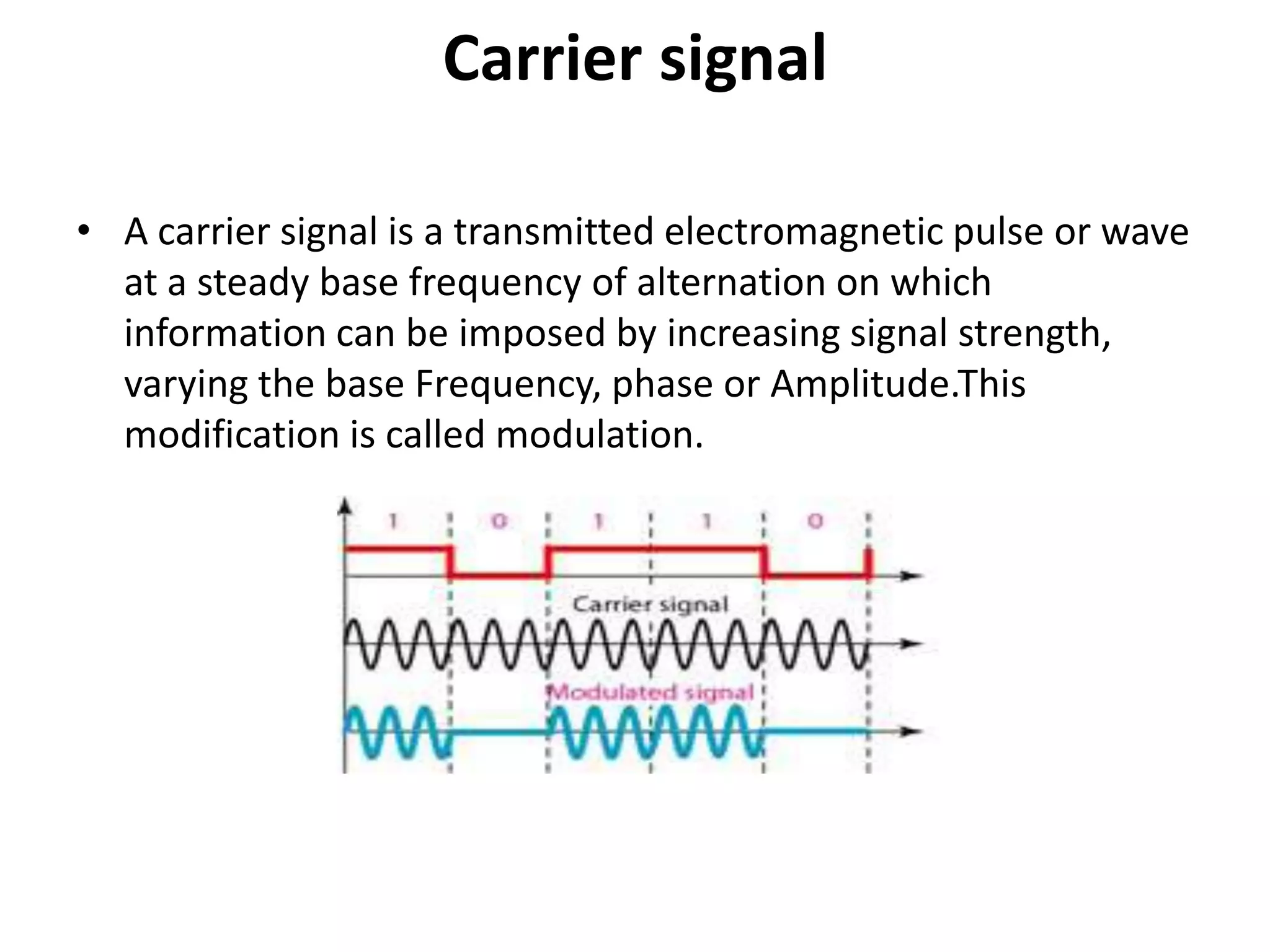
• A carrier signal is a transmitted electromagnetic pulse or wave
  at a steady base frequency of alternation on which
  information can be imposed by increasing signal strength,
  varying the base Frequency, phase or Amplitude.This
  modification is called modulation.
Amplitude Shift Keying (ASK)
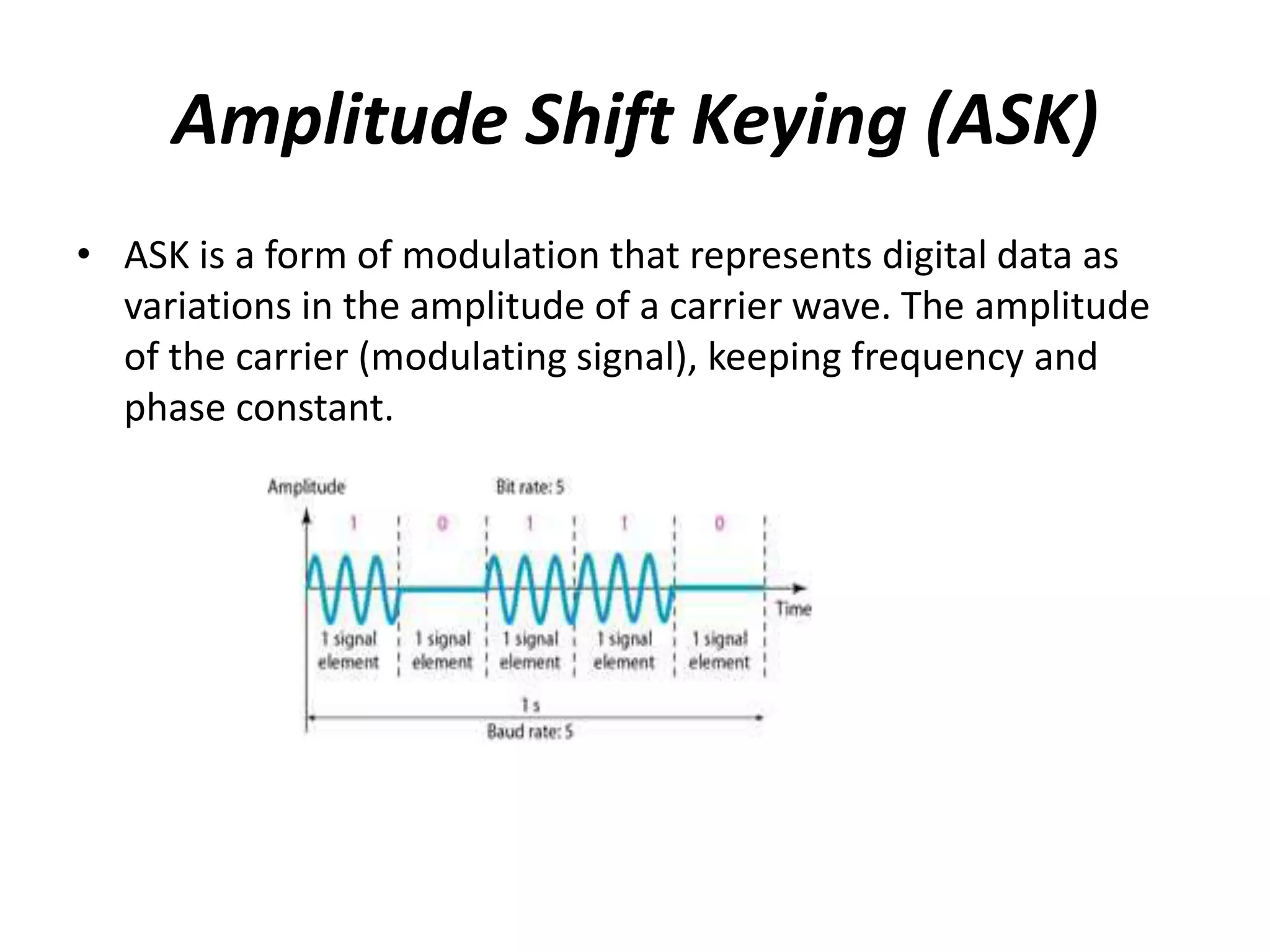
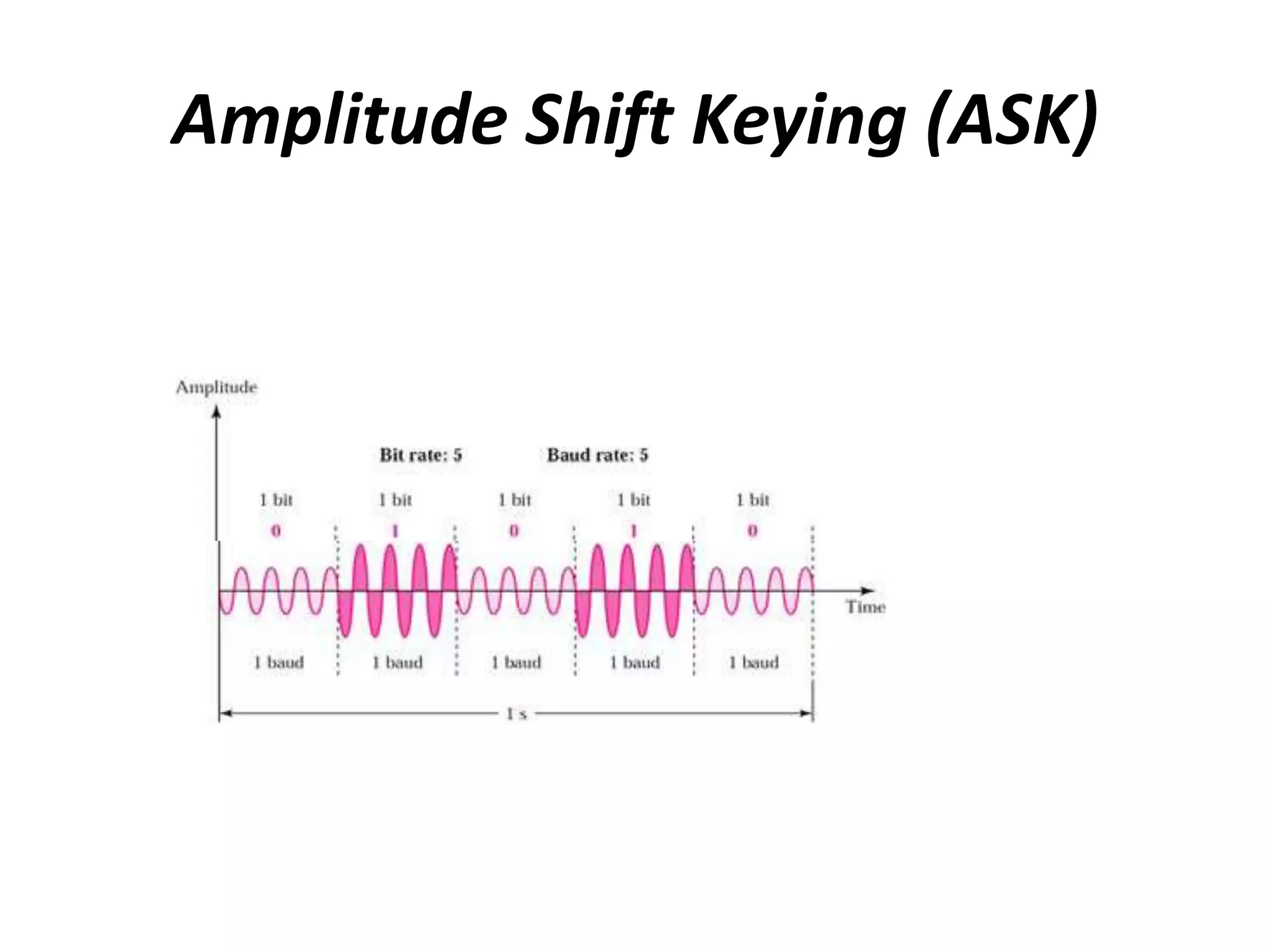
• ASK is a form of modulation that represents digital data as
  variations in the amplitude of a carrier wave. The amplitude
  of the carrier (modulating signal), keeping frequency and
  phase constant.
Amplitude Shift Keying (ASK)
Advantages
• Very simple modulation and demodulation

Disadvantages
• High sensitivity to noise
• Low bandwidth efficiency
Frequency shift keying (FSK)
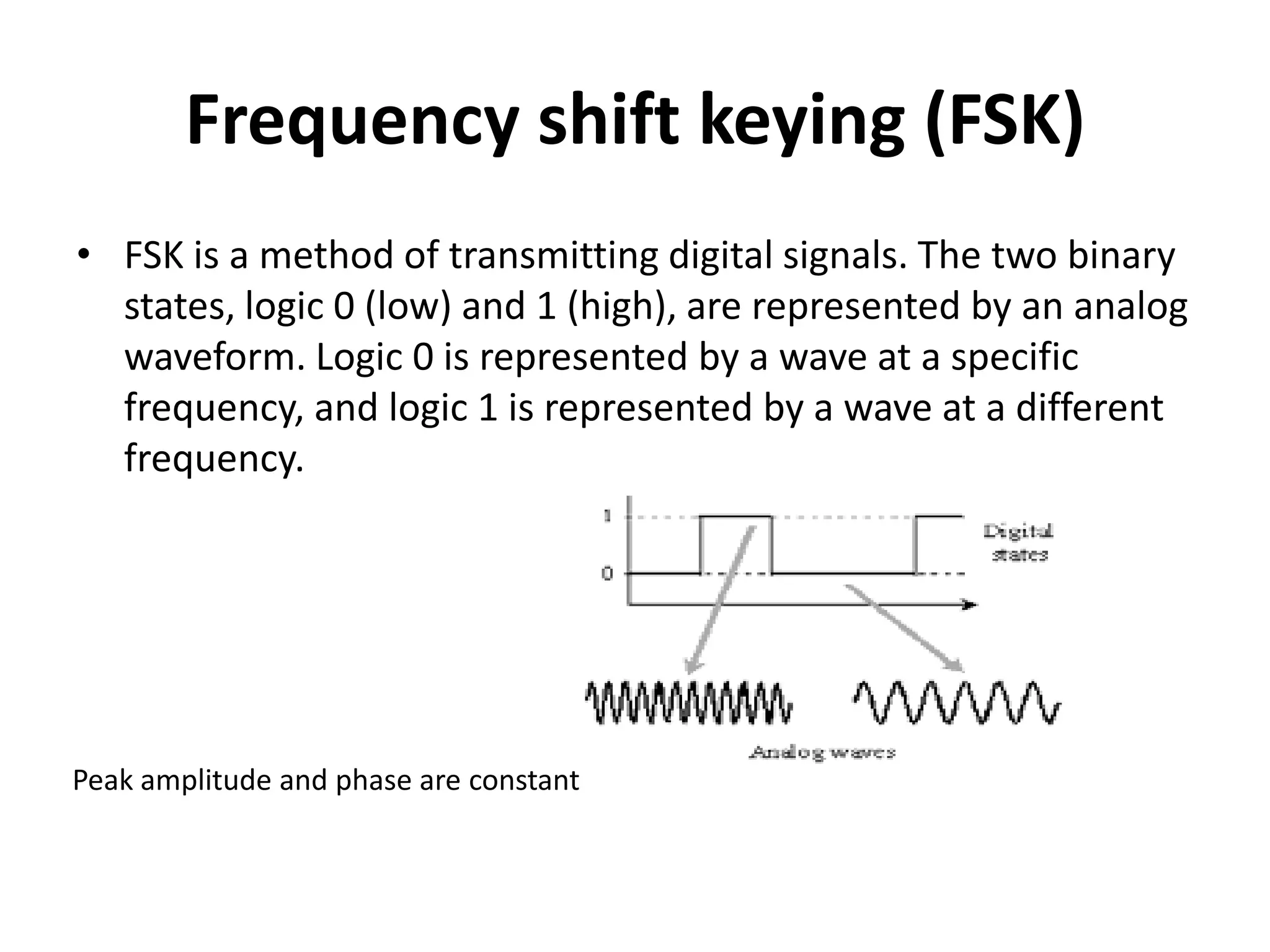
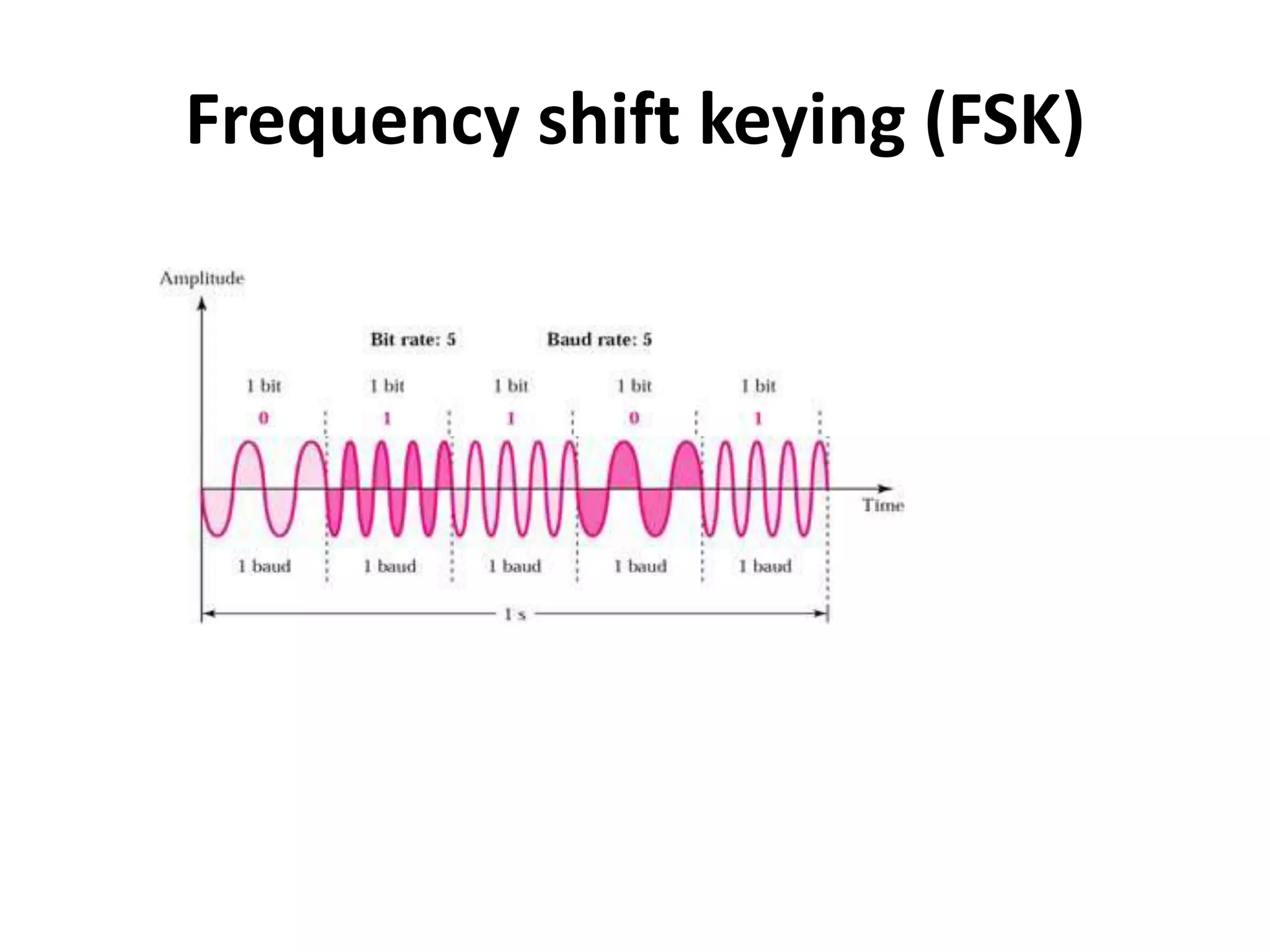
• FSK is a method of transmitting digital signals. The two binary
  states, logic 0 (low) and 1 (high), are represented by an analog
  waveform. Logic 0 is represented by a wave at a specific
  frequency, and logic 1 is represented by a wave at a different
  frequency.


Peak amplitude and phase are constant
Frequency shift keying (FSK)
Phase shift keying
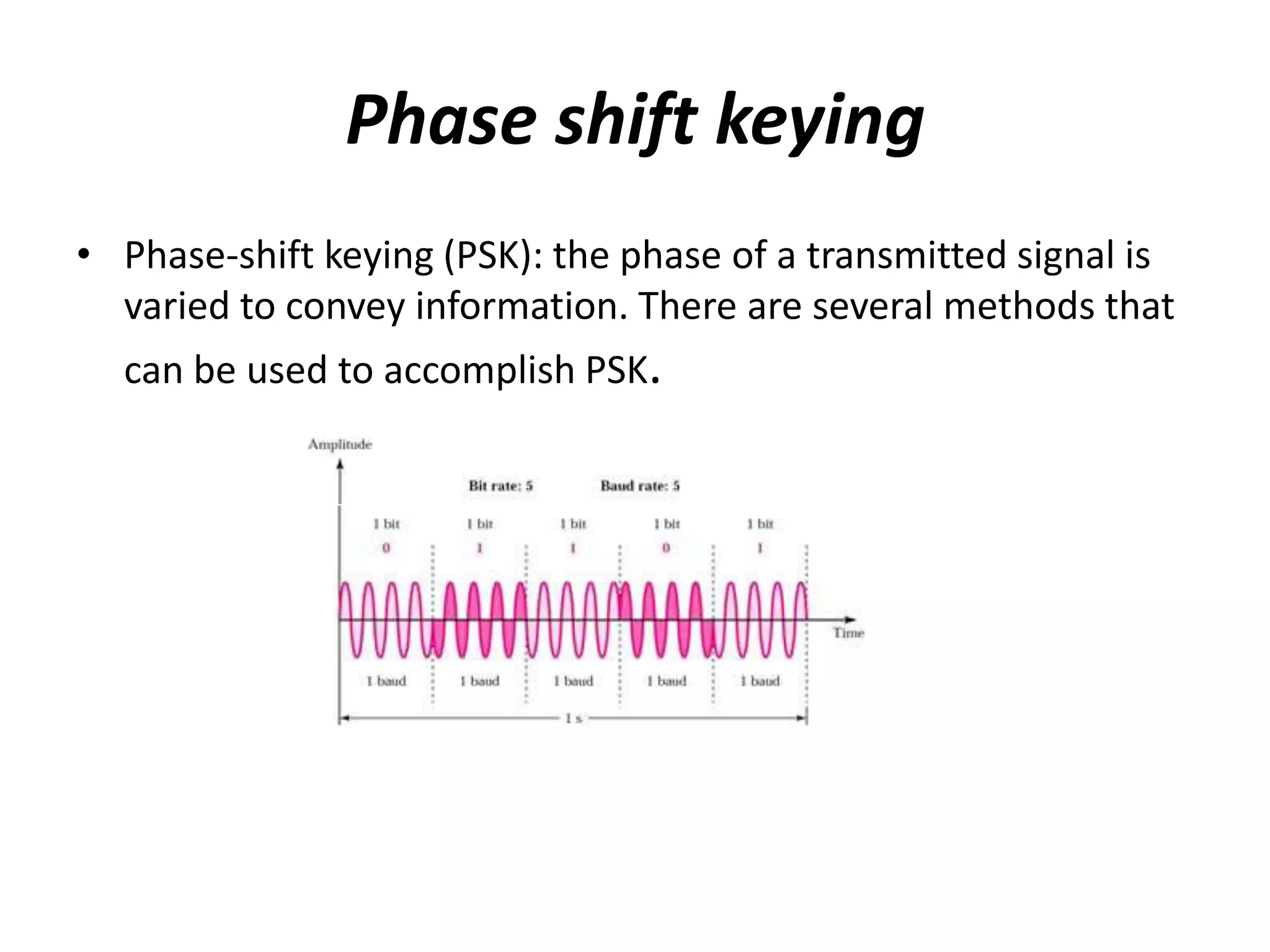
• Phase-shift keying (PSK): the phase of a transmitted signal is
  varied to convey information. There are several methods that
  can be used to accomplish PSK.
Phase shift keying
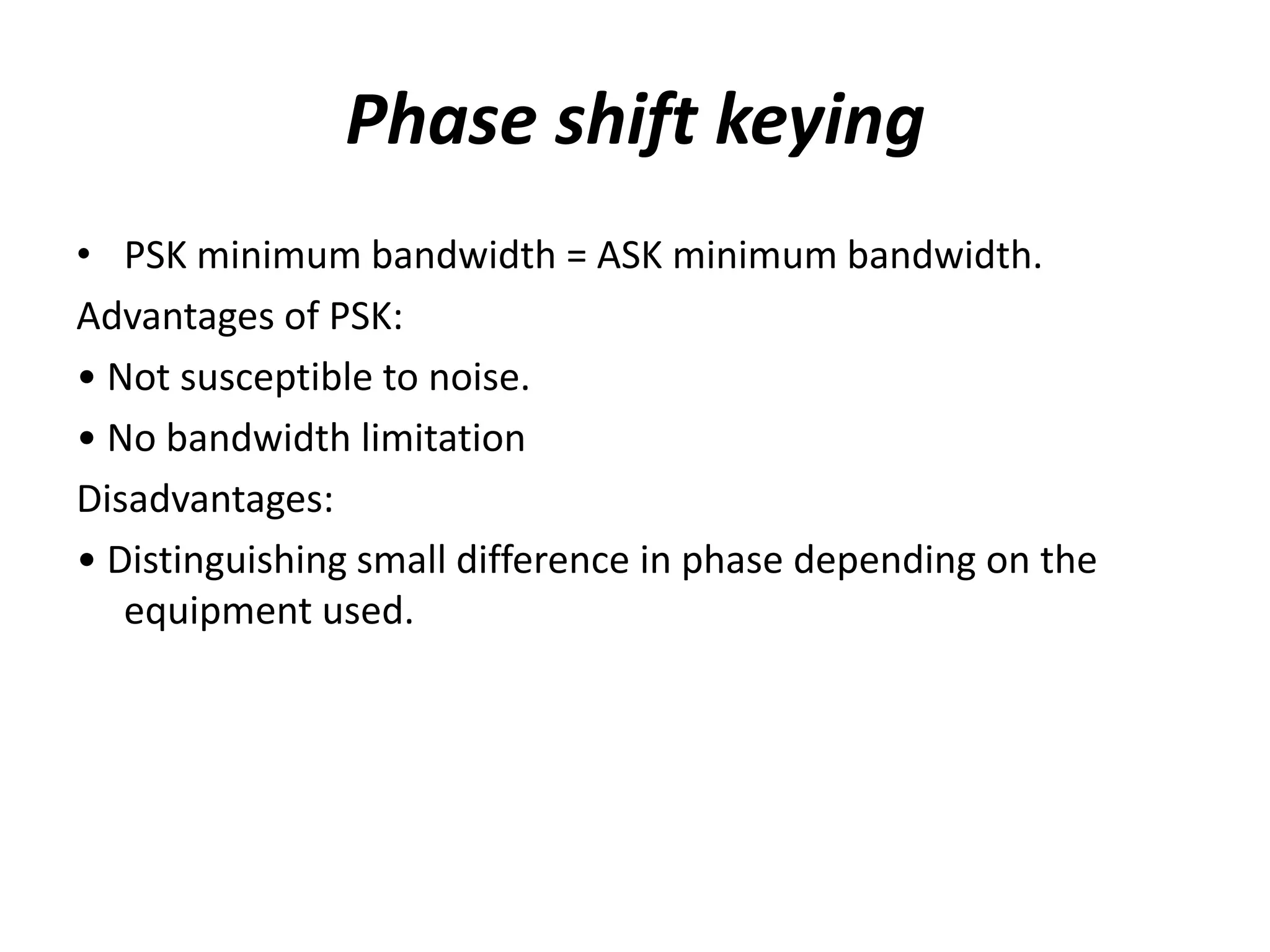
• The simplest PSK technique is called 2-PSK or BPSK. It uses
  two opposite signal phases (0 and 180). The state of each bit
  is
• determined according to the state of the preceding bit. If the
  phase of the wave does not change, then the signal state stays
  the same (0 or 1). If the phase of the wave reverses that is
  changes by 180 then the signal state is flipped.
Phase shift keying
• PSK minimum bandwidth = ASK minimum bandwidth.
Advantages of PSK:
• Not susceptible to noise.
• No bandwidth limitation
Disadvantages:
• Distinguishing small difference in phase depending on the
   equipment used.
QPSK
QPSK
Advantages
• Very good noise immunity
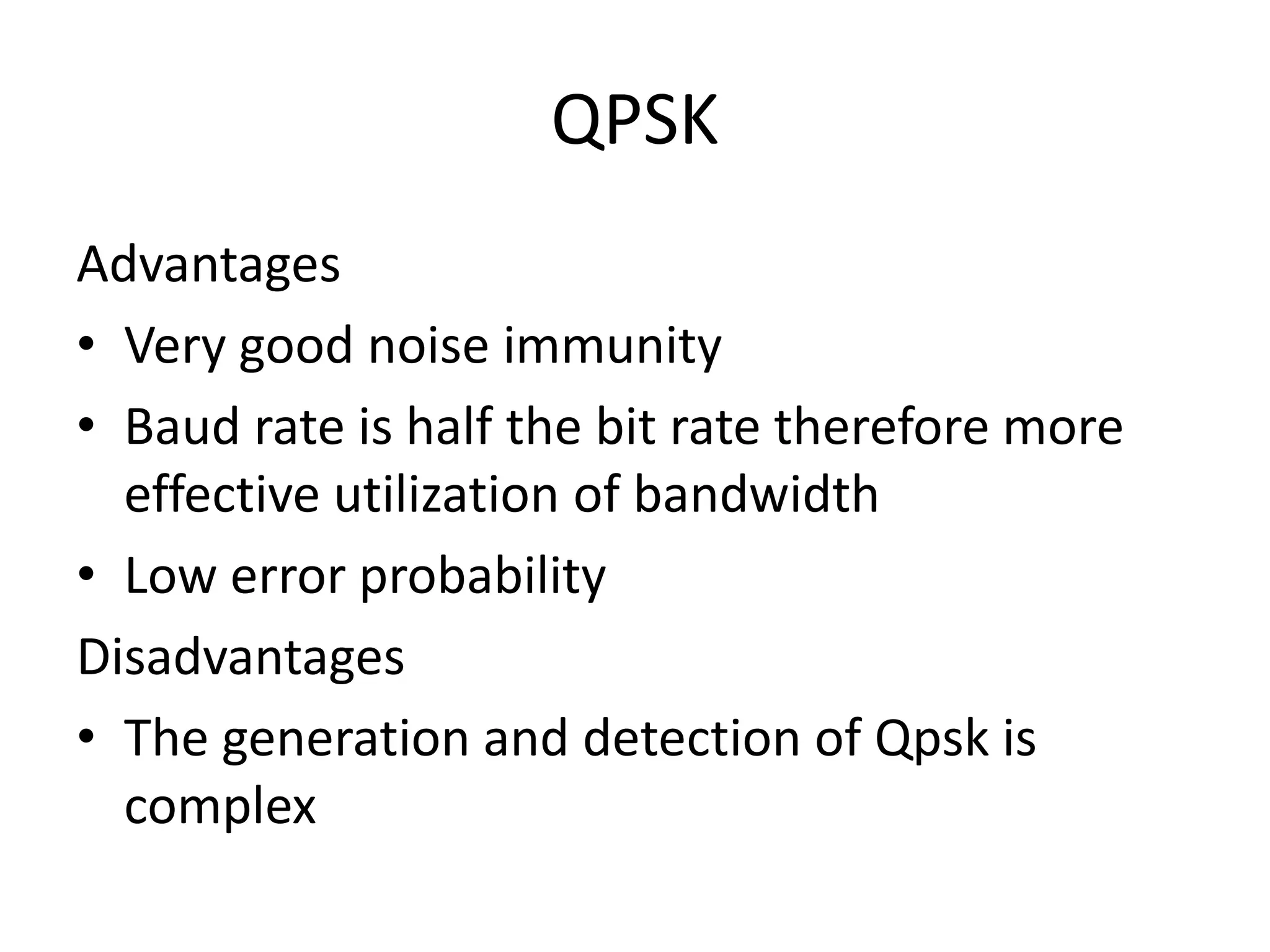
• Baud rate is half the bit rate therefore more
  effective utilization of bandwidth
• Low error probability
Disadvantages
• The generation and detection of Qpsk is
  complex

Modulation techniq of modem

  • 1.
    Aspects of Digital-to-Analog Conversion • Bit rate is the number of bits per second. • Baud rate is the number of signal elements per second. • In the analog transmission of digital data, the baud rate is less than or equal to the bit rate.
  • 2.
    Carrier signal • Acarrier signal is a transmitted electromagnetic pulse or wave at a steady base frequency of alternation on which information can be imposed by increasing signal strength, varying the base Frequency, phase or Amplitude.This modification is called modulation.
  • 3.
    Amplitude Shift Keying(ASK) • ASK is a form of modulation that represents digital data as variations in the amplitude of a carrier wave. The amplitude of the carrier (modulating signal), keeping frequency and phase constant.
  • 4.
  • 5.
    Amplitude Shift Keying(ASK) Advantages • Very simple modulation and demodulation Disadvantages • High sensitivity to noise • Low bandwidth efficiency
  • 6.
    Frequency shift keying(FSK) • FSK is a method of transmitting digital signals. The two binary states, logic 0 (low) and 1 (high), are represented by an analog waveform. Logic 0 is represented by a wave at a specific frequency, and logic 1 is represented by a wave at a different frequency. Peak amplitude and phase are constant
  • 7.
  • 8.
    Phase shift keying •Phase-shift keying (PSK): the phase of a transmitted signal is varied to convey information. There are several methods that can be used to accomplish PSK.
  • 9.
    Phase shift keying •The simplest PSK technique is called 2-PSK or BPSK. It uses two opposite signal phases (0 and 180). The state of each bit is • determined according to the state of the preceding bit. If the phase of the wave does not change, then the signal state stays the same (0 or 1). If the phase of the wave reverses that is changes by 180 then the signal state is flipped.
  • 10.
    Phase shift keying •PSK minimum bandwidth = ASK minimum bandwidth. Advantages of PSK: • Not susceptible to noise. • No bandwidth limitation Disadvantages: • Distinguishing small difference in phase depending on the equipment used.
  • 11.
  • 12.
    QPSK Advantages • Very goodnoise immunity • Baud rate is half the bit rate therefore more effective utilization of bandwidth • Low error probability Disadvantages • The generation and detection of Qpsk is complex