
Models 
of 
Communication 
Kriztine 
rosales-­‐viray
Linear 
Models 
of 
Communication 
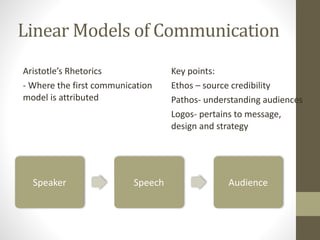
Aristotle’s 
Rhetorics 
-­‐ 
Where 
the 
first 
communication 
model 
is 
attributed 
Key 
points: 
Ethos 
– 
source 
credibility 
Pathos-­‐ 
understanding 
audiences 
Logos-­‐ 
pertains 
to 
message, 
design 
and 
strategy 
Speaker Speech Audience
Lasswell’s 
Formula 
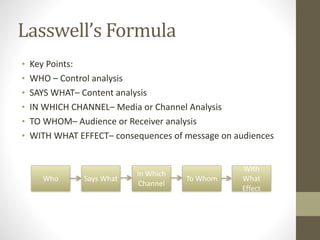
• Key 
Points: 
• WHO 
– 
Control 
analysis 
• SAYS 
WHAT– 
Content 
analysis 
• IN 
WHICH 
CHANNEL– 
Media 
or 
Channel 
Analysis 
• TO 
WHOM– 
Audience 
or 
Receiver 
analysis 
• WITH 
WHAT 
EFFECT– 
consequences 
of 
message 
on 
audiences 
Who Says 
What In 
Which 
Channel To 
Whom 
With 
What 
Effect
Shannon 
and 
Weaver’s 
Model 
of 
Communication 
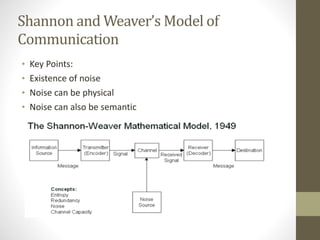
• Key 
Points: 
• Existence 
of 
noise 
• Noise 
can 
be 
physical 
• Noise 
can 
also 
be 
semantic
Interactive 
models 
of 
communication
Osgood 
and 
Schramm’s 
Circular 
Model 
of 
Communication 
• Key 
points: 
• It 
rejects 
the 
notion 
that 
communication 
is 
linear 
• That 
there 
is 
an 
existence 
of 
swapping 
roles 
• A 
person’s 
personality 
(cognitive 
abilities 
and 
experiences 
included) 
provide 
him/her 
the 
framework 
for 
interpretation.
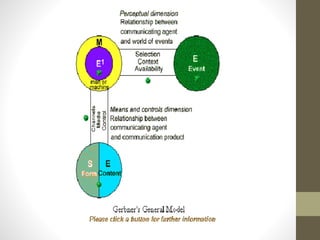
Gerbner’s 
General 
Model 
of 
Communication 
• Key 
Points: 
• Communication 
is 
a 
process 
of 
PERCEPTION-­‐PRODUCTION-­‐PERCEPTION 
• Perception 
involves 
active 
interpretation 
• Human 
Communication 
process 
is 
subjective, 
selective, 
variable 
and 
unpredictable
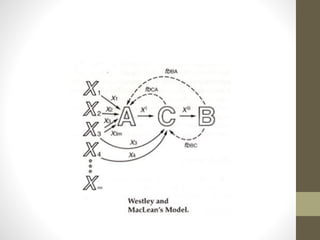
Westley 
and 
Maclean 
Model 
• Key 
points: 
• The 
sender 
generally 
derives 
information 
from 
variety 
of 
sources 
and 
combines 
it 
in 
someway 
to 
create 
a 
message 
• The 
message 
passes 
through 
some 
kind 
of 
gatekeeping 
before 
being 
passed 
to 
audience 
• Feedback 
from 
the 
audience 
is 
sometimes 
addressed 
to 
the 
sender, 
but 
in 
many 
cases 
is 
directed 
to 
some 
other 
actor 
who 
may 
modify 
or 
expand 
the 
feedback 
before 
transmitting 
it 
to 
the 
sender
Transactional 
Models
Dance’s 
Helical 
Model 
• Key 
Points: 
• What 
is 
communicated 
now 
will 
influence 
the 
structure 
and 
content 
of 
communication 
later 
on. 
• Time 
is 
an 
important 
element 
in 
the 
communication 
process
Rogers 
and 
Kincaid’s 
Convergence 
Model 
• Key 
points: 
• The 
two 
dominant 
components 
of 
the 
model 
are 
information 
and 
mutual 
understanding 
• Information 
sharing 
is 
a 
cyclical 
process 
entailing 
several 
cycles 
of 
information 
exchange 
• Mutual 
understanding 
may 
never 
be 
reached 
or 
is 
imperfect
Maletzke’s 
Model 
of 
Mass 
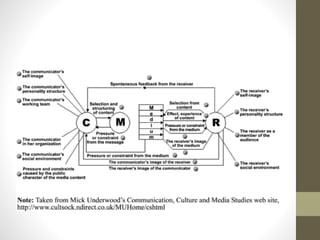
Communication 
• Key 
points: 
• The 
most 
useful 
general 
model 
to 
guide 
communication 
planning 
• Each 
part 
of 
the 
communication 
model 
may 
function 
separately 
but 
as 
a 
whole, 
if 
used 
wisely, 
will 
give 
a 
very 
remarkable 
product.
Model of communication pdf

Model of communication pdf

  • 1.
    Models of Communication Kriztine rosales-­‐viray
  • 2.
    Linear Models of Communication Aristotle’s Rhetorics -­‐ Where the first communication model is attributed Key points: Ethos – source credibility Pathos-­‐ understanding audiences Logos-­‐ pertains to message, design and strategy Speaker Speech Audience
  • 3.
    Lasswell’s Formula •Key Points: • WHO – Control analysis • SAYS WHAT– Content analysis • IN WHICH CHANNEL– Media or Channel Analysis • TO WHOM– Audience or Receiver analysis • WITH WHAT EFFECT– consequences of message on audiences Who Says What In Which Channel To Whom With What Effect
  • 4.
    Shannon and Weaver’s Model of Communication • Key Points: • Existence of noise • Noise can be physical • Noise can also be semantic
  • 5.
    Interactive models of communication
  • 6.
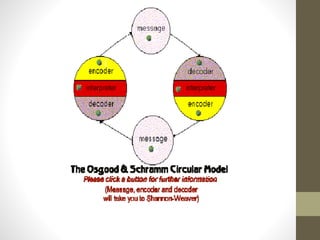
    Osgood and Schramm’s Circular Model of Communication • Key points: • It rejects the notion that communication is linear • That there is an existence of swapping roles • A person’s personality (cognitive abilities and experiences included) provide him/her the framework for interpretation.
  • 8.
    Gerbner’s General Model of Communication • Key Points: • Communication is a process of PERCEPTION-­‐PRODUCTION-­‐PERCEPTION • Perception involves active interpretation • Human Communication process is subjective, selective, variable and unpredictable
  • 10.
    Westley and Maclean Model • Key points: • The sender generally derives information from variety of sources and combines it in someway to create a message • The message passes through some kind of gatekeeping before being passed to audience • Feedback from the audience is sometimes addressed to the sender, but in many cases is directed to some other actor who may modify or expand the feedback before transmitting it to the sender
  • 12.
  • 13.
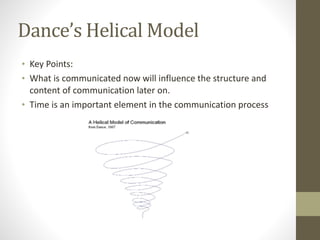
    Dance’s Helical Model • Key Points: • What is communicated now will influence the structure and content of communication later on. • Time is an important element in the communication process
  • 14.
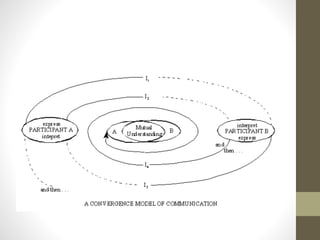
    Rogers and Kincaid’s Convergence Model • Key points: • The two dominant components of the model are information and mutual understanding • Information sharing is a cyclical process entailing several cycles of information exchange • Mutual understanding may never be reached or is imperfect
  • 16.
    Maletzke’s Model of Mass Communication • Key points: • The most useful general model to guide communication planning • Each part of the communication model may function separately but as a whole, if used wisely, will give a very remarkable product.